Hydrogen Evolution, Transport and Embrittlement in Cd and Zn–Ni Coated High-Strength Steel Fasteners
Abstract
Hydrogen embrittlement is a critical reliability concern for high-strength steel fasteners operating in aggressive environments, where surface coatings strongly influence hydrogen generation, transport, and accumulation. In this study, the influence of cadmium and Zn–Ni coatings on the hydrogen embrittlement susceptibility of AISI 4340 steel fasteners was investigated. Electrochemical polarization was used to evaluate hydrogen evolution, while hydrogen permeation tests and thermal desorption spectroscopy were employed to characterize hydrogen diffusion and trapping. Mechanical behavior was assessed by tensile testing under hydrogen-charged and uncharged conditions. Both coatings significantly delay hydrogen ingress and modify hydrogen transport through the steel substrate compared to the uncoated condition. The Cd coating provides a stronger kinetic barrier, exhibiting longer breakthrough times and lower apparent hydrogen diffusivity. However, under acidic charging conditions, cadmium promotes intense hydrogen evolution. In contrast, Zn–Ni coatings exhibit higher hydrogen diffusivity and total hydrogen uptake but effectively reduce the steady-state hydrogen flux due to enhanced hydrogen recombination at the coating surface. The results demonstrate that hydrogen embrittlement is governed by the combined effects of hydrogen generation kinetics, transport behavior, coating integrity, and fastener geometry. Zn–Ni coatings therefore represent a viable alternative to cadmium for high-strength steel fasteners when hydrogen-related degradation is a critical concern.
Keywords:
Hydrogen Embrittlement; High Strength Steels; Surface Coating; Fasteners
1. Introduction
High-strength steel fasteners are critical structural components employed in safety-sensitive applications, including energy, aerospace, and offshore systems. Owing to their high tensile strength, these components are particularly vulnerable to hydrogen embrittlement (HE), a time-dependent failure mechanism capable of causing sudden and catastrophic fracture under sustained load1-4. Unlike conventional overload failure, hydrogen-assisted cracking may occur at stress levels significantly below the nominal tensile strength, making detection and prevention especially challenging5,6.
In oil and gas environments, the risk of hydrogen uptake is amplified by exposure to saline media, CO2-containing fluids, and, in certain cases, hydrogen sulfide (H2S). Additionally, cathodic protection systems, widely used to mitigate corrosion, may inadvertently promote hydrogen evolution at steel surfaces7. Threaded fasteners present inherent stress concentrators, which act as preferential sites for hydrogen-assisted crack initiation and propagation3. Consequently, the interaction between environmental hydrogen generation and local stress distribution governs the structural reliability of these components.
Cadmium-based surface coatings have been extensively employed to enhance the corrosion resistance of steel components in demanding industrial applications, particularly in aerospace and energy sectors. Acting as sacrificial layers, these coatings exhibit corrosion potentials more negative than that of steel, ensuring preferential dissolution and cathodic protection of the substrate when exposed to aggressive environments. Despite their excellent performance, the high toxicity of cadmium and its severe environmental and health impacts have led to increasingly stringent regulations on its use, driving sustained efforts to identify safer alternative coatings with comparable functional performance8.
The replacement of cadmium is particularly challenging for high-strength steels, which are intrinsically susceptible to HE9. These materials combine high strength with limited tolerance to hydrogen ingress, making them vulnerable to delayed fracture and loss of ductility even at relatively low hydrogen concentrations1,7,10-12. In such systems, surface coatings must simultaneously provide corrosion protection and minimize hydrogen uptake during both fabrication and service, a requirement that significantly restricts the range of viable alternatives8,13-15.
Zinc-based sacrificial coatings are widely employed to protect steels against corrosion due to their anodic behavior and cost effectiveness. Nevertheless, their application is limited in severely corrosive environments or components requiring long-term service. Owing to zinc’s relatively high corrosion rate, thicker layers are required to provide equivalent protection to cadmium. Moreover, the rapid corrosion of zinc generates hydrogen, which significantly contributes to hydrogen embrittlement in service9.
In response to these limitations, zinc-based alloy coatings containing small additions of alloying elements such as Mn, Fe, Co, Sn, and Ni have been developed to tailor corrosion behavior while preserving sacrificial protection8,9,16. Among these strategies, the addition of nickel has been recognized as one of the most effective approaches to enhance the protective properties of zinc coatings, representing a viable alternative to toxic cadmium coatings8,16,17. Numerous studies have shown that Zn–Ni coatings with nickel contents in the range of approximately 8–14 wt.% exhibit optimal corrosion resistance, making them promising candidates for replacing cadmium in critical applications9,13,15,18,19.
Despite their effectiveness as sacrificial coatings, electrodeposition processes can introduce significant amounts of hydrogen into the steel substrate, leading to embrittlement16. Hydrogen uptake may occur both during pre-deposition surface cleaning and during the electrodeposition process itself, resulting in hydrogen being incorporated into the metal at the manufacturing stage. Furthermore, the anodic corrosion of sacrificial coatings during service constitutes an additional source of hydrogen7.
Several strategies can minimize hydrogen accumulation during electrodeposition. Process control (time, temperature, pH, and bath composition), the use of inhibitors, and post-deposition heat treatment (commonly referred to as baking, typically performed at 190–220 °C) are effective in promoting hydrogen desorption from the microstructure7. The efficiency of baking depends mainly on treatment time and temperature, coating permeability, and substrate hardness. Porous coatings facilitate hydrogen release, while refined or strongly textured structures are less permeable. High-strength steels, which are more susceptible to hydrogen embrittlement, generally require longer and higher-temperature treatments to ensure effective desorption2.
Although electrodeposited coatings can serve as sources of hydrogen during fabrication, once subjected to baking, coatings such as Cd and Zn–Ni may act as barriers to hydrogen permeation during service2,7. Literature results indicate that these metals exhibit significantly lower hydrogen permeability than ferritic steels. However, coating defects and porosity can provide diffusion pathways for hydrogen ingress into the substrate, ultimately promoting absorption into the steel microstructure16,20.
Although numerous studies have addressed hydrogen embrittlement in steels, fewer investigations have systematically correlated electrochemical hydrogen evolution behavior, hydrogen diffusion kinetics, and mechanical degradation in coated high-strength fasteners3,4,7. In particular, the comparative mechanistic performance of cadmium and Zn–Ni coatings under controlled hydrogen charging conditions remains an open question.
In this work, the present work investigates the influence of Cd and Zn–Ni surface coatings on hydrogen transport behavior and hydrogen embrittlement susceptibility of AISI 4340 steel fasteners. Electrochemical polarization measurements are employed to assess hydrogen evolution behavior, while hydrogen permeation tests and thermal desorption spectroscopy are used to characterize hydrogen diffusion and trapping. The mechanical consequences of hydrogen uptake are evaluated through tensile testing of threaded fasteners, allowing direct correlation between electrochemical behavior, hydrogen transport mechanisms, and hydrogen embrittlement susceptibility. The findings contribute to a mechanistic understanding of coating selection strategies aimed at minimizing hydrogen-assisted failure in high-strength fasteners operating in aggressive environments.
2. Experimental Procedure
2.1. Substrate material and coating processes
The substrate material used in this study was AISI 4340 steel. Its chemical composition, determined by optical emission spectroscopy, is summarized in Table 1. All samples were austenitized at 850 °C for 1 hour, oil quenched, and subsequently tempered at 645 °C for 1 hour, followed by air cooling prior to coating deposition.
Cadmium and Zn–Ni coatings were applied by an external specialized industrial supplier in accordance with ASTM B766 and ASTM B841 standards, respectively21,22. Prior to electrodeposition, all specimens underwent conventional alkaline chemical and electrochemical cleaning, deoxidation, and abrasive blasting using aluminum oxide or glass beads to ensure adequate surface preparation and coating adhesion. After electrodeposition, hydrogen embrittlement relief (baking) was performed according to class ER-9 of ASTM B850, within two hours after coating deposition23.
Cadmium coatings were electrodeposited from an alkaline cyanide bath containing cadmium oxide at a current density of 20 mA/cm2, followed by yellow hexavalent chromate passivation. The average coating thickness was 16.2 μm, exceeding the 12 μm minimum requirement specified by the standard. Baking was conducted at 210 °C for 8 h. Zn–Ni alloy coatings were electrodeposited from an alkaline bath at a current density of 40 mA/cm2, followed by iridescent yellow hexavalent passivation and sealing. The coating thickness was 12.5 μm, in compliance with the 10 μm requirement. The baking process was identical to that used for Cd coatings. According to the supplier, the Ni content was 9.71%, within the 5 - 12% range specified by the standard.
2.2. Microstructural characterization and fractographic analysis
The crystal structure of the deposited coatings was investigated by X-Ray diffraction (DRX, Miniflex II, Rigaku) using Cu-α radiation over a range of 20 to 100°. Microstructural characterization was performed by scanning electron microscopy (SEM, VEGA 3LMU, Tescan). In order to evaluate the effect of hydrogen on failure mechanisms, fractographic analyzes were performed on representative fractured specimens using SEM.
2.3. Electrochemical measurements
Cathodic potentiodynamic polarization experiments were conducted on uncoated and coated (Cd and Zn–Ni) threaded specimens in two distinct electrolytes: 0.1 M H2SO4 + 2 mg/l As2O3, and 3.5 wt.% NaCl + 1 ml/l HCl saturated with CO2 (pH = 3.5). For this purpose, a conventional three-electrode cell was employed, using a saturated calomel electrode (SCE) as the reference electrode, a platinum wire as the counter electrode, and the specimen as the working electrode.
Hydrogen diffusion coefficients for the uncoated and coated steels were determined through electrochemical hydrogen permeation tests, as described elsewhere24. For this purpose, rectangular samples of 1.0 mm thickness were cut from the longitudinal section of steel rods by wire electrical discharge machining. Uncoated specimens were ground and polished on both sides, while coated specimens were polished only on the uncoated side, which served as the detection side in the permeation test; the coated side was exposed to hydrogen charging without surface modification.
The experimental setup consisted of two electrochemical cells separated by the sample and connected to two Autolab Potentiostats. The cathodic cell, responsible for hydrogen generation, was filled with a 0.1 M H2SO4 + 2 mg/l As2O3 solution, while the anodic cell, responsible for hydrogen oxidation, was filled with a 0.1 M NaOH solution. During hydrogen charging, the cathodic side was galvanostatically polarized at a constant current of 50 mA, and the anodic side was held at a constant anodic potential relative to the open-circuit potential (OCP) of the system. Saturated calomel electrodes were used as reference electrodes, platinum wires as counter electrodes, and the sample acted as the working electrode in both cells.
2.4. Thermal desorption spectroscopy
Thermal desorption spectroscopy (TDS) was used to analyze the hydrogen desorption and trapping behavior in coated and uncoated samples. Prior to testing, cylindrical uncoated samples (50 mm length and 4 mm diameter) were mechanically ground and polished. Coated samples with the same geometry were tested without surface preparation.
Hydrogen charging was performed electrolytically for 18 hours and 48 hours in a solution of 0.1 M H2SO4 + 2 mg/L As2O3. The process was conducted at room temperature, using a DC power supply, a platinum wire as the counter electrode and a current density of 20 mA/cm2. Immediately after charging, specimens were placed inside a quartz reactor and exposed to a continuous helium flow, which served as the carrier gas. Once the system stabilized, the furnace was heated at a rate of 10 °C/min up to 600 °C. The desorbed hydrogen was extracted using a turbomolecular vacuum pump and analyzed by a Pfeiffer Prisma QMS 200 mass spectrometer.
2.5. Hydrogen embrittlement susceptibility
The hydrogen embrittlement susceptibility of the steel, under both uncoated and coated conditions, was evaluated through uniaxial tensile testing following prior hydrogen charging. For this purpose, specimens in the form of threaded fasteners were fabricated, as illustrated in Figure 1. Hydrogen was introduced by cathodic charging at room temperature using a DC power supply in two different electrolytes: 0.1 M H2SO4 + 2 mg/l As2O3 and 3.5 wt.% NaCl + 1 ml/l HCl saturated with CO2 (pH = 3.5).

For the Cd-coated fasteners, the electrolyte used was 0.1 M H2SO4 + 2 mg/l As2O3, under a cathodic current of 20 mA, resulting in a current density of 0.625 mA/cm2, for 48 hours. Based on the cathodic potentiodynamic polarization curves, it can be inferred that the hydrogen evolution conditions differ between uncoated and Cd-coated steels due to the specific interactions of each substrate with the electrolyte.
For the Zn–Ni–coated fasteners, hydrogen charging was performed in a 3.5 wt.% NaCl + 1 ml/l HCl saturated with CO2 (pH = 3.5), under a current of 50 mA, corresponding to a current density of 1.56 mA/cm2, for 48 h. This modification was implemented due to the corrosion observed when the fasteners were charged in the sulfuric acid solution. For comparison, Cd-coated fasteners were also hydrogen charged under this condition.
To determine the hydrogen embrittlement susceptibility, the tensile properties of previously hydrogen charged specimens were compared with those of uncharged specimens. This comparison was performed by applying the Hydrogen Embrittlement Index (HEI), which is given by the equation:
Where X0 and XH are a mechanical parameter of non-hydrogen charged and hydrogen charged condition, respectively. In this work, the fracture strain was used as the mechanical parameter.
3. Results and Discussion
3.1. Steel and coating microstructures
Figure 2 shows the microstructure of the transversal section of AISI 4340 steel fasteners. As observed, the microstructure consists of tempered martensite, consequence of the thermal treatment route employed.

Figure 3 shows the X-ray diffraction (XRD) patterns corresponding to the Cd and Zn-Ni surface coatings. The diffraction peaks obtained from the Cd coating correspond exclusively to the hexagonal close-packed structure of metallic cadmium, with no evidence of secondary phases, indicating that the electrodeposition process produced a single-phase coating.

For the Zn-Ni alloy coating, whose Ni content was reported as 9.71 wt.% by the supplier, the diffraction peaks can be indexed to the γ and η phases. The η phase consists of a Zn-rich solid solution with a hexagonal structure, whereas the γ phase corresponds to the intermetallic compound Ni5Zn21 with a cubic structure. The relatively high intensity of the diffraction peaks associated with the γ phase indicates that the coating is predominantly composed of this phase.
The corrosion protection of Zn–Ni coatings is strongly influenced by the phases formed during electrodeposition, namely α, η, and γ. While the α phase corresponds to a solid solution of Zn in Ni (up to ~30 at.% Zn), and the η phase to a solid solution of Ni in Zn (below 1 at.% Ni), the γ phase (Ni5Zn21) is widely associated with superior corrosion resistance. Deposition parameters such as current density, temperature, pH, and [Zn2+]/[Ni2+] ratio govern the phase distribution and microstructure. Literature reports indicate that coatings dominated by the γ phase exhibit the highest corrosion resistance13,15.
The phase constitution identified by XRD agrees well with previous studies on electrodeposited Zn–Ni alloys containing up to approximately 25 wt.% Ni, which typically consist of mixtures of the η and γ phases. The predominance of the γ phase is particularly relevant, as it has been widely associated with not only reduced corrosion rates, but also improved coating stability18,25.
Figure 4 presents the SEM micrographs of the Zn-Ni and Cd coating surfaces. The Zn-Ni deposits exhibit a morphology characterized by overlapping spherical nodules, with evident porosity and the presence of microcracks. These microstructural features are consistent with those reported in the literature for coatings of similar chemical composition, produced under similar deposition parameters8,13,17. Zn-Ni coatings are known to develop microcracks after post-deposition baking treatments. Because the thermal expansion coefficients of the steel substrate and the coating differ, thermal expansion and subsequent contraction during baking induce residual stress accumulation, which promotes the nucleation and propagation of these microcracks8,18,20.

SEM micrographs of coated surfaces. A., B. and C. refers to Zn-Ni coating, while D., E. and F. refers to Cd coating.
In contrast, the Cd coating presents a morphology characterized by hexagonal plate-like crystals aggregated into globular structures, typical of electrodeposited cadmium8,20. Although the Cd coating appears relatively more uniform, isolated microcracks and voids are still observed, indicating that internal stresses are also present in this system.
In addition to the coated surfaces of flat steel samples with both types of deposits, the base metal/coating interfaces of coated fasteners were also examined by SEM, as shown in Figure 5. A pronounced heterogeneity in coating thickness along the threads can be observed, with thicker deposits at the thread crests and reduced thickness in the valleys. This variation is inherent to the electrodeposition process and may influence the corrosion protection performance of the fasteners. The reduced coating thickness in the valleys coincides with regions of local stress concentration, which may promote preferential hydrogen uptake and accumulation. Microcracks are observed in the base metal at the interfaces associated with the Zn–Ni deposit. This cracking may be related to the accumulation of residual stresses resulting from the baking treatment, as previously discussed.

SEM micrographs of the coating interface. A., B., C. and D. refers to Cd coating, while E., F., G. and H. refers to Zn-Ni coating.
From the perspective of hydrogen-related performance, these surface defects are expected to play a critical role. Microcracks and porosity can act as preferential pathways for hydrogen ingress, locally exposing the steel substrate to the electrolyte and facilitating hydrogen absorption. The influence of these features on hydrogen transport and embrittlement behavior is discussed in the following sections.
3.2. Cathodic polarization behavior and hydrogen evolution
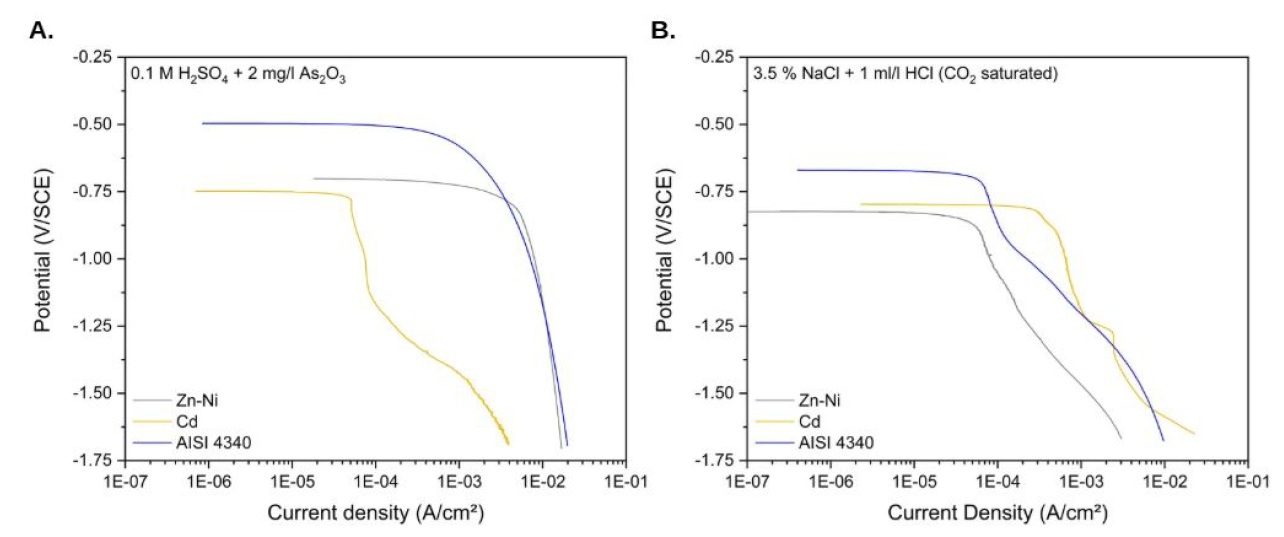
Cathodic potentiodynamic polarization tests were carried out on uncoated and coated samples using the two different electrolytes. The polarization curves obtained for each system are shown in Figure 6. In all cases, hydrogen evolution reaction (HER) is identified by the characteristic increase in cathodic current density as the applied potential becomes more negative, corresponding to the reduction of hydrogen ions at the electrode surface26,27. Both Cd and Zn–Ni coatings exhibit open-circuit potentials more negative than that of the uncoated steel substrate, confirming their sacrificial behavior. The HER involves hydrogen adsorption, electrochemical desorption, chemical recombination, and absorption into the metal lattice, whose kinetics depend strongly on the substrate material, electrolyte composition, and applied overpotential. Recent studies have demonstrated that hydrogen generation and hydrogen absorption are governed by competing surface reactions and should not be considered directly proportional phenomena28.
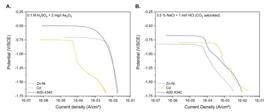
Polarization curves obtained for the uncoated steel and different coatings in (A.) 0.1 M H2SO4 + 2 mg/l As2O3 solution and in (B.) 3.5% NaCl + 1 ml/l HCl solution.
Figure 6 (A) shows the polarization behavior in the sulfuric acid electrolyte (0.1 M H2SO4 + 2 mg/l As2O3). The uncoated steel exhibits the highest cathodic current densities over most of the investigated potential range, indicating relatively fast hydrogen evolution kinetics. In contrast, the Cd-coated specimens display lower cathodic current densities at equivalent potentials, suggesting a higher overpotential for hydrogen evolution and slower HER kinetics on the cadmium surface. This behavior is consistent with the lower electrocatalytic activity of cadmium for hydrogen evolution compared with iron-based substrates. Therefore, although hydrogen evolution occurs on both materials, the polarization curves indicate that hydrogen generation on Cd is kinetically less favored than on the uncoated steel under identical electrochemical conditions.
Rapid anodic dissolution of the Zn-Ni coating was observed during polarization, ultimately leading to complete coating removal. This behavior indicates that the aggressive acidic environment promotes localized attack through coating defects present in the threaded fasteners, resulting in galvanic coupling between the exposed steel substrate and the surrounding Zn-Ni coating, which acts as the anodic constituent. Similar degradation mechanisms have been reported for Zn-Ni coatings exposed to acidic solutions, where selective zinc dissolution and localized corrosion accelerate coating breakdown17,18,25.
As a result of this instability, the NaCl-based electrolyte saturated with CO2 was selected for hydrogen charging of Zn–Ni-coated fasteners, as it provided a less aggressive environment while still enabling hydrogen evolution under cathodic polarization. This distinction is essential for a meaningful evaluation of hydrogen embrittlement susceptibility in coated fasteners, since coating integrity strongly influences hydrogen uptake.
Overall, the polarization behavior demonstrates that coating composition strongly affects HER kinetics and coating stability. The Cd coating exhibits slower hydrogen evolution kinetics than the steel substrate and maintains electrochemical stability under acidic conditions, whereas the Zn–Ni coating provides sacrificial protection but suffers rapid degradation in strongly acidic media. These differences are essential for understanding the role of coating composition and environment on hydrogen generation and coating integrity, and consequently, on the susceptibility of coated fasteners to hydrogen embrittlement.
3.3. Hydrogen permeation behavior
Electrochemical hydrogen permeation tests were performed to evaluate the influence of Cd and Zn–Ni coatings on the hydrogen transport properties of the steel substrate. Figure 7 presents the experimental curves obtained for the uncoated steel and for samples coated with Cd and Zn–Ni. To facilitate visualization, the individual plots for each test are shown in detail within the figure. All curves exhibit a sigmoidal profile, typical of hydrogen permeation behavior, reflecting the transient diffusion regime followed by steady-state transport.
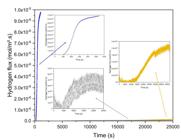
Compared to the uncoated steel, both coatings significantly delay the onset of hydrogen permeation, as evidenced by the substantial increase in breakthrough time, tb. This delay indicates that both Cd and Zn–Ni coatings act as effective barriers to hydrogen ingress, at least during the initial stages of exposure. However, the mechanisms by which each coating mitigates hydrogen transport appear to be fundamentally different.
Quantitative parameters derived from the permeation experiments are summarized in Table 2, where at least two measurements were performed for each condition. In this table, s denotes the total sample thickness (substrate plus coating), s2 the coating thickness provided by the manufacturer, tb the breakthrough time (the time required for the first hydrogen atoms to reach the detection side), Dapp the apparent hydrogen diffusivity, and Jꝏ the steady-state hydrogen flux.
Experimental values of apparent hydrogen diffusion coefficients (Dapp) and steady state hydrogen flux (Jꝏ) measured from the experiments.
The apparent hydrogen diffusivity of the uncoated steel is on the order of 10-10 m2/s, consistent with values reported for AISI 4340 steel29,30. The presence of a Zn–Ni coating reduces the apparent diffusivity by approximately one order of magnitude, whereas the Cd coating leads to a reduction of nearly two orders of magnitude.
A notable distinction between the two coatings emerges when considering the steady-state hydrogen flux (Jꝏ). While the Cd coating produces the longest breakthrough times, the Zn-Ni coating results in the lowest steady-state hydrogen flux, with reductions of approximately two orders of magnitude compared to the uncoated steel. This observation indicates that hydrogen transport in the coated systems is not governed solely by bulk diffusion. Instead, surface reactions occurring at the coating/electrolyte interface strongly influence the amount of hydrogen available for absorption into the substrate.
These results suggest the existence of two distinct hydrogen mitigation mechanisms. The Cd coating acts primarily as a diffusion barrier, significantly delaying hydrogen transport through the coated system. This behavior is reflected by its low apparent diffusivity. In contrast, the Zn-Ni coating acts predominantly as an entry barrier, limiting hydrogen ingress at the coating surface by reducing the amount of atomic hydrogen available for absorption. Consequently, although hydrogen diffuses more readily through the Zn-Ni-coated system once absorbed, the total amount of hydrogen entering the substrate is substantially reduced, resulting in the lowest steady-state hydrogen flux.
To account for the composite nature of the coated samples, hydrogen diffusivity within the coatings was estimated using a bilayer diffusion model, where the hydrogen diffusivity in the coating (Dc) was calculated using the relationship:
where Dapp is the experimentally determined diffusivity, s the total sample thickness, DM the diffusivity in the base metal, and s2 the coating thickness and s1 the steels substrate thickness. The calculated Dc values are presented in Table 3.
Both coatings exhibit hydrogen diffusivities significantly lower than that of the steel substrate, confirming their role as diffusion barriers. However, Dc of the Cd coating is approximately half that calculated for the Zn–Ni coating, indicating a greater intrinsic resistance to hydrogen transport through the coating layer itself.
Hydrogen transport across coated systems is controlled not only by bulk diffusion but also by surface reactions, including hydrogen adsorption, absorption, and recombination. H+ ions generated during cathodic protection or corrosion processes can either recombine and desorb as molecular hydrogen (H2) or be adsorbed and diffuse through the metallic lattice. Zn-Ni coatings are reported to exhibit higher hydrogen recombination rates than Cd, promoting the formation of molecular hydrogen and reducing the availability of atomic hydrogen for absorption19. This behavior is consistent with the extensive hydrogen bubbling observed on Zn-Ni coated specimens during electrolytic charging.
The hydrogen absorption kinetics in coated substrates also depend strongly on coating integrity. In an ideal defect-free coating, hydrogen transport would be governed primarily by diffusion through the coating layer. However, SEM observations revealed the presence of pores and microcracks in both coating systems. These discontinuities act as localized short-circuit diffusion paths, allowing hydrogen to bypass part of the barrier effect and directly access the steel substrate. Under such conditions, the overall hydrogen transport behavior is influenced by localized transport through coating defects.
The influence of coating defects is particularly relevant for threaded fasteners. The heterogeneous coating thickness observed along the thread profile, combined with local stress concentrations at thread roots, may create preferential sites for coating damage and localized hydrogen ingress. Consequently, even coatings exhibiting excellent barrier properties under ideal conditions may become less effective in regions where coating discontinuities are present.
Overall, the permeation results reveal that Cd and Zn-Ni coatings delay hydrogen ingress through different mechanisms. The Cd coating primarily acts as a diffusion barrier, significantly delaying hydrogen transport through the coated system, whereas the Zn-Ni coating appears to reduce hydrogen entry at the surface, resulting in the lowest steady-state hydrogen flux. These findings demonstrate that hydrogen transport in coated fasteners is governed not only by the diffusional characteristics of the coating itself but also by surface reactions and coating integrity. Further insight into hydrogen accumulation and retention within the steel substrate is provided by the thermal desorption spectroscopy results presented in the following section.
3.4. Thermal desorption spectroscopy
Thermal desorption spectroscopy (TDS) was employed to evaluate hydrogen uptake and trapping behavior in uncoated and coated specimens after electrolytic hydrogen charging. The desorption curves obtained for each material are shown in Figure 8.
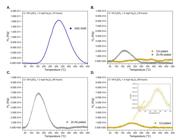
The uncoated steel exhibits the highest desorption peak intensity, indicating substantial hydrogen uptake during cathodic charging, in agreement with its high apparent hydrogen diffusivity and the absence of any surface barrier. In contrast, both Cd- and Zn-Ni-coated specimens display significantly lower desorption intensities, confirming that the presence of surface coatings effectively reduces hydrogen ingress into the steel substrate.
No desorption peaks were observed in Cd-coated samples previously hydrogen charged for 18 hours, as observed in Figure 8 (B). In contrast, a small desorption peak was detected in Zn-Ni coated samples under the same conditions. To further investigate hydrogen uptake, the charging time was increased to 48 hours while maintaining the same electrolyte and current density. The characteristic curves are presented in Figure 8 (C, D). Under this condition, both coatings exhibited measurable hydrogen desorption peaks. However, the Zn–Ni-coated specimens displayed substantially higher peak intensities than the Cd-coated specimens, indicating greater hydrogen accumulation within the system.
An important aspect of the present results concerns the difference between the charging conditions used for the permeation and TDS experiments and those employed during cathodic polarization and mechanical testing. Unlike the threaded fasteners used in the polarization and tensile tests, the specimens used for permeation and TDS analyses consisted of flat samples with relatively uniform coating thickness and reduced geometric complexity. Under these conditions, the Zn-Ni coating remained sufficiently stable to allow hydrogen charging in the acidic H2SO4 + As2O3 electrolyte. In contrast, preliminary experiments performed on Zn-Ni-coated fasteners revealed extensive coating degradation in the same electrolyte. This difference is attributed to the presence of coating discontinuities, thickness variations, and local stress concentrators associated with the threaded geometry, which promote localized corrosion and accelerate coating breakdown. Therefore, the distinct charging environments adopted for the mechanical tests are a consequence of the strong influence of specimen geometry on coating integrity and hydrogen ingress.
The differences observed in the TDS spectra are consistent with the hydrogen permeation results. The absence of a detectable desorption peak in Cd-coated specimens after 18 h of charging, followed by the appearance of a low-intensity peak after 48 h, indicates that Cd coatings provide a stronger kinetic barrier to hydrogen ingress, delaying hydrogen accumulation in the steel microstructure. Conversely, the higher desorption peak intensity observed for the Zn–Ni-coated specimens is consistent with the higher apparent hydrogen diffusivity measured during the permeation experiments. The greater diffusivity of the Zn–Ni-coated system facilitates hydrogen transport through the coating and promotes hydrogen accumulation within the steel substrate during charging. In contrast, the lower diffusivity of the Cd-coated system acts as a stronger transport barrier, limiting hydrogen accumulation and consequently reducing the amount of desorbed hydrogen.
Beyond the total amount of absorbed hydrogen, the desorption temperature provides qualitative information regarding hydrogen retention within the material. Hydrogen released at lower temperatures is generally associated with weak trapping sites and higher mobility, whereas hydrogen desorbing at higher temperatures is commonly related to stronger trapping states requiring greater thermal activation for release. In the present study, the Cd-coated specimens exhibited desorption peaks at higher temperatures than the Zn–Ni-coated specimens. This behavior suggests that the hydrogen retained in the Cd-coated system is associated with stronger trapping states or a higher energetic barrier for hydrogen transport and release30,31.
The combined analysis of the permeation and TDS results indicates that both coatings significantly modify hydrogen transport through the steel substrate. Compared with the uncoated condition, both Cd and Zn-Ni coatings reduce the apparent hydrogen diffusivity and delay hydrogen ingress. The Cd coating produces the greatest reduction in diffusivity and the longest breakthrough times, whereas the Zn-Ni coating results in the lowest steady-state hydrogen flux, suggesting a stronger influence of surface reactions on hydrogen entry. Despite the lower steady-state flux measured for the Zn-Ni-coated specimens, the TDS results revealed greater hydrogen accumulation in this system compared with the Cd-coated specimens. This behavior indicates that, under the hydrogen charging conditions employed before TDS tests, the lower hydrogen diffusion of Cd coating was more effective in limiting hydrogen accumulation within the steel substrate than the lower hydrogen steady state flux of Zn-Ni coating. These findings demonstrate that hydrogen transport in coated systems cannot be interpreted solely on the basis of steady-state flux or diffusion coefficients. Consequently, a comprehensive assessment of hydrogen-related degradation requires consideration of both hydrogen transport and hydrogen accumulation phenomena.
3.5. Hydrogen embrittlement susceptibility
The susceptibility of the coated and uncoated fasteners to hydrogen embrittlement was evaluated by tensile testing after electrolytic hydrogen charging. The stress–strain curves obtained for each condition are presented in Figure 9, and the corresponding fracture strain (FS) and hydrogen embrittlement index (HEI) values are summarized in Table 4.

Stress vs. strain curves of uncoated and coated fasteners tested under hydrogen-charged and uncharged conditions.
Experimental values of fracture strain (FS) and hydrogen embrittlement index (HEI) measured from the experiments.
It is important to distinguish between the objectives of the different hydrogen charging conditions employed in this study. Hydrogen charging in the H2SO4 + As2O3 electrolyte was primarily intended to assess the influence of the Cd coating on hydrogen embrittlement susceptibility by comparing coated and uncoated fasteners under identical charging conditions. Therefore, the comparison between the uncoated and Cd-coated fasteners provides a direct assessment of the effect of the coating on hydrogen-assisted mechanical degradation. In contrast, the comparison between Cd- and Zn-Ni-coated fasteners was performed using the NaCl solution saturated with CO2. This approach was adopted because, as previously exposed, the Zn-Ni coating exhibited significant degradation when exposed to the acidic electrolyte, particularly in threaded fasteners where coating discontinuities and thickness variations were present. Consequently, the NaCl/CO2 environment provided the most suitable condition for a direct comparison of the hydrogen embrittlement susceptibility of the two coating systems.
Considering the specimens charged in the H2SO4 + As2O3 electrolyte, the Cd-coated fasteners exhibited a higher hydrogen embrittlement index than the uncoated steel despite the lower hydrogen uptake indicated by the permeation and TDS results. This behavior suggests that hydrogen embrittlement was not governed solely by the total amount of absorbed hydrogen. Although the same cathodic current density was applied during hydrogen charging, the polarization curves demonstrated that the uncoated steel and Cd coating exhibited different cathodic responses, indicating that hydrogen evolution occurred under different electrochemical conditions. Differences in cathodic overpotential may influence the efficiency of hydrogen absorption and the partitioning between hydrogen absorption and hydrogen recombination reactions, thereby affecting the amount of hydrogen available for transport into the substrate28.
However, the HEI observed for the Cd-coated fasteners cannot be explained solely by hydrogen generation kinetics, since both permeation and TDS measurements indicated lower overall hydrogen uptake in this system. This behavior might be associated with the heterogeneous distribution of hydrogen within the threaded fasteners. Unlike the permeation and TDS specimens, which consisted of geometrically simple samples, the fasteners contained threaded regions characterized by severe stress concentrations and non-uniform coating thickness. Metallographic observations revealed that the coating thickness was reduced at the thread roots, which correspond to the regions of highest stress concentration during tensile loading. Under these conditions, hydrogen ingress may have been locally enhanced at coating discontinuities and in regions where the coating was thinner, promoting preferential hydrogen accumulation at the coating/substrate interface and in highly stressed thread roots. Such localized hydrogen enrichment could facilitate crack initiation and propagation even when the overall hydrogen content remains relatively low32.
The comparison between the two coatings was performed using the NaCl solution saturated with CO2. Under these conditions, the Cd-coated fasteners exhibited lower hydrogen embrittlement susceptibility than that of Zn-Ni-coated fasteners. This behavior is consistent with the permeation and TDS results, which demonstrated that the Cd coating provided a more effective barrier to hydrogen transport during the charging period. Although both coatings reduced the apparent hydrogen diffusivity compared with the uncoated steel, the reduction produced by the Cd coating was substantially greater.
The combined analysis of the polarization, permeation, TDS, and mechanical results demonstrates that the two coatings influence hydrogen interaction with the steel. Both coatings delay hydrogen ingress relative to the uncoated steel. The Cd coating acts predominantly as a diffusion barrier, significantly reducing hydrogen transport through the coated system, whereas the Zn-Ni coating exerts a stronger influence on surface reactions, reducing the steady-state hydrogen flux through enhanced hydrogen recombination at the coating/electrolyte interface. Similar observations have been reported for Cd- and Zn-Ni-coated high-strength steels, where hydrogen transport and embrittlement behavior were shown to depend not only on the total hydrogen content but also on coating permeability, hydrogen transport kinetics, and coating/substrate interactions20. Nevertheless, considering the charging conditions and exposure times employed in the present work, the diffusion barrier provided by the Cd coating proved more effective in limiting hydrogen accumulation within the steel substrate than the surface barrier associated with hydrogen recombination on the Zn-Ni coating.
Overall, the results demonstrate that hydrogen embrittlement susceptibility cannot be interpreted solely on the basis of hydrogen generation kinetics, steady-state hydrogen flux, or total hydrogen content. Instead, the observed mechanical degradation results from the combined effects of hydrogen generation, transport behavior, local hydrogen accumulation, coating integrity, and stress concentration effects. This interpretation is consistent with recent assessments of hydrogen barrier coatings, which emphasize that coating performance depends not only on reducing hydrogen ingress but also on controlling hydrogen transport pathways, defect-assisted diffusion, and hydrogen accumulation at critical locations within the component32. These findings highlight the importance of considering both coating properties and component geometry when assessing the effectiveness of protective coatings against hydrogen-assisted degradation in high-strength steel fasteners.
4. Conclusions
The hydrogen embrittlement behavior of AISI 4340 steel fasteners coated with cadmium and Zn–Ni was systematically investigated through a combination of electrochemical measurements, hydrogen permeation tests, thermal desorption spectroscopy, and mechanical testing. Based on the results obtained, the following conclusions can be drawn:
-
Both Cd and Zn-Ni coatings modified the hydrogen evolution behavior and delayed hydrogen ingress compared with the uncoated steel. Polarization measurements indicated distinct cathodic responses for the two coatings, demonstrating that hydrogen evolution occurred under different electrochemical conditions depending on the coating composition.
-
Hydrogen permeation experiments revealed that both coatings reduced the apparent hydrogen diffusivity relative to the uncoated steel. However, the Cd coating exhibited the lowest apparent diffusivity and the longest breakthrough times, indicating a stronger diffusion barrier effect. In contrast, the Zn-Ni coating produced the lowest steady-state hydrogen flux, suggesting a greater influence of surface reactions on hydrogen entry.
-
TDS measurements showed that hydrogen accumulation in the steel substrate was strongly affected by the coating nature. Although both coatings delayed hydrogen ingress, the Cd-coated specimens exhibited lower hydrogen accumulation than the Zn-Ni-coated specimens under the charging conditions employed in this work. These results indicate that, for the charging times investigated, the diffusion barrier provided by the Cd coating was more effective in limiting hydrogen accumulation than the surface barrier associated with hydrogen recombination enhancement on the Zn-Ni coating.
-
The combined analysis of permeation and TDS results demonstrated that both coatings provide effective barriers against hydrogen ingress under controlled laboratory conditions. Nevertheless, the mechanical tests revealed that the protective effect of the coatings cannot be evaluated solely on the basis of hydrogen transport and accumulation measurements obtained on geometrically simple specimens.
-
Hydrogen embrittlement susceptibility was strongly influenced by the geometry of the threaded fasteners. Metallographic analyses revealed non-uniform coating deposition along the thread profile, with reduced coating thickness at the thread roots, which correspond to regions of maximum stress concentration. These features may facilitate localized hydrogen ingress and accumulation at critical locations, reducing the effectiveness of the coating barrier and promoting hydrogen-assisted crack initiation and propagation.
-
Although the coatings exhibited favorable hydrogen barrier properties, neither coating completely mitigated hydrogen embrittlement under the conditions investigated. The results demonstrate that the effectiveness of protective coatings against hydrogen-assisted degradation depends not only on their intrinsic ability to delay hydrogen ingress, but also on their capacity to maintain a uniform and defect-free barrier in components with complex geometries.
-
The combined analysis of polarization, permeation, TDS, and mechanical testing demonstrates that hydrogen embrittlement in coated fasteners is governed by the interplay between hydrogen generation, transport, accumulation, coating integrity, and local stress concentrations. Therefore, the assessment of coating performance should consider both intrinsic hydrogen barrier properties and the influence of component geometry on coating effectiveness.
5. Data Availability
The entire dataset supporting the results of this study is available from the corresponding author upon reasonable request.
6. References
-
1 Corsinovi S, Bacchi L, Mastroianni M, Bigollo N, Valentini R. Hydrogen embrittlement in high strength fasteners: comparison between bainitic and tempered martensitic steels. Eng Fail Anal. 2023;152:107474. https://doi.org/10.1016/j.engfailanal.2023.107474
» https://doi.org/10.1016/j.engfailanal.2023.107474 -
2 Brahimi S. Fundamentals of hydrogen embrittlement in steel fasteners [Internet]. Montréal: IBECA Technologies Corp.; 2014 [cited 2026 Mar 12]. Available from: https://media.indfast.org/wp-content/uploads/2022/11/1.-Review-Paper-Hydrogen-Embrittlement-in-Fasteners-Brahimi-2014.pdf
» https://media.indfast.org/wp-content/uploads/2022/11/1.-Review-Paper-Hydrogen-Embrittlement-in-Fasteners-Brahimi-2014.pdf -
3 Medcalf JS, Thomas BG, Brahimi SV. Hydrogen embrittlement susceptibility of case hardened steel fasteners. SAE Technical Paper. 2018;2018-01-1240. https://doi.org/10.4271/2018-01-1240
» https://doi.org/10.4271/2018-01-1240 -
4 Esaklul KA, Ahmed TM. Prevention of failures of high strength fasteners in use in offshore and subsea applications. Eng Fail Anal. 2009;16(4):1195-202. https://doi.org/10.1016/j.engfailanal.2008.07.012
» https://doi.org/10.1016/j.engfailanal.2008.07.012 - 5 Stroe ME. Hydrogen embrittlement of ferrous materials. Brussels: Université Libre de Bruxelles; 2006.
-
6 Lynch S. Hydrogen embrittlement phenomena and mechanisms. Corros Rev. 2012;30(3-4):105-23. https://doi.org/10.1515/corrrev-2012-0502
» https://doi.org/10.1515/corrrev-2012-0502 - 7 Brahimi S. Hydrogen embrittlement in coated steel fasteners. Montreal, Canada: IBECA Technologies Corp; 2006.
-
8 Sriraman KR, Brahimi S, Szpunar JA, Osborne JH, Yue S. Characterization of corrosion resistance of electrodeposited Zn–Ni Zn and Cd coatings. Electrochim Acta. 2013;105:314-23. https://doi.org/10.1016/j.electacta.2013.05.010
» https://doi.org/10.1016/j.electacta.2013.05.010 -
9 Conde A, Arenas MA, de Damborenea JJ. Electrodeposition of Zn–Ni coatings as Cd replacement for corrosion protection of high strength steel. Corros Sci. 2011;53(4):1489-97. https://doi.org/10.1016/j.corsci.2011.01.021
» https://doi.org/10.1016/j.corsci.2011.01.021 -
10 Shim IO, Byrne JG. A study of hydrogen embrittlement in 4340 steel I: mechanical aspects. Mater Sci Eng A. 1990;123(2):169-80. https://doi.org/10.1016/0921-5093(90)90281-7
» https://doi.org/10.1016/0921-5093(90)90281-7 -
11 Arniella V, Zafra A, Álvarez G, Belzunce J, Rodríguez C. Comparative study of embrittlement of quenched and tempered steels in hydrogen environments. Int J Hydrogen Energy. 2022;47(38):17056-68. https://doi.org/10.1016/j.ijhydene.2022.03.203
» https://doi.org/10.1016/j.ijhydene.2022.03.203 -
12 Momotani Y, Shibata A, Terada D, Tsuji N. Effect of strain rate on hydrogen embrittlement in low-carbon martensitic steel. Int J Hydrogen Energy. 2017;42(5):3371-9. https://doi.org/10.1016/j.ijhydene.2016.09.188
» https://doi.org/10.1016/j.ijhydene.2016.09.188 -
13 Tozar A, Karahan İH. Structural and corrosion protection properties of electrochemically deposited nano-sized Zn–Ni alloy coatings. Appl Surf Sci. 2014;318:15-23. https://doi.org/10.1016/j.apsusc.2013.12.020
» https://doi.org/10.1016/j.apsusc.2013.12.020 -
14 Figueroa D, Robinson MJ. The effects of sacrificial coatings on hydrogen embrittlement and re-embrittlement of ultra high strength steels. Corros Sci. 2008;50(4):1066-79. https://doi.org/10.1016/j.corsci.2007.11.023
» https://doi.org/10.1016/j.corsci.2007.11.023 -
15 Tafreshi M, Allahkaram SR, Farhangi H. Comparative study on structure, corrosion properties and tribological behavior of pure Zn and different Zn-Ni alloy coatings. Mater Chem Phys. 2016;183:263-72. https://doi.org/10.1016/j.matchemphys.2016.08.026
» https://doi.org/10.1016/j.matchemphys.2016.08.026 -
16 Moshtaghi M, Safyari M, Mori G. Hydrogen absorption rate and hydrogen diffusion in a ferritic steel coated with a micro- or nanostructured ZnNi coating. Electrochem Commun. 2022;134:107169. https://doi.org/10.1016/j.elecom.2021.107169
» https://doi.org/10.1016/j.elecom.2021.107169 -
17 Mosavat SH, Shariat MH, Bahrololoom ME. Study of corrosion performance of electrodeposited nanocrystalline Zn–Ni alloy coatings. Corros Sci. 2012;59:81-7. https://doi.org/10.1016/j.corsci.2012.02.012
» https://doi.org/10.1016/j.corsci.2012.02.012 - 18 Kankoduthavanitham Rajagopalan S. Characterization of electrodeposited Zn-Ni alloy coatings as a replacement for electrodeposited Zn and Cd coatings. Montreal: McGill University; 2013.
-
19 Kim H, Popov BN, Chen KS. Comparison of corrosion-resistance and hydrogen permeation properties of Zn–Ni, Zn–Ni–Cd and Cd coatings on low-carbon steel. Corros Sci. 2003;45(7):1505-21. https://doi.org/10.1016/S0010-938X(02)00228-7
» https://doi.org/10.1016/S0010-938X(02)00228-7 -
20 Sriraman KR, Brahimi S, Szpunar JA, Yue S. Hydrogen embrittlement of Zn-, Zn–Ni-, and Cd-coated high strength steel. J Appl Electrochem. 2013;43(4):441-51. https://doi.org/10.1007/s10800-013-0529-2
» https://doi.org/10.1007/s10800-013-0529-2 - 21 ASTM: American Society for Testing and Materials. ASTM B766: standard specification for electrodeposited coatings of cadmium. West Conshohocken: ASTM; 2015.
- 22 ASTM: American Society for Testing and Materials. ASTM B841: standard specification for electrodeposited coatings of zinc-nickel alloy deposits. West Conshohocken: ASTM; 2018.
- 23 ASTM: American Society for Testing and Materials. ASTM B850: standard guide for post-coating treatments of steel for reducing the risk of hydrogen embrittlement. West Conshohocken: ASTM; 2015.
-
24 Devanathan MAV, Stachurski Z. The adsorption and diffusion of electrolytic hydrogen in palladium. Proc R Soc Lond A Math Phys Sci. 1962;270(1340):90-102. https://doi.org/10.1098/rspa.1962.0205
» https://doi.org/10.1098/rspa.1962.0205 -
25 Sriraman KR, Strauss HW, Brahimi S, Chromik RR, Szpunar JA, Osborne JH, et al. Tribological behavior of electrodeposited Zn, Zn–Ni, Cd and Cd–Ti coatings on low carbon steel substrates. Tribol Int. 2012;56:107-20. https://doi.org/10.1016/j.triboint.2012.06.008
» https://doi.org/10.1016/j.triboint.2012.06.008 - 26 Bockris JO, Reddy AKN. Modern electrochemistry: an introduction to an interdisciplinary area. London: MacDonald & Co.; 1970.
- 27 Bard AJ, Faulkner LR. Electrochemical Methods: Fundamentals and Applications. 2nd ed. New York: Wiley; 2001.
-
28 Cupertino-Malheiros L, Duportal M, Hageman T, Zafra A, Martínez-Pañeda E. Hydrogen uptake kinetics of cathodic polarized metals in aqueous electrolytes. Corros Sci. 2024;231:111959. https://doi.org/10.1016/j.corsci.2024.111959
» https://doi.org/10.1016/j.corsci.2024.111959 -
29 Marques SC, Molter DL, Almeida LDS, Santos DS. The influence of the experimental methodology on evaluating the hydrogen embrittlement susceptibility of AISI 4340 steel manufactured by different routes. Eng Fail Anal. 2024;162:108361. https://doi.org/10.1016/j.engfailanal.2024.108361
» https://doi.org/10.1016/j.engfailanal.2024.108361 -
30 Pound BG. Hydrogen trapping in high-strength steels. Acta Mater. 1998;46(16):5733-43. https://doi.org/10.1016/S1359-6454(98)00247-X
» https://doi.org/10.1016/S1359-6454(98)00247-X - 31 Eliezer D, Boellinghaus T. Hydrogen trapping mechanisms in structural materials. In: Effects of Hydrogen on Materials: 2008 International Hydrogen Conference; Wyoming, US. Proceedings. Materials Park: ASM International; 2009. p. 438-47.
-
32 Akbari-Kharaji E, Shafaie M, Sackett E, Wood J, Djukic MB, Alexander S. Hydrogen barrier coatings: application and assessment. Int J Hydrogen Energy. 2025;180:151666. https://doi.org/10.1016/j.ijhydene.2025.151666
» https://doi.org/10.1016/j.ijhydene.2025.151666
Edited by
-
Associate Editor:
Hugo Sandim.
-
Editor-in-Chief:
Luiz Antonio Pessan.