Exploring the Plasticizing Effect of Yerba Mate Extract and Malic Acid in Potato Starch-Based Films
Abstract
This study aimed to evaluate the influence of yerba mate extract (YM) (1%, 10%, 20% w/w) and malic acid (MA) (0.5% w/w) on the mechanical response of potato starch-glycerol based films (PS), targeting disposable packaging applications. YM incorporation decreased the Young's modulus and tensile strength of the films proportional to its content, while increasing elongation at break. The effect of MA was found to be synergistic, further reducing rigidity and improving flexibility. DMA analysis indicated that molecular relaxations shifted to lower temperatures with increasing YM content and MA addition, suggesting a plasticizer-like behavior. SEM images revealed surface homogeneity in MA formulations, confirming better additive-matrix compatibility, as well as the presence of nanoparticles at higher YM concentrations. These findings demonstrate that the combination of YM and MA in starch-based matrices is effective in producing flexible films, with MA20YM formulation (0.5% MA and 20% YM) showing the best overall performance.
Keywords:
Starch films; polymeric films; potato starch; yerba mate; malic acid; plasticizer; crosslinking agent
1. Introduction
The consumption of petroleum-based polymeric materials, while indispensable to modern society, poses a significant environmental threat. Their use in rapidly disposable products fails to account for their prolonged degradation time in nature, resulting in persistent waste islands that accumulate and pollute oceans, freshwater bodies and land1,2. Approximately 60% of the conventional plastics market is dedicated to packaging production, a sector whose growth has been driven by a global shift from reusable to single-use packaging3,4. The packaging field remains dominated by polymers such as polyethylene and polystyrene, which exhibit decomposition times of hundreds of years2,3,5,6.
Considering the environmental impacts arising from the production of conventional polymers, the exploration of petroleum alternatives has been extensively studied over the past decades. Consequently, polymers derived from renewable sources, such as starches, chitosan, proteins and lipids, have been employed in the development of environmentally friendly packaging7,8. Biodegradable materials present a promising alternative to conventional packaging polymers, as long as they demonstrate properties suitable for this application9,10. Among these, starch demonstrates great potential as a polymeric film matrix due to its biodegradability, low cost, renewability and edible nature7,8,11. The fundamental component of starch granules, accounting for approximately 99% of their structure, is D-glucose, which exists in two polymeric forms: amylose and amylopectin. The amylose-to-amylopectin ratio plays a crucial role in determining the processing and final properties of the product. For instance, the amylose content influences the tensile strength and elastic modulus of starch films, contributing to increased stiffness12-16.
As a starch source, potato (Solanum tuberosum L.) is a vital food crop in South America, having been consumed for over 8,000 years in the Andean region. Potato starch is readily available in large quantities, making it an attractive raw material for producing biodegradable packaging1,17. Potato ranks as the fourth most produced food crop globally, after rice, wheat and maize18. In Brazil, annual potato production surpassed 4.0 million tons in 2023, with cultivation predominantly concentrated in the South and Southeast regions19. Compared to commercial starches derived from maize and wheat, potato starch produces more flexible films, benefiting from its lower amylose content (18–20%)20-22.
The use of agro-industrial products in the composition of new materials is an appealing alternative for modifying material properties while promoting sustainability and adding value to local products10. Yerba mate (Ilex paraguariensis), a plant native to South America, is one of the most important socio-economic crops in southern Brazil, primarily cultivated by small-scale farmers23-26. Brazil is the world's largest producer of yerba mate, with production exceeding 700,000 tons in 202327,28. Yerba mate is mainly consumed as chimarrão, a beverage prepared by repeatedly adding hot water (70–90 °C) to the plant's dried and crushed leaves28-30. In South America, an estimated 30% of the population consumes more than 1 liter of yerba mate infusions daily31. While yerba mate extracts have been extensively researched over recent decades for its health benefits, very few studies have investigated its use as an additive in polymeric matrices24.
Despite the potential of starch-based films, their properties still do not match the performance of traditional polymers. The hydrophilic nature of starch, while crucial to its biodegradability, leads to insufficient mechanical and barrier properties11,32. Consequently, starch alone is unsuitable for most applications and must be modified to enhance its properties for functional use33. In this regard, polycarboxylic acids, such as malic acid, are employed as crosslinking agents to improve starch matrix properties. These acids are non-toxic and safe for consumption34. When incorporated into starch formulations, malic acid promotes the formation of ester bonds between hydroxyl groups, introducing new molecular linkages within the starch molecules and stabilizing their structure35-37.
Given these limitations, this study aims to explore the incorporation of yerba mate extract into potato starch-based films, with the objective of improving their mechanical properties. Additionally, the use of malic acid as a crosslinking agent is investigated to further enhance the films' performance for potential food packaging applications.
2. Materials and Methods
2.1. Materials
Potato starch was supplied by Federal Institute of Rio Grande do Sul (IFRS). Glycerol P.A./ACS (NEON) was used as plasticizer and malic acid (DL) P.A. (Êxodo Científica) was used as crosslinking agent. Yerba mate (Ilex paraguariensis) extract was simulated using commercial yerba mate purchased at a local market in Porto Alegre, Brazil.
2.2. Preparation of the yerba mate extract
The yerba mate extract was prepared by infusing 3 g of sifted yerba mate in 100 g of distilled water at an initial temperature of 80 °C under agitation24,38. After 5 minutes, the liquid was filtered and cooled to room temperature.
2.3. Preparation of the potato starch films
The polymeric matrix was developed by mixing 5 g of potato starch (PS) in glycerol (1 g) and distilled water (94 g). For samples containing yerba mate extract (YM), a fraction of distilled water was replaced by the desired concentration of extract (1 g, 10 g and 20 g), based on the method described by Jaramillo et al.24,38 and Piñeros-Hernandez et al.39. The systems were homogenized under constant agitation at 80 °C until complete starch gelatinization. Subsequently, about 30 g of each filmogenic solution was poured into individual polymeric plates. After casting, the solutions were oven-dried at 30 °C for ~24 h under ventilation in order to form polymeric films. The same method was followed to prepare samples containing 0.5% w/w malic acid (MA), with a proportional decrease in the distilled water fraction. The thickness of the obtained films was (0.11 ± 0.01) mm. Table 1 provides the composition of the samples expressed in mass percentage (% w/w).
Composition of film-forming solutions expressed in mass percentage (% w/w). All samples contained 5.0% potato starch (PS) and 1.0% glycerol. Yerba mate extract (YM) was added at 1–20%, and malic acid (MA) at a fixed 0.5%. Distilled water completed the total to 100%.
2.4. Characterization
2.4.1. Uniaxial tensile tests
Uniaxial tensile tests were performed using an Instron 3367 universal testing machine, with a testing speed of 20 mm/min and an initial grip separation of 25 mm, following the recommendations of ASTM D882-1840. For each formulation, seven samples measuring 80 mm x 25 mm were tested, generating stress-strain (σ vs. ε) curves, along with the determination of the Young’s modulus (E) and tensile toughness values.
2.4.2. Dynamical mechanical tests
Samples measuring 60 mm x 40 mm were subjected to testing on a dynamic mechanical analyzer (DMA 1 STAR System, Mettler Toledo) in tension mode, over a temperature range from -80 °C to 50 °C, with a heating rate of 2 °C/min. A tensile strain of 0.02% was applied to ensure operation within the linear viscoelastic range.
2.4.3. Scanning electron microscopy (SEM)
In order to investigate the morphology of the films, their surface was coated with a thin sputtered gold layer and was examined using a scanning electron microscope JEOL JSM-6510LV in 2000x.
2.4.4. Statistical analysis
Analysis of variance (ANOVA) was performed in all results and the Tukey mean comparison test was applied to evaluate average differences at a confidence interval of 95%.
3. Results and Discussion
3.1. Tensile parameters
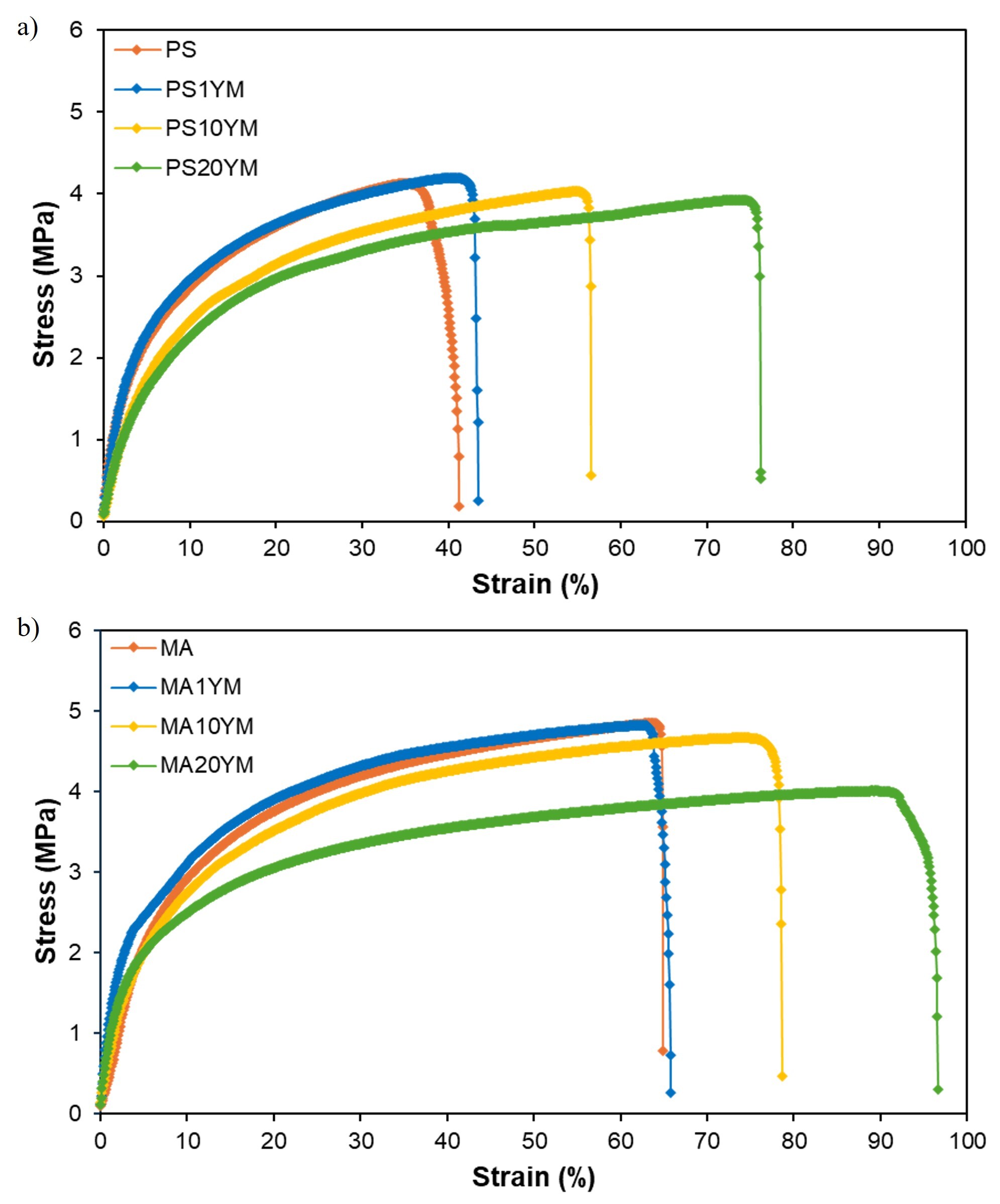
Films used for food packaging must withstand external stresses and exhibit adequate flexibility. The main parameters used to evaluate the mechanical properties of these materials include tensile strength (σ), which represents the film's resistance to rupture; strain (ε), which expresses the percentage of elongation relative to the film's initial length; elastic modulus (E), which reflects the material's stiffness; and toughness, which indicates the film's ability to absorb energy and deform before fracturing41,42. The stress-strain (σ-ε) curves obtained under uniaxial tension at room temperature showed the typical behavior of starch and glycerol-based films, regardless of the incorporation of additives: a linear elastic region followed by nonlinear behavior until failure, which occurs with a sharp drop in load at maximum stress, without necking prior to fracture (Figure 1).
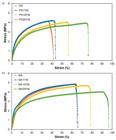
The values of the mechanical parameters are detailed in Table 2. The incorporation of yerba mate extract (Figure 1a) resulted in a reduction of the elastic modulus and tensile strength, accompanied by a significant (p ≤ 0.05) increase in the elongation at break. Compared to the PS matrix, these films showed up to 25% lower stiffness and about a 5% reduction in tensile strength. Elongation at break and toughness increased substantially with the rise in extract concentration, reaching values more than 80% higher in the PS20YM film. Similar results were observed by Jaramillo et al.24,43 in cassava starch films with yerba mate extract addition. Other authors also reported similar behaviors with the incorporation of plant extracts into biopolymeric matrices, such as pomegranate peel44, corn stigma45, betel leaves46 and green tea47.
Mechanical properties of starch-glycerol films with different concentrations of yerba mate extract (YM) and malic acid (MA).
The addition of malic acid (Figure 1b) appears to enhance the plasticizing effect of the yerba mate extract, leading to over a 130% increase in elongation at break and toughness in the MA20YM film, compared to the control (PS) (Table 2). Although malic acid modifies the molecular structure through crosslinking, its plasticizing effect has also been reported in starch-based films by Thessrimuang and Prachayawarakorn33, Niazi et al.37,48,49 and Karma et al.50. Studies by Fahrngruber et al.51 and Jiugao et al.52 found that concentrations of polycarboxylic acids up to 0.6% w/w imparted ductility to the films, whereas higher concentrations (above 0.8% w/w) induced excessive crosslinking, limiting starch chain mobility and reducing elongation at break due to acid-promoted hydrolysis51,53. It is worth mentioning that, in this study, the malic acid content was 0.5% w/w, which aligns with the concentrations recommended by these authors as optimal for enhancing film ductility without compromising molecular mobility.
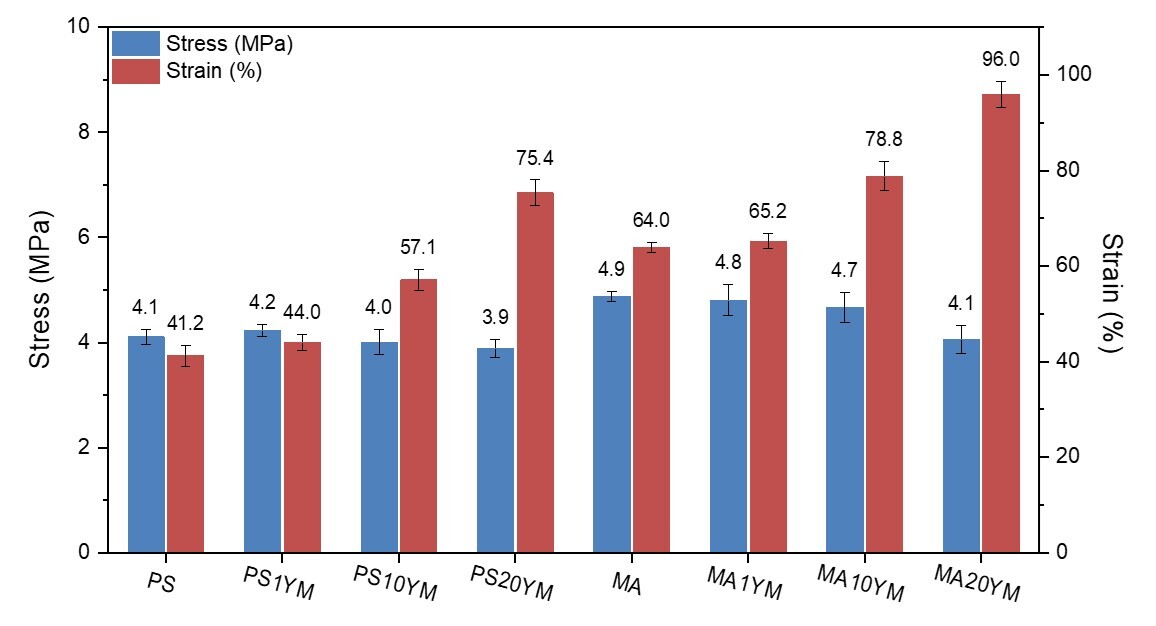
Figure 2 illustrates the comparison of tensile strength and elongation at break values for the films. The general trend observed in the mechanical properties with the addition of yerba mate extract can be attributed to a reduction in the cohesive forces within the starch network, leading to lower tensile strength and a more deformable material. The decrease in elastic modulus and maximum tensile strength with increasing extract concentration is likely due to the incorporation of low-molecular-weight molecules between starch chains, which facilitates molecular mobility under stress24,42. Meanwhile, the crosslinking process induced by malic acid weakens the hydrogen bonds between starch molecular chains, reducing molecular interactions and enabling easier molecular sliding33,51,52,54. Niazi et al.37 propose that, after malic acid crosslinking, glycerol interferes with the remaining hydrogen bonds between starch molecules. Cho et al.55 further correlated the increased elongation at break to a gradual rise in the gel fraction in samples containing MA following starch gelatinization, suggesting that the network remains robust yet sufficiently flexible to accommodate stretching.
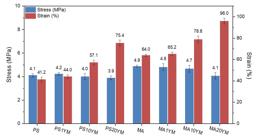
Comparison of tensile strength at break (MPa) (in red) and elongation at break (%) (in blue) for films formulated with different concentrations of yerba mate extract (0%-20% YM), with or without the incorporation of malic acid (0.5% MA).
3.2. Dynamic thermo-mechanical properties
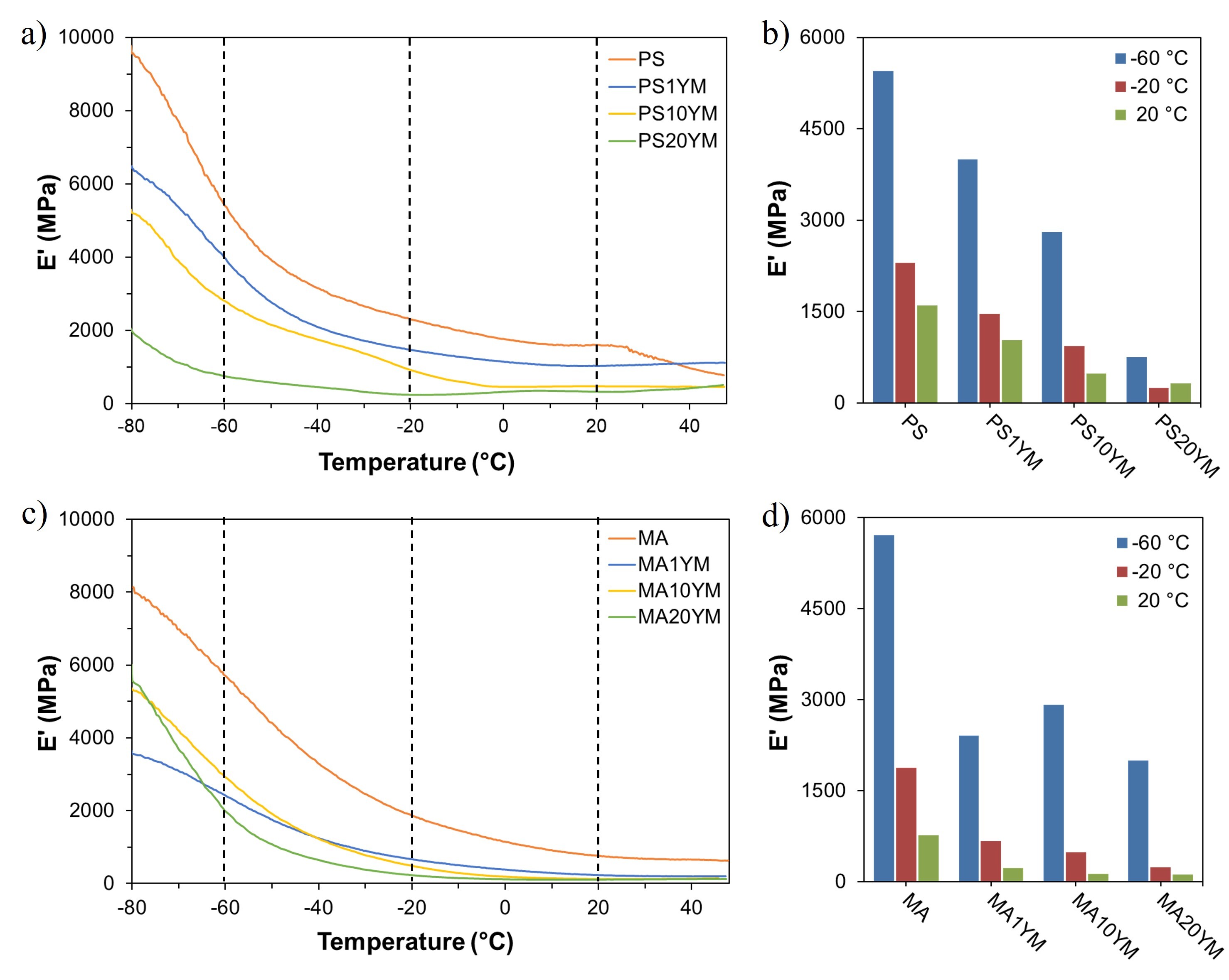
Dynamic mechanical analysis (DMA) was conducted to evaluate the material's response across different temperatures and to investigate the molecular mechanisms influencing the mechanical properties observed in the tensile test. The storage modulus (E’), which measures the elastic energy stored by the material during cyclic deformation, serves as an indicator of stiffness: higher values denote greater resistance to deformation, whereas lower values correspond to increased flexibility51,56. Figures 3a, c illustrates the storage modulus curves for all formulations. To profile the films' behavior under various thermal conditions, three specific temperatures were selected: -60 °C, -20 °C, and 20 °C (Figures 3b, d). The results are summarized in Table 3.
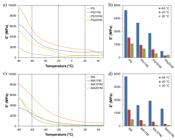
Storage modulus (E') as a function of temperature for the PS series (a, b) and MA series (c, d).
At -60 °C, the MA series samples displayed a tendency toward higher storage modulus, attributed to the high crosslinking of the films, which restricts molecular mobility51. However, this trend reversed at -20 °C, with malic acid-containing films exhibiting a lower modulus compared to non-additized samples. While the PS series formulations showed a gradual reduction in E' with increasing extract content in the temperature range between -60 °C and -20 °C, the MA formulations experienced a steeper decrease, reaching nearly 90%. Notably, although films without yerba mate extract (PS and MA) displayed similar modulus at -60 °C (5448.21 MPa and 5712.65 MPa, respectively), the difference between them grew to 20% at -20 °C and reached 50% at 20 °C, with the MA sample exhibiting lower stiffness. This behavior is further supported by the profile of the curves: while MA samples produced linear curves (Figure 3c), PS films exhibited peaks and plateaus (Figure 3a), suggesting moisture evaporation as the temperature increased, leading to a stiffer material. This effect is evident, for instance, in the PS20YM formulation, whose storage modulus increased by 34.65% between ‑20 °C and 20 °C.
In samples containing yerba mate extract, the difference in storage modulus between the two series was even more pronounced. At 20 °C, the obtained values reflect the behavior observed in the tensile test conducted at room temperature (Table 2). The incorporation of the extract played a crucial role in reducing the rigidity of the materials. The PS20YM and MA20YM formulations showed reductions of 80% and 93% in storage modulus compared to the PS matrix, highlighting the YM extract's influence. Studies by Lozano-Navarro et al.57 support this trend, reporting that the addition of natural extracts to chitosan films reduced the storage modulus due to the introduction of structural discontinuities and a decrease in cohesion between polymer chains, resulting in increased flexibility.
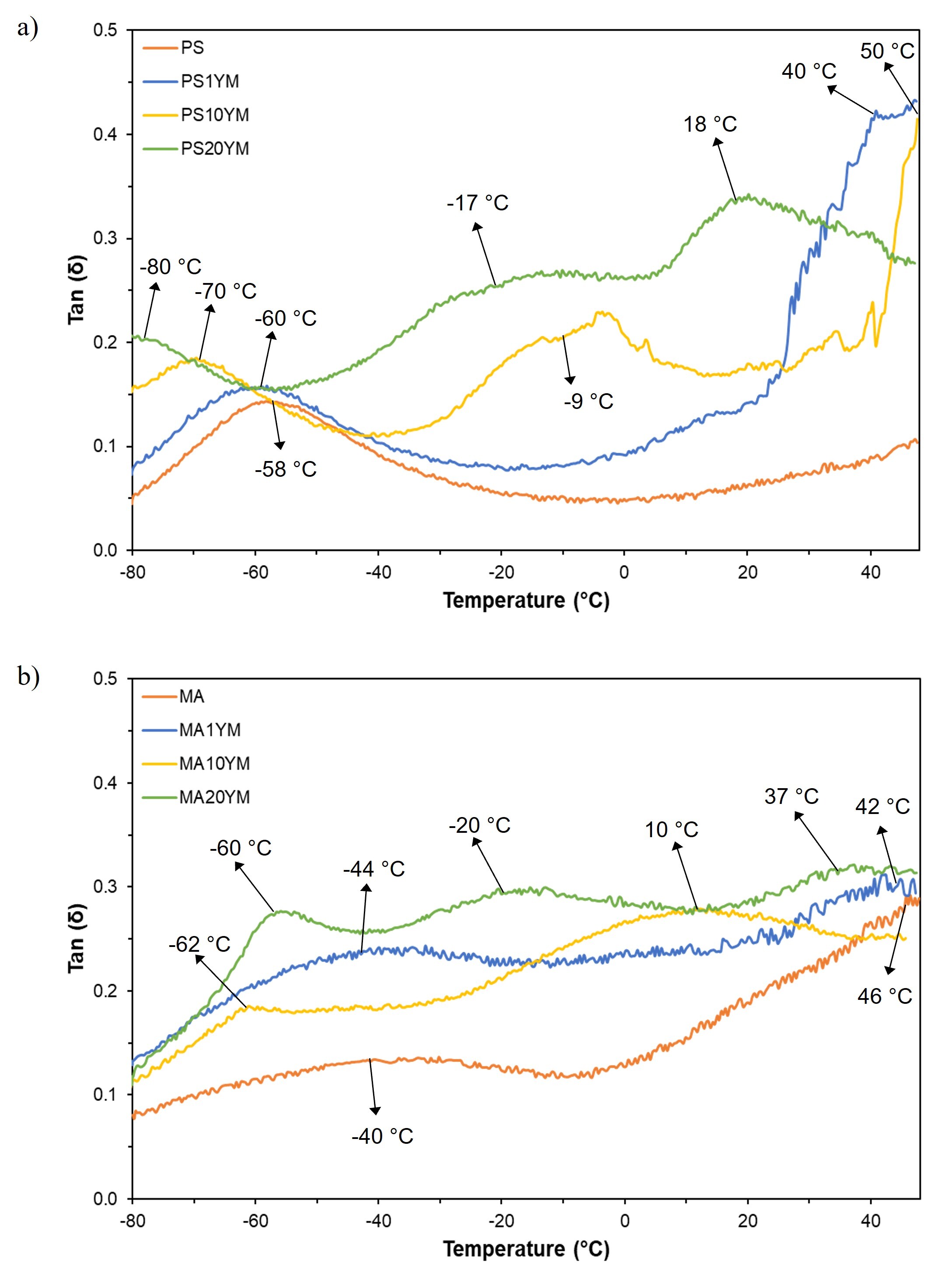
The loss tangent (tan δ) represents the internal friction of the material related to its mechanical damping. An increase in tan δ indicates more viscous characteristics, while lower values suggest greater elasticity. The peaks of tan δ correspond to the temperatures at which the material's structure undergoes molecular relaxations56. Figure 4 shows the temperature dependence of tan δ, with the identified peaks described in Table 4. Three peaks were observed, corresponding to the temperature transitions of the analyzed materials: the first, ranging from -80 °C to 40 °C (T1) in all samples; the second, between -20 °C and 46 °C (T2); and the third, between 18 °C and 50 °C (T3), which was absent in most formulations. The first transition is related to the molecular relaxation of the glycerol-rich phase, typically identified as a glass transition. The second peak corresponds to the relaxation of the starch-rich phase24,51,56. Finally, the third peak may be associated with the yerba mate extract.
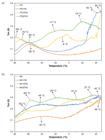
Loss tangent (tan δ) as a function of temperature for the developed films. a) PS series; b) MA series.
All transitions shifted to lower temperatures as the concentration of yerba mate extract increased. Thus, within the temperature range analyzed, all three peaks are visible only in the samples with higher YM content: above 10% for the PS series (Figure 4a) and above 20% for the MA series (Figure 4b). This shift to lower temperatures can be attributed to the effect of adding a plasticizing component, indicating weakening of hydrogen bonds and a consequent increase in elongation at break24,51. In the samples containing malic acid, this effect is less pronounced due to crosslinking, which reduces molecular mobility51,56.
Another observed aspect concerns the difference in the intensity of the tan δ peaks between the PS and MA series. While the PS samples exhibited well-defined peaks, indicating clear transitions, the MA samples displayed less distinct peaks, suggesting greater structural homogeneity and better interaction between polymer chains, possibly resulting from the blocking of polar groups by crosslinking. Additionally, the decrease in peak intensity reflects the lower viscosity of the MA samples compared to the PS series51,56.
3.3. Surface morphology
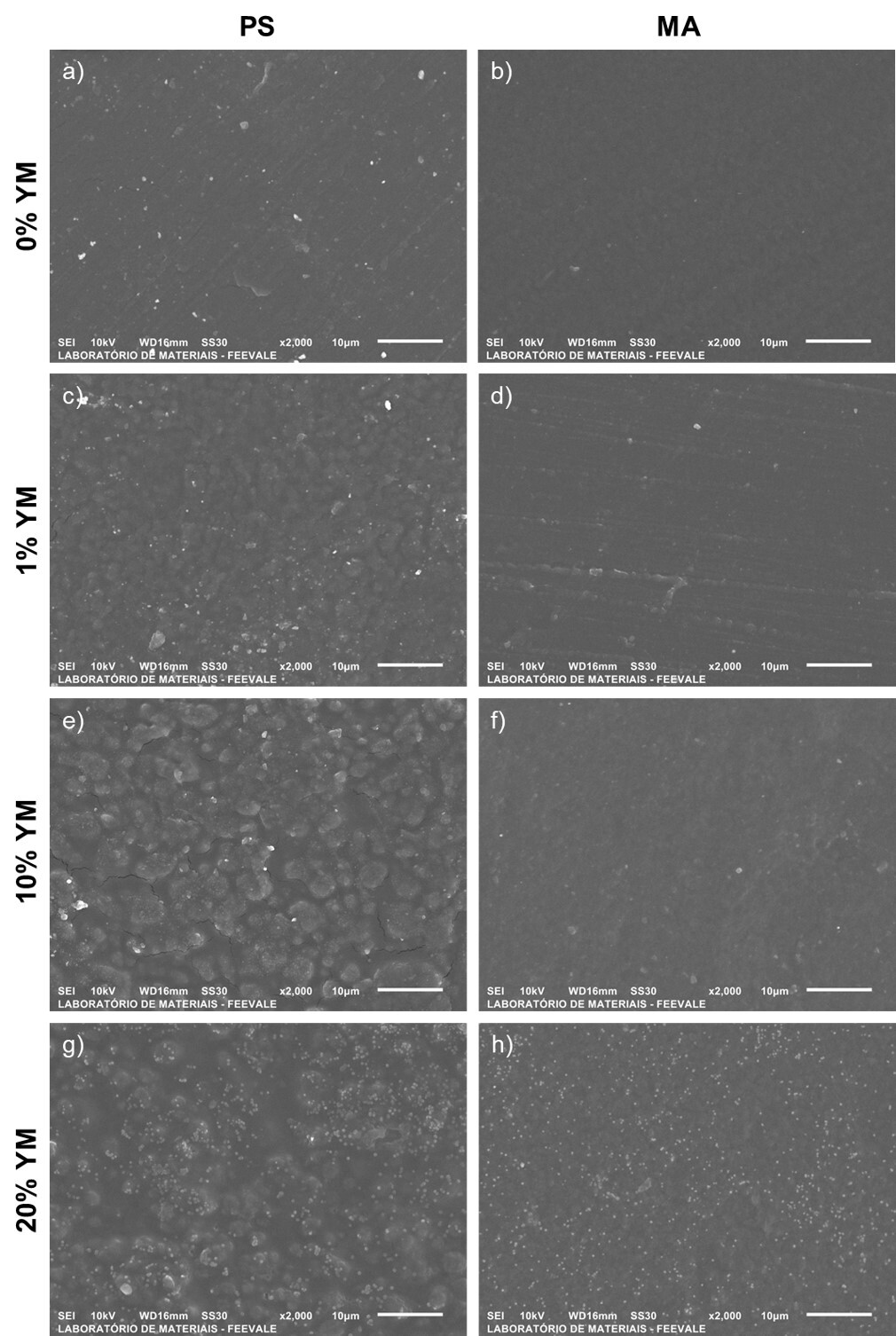
The reduced definition of the transition peaks in the MA series (Figure 4) indicates that malic acid reduces the agglomeration of thermoplastic starch, promoting its dispersion and enhancing the homogeneity of the films51. As a result, the components exhibit better compatibility, a finding also reported by Hernández et al.58 in citric acid-crosslinked cassava starch and chitosan films. To further investigate this, the surface of the samples was analyzed using scanning electron microscopy (SEM). Figure 5 supports this hypothesis, showing that the addition of malic acid (MA series) resulted in a smooth and uniform surface in the films, regardless of the extract content (Figures 5b, d, f, h). Similar effects were described by Thessrimuang and Prachayawarakorn33 and Jiugao et al.52 when incorporating carboxylic acids into starch matrices. The surface smoothing is promoted by the destabilization of hydrogen bonds due to the acidity of the additive, leading to the dissolution and plasticization of starch granules. This restructuring process contributes to a more uniform and flexible profile of the films.

Micrographs obtained by SEM (magnification 2000x) of the surface of the films: a) PS; b) MA; c) PS1YM; d) MA1YM; e) PS10YM; f) MA10YM; g) PS20YM; h) MA20YM.
On the other hand, in the samples without malic acid (PS series), increasing the yerba mate extract content leads to a rough texture on the surface (Figures 5a, c, e, g). This behavior is consistent with the observations of Piñeros-Hernandez et al.39, Jaramillo et al.43, Ceballos et al.59, and Miranda et al.60, who reported that the incorporation of plant extracts enhances the surface roughness of films.
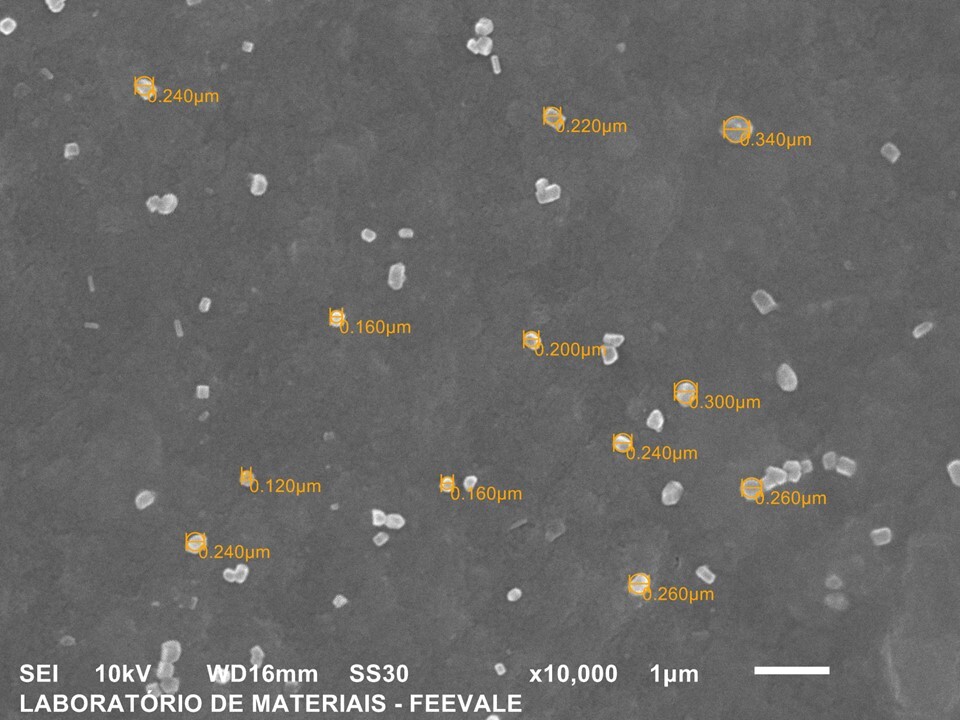
It is observed that, at higher concentrations of extract, both formulations display yerba mate particles with nanometric dimensions on their surface (120 - 340 nm), as shown in Figure 5g (PS20YM) and Figure 5h (MA20YM). It is evident that surface homogeneity was maintained in the MA series, while in the PS series, the particles tend to aggregate, forming clumps. Estevez-Areco et al.61 and López-Córdoba et al.62 also reported the appearance of nanoparticles in starch films with increasing plant extract content. This effect was attributed to the hydrophobic nature of certain antioxidants, which can cause the precipitation of insoluble components and promote morphological changes in the films. Additionally, Costa et al.63 and Shapi'i et al.64 reported an increase in the deformability of biopolymeric films upon adding nanoparticles, which is due to the strong intermolecular interaction between them and the matrix. This is attributed to their high surface area, which facilitates the movement of polymer chains under tension. The dispersion and dimensions of the particles can be seen in Figure 6.
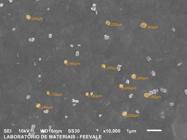
SEM micrograph (magnification 10,000x) of the surface of the PS20YM formulation, highlighting the presence of yerba mate nanoparticles.
It is well known that the addition of plasticizers significantly influences the final morphology, as it penetrates the molecular structure, reducing the attractive forces between polymer chains, thereby increasing the material's flexibility65. In conjunction with the results from the uniaxial tensile test and dynamic mechanical analysis, the information obtained from SEM indicates that the incorporation of yerba mate extract and malic acid into the starch-glycerol matrix may impart plasticizer properties to the films, with the MA20YM formulation (0.5% MA and 20% YM) standing out as the most effective combination.
4. Conclusions
The incorporation of yerba mate extract (YM) and malic acid (MA) into starch-based films significantly affects their mechanical and morphological properties. The uniaxial tensile test revealed a reduction in the Young’s modulus and tensile strength, while elongation at break increased with higher extract content, indicating a more flexible material. Dynamic mechanical analysis (DMA) showed that the molecular relaxations shifted to lower temperatures as the yerba mate extract and malic acid concentrations increased, suggesting a plasticizer-like effect. Scanning electron microscopy (SEM) further confirmed the morphological changes, with the presence of nanoparticles in the films, particularly at higher extract concentrations. The combination of yerba mate extract and malic acid produced a synergistic effect, enhancing the flexibility and reducing the rigidity of the films. This effect was most evident in the formulation containing 0.5% MA and 20% YM (MA20YM). These findings highlight the potential of yerba mate extract and malic acid as effective additives in starch-based matrices, making them promising candidates for applications in food coatings and other biopolymeric materials.
5. Acknowledgments
The authors wish to thank CAPES-PROEX and CNPq for supporting the research, the Laboratory of Polymeric Materials (LaPol) and the Sustainability Hub (NS) at the Federal University of Rio Grande do Sul (UFRGS) for providing the infrastructure, and Feevale University for conducting the DMA and SEM analyses.
-
Data Availability
Raw data supporting the findings of this study are available from the corresponding author upon request.
6. References
-
1 Shafqat A, Tahir R, Mahmood A, Tabinda AB, Yasar A, Pugazhendhi A. A review on environmental significance carbon foot prints of starch based bio-plastic: a substitute of conventional plastics. Biocatal Agric Biotechnol. 2020;27:101540. http://doi.org/10.1016/j.bcab.2020.101540
» http://doi.org/10.1016/j.bcab.2020.101540 -
2 Kundu R, Payal P. Biodegradation study of potato starch-based bioplastic. Curr Chin Chem. 2022;2(2):e190421192895. http://doi.org/10.2174/2666001601666210419110711
» http://doi.org/10.2174/2666001601666210419110711 -
3 Wu F, Misra M, Mohanty AK. Challenges and new opportunities on barrier performance of biodegradable polymers for sustainable packaging. Prog Polym Sci. 2021;117:101395. http://doi.org/10.1016/j.progpolymsci.2021.101395
» http://doi.org/10.1016/j.progpolymsci.2021.101395 -
4 Geyer R, Jambeck JR, Law KL. Production, use, and fate of all plastics ever made. Sci Adv. 2017;3(7):e1700782. http://doi.org/10.1126/sciadv.1700782
» http://doi.org/10.1126/sciadv.1700782 -
5 Brandão JAO, Martin PT, Morisso FP, Francisquetti EL, Santana RMC. Characterization of the abiotic degradation of oxo-biodegradable polypropylene obtained from transition metal-free pro-oxidant. Polym Degrad Stabil. 2024;223:110741. http://doi.org/10.1016/j.polymdegradstab.2024.110741
» http://doi.org/10.1016/j.polymdegradstab.2024.110741 -
6 Cha DS, Chinnan MS. Biopolymer-based antimicrobial packaging: a review. Crit Rev Food Sci Nutr. 2004;44(4):223-37. http://doi.org/10.1080/10408690490464276
» http://doi.org/10.1080/10408690490464276 -
7 Knapp MA, Santos DF, Pilatti-Riccio D, Deon VG, Santos GHF, Pinto VZ. Yerba mate extract in active starch films: mechanical and antioxidant properties. J Food Process Preserv. 2019;43(3):e13897. http://doi.org/10.1111/jfpp.13897
» http://doi.org/10.1111/jfpp.13897 - 8 Brito GF, Agrawal P, Araújo EM, Mélo TJA. Biopolímeros, polímeros biodegradáveis e polímeros verdes. REMAP. 2011;6(2):127-39.
-
9 Agostini NB, Kieffer VZ, Santana RMC. Rice husk filled PLA/PBAT composites for food containers: processability, rheological and thermal properties. Macromol Symp. 2024;413(6):2400093. http://doi.org/10.1002/masy.202400093
» http://doi.org/10.1002/masy.202400093 -
10 Kieffer VZ, Agostini NB, Santana RMC. Sustainable alternatives for packaging: exploring the hygroscopicity of biodegradable materials based on PLA, PBAT, and rice husk. Macromol Symp. 2024;413(6):2400094. http://doi.org/10.1002/masy.202400094
» http://doi.org/10.1002/masy.202400094 -
11 Kotekewis H, Santana RMC. Effect of the incorporation of lignin on starch/PVA blend films produced by casting. Macromol Symp. 2024;413(6):2400074. http://doi.org/10.1002/masy.202400074
» http://doi.org/10.1002/masy.202400074 -
12 Montilla-Buitrago CE, Gómez-López RA, Solanilla-Duque JF, Serna-Cock L, Villada-Castillo HS. Effect of plasticizers on properties, retrogradation, and processing of extrusion-obtained thermoplastic starch: a review. Stärke. 2021;73(9-10):2100060. http://doi.org/10.1002/star.202100060
» http://doi.org/10.1002/star.202100060 -
13 Fan Y, Picchioni F. Modification of starch: a review on the application of “green” solvents and controlled functionalization. Carbohydr Polym. 2020;241:116350. http://doi.org/10.1016/j.carbpol.2020.116350
» http://doi.org/10.1016/j.carbpol.2020.116350 -
14 Wang S, Li C, Copeland L, Niu Q, Wang S. Starch retrogradation: a comprehensive review. Compr Rev Food Sci Food Saf. 2015;14(5):568-85. http://doi.org/10.1111/1541-4337.12143
» http://doi.org/10.1111/1541-4337.12143 -
15 Ai Y, Jane J. Gelatinization and rheological properties of starch. Stärke. 2014;67(3-4):213-24. http://doi.org/10.1002/star.201400201
» http://doi.org/10.1002/star.201400201 -
16 Fredriksson H, Silverio J, Andersson R, Eliasson AC, Aman P. The influence of amylose and amylopectin characteristics on gelatinization and retrogradation properties of different starches. Carbohydr Polym. 1998;35(3-4):119-34. http://doi.org/10.1016/S0144-8617(97)00247-6
» http://doi.org/10.1016/S0144-8617(97)00247-6 -
17 EMBRAPA: Empresa Brasileira de Pesquisa Agropecuária [homepage on the Internet]. Batata – origem e botânica. Brasília: EMBRAPA; 2015 [cited 2024 Sep 8]. Available from: https://www.embrapa.br/hortalicas/batata/origem-e-botanica
» https://www.embrapa.br/hortalicas/batata/origem-e-botanica -
18 Santos TPR, Leonel M, Garcia EL, Carmo EL, Franco CML. Crystallinity, thermal and pasting properties of starches from different potato cultivars grown in Brazil. Int J Biol Macromol. 2016;82:144-9. http://doi.org/10.1016/j.ijbiomac.2015.10.091
» http://doi.org/10.1016/j.ijbiomac.2015.10.091 -
19 IBGE: Instituto Brasileiro de Geografia e Estatística [homepage on the Internet]. Produção agrícola - lavoura temporária: batata-inglesa. Brasília: IBGE; 2023 [cited 2024 Sep 10]. Available from: https://cidades.ibge.gov.br/brasil/pesquisa/14/10233?ano=2023
» https://cidades.ibge.gov.br/brasil/pesquisa/14/10233?ano=2023 - 20 Bertoft E, Blennow A. Structure of potato starch. In: Singh J, Kaur L, editors. Advances in potato chemistry and technology. Cambridge: Academic Press; 2016. p. 57-73. http://doi.org/10.1016/B978-0-12-800002-1.00003-0
- 21 Grommers HE, van der Krogt DA. Potato starch: production, modifications and uses. In: BeMiller J, Whistler R, eds. Starch: chemistry and technology. Cambridge: Academic Press; 2009. p. 511-39. http://doi.org/10.1016/B978-0-12-746275-2.00011-2
- 22 Corradini E, Rosa DS, Marconcini JM, Oliveira TO, editors. Amido termoplástico. São Carlos: Embrapa Instrumentação Agropecuária; 2007.
-
23 Gullón B, Eibes G, Moreira MT, Herrera R, Labidi J, Gullón P. Yerba mate waste: a sustainable resource of antioxidant compounds. Ind Crops Prod. 2018;113:398-405. http://doi.org/10.1016/j.indcrop.2018.01.064
» http://doi.org/10.1016/j.indcrop.2018.01.064 -
24 Jaramillo CM, Seligra PG, Goyanes S, Bernal C, Famá L. Biofilms based on cassava starch containing extract of yerba mate as antioxidant and plasticizer. Stärke. 2015;67(9-10):780-9. http://doi.org/10.1002/star.201500033
» http://doi.org/10.1002/star.201500033 -
25 Przygodda F, Martins ZN, Castaldelli APA, Minella TV, Vieira LP, Cantelli K, et al. Effect of erva-mate (Ilex paraguariensis A. St.-Hil., Aquifoliaceae) on serum cholesterol, triacylglycerides and glucose in Wistar rats fed a diet supplemented with fat and sugar. Rev Bras Farmacogn. 2010;20(6):956-61. http://doi.org/10.1590/S0102-695X2010005000045
» http://doi.org/10.1590/S0102-695X2010005000045 - 26 Bastos DHM, de Oliveira DM, Matsumoto RLT, Carvalho PO, Ribeiro ML. Yerba mate: pharmacological properties, research and biotechnology. Med Aromat Plant Sci Biotechnol. 2007;1(1):37-46.
-
27 IBGE: Instituto Brasileiro de Geografia e Estatística [homepage on the Internet]. Produção agrícola - lavoura permanente: erva-mate. Brasília: IBGE; 2023 [cited 2024 Oct 1]. Available from: https://cidades.ibge.gov.br/brasil/pesquisa/15/11954
» https://cidades.ibge.gov.br/brasil/pesquisa/15/11954 -
28 Lima JP, Farah A, King B, de Paulis T, Martin PR. Distribution of major chlorogenic acids and related compounds in Brazilian green and toasted Ilex paraguariensis (maté) leaves. J Agric Food Chem. 2016;64(11):2361-70. http://doi.org/10.1021/acs.jafc.6b00276
» http://doi.org/10.1021/acs.jafc.6b00276 -
29 Croge CP, Cuquel FL, Pintro PTM. Yerba mate – cultivation systems, processing and chemical composition: a review. Sci Agric. 2021;78(5):e20190259. http://doi.org/10.1590/1678-992x-2019-0259
» http://doi.org/10.1590/1678-992x-2019-0259 -
30 Bracesco N, Sanchez AG, Contreras V, Menini T, Gugliucci A. Recent advances on Ilex paraguariensis research: minireview. J Ethnopharmacol. 2011;136(3):378-84. http://doi.org/10.1016/j.jep.2010.06.032
» http://doi.org/10.1016/j.jep.2010.06.032 -
31 Bravo L, Goya L, Lecumberri E. LC/MS characterization of phenolic constituents of mate (Ilex paraguariensis, St. Hil.) and its antioxidant activity compared to commonly consumed beverages. Food Res Int. 2007;40(3):393-405. http://doi.org/10.1016/j.foodres.2006.10.016
» http://doi.org/10.1016/j.foodres.2006.10.016 -
32 Azevedo LC, Rovani S, Santos JJ, Dias DB, Nascimento SS, Oliveira FF, et al. Biodegradable films derived from corn and potato starch and study of the effect of silicate extracted from sugarcane waste ash. ACS Appl Polym Mater. 2020;2(6):2160-9. http://doi.org/10.1021/acsapm.0c00124
» http://doi.org/10.1021/acsapm.0c00124 -
33 Thessrimuang N, Prachayawarakorn J. Characterization and properties of high amylose mung bean starch biodegradable films cross-linked with malic acid or succinic acid. J Polym Environ. 2019;27(2):234-44. http://doi.org/10.1007/s10924-018-1340-2
» http://doi.org/10.1007/s10924-018-1340-2 -
34 Dastidar TG, Netravali AN. ‘Green’ crosslinking of native starches with malonic acid and their properties. Carbohydr Polym. 2012;90(4):1620-8. http://doi.org/10.1016/j.carbpol.2012.07.041
» http://doi.org/10.1016/j.carbpol.2012.07.041 -
35 Gebresas GA, Szabó T, Marossy K. Effects of acidity, number of hydroxyl group, and carbon chain length of carboxylic acids on starch cross-linking. CRGSC. 2023;6:100354. http://doi.org/10.1016/j.crgsc.2022.100354
» http://doi.org/10.1016/j.crgsc.2022.100354 -
36 Colivet J, Carvalho RA. Hydrophilicity and physicochemical properties of chemically modified cassava starch films. Ind Crops Prod. 2017;95:599-607. http://doi.org/10.1016/j.indcrop.2016.11.018
» http://doi.org/10.1016/j.indcrop.2016.11.018 -
37 Niazi MBK, Zijlstra M, Broekhuis AA. Influence of plasticizer with different functional groups on thermoplastic starch. J Appl Polym Sci. 2015;132(22):app.42012. http://doi.org/10.1002/app.42012
» http://doi.org/10.1002/app.42012 -
38 Jaramillo CM, Gutiérrez TJ, Goyanes S, Bernal C, Famá L. Biodegradability and plasticizing effect of yerba mate extract on cassava starch edible films. Carbohydr Polym. 2016;151:150-9. http://doi.org/10.1016/j.carbpol.2016.05.025
» http://doi.org/10.1016/j.carbpol.2016.05.025 -
39 Piñeros-Hernandez D, Jaramillo CM, López-Córdoba A, Goyanes S. Edible cassava starch films carrying rosemary antioxidant extracts for potential use as active food packaging. Food Hydrocoll. 2017;63:488-95. http://doi.org/10.1016/j.foodhyd.2016.09.034
» http://doi.org/10.1016/j.foodhyd.2016.09.034 - 40 ASTM: American Society for Testing and Materials. ASTM D882-18: standard test method for tensile properties of thin plastic sheeting. West Conshohocken: ASTM; 2018.
-
41 Chavez-Marquez E, Bernedo MSB, de Jara EM, Quequezana-Bedregal MJ, Gutierrez-Oppe EE, Pessoa PA Fo. Development of intelligent and active potato starch films based on purple corn cob extract and molle essential oil. Int J Biol Macromol. 2023;242(3):125080. http://doi.org/10.1016/j.ijbiomac.2023.125080
» http://doi.org/10.1016/j.ijbiomac.2023.125080 -
42 Farooq S, Mir SA, Shah MA, Manickavasagan A, Sunooj KV, Siddiqui MW, et al. Incorporation of plants extracts and essential oils into starch-based films: A comprehensive review. Stärke. 2023;75(5-6):2200098. http://doi.org/10.1002/star.202200098
» http://doi.org/10.1002/star.202200098 -
43 Jaramillo CM, Quintero-Borregales LM, Goyanes S, Bernal C, Famá L. A biodegradable and active bilayer nanocomposite obtained from starch-yerba mate extract and starch-TiO2 nanoparticles films for packaging applications. Stärke. 2024;76(3–4):2300048. http://doi.org/10.1002/star.202300048
» http://doi.org/10.1002/star.202300048 -
44 Fidelis JCF, Marchi LB, Scapim MRS, Gobetti ND, Yamashita F, Monteiro ARG. Development of biodegradable films containing pomegranate peel extract and potassium sorbate. Lebensm Wiss Technol. 2022;160:113302. http://doi.org/10.1016/j.lwt.2022.113302
» http://doi.org/10.1016/j.lwt.2022.113302 -
45 Boeira CP, Flores DCB, Alves JS, Moura MR, Melo PTS, Rolim CMB, et al. Effect of corn stigma extract on physical and antioxidant properties of biodegradable and edible gelatin and corn starch films. Int J Biol Macromol. 2022;208:698-706. http://doi.org/10.1016/j.ijbiomac.2022.03.164
» http://doi.org/10.1016/j.ijbiomac.2022.03.164 -
46 Nouri L, Nafchi AM. Antibacterial, mechanical, and barrier properties of sago starch film incorporated with betel leaves extract. Int J Biol Macromol. 2014;66:254-9. http://doi.org/10.1016/j.ijbiomac.2014.02.044
» http://doi.org/10.1016/j.ijbiomac.2014.02.044 -
47 Siripatrawan U, Harte BR. Physical properties and antioxidant activity of an active film from chitosan incorporated with green tea extract. Food Hydrocoll. 2010;24(8):770-5. http://doi.org/10.1016/j.foodhyd.2010.04.003
» http://doi.org/10.1016/j.foodhyd.2010.04.003 -
48 Niazi MBK, Zijlstra M, Broekhuis AA. Understanding the role of plasticizers in spray-dried starch. Carbohydr Polym. 2013;97(2):571-80. http://doi.org/10.1016/j.carbpol.2013.04.074
» http://doi.org/10.1016/j.carbpol.2013.04.074 - 49 Niazi MBK, Zijlstra M, Broekhuis AA. Malic acid as plasticizer for thermoplastic starch. In: Niazi MBK, editor. Production of plasticized thermoplastic starch by spray drying. Groningen: University of Groningen; 2013. p. 95-118.
-
50 Karma V, Gupta AD, Yadav DK, Singh AA, Verma M, Singh H. Recent developments in starch modification by organic acids: a review. Stärke. 2022;74(9-10):2200025. http://doi.org/10.1002/star.202200025
» http://doi.org/10.1002/star.202200025 -
51 Fahrngruber B, Siakkou E, Wimmer R, Kozich M, Mundigler N. Malic acid: a novel processing aid for thermoplastic starch/poly(butylene adipate-co-terephthalate) compounding and blown film extrusion. J Appl Polym Sci. 2017;134(48):45539. http://doi.org/10.1002/app.45539
» http://doi.org/10.1002/app.45539 -
52 Jiugao Y, Ning W, Xiaofei M. The effects of citric acid on the properties of thermoplastic starch plasticized by glycerol. Stärke. 2005;57(10):494-504. http://doi.org/10.1002/star.200500423
» http://doi.org/10.1002/star.200500423 -
53 Reddy N, Yang Y. Citric acid cross-linking of starch films. Food Chem. 2010;118(3):702-11. http://doi.org/10.1016/j.foodchem.2009.05.050
» http://doi.org/10.1016/j.foodchem.2009.05.050 -
54 Li J, He H, Zhang H, Xu M, Gu Q, Zhu Z. Preparation of thermoplastic starch with comprehensive performance plasticized by citric acid. J Appl Polym Sci. 2022;139(25):e52401. http://doi.org/10.1002/app.52401
» http://doi.org/10.1002/app.52401 -
55 Cho JH, Ryu KH, Kim HJ, Back JH. Fabrication and enhanced flexibility of starch-based cross-linked films. Biomacromolecules. 2024;25(12):7894-903. http://doi.org/10.1021/acs.biomac.4c01172
» http://doi.org/10.1021/acs.biomac.4c01172 -
56 Gebresas GA, Szabó T, Marossy K. A comparative study of carboxylic acids on the cross-linking potential of corn starch films. J Mol Struct. 2023;1277:134886. http://doi.org/10.1016/j.molstruc.2022.134886
» http://doi.org/10.1016/j.molstruc.2022.134886 -
57 Lozano-Navarro JI, Díaz-Zavala NP, Velasco-Santos C, Martínez-Hernández AL, Tijerina-Ramos BI, García-Hernández M, et al. Antimicrobial, optical and mechanical properties of chitosan–starch films with natural extracts. Int J Mol Sci. 2017;18(5):997. http://doi.org/10.3390/ijms18050997
» http://doi.org/10.3390/ijms18050997 -
58 Hernández MS, Ludueña LN, Flores SK. Citric acid, chitosan and oregano essential oil impact on physical and antimicrobial properties of cassava starch films. Carbohydr Polym Technol Appl. 2023;5:100307. http://doi.org/10.1016/j.carpta.2023.100307
» http://doi.org/10.1016/j.carpta.2023.100307 -
59 Ceballos RL, Ochoa-Yepes O, Goyanes S, Bernal C, Famá L. Effect of yerba mate extract on the performance of starch films obtained by extrusion and compression molding as active and smart packaging. Carbohydr Polym. 2020;244:116495. http://doi.org/10.1016/j.carbpol.2020.116495
» http://doi.org/10.1016/j.carbpol.2020.116495 -
60 Miranda CS, Ferreira MS, Magalhães MT, Gonçalves APB, Oliveira JC, Guimarães DH, et al. Effect of the glycerol and lignin extracted from piassava fiber in cassava and corn starch films. Mater Res. 2015;18(Suppl. 2):260-4. http://doi.org/10.1590/1516-1439.370414
» http://doi.org/10.1590/1516-1439.370414 -
61 Estevez-Areco S, Guz L, Famá L, Candal R, Goyanes S. Bioactive starch nanocomposite films with antioxidant activity and enhanced mechanical properties obtained by extrusion followed by thermo-compression. Food Hydrocoll. 2019;96:518-28. http://doi.org/10.1016/j.foodhyd.2019.05.054
» http://doi.org/10.1016/j.foodhyd.2019.05.054 -
62 López-Córdoba A, Jaramillo CM, Piñeros-Hernandez D, Goyanes S. Cassava starch films containing rosemary nanoparticles produced by solvent displacement method. Food Hydrocoll. 2017;71:26-34. http://doi.org/10.1016/j.foodhyd.2017.04.028
» http://doi.org/10.1016/j.foodhyd.2017.04.028 -
63 Costa KE, Silva LL, Martins MAPM, Santos J, Zanetti M, Dalcanton F, et al. Development of biodegradable polymeric films added with CuO-NPs and evaluation of their antifungal activity. Mater Res. 2023;26(Suppl. 1):e20220626. http://doi.org/10.1590/1980-5373-mr-2022-0626
» http://doi.org/10.1590/1980-5373-mr-2022-0626 -
64 Shapi’i RA, Othman SH, Basha RK, Naim MN. Mechanical, thermal, and barrier properties of starch films incorporated with chitosan nanoparticles. Nanotechnol Rev. 2022;11(1):1464-77. http://doi.org/10.1515/ntrev-2022-0094
» http://doi.org/10.1515/ntrev-2022-0094 -
65 Sanches FZ, Rocha KO, Martins CHG, Melo LL, Magdalena AG. PLA films incorporated with chitosan and ZnO nanoparticles for application in food packaging. Mater Res. 2024;27(Suppl 2):e20240265. http://doi.org/10.1590/1980-5373-mr-2024-0265
» http://doi.org/10.1590/1980-5373-mr-2024-0265
Edited by
-
Associate Editor:
Leonardo Gondim de Andrade e Silva.
-
Editor-in-Chief:
Luiz Antonio Pessan.
Raw data supporting the findings of this study are available from the corresponding author upon request.