Cost of Desalinated Water Production Using Heat-Absorbing Materials
Abstract
Due to the growing demand for water resources and their well-documented scarcity, low-cost and easy-to-implement alternatives for water treatment are essential to meet human needs. In this context, the present study aims to present the results of a cost analysis regarding the use of low-cost thermally absorbent materials in solar desalination systems, with the goal of achieving greater water productivity in an efficient and economically viable manner. Three desalinators were designed to operate simultaneously for comparative analysis. The first still (D1) was operated without any photothermal material, serving as a control; the second (D2) was filled with gravel, and the third (D3) with glass beads. The results showed that the use of these materials increased the productivity of distilled water by 38.32% in D2 and 16.63% in D3. The thermal efficiency observed was 42.46% in D2 and 35.33% in D3. Additionally, the cost per liter of water produced decreased by 25% and 8.33% for the systems using gravel and glass beads, respectively. The application of these materials in solar distillation systems demonstrated an excellent cost-benefit ratio.
Keywords:
Water desalination; heat-absorbing materials; water productivity
1. Introduction
Water is essential for human life, various activities, and environmental sustainability. However, in many regions worldwide, this resource is either scarce or of inadequate quality, posing risks to human health. This scarcity is exacerbated by factors such as the high prevalence of saline water, population growth, and global warming. Consequently, there is an increasing urgency for the development of innovative, sustainable, and cost-effective water purification systems capable of effectively removing undesirable components from water1,2.
To overcome the challenges of obtaining potable water, several studies have been carried out to reduce the costs of complex treatments and eliminate persistent pollutants. These studies often combine renewable energy sources with treatment processes, aiming to reduce energy costs while also removing persistent contaminants and obtaining potable water. One example is desalination, which uses solar energy that is freely and abundantly radiated over the Earth's surface. This has become one of the motivating factors for working on and developing a self-sustainable water treatment device3,4. Researchers and investors have been looking to solar energy as an alternative for water desalination as part of the effort to minimize the negative impacts of fossil fuel use5.
The solar desalination process replicates the natural water cycle, in which conventional systems receive solar radiation to heat the water, generate vapor, and subsequently condense it for freshwater production6. In this system, sunlight reaches the upper surface of the cover, which is designed to optimize light transmission to the basin containing the brackish water7,8. The water is heated, evaporated, and, due to the temperature difference between the water and the outer surface of the glass cover, it condenses. The water vapor collected during this process is referred to as distillate and during the distillation process, the impurities and salts present in the brackish water are retained and accumulate in the reservoir, and can be removed during the system’s maintenance stages9,10.
Solar desalination is a long-established technology, but it already features a variety of equipment models and configurations, aiming to increase productivity through the addition and improvement of materials, geometry, and internal structure. It is also noteworthy that the intelligent combination of subcomponents significantly contributes to enhancing the system’s overall performance11,12. Moreover, efforts have been made to reduce the construction costs of equipment designed for treating contaminated water. One of the models that stands out in terms of productivity and efficiency is the cascade-type solar still, developed to optimize the desalination process and reduce operational costs13,14. The cascade solar still is considered one of the most efficient models among solar desalination systems. Its wavy-shaped heat absorber allows for the retention of a thinner water layer, promoting a faster temperature increase. In addition, the short distance between the glass cover and the absorber plate contributes to quicker saturation of the internal chamber with water vapor, resulting in greater productivity and thermal efficiency compared to other conventional models15.
The productivity of a solar desalination unit depends on various parameters, including construction and meteorological factors. One strategy that has garnered significant attention from researchers to meet this demand is the use of photothermal materials in desalination systems16,17. Photothermal materials are a class of compounds with high efficiency in converting solar energy into heat, playing a pivotal role in recent advancements in solar desalination technologies. These materials have shown considerable potential in enhancing water evaporation rates, thereby optimizing the performance of distillation systems. Consequently, the development and strategic implementation of photothermal materials represents a key factor in the evolution of desalination systems, aiming at improved energy efficiency and environmental sustainability18.
In this context, a wide range of photothermal materials has been developed, each characterized by distinct properties. Among these, sensible heat storage materials stand out as the most commonly used due to their low complexity, excellent thermal stability, and cost-effectiveness. Consequently, it is essential that such materials exhibit suitable chemical, mechanical, environmental, and economic properties to be viable for energy storage applications19,20. Thus, gravel and glass marbles stand out as promising photothermal materials, although they remain relatively underexplored in the scientific literature. Studies such as that by Elashmawy21, who employed gravel and marbles, and that by Suraparaju et al.22, who utilized marbles as sensible heat storage materials, underscore the potential of these materials to enhance the thermal efficiency and productivity of solar desalination systems. These findings suggest that such low-cost alternatives warrant greater attention and further investigation in future research.
Considering these factors, this research aims to present the results of a cost analysis involving cascade-type solar desalination systems combined with heat-absorbing materials, such as gravel and glass marbles, for potable water production. Additionally, the study evaluates the impact of incorporating photothermal materials on increasing water productivity and reducing physicochemical parameters through the solar desalination process. This approach seeks to contribute meaningfully to the academic, social, and environmental spheres, as it represents a low-cost, efficient, and environmentally sustainable alternative for obtaining drinking water, particularly in regions facing water scarcity.
2 Materials and Methods
2.1. Study location
The experimental research was conducted at the Environmental Sciences Research Laboratory (LAPECA), Department of Sanitary and Environmental Engineering (DESA), Center for Science and Technology (CCT) at the State University of Paraíba (UEPB), located in the city of Campina Grande, Paraíba, at a latitude of 7°13'11" South, longitude of 35°52'31" West, and an average altitude of 550 meters. The subsequent steps were adopted as the working methodology.
2.2. Description of the solar desalination system
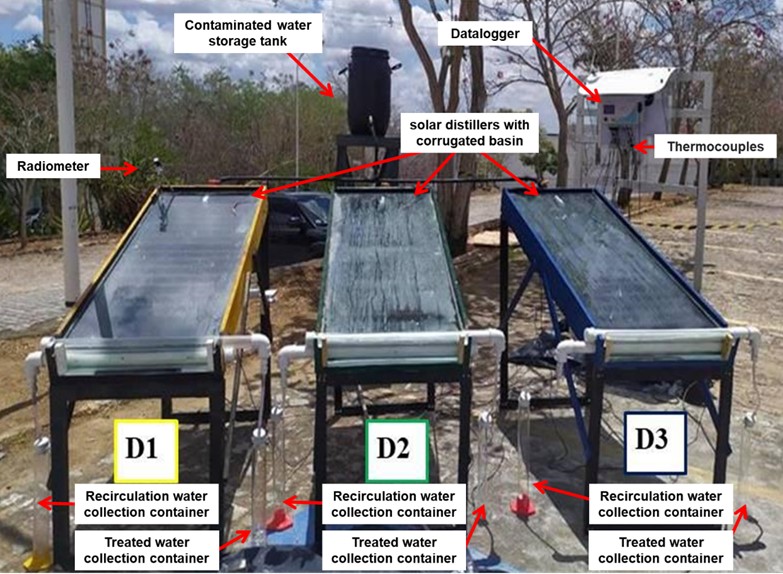
The desalination system used consists of three desalination units designed to operate simultaneously, labeled D1, D2, and D3, as shown in Figure 1, which illustrates the experimental setup. The primary distinction between desalination systems lies in the photothermal materials deposited on the corrugated heat-absorbing plate within each unit. In D1, no photothermal material is used, in D2, gravel is employed, and in D3, glass marbles are used. The photothermal materials were added in sufficient quantities to fully occupy the heat-absorbing plate. The plate features 16 corrugations, each containing 188.53 g of gravel and 197.55 g of marbles, resulting in total masses of 3,016.48 g and 3,160.80 g, respectively, within each desalinator.
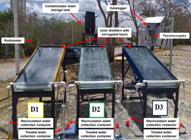
Each desalination unit features a corrugated heat-absorbing plate with a length of 1.45 m, width of 0.55 m, and thickness of 0.15 m, providing a useful solar exposure area of 0.78 m2. The materials used in the construction of each unit include: glass for condensing distilled water (with a thickness of 4 mm), corrugated heat-absorbing plate made of fibrocement with a thickness of 6 mm (with 15 corrugations), fiberglass for thermal insulation with a thickness of 25 mm, zinc plate for sealing, wooden frame for thermal insulation with a thickness of 35 mm, and water collection gutters made from polyvinyl chloride (PVC) pipes with a diameter of 40 mm. All of these materials are easily accessible and considered low-cost.
2.3. Operational mode and data collection
The desalination units were supplied with water collected from the Bodocongó Reservoir in the city of Campina Grande, Paraíba, and the system was operated in continuous water recirculation. The system was monitored from 7:00 AM to 5:00 PM whenever it was in operation, positioned in a strategic area without shading. According to Silva et al.14, Sarmento et al.23, and Conserva et al.24, the following variables were recorded at 30-minute intervals: solar radiation incidence, ambient temperature, water temperature, glass temperature, and distillate volume, this time interval allows for the capture of transient effects that occur throughout the experiment. The distillate volume was manually collected using a graduated cylinder.
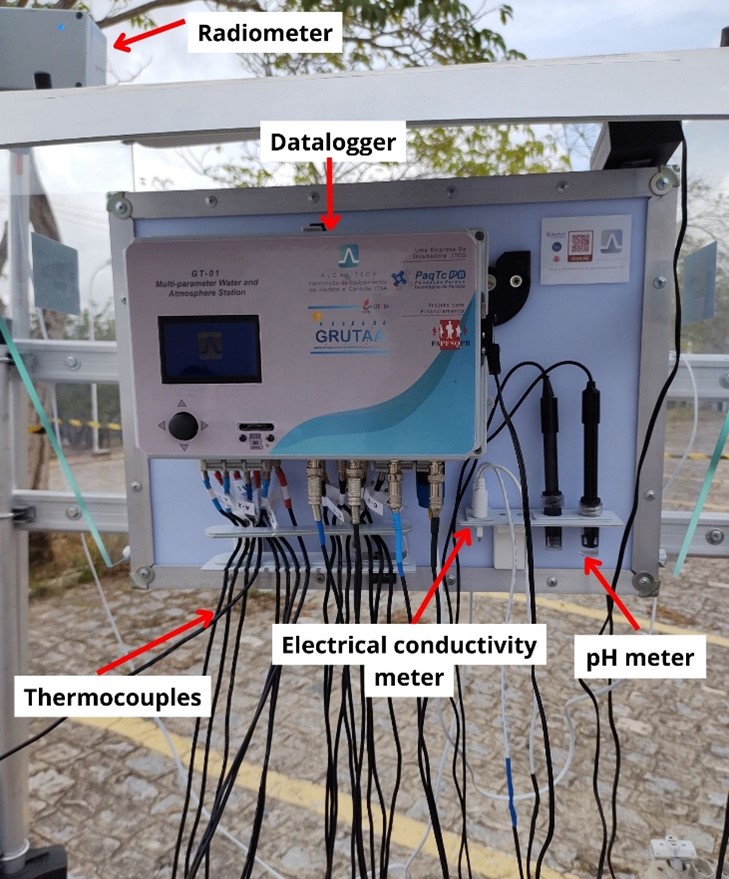
For the measurement of meteorological data (solar radiation and ambient temperature) and the temperature at various points of the desalination units (water temperature and external glass temperature), the Integrated Multi-Analysis System was used for data collection25. Figure 2 shows the Multi-Analysis System measurement equipment.
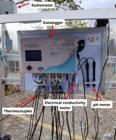
The specifications of the devices used for data collection are listed in Table 1. The instruments included: collection container (graduated cylinder), radiometer, and thermocouples. The specifications provided are range, accuracy, and uncertainty. The uncertainty analysis for each device was conducted based on Equation 1, where represents the device's uncertainty and denotes its standard accuracy. Some of these values were obtained from the technical specifications of the instruments, while others were provided by the manufacturer. All instruments were properly calibrated in accordance with their respective specifications26.
The reliability of the experimental results was ensured through uncertainty analysis applied to the collected data. Table 1 presents the individual uncertainties, highlighting the importance of also considering the uncertainties associated with derived and combined parameters, such as water productivity and thermal efficiency, since they are directly influenced by instrumental measurements27. The combined uncertainty was calculated using the square root of the sum of the squares of the statistical and instrumental uncertainties. The resulting values for accumulated water productivity were ±2.2, ±2.0, and ±1.6 mL.m−2.day−1 for distillers D1, D2, and D3, respectively, in the experiments involving photothermal materials. For thermal efficiency, the corresponding uncertainties were ±0.35%, ±0.30%, and ±0.22% for the same devices.
2.4. Photothermal materials (gravel and glass marbles)
To enhance the productivity of the desalination units, two photothermal materials were used in the research, which possess thermophysical properties essential for this application, as shown in Table 2. Gravel and glass marbles (glass) are sensible heat storage materials
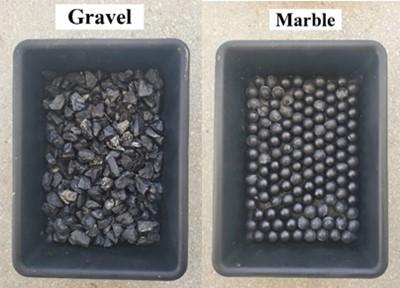
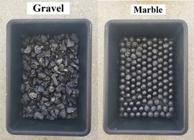
Gravel and glass marbles, being low-cost materials, were selected and used to enhance the solar desalination technique. These materials exhibit good thermal reliability and chemical stability, as they do not experience weight loss or degradation even under high temperatures. Both were painted with heat-resistant black paint, as shown in Figure 3, to optimize heat absorption in the desalination process.
2.5. Thermal images
Thermal images were used to identify areas with variations between the maximum and minimum temperatures. Each measurement point was represented by a specific color, according to the temperature value. Thermal images were taken of the photothermal materials (gravel and glass marbles) and the desalination units to assess the influence of these materials on the equipment's temperature. For obtaining the thermal images, each photothermal material was placed in a black-painted tray filled with water, simulating the operation of a solar desalination unit. In the desalination units, images were taken both with and without the glass surface.
2.6. Thermal efficiency
Based on the results obtained from the solar desalination process, it is possible to calculate the thermal efficiency of these units, considering parameters such as water productivity, solar radiation incidence, water temperature, and also construction parameters, such as the area of the solar desalination unit. Furthermore, there is a need to determine the efficiency of desalination with photothermal materials, as this topic still requires further comparisons and additional efforts29.
The calculation of thermal efficiency is an important result to analyze, as, for the system to be considered efficient, the solar desalination unit must produce a significant volume of water using the least amount of energy possible. The thermal efficiency of the desalination units can be expressed in terms of hourly and daily efficiency, with these factors calculated using Equations 2 and 330.
In the expressions above, the hourly water production is represented by (kg), and the tray area is represented by . The parameter n describes the number of hours of the experiment, I represents solar radiation (W.m-2), and (J.kg-1) is the latent heat of water. The latent heat needs to be calculated, and this can be done using Equation 4, with (ºC) representing the water temperature31.
2.7. Physicochemical parameters
The raw water used is considered ideal for the desalination process, as it has characteristics such as high levels of dissolved salts. Therefore, the water undergoes analysis before and after the desalination process to verify the system's efficiency. This analysis involves evaluating some physicochemical parameters that indicate water quality, according to the maximum values established by Ordinance No. 888, dated May 4, 2021, from the Ministry of Health, which is the Brazilian national legislation, as well as the values set by the World Health Organization (WHO). The analysis methodologies are recommended in the Standard Methods for the Examination of Water and Wastewater32 and are presented in Table 3.
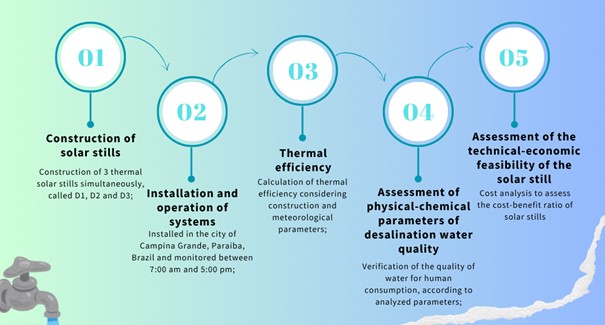
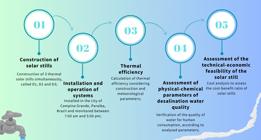
Figure 4 presents a summary of the procedures carried out for the experimental research methodology in the form of a flowchart.
3. Results and Discussion
This section presents the results obtained through the solar desalination system, including the photothermal materials used, which are essential for calculating the cost per liter of water. The results include water productivity, temperature profiles, and thermal efficiency. Additionally, the analysis of the physicochemical quality of the water is conducted. The data presented correspond to the experiment conducted in March 2024. This period was selected due to the high recorded levels of solar radiation in the experimental region during the month of March.
3.1. Water productivity
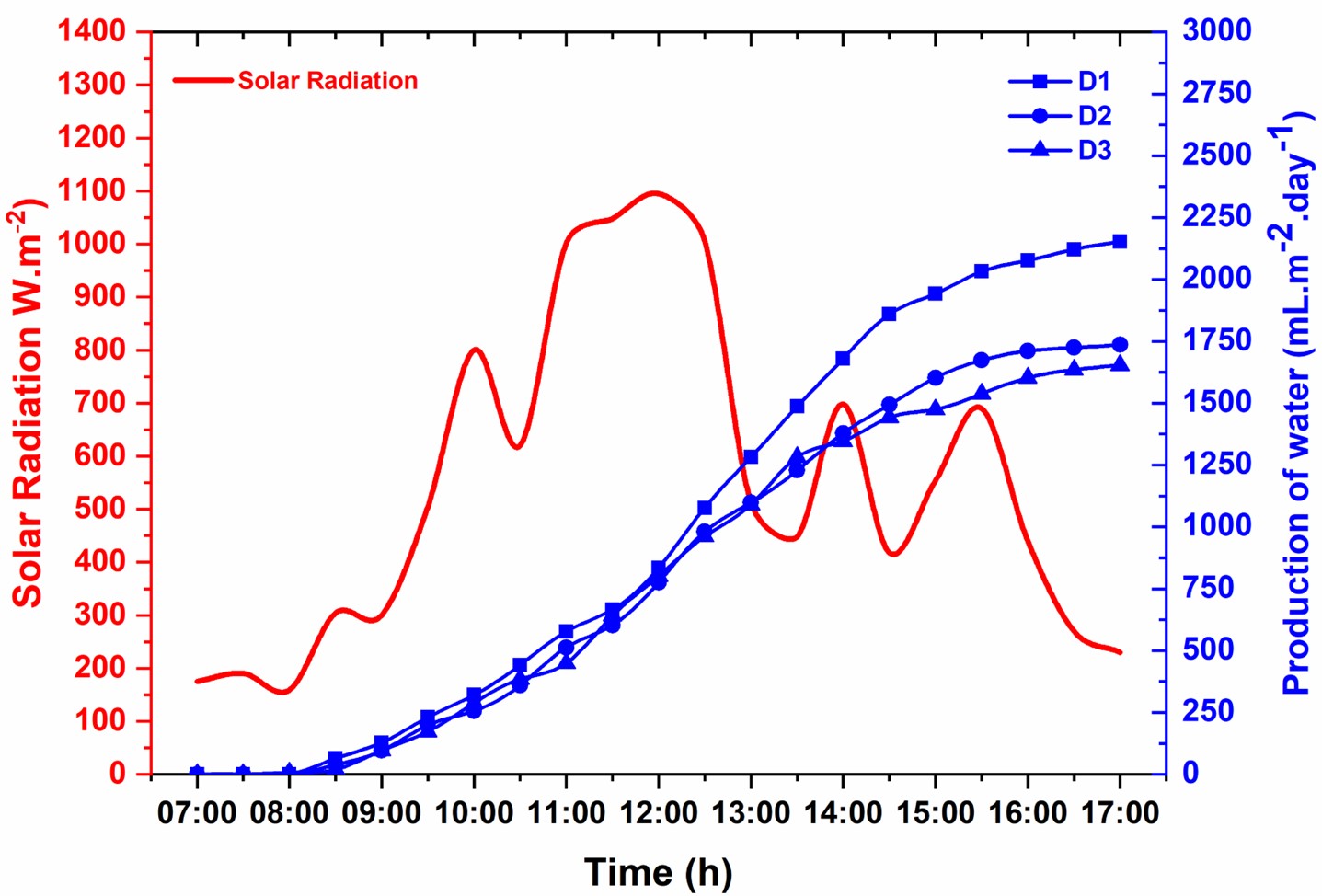
The water productivity results are obtained considering that the temperature profiles increase as the incidence of solar radiation also increases. The productivity of distilled water is a crucial parameter for analyzing the costs of a solar desalination unit, allowing an assessment of whether the equipment is economically viable in relation to its cost-effectiveness. Initially, a productivity test was conducted with the three desalination units without the presence of photothermal materials. This test was conducted to enable the necessary comparisons with the experiment involving photothermal materials. In this test, the following data were obtained, as shown in Figure 5: D1 with a productivity of 2153.85 mL.m-2, D2 with a productivity of 1737.18 mL.m-2, and D3 with a productivity of 1653.85 mL.m-2. On this day of experimentation, the average solar radiation recorded was 545.86 W.m-2. The results obtained in this research were superior to those recorded by Chauhan and Shukla33, who conducted experiments to evaluate the effect of the cover's tilt angle by constructing three models of solar desalination units. Two of these models were single-tilt desalination units with 25° and 30° angles facing south, while the third model had a dual tilt with a 15° angle facing the east-west direction. In their experiments, the authors obtained distilled water volumes of 1195, 1660, and 560 mL.m-2, respectively.
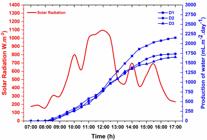
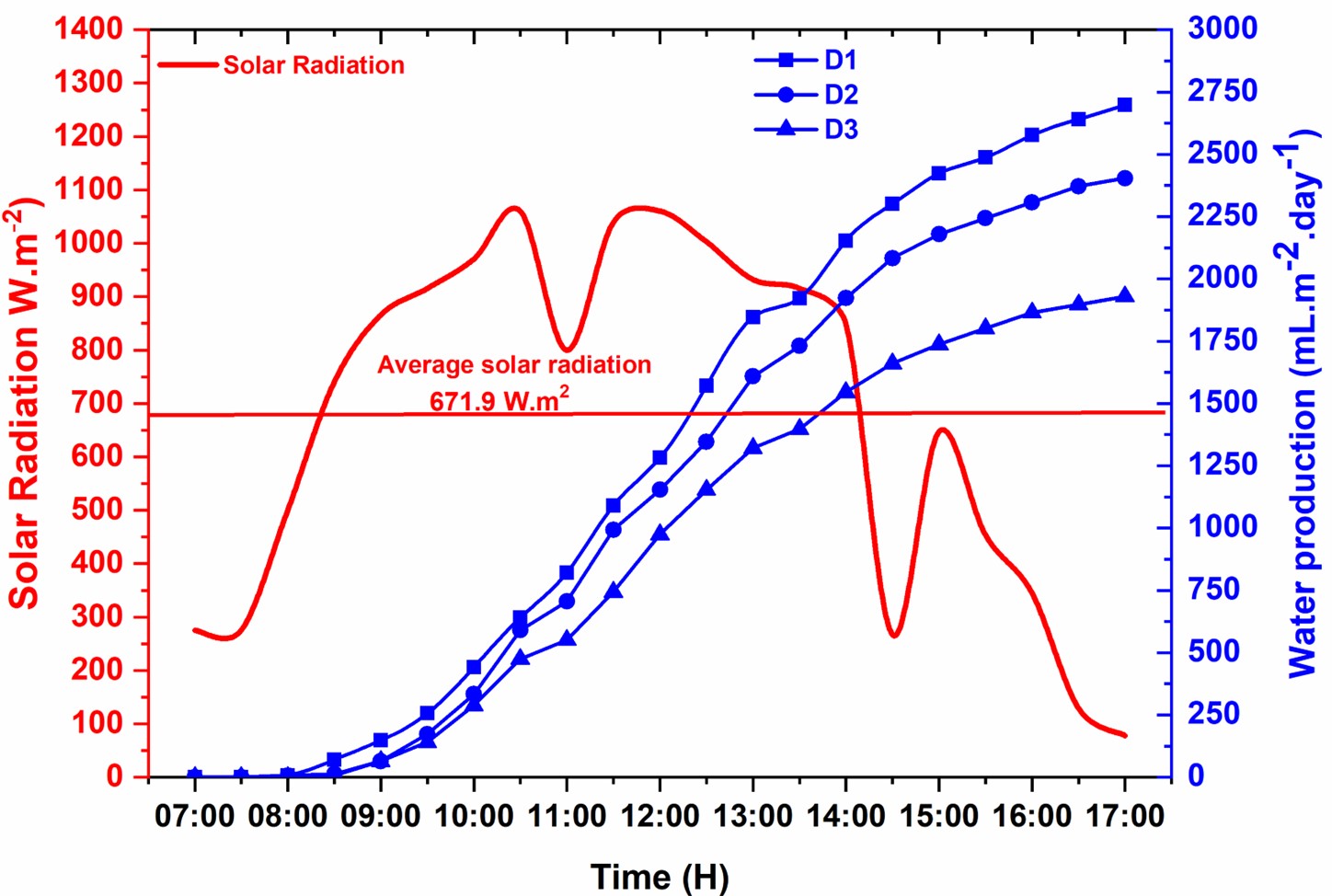
Considering the use of photothermal materials to improve the performance of the desalination units, an experiment was conducted in which D2 and D3 contained the presence of gravel and glass marbles, respectively, as illustrated in Figure 6. The solar radiation incidence at the start of the process was 275 W.m-2, and the first distilled water measurements occurred at 8:30 AM, with a volume of 70.52 mL.m-2 for D1, 12.82 mL.m-2 for D2, and 6.41 mL.m-2 for D3. As the day progressed and the radiation incidence increased, the productivity also rose. In this case, the maximum recorded solar radiation incidence of the day was 1060 W.m-2 at 12:00 PM, with a cumulative water production of 1283 mL.m-2 for D1, 1153 mL.m-2 for D2, and 974 mL.m-2 for D3. At the end of the experiment, the accumulated distilled water volume was 2698 mL.m-2.day-1 for D1, 2403 mL.m-2.day-1 for D2, and 1929 mL.m-2·day-1 for D3, with an average solar radiation incidence of 671.9 W.m-2. The hourly water productivity is a direct response to the levels of solar radiation incidence, which cause temperature increases. Considering this, after the highest recorded radiation incidences at 10:00 AM and 12:00 PM, the largest water volumes were recorded, but subsequently, as the solar radiation incidence decreased, there was a corresponding drop in water productivity. The results found are similar to those recorded by Bouçanova et al.34, who used a single-tilt desalination unit with the addition of gold, silver, and copper nanofluids, achieving final volumes of 2700 mL.m-2, 2400 mL.m-2, and 2500 mL.m-2, respectively.
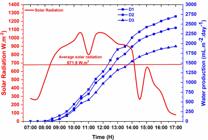
Making the necessary comparisons, it is important highlight that the experiment with materials significantly increased the water productivity, enhancing the efficiency of the desalination systems. Thus, the significance of these heat-absorbing materials in enhancing the water productivity of the equipment is emphasized. In the experiment involving these materials, the D2, with the gravel, stands out with the highest water productivity value, which can be justified by the thermophysical property of the gravel, having a higher volumetric heat capacity than the glass marbles. Thus, the desalinators (D2 and D3) showed an increase of 665.82 mL.m-2 and 275.15 mL.m-2, respectively.
3.2. Temperature profiles
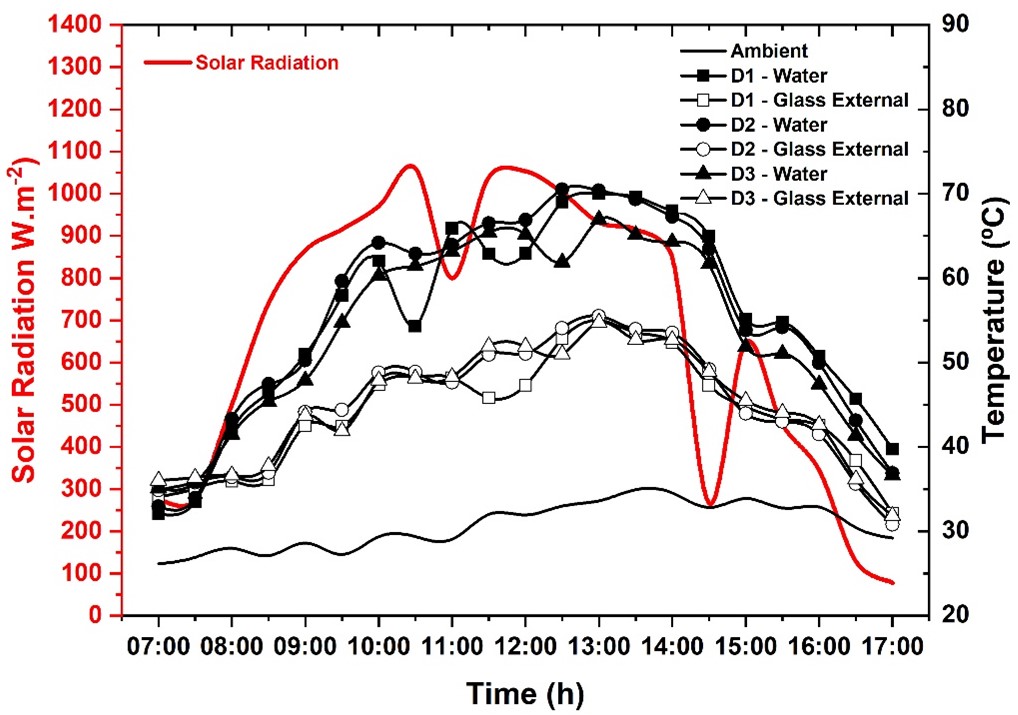
The equipment used in this research operates solely through solar energy, as when solar radiation hits the desalination unit, the temperatures inside the equipment increase, favoring the desalination process. Thus, it is possible to observe that as solar radiation incidence increases and reaches its highest values throughout the day, the temperatures respond to this variation and rise, resulting in an increase in water productivity. Figure 7 shows the variations in water temperature, glass temperature, and ambient temperature in relation to the incident solar radiation for desalination units D1, D2, and D3.
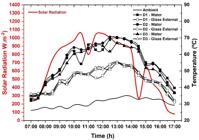
At the beginning of the experiment, at 7:00 AM, solar radiation was recorded at 275 W.m-2, after 1 hour, it increased to 500 W.m-2. Solar radiation reached its peak at 10:30 AM, with a magnitude of 1060 W.m-2, and its minimum value was observed in the last measurement, taken at 5:00 PM, with 78 W.m-2. During the experiment, the water temperature showed variations across the three desalination units. In D1, the highest temperature was recorded at 1:00 PM, with 70 °C, at the same time, D2 reached 70.37 °C, and D3 reached 66.94 °C. Throughout the day, the water temperature in D2 was higher than in D1 and D3. This can be explained by the porous surface of the gravel, which facilitates solar radiation absorption.
It is worth noting that water temperature plays a fundamental role in the evaporation process, consistently exhibiting values higher than those of the glass cover. The values recorded in this research were even higher than those found by Toosi et al.35, who, when using a stepped solar desalination unit with phase-change material and an external condenser for desalination, recorded maximum water temperatures around 60°C in all analyzed cases. Furthermore, Esfe and Toghraie36, in their study employing a triangular double-slope solar desalination unit, reported a maximum water temperature of 65 °C. They concluded that an increase in water temperature directly correlates with a higher rate of freshwater production.
The glass cover reached maximum values at 1:00 PM, with 55 °C, 55.5 °C, and 54.75 °C for D1, D2, and D3, respectively. At the same time, the solar radiation value was 932 W.m-2. This gradual increase in glass temperature directly influenced the rise in water temperature. In the case of desalination unit D3, the recorded temperatures are a result of the presence of glass marbles, which have a smooth and transparent surface, contributing to the increase in temperature inside the desalination unit.
Ambient temperature affects productivity as it contributes to the removal of heat from the glass cover, maintaining the condensation rate. The ambient temperature profile varied from 26.14 °C to 34.94 °C throughout the day, with a difference of 8.8 °C between the maximum and minimum values. The average recorded ambient temperature throughout the day was 30.66 °C.
3.3. Thermal analysis
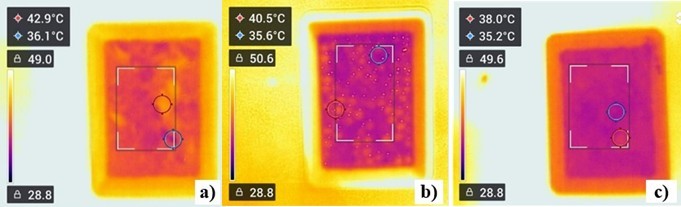
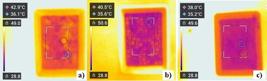
The thermal analysis conducted using thermal images was initially performed on the photothermal materials and compared with water. The temperature distribution readings of the gravel, glass marbles, and water are shown in Figure 8. Figure 8(a) presents the thermal image of the gravel, Figure 8(b) presents the thermal image of the glass marbles, and Figure 8(c) shows the thermal image of the tray with only water. These images were taken around 12:00 PM, a time with high solar radiation incidence. The ambient temperature was set at 28.8 °C, and it can be observed that the highest temperatures were recorded for the gravel, with a maximum of 42.9 °C and a minimum of 36.1 °C. While the glass marbles had a maximum of 40.5 °C and a minimum of 35.6 °C, the water recorded a maximum of 38 °C and a minimum of 35.2 °C. The gravel stands out because porous materials increase the water temperature and enhance the absorption of solar radiation due to their porous and irregular surface37. Nevertheless, its high thermal capacity and stability are evident, making it an ideal material for long-term applications. According to Palacios et al.38, gravel exhibits highly reliable thermophysical properties and maintains long-term stability, even after multiple operating cycles. These results confirm that photothermal materials are efficient in raising the water temperature, and consequently, improving the desalination process.
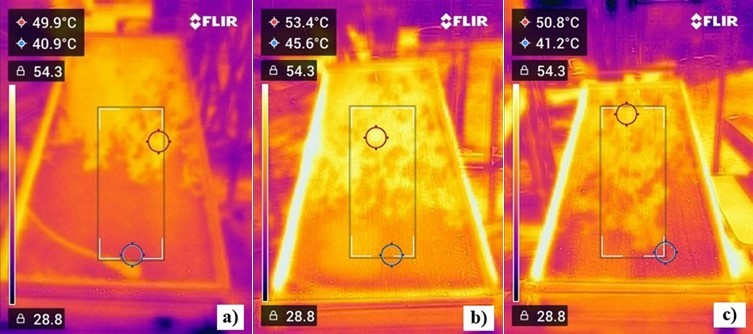
Considering the desalinators with the glass surface, the temperature distributions are presented in Figure 9. Figure 9(a) shows the thermal image of the desalinator without photothermal material (D1), Figure 9(b) shows the thermal image of the desalinator with gravel (D2), and Figure 9(c) shows the thermal image of the desalinator with glass marbles (D3). In D1, the temperatures were lower, with a maximum temperature of 49.9 °C and a minimum of 40.9 °C. D2 reached the highest temperature, with a maximum of 53.4 °C and a minimum of 45.6 °C. D3 had a maximum of 50.8 °C and a minimum of 41.2 °C. These results corroborate the data observed in the thermal images of the photothermal materials. The gravel showed higher temperatures than the glass marbles, which can be attributed to the fact that gravel has a higher specific mass and higher specific heat than glass marbles. Porous materials like gravel are effective at increasing the temperature gradient, optimizing heat absorption, and consequently improving the desalination system's productivity39.
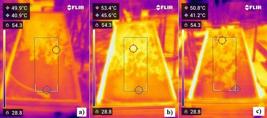
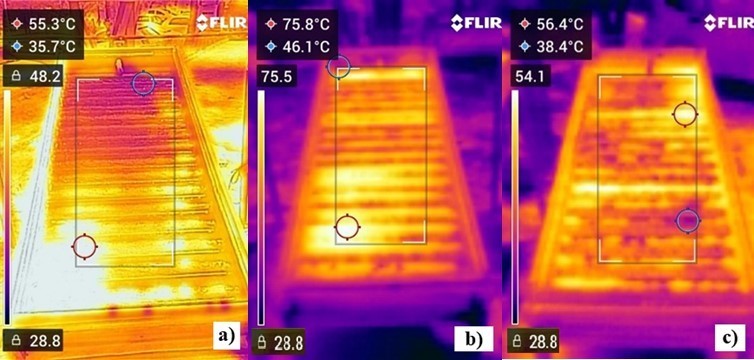
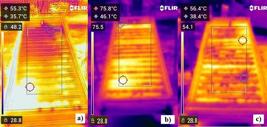
Considering the desalinators without the glass surface, the temperature distributions are shown in Figure 10. Figure 10(a) displays the thermal image of desalinator D1, Figure 10(b) presents the thermal image of desalinator D2, and Figure 10(c) shows the thermal image of desalinator D3. In all three desalinators, without the glass cover, the temperatures were higher than those found on the glass surfaces. This occurs because the temperature of the water is higher than the temperature of the glass cover, allowing for an increase in internal heat within the system. Specifically: D1: maximum temperature of 55.3 °C and minimum of 35.7 °C, D2: maximum temperature of 75.8 °C and minimum of 46.1 °C, D3: maximum temperature of 56.4 °C and minimum of 38.4 °C. The temperature increase in D2, which contains gravel, is notable, and this can be attributed to the higher thermal capacity of the photothermal material, which helps absorb and retain more heat. This behavior contributes to the rise in internal temperature of the system and enhances the evaporation process during desalination.
3.4. Thermal efficiency
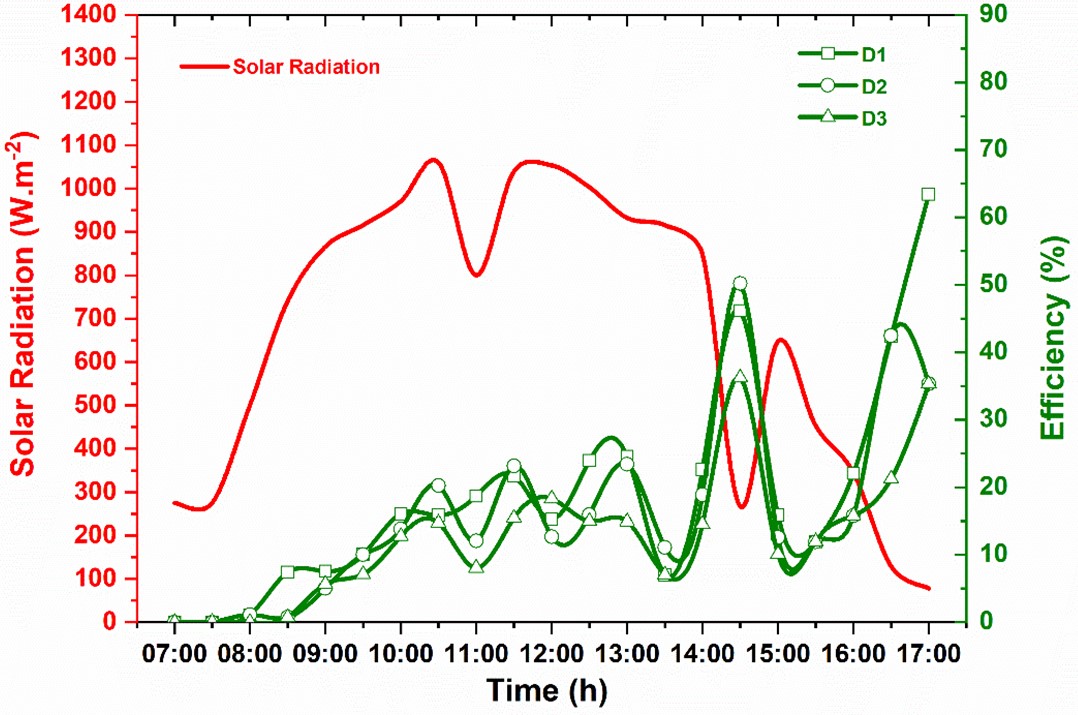
Thermal efficiency is a key indicator for evaluating the performance of a solar desalination system, considering factors such as incident solar radiation and water temperature. Figure 11 illustrates the hourly thermal efficiency in relation to the incident solar radiation for the three desalinators (D1, D2, and D3). In all three desalinator models, the thermal efficiency exceeded 30%. Notably, D2, which contains gravel as a photothermal material, achieved the highest efficiency at 42.46%, compared to D3, which uses glass balls and showed 35.33% efficiency. This increase in D2's efficiency can be explained by the higher thermal capacity of gravel, which enhances the absorption and retention of heat during the desalination process. The average solar radiation recorded throughout the experiment was 671.95 W.m-2, reflecting the intensity of radiation that directly influenced the production of distilled water. These results are also comparable to the study by Sharshir et al.40, which reported an hourly efficiency of 35.56% in experiments with conventional solar distillers. In summary, the addition of photothermal materials, such as gravel, significantly contributes to the increase in thermal efficiency, which in turn boosts the productivity of the solar desalination system.
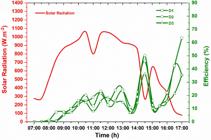
In the final hours of the experiment, an increase in thermal efficiency was observed despite the reduction in solar radiation. This behavior can be attributed to the system's thermal inertia. Due to its high specific heat, water is capable of retaining absorbed solar energy for extended periods, even after peak solar radiation hours. Moreover, the solar still was constructed with efficient thermal insulation, which minimizes heat loss and helps maintain internal temperatures above ambient levels for longer durations. The combination of water's high thermal capacity and effective insulation slows the cooling process, allowing evaporation, and consequently, system efficiency, to remain elevated even after 4:00 P.M.
3.5. Physical-chemical analysis of water
The analysis of the quality of water produced by the desalination systems involves evaluating several physical and chemical parameters to ensure that the water is suitable for human consumption, in compliance with established standards and regulations. Table 4 presents the results of the raw water and desalinated water parameters, including the measured values for each parameter before and after the desalination process. The validation of the results obtained in this study was carried out through the repetition of the experimental tests, ensuring the reproducibility and reliability of the data presented. Each test was performed in triplicate, and the values reported correspond to the average of the results obtained.
Additionally, it is important to compare the obtained values with the maximum tolerable levels established by the current legislation, such as Ordinance No. 888 of May 4, 2021, from the Ministry of Health, which defines the limits for physical-chemical parameters of drinking water. The objective of the analysis is to ensure that the desalination process has been effective not only in reducing the salinity of the water but also in removing harmful contaminants to health. The comparison between the raw water and desalinated water parameters helps verify whether the desalination system is in compliance with the established quality standards for human consumption. These results are essential to validate the efficiency of the desalination system, demonstrating that the water produced is potable and safe for use.
The analysis of the results in Table 4 reveals the efficiency of desalination in the systems, as the physical-chemical parameters of the produced water were within the limits established by Brazilian legislation (Ordinance No. 888/2021 from the Ministry of Health)41 and the World Health Organization42. These results indicate that the desalination process was effective not only in reducing the salinity of the water but also in ensuring the water's quality regarding critical parameters for human consumption. Therefore, the results obtained during the tests not only demonstrate the thermal efficiency and water productivity of the desalination systems but also highlight the quality of the produced water, meeting the standards required to ensure public health. This aspect reinforces the viability and sustainability of using solar desalination systems, especially with photothermal materials, to meet the demand for potable water in regions with limited water resources.
The hydrogen potential (pH) of the raw water was initially 8.0. After the desalination process, the pH values obtained were 6.53, 6.65, and 6.60 for desalination units D1, D2, and D3, respectively. These values represent reductions of 18.38%, 16.88%, and 17.50%, respectively. The electrical conductivity of the raw water was 164 µS.cm-1. After desalination, the conductivity values decreased to 2.0 µS.cm-1, 5.8 µS.cm-1, and 8.1 µS.cm-1 in D1, D2, and D3, respectively. The raw water had an apparent color of 54.1 TCU. The reductions observed were 92.24%, 91.13%, and 91.50% in D1, D2, and D3, respectively.
Initially, the raw water had 163.9 mg Cl− L-1 of chlorides. After desalination, the chloride concentrations in the treated samples were 4.71 mg Cl− L-1, 5.84 mg Cl− L-1, and 5.89 mg Cl− L-1 in D1, D2, and D3, respectively. The total hardness, sodium, and potassium were completely removed (100%) after the desalination process. The raw water had the following concentrations: 259.54 mg CaCO3.L-1, 300.0 mg Na+.L-1, and 31.0 mg K+.L-1, respectively.
Based on the results obtained, solar desalination proved to be effective for treating the water in question. According to the analyzed physicochemical parameters, the water meets the standards set by current regulations, with values below the maximum permissible limits. Therefore, the water can be considered potable according to the analyzed parameters.
3.6. Cost analysis
To evaluate the cost-benefit relationship of passive solar desalination systems, a detailed cost analysis was performed. The analysis of the cost per liter of water produced plays an important role in evaluating the economic feasibility of a solar still, as it is based on the present value method and considers the various monetary variables associated with each system component and with the system as a whole43,44. The cost of production per liter of water (CPL) is calculated based on the following Equation 5:
In this equation represents the annual cost of water and the refers to the annual average of water produced. This total annual solar still cost is calculated with factors such as annual fixed cost (), annual operation and maintenance cost () and annual residual value (), through Equation 6.
The first annual cost (FAC) of operating the solar desalination plant is given by Equation 745.
Where, P is the capital cost of the solar desalination plant and CRF is the capital recovery factor, calculated from Equation 845.
Where, i represents the annual bank interest rate and n indicates the useful life of the solar still.
According to Suraparaju et al.46, an interest rate of 10% can be considered for the economic analysis, with an estimated operational lifespan of 10 years for the desalination system.
The average annual cost (AMC) of operation and maintenance, including the costs of cleaning the tray and glass cover, as well as everything related to the conservation of the equipment, is equivalent to 10% of the initial cost and is obtained from Equation 947.
The annual residual value (ASV) in solar energy is calculated from Equation 1048.
Where, S demonstrates the residual value of solar energy from the solar desalination plant and is generally considered equal to 20% of the capital cost (S = 0.2P).
The residual value is related to the depreciation of equipment parts and the capacity for future deployment. In general, in this value of 20% all depreciations are taken into account43. The SSF is the depreciation fund factor, calculated by Equation 11:
The cost breakdown of each component of the solar desalination systems is presented in Table 5. The total cost for the desalination system without photothermal material is $93.54, while the system with gravel (D2) costs $97.00, and the system with glass marbles (D3) costs $102.20. The analysis of the cost of water produced by each system is shown in Table 6. These results provide a clear comparison of the production costs for each configuration, demonstrating the economic feasibility of integrating photothermal materials into solar desalination systems.
The cost analysis was conducted for the D1 desalination system configuration, as well as for the D2 and D3 systems, with the aim of evaluating the increased production achieved using photothermal materials. It was observed that the capital cost (P) was nearly equivalent across the configurations. Consequently, the cost per liter of distilled water was determined to be $0.016 for D1, $0.018 for D2, and $0.024 for D3.
The calculated cost per liter of distilled water proved to be highly satisfactory, particularly when compared to the results reported in the study by El-Sebaii and El-Naggar49, where costs of $0.038 and $0.061 were recorded for a copper-finned solar still and a conventional solar still, respectively. A critical factor influencing the cost per liter of water is the annual distilled water production. For D1, with a cost of $0.016 per liter, the average annual production was 984.77 liters.
The economic analysis regarding the additional investment required to enhance the productivity of solar desalination systems using photothermal materials is presented in Table 7. For this evaluation, the cost of gravel and marbles used in the D2 and D3 desalination systems, respectively, was considered.
The use of photothermal materials resulted in an increase in distilled water production by 38.32% in D2 and 16.63% in D3. Additionally, water production costs decreased by 25% in D2 and 8.33% in D3. This cost reduction was achieved despite the added expense of the photothermal materials, leading to a lower overall cost of water production in the desalination systems. These results highlight that the incorporation of photothermal materials into desalination systems represents an alternative with an excellent cost-benefit ratio.
In the context of cost analysis, desalinators present a low-cost alternative compared to other desalination technologies, such as reverse osmosis (RO). RO is a membrane-based process that operates under high pressure, resulting in significant energy consumption. Even with the integration of renewable energy sources, RO requires substantial initial capital investment and specialized labor, which substantially increase operational costs. Furthermore, membrane fouling, often mitigated by increasing operational pressure to maintain flow rate, degrades process efficiency and elevates energy demands, necessitating rigorous membrane maintenance50. Consequently, for rural communities with low potable water demand and a preference for simple operation, solar desalination constitutes the most viable option.
4. Conclusion
The study conducted on the cascade-type solar desalination system with a heat-absorbing plate and photothermal materials provides significant contributions to the advancement of desalination technologies, highlighting the effectiveness of gravel and marbles as photothermal materials in enhancing heat absorption and, consequently, increasing distillate productivity. The key highlights and conclusions of the work are summarized below:
-
The thermal efficiency of the desalination systems exceeded 30%. D2, which utilized gravel as a photothermal material, achieved the highest efficiency at 42.46%, while D3, which incorporated marbles, attained an efficiency of 35.33%.
-
According to the thermal images of the glass surface, D1 recorded a maximum temperature of 49.9 °C. D2 achieved the highest temperature, reaching a maximum of 53.4 °C, while D3 exhibited a maximum of 50.8 °C. These results reinforce the effectiveness of porous and transparent materials in enhancing heat absorption and transfer.
-
The initial chloride concentration in the raw sample was 163.9 mg Cl− L-1. After the desalination process, the chloride levels in the treated samples from desalination units D1, D2, and D3 were reduced to 4.71 mg Cl− L-1, 5.84 mg Cl− L-1, and 5.89 mg Cl− L-1, respectively. Additionally, total hardness, sodium, and potassium were completely removed (100% removal) in all desalination units.
-
The integration of photothermal materials into the system led to a significant increase in distilled water productivity: D2 (gravel) exhibited a 38.32% increase, while D3 (marbles) achieved a 16.63% increase. Gravel demonstrated superior thermal capacity, which accounts for the enhanced performance of the D2 desalination unit compared to D3.
-
The system exhibited an estimated freshwater production cost per liter that is highly affordable USD $0.016 for the desalination system without photothermal materials, with comparable costs for D2 and D3. This demonstrates the economic viability of the technology, making it an attractive solution for water-scarce regions.
Considering the low construction cost of the solar still, combined with the reduced water production costs and the ease of equipment maintenance, the data reinforce the potential of this technology as a viable and sustainable alternative for water-scarce regions, with the capacity to meet small-scale domestic demands. Based on these results, new research avenues can be explored to expand knowledge on the application and improvement of this technology.
5. Future Perspectives
Future studies may explore the incorporation of different photothermal materials into solar desalination systems, aiming to enhance heat absorption and water productivity. It is also recommended to evaluate the durability of the equipment and its maintenance requirements under real long-term environmental conditions. Comparative analyses of the technical and economic feasibility of this system in relation to other water treatment technologies may provide valuable insights for its large-scale application. Finally, scaling up the solar still should be considered to increase its production capacity and make it viable for serving larger communities or remote regions with limited access to potable water.
6. Acknowledgments
The authors would like to thank the Coordination for the Improvement of Higher Education Personnel (CAPES), the National Council for Scientific and Technological Development (CNPq), the grant #2393/2023-d, Paraíba State Research Support Foundation (FAPESQ) for granting scholarships, and the Paraíba State University (UEPB) for providing laboratories to carry out this work.
7. References
-
1 Starling MCVM, Amorim CC, Leão MM. D. Occurrence, control and fate of contaminants of emerging concern in environmental compartments in Brazil. J Hazard Mater. 2019;372:17-36. http://doi.org/10.1016/j.jhazmat.2018.04.043
» http://doi.org/10.1016/j.jhazmat.2018.04.043 -
2 Elmghari N, Rachidi MB, Salihi M, Chebak A, Al-Dahhan MH, Chhiti Y. Enhancing solar still productivity using phase change material: experimental investigation under the climatic conditions of Benguerir, Morocco. Appl Therm Eng. 2025;269:126056. http://doi.org/10.1016/j.applthermaleng.2025.126056
» http://doi.org/10.1016/j.applthermaleng.2025.126056 -
3 Singh AK. Samsher. Material conscious energy matrix and enviro-economic analysis of passive ETC solar still. Mater Today Proc. 2021a;38:1-5. http://doi.org/10.1016/j.matpr.2020.05.117
» http://doi.org/10.1016/j.matpr.2020.05.117 -
4 Singh AK, Samsher. Tech-en-econ-energy-exergy-matrix (T4EM) observations of evacuated solar tube collector augmented solar desaltification unit: a modified design loom. Mater Today Proc. 2022a;61:258-63. http://doi.org/10.1016/j.matpr.2021.09.088
» http://doi.org/10.1016/j.matpr.2021.09.088 -
5 Abdelrahman MA, Sallam GR, Dawoud MA, Sakr RY, Emam M. Improving the performance of a PV-RO brackish water desalination plant in Egypt using solar thermal feed preheating technology. J Energy Storage. 2024;98:113115. http://doi.org/10.1016/j.est.2024.113115
» http://doi.org/10.1016/j.est.2024.113115 -
6 Singh AK. Analysis for optimized prerequisites of modified solar stills. Heliyon. 2024;10(3):e25804. http://doi.org/10.1016/j.heliyon.2024.e25804
» http://doi.org/10.1016/j.heliyon.2024.e25804 -
7 Singh AK. Mathematical analysis of optimized requisites for novel combination of solar distillers. J Eng Res. 2023;11(4):516-26. http://doi.org/10.1016/j.jer.2023.100121
» http://doi.org/10.1016/j.jer.2023.100121 -
8 Kumar S, Ahmad A, Irshad K, Prakash O, Kausher R, Hasnain SMM, et al. Solar stills: a review for water scarcity solutions. Heliyon. 2024;10(19):e38751. http://doi.org/10.1016/j.heliyon.2024.e38751
» http://doi.org/10.1016/j.heliyon.2024.e38751 -
9 Singh AK. An inclusive study on new conceptual designs of passive solar desalting systems. Heliyon. 2020;7(2):e05793. http://doi.org/10.1016/j.heliyon.2020.e05793
» http://doi.org/10.1016/j.heliyon.2020.e05793 -
10 Tan JH, Liew YY, Bahar R, Jun HK, Low J. Enhancing solar still productivity in tropical climate with conductive particle-assisted phase change material. Sol Energy Mater Sol Cells. 2025;279:113227. http://doi.org/10.1016/j.solmat.2024.113227
» http://doi.org/10.1016/j.solmat.2024.113227 -
11 Singh AK, Samsher. A review study of solar desalting units with evacuated tube collectors. J Clean Prod. 2021b;279:123542. http://doi.org/10.1016/j.jclepro.2020.123542
» http://doi.org/10.1016/j.jclepro.2020.123542 -
12 Zuo L, Xiao C, Yan Z, Guo Z, Huang L, Ge Y. Comparative tests on the performance of solar stills enhanced by pebbles, corrugated plate and membrane distillation and construction of performance prediction model for rock type still. Sol Energy Mater Sol Cells. 2024;276:113069. http://doi.org/10.1016/j.solmat.2024.113069
» http://doi.org/10.1016/j.solmat.2024.113069 -
13 Singh AK, Yadav RK, Mishra D, Prasad R, Gupta LK, Kumar P. Active solar distillation technology: a wide overview. Desalination. 2020;493:114652. http://doi.org/10.1016/j.desal.2020.114652
» http://doi.org/10.1016/j.desal.2020.114652 -
14 Silva CB, Silva KS, Sarmento KKF, Pascoal SA, Cavalcante GG, Medeiros KM, et al. Removal of the veterinary antibiotics oxitetracycline from contaminated water by solar distillation. J Water Process Eng. 2024;58:104784. http://doi.org/10.1016/j.jwpe.2024.104784
» http://doi.org/10.1016/j.jwpe.2024.104784 -
15 Zarei M, Rashidi S, Rafee R, Li G. Effects of thermal energy storage and solar water preheater on the performance of cascade solar still - An experimental study. J Energy Storage. 2025;112:115520. http://doi.org/10.1016/j.est.2025.115520
» http://doi.org/10.1016/j.est.2025.115520 -
16 Gu C, Ji H, Xu K, Chen J, Chen K, Pan J, et al. The recent progress of transition metal dichalcogenides-based photothermal materials for solar water generation. Chin Chem Lett. 2024;36(8):110565. http://doi.org/10.1016/j.cclet.2024.110565
» http://doi.org/10.1016/j.cclet.2024.110565 -
17 Hu J, Ge Y, Yao X, Han K, Xu S, Bai G. Bio-derived carbon-based materials with high photothermal conversion and microstructure transport channels for efficient solar evaporation and water treatment. Sol Energy Mater Sol Cells. 2024;275:113028. http://doi.org/10.1016/j.solmat.2024.113028
» http://doi.org/10.1016/j.solmat.2024.113028 -
18 Wen C, Li X, Yan S, Wen J, Zheng R, Wang X, et al. Progress in MXene-based photothermal materials for solar-driven water evaporation and desalination. Chem Eng J. 2025;510:161873. http://doi.org/10.1016/j.cej.2025.161873
» http://doi.org/10.1016/j.cej.2025.161873 -
19 Khatod KJ, Katekar VP, Deshmukh SS. An evaluation for the optimal sensible heat storage material for maximizing solar still productivity: a state-of-the-art review. J Energy Storage. 2022;50:104622. http://doi.org/10.1016/j.est.2022.104622
» http://doi.org/10.1016/j.est.2022.104622 -
20 Hamedani SAN, Amjad-Iranagh S, Dehghani K. Photothermal high-entropy materials: a review. Sustainable Materials and Technologies. 2025;43:e01316. http://doi.org/10.1016/j.susmat.2025.e01316
» http://doi.org/10.1016/j.susmat.2025.e01316 -
21 Elashmawy M. Improving the performance of a parabolic concentrator solar tracking-tubular solar still (PCST-TSS) using gravel as a sensible heat storage material. Desalination. 2020;473:114182. http://doi.org/10.1016/j.desal.2019.114182
» http://doi.org/10.1016/j.desal.2019.114182 -
22 Suraparaju SK, Ramasamy D, Natarajan SK. Augmentation of freshwater productivity in a single-slope solar still using ball marbles. Environ Sci Pollut Res Int. 2021;28(46):65974-86. http://doi.org/10.1007/s11356-021-15117-5
» http://doi.org/10.1007/s11356-021-15117-5 -
23 Sarmento KKF, Silva CB, Benedito DAS, Cavalcante GG, Medeiros KM, Lima CAP. Cascade type solar distiller with the use of photothermic materials applied in the treatment of surface water. Appl Therm Eng. 2024;244:122721. http://doi.org/10.1016/j.applthermaleng.2024.122721
» http://doi.org/10.1016/j.applthermaleng.2024.122721 -
24 Conserva VR, Silva CB, Ramirez RC, Silva KS, Medeiros KM, Lima CAP. Influence of the wind generator and thermal electrical modules in the solar still in the continuous production of fresh water. ACS ES&T Water. 2024;4(11):5039-52. http://doi.org/10.1021/acsestwater.4c00636
» http://doi.org/10.1021/acsestwater.4c00636 - 25 Ramos RO, Lima CAP, Cavalcante GG, Medeiros KM. Multi-analysis integrated system with connectivity and datalogger function for monitoring solar desalination stations and other water and effluent treatment systems. Brazil patent. INPI - National Institute of Industrial Property BR1020210075996. 2021.
-
26 Angappan G, Pandiaraj S, Alrubaie AJ, Muthusamy S, Said Z, Panchal H, et al. Investigation on solar still with integration of solar cooker to enhance productivity: Experimental, exergy, and economic analysis. J Water Process Eng. 2023;5:103470. http://doi.org/10.1016/j.jwpe.2022.103470
» http://doi.org/10.1016/j.jwpe.2022.103470 -
27 Singh AK. Analysis for modified augmentation of solar desalination assisted water heating system: energy-matrices and environ-economics. Sol Energy. 2025;285:113120. http://doi.org/10.1016/j.solener.2024.113120
» http://doi.org/10.1016/j.solener.2024.113120 -
28 Márquez JMA, Bohórquez MAM, Melgar SG. Ground thermal diffusivity calculation by direct soil temperature measurement. Application to very low enthalpy geothermal energy systems. Sensors. 2016;16(3):306. http://doi.org/10.3390/s16030306
» http://doi.org/10.3390/s16030306 -
29 Fan R, Chen G, Zheng N, Sun Z. Evaluation of the energy flow characteristics and efficiency of photothermal functional phase change materials for efficient solar thermal harvesting. Sol Energy Mater Sol Cells. 2024;277:113140. http://doi.org/10.1016/j.solmat.2024.113140
» http://doi.org/10.1016/j.solmat.2024.113140 -
30 El-Agouz SA. Experimental investigation of stepped solar still with continuous water circulation. Energy Convers Manage. 2014;86:186-93. http://doi.org/10.1016/j.enconman.2014.05.021
» http://doi.org/10.1016/j.enconman.2014.05.021 - 31 El-Dessouky HT, Ettouney HM. Fundamentals of salt water desalination. Amsterdam: Elsevier Science; 2002.
- 32 Baird R, Rice E, Eaton A, editors. Standard methods for the examination of water and wastewater. 23th ed. Washington: American Water Works Association; 2017. 1496 p. (vol. 1).
-
33 Chauhan VK, Shukla SK. Experimental study of effect of glass cover tilt angle of solar still in winter season of India’s composite climate. Therm Sci Eng Prog. 2022;33:101348. http://doi.org/10.1016/j.tsep.2022.101348
» http://doi.org/10.1016/j.tsep.2022.101348 -
34 Bouçanova MP, Vital CVP, Rativa D, Gómez-Malagón LA. Single slope solar distiller performance using metallic nanofluids. Sol Energy. 2022;245:1-10. http://doi.org/10.1016/j.solener.2022.08.065
» http://doi.org/10.1016/j.solener.2022.08.065 -
35 Toosi SSA, Goshayeshi HR, Heris SZ. Experimental investigation of stepped solar still with phase change material and external condenser. J Energy Storage. 2021;40:102681. http://doi.org/10.1016/j.est.2021.102681
» http://doi.org/10.1016/j.est.2021.102681 -
36 Esfe MH, Toghraie D. Examining the effect of water and glass surface temperature on the rate of generation and heat transfer in triangular double-slope single-basin solar still in Kerman province. Case Stud Therm Eng. 2024;59:104450. http://doi.org/10.1016/j.csite.2024.104450
» http://doi.org/10.1016/j.csite.2024.104450 -
37 El-Sebaey MS, Mousavi SMT, El-Din SS, Essa FA. An experimental case study on development the design and the performance of indirect solar dryer type for drying bananas. Sol Energy. 2023;255:50-9. http://doi.org/10.1016/j.solener.2023.03.023
» http://doi.org/10.1016/j.solener.2023.03.023 -
38 Palacios A, Barreneche C, Navarro ME, Ding Y. Thermal energy storage technologies for concentrated solar power–A review from a materials perspective. Renew Energy. 2020;156:1244-65. http://doi.org/10.1016/j.renene.2019.10.127
» http://doi.org/10.1016/j.renene.2019.10.127 -
39 El-Sebaey MS, Alrashidi A, Suraparaju SK, Sathyamurthy R, Essa FA, Singh A, et al. Stepped solar Stills: a comprehensive review of Design, Performance, and optimization strategies for sustainable water desalination. Sol Energy. 2024;284:113077. http://doi.org/10.1016/j.solener.2024.113077
» http://doi.org/10.1016/j.solener.2024.113077 -
40 Sharshir SW, Peng G, Elsheikh AH, Edreis EMA, Eltawil MA, Abdelhamid T, et al. Energy and exergy analysis of solar stills with micro/nano particles: a comparative study. Energy Convers Manage. 2018;177:363-75. http://doi.org/10.1016/j.enconman.2018.09.074
» http://doi.org/10.1016/j.enconman.2018.09.074 - 41 Brasil. Ministério da Saúde. Portaria GM/MS Nº 888, de 4 de maio de 2021. Altera o Anexo XX da Portaria de Consolidação GM/MS nº 5, de 28 de setembro de 2017, para dispor sobre os procedimentos de controle e de vigilância da qualidade da água para consumo humano e seu padrão de potabilidade. Diário Oficial da União; Brasília; 4 maio 2021.
- 42 WHO: World Health Organization. Guidelines for drinking-water quality: fourth edition incorporating the first addendum. Geneva: World Health Organization; 2017.
-
43 Nazari S, Safarzadeh H, Bahiraei M. Experimental and analytical investigations of productivity, energy and exergy efficiency of a single slope solar still enhanced with thermoelectric channel and nanofluid. Renew Energy. 2019;135:729-44. http://doi.org/10.1016/j.renene.2018.12.059
» http://doi.org/10.1016/j.renene.2018.12.059 -
44 Singh AK, Samsher. Techno-environ-economic-energy-exergy-matrices performance analysis of evacuated annulus tube with modified parabolic concentrator assisted single slope solar desalination system. J Clean Prod. 2022b;333:129996. http://doi.org/10.1016/j.jclepro.2021.129996
» http://doi.org/10.1016/j.jclepro.2021.129996 -
45 Rahbar N, Gharaiian A, Rashidi S. Exergy and economic analysis for a double slope solar still equipped by thermoelectric heating modules - an experimental investigation. Desalination. 2017;420:106-13. http://doi.org/10.1016/j.desal.2017.07.005
» http://doi.org/10.1016/j.desal.2017.07.005 -
46 Suraparaju SK, Peddojula MK, Samykano M, El-Sebaey S, Kadambari CVK, Budala SB, et al. Enhancing the productivity of pyramid solar still utilizing repurposed finishing pads as cost-effective porous material. Desalination Water Treat. 2024;320:100733. http://doi.org/10.1016/j.dwt.2024.100733
» http://doi.org/10.1016/j.dwt.2024.100733 -
47 Shoeibi S, Rahbar N, Esfahlani AA, Kargarsharifabad H. Improving the thermoelectric solar still performance by using nanofluids– Experimental study, thermodynamic modeling and energy matrices analysis. Sustain Energy Technol Assess. 2021;47:101339. http://doi.org/10.1016/j.seta.2021.101339
» http://doi.org/10.1016/j.seta.2021.101339 -
48 Saini V, Sahota L, Jain VK, Tiwari GN. Performance and cost analysis of a modified built-in-passive condenser and semitransparent photovoltaic module integrated passive solar distillation system. J Energy Storage. 2019;24:100809. http://doi.org/10.1016/j.est.2019.100809
» http://doi.org/10.1016/j.est.2019.100809 -
49 El-Sebaii AA, El-Naggar M. Year-round performance and cost analysis of a finned single basin solar still. Appl Therm Eng. 2017;110:787-94. http://doi.org/10.1016/j.applthermaleng.2016.08.215
» http://doi.org/10.1016/j.applthermaleng.2016.08.215 -
50 Nthunya LN, Bopape MF, Mahlangu OT, Mamba BB, Bruggen BVD, Quist-Jensen CA, et al. Fouling, performance and cost analysis of membrane-based water desalination technologies: a critical review. J Environ Manage. 2022;301:113922. http://doi.org/10.1016/j.jenvman.2021.113922
» http://doi.org/10.1016/j.jenvman.2021.113922
Edited by
-
Associate Editor:
Eliana Muccillo.
-
Editor-in-Chief:
Luiz Antonio Pessan.
The dataset supporting the results of this study is not publicly available.