Effects of Incorporating Cellulosic Fibers on the Physico-Mechanical Properties of a Basic Magnesium Sulfate Cement
Abstract
Basic magnesium sulfate cement (BMSC) is a non-conventional binder with advantages such as fire resistance, lightweight properties, and low alkalinity, widely used in lightweight panels. However, the effects of cellulosic fiber incorporation on the hydration mechanisms and mechanical performance of BMSC remains insufficiently explored. This study evaluates the effects of incorporating different dosages of bleached eucalyptus fibers (EB) on the physical, mechanical, and microstructural properties of BMSC composites. Additionally, it examines their influence on hydration reactions and phase formation to determine optimal compositions for construction applications. The composites were analyzed using mechanical tests, X-ray diffraction (XRD), Fourier-transform infrared spectroscopy (FTIR), thermogravimetric analysis (TGA) and DIC. Results indicate that the 5-1-7 phase enhances mechanical strength through a space-filling effect, while fiber incorporation increases porosity and alters phase distribution. Higher fiber contents led to increased porosity and a reduction in compressive strength, whereas flexural strength and energy absorption were improved due to fiber-bridging effects. These findings highlight the potential of optimizing fiber dosage to balance strength and toughness in BMSC composites for construction applications.
Keywords:
Magnesium oxide composites; Cellulosic fibers; Hydration mechanisms; Digital Image Correlation; Eucalyptus fiber
1. Introduction
The growing need for sustainable and environmentally friendly construction materials has intensified interest in alternative binders with reduced environmental footprints1-5 Among these, magnesium oxysulfate (MOS) cement, also called by Basic Magnesium Sulphate Cement (BMSC), has emerged as a promising non-hydraulic binder, produced by the chemical reaction of magnesium oxide (MgO) with a magnesium sulfate (MgSO4) solution6-9. This innovative material offers several advantages, including reduced energy consumption, fire resistance, and lower alkalinity compared to traditional binders like Ordinary Portland Cement (OPC)10-12. These attributes position BMSC as a suitable candidate for lightweight panel production and other construction applications13.
The production of MgO, a key component of BMSC, typically involves the calcination of magnesite at relatively low temperatures (approximately 750–800 °C), significantly reducing energy requirements compared to OPC production, which demands calcination temperatures around 1450 °C14. However, MgO production is not limited to magnesite calcination. Alternative methods include extracting MgO from olivine and serpentine minerals, which can sequester CO2 by forming stable magnesium carbonates, and obtaining MgO from magnesium-rich brines or seawater15,16. These pathways provide sustainable and diverse approaches to MgO production, aligning with broader environmental objectives17.
The mechanical properties of MOS cement primarily depend on hydration reactions, as well as the type and relative content of hydrated phases present in the hardened cement. According to the ternary MgO-MgSO4-H2O system, four oxysulfate phases can be identified within a temperature range of 30°C to 120°C: a) 3Mg(OH)2·MgSO4·8H2O (3−1−8 phase), b) 5Mg(OH)2·MgSO4·3H2O (5−1−3 or 5−1−2 phase), c) Mg(OH)2·MgSO4·5H2O (1−1−5 phase), and d) Mg(OH)2·2MgSO4·3H2O (1−2−3 phase)18. Recently, Runčevski et al.19 conducted a comprehensive analysis of the chemical composition and crystallographic structure of an innovative hydration product in MOS cement using advanced analytical techniques. Their research led to the identification of a novel MOS phase with a stoichiometry of 5Mg(OH)2·MgSO4·7H2O, referred to as the "5-1-7 phase." The formation of this phase, which plays a crucial role in enhancing the mechanical strength of the material, is highly dependent on the precise control of MgO and MgSO4 concentrations in the solution. This new type of cementitious material based on the MgO-MgSO4-H2O system is referred to as basic magnesium sulfate cement20. The hydration reactions and the stabilization of the phases responsible for the improved structural integrity of BMSC are governed by these parameters. Despite its potential, challenges related to the durability and long-term performance of BMSC under various environmental conditions persist. Issues such as moisture sensitivity and the gradual reduction of mechanical strength over time highlight the need for further research21.
One of the most effective strategies for improving the mechanical performance of cementitious materials is fiber reinforcement. The incorporation of fibers allows for the precise adjustment of key mechanical properties, including flexural strength, toughness, ductility, and energy absorption. Conventional synthetic fibers such as polyethylene, polyvinyl alcohol, polypropylene, and glass have been widely used to enhance the durability and mechanical integrity of cement-based composites. However, these fibers are primarily derived from petrochemical sources, making them non-renewable and non-biodegradable. Additionally, polymeric fibers tend to degrade at high temperatures, typically above 200°C, compromising fire resistance and structural safety due to their low melting points and the potential release of toxic gases under extreme conditions22.
In this context, cellulosic fibers have emerged as an attractive alternative due to their high availability, low density, and renewable nature. The primary advantage of fiber reinforcement lies in the post-cracking behavior of the composite, where fibers bridge the cracks and transfer loads, thereby improving toughness and impact resistance23. Cellulosic fibers provide adequate stiffness, strength, and bonding capability with cementitious matrices, significantly enhancing flexural strength and energy absorption capacity24.
However, the long-term durability of cellulosic fiber-reinforced composites remains a challenge. In OPC-based systems, fiber degradation is primarily attributed to alkaline attack, fiber mineralization due to hydration product migration, and structural variations within the matrix24. These effects reduce fiber-matrix cohesion, leading to embrittlement and loss of ductility. BMSC presents a compelling alternative due to its lower alkalinity, which helps maintain a more stable pore environment over time, particularly in high-humidity conditions, reducing the risk of fiber degradation25,26. This makes BMSC composites promising solutions for sustainable construction applications.
Despite these advantages, the combined effects of cellulosic fiber incorporation and BMSC hydration mechanisms on composite microstructure and mechanical performance remain underexplored. This study aims to investigate the influence of bleached eucalyptus (EB) fiber incorporation on the physical, mechanical, and microstructural properties of BMSC composites. By analyzing hydration reactions, phase formation, and mechanical behavior, this research seeks to provide a comprehensive understanding of fiber-reinforced BMSC systems and optimize their composition for construction applications.
2. Materials and Methods
2.1. Raw materials
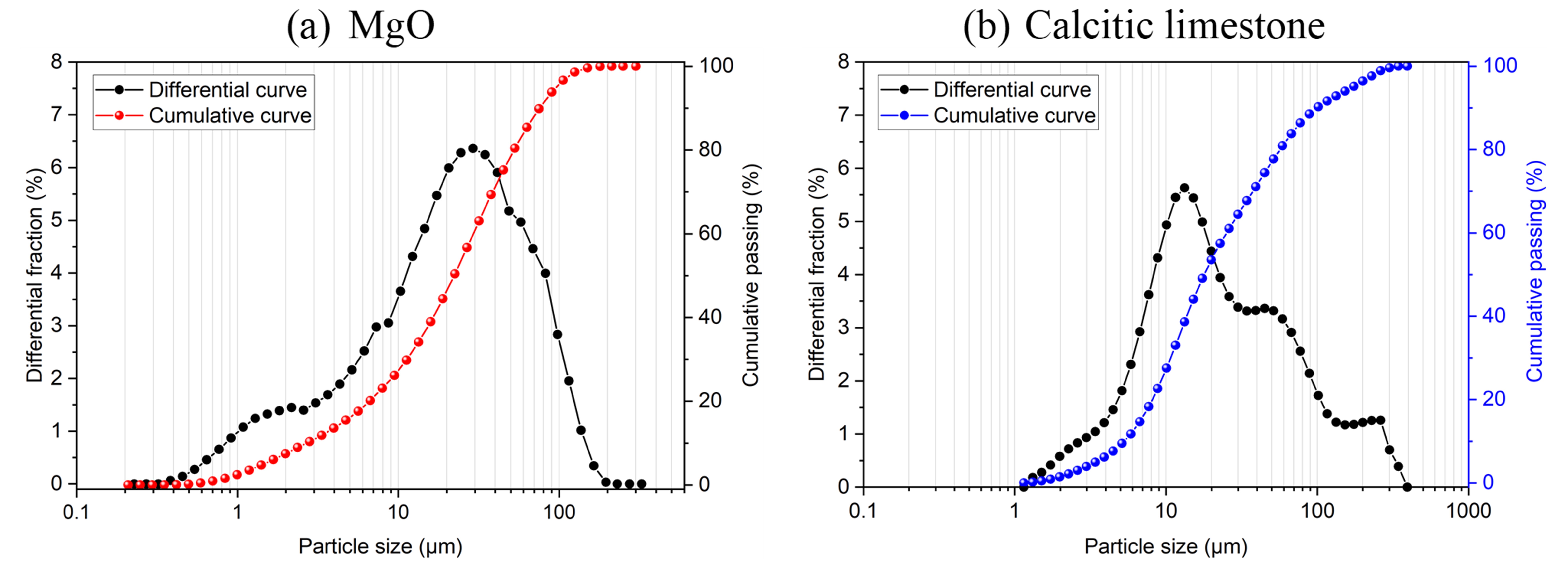
The raw materials used in this study included magnesium oxide (MgO), produced by the calcination of magnesite at approximately 1050 °C and supplied by RHI Magnesita, Contagem, Minas Gerais, Brazil. The active magnesia content (α-MgO) of the MgO was approximately 63%, as determined using the WB/T1019-2002 standard27. The MgO exhibited a density of 3.45 g/cm3 and specific surface area (SSA) of 26.71 m2/g. Calcitic limestone (CL), provided by Infibra S.A., located in Leme, São Paulo, Brazil, was employed as a mineral filler and partial substitute for MgO, with a density of 2.77 g/cm3. The chemical compositions and particle size distributions of MgO and CL presented in Table 1 and Figure 1, were determined using X-ray fluorescence (XRF, Malvern Panalytical, Malvern, UK, Zetium model) and laser scattering particle size analysis (Horiba LA-950, Kyoto, Japan), respectively. The median particle sizes (D50) of MgO and CL were 22.20 µm and 19.61 µm, respectively. Additionally, anhydrous citric acid (CA), acquired from Labsynth, Diadema, Brazil, was utilized as a chemical additive to optimize the cement matrix properties. Magnesium sulfate heptahydrate (commercial-grade Epsom salt, MgSO4·7H2O, Labsynth) used in this study was purchased with a purity of 99.83%.
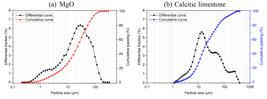
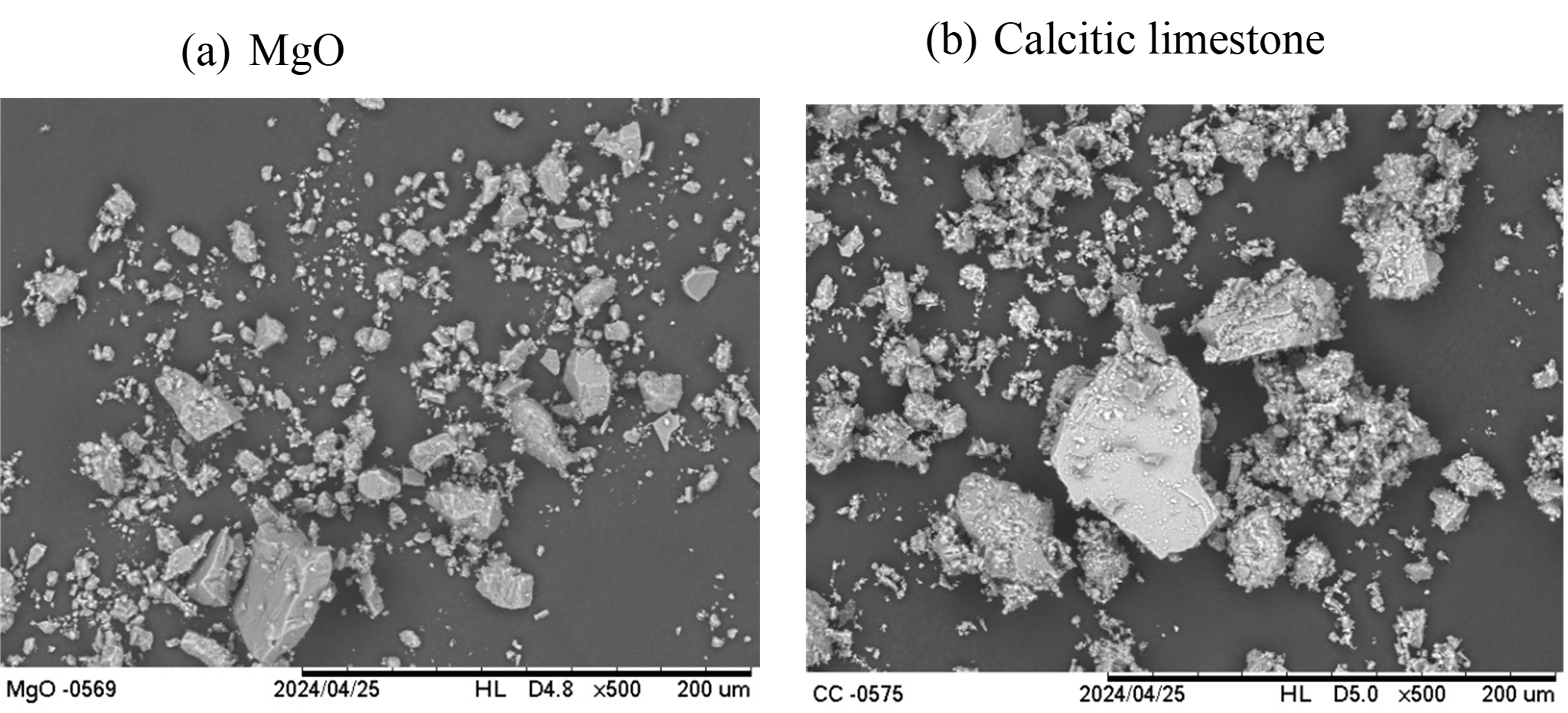
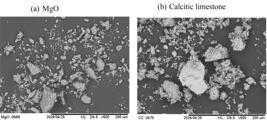
Figure 2 shows micrographs of the raw materials obtained using a Hitachi TM3000 microscope (Tokyo, Japan). The MgO powder in Figure 2a consists of fine particles, with irregular, angular morphologies, characteristic of materials produced via calcination. The particles exhibit a range of sizes, including finer fragments interspersed with larger, more defined pieces. The SEM image of the calcitic limestone (Figure 2b) demonstrates a morphology dominated by smoother, more rounded particles compared to MgO. The higher content of finer particles compared to MgO, observed in the particle distribution (Figure 1b), may also influence their behavior as a filler, contributing to the densification of the composite matrix.
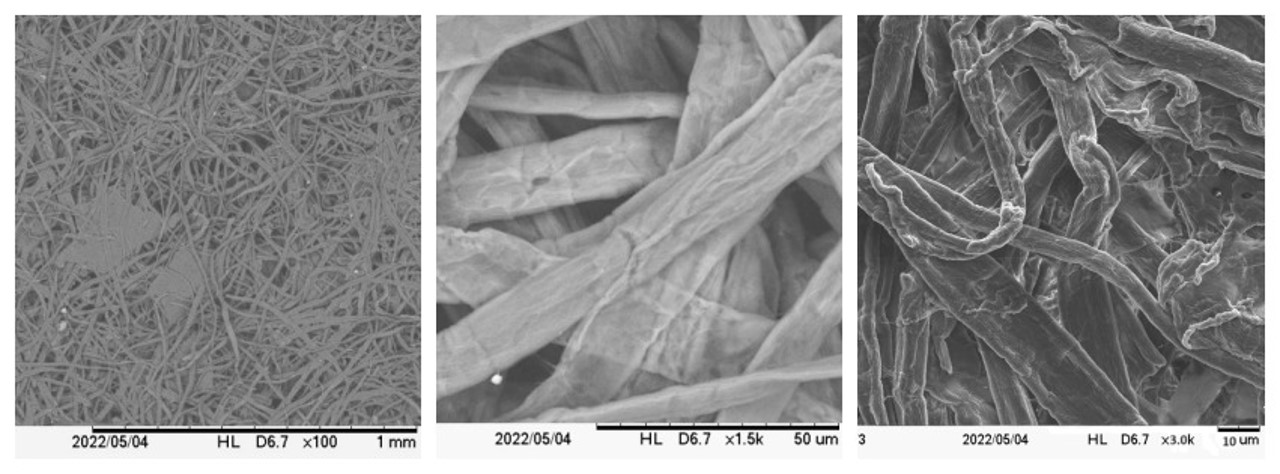
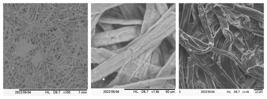
The fiber reinforcement used in this study comprised bleached eucalyptus pulp, selected for its high cellulose content and compatibility with the cementitious matrix, made from the species Eucalyptus grandis × Eucalyptus urophylla, and supplied by Suzano Papel e Celulose S.A (Suzano, São Paulo, Brazil). The pulp was processed in water for 48 h to ensure thorough hydration and then mechanically disintegrated using a Tedemix MRF31450 cellulosic pulp mixer to achieve optimal dispersion and uniform fiber morphology. As shown in Figure 3, the morphology of bleached eucalyptus fibers after processing exhibited a smooth surface, with fibers resembling small flattened tubes (lumens).
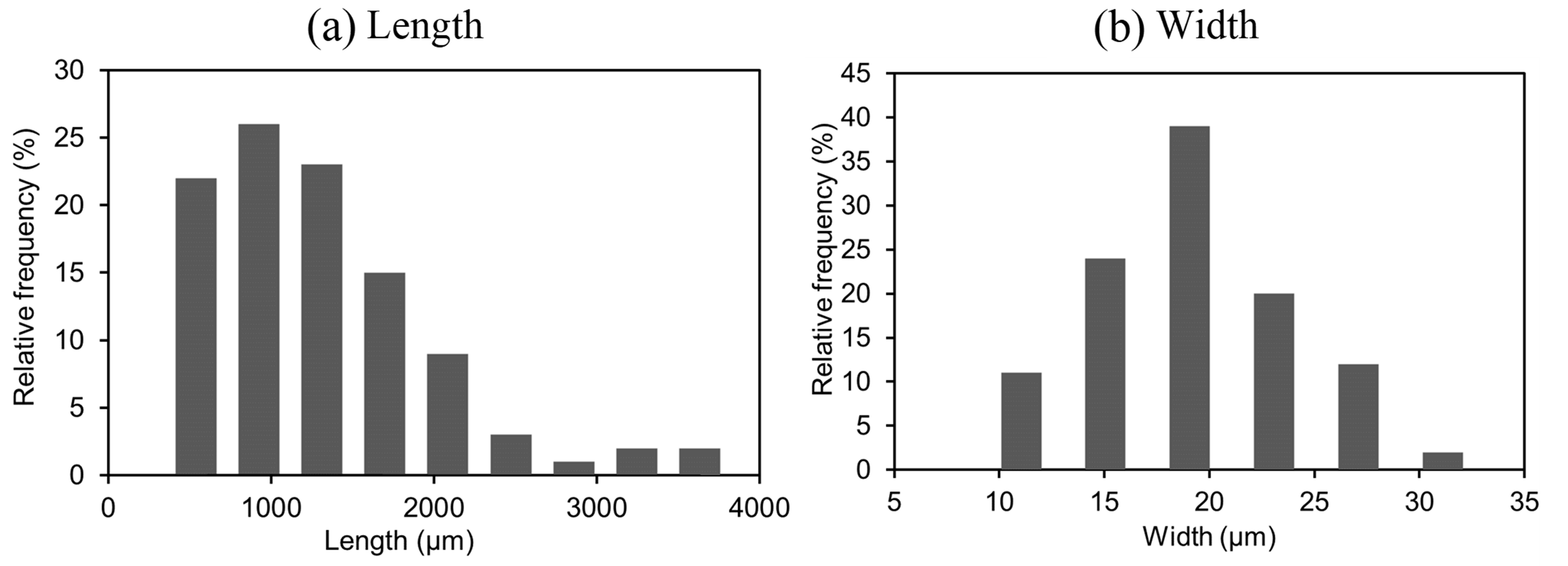
Morphological characterization of the fibers (Figure 4) was conducted following an adaptation of the TAPPI T271 standard to evaluate fiber dimensions and uniformity. Additionally, chemical composition analysis, based on the van Soest method28, provided detailed information on the constituents of the cellulosic fibers, including cellulose, hemicellulose, lignin, and insoluble proteins (Table 2).
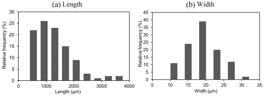
Histogram of the (a) Length and (b) Width distribution of the eucalyptus pulp reinforcement.
2.2. Specimen preparation
The fiber-reinforced BMSC composites were produced using a casting method, and the molar ratio of MgO:MgSO4:H2O was kept constant at 10:1:20 for all formulations, based on the results obtained from previous studies29,30. Citric acid was incorporated at 0.5 wt.% of the MgO content to promote the formation of the stable 5-1-7 phase31. Calcitic limestone (CL) was used as a partial substitute for MgO at a replacement level of 20 wt.%. Bleached eucalyptus (EB) fibers contents of 2, 4, and 8 wt.% were determined based on the total mass of solid materials (MgO + CL); however, the actual fiber incorporation was achieved by replacing an equivalent mass of CL. This approach ensured that the molar ratio of the main reactive components remained unchanged, avoiding potential alterations in the hydration reactions due to MgO reduction.. This range was chosen to assess different incorporation levels for construction applications while considering the balance between processability, mechanical performance, and durability. A lower content (2%) evaluates minimal reinforcement effects, whereas higher dosages (4% and 8%) allow analysis of fiber bridging, porosity variations, and trade-offs between strength and toughness. This approach provides insights into optimizing fiber dosage for enhanced performance in BMSC composites. The specific mix proportions for each formulation are described in Table 3.
Initially, the fibers were mixed with the magnesium sulfate solution and citric acid at 1300 rpm for 5 minutes to ensure uniform dispersion and proper wetting of the fibers in the solution. The magnesium sulfate solution was prepared by dissolving MgSO4·7H2O in deionized water at approximately 60 °C to achieve a 25% (w/v) concentration, ensuring complete dissolution and uniformity. Lower temperatures were found to be insufficient for the full solubility of MgSO4. After homogenizing the fibers with the solution, MgO and calcitic limestone were gradually added to the mixture. The entire mixture was blended until a homogeneous and well-distributed mass was achieved, ensuring uniform dispersion of all components in the matrix. The BMSC paste was subsequently cast into cubic molds (40 × 40 × 40 mm3) and flat molds (200 × 200 × 5 mm3). The molds were sealed and cured for 24 hours at a temperature of (24 ± 3)°C before demolding. Finally, the specimens were stored in a climate chamber with controlled conditions of temperature (24 ± 3)°C and relative humidity (60 ± 5)%, where they remained until the designated testing age of 7 d.
2.3. Analytical methods
The hydration reactions of the BMSC composites were monitored using X-ray Diffraction (XRD), Thermogravimetric Analysis (TGA), and Fourier-Transform Infrared Spectroscopy (FTIR). After the tests at 7 days of curing, the samples were ground using a Marconi mortar grinder (model MA590) and subsequently immersed in isopropyl alcohol to halt the hydration reactions. Only particles passing through a 75 µm sieve (mesh #325) were considered for the XRD, TGA, and FTIR analyses.
XRD was employed to identify the crystalline phases within the cementitious matrix, while TGA was used to determine the decomposition ranges of the hydrated components. XRD measurements were performed using a Horiba LA-960 X-ray diffractometer with CuKα radiation, operating at a voltage of 40 kV and a current of 30 mA. The scanning range was set from 5° to 65° (2θ) at a rate of 10°/min, the crystal phases were identified by comparison with the Crystallography Open Database (COD) database. TGA measurements were conducted using a TG 209 F1 Libra thermobalance (Netzsch) under a nitrogen atmosphere. The thermal decomposition of the hydrated products was recorded over a temperature range of 30–1000 °C, with a heating rate of 10 °C/min. FTIR analysis was performed using an INVENIO-R infrared spectrometer (Bruker Optics GmbH & Co. KG) equipped with spectral extension for the FAR and MIR regions. The scanning was conducted over a wavelength range of 450–4000 cm−1 with a resolution of 4 cm−1 and 32 scans.
The physical and mechanical characterization of the samples was performed after 7 days of curing. The physical properties were determined according to the ABNT NBR 9778 standard32, which includes the evaluation of bulk density (BD), water absorption (WA), and apparent porosity (AP).
The compressive strength test for the fiber-reinforced BMSC composites was conducted in accordance with ASTM C10933. The tests were performed using an EMIC 23-300 universal testing machine (Instron, Paraná, Brazil) equipped with a 300 kN load cell, with a deformation rate set at 0.3 mm/min. The mechanical properties of the boards were evaluated through a four-point bending test. This test was also conducted using the EMIC 23-300, configured with a 5 kN load cell and a deflectometer to measure the displacement at the center of the specimen. The span between the bottom supports was set to 135 mm, while the span between the top supports was 45 mm. A loading rate of 5 mm/min was applied. The deflection during the bending test was recorded using an EMIC deflectometer with a maximum deformation capacity of 30 mm and a precision of 0.0001 mm.
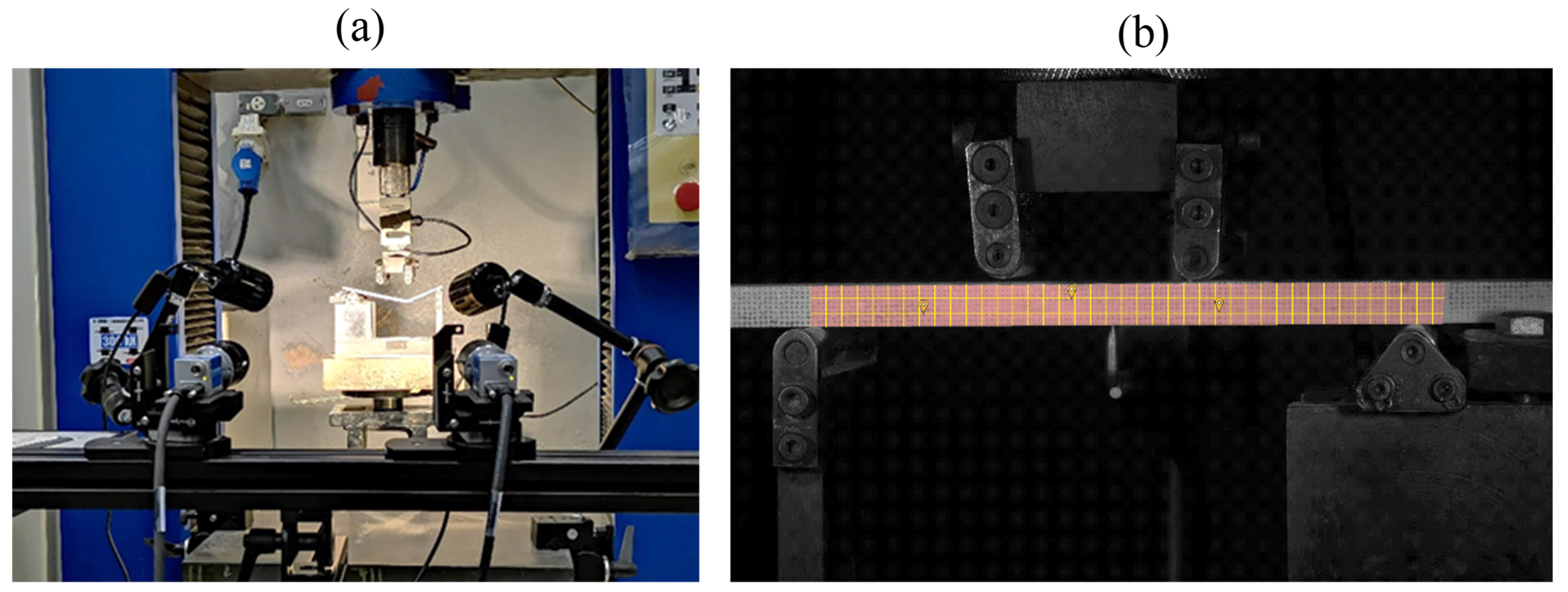
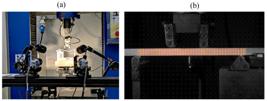
To complement the mechanical performance evaluation, Digital Image Correlation (DIC) equipment from Correlated Solutions was utilized during both the bending and compression tests. The DIC system allowed for the determination of strain distribution, highlighting the areas of greatest deformation in the specimens (Figure 5). The mechanical properties, including the modulus of rupture (MOR), limit of proportionality (LOP), modulus of elasticity (MOE), and specific energy (SE), were determined based on the methodology outlined by Savastano et al.34 and ASTM C1185-0835. Statistical analysis was carried out to compare values for physical and mechanical properties using the Tukey test at a significance level of 5%. S.A.S 9.3 (Statistical Analysis System) software was used during this comparison.
3. Results and Discussion
3.1. Mechanical properties of fiber-reinforced BMSC composites
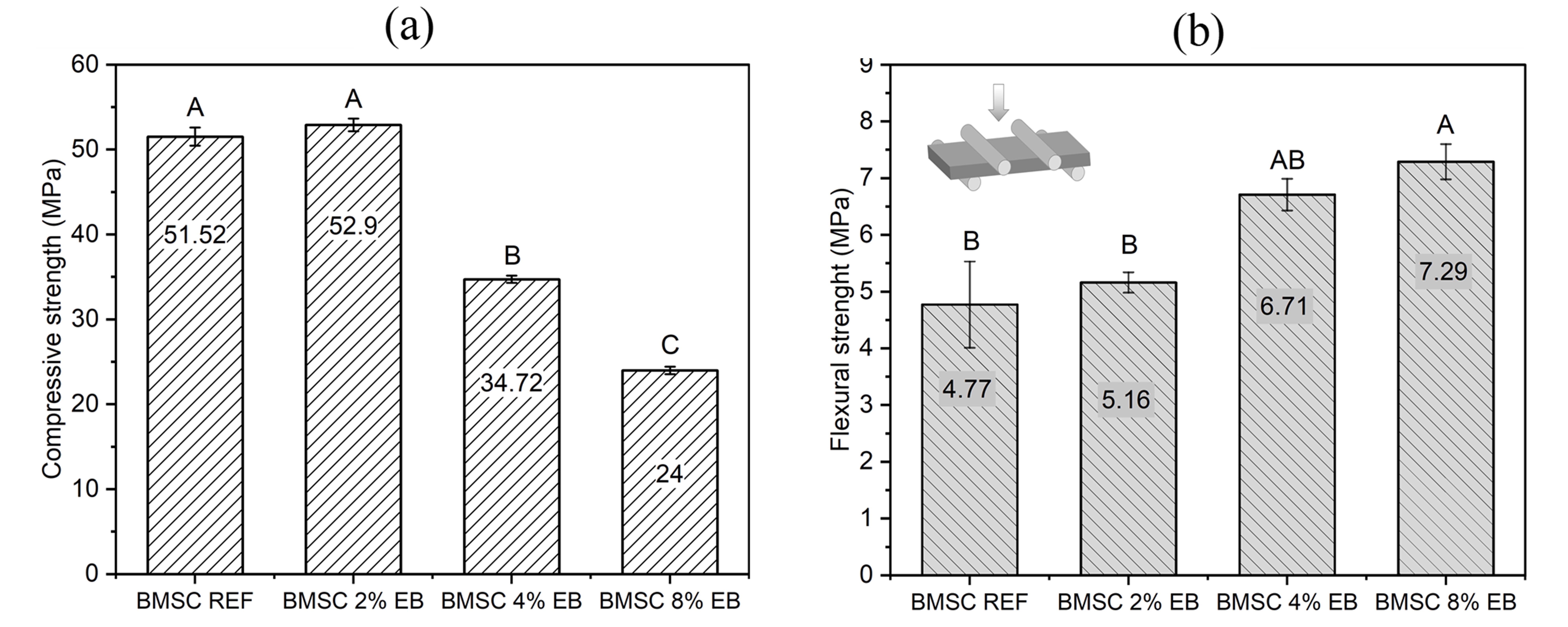
Figure 6 shows the compressive strength (A) and flexural strength (B) results for BMSC composites reinforced with different contents of bleached eucalyptus (EB) fibers after 7 days of curing. The reference composite (BMSC REF), without any fiber content, exhibited a compressive strength of 51.52 MPa, while the composite with 2% EB displayed a similar value of 52.9 MPa. This indicates that at a low fiber content, such as 2%, there was no significant loss in compressive strength. The inclusion of 2% fibers did not impair the mechanical performance and may even contribute to dimensional stability due to the bridging capacity of the fibers36, which helps arrest microcracks during the expansion of Mg(OH)2 crystals in the matrix.
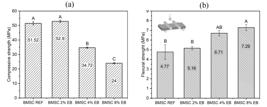
Compressive strength (a) and flexural strength (b) of fiber-reinforced BMSC composites. *The same letters in different bars represent no statistical difference from the Tukey test (p < 0.05, n = 4).
However, as the EB fiber content increased to 4% and 8%, there was a progressive reduction in compressive strength. The composites with 4% and 8% exhibited compressive strengths of 34.72 MPa and 24 MPa, corresponding to reductions of approximately 32.6% and 53.4%, respectively, compared to the BMSC REF. This decline is likely due to the substitution of calcitic limestone by fibers, which are less rigid and contribute less to the compressive load-bearing capacity. Additionally, the higher fiber content introduces more voids into the matrix, increasing the apparent void volume, as will be examined and discussed in detail in Section 3.2, and weakening the material under compressive loads. Despite maintaining a constant molar ratio of MgO/MgSO4 in all mixtures, the incorporation of fibers disrupts the compactness of the matrix, leading to higher porosity and lower bulk density.
In contrast, the flexural strength (modulus of rupture) showed an opposite trend, with increasing fiber content resulting in improved performance. The BMSC REF had the lowest flexural strength at 4.77 MPa, while composites with 2%, 4%, and 8% EB achieved flexural strengths of 5.16 MPa, 6.71 MPa, and 7.29 MPa, respectively. These values correspond to flexural strength increases of approximately 8.2%, 40.7%, and 52.8% compared to the REF. This improvement can be attributed to the ability of the fibers to bridge cracks, delay fracture propagation, and enhance the toughness of the composite under bending loads. The addition of fibers thus improves ductility and energy absorption in the composite.
In summary, the results demonstrate a trade-off between compressive and flexural performance in fiber-reinforced BMSC composites. While the addition of fibers reduces compressive strength due to increased porosity and lower bulk density, it enhances flexural strength by improving toughness and crack-bridging capacity. These findings suggest that composites with higher fiber contents are better suited for applications prioritizing flexural strength and toughness, whereas lower fiber additions can maintain compressive strength while potentially improving dimensional stability.
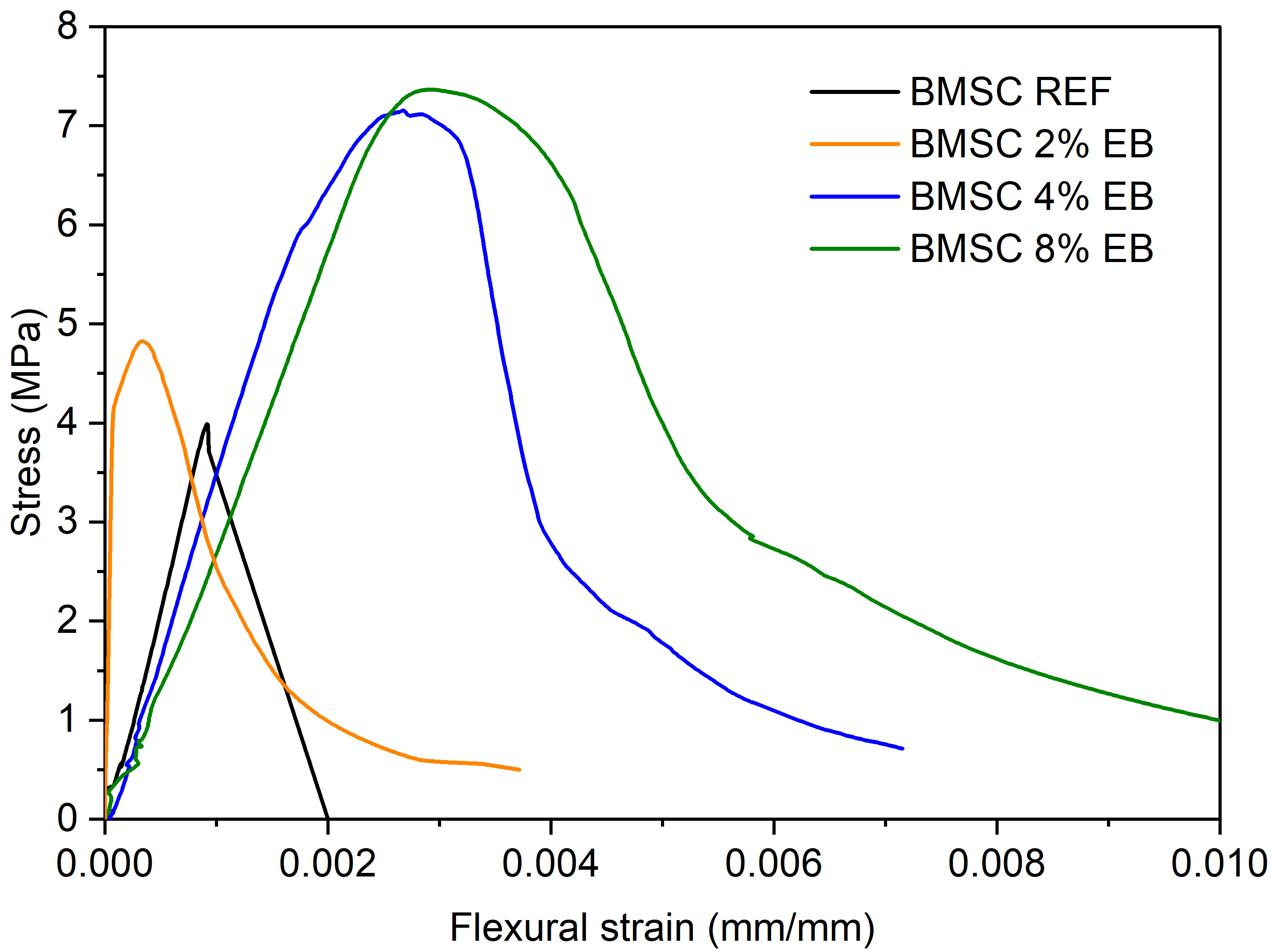
Figure 7 presents the typical tension-deflection curves for BMSC composites with varying EB fiber contents. The BMSC REF exhibited a steep linear elastic behavior followed by a sudden failure, indicating brittle behavior with minimal energy absorption. The addition of fibers significantly altered the mechanical response, particularly at higher fiber contents (4% and 8% EB). For 2% EB, the curve shows a slight increase in ductility and MOR compared to the REF, but the strain capacity remains limited, with an abrupt failure after the peak stress. In contrast, the composites with 4% and 8% EB demonstrate a pronounced strain-hardening behavior and post-peak deflection, reflecting enhanced toughness and the ability to sustain loads beyond the peak stress. The 8% EB composite achieved the highest flexural strain and energy absorption, indicating effective crack-bridging by the fibers and improved toughness. The larger deflection observed in the higher fiber content composites correlates with the ability of the fibers to redistribute stress and delay crack propagation, confirming the role of fibers in enhancing flexural performance and toughness.
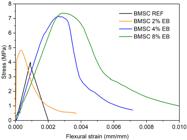
The flexural test results for all evaluated curves are presented in Table 4, highlighting the impact of fiber incorporation on the mechanical behavior of fiber-reinforced BMSC composites. The modulus of rupture (MOR) increased significantly with fiber addition, reaching a maximum of 7.29 MPa for the BMSC 8% EB sample, which represents a 53% improvement compared to the reference sample. This enhancement can be attributed to the fiber bridging capacity, which improves stress transfer and crack resistance37. However, the limit of proportionality (LOP) exhibited a non-linear trend, increasing with up to 4% fiber content (4.32 MPa) but decreasing at 8% fiber addition (3.32 MPa), indicating that excessive fiber content may reduce the matrix's load-bearing capacity in the elastic regime due to increased porosity.
A notable reduction in the modulus of elasticity (MOE) was observed with higher fiber contents, decreasing from 11.09 GPa in the reference sample to 5.94 for BMSC 8% EB, representing a 46% reduction. This decrease suggests that fiber addition reduces the composite's stiffness, thereby enhancing its ductility and deformation capacity. Conversely, the specific energy absorption (SE) exhibited a substantial increase with fiber incorporation, particularly for the BMSC 8% EB sample (0.40 kJ/m2), which was over 13 times higher than the reference (0.03 kJ/m2). This finding corroborates the improvements in post-cracking behavior and toughness observed in the tension-deflection curves (Figure 7).
3.1.1. Digital image correlation analysis
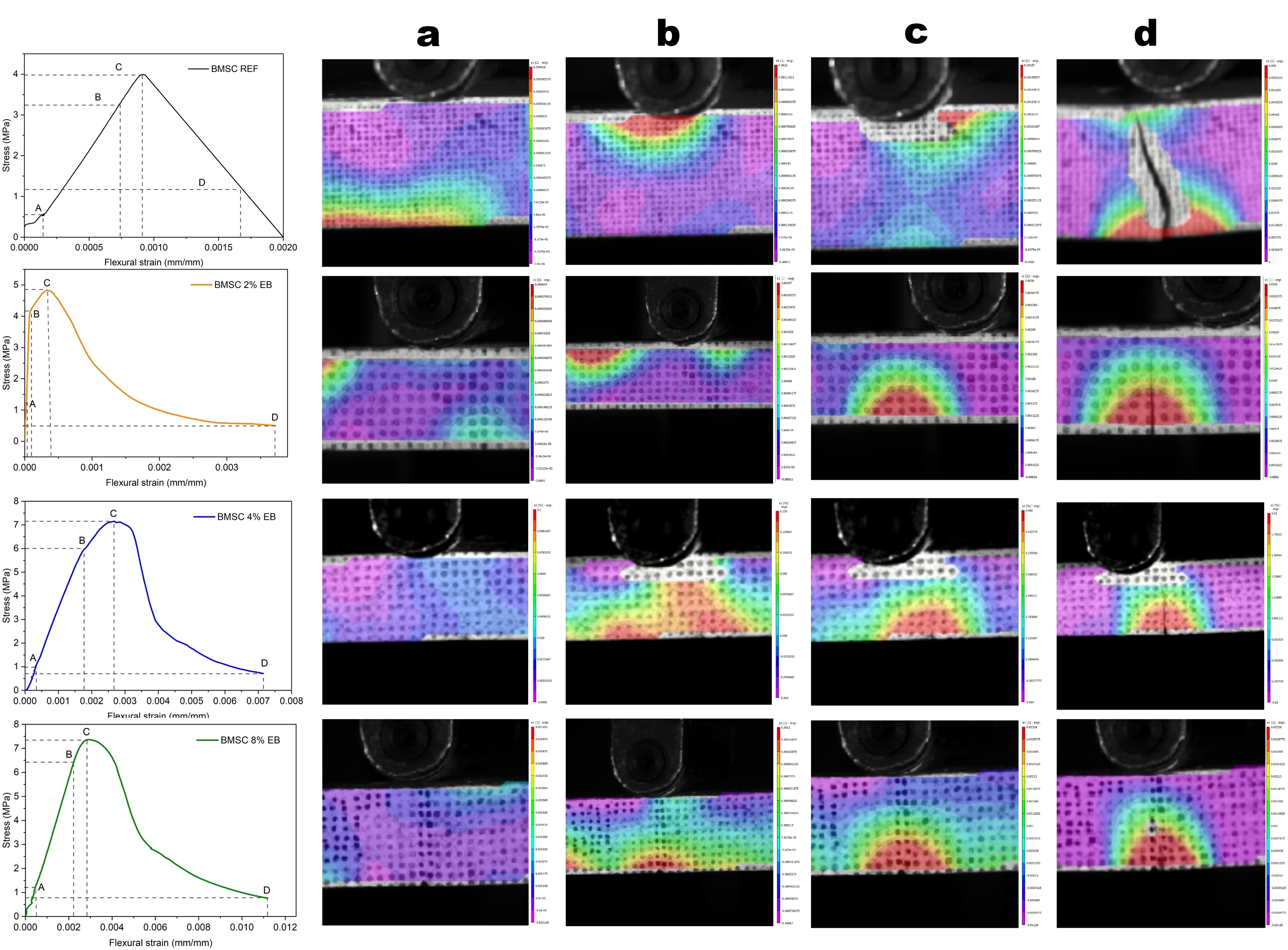
To obtain the evolution trends of the strain evolution in BMSC plates during the damage process, digital image correlation (DIC) tests were conducted simultaneously with the four-point bending test. The fracture region, located at one of the supports, was selected for comparative analysis, as this was where failure consistently occurred across all samples. The results are shown in Figure 8.
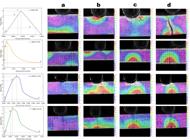
As shown in Figure 8, under flexural loading, strain concentration occurred locally near the support, and the localized strain region (marked in red in the DIC images) gradually expanded, leading to initial crack formation. The typical load-deflection curves allowed the identification of key events in the failure process: (A) test initiation, (B) limit of proportionality (LOP), (C) major principal strain, and (D) final fracture. The evolution of strain distribution highlights the influence of fiber incorporation on the deformation characteristics of the BMSC composites. For the reference sample (BMSC REF), strain distribution remained highly localized, with minimal deformation before brittle fracture, indicating limited energy dissipation capacity. The crack propagated rapidly without significant strain redistribution, resulting in sudden failure. In contrast, fiber-reinforced composites exhibited a broader strain distribution, demonstrating a more ductile failure mechanism.
With increasing fiber content, the strain localization effect diminished, and deformation areas expanded, as observed in BMSC 2% EB and subsequent compositions. The BMSC 8% EB sample exhibited the most extensive strain distribution, signifying enhanced crack-bridging effects and improved toughness. The fibers effectively transferred stresses across microcracks, delaying fracture propagation and increasing the composite’s ability to sustain post-peak loads. These results correlate with the observed improvements in flexural strength, energy absorption, and toughness indices. The DIC analysis confirms that fiber incorporation significantly alters the failure mode of BMSC composites, transitioning from brittle fracture in the reference sample to a more controlled and progressive damage mechanism in fiber-reinforced specimens. This behavior underscores the potential of optimized fiber dosage in enhancing the mechanical properties of BMSC composites for construction applications.
3.2. Physical properties
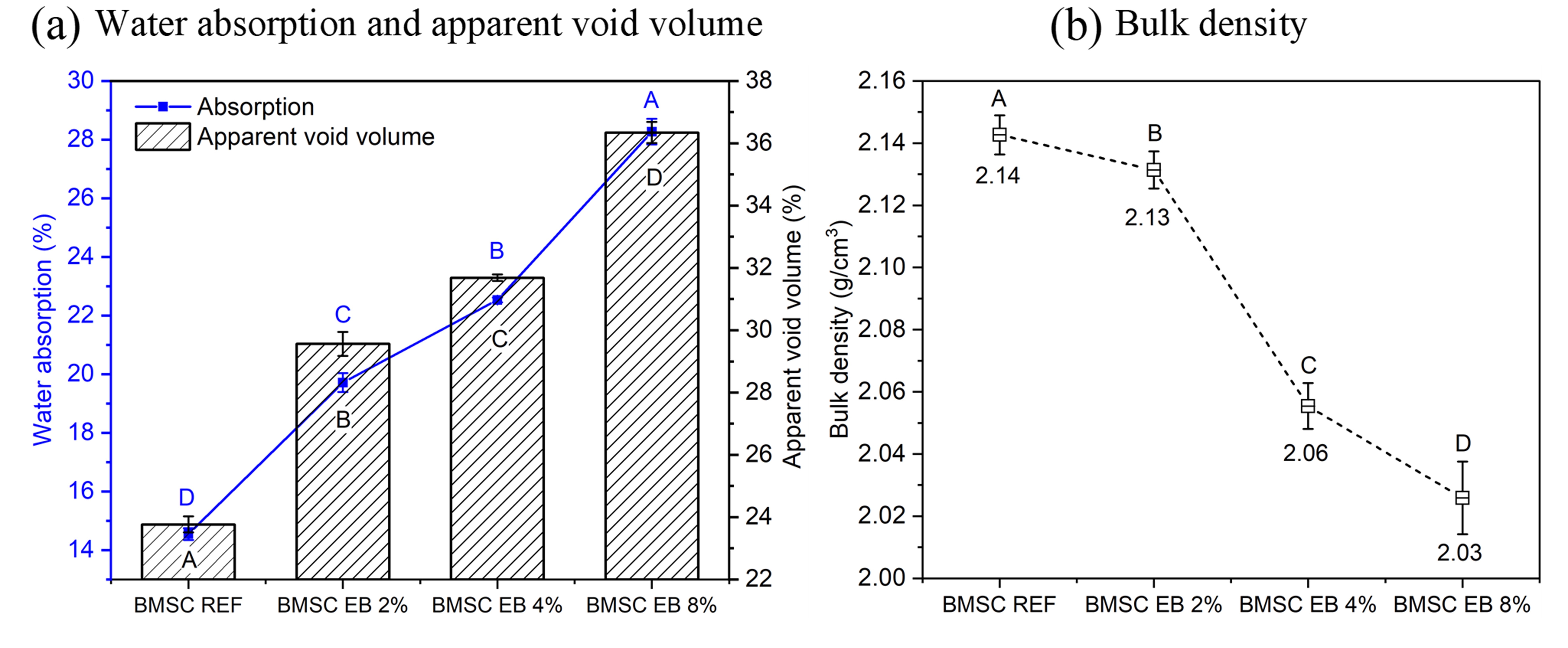
The mechanical strength of BMSC depends on the type and content of hydration phases, as well as the porosity of the matrix38. Figure 9 presents the results of the physical properties of fiber-reinforced BMSC composites, including water absorption, apparent void volume, and bulk density after 7 days of curing. As depicted in Figure 9a, a progressive increase in water absorption and apparent void volume was observed with the incorporation of EB fibers. The BMSC REF sample exhibited the lowest water absorption (approximately 14%) and apparent void volume (~24%), which can be attributed to the higher bulk density and reduced porosity due to the absence of fibers. As the EB fiber content increased to 8%, water absorption reached approximately 28%, and the apparent void volume increased to ~36%. This trend suggests that the inclusion of fibers introduces additional porosity into the matrix, likely due to their hydrophilic nature and their partial substitution of filler (CL), which traditionally contributes to densification. This increase in porosity and water absorption did not negatively affect the flexural strength of the composites. On the contrary, the incorporation of fibers significantly improved the modulus of rupture (MOR), as shown in Figure 6b, with values increasing from 4.77 MPa (REF) to 7.29 MPa (8% EB). This improvement is attributed to the crack-bridging capability and toughening effect provided by the fibers, highlighting the trade-off between physical and mechanical properties in fiber-reinforced BMSC composites.
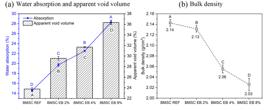
Physical properties of the BMSC composites. *The same letters in different bars represent no statistical difference from the Tukey test (p < 0.05, n = 4).
Figure 9b highlights the bulk density of the composites. A reduction in bulk density was observed with the increase in fiber content, from 2.14 g/cm3 for the BMSC REF to 2.03 g/cm3 for the composite with 8% EB. This decrease is consistent with the introduction of fibers, which have lower density compared to the mineral filler they replace. Despite maintaining the same molar ratio of 10:1:20, the reduction in bulk density aligns with the observed increase in porosity and apparent void volume. This indicates that the calcitic limestone and MgSO4 solution play a critical role in reducing porosity and enhancing compressive strength. However, as fiber content increases, the trade-off is a more porous matrix, leading to higher water absorption and reduced bulk density. This can partially explain the decrease in compressive strength observed for composites with higher fiber contents, as previously discussed.
3.3. Thermogravimetric analysis (TGA/DTG)
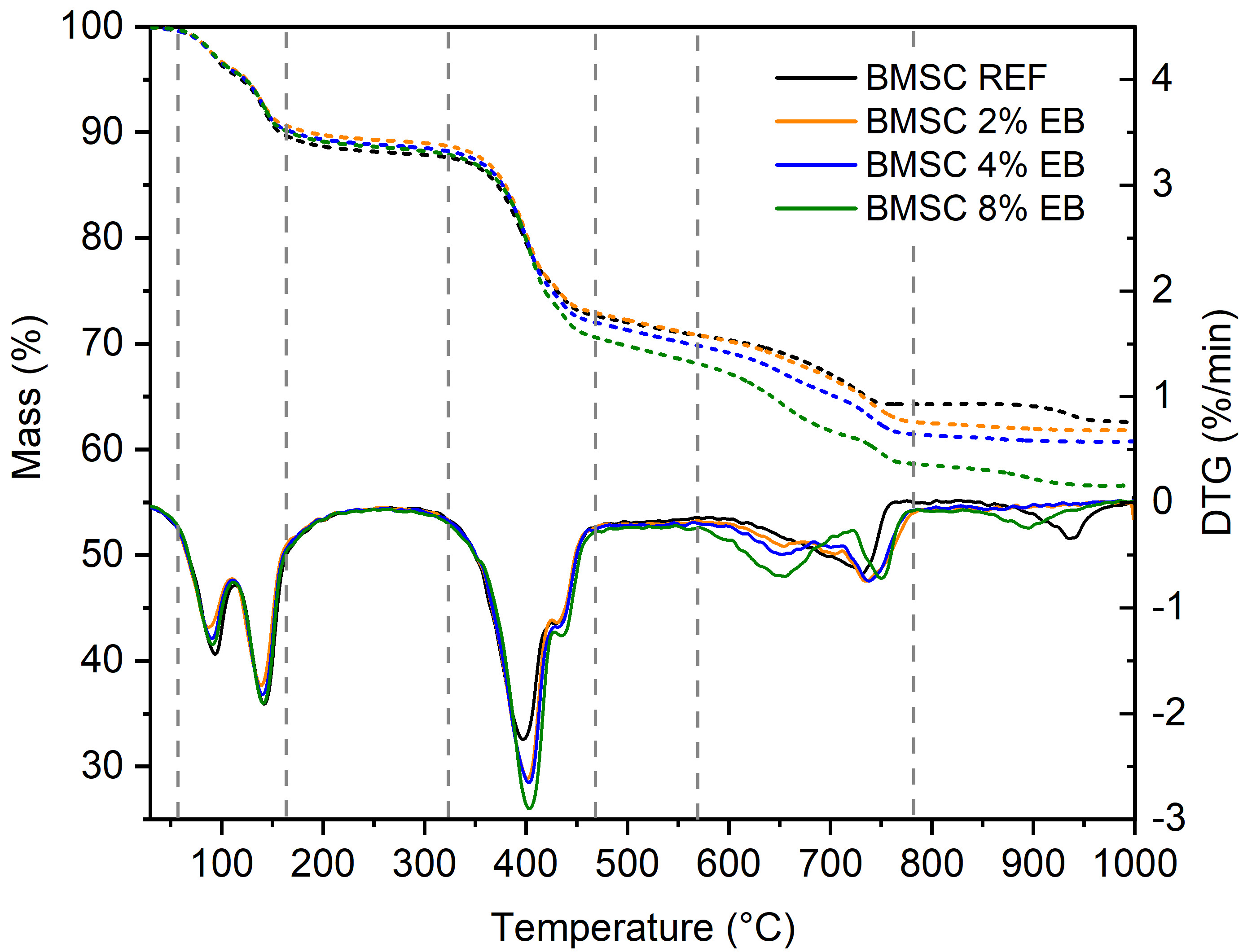
Figure 10 presents the thermogravimetric analysis of BMSC composites reinforced with bleached eucalyptus fibers after 7 days of curing. The thermal decomposition profile provides insights into the phase composition, hydration products, and organic matter degradation within the matrix.
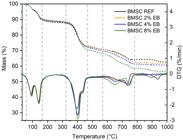
The initial mass loss observed between 90 and 200 °C is attributed to the release of physically adsorbed water and the dehydration of bound water from the crystalline lattice of the 5-1-7 phase, the phase mainly responsible for the increased mechanical strength of BMSC cement30. This stage presents two distinct DTG peaks, corresponding to intra- and intermolecular dehydration reactions, which are more pronounced in fiber-reinforced composites due to the hydrophilic nature of the fibers39. Between 350 and 500 °C, two primary phenomena contribute to mass loss: the thermal decomposition of organic compounds in the eucalyptus fibers and the dehydroxylation of anhydrous basic magnesium oxysulfate and brucite (Mg(OH)2) crystals21. This range is characterized by overlapping peaks in the DTG curves, highlighting the simultaneous degradation of these phases. The presence of fibers influences this stage, as observed by variations in peak intensities among different fiber contents. Notably, the BMSC 8% EB composite exhibits a more pronounced peak at approximately 400 °C compared to BMSC REF, indicating a higher concentration of organic material and enhanced thermal degradation of fiber components. Furthermore, the decarbonation of magnesite (MgCO3) and calcium carbonate (CaCO3), derived from the filler substitution, is observed between 550 and 800 °C. At higher temperatures, above 900 °C, the desulfurization of MgSO4 from the 5-1-7 phase takes place. The magnitude of mass loss in this range is relatively consistent across all composites, suggesting that fiber incorporation does not significantly alter the sulfate stability of the system.
3.4. X-ray diffraction analysis (XRD)
The effect of bleached eucalyptus fiber incorporation, calcitic limestone, and citric acid addition on the formation of hydration phases in hardened BMSC composites after 7 days of curing is shown in Figure 11. The results indicate that the primary hydration products in mixtures containing citric acid consist of the 5-1-7 phase at angles around 17.9° 2θ, reported as the phase with the highest mechanical performance in BMSC cement40, along with brucite (COD 96-100-0055) and periclase (COD 96-900-6786). Additionally, minor amounts of less crystalline phases, such as calcite (COD 96-900-9669), magnesite (96-901-1660) are also identified.
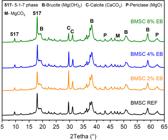
The 5-1-7 phase forms elongated needle-like, which enhance mechanical strength through a filling effect41,42. This improvement was more evident in the compressive strength of samples with lower fiber content (BMSC 2% EB and REF) and higher apparent density. While all samples exhibited the formation of the 5-1-7 phase, the increased porosity of fiber-reinforced samples (4% and 8%) resulted in reduced compressive strength. However, the flexural strength (MOR) and energy absorption (EE) showed an improvement compared to the REF sample, indicating a beneficial reinforcement effect of the fibers. The presence of MgCO3, at angles around 47.7° 2θ, is attributed to the carbonation of the surface of the composites. The incorporation of fibers influences the formation of hydration phases, as evidenced by variations in peak intensities. Fiber-reinforced samples exhibited higher brucite diffraction peaks (38.1° and 58.8° 2θ) suggesting increased MgO hydration due to moisture retention by the fibers. In contrast, non-fiber-reinforced samples showed more defined 5-1-7 peaks, correlating with higher compressive strength. Differences between fiber-reinforced and non-reinforced samples are evident in the XRD patterns. The presence of fibers modifies the hydration kinetics, leading to variations in the crystallinity and distribution of hydration phases. While fiber addition reduces compressive strength due to increased porosity, it enhances flexural performance by improving crack-bridging mechanisms and energy dissipation.
3.5. FTIR
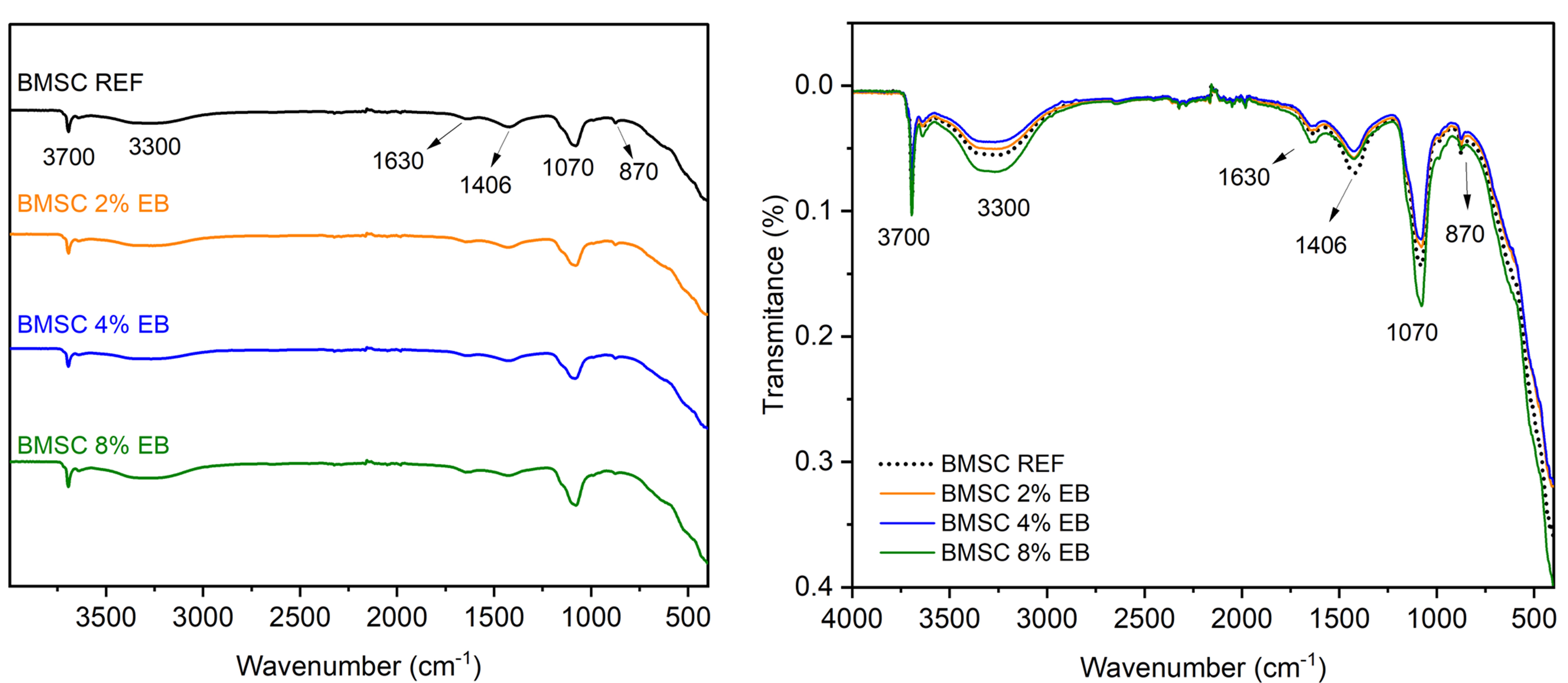
The infrared spectra (FTIR), presented in Figure 12 provide crucial insights into the functional groups present in BMSC-based composites.
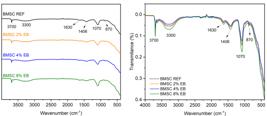
The specific wavenumbers investigated highlight distinct molecular vibrations, which are essential for understanding the hydration processes, phase formation, and structural interactions within the material. The band around 3700 cm−1corresponds to the stretching vibrations of hydroxyl groups (OH−) present in Mg(OH)2 and other hydrated phases43. The presence of this band indicates the formation of hydration products such as the 5-1-7 phase (5Mg(OH)2·MgSO4·7H2O), which plays a key role in the mechanical strength of the material19. The intensity of this band can be used to evaluate the amount of free or bound hydroxyl groups within the system. At 3300 cm−1, the broad and asymmetric band in this region is characteristic of the OH− stretching vibrations in water molecules bonded via hydrogen bridges. This band reflects the presence of structurally integrated water within the hydrated phases and the pore structure of BMSC. A reduction in its intensity may indicate the loss of water during curing. Interestingly, a higher intensity of this band was observed for samples produced with 8% vegetable fibers (BMSC 8% EB). This observation can be attributed to the higher water retention capacity of the fibrous materials, which facilitates a significant release of water molecules to form hydration products. The band at 1631 cm−1 is attributed to the bending vibrations (H–O–H) of water molecules present in hydrated phases. Its intensity is directly proportional to the amount of physically adsorbed and structurally incorporated water. Reductions in this peak's intensity may signify a transition from adsorbed water to chemically bound water or its removal from the system. The presence of vegetable fibers appears to sustain higher levels of retained water, enhancing the hydration process. This enhanced hydration is further corroborated by the formation of more intense bands at wavenumbers around 1070 cm−1, which are associated with the asymmetric stretching vibrations (ν3) of the sulfate anion (SO42−). The increased intensity at this wavenumber confirms the formation of 5-1-7 phase crystals, which are crucial for the mechanical strength and stability of BMSC cement44. The band at 1406 cm−1 is associated with the asymmetric stretching vibrations (ν3) of the carbonate group (CO32−)45. The presence of this band indicates the onset of carbonation, reflecting the reaction between Mg(OH)2 and atmospheric carbon dioxide (CO2). An increase in its intensity suggests the formation of carbonated phases such as MgCO3 or hydromagnesite, which could impact the chemical stability of the cement. Around 1070 cm−1, the band is characteristic of the asymmetric stretching vibrations (ν3) of the sulfate anion (SO42−), indicating the presence of sulfate-containing phases like the 5-1-7 phase. The intensity and sharpness of this band can be correlated to the structural integrity and efficiency of the hydration reactions within the BMSC system, as discussed previously. The band close to 870 cm−1 corresponds to the out-of-plane bending vibrations (ν2) of the carbonate group (CO32−)46. Its presence further confirms the detection of carbonated phases formed in response to prolonged CO2 exposure. The intensity of this peak can be used to monitor the progress of carbonation in the material.
4. Conclusions
This study investigated the influence of bleached eucalyptus fiber (EB) incorporation on the hydration mechanisms, microstructure, and mechanical properties of BMSC composites. The analyses included XRD, FTIR, TGA, digital image correlation (DIC), and mechanical tests. Based on the obtained results, the following conclusions can be drawn:
-
The primary hydration product identified in all formulations was the 5-1-7 phase, which is known for its high mechanical strength due to its needle-like whisker morphology and space-filling effect. The XRD results confirmed a well-crystallized 5-1-7 phase in all samples, with slight variations in peak intensities among different fiber contents, indicating modifications in phase distribution.
-
FTIR analysis demonstrated that fiber incorporation influenced hydration reactions. The intensity of the OH− stretching band (~3700 cm−1) was higher in fiber-containing samples, confirming increased water retention within the composite. This prolonged hydration period facilitated better phase development, particularly the 5-1-7 phase. Additionally, sulfate-related bands (~1070 cm−1) were more intense in fiber-reinforced samples, further corroborating enhanced phase formation.
-
The incorporation of eucalyptus fibers into BMSC significantly improved its mechanical performance, particularly in terms of flexural strength and energy absorption, making it suitable for lightweight construction panels, partition walls, and non-load-bearing elements. While higher fiber content (8% EB) increased porosity and reduced compressive strength, the fibers enhanced crack resistance and post-peak toughness due to fiber-bridging effects. Digital image correlation (DIC) analysis confirmed a more ductile failure mode for the fiber-reinforced composites compared to the reference BMSC. FTIR and XRD results indicated the presence of carbonate phases such as magnesite (MgCO3) and calcite (CaCO3), which were more evident in fiber-reinforced samples. The bands at 1406 cm−1 and 870 cm−1 suggested increased carbonation, likely due to higher porosity and moisture retention facilitating CO2 diffusion. While carbonation can affect long-term durability, its impact on BMSC composites requires further investigation.
5. Acknowledgments
The authors would like to acknowledge the research funding agency CAPES, and the São Paulo Research Foundation (FAPESP)-Processes: 23/04412-3, 24/02445-4, The CNPq- Processes: 422701/2021-1 and 443163/2023-5 and Unified Scholarship Program (PUB) and Institutional Scientific Initiation Scholarship Program (PIBIC) for their financial support. At the same time, we would like to thank the Graduate Program in Materials Science and Engineering (PPG EnCiMat) of FZEA/USP for providing the instruments and equipment used.
-
Data Availability
The full dataset supporting the findings of this study is available upon reasonable request from the corresponding author, Juan Camilo Adrada Molano. The dataset is not publicly available due to its size and format, which make direct sharing through public repositories difficult. However, it can be provided upon request.
6. References
-
1 Azevedo AGS, Strecker K. Brazilian fly ash based inorganic polymers production using different alkali activator solutions. Ceram Int. 2017;43(12):9012-8. http://doi.org/10.1016/j.ceramint.2017.04.044
» http://doi.org/10.1016/j.ceramint.2017.04.044 -
2 Azevedo AGS, Strecker K. Kaolin, fly-ash and ceramic waste based alkali-activated materials production by the “one-part” method. Constr Build Mater. 2021;269:121306. http://doi.org/10.1016/j.conbuildmat.2020.121306
» http://doi.org/10.1016/j.conbuildmat.2020.121306 -
3 Benhelal E, Zahedi G, Shamsaei E, Bahadori A. Global strategies and potentials to curb CO2 emissions in cement industry. J Clean Prod. 2013;51:142-61. http://doi.org/10.1016/j.jclepro.2012.10.049
» http://doi.org/10.1016/j.jclepro.2012.10.049 -
4 He Z, Zhu X, Wang J, Mu M, Wang Y. Comparison of CO2 emissions from OPC and recycled cement production. Constr Build Mater. 2019;211:965-73. http://doi.org/10.1016/j.conbuildmat.2019.03.289
» http://doi.org/10.1016/j.conbuildmat.2019.03.289 -
5 Juenger MCG, Winnefeld F, Provis JL, Ideker JH. Advances in alternative cementitious binders. Cement Concr Res. 2011;41(12):1232-43. http://doi.org/10.1016/j.cemconres.2010.11.012
» http://doi.org/10.1016/j.cemconres.2010.11.012 -
6 Ruan S, Unluer C. Comparative life cycle assessment of reactive MgO and Portland cement production. J Clean Prod. 2016;137:258-73. http://doi.org/10.1016/j.jclepro.2016.07.071
» http://doi.org/10.1016/j.jclepro.2016.07.071 -
7 Li Z, Ji Z. Effect of molar ratios on compressive strength of modified magnesium oxysulfate cement. Int J Hybrid Inf Technol. 2015;8(6):87-94. http://doi.org/10.14257/ijhit.2015.8.6.09
» http://doi.org/10.14257/ijhit.2015.8.6.09 -
8 Azevedo AGS, Freitas TOG, Molano JCA, Trevisan HR, Parente IMS, Faria P, et al. Assessment of the physical-mechanical performance of magnesium oxide-based fiber cement submitted toaccelerated carbonation. Ceramica. 2023;69(392):312-7. http://doi.org/10.1590/0366-69132024703923500
» http://doi.org/10.1590/0366-69132024703923500 -
9 Li Q, Su A, Gao X. Preparation of durable magnesium oxysulfate cement with the incorporation of mineral admixtures and sequestration of carbon dioxide. Sci Total Environ. 2022;809:152127. http://doi.org/10.1016/j.scitotenv.2021.152127
» http://doi.org/10.1016/j.scitotenv.2021.152127 -
10 Nobre J, Ahmed H, Bravo M, Evangelista L, Brito J. Magnesia (Mgo) production and characterization, and its influence on the performance of cementitious materials: a review. Materials. 2020;13(21):4752. http://doi.org/10.3390/ma13214752
» http://doi.org/10.3390/ma13214752 -
11 Walling SA, Provis JL. Magnesia-based cements: a journey of 150 years, and cements for the future? Chem Rev. 2016;116(7):4170-204. http://doi.org/10.1021/acs.chemrev.5b00463
» http://doi.org/10.1021/acs.chemrev.5b00463 -
12 Azevedo A, Molano JC, Parente I, Freitas T, Azevedo AC, Faria MP, et al. Physical-mechanical properties of effect of rehydration on the physical-mechanical properties of CO2-Cured magnesium-based fiber cement boards. Eng Civ. 2023. In press. http://doi.org/10.20944/preprints202311.0038.v1
» http://doi.org/10.20944/preprints202311.0038.v1 -
13 Marmorato GCE, Gladis C. Magnesium oxysulfate fibercement. Key Eng. Mater. 2014;600:308–18. http://doi.org/10.4028/www.scientific.net/KEM.600.308
» http://doi.org/10.4028/www.scientific.net/KEM.600.308 -
14 Azevedo AGS, Filomeno R, Gonçalves MM, Faria P, Savastano H. Innovative MOS-based fiber cement boards: effect of kraft pulp mills waste and curing by accelerated carbonation. Constr Build Mater. 2024;431:136525. http://doi.org/10.1016/j.conbuildmat.2024.136525
» http://doi.org/10.1016/j.conbuildmat.2024.136525 -
15 Li N, Unluer C. Enhancement of the wet carbonation of artificial recycled concrete aggregates in seawater. Cement Concr Res. 2024;175:107387. http://doi.org/10.1016/j.cemconres.2023.107387
» http://doi.org/10.1016/j.cemconres.2023.107387 -
16 Schorcht F, Kourti I, Scalet BM, Roudier S, Sancho LD. Best available techniques (BAT) reference document for the production of cement, lime and magnesium oxide: industrial emissions directive 2010/75/EU (integrated pollution prevention and control). Luxembourg: Publications Office of the European Union; 2013. http://doi.org/10.2788/12850
» http://doi.org/10.2788/12850 -
17 Meng D, Unluer C, Yang EH, Qian S. Recent advances in magnesium-based materials: CO2 sequestration and utilization, mechanical properties and environmental impact. Cement Concr Compos. 2023;138:104983. http://doi.org/10.1016/j.cemconcomp.2023.104983
» http://doi.org/10.1016/j.cemconcomp.2023.104983 -
18 Demediuk T, Cole WF. A study on magnesium oxysulphates. Aust J Chem. 1957;10(3):287-94. http://doi.org/10.1071/CH9570287
» http://doi.org/10.1071/CH9570287 -
19 Runčevski T, Wu C, Yu H, Yang B, Dinnebier RE. Structural characterization of a new magnesium oxysulfate hydrate cement phase and its surface reactions with atmospheric carbon dioxide. J Am Ceram Soc. 2013;96(11):3609-16. http://doi.org/10.1111/jace.12556
» http://doi.org/10.1111/jace.12556 - 20 Chengyou W. Fundamental theory and civil engineering application of basic magnesium sulfate cement. Beijing: University of Chinese Academy of Sciences; 2014. p. 147-51.
-
21 Yu W, Yu H, Ma H, Shi T, Wen J, Ma H, et al. Basic magnesium sulfate cement products exposed to air at various exposure ages: phase composition, microstructure, and mechanical characteristics. J Build Eng. 2023;79:107799. http://doi.org/10.1016/j.jobe.2023.107799
» http://doi.org/10.1016/j.jobe.2023.107799 -
22 You JJ, Song QY, Tan D, Yang C, Liu YF. Mechanical properties and microstructure of basalt fiber-biobased- basic magnesium sulfate cement. Cement Concr Compos. 2023;137:104934. http://doi.org/10.1016/j.cemconcomp.2023.104934
» http://doi.org/10.1016/j.cemconcomp.2023.104934 -
23 Savastano H Jr, Warden PG, Coutts RSP. Potential of alternative fibre cements as building materials for developing areas. Cement Concr Compos. 2003;25(6):585-92. http://doi.org/10.1016/S0958-9465(02)00071-9
» http://doi.org/10.1016/S0958-9465(02)00071-9 -
24 Ardanuy M, Claramunt J, Toledo RD Fo. Cellulosic fiber reinforced cement-based composites: A review of recent research. Constr Build Mater. 2015;79:115-28. http://doi.org/10.1016/j.conbuildmat.2015.01.035
» http://doi.org/10.1016/j.conbuildmat.2015.01.035 -
25 Mármol G, Savastano H Jr. Study of the degradation of non-conventional MgO-SiO2 cement reinforced with lignocellulosic fibers. Cement Concr Compos. 2017;80:258-67. http://doi.org/10.1016/j.cemconcomp.2017.03.015
» http://doi.org/10.1016/j.cemconcomp.2017.03.015 -
26 Azevedo AGS, Savastano H. Assessment of carbonation as a complementary strategy to increase the durability of Magnesium Oxysulfate (MOS)-based fiber cement boards. Constr Build Mater. 2024;438:137086. http://doi.org/10.1016/j.conbuildmat.2024.137086
» http://doi.org/10.1016/j.conbuildmat.2024.137086 - 27 CMMA: China Magnesite Materials Association. WB/T 1019-2002: caustic burned magnesia for magnesium oxychloride cement products. Beijing: State Commission for Economic and Trade Commisson of the People’s Republic of China; 2002.
- 28 van Soest PJ. Nutritional ecology of the ruminant. Ithaca: Cornell University Press; 2018.
-
29 Molano JCA, Azevedo AGS, Freitas TOG, Silva GC, Savastano H. Effects of dolomitic limestone on the properties of magnesium oxysulfate cement. Materials. 2024;17(18):4580. http://doi.org/10.3390/ma17184580
» http://doi.org/10.3390/ma17184580 -
30 Azevedo AGS, Molano JCA, Parente I, Freitas TOG, Camões A, Faria P, et al. Effect of the rehydration method on the physical–mechanical properties of CO2-cured magnesium-based fiber cement boards. Civil Eng. 2024;5(1):247-64. http://doi.org/10.3390/civileng5010013
» http://doi.org/10.3390/civileng5010013 -
31 Tan Y, Yu H, Sun S, Wu C, Ding H. Properties and microstructure of basic magnesium sulfate cement: influence of silica fume. Constr Build Mater. 2021;266:121076. http://doi.org/10.1016/j.conbuildmat.2020.121076
» http://doi.org/10.1016/j.conbuildmat.2020.121076 - 32 ABNT: Associação Brasileira de Normas Técnicas. ABNT NBR 9778:2005: argamassa e concreto endurecidos: determinação da absorção de água, índice de vazios e massa específica. Rio de Janeiro: ABNT; 2005.
- 33 ASTM: American Society for Testing and Materials. ASTM C109/C109M: standard test method for compressive strength of hydraulic cement mortars (using 2-inch or [50-mm] cube specimens). West Conshohocken: ASTM; 2020.
-
34 Savastano H Jr, Warden PG, Coutts RSP. Brazilian waste fibres as reinforcement for cement-based composites. Cement Concr Compos. 2000;22(5):379-84. http://doi.org/10.1016/S0958-9465(00)00034-2
» http://doi.org/10.1016/S0958-9465(00)00034-2 -
35 ASTM: American Society for Testing and Materials. ASTM C1185-08: standard test methods for sampling and testing non-asbestos fiber-cement flat sheet, roofing and siding shingles, and clapboards. West Conshohocken: ASTM; 2016. http://doi.org/10.1520/C1185-08R16
» http://doi.org/10.1520/C1185-08R16 -
36 Bentur A, Mindess S. Fibre reinforced cementitious composites. 2nd ed. London: Taylor & Francis; 2007. http://doi.org/10.1201/9781482267747-8
» http://doi.org/10.1201/9781482267747-8 -
37 Santos SF, Teixeira RS, Savastano H Jr. Interfacial transition zone between lignocellulosic fiber and matrix in cement-based composites. In: Savastano H Jr, Fiorelli J, Santos SF. Sustainable and nonconventional construction materials using inorganic bonded fiber composites. Sawston: Woodhead Publishing; 2017. p. 27-68. http://doi.org/10.1016/B978-0-08-102001-2.00003-6
» http://doi.org/10.1016/B978-0-08-102001-2.00003-6 -
38 Wu C, Chen C, Zhang H, Tan Y, Yu H. Preparation of magnesium oxysulfate cement using magnesium-rich byproducts from the production of lithium carbonate from salt lakes. Constr Build Mater. 2018;172:597-607. http://doi.org/10.1016/j.conbuildmat.2018.04.005
» http://doi.org/10.1016/j.conbuildmat.2018.04.005 - 39 Mármol de los Dolores G. Low-alkalinity matrix composites based on magnesium oxide cement reinforced with cellulose fibres [thesis]. Pirassununga: Universidade de São Paulo; 2017.
-
40 Wang N, Yu H, Bi W, Tan Y, Zhang N, Wu C, et al. Effects of sodium citrate and citric acid on the properties of magnesium oxysulfate cement. Constr Build Mater. 2018;169:697-704. http://doi.org/10.1016/j.conbuildmat.2018.02.208
» http://doi.org/10.1016/j.conbuildmat.2018.02.208 -
41 Wu C, Luo K, Zhang H, Yu H. Effects of 5.1.7 phase seed crystal on performance of magnesium oxysulfate cement. J Adv Concr Technol. 2019;17:603-15. http://doi.org/10.3151/jact.17.603
» http://doi.org/10.3151/jact.17.603 -
42 Wu C, Chen W, Zhang H, Yu H, Zhang W, Jiang N, et al. The hydration mechanism and performance of Modified magnesium oxysulfate cement by tartaric acid. Constr Build Mater. 2017;144:516-24. http://doi.org/10.1016/j.conbuildmat.2017.03.222
» http://doi.org/10.1016/j.conbuildmat.2017.03.222 -
43 Ba M, Xue T, He Z, Wang H, Liu J. Carbonation of magnesium oxysulfate cement and its influence on mechanical performance. Constr Build Mater. 2019;223:1030-7. http://doi.org/10.1016/j.conbuildmat.2019.07.341
» http://doi.org/10.1016/j.conbuildmat.2019.07.341 -
44 Sugimoto K, Dinnebier RE, Schlecht T. Structure determination of Mg3(OH)5Cl·4H2O (F5 phase) from laboratory powder diffraction data and its impact on the analysis of problematic magnesia floors. Acta Crystallogr B. 2007;63(6):805-11. http://doi.org/10.1107/S0108768107046654
» http://doi.org/10.1107/S0108768107046654 -
45 Kumar S, Sonat C, Yang EH, Unluer C. Performance of reactive magnesia cement formulations containing fly ash and ground granulated blast-furnace slag. Constr Build Mater. 2020;232:117275. http://doi.org/10.1016/j.conbuildmat.2019.117275
» http://doi.org/10.1016/j.conbuildmat.2019.117275 -
46 Zhuravlev YN, Atuchin VV. First-principle studies of the vibrational properties of carbonates under pressure. Sensors. 2021;21(11):3644. http://doi.org/10.3390/s21113644
» http://doi.org/10.3390/s21113644
Edited by
-
Associate Editor:
Gerson Marinucci.
-
Editor-in-Chief:
Luiz Antonio Pessan.
The full dataset supporting the findings of this study is available upon reasonable request from the corresponding author, Juan Camilo Adrada Molano. The dataset is not publicly available due to its size and format, which make direct sharing through public repositories difficult. However, it can be provided upon request.