
 Evidence of plastics integrating the geological cycle: plastic forms in coastal ecosystems along the southern Brazilian shoreline
Abstract
Plastic pollution in the ocean has reached alarming levels, being found deposited on the seafloor, floating on the water column, or stranded in beaches. It has been reported in the atmosphere, hydrosphere, biosphere, and lithosphere, forming new sedimentary rocks assuming the appearance of rocky material after being burned, cooled, and transported. Here, we report the first occurrence of plastiglomerates (Pgl) and plastistones (Pst) on the continental shoreline of Brazil, and the first record in a coastal lagoon ecosystem worldwide is reported in the present study. In total, one Pgl (Pgl1) and three Pst (Pst1, Pst2, and Pst3) were macro- and microscopically described according to their components and characteristics, and polymers were identified using near-infrared hyperspectral imaging (HSI-NIR). Pgl1 showed bivalve shells, metal, and wood as its framework and melted plastic as its cement and matrix. Vesicles (0.5-10 mm) could be observed. Plastistones showed different shapes, textures, roundness, sphericity, and encrusted bryozoans. Pgl1 (margins of a coastal lagoon) consisted of polyethylene (PE) and polyethylene terephthalate (PET). Pst1 and Pst2 (sandy beach) consisted of polypropylene (PP) and polystyrene (PS), respectively. Finally, Pst3 (sandy beach) consisted of PS, PE, and PET. The results highlight that human-caused pollution is becoming part of the geological record and reinforces the inclusion of novel plastic debris forms in marine pollution monitoring programs worldwide.
Keywords:
Anthropocene; Plastiglomerate; Plastistone; Near-infrared hyperspectral imaging (HSI-NIR); Petrographic analysis
INTRODUCTION
Impacts on and relations between marine litter —especially plastics — and natural compartments have been widely reported in the literature, namely: biological (e.g., Reisser et al., 2014; Carbery et al., 2018; Weston et al., 2020), hydrological (e.g., Carpenter and Smith, 1972; Watters et al., 2010; Lebreton et al., 2017; Gerolin et al., 2020), atmospheric (e.g., Brahney et al., 2021; Allen et al., 2019), and geological (e.g., Zalasiewicz et al., 2016; Fernandino et al., 2020; Stubbins et al., 2021).
Marine litter has only recently been viewed from a geological standpoint. Since the proposition of the term “Anthropocene” to define a possible geochronological epoch in which human activities impact and interfere in global-scale processes (Crutzen and Stoermer, 2000), plastics began to be faced as one of the proxies that may support the eventual formalization of this epoch (e.g., Zalasiewicz et al., 2017; Syvitski et al., 2020; Zalasiewicz et al., 2021; Rangel-Buitrago et al., 2022).
Due to the ubiquitousness of plastic particles in sedimentary environments at any scale, they have been seen as an undoubtedly anthropogenic component of modern sediments along with their natural counterparts (e.g., Fernandino et al., 2016; Khatmullina and Isachenko, 2017) and should be considered in present and future sedimentological analyses (Gabbott et al., 2020). However, the geological aspect of plastics is not limited to sediments.
Since the mid-2010s, the scientific literature has proposed a novel lexicon composed of plastic pollution material with a rock-like appearance found in oceanic and coastal environments. Santos et al. (2022) proposed the generic term “plastic debris forms” for occurrences made of materials containing plastic (e.g., melted plastic) that can be interpreted geologically for reference purposes in plastic pollution surveys. For example, these include plastiglomerates (Corcoran et al., 2014), anthropoquinas (Fernandino et al., 2020), and plastistones (Santos et al., 2022). While plastiglomerates and plastistones are terms that refer to human-induced processes that led to their formation (e.g., campfires), anthropoquinas are formed by natural geological processes, such as diagenesis processes via cementation of sediment particles.
The reports on novel plastic debris forms in different parts of the world are steadily increasing (e.g., Ehlers and Ellrich, 2020; Ehlers et al., 2021; Furukuma, 2022; Ellrich and Ehlers, 2022; De-la-Torre et al., 2022). However, the emergence of such a myriad of new terms that, among others, comprise an entire lexicon on plastic pollution within the Plasticene (Haram et al., 2020), combined with a lack of information on their genesis, behavior, and possible impacts, highlight the need to investigate them further and raise an important alert on how widely spread the impact of plastic pollution is and how it has affected and been incorporated by natural processes and cycles, such as geological ones. In Brazil, apart from the anthropoquinas reported in the state of Rio Grande do Sul (Fernandino et al., 2020), plastic debris forms such as the ones mentioned above have only been described in the Trindade Island, located over 1,000 kilometers offshore the state of Espirito Santo, southeastern Brazil (Santos et al., 2022). Therefore, investigating the occurrence of such samples in beaches, estuaries, and other coastal ecosystems is important to understand how widespread they are and how they reflect local characteristics.
In order to address these knowledge gaps, the objective of the present study was to investigate the occurrence of plastic debris forms collected and reported for the first time on the continental shoreline of Brazil and to analyze their synthetic and natural composition from a geological perspective.
METHODS
Study area
Plastic debris forms were found in four different locations along the northern and central coasts of the state of Rio Grande do Sul, southern Brazil, namely: Arroio do Sal beach, Tramandaí beach, Tramandaí-Armazém Lagoon System, and Balneário Mostardense beach, respectively (Figure 1).
The coastal plain of Rio Grande do Sul presents several environments, such as sandy beaches, transgressive dune fields, lagoons, and estuaries (e.g., Rockett et al., 2021) (Figs. 2 and 3). Sandy beaches, such as Arroio do Sal, Tramandaí, and Balneário Mostardense, show morphodynamic stages ranging between intermediate and dissipative, with fine-grained siliciclastic sediments mainly composed of quartz, with bioclasts and heavy minerals also occurring in various concentrations (Dillenburg et al., 2004; Siegle and Calliari, 2008). In turn, the lagoons found in the area, such as the Tramandaí-Armazém Lagoon System, were formed during transgressive and regressive sea level conditions over the past 5.6 thousand years (late Holocene), forming lagoon-barrier systems that evolved through time and were segmented due to wind-blown sediment deposition, providing the area with several more or less connected lagoons distributed along most of the coastline of the state (Villwock, 1984.)

Study area contextualization. A) Situation map showing the location of the state of Rio Grande do Sul, southern Brazil; B) Location of the sampling areas (red stars) where plastic debris forms were collected along the coast: 1. Arroio do Sal beach; 2. Tramandaí beach; 3. Tramandaí-Armazém Lagoon System; and 4. Balneário Mostardense beach.

Location from which samples Pgl1 (plastiglomerate) and Pst2 (plastistone) (red rectangle) were sampled (red stars) along the coast of the state of Rio Grande do Sul, southern Brazil. A) Overview of the Tramandaí-Armazém Lagoon System and its inlet that separates the municipalities of Tramandaí and Imbé; B) Picture showing salt marsh vegetation (first plane) and buildings of the municipality of Tramandaí in the background (N-S view); C) Detail of the in-situ occurrence of plastiglomerate Pgl1 attached to the roots of a tree along the shore of the lagoon; D) Overview of the sandy beach from which plastistone Pst2 was sampled; and E) Detail of sample Pst2.

Location from which plastistone samples Pst1 (red rectangle) and Pst3 (green rectangle) were sampled. A) Overview of Arroio do Sal beach; A1) Detail of the beach where sample Pst1 was found; A2) Detail of sample Pst1; B) Overview of Balneário Mostardense beach; B1) Detail of the beach where sample Pst3 was found; and B2) Detail of sample Pst3.
Plastic debris forms composition and characteristics analysis
Plastic debris forms were collected during marine litter seasonal monitoring surveys in oceanic sandy beaches along the coast of the state of Rio Grande do Sul, southern Brazil, except for sample Pgl1, which was opportunistically sampled along the margins of the Tramandaí-Armazém Lagoon System. Plastic forms were weighed and measured after being brushed to remove loose sediment and photographed.
Samples were classified into two main groups based on their visual characteristics: (a) plastiglomerates, as identified by Corcoran et al. (2014), are anthropogenic analogues of conglomerates and characterized by various materials. These may include lithic fragments, bioclasts, and anthropogenic materials, hardened by the agglutination of rock and melted plastic; and (b) plastistones, proposed by Santos et al. (2022) as geogenic analogues to lava flows, typically present a smooth surface and a silky sheen characteristic of melted plastic. They exhibit a predominantly homogeneous plastic composition, varying porosity, and feature structures such as vesicles, preserved flow patterns, plastic groundmass, fractures, and traces of lithic and biogenic fragments on the surface or within the matrix.
Descriptions of the macroscopic characteristics of the samples included color, composition, structures, texture, matrix, and cement. Herein, we have adapted the classic sedimentological concepts (e.g., Folk, 1980) of these terms. We considered matrix as finer-grained material (< 0.062 mm) that surrounds and fills the spaces between larger materials (e.g., plastic, organic materials, grains, crystals) in plastic debris forms. We considered texture as the physical appearance and arrangement of the natural and anthropogenic particles in plastic debris forms. The cement of the plastic debris forms was identified as the material (e.g., melted plastic) that fills spaces and binds all components into a cohesive solid form. This study considered fragments as minor pieces of natural materials (e.g., rock, minerals) or plastic debris that have broken off by weathering or erosion processes. In addition, samples were viewed under a stereomicroscope to identify their microstructures and framework composition, and to obtain images. Moreover, sample absolute density was tested using a container filled with freshwater (e.g., Turner et al., 2019).
The characterization of microscopic features (petrographic analysis) of plastic debris forms was conducted using thin sections produced from the samples collected, which were analyzed in LECOST (Laboratory of Coastal Studies) at the Federal University of Paraná, Brazil. Features such as texture and porosity, and the relation between plastic and natural elements were described under an optical microscope (Nikon Eclipse E2000). Micrographs were obtained using a digital camera (Moticam 5.0 MP) on an image acquisition software (Motic Live). The micrographs were taken with a 10× microscope objective lens.
Polymer identification analysis
A subsample was collected from each sample and forwarded to the National Institute of Advanced Analytical Science and Technologies (INCTAA), University of Campinas (UNICAMP), São Paulo, Brazil, to confirm the presence of polymers using near-infrared spectroscopy. The area from which the subsamples were collected was selected based on its macroscopic characteristics (they needed to represent the sample as a whole). For sample Pgl1, part of the rope preserved in it was also sent for analysis to investigate whether its composition differed from the overall composition of the sample.
Near-infrared hyperspectral imaging (HSI-NIR) combined with a chemometric supervised classification method (SIMCA — Soft Independent Modelling of Class Analogy) was applied for polymer chemical identification. This method consists of a ‘target analysis,’ able to classify samples as belonging or not to the classes polyethylene (PE), polypropylene (PP), polystyrene (PS), polyamide (PA), polyethylene terephthalate (PET), or none of these materials, plastic or otherwise. Vidal and Pasquini (2021) have previously described the SIMCA model development and validation.
The instrumentation used was a line-scan hyperspectral camera (SisuCHEMA, Specim, Finland), in the spectral range of 928 – 2524 nm, a nominal spectral resolution of 6.26 nm, using a 50-mm field of view (S31/f2.0 objective, Specim, Finland), which yielded a pixel size of 156 × 156 μm, 100 frames/s. Tray speed was 15.8 mm/s and exposure time was 2.2 ms. The detector was a bidimensional array of Mercury Cadmium Telluride (MCT), and the imaging substrate was a polytetrafluoroethylene (PTFE) plate. The spectra mode of acquisition was reflectance. Reflectance values were further converted into absorbance. Data processing and chemometric analysis were conducted using MATLAB R2017b (MathWorks, Inc., Natick, MA, USA), PLS Toolbox version 8.52, and MIA Toolbox version 3.07 (Eigenvector Research, Inc., Manson, WA, USA).
RESULTS
Results on the geological description and polymer chemical identification of samples are presented in the following sections.
Geological description: plastic debris forms composition and characteristics
A total of four plastic debris forms were identified and classified as plastiglomerate (Pgl1) and plastistones (Pst1, Pst2, and Pst3) (Figs. 4 and 5), of which three out of the four samples analyzed were found on sandy beaches (Pst1, Pst2, and Pst3), while one was found along the shores of a coastal lagoon (Pgl1).
Plastiglomerate
Sample Pgl1 [weight = 5448.5 g; dimensions = 42 (L) x 30 (W) × 15.5 (H) cm] is as an in situ plastiglomerate, collected from a deposit along the shores of the Tramandaí-Armazém Lagoon System, northern coast of Rio Grande do Sul, that was attached to exposed roots of a small tree due to melting among natural (i.e. macrophytes, leaves, and crustacean and bivalve shells) and anthropogenic debris (e.g., mainly plastic fragments and small plastic items, such as bottle caps), distributed over organic matter-rich sediment (Figure 2C, Figure 4). This plastiglomerate is dark in color, predominantly gray and black, with blue spots distributed all over the specimen. It presents a framework of carbonate bioclastic material, organic material, and anthropogenic materials. The rough surface shows cavities (approximately 30%) that occur both as micropores (~ 1um) and mostly as macropores (> 5mm). Along its base, it presents a layer of dark-colored organic matter-rich sediment that is loosely adhered (Figure 4B). The matrix of this plastiglomerate mainly consists of melted plastic with occasional concentrations of fine sand composed of quartz and heavy minerals. Lithic fragments are absent. We identified melted plastic acting as the cement responsible for the lithification of the sample. The partially melted materials visually identified were blue (fishing) ropes that comprised approximately 10% of the entire sample (Figure 4F). The material that provided the dark gray/black melted plastic evaded visual identification. The sample also included rusty metal fragments (Figure 4E) and carbonized and uncarbonized wood (Figure 4D). Many bivalve shells and shell fragments were found within it. They belonged to individuals of the family Mytilidae (Figs. 4A and 4B). In addition to the shells themselves, molds on the melted plastic can be identified in various portions of the samples (Figure 4C).

In-situ plastiglomerate (Pgl1) from the Tramandaí-Armazém Lagoon System, southern coast of Brazil, collected on August 11, 2021: A) Anterior view showing the surface that was exposed in the field (red and yellow rectangles indicate the location of detail panels C and D, respectively); B) Posterior view showing the surface that was buried in the field; C) Detail of a Mytilidae shell mold and melted plastic (blue) that compose both matrix and cement; D) Framework composed by carbonate bioclasts and carbonized wood, E) piece of metal, and F) blue (fishing) rope; G) Detail of melted plastic with commonly found vesicles/cavities.
Plastistones
Sample Pst1 [weight = 3.5 g; dimensions = 4.0 (L) × 3.0 (W) × 1.8 (H) cm] was collected on the shoreline of Arroio do Sal beach, northern coast of Rio Grande do Sul (Figure 5). It mainly consists of predominantly red melted plastic, locally displaying black spots. It features high porosity (< 50%) and a silky sheen, along with a plastic groundmass and a locally fibrous texture. This plastistone is predominantly subrounded and less dense than freshwater.

Plastistone (Pst1) from Arroio do Sal beach, collected on January 22, 2022: A) Overall view of the sample showing a red plastistone characterized by moderate sphericity and subangular roundness; B) Detail of unburned material texture suggesting the original litter item (nonwoven fabric); C) View under a stereomicroscope of massive red melted plastic; and D) View under a stereomicroscope of the fibrous texture of the original material.
Sample Pst2 [weight = 20.6 g; dimensions = 7.7 (L) × 5.6 (W) × 2.8 (H) cm] was collected on the coast of the Tramandaí beach (Figure 6). This plastistone is predominantly red with a yellow film-like coating covering part of the sample, which is made of an unidentified, possibly organic material. The analyzed sample primarily consists of an amorphous matrix of melted plastic with a rough surface. It has vesicles and an angular shape that is less dense than freshwater. Additionally, it shows a more massive and cerous appearance than the Pst1. This plastistone shows areas covered by bryozoans encrusted over its surface, providing a honeycomb-like appearance (see Figure 6B and Figure 6C). Finally, Pst2 is less dense than freshwater as it floated when tested.

Plastistone (Pst2) from the Tramandaí beach collected on November 19, 2021: A) Overall view of the plastistone sample, characterized by low sphericity and very angular roundness; B) View under a stereomicroscope of bryozoans encrusted on the sample surface; and C) View under a stereomicroscope of melted plastic with different colors and vesicular structure (striated marks were caused by the blade used for cutting a subsample that was forwarded to polymer identification analysis).
Sample Pst3 [weight = 87.8 g; dimensions = 8.5 (L) × 7.0 (W) × 6.0 (H) cm] was collected on the shoreline of the Balneário Mostardense beach in the central coast of Rio Grande do Sul (Figure 3B), and was identified as a plastistone (Figure 7). The sample is predominantly gray, with occasional green spots and yellowish areas. It has a subrounded shape, a rough surface, high porosity, and a lower density than freshwater. Its framework mainly consists of organic matter, represented by wood fragments (Figure 7B). In contrast, its matrix consists of sand-sized siliciclastic grains (predominantly quartz) with a low occurrence of dark heavy mineral grains (Figure 7D). Shells, other bioclastic grains, and lithic fragments are absent in this sample. Again, melted plastic served as cement in this sample. The structure is massive, with spherical cavities (vesicles) and occasional elongated forms, possibly formed as gas bubbles released during combustion, were trapped as the material cooled (Figure 7C and Figure 7E).

Plastistone (Pst3) from the Balneário Mostardense beach collected on January 16, 2021: A) Overall view showing poorly-sorted framework and plastic cement that is predominantly gray with light gray and green patches; B) Detail of framework composed of organic matter (wood) and elongated forms, possibly formed as gas bubbles expanded during the combustion of the material; C) View under a stereomicroscope of gray plastic cement, locally massive; D) View under a stereomicroscope of a sandy matrix composed of minerals (transparent quartz and black heavy minerals); and E) Vesicular structures formed by air bubbles as the sample cooled.
Petrographic analysis
A petrographic analysis was conducted in three samples (Pgl1, Pst3, Pst1), showing minerals in the matrix in two of the three analyzed thin section samples. The plastiglomerate (Pgl1), as expected, provided the clearest evidence of an association between plastics and terrigenous grains and bioclasts (Figs.8A and 8B). Melted plastic acts as a binding material or cement, fusing the framework and the natural components of the matrix, resulting in a solidified plastiglomerate. Thus, plastic has an anisotropic surface that fills the interstice between the lithic grains and bioclasts. The framework and matrix mainly consist of medium- to fine-grained monocrystalline quartz and bioclasts characterized by Mytilidae shells. Heavy minerals are uncommon; only traces of apatite and some opaque minerals are present.
On the other hand, plastistone Pst3 is characterized by the prevalence of melted plastic with an amorphous surface (Figs. 8C and 8D). This plastic debris form stands out for its high density of pores (vesicles). Quartz grains were identified without orientation and along the margins of the thin section, which are concentrated on the surface of the sample as a trace. Finally, plastistone Pst1 displays preserved plastic fibers in approximately 30% of the analyzed sample (Figs. 8E and 8F). Pst1 is mostly composed of melted plastic (< 50%) with an amorphous surface and shows pores.

Optical photomicrographs of thin sections evincing textural plastic features in the different types of plastic debris forms: A) and B) Plastiglomerate (Pgl1), composed mainly of monocrystalline quartz grains and bioclasts (Mytilidae shell) in the framework and matrix, cemented by melted plastic with a crystalline and anisotropic appearance; C) and D) Plastistone (Pst3), composed of melted plastic with an amorphous surface characterized by vesicular structure; E) and F) Plastistone (Pst1) with preserved plastic fibers; and G) and H,) another area of Pst1 predominantly composed of melted plastic, homogeneous in appearance.
Polymer identification analysis
Polymer types (see description of target analysis in the Methods section) were identified for all analyzed samples and are presented below.
Plastiglomerate
In total, two portions of Pgl1, sampled from the margins of the Tramandaí-Armazém Lagoon System, in the northern coast of Rio Grande do Sul, were analyzed: i) its relatively homogeneous mass, composed of melted plastic and ii) fibers from the blue rope found cemented to it. As seen in Figs. 9A1 and 9A2, the mass portion of the sample is mainly composed of polyethylene (PE), whereas the rope fibers were identified as polyethylene terephthalate (PET) (Figs. 9B1 and 9B2).

Polymer composition of the plastiglomerate (Pgl1) collected along the margins of the Tramandaí-Armazém Lagoon System, analyzed using near-infrared hyperspectral imaging (HSI-NIR) and identified by SIMCA. A1) Detail of a subsample of Pgl1 that underwent a polymer identification analysis; A2) Result of the SIMCA-HSI-NIR prediction for a subsample of Pgl1 showing it is composed of polypropylene (PP); B1) Detail of rope fibers from sample Pgl1 that underwent a polymer identification analysis; B2) Result of the SIMCA-HSI-NIR prediction for rope fibers of subsample Pgl1, showing it is composed by polyethylene terephthalate (PET).
Plastistones
Fragments of all three plastistones sampled were analyzed. Sample Pst1, from the Arroio do Sal beach, was identified as mainly composed of polypropylene (PP) (Figs. 10A1 and 10A2), whereas sample Pst2, from the Tramandaí beach, was mainly composed of polystyrene (PS) (Figs. 10B1 and 10B2). In turn, in sample Pst3, from the Balneário Mostardense beach, in the central coast of Rio Grande do Sul, the presence of polyethylene terephthalate (PET), polystyrene (PS), and polyethylene (PE) was detected (Figs. 10C1 and 10C2). Still regarding Pst3, Figure 10C2 also shows a dark unidentified region, which was further analyzed by Attenuated Total Reflectance-Fourier Transformed Infrared. However, the necessary crystal pressure applied on the samples caused sample crashing, precluding identification.

Polymer composition of plastistones (Pst) from beaches along the northern coast of the state of Rio Grande do Sul, Brazil, analyzed using near-infrared hyperspectral imaging and identified by SIMCA. A1) Subsample of sample Pst1 collected in the Arroio do Sal beach that underwent polymer identification analysis; A2) Result of the SIMCA-HSI-NIR analysis for a subsample of Pst1 showing it is mainly composed of polypropylene (PP); B1) Subsample of Pst2, collected in the Tramandaí beach, that underwent polymer identification analysis; and B2) Result of the SIMCA-HSI-NIR analysis for a subsample of Pst2 showing it is mainly composed of polystyrene (PS); C1) Subsample of sample Pst3 collected in the Balneário Mostardense beach that underwent polymer identification analysis; and C2) Result of the SIMCA-HSI-NIR prediction for a subsample of Pst3 showing it is heterogeneous, composed of PET, PE, PS, and other unidentified material.
DISCUSSION
Novel plastic debris forms have recently gained the spotlight, having been found in various locations across the globe. However, the present study is the first to report these occurrences in coastal environments in Brazil. Plastiglomerates and plastistones — often referred to as pyroplastics — have been previously described in sandy (e.g., Corcoran et al., 2014; De-la-Torre et al., 2022) and gravel beaches (Ellrich and Ehlers, 2022) and in a river estuary (Furukuma et al., 2022). However, this is the first time in the literature that one of them has been found in a coastal lagoon environment and the first time they are reported for coastal environments in Brazil. They had only been reported in the Brazilian territory of Trindade Island (Santos et al., 2022).
As expected, the sample found in the margins of the lagoon (Pgl1) showed specific characteristics that differentiate it from its sandy beach counterparts and reflect the sedimentary components of the location in which it was formed and found (confirmed via petrographic analysis). In addition to the synthetic material, the several organic matter items (plant fragments) formed an entire layer, especially along its base in which it touched the soil. Bioclasts (bivalve shells and shell fragments) could also be found throughout this sample. In some cases, shell molds could also be observed, showing clear markings of the organism that left them or still containing part of the shell that was either broken or dissolved (Figure 4C). These markings may last for decades or even centuries imprinted in the sample for as long as it maintains its physical integrity intact. An interesting aspect to be discussed is that these shells belong to individuals from the family Mytilidae that live on hard consolidated substrates, which, apart from a few wooden poles in the water across the lagoon to guide boats and signal fishing areas, are absent in this area, in which unconsolidated estuarine fine-grained, organic matter-rich sediments predominate. Therefore, it is unexpected to find them there, and their presence may result from specific cases of intentional disposal of material that originated from research activities, considering that the sample was obtained within the area of a research center of the Federal University of Rio Grande do Sul. Furthermore, all shells displayed white discoloration, a typical dissolution-induced taphonomic signal from estuarine and fluvial environments (Ritter et al., 2013), reinforcing that those shells were artificially discarded. It is crucial that previously collected shell material should be thrown away with careful attention. Once reintroduced to the sedimentary cycle, they can become, as shown in the present study, a potential puzzle for future geologists.
The polymers that formed the analyzed samples varied from sample to sample. The plastiglomerate one plastistone showed a multipolymer composition (Pgl1 = PE/PET; Pst3 = PS/PET/PE), whereas the other couple of plastistones, a single major polymer composition (Pst1 = PP; Pst2 = PS). Ellrich and Ehlers (2022) and Furukuma et al. (2022) also observed this multipolymer composition in plastiglomerates. However, Furukuma et al. (2022) also found single-polymer samples mainly composed of polypropylene and polyethylene. On the other hand, regarding plastistones, the polymers that composed our samples were the most common in plastistones from other parts of the world. Turner et al. (2019) and Furukuma et al. (2022) also found polyethylene and polypropylene (or a combination of both) as the most common polymer in samples from the United Kingdom and Japan, respectively.
The chemical composition of novel plastic debris forms depends on the material that originated them. As PP and PE are the most produced polymers and, therefore, are found in several daily objects, especially in packaging (Geyer et al., 2017), they were expected to be found in the analyzed samples. However, unless samples preserved characteristics of the original material, identifying which object was burned to form them, and, therefore, what the possible source of the anthropogenic material was, becomes a hard task. Therefore, the source objects for Pgl1, Pst2, and Pst3 evaded identification. However, the shape of Pst2, which was predominantly angular, combined with markings, suggests that this sample was previously attached to another object and was yet to be intensely reworked by wave action and sediment abrasion.
Although Pgl1 still showed portions in which the anthropogenic material remained unmelted, such as a blue rope, the main item (or items) that formed it evaded identification. The predominant blue color of the sample suggests that fishing activities provided the litter material that was later melted (rope), which has been reported in the literature (De-la-Torre et al., 2022). However, HSI-NIR analysis showed that the compositions of the blue rope and that of the melted mass were different and, therefore, although it is reasonable to assume that part of the rope must have also melted and incorporated into the mass, it failed to constitute the main source of plastics that formed that plastiglomerate sample. The rope in sample Pgl1 was identified as PET, which is a polyester. Therefore, it was unable to be the source of the plastic material that cemented the sample (PE).
On the other hand, after removing a piece from sample Pst2 for polymer analysis, some fibers (Figure 5D) and patterns could be seen, suggesting that it consisted of melted nonwoven fabric (Figure 5B). Its composition (PP) reinforced this conclusion because this is one of the main polymers used in the industry to produce this type of material (Carr, 2017).
Polymer melting temperatures vary from type to type and depend on polymer crystallinity, thermal history, and other variables, so it is usually described as a range. Out of the main thermoplastic polymers — which include PP, PE, and PET — polypropylene melts at 160 – 170 °C. In comparison, polyethylene melts at 120 – 130 °C (Fahlman et al., 2018). PET has the highest melting temperature of them all (> 250 °C), which is one reason that may comparatively explain the high degree of preservation of the blue rope on sample Pgl1 among them.
Regarding the method to confirm the presence of polymers in the analyzed plastic debris forms, one of the advantages of using line-scan HSI-NIR to characterize these samples is that the technique is non-destructive. This was important because some samples consisted of brittle materials that could easily crumble due to handling. For this same reason, single measurements using Attenuated Total Reflectance-Fourier Transformed Infrared for non-identified regions were unviable as the crystal pressure destroyed the sample.
Another advantage of HSI-NIR refers to its possibility of assessing the spatial composition and increasing sample representativeness as plastiglomerates and plastistones can be formed by different polymers and other constituents. For example, sample Pst3 visually showed different solid phases with varying colors and aspects. The prediction confirmed that this sample is heterogeneous (Figure 10). The non-identified region may be due to the dark color of the sample (an intrinsic limitation of the reflectance acquisition mode by NIR) or it is another unmodeled material, plastic or otherwise.
In addition, the high density of vesicles in sample Pst3, observed both by petrographic and macroscopic analyses, indicates that they were probably formed by lighter gasses that moved upward when the plastic was melted. The lack of orientation of quartz grains in the margins of this section indicates that they were embedded neither in the structure nor in the matrix but were heterogeneously found on the surface.
Finally, another relevant aspect to mention is the potential environmental impacts of these plastic debris forms, including, for example, carrying species from one place to another due to its floatability. Bryozoan patches were found in several portions of sample Pst2. Turner et al. (2019) reported this type of occurrence in plastistones in southwest England. The fact that colonies of these invertebrates were found and the fact that we found that these samples floated in freshwater and therefore will float in denser seawater, suggests that sample Pst2 spent some time floating in the water column, long enough for their larvae to colonize and multiply on the plastic surface. This Plastisphere evidence (Zettler et al., 2013) highlights that plastistones may transport invasive or pathogenic species as other types of floating litter (e.g., Lacerda et al., 2022). In addition, plastistones and plastiglomerates may originate micro- and nanoplastics as they are weathered and eventually enter the food chain (Turner et al., 2019). Plastic pollution impacts on biogeochemical cycles remain widely unknown, and its role as a possible branch of the carbon cycle has been suggested (Zhu, 2021).
CONCLUSION
Our study reported for the first time the occurrence of novel plastic debris forms on Brazilian continental shores and, to the best of our knowledge, the first time in the international scientific literature in a coastal lagoon ecosystem, thus highlighting the global relevance of the issue.
In the present study, we analyzed the synthetic and natural composition of plastiglomerates and plastistones from a geological perspective, including macroscopic and microscopic analyses. Different framework materials and structures were identified. Inferences could be made on how these samples have been integrated into the natural environment and where they were formed based on traces of anthropogenic item features and polymer composition, the presence of bioclasts, vesicles, and invertebrates encrusted on their surface. The results provide more data and a baseline for including novel plastic debris forms in future marine pollution monitoring programs worldwide. Future studies on the genesis, behavior, and degradation of this kind of sample in marine and coastal environments and its role in biogeochemical cycles are encouraged.
Data availability statement
All data have been included on the Results section. Any additional information will be made available on request.
Supplementary material
There is no supplementary material to be included. All data have been presented in the text.
Funding
The authors thank the Research Support Foundation of Rio Grande do Sul (FAPERGS) for financing the field campaigns and petrographic sample preparation (project No. 19/2551-0001804-5), the National Institute of Advanced Analytical Sciences and Technologies (INCTAA, financed by FAPESP 2014/50951-4 and CNPq 465768/2014-8) for facility analysis. FAS thanks the São Paulo Research Foundation (FAPESP) for her research grant (2023/10087-8). MNR is grateful to the CNPq for grant 313830/2023-1.
Acknowledgments
The authors gratefully acknowledge LECOST (Laboratory of Coastal Studies) at the Federal University of Paraná, Brazil, for the infrastructure and equipment for petrographic analysis. Finally, all authors thank Biologist Ms. Ingrid Schneider for donating sample Pst3, Biologist Ms. Giovanna Löffler for preparing the study area location maps, and Dr. Carla Elliff for her contributions to an early version of the manuscript.
REFERENCES
-
Allen, S., Allen, D., Phoenix, V. R., Le Roux, G., Jiménez, P. D., Simonneau, A., Binet, S., Galop, D. 2019. Atmospheric transport and deposition of microplastics in a remote mountain catchment. Nature Geoscience, 12(5), 339–344. DOI: https://doi.org/10.1038/s41561-019-0335-5
» https://doi.org/10.1038/s41561-019-0335-5 -
Brahney, J., Mahowald, N., Prank, M., Cornwell, G., Klimont, Z., Matsui, H., Prather, K. A. 2021. Constraining the atmospheric limb of the plastic cycle. Proceedings of the National Academy of Sciences, 118(16), e2020719118. DOI: https://doi.org/10.1073/pnas.2020719118
» https://doi.org/10.1073/pnas.2020719118 -
Carbery, M., O’Connor, W., Palanisami, T. 2018. Trophic transfer of microplastics and mixed contaminants in the marine food web and implications for human health. Environmental International, 115, 400–409. DOI: https://doi.org/10.1016/j.envint.2018.03.007
» https://doi.org/10.1016/j.envint.2018.03.007 -
Carpenter, E. J., Smith Jr, K. L. 1972. Plastics on the Sargasso Sea surface. Science, 175, 1240–124. DOI: https://doi.org/10.1126/science.175.4027.1240
» https://doi.org/10.1126/science.175.4027.1240 - Carr, D. J. 2017. Fibres, Yarns and Fabrics. In: Carr, D. J (Ed.). Forensic Textile Science (pp. 3−14). Sawston: Woodhead Publishing.
-
Corcoran, P. L., Moore, C. J., Jazvac, K. 2014. An anthropogenic marker horizon in the future rock record. GSA Today, 4(6), 4–8. DOI: https://doi.org/10.1130/GSAT-G198A.1
» https://doi.org/10.1130/GSAT-G198A.1 -
Crutzen, P. J., Stoermer, E. F. 2000. The “Anthropocene”. Global Change Newsletter, 41, 17–18. Available from: ( http://www.igbp.net/download/18.316f18321323470177580001401/1376383088452/NL41.pdf ). Access date: 2022 Feb. 4.
» http://www.igbp.net/download/18.316f18321323470177580001401/1376383088452/NL41.pdf -
De-La-Torre, G. E., Pizarro-Ortega, C. I., Dioses-Salinas, D. C., Rakib, M. R. J., Ramos, W., Pretell, V., Riveiro, V. V., Castro, I. B., Dobaradaran, S. 2022. First record of plastiglomerates, pyroplastics, and plasticrusts in South America. Science of the Total Environment, 833, 155179. DOI: https://doi.org/10.1016/j.scitotenv.2022.155179
» https://doi.org/10.1016/j.scitotenv.2022.155179 -
Dillenburg, S. R., Esteves, L. S., Tomazelli, L. J. 2004. A critical evaluation of coastal erosion in Rio Grande do Sul, Southern Brazil. Anais da Academia Brasileira de Ciências, 76(3), 611−623. DOI: https://doi.org/10.1590/S0001-37652004000300014
» https://doi.org/10.1590/S0001-37652004000300014 -
Ehlers, S. M., Ellrich, J. A. 2020. First record of “plasticrusts” and “pyroplastic” from the Mediterranean Sea. Marine Pollution Bulletin, 151, 110845. DOI: https://doi.org/10.1016/j.marpolbul.2019.110845
» https://doi.org/10.1016/j.marpolbul.2019.110845 -
Ehlers, S. M., Ellrich, J. A., Gestoso, I. 2021. Plasticrusts derive from maritime ropes scouring across raspy rocks. Marine Pollution Bulletin, 172, 112841. DOI: https://doi.org/10.1016/j.marpolbul.2021.112841
» https://doi.org/10.1016/j.marpolbul.2021.112841 -
Ellrich, J. A., Ehlers, S. M. 2022. Field observations in pebble beach habitats link plastiglomerate to pyroplastic via pebble clasts. Marine Pollution Bulletin, 174, 113187. DOI: https://doi.org/10.1016/j.marpolbul.2021.113187
» https://doi.org/10.1016/j.marpolbul.2021.113187 - Fahlman, B. D., Purvis-Roberts, K. L., Kirk, J. S., Bentley, A. K., Daubenmire, P. L., Ellis, J. P., Mury, M. T. 2018. Chemistry in Context: applying chemistry to society, 9th ed., New York, American Chemical Society.
-
Fernandino, G., Elliff, C. I., Silva, I. R., Brito, T. S., Bittencourt, A. C. S. P. 2016. Plastic fragments as a major component of marine litter: a case study in Salvador, Bahia, Brazil. Journal of Integrated Coastal Zone Management, 16(3), 281–287. DOI: https://doi.org/10.5894/rgci649
» https://doi.org/10.5894/rgci649 -
Fernandino, G., Elliff, C. I., Francischini, H., Dentzien-Dias, P. 2020. Anthropoquinas: First description of plastics and other man-made materials in recently formed coastal sedimentary rocks in the southern hemisphere. Marine Pollution Bulletin, 154, 111044. DOI: https://doi.org/10.1016/j.marpolbul.2020.111044
» https://doi.org/10.1016/j.marpolbul.2020.111044 - Folk, R. L., 1980. Petrology of Sedimentary Rocks, Texas, Hemphill Publishing Company.
-
Furukuma, S., Ellrich, J. A., Ehlers, S. M. 2022. Frequent observations of novel plastic forms in the Ariho River estuary, Honshu, Japan. Science of the Total Environment, 848, 157638. DOI: http://dx.doi.org/10.1016/j.scitotenv.2022.157638
» https://doi.org/10.1016/j.scitotenv.2022.157638 -
Gabbott, S., Key, S., Russell, C., Yohan, Y., Zalasiewicz, J. 2020. The geography and geology of plastics: their environmental distribution and fate. In: Letcher, T. M. (Ed.). Plastic Waste and Recycling, Massachusetts, Academic Press. DOI: https://doi.org/10.1016/B978-0-12-817880-5.00003-7
» https://doi.org/10.1016/B978-0-12-817880-5.00003-7 -
Gerolin, C. R., Pupim, F. N., Sawakuchi, A. O., Grohmann, C. H., Labuto, G., Semensatto, D. 2020. Microplastics in sediments from Amazon rivers, Brazil. Science of the Total Environment, 749, 141604. DOI: https://doi.org/10.1016/j.scitotenv.2020.141604
» https://doi.org/10.1016/j.scitotenv.2020.141604 -
Geyer, R., Jambeck, J. R., Law, K. L. 2017. Production, use, and fate of all plastics ever made. Science Advances, 3(7), e1700782. DOI: https://doi.org/10.1126/sciadv.1700782
» https://doi.org/10.1126/sciadv.1700782 -
Haram, L. E., Carlton, J. T., Ruiz, G. M., Maximenko, N. A. 2020. A Plasticene Lexicon. Marine Pollution Bulletin, 150, 110714. DOI: https://doi.org/10.1016/j.marpolbul.2019.110714
» https://doi.org/10.1016/j.marpolbul.2019.110714 -
Khatmullina, L., Isachenko, I. 2017. Settling velocity of microplastic particles of regular shapes. Marine Pollution Bulletin, 114(2), 871−880. DOI: https://doi.org/10.1016/j.marpolbul.2016.11.024
» https://doi.org/10.1016/j.marpolbul.2016.11.024 -
Lacerda, A. L. D. F., Taylor, J. D., Rodrigues, L. D. S., Kessler, F., Secchi, E., Proietti, M. C. 2022. Floating plastics and their associated biota in the Western South Atlantic. Science of the Total Environment, 805, 150186. DOI: https://doi.org/10.1016/j.scitotenv.2021.150186
» https://doi.org/10.1016/j.scitotenv.2021.150186 -
Lebreton, L. C., Van Der Zwet, J., Damsteeg, J. W., Slat, B., Andrady, A., Reisser, J. 2017. River plastic emissions to the world’s oceans. Nature Communications, 8, 15611. DOI: https://doi.org/10.1038/ncomms15611
» https://doi.org/10.1038/ncomms15611 -
Rangel-Buitrago, N., Neal, W., Williams, A. 2022. The Plasticene: time and rocks. Marine Pollution Bulletin, 185B, 114358. DOI: https://doi.org/10.1016/j.marpolbul.2022.114358
» https://doi.org/10.1016/j.marpolbul.2022.114358 -
Reisser, J., Shaw, J., Hallegraeff, G., Proietti, M., Barnes, D. K., Thums, M., Pattiaratchi, C. 2014. Millimeter-sized marine plastics: a new pelagic habitat for microorganisms and invertebrates. Plos One, 9(6), e100289. DOI: https://doi.org/10.1371/journal.pone.0100289
» https://doi.org/10.1371/journal.pone.0100289 -
Ritter, M. N., Erthal, F., Coimbra, J. C. 2013. Taphonomic signatures in molluscan fossil assemblages from the Holocene lagoon system in the northern part of the coastal plain, Rio Grande do Sul State, Brazil. Quaternary International, 305, 5−14. DOI: https://doi.org/10.1016/j.quaint.2013.03.013
» https://doi.org/10.1016/j.quaint.2013.03.013 -
Rockett, G. C., Barboza, E. G., Fagundes, M. R., Hesp, P., Rosa, M. L. C. C. 2021. Evolutionary stage, anthropogenic activities and evolution of the Itapeva dunefield (Torres-RS, Brazil). Quaternary and Environmental Geosciences, 12(2), 1−18. DOI: http://dx.doi.org/10.5380/abequa.v12i2.77291
» https://doi.org/10.5380/abequa.v12i2.77291 -
Santos, F. A., Diório, G. R., Guedes, C. C. F., Fernandino, G., Giannini, P. C., Angulo, R. J., César-Oliveira, M. A. F., Dos Santos Oliveira, A. R. 2022. Plastic debris forms: Rock analogues emerging from marine pollution. Marine Pollution Bulletin, 182, 114031. DOI: https://doi.org/10.1016/j.marpolbul.2022.114031
» https://doi.org/10.1016/j.marpolbul.2022.114031 -
Siegle, E., Calliari, L. J. 2008. High-energy events and short-term changes in superficial beach sediments. Brazilian Journal of Oceanography. 56(2), 149-152. Available at https://www.scielo.br/j/bjoce/a/vCfcVHwWL9Q8MrnWMSDCVWd/?lang=en . Access date: 2023 Feb. 3.
» https://www.scielo.br/j/bjoce/a/vCfcVHwWL9Q8MrnWMSDCVWd/?lang=en -
Stubbins, A., Law, K. L., Muñoz, S. E., Bianchi, T. S., Zhu, L. 2021. Plastics in the Earth system. Science, 373, 51−55. DOI: https://doi.org/10.1126/science.abb0354
» https://doi.org/10.1126/science.abb0354 -
Syvitski, J., Waters, C. N., Day, J., Milliman, J. D., Summerhayes, C., Steffen, W., Zalasiewicz, J., Cearreta, A., Gałuszka, A., Hajdas, I., Head, M. J., Leinfelder, R., Mcneill, J. R., Poirier, C., Rose, N. L., Shotyk, W., Wagreich, M., Williams, M. 2020. Extraordinary human energy consumption and resultant geological impacts beginning around 1950 CE initiated the proposed Anthropocene Epoch. Communications Earth & Environment, 1, 32. DOI: https://doi.org/10.1038/s43247-020-00029-y
» https://doi.org/10.1038/s43247-020-00029-y -
Turner, A., Wallerstein, C., Arnold, R., Webb, D. 2019. Marine pollution from pyroplastics. Science of the Total Environment, 694, 133610. DOI: https://doi.org/10.1016/j.scitotenv.2019.133610
» https://doi.org/10.1016/j.scitotenv.2019.133610 -
Vidal, C., Pasquini, C. 2021. A comprehensive and fast microplastics identification based on near-infrared hyperspectral imaging (HSI-NIR) and chemometrics. Environmental Pollution, 285, 117251. DOI: https://doi.org/10.1016/j.envpol.2021.117251
» https://doi.org/10.1016/j.envpol.2021.117251 -
Villwock, J. A. 1984. Geology of the Coastal Province of Rio Grande do Sul, Southern Brazil. A Synthesis. Pesquisas Em Geociências, 16(16), 5–49. DOI: https://doi.org/10.22456/1807-9806.21711
» https://doi.org/10.22456/1807-9806.21711 -
Watters, D. L., Yoklavich, M. M., Love, M. S., Schroeder, D. M. 2010. Assessing marine debris in deep seafloor habitats off California. Marine Pollution Bulletin, 60, 131–138. DOI: https://doi.org/10.1016/j.marpolbul.2009.08.019
» https://doi.org/10.1016/j.marpolbul.2009.08.019 -
Weston, J. N., Carrillo-Barragan, P., Linley, T. D., Reid, W. D., Jamieson, A. J. 2020. New species of Eurythenes from hadal depths of the Mariana Trench, Pacific Ocean (Crustacea: Amphipoda). Zootaxa, 4748(1), 163−181. DOI: https://doi.org/10.11646/zootaxa.4748.1.9
» https://doi.org/10.11646/zootaxa.4748.1.9 -
Zettler, E. R., Mincer, T. J., Amaral-Zettler, L. A. 2013. Life in the “Plastisphere”: Microbial Communities on Plastic Marine Debris. Environmental Science and Technology, 47(13), 7137-7146. DOI: https://dx.doi.org/10.1021/es401288x
» https://doi.org/10.1021/es401288x -
Zalasiewicz, J., Waters, C. N., Ivar Do Sul, J. A., Corcoran, P. L.; Barnosky, A. D., Cearreta, A., Edgeworth, M., Gałuszka, A., Jeandel, C., Leinfelder, R., Mcneill, J. R., Steffen, W., Summerhayes, C., Wagreich, M., Williams, M., Wolfe, A. P., Yonan, Y. 2016. The geological cycle of plastics and their use as a stratigraphic indicator of the Anthropocene. Anthropocene, 13, 4−17. DOI: https://doi.org/10.1016/j.ancene.2016.01.002
» https://doi.org/10.1016/j.ancene.2016.01.002 -
Zalasiewicz, J., Waters, C. N., Summerhayes, C. P., Wolfe, A. P., Barnosky, A. D., Cearreta, A., Crutzen, P., Ellis, E., Fairchild, I. J., Galuszka, A., Haff, P., Hajdas, I., Head, M. J., Ivar Do Sul, J. A., Jeandel, C., Leinfelder, R., Mcneill, J. R., Neal, C., Odada, E., Oreskes, N., Steffen, W., Syvitski, J., Vidas, D., Wagreich, M., Williams, M. 2017. The Working Group on the Anthropocene: Summary of evidence and interim recommendations. Anthropocene, 19, 55−60. DOI: https://doi.org/10.1016/j.ancene.2017.09.001
» https://doi.org/10.1016/j.ancene.2017.09.001 -
Zalasiewicz, J., Waters, C. N., Ellis, E. C., Head, M. J., Vidas, D., Steffen, W., Thomas, J. A., Horn, E., Summerhayes, C. P., Leinfelder, R., Mcneill, J. R., Gałuszka, A., Williams, M., Barnosky, A. D., Richter, D. De B., Gibbard, P. L., Syvitski, J., Jeandel. C., Cearreta, A., Cundy, A. B., Fairchild, I. J., Rose, N. L., Ivar Do Sul, J. A., Shotyk, W., Turner, S., Wagreich, M., Zinke, J. 2021. The Anthropocene: comparing its meaning in geology (chronostratigraphy) with conceptual approaches arising in other disciplines. Earth’s Future, 9(3), e2020EF001896. DOI: https://doi.org/10.1029/2020EF001896
» https://doi.org/10.1029/2020EF001896 -
Zhu, X. 2021. The Plastic Cycle – An Unknown Branch of the Carbon Cycle. Frontiers in Marine Science, 7, 609243. DOI: https://doi.org/10.3389/fmars.2020.609243
» https://doi.org/10.3389/fmars.2020.609243
-
Funding
The authors thank the Research Support Foundation of Rio Grande do Sul (FAPERGS) for financing the field campaigns and petrographic sample preparation (project No. 19/2551-0001804-5), the National Institute of Advanced Analytical Sciences and Technologies (INCTAA, financed by FAPESP 2014/50951-4 and CNPq 465768/2014-8) for facility analysis. FAS thanks the São Paulo Research Foundation (FAPESP) for her research grant (2023/10087-8). MNR is grateful to the CNPq for grant 313830/2023-1.
Edited by
-
Editor:
Rubens Lopes


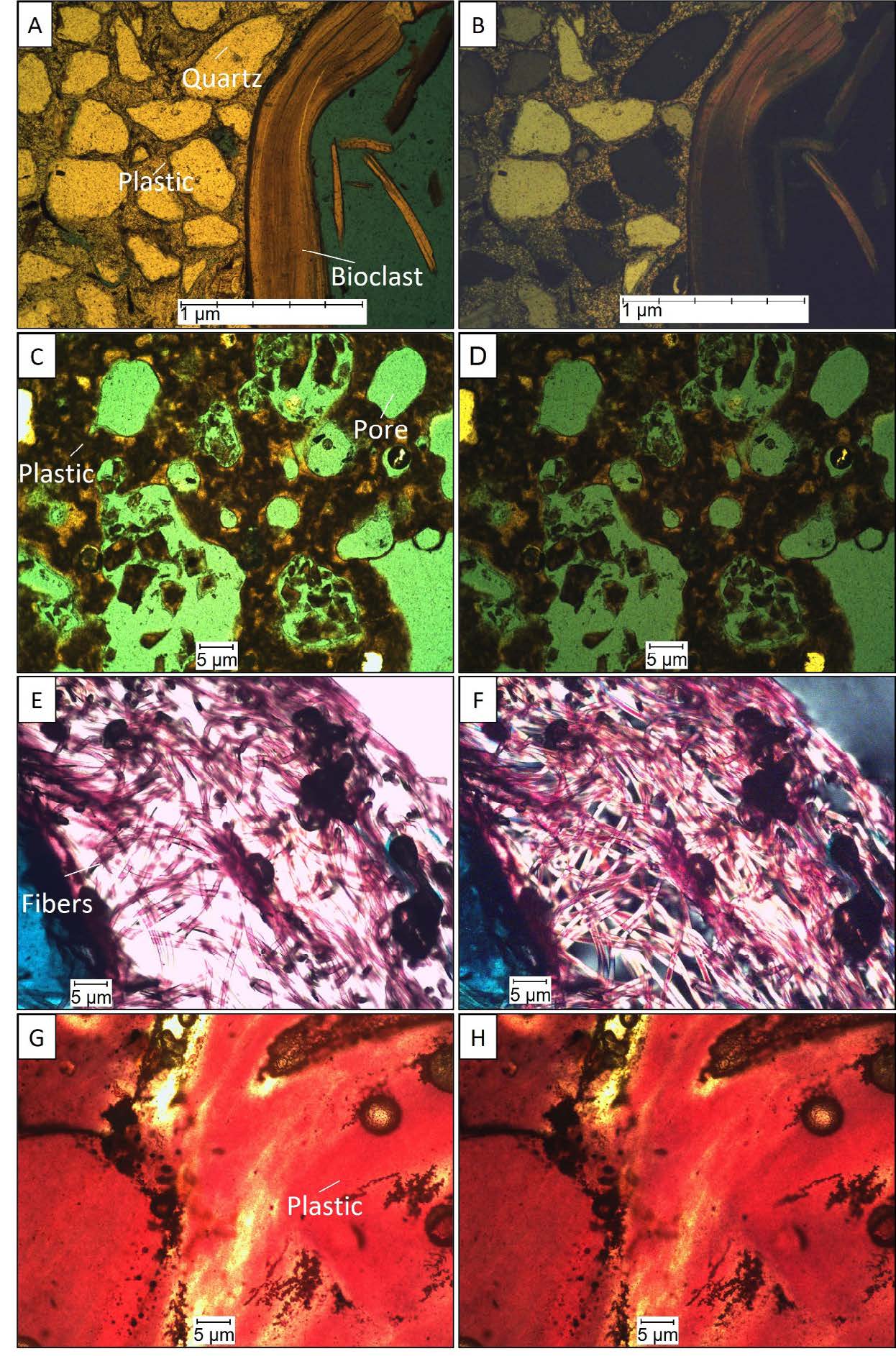 Note: crossed nicols on the left and uncrossed nicols on the right.
 Note: PS – polystyrene; PP – polypropylene; PET – polyethylene terephthalate; PE – polyethylene; PA – polyacrylate; BCK – black; UN – unknown.
 Note: PS – polystyrene; PP – polypropylene; PET – polyethylene terephthalate; PE – polyethylene; PA – polyacrylate; BCK – black; UN – unknown.