 Sources of resistance to leafminer in melon germplasm
Abstract
The objective of this work was to assess sources of resistance to leafminer in melon plant germplasm and identify the most recommended variables associated with antixenosis resistance. A total of 32 genotypes were evaluated for resistance by antibiosis: larval and pupal viability, and antixenosis: mines per leaf, per plant, and per area, in choice and no-choice tests in the laboratory and through morphological characteristics. 'Festival' hybrid is the most promising source of resistance to the leafminer due to antibiosis; however, none of the evaluated genotypes show antixenosis. Mines per area is the most reliable variable to evaluate resistance to leafminers by antixenosis in melon germplasm.
Index terms:
Cucumis melo; Liriomyza sativae; plant breeding; resistance.
Resumo
O objetivo deste trabalho foi avaliar fontes de resistência à mosca-minadora em germoplasma de meloeiro e identificar as variáveis associadas à resistência por antixenose mais recomendadas. Um total de 32 genótipos foram avaliados quanto à resistência por antibiose: viabilidade larval e pupal, e antixenose: minas por folha, por planta e por área, em testes com e sem chance de escolha no laboratório e por meio de características morfológicas. O híbrido 'Festival' é a fonte de resistência à mosca-minadora mais promissora em razão da antibiose; no entanto, nenhum dos genótipos avaliados mostram antixenose. Minas por área é a fonte mais confiável para avaliar a resistência à mosca-minadora por antixenose em germoplasma de melão.
Termos para indexação:
Cucumis melo; Liriomyza sativae, melhoramento vegetal; resistência.
Introduction
The melon plant (Cucumis melo L.) is an economically important cucurbit grown worldwide (Rolim et al., 2020; FAO, 2024). In Brazil, modern technologies as well as the edaphic and climatic conditions allow high yields and quality fruit throughout the year in the semiarid region. However, continuous growing has led to phytosanitary problems, as the vegetable leafminer Liriomyza sativae Blanchard (Diptera: Agromyzidae) (Hamza et al., 2023; Braga Sobrinho & Mota, 2023), whose larvae feed on the leaf mesophyll, reducing the photosynthetic capacity and resulting in losses in fruit yield and quality (Araujo et al., 2013; Fernandes et al., 2019), being responsible for huge damages (Araujo et al., 2013; Fernandes et al., 2019).
The most popular method to manage leafminer is the chemical control (Damasceno et al., 2022; Braga Sobrinho & Mota, 2023), which, over time, may become unsustainable due to the predominant use of insecticides (Wei et al., 2015; Struelens & Silvie, 2020). Therefore, it is necessary to develop tools for management of the insect with economic, social, and environmental interests in accordance with the principles of Integrated Pest Management (Dara, 2019; Pastori et al., 2019). Pest-resistant plants may be a strategically ideal tool, as it lasts throughout the entire crop cycle and maintains the insect population below the level of economic damage; in addition, it can be associated with other control techniques (Basij et al., 2011; Ofuya et al., 2023).
Studies on melon genotypes have been carried out to identify sources of leafminer-resistant alleles (Nunes et al., 2013; Celin et al., 2017a; Oliveira et al., 2017, 2022; Ferreira et al., 2022). In experiments carried out in the field and laboratory with 52 melon genotypes, including choice and no-choice tests, the accessions CNPH 11-282, CNPH 11-1072, and CNPH 11-1077 showed antixenosis to L. sativae and the genotypes BAGMEL 56 and CNPH 00-915 stood out as resistant by antibiosis (Celin et al., 2017a; Oliveira et al., 2017). Ferreira et al. (2022) identified the AM-RT and AM-M accessions as sources of resistance to this pest when evaluating 22 genotypes under field conditions. However, considering all polymorphism of C. melo, it is expected that new sources of resistance to the leafminer will be identified in the available germplasm.
Antibiosis is assessed by larval and pupal viability (Celin et al., 2017b) and antixenosis, or non-preference, through the number of mines per leaf (Oliveira et al., 2017; Celin et al., 2017a), mines per plant (Nunes et al., 2013), or eggs per area (Oliveira et al., 2022). However, antixenosis suffers greater environmental influence, so better experimental control, same evaluation conditions, and plants at the same age are recommended. Additionally, wide morphological trait variation of the plants, such as height, number and size of leaves, etc., are suggested when comparing different genotypes, which demands more precise methods and reliable traits to assess antixenosis.
The objective of this work was to assess sources of resistance to leafminer in melon plant germplasm and identify the most recommended variables associated with antixenosis resistance.
Materials and Methods
The experiments were conducted at Embrapa Agroindústria Tropical, in the municipality of Fortaleza, in the state of Ceará, Brazil (3°44'S, 38°33'W, at 19.5 m of altitude). The plants were obtained in a greenhouse and the infestations and evaluations were carried out at the Plant Breeding and Genetic Resource Laboratory and Entomology Laboratory, located in the same municipality.
A total of 32 melon genotypes were evaluated, of which 26 accessions came from the Melon Active Germplasm Bank of Embrapa Hortaliças, in the municipality of Brasília, Federal District, and the Bank of Cucurbit Germplasm of the Northeastern Region of Brazil of Embrapa Semiárido, in the municipality of Petrolina, in the state of Pernambuco. Besides these accessions, the resistant lineage BAGMEL 56-R obtained by Celin et al. (2017b) and five commercial hybrids, including 'Goldex', were used as susceptible cultivars.
To obtain the plants, the genotypes were sown in polyethylene trays, with 18 ml cells, filled with a substrate of coconut fiber and peat (1:1). Immediately afterwards, the trays were placed in a room simulating a germination chamber for two days and then transferred to a greenhouse.
On the tenth day after sowing, the seedlings of each genotype were transplanted to duly identified polyethylene pots, containing 0.3 L of a substrate composed of sand and commercial peat at the proportion of 5:3. The pots remained in the greenhouse until they were infested, so that they could be evaluated. The average temperature and relative humidity recorded in the greenhouse were 28.7±2ºC and 66.7±5%, respectively. During the period, the plants were trained with wooden stakes and ribbons to make them easier to handle, and they were irrigated and fertigated according to the crop needs (Taniguchi et al., 2019).
The leafminer flies used in the tests were bred and maintained in laboratory, and no new populations were introduced for over 2 years to avoid preimaginal conditioning. This group of insects, identified as L. sativae, had been collected in melon production fields in the Jaguaribe-Açu agricultural region, located on the border of the states of Ceará and Rio Grande do Norte. The insects were maintained in a growth room at 27±2°C, photophase of 12 hours, and 65±5% relative humidity. Jack bean (Canavalia ensiformis L.) was used as a host to multiply and avoid preimaginal conditioning of the insect. The pupae collected from the infested leaves of C. ensiformis were kept in glass tubes until emergence of the adults. At the time of the experiments, the pupae were placed in clusters of 10 or 20 per tube to facilitate sexing and simple counting of the number of adults, respectively. At 48 hours after emergence of the adults, the insects were released in the rearing cages to be used in infestation of the experiments.
To evaluate genotype resistance by antibiosis mechanism, plants 20 days after sowing with four or five fully developed leaves were distributed in cages measuring 60 × 80 × 50 cm, covered with voile cloth, with three genotypes in each. Then, each plant was infested with 30 leafminer larvae close in age to monitor their development period, for one hour with constant lighting. The laboratory was kept at 27±2°C and relative humidity at 60±10%. A completely randomized experimental design was used with 32 melon genotypes and three replicates, and each replicate was composed of one plant.
After infestation, the plants were placed in the greenhouse and, on the third day, the number of mines per leaf of each plant was counted. On the fifth day, the plants were taken to the laboratory, and the leaves with mines were placed in disposable cups for the pupae to be collected and counted. With the aid of a fine haired brush, the leaves were gathered from the cups and stored in glass tubes, measuring 8.5 × 2.5 cm, up to emergence of the adults, which were also counted. Through the number of mines (NM), pupae (NP), and adults (NA), the larval viability per plant (VL), by VL=NP/NM×100, and pupal viability per plant (VP), by VP=NA/NP×100, were estimated.
Simultaneously to the test for antibiosis, the genotype reaction to antixenosis resistance was evaluated. The experimental design was in randomized blocks with ten replicates with one plant per plot. The plants were taken to the laboratory and organized in a single cage of 115 × 380 × 90 cm covered with voile cloth for the insects to choose among the genotypes, which is called choice test. After distributing the plants, six leafminer flies per plant were released in the cage. The laboratory was maintained at 27±2°C, with relative humidity of 60±5%, and constant lighting. After 24 hours of contact with the flies, the plants were removed from the cage and taken to the greenhouse, where they remained for three days for evaluations.
The evaluations consisted of: number of mines in the leaves; plant height (PH), from the root collar to the canopy in cm; number of leaves (NL); leaf area, in cm2; fresh weight and dry weight in g. Leaf area (LA) was measured using a portable LI-3000 (LI-COR, Lincoln, NE, USA) and fresh weight (FW) was obtained on a precision balance. The fresh leaves were dried for 48 hours in a laboratory oven, with air circulation and air renewal, at 65°C and then weighed to obtain dry weight (DW). From these data, the following estimates were obtained: mines per plant (MP), mines per leaf (ML), mines per area (MA), density by fresh weight (DFW), and mean area per leaf (MAL).
The most promising genotypes obtained with the choice test were selected for the antixenosis no choice test, together with both control groups: the susceptible 'Goldex' and the resistant BAGMEL 56R. The no choice test was conducted in a completely randomized design with ten replicates, each replicate composed of one plant.
Each genotype was placed in an insect cage, measuring 60 × 80 × 50 cm, covered with voile cloth, configuring the no-choice test. After that, each plant was infected by three leafminer fly couples, which remained in contact with the plants for 24 hours. The flies were sexed, identifying the female by the presence of the ovipositor. During the infestation, the laboratory was maintained at 27±2°C, with relative humidity of 60±5%, and constant lighting. After the period of contact, the plants were removed from the cages and taken to the greenhouse, remaining there for three days, when the following traits were evaluated: number of mines, number of leaves, and leaf area in cm2, obtaining mines per plant (MP), mines per leaf (ML), and mines per area (MA), respectively.
The estimates of the Pearson correlation coefficients were obtained by combining the following traits: MP, ML, MA, PH, LA, FW, DW, DFW, and MAL. Normality and homogeneity of variance tests were performed on the data obtained, and pertinent transformations were adopted when necessary, guided by the optimal transformation of Box-Cox (1964). For the experiments of antibiosis and antixenosis with choice test, the mean values were subjected to the Scott-Knott’s cluster test, at 5% probability. The Kruskal-Wallis’s test was applied only to the NL, which did not conform to the assumptions of ANOVA. In the choice test, the hierarchical method was used to differentiate and select genotypes based on the traits MP, ML, and MA. In the no-choice test, the Dunnett’s test was applied to compare the mean values, using the control groups with 'Goldex' and BAGMEL 56R as a contrast. Analyses were conducted in the R program (R Core Team, 2024).
Results and Discussion
'Festival' genotype stood out as a source of resistance by allowing larval viability of 5.21%, whereas this parameter ranged from 41.62% to 82.86% for the others, and low pupal viability (PV) (Table 1). Therefore, this genotype must present morphological or chemical defense mechanisms that hinder or delay the development of L. sativae (Souza et al., 2014; Haldhar et al., 2017). It is important to highlight that all PV results were relatively above 50% for all genotypes, which means that it is not possible to define promising sources of resistance observing this single parameter.
Morphological traits of Liriomyza sativae Blanchard (Diptera: Agromyzidae) leafminer in melon (Cucumis melo) germplasm in antibiosis and antixenosis choice tests(1).
In this study, a significant difference was observed for all parameters analyzed, as well as for the trait NL, showing genetic variability in the plant germplasm for resistance parameters and morphological characteristics (Table 1). However, this great morphological variability between genotypes results in plants with divergent PH, NL, AL, and other characteristics even if they are at the same age. The plant morphological parameters PH and MAL showed a correlation with mines per plant (MP) and mines per leaf (ML) (Figure 1); however, there was no correlation between mines per area (MA).
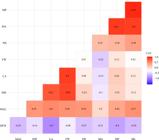
Pearson correlation coefficient (Corr) between the morphological characteristics of melon (Cucumis melo) plant: plant height (PH), leaf area (LA), fresh weight (FW), dry weight (DW), density by fresh weight (DFW), and mean area per leaf (MAL), and the traits of resistance to Liriomyza sativae Blanchard (Diptera: Agromyzidae) leafminer by antixenosis: mines per plant (MP), mines per leaf (ML), and mines per area (MA).
There are reports of morphological characteristics, such as leaf size and height, epidermis thickness, and quantity of trichomes, that contribute to plant resistance to insects of the Liriomyza genus (Alves et al., 2014; Oliveira et al., 2021), especially antixenosis. The influence of some morphological variables depends on the resistance trait being evaluated, considering that different defense mechanisms can condition resistance in isolation or in combination, whether they are chemical, physical, or morphological in nature (Ferreira et al., 2022).
The number of mines per leaf (Oliveira et al., 2017; Celin et al., 2017a; Ferreira et al., 2022) and per plant (Nunes et al., 2013) are the characters normally used in experiments to evaluate antixenosis resistance in melon to leafminer, in which genotypes with a lower number of mines present a higher degree of resistance. Mines per area variable was the only one that did not show a correlation with the morphological characteristics evaluated, therefore, it is the most reliable variable for selecting promising genotypes, as it is independent of morphological variations. However, if two genotypes have the same number of mines, the attack on the genotype with a smaller leaf area is more significant, since it reduces the active photosynthetic area, leaving the plant more susceptible to the damage caused by the insect pest.
According the results for antixenosis based on MP and ML, the genotypes formed the four groups A, B, C, and D, and the three groups A, B, and C for MA, separating the resistant accessions from the least up to the most susceptible to leafminer (Table 1). The accessions CNPH 11-130, CNPH 11-223, CNPH 15-830, BAGMEL 162, and the control BAGMEL 56R are in the group with the greatest resistance in the three parameters, indicating potential for antixenosis. CNPH 11-939, in turn, had a variation in position in each parameter evaluated, considering that it was allocated in group B for MP, whereas in group A for ML and MA. Something similar occured with the accessions CNPH 15-446 and BAGMEL 114, which were both in group B for MP and ML, but in group A for MA. The genotypes with the best performance in the MP trait also stood out in the ML and MA traits that assessed resistance.
CNPH 09-902, CNPH 15-687, Grand Prix, CNPH 16-439, CNPH 93-692, SB2, CNPH 15-077 and the control 'Goldex' were the most susceptible for resistance by antixenosis, in analysis of the MA trait, so they were fit in group C. Regarding the MP and ML traits, these accessions were also more susceptible to leafminer, together with other accessions. Although the genotypes with better performance expand the breeding possibilities aiming at resistance to leafminer, the most susceptible genotypes can be used as susceptible parents in studies of the insect in contrast to plant interaction, generation analysis, and other biological tests (Boiça Júnior et al., 2015; D’Esposito et al., 2023).
The similarity between the genotypes formed five groups (Figure 2), which were group 1: CNPH 11 130, CNPH 11-223, BAGMEL 56R, BAGMEL 162, and CNPH 15-830; group 2: CNPH 11-939, BAGMEL 114, and CNPH 15-446; group 3 allocated those of intermediate value, containing 18 genotypes; group 4 contained two genotypes; and group 5, four genotypes, including the control 'Goldex'. Groups 1 and 2 consisted of eight genotypes, which stood out for MA character and were superior compared to the others. Whereas groups 4 and 5 were the most susceptible to leafminer.

Genetic dissimilarity between melon (Cucumis melo) genotypes using the Average Linkage method within a group based on Euclidean Distances, considering the parameters related to antixenosis: mine per plant (MP), mine per leaf (MF), and mine per area (MA).
After verifying the potential of the genotypes, the accessions of groups 1 and 2 CNPH 11-130, CNPH 11-223, CNPH 15-830, BAGMEL 162, CNPH 11-939, CNPH 15-446, and BAGMEL 114, which presented the best performance in the choice test, 'Festival', that stood out in the antibiosis experiment, the susceptible control 'Goldex', and the resistant control BAGMEL 56R were selected to carry out the no-choice test. However, the accessions CNPH 11-223 and CNPH 11-939 were not evaluated since they did not develop well during the experiment.
The analysis of variance of the no-choice test showed a significant effect of the genotypes for all traits. When comparing the means of the genotypes selected with the control groups in relation to the MP and MF traits, 'Festival' was the only one that had a similar result to 'Goldex', and the others did not differ from the two control groups (Table 2). BAGMEL 162 was similar to 'Goldex' in MA. For the traits cited, the other genotypes showed a similar performance to the resistant control BAGMEL 56R; however, they also did not differ from the 'Goldex' susceptible control.
Mean values and clustering of melon (Cucumis melo) genotypes regarding resistance to Liriomyza sativae Blanchard (Diptera: Agromyzidae) leafminer in the experiment of no-choice antixenosis test(1).
The genotypes subjected to the no-choice test did not show the same results performed in the choice test, since the attack on the susceptible control 'Goldex' decreased in the no-choice test, and on the other genotypes it increased, reducing the difference among treatments. To explain this response in the two environments, the hypothesis is that different genotypes are offered to the insect in the choice test; thus, those genotypes with some degree of resistance repel the insects and the insects concentrate the attack for shelter, food, and/or oviposition, on the genotypes that do not repel them or that have some characteristics that are attractive to them. Therefore, insects concentrate on the most susceptible genotypes, increasing the variance among the mean values of the non-preference traits of the insect that are under evaluation. In the no-choice test, in turn, the genotypes are offered individually to the insects, without possibility of choice, which results in a uniform concentration of insects per genotype.
This response corroborates the study of Coelho et al. (2009), who analyzed the resistance of 32 melon cultivars to Bemisia tabaci (Genn.) biotype B (Hemiptera: Aleyrodidae) and found different classifications of the resistance degree for the cultivar Jangada in tests with and without confinement of the insects. The same was observed in another study analyzing the resistance of 32 genotypes of collard greens [Brassica oleracea var. acephala (L.)] to B. tabaci (Domingos et al., 2018).
Conclusions
-
1. 'Festival' hybrid is the most promising source of resistance to the leafminer (Liriomyza sativae) due to antibiosis; however, none of the evaluated melon (Cucumis melo) genotypes show antixenosis.
-
2. Mines per area is the most reliable variable to evaluate resistance to leafminers by antixenosis in melon germplasm.
Acknowledgments
To Coordenação de Aperfeiçoamento de Pessoal de Nível Superior (CAPES), for financing, in part, this study (Finance Code 001); to Conselho Nacional de Desenvolvimento Científico e Tecnológico (CNPq) and Fundação Cearense de Apoio ao Desenvolvimento Científico e Tecnológico (FUNCAP) for scholarship and financial resources.
References
-
ALVES, F.M.; DINIZ, J.F.S.; SILVA, Í.W. da; FERNANDES, F.L.; SILVA, P.R. da; GORRI, J.E.R. A sampling plan for Liriomyza huidobrensis (Diptera: Agromyzidae) on a potato (Solanum tuberosum) plantation. American Journal of Potato Research, v.91, p.663-672, 2014. DOI: https://doi.org/10.1007/s12230-014-9398-4
» https://doi.org/10.1007/s12230-014-9398-4 -
ARAUJO, E.L.; NOGUEIRA, C.H.F.; MENEZES NETTO, A.C.; BEZERRA, C.E.S. Biological aspects of the leafminer Liriomyza sativae (Diptera: Agromyzidae) on melon (Cucumis melo L.). Ciência Rural, v.43, p.579-582, 2013. DOI: https://doi.org/10.1590/S0103-84782013000400003
» https://doi.org/10.1590/S0103-84782013000400003 - BASIJ, M.; ASKARIANZADEH, A.; RAFEZI, R. Evaluation of resistance of cucumber cultivars to the vegetable leafminer. Chilean Journal of Agricultural Research, v.71, p.395-400, 2011.
-
BOIÇA JÚNIOR, A.L.; SOUZA, B.H.S. de; COSTA, E.N.; RIBEIRO, Z.A.; STOUT, M.J. Factors influencing expression of antixenosis in soybean to Anticarsia gemmatalis and Spodoptera frugiperda (Lepidoptera: Noctuidae). Journal of Economic Entomology, v.108, p.317-325, 2015. DOI: https://doi.org/10.1093/jee/tou007
» https://doi.org/10.1093/jee/tou007 -
BRAGA SOBRINHO, R.; MOTA, M. do S.C. de S. Essential oils on the control of melon leafminer. Brazilian Journal of Animal and Environmental Research, v.6, p.58-72, 2023. DOI: https://doi.org/10.34188/bjaerv6n1-007
» https://doi.org/10.34188/bjaerv6n1-007 -
CELIN, E.F.; OLIVEIRA, F.I.C.; DIAS-PINI, N.S.; NUNES, G.H.S.; ARAGÃO, F.A.S. New sources of resistance to leafminers (Liriomyza sativae) in melon (Cucumis melo L.) germplasm. Genetics and Molecular Research: GMR, v.16, art.gmr16029561, 2017a. DOI: https://doi.org/10.4238/gmr16029561
» https://doi.org/10.4238/gmr16029561 -
CELIN, E.F.; SILVA, F.D. da; OLIVEIRA, N.R.X. de; DIAS, R. de C.S.; ARAGÃO, F.A.S. de. Simple genetic inheritance conditions resistance to Liriomyza sativae in melon. Euphytica, v.213, art.101, 2017b. DOI: https://doi.org/10.1007/s10681-017-1888-2
» https://doi.org/10.1007/s10681-017-1888-2 -
COELHO, S.A.M.P.; LOURENÇÃO, A.L.; MELO, A.M.T. de; SCHAMMASS, E.A. Resistência de meloeiro a Bemisia tabaci biotipo B. Bragantia, v.68, p.1025-1035, 2009. DOI: https://doi.org/10.1590/S0006-87052009000400024
» https://doi.org/10.1590/S0006-87052009000400024 -
D’ESPOSITO, D.; GUADAGNO, A.; AMOROSO, C.G.; CASCONE, P.; CENCETTI, G.; MICHELOZZI, M.; GUERRIERI, E.; ERCOLANO, M.R. Genomic and metabolic profiling of two tomato contrasting cultivars for tolerance to Tuta absoluta Planta, v.257, art.47, 2023. DOI: https://doi.org/10.1007/s00425-023-04073-8
» https://doi.org/10.1007/s00425-023-04073-8 -
DAMASCENO, G.; SILVA, T.C. da; BERNARDI, O.; COSTA-LIMA, T.C. da. Susceptibility of Liriomyza sativae Blanchard (Diptera: Agromyzidae) melon populations to abamectin, cyromazine, and cyantraniliprole. BioAssay, v.13, art.ba13001, 2022. DOI: https://doi.org/10.37486/1809-8460.ba13001
» https://doi.org/10.37486/1809-8460.ba13001 -
DARA, S.K. The new integrated pest management paradigm for the modern age. Journal of Integrated Pest Management, v.10, art.12, 2019. DOI: https://doi.org/10.1093/jipm/pmz010
» https://doi.org/10.1093/jipm/pmz010 -
DOMINGOS, G.M.; BALDIN, E.L.L.; CANASSA, V.F.; SILVA, I.F.; LOURENÇÃO, A.L. Resistance of collard green genotypes to Bemisia tabaci biotype B: Characterization of antixenosis. Neotropical Entomology, v.47, p.560-568, 2018. DOI: https://doi.org/10.1007/s13744-018-0588-5
» https://doi.org/10.1007/s13744-018-0588-5 -
FAO. Food and Agriculture Organization of the United Nations. Faostat. Available at: <https://www.fao.org/faostat/en/#data/QCL/visualize>. Accessed on: Jan. 20 2024.
» https://www.fao.org/faostat/en/#data/QCL/visualize - FERNANDES, W.C.; PASTORI, P.L.; DIAS-PINI, N.S.; FEITOSA, F.A.A.; PEREIRA, F.F. Pragas do meloeiro. In: GUIMARÃES, M. de A.; ARAGÃO, F.A.S. de (Ed.). Produção de melão Viçosa: Ed. da UFV, 2019. p.245-265.
-
FERREIRA, R.R.; MARTINS, A.F.; LOUREIRO, F.L.C.; ARAUJO, E.L. de; NUNES, G.H. de S. Sources and inheritance of leafminer resistance in yellow melon accessions. Revista Caatinga, v.35, p.747-754, 2022. DOI: https://doi.org/10.1590/1983-21252022v35n401rc
» https://doi.org/10.1590/1983-21252022v35n401rc -
HALDHAR, S.M.; SAMADIA, D.K.; BHARGAVA, R.; SINGH, D. Host plant genotypes determine bottom-up effect of Cucumis melo var. callosus against melon fruit fly. Crop Protection, v.98, p.157-165, 2017. DOI: https://doi.org/10.1016/j.cropro.2017.03.028
» https://doi.org/10.1016/j.cropro.2017.03.028 -
HAMZA, M.A.; ISHTIAQ, M.; MEHMOOD, M.A.; MAJID, M.A.; GOHAR, M.; RADICETTI, E.; MANCINELLI, R.; IQBAL, N.; CIVOLANI, S. Management of vegetable leaf miner, Liriomyza spp., (Diptera: Agromyzidae) in vegetable crops. Horticulturae, v.9, art.255, 2023. DOI: https://doi.org/10.3390/horticulturae9020255
» https://doi.org/10.3390/horticulturae9020255 -
NUNES, G.H. de S.; MEDEIROS, A.C.; ARAUJO, E.L.; NOGUEIRA, C.H.F.; SOMBRA, K.D. da S.S. Resistência de acessos de meloeiro à mosca-minadora Liriomyza spp. (Diptera: Agromyzidae). Revista Brasileira de Fruticultura, v.35, p.746-754, 2013. DOI: https://doi.org/10.1590/S0100-29452013000300011
» https://doi.org/10.1590/S0100-29452013000300011 -
OFUYA, T.I.; OKUNLOLA, A.I.; MBATA, G.N. A review of insect pest management in vegetable crop production in Nigeria. Insects, v.14, art.111, 2023. DOI: https://doi.org/10.3390/insects14020111
» https://doi.org/10.3390/insects14020111 -
OLIVEIRA, F.I.C. de; FIEGE, L.B.C.; CELIN, E.F.; INNECCO, R.; NUNES, G.H.S.; ARAGÃO, F.A.S. de. Screening of melon genotypes for resistance to vegetable leafminer and your phenotypic correlations with colorimetry. Anais da Academia Brasileira de Ciências, v.89, p.1155-1166, 2017. DOI: https://doi.org/10.1590/0001-3765201720150368
» https://doi.org/10.1590/0001-3765201720150368 -
OLIVEIRA, J.M. de; ARAUJO, J.L.; MELO, J.W.S.; DIAS-PINI, N.S. Melon genotypes with resistance to Liriomyza sativae Blanchard (Diptera: Agromyzidae). Anais da Academia Brasileira de Ciências, v.94, e20191244, 2022. DOI: https://doi.org/10.1590/0001-3765202220191244
» https://doi.org/10.1590/0001-3765202220191244 -
OLIVEIRA, J.M. de; DIAS-PINI, N. da S.; MELO, J.W. da S.; SARAIVA, W.V.A.; MUNIZ, C.R.; LIMA, T.C. da C.; OLIVEIRA, V.R.; MACIEL, G.P. de S. Leaf morphology of melon mediates feeding and oviposition preference, and immature survival of Liriomyza sativae (Blanchard) (Diptera: Agromyzidae). Phytoparasitica, v.49, p.479-489, 2021. DOI: https://doi.org/10.1007/s12600-021-00892-1
» https://doi.org/10.1007/s12600-021-00892-1 - PASTORI, P.L.; PINTO, A.C.; DIAS-PINI, N.S.; GODOY, M.S.; RUGAMA, A.J.M. Manejo integrado das pragas do meloeiro. In: GUIMARÃES, M. de A.; ARAGÃO, F.A.S. de (Ed.). Produção de melão Viçosa: Ed. da UFV, 2019. p.266-282.
-
R CORE TEAM. R: a language and environment for statistical computing. Vienna: R Foundation for Statistical Computing, 2024. Available at: <https://www.R-project.org>. Accessed on: Feb. 11 2025.
» https://www.R-project.org -
ROLIM, P.M.; SEABRA, L.M.J.; MACEDO, G.R. de. Melon by-products: biopotential in human health and food processing. Food Reviews International, v.36, p.15-38, 2020. DOI: https://doi.org/10.1080/87559129.2019.1613662
» https://doi.org/10.1080/87559129.2019.1613662 -
SOUZA, B.H.S.; SILVA, A.G.; JANINI, J.C.; BOICA JÚNIOR, A.L. Antibiosis in soybean genotypes and the resistance levels to Spodoptera eridania (Cramer) (Lepidoptera: Noctuidae). Neotropical Entomology, v.43, p.582-587, 2014. DOI: https://doi.org/10.1007/s13744-014-0241-x
» https://doi.org/10.1007/s13744-014-0241-x -
STRUELENS, Q.; SILVIE, P. Orienting insecticide research in the tropics to meet the sustainable development goals. Current Opinion in Insect Science, v.40, p.24-30, 2020. DOI: https://doi.org/10.1016/j.cois.2020.05.015
» https://doi.org/10.1016/j.cois.2020.05.015 - TANIGUCHI, C.A.K.; CRISÓSTOMO, L.A.; ARTUR, A.G. Solos: preparo, nutrição e adubação para o meloeiro. In: GUIMARÃES, M. de A.; ARAGÃO, F.A.S. de (Ed.). Produção de melão Viçosa: Ed. da UFV, 2019. p.122-140.
-
WEI, Q.-B.; LEI, Z.-R.; NAUEN, R.; CAI, D.-C.; GAO, Y.-L. Abamectin resistance in strains of vegetable leafminer, Liriomyza sativae (Diptera: Agromyzidae) is linked to elevated glutathione S-transferase activity. Insect Science, v.22, p.243-250, 2015. DOI: https://doi.org/10.1111/1744-7917.12080
» https://doi.org/10.1111/1744-7917.12080