Unveiling the genetic diversity of bicolored spined porcupines (Rodentia: Erethizontidae): a novel karyotype, population structuring, and evolutionary insights
Abstract
New World porcupines are rodents belonging to the Erethizontidae family which is divided into two subfamilies: Chaetomyinae, represented by the genus Chaetomys, and Erethizontinae, which includes the genera Erethizon and Coendou. Within this family, the taxonomy of Coendou has proven to be particularly complex and challenging. It remains one of the most neglected among New World mammals, and the taxonomic status and phylogenetic relationships of some taxa are still controversial. In this study, we assessed the diversity of Coendou bicolor using the mitochondrial cytochrome b marker and described the chromosome complement of this species for the first time, increasing the knowledge about this taxon. Notably, the karyotype we described for C. bicolor differs from the six karyotypes reported for other species within this genus. Our findings align with previous research, confirming the separation of the three Coendou subgenera into distinct monophyletic clades. The median joining analysis supports these phylogenetic relationships and suggested a population structure in C. bicolor populations, apparently related to the rivers. Samples from northern Peru are separated from the remaining population by the Ucayali River (a tributary of the Amazonas River), while samples from southern Peru and Brazil are separated from Bolivian samples by the Madre de Dios/Beni rivers. These data highlight the potential role of these rivers as geographic barriers, contributing to the genetic differentiation of C. bicolor populations. Our study provides valuable insights into karyotype and genetic diversity of C. bicolor populations, enriching our understanding of this species.
Keywords
Coendou bicolor; Cytochrome b; Riverine barrier; Western Amazonia
INTRODUCTION
New World porcupines are rodents of the Erethizontidae (Bonaparte, 1845) family, divided into two subfamilies, Chaetomyinae with the genus Chaetomys Gray, 1843, and Erethizontinae with the genera Erethizon F. Cuvier, 1822, and Coendou Lacépède, 1799 (Voss, 2011). The species of Coendou exhibit a wide range of sizes and are characterized by their defensive spines, which cover the dorsal region of their body, and by their prehensile tail (Emmons & Feer, 1997). They are nocturnal, arboreal, and herbivorous (Voss, 2015), eating abundant and common plant species across different successional stages in forests (Batista-da-Silva et al., 2019). This adaptability allows porcupines to use urban areas, exemplified by sightings in several neighborhoods of the city of Rio de Janeiro such as Tijuca, Santa Teresa (as observed by Bonvicino), as well as in the state of Pernambuco (Leal et al., 2017). Furthermore, members of Coendou have been found to host several parasites, including endoparasitic helminths (Cruces et al., 2015), Trypanosoma cruzi (Siqueira et al., 1967), Leishmania (Herrer, 1971; Lainson, 2010), Giardia and Cryptosporidium (Soares et al., 2006). The role of Coendou as hosts of several parasites and their tendency to inhabit areas around urban centers (Voss et al., 2001) highlight the need to enhance our knowledge about them. Accurate identification of these animals is crucial to understanding their role in the life cycles of these parasites. As cryptic animals, they are rarely observed in the wild and are underrepresented in mammalian collections. Consequently, there exist significant knowledge gaps concerning most porcupine species (Feijó & Langguth, 2013; Mendes Pontes et al., 2013).
Brazil is the country with the greatest diversity of Coendou, with a total of ten species, including C. nycthemera (Olfers, 1818), C. insidiosus (Olfers, 1818), C. spinosus (F. Cuvier, 1823), C. roosmalenorum Voss & da Silva, 2001, C. baturitensisFeijó & Langguth, 2013, C. speratusMendes Pontes et al.,2013, C. prehensilis (Linnaeus, 1758), C. bicolor (Tschudi, 1844), C. longicaudatus Daudin, 1802, C. melanurus (Wagner, 1842) of which five are endemic to the country (Menezes et al., 2020). Among Brazilian species, the bicolored-spined porcupine C. bicolor was first recorded in Brazil only in 2013, in the state of Acre (Freitas et al., 2013). Subsequently, this species was also confirmed in the Brazilian state of Amazonas (Menezes et al., 2020). Previous publications reported only two species of Coendou in the Brazilian state of Acre, namely, C. prehensilis and C. bicolor (Voss, 2015). However, a recent study based on morphology has revealed that C. prehensilis is a species complex, and the correct name for the specimens from Acre is C. longicaudatus (Menezes et al., 2021).
Coendou taxonomy presents considerable complexity and challenges, being one of the most understudied among New World mammals. The taxonomic status and phylogenetic relationships of some taxa are still controversial (Bonvicino et al., 2002; Voss, 2011; Menezes et al., 2020, 2021; Voss et al., 2013). The few karyological studies on Coendou species resulted in the description of only six karyotypes (George & Weir, 1974; Concepcion & Molinari, 1991; Bonvicino et al., 2000; Bonvicino et al., 2002; Silva et al., 2018; Lima, 1994). This picture shows that the genetic knowledge about Coendou species is still incipient.
In this study, we assessed the diversity of C. bicolor using mitochondrial cytochrome b as a genetic marker and commented on the role of rivers in the population structure within this taxon. Notably, we provide the first description of the chromosome complement of this species, contributing to a better understanding of this taxon.
MATERIAL AND METHODS
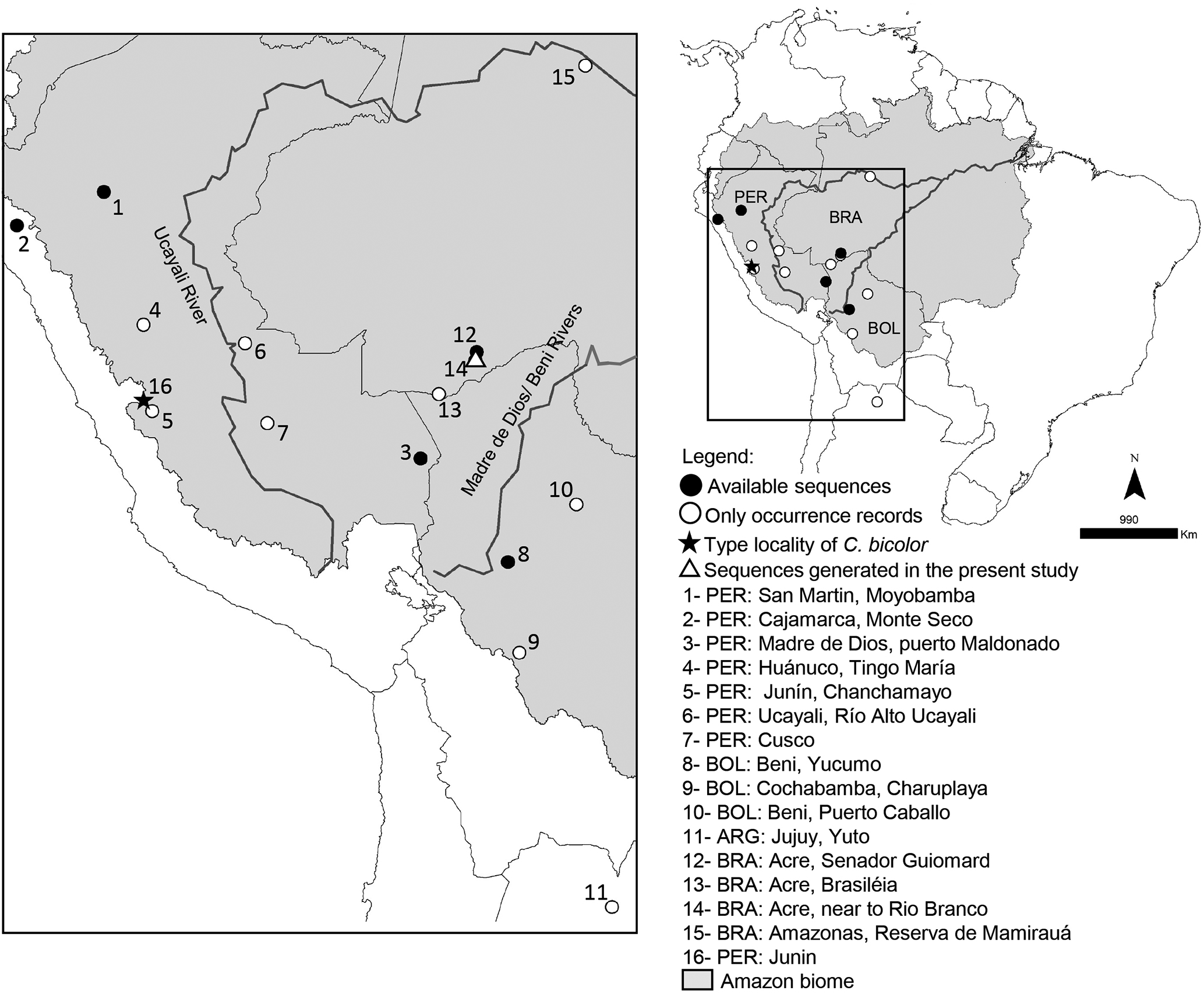
Three specimens (LBCE22564, LBCE22568, LBCE22582) collected in the state of Acre, Brazil, have been archived in the mammal collections of the Laboratory of Biology and Parasitology of Wild Mammals Reservoirs at IOC/Fiocruz (Fig. 1). In addition, blood samples of two live specimens (LBCE21287, LBCE21289) were utilized for karyological preparations. These animals were either rescued due to injuries (n = 2) and kept in quarantine or captured after they had died (n = 3) by the CETAS (Centro de Triagem de Animais Silvestres/Rio Branco) under the IBAMA (Instituto Brasileiro do Meio Ambiente e dos Recursos Naturais Renováveis). All specimens are from tributaries of the lower Purus River basin, near the municipality of Rio Branco, albeit without precise geographical coordinates. Specimens preserved in the form of skin, skull, and skeleton were deposited in the scientific mammal zoological collection of the Instituto Oswaldo Cruz/Fiocruz (LBCE). The collection and handling of these animals, along with the acquisition of biological samples, were conducted following ethical guidelines and were approved by the Council for Ethics in the Use of Animals (CEUA UFAC) under license No. 23107.012934/2019-10, as well as having received the necessary SISBIO environmental license (ICMBIO 13373).
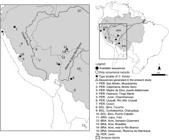
Map of part of South America with collecting localities of C. bicolor specimens with sequences on the GenBank (Black circles), generated in the present study (triangle), others register of occurrences (white circles), and type locality (star). Gray area represents the Amazon Biome. ARG = Argentina, BOL = Bolivia, BRA = Brazil, PER = Peru.
For karyotype preparation, we used a blood sample obtained from one Coendou male (LBCE21287) and one female (LBCE21289). The culture medium was prepared with 80% of RPMI 1640, 20% fetal calf serum, 20 µL of lectin, 0.5 mL of L Glutamine, and 60 µL of heparin for 72 h. After 70 h we then added 0.5 mL of colchicine 10⁻5M to stop cell division in the metaphase for 2 hours. We added KCl (0.075 M) to disrupt the cells and a fixative solution (3 methanol:1 acetic acid) to clean the material. For conventional staining, we used 2% Giemsa. The metaphases were visualized under an optical microscope with an attached camera to capture images of the best metaphases. We took at least 20 photographs to assemble the metaphases. We photographed the chromosome spreads for karyotyping, with the homologous pairs being arranged in ascending order, based on their morphology. We divided the chromosomes into two groups based on their morphology, i.e., biarmed or acrocentric.
The DNA from three specimens (LBCE22564, LBCE22568, LBCE22582) was extracted from liver tissue samples preserved in absolute ethanol, using the phenol/chloroform technique, according to Sambrook et al. (1989). Mitochondrial cytochrome b DNA (complete sequence) was amplified with primers L14724 (Irwin et al., 1991) and UMMZ04 (Jansa et al., 1999) under the following conditions: one cycle of denaturation at 94℃ for 2 minutes and 35 cycles of denaturation at 94℃ for 30 seconds, annealing at 48℃ also for 30 seconds, stretching of the DNA strand at 72℃ for 1:30 minutes. The purified PCR product was subjected to sequencing reactions on automatic DNA sequencer (ABI 3730xl) using the same amplification primers and two more internal primers: Cytb Sot in 1 and Cytb Sot in 2 (Cassens et al., 2000). The sequences generated during the current study were deposited in the GenBank repository under the numbers PP761324, PP761325 and PP761326 (Table 1).
Coendou sequences used in the molecular analysis with taxon identification, GenBank accession number, field or museum number (ID), collection locality, and reference.
The three newly generated sequences and 27 more from GenBank (with at least 800 bp) of all available Coendou species (Table 1) were manually aligned using MEGA X (Kumar et al., 2018). Other two GenBank sequences from Vilela et al. (2009) were used as outgroups: Erethizon dorsatum (FJ3574280) and Chaetomys subspinosus (EU544660). IQ Tree 2.1.2 (Minh et al., 2020) was used to generate the maximum-likelihood tree, and the best-fit evolutionary model according to the Bayesian inference criterion (BIC) was determined by ModelFinder (Kalyaanamoorthy et al., 2017) included in the IQ Tree package, where the command “ bb 50000” was applied to calculate the ultrafast bootstrap approximation (bb; Minh et al., 2013) in 50,000 replicates. To confirm the clades obtained in the ML and visualize mutational steps separating each lineage, we used DNASP v. 6.12.03 (Rozas et al., 2017) for identifying haplotypes (excluding sites with gaps and missing data to avoid bias in the haplotype’s distribution pattern) and Network version 10 (https://fluxus-engineering.com; Bandelt et al., 1999) for building the haplotype network.
RESULTS
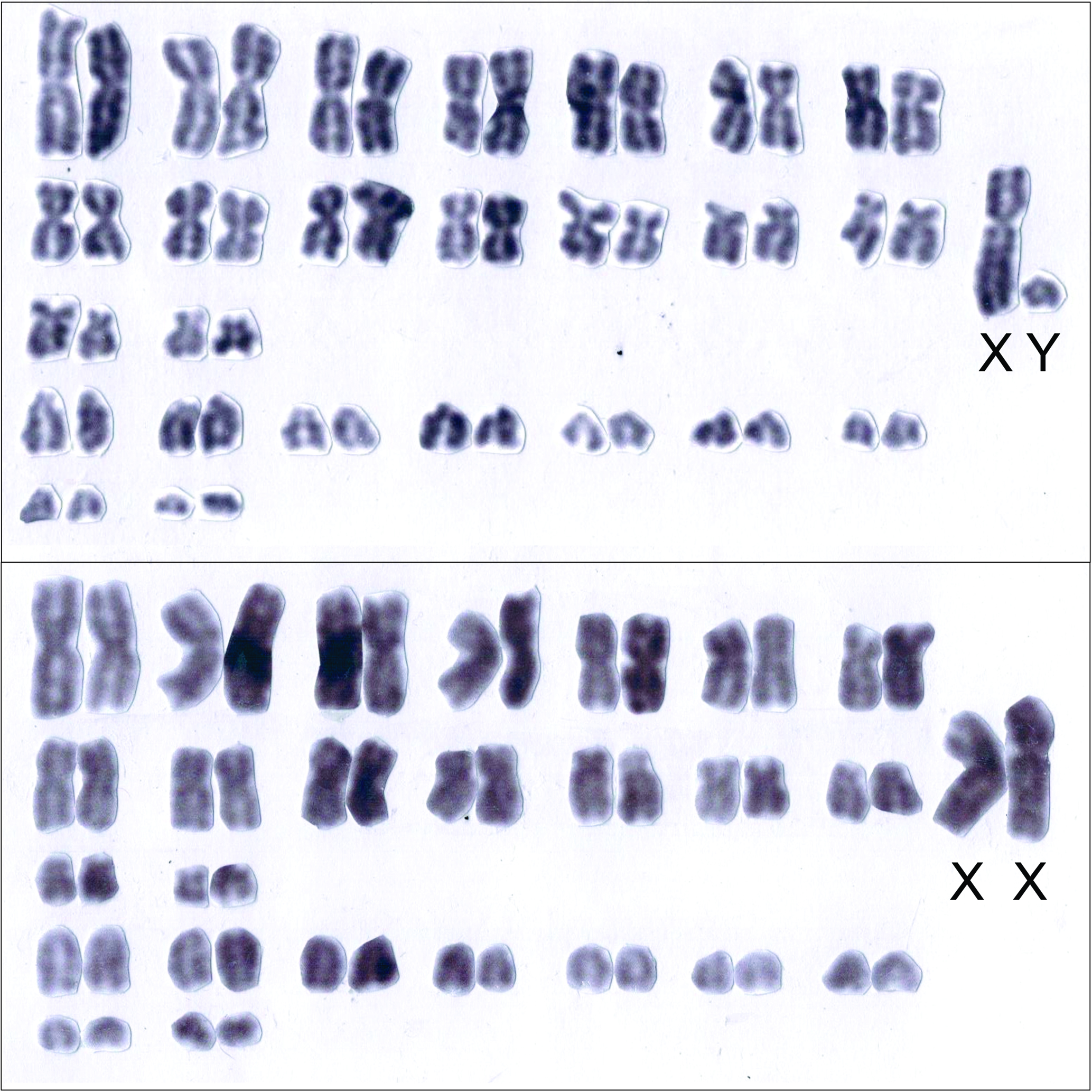
The karyotype of one male and one female Coendou sp. showed diploid number (2n) of 52 and fundamental number (FN) of 82 (Fig. 2). The autosome complement is composed by 16 biarmed pairs varying in size from large to small, and nine acrocentric pairs varying in size from medium to small. The sexual X chromosome is large and submetacentric and the Y chromosome is small and also submetacentric.
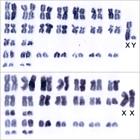
Conventional stained karyotypes of Coendou (Sphiggurus) bicolor male LBCE21287 (above) and female LBCE21289 (below) from Brazilian Acre state with 2n = 52 and FN = 82. The X and Y are sexual chromosomes.
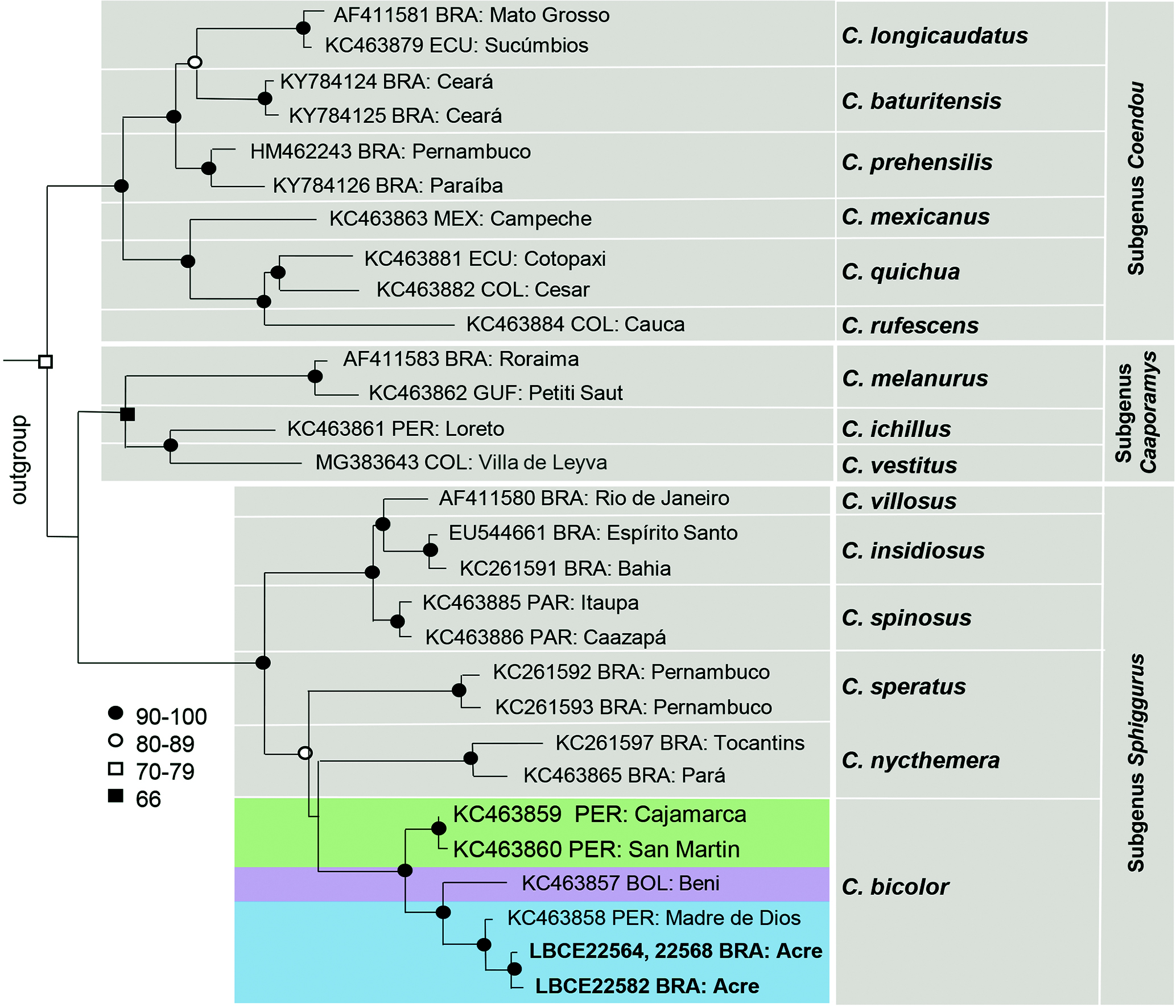
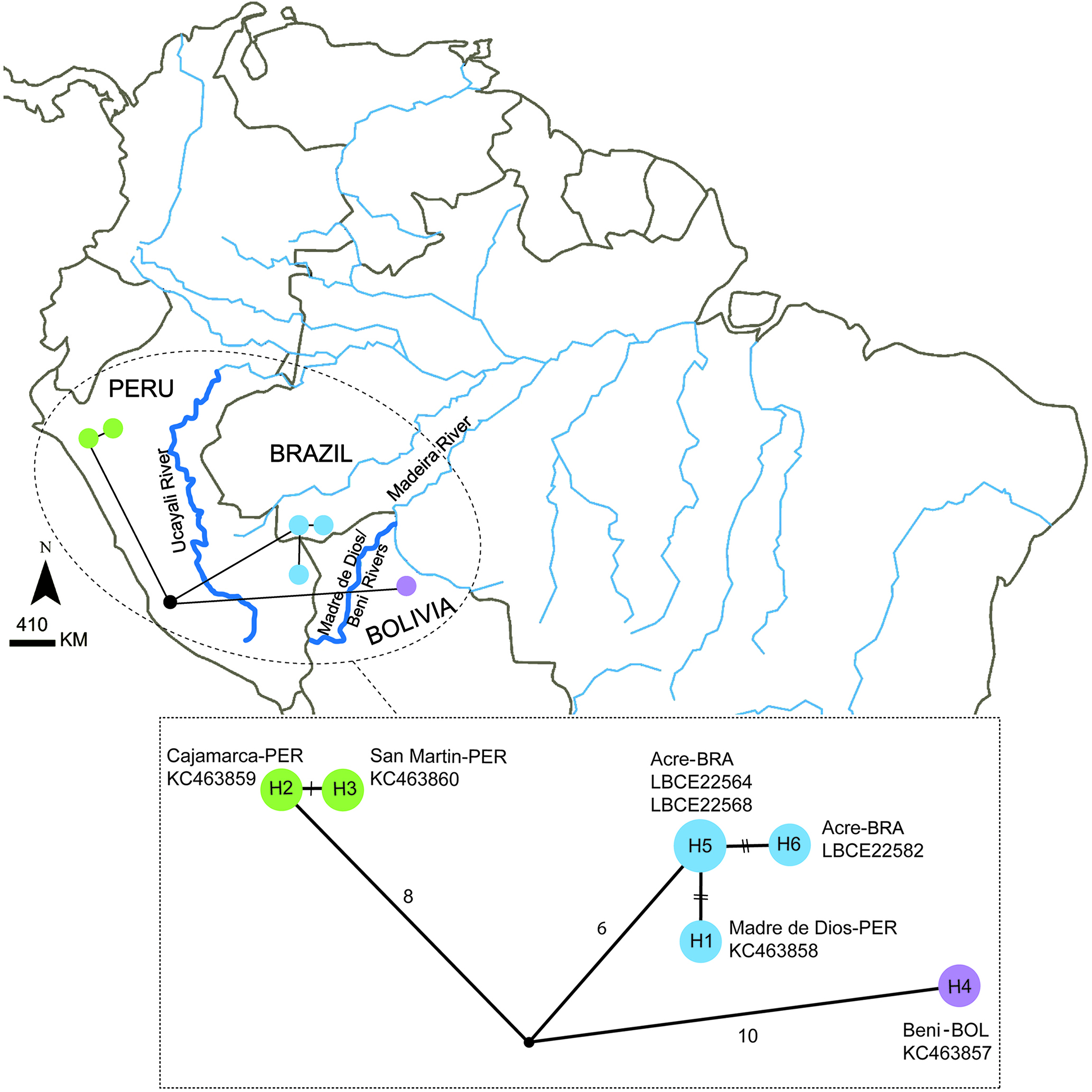
The maximum-likelihood tree grouped all Coendou haplotypes with bootstrap support (bs) of 70%, divided into three main clades. One clade grouped haplotypes of the subgenus Coendou (Coendou) (bs = 95%) apart from the remaining haplotypes, divided into two clades, one including haplotypes of Coendou (Caaporamys) (bs = 66%) and the other with haplotypes of Coendou (Sphiggurus) (bs = 94%), divided into two subclades (Fig. 3). Within the clade C. (Sphiggurus), haplotypes of C. (S.) bicolor grouped in a well-supported and structured clade (bs = 99%) with haplotypes from northern Peru grouped (bs = 97%) apart of haplotypes from southern Peru, Bolivia, and Brazil (bs = 96%, Fig. 3). The median-joining network showed the six haplotypes separated into three haplogroups connected by one median vector, the haplogroup from Acre and southern Peru, the haplotype from Bolivia, and the haplogroup from northern Peru (Fig. 4)
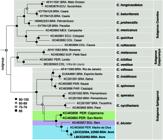
Maximum likelihood phylogenetic tree. Symbols near nodes represent Bootstrap values: black circles (90-100%), white circles (80-89%), white squares (70-79%), black square (66%). BOL = Bolivia, BRA = Brazil, COL = Colombia, ECU = Ecuador, GUF = French Guiana, MEX = Mexico, PAR = Paraguay, PER = Peru.
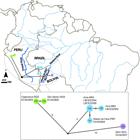
Topology of median joining on top of the map showing the current separation of C. bicolor populations by the rivers Ucayali and Beni/Madre de Dios. Circles are haplotypes and its dimension are proportional to the number of shared sequences. Numbers in the segments connecting the circles are nucleotide substitutions and black circle is the median vector. For haplotypes localities see figure 2. BOL = Bolivia, BRA = Brazil, PER = Peru.
DISCUSSION
The karyotype of Coendou bicolor with 2n = 52 and FN = 82, described for the first time in this study, is different in both diploid and fundamental numbers from the other six reported for species within this genus (Bonvicino et al., 2000; Bonvicino et al., 2002; Concepcion & Molinari, 1991; George & Weir, 1974; Silva et al., 2018; Lima, 1994). Previous hypotheses had considered C. rothschildi as a subspecies of C. bicolor (Goldman, 1920: 135; Hall, 1981: 854; Corbet & Hill, 1991: 200), but posteriorly it was recognized as a valid species (Emmons & Feer, 1997: 218), with a different karyotype, 2n = 74 and FN = 82 (George & Weir, 1974), despite having the same FN. Presently, C. rothschildi Thomas, 1902 is considered a junior synonymous of Coendou quichua Thomas 1899. The karyological data presented here clearly showed that C. bicolor karyotype (2n = 52 and FN = 82) is different from the karyotype of C. quichua with 2n = 74 and FN = 82, as expected for different species.
Within the subgenus C. (Coendou), both C. (Co.) longicaudatus from Pará state, Brazil, and C. (Co.) quichua share identical karyotypes of 2n = 74 and FN = 82 (Silva et al., 2018; George & Weir, 1974). Our current knowledge indicates that species of the subgenus C. (Co.) share a conserved karyotype, with the same diploid and fundamental numbers. Within the subgenus C. (Caaporamys), the karyotype of C. (Ca.) melanurus from Roraima state, Brazil, showed 2n = 72 and FN = 76 (Bonvicino et al., 2002) and C. (Ca.) vestitus from western Venezuela showed 2n = 42 and FN = 76 (Concepcion & Molinari, 1991). These karyotypes share the same FN = 76, but with considerably distinct diploid numbers.
Within the subgenus Coendou (Sphiggurus), the karyotypes are quite distinct, specimens identified as C. (S.) villosus (F. Cuvier, 1823) showed 2n = 42 and FN = 76 (Bonvicino et al., 2000) and the karyotype here described for C. bicolor showed 2n = 52 and FN = 82, differing in diploid and fundamental numbers. Coendou (S.) villosus was considered a junior synonym of C. (S.) spinosus (Voss et al., 2011), a taxonomic arrangement followed by subsequent publications. This arrangement was based on the fact that the holotype of C. villosus was lost, the type locality was not explicitly designated in the original description, and the posterior designation of the type locality was based on a misidentified of the type specimen (Voss et al., 2011). The type of C. villosus, an animal characterized by its long fur, was collected by Auguste de Saint-Hilaire (Cuvier, 1823), who traveled to several places in Brazil, including Rio de Janeiro and Minas Gerais. Furthermore, a morphological study on Coendou populations from southeastern Brazil found three spatially coherent and morphologically distinct lineages, which can be diagnosed using a combination of discrete morphological characters (Caldara Jr. & Leite, 2012). These lineages correspond to C. (S.) insidiosus, C. (S.) spinosus, and third lineage similar to, but different from C. (S.) spinosus, which may represent C. (S.) villosus, as suggested by Caldara Jr. & Leite (2012).
The topology recovered in this study is consistent with the one reported by Menezes et al. (2021), who identified three morphologically distinct clades within Coendou: Coendou (Coendou) with six species (C. baturitensis, C. longicaudatus, C. mexicanus, C. prehensilis, C. quichua, and C. rufescens), Coendou (Sphiggurus) with five species (C. bicolor, C. insidiosus, C. nycthemera, C. speratus, and C. spinosus), and Coendou (Caaporamys), comprising C. melanurus, C. vestitus, C. pruinosus, C. ichillus, and C. roosmalenorum. In our study, we did not include samples of C. pruinosus, due to the limited availability of good sequences (length more than 800 bp), and there were no sequences available for C. roosmalenorum. The grouping of samples from Acre with sequences from C. bicolor aligns with the findings of Voss (2015), who suggested the potential occurrence of this species in the Brazilian state of Acre.
Our results suggested a geographic structure within C. bicolor populations, aligning with the distinct vegetational physiognomies. Individuals belonging to haplogroups from Brazil/southern Peru (Madre de Dios) primarily inhabit the lowlands of the Amazon Forest, while those in haplogroups from northern Peru (Cajamarca and San Martin) are predominantly distributed in the highlands of the Andes. On the other hand, the Bolivian lineage (from Beni) is associated with wet savanna environments. The rivers are apparently important geographical components influencing this structure. Individuals from northern Peru are separated from the remaining populations by the Ucayali River (a tributary of the south bank of the Amazonas/Solimões River). Similarly, individuals from southern Peru (Madre de Dios) and Brazil are geographically separated from Bolivian individuals by the Madre de Dios/Beni rivers. These findings suggest that these rivers could be working as effective geographic barriers shaping the distribution of different populations within this species. The role of these rivers as geographic barriers has already been found by other authors, who observed that the Amazonian rivers are important factors in the distribution of some species of didelphid marsupials, such as the Amazon River separating Caluromys philander philander in the north from C. philander affinis and C. philander dichurus in the south. Furthermore, two distinct clades have been identified in Marmosops noctivagus, one from the southern Amazonas-Solimões and eastern Ucayali rivers, and another from northern Amazonas-Solimões, western Ucayali rivers (Bonvicino et al., 2022).
In conclusion, our study reveals a unique karyotype in Coendou bicolor, featuring 2n = 52 and FN = 82. This distinct karyotype sets C. bicolor apart from its congeners, reinforcing its species status and refuting earlier hypothesis of co-specificity with C. quichua. Geographically, we observe a pronounced population structure, influenced by rivers, and defined based on distinct vegetational physiognomies, with the Ucayali and Madre de Dios/Beni rivers acting as potential geographic barriers. These insights enhance our understanding of biodiversity, emphasizing the role of geographic features in population distribution and diversification.
ACKNOWLEDGMENTS:
We are grateful to J.T. Wagatsuma, E.C. das Neves and M.H.V Nunes, veterinary anesthesiologists at the Veterinary Medicine Teaching Unit of the Federal University of Acre, for supervising the anesthetic protocol and sedation of the animals for blood sample collection. We also thank D.S.S. Araujo for supporting the collection of blood samples, R. Verde for supporting the collection of muscle tissue samples, and preparation of voucher specimens. Elaine Christina Oliveira do Carmo for overall coordination of sample collection activities.
-
FUNDING INFORMATION:
This research was supported by the following Brazilian institutions: Coordenação de Aperfeiçoamento de Pessoal de Nível Superior (CAPES) to MJC; Conselho Nacional de Desenvolvimento Científico e Tecnológico (CNPq) to CRB (grants # 304498/2014-9 and 312446/2018-7), Fundação Carlos Chagas Filho de Amparo à Pesquisa do Estado do Rio de Janeiro (FAPERJ) to CRB (E26/201.200/2014 and E 26/210.047/2014).
-
Published with the financial support of the “Programa de Apoio às Publicações Científicas Periódicas da Universidade de São Paulo”
REFERENCE
-
Bandelt, H.J.; Forste, P. & Röhl, A. 1999. A Median-joining network for inferring intraspecific phylogenies. Molecular Biology and Evolution, 16: 37-48. https://doi.org/10.1093/oxfordjournals.molbev.a026036
» https://doi.org/10.1093/oxfordjournals.molbev.a026036 -
Batista-da-Silva, J.A.; Barcellos, S.J.A. & Santori, R. 2019. Use of Elaeis guineensis (Arecales: Arecaceae) as shelter and food resource by Coendou spinosus (Rodentia: Erethizontidae) in a mangrove swamp. Oecologia Australis, 23(4): 1104-1108. https://doi.org/10.4257/oeco.2019.2304.31
» https://doi.org/10.4257/oeco.2019.2304.31 -
Bonaparte, C.L.P. 1845. Catalogo metodico dei mammiferi Europei. Milão, Coi Tipi di Luigi di Giacomo Pirola. https://doi.org/10.5962/bhl.title.77311
» https://doi.org/10.5962/bhl.title.77311 -
Bonvicino, C.R.; Almeida, F.C. & Cerqueira, R. 2000. The karyotype of Sphiggurus villosus (Rodentia: Erethizontidae). Studies on Neotropical Fauna and Environment, 35(2): 81-83. https://doi.org/10.1076/0165-0521(200008)35:2;1-9;FT081
» https://doi.org/10.1076/0165-0521(200008)35:2;1-9;FT081 -
Bonvicino, C.R.; Lazar, A.; Povill, C.; Caramaschi, F.P.; de Freitas, T.P.T.; Crisóstomo, C.F.; Botelho, A.L.M. & D’Andrea, P.S. 2022. Phylogeny of Didelphid marsupials (Didelphimorphia) from Acre, western Amazonia. Mammalian Biology, 102: 1997-2015. https://doi.org/10.1007/s42991-022-00314-7
» https://doi.org/10.1007/s42991-022-00314-7 -
Bonvicino, C.R.; Penna-Firme, V. & Braggio, E. 2002. Molecular and karyologic evidence of the taxonomic status of Coendou and Sphiggurus (Rodentia: Hystricognathi). Journal of Mammalogy, 83(4): 1071-1076. https://doi.org/10.1644/1545-1542(2002)083<1071:MAKEOT>2.0.CO;2
» https://doi.org/10.1644/1545-1542(2002)083<1071:MAKEOT>2.0.CO;2 -
Caldara Jr., V. & Leite, Y.L.R. 2012. Geographic variation in hairy dwarf porcupines of Coendou from eastern Brazil (Mammalia: Erithizontidae). Zoologia, 29(4): 318-336. https://doi.org/10.1590/S1984-46702012000400005
» https://doi.org/10.1590/S1984-46702012000400005 -
Cassens, I.; Vicario, S.; Waddell, V.G.; Balchowsky, H.; Van Belle, D.; Ding, W.; Fan, C.; Lal Mohan, R.S.; Simões-Lopesi, P.C.; Bastida, R.; Meyer, A.; Stanhope, M.J. & Milinkovitch, M.C. 2000. Independent adaptation to riverine habitats allowed survival of ancient cetacean lineages. Proceedings of the National Academy of Sciences of the United States of America, 97(21): 11343-11347. https://doi.org/10.1073/pnas.97.21.11343
» https://doi.org/10.1073/pnas.97.21.11343 -
Concepcion, J.L. & Molinari, J. 1991. Sphiggurus vestitus pruinosus (Rodentia: Erethizontidae): the karyotype and its phylogenetic implications, descriptive notes. Studies on Neotropical Fauna and Environment, 26(4): 237-241. https://doi.org/10.1080/01650529109360858
» https://doi.org/10.1080/01650529109360858 - Corbet, G.B. & Hill, J.E. 1991. A World List of Mammalian Species. 3.ed. London, Natural History Museum Publications.
-
Cruces, C.; Cher, J.; Mendoza-Vidaurre, C.; Iannacone, J.; Sáez, G.; Alvariño, L. & da Silva, R.J. 2015. First record of Heligmostrongylus sedecimradiatus Linstow, 1899 (Rhabditida: Heligmonellidae), in bicolor-spined porcupine Coendou bicolor (Tschudi, 1844) (Rodentia: Erethizontidae) in Peru. Neotropical Helminthology, 9(2): 367-370. https://doi.org/10.24039/rnh201592846
» https://doi.org/10.24039/rnh201592846 - Cuvier, F.G. 1823. Examen des espèces formation des genres ou sous-genres Acanthion, Eréthizon, Sinéthère et Sphiggure. Mémoires du Muséum d’Histoire Naturelle (Paris), 9: 413-484.
- Emmons, L.H. & Feer, F. 1997. Neotropical Rainforest Mammals: A field guide. Chicago, The University of Chicago Press.
- Feijó, A. & Langguth, A. 2013. Mamíferos de médio e grande porte do Nordeste do Brasil: Distribuição e taxonomia, com descrição de novas espécies. Revista Nordestina de Biologia, 22(1-2): 3-225.
-
Freitas, M.A. de; de França, D.P.F. & Veríssimo, D. 2013. First record of the Bicoloured-spined Porcupine Coendou bicolor (Tschudi, 1844) for Brazil. Check List, 9(1): 94-96. https://doi.org/10.15560/9.1.94
» https://doi.org/10.15560/9.1.94 - George, W. & Weir, B.J. 1974. Hystricomorph chromosomes. Symposia of the Zoological Society of London, 34: 79-108.
- Goldman, E.A. 1920. Mammals of Panama. Smithsonian Miscellaneous Collections, 69: 1-309.
- Hall, E.R. 1981. The mammals of North America. 2. ed. New York, John Wiley and Sons.
-
Herrer, A. 1971. Leishmania hertigi sp. n., from the tropical porcupine, Coendou rothschildi Thomas. The Journal of Parasitology, 57(3): 626-629. https://doi.org/10.2307/3277928
» https://doi.org/10.2307/3277928 -
Irwin, D.M.; Kocher, T.D. & Wilson, A.C. 1991. Evolution of the cytochrome b gene of mammals. Journal of Molecular Evolution, 32(2): 128-144. https://doi.org/10.1007/BF02515385
» https://doi.org/10.1007/BF02515385 -
Jansa, S.A.; Goodman, S.M. & Tucker, P.K. 1999. Molecular phylogeny and biogeography of the native rodents of Madagascar (Muridae: Nesomyinae): a test of the single-origin hypothesis. Cladistics, 15(3): 253-270. https://doi.org/10.1111/j.1096-0031.1999.tb00267.x
» https://doi.org/10.1111/j.1096-0031.1999.tb00267.x -
Kalyaanamoorthy, S.; Minh, B.Q.; Wong, T.K.; Von Haeseler, A. & Jermiin, L.S. 2017. ModelFinder: fast model selection for accurate phylogenetic estimates. Nature Methods, 14(6): 587-589. https://doi.org/10.1038/nmeth.4285
» https://doi.org/10.1038/nmeth.4285 -
Kumar, S.; Stecher, G.; Li, M.; Knyaz, C. & Tamura, K. 2018. MEGA X: Molecular Evolutionary Genetics Analysis across Computing Platforms. Molecular Biology and Evolution, 35(6): 1547-1549. https://doi.org/10.1093/molbev/msy096
» https://doi.org/10.1093/molbev/msy096 -
Lainson, R. 2010. The Neotropical Leishmania species: a brief historical review of their discovery, ecology and taxonomy. Revista Pan-Amazônica de Saúde, 1(2): 13-32. https://doi.org/10.5123/S2176-62232010000200002
» https://doi.org/10.5123/S2176-62232010000200002 -
Leal, E.S.B.; Gomes-Silva, F.F.; Lyra-Neves, R.M. de & Telino-Júnior, W.R. 2017. Range extension and first record of Coendou speratus Mendes Pontes et al. 2013 (Rodentia, Erethizontidae) from a cloud forest enclave in northeastern Brazil. Check List, 13(6): 951-957. https://doi.org/10.15560/13.6.951
» https://doi.org/10.15560/13.6.951 -
Leite, Y.L.R.; Júnior, V.C.; Loss, A.C.; Costa, L.P.; Melo, E.R.A.; Gadelha, J.R. & Pontes, A.R.M. 2011. Designation of a neotype for the Brazilian porcupine, Coendou prehensilis (Linnaeus, 1758). Zootaxa, 2791: 30-40. https://doi.org/10.11646/zootaxa.2791.1.2
» https://doi.org/10.11646/zootaxa.2791.1.2 - Lima, F.S. 1994. Cariótipos em espécies de Dasyproctidae e Erethizontidae, com discussão da evolução cromossômica (Rodentia, Caviomorpha). Brazilian Journal of Genetics, 17: 135.
-
Mendes Pontes, A.R.; Gadelha, J.R.; Melo, E.R.A.; De Sá, F.B.; Loss, A.C.; Caldara Jr., V.; Costa, L.P. & Leite, Y.L.R. 2013. A new species of porcupine, genus Coendou (Rodentia: Erethizontidae) from the Atlantic Forest of northeastern Brazil. Zootaxa, 3636(3): 421-438. https://doi.org/10.11646/zootaxa.3636.3.2
» https://doi.org/10.11646/zootaxa.3636.3.2 -
Menezes, F.H.; Feijó, A.; Fernandes-Ferreira, H.; da Costa, I.R. & Cordeiro-Estrela, P. 2021. Integrative systematics of Neotropical porcupines of Coendou prehensilis complex (Rodentia: Erethizontidae). Journal of Zoological Systematics and Evolutionary Research, 59(8): 2410-2439. https://doi.org/10.1111/jzs.12529
» https://doi.org/10.1111/jzs.12529 -
Menezes, F.H.; Garbino, G.S.T.; Semedo, T.B.F.; Lima, M.; Feijó, A.; Cordeiro-Estrela, P. & da Costa, I.R. 2020. Major range extensions for three species of porcupines (Rodentia: Erethizontidae: Coendou) from Brazilian Amazon. Biota Neotropica, 20(2): 1-8, e20201030. https://doi.org/10.1590/1676-0611-BN-2020-1030
» https://doi.org/10.1590/1676-0611-BN-2020-1030 -
Minh, B.Q.; Nguyen, M.A.T. & Von Haeseler, A. 2013. Ultrafast approximation for phylogenetic bootstrap. Molecular Biology and Evolution, 30(5): 1188-1195. https://doi.org/10.1093/molbev/mst024
» https://doi.org/10.1093/molbev/mst024 -
Minh, B.Q.; Schimidt, H.A.; Chernomor, O.; Schrempf, D.; Woodhams, M.D.; Haeseler, A.V. & Lanfear, R. 2020. IQ TREE 2: New Models and Efficient Methods for Phylogenetic Inference in the Genomic Era. Molecular Biology and Evolution, 37(5): 1530-1534. https://doi.org/10.1093/molbev/msaa015
» https://doi.org/10.1093/molbev/msaa015 -
Rozas, J.; Ferrer-Mata, A.; Sánchez-DelBarrio, J.C.; Guirao-Rico, S.; Librado, P.; Ramos-Onsins, S.E. & Sánchez-Gracia, A. 2017. DnaSP 6: DNA sequence polymorphism analysis of large data sets. Molecular Biology and Evolution, 34(12): 3299-3302. https://doi.org/10.1093/molbev/msx248
» https://doi.org/10.1093/molbev/msx248 - Sambrook, J.; Fritsch, E.F. & Maniatis T. 1989. Molecular cloning: A laboratory manual. 2. ed. New York, Cold Spring Harbor Laboratory Press.
-
Silva, R.S.; Gomes A.J.B. & Oliveira, E.H.C. 2018. Análise cariotípica através de citogenética clássica e molecular na espécie Coendou prehensilis (Mammalia, Rodentia). Semina: Ciências Biológicas e da Saúde, 38: 72. https://doi.org/10.5433/1679-0367.2017v38n1suplp72
» https://doi.org/10.5433/1679-0367.2017v38n1suplp72 - Siqueira, A.F.; Ferriolli Filho, F. & Barretto, E.M.P. 1967. Studies on wild reservoirs and vectors of Trypanosoma cruzi. XV - Natural infection of a porcupine, Coendou insidiosus insidiosus (Kuhl, 1820) by cruzi-like trypanosome. Revista do Instituto de Medicina Tropical de São Paulo, 9(3): 155-162.
-
Soares, J.F.; da Silva, A.S.; Oliveira, C.B.; da Silva, M.K.; Mariscano, G.; Salomão, E.L. & Monteiro, S.G. 2006. Parasitism by Giardia sp. and Cryptosporidium sp. in Coendou villosus Ciência Rural, 38(2): 548-550. https://doi.org/10.1590/S0103-84782008000200043
» https://doi.org/10.1590/S0103-84782008000200043 -
Vilela, R.V.; Machado, T.; Ventura, K.; Fagundes, V.; Silva, M.J.J. & Yonenaga-Yassuda, Y. 2009. The taxonomic status of the endangered thin-spined porcupine, Chaetomys subspinosus (Olfers, 1818), based on molecular and karyologic data. BMC Evolutionary Biology, 29(9): 1-17. https://doi.org/10.1186/1471-2148-9-29
» https://doi.org/10.1186/1471-2148-9-29 -
Voss, R.S. 2011. Revisionary Notes on Neotropical Porcupines (Rodentia: Erethizontidae) 3. An annoted Cheklist on the species of Coendou Lacépède, 1799. American Museum Novitates, 3720: 1-36. https://doi.org/10.1206/3720.2
» https://doi.org/10.1206/3720.2 - Voss, R.S. 2015. Superfamily Erethizontoidea Bonaparte, 1845. In: Patton, J.L.; Pardiñas, U.F.J. & D’Elía, G. (Eds.). Mammals of South America, volume 2. Chicago, The University of Chicago Press., p. 786-805.
-
Voss, R.S.; Hubbard, C.S. & Jansa, A. 2013. Phylogenetic relationships of New World Porcupines (Rodentia, Erethizontidae): implications for taxonomy, morphological evolution, and biogeography. American Museum Novitates, 3769: 1-36. https://doi.org/10.1206/3769.2
» https://doi.org/10.1206/3769.2 -
Voss, R.S.; Lunde, D.P. & Simmons, N.B. 2001. The Mammals of Paracou, French Guiana: A Neotropical Lowland Rainforest Fauna part 2. Nonvolant Species. Bulletin of the American Museum of Natural History, 263: 3-236. https://doi.org/10.1206/0003-0090(2001)263<0003:TMOPFG>2.0.CO;2
» https://doi.org/10.1206/0003-0090(2001)263<0003:TMOPFG>2.0.CO;2
-
Edited by:
Joyce Rodrigues do Prado