
 Between the map and the territory: the role of the researcher-cartographer in understanding hybrid education
Abstract
This article discusses the role of the researcher-cartographer in understanding the dynamics of hybrid education, a concept marked by the articulation of in-person and digital practices. Using the cartographic methodology, inspired by Deleuze and Guattari, the study favors immersion, participant observation, and reflective records, especially during the 2nd Expo of the Innovation Network for Hybrid Education (RIEH). The results evidence that the researcher’s sensitive interaction with the field broadens the understanding of educational processes, allowing for the capture of innovation flows and the challenges of hybrid practices. In the context of the investigation, it is concluded that cartography, by favoring the interaction and co-engendering between subject and field, enhances the understanding of contemporary educational dynamics and contributes to the construction of a more sensitive and situated epistemology.
Keywords
cartographic research; hybrid education; researcher; field; epistemology
Resumo
Este artigo discute o papel do pesquisador-cartógrafo na compreensão das dinâmicas da educação híbrida, conceito marcado pela articulação de práticas presenciais e digitais. Utilizando a metodologia cartográfica, inspirada em Deleuze e Guattari, o estudo privilegia a imersão, a observação participante e os registros reflexivos, especialmente durante a 2ª Expo da Rede de Inovação para a Educação Híbrida (RIEH). Os resultados evidenciam que a interação sensível do pesquisador com o campo amplia a compreensão dos processos educativos, permitindo capturar fluxos de inovação e desafios das práticas híbridas. No contexto da investigação, conclui-se que a cartografia, ao privilegiar a interação e o coengendramento entre sujeito e campo, potencializa a compreensão das dinâmicas educativas contemporâneas e contribui para a construção de uma epistemologia mais sensível e situada.
Palavras-chave
pesquisa cartográfica; educação híbrida; pesquisador; campo; epistemologia
Resumen
Este artículo discute el papel del investigador-cartógrafo en la comprensión de las dinámicas de la educación híbrida, concepto marcado por la articulación de prácticas presenciales y digitales. Utilizando la metodología cartográfica, inspirada en Deleuze y Guattari, el estudio privilegia la inmersión, la observación participante y los registros reflexivos, especialmente durante la 2.ª Expo de la Red de Innovación para la Educación Híbrida (RIEH). Los resultados evidencian que la interacción sensible del investigador con el campo amplía la comprensión de los procesos educativos, lo que permite capturar flujos de innovación y desafíos de las prácticas híbridas. En el contexto de la investigación, se concluye que la cartografía, al privilegiar la interacción y el coengendramiento entre sujeto y campo, potencia la comprensión de las dinámicas educativas contemporáneas y contribuye a la construcción de una epistemología más sensible y situada
Palabras clave
investigación cartográfica; educación híbrida; investigador; campo; epistemología
1. Introduction
In the contemporary scenario, educational research demands methodologies that are sensitive to the social and technological complexity of pedagogical phenomena. The emergence of hybrid education requires perspectives that encompass both in-person and digital dimensions, navigating learning territories in constant transformation. Previous research on hybrid education (Kenski, 2003; Pimentel et al., 2024; Innovation Network for Hybrid Education [RIEH], 2024) highlights its dynamism and multifaceted nature, but lacks methodological approaches that closely follow the processes experienced in the field. Situated within this context, cartographic research, inspired by Deleuze and Guattari (2003, 2007), proposes rethinking the role of the researcher, prioritizing immersion, co-presence, and the production of situated knowledge. Cartography emerges, in this scenario, as a powerful methodology capable of mapping movements and producing meanings based on the researcher’s immersion and implication in the field.
More than describing a reality, cartography proposes to follow processes of subjectivation and transformation. The researcher-cartographer, inspired by the contributions of Deleuze and Guattari (2003, 2007), does not seek to represent the field, but rather to co-engender with it, participating in its constitution (Rolnik, 2011). Thus, the map is not a mirror of the territory, but a living apparatus of creation, which makes and remakes itself in movement. The researcher’s presence is, therefore, a constitutive element of the research and not an interference to be eliminated.
Given this, the question arises: how does the active and affective engagement of the researcher-cartographer broaden the understanding of the educational dynamics of hybrid education? The gap lies in the need for methodologies that, by moving beyond neutrality, highlight both the innovative flows and the challenges of hybrid territories.
This article aims to discuss the foundations of cartographic research and demonstrate, based on a field experience during a national event, the potential of this approach to problematize and understand hybrid education. The text is structured into four sections: theoretical contextualization, description of the cartographic methodology, analysis of field results, and final considerations on sensitive epistemologies for educational research.
2. Cartographic Research and the Role of the Researcher
Cartographic research is grounded in Deleuze’s (2018) philosophy of difference, which conceives knowledge as a rhizomatic process, with neither center nor hierarchy. According to Passos et al. (2000), cartography is a methodology of following processes, in which the researcher acts as an operator who immerses themselves in the flows of the field and allows themselves to be affected by them. Interaction with the field is not a mere stage, but the very driving force of the research.
It can be observed that the cartographic proposal is configured as an innovative methodological approach, capable of transforming the understanding of learning processes and the dynamics present in the educational field. Unlike traditional methods, which seek a linear and static representation of reality, cartography is inspired by rhizomatic principles and is committed to following processes, valuing the field as a space of multiplicity and the production of meaning. Drawing on authors such as Deleuze and Guattari, the cartographic method proposes that knowledge should not merely be apprehended as the representation of an object, but rather constituted through immersion in experience, in the connection between oneself and the world, as well as in the co-production between researcher and field (Kairiené & Mažeikienė, 2024; Ribeiro & Costa, 2022).
In this sense, the researcher-cartographer is also a co-author of the realities that emerge during the investigative process. Sensitive listening, free-floating attention, and writing as a record of experience are essential elements of this mode of research. Unlike traditional approaches, cartography does not separate subject and object, but rather embraces co-presence, affect, and the production of situated knowledge. As Kastrup (2007) asserts, it is research conducted with the field, rather than about it.
For Ruitenberg (2007), the role of the researcher in educational cartography is conceived as active, reflexive, and performative. The researcher-cartographer does not merely represent the world, but contributes to producing it, rendering visible multiple dimensions and relations that narrative discourse tends to obscure. The author highlights that the researcher must engage in the creation of maps (including social, critical, and tactical maps) that make it possible to question power mechanisms, social positions, and educational dynamics that are typically naturalized. Thus, the researcher is called upon to adopt an inventive and critical stance, participating in the analysis of the ways in which categories, subjects, and practices are spatially positioned in education, paving the way for new questions, interpretations, and forms of resistance (Ruitenberg, 2007).
Dissolution is the central element of the cartographic method. Authors such as Passos and Eirado (2020) emphasize that, by dissolving the point of view, the observer ceases to occupy a neutral space and acts as part of the process. In this sense, the acts of existing and intervening are intertwined, since the researcher-cartographer, in addition to following processes, affects and is affected by the transformations of the field in a continuous movement.
The researcher-cartographer, immersed in the research field, embraces the premise of “transforming to know, or knowing by transforming, seeking research that is an intervention” (Ribeiro & Costa, 2022). From this perspective, the authors argue that research must be lived as an experience, moving away from the idea of neutrality and detachment; it is not merely about understanding what happens, but about being immersed in the construction of reality, transforming and being transformed by the process.
Still from this perspective, it is necessary to allow oneself to be constrained by the experience, attributing to the research and to the writing the weight of life and the weight of form (Ribeiro & Costa, 2022). The researcher must allow themselves to accept the discomfort and complexity of the experience. By allowing themselves to be “constrained,” the researcher enables the research field, the people, the situations, and the lived experiences to provoke questioning and changes within themselves and in their practice.
The practice of the researcher-cartographer in the field, according to Kastrup (2023), occurs through participant observation. The researcher must allow themselves to immerse in the research field and experience the processes while analyzing them. One of the essential elements in this experience is attention: the researcher must not let any detail go unnoticed. Therefore, Kastrup (2023) highlights the need to use instruments such as logbooks, reflexive notes, conversation circles, and open interviews. All these instruments contribute to the construction of collective narratives.
The narratives developed must reflect on the process of transformation that the researcher observes within themselves and in the field. By being affected by the process, the researcher-cartographer also learns, making it necessary to reflect on what has been learned and to draw on this for the research (Passos & Eirado, 2020). The cartographer learns from the field in which they operate and, likewise, can contribute significantly to it. Thus, Kastrup (2007, 2023) emphasizes that the interferences made by the researcher must occur naturally, rather than in an orchestrated or intentional manner.
The naturalness of the process is one of the key elements of cartography. Kastrup (2007) points out that researching with the field, rather than about it, requires maintaining this naturalness, which does not mean that cartographic research lacks scientific rigor or methods to be followed. Thus, cartography is configured as a delicate type of research that demands attention and sensitivity from the researcher to avoid intentional interferences in the field.
The context of cartographic research, the role of the researcher is profoundly reframed. Instead of assuming a detached and objective stance, the researcher-cartographer adopts an ethical attitude of openness and learning, allowing themselves to be affected and transformed by the situations they investigate. The cartographer’s stance requires methodological rigor, yet one that is oriented toward the cultivation of concentrated attention, on the lookout for what emerges in the field, prioritizing processuality over pre-established goals. Thus, the researcher becomes a co-creator of data and interpretations, experiencing the field as an existential territory and promoting shifts between theory and practice, aiming at the construction of emancipatory and contextual knowledge (Kairiené & Mažeikienė, 2024; Ribeiro & Costa, 2022). This practice, as highlighted by Ruitenberg (2007), requires the recognition that maps are not neutral, but rather discursive productions laden with intentions, perspectives, and interpretative limits. It falls to the researcher to adopt an ethical attitude toward cartographic reading and creation, aware of their role in the constitution of the knowledge and spaces they represent. Such a stance implies challenging oneself to experiment with different ways of visualizing themes and relationships, paying special attention to the performativity of representations—that is, the transformative effect that maps can exert on the understanding of educational phenomena and on the subjects involved themselves (Ruitenberg, 2007).
3. Hybrid Education as a Territory in Movement
Hybrid education is configured as a territory in constant movement, marked by the flexible integration of spaces, times, methodologies, and technologies, which surpasses the mere combination of in-person and virtual teaching (Pimentel et al., 2024; RIEH, 2024; Decree CNE/CEB No. 2 of 2024). Its dynamic character establishes a multifaceted educational ecosystem in which in-person, virtual, and cultural environments interact collaboratively, promoting continuous and meaningful learning experiences (RIEH, 2024). This conception responds directly to the demands imposed by the rapid technological and cultural transformations that permeate contemporary education, as Castells (1999) emphasizes by positioning digital culture and artificial intelligence at the center of the pedagogical debate..
Understanding hybrid education as a territory in movement, however, requires situating it within the historical and economic landscape in which digital technologies are produced and distributed. The tools that mediate hybrid educational processes — such as learning management systems, videoconferencing applications, and student performance monitoring systems — are not neutral artifacts. They are predominantly developed by large tech corporations, notably Alphabet (Google) and Microsoft, whose business models are predicated on the extraction, processing, and monetization of data on a global scale. This context configures what Zuboff (2019) termed surveillance capitalism: an economic regime in which human experience is transformed into raw material for the production of predictable and marketable behaviors, a logic that increasingly permeates school environments.
In Brazil, the integration of these technologies into public school systems has occurred, to a large extent, through formalized partnerships between municipal, state, and federal governments and these same Big Tech companies. Programs and agreements that provide free productivity suites, virtual learning environments, and cloud storage infrastructure to departments of education are expressions of a logic that Morozov and Bria (2019) identify as the platformization of the State: the outsourcing of public functions to private platforms that, by taking over the management of educational data, expand their market power and consolidate institutional dependencies that are difficult to reverse. In analyzing platform capitalism, Srnicek (2017) highlights that such companies do not merely provide services, but capture and control the infrastructures upon which social life comes to operate, becoming indispensable intermediaries among institutions, teachers, students, and families.
This scenario imposes structural tensions on the field of hybrid education that cannot be ignored in any serious analysis of its dynamics. The adoption of proprietary technologies in public schools raises questions regarding sovereignty over the data generated by students and teachers, the opacity of the algorithms that guide pedagogical recommendations, and the subordination of educational policies to global corporate interests (Williamson, 2017). In this sense, hybrid education cannot be understood merely as a pedagogical articulation between the in-person and the virtual: it is also a territory of political and economic disputes, in which the choice of platforms and technologies used simultaneously reflects and reproduces asymmetrical power relations between the global market and local educational communities. Recognizing this horizon is a prerequisite to ensure that research on hybrid education does not naturalize the conditions of its existence, but rather problematizes them as a constitutive part of the investigated phenomenon.
It should be highlighted, from this point forward, that the concept adopted in this investigation is the one presented by the Brazilian National Education Council (CNE) in Resolution CNE/CEB No. 2 of November 13, 2024, and in Law No. 14,945 of July 31, 2024, which establishes the new National High School Policy.
In this context, a transition is identified from active methodologies, centered on individual student agency, to participatory methodologies, which value collective engagement and the collaborative construction of knowledge (Araújo, 2017). The hybrid territory is constituted by synchronous and asynchronous interactions mediated by digital technologies, in which learning occurs across multiple times and spaces, fostering dialogue, creativity, and innovation (Ferreira & Pimentel, 2023). Such a movement demands specialized teacher education, innovative educational management, and the implementation of inclusive public policies, in order to ensure both access and the critical participation of subjects in the educational process, aligning with the principles of digital culture and active citizenship (Pimentel et al., 2024).
Hybrid education, initially understood as the articulation between in-person and digital practices, constitutes fertile ground for cartographic research. Yet, it goes beyond this articulation (RIEH, 2024). According to Kenski (2003), educational hybridization is not merely the combination of modalities, but a profound reconfiguration of the ways of teaching and learning. In this context, the researcher must be attentive to the technological, affective, and pedagogical dynamics that traverse everyday school life.
Cartography allows for following these movements, understanding hybrid education as a territory in constant transformation. The researcher, by interacting with teachers, students, and administrators, captures flows of innovation, resistance, and creation. As Santos (2002) proposes, the territory is not merely a physical space, but a space of relations, practices, and meaning-making. Thus, mapping hybrid education is also mapping the ways in which the human and the technological intertwine in the educational experience.
Understanding hybrid education as a territory in movement requires rethinking boundaries — rethinking it not merely as a method, but as a relational, political, and symbolic territory. This movement is driven by the technological development that permeates the educational field, redefining practices, spaces, and times. Rama (2021) argues that the advancement of digital technologies has promoted the diversification of teaching processes, expanding both modes of teaching and educational modalities, enabling new combinations between the in-person and the virtual, which aligns with the very logic of hybrid education. Consequently, by recognizing hybrid education as a territory in movement, it becomes possible to understand it as a space of constant reconfiguration.
Hybrid education, by articulating teaching practice with virtual environments, promotes the enhancement of teaching and learning experiences and proposes pedagogical interactions aligned with contemporary social realities (Rama, 2021). This conception resonates with what public policies establish when they define hybrid education as the combination and/or integration of pedagogical activities, through in-person education in the physical school space and non-in-person education, mediated by teacher planning and action, supported by digital information and communication technologies and online environments, aiming at innovation and the expansion of times and spaces in the educational process, with compatible curricular organization and planning (RIEH, 2024). In this context, the hybrid materializes as a relational field in which practices, forms of knowledge, and technologies are in constant tension and reconfiguration.
4. Methodology
The investigation, conducted from a qualitative and descriptive perspective (Mattar & Ramos, 2021) and approved by the Research Ethics Committee (CAAE: 81489524.2.0000.5013), followed a cartographic approach (Passos et al., 2000), both in the procedures for data production and in data analysis and writing. The research was carried out at the RIEH Observatory, located on the A.C. Simões campus of the Federal University of Alagoas (UFAL) in the city of Maceió (Figure 1). Despite its location in geographic space, the Observatory gathers data from the Innovation Hubs for Hybrid Education spread across Brazil, as available on the RIEH website (https://rieh.nees.ufal.br/).

RIEH is an initiative linked to the National Policy for the Recovery of Learning, established by Decree No. 11,079 of May 23, 2022, and revoked by Decree No. 12,391 of February 28, 2025. In its genesis, RIEH seeks to support the implementation of educational proposals aimed at ensuring technical and infrastructural support for public school systems, fostering the development of hybrid education.
The physical space of the Observatory is intended for promoting research and disseminating technological innovation, but it is also used for hosting events, meetings, and gatherings focused on hybrid education. The monitored data is organized on the Observatory’s website (https://rieh.nees.ufal.br/observatorio), which contains general information at the national level, further broken down by state (Figure 2). In addition to the mapping, there is the Repository, a space designed to organize the media produced by the federated entities. These media resources can be accessed by teachers and researchers from any region of the country seeking to use or explore them to promote hybrid education.

Based on the knowledge of the research field, the use of cartography as an investigative method is characterized, according to Passos et al. (2000), by being in continuous development — a method that is still taking shape and constantly altering its pathways. The Observatory is a monitoring mechanism launched in 2025 and forms part of RIEH’s strategies. As it is in the early stages of implementation, its paths will certainly be adjusted over the course of the process. Hence the need to use cartography in this research, since data production required immersion in this field, and adjustments have been — and will continue to be — necessary as the process unfolds.
The use of cartography is justified when processes are being implemented and when there is no certainty as to how data are defined, thus creating the need to follow the path being forged (Passos et al., 2000). Cartography enables the production of narratives regarding the experiences lived within the research field, as the researcher-cartographer literally experiences the field, influencing and being influenced by it while conducting the research (Passos et al., 2000).
This is precisely what occurred during the three days of the 2nd RIEH Expo, held in October 2025. This event brought together representatives from all the federated entities that joined RIEH, representatives from the Ministry of Education (MEC), and professors and researchers from UFAL to share their experiences, advances, and difficulties in implementing hybrid education within their respective contexts. During the event, there were exchanges of experiences, conversations, workshops, and significant engagement among the participants — all of which required documentation through the various techniques employed in cartography, such as logbooks, participant observation, and conversation circles.
For the researcher-cartographer, when researching in the field rather than about it, according to Barros and Passos (2000), it is necessary to employ certain techniques for data organization and production. The use of logbooks arises from the researcher’s need to experience their research in the field in a participatory manner, which requires recording the lived narratives in the journal. Hence the choice of this technique for this research, given the need for extensive notes regarding what is being investigated.
The researcher-cartographer records not only the object of study but also the process experienced during the research, since the process, in cartography, is the central focus for the researcher to understand their object of study (Barros & Passos, 2000). In addition to the use of logbooks, Passos et al. (2000) list other procedures that should be employed, such as participant observation, conversation circles, collaborative mapping, and open interviews.
Kastrup (2007, 2023) highlights attention as one of the essential elements that the researcher-cartographer must possess and exercise during the research. It is during participant observation that this attention is most heavily demanded and exercised, as the researcher-cartographer does not merely observe in a neutral manner; participant observation requires interaction between the researcher and the research field, thus necessitating profound attention to successfully capture and produce data for the research. During the three days of the 2nd RIEH Expo, various interactions took place between researchers and representatives of the departments of education through the provided workshops, roundtables, coffee breaks, intermissions, and sticker trading1. All moments of the event, including the “relaxed” ones, served as objects of analysis for the research.
The position occupied by the authors in this investigation is not that of external observers, but of researcher-educators implicated in the very field under investigation. The authors are part of the RIEH research team, and one of them works directly in the professional development of administrators and teachers linked to the network. This means that their presence at the 2nd RIEH Expo was simultaneously that of a researcher-cartographer and an active member of the collective that organizes, implements, and evaluates the initiative’s formative actions. This dual insertion — researcher and educator — constitutes a structuring vector of tension within the investigated field: while it broadens access to the internal dynamics and micropolitics of the territory, it requires a continuous effort of attention to one’s own implication, preventing the sense of belonging to the field from obscuring the movements of estrangement necessary for cartographic research (Kastrup, 2007; Rolnik, 2011). Recognizing this position is, therefore, a constitutive part of the methodological rigor of this investigation.
This field of forces became particularly visible during moments when the roles of educator and researcher came into tension. When representatives from state departments of education turned to the authors to resolve doubts regarding the implementation of hybrid education or about RIEH’s pedagogical guidelines, a line of intensity opened up that demanded an ethical stance: responding to the formative demands meant modifying the field in an unintentional, yet inevitable, manner. This was not an interference to be eliminated, but a constitutive force of the territory, as proposed by Passos and Eirado (2020) when asserting that the observer’s point of view, when dissolved, reveals that existing and intervening are inseparable movements in cartography.
Data production over the three days of the Expo was, thus, traversed by this condition of dual belonging. The vectors that constituted the investigated territory — the public policies in dispute, the difficulties reported by the states, the flows of innovation in hybrid pedagogical practices, the resistances, and the enthusiastic exchanges in the workshops — reached the researchers not merely as data to be observed, but as forces that summoned them to act, react, and reposition themselves. In this context, the logbook became not only a recording instrument but an apparatus for processing the very experience of being part of the field.
In the data production of cartographic research, as the researcher interacts with the field and participates in conversation circles, the interaction occurs naturally. Passos et al. (2000) point out that these strategies must be employed naturally, yet attentively, given that conversation circles and open interviews can veer down various paths outside the object of research. It falls to the researcher to successfully filter this information and take meticulous notes, without losing sight of the fact that cartographic research is a subjective process (Kastrup, 2023). Thus, it becomes clear that research entails decision-making that must be consciously and ethically analyzed and undertaken.
Ethics must be present at all times in all research, and cartographic research is no different, particularly because it deals with the subjectivity of the researcher. Kastrup (2023) makes it clear that researching requires decision-making, and for these decisions to be appropriate, ethics must be upheld. Within their subjectivity, the researcher must weigh their options and make decisions coherent with the objectives of their research. Despite influencing and being influenced by the research, the cartographic method is not exempt from ethics; these influences occur naturally and spontaneously, rather than in an intentional or orchestrated manner.
5. Interaction, Affect, and Co-engendering
During the three days of the RIEH Expo, the interaction between researchers and representatives of the federated entities was significant. Teachers linked to state departments of education — who are dealing directly with the implementation of hybrid education in the country — along with MEC representatives, RIEH staff, and researchers, engaged in an experience of dialogue and exchange that was highly pertinent to cartographic research. The interaction among all the agents involved prompted the researchers to develop an even sharper analytical gaze to assess everything that was taking place.
The movements of interaction revealed a field that summons the researcher-cartographer to abandon the traditional stance of a neutral observer and assume a role of implicated co-presence, as proposed by Passos et al. (2000). The intense circulation among workshops, group dynamics, and informal conversations evidenced that the field demands active participation, aligning with the understanding that cartographic research is a processual following, rather than a representational capture of reality (Deleuze & Guattari, 2007). This involvement reinforces the point argued by Kastrup (2023), for whom the researcher’s attention and presence are constitutive elements of the research, making it possible to capture nuances that conventional methods tend to render invisible. Thus, the interaction becomes not merely a source of data, but an analytical apparatus, as it expresses the micropolitics and tensions inherent to the hybrid territory.
From Figure 3, it can be observed that the point mentioned by Kastrup (2023), regarding the necessity for the presence of attention, was widely perceived throughout the event, from the reception of participants until the closing on the final day. The researchers undertook intense work consisting of observation, lived experience, note-taking, and learning from everything happening around them.

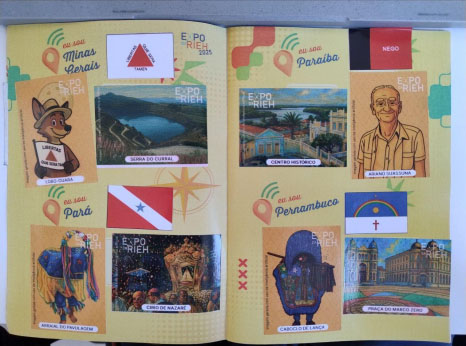
On the first day, the organizers distributed a sticker album with stickers representing the participants’ home states. This activity generated intense interaction among everyone, as the participants needed to seek each other out to make trades and complete the album. Each day of the event, new stickers were made available, demanding further interactions. In this way, participant observation occurred directly between the researchers and the other agents involved in the research field.
The sticker album activity (Figure 4) allowed the researchers to develop a more sensitive gaze and to understand just how dynamic, rich, and adaptive cartographic research is. Kastrup (2023) highlights the importance of decision-making and the researcher’s subjectivity — aspects clearly perceptible in this work, in which it was necessary to allow oneself to interact with administrators, teachers, and workshop facilitators. Research was taking place at all times, even during coffee breaks, lunches, and dinners, as conversations, observations, and interactions were always present, preventing situations relevant to the investigation from going unnoticed.

During the exchanges fostered by the sticker album activity, a significant finding emerged for understanding hybrid education as a territory in movement: the heterogeneity of the experiences reported by the participants evidenced that the concept is appropriated in radically distinct ways across different public school systems. While some representatives described consolidated pedagogical practices integrating in-person and digital environments, others still associated hybrid education exclusively with the emergency remote teaching adopted during the COVID-19 pandemic, revealing an ongoing dispute over meaning within the public policy itself. This informal mapping, captured in the conversations amidst sticker trades, constituted one of the richest pieces of data produced by participant observation, as it evidenced that the territory of hybrid education is also a field of conceptual tension, in which different vectors of understanding coexist and clash.
The analysis of the interactions reveals that affect plays a structuring role in data production, functioning as an epistemic operator within the investigation. In the conversation circles, the sensitive listening described by Kastrup (2007, 2023) was essential to embrace the doubts, concerns, and achievements of the participants, generating an environment of trust that activated shared processes of subjectivation. It is in this movement that co-engendering materializes, understood as the joint production of reality and meaning between the researcher and the field - a concept previously indicated by Rolnik (2011) when discussing the inseparability of subject and territory. When state representatives turned to the researchers to understand aspects of hybrid education, a process of co-learning took place (Deleuze & Guattari, 2007), in which both sides were transformed: the participants reorganized their readings of policies and practices, while the researchers broadened their perception of the ways in which the hybrid is appropriated in different contexts.
During data production, in accordance with Deleuze and Guattari (2007), the co-learning of the researcher-cartographer took place. In all interaction processes, there was mutual learning and a transformation of the field, as some teachers representing the federated entities still exhibited difficulties in understanding hybrid education and the use of digital technologies. Throughout the activities carried out during the event, conversations and guidance emerged between the researchers and the participating agents regarding the doubts raised. Thus, the researchers ultimately modified the field naturally, since, although acting as participant-researchers, they could not refuse to assist peers facing difficulties.
The analysis of these data is deepened by noting that the cartographic methodology, inspired by the philosophies of Deleuze and Guattari (2007), shifts the researcher from the position of a supposedly neutral observer to that of an implicated participant, whose presence and action transform the investigated field. In contexts of hybrid education, fraught with complexity and uncertainties due to the introduction of digital technologies, the researcher’s co-presence fosters and enhances processes of learning and collective reinvention. Co-learning, a fundamental concept in this approach, emerges precisely from the intertwining of experiences, forms of knowledge, and affects among the subjects; thus, the researcher does not merely record practices and discourses, but participates in the flow of doubts, discoveries, and concerns that permeate the everyday lives of the participants (Kastrup, 2007). This dynamic evidences a pedagogy of listening and care, in which teaching and learning become inseparable movements of the investigative practice itself, legitimizing mutual transformations as an intrinsic part of the research process.
By opting for a dialogical and ethical stance in the face of the difficulties presented by the subjects in the field — in this case, teachers and agents involved in the implementation of hybrid education — the researcher-cartographer acknowledges that intervention and modification of the field are inevitable and potentially generative. Thus, when guiding, conversing, and collaborating with other participants, they contribute to a living and rhizomatic educational territory, in which forms of knowledge are constantly co-engendered, expanding the agents’ capacity to act in the appropriation of digital technologies (Passos & Eirado, 2020). In this sense, cartography maintains that transforming is inseparable from being transformed, and research is configured as an ethico-political process of the joint production of knowledge and subjectivity. Such a perspective not only recognizes the complexity of contemporary educational contexts but also embraces collective creation as a pathway for facing challenges and inventing new modes of teaching-learning in contexts permeated by media and digital technologies.

In the thematic workshops, it was possible to map with greater precision the nodes of tension that structure the field of hybrid education in Brazil. Participants recurrently reported the difficulty of implementing hybrid practices in the face of the precarious technological infrastructure in public schools (unstable internet connections, insufficient equipment, and a lack of continuous professional development), while simultaneously demonstrating genuine engagement and creativity in adapting the proposals to their local contexts. This contradiction — between what public policy prescribes and what school territories can actually support — constituted a transversal line of force throughout the entire event, captured by the researcher-cartographer both in the formal statements of the roundtables and in the spontaneous comments made during breaks. The logbook recorded this movement as one of the most persistent intensities of the field:
Informal dialogues during coffee breaks. Coordinators and administrators report that the difficulty in implementing hybrid education often stems either from issues regarding the teachers’ understanding of the concept, or from connection limitations. (Logbook record regarding the difficulty of implementation or regarding teacher creativity in the face of structural limitations).
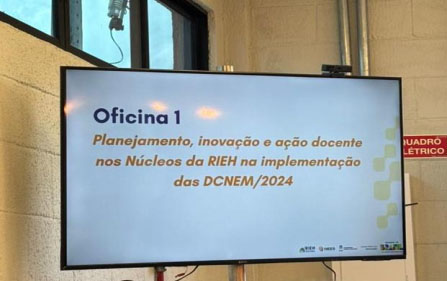
Another significant movement in the process occurred during the thematic workshops (Figure 5) promoted by RIEH, in which comments, feedback, and the joint execution of tasks were developed alongside the research participants. According to Kastrup (2023), no writing is neutral; however, the modification that the researcher causes in the field must occur naturally and unintentionally. And this took place over the course of the workshops and roundtables, as the conversations unfolded spontaneously. In the cartographic method, the researcher ultimately influences the field in which they operate, while simultaneously learning from it, and this is part of the very essence of the method itself.
The thematic workshops and the other formative spaces made it possible to observe how hybrid education materializes diversely across territories, revealing the heterogeneous character of the field. Cartography, as a method attentive to multiplicity and processuality (Passos & Eirado, 2020), made it possible to identify variations in the appropriation of digital technologies, in the interpretation of public policies, and in teacher engagement. As Santos (2002) reminds us, the territory is always a space of relations and disputes, and this understanding became evident in the tensions and emergent potentialities of the analyzed interactions. Thus, co-engendering does not present itself as a side effect of the research, but as a condition for accessing the deep layers of practices and meanings that constitute hybrid education, reaffirming cartography as a methodology capable of capturing movements of transformation as they unfold (Kastrup, 2023; Passos et al., 2000).
During the three days of the RIEH Expo, administrators, teachers, and researchers were able to share their opinions, difficulties, and the potentialities encountered in their respective states regarding the implementation of hybrid education. Active listening was essential in this process, allowing everyone to share their anxieties, concerns, and, of course, their achievements and positive outcomes. It is in these exchanges that, according to Kastrup (2023), affectivity emerges: when reporting progress and successful experiences, participants feel embraced and realize they are not alone on this journey. Likewise, the involved researchers were able to perceive the anxieties of others and foster an environment of empathy and mutual support.
The data production carried out over the days of the event had four main focal points for mapping. The first, and certainly the central focus, pertained to digital technologies, driven by the fact that their use is both present and necessary in the context of hybrid education. From the entrance to the event up to the interactive activities in the workshops, roundtables, and various interactions, the use of digital technologies was constantly present and articulated with hybrid education. Thus, the way in which the agents involved interacted with these resources became an object of analysis and mapping by the researchers.
The second point of observation refers to the pedagogical practices promoted during the event by the organizers, analyzing how the available resources and spaces were utilized. Furthermore, the pedagogical practices developed by the states were examined during the sharing of successful experiences.
It was also observed how the public policies promoted by the Federal Government are being implemented and understood by the participating states. The various discussions that took place during the RIEH Expo fostered reflections among everyone involved, and it was no different for the researchers, who were able to perceive the applicability of the National High School Policy (Law No. 14,945 of 2024) and the National Pact for the Recovery of Learning (Decree No. 12,391 of 2025), among other initiatives. From these analyses, the subjectivity of the researchers becomes evident, especially when there is a need to dialogue with the participants, seeking to interact in an ethical, unbiased manner, and without intentionally interfering with the natural process of cartographic research.
It is important to highlight that the authors experienced this field not only as researchers but also as members of the RIEH team of educators, a condition that intensified the vectors of implication over the three days of the Expo. This position of dual belonging - simultaneously within and analyzing the investigated territory - produced lines of flight that escaped conventional methodological control: there were moments when the boundary between conducting a formative session and cartographing a process dissolved completely, requiring the researchers to operate with heightened attention to their own subjectivity in movement.
The synthesis of the movements observed over the three days allows us to assert that hybrid education is configured, in the investigated field, less as a stabilized pedagogical model and more as a process in permanent negotiation among actors, contexts, and resources. The flows of innovation identified in the experiences shared by the states coexisted with institutional resistances, professional development gaps, and tensions between teacher autonomy and curricular prescription. It was precisely the cartographic stance — of immersion, listening, and affective presence — that made it possible to capture these overlapping layers of the territory, which would hardly emerge through more structured data collection instruments, such as questionnaires or standardized interviews. The data produced in the field not only answer the research question but also demonstrate, in practice, the central argument of the article: that the researcher-cartographer, by co-engendering with the field, accesses dimensions of hybrid education that detached observation cannot reach.
6. Final Considerations
The cartographic analysis of the data from this investigation confirms that the adopted cartographic approach effectively answered the research question: the active and affective role of the researcher-cartographer significantly broadens the understanding of the dynamics present in hybrid education. By experiencing the field in a situated manner, the researcher was able to capture nuances, flows of innovation, and tensions that conventional methodologies frequently fail to reveal. The proposal of immersion and co-presence made it possible to identify singularities in hybrid educational processes, strengthening the analysis of territories in constant transformation.
The use of cartography evidenced how delicate the role of the researcher-cartographer is, fraught with challenges that must be carefully analyzed. Presence in the field modifies reality, making the experience uniquely lived, without ever ceasing to analyze, experience, and modify the reality being researched. Cartography, by asserting that one researches in the field rather than about it, allows the researcher-cartographer to have an experience that few research methods permit; by immersing, interacting, experiencing, and modifying, the research becomes rich, trustworthy, and deeply rewarding.
The obtained results indicate that cartographic research contributes to a richer interpretation, enhancing the mapping of innovative pedagogical practices and emergent challenges. The sensitive presence of the researcher provides epistemological foundations to rethink the place and function of the researcher in contexts of complexity, expanding the possibilities for the production of educational knowledge connected to the living reality of schools and digital contexts. The interaction among theoretical knowledge, empirical experiences, and affects proved to be fundamental for collaborative constructions in hybrid education.
In this sense, the study not only achieved its central objective but also brought forth relevant considerations to broaden the methodological debate in the field. The main contribution lies in fostering flexible, open, and sensitive epistemologies capable of apprehending shifting educational territories and supporting adaptive and inclusive pedagogical practices.
Finally, it is recommended that future research expand the use of cartography into other educational contexts, involving different stages of schooling and multiple actors, fostering collaborative and participatory approaches. Furthermore, it is suggested to investigate the potential of cartography for the development of public policies in hybrid education, always with a view toward methodologies that promote the agency of the subjects, the diversity of experiences, and the collective construction of knowledge.
-
Support and Funding:
Conselho Nacional de Desenvolvimento Científico e Tecnológico (CNPq).
-
Use of AI
While preparing this article, the authors used the artificial intelligence (AI) features of the Mendeley tool to ensure that citations and references complied with the journal’s standards. The authors declare that they reviewed, validated, edited, and supervised the final text, ensuring its originality, accuracy, and ethical integrity, and assume full responsibility for the content of this publication.
-
Copy Editing services:
Portuguese version - Copy editing and standardization of citations and bibliographical references (7th. Edition APA): Mayara Leite revisao@tikinet.com.brEnglish Version: Francisco Lopes Toledo Correa francisco.toledocorrea@gmail.com
-
1
In Brazilian Portuguese, the expression “trocar figurinhas” (literally “trading stickers”) is a widely used cultural idiom for networking and informally exchanging ideas or experiences. During the event, this metaphor was materialized into an actual gamified activity using a physical sticker album (detailed in the following section).
Research data availability
The contents underlying the research text are included in the manuscript.
References
- Araújo, J. C. S. (2017). Da metodologia ativa à metodologia participativa. In I. P. A. Veiga (Org.), Metodologia participativa e as técnicas de ensino-aprendizagem (pp. 17-56). CRV.
- Barros, R. B., & Passos, E. (2000). Diário de bordo de uma viagem-intervenção. In E. Passos, V. Kastrup, & L. Escóssia. Pistas do método da cartografia: pesquisa-intervenção e produção de subjetividade (Vol. 1, pp. 172-187). Sulina.
- Castells, M. (1999). A sociedade em rede Paz & Terra.
-
Decreto nº 12.391, de 28 de fevereiro de 2025. Institui o Pacto Nacional pela Recomposição das Aprendizagens. Diário Oficial da União, Seção 1, 5 de março de 2025. https://www2.camara.leg.br/legin/fed/decret/2025/decreto-12391-28-fevereiro-2025-796987-publicacaooriginal-174512-pe.html
» https://www2.camara.leg.br/legin/fed/decret/2025/decreto-12391-28-fevereiro-2025-796987-publicacaooriginal-174512-pe.html - Deleuze, G. (2018). Diferença e repetição (4th ed.). Paz & Terra.
- Deleuze, G., & Guattari, F. (2003). Kafka: para uma literatura menor Assírio & Alvim.
- Deleuze, G., & Guattari, F. (2007). Mil platôs: capitalismo e esquizofrenia Editora 34.
-
Ferreira, L. F. S., & Pimentel, F. S. C. (2023). Formação de professores para incorporação das tecnologias digitais na educação superior. Cadernos de Pesquisa, 303-321. https://doi.org/10.18764/2178-2229v30n2.2023.31
» https://doi.org/10.18764/2178-2229v30n2.2023.31 -
Kairiené, A., & Mažeikienė, N. (2024). Lines of Flight and Nomadic Trajectories: Visualising Rhizomatic Learning with Cartography. Journal of Education Culture and Society, 15(2), 169-186. https://doi.org/10.15503/jecs2024.2.169.186
» https://doi.org/10.15503/jecs2024.2.169.186 - Kastrup, V. (2007). A invenção de si e do mundo: uma introdução do tempo e do coletivo no estudo da cognição Autêntica.
-
Kastrup, V. (2023). A escrita cartográfica e a dimensão coletiva da experiência. Revista Interinstitucional Artes de Educar, 9, 160-175. https://doi.org/10.12957/riae.2023.80661
» https://doi.org/10.12957/riae.2023.80661 - Kenski, V. M. (2003). Educação e Tecnologias: O Novo Ritmo Da Informação Papirus Editora.
-
Lei nº 14.945, de 31 de julho de 2024. Institui a nova Política Nacional de Ensino Médio. Diário Oficial da União, Seção 1, 1 de agosto de 2024. https://www2.camara.leg.br/legin/fed/lei/2024/lei-14945-31-julho-2024-796017-publicacaooriginal-172512-pl.html
» https://www2.camara.leg.br/legin/fed/lei/2024/lei-14945-31-julho-2024-796017-publicacaooriginal-172512-pl.html - Mattar, J., & Ramos, D. K. (2021). Metodologia da pesquisa em educação: abordagens qualitativas, quantitativas e mistas Edições 70.
- Morozov, E., & Bria, F. (2019). A cidade inteligente: tecnologias urbanas e democracia. Ubu Editora.
- Passos, E., & Eirado, A. (2020). Cartografia como dissolução do ponto de vista do observador. In E. Passos, V. Kastrup, & L. Escóssia. Pistas do método da cartografia: pesquisa-intervenção e produção de subjetividade (Vol. 1, pp. 109-130). Sulina.
- Passos, E., Kastrup, V., & Escóssia, L. da. (2000). Pistas do Método da cartografia: pesquisa-intervenção e produção de subjetividade (Vol. 1). Sulina.
-
Pimentel, F. S. C., Rita, L. P. S., Pinto, I. M. B. S., Santos Junior, N. B., & Amaro, M. J. R. (2024). Educação Híbrida na formação de gestores: uma visão experiencial dos impactos e desafios. EmRede – Revista de Educação a Distância, 11, 1-24. https://doi.org/10.53628/emrede.v11i.1018
» https://doi.org/10.53628/emrede.v11i.1018 - Rama, Claudio. (2021). La nueva educación híbrida Unión de Universidades de América Latina y el Caribe, A.C.
- Rede de Inovação para a Educação Híbrida (RIEH). (2024). Educação Híbrida em Contexto com a RIEH: conceito e orientações pedagógicas Edufal.
-
Rede de Inovação para Educação Híbrida (RIEH). (2025). Observatório https://rieh.nees.ufal.br/observatorio
» https://rieh.nees.ufal.br/observatorio - Resolução CNE/CEB nº 2, de 13 de novembro de 2024. Institui as Diretrizes Curriculares Nacionais para o Ensino Médio – DCNEM. Diário Oficial da União, 14 de novembro de 2024.
-
Ribeiro, É. S., & Costa, F. A. G. (2022). O método da cartografia e a educação em ciências: interlocuções. Ensaio Pesquisa Em Educação Em Ciências (Belo Horizonte), 24 https://doi.org/10.1590/1983-21172022240102
» https://doi.org/10.1590/1983-21172022240102 - Rolnik, S. (2011). Cartografia sentimento: transformações contemporâneas do desejo Sulina.
-
Ruitenberg, C. W. (2007). Here be dragons: Exploring Cartography in Educational Theory and Research. Complicity: An International Journal of Complexity and Education, 4(1). https://doi.org/10.29173/cmplct8758
» https://doi.org/10.29173/cmplct8758 - Santos, M. (2002). A natureza do espaço: técnica e tempo, razão e emoção Editora da Universidade de São Paulo.
- Srnicek, N. (2017). Platform capitalism Polity Press.
-
Williamson, B. (2017). Big data in education: The digital future of learning, policy and practice. SAGE Publications. https://doi.org/10.4135/9781529714920
» https://doi.org/10.4135/9781529714920 - Zuboff, S. (2019). The age of surveillance capitalism: The fight for a human future at the new frontier of power PublicAffairs.
Edited by
-
Responsible editors:
Associate Editor: Jordi Farrero https://orcid.org/0000-0002-9669-0485Editor-in-Chief: Chantal Medaets https://orcid.org/0000-0002-7834-3834

 Description: Color photograph, in a wide shot, of the facade of the RIEH Observatory. In the foreground, there is a paved area with reddish blocks and a yellow stripe on the ground. In the center, a single-story building with gray and blue walls displays the name “Observatório” (Observatory) and the RIEH identification. To the right, a wall with yellow breeze blocks runs alongside the building. To the left, parked vehicles are visible. In the background, a cloudy sky with large white and gray clouds.
 Source:
  Description: Color photograph taken in an auditorium. In the foreground, a person holds a blue RIEH notepad or folder and a pen. In the center, participants are seated on tiered seating facing a large screen. On the screen, a presentation displaying event information and a QR code is shown. The environment features high ceilings, suspended lighting, and a wide circulation area. Several people are conversing and following the program.
 Description: Color photograph of an open album on a light-colored surface. The two pages display spaces for stickers, illustrations, maps, photographs, and colorful graphic elements related to hybrid education. There are labels, icons, and areas filled with images of different states and landscapes. The material features a visual layout akin to a collectible album, with sections distributed across the left and right pages.
 Description: Color photograph taken indoors. In the foreground, part of a participant’s head appears at the bottom edge of the image. In the center, a monitor displays a slide for “Workshop 1” covering the theme of planning, innovation, and teacher support in the Innovation Hubs for Hybrid Education. To the left, windows allow natural light to enter. The space features light-colored walls, exposed metal framing, and electrical equipment mounted on the walls, characterizing an environment for professional development and collaborative work.