 Moving towards a circular chain for coffee capsules: applying requirements engineering and product-service system
Abstract
Paper aims This paper proposes a conceptual model for a circular product service system (PSS-C) in the Brazilian coffee capsule chain, integrating requirements engineering and circular economy principles.
Originality The research introduces a novel approach by employing the Requirements for Sustainable Product-Service Systems (R-PSS) method, combining tools from requirements engineering, design, innovation, and sustainability to address key challenges in the lifecycle of coffee capsules.
Research method The study was conducted as a case study in a Brazilian startup specializing in managing packaging waste for a coffee manufacturer. It utilizes the R-PSS method to propose strategies for improving circularity in the capsule chain.
Main findings The PSS-C conceptual model prioritizes strategies such as reducing material usage, implementing remanufacturing processes, and fostering consumer education for proper disposal. It emphasizes the critical role of consumers in achieving capsule circularity, including initiatives to expand collection points and promote environmentally responsible behaviors.
Implications for theory and practice The findings contribute to the theoretical discourse on circular business models by demonstrating how the integration of product and service requirements can generate environmental value. Practically, the study offers insights into sustainable development, providing a foundation for further research in both theoretical and applied contexts.
Keywords
Circular economy; Sustainable business model; Coffee pods; Single serve coffee; Environmental value proposition
1. Introduction
In recent years, industries have increasingly developed innovations that combine convenience and practicality with features designed to enhance consumer experience (Oliveira et al., 2020). These innovations often cater to diverse consumer preferences, offering products that align with individual ethics and lifestyles (Gandia et al., 2018; Graciano et al., 2022). In some cases, however, even though consumers might identify what practices are more ethical, their bounded rationality (the prioritization of one's personal satisfaction) presents a confrontation between what is easier and more convenient at a given moment and what is environmentally friendly (Ajzen, 1991).
One example of this tension is the widespread adoption of single-serve coffee capsules. On one hand, this product reflects innovations aligned with convenience and sophistication (Gandia et al., 2018); on the other hand, it presents several challenges to waste management, as their widespread use contributes significantly to solid waste generation (Visser & Dlamini, 2021). Although several recycling programs have been released over the years to encourage the return of used capsules for recycling - besides trials with compostable and reusable capsules (Kooduvalli et al., 2020) - consumer adherence to the practice has been mixed, with some authors arguing that consumer participation is highly dependent on incentives such as rewards (financial or others), geographic accessibility, information of how the material will be employed in new products, environmental education, and convenience (Abuabara et al., 2019).
To transition from traditional "make-use-discard" systems to circular systems, the coffee capsule industry must adopt systemic strategies that encourage sustainable practices, particularly in consumer cooperation for proper disposal (Nußholz, 2017). Among these strategies, we opted here to explore possible solutions via Product Service Systems (PSS), an approach that stands out as promising in fostering circularity (Ghafoor et al., 2023; Tukker, 2015). PSS business models integrate product and service innovations to promote sustainable production and consumption (Kuhl et al., 2023; Yang et al., 2014; BSI Group, 2017). However, transitioning the coffee capsule chain to a Circular Economy (CE) requires holistic solutions that consider diverse stakeholders, complex customer experiences, and sustainable value creation across the product lifecycle (Geum & Park, 2011; Pizzi et al., 2022).
Despite the potential of PSS, existing research has yet to explore how integrating customer requirements and circular strategies can support chain circularity. Addressing this gap, our paper aims to propose a conceptual model for circular PSS (PSS-C) in the Brazilian coffee capsule chain, integrating requirements engineering and CE principles. The PSS-C conceptual model offers an actionable and practical solution that can guide coffee capsule manufacturers, policymakers, and other relevant stakeholders in similar contexts. It supports the design and implementation of comprehensive strategies for the proper disposal and circular management of post-consumer coffee capsules, thereby fostering a more circular value chain.
Although several frameworks and models for the design of sustainable PSS solutions exist, most studies tend to focus on specific steps and tools of a particular area of knowledge or type of solution, neglecting the practical context of circular PSS solutions (Chiu et al., 2018; Lee et al., 2019; Peruzzini et al., 2015; Pezzotta et al., 2018; Zhou et al., 2022). This article addresses the critical gap regarding the lack of a comprehensive methodological approach capable of systematically developing a PSS-C from the initial requirement phase to a validated circularity assessment. Therefore, to ensure that the proposed solution is robust and explores all PSS steps, we adopted the Requirement Product Service System (R-PSS) method proposed by Echeveste et al. (2020), which integrates requirements such as engineering (Ahmed & Amagoh, 2010; Akao, 2004), PSS design (Geum & Park, 2011; Vezzoli et al., 2021), innovation techniques (Blank, 2013; Osterwalder et al., 2015), and qualitative sustainability assessment (Cannarozzo Tinoco et al., 2023). The main contribution of this study is the development and proposal of the PSS-C conceptual model. The PSS-C was generated using the R-PSS method, which we strengthened by integrating a specific tool meant to assess the solution's effective contribution to the circularity of the chain (Manninen et al., 2018). This methodological foundation ensures the generated PSS-C is not only theoretically sound and stakeholder-oriented but also provides a means to evaluate its impact on circularity, thereby offering a robust and specific approach for the development of a circular PSS for the coffee capsule chain in Brazil.
2. Theoretical background
2.1. Contextualizing coffee capsules and waste management
Coffee capsules have gained widespread acceptance in the global market, driven by consumers' preference for novelty, convenience, and evolving lifestyles (Abuabara et al., 2019; Visser & Dlamini, 2021). To cater to this growing demand, manufacturers have introduced incremental innovations, producing capsules with diverse material compositions such as aluminum, plastic, and hybrids, alongside variations in size and design (Abuabara et al., 2019; Nanni et al., 2022; Visser & Dlamini, 2021). However, this diversity complicates recycling processes, making it challenging to reinsert used capsules into the value chain to reduce the volume of waste sent to landfills (Marinello et al., 2021). Notably, the environmental implications of capsule recycling, composting, and biodegradability have only recently begun to attract attention (Marinello et al., 2021; Desole et al., 2024).
Despite these challenges, major players in the coffee industry have initiated efforts to improve capsule sustainability through recycling programs and second-life reuse strategies. Examples include programs by companies such as Grupo 3Corações (2021) and Nespresso (2023), which seek to prevent reusable resources from being wasted by implementing a new logic of value creation in production chains (Nußholz, 2017; Pieroni et al., 2021). Such initiatives reflect the growing alignment of the industry with CE principles, where the focus is on preserving resources and minimizing waste.
However, significant gaps remain. For instance, one of the world's leading manufacturers disclosed that around 70% of its capsules are still non-recyclable, highlighting the need for urgent action (Marinello et al., 2021). Addressing these issues requires a systemic approach, focusing not only on technological improvements but also on fostering behavioral changes among consumers to adopt sustainable practices (Abuabara et al., 2019).
In this context, reducing the volume of packaging sent to landfills and recovering the value embedded in waste demands holistic and sustainable solutions. These solutions must engage all stakeholders, including manufacturers, policymakers, consumers, and waste management entities, to create a unified effort toward closing the loop in coffee capsule production and disposal (Manninen et al., 2018; Velenturf & Purnell, 2021). For this to occur, robust frameworks and practical tools are essential to guide industries in implementing effective circular strategies, moving beyond fragmented initiatives to achieve systemic impact.
2.2. Product-service systems as circular business models
The Circular Economy (CE) is an approach designed to minimize and eliminate waste while maintaining the value of materials and resources for as long as possible (Nobre & Tavares, 2021). The Ellen MacArthur Foundation (2015) outlines three foundational principles of CE: (i) preserving and enhancing natural capital, (ii) optimizing resource yields during use, and (iii) promoting systemic efficiency by minimizing negative externalities. CE is defined as an economic model that fosters value-creation mechanisms decoupled from the consumption of finite resources (Ellen MacArthur Foundation, 2015). This paradigm shift demands greater environmental and social awareness from managers and consumers (Esken et al., 2018; Jaca et al., 2018).
Most studies on developing circular solutions emphasize proposing business models rooted in CE principles. However, implementing these models in real-world contexts often proves challenging due to the need for significant customization to align with project-specific requirements (Fitzgerald et al., 2006). Additionally, these models predominantly guide the early stages of CE ideation (Pieroni et al., 2021) but tend to become ambiguous and less actionable when transitioning toward practical CE implementation measures (Fernandes et al., 2020; Pieroni et al., 2021).
There is a broad consensus in the literature regarding the potential of PSS business models to foster the transition toward a CE (Ghafoor et al., 2023; Kuhl et al., 2023; Tukker, 2015). PSS is an integrated solution that combines products, services, stakeholder networks, and enabling infrastructure to meet customer needs while minimizing environmental impact (Mont, 2002; Kuhl et al., 2023). A widely accepted classification identifies three main types of PSS (Tukker, 2004, 2015): (i) product-oriented services, in which products are sold with additional services; (ii) use-oriented services, where the provider retains ownership, and customers access the product through rental, leasing, or sharing models; and (iii) result-oriented services, in which the provider delivers a specific outcome without associating it with a predefined product.
Building on these foundations, the R-PSS method was developed to support the design of sustainable PSS solutions that address real industry challenges through conceptual offerings—ranging from product-centred designs to shared-use and outcome-based value delivery. This method emerged from a university-industry collaboration in Southern Brazil, focused on innovation and sustainability. It addresses key gaps identified in the literature: many existing PSS development approaches either fail to integrate product and service requirements from the early stages (Kim et al., 2015), overlook critical phases such as ideation and solution design (Sutanto et al., 2015; Xiang et al., 2024), and lack explicit consideration of circularity in empirical applications (Ghafoor et al., 2023). Even more comprehensive frameworks often neglect sustainability or CE principles (Song & Sakao, 2017) or fall short of bridging early-stage innovation with market scalability (Ries, 2011).
Previous studies report positive outcomes regarding its use, highlighting its effectiveness, flexibility, and adaptability to diverse proposals involving PSS and sustainability (Lermen et al., 2020; Peralta et al., 2020; Terra et al., 2025). Given its proven adaptability and success in prior applications, the R-PSS method is suitable for advancing circular solutions in the coffee capsule chain. In this study, the method was employed with additional stages for verifying and validating solutions based on CE principles, as suggested by Manninen et al. (2018). Figure 1 provides a summary of the R-PSS method.
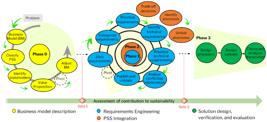
The R-PSS method is structured into three learning cycles. The first cycle (phase 0) refers to the value proposition; the second cycle (phases 1 and 2) is dedicated to requirements engineering, and the third cycle (phase 3) integrates the processes demanded to implement the solution. This initial phase is exploratory, aiming to deliver a creative and innovative solution centered on the needs and preferences of critical stakeholders (Brown, 2008; Shapira et al., 2017). It involves iterative processes designed to identify and analyze the demands of various stakeholders, ultimately defining a value proposition that best addresses these needs.
The second cycle unfolds the requirements and processes necessary to fulfill the stakeholders identified needs. This cycle converts the stakeholder inputs into specific requirements, integrating both product and service components—a distinctive feature of the R-PSS method. Unlike other models that address product and service development on separate pathways (e.g., Kim et al., 2015), the R-PSS method ensures their seamless integration.
The final cycle focuses on designing the solution in a way that enables the company to visualize and evaluate the proposed concept, including its scalability. In this phase, alignment with CE principles is further substantiated, ensuring that the solution not only meets stakeholder requirements but also adheres to sustainability objectives. Upon completing this phase, the solution is ready to advance to the development process, encompassing project detailing, production planning, marketing strategies, and post-development activities.
3. Method
We adopted an empirical case study approach (Voss et al., 2002), which is appropriate for exploring practical applications and bridging theoretical propositions. The case focused on a challenge proposed by a waste management startup: developing a circular solution for the inadequate disposal of coffee capsule waste. The solution development process was guided by the R-PSS method. The R-PSS method, proposed by Echeveste et al. (2020), proved particularly effective for this purpose, as it enables the development of circular business models for complex problems through a structured and adaptable approach. One of its main strengths lies in its ability to continuously align stakeholder requirements throughout the value chain and across the life cycle stages.
3.1. Study area
The case study focuses on a Brazilian startup managing capsule packaging waste for a coffee manufacturer. The startup was hired to collect, separate, and pre-recycle the capsules in compliance with Brazil's National Solid Waste Policy (Lei n° 12.305/2010), which mandates that 22% of the capsules sold must be returned to the recycling chain (Brasil, 2010).
Brazil is the largest coffee capsule consumer in South America, with a 17.5% sales growth from 2016 to 2020 (Euromonitor, 2020; Associação Brasileira da Indústria de Café, 2020). The manufacturer studied is the leader in roasted and ground coffee and the second largest in soluble coffee. It entered the capsule market in 2013 through a partnership with an Italian coffee machine company. Currently, the company operates 358 capsule collection points across 11 Brazilian states, with the startup initially focusing on the southern region.
3.2. Application of the R-PSS method
Data collection and analysis in this case study followed the R-PSS method's phases and tools, as outlined in the subsequent subsections.
3.2.1 Phase 0 - Business model
We interviewed the two CEOs of the startup managing capsule waste to understand their business model. The one-hour video interview, recorded with consent, followed the Lean Canvas framework (Blank, 2013; Ries, 2011). Using the R-PSS method, we classified the appropriate PSS offer (Tukker, 2004). Then, with the Value Constellation tool (Speed & Maxwell, 2015), we mapped stakeholders across the capsule life cycle (Amaya et al., 2014; Ayanso & Lertwachara, 2015) in collaboration with the CEOs and the manufacturer's environmental coordinator. This also identified key stakeholders essential for systemic changes and cooperation in achieving CE principles (Manninen et al., 2018).
We then conducted semi-structured interviews with 12 end consumers to refine the value proposition. The participants were selected through a non-probabilistic convenience sampling strategy (Craswell, 2013; Yin, 2009), comprising individuals from the researchers’ academic and personal networks, with the main selection criterion being all regular coffee capsule consumers. The sample included 7 women and 5 men, with ages ranging from 17 to 58 years (average age of 39 years). All interviewees had completed or were currently pursuing higher education. The interview script, based on the Value Proposition Canvas (VPC) (Osterwalder et al., 2015), aimed to map activities related to capsule purchase, consumption, and disposal, identifying pains and gains in these processes.
Based on the interview data, we organized a workshop with the two CEOs and two representatives from the capsule manufacturer (environmental coordinator and analyst). This 120-minute workshop focused on using VPC to propose products and services that would address the identified solution. We then revisited and adjusted the business model to align with the refined value proposition. We report this specific phase applied in this case in more detail in a previous article (Cannarozzo Tinoco et al., 2023).
3.2.2. Phase 1 - Engineering requirements
The needs identified in the previous phase were then translated into requirements through elicitation from critical stakeholders. These requirements, representing the essential characteristics expected from products or services, were categorized inductively into primary, secondary, and tertiary requirements (Callegaro et al., 2016; Akao, 2004).
To complement the requirements from critical stakeholders and minimize bias in interviews (Voss et al., 2002), we triangulated the data by incorporating: (i) a literature review on requirements for promoting product circularity, (ii) CE principles (Ellen MacArthur Foundation, 2015; Manninen et al., 2018), and (iii) studies addressing compliance with Brazilian legislation, specifically Governmental Decree No. 10.936/2022 (Brasil, 2022) and Law No. 12.305/2010 (Brasil, 2010).
The prioritization of these requirements was determined by consumers of coffee capsules, who evaluated their importance via a quantitative questionnaire (Lermen et al., 2020). Tertiary requirements were rated on a 10-point Likert scale (1 = not important, 10 = very important), while secondary requirements were ranked by importance (1 = most important, 4 = least important). This prioritization followed the hierarchical logic of Quality Function Deployment (QFD) (Callegaro et al., 2016; Karlsson, 1997).
The questionnaire was distributed to coffee capsule consumers across various age and education groups via social media, yielding 77 valid responses. Data was analyzed using descriptive statistics and a two-stage weighting process based on the hierarchical logic of QFD (Ahmed & Amagoh, 2010; Callegaro et al., 2016; Karlsson, 1997). IIn the first stage, we weighted the secondary requirements (the highest-level items in the questionnaire) according to the priority rankings assigned by respondents. Each participant ranked the four requirements from 1 (highest priority) to 4 (lowest priority). These ranks were converted into inverse values (1/rank), so that higher priorities received greater weights. The inverse values from all respondents were then summed and normalized to obtain the percentage weight of each secondary requirement. For example, “Sustainable capsules” accounted for 33.89% of the total importance among the four requirements.
In the second stage, within each secondary category, the tertiary requirements were evaluated based on the geometric mean of the 10-point Likert scale ratings provided by consumers. These geometric means were normalized within each category to determine the percentage weight of each tertiary requirement. Each tertiary weight was then multiplied by the percentage weight of its corresponding secondary requirement, resulting in the final relative weight for each tertiary item. For instance, “Biodegradable capsule” (20.65% within Sustainable capsules) multiplied by 33.89% produced a final relative weight of 6.99.
This two-stage weighting process ensures that the prioritization of tertiary requirements reflects both their intrinsic importance and the relative significance of their higher-order categories The complete analysis, including all calculated values, is provided in the Supplementary Material (Tabs 5: Quantitative Data and 6: Weight Deployment).
Next, tertiary requirements were categorized into technical requirements, including target specifications (Ahmed & Amagoh, 2010; Callegaro et al., 2016). Target specifications defined the boundaries for meeting prerequisites to ensure the solution developed aligned with the required standards (Peralta et al., 2020). This process was conducted by a multidisciplinary team comprising the startup's CEOs, the development team, and two product and service development specialists.
In the technical requirements prioritization stage, we applied the Quality Matrix approach to link the importance of customer-defined tertiary requirements with technical specifications. The importance values of each requirement were normalized into percentage weights. Then, the normalized weights of the tertiary requirements were compared (Ahmed & Amagoh, 2010; Callegaro et al., 2016). The Quality Matrix was filled using a 3-point scale: 1 for weak relationships, 3 for moderate, and 9 for high relationships among technical requirements. The technical requirements' importance was calculated by summing the products of relationship values and the importance of each tertiary requirement, following prioritization methods based on Akao (2004), Ahmed & Amagoh (2010), and Callegaro et al. (2016).
Since the solution involves product (capsules), services, and CE principles, conflicting relationships among requirements were identified and analyzed by the same team. This step was facilitated using the Technical Requirements Relationship Matrix (Ahmed & Amagoh, 2010), which is essential for integrating requirements and assessing the interactions between market dynamics, products/services, and sustainability (Echeveste et al., 2020).
Finally, the list of prioritized requirements was published and validated with the startup's CEOs and the capsule manufacturer's representatives. The business model was reviewed and adjusted to ensure the technical requirements were properly incorporated into the PSS-C conceptual model.
To ensure the replicability of the data collection and analysis, the complete semi-structured interview script, the quantitative questionnaire, and all detailed calculations of the QFD matrix are available at the URL provided above.
3.2.3. Phase 2 - PSS integration
The integration phase began with the trade-off decisions stage. We used a Relationship Matrix to evaluate technical requirements of products and services in pairs, identifying conflicting requirements (negative relationships) or facilitators (positive relationships). Based on the conflicting requirements, we defined the processes needed to address them. These processes were then broken down into more manageable components and designed using the Product Service Blueprint (PSB) approach (Geum & Park, 2011).
The PSB is a tool that maps various support processes, such as the manufacturing of products and the development of service delivery and product usage projections. It employs symbols to indicate key moments in the value delivery process, such as when sustainable value is created, when product ownership is transferred or retained, changes in actors involved, and the integration of products and services in the final offering.
3.2.4. Phase 3 - Design, verification, and evaluation of the PSS-C conceptual model
The PSS-C conceptual model was designed using the System Map (Vezzoli et al., 2021), which illustrates the relationships among stakeholders based on processes. Fulfilling requirements, particularly conflicting ones, necessitates the involvement of different partners, both directly and indirectly engaged in developing the solution and conceptual model. This stage emphasized the prioritized requirements of critical stakeholders.
To verify the solution, we assessed whether it aligned with CE principles using the Environmental Value Proposition Table (EVPT) checklist (Manninen et al., 2018). A waste management and reverse logistics expert evaluated whether the PSS-C addressed the environmental value propositions corresponding to the three CE principles, scoring it on a 5-point Likert scale (1 = does not meet CE principles, 5 = fully meets CE principles).
The PSS-C was then validated in a workshop with the CEOs of the startup and the capsule manufacturer’s managers. During the workshop, stakeholders assessed whether the solution met the critical stakeholders' needs and benefits and advanced the chain's circularity. They also evaluated the solution's feasibility from technical and economic perspectives for implementation.
4. Results
4.1. The solution's business model
Completing the Lean Canvas revealed that the most critical issue was the high amount of waste generated by coffee capsules, particularly those improperly discarded by consumers and sent to landfills. The solution aimed at addressing this by implementing cooperative-led sorting programs for capsule collection and subsequent recycling into roof tiles. This approach required the integration of relevant stakeholders (De Felice et al., 2013; Manninen et al., 2018).
The initial PSS solution was classified as result-oriented, where the focus is on achieving functional results for both producers and consumers (Tukker, 2004). Rather than focusing on a specific product, the model emphasized managing activities to achieve the shared result of reducing landfill waste through recycling and reuse, contributing to circularity.
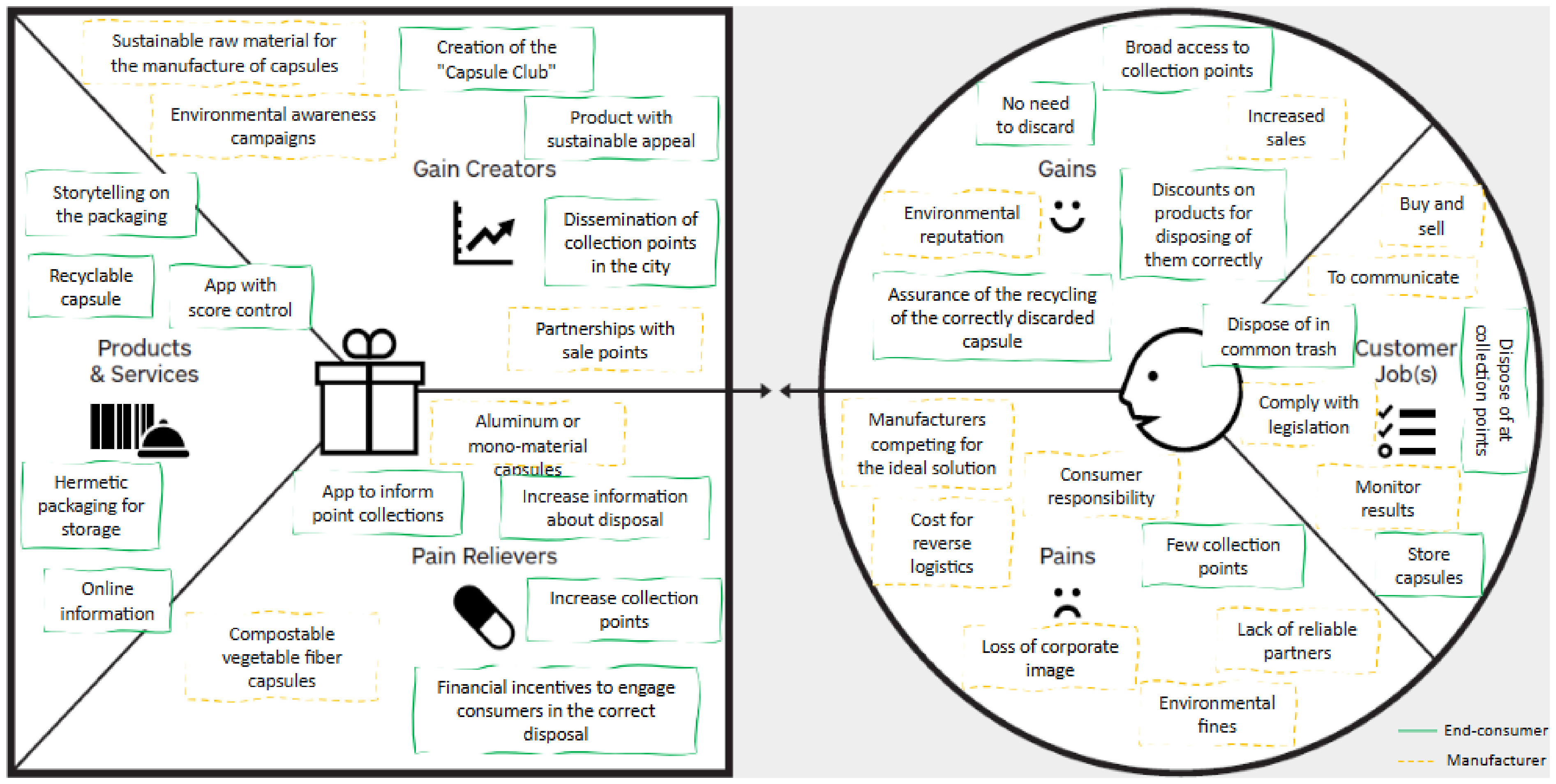
Nine stakeholders were identified in the coffee capsule life cycle, highlighting critical relationships and potential conflicts. The value constellation analysis revealed opportunities to reorganize these relationships and enhance stakeholder value. The capsule manufacturer, the startup managing waste, and end consumers were identified as key actors. To foster a virtuous cycle of environmentally responsible disposal, some relationships need strengthening, while others, such as the link between selective waste collection and landfills, should be minimized. Figure 2 illustrates the main results from the VPC application with a sample of the three critical stakeholders.
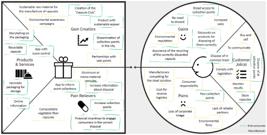
Based on a survey to identify end consumers' pains, gains, and activities, we proposed gain creators and "painkillers" to address stakeholders' issues. For the "few collection points" pain, we suggested increasing collection points and providing information on proper disposal. These "painkillers" aim to foster collaboration with points of sale and raise environmental awareness. To tackle the bad smell caused by storing capsules before disposal, we proposed developing hermetic packaging.
Additionally, we recommended presenting proper disposal and recycling information in a compelling storytelling style. An app offering points and discounts for consumers who dispose of their capsules at designated collection points was also suggested to incentivize proper disposal. The VPC results highlighted the need to reduce the current multi-material composition of capsules to just two materials to ease recycling. We also identified the need for more collection points and enhanced online information about collected and recycled capsules.
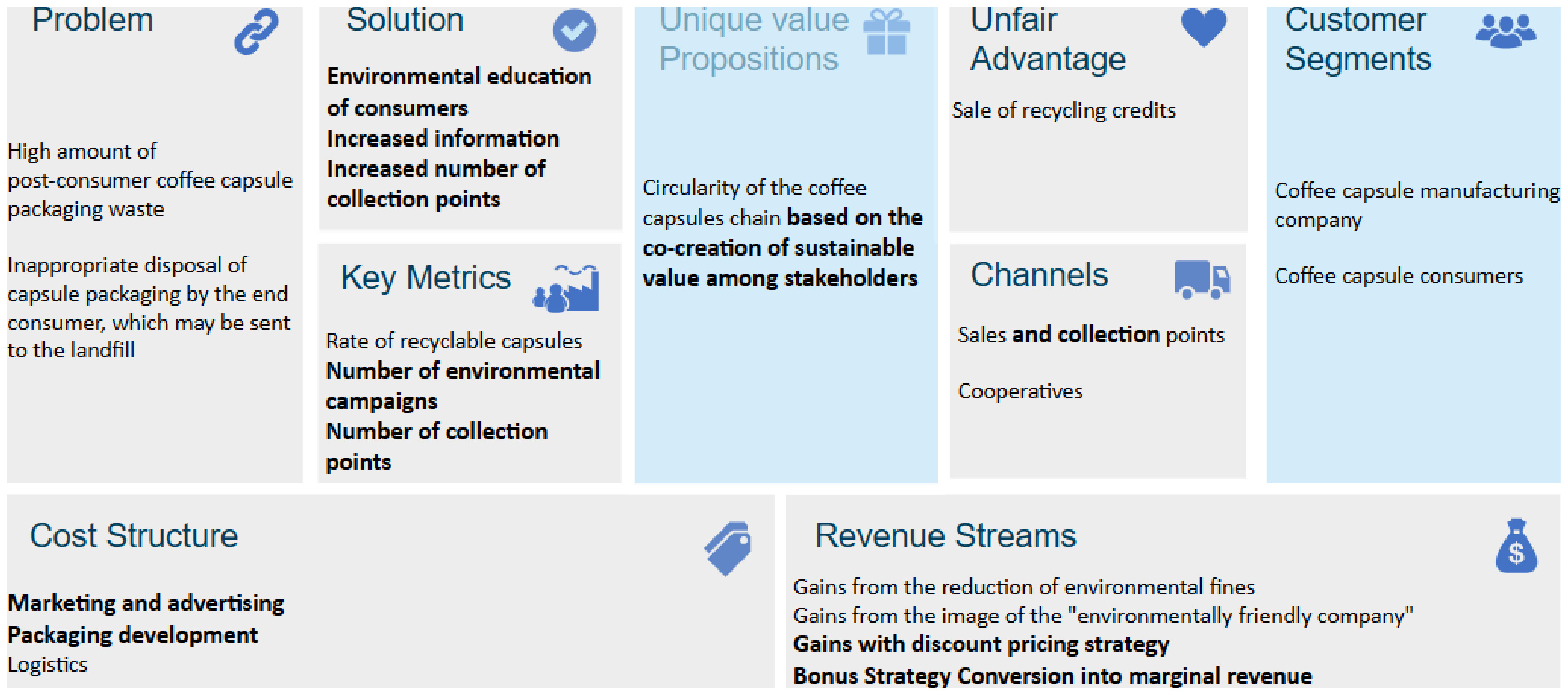
Lastly, the business model was pivoted, incorporating insights from the stakeholder interviews and VPC results. This pivot focused on addressing customer pains and creating gains, resulting in a refined value proposition. The pivoted Lean Canvas, highlighting changes in the business model in bold, is shown in Figure 3.
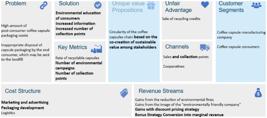
The VPC revealed that most consumers lack awareness of proper capsule disposal, resulting in incorrect disposal in regular garbage bins. Even consumers who know the correct disposal protocol face the challenge of limited access to collection points, making it difficult to dispose of capsules properly. Consequently, the solution, initially focused on reusing capsules to create roof tiles, was pivoted to include consumer education, recognizing consumers as critical players in implementing CE principles (Sangwan, 2017). Consumer engagement in disposal was found to be vital for incorporating circularity, turning each capsule into raw material for products like roof tiles and bicycles.
Recognizing that consumer involvement often requires incentivizing actions (Sangwan, 2017), we concluded that the value of our PSS-C should be extended to end consumers. This concept aligns with Evolutionary Theory, specifically the principle of self-interest (Griskevicius et al., 2012), which suggests that individuals are more likely to engage in pro-environmental actions if they perceive personal benefits. As a result, the value proposition for the PSS-C was redefined as "circularity of the coffee capsule chain, based on the co-creation of sustainable value among stakeholders."
4.2. Requirements analysis
Building on the results from Phase 0, the requirements and technical specifications for the PSS-C were elicited, categorized, prioritized, and published. Table 1 displays the prioritization of requirements into three levels. The primary requirements, sustainability and communication, were further divided into four secondary requirements: (i) sustainable capsules, (ii) environmental responsibility, (iii) convenience of collection points, and (iv) education and awareness. These secondary requirements were subsequently broken into tertiary requirements, following the approach of Akao (2004).
Table 1 displays the normalized importance scores for each secondary and tertiary requirement. According to end consumers, "sustainable capsules" (33.89%) were identified as the most important secondary requirement to promote circularity in the coffee capsule chain. The most important tertiary requirements were compostable capsules (7.38%), biodegradable capsules (6.99%), and recyclable capsules (6.93%). Other secondary requirements were of similar importance to consumers.
For the convenience of collection points (22.14%), accessible collection points and accessible information about these points were considered the most important. In the case of education and awareness (22.02%), key requirements included environmental education programs, promotion of sustainable projects, and dissemination of information via social media and other communication channels. Lastly, environmental certification in the product and the reduction of environmental impact were identified as the most important requirements for environmental responsibility (21.95%).
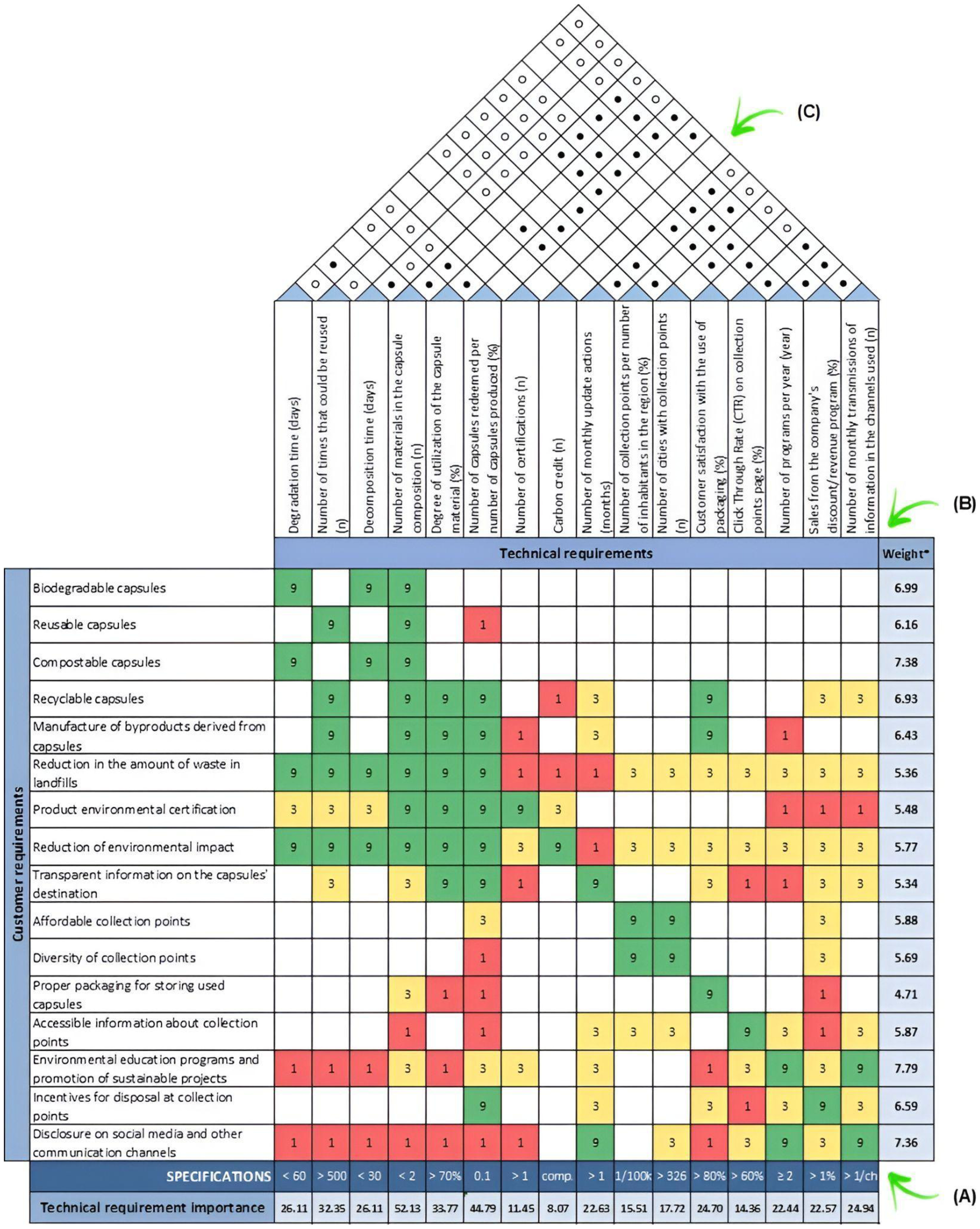
Using the quality matrix, the following steps were carried out: identification of technical requirements and specifications (A), prioritization of these requirements (B), and analysis of conflicting relationships among the prioritized technical requirements (C). Figure 4 illustrates the results of these steps.
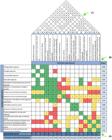
Figure 4 (A) shows the identified technical specifications for the tertiary requirements. For biodegradable capsules, the specification is up to 60 days for degradation, and for compostable capsules, it is up to 30 days for decomposition. The minimum expected recycling rate of capsule materials is 70%, and at least 10% of the produced capsules are expected to be collected.
Figure 4 (B) illustrates the prioritization of technical requirements. The most important technical requirement is the number of materials in the capsule composition, as it strongly correlates with other key consumer requirements such as biodegradable, compostable, reusable, and recyclable capsules. Other important requirements include the degree of material utilization in the capsules and the number of capsules collected per number of capsules produced, aiming to reduce landfill waste.
Environmental certification and environmental impact reduction (through carbon credits) were identified as lower priority requirements for consumers (Technical requirement importance < 17.1), consistent with Graciano et al. (2022), who found low consumer priority for green certifications in sustainable products. These attributes were not considered in subsequent stages of PSS-C development.
Figure 4 (C) shows the Relationship Matrix, highlighting the conflicting and positive relationships among the prioritized technical requirements. Negative relationships (empty circles) were found between degradation time, reuse potential, and decomposition time, which conflicted with the number of materials in the capsule composition and the degree of material utilization. The team determined that shorter degradation times (optimum value) would lead to less material utilization, creating conflict. To resolve this, actions were defined to regulate these conflicts.
Considering the number of negative relationships and the technical feasibility of possible product changes, the team prioritized eleven technical requirements: number of materials in the capsule composition, degree of material utilization, number of capsules redeemed per number of capsules produced, number of monthly update actions, number of collection points per number of inhabitants in the region, number of cities with collection points, customer satisfaction with packaging use, Click Through Rate (CTR) on the collection points’ webpage, sales from the company’s discount/revenue program (%), number of environmental education programs per year, and number of monthly transmissions of information through the channels used.
Although the requirements for degradation, reuse, and decomposition of the capsules are important, they were not included at this stage for two reasons: first, the technical challenge of developing capsules that are simultaneously biodegradable, reusable, and compostable; and second, the emphasis was placed on requirements that promote the circularity of the capsules, with a focus on the implementation and optimization of collection points.
4.3. Integration of the PSS-C requirements
We used the PSB to identify and deploy the processes required to meet the priority technical requirements. This approach stems from the trade-off decisions made after analyzing conflicting relationships. The PSB is divided into three main areas: support, product, and service, each addressing different activities and processes to meet stakeholder expectations.
The first development process occurs in the support area, where capsules are produced. This stage is preceded by the establishment of a standard for recyclable capsules, as this requirement was selected over biodegradable, reusable, and compostable capsules due to the identified technical conflicts. To increase recyclability potential, we considered using two materials for capsule manufacturing, which aligns with the second principle of CE: optimizing resources through the circularity of products, components, and materials with the highest utility in technical and biological cycles (Ellen MacArthur Foundation, 2015).
Additionally, the creation of reusable coffee bags for storing used capsules is planned in the support area. These bags aim to eliminate the odor caused by storing used capsules, which was a key motivation for some customers to dispose of them in regular garbage. The coffee bags, available through promotional campaigns or sold with capsules and machines, allow consumers to store used capsules without odor, encouraging proper disposal at collection points. To complement this, we propose creating storytelling-style guidelines to be printed on the coffee bags, guiding customers on the correct disposal procedure.
In the service area, ownership is first transferred when end consumers purchase the capsules. Information on appropriate storage and disposal practices is provided through various communication channels, ensuring consumers can follow the correct protocol. This information should be accessible at points of sale and collection, in the storytelling guidelines on the coffee bags, and via the app and websites of both the capsule manufacturer and the startup.
Despite these efforts to raise awareness about proper disposal, some consumers may still choose to dispose of capsules in recyclable waste bins. To address this, we integrated cooperatives into the solution to collect and sort capsules discarded in recyclable bins and scattered collection points. After sorting, the waste is sent to the startup responsible for waste management, which then returns the materials to the manufacturer for reuse.
Capsules contain few components, so they can either be repurposed to create new capsules or have their components extracted for other products, such as cups and capsule racks. For this process, the waste management startup has acquired the necessary machinery to separate the components. The complete PSB results, as well as the main results from the application of the R-PSS method, are available in the Supplementary Material. This webpage also presents the main results of the R-PSS Method application.
4.4. Design, verification, and evaluation of the PSS-C conceptual model
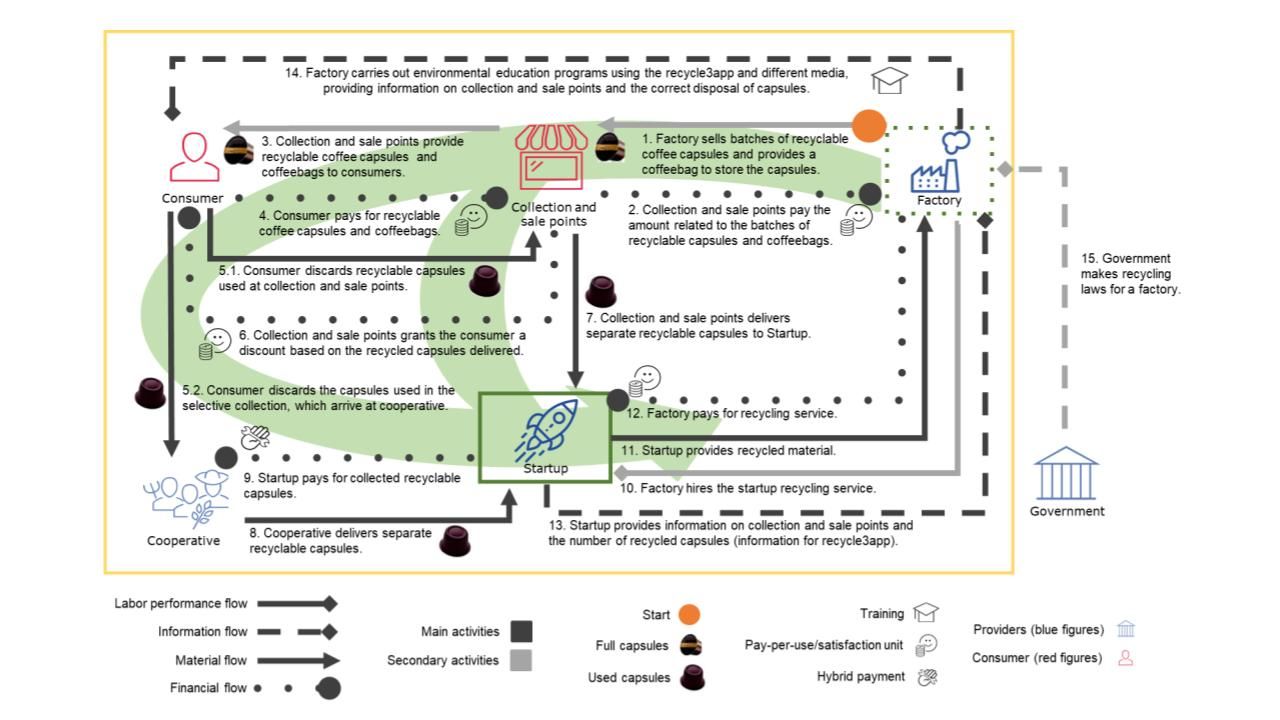
Figure 5 shows the design of the PSS-C conceptual model for the Brazilian coffee capsules chain through the System Map.
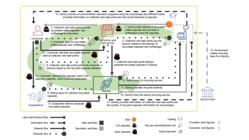
Specifically, the conceptual model for PSS-C starts with the capsule manufacturer, who sells the products to points of sale and collection (1), which then pays the appropriate monetary value (2). These points supply the capsules to consumers (3), who return the proper monetary value to the points of sale (4). The supply of coffee bags, used to store waste properly, is linked to the relationship between the point of sale and the end consumer. After using the capsules, consumers can dispose of them at collection points or in common waste bins. In the first case, as seen in 5.1, capsules can be disposed of after accumulating enough packaging in the coffee bag, and in return, points of sale and collection offer a discount on the consumer's next purchase (6). Once disposed, the startup responsible for waste management collects the packaging from the collection points and sorts it (7).
In the second case, capsules are discarded in common waste bins, and cooperatives sort and send them to the startup (8), who returns the monetary value of the material delivered and takes ownership of the capsules (9). The startup's role in circularity is crucial as it collects, sorts, and returns capsules to the manufacturer (10, 11), formalized through a waste management service contract (12). Additionally, the startup provides information on collection points and the number of recycled capsules (13), while the manufacturer and startup carry out environmental education programs (14) to promote pro-environmental behaviors. These efforts comply with laws regulating reverse logistics and waste management (15). The solution's alignment with CE principles was verified using the EVPT checklist, conducted with a waste management specialist, as shown in Table 2.
Verification of the PSS-C conceptual model in terms of CE principles and environmental value propositions.
Table 2 shows that the solution to the large amount of capsule waste contributes to circularity in the chain, aligning with all three CE principles. The expert confirmed that the first principle was met by returning the plastic from capsules as raw material for other goods. The second principle was achieved through producing different materials from the recycled capsules. The third principle was partially met, as the solution did not address the issue of collecting capsules with logistical efficiency.
Overall, the solution aligns with the environmental value propositions, as supported by studies from Borsatto & Bazani (2023), and Peruzzini & Germani (2014). The solution fully complies with six CE propositions, focusing on recycling, reusing, closing material cycles, and minimizing landfills and incineration. The scope of the solution was on waste management after capsule consumption, as single-dose coffee is already well-established. The expert noted that some environmental propositions, like sustainably sourced raw materials, were not addressed since the solution focused on post-consumption waste.
To evaluate the viability of the PSS-C conceptual model, we presented the system map and checklist in a workshop with the startup and capsule manufacturer representatives. They highlighted the engagement of end consumers in capsule disposal as a strength, with one of the startup's CEOs stating that public engagement is crucial, and the proposed information strategies on recycling would incentivize circularity. Regarding stakeholders' pains from phase 0, they pointed out issues like poor communication, odor from recycling, environmental fines, and the lack of collection points. Benefits emphasized included improved communication and reduced environmental impact for the manufacturer's image.
This initial evaluation verified the PSS-C conceptual model’s viability, though some aspects need improvement. The potential products from recyclable capsule material and the recycling process need more detail. Additionally, financial incentives for consumers must be better planned, particularly on how the registration of capsules delivered to collection points will be operationalized for future discounts. While the PSS-C conceptual model is technically feasible, it is economically costly, especially in terms of physical infrastructure (collection points and logistics). Despite these challenges, the concept is viable and can be developed and implemented to address the widespread waste issue of coffee capsules.
5. Discussion
One of the main challenges in adopting CE is creating new business models that incorporate circularity principles while meeting technical constraints, consumer demands, and stakeholder interests (Echefaj et al., 2023; Pizzi et al., 2022). PSS-based solutions offer a promising alternative for generating circular business models (Fernandes et al., 2020; Nag et al., 2021). Our conceptual model PSS-C, developed through the R-PSS method, directly addresses this challenge by outlining how key stakeholders can be integrated to add value across the coffee capsule chain (Fernandes et al., 2020; Lindahl et al., 2014).
Our findings underscore the pivotal role of coordinating critical stakeholders—the capsule manufacturer, the waste management startup, and consumers—alongside well-managed collection points in promoting consumer engagement and stimulating circularity in the coffee capsule chain (De Felice et al., 2013; Lindahl et al., 2014). Specifically, our results reveal that consumers prioritize accessible collection points and clear location information. This aligns with previous studies by Campos et al. (2021) and Lago et al. (2022), which emphasize the importance of convenient access and comprehensive information in fostering sustainable consumer actions.
Furthermore, our study reinforces that environmental education programs, increased visibility for sustainable projects, and targeted communication through social media are crucial drivers of pro-environmental attitudes. This finding is consistent with existing research indicating that accessible information influences environmentally sustainable consumer behavior (Jaca et al., 2018) and promotes correct disposal actions (Lago et al., 2022). While some studies, such as Jabbour et al. (2023), report limited consumer recognition of CE benefits, other research (e.g., Abbasi et al., 2022; Mostaghel & Chirumalla, 2021) highlights how customer awareness and education shape perceptions of sustainable initiatives. Our results, therefore, emphasize the critical need for sustained awareness campaigns to engage coffee capsule users in circularity effectively.
Moreover, our detailed PSS-C design illuminated specific technical and behavioral considerations for achieving circularity. The prioritization of capsule recyclability over immediate biodegradability or compostability underscores a pragmatic approach to circular design in this industry. Integrating consumer-centric elements, such as the proposed reusable coffee bags for odor-free collection, directly responds to identified pain points, demonstrating how design can overcome behavioral barriers to proper disposal. This holistic integration of technical feasibility with user experience is key to successful circular transitions, offering a nuanced perspective on implementation challenges.
Finally, the analysis by Kirchherr et al. (2017) highlights that many definitions and applications of the CE neglect social aspects and the active role of consumers and other social actors, in addition to pointing out the scarcity of explicit references to innovative business models or incentive mechanisms in literature. This observation underscores the importance of our focus on identifying multiple actors, material flows, and incentive mechanisms as essential elements for a systemic understanding of PSS-C. Our model demonstrates how these elements interact and how incentive mechanisms can align diverse behaviors, particularly considering the gap identified by Kirchherr et al. (2017) regarding the social perspective and the role of the customer in the circular system. In this way, our conceptual model reinforces the need to incorporate these social and incentive dimensions for an effective transition to the CE.
5.1. Theoretical implications
Theoretically, this study advances CE literature by demonstrating the effective application of PSS in developing concrete circular solutions (Fernandes et al., 2020; Ghafoor et al., 2023; Terra et al., 2025). Moving beyond purely technical considerations (e.g. Marinello et al., 2021), our approach offers a robust systemic integration of CE principles with practical PSS tools. This enables us to address the critical issue of inadequate consumer capsule disposal, recognizing it not merely as a technical challenge but as a complex problem deeply intertwined with consumer lifestyle choices, behavior, and the engagement of diverse stakeholders (Ajzen, 1991). While previous research on waste solutions often focused predominantly on the product itself (Cazaudehore et al., 2021; Nanni et al., 2022) or suggested general sustainable practices (e.g., Abuabara et al., 2019; Nguyen & Sarker, 2018), it frequently neglected the crucial role of a holistic network encompassing the entire chain. Our study advances beyond these prior efforts by detailing the design and definition of specific value requirements for the diverse stakeholders involved, thereby illuminating the processes necessary for producing and delivering sustainable value within the chain.
By framing our findings within the PSS-C conceptual model, we provide theoretical insights on how social dynamics, stakeholder engagement, and incentive mechanisms can jointly promote circularity in the coffee capsule chain, in line with recommendations from the literature (Kirchherr et al., 2017). In doing so, our study expands existing theoretical findings related to understanding the multi-dimensional nature of waste management and circularity implementation (e.g., Abuabara et al., 2019; Desole et al., 2024). By acknowledging and incorporating these multifaceted dimensions, our study provides a more holistic theoretical understanding of circularity implementation, ultimately strengthening the Brazilian coffee capsule chain (Abuabara et al., 2019).
Furthermore, our work contributes to the R-PSS method in two keyways. First, we enhance the method's ability to assess circularity by integrating the circularity checklist proposed by Manninen et al. (2018) into its final verification step. This addition addresses a previous limitation, as the original R-PSS method lacked specific tools for circularity assessment during solution verification. Second, by providing a detailed exposition of the R-PSS method's stages and results, we actively encourage its application in diverse contexts, thereby expanding its utility. We demonstrate that the R-PSS method is invaluable for identifying value and integrating product and service requirements, paving the way for systemic solutions in production chains. This offers clear opportunities for planning new circular business models and assessing environmental benefits across various segments and companies.
5.2. Practical implications
This study offers some crucial practical contributions to enhancing the circularity of the Brazilian coffee capsule chain, providing concrete guidance for key stakeholders. Our proposed PSS-C conceptual model outlines actionable strategies that address current linearity challenges and offer tangible pathways for sustainable transition.
For manufacturers, our findings highlight the imperative of re-evaluating capsule design and production processes. The conceptual model emphasizes the need for manufacturers to shift from a "sell-and-forget" model to one that actively incorporates the end-of-life management of their products, considering aspects like easier collection, design for material recovery (e.g., favoring two-material capsules to simplify recycling), and the diversification of product lines to include items made from recycled capsule materials (e.g., cups and capsule racks).
For policymakers and regulatory bodies (Government in our model in Figure 5), our study underscores the necessity of developing supportive frameworks and incentives. This means creating clearer, standardized guidelines for capsule collection and recycling. In Brazil, the PNRS has already established a legal framework for reverse logistics and the return of post-consumer products. The strengthening and enforcing of such existing legislation, along with measures like increasing the mandated percentage of returned capsules or proposing new targeted initiatives, can be crucial for transforming the country's production chains towards circularity. Furthermore, policies should consider mechanisms to foster cross-sector collaboration among all value chain actors (manufacturers, retailers, consumers, waste management), aligning with our finding that a holistic network approach is crucial.
For consumers, our PSS-C conceptual model stresses the importance of enhanced engagement and streamlined processes. Consumers require clear, accessible, consistent information regarding disposal and return points for used capsules. This includes targeted educational campaigns that inform and incentivize behavioral change by highlighting the tangible benefits of participation and by offering practical tools such as reusable coffee bags to facilitate odor-free collection and storage of used capsules for proper disposal. For waste management entities (e.g., the startup in our model), the practical implication is to explore and implement more convenient and efficient collection infrastructures that reduce consumer effort, thereby significantly increasing capsule return rates. This also includes developing robust sorting and material recovery operations to ensure high-quality recycled input for manufacturers, and collaborating directly with manufacturers to close material loops.
By systematically clarifying the roles and interdependencies of each actor in the transition to a circular chain, our model offers a deeper, more actionable understanding of how circularity can realistically be achieved in the coffee capsule industry. The practical strategies for creating sustainable value, such as fostering new collaborations, improving product packaging, and providing targeted education and effective consumer incentives, serve as direct recommendations derived from our PSS-C conceptual model, guiding industry leaders toward a more sustainable and circular future for coffee capsules in Brazil.
6. Conclusion
This study successfully addressed the challenge of promoting circularity in the coffee capsule chain by developing a sustainable PSS focused on properly disposing of post-consumer coffee capsules. The core contribution of this work is the development of a comprehensive PSS-C conceptual model specifically designed for the Brazilian context and focused on solving the post-consumer disposal challenge. The PSS-C solution, derived from the R-PSS method application within a startup and manufacturer partnership, offers a clear path to transforming linear disposal into a desirable circular service offering.
The unique innovation of this study is two-fold. First, it successfully integrates diverse stakeholders' requirements (consumers, startup, manufacturer) throughout the PSS development process, highlighting the need for recyclable capsules, environmental education, and incentives for proper disposal. Second, it advances the state of the art by systematically integrating the R-PSS method with a specific circularity assessment tool (Manninen et al., 2018). This methodological blend provides a robust, holistic pathway that not only designs a PSS solution based on rigorous customer data but also ensures the resulting design is structurally aligned with CE principles.
Our results enabled strategic adjustments to the startup's business model, effectively prioritizing enhanced consumer convenience and clearer information, factors expected to significantly boost consumer engagement in CE practices. Moving forward, the immediate subsequent step for implementation involves transitioning this PSS-C conceptual model to medium-fidelity prototyping and empirical validation with a wider range of external stakeholders, paving the way for full market introduction and realization of the solution's environmental potential.
Despite its contributions, this study has some limitations. The final step was restricted to a qualitative solution evaluation with one external expert and an internal workshop, limiting its external validity. Furthermore, the proposed solution was not tested in a real-world scenario, meaning its implementation could reveal unforeseen flaws or gaps, potentially requiring logistical reassessments and adjustments to the proposed elements. Additionally, the end-consumer sample might not fully represent the broader population, limiting the findings' generalizability. Thus, while our results offer valuable insights into promoting circularity within the coffee capsule supply chain, they remain exploratory and specific to the startup and manufacturer considered.
Moreover, while the R-PSS method was instrumental in defining a conceptual solution, it did not include proof-of-concept or prototyping stages. Future research could benefit from medium-fidelity prototyping (e.g., virtual tools) to further test the value propositions and validate the solution with stakeholders, building on the strong conceptual evaluation already provided by the R-PSS method.
As circular business model design should include life cycle impact assessments and consider potential rebound effects (Nußholz, 2017), future studies should comprehensively evaluate the proposed solution's environmental, social, and economic sustainability before implementation and market introduction. Specifically, future validation efforts should involve multiple external evaluators or stakeholder groups to achieve triangulation and overcome the limitation of the internal evaluation. While this study utilized a qualitative scale to assess alignment with CE principles, it lacked robust quantitative indicators to measure the actual level of circularity achieved (e.g., potential capsule return rate, material savings, estimated CO2 reduction). Future research should, therefore, incorporate more precise quantitative measures for social, environmental, and economic benefits.
Finally, the proposed solution should be implemented in the short and medium term to observe its real-world impact. Long-term studies could also explore product material innovation, offering more comprehensive environmental solutions by incorporating fully biodegradable, reusable, and compostable capsules into the supply chain.
Acknowledgements
The authors thank the Brazilian National Council for Scientific and Technological Development (Conselho Nacional de Desenvolvimento Científico e Tecnológico - CNPq) and the Coordination for the Improvement of Higher Education Personnel in Brazil (Coordenação de Aperfeiçoamento de Pessoal de Nível Superior - CAPES).
-
How to cite this article: Lago, N. C., Rodeghiero Neto, I., Echeveste, M. E., Tinoco, M. A. C., Moraes, N. V., & Graciano, P. (2026). Moving towards a circular chain for coffee capsules: applying requirements engineering and product-service system. Production, 36, e20250015. https://doi.org/10.1590/0103-6513.20250015.
-
Financial Support
This research was financially funded by the Brazilian National Council for Scientific and Technological Development (CNPq - Conselho Nacional de Desenvolvimento Científico e Tecnológico), and the Coordination for the Improvement of Higher Education Personnel in Brazil (CAPES – Coordenação de Aperfeiçoamento de Pessoal de Nível Superior)
-
Ethical Statement
This research did not require formal approval from an ethics committee according to the guidelines of our institution, as it involved only non-sensitive data and non-invasive methods. All participants were informed about the study’s purpose and provided their informed consent to participate and for the use of data in this manuscript
-
Data availability
Research data is only available upon request.
References
-
Abbasi, G. A., Chee Keong, K. Q., Kumar, K. M., & Iranmanesh, M. (2022). Asymmetrical modelling to understand purchase intention towards remanufactured products in the circular economy and a closed-loop supply chain: An empirical study in Malaysia. Journal of Cleaner Production, 359, 132137. https://doi.org/10.1016/j.jclepro.2022.132137
» https://doi.org/10.1016/j.jclepro.2022.132137 - Associação Brasileira da Indústria de Café – ABIC. (2020). Indicadores da indústria de café Rio de Janeiro: ABIC.
-
Abuabara, L., Paucar-Caceres, A., & Burrowes-Cromwell, T. (2019). Consumers’ values and behaviour in the Brazilian coffee-in-capsules market: Promoting circular economy. International Journal of Production Research, 57(23), 7269-7288. https://doi.org/10.1080/00207543.2019.1629664
» https://doi.org/10.1080/00207543.2019.1629664 -
Ahmed, S., & Amagoh, F. (2010). Application of QFD in product development of a glass manufacturing company in Kazakhstan. Benchmarking, 17(2), 195-213. https://doi.org/10.1108/14635771011036302
» https://doi.org/10.1108/14635771011036302 - Akao, Y. (2004). Quality function deployment: integrating customer requirements into product design (1st ed., Vol. 1). Abingdon: Taylor & Francis Inc.
-
Amaya, J., Lelah, A., & Zwolinski, P. (2014). Design for intensified use in product-service systems using life-cycle analysis. Journal of Engineering Design, 25(7–9), 280-302. https://doi.org/10.1080/09544828.2014.974523
» https://doi.org/10.1080/09544828.2014.974523 -
Ayanso, A., & Lertwachara, K. (2015). Analyzing customer service technologies for online retailing: A customer service life cycle approach. Journal of Computer Information Systems, 55(4), 73-80. https://doi.org/10.1080/08874417.2015.11645789
» https://doi.org/10.1080/08874417.2015.11645789 -
Ajzen, I. (1991). The theory of planned behavior. Organizational Behavior and Human Decision Processes, 50(2), 179-211. https://doi.org/10.1016/0749-5978(91)90020-T
» https://doi.org/10.1016/0749-5978(91)90020-T - Blank, S. (2013). Why the lean startup changes everything. Harvard Business Review, 91, 63-72.
-
Borsatto, J. M. L. S., & Bazani, C. L. (2023). Green innovation and environmental and financial performance: Trends and challenges for future research. International Journal of Innovation and Sustainable Development, 17(1/2), 152-181. https://doi.org/10.1504/IJISD.2023.127951
» https://doi.org/10.1504/IJISD.2023.127951 - Brasil. (2010). Lei No 12.305 de 02 de Agosto de 2010. Institui a Política Nacional de Resíduos Sólidos; Altera a Lei No 9.605, de 12 de Fevereiro de 1998; e Dá Outras Providências Diário Oficial da República Federativa do Brasil.
- Brasil. (2022). Decreto No 10.936 de 12 de Janeiro de 2022. Regulamenta a Lei No 12.305, de 2 de Agosto de 2010, Que Institui a Política Nacional de Resíduos Sólidos Diário Oficial da República Federativa do Brasil.
- Brown, T. (2008). Design thinking. Harvard Business Review, 86(6), 84-92, 141. PMid:18605031.
- BSI Group. (2017). BS 8001: Framework for Implementing the Principles of the Circular Economy in Organizations: Guide London: BSI Group.
-
Callegaro, A. M., Caten, C. S., Tanure, R. L. Z., Buss, A. S., Echeveste, M. E. S., & Jung, C. F. (2016). Managing requirements for the development of a novel elbow rehabilitation device. Technological Forecasting and Social Change, 113, 404-411. https://doi.org/10.1016/j.techfore.2016.07.027
» https://doi.org/10.1016/j.techfore.2016.07.027 -
Campos, E. A. R., Tavana, M., ten Caten, C. S., Bouzon, M., & de Paula, I. C. (2021). A grey-DEMATEL approach for analyzing factors critical to the implementation of reverse logistics in the pharmaceutical care process. Environmental Science and Pollution Research International, 28(11), 14156-14176. https://doi.org/10.1007/s11356-020-11138-8 PMid:33206293.
» https://doi.org/10.1007/s11356-020-11138-8 -
Cannarozzo Tinoco, M. A., Lago, N. C., Echeveste, M. E., Rodeghiero Neto, Í., & Schwengber ten Caten, C. (2023). Circular value proposition for the coffee capsule chain from a sustainable PSS solution design method. Proceedings of the Design Society, 3, 907-916. https://doi.org/10.1017/pds.2023.91
» https://doi.org/10.1017/pds.2023.91 -
Cazaudehore, G., Monlau, F., Gassie, C., Lallement, A., & Guyoneaud, R. (2021). Methane production and active microbial communities during anaerobic digestion of three commercial biodegradable coffee capsules under mesophilic and thermophilic conditions. The Science of the Total Environment, 784, 146972. https://doi.org/10.1016/j.scitotenv.2021.146972 PMid:33892320.
» https://doi.org/10.1016/j.scitotenv.2021.146972 -
Chiu, M.-C., Chu, C.-Y., & Chen, C.-C. (2018). An integrated product service system modelling methodology with a case study of clothing industry. International Journal of Production Research, 56(6), 2388-2409. https://doi.org/10.1080/00207543.2017.1374570
» https://doi.org/10.1080/00207543.2017.1374570 - Craswell, J. W. (2013). Qualitative inquiry and research design: choosing among five approaches (3rd ed.) Thousand Oaks: SAGE.
-
De Felice, F., Petrillo, A., & Cooper, O. (2013). An integrated conceptual model to promote green policies. International Journal of Innovation and Sustainable Development, 7(4), 333-355. https://doi.org/10.1504/IJISD.2013.057037
» https://doi.org/10.1504/IJISD.2013.057037 -
Desole, M. P., Gisario, A., & Barletta, M. (2024). Comparative life cycle assessment and multi-criteria decision analysis of coffee capsules made with conventional and innovative materials. Sustainable Production and Consumption, 48, 99-122. https://doi.org/10.1016/j.spc.2024.05.003
» https://doi.org/10.1016/j.spc.2024.05.003 -
Echefaj, K., Charkaoui, A., Cherrafi, A., Garza-Reyes, J. A., Khan, S. A. R., & Chaouni Benabdellah, A. (2023). Sustainable and resilient supplier selection in the context of circular economy: An ontology-based model. Management of Environmental Quality, 34(5), 1461-1489. https://doi.org/10.1108/MEQ-02-2023-0037
» https://doi.org/10.1108/MEQ-02-2023-0037 - Echeveste, M. S. E., Tinoco, M. A. C., Sastre, R. M., & de Paula, I. C. (2020). Requirements Engineering in Product-Service Systems: From the Business Model to the Concept (1st ed.). Marcavisual.
- Ellen MacArthur Foundation. (2015). Growth within: A circular economy vision for a competitive Isle of Wight: Ellen MacArthur Foundation.
-
Esken, B., Franco-García, M.-L., & Fisscher, O. A. M. (2018). CSR perception as a signpost for circular economy. Management Research Review, 41(5), 586-604. https://doi.org/10.1108/MRR-02-2018-0054
» https://doi.org/10.1108/MRR-02-2018-0054 - Euromonitor. (2020). Global Coffee: Understanding threats to growth in 2020 and beyond London: Euromonitor.
-
Fernandes, S. da C., Pigosso, D. C. A., McAloone, T. C., & Rozenfeld, H. (2020). Towards product-service system oriented to circular economy: A systematic review of value proposition design approaches. Journal of Cleaner Production, 257, 120507. https://doi.org/10.1016/j.jclepro.2020.120507
» https://doi.org/10.1016/j.jclepro.2020.120507 -
Fitzgerald, B., Hartnett, G., & Conboy, K. (2006). Customizing agile methods to software practices at Intel Shannon. European Journal of Information Systems, 15(2), 200-213. https://doi.org/10.1057/palgrave.ejis.3000605
» https://doi.org/10.1057/palgrave.ejis.3000605 -
Gandia, R. M., Sugano, J. Y., de Barros Vilas Boas, L. H., & Mesquita, D. L. (2018). Beverage capsule consumption: A laddering study. British Food Journal, 120(6), 1250-1263. https://doi.org/10.1108/BFJ-07-2017-0401
» https://doi.org/10.1108/BFJ-07-2017-0401 -
Geum, Y., & Park, Y. (2011). Designing the sustainable product-service integration: A product-service blueprint approach. Journal of Cleaner Production, 19(14), 1601-1614. https://doi.org/10.1016/j.jclepro.2011.05.017
» https://doi.org/10.1016/j.jclepro.2011.05.017 -
Ghafoor, S., Hosseini, M. R., Kocaturk, T., Weiss, M., & Barnett, M. (2023). The product-service system approach for housing in a circular economy: An integrative literature review. Journal of Cleaner Production, 403, 136845. https://doi.org/10.1016/j.jclepro.2023.136845
» https://doi.org/10.1016/j.jclepro.2023.136845 -
Graciano, P., Gularte, A. C., Lermen, F. H., & de Barcellos, M. D. (2022). Consumer values in the Brazilian market for ethical cosmetics. International Journal of Retail & Distribution Management, 50(4), 458-478. https://doi.org/10.1108/IJRDM-01-2021-0040
» https://doi.org/10.1108/IJRDM-01-2021-0040 -
Griskevicius, V., Cantú, S. M., & van Vugt, M. (2012). The evolutionary bases for sustainable behavior: Implications for marketing, policy, and social entrepreneurship. Journal of Public Policy & Marketing, 31(1), 115-128. https://doi.org/10.1509/jppm.11.040
» https://doi.org/10.1509/jppm.11.040 - Grupo 3Corações. (2021). Relatório de Sustentabilidade 2021 Eusébio: 3 Corações.
-
Jabbour, C. J. C., Colasante, A., D’Adamo, I., Rosa, P., & Sassanelli, C. (2023). Customer attitudes toward circular economy in the e-waste context: A survey assessing sustainable consumption dynamics. IEEE Engineering Management Review, 51(4), 28-45. https://doi.org/10.1109/EMR.2023.3303209
» https://doi.org/10.1109/EMR.2023.3303209 -
Jaca, C., Prieto-Sandoval, V., Psomas, E. L., & Ormazabal, M. (2018). What should consumer organizations do to drive environmental sustainability? Journal of Cleaner Production, 181, 201-208. https://doi.org/10.1016/j.jclepro.2018.01.182
» https://doi.org/10.1016/j.jclepro.2018.01.182 -
Karlsson, J. (1997). Managing software requirements using quality function deployment. Software Quality Journal, 6(4), 311-326. https://doi.org/10.1023/A:1018580522999
» https://doi.org/10.1023/A:1018580522999 -
Kim, S., Son, C., Yoon, B., & Park, Y. (2015). Development of an innovation model based on a service-oriented product service system (PSS). Sustainability (Basel), 7(11), 14427-14449. https://doi.org/10.3390/su71114427
» https://doi.org/10.3390/su71114427 -
Kirchherr, J., Reike, D., & Hekkert, M. (2017). Conceptualizing the circular economy: An analysis of 114 definitions. Resources, Conservation and Recycling, 127, 221-232. https://doi.org/10.1016/j.resconrec.2017.09.005
» https://doi.org/10.1016/j.resconrec.2017.09.005 -
Kooduvalli, K., Vaidya, U. K., & Ozcan, S. (2020). Life cycle assessment of compostable coffee pods: A US university-based case study. Scientific Reports, 10(1), 9158. https://doi.org/10.1038/s41598-020-65058-1 PMid:32513993.
» https://doi.org/10.1038/s41598-020-65058-1 -
Kuhl, C., Skipworth, H. D., Bourlakis, M., & Aktas, E. (2023). The circularity of product-service systems: the role of macro-, meso- and micro-level contextual factors. International Journal of Operations & Production Management, 43(4), 619-650. https://doi.org/10.1108/IJOPM-01-2022-0055
» https://doi.org/10.1108/IJOPM-01-2022-0055 -
Lago, N. C., Auler, M. S., Fleith de Medeiros, J., & Duarte Ribeiro, J. L. (2022). Promoting unused medicine pro-environmental disposal: Characterization of consumer behavior and strategic propositions. Environmental Development, 44, 100770. https://doi.org/10.1016/j.envdev.2022.100770
» https://doi.org/10.1016/j.envdev.2022.100770 -
Lee, C. H., Chen, C. H., & Trappey, A. J. C. (2019). A structural service innovation approach for designing smart product service systems: Case study of smart beauty service. Advanced Engineering Informatics, 40, 154-167. https://doi.org/10.1016/j.aei.2019.04.006
» https://doi.org/10.1016/j.aei.2019.04.006 -
Lermen, F. H., Ribeiro, J. L. D., Echeveste, M. E., Milani Martins, V. L., & Tinoco, M. A. C. (2020). Sustainable offers for drying and storage of grains: Identifying perceived value for Brazilian farmers. Journal of Stored Products Research, 87, 101579. https://doi.org/10.1016/j.jspr.2020.101579
» https://doi.org/10.1016/j.jspr.2020.101579 -
Lindahl, M., Sundin, E., & Sakao, T. (2014). Environmental and economic benefits of integrated product service offerings quantified with real business cases. Journal of Cleaner Production, 64, 288-296. https://doi.org/10.1016/j.jclepro.2013.07.047
» https://doi.org/10.1016/j.jclepro.2013.07.047 -
Manninen, K., Koskela, S., Antikainen, R., Bocken, N., Dahlbo, H., & Aminoff, A. (2018). Do circular economy business models capture intended environmental value propositions? Journal of Cleaner Production, 171, 413-422. https://doi.org/10.1016/j.jclepro.2017.10.003
» https://doi.org/10.1016/j.jclepro.2017.10.003 -
Marinello, S., Balugani, E., & Gamberini, R. (2021). Coffee capsule impacts and recovery techniques: A literature review. Packaging Technology & Science, 34(11–12), 665-682. https://doi.org/10.1002/pts.2606
» https://doi.org/10.1002/pts.2606 -
Mont, O. K. (2002). Clarifying the concept of product–service system. Journal of Cleaner Production, 10(3), 237-245. https://doi.org/10.1016/S0959-6526(01)00039-7
» https://doi.org/10.1016/S0959-6526(01)00039-7 -
Mostaghel, R., & Chirumalla, K. (2021). Role of customers in circular business models. Journal of Business Research, 127, 35-44. https://doi.org/10.1016/j.jbusres.2020.12.053
» https://doi.org/10.1016/j.jbusres.2020.12.053 -
Nag, U., Sharma, S. K., & Govindan, K. (2021). Investigating drivers of circular supply chain with product-service system in automotive firms of an emerging economy. Journal of Cleaner Production, 319, 128629. https://doi.org/10.1016/j.jclepro.2021.128629
» https://doi.org/10.1016/j.jclepro.2021.128629 -
Nanni, A., Colonna, M., & Messori, M. (2022). Fabrication and characterization of new eco-friendly composites obtained by the complete recycling of exhausted coffee capsules. Composites Science and Technology, 222, 109358. https://doi.org/10.1016/j.compscitech.2022.109358
» https://doi.org/10.1016/j.compscitech.2022.109358 - Nespresso. (2023). Sustentabilidade Nespresso São Paulo: Nestlé Nespresso S.A.
-
Nguyen, G. N. T., & Sarker, T. (2018). Sustainable coffee supply chain management: A case study in Buon Me Thuot City, Daklak, Vietnam. International Journal of Corporate Social Responsibility, 3(1), 1. https://doi.org/10.1186/s40991-017-0024-x
» https://doi.org/10.1186/s40991-017-0024-x -
Nobre, G. C., & Tavares, E. (2021). The quest for a circular economy final definition: A scientific perspective. Journal of Cleaner Production, 314, 127973. https://doi.org/10.1016/j.jclepro.2021.127973
» https://doi.org/10.1016/j.jclepro.2021.127973 -
Nußholz, J. (2017). Circular business models: Defining a concept and framing an emerging research field. Sustainability, 9(10), 1810. https://doi.org/10.3390/su9101810
» https://doi.org/10.3390/su9101810 -
Oliveira, A. S., Souki, G. Q., Gandia, R. M., & Vilas Boas, L. H. (2020). Coffee in capsules consumers’ behaviour: A quantitative study on attributes, consequences and values. British Food Journal, 123(1), 191-208. https://doi.org/10.1108/BFJ-02-2020-0116
» https://doi.org/10.1108/BFJ-02-2020-0116 - Osterwalder, A., Pigneur, Y., Bernanda, G., & Smith, A. (2015). Value proposition design Hoboken: Wiley & Sons.
-
Peralta, C. B. L., Echeveste, M. E., Martins, V. L. M., & Lermen, F. H. (2020). Applying the framework to identify customer value: A case of sustainable product in agriculture. Journal of Cleaner Production, 270, 122384. https://doi.org/10.1016/j.jclepro.2020.122384
» https://doi.org/10.1016/j.jclepro.2020.122384 -
Peruzzini, M., & Germani, M. (2014). Design for sustainability of product-service systems. International Journal of Agile Systems and Management, 7(3/4), 206-219. https://doi.org/10.1504/IJASM.2014.065355
» https://doi.org/10.1504/IJASM.2014.065355 -
Peruzzini, M., Marilungo, E., & Germani, M. (2015). Structured requirements elicitation for product-service system. International Journal of Agile Systems and Management, 8(3/4), 189. https://doi.org/10.1504/IJASM.2015.073516
» https://doi.org/10.1504/IJASM.2015.073516 -
Pezzotta, G., Sassanelli, C., Pirola, F., Sala, R., Rossi, M., Fotia, S., Koutoupes, A., Terzi, S., & Mourtzis, D. (2018). The product service system lean design methodology (PSSLDM). Journal of Manufacturing Technology Management, 29(8), 1270-1295. https://doi.org/10.1108/JMTM-06-2017-0132
» https://doi.org/10.1108/JMTM-06-2017-0132 -
Pieroni, M. P. P., McAloone, T. C., Borgianni, Y., Maccioni, L., & Pigosso, D. C. A. (2021). An expert system for circular economy business modelling: Advising manufacturing companies in decoupling value creation from resource consumption. Sustainable Production and Consumption, 27, 534-550. https://doi.org/10.1016/j.spc.2021.01.023
» https://doi.org/10.1016/j.spc.2021.01.023 -
Pizzi, S., Leopizzi, R., & Caputo, A. (2022). The enablers in the relationship between entrepreneurial ecosystems and the circular economy: The case of circularity.com. Management of Environmental Quality, 33(1), 26-43. https://doi.org/10.1108/MEQ-01-2021-0011
» https://doi.org/10.1108/MEQ-01-2021-0011 - Ries, E. (2011). The lean startup: How today’s entrepreneurs use continuous innovation to create radically successful businesses New York: Crown Books.
-
Sangwan, K. S. (2017). Key activities, decision variables and performance indicators of reverse logistics. Procedia CIRP, 61, 257-262. https://doi.org/10.1016/j.procir.2016.11.185
» https://doi.org/10.1016/j.procir.2016.11.185 -
Shapira, H., Ketchie, A., & Nehe, M. (2017). The integration of design thinking and strategic sustainable development. Journal of Cleaner Production, 140, 277-287. https://doi.org/10.1016/j.jclepro.2015.10.092
» https://doi.org/10.1016/j.jclepro.2015.10.092 -
Song, W., & Sakao, T. (2017). A customization-oriented framework for design of sustainable product/service systems. Journal of Cleaner Production, 140, 1672-1685. https://doi.org/10.1016/j.jclepro.2016.09.111
» https://doi.org/10.1016/j.jclepro.2016.09.111 -
Speed, C., & Maxwell, D. (2015). Designing through value constellations. Interactions (New York, N.Y.), 22(5), 38-43. https://doi.org/10.1145/2807293
» https://doi.org/10.1145/2807293 -
Sutanto, A., Yuliandra, B., Tjahjono, B., & Hadiguna, R. A. (2015). Product-service system design concept development based on product and service integration. Journal of Desert Research, 13(1), 1-19. https://doi.org/10.1504/JDR.2015.067224
» https://doi.org/10.1504/JDR.2015.067224 -
Terra, S. X., Gregory, G., Echeveste, M. E., Cannarozzo Tinoco, M. A., & Melecardi Zani, C. (2025). Sustainable product-service system using the r-pss method: recycled asphalt pavement case. Revista Latino-Americana de Inovação e Engenharia de Produção, 13(25), 22-56. https://doi.org/10.5380/relainep.v13i25.97714
» https://doi.org/10.5380/relainep.v13i25.97714 -
Tukker, A. (2004). Eight types of product–service system: Eight ways to sustainability? Experiences from SusProNet. Business Strategy and the Environment, 13(4), 246-260. https://doi.org/10.1002/bse.414
» https://doi.org/10.1002/bse.414 -
Tukker, A. (2015). Product services for a resource-efficient and circular economy review. Journal of Cleaner Production, 97, 76e91. https://doi.org/10.1016/j.jclepro.2013.11.049
» https://doi.org/10.1016/j.jclepro.2013.11.049 -
Velenturf, A. P. M., & Purnell, P. (2021). Principles for a sustainable circular economy. Sustainable Production and Consumption, 27, 1437-1457. https://doi.org/10.1016/j.spc.2021.02.018
» https://doi.org/10.1016/j.spc.2021.02.018 -
Vezzoli, C., Garcia Parra, B., & Kohtala, C. (2021). Designing sustainability for all Cham: Springer International Publishing. https://doi.org/10.1007/978-3-030-66300-1
» https://doi.org/10.1007/978-3-030-66300-1 -
Visser, R., & Dlamini, S. (2021). Green purchasing behaviour towards compostable coffee pods. Sustainability, 13(12), 6558. https://doi.org/10.3390/su13126558
» https://doi.org/10.3390/su13126558 -
Voss, C., Tsikriktsis, N., & Frohlich, M. (2002). Case research in operations management. International Journal of Operations & Production Management, 22(2), 195-219. https://doi.org/10.1108/01443570210414329
» https://doi.org/10.1108/01443570210414329 -
Xiang, H., Li, W., Hong, Y., & Li, C. (2024). A novel requirement elicitation and evaluation framework for product-service systems based on contextual matching and hybrid decision-making. Computers & Industrial Engineering, 194, 110391. https://doi.org/10.1016/j.cie.2024.110391
» https://doi.org/10.1016/j.cie.2024.110391 -
Yang, M., Vladimirova, D., Rana, P., & Evans, S. (2014). Sustainable value analysis tool for value creation. Asian Journal of Management Science and Applications, 1(4), 312. https://doi.org/10.1504/AJMSA.2014.070649
» https://doi.org/10.1504/AJMSA.2014.070649 - Yin, R. K. (2009). Case study research: Design and method (4th ed.). Thousand Oaks: Sage.
-
Zhou, T., Chen, Z., Cao, Y., Miao, R., & Ming, X. (2022). An integrated framework of user experience-oriented smart service requirement analysis for smart product service system development. Advanced Engineering Informatics, 51, 101458. https://doi.org/10.1016/j.aei.2021.101458
» https://doi.org/10.1016/j.aei.2021.101458
Edited by
-
Editor(s)
Adriana Leiras
Research data is only available upon request.

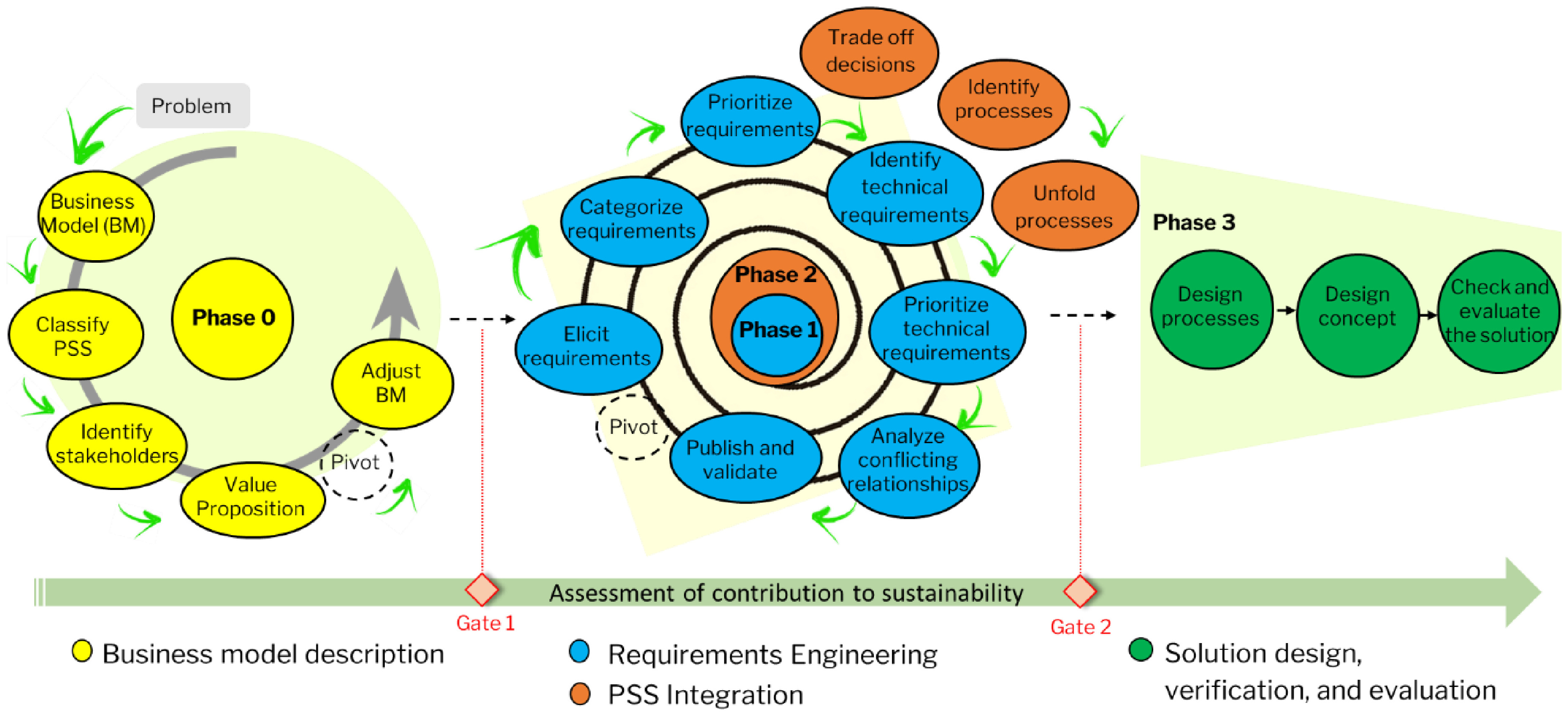 Source: R-PSS Method (adapted from