 Design of Teaching and Learning Centers: a faculty survey
Abstract
Paper aims This research investigates faculty perceptions of the contributions and ideal design of Teaching and Learning Centers (TLCs) to promote Competency-oriented Learning (CoL) in engineering education.
Originality The study addresses a significant research gap: the limited understanding of TLCs in engineering education, particularly in the Brazilian context, where such centers are still emerging in public higher education. By exploring engineering faculty perspectives, it establishes a baseline framework for implementing TLCs in institutions without existing models.
Research method A survey-based approach guided by two research questions on TLC contributions and design. A questionnaire was administered to 415 professors at a leading Brazilian engineering school, yielding 67 valid responses (16.1%).
Main findings The findings highlight challenges in course planning, competency assessment, and teaching practices, including limited alignment with competency goals and weak dialogue between faculty and program coordination. Respondents view TLCs as key to improving teaching methodologies, supporting pedagogical development, and promoting systematic skill assessment. Their effectiveness depends on clear objectives, institutional support, and strategic alignment.
Implications for theory and practice This study contributes to theoretical discussions on pedagogical support structures and offers practical insights into TLC implementation. It underscores the importance of engaging faculty and students for successful TLC adoption.
Keywords:
Engineering education; Teaching Learning Center; Competency-oriented Learning
1. Introduction
Education accreditation councils and experts worldwide have emphasized the importance of Competency-oriented Learning (CoL) in engineering courses to better prepare graduates for the labor market (Wall, 2010; Engineering Accreditation Commission, 2012; Cruz et al., 2020). In this context, engineering schools are committed to reviewing courses, seeking to incorporate the development of competencies (Marbach-Ad et al., 2015).
According to Care & Luo (2016), competence refers to the skills, knowledge and attitudes students develop throughout their training. Competencies go beyond technical knowledge and include project and problem-solving skills in practice in different professional and personal contexts (Quintero, 2022).
Skills development is facilitated by adopting active learning practices. However, many professors still maintain traditional learning practices, emphasizing knowledge transmission and little student participation in the learning process. This reality highlights the need for pedagogy changes to improve the training of new generations of engineers (Reis et al., 2017).
Competency-oriented Learning (CoL) is also present in the Brazilian government's new National Curricular Guidelines for higher education, including engineering courses. The new guidelines for training engineers establish a graduate profile and a set of soft and hard skills to be developed by students during undergraduate courses (Brasil, 2019).
To consolidate CoL, it is necessary to train professors to reformulate their disciplines and teaching and learning practices. In this sense, schools can use pedagogical project offices, usually called Teaching and Learning Centers (TLC), to develop professors' competencies for this change in education.
TLCs emerged as a response to the growing need to promote effective educational practices, offering support and resources to improve teachers' pedagogy and assist in managing change (Schumann et al., 2013). TLCs must explore and disseminate new teaching and learning practices aligned with the institution's culture and vision (Gillespie, 2010; Schroeder, 2012; Schumann et al., 2013; Cruz, 2018).
The literature on TLCs saw increased publications following the COVID-19 pandemic, which led to a forced migration to remote teaching, challenging many professors and educational institutions. Schlesselman (2020) comments that during this period, universities worldwide had to change quickly and empirically to remote teaching, and this change highlighted the lack of academic support for professors in many colleges.
Competency-oriented Learning (CoL) is crucial for preparing graduates for real-world challenges (Cruz et al., 2020; Care & Luo, 2016), but many faculties lack institutional support for CoL aligned teaching (Kolomitro & Anstey, 2017). Teaching and Learning Centers (TLCs) offer a solution, providing pedagogical support and resources to improve teaching and align with competency goals (Schumann et al., 2013; Pérez-Sanagustín et al., 2022). However, TLC studies are limited, especially in public school engineering education, where they are still emerging. Existing literature emphasizes TLCs' role in supporting faculty and fostering innovation, but often focuses on isolated cases, neglecting design and implementation in disciplines like engineering (Nam & Dipasupil, 2019).
To address this research gap, this study explores faculty perceptions of the contributions and ideal design of TLCs for promoting Competency-oriented Learning in engineering education. The study addresses two research questions:
RQ1. What would TLC contribute to Competency-oriented Learning (CoL) in Engineering?
RQ2. What would be the ideal Teaching and Learning Center (TLC) design?
This study focuses on a leading public engineering school in Brazil, recognized for its national prominence and alignment with global educational challenges. The insights gathered are relevant for similar institutions facing the need to align teaching practices with competency-oriented learning goals. This article is structured as follows. Section 2 presents the theoretical framework of the article. Section 3 details the research method. In section 4, the research results are analyzed. Section 5 ends the article with conclusions and suggestions for future research.
2. Literature review
This section reviews the characteristics of a TLC found in the literature that help to understand its objectives, activities, structure, positioning, and autonomy.
2.1. Literature review design
To ensure replicable and transparent research, we adopted the Systematic Literature Review (SLR) process, which consists of identifying, selecting, analyzing, and synthesizing academic studies, as proposed by Denyer & Tranfield (2009).
The Web of Science and Scopus databases were selected to survey previous studies on TLC. The search was carried out with the “teaching and learning cent*” string in the abstract, title, and keywords fields.
In the second stage, some filters were applied to select the studies most aligned with the TLC topic. Accordingly, only documents of the journal article type, written in English or Portuguese and published in the last ten years, were accepted. Duplicate articles and those not adhering to the present study after reading the titles, abstracts and keywords were removed. Finally, four references that were not found in the search process were manually added to the database.
The search and selection process resulted in only 27 articles that directly addressed the characteristics of TLCs. This result demonstrates a lack of studies on the structure and dynamics of these centers in educational institutions. Figure 1 illustrates the results obtained in the review.
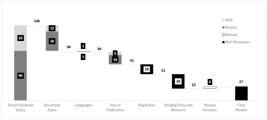
The systematic literature review revealed a limited number of studies on TLCs (27 articles), with Nam & Dipasupil (2019) providing the most detailed comparative analysis. This scarcity of literature underscores the need for empirical studies, such as the survey presented here, to address gaps in understanding TLC design and contributions. In the third stage of analysis and synthesis, the articles were subjected to content analysis to identify the main characteristics of the TLC and understand its objectives, activities, structure, positioning, and autonomy. This analysis is performed in section 2.2.
Quinaglia & Mesquita (2023) present a comparative review of the literature on Project Management Office (PMO) and Teaching Learning Centers (TLC), which complement the present review. The comparison between PMO and TLC is justified since TLC is, in fact, the equivalent of PMO for higher education institutions.
2.2. Analysis of selected articles
Competency-oriented Learning (CoL) develops knowledge, skills, and attitudes for real-world problem-solving (Care & Luo, 2016). Higher education is increasingly adopting CoL, emphasizing critical thinking and teamwork (Cruz et al., 2020), consistent with engineering education guidelines (Engineering Accreditation Commission, 2012; Brasil, 2019). Driven by graduate preparedness for complex challenges (Cruz et al., 2020), CoL adoption faces hurdles like faculty support and course alignment (Bell & Gitomer, 2023). Teaching and Learning Centers (TLCs) provide crucial resources and training for effective CoL implementation (Nam & Dipasupil, 2019).
The objective of TLCs is to improve the quality of education by making the learning processes more efficient (Ellis et al., 2020). One of the objectives of TLCs is to support the pedagogical development of professors, who are experts in their areas of expertise, but who typically develop their teaching practices on their initiative (Jerez Yàñez et al., 2019). There is a tendency for universities to promote research, giving few incentives for teaching (Kolomitro & Anstey, 2017). Recognizing that professor expertise alone doesn't guarantee student learning, TLCs are crucial (Kolomitro & Anstey, 2017). TLCs promote high-quality, equitable, inclusive, and mental health-sensitive education (Naffi et al., 2023), while also supporting critical consciousness and decolonial practices in faculty and students (Nadarajah, 2023).
Nam & Dipasupil (2019) carried out case studies in three university centers in Southeast Asia: South Korea (Center A), Singapore (Center B) and the Philippines (Center C). The authors identified the following objectives: i) center A was established to support students through mentoring and support teaching staff in improving their teaching practices and using e-learning; ii) center B was founded to support research-based teaching methodologies and practical application of these methods with students; iii) center C was established to improve teaching practices and research skills of teaching staff, as well as to support student learning needs.
The activities of TLCs typically aim to develop professors' competencies and review course proposals (Nam & Dipasupil, 2019). TLCs play a vital role in supporting faculty development across various areas, including: digital technology and online teaching (Bernardo & Bontà, 2023); navigating change and uncertainty (Fleming et al., 2023); research supervision and utilizing CoPs (Communities of Practice) (Grant & Arshad, 2024); pre-HDR research supervision (Martin et al., 2025); evaluating educational development services (Miller-Young et al., 2025); and using OER/open access resources (Noone et al., 2024).
Nam & Dipasupil (2019) describe three TLCs. Center A offers programs for continuous faculty development, adoption of new learning methodologies, e-learning support, and student skill evaluation. Center B focuses on faculty pedagogical skill development, training teaching assistants, research proposal writing, workshops, student support, grants, and student skill assessment. Center C emphasizes training to update faculty skills, knowledge, and attitudes, alongside student services (academic support, career guidance, emotional well-being). Thus, Center A has a more balanced approach to supporting both faculty and students,
Regarding structure, it is necessary to clearly define who does what and identify the roles and responsibilities for the efficiency of services offered (Nam & Dipasupil, 2019). TLCs should have a clear structure and adequate resources to support their activities (Kotorov et al., 2024). Communities of practice (CoPs) can promote faculty learning and collaboration within TLCs (Messi, 2025). TLCs can be important sites for equity work but also face challenges in supporting and sustaining this work (Vander Kloet, 2025).
Nam & Dipasupil (2019) argue that organizational failure often stems from unclear team member responsibilities, not program deficiencies. This is evident in Center C, where teaching and learning development is an auxiliary function spread across units, lacking a dedicated center and resulting in low prestige. Centers A and B, however, gained influence through successful program implementation. Center A has a dedicated team and structure, including a director, coordinators, and assistants. Center B is similar but shares its organizational structure with other educational activities. Center C has an informal team of volunteer agents (professors, coordinators, managers, employees) and lacks a defined structure with clear roles.
We found few studies that deal with the positioning of TLCs in educational organizations. Nam & Dipasupil (2019) point out that the effectiveness of programs and services is primarily influenced by positioning and mainly, the availability of resources. At centers A and B, programs are financed by public and private resources and students' monthly fees. On the other hand, Center C is funded almost exclusively by student fees. The breadth of services and programs the center offers students and professors correlates with the positioning and availability of resources.
Regarding the autonomy that the TLC should play in the educational institution, Igboanugo (2024) to emphasize the importance of TLCs having the autonomy to make decisions about their activities and priorities, in alignment with the needs of their institution. Pérez-Sanagustín et al. (2022) present five dimensions of TLC autonomy, related to staff training and independent operation aligned with the organization's mission/vision. These dimensions are:
-
Pedagogical Support Autonomy: Independent support for faculty in academic matters, including curriculum development/updating, implementing new teaching methodologies, and assessment.
-
Student Support Autonomy: Independent provision of student support services and resources (e.g., academic guidance, tutoring, counseling, learning support).
-
Culture Change Autonomy: Independent leadership and promotion of institutional cultural change through new policies and actions.
-
Technology of Learning Autonomy: Independent management of technology-supported educational initiatives, including defining tools, processes, and infrastructure.
-
Evidence-Based Practices Autonomy: Independent execution of educational projects to collect data and assess the impact of educational changes.
Teaching and Learning Centers are crucial for driving Competency-Oriented Learning adoption in higher education, empowering faculty, fostering innovation, and adapting to evolving needs. Effective TLCs require clear roles, resources, and autonomy. Research confirms their contribution to graduate success, especially in technology integration, equity, and research supervision. This systematic literature review informed the survey instrument's design, aligning questions with TLC objectives, activities, and structures. This ensures the research addresses identified gaps, particularly faculty perceptions of TLCs and their support of CoL.
3. The survey method
This section presents the survey method investigating a Teaching and Learning Center's (TLC) contributions to Competency-oriented Learning (CoL) in engineering (RQ1) and its ideal design (RQ2). Section 3.1 details the survey design and questionnaire, based on a systematic literature review. Section 3.2 describes participants, data collection, and instrument validation.
3.1. Survey design and questionnaire
This article aims to survey and analyze the opinion of engineering professors on the impact and design of a Teaching and Learning Center to support a Competency-oriented Learning approach in engineering schools. Two research questions guided the study:
RQ1. What would TLC contribute to Competency-oriented Learning (CoL) in Engineering?
RQ2. What would be the ideal Teaching and Learning Center (TLC) design?
A 15-question questionnaire (Table 1) was developed to address RQ1 and RQ2. Questions 1-7 identified challenges in course design, competence-oriented learning, and teaching practices, contextualizing the need for a TLC. Questions 8 and 9 directly address RQ1, evaluating TLC relevance and contributions to competency-oriented learning. Question 10 assesses TLC importance for stakeholders, informing both RQ1 (benefits) and RQ2 (design priorities). The SLR identified key TLC characteristics in existing literature, providing context for survey results. The survey instrument was based on SLR findings, ensuring alignment with established TLC frameworks and concepts. SLR findings informed the survey questions as follows:
TLC Contributions (Questions 8 and 9): These questions reflect literature themes on TLCs' role in improving teaching and competency-oriented learning, drawing on studies emphasizing faculty/student support (Nam & Dipasupil, 2019; Pérez-Sanagustín et al., 2022);
TLC Design (Questions 11, 12, and 13): Questions on TLC activities, team size, and autonomy align with SLR findings on effective TLC structures and operations (Nam & Dipasupil, 2019);
Competency-oriented Learning Challenges (Questions 1-7): These explore literature-identified challenges (e.g., competency assessment gaps, faculty training), providing context for TLC need. They address course planning, teaching, and competency-oriented learning.
Future studies with larger samples could use factor analysis to refine question alignment with research objectives and further validate this exploratory instrument.
3.2. Participants and data collection
Following the recommendations of Leedy et al. (2014), we developed, tested, and administered a questionnaire to professors at an important Brazilian engineering school, where 415 professors work across 15 departments. The criteria for choosing the institution were relevance to the institution and accessibility to professors. The school is recognized as a regional leader in engineering and technology in Brazil, according to the QS World University Ranking (QS Universities, 2023). The authors of this article are linked to the school, one as a doctoral student and the other as a professor, which facilitated data collection. Thus, we understand that the school represents a suitable organization for research.
The questionnaire was divided into five topics, presented in Table 1. The first three topics (course and discipline planning, competencies development, and relevance of TLC) refer to question RQ1 and contain nine questions. Topic four (design of a TLC) refers to question RQ2 and includes three questions. Finally, topic five (comments) contains one open question for general comments about the research. The questionnaire consists of fifteen questions, thirteen closed-ended, and two open-ended. To ensure a shared understanding of Teaching and Learning Centers (TLCs), the questionnaire began with a brief explanation of TLC concept, objectives, and typical activities, as described in the literature. This introduction enabled professors to reflect on their challenges and expectations for institutional support, informing their responses. Most of the closed-ended questions are presented as statements, and the respondent must express their agreement using a 5-point Likert scale (1 - strongly disagree, to 5 - strongly agree).
A pilot test with three engineering professors assessed survey instrument clarity, relevance, and consistency. Feedback refined question wording and alignment with research objectives. Due to the study's exploratory nature and limited sample, formal statistical validation was precluded, but face and content validity were ensured. Table 2 (section 4.2) describes competencies from the Brazilian National Curriculum Guidelines; Table 3 connects suggested TLC contributions to questionnaire questions 6 and 9. Google Forms collected and stored responses. Before participation, respondents read and agreed to an Informed Consent Form (ICF) presented at the survey's start; consent was required to access the questionnaire.
The questionnaire was open from May 25th to June 30th, 2023. We sent invitations to participate in three moments (first sending and two reminders). In the end, the survey achieved a response rate of 16.1% (67 responses out of 415 invited professors), which aligns with benchmarks in similar educational and operations research studies where participation rates often range from 10 to 20% (Forza, 2002). The results are presented in the next section.
4. Results and discussion
This section presents and discusses the survey results, divided into two subsections: i) Teaching and Learning Centers (TLCs) contributions to Competency-oriented Learning (CoL) and ii) Design of Teaching and Learning Centers.
4.1. Current challenges in course design and Competency-oriented Learning (RQ1)
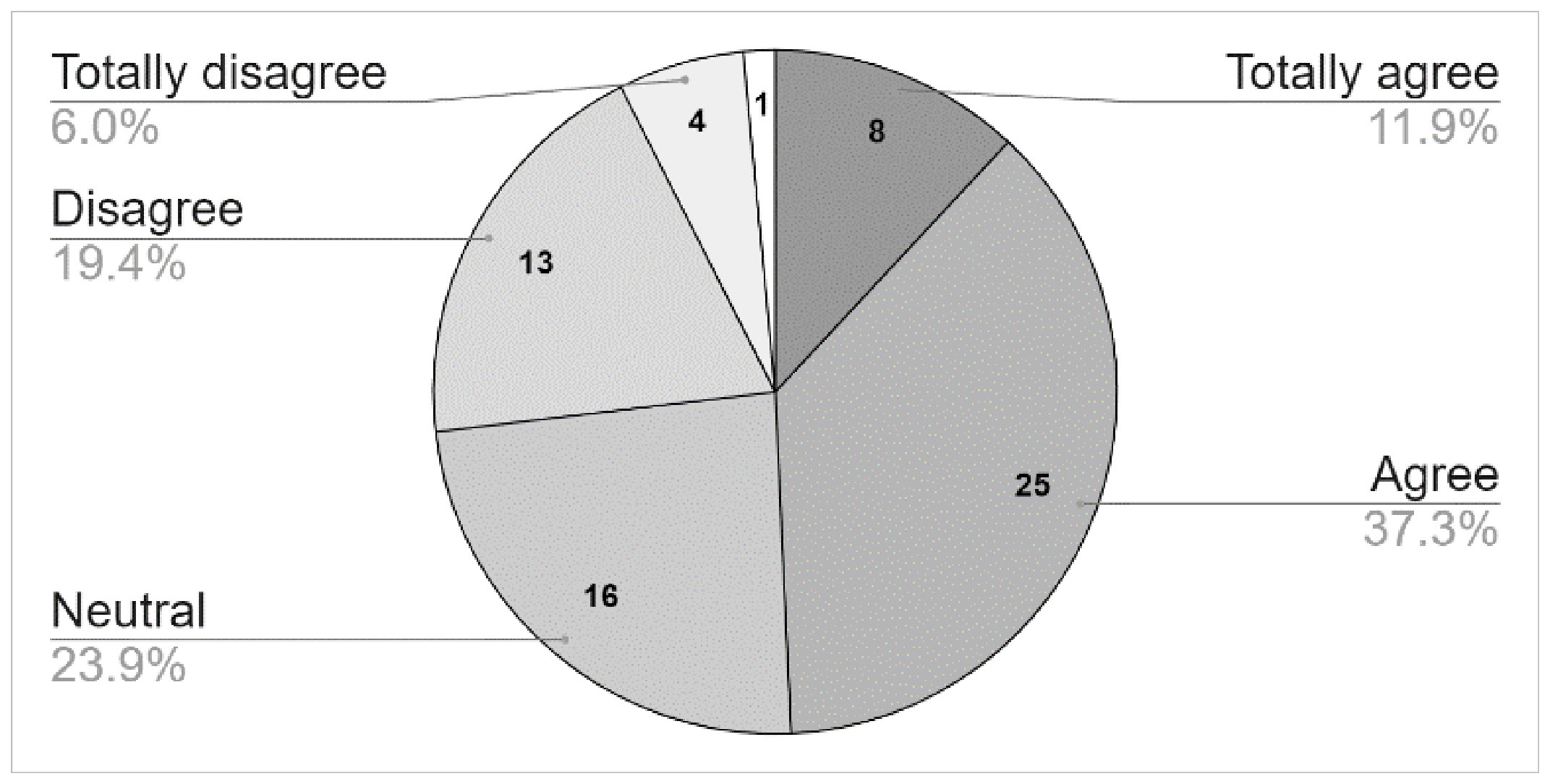
The first question asks about professors' knowledge of the Course Pedagogical Project (CPP). The CPP is the document that presents a set of guidelines for pedagogical practice, including content and skills to be worked on and evaluation methods. We observed that 40.3% of respondents disagree or strongly disagree with the statement about knowledge of this document, and another 35.8% agree or strongly agree that the course professors know the CPP. 22.4% are neutral, and 1.5% do not know how to evaluate. Figure 2 presents the results obtained.
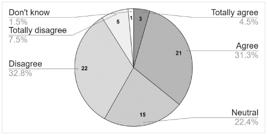
This question received 21 comments. There were four agreement comments in which respondents highlighted that most professors know the CPP, but some have superficial knowledge. Although the CPP was released, it is not known how many people read it in full. There were four neutral comments, in which respondents consider that most professors are aware of the CPP during its preparation, but the document is forgotten afterwards. There were thirteen disagreement comments, in which respondents observed that knowledge of CPP is heterogeneous, and few know it well. Many professors would not be interested in analyzing it. Commitment is limited to representatives of the Undergraduate Committee, and there is a lack of dialog between coordination and professors.
The second question examines the professors' opinions on the clarity of the definition of the graduate's profile in the Course Pedagogical Project, which translates into the definition of a set of general and specific skills for the graduate. We observed that 49.2% of respondents agree or strongly agree, and another 25.4% disagree or strongly disagree that the Graduate's Profile is well defined in the Course Pedagogical Project. 23.9% are neutral, and 1.5% do not know how to evaluate. Figure 3 presents the results obtained.

This question received 13 comments. There were three agreement comments, in which respondents consider that the Graduate's Profile is well defined in the CPP. One professor highlighted his participation in the CPP review, and another highlighted that the CPP, although known, is irrelevant. There were four neutral comments, in which respondents highlighted that the profile of the graduate in the Course Pedagogical Project is very generic for an engineering course. One respondent suggested that competencies should be defined more precisely. There were six disagreement comments, in which respondents mentioned that the Graduate's Profile is present in the document but is not considered. There is a significant divergence between the desired and actual profile of graduates from engineering schools.
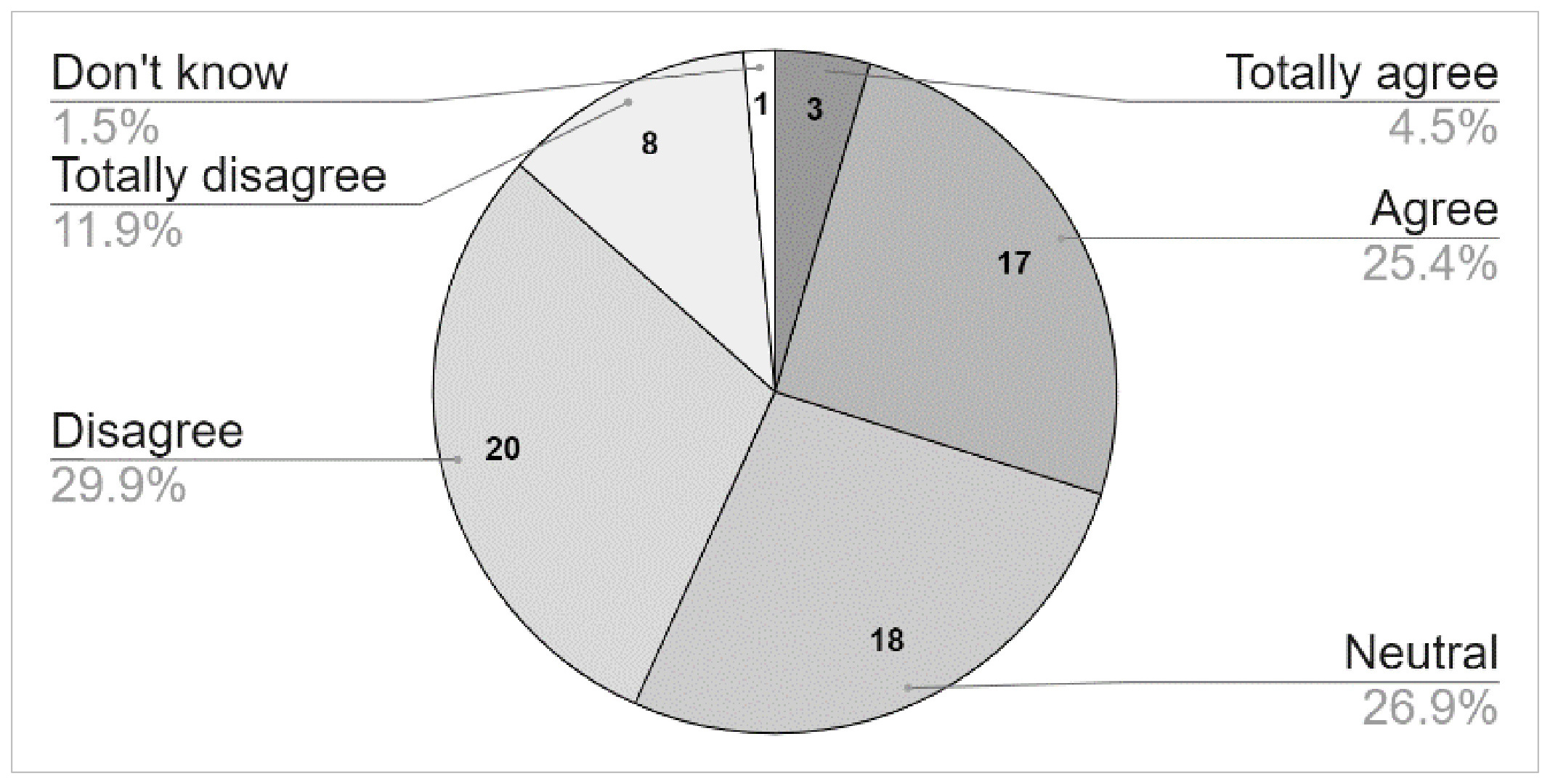
The third question gathers the professors' opinions on assessing the graduates' skills developed by the course. We observed that 41.8% of respondents disagree or strongly disagree, and another 29.9% agree or strongly agree that their respective courses evaluate the skills developed by graduates. 26.9% are neutral, and 1.5% do not know how to assess. Figure 4 presents the results obtained.
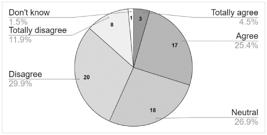
This question received 14 comments. There were two agreement comments, in which the respondents highlighted that the evaluation of the graduate's skills occurs indirectly, through the assessment of the knowledge acquired in the disciplines. However, a more targeted assessment of the skills developed is lacking. There were six neutral comments, in which respondents highlighted that the assessment of graduates' skills varies depending on the professor and the discipline. Some do not evaluate or evaluate with inappropriate methods. Some adopt a more systematic approach, but there is no uniformity in assessment methods. There were six disagreement comments, in which respondents highlighted that the assessment of graduates' skills is in the implementation phase and that the evaluation still focuses on the discipline's content without explicitly considering the skills developed. Furthermore, it was mentioned that soft (behavioral) skills are not assessed.
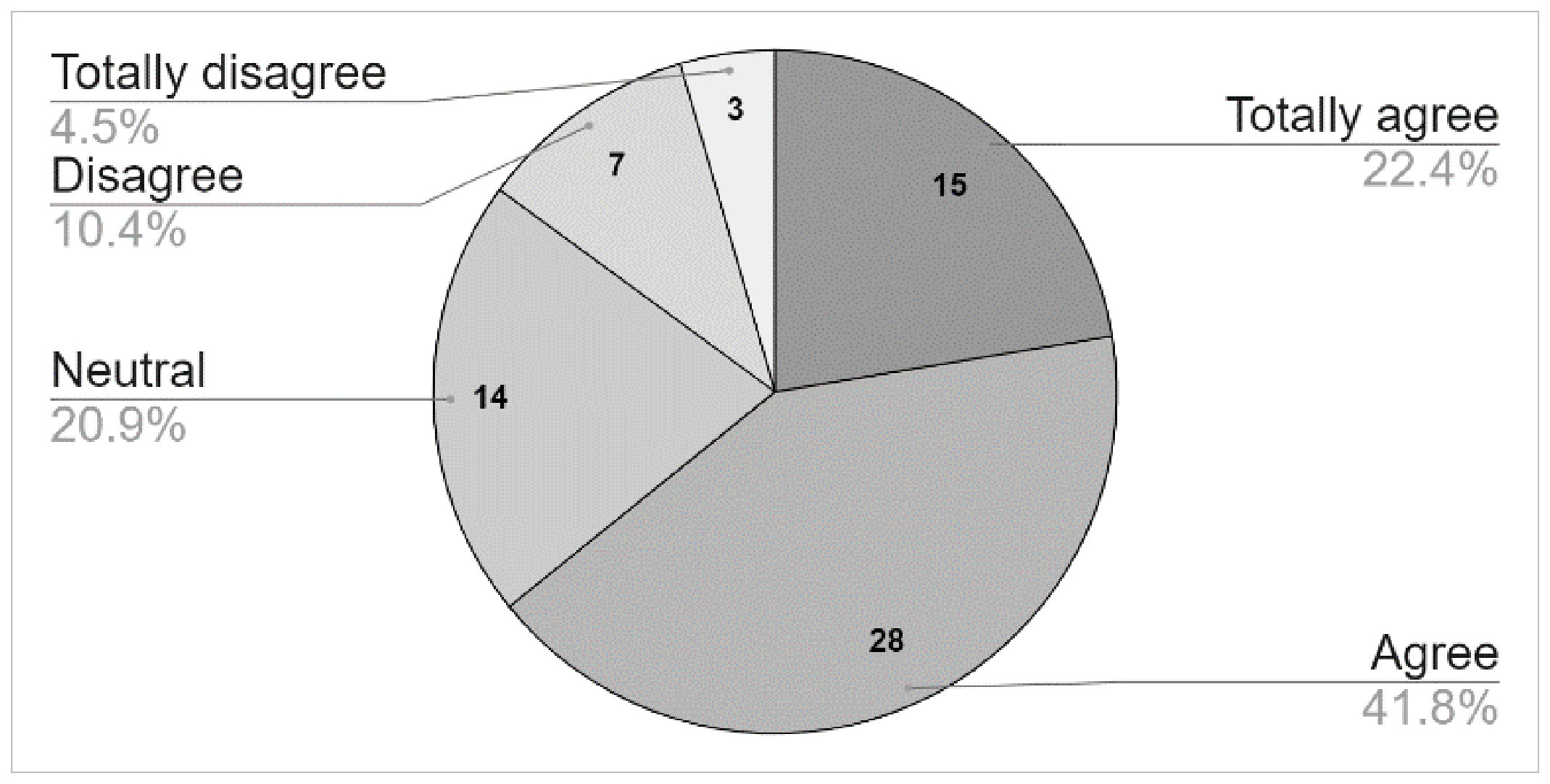
Question 4 raises professors' opinions about the orientation of their disciplines toward skills development. We observed that 64.2% of respondents agree or strongly agree, and only 14.9% disagree or strongly disagree that their disciplines are oriented toward developing skills. 20.9% are neutral. Figure 5 presents the results obtained.
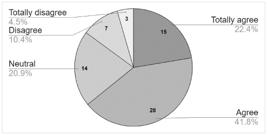
This question received 14 comments. There were six agreement comments, where the responses show that professors' disciplines differ in their approaches to developing student skills. Some professors seek to relate the content with practical applications, others highlight technical and communication aspects, and some recognize the need for a model that combines theory and practice. There were five neutral comments in which respondents highlighted that disciplines have varied approaches to developing skills. Some professors seek to increase student involvement and define learning objectives related to know-how. However, not all subjects can address different skills effectively. There were three disagreement comments, in which respondents highlighted that opinions are diverse; some believe that training is focused on specific skills, and others see a greater focus on theoretical knowledge. One commented that he was unclear about the skills to be developed and suggested expanding the debate to define the competencies better.
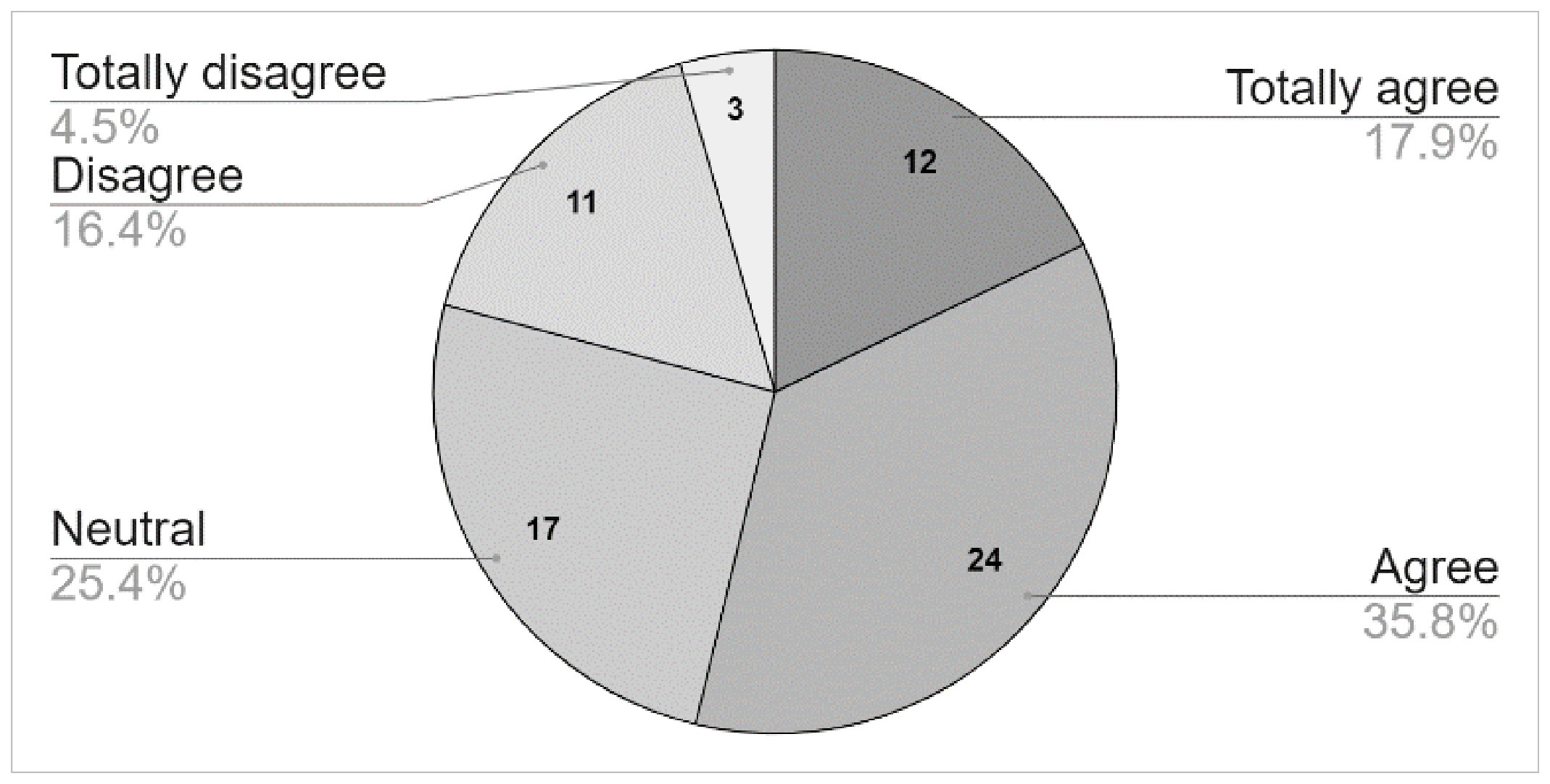
Question 5 collects professors' opinions on the assessment of skills developed by students in the disciplines they teach. We observed that 53.7% of respondents agree or strongly agree, and 20.9% disagree or strongly disagree that the discipline they teach evaluates the skills developed by the student. 25.4% are neutral. Figure 6 presents the results obtained.
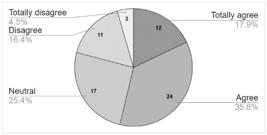
This question received 14 comments. There were four agreement comments, where the responses show that competency assessments vary according to the discipline. Some professors try to carry out this assessment but face difficulty measuring learning. One of them comments that most assessments only involve writing texts and presentations. There were seven neutral comments, which again highlight that assessments vary between disciplines. Some professors have difficulties individually assessing the requirements; others comment that current strategies may not efficiently measure the skills developed and that assessment could be more systematic. Three disagreement comments highlight that they emphasize an integral approach to learning, and others include activities for developing skills but do not measure the result.
Question 6 assesses the degree to which each of the eight competencies defined in the engineering curricular guidelines by the National Education Council (Brasil, 2019) is developed in their course. Table 2 presents the description of these competencies.
The competence that had the highest average score, measured from 1 to 5, was Competence 2: “Analyze and understand physical and chemical phenomena through symbolic, physical and other models, verified and validated by experimentation” with 3.97. On the other hand, Competency 7: “Knowledge and ethically apply legislation and normative acts within the scope of the profession” obtained the lowest score, with 2.83. Figure 7 shows the results and the average score obtained.
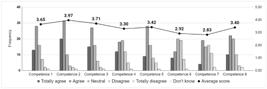
This question received 15 comments. The comments show that professors have different opinions about developing the skills defined in DCN. Some claim that the skills are covered in their disciplines, while others see challenges and difficulties in implementing them. Furthermore, it was highlighted that some subjects follow a content-based teaching model while others are being reformulated for Competency-oriented Learning. Two professors mention the need to reformulate the course.
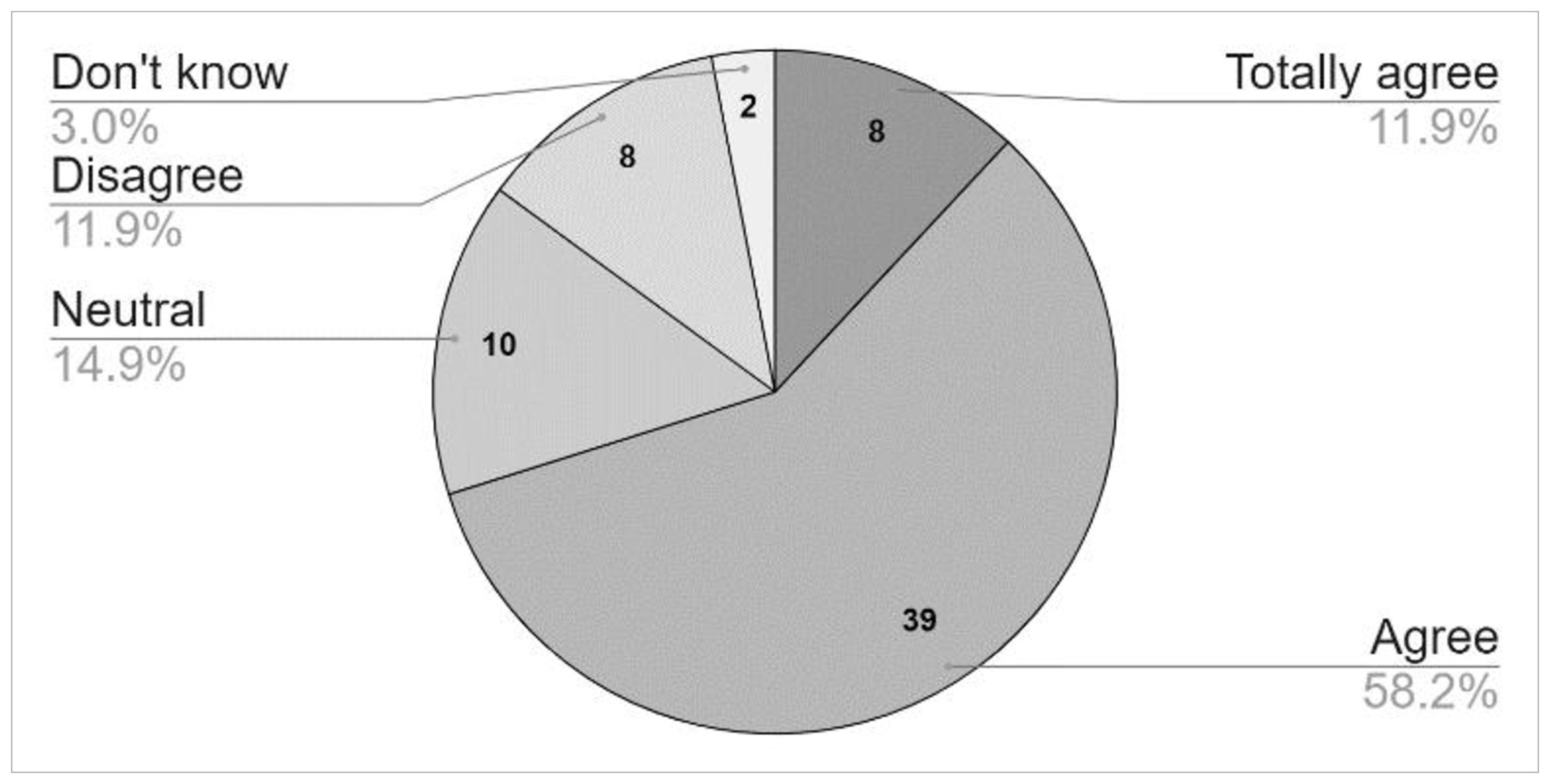
Question 7 gathers professors' opinions on the suitability of learning practices for developing skills in the disciplines. Most respondents, 70.1%, agree or strongly agree, and only 11.9% disagree that the learning practices of their respective disciplines are adequate for developing skills. 14.9% are neutral to the statement, and 3% do not know how to evaluate it. Figure 8 presents the results obtained.
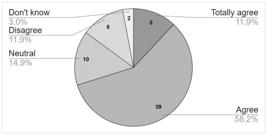
This question received 14 comments. There were eight agreement comments, in which respondents highlighted that learning practices vary between theoretical and laboratory disciplines. Some professors mention that they try to use appropriate methods, especially active methodologies, but there is difficulty in promoting greater participation and discussion with students. There were four neutral comments in which respondents demonstrated uncertainty about the suitability of learning practices in their disciplines for developing skills. Previous comments on guidance for skills development and assessment of developed skills also express this uncertainty. There were two disagreement comments, in which respondents consider that the skills listed are varied and some do not align with the engineering curriculum. Furthermore, one states that the course only partially meets the competencies listed.
Question 8 raises the opinion of professors on whether implementing a Teaching and Learning Center would benefit engineering education. We observed that 80.6% agree or strongly agree that implementing TLC would benefit engineering education, and only 3.0% totally disagree. 10.4% are neutral to the statement, and 6.0% do not know how to respond. Figure 9 presents the results obtained.
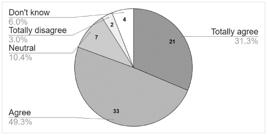
This question received nine comments. There were six agreement comments, in which respondents highlighted that implementing a Teaching and Learning Center would be relevant for the institution, as it would encourage reflections on the student training process, help with professor training, increase involvement with teaching issues, and assist in the assessment of learning. Furthermore, positive examples of TLCs in other institutions were cited. There were two neutral comments, in which one of the respondents highlighted that implementing a TLC would be relevant if it functions as a project development laboratory. Another respondent warns about possible implementation risks at the undergraduate level and suggests that it is more appropriate to start with graduate courses. There was only one disagreement comment, in which the respondent highlighted that TLC would bring excellent contributions if the university were considered instead of being an isolated initiative of the engineering school.
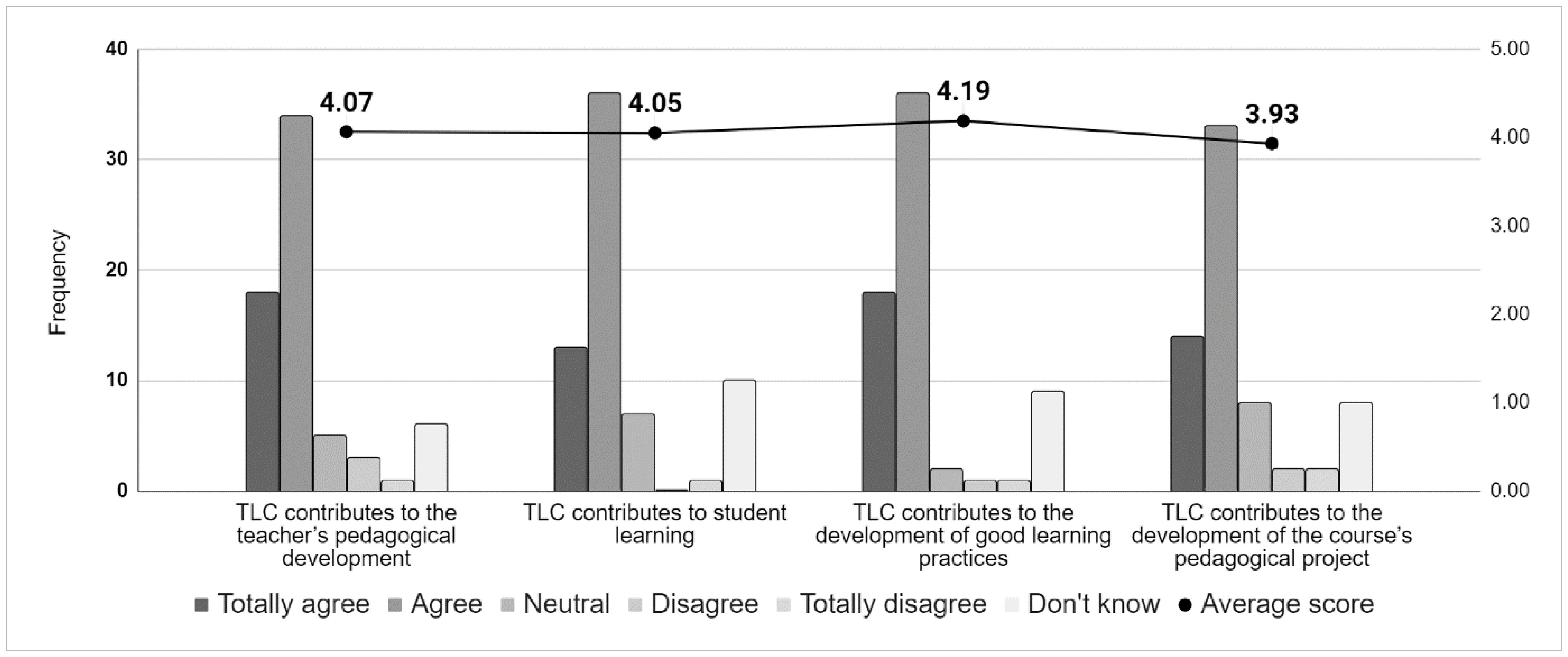
Question 9 collects professors' opinions regarding the contributions of TLC to engineering education. Table 3 presents the average score from 1 to 5 of the four contributions given in the questionnaire in the professors' opinion.
This question received ten comments. Among the comments, some respondents point out that a TLC can significantly improve teaching at the institution. However, there are concerns about the role and form of implementation, emphasizing the importance of faculty and student engagement for its effectiveness. Other comments highlight the need to validate its impact on learning. One professor highlighted that TLC can significantly impact educational practice if it is well structured and manages to involve all agents. Figure 10 presents the results obtained.
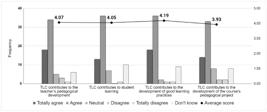
These findings directly address RQ1 by showing how a TLC could meaningfully contribute to Competency-oriented Learning (CoL) in engineering. The disconnect between institutional pedagogical planning (e.g., the CPP) and classroom practice, coupled with inconsistent approaches to skill development and assessment, reveals a systemic gap that a TLC is well positioned to bridge. Faculty expressed clear demand for structured support in aligning teaching with competency frameworks, designing appropriate assessments, and fostering dialog between course coordination and instructors, especially in public institutions where such infrastructure is often absent. Thus, a TLC would not merely replicate imported models but serve as a context-sensitive enabler of CoL, supporting both the operationalization of curricular guidelines and the professional development of faculty as agents of pedagogical change.
4.2. Perceived contributions and design of Teaching and Learning Centers (RQ2)
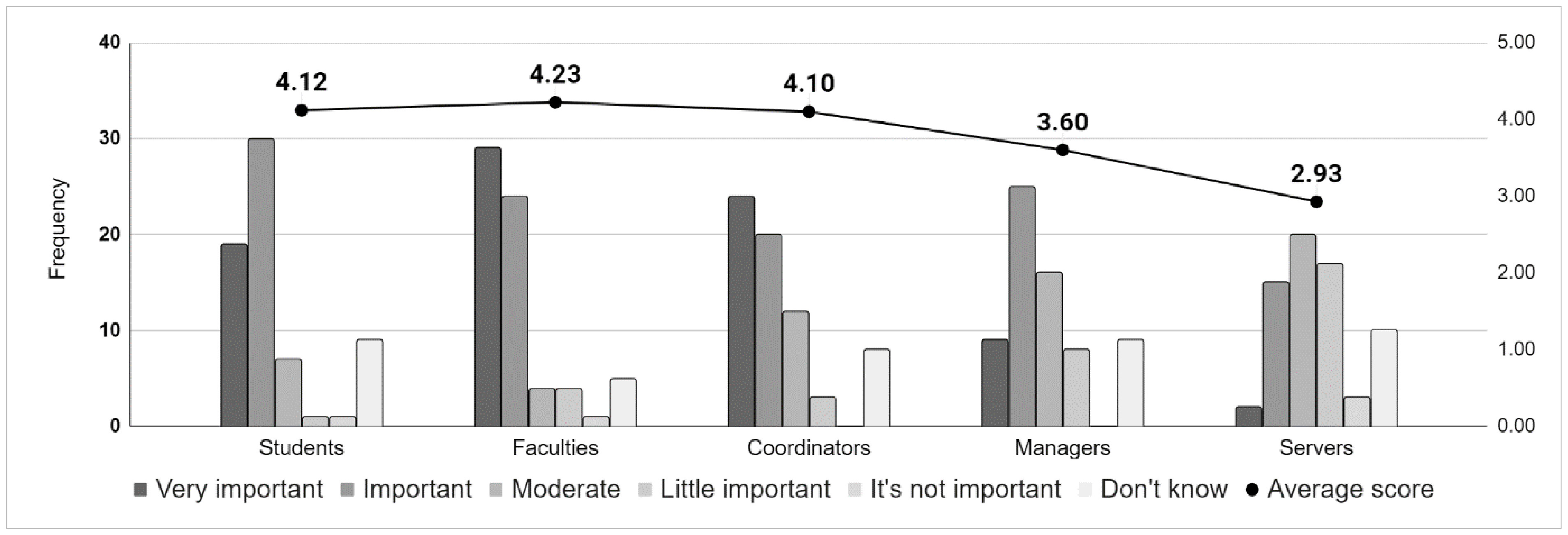
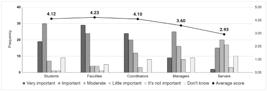
Question 10 gathers the professors' opinions about the importance of TLC for the agents of the learning processes. Table 4 presents the average importance of 1 to 5 for the five agents listed in the questionnaire in the professors' opinion.
This question received ten comments. Some comments point out that TLC is relevant for all agents involved in training, including professors, students, coordinators, managers, and support staff. Others emphasize that the importance of the agents of the learning processes will depend on how the center will interact with the disciplines, clearly defining its responsibilities and limits. A group identifies faculty as the primary target audience but highlights that everyone would benefit from courses, training, and debates to promote excellence in teaching and learning. Finally, some emphasize the importance of reducing bureaucracy in the institution and making it more efficient. Figure 11 presents the results obtained.
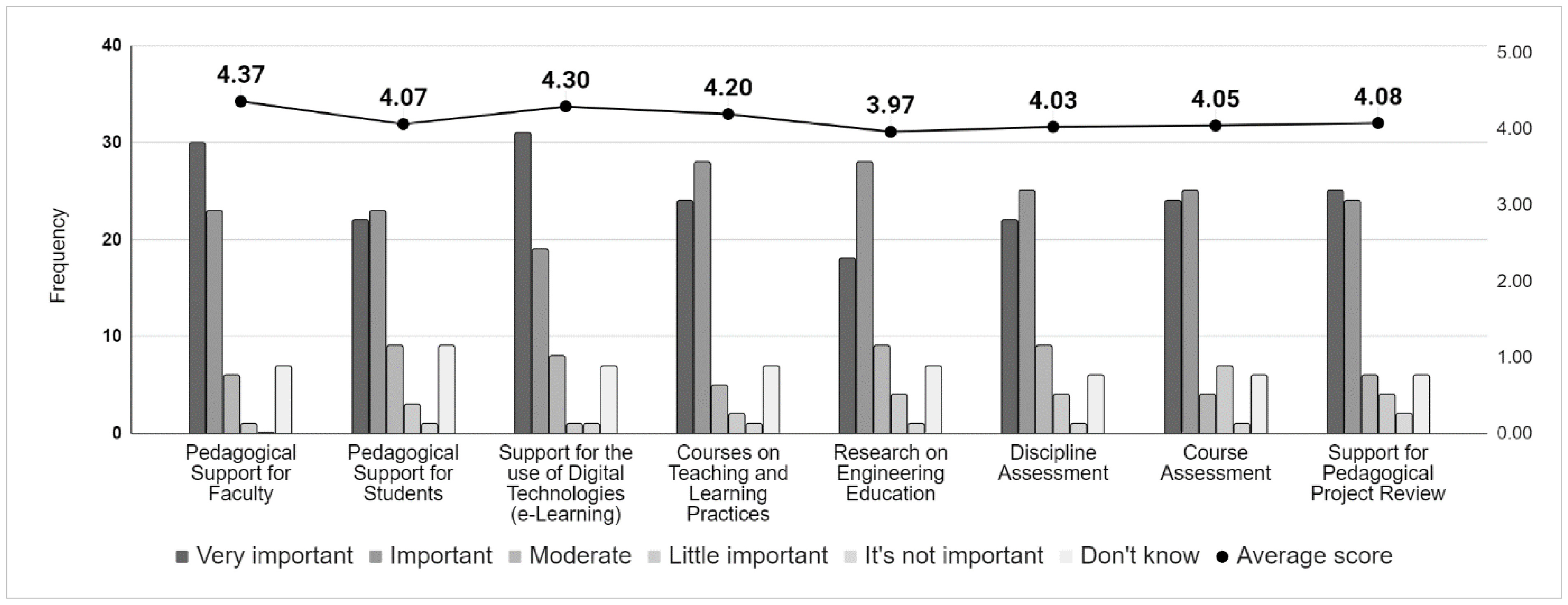
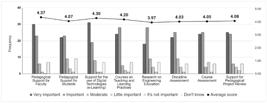
Question 11 raises professors' opinions about the importance of TLC activities. Table 5 presents the average score from 1 to 5 of the eight TLC activities listed in the questionnaire in the respondents’ opinion.
This question received nine comments. Some comments reinforce that TLC activities can improve teaching and learning processes but mention that the roles and responsibilities of the office aligned with the strategic objective of the educational institution are essential factors. Other professors highlight the need for staff training, production of teaching materials and discussions about the role of engineering in society. It was also possible to identify different opinions, from supporting the idea to questioning the need for the TLC, citing previous discontinued experiences. Figure 12 presents the results obtained.
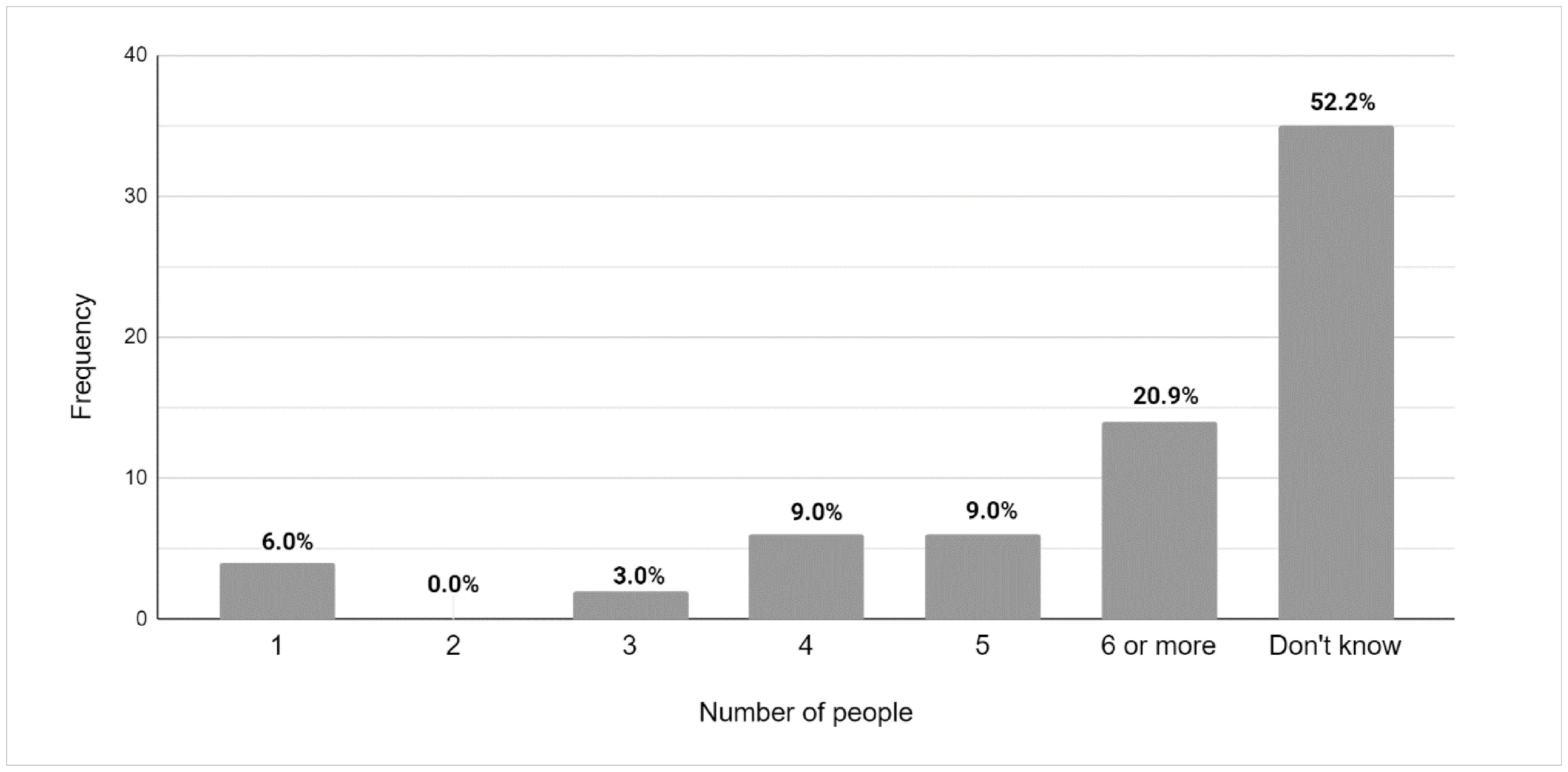
Question 12 gathers the professors' opinions on the ideal size regarding the number of people for a TLC. Most professors, 53.2%, could not assess the ideal size of a TLC, and 20.9% responded that six or more people were necessary for running the TLC. Figure 13 presents the results obtained.

This question received 17 comments. Among the comments made, we observed that professors have different opinions about the ideal size of the TLC. Some believe the number of people will depend on the office's scope, strategy, and objectives, while others suggest a larger team to handle various activities and courses in the school. A professor mentioned the importance of having professionals such as pedagogues and psychologists focusing on the learning processes. However, most professors expressed difficulties quantifying the ideal size, considering the possible need to serve different courses and departments. While the literature highlights the importance of well structured TLCs (Nam & Dipasupil, 2019), these responses reveal uncertainty among faculty regarding the ideal size and scope, reflecting institutional challenges such as resource constraints identified by Cruz (2018) and Kolomitro & Anstey (2017).
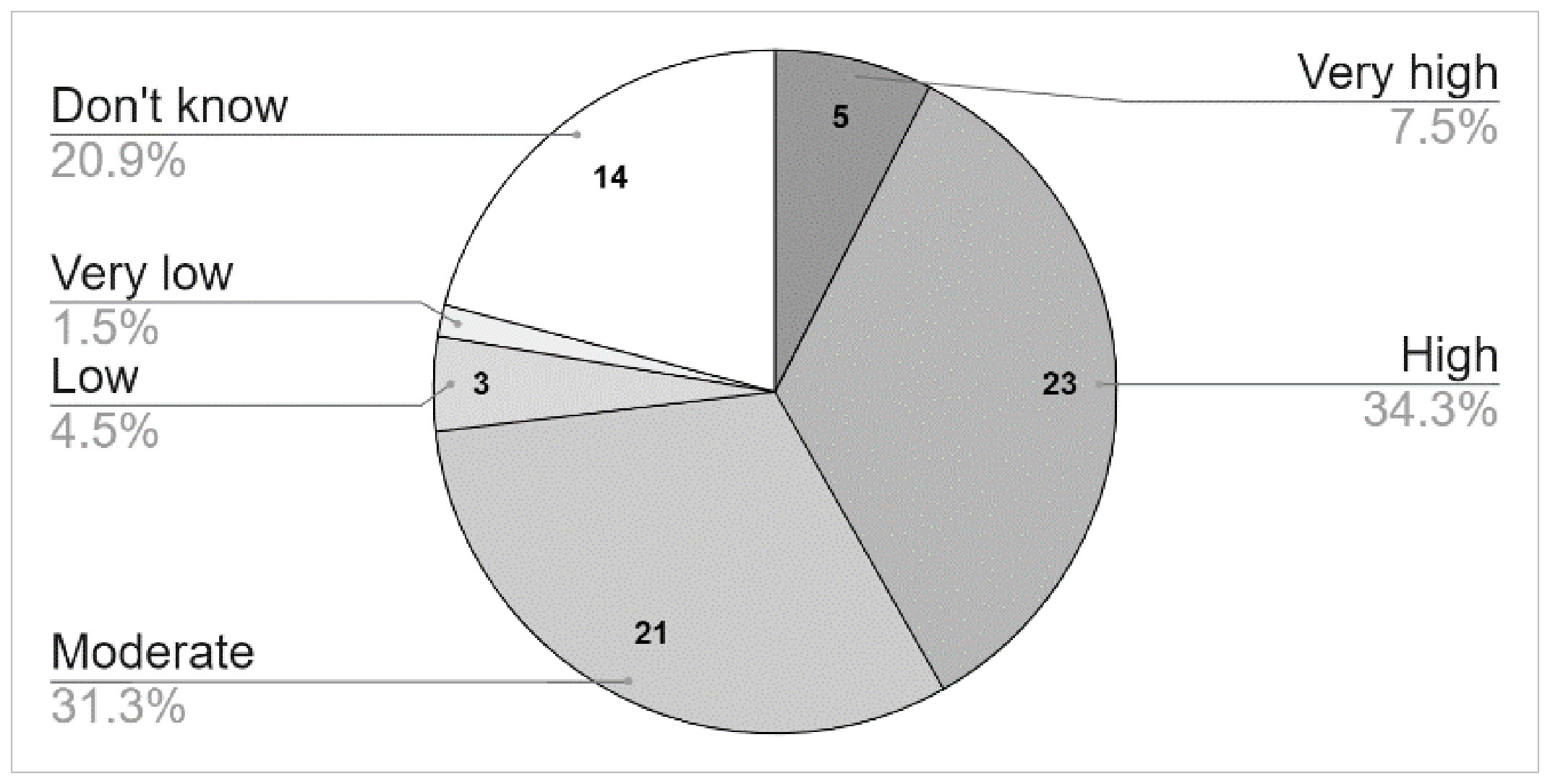
Question 13 elicits the professors' opinion on the autonomy that the TLC should have. 41.8% of professors responded that TLC autonomy should be high or very high, and only 6% responded that TLC autonomy should be Low or Very Low. 31.3% responded as moderate, and 20.9% did not know how to evaluate it. Figure 14 presents the results obtained.
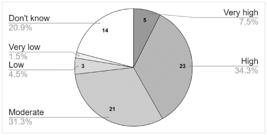
Faculty responses emphasized TLC autonomy, aligning with Pérez-Sanagustín et al.’s (2022) dimensions of TLC autonomy, particularly for supporting pedagogical innovation and cultural change. Respondents prioritized activities like pedagogical support for faculty and courses on teaching practices, echoing Nam & Dipasupil’s (2019) findings on balancing faculty and student needs.
This question received 15 comments. Six comments favored high or very high TLC autonomy, where respondents suggested that the TLC should have the autonomy to be bold, without conflicting with higher authorities, while remaining aligned with the school management office and its guidelines. Other respondents emphasized that high autonomy is desirable for presenting new paths, without imposing restrictions on professors, but still within limits that guarantee alignment with the institution's strategic plan. Five comments supported moderate autonomy, where respondents advocated for the TLC's autonomy to stimulate ideas and propose innovative mechanisms, but within the limits of university and school guidelines, and respecting professors' autonomy. One low autonomy comment emphasized that the TLC should act as a coordinator and integrator of agents in the educational process.
Question 14 raises professors' opinions regarding how TLC results should be evaluated. This open, mandatory question received 67 responses and five comments. Respondents suggested evaluating TLC results using indicators like response time to professor requests, updates with practices from other institutions, student approval and performance, faculty and student satisfaction, and comprehensive course evaluations (involving teachers, students, staff, and stakeholders). Some professors also advocated defining specific metrics and monitoring result evolution over time to assess TLC impact on teaching and learning.
Finally, question 15 opened space for comments and general suggestions about the research. 25 professors included additional comments. Some emphasized reviewing outdated content and adopting appropriate pedagogy for modern science. Others highlighted changing demands on engineering professionals and aligning curricula with market needs. Finally, some professors congratulated the research, expressing interest in supporting TLC implementation.
These findings provide a clear and empirically grounded response to RQ2: the ideal TLC, as envisioned by faculty, should be faculty-centered, highly autonomous, and focused on pedagogical capacity building rather than bureaucratic oversight. “Pedagogical Support for Faculty” was ranked highest (4.37), and autonomy was strongly favored, with 41.8% of respondents advocating high or very high independence. This faculty-envisioned design prioritizes trust in teacher agency while offering concrete support, such as training, course design guidance, digital tools, and teaching resources, to strengthen classroom practice. Importantly, it emerges not from external templates but from the expressed needs of professors in a research-intensive public engineering school, suggesting a TLC model that is both pragmatic and scalable for similar institutions in Brazil
5. Conclusion
This article raised and analyzed the opinion of professors from an engineering school at a renowned Brazilian university on the contributions and ideal design of a Teaching and Learning Center to consolidate Competence-oriented Learning.
The results show that, in the respondents' opinion, many professors are unaware of the Course Pedagogical Project, which indicates a disconnect between planning and practices in the classroom. Furthermore, the dialog between coordination and professors is still insufficient, delaying the adoption of learning practices aimed at developing students’ skills. Another perceived opportunity is assessing developed skills, which can be more effective and systematic. Although there are some efforts to change teaching practices, the content-focused approach remains dominant.
Implementing TLC is a promising initiative to improve engineering education and adapt it to new government requirements. Promoting discussions and supporting teaching initiatives to enhance teaching is valuable. However, for TLC to be effective, teachers and students must participate and engage. In addition, the support of the institution's senior management is essential. The implementation must consider the institution's strategic objectives and seek references from institutions with high-performing TLC to speed up the process.
In summary, professors believe that a Teaching and Learning Center can meaningfully contribute to consolidating Competency-oriented Learning in engineering education, particularly in public, research-intensive institutions in Brazil where structured pedagogical support is often lacking. The faculty-perceived ideal TLC design, centered on faculty agency and high autonomy (41.8% in favor), aligns with Schroeder’s (2012) observation that effective TLCs must emerge from faculty-identified needs rather than top-down mandates. Moreover, the strong emphasis on pedagogical support (average score 4.37) and capacity-building activities resonates with Pérez-Sanagustín et al.’s (2022) insights on autonomy and trust in teacher-led innovation. Thus, the model outlined here not only addresses local gaps but also offers a contextually grounded pathway for similar public engineering schools in Brazil.
This study has two main limitations. First, it was conducted in a single public engineering school in Brazil. While this context is representative of many Brazilian institutions that lack formal TLCs, it limits the generalizability of the findings. Second, the survey collected limited socio-demographic data, such as years of teaching experience or prior involvement in Competency-oriented Learning initiatives. While this was not initially planned as a strategy to boost response rates, the minimal data request may have contributed to the 16.1% participation rate and the candid nature of responses. However, it restricts our ability to explore how faculty perceptions of TLC design (e.g., preferred autonomy level or support activities) might vary according to teaching seniority or exposure to pedagogical innovation. For instance, early-career faculty might prioritize structured guidance, whereas senior professors could favor greater independence. Future comparative studies could benefit from collecting minimal, anonymized demographic variables to test such hypotheses and refine context-sensitive TLC models and institutional culture.
A natural extension of this study would be to conduct semi-structured interviews with faculty, course coordinators, and institutional leaders to deepen the understanding of the needs, tensions, and implementation conditions identified in the survey. Such interviews could serve a dual purpose: (i) inform the co-design of a context-specific TLC prototype for the investigated institution, or (ii) contribute to a scalable TLC framework for public engineering schools in Brazil facing similar structural and pedagogical challenges. Given the strong emphasis on autonomy, faculty agency, and alignment with curricular guidelines, a qualitative phase would enable deeper exploration of governance models, resource constraints, and institutional readiness, factors that surveys alone cannot fully capture but that are essential for sustainable educational innovation (Kolomitro & Anstey, 2017; Pérez-Sanagustín et al., 2022).
Acknowledgments
The authors thank the faculty members for their participation and the reviewers for their constructive comments.
Data availability
Research data is not available. The data set limits confidential survey responses from faculty members collected under anonymity and confidentiality agreements. Public access could compromise participant privacy and violate ethical commitments.
How to cite this article:
Financial Support
Ethical Statement
References
-
Bell, C. A., & Gitomer, D. H. (2023). Building the field’s knowledge of teaching and learning: Centering the socio-cultural contexts of observation systems to ensure valid score interpretation. Studies in Educational Evaluation, 78, 101278. https://doi.org/10.1016/j.stueduc.2023.101278
» https://doi.org/10.1016/j.stueduc.2023.101278 - Bernardo, M., & Bontà, E. (2023). Teaching and learning centers and coordinated technologies for an effective transition at COVID-19 pandemic time to massive distance learning and online exams. Journal of e-Learning and Knowledge Society, 19(2), 22-29.
- Brasil. Conselho Nacional de Educação. (2019, April 23). Institui as Diretrizes Curriculares Nacionais do Curso de Graduação em Engenharia (Resolução CNE/CES/02/2019). Diário Oficial da República Federativa do Brasil.
- Care, E., & Luo, R. (2016). Assessment of transversal competencies: policy and practice in the Asia-Pacific region. Paris: UNESCO.
- Cruz, L. (2018). The idea of educational development: an historical perspective. To Improve the Academy: A Journal of Educational Development, 37(1), 1-9.
-
Cruz, M. L., Saunders-Smits, G. N., & Groen, P. (2020). Evaluation of competency methods in engineering education: a systematic review. European Journal of Engineering Education, 45(5), 729-757. https://doi.org/10.1080/03043797.2019.1671810
» https://doi.org/10.1080/03043797.2019.1671810 - Denyer, D., & Tranfield, D. (2009). Producing a systematic review. In D. Buchanan & A. Bryman (Eds.), The Sage handbook of organizational research methods (pp. 671-689). Los Angeles: SAGE Publications.
-
Ellis, D. E., Brown, V. M., & Tse, C. T. (2020). Comprehensive assessment for teaching and learning centres: a field-tested planning model. The International Journal for Academic Development, 25(4), 337-349. https://doi.org/10.1080/1360144X.2020.1786694
» https://doi.org/10.1080/1360144X.2020.1786694 - Engineering Accreditation Commission. (2012). Criteria for accrediting engineering programs. Baltimore: ABET.
-
Fleming, J. K., Caputo, J. L., Spillios, K. E., Mel, A. E., Stenson, M. C., & Johnson, S. L. (2023). Resilient pedagogy: experiences of kinesiology faculty during COVID-19. Advances in Physiology Education, 47(4), 684-693. https://doi.org/10.1152/advan.00050.2022 PMid:37498550.
» https://doi.org/10.1152/advan.00050.2022 -
Forza, C. (2002). Survey research in operations management: a process‐based perspective. International Journal of Operations & Production Management, 22(2), 152-194. https://doi.org/10.1108/01443570210414310
» https://doi.org/10.1108/01443570210414310 - Gillespie, K. J. (2010). Organizational development. In K. H. Gillespie, L. R. Hilsen & E. C. Wadsworth (Eds.), A guide to faculty development: practical advice, examples, and resources (pp. 379-396). Bolton: Anker Publishing Company.
-
Grant, K. A., & Arshad, M. A. (2024). Graduate students as partners in academic development: benefits, challenges, and lessons learned. The International Journal for Academic Development, 29(1), 88-100. https://doi.org/10.1080/1360144X.2023.2265885
» https://doi.org/10.1080/1360144X.2023.2265885 -
Igboanugo, B. I. (2024). Role of gender in teachers’ preparedness to integrate digital technology in chemistry instruction in Nigeria. Journal of Chemical Education, 101(12), 5280-5287. https://doi.org/10.1021/acs.jchemed.4c00768
» https://doi.org/10.1021/acs.jchemed.4c00768 -
Jerez Yàñez, Ó., Aranda Càceres, R., Corvalán Canessa, F., González Rojas, L., & Ramos Torres, A. (2019). A teaching accompaniment and development model: possibilities and challenges for TLC. The International Journal for Academic Development, 24(2), 204-208. https://doi.org/10.1080/1360144X.2019.1594238
» https://doi.org/10.1080/1360144X.2019.1594238 -
Kolomitro, K., & Anstey, L. M. (2017). A survey on evaluation practices in teaching and learning centres. The International Journal for Academic Development, 22(3), 186-198. https://doi.org/10.1080/1360144X.2017.1313162
» https://doi.org/10.1080/1360144X.2017.1313162 -
Kotorov, I., Krasylnykova, Y., Pérez-Sanagustín, M., Mansilla, F., & Broisin, J. (2024). Supporting decision-making for promoting teaching and learning innovation: a multiple case study. Journal of Learning Analytics, 11(1), 21-36. https://doi.org/10.18608/jla.2024.8131
» https://doi.org/10.18608/jla.2024.8131 - Leedy, P. D., Ormrod, J. E., & Johnson, L. R. (2014). Practical research: planning and design (360 p.). Boston: Pearson Education.
-
Marbach-Ad, G., Egan, L., & Thompson, K. (2015). A discipline-based teaching and learning center. New York: Springer Publications. https://doi.org/10.1007/978-3-319-01652-8
» https://doi.org/10.1007/978-3-319-01652-8 -
Martin, J., Owens, A., Bayes, S., Tofari, P., Lynch, C., Brown, N., Mountford, B., & Warne, E. (2025). Understanding supervisory practice and development in the pre-HDR space: an ethogenic approach. Higher Education Research & Development, 44(2), 500-515. https://doi.org/10.1080/07294360.2024.2393116
» https://doi.org/10.1080/07294360.2024.2393116 -
Messi, N. (2025). A benchmarking study on existing communities of practice in higher education institutions: a comparison between Europe and US. Innovations in Education and Teaching International, 62(1), 180-189. https://doi.org/10.1080/14703297.2024.2319186
» https://doi.org/10.1080/14703297.2024.2319186 -
Miller-Young, J., Poth, C., & Vargas-Madriz, L. (2025). A complexity-informed examination of educational development services of a university’s teaching and learning centre. The International Journal for Academic Development, 30(4), 460-473. https://doi.org/10.1080/1360144X.2023.2286983
» https://doi.org/10.1080/1360144X.2023.2286983 -
Nadarajah, Y. (2023). From field to theory: rethinking development studies through study tours. Third World Quarterly, 44(7), 1472-1488. https://doi.org/10.1080/01436597.2023.2189581
» https://doi.org/10.1080/01436597.2023.2189581 -
Naffi, N., Davidson, A. L., Winer, L., Beatty, B., Germain-Rutherford, A., Diab, R., Focarile, T., Rukavina, D., Hornsby, D., Strickland-Davis, S., Boujaoude, S., Côté, S., Raiche-Savoie, G., Racine, J.-F., Camara, L., De La Haye Duponsel, N., & Kropf, V. (2023). Moving forward after COVID-19: new directions for teaching and course design in Higher Education. Revue Internationale des Technologies en Pédagogie Universitaire, 20(2), 68-85. https://doi.org/10.18162/ritpu-2023-v20n2-07
» https://doi.org/10.18162/ritpu-2023-v20n2-07 -
Nam, J. K., & Dipasupil, S. R. (2019). The status of teaching and learning centers in higher education: an Asian perspective. International Journal of Learning and Teaching, 5(3), 262-265. https://doi.org/10.18178/ijlt.5.3.262-265
» https://doi.org/10.18178/ijlt.5.3.262-265 -
Noone, J., Champieux, R., Taha, A., Gran-Moravec, M., Hatfield, L., Cronin, S., & Shoemaker, R. (2024). Implementing open educational resources: Lessons learned. Journal of Professional Nursing: Official Journal of the American Association of Colleges of Nursing, 55, 65-69. https://doi.org/10.1016/j.profnurs.2024.08.005 PMid:39667891.
» https://doi.org/10.1016/j.profnurs.2024.08.005 -
Pérez-Sanagustín, M., Kotorov, I., Teixeira, A., Mansilla, F., Broisin, J., Alario-Hoyos, C., & Gonzalez Lopez, A. H. (2022). A competency framework for TLIC for the 21st century: anticipating the post-COVID-19 age. Electronics , 11(3), 413. https://doi.org/10.3390/electronics11030413
» https://doi.org/10.3390/electronics11030413 -
QS Universities. (2023). QS world university rankings: top global universities. Retrieved in 2023, November 23, from https://www.topuniversities.com/world-university-rankings
» https://www.topuniversities.com/world-university-rankings -
Quinaglia, E. A., & Mesquita, M. A. (2023, June). Project management office and teaching and learning center: a comparative literature review. In International Joint Conference on Industrial Engineering and Operations Management (pp. 541-553). Cham: Springer. https://doi.org/10.1007/978-3-031-47058-5_41
» https://doi.org/10.1007/978-3-031-47058-5_41 -
Quintero, W. R. (2022). Digital competences of the industrial engineer in industry 4.0 a systematic vision. Production, 32, e20220028. https://doi.org/10.1590/0103-6513.20220028
» https://doi.org/10.1590/0103-6513.20220028 -
Reis, A. C. B., Barbalho, S. C. M., & Zanette, A. C. D. (2017). A bibliometric and classification study of Project-based Learning in Engineering Education. Production, 27(spe), e20162258. https://doi.org/10.1590/0103-6513.225816
» https://doi.org/10.1590/0103-6513.225816 -
Schlesselman, L. S. (2020). Perspective from a teaching and learning center during emergency remote teaching. American Journal of Pharmaceutical Education, 84(8), ajpe8142. https://doi.org/10.5688/ajpe8142 PMid:32934391.
» https://doi.org/10.5688/ajpe8142 - Schroeder, C. (2012). Coming in from the margins: faculty development’s emerging organizational development role in institutional change. Sterling: Stylus Publishing.
-
Schumann, D. W., Peters, J., & Olsen, T. (2013). Cocreating value in teaching and learning centers. New Directions for Teaching and Learning, 2013(133), 21-32. https://doi.org/10.1002/tl.20043
» https://doi.org/10.1002/tl.20043 -
Vander Kloet, M. A. (2025). Off the side of the desk: equity work in Canadian teaching and learning centres. The International Journal for Academic Development, 30(3), 438-450. https://doi.org/10.1080/1360144X.2024.2364709
» https://doi.org/10.1080/1360144X.2024.2364709 - Wall, K. (2010). Engineering: Issues, challenges and opportunities for development Paris: UNESCO.
Conflict of Interest
Editor