 Selection to machinery using MPSI-WASPAS methods: a case study in the public slaughterhouse of Sumé-PB
Abstract
Paper aims This paper aims to support decision-makers of the public slaughterhouse of Sumé in the preliminary selection of machinery for animal slaughter operations based on quantitative technical and economic criteria derived from equipment specifications.
Originality The originality of this study lies in the integrated application of the Modified Preference Selection Index (MPSI) and the Weighted Aggregated Sum Product Assessment (WASPAS) methods to a real-world public slaughterhouse context. The study contributes by using MPSI to generate data-driven criterion weights and WASPAS to rank machinery alternatives in a transparent selection framework.
Research method The research adopts a multicriteria decision-making (MCDM) approach, employing the MPSI method to determine criterion weights and the WASPAS method to rank machinery alternatives using quantitative technical and economic data obtained from manufacturers’ manuals, catalogues, and technical sheets, with contextual validation provided by a slaughterhouse inspector.
Main findings The integrated MPSI-WASPAS model identified a favourable set of machinery alternatives with superior overall performance across the evaluated technical and economic criteria.
Implications for theory and practice The study reinforces the applicability of hybrid MCDM methods in public infrastructure contexts and provides a transparent decision-support framework for preliminary equipment screening in public slaughterhouse projects.
Keywords:
Machinery; Public slaughterhouse; Multicriteria; MPSI; WASPAS
1. Introduction
Brazilian agribusiness performed exceptionally well in 2024 and 2025, with exports reaching USD 164.3 billion in 2024 and USD 169.2 billion in 2025, representing about 49% of the country’s total exports in 2024 and 48.5% in 2025. This performance was driven by increased exports of grains and other agricultural commodities, supported by record harvests and strong global demand, particularly from key markets such as China. Agribusiness imports in 2025 totalled USD 20.2 billion, reinforcing the sector’s trade surplus (Brasil, 2025).
Brazil consolidated its position as a world leader in meat production, with beef, chicken, and pork exports growing in 2024 and 2025. Beef exports reached a record 3.50 million tons in 2025, with approximately 48% destined for the Chinese market. Chicken meat exports also reached 5.324 million tons in 2025, while pork exports totalled about 1.51 million tons, contributing to the diversification of the export basket and the growth of animal product exports (Rudloff et al., 2024).
Regarding the suitability of slaughter facilities, Brazil has faced challenges in ensuring that slaughterhouses comply with Decree nº. 9.013/2017 and Ordinance nº. 365/2021 to meet domestic and international requirements (Brasil, 2017). Investment in slaughter technology and infrastructure is essential to maintain competitiveness in markets such as the European Union and China, which are imposing increasingly stringent requirements on meat imports (Mateos et al., 2024).
Slaughterhouse machinery and equipment integrate industrial operations such as restraint, stunning, bleeding, hide removal and carcass handling, aiming to support slaughter efficiency while meeting animal-welfare requirements. In modern abattoirs, effective equipment and operating procedures are essential because stunning and killing processes must rapidly induce unconsciousness, avoid unnecessary stress and pain, and allow welfare auditing based on objective indicators (Grandin, 2010; Terlouw et al., 2016). In this context, government regulations are essential to ensure that slaughterhouse machinery is used correctly and that animals are handled according to sanitary and welfare requirements.
The study of Operational Research (OR) in the context of animal slaughter machines is fundamental to improving the efficiency and effectiveness of these processes. OR enables detailed data analysis and modelling of complex scenarios, thereby supporting the optimisation of resources, such as machinery allocation, operating time, and processing capacity (Souza et al., 2023).
Multicriteria Decision Support Methods (MDSM) assist organisations in making more informed, strategic decisions by enabling the balanced evaluation of multiple criteria and alternatives (Sahoo & Goswami, 2023). These methods support objective decision-making, increase confidence in results, help identify potential problems and solutions, and clearly communicate the justifications for decisions (Frank et al., 2011).
When ordering, selecting, or classifying slaughtering machines, several criteria are essential to ensure operational performance and efficiency. Factors such as production capacity, energy consumption, maintenance and operating costs, flexibility for different animal types, worker safety, and compliance with sanitary and environmental standards directly influence machine performance (Nicolini, 2022). This scenario characterises the selection of slaughtering machines as a multicriteria decision-making problem involving multiple alternatives and requirements related to production, safety, and environmental regulations.
Although MCDM has been widely applied to machine and equipment selection in manufacturing, construction, mining, mineral processing and energy-intensive industrial systems, the literature still shows limited application to slaughterhouse machinery, particularly in public agro-industrial infrastructure managed by small municipalities. Recent studies emphasize that machine selection is a strategic decision because inadequate equipment may affect productivity, costs, quality, maintenance and operational flexibility, while equipment selection problems usually involve several conflicting quantitative and qualitative attributes (Tuzkaya et al., 2010; Taylan et al., 2016; Li et al., 2020).
However, most applications focus on industrial machine tools, material handling equipment, compressors or mining equipment, with limited evidence on how data-driven MCDM models can support preliminary machinery screening in public slaughterhouse projects. In addition, previous studies highlight the relevance of combining expert knowledge with objective performance information, which remains underexplored in contexts where decision matrices can be built from manufacturers’ technical specifications and validated by an operational specialist. These gaps justify the present case study in the future public slaughterhouse of Sumé-PB (Sitorus & Brito-Parada, 2020; Hagag et al., 2023).
Furthermore, previous research on supplier–slaughterhouse cooperation in agro-industrial contexts indicates the relevance of structured assessment tools for improving coordination and operational feasibility, while data-driven MCDM applications for preliminary machinery screening in public slaughterhouse infrastructure remain scarce (Alécio et al., 2021).
Therefore, the present work aims to support the preliminary selection of machinery for the future public slaughterhouse of Sumé-PB by applying the MPSI and WASPAS methods to quantitative technical and economic criteria extracted from manufacturers’ specifications. The proposed model evaluates measurable attributes related to operational performance, installation requirements, energy use, acquisition cost, and processing capacity. Accordingly, sanitary compliance, animal welfare, and environmental sustainability are treated in this study as part of the broader regulatory and operational context that motivates the decision problem, but they are not directly operationalised as decision criteria in the model.
This manuscript offers three main contributions. Theoretically, it extends the literature on MCDM-based equipment selection by examining an underexplored agro-industrial and public-sector context: slaughterhouse machinery selection. Methodologically, it proposes a sequential MPSI-WASPAS framework in which MPSI generates objective criterion weights from the dispersion of normalised technical data, while WASPAS ranks alternatives and tests ranking stability under different values of λ. Practically, the study provides public managers and technical teams with a transparent preliminary screening procedure that can support machinery acquisition planning, reduce dependence on purely subjective choices and organise manufacturers’ information into an auditable decision-support structure.
2. Theoretical framework
2.1. Beef production chain in Brazil
Beef production in Brazil reached record levels in 2024, indicative of a significant increase in activity. This high production was due to factors such as the use of innovative technologies, improvements in management practices, and the growing demand in domestic and foreign markets (Cardoso & Gimenes, 2024).
Brazilian beef cattle production has evolved from traditionally extensive grazing systems toward more intensive and technologically supported models, although productivity remains heterogeneous across regions and production systems. Studies on Brazilian livestock intensification show that pasture restoration, improved management practices and productive efficiency can increase output while reducing pressure on land use and emissions intensity, reinforcing the importance of adequate processing infrastructure to support a modernising beef production chain (Oliveira Silva et al., 2017; Pereira et al., 2024).
From January to September 2025, total beef production was about 8.1 million tons, the highest result for that period since official records began, driven by strong external demand from markets such as China. Market prices for live cattle in 2025 continued to reflect global supply and demand dynamics, production costs, and trade policies (Brasil, 2025).
2.2. Public slaughterhouses
Public slaughterhouses are responsible for slaughtering and processing animals intended for human consumption and may be publicly owned or operated by private entities through concessions. Brazilian legislation requires slaughter in facilities that comply with established sanitary standards. Decree No. 9,013/2017, part of Law No. 8,171, establishes requirements for the inspection of products, ensuring compliance with strict safety and hygiene standards (Brasil, 2017).
However, many slaughterhouses face challenges with infrastructure, management, and regulation. Some are obsolete and do not meet the standards required for both the national and international markets. In addition, inadequate inspection can lead to inappropriate practices, such as the clandestine slaughter of animals (Ovuru et al., 2023).
To address these challenges, different organisational and technological arrangements have been discussed in the literature, including mobile slaughterhouses and cooperative relationships among suppliers and agro-industrial slaughterhouses, which may improve flexibility, coordination and operational feasibility (Alécio et al., 2021). In addition, studies on slaughterhouse facilities in developing contexts emphasize that modernization should involve sanitary infrastructure, hygiene routines, waste management, inspection capacity and sustainable management systems, since inadequate facilities can compromise food safety, environmental performance and public health (Ovuru et al., 2023).
2.3. Stages of the slaughter process in public slaughterhouses
Slaughtering animals involves steps that begin with transportation and culminate in the production of a final product ready for human consumption. Animal transportation is a crucial phase, as it directly affects meat quality and animal well-being (Njoga et al., 2023). Poorly performed transport can cause stress, bruises, and injuries, compromising product quality and food safety.
According to Franco (2013), transportation to the slaughterhouse is a critical stage in the beef production chain, involving factors such as animal density in the vehicle, ventilation, trip duration, and road conditions. Improper handling can result in stress, bruises, fractures, injuries, and undesirable meat characteristics.
Brazilian legislation, following MAPA guidelines, requires transport vehicles to be appropriate for the size and number of animals, ensuring sufficient space to prevent falls and bruises. The rest period before slaughter, combined with humane transport practices, reduces stress and weight loss, thereby improving carcass quality (Ovuru et al., 2023).
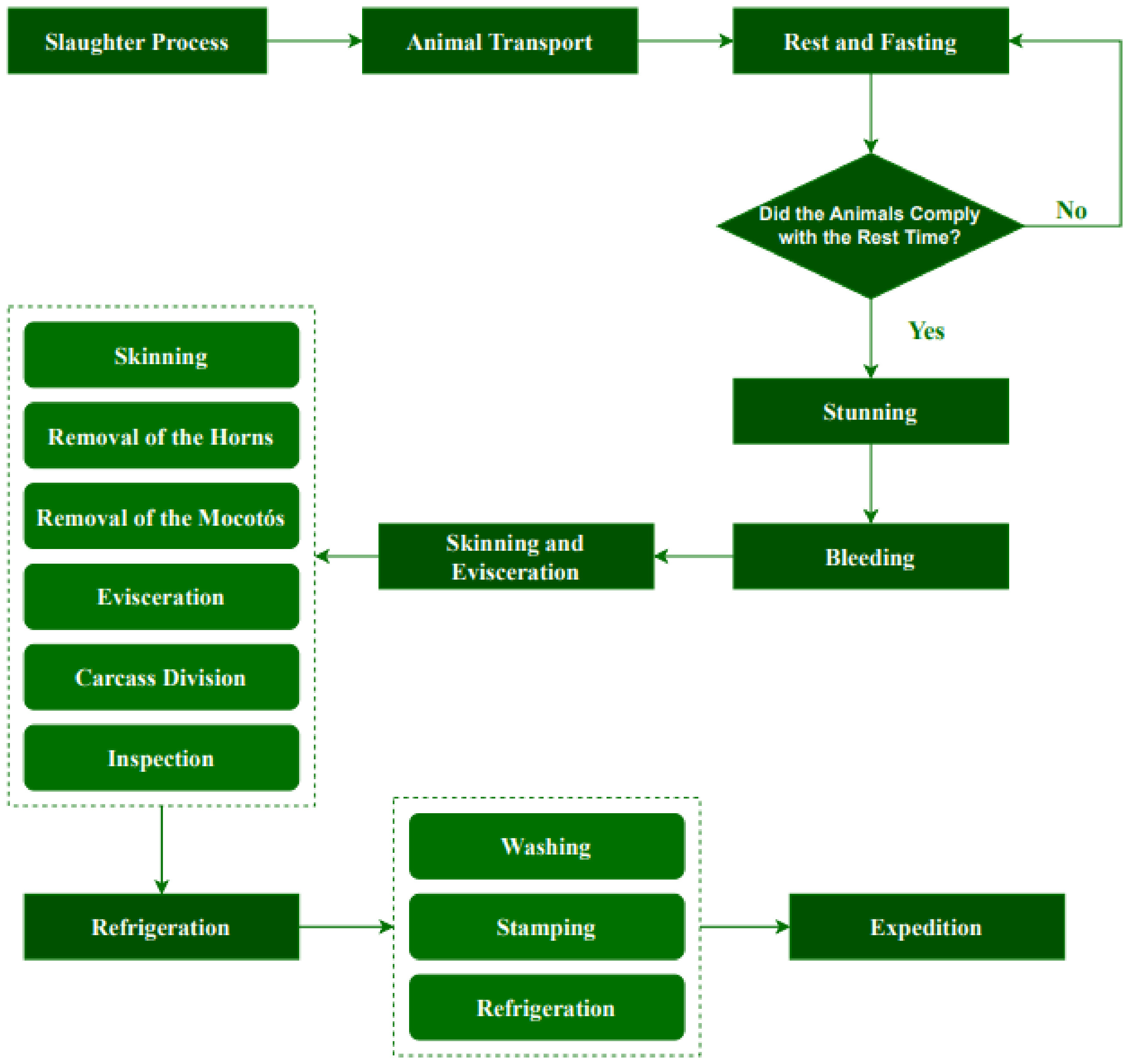
The animal slaughter process, in accordance with MAPA and the National Health Surveillance Agency (ANVISA), begins with transportation conducted to minimise stress and prevent bruising that may affect meat quality. The main steps are:
-
Transportation of Animals: Animals are transported in appropriate trucks with partitions to prevent injuries. Handling must be careful to avoid stress or bruises that could affect meat quality. Trucks must be in good condition, with adequate ventilation and sufficient space;
-
Rest and Fasting: Upon arrival at the slaughterhouse, animals remain in rest areas without solid food for approximately 12 to 24 hours, with access to water. This process reduces the risk of contamination during slaughter and facilitates handling;
-
Stunning: This mandatory step follows MAPA and ANVISA standards to ensure humane slaughter. Stunning may be performed using mechanical, electrical, or gas methods, depending on the species and the slaughterhouse's structure. The objective is to ensure unconsciousness before slaughter, reducing suffering and improving meat quality;
-
Bleeding: After stunning, bleeding is carried out rapidly, usually within 1 minute. The hind legs suspend the animal, and incisions are made in the carotid arteries to ensure complete blood flow. Proper bleeding is essential to prevent contamination and improve meat conservation;
-
Skinning and Evisceration: The hide is removed using specific machines, followed by the removal of horns and mocotós. Internal organs are carefully extracted to avoid contamination and separated for inspection. After post-mortem inspection, a veterinarian evaluates the carcass and organs;
-
Refrigeration and Preparation for Shipment: After carcass division, washing is performed to remove residues, followed by stamping with the inspection seal. The meat is stored in refrigerated chambers until temperatures below 7 °C are reached, ensuring quality and preventing bacterial proliferation before distribution.
To better understand, the flowchart in Figure 1 illustrates the slaughter process following sanitary standards, from transportation to the final product.
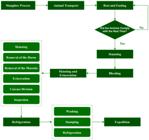
Care in all phases, from transportation onward, is essential to ensure the final quality of the meat. If the transport is poorly executed, it can compromise the entire subsequent process, resulting in financial losses and negative impacts on the safety of the final product.
2.4. Multicriteria decision support
Making decisions is a constant activity in organisations and is fundamental to their functioning and success, occurring at all organisational levels, from top management to operational teams (Fontes et al., 2021). According to Diniz et al. (2024a), deciding corresponds to the “process of gathering information, attributing importance to it, seeking possible alternative solutions, and choosing among the alternatives”. Decision-making is considered one of the most important executive activities and occurs whenever there is a problem with multiple alternative solutions. Even when the solution involves a single action, there are alternatives to taking or not taking that action (Morelli et al., 2022).
In the decision-making process, choosing one action implies considering it more desirable than the others available. This choice is guided by a set of relevant criteria that serve as standards for judging the available alternatives (Medeiros et al., 2025). In this context, it is essential to understand that multicriteria decision support methods do not seek an optimal solution, as in traditional operational research techniques. Optimisation is not applicable, since it is not possible to generate solutions that are superior from all points of view simultaneously. Instead, AMD aims to support decision-making by recommending alternatives aligned with the decision-maker's preferences (Causil & Morais, 2023; Diniz et al., 2025).
2.5. MPSI method and WASPAS method
The MPSI is a multicriteria decision-making technique developed by Gligorić et al. (2022) in Serbia. It represents a method for objectively determining weight coefficients in multicriteria decision problems (Çelebi Demirarslan et al., 2024). The method is based on the traditional Preference Selection Index (PSI), from which an improved and modified version, called the MPSI Method, was developed. The MPSI Method is suitable for sorting and ranking problems and can be adapted for choice or selection problems (Torres et al., 2024). It is a monodecisor method that employs a compensatory aggregation approach, uses cardinal (quantitative) data as input, and generates criteria weights through its mathematical modelling (Wittig Vianna et al., 2026).
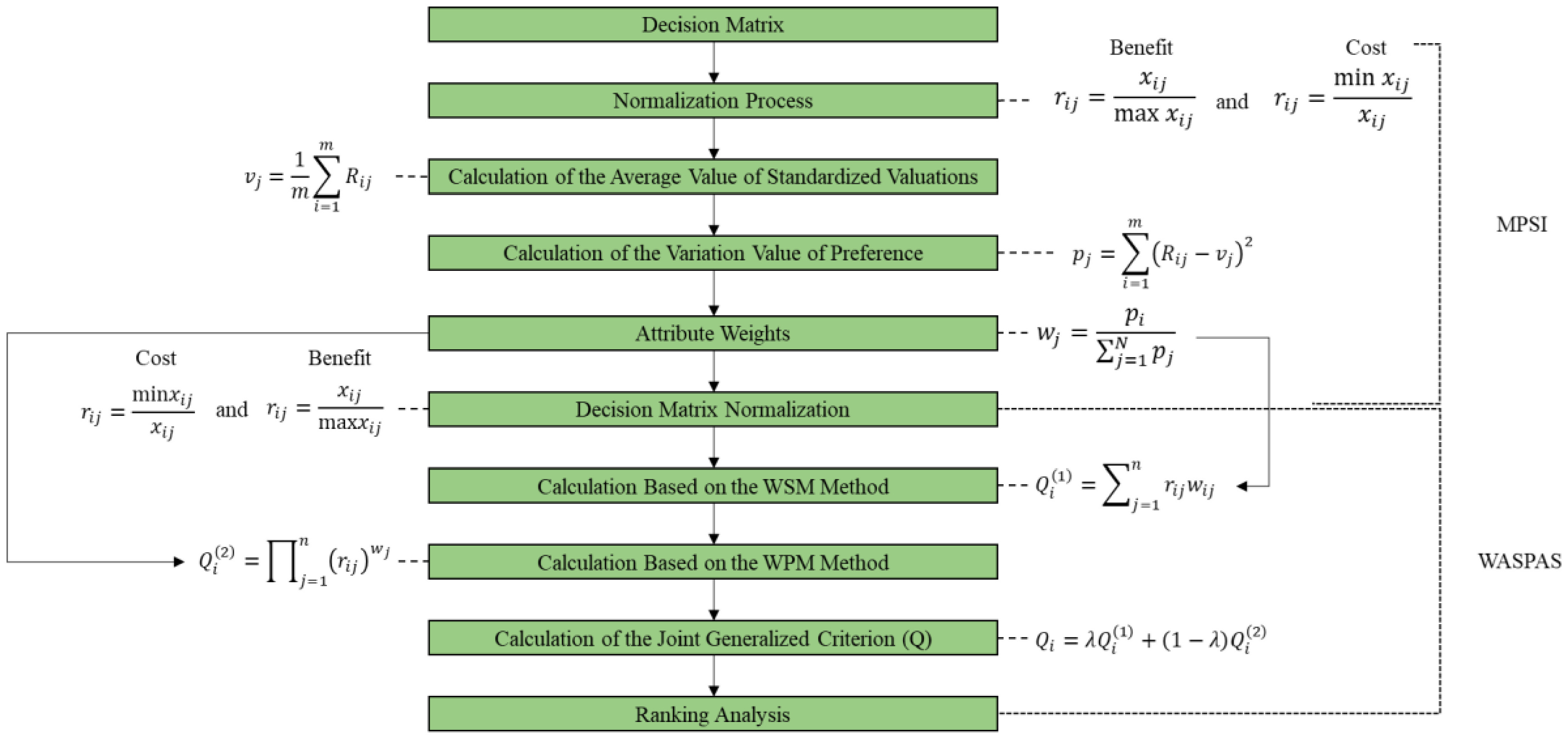
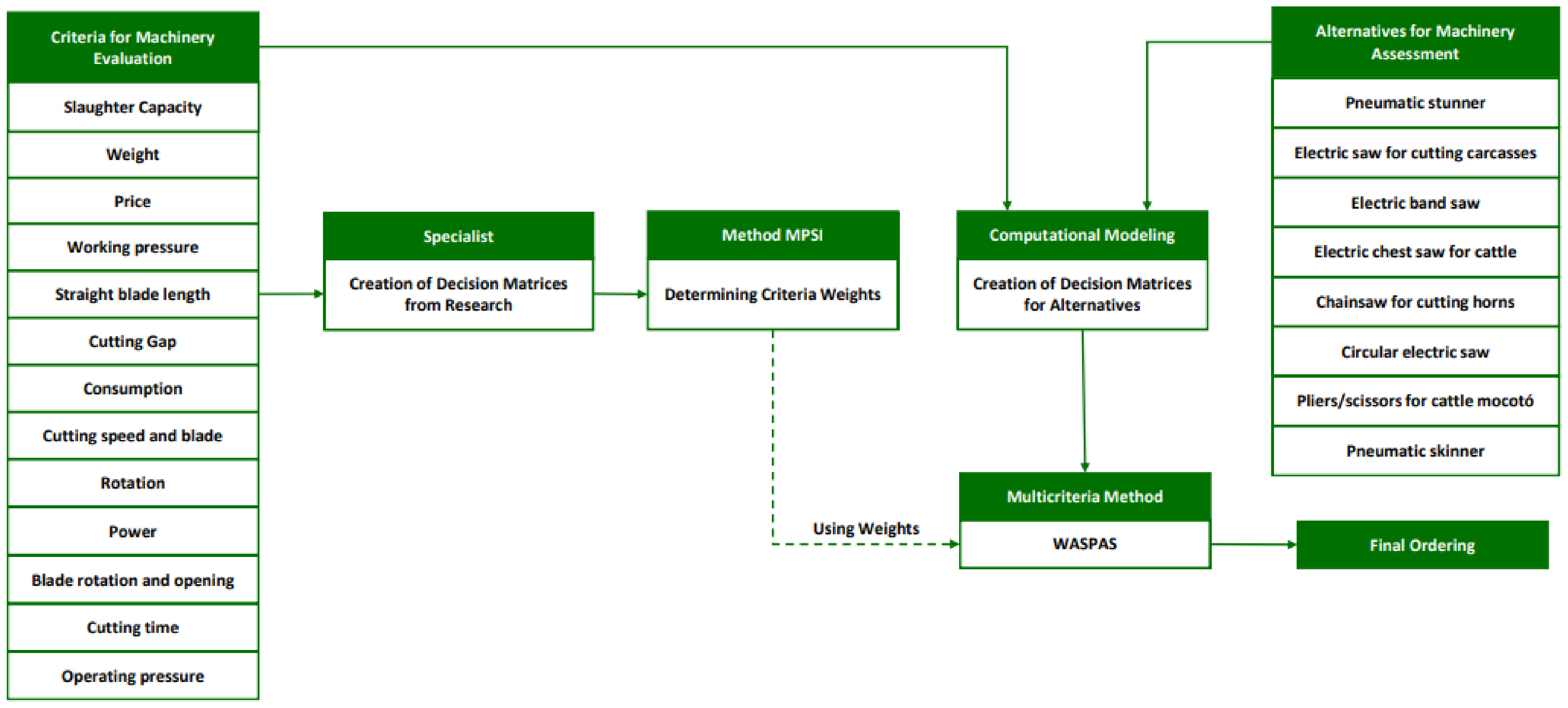
The WASPAS Method is a multicriteria decision-making technique developed by Zavadskas et al. (2012) in Lithuania. It combines the Weighted Sum Model (WSM) and the Weighted Product Model (WPM) via a lambda parameter, ranking alternatives based on multiple, often conflicting, criteria. This hybrid structure captures both additive and multiplicative characteristics of evaluations, with the λ parameter ranging from 0 to 1; λ = 0.5 is recommended (Barbara et al., 2023). The WASPAS Method addresses ordering and ranking problems and can be adapted to choice or selection contexts. It is a single-decision method that employs a compensatory aggregation system using cardinal (quantitative) data as input and does not generate criteria weights in its mathematical modelling (Moratelli et al., 2025). To better understand the methodological process, the flowchart in Figure 2 illustrates the analytical flow of the MPSI-WASPAS approach.
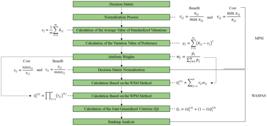
Although the MPSI method calculates criteria weights mathematically, it does not eliminate subjectivity from the decision process. The selection of criteria and the definition of alternatives still depend on the problem context and available information. However, by deriving weights directly from the variability of normalised data, the method reduces the dependence on subjective preference judgments commonly present in traditional weighting techniques.
3. Methodology
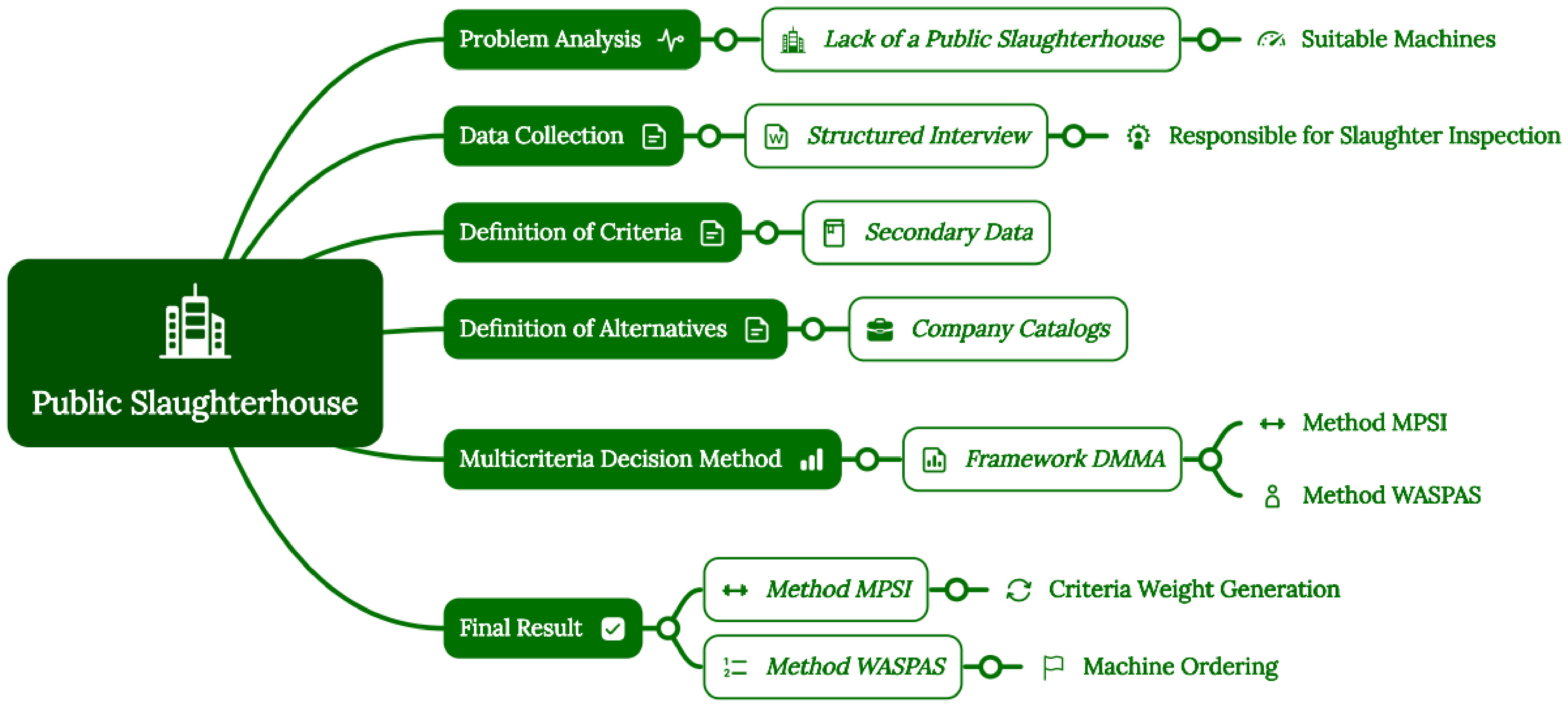
The present work consists of exploratory, descriptive, bibliographic, and field research to structure information for applying multicriteria decision methods to solve the problem, following the methodological flowchart outlined in Figure 3.
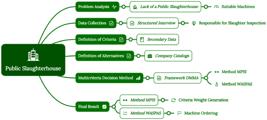
The research design integrates four complementary stages. First, the literature review was used to define the theoretical basis of machinery selection, public slaughterhouse operations and MCDM applications. Second, a structured interview with the slaughterhouse inspector supported problem structuring by identifying relevant equipment categories, validating the operational relevance of criteria and classifying the benefit/cost orientation of each criterion. Third, documentary analysis of manufacturers’ manuals, catalogues and technical sheets supplied the quantitative values used to build the decision matrices.
Finally, MCDM modelling integrated these data through MPSI and WASPAS: MPSI generated criterion weights from normalised data variability, and WASPAS transformed weighted performances into alternative rankings and sensitivity results. This sequence links contextual validation, objective technical evidence and mathematical decision modelling in a reproducible research design.
To structure the decision model, the structured interview with the slaughterhouse inspector was used exclusively to:
-
Identify the main categories of machinery involved in bovine slaughter operations;
-
Validate the practical relevance of the proposed criteria for the local operational context;
-
Confirm the feasibility of the shortlisted alternatives for the expected processing scale of the future Sumé public slaughterhouse; and
-
Classify each criterion according to benefit or cost orientation. No numerical performance values were assigned by the expert.
All quantitative values used in the decision matrices were extracted from manufacturers’ manuals, catalogues, and technical sheets. Thus, the expert contributed contextual validation, whereas the decision matrices themselves were built from secondary technical data.
The criteria and their MAX/MIN orientation were defined through triangulation among indexed literature on machine and equipment selection, technical documentation supplied by manufacturers and the documented judgement of the slaughterhouse inspector. Prior studies in production and industrial equipment selection show that adequate machine choice should consider more than acquisition cost, including productivity, capacity, energy consumption, pressure/power requirements, operational performance, reliability, maintenance, safety, flexibility and installation or space restrictions (Tuzkaya et al., 2010; Taylan et al., 2016; Li et al., 2020).
In this study, only criteria with standardised numerical values available across comparable alternatives were retained, because MPSI and WASPAS require quantitative inputs. Therefore, the selected criteria operate as measurable proxies for four dimensions of the decision problem: economic feasibility, operational adequacy, mechanical compatibility and expected processing efficiency (Sitorus & Brito-Parada, 2020; Hagag et al., 2023).
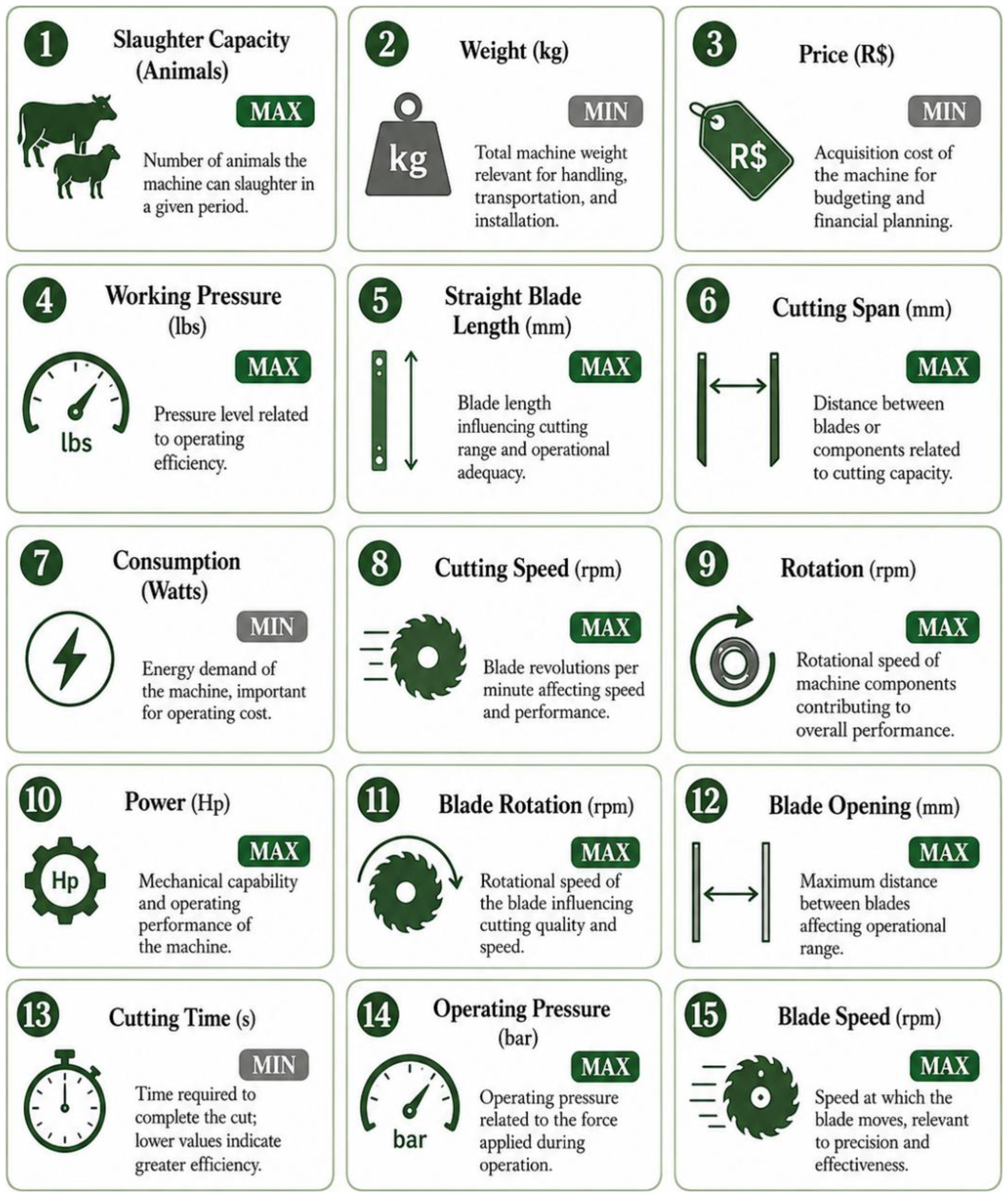
The MAX/MIN orientation followed the functional interpretation of each technical attribute in the slaughterhouse context. Price, weight, energy consumption and cutting time were treated as cost criteria (MIN), because lower values reduce acquisition burden, installation and handling effort, operating cost or cycle time. Slaughter capacity, working pressure, straight blade length, cutting span, cutting speed, rotation, power, blade rotation, blade opening, operating pressure and blade speed were treated as benefit criteria (MAX), because higher values indicate greater processing capacity, cutting range, mechanical capability or operational performance within the manufacturer-recommended operating conditions.
This classification was validated by the inspector and is consistent with equipment-selection literature, which recommends aligning criteria orientation with the expected contribution of each attribute to productivity, cost and operational performance. Fifteen criteria were identified to compose the analysis of alternatives for the different types of machinery across all the evaluated scenarios, as shown in Figure 4.

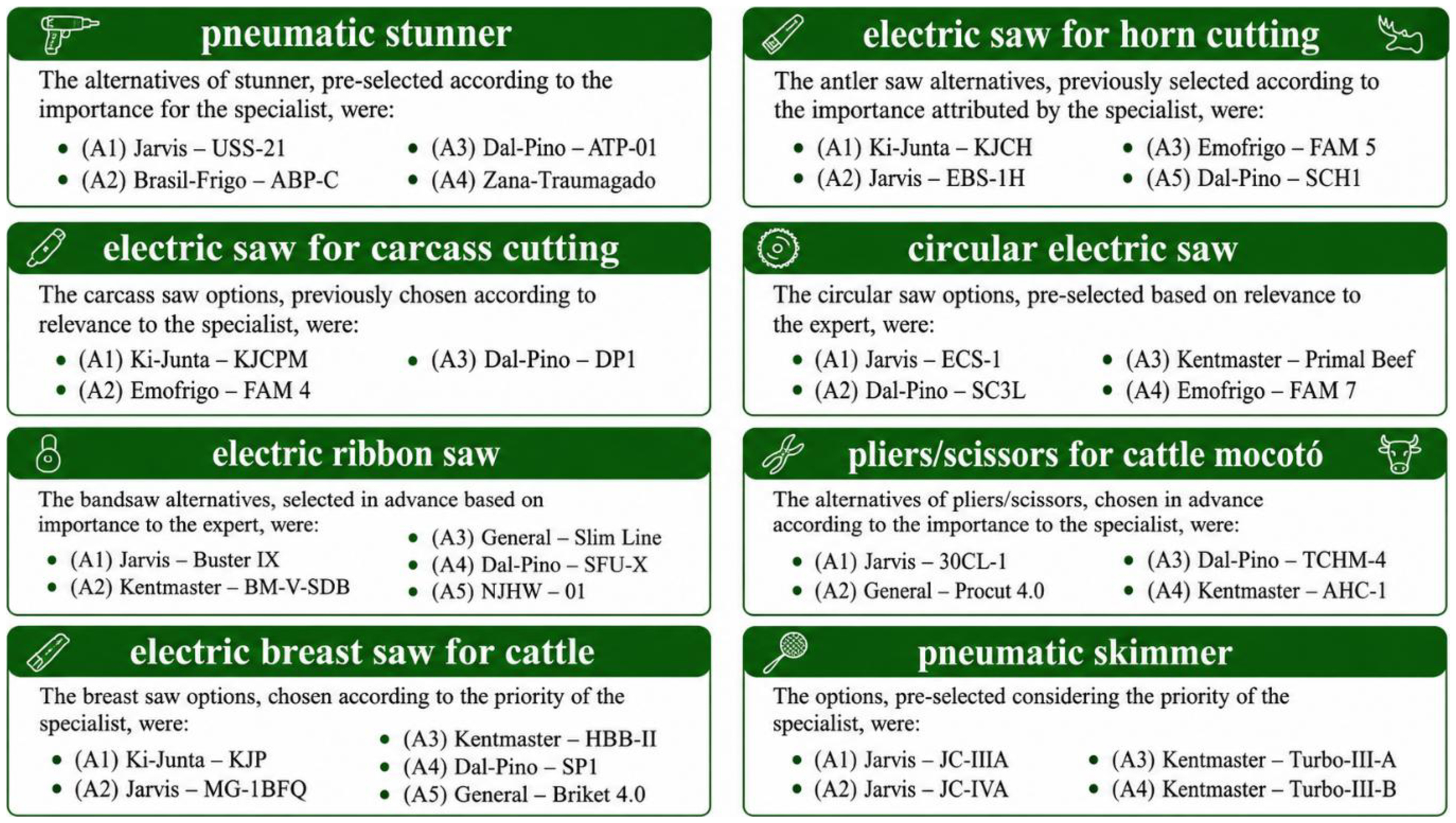
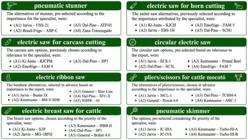
The alternatives considered in this study were selected based on their availability in the commercial market and the existence of complete technical specifications required for the quantitative modelling. The screening process considered three main conditions: availability of technical data compatible with the selected criteria, market presence and use in slaughterhouse operations, and compatibility with the operational scale expected for the Sumé public slaughterhouse. Therefore, the alternatives analysed represent well-known equipment brands in the slaughterhouse sector with publicly available technical specifications. The alternatives indicated to compose the machinery options for this work are detailed in Figure 5.
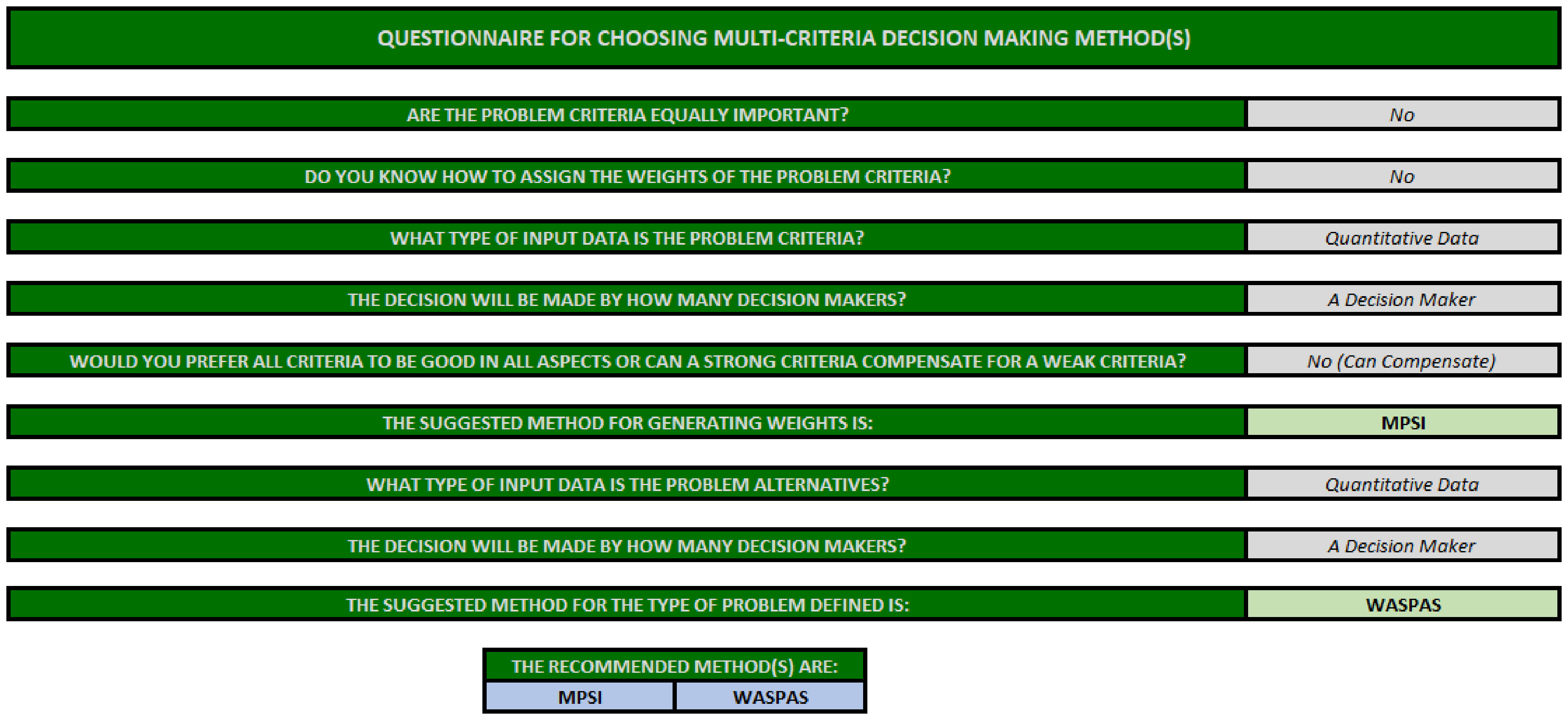
The Decision-Making Methods Assistant Framework proposed by Diniz et al. (2024b) was used to select the multicriteria decision-making methods applied in this study. Cardinal inputs, a monodecisor structure characterised the problem, and the use of a compensatory method, as illustrated in Figure 6. The application of these methods enabled the ordering of alternatives using WASPAS and the generation of criterion weights through the MPSI method based on the dispersion of quantitative data in the decision matrices.

The use of a single slaughterhouse inspector is justified because the expert acted as a key informant for contextual validation rather than as the source of the numerical performance scores. The selected specialist is responsible for supervising slaughter operations and has practical experience with animal processing routines, equipment suitability, sanitary procedures and local operational constraints. In expert elicitation and case-based MCDM applications, the relevance of expert input depends on domain knowledge, role clarity and transparent documentation of the elicitation process.
In this study, the inspector’s role was deliberately restricted to identifying machinery categories, validating the empirical relevance of criteria, confirming the feasibility of alternatives and defining MAX/MIN orientation. Since the numerical decision matrices were populated with data from manufacturers’ manuals, catalogues and technical sheets, the model reduces the influence of individual subjective judgment while preserving necessary contextual validity (O’Hagan, 2019; Li et al., 2020).
The MPSI method was selected for this application because it generates criterion weights from the dispersion structure of normalised quantitative data, which reduces dependence on direct preference-based weighting. However, this does not mean that subjectivity is eliminated from the overall decision process. Subjective elements remain in the definition of the decision context, the selection of alternatives and criteria, and the classification of criteria as benefit or cost. Therefore, in the present study, MPSI is interpreted as a method that reduces subjectivity in the weighting stage once the decision matrix is defined, rather than a method that removes subjectivity entirely.
The WASPAS Method was chosen for its mathematical approach, which provides greater precision in the ordering of alternatives. Its hybrid structure allows adjustment of the weights of the sum and product components, increasing model robustness and result accuracy. The application of these methods enabled the ordering of alternatives using WASPAS and the generation of criterion weights through the MPSI method based on the dispersion of quantitative data in the decision matrices, as illustrated in Figure 7.
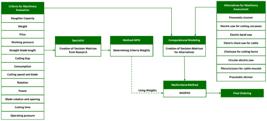
The integration between the MPSI and WASPAS methods follows a sequential procedure. First, the decision matrix containing the alternatives and criteria is constructed using quantitative technical data. Second, the MPSI method is applied to determine the objective weights of the criteria based on the variation of normalised values. Third, these weights are used as input parameters in the WASPAS method, which combines additive and multiplicative aggregation to rank the alternatives. This sequential structure allows the separation between weight generation and alternative ranking, improving the transparency and reproducibility of the decision model.
4. Problem description
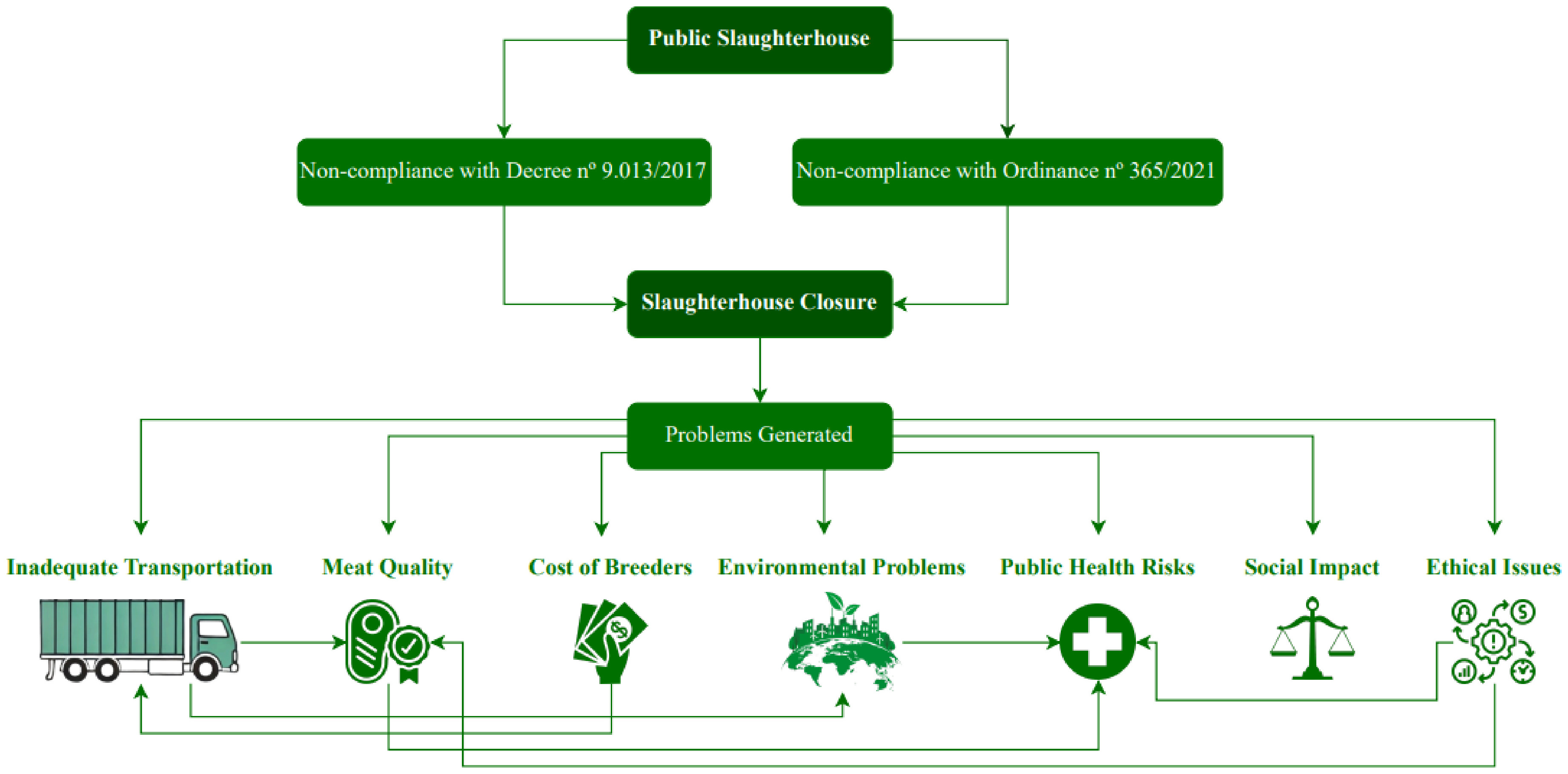
The problem arose from non-compliance with Decree nº. 9.013/2017 and Law nº. 8.171, which establish standards for product inspection to ensure safety and hygiene, as well as Ordinance nº. 365/2021, which defines guidelines for pre-slaughter management and humane slaughter. As a result, the public slaughterhouse in the municipality of Sumé, in Cariri Paraíba, was closed by health surveillance authorities and will resume operations only after the construction of a new facility in accordance with the guidelines established by the competent bodies. Some of the main problems include:
-
Transporting animals: Animals must be transported to other regions for slaughter, increasing transportation time and costs and causing stress and fatigue;
-
Meat quality: Prolonged transportation can affect meat quality due to stress and weight loss, impacting taste and texture;
-
Costs for breeders: Transportation and slaughter in other municipalities increase costs for breeders, reducing profit margins and making the activity less profitable;
-
Environmental problems: Transporting animals to distant regions increases the emission of polluting gases, as transport trucks contribute to greenhouse gas emissions;
-
Public health risks: The absence of a local slaughterhouse may lead to an increase in clandestine slaughter, posing public health risks due to the lack of inspection and potential contamination by pathogens or toxins;
-
Social impact: The lack of an adequate slaughterhouse directly affects the local economy and employment related to livestock activities;
-
Ethical issues: Slaughter practices that do not meet animal welfare standards can result in unnecessary suffering.
The flowchart in Figure 8 demonstrates that all these factors are interconnected, forming a cycle in which the closure of the public slaughterhouse has broad repercussions. From the economic impact on breeders to environmental problems and risks to public health, these elements intertwine and exacerbate one another, generating significant social and ethical impacts.
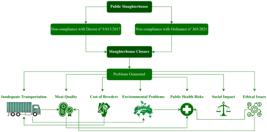
The closure of the public slaughterhouse in Sumé generated interrelated consequences affecting the meat production chain. Increased transportation to other regions raises costs for breeders, increases animal stress, compromises meat quality, and contributes to greater transport-related pollution.
These conditions also increase public health risks, as clandestine slaughter may become an alternative to reduce costs. Without proper inspection, meat may be contaminated, posing risks to the population. The absence of a local slaughterhouse also has social impacts, including job losses.
Ethical issues related to animal welfare and consumer rights are evident, as inadequate transport and slaughter subject animals to inhumane conditions and expose consumers to lower-quality food. The lack of modern technologies underscores the need to improve to meet sanitary standards and ensure ethical conditions.
Compliance with current legislation is essential for reopening and proper operation of the public slaughterhouse in Sumé, ensuring health safety, meat quality, and animal welfare. In this context, the absence of a public slaughterhouse creates significant problems for both breeders and consumers, and the MPSI and WASPAS methods were applied to support decision-making.
5. Results and discussion
5.1. Problem modelling in the MPSI method
In this section, the problem will be modelled using the MPSI Method. This step's objective is to structure the problem for generating the criteria weights, ensuring that all relevant criteria are considered and evaluated appropriately.
Table 1 presents the decision matrix for pneumatic stunners, constructed from quantitative technical data extracted from manufacturers’ manuals, catalogues, and technical sheets after validation of criterion relevance and benefit/cost orientation by the slaughterhouse inspector. The criteria considered for this equipment category were Slaughter Capacity (Animals), Weight (kg), Price (R$), and Working Pressure (lbs).
The normalised matrix was then generated, as shown in Table 2.
From the normalisation matrix, the average normalised evaluation of the criteria is obtained. After obtaining the result of (vj), the next step was to calculate the preference variation value (pj). At the end of the method's application, the criterion weights (wj) were calculated, as shown in Table 3.
According to the result obtained with the MPSI Method, the criterion with the highest weight was Weight (Kg) with 0.6405 (64.05%), followed by the criteria Price (R$) with 0.2060 (20.60%), Work Pressure (lbs) with 0.0965 (9.65%) and Slaughter Capacity (animals) with 0.0570 (5.70%).
The same step-by-step process was carried out for the other machines. The results of the MPSI Method indicated that the criterion with the highest weight for the electric saw for carcass cutting was the Price (R$), with 0.4748 (47.48%), followed by Cutting Span (mm), with 0.2097 (20.97%), Weight (Kg), with 0.1694 (16.94%), and Straight Blade Length, with 0.1462 (14.62%), as illustrated in Table 4.
According to the results for the electric band saw, the criterion with the highest weight was Consumption (watts) with 0.4512 (45.12%), followed by Weight (Kg) with 0.3996 (39.96%), Price (R$) with 0.1313 (13.13%), and Blade Length (mm) with 0.0179 (1.79%), as shown in Table 5.
The results for the electric breast saw for cattle revealed that the highest-weighted criterion was Price (R$), with 0.5214 (52.14%), followed by Weight (kg), with 0.2199 (21.99%), Cutting Speed (rpm), with 0.2168 (21.68%), and Blade Length (mm), with 0.0419 (4.19%), as shown in Table 6.
The results for the electric saw for cutting horns showed that the criterion with the highest weight was Price (R$) with 0.7039 (70.39%), followed by Weight (Kg) with 0.2381 (23.81%), Rotation (rpm) with 0.0580 (5.80%), and Slaughter Capacity (animals) with 0.000 (0.00%), as shown in Table 7.
According to the results of the MPSI Method for the circular electric saw, the highest-weighted criterion was Weight (kg), with 0.5127 (51.27%), followed by Power, with 0.2908 (29.08%), Price (R$), with 0.1403 (14.03%), and Blade Rotation (rpm), with 0.0562 (5.62%), as shown in Table 8.
The results for the Pliers/Scissors for Cattle Mocotó indicated that the criterion of highest weight was Weight (Kg) with 0.5186 (51.86%), followed by Blade Opening with 0.2373 (23.73%), Cutting Time with 0.1266 (12.66%), and Price (R$) with 0.1175 (11.75%), as shown in Table 9.
Finally, for the pneumatic skinner, the MPSI Method results revealed that the criterion with the highest weight was Operating Pressure (bar), with 0.6149 (61.49%), followed by Blade Speed (rpm), with 0.2279 (22.79%), Price (R$), with 0.0931 (9.31%), and Weight (kg), with 0.0641 (6.41%), as shown in Table 10.
5.2. Problem modelling in the WASPAS method
In this section, the problem will be modelled using the WASPAS Method. The objective of this stage is to structure the problem clearly and systematically, ensuring that all alternatives are evaluated in detail based on the weights generated by the MPSI Method for decision-making.
The variation of the λ parameter between 0 and 1 serves as a sensitivity analysis of the WASPAS aggregation mechanism, enabling verification of ranking stability under different aggregation conditions.
Thus, based on Table 1, we proceeded with normalising this matrix according to the principles of the WASPAS Method. As the problem had monotonic criteria for cost and benefit, the normalised matrix is shown in Table 11.
Given the decision matrix and the weight for each criterion obtained through the MPSI method (Table 3), as well as the normalised decision matrix, we present Tables 12 and 13, corresponding to the WSM and WPM portions of the method.
Finally, the joint generalised criterion (Q) for determining the total relative importance of each piece of equipment varies λ between 0 and 1. Table 14 shows the result.
As can be seen, even when λ varied from 0 to 1, the ranking remained unchanged, with Dal-Pino–ATP-01 in first place, followed by Zana-Traumagado, Jarvis–USSS-22A, and Brasil Frigo–ABP-C in last place.
The same procedure was applied to the other machines. Table 15 presents the results for electric saws for carcass cutting, showing that, even though λ varied between 0, 0.25, 0.5, 0.75, and 1, the ordering remained the same: Ki-Junta-KJCPM was in first place, followed by Emofrigo-FAM 4, and lastly Dal-Pino-DP1.
For the electric band saw, as shown in Table 16, Kentmaster–BM-V-SDB ranked first for all values of λ, and Dal-Pino–SFU-X consistently ranked second. The remaining positions changed according to the λ value. For λ = 1, the ranking was Kentmaster–BM-V-SDB > Dal-Pino–SFU-X > General–Slim Line > NJHW–01 > Jarvis–Buster IX. For λ = 0.50, the ranking was Kentmaster–BM-V-SDB > Dal-Pino–SFU-X > Jarvis–Buster IX > General–Slim Line > NJHW–01. For λ = 0 and 0.25, the ranking was Kentmaster–BM-V-SDB > Dal-Pino–SFU-X > Jarvis–Buster IX > NJHW–01 > General–Slim Line.
While Table 17 shows the result for the bovine chainsaw, it is observed that, even with the variation of λ between 0, 0.25, 0.5, 0.75, and 1, the order remained unchanged: Ki-Junta–KJP led, followed by Jarvis–MG-1BFQ, Kentmaster–HBB-II, Dal-Pino–SP1, and, finally, General-Brisket 4.0.
For the electric saw for horn cutting, with the results presented in Table 18, when λ is between 0.75 and 1, the ranking of the alternatives is as follows: Ki-Junta–KJCH > Jarvis–EBS-1H 2 > Emofrigo–FAM 5 > Dal-Pino–SCH1. However, for λ equal to 0.5, the ranking was presented as follows: Ki-Junta–KJCH > Emofrigo–FAM 5 > Jarvis–EBS-1H 2 > Dal-Pino–SCH1. And for λ between 0 and 0.25, the ranking was in this sequence: Ki-Junta–KJCH > Emofrigo–FAM 5 > Dal-Pino–SCH1 > Jarvis–EBS-1H 2.
The equipment ranking result can be changed depending on the decision-maker's choice to consider the highest or lowest values of λ. However, it was observed that for any value of λ, the Ki-Junta-KJCH produced the best results, making it the most favourable option among the alternatives.
Table 19 presents the results for the circular chainsaw, where even with the variation of λ between 0, 0.25, 0.5, 0.75, and 1, the ordering remained the same: Kentmaster–Primal Beef in the first, followed by Dal-Pino–SC3L, Jarvis–ECS-1, and Emofrigo–FAM 7 in last.
Table 20 shows the results for the pliers/scissors for cattle mocotó; it is observed that even varying λ between 0, 0.25, 0.5, 0.75, and 1, the ordering did not change: Jarvis–30CL-1 led, followed by Kentmaster–AHC-1, Dal-Pino–TCHM-4, and General–Product 4.0 in last.
Finally, Table 21 presents the results for the pneumatic skinner. Even varying λ between 0 and 1, the order of the results did not change: Kentmaster-Turbo-III-A was in first place, followed by Jarvis-JC-IIIA, Jarvis-JC-IVA, and Kentmaster-Turbo-III-B in last place.
5.3. Favourable machinery set
Analysing the results obtained in Tables 14 to 21, it is observed that the Dal-Pino–ATP-01, Ki-Junta–KJCPM, Kentmaster–BM-V-SDB, Ki-Junta–KJP, Ki-Junta–KJCH, Kentmaster–Primal Beef, Jarvis–30CL-1, and Kentmaster–Turbo-III-A achieved the best rankings because they performed well in the most influential criteria of their respective equipment categories. These dominant criteria varied across categories and included, depending on the case, weight, price, energy consumption, operating pressure, blade opening, and cutting performance. Table 22 presents the most favourable set of machinery after applying the methods.
Dal-Pino–ATP-01 achieved the best overall performance in the WASPAS ranking, with scores ranging from 0.9657 to 0.9688. Its performance was mainly driven by the weight criterion (0.6405), followed by price (0.2060), highlighting its competitiveness in terms of low weight and cost.
Ki-Junta–KJCPM showed the best performance among saws, with scores ranging from 0.9106 to 0.9178 across λ values. The equipment stood out primarily in price (0.4748) and weight (0.1694), indicating strong performance due to low cost and reduced weight.
Kentmaster–BM-V-SDB achieved high performance, with scores ranging from 0.9447 to 0.9463. The main contributing criterion was energy consumption (0.4512), followed by weight (0.3996), making it an efficient option due to low consumption and reduced weight.
The Ki-Junta–KJP bovine breast saw obtained scores ranging from 0.8221 to 0.8415. Its performance was mainly influenced by price (0.5214) and weight (0.2199), demonstrating a balance between low cost and reduced weight.
The Ki-Junta–KJCH horn-cutting saw achieved high performance, with scores ranging from 0.9451 to 0.9492. The dominant criteria were price (0.7039) and weight (0.2381), indicating an excellent cost-benefit ratio.
The Kentmaster–Primal Beef circular electric saw showed scores between 0.8647 and 0.8774. Weight (0.5127) and Power (0.2908) were the most influential criteria, reflecting a balance between reduced weight and operational power requirements.
Jarvis–30CL-1 bovine mocotó pliers achieved scores ranging from 0.9178 to 0.9236. Performance was mainly driven by Weight (0.5186) and Blade Opening (0.2373), indicating an advantageous balance between reduced mass and operational cutting capacity.
Finally, the pneumatic skinner Kentmaster–Turbo-III-A achieved the highest performance, with scores ranging from 0.9692 to 0.9697. Operating pressure (0.6149) and blade speed (0.2279) were the dominant criteria, indicating high operational efficiency.
From an operational perspective, the selected equipment also presents advantages in terms of cost and operational performance. For example, machines with lower weight and energy consumption may reduce installation and operating costs, while higher operating pressure and blade speed can improve processing efficiency and throughput. These characteristics are particularly relevant for the future operation of the Sumé slaughterhouse, where cost control, operational reliability, and compliance with sanitary standards are essential. The equipment analysed corresponds to widely used models in the slaughterhouse industry and meets typical technical specifications used in commercial slaughter operations.
6. Final considerations
This study compared and selected slaughterhouse machinery using the MPSI and WASPAS multicriteria decision-making methods. The analysis considered technical and economic criteria, including weight, price, energy consumption, operating pressure, cutting capacity, and performance stability under different sensitivity scenarios. The methods proved effective in structuring the decision problem, generating criteria weights, and producing robust rankings for different types of equipment used in the slaughter process.
The results indicated consistent leadership of specific alternatives within each equipment category. Dal-Pino–ATP-01 stood out among stunning devices for its superior performance in terms of weight and price, while Ki-Junta–KJCPM and Kentmaster–BM-V-SDB achieved the best results among cutting and electric band saws, respectively, driven by favourable cost, energy consumption, and weight. For electric breast saws and circular saws, Ki-Junta–KJP and Kentmaster–Primal Beef ranked highest, primarily influenced by economic criteria and operational efficiency.
Sensitivity analysis confirmed the rankings' robustness, with only minor variations in the second-place positions across values of λ. These variations reflected shifts in the relative importance of economic and technical criteria, underscoring the importance of flexibility in decision-making. Even under different weighting scenarios, the top-ranked alternatives consistently demonstrated balanced performance across the most influential criteria.
Despite the useful results obtained, some limitations should be acknowledged. The study relied on technical data from manufacturers and the consultation of a single operational specialist. Future studies may expand the analysis by including additional stakeholders, such as veterinarians, slaughterhouse managers, and equipment suppliers, and by incorporating additional criteria related to durability, maintenance requirements, and environmental impacts. Furthermore, the methodological framework may be applied to other slaughterhouse contexts or agro-industrial facilities to compare decision outcomes across regions.
Overall, the findings reinforce the importance of appropriate machinery selection for improving operational efficiency, supporting cost control, and guiding preliminary technical screening in the design of the future public slaughterhouse in Sumé-PB. The present study specifically evaluates the technical and economic attributes operationalised in the decision model and therefore should not be interpreted as a direct assessment of sanitary compliance, animal welfare, or environmental sustainability. These dimensions remain relevant to the broader decision context and should be incorporated in future studies through additional criteria and stakeholders.
Data availability
Research data is available in the body of the article.
-
How to cite this article:
Diniz, B. P., Pereira, D. A. M., & Santos, M. (2026). Selection to machinery using MPSI-WASPAS methods: a case study in the public slaughterhouse of Sumé-PB. Production, 36, e20260011. https://doi.org/10.14488/1980-5411.20260011.
-
Financial Support
This research did not receive external funding or support.
-
Ethical Statement
The research was conducted using technical data obtained from manufacturers’ manuals, catalogues, and technical sheets, with contextual validation provided by a slaughterhouse inspector. No sensitive personal data are disclosed in the manuscript, and the authors declare that the necessary consent/authorization for the technical validation was properly obtained and archived.
References
-
Alécio, J. C., Neuenfeldt Júnior, A., Siluk, J., Mendes, A. A., Oliveira, B. R. D., & Mello, M. (2021). The cooperation between suppliers and an agro-industrial slaughterhouse: a measurement tool. Production, 31, e20200069. https://doi.org/10.1590/0103-6513.20200069
» https://doi.org/10.1590/0103-6513.20200069 -
Barbara, F., Santos, M., Silva, A. S., Moreira, M. A. L., Fávero, L. P., Pereira Junior, E. L., Carvalho, W. A., Muradas, F. M., Pereira, D. A. M., & Portella, A. G. (2023). Interactive internet framework proposal of WASPAS method: a computational contribution for decision-making analysis. Mathematics, 11(15), 3375. https://doi.org/10.3390/math11153375
» https://doi.org/10.3390/math11153375 - Brasil. (2017). Regulamenta a Lei nº 1.283, de 18 de dezembro de 1950, e a Lei nº 7.889, de 23 de novembro de 1989, que dispõem sobre a inspeção industrial e sanitária de produtos de origem animal (Decreto nº 9.013, de 29 de março de 2017). Diário Oficial da República Federativa do Brasil.
- Brasil, Ministério da Agricultura e Pecuária. (2025). Agronegócio brasileiro fecha 2025 com recorde em exportações de US$ 169 bilhões e superávit de US$ 149,07 bilhões. Brasília.
-
Cardoso, E. V., & Gimenes, R. M. T. (2024). Systematic review on sustainable intensification strategies in Brazilian beef production. Revista de Gestão Social e Ambiental, 18(10), e07419. https://doi.org/10.24857/rgsa.v18n10-302
» https://doi.org/10.24857/rgsa.v18n10-302 -
Causil, O. M. M., & Morais, D. C. (2023). Multicriteria negotiation model for selecting sustainable suppliers’ problem in the agribusiness. Production, 33, e20220090. https://doi.org/10.1590/0103-6513.20220090
» https://doi.org/10.1590/0103-6513.20220090 -
Çelebi Demirarslan, P., Sönmez Çakır, F., & Akansel, I. (2024). Ranking the quality of life indexes by years in Asian countries using multi-criteria decision-making methods. Asia-Pacific Journal of Regional Science, 8(3), 911-942. https://doi.org/10.1007/s41685-024-00350-w
» https://doi.org/10.1007/s41685-024-00350-w -
Diniz, B. P., Moura Pereira, D. A., Moreira, M. A. L., Araujo Costa, A. P., Araujo Costa, I. P., Farias, D. O., Silva, A. M., Pereira, F. R., Simões Gomes, C. F., & Santos, M. (2025). Selection of humidity and temperature sensor using the AHP-TOPSIS-2N hybrid multi-criteria decision method for data collection in soybean and corn plantation. Procedia Computer Science, 266, 86-93. https://doi.org/10.1016/j.procs.2025.08.011
» https://doi.org/10.1016/j.procs.2025.08.011 -
Diniz, B. P., Moura Pereira, D. A., Santos, M., Gomes, C. F. S., Pereira, F. R. R., Silva, A. M., Boa Morte, J. A., Silva, M. J. S., & Araújo, J. M. B. (2024a). Choice of an irrigation method for maize cultivation in a local productive arrangement using the SAPEVO-M method. Procedia Computer Science, 242, 552-559. https://doi.org/10.1016/j.procs.2024.08.104
» https://doi.org/10.1016/j.procs.2024.08.104 - Diniz, B. P., Pereira, D. A. M., Santos, M., Gomes, C. F. S., & Moreira, M. A. (2024b, August 20). Decision-making methods assistant (DMMA) em VBA (v.1). Brazilian patent BR 512024002941-9.
-
Fontes, A. V., João, I. M., & Silva, J. M. (2021). Multicriteria evaluation of biomass residues in Portugal to second generation bioethanol production. Production, 31, e20210060. https://doi.org/10.1590/0103-6513.20210060
» https://doi.org/10.1590/0103-6513.20210060 -
Franco, M. R. (2013). Caracterização do transporte rodoviário de bovinos de corte e efeitos no bem-estar animal e na qualidade as carcaças (Dissertação de mestrado). Faculdade de Ciências Agrárias e Veterinárias, Universidade Estadual Paulista, Jaboticabal. Retrieved in 2026, January 26, from http://hdl.handle.net/11449/96520
» http://hdl.handle.net/11449/96520 -
Frank, A. G., Souza, D. V., Echeveste, M. E., & Ribeiro, J. L. D. (2011). Sistemática para avaliação multicriterial de investimentos no desenvolvimento de produtos. Production, 21(4), 570-582. https://doi.org/10.1590/S0103-65132011005000060
» https://doi.org/10.1590/S0103-65132011005000060 -
Gligorić, M., Gligorić, Z., Lutovac, S., Negovanović, M., & Langović, Z. (2022). Novel hybrid MPSI–MARA decision-making model for support system selection in an underground mine. Systems, 10(6), 248. https://doi.org/10.3390/systems10060248
» https://doi.org/10.3390/systems10060248 -
Grandin, T. (2010). Auditing animal welfare at slaughter plants. Meat Science, 86(1), 56-65. https://doi.org/10.1016/j.meatsci.2010.04.022 PMid:20599326.
» https://doi.org/10.1016/j.meatsci.2010.04.022 -
Hagag, A. M., Yousef, L. S., & Abdelmaguid, T. F. (2023). Multi-criteria decision-making for machine selection in manufacturing and construction: Recent trends. Mathematics, 11(3), 631. https://doi.org/10.3390/math11030631
» https://doi.org/10.3390/math11030631 -
Li, H., Wang, W., Fan, L., Li, Q., & Chen, X. (2020). A novel hybrid MCDM model for machine tool selection using fuzzy DEMATEL, entropy weighting and later defuzzification VIKOR. Applied Soft Computing, 91, 106207. https://doi.org/10.1016/j.asoc.2020.106207
» https://doi.org/10.1016/j.asoc.2020.106207 -
Mateos, G. G., Corrales, N. L., Talegón, G., & Aguirre, L. (2024). Pig meat production in the European Union-27: current status, challenges, and future trends. Animal Bioscience, 37(4), 755-774. https://doi.org/10.5713/ab.23.0496 PMid:38606453.
» https://doi.org/10.5713/ab.23.0496 -
Medeiros, E. D. D., Coutinho, R. M., Almeida, J. P. M., & Bouzon, M. (2025). Risk identification and structuring in Brazilian food supply chains: an ISM and MICMAC-based multicriteria approach. Production, 35, e20250049. https://doi.org/10.1590/0103-6513.20250049
» https://doi.org/10.1590/0103-6513.20250049 -
Moratelli, A. C., Alves, Y. N., Silva, J. J., Moreira, M. A., Santos, M., Gomes, C. F., Moura Pereira, D. A., & Diniz, B. P. (2025). Selection of automatic metering pumps for water treatment in a plant in the Baixada Fluminense of Rio de Janeiro using the PSI-WASPAS hybrid method. Procedia Computer Science, 266, 472-479. https://doi.org/10.1016/j.procs.2025.08.060
» https://doi.org/10.1016/j.procs.2025.08.060 -
Morelli, M., Casagrande, M., & Forte, G. (2022). Decision making: A theoretical review. Integrative Psychological & Behavioral Science, 56(3), 609-629. https://doi.org/10.1007/s12124-021-09669-x PMid:34780011.
» https://doi.org/10.1007/s12124-021-09669-x -
Nicolini, E. (2022). Built Environment and wellbeing - standards, multi-criteria evaluation methods, certifications. Sustainability (Basel), 14(8), 4754. https://doi.org/10.3390/su14084754
» https://doi.org/10.3390/su14084754 -
Njoga, E. O., Ilo, S. U., Nwobi, O. C., Onwumere-Idolor, O. S., Ajibo, F. E., Okoli, C. E., Jaja, I. F., & Oguttu, J. W. (2023). Pre-slaughter, slaughter and post-slaughter practices of slaughterhouse workers in Southeast, Nigeria: Animal welfare, meat quality, food safety and public health implications. PLoS One, 18(3), e0282418. https://doi.org/10.1371/journal.pone.0282418 PMid:36867613.
» https://doi.org/10.1371/journal.pone.0282418 -
O’Hagan, A. (2019). Expert knowledge elicitation: subjective but scientific. The American Statistician, 73(Suppl.), 69-81. https://doi.org/10.1080/00031305.2018.1518265
» https://doi.org/10.1080/00031305.2018.1518265 -
Oliveira Silva, R., Barioni, L. G., Hall, J. J., Moretti, A. C., Veloso, R. F., Alexander, P., Crespolini, M., & Moran, D. (2017). Sustainable intensification of Brazilian livestock production through optimized pasture restoration. Agricultural Systems, 153, 201-211. https://doi.org/10.1016/j.agsy.2017.02.001
» https://doi.org/10.1016/j.agsy.2017.02.001 -
Ovuru, K. F., Izah, S. C., Ogidi, O. I., Imarhiagbe, O., & Ogwu, M. C. (2023). Slaughterhouse facilities in developing nations: Sanitation and hygiene practices, microbial contaminants and sustainable management system. Food Science and Biotechnology, 33(3), 519-537. https://doi.org/10.1007/s10068-023-01406-x PMid:38274182.
» https://doi.org/10.1007/s10068-023-01406-x -
Pereira, M. D. A., Bungenstab, D. J., Euclides, V. P., Malafaia, G. C., Biscola, P. H., Menezes, G. R., Abreu, U. G. P., Laura, V. A., Nogueira, E., Mauro, R. A., Silva, M. P., Nicacio, A. C., Almeida, R. G., Gomes, R. D. C., Silva, J. C. B., & de Souza, V. F. (2024). From traditionally extensive to sustainably intensive: a review on the path to a sustainable and inclusive beef farming in Brazil. Animals, 14(16), 2340. https://doi.org/10.3390/ani14162340 PMid:39199874.
» https://doi.org/10.3390/ani14162340 -
Rudloff, B., Mensah, K., Wieck, C., Kareem, O., Montesclaros, J. M. L., Orden, D., Sonddergaard, N., & Yu, W. (2024). Geostrategic aspects of policies on food security in the light of recent global tensions: insights from seven countries. In International Agricultural Trade Research Consortium (IATRC). Copenhagen: University of Copenhagen. https://doi.org/10.22004/AG.ECON.343001
» https://doi.org/10.22004/AG.ECON.343001 -
Sahoo, S. K., & Goswami, S. S. (2023). A comprehensive review of multiple criteria decision-making (MCDM) methods: advancements, applications, and future directions.Decision Making Advances, 1(1), 25-48. https://doi.org/10.31181/dma1120237
» https://doi.org/10.31181/dma1120237 -
Sitorus, F., & Brito-Parada, P. R. (2020). Equipment selection in mineral processing-A sensitivity analysis approach for a fuzzy multiple criteria decision making model. Minerals Engineering, 150, 106261. https://doi.org/10.1016/j.mineng.2020.106261
» https://doi.org/10.1016/j.mineng.2020.106261 -
Souza, L. D., Vitorino, L., Gomes, C. F. S., & Quelhas, O. L. G. (2023). Multicriteria decision making applied to waste recycling: comparison between THOR and THOR 2 methods. Production, 33, e20220128. https://doi.org/10.1590/0103-6513.20220128
» https://doi.org/10.1590/0103-6513.20220128 -
Taylan, O., Kaya, D., & Demirbas, A. (2016). An integrated multi attribute decision model for energy efficiency processes in petrochemical industry applying fuzzy set theory. Energy Conversion and Management, 117, 501-512. https://doi.org/10.1016/j.enconman.2016.03.048
» https://doi.org/10.1016/j.enconman.2016.03.048 -
Terlouw, C., Bourguet, C., & Deiss, V. (2016). Consciousness, unconsciousness and death in the context of slaughter. Part I. Neurobiological mechanisms underlying stunning and killing. Meat Science, 118, 133-146. https://doi.org/10.1016/j.meatsci.2016.03.011 PMid:27103547.
» https://doi.org/10.1016/j.meatsci.2016.03.011 -
Torres, P. S., Gomes, C. F. S., & Santos, M. D. (2024). Selection of unmanned aerial vehicle systems for border monitoring using the MPSI-SPOTIS method. Journal of Defense Analytics and Logistics, 8(1), 80-104. https://doi.org/10.1108/JDAL-12-2023-0016
» https://doi.org/10.1108/JDAL-12-2023-0016 -
Tuzkaya, G., Gülsün, B., Kahraman, C., & Özgen, D. (2010). An integrated fuzzy multi-criteria decision making methodology for material handling equipment selection problem and an application. Expert Systems with Applications, 37(4), 2853-2863. https://doi.org/10.1016/j.eswa.2009.09.004
» https://doi.org/10.1016/j.eswa.2009.09.004 -
Wittig Vianna, V., Santos, M., Francisco Simões Gomes, C., & Lauro, A. (2026). Application of the MPSI-CoCoSo method to rank OECD member countries towards the energy transition. Computational Economics, 67(4), 2429-2458. https://doi.org/10.1007/s10614-025-10963-8
» https://doi.org/10.1007/s10614-025-10963-8 -
Zavadskas, E. K., Turskis, Z., Antucheviciene, J., & Zakarevicius, A. (2012). Optimization of weighted aggregated sum product assessment. Elektronika ir Elektrotechnika, 122(6), 3-6. https://doi.org/10.5755/j01.eee.122.6.1810
» https://doi.org/10.5755/j01.eee.122.6.1810
Edited by
-
Editor(s)
Rodrigo Caiado