 The evolution of omnichannel fulfillment: from efficiency to AI-driven responsiveness
Abstract
Paper aims This research maps the evolution of intelligent omnichannel fulfillment models via a Systematic Literature Review (SLR), addressing the gap in literature which lacks a comprehensive synthesis of these models and their critical trade-offs.
Originality The study provides an evolutionary framework that organizes the field's progression. Its primary contribution is charting this trajectory as a response to the evolving trade-off between cost efficiency and operational responsiveness.
Research method A PRISMA-guided Sistematic Literature Review was conducted using Scopus and Web of Science databases, covering publications from database’s inception to November 2025. An initial 1,975 papers were screened, resulting in a final in-depth qualitative analysis of 33 core articles.
Main findings The analysis reveals the evolutionary trajectory for fulfillment models. The field progresses from (1) operational efficiency in warehousing and transportation via heuristics to (2) inventory positioning strategies under uncertainty using stochastic models, and culminating in (3) Artificial Intelligence (AI)-driven approaches focused on supply chain resilience and lead-time compression. This progression is shown to be a direct response to the limitations of each preceding paradigm, proposing approaches that prioritize both scalability and responsiveness.
Implications for theory and practice For researchers, this study offers a consolidated state-of-the-art framework and a structured research agenda focused on AI-based solutions, operational realism, and new decentralized decision structures. For practitioners, it serves as a guide to select appropriate models based on operational complexity and strategic goals, identifying AI as the key enabler for the next generation of adaptive fulfillment systems.
Keywords:
Fulfillment; Omnichannel; Logistic; Ecommerce; Artificial Intelligence
1. Introduction
The convergence of physical and digital retail channels through omnichannel represents a new paradigm for retailer-consumer interactions (Aragão et al., 2024). However, while it generates strategic benefits for both retailers and customers, it creates significant operational challenges (Schweitzer et al., 2025; Souza et al., 2023a), particularly in adapting their fulfillment operations to meet increasing customer expectations for speed, flexibility, and reliability (Raj et al., 2024; Souza et al., 2022a).
In response to this, omnichannel retailers have adopted decentralized fulfillment strategies, leveraging multiple shipping origins (Souza et al., 2023b). These locations include Distribution Centers (DC) (Trichai et al., 2021), Fulfillment Centers (FC) (Kawa, 2021), Drop Shipping (D) (Mesquita et al., 2022), Stores (S), Franchising (F) (Xu & Cao, 2019), among other possibilities. The viability of using these distribution points for order fulfillment depends on them maintaining adequate inventory level to meet demand (Souza et al., 2022b, 2023b). Consequently, a multifaceted set of variables should be interconnected, including inventory levels, shipping costs, transportation modes, and the potential for order splitting (Guan et al., 2024; Tang et al., 2024).
According to Raj et al. (2024) the fulfillment process involves several strategic and operational decisions (Marques & Marques, 2025). One of the key challenges is determining the optimal shipping origin based on the order’s destination, which directly impacts both service level and cost efficiency (Neves-Moreira & Amorim, 2024). Shipping from a closer location can reduce delivery time and improve customer satisfaction; however, it may increase operational costs as the real estate cost of densely populated areas and the consequent costs to hold stock in these places is usually higher (Wang & Minner, 2024) than centralized warehouses that are typically located in low-cost areas with optimized infrastructure (Xu & Cao, 2019). This creates a trade-off between ensuring high service levels – such as faster delivery and product availability – and minimizing logistics and inventory costs (Dai et al., 2024).
To navigate this complexity, the field has seen the rise of intelligent fulfillment models, which leverage advanced approaches to optimize inventory, allocation, and delivery decisions in dynamic and uncertain environments (Souza, 2022; Souza et al., 2023c). These models represent an evolution from traditional mathematical optimization and heuristics, which primarily focus on cost, to more sophisticated stochastic and based on Artificial Intelligence (AI) models designed to manage uncertainty and enhance responsiveness (Malik & Vidyarthi, 2025).
The application of AI and Machine Learning (ML) in the online order fulfillment allocation allows systems to learn from historical data and real-time interactions, developing adaptive fulfillment policies (Bell, 2022). From a Supply Chain Management (SCM) perspective, these models are critical for managing inventory fragmentation and multi-echelon coordination, balancing competing objectives such as Total Logistics Cost (TLC) minimization and strict Service Level Agreement (SLA) compliance (Giannoccaro & Pontrandolfo, 2002). Empirical studies have demonstrated that these AI-based approaches, particularly Deep Reinforcement Learning (DRL), can outperform traditional methods by significantly reducing order cycle times and inventory holding costs in dynamic omnichannel networks (e.g., Arslan et al., 2025; Wang & Minner, 2024). Nevertheless, this technological progression has not rendered traditional models obsolete, but rather expanded the toolkit available to managers, creating a complex spectrum of solutions (Boute et al., 2022). The optimal model choice – ranging from simpler heuristics to complex AI-based solutions –is contextual and depends on the retailer’s operational scale, data maturity, and the specific trade-offs between computational cost and responsiveness (Schweitzer et al., 2024; Sun et al., 2025).
However, there is a lack of comprehensive synthesis that organizes this knowledge into a clear evolutionary framework for researchers and entrepreneurs (Arslan et al., 2025; Feng et al., 2025). Specifically, literature lacks a mapping of the chronological and mathematical development of these models, revealing how the fundamental trade-off between cost and responsiveness has driven the trajectory from classical optimization to adaptive AI-based systems. This absence of a structured roadmap leaves both researchers and practitioners struggling to compare different fulfillment approaches and identify the most appropriate strategy for a given operational context. This study addresses this gap by synthesizing the state-of-the-art into a consolidated evolutionary perspective and prescriptive decision tool.
Therefore, the main goal of this research is to map the evolution of intelligent fulfillment models in omnichannel retail through a Systematic Literature Review (SLR). For this, the following Research Questions (RQs) are addressed: (1) What are the distinct mathematical and conceptual properties that characterize the evolution of intelligent fulfillment paradigms in literature? (2) How has the persistent trade-off between cost efficiency and operational responsiveness shaped the development and selection of distinct fulfillment approaches? (3) How can these models be strategically positioned to address existing operational gaps and guide the deployment of next-generation adaptive fulfillment systems?
By answering these RQs, this study provides a significant contribution to both academia and industry. For researchers, it offers a chronological framework that synthesizes the state of the art, clarifies the limitations of current approaches, and presents a structured research agenda to advance the field. For managers and practitioners, it serves as a valuable guide for understanding and selecting the most appropriate fulfillment models based on their operational scale, complexity, and strategic priorities. Ultimately, this research provides a foundational roadmap for developing the next generation of adaptive fulfillment systems, particularly those employing AI, as proposed by Raj et al. (2024) and Wang & Minner (2024).
This article is organized as follows: the present section introduces the topic. The next section will present the methodology of this study, detailing the application of the SLR. In Section 3 and in subsections 3.1, 3.2, and 3.3, address the previously presented research questions. Finally, in Section 4, conclude this research with insights into future research directions.
2. Method
To achieve the aim of this study, an SLR was conducted based on the Preferred Reporting Items for Systematic reviews and Meta-Analyses (PRISMA) guidelines developed by Page et al. (2021). This process consists of four main stages: (i) identifying papers, (ii) screening, (iii) eligibility, and (iv) inclusion. The first stage consists of carrying out a search for relevant studies using specific databases and predefined search terms (Souza et al., 2021a, b). For this, Scopus and Web of Science databases were used, which cover the main journals in the research field. Table 1 shows an overview of the research protocol.
Systematic literature review research protocol detailing the search strategy, database selection, and keywords used to identify the initial records.
A deliberate decision was made to use a broad search string ("order fulfillment" OR "order allocation" OR "fulfillment" AND "retail"), resulting in 1,975 initial records. Preliminary tests indicated that adding specific terms like "artificial intelligence" or "machine learning" severely limited results, suggesting a significant risk of "false negatives" in an emerging field where terminology – such as Deep Reinforcement Learning or Markov Decision Processes – is often employed without explicit "intelligent" labels. The burden of manually screening all records was accepted to guarantee that seminal models were not omitted, prioritizing high comprehensiveness. The initial records were processed through the platform Rayyan® (Ouzzani et al., 2016) to remove duplicate articles and those irrelevant to the scope of this study. Titles, abstracts, and keywords were reviewed according to the eligibility criteria presented in Table 2.
Explicit eligibility criteria for study inclusion and exclusion based on linguistic, thematic, and methodological requirements to ensure a high-quality sample.
Articles that passed initial screening underwent an in-depth full-text review. Following the inclusion and exclusion criteria analysis – specifically prioritizing quantitative models over qualitative-only frameworks – the sample was refined to 33 core articles. This results in a low inclusion rate of approximately 2%, which is justified by the strategy to mitigate the omission of emerging models. Figure 1 illustrates the PRISMA flow diagram of the selection process.
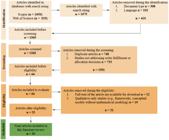
PRISMA flow diagram illustrates the four-stage systematic selection process from 1,975 initial records to the final sample of 33 core articles.
To ensure the scientific rigor of the synthesis, all 33 selected studies underwent a formal quality assessment based on criteria adapted from Petticrew & Roberts (2008). Each study was evaluated against three core dimensions: (i) Methodological Rigor (clarity of the mathematical formulation); (ii) Contextual Relevance (direct applicability to omnichannel retail); and (iii) Contribution Clarity (explicit reporting of results and limitations).
The data extraction and coding process were structured into four analytical dimensions: (1) Mathematical Paradigm (optimization, heuristics, stochastic, or AI) (2) Operational Scope (single-node or multi-echelon); (3) Decision Objective (cost, service, or resilience); and (4) Uncertainty Handling. To mitigate individual bias and ensure inter-rater reliability, a cross-investigator consensus protocol was employed. Two researchers independently coded the articles; discrepancies in categorization were resolved through technical consensus meetings, ensuring a reliable and auditable mapping of the literature, the results of which are synthesized in the Methodological Suitability Matrix (presented in section 3.2).. The assessment revealed that the final sample (n=33) maintained high standards of internal validity and analytical clarity, with no study falling below the acceptable threshold for qualitative synthesis.
The synthesis followed a qualitative meta-synthesis approach. Rather than a quantitative meta-analysis – which was not feasible due to the heterogeneity of mathematical models and performance metrics – it was employed thematic coding and longitudinal analysis using Mendeley® for data management. This qualitative synthesis allowed for the categorization of models into the evolutionary stages discussed in Section 3. By organizing the papers chronologically, it was identified how research progressed from deterministic cost-minimization to adaptive learning frameworks. Finally, each research opportunity was categorized and cross-referenced with real-world implementation gaps to support the subsequent discussion and research agenda.
3. Study results
3.1. What are the distinct mathematical and conceptual properties that characterize the evolution of intelligent fulfillment paradigms in literature?
One of the pioneering works of Ayanso et al. (2006) is representative of this period, being the first to challenge short-sighted real-time order allocation decisions. Heuristics such as Order Swap and Stock Keeping Unit (SKU) Exchange aimed to reduce the number of split shipments, addressing a traditional SCM trade-off between parcel consolidation and transportation expenses. The focus on centralized warehousing and outbound logistics cost-minimization is consistently observed in concurrent research that focuses on minimizing outbound logistics expenses for multi-item orders (Jasin & Sinha, 2015), consolidation in networks with multiple warehouses (Zhang et al., 2021) and integrated order allocation and routing problems (Huang et al., 2015). The methodological progression of this phase was the incorporation of a predictive modeling capability. Instead of merely reacting, models such as that of Acimovic & Graves (2015) introduced forward-looking heuristics to minimize total costs over time, while Lei et al. (2018) developed Approximate Linear Programming to jointly optimize pricing and fulfillment, marking a methodological shift from a focus on cost to profit maximization. The sophistication of these efficiency models is also seen in optimal and heuristic policies for balancing supply and demand (Acimovic & Graves, 2015; Queiroz & Pereira, 2019) and in the optimization of joint inventory and allocation decisions (Govindarajan et al., 2021).
From the mid-2010s onwards, the rise of omnichannel retailing required reorientation from single-channel efficiency to multi-echelon distribution challenges. During this period, supply chain responsiveness becomes the critical variable. Retailers began adopting inventory pooling strategies, where physical stores act as decentralized distribution nodes to satisfy omnichannel demand. This phase is marked by a significant expansion of models to deal with new fulfillment strategies. The literature intensively investigates policies for Ship-from-Store (SFS), as seen in the works of Bayram & Cesaret (2020) Buy-Online-Pickup-in-Store (BOPS), with Jain et al. (2024) proposing bi-objective models for store selection that balance cost and customer utility, and Jin et al. (2018) focusing on the scheduling of these orders. The complexity of inventory management across multiple channels is addressed by Gao & Su (2017), Goedhart et al. (2023) and Hübner et al. (2016) who propose models for integrated replenishment and demand allocation decisions. The breadth of the omnichannel challenge is reflected in studies ranging from the design of dual-channel networks, product assortment (Srivastava et al., 2025) to online acceptance policies (Xu et al., 2022; Zhan et al., 2022) and the optimization of multi-temperature deliveries (Zhan et al., 2022).
In the current landscape, literature has reached a new frontier, focused on agile supply chains through AI and strategic flexibility. This phase represents the primary objective to integrate cost-efficiency and lead-time compression on a large scale, focusing on supply chain resilience. The “curse of dimensionality” (i.e., a severe limitation caused by the exponential growth of the state space in high-dimensional stochastic models), which represents a limitation of traditional stochastic Markov Decision Process (MDPs) models explored by Arslan et al. (2025) and Wang & Minner (2024), have catalyzed the adoption of AI. Jain et al. (2024) and Wang & Minner (2024) are at the forefront of this evolution, applying Deep Reinforcement Learning (DRL) to solve complex replenishment and fulfillment policies in dynamic, high-dimensional environments where traditional optimization fails. In parallel, research has begun to explore new decision structures that reflect operational reality. Baron et al. (2024) introduced the concept of decentralized fulfillment, modeling the autonomy of stores to accept or reject orders. Dai et al. (2024) investigated strategic alliances among retailers, a collaborative model to increase collective profit. The search for flexibility has also generated new models, such as that of Arslan et al. (2020, 2025) which analyzed the value of standard delivery contracts to optimize inventory. This research is further supported by approaches that employ advanced theories to deal with online uncertainty, such as prophet inequality in Amil et al. (2023) and that model more complex network structures, such as two-tiered ones (Zhao et al., 2025).
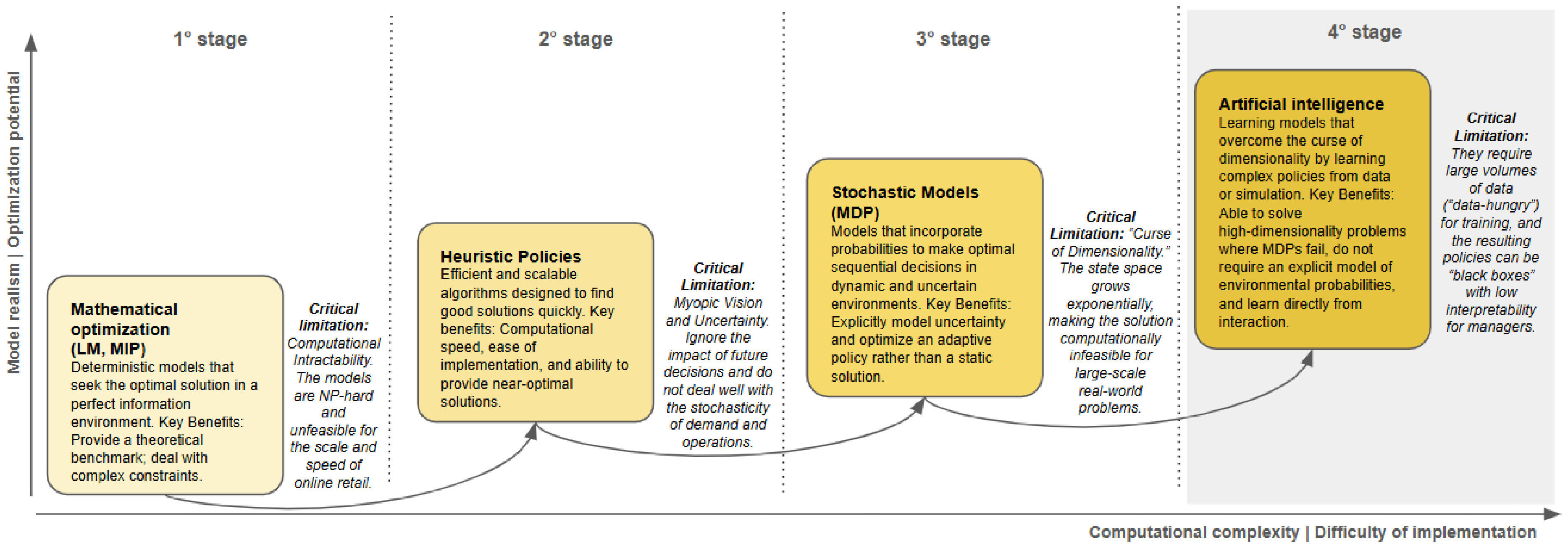
To summarize the discussions in the articles studied here, Figure 2 illustrates an author-constructed evolutionary trajectory of fulfillment models. This diagram maps approaches progression, starting with mathematical optimization models that provide a theoretical basis, evolving to heuristic policies in response to large-scale computational intractability, and advancing to stochastic models that explicitly incorporate uncertainty. Figure 2 contextualizes this evolution along two axes representing the fundamental trade-off in the field: the quest for greater realism and performance versus increased computational complexity. The connecting arrows highlight catalytic challenges, such as the “curse of dimensionality” of MDPs, which drove the transition to the current frontier of AI.

Author-constructed research roadmap for the next generation of intelligent fulfillment approaches.
The trajectory shown in Figure 2 offers crucial insights into the state of the art of fulfillment. Progress in this area is not random, but rather a direct response to the limitations of previous paradigms. The intractability of exact optimization models in large-scale scenarios motivated the development of efficient heuristics, such as those proposed by Lei et al. (2018) and Xu et al. (2008). In turn, the inability of these heuristics to optimally deal with uncertainty has driven the adoption of more robust stochastic models, such as the MDPs of Arslan et al. (2025). Finally, Figure 2 demonstrates that the exponential growth of complexity due to high-dimensional state spaces inherent in MDPs is the main force driving research toward AI. Approaches such as DRL are presented not only as a new technique, but as the literature’s answer to creating fulfillment policies that are simultaneously adaptive, scalable, and capable of learning in complex environments. Therefore, Figure 2 consolidates the notion that the future of intelligent fulfillment lies in the ability to overcome these historical trade-offs through increasingly data-driven models.
These observations demonstrate that the literature on intelligent fulfillment is not a static field, but rather an evolutionary chronology of models that progresses from a strict focus on cost efficiency to approaches that embrace the complexity and uncertainty of modern retail. This trajectory reveals a transition from deterministic and short-sighted heuristic optimizations to adaptive stochastic policies and, more recently, to autonomous learning models based on AI.
3.2. How has the persistent trade-off between cost efficiency and operational responsiveness shaped the development and selection of distinct fulfillment approaches?
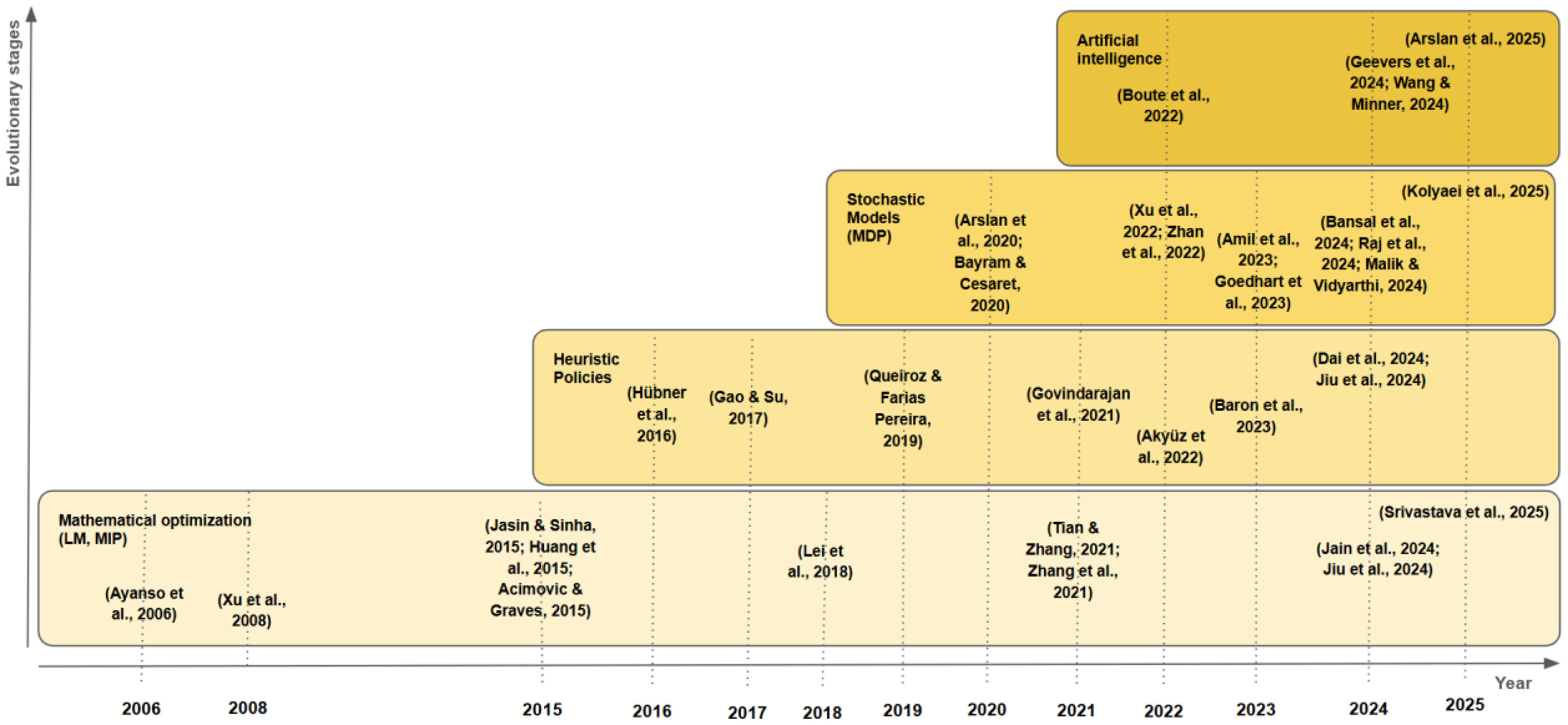
The preceding analysis has demonstrated that literature on intelligent fulfillment is an evolutionary chronology of models progressing from strict cost efficiency to autonomous learning. To make this progression concrete, Figure 3 explicitly plots the 33 studies analyzed in this review. These studies are categorized into four distinct methodological paradigms (1) Mathematical Optimization, (2) Heuristics, (3) Stochastic Models, and (4) AI. This timeline serves as a foundational map, showing how the research focus has shifted over the decades toward more adaptive and complex systems.
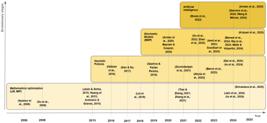
Chronological timeline mapping the 33 reviewed studies across four methodological paradigms to visualize the research shift toward adaptive AI systems from 2006 to 2025.
Mathematical optimization models, such as Linear Programming (LP), Mixed-Integer Programming (MIP), and Mixed-Integer Nonlinear Programming (MINLP), form the theoretical basis of the literature in this area of research. The main benefit of these models lies in their ability to mathematically formulate complex problems and, theoretically, find an optimal solution, serving as an essential benchmark for evaluating the performance of more practical approaches (Xu et al., 2008). They are particularly powerful for long-term strategic decisions, such as fulfillment network design and facility location (Jain et al., 2024; Zhang et al., 2021), where they can rigorously incorporate complex budget, capacity, and service level constraints (Jain et al., 2024).
Given the computational limitations of optimization models, heuristic policies emerge as a pragmatic alternative. Their main benefits are computational efficiency and scalability (Lei et al., 2018). Heuristics such as Order Swap and SKU Exchange (Xu et al., 2008) myopic policies based on costs or probabilities (Baron et al., 2024), and local search algorithms are designed to find high-quality solutions in a timely manner, making them implementable in real operating systems. The interpretability of many of these policies are important managerial advantages. Studies show that well-designed heuristics, particularly those leveraging shadow prices, significantly outperform standard industry practices. For instance, Arslan et al. (2020) demonstrated that their proposed heuristic consistently approaches the theoretical optimum in large-scale instances where exact methods become computationally prohibited. Their results indicate that by accounting for the opportunity cost of inventory, these models mitigate the short-sightedness of traditional myopic policies. Similarly, Arslan et al. (2025) found that such approaches remain robust even under store acceptance uncertainty, providing stable performance across various omnichannel network configurations.
The main limitation of heuristics is the lack of a guarantee of optimality. Their performance can be inconsistent and highly dependent on the characteristics of the problem. The most severe criticism falls on myopic policies, which make decisions based only on current information, ignoring future impact (Acimovic & Graves, 2015). This short-term view can be sensible; for example, a retailer may deplete inventory in a low-cost warehouse to fulfil initial orders, only to be forced to use high-cost options for future orders (Acimovic & Graves, 2015). In fact, Baron et al. (2024) demonstrates that a myopic policy that prioritizes only the highest probability of store acceptance can perform arbitrarily poorly in terms of cost. Therefore, while practical, heuristics can leave significant value on the table by failing to anticipate future system dynamics.
The shortcomings of deterministic models and simple heuristics have driven the evolution toward approaches that directly address uncertainty and sequential decision-making. MDP represents a significant advance, whose benefit is to formally model the stochastic dynamics of the fulfillment environment (Arslan et al., 2020, 2025; Baron et al., 2024). Unlike a static solution, an MDP produces an optimal policy – a decision rule for every possible state of the system (e.g., inventory level, pending orders, etc.), allowing fulfillment and inventory rationing decisions to adapt dynamically to changing conditions (Baron et al., 2024).
Nevertheless, despite their theoretical elegance, MDPs face a severe and often insurmountable limitation: the “curse of dimensionality”. The state space of a realistic retail problem grows exponentially with the number of products, stores, and inventory levels, making the calculation of the optimal policy computationally infeasible (Arslan et al., 2020, 2025; Baron et al., 2024). This practical limitation has paved the way for the application of AI techniques, specifically DRL, as the next evolutionary step (Srivastava et al., 2025; Wang & Minner, 2024).
DRL emerges as a promising solution to overcome the limitations of traditional MDPs. The main benefit of DRL, as explored in the literature, is its ability to handle high-dimensionality problems by learning effective policies directly from interaction with the environment (real or simulated) without the need for an explicit model of transition probabilities (Jain et al., 2024). This makes it ideal for complex omnichannel fulfillment problems, where it can learn joint inventory replenishment and order allocation decisions across vast networks (Malik & Vidyarthi, 2025; Wang & Minner, 2024).
However, the transition to AI-based models is not without challenges and limitations. DRL models are “data hungry” and require large amounts of historical data or simulations to be trained effectively (Wang & Minner, 2024). In addition, the training process can be computationally expensive, and the resulting policies often function as “black boxes”, which can be a barrier to adoption by managers who prefer more transparent and interpretable decision rules (Jain et al., 2024). Furthermore, the transition to AI-driven fulfillment faces critical technical hurdles that extend beyond interpretability. As identified in recent literature, DRL models often suffer from policy instability (Wang & Minner, 2024), where minor shifts in hyper-parameters or network states during training can lead to erratic and suboptimal fulfillment decisions (Arslan et al., 2025). Additionally, these systems frequently exhibit weak generalization capabilities; a policy optimized for a specific network topology or demand pattern may fail significantly when faced with even slight structural changes in the supply chain, requiring costly retraining (Geevers et al., 2024). Finally, a persistent deployment challenge remains, as high-fidelity simulators often fail to capture the granular complexity of real-world warehouse disruptions and human-driven operational nuances, presenting a barrier to the transition of these models from research environments into logistics operations (Boute et al., 2022).
To present the benefits and limitations of the different models discussed, Figure 4 illustrates the underlying mechanics of the evolutionary trajectory of fulfillment approaches, this figure offers a conceptual map that summarizes the state of the art, justifies the growing relevance of AI-based approaches to overcoming the limitations of previous methods, and serves as a bridge to the conclusion of this section. The development of this framework followed a qualitative meta-synthesis of the 33 included studies, where the raw evidence was translated into specific constructs and relationships. The diagram shows progression in four main stages. These stages were identified by grouping papers based on their core decision-making logic, whose studies were mapped at Figure 3, ensuring that each category represents a distinct methodological paradigm found in the SLR. The translation of this stage was validated by cross-referencing the performance metrics and constraints reported across the sample (see Table 3). The arrows connecting the stages not only indicate progression but also emphasize key challenges that have acted as catalysts for innovation, driving the transition from one paradigm to another.
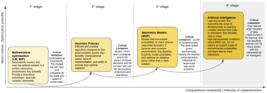
Conceptual framework of fulfillment evolution showing the progression from operational efficiency to AI-driven responsiveness based on increasing network complexity and model autonomy.
Methodological Suitability Matrix: Trade-offs and Contextual Fit of fulfillment paradigms based on the analysis of 33 reviewed studies.
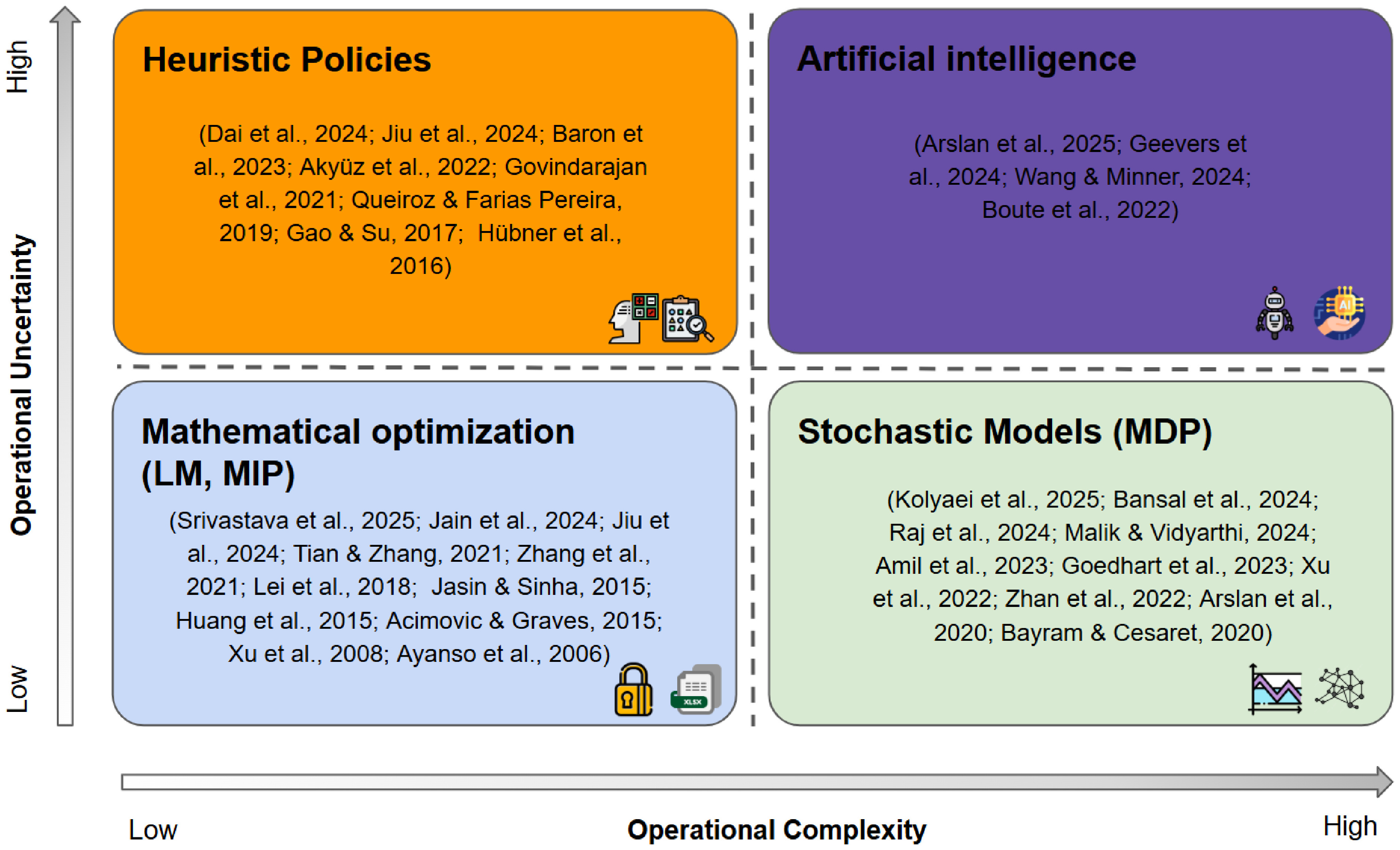
To bridge the gap between theoretical evolution and industrial application, a fulfillment maturity matrix is proposed in Figure 5. The proposed matrix categorizes the four identified fulfillment paradigms based on two critical strategic axes: (i) Environmental Uncertainty and (ii) Operational Complexity and Scale. The translation of the systematic evidence into this matrix’s structure was validated by cross-referencing the performance metrics, limitations, and operational trade-offs reported across the 33 sampled studies (see Table 3). Each quadrant represents a distinct combination of operational constraints. For instance, while traditional Optimization (Stage 1) remains the gold standard for stable, small-scale deterministic operations, the matrix highlights that AI-driven fulfillment (Stage 4) is the recommendation path for retailers facing high uncertainty and operational complexity in omnichannel environments. This matrix offers a clear, literature-validated roadmap for managers to identify which approach is most suitable for their logistics network, considering their demand volatility and the complexity of their operations.

Fulfillment maturity matrix for supporting managerial decision-making, categorizing modeling approaches by levels of operational uncertainty and operational complexity.
In-depth analysis of the benefits and limitations reveals that the effectiveness of a fulfillment model is not absolute, but rather a strategic alignment with the retailer’s supply chain maturity. In addition to identifying the retailer's position on the fulfillment maturity matrix, choosing a modeling approach depends on a multi-dimensional trade-off involving inventory visibility, network scale, and the specific nature of uncertainty in the retail environment. To systematize this context dependence and address the inherent limitations of each paradigm, Table 3 presents a Methodological Suitability Matrix. This matrix contrasts the four classes of models against operational characteristics, data requirements, and critical risks based on the reviewed literature, providing a framework for identifying the scenarios in which each approach offers the greatest advantage. The matrix acknowledges the technical constraints that prevent a one-size-fits-all solution.
Table 3 clearly proves that there is no universally superior fulfillment model. Instead, it reveals a spectrum of trade-offs, where mathematical optimization models, such as those by Jain et al. (2024) and Zhang et al. (2021), offer theoretical rigor at the expense of scalability, while heuristics, such as those proposed by Xu et al. (2008), ensure large-scale applicability at the cost of optimality guarantees. It becomes evident that stochastic models and, more prominently, AI models, are not just additional categories, but represent a direct attempt to address the central dilemma of the field: combining realism and ability to deal with the uncertainty of stochastic models with the scalability needed for practical applications. Nevertheless, this transition to more advanced methods introduces new complexities, such as policy instability and data dependency, which must be weighed against the benefits of scalability.
3.3. How can these models be strategically positioned to address existing operational gaps and guide the deployment of next-generation adaptive fulfillment systems?
While the preceding analysis has shown a clear evolutionary trajectory towards the use of AI-based methods in online retail fulfillment it also revealed that there is still significant ground to be investigated. The limitations of current models, ranging from computational intractability to the oversimplification of operational reality, serve as a direct guide for future contributions, with these challenges being particularly highlighted in the most recent studies.
To consolidate and structure these opportunities, Table 4 presents a research agenda based on the suggestions and challenges raised in the reviewed literature, expanding on specific methodological approaches. It is organized into three macro directions. The first, Deepening AI and Predictive Models, focuses on leveraging advanced techniques such as DRL to overcome the “curse of dimensionality” and better manage dynamic variables. The second, Increasing Realism and Operational Scope, addresses the need to incorporate more complex real-world variables into models, such as multi-item orders, reverse logistics, and integrated omnichannel inventory. The third, Exploration of New Decision Structures and Cooperation, points toward investigating novel organizational approaches, including decentralized fulfillment and strategic collaboration between retailers. It is suggested a shift toward high-fidelity validation, moving away from synthetic datasets, and prioritizing Explainable AI (XAI) to bridge the gap between 'black box' models and managerial trust.
Actionable research agenda for intelligent fulfillment identifying future directions, suggested methods, and empirical settings based on the gaps found in current literature.
The research agenda for intelligent fulfillment is markedly integrative and multidisciplinary. Proposals for future research are not limited to incremental optimizations but point to a fundamental transformation driven by AI. Authors such as Arslan et al. (2025), Wang & Minner (2024), and Baron et al. (2024), after exploring the limits of stochastic models, suggested DRL and ML as the keys to overcoming the barriers of the “curse of dimensionality” and parameter uncertainty.
Nonetheless, the execution of this agenda requires a methodological shift from isolated algorithmic testing to high-fidelity empirical validation. Future success will depend on moving beyond synthetic demand distributions toward empirical data-driven approaches, leveraging techniques such as graph neural networks to model complex network interdependencies and digital twins for stress-testing resilience. Specifically, researchers should prioritize empirical settings characterized by high volatility, where the trade-offs between inventory fragmentation and lead-time compression are most severe. By integrating XAI, future models can bridge the gap between ‘black box’ optimization and managerial trust, ensuring that intelligent fulfillment systems are not only mathematically superior but operationally deployable in the systemic and collaborative complexity of modern retail.
Ultimately, the synthesis of these 33 studies identifies that the central achievement of this research is the mapping of a non-linear evolutionary path in fulfillment logic. The evidence demonstrates that the field is not characterized by a static set of solutions, but by a strategic adaptation where the 'curse of dimensionality' in stochastic models acted as a primary catalyst, pushing the research toward AI-enabled ecosystems. This progression reveals significant theoretical implications, as it bridges the gap between deterministic rigor and high-dimensional neural approximators, transitioning the literature from a linear narrative of progress to a context-dependent framework.
From a managerial standpoint, this research achievement serves as a prescriptive decision-support roadmap. By employing the proposed strategic tools, practitioners can diagnose their operational positioning based on demand volatility and network scale in the fulfillment maturity matrix and employ the methodological suitability matrix to choose the most suitable modeling approach. Therefore, this study demonstrates that fulfillment effectiveness is contingent upon a strategic alignment between data maturity and operational complexity, providing the foundation for the next generation of adaptive omnichannel retail logistics.
4. Conclusion and outlook
This research investigated the evolutionary trajectory of intelligent fulfillment models, mapping the transition from deterministic cost-minimization models to autonomous, AI-driven responsiveness ones. Despite the theoretical superiority of AI-based models for online order fulfillment, their practical adoption faces significant socio-technical barriers. First, data governance and infrastructure remain critical bottlenecks; most retailers lack the high-fidelity, real-time data pipelines required to train data-hungry DRL agents. Second, organizational resistance is prevalent due to the "black box" nature of deep learning. Decision-makers often favor suboptimal but interpretable heuristics over complex autonomous policies that lack transparency. Future research should, therefore, bridge this gap by focusing on explainable AI to build managerial trust. Finally, ethical considerations regarding algorithmic bias must be addressed. As fulfillment becomes fully automated, objective functions must incorporate fairness-aware constraints to ensure that optimization does not inadvertently marginalize specific socio-economic or geographic customer segments.
Finally, this study has limitations that provide avenues for future work. The analysis is bound by the selected databases and search strings, which, although robust, may not capture the entirety of this rapidly expanding field. Furthermore, the four-stage categorization is a necessary simplification of a landscape where hybrid models are increasingly common. Looking ahead, the next generation of intelligent fulfillment will be shaped by the convergence of operations research and adaptive AI. The research agenda proposed here suggests a shift from optimizing isolated components toward creating autonomous fulfillment ecosystems capable of real-time learning in volatile environments. Future success in this field will depend not only on algorithmic sophistication but also on a holistic approach that integrates technical performance with robust data governance, organizational interpretability, and ethical accountability.
Data availability
No research data was used.
-
How to cite this article:
Souza, N. L. S., Oliveira, B. R., Bremen, J., & Frazzon, E. M. (2026). The evolution of omnichannel fulfillment: from efficiency to AI-driven responsiveness. Production, 36, e20250102. https://doi.org/10.14488/1980-5411.20250102.
-
Financial Support
This work was supported by the FAPESC (Fundação de Amparo à Pesquisa e Inovação do Estado Santa Catarina).
-
Ethical Statement
Not applicable.
References
-
Acimovic, J., & Graves, S. C. (2015). Making better fulfillment decisions on the fly in an online retail environment. Manufacturing & Service Operations Management, 17(1), 34-51. https://doi.org/10.1287/msom.2014.0505
» https://doi.org/10.1287/msom.2014.0505 -
Akyüz, M. H., Muter, İ., Erdoğan, G., & Laporte, G. (2022). Minimum cost delivery of multi-item orders in e-commerce logistics. Computers & Operations Research, 138, 105613. https://doi.org/10.1016/j.cor.2021.105613
» https://doi.org/10.1016/j.cor.2021.105613 -
Amil, A., Makhdoumi, A., & Wei, Y. (2023). Multi-item order fulfillment revisited: LP formulation and prophet inequality. Operations Research, 63(6), 88. https://doi.org/10.1145/3580507.3597700
» https://doi.org/10.1145/3580507.3597700 -
Aragão, C. G., Ferreira, F. M., Silva, H. M. R., & Belé, T. G. A. (2024). Analysis of consumers purchase intention in commerce and services in the neighborhood and the Impact of Covid-19. Production, 34, e20230026. https://doi.org/10.1590/0103-6513.20230026
» https://doi.org/10.1590/0103-6513.20230026 -
Arslan, A. N., Klibi, W., & Montreuil, B. (2020). Distribution network deployment for omnichannel retailing. European Journal of Operational Research https://doi.org/10.1016/j.ejor.2020.04.016
» https://doi.org/10.1016/j.ejor.2020.04.016 -
Arslan, B., Schrotenboer, A. H., & Atan, Z. (2025). Optimal fulfillment and replenishment for omnichannel retailers with standard shipping contracts. European Journal of Operational Research, 323(2), 642-656. https://doi.org/10.1016/j.ejor.2024.11.051
» https://doi.org/10.1016/j.ejor.2024.11.051 -
Ayanso, A., Diaby, M., & Nair, S. K. (2006). Inventory rationing via drop-shipping in Internet retailing: a sensitivity analysis. European Journal of Operational Research, 171(1), 135-152. https://doi.org/10.1016/j.ejor.2004.07.060
» https://doi.org/10.1016/j.ejor.2004.07.060 -
Bansal, V., Bisi, A., Roy, D., & Venkateshan, P. (2024). Integrated inventory replenishment and online demand allocation decisions for an omnichannel retailer with ship-from-store strategy. European Journal of Operational Research, 316(3), 1085-1100. https://doi.org/10.1016/j.ejor.2024.02.027
» https://doi.org/10.1016/j.ejor.2024.02.027 -
Baron, O., Cire, A. A., & Savaser, S. K. (2024). Decentralized online order fulfillment in omni-channel retailers. Production and Operations Management, 33(8), 1719-1738. https://doi.org/10.1177/10591478241255066
» https://doi.org/10.1177/10591478241255066 - Bayram, A., & Cesaret, B. (2020). Order fulfillment policies for ship-from-store implementation in omni-channel retailing. European Journal of Operational Research, 294(3), 1-16.
- Bell, J. (2022). What is machine learning? In S. Carta (Ed.), Machine learning and the city (pp. 207-216). Hoboken: John Wiley & Sons.
-
Boute, R. N., Gijsbrechts, J., van Jaarsveld, W., & Vanvuchelen, N. (2022). Deep reinforcement learning for inventory control: a roadmap. European Journal of Operational Research, 298(2), 401-412. https://doi.org/10.1016/j.ejor.2021.07.016
» https://doi.org/10.1016/j.ejor.2021.07.016 -
Dai, B., Xiao, T., Liu, Y., & Li, F. (2024). A profit allocation mechanism for multiple-channels order fulfillment system of an e-retailers alliance. SAGE Open, 14(4), 21582440241300781. https://doi.org/10.1177/21582440241300781
» https://doi.org/10.1177/21582440241300781 -
Feng, H., Feng, M., Wang, Q., Jin, Q., Hao, X., Zhang, Y., & Cao, L. (2025). Improving front distribution center fulfillment rates: a distributionally robust approach. Fuzzy Optimization and Decision Making, 24(2), 343-366. https://doi.org/10.1007/s10700-025-09449-x
» https://doi.org/10.1007/s10700-025-09449-x -
Gao, F., & Su, X. (2017). Omnichannel retail operations with buy-online-and-pick-up-in-store. Management Science, 63(8), 2478-2492. https://doi.org/10.1287/mnsc.2016.2473
» https://doi.org/10.1287/mnsc.2016.2473 -
Geevers, K., van Hezewijk, L., & Mes, M. R. K. (2024). Multi-echelon inventory optimization using deep reinforcement learning. Central European Journal of Operations Research, 32(3), 653-683. https://doi.org/10.1007/s10100-023-00872-2
» https://doi.org/10.1007/s10100-023-00872-2 -
Giannoccaro, I., & Pontrandolfo, P. (2002). Inventory management in supply chains: a reinforcement learning approach. International Journal of Production Economics, 78(2), 153-161. https://doi.org/10.1016/S0925-5273(00)00156-0
» https://doi.org/10.1016/S0925-5273(00)00156-0 -
Goedhart, J., Haijema, R., Akkerman, R., & de Leeuw, S. (2023). Replenishment and fulfilment decisions for stores in an omni-channel retail network. European Journal of Operational Research, 311(3), 1009-1022. https://doi.org/10.1016/j.ejor.2023.06.018
» https://doi.org/10.1016/j.ejor.2023.06.018 -
Govindarajan, A., Sinha, A., & Uichanco, J. (2021). Joint inventory and fulfillment decisions for omnichannel retail networks. Naval Research Logistics, 68(6), 779-794. https://doi.org/10.1002/nav.21969
» https://doi.org/10.1002/nav.21969 -
Guan, Z., Mou, Y., & Zhang, J. (2024). Incorporating risk aversion and time preference into omnichannel retail operations considering assortment and inventory optimization. European Journal of Operational Research, 314(2), 579-596. https://doi.org/10.1016/j.ejor.2023.09.034
» https://doi.org/10.1016/j.ejor.2023.09.034 -
Huang, M., Ren, L., Lee, L. H., & Wang, X. (2015). 4PL routing optimization under emergency conditions. Knowledge-Based Systems, 89, 126-133. https://doi.org/10.1016/j.knosys.2015.06.023
» https://doi.org/10.1016/j.knosys.2015.06.023 -
Hübner, A., Holzapfel, A., & Kuhn, H. (2016). Distribution systems in omni-channel retailing. Business Research, 9(2), 255-296. https://doi.org/10.1007/s40685-016-0034-7
» https://doi.org/10.1007/s40685-016-0034-7 -
Jain, A., Darbari, J. D., Govindan, K., Ramanathan, U., & Jha, P. C. (2024). Biobjective optimization model for store selection for bops service in omni-channel retail chain. IEEE Transactions on Engineering Management, 71, 3028-3043. https://doi.org/10.1109/TEM.2022.3194986
» https://doi.org/10.1109/TEM.2022.3194986 -
Jasin, S., & Sinha, A. (2015). An LP-based correlated rounding scheme for multi-item ecommerce order fulfillment. Operations Research, 63(6), 1336-1351. https://doi.org/10.1287/opre.2015.1441
» https://doi.org/10.1287/opre.2015.1441 -
Jin, M., Li, G., & Cheng, T. C. E. (2018). Buy online and pick up in-store: design of the service area. European Journal of Operational Research, 268(2), 613-623. https://doi.org/10.1016/j.ejor.2018.02.002
» https://doi.org/10.1016/j.ejor.2018.02.002 -
Jiu, S., Wang, D., & Ma, Z. (2024). Benders decomposition for robust distribution network design and operations in online retailing. European Journal of Operational Research, 315(3), 1069-1082. https://doi.org/10.1016/j.ejor.2024.01.046
» https://doi.org/10.1016/j.ejor.2024.01.046 -
Kawa, A. (2021). Fulfilment as logistics support for e-tailers: an empirical studies. Sustainability, 13(11), 5988. https://doi.org/10.3390/su13115988
» https://doi.org/10.3390/su13115988 -
Kolyaei, M., Zhang, L., & Blom, M. (2025). Inventory replenishment and fulfilment decisions for an omnichannel retailer: a reinforcement learning-based method. International Journal of Production Research, 63(24), 9571-9592. https://doi.org/10.1080/00207543.2025.2520596
» https://doi.org/10.1080/00207543.2025.2520596 -
Lei, Y., Jasin, S., & Sinha, A. (2018). Joint dynamic pricing and order fulfillment for E-commerce retailers. Manufacturing & Service Operations Management, 20(2), 269-284. https://doi.org/10.1287/msom.2017.0641
» https://doi.org/10.1287/msom.2017.0641 -
Malik, A., & Vidyarthi, N. (2025). Fulfillment center location and network design in dual-channel retailing. Networks and Spatial Economics, 25(2), 331-365. https://doi.org/10.1007/s11067-024-09647-x
» https://doi.org/10.1007/s11067-024-09647-x - Marques, F. T., & Marques, F. T. (2025). An empirical analysis of inventory performance in Brazil commerce sector: 1996-2021. Production, 35, e20240103.
-
Mesquita, F. R., Mesquita, F. R., & Fernandes, R. F. (2022). Projeções e desafios do dropshipping na era omnichannel / Dropshipping projections and challenges in the omnichannel era. Brazilian Journal of Development, 8(1), 314-338. https://doi.org/10.34117/bjdv8n1-021
» https://doi.org/10.34117/bjdv8n1-021 -
Neves-Moreira, F., & Amorim, P. (2024). Learning efficient in-store picking strategies to reduce customer encounters in omnichannel retail. International Journal of Production Economics, 267, 109074. https://doi.org/10.1016/j.ijpe.2023.109074
» https://doi.org/10.1016/j.ijpe.2023.109074 -
Ouzzani, M., Hammady, H., Fedorowicz, Z., & Elmagarmid, A. (2016). Rayyan-a web and mobile app for systematic reviews. Systematic Reviews, 5(1), 210. https://doi.org/10.1186/s13643-016-0384-4 PMid:27919275.
» https://doi.org/10.1186/s13643-016-0384-4 -
Page, M. J., McKenzie, J. E., Bossuyt, P. M., Boutron, I., Hoffmann, T. C., Mulrow, C. D., Shamseer, L., Tetzlaff, J. M., Akl, E. A., Brennan, S. E., Chou, R., Glanville, J., Grimshaw, J. M., Hróbjartsson, A., Lalu, M. M., Li, T., Loder, E. W., Mayo-Wilson, E., McDonald, S., McGuinness, L. A., Stewart, L. A., Thomas, J., Tricco, A. C., Welch, V. A., Whiting, P., & Moher, D. (2021). The PRISMA 2020 statement: an updated guideline for reporting systematic reviews. BMJ (Clinical Research Ed.), 372, n71. https://doi.org/10.1136/bmj.n71 PMid:33782057.
» https://doi.org/10.1136/bmj.n71 -
Petticrew, M., & Roberts, H. (2008). Systematic reviews in the social sciences: a practical guide. Hoboken: John Wiley & Sons. https://doi.org/10.1002/9780470754887
» https://doi.org/10.1002/9780470754887 -
Queiroz, M. M., & Pereira, S. C. F. (2019). Intention to adopt big data in supply chain management: a Brazilian perspective. Revista de Administracao de Empresas, 59(6), 389-401. https://doi.org/10.1590/s0034-759020190605
» https://doi.org/10.1590/s0034-759020190605 -
Raj, G., Roy, D., de Koster, R., & Bansal, V. (2024). Stochastic modeling of integrated order fulfillment processes with delivery time promise: Order picking, batching, and last-mile delivery. European Journal of Operational Research, 316(3), 1114-1128. https://doi.org/10.1016/j.ejor.2024.03.003
» https://doi.org/10.1016/j.ejor.2024.03.003 -
Schweitzer, N. L. S., Arante, M. T., Romolo, Í., Agostino, S., Falavigna Braghirolli, L., Meireles, M., Mafia, P., & Frazzon, E. M. (2024). Ship-from-store omnichannel using a 4pl digital platform. Brazilian Journal of Operations & Production Management, 21(2), 1856. https://doi.org/10.14488/BJOPM.1856.2024
» https://doi.org/10.14488/BJOPM.1856.2024 -
Schweitzer, N. L. S., Bouzon, M., Fettermann, D. C., & Frazzon, E. M. (2025). A DEMATEL-based analysis of logistics determinants in online retail. Brazilian Journal of Operations & Production Management, 22(2), 2345. https://doi.org/10.14488/BJOPM.2345.2025
» https://doi.org/10.14488/BJOPM.2345.2025 -
Souza, N. L. S. (2022). Proposta de modelo para orquestração logística com plataforma 4PL digital em uma operação ship-from-store no varejo omnichannel (Dissertação de mestrado). Universidade Federal de Santa Catarina, Florianópolis. Retrieved in 2026, May 11, from https://tede.ufsc.br/teses/PEPS5835-D.pdf
» https://tede.ufsc.br/teses/PEPS5835-D.pdf -
Souza, N. L. S., Mendes, L. G., Rovaris, E., Frazzon, E. M., & Triska, Y. (2021a). Planejamento da produção e manutenção com mais de uma máquina: uma revisão sistemática de literatura. In Anais do Encontro Nacional de Engenharia de Produção. Rio de Janeiro: ABEPRO. https://doi.org/10.14488/ENEGEP2021_TN_STP_354_1821_41950
» https://doi.org/10.14488/ENEGEP2021_TN_STP_354_1821_41950 - Souza, N. L. S., Mendes, L. G., Rovaris, E. S., Frazzon, E. M., & Braghirolli, L. F. (2021b). Integrated production and maintenance planning: a systematic literature review. Communications in Computer and Information Science, 1407, 342.
-
Souza, N. L. S., Frazzon, E. M., Braghirolli, L. F., Arante, M. T., & Mafia, M. M. P. (2022a). Orchestrating a ship-from-store omnichannel operation using 4pl digital platform. International Journal of Business Forecasting and Marketing Intelligence, 1(1), 1. https://doi.org/10.1504/IJBFMI.2022.10050550
» https://doi.org/10.1504/IJBFMI.2022.10050550 -
Souza, N. L. S., Stradioto Neto, L. A., Fettermann, D. C., & Frazzon, E. M. (2022b). Evaluation of the customer requirements for last mile delivery in Brazil. Brazilian Journal of Operations & Production Management, 19(3), 1-12. https://doi.org/10.14488/BJOPM.2022.1360
» https://doi.org/10.14488/BJOPM.2022.1360 -
Souza, N. L. S., Chaves, G. L. D., & Frazzon, E. M. (2023a). Impacto do nível de serviço logístico no aumento de pedidos em um varejista online. In Anais do Encontro Nacional de Engenharia de Produção. Rio de Janeiro: ABEPRO. https://doi.org/10.14488/ENEGEP2023_TN_ST_400_1961_45754
» https://doi.org/10.14488/ENEGEP2023_TN_ST_400_1961_45754 -
Souza, N. L. S., Silva, M. R. F., & Frazzon, E. M. (2023b). Inteligência artificial como método de previsão de entrega em um varejista digital. In Anais do Encontro Nacional de Engenharia de Produção. Rio de Janeiro: ABEPRO. https://doi.org/10.14488/ENEGEP2023_TN_ST_400_1965_45453
» https://doi.org/10.14488/ENEGEP2023_TN_ST_400_1965_45453 -
Souza, N. L., Flores, M. R., Cauchick-Miguel, P. A., & Frazzon, E. M. (2023c). Analysis of product-service system logistics strategies in e-commerce. Brazilian Journal of Operations & Production Management, 20(4), 1693. https://doi.org/10.14488/BJOPM.1693.2023
» https://doi.org/10.14488/BJOPM.1693.2023 -
Srivastava, P. R., Zhang, J. Z., Eachempati, P., Sharma, S. K., & Liu, Y. (2025). An Intelligent omnichannel assortment model to manage webrooming: an optimization approach. Journal of Strategic Marketing, 33(3), 441-465. https://doi.org/10.1080/0965254X.2022.2067072
» https://doi.org/10.1080/0965254X.2022.2067072 -
Sun, Y., Qiu, R., Shao, S., Sun, M., & Fan, Z.-P. (2025). Omnichannel strategies and data-driven robust inventory policies with demand uncertainties. Computers & Operations Research, 173, 106830. https://doi.org/10.1016/j.cor.2024.106830
» https://doi.org/10.1016/j.cor.2024.106830 -
Tang, J., Qi, C., & Wang, H. (2024). Integrated optimization of order splitting and distribution routing for the front warehouse mode e-retailing. International Journal of Production Research, 62(5), 1715-1736. https://doi.org/10.1080/00207543.2023.2200556
» https://doi.org/10.1080/00207543.2023.2200556 -
Tian, Z., & Zhang, G. (2021). Multi-echelon fulfillment warehouse rent and production allocation for online direct selling. Annals of Operations Research, 304(1-2), 427-451. https://doi.org/10.1007/s10479-021-04202-0 PMid:34305245.
» https://doi.org/10.1007/s10479-021-04202-0 - Trichai, P., Tamkaew, N., Lasun, S., Kumvilai, A., Intra, R., Anusawari, K., Khen, K. B., & Thep, K. (2021). Developing warehouse employee performance by applying the principles of 7R in logistics. Turkish Journal of Computer and Mathematics Education, 12(11), 4121-4126.
-
Wang, Y., & Minner, S. (2024). Deep reinforcement learning for demand fulfillment in online retail. International Journal of Production Economics, 269, 109133. https://doi.org/10.1016/j.ijpe.2023.109133
» https://doi.org/10.1016/j.ijpe.2023.109133 -
Xu, P. J., Allgor, R., & Graves, S. C. (2008). Benefits of reevaluating real-time order fulfillment decisions. Manufacturing & Service Operations Management, 11(2), 340-355. https://doi.org/10.1287/msom.1080.0222
» https://doi.org/10.1287/msom.1080.0222 -
Xu, J., & Cao, L. (2019). Optimal in-store inventory policy for omnichannel retailers in franchising networks. International Journal of Retail & Distribution Management, 47(12), 1251-1265. https://doi.org/10.1108/IJRDM-09-2018-0199
» https://doi.org/10.1108/IJRDM-09-2018-0199 -
Xu, J., Li, X., Pan, Y., & Du, M. (2022). Satisfaction of logistics dispatchers who use electric tricycles\linebreak for the last mile of delivery: perspective from policy intervention. Sustainability, 14, 7638. https://doi.org/10.3390/su14137638
» https://doi.org/10.3390/su14137638 -
Zhan, Y., Jiang, Y., Zhan, Y., & Jiang, Y. (2022). Integrated optimization of order allocation and last-mile multi-temperature joint distribution for fresh agriproduct community retail. Sustainability, 14(15), 9790. https://doi.org/10.3390/su14159790
» https://doi.org/10.3390/su14159790 -
Zhang, Y., Lin, W. H., Huang, M., & Hu, X. (2021). Multi-warehouse package consolidation for split orders in online retailing. European Journal of Operational Research, 289(3), 1040-1055. https://doi.org/10.1016/j.ejor.2019.07.004
» https://doi.org/10.1016/j.ejor.2019.07.004 -
Zhao, Y., Wang, X., & Xin, L. (2025). Multi-item online order fulfillment in a two-layer network. Operations Research, 73(5), 2297. https://doi.org/10.1287/opre.2022.0100
» https://doi.org/10.1287/opre.2022.0100
Edited by
-
Editor(s)
Adriana Leiras