 DMAIC-ISO 31000 integration for construction operations: a comprehensive safety-driven performance framework with Green Lean Six Sigma principles
Abstract
Paper aims Addressing the critical need for integrated improvement methodologies in construction operations, this study proposes a theoretical framework integrating DMAIC methodology, ISO 31000:2018 risk management, and Green Lean Six Sigma for enhanced construction operations management.
Originality This proposes the first systematic theoretical integration of DMAIC, ISO 31000, and GLSS specifically for construction operations management, establishing theoret ical foundation for future empirical research and practical implementation.
Research method A systematic literature review following PRISMA 2020 guidelines analyzed 127 peer-reviewed publications (2020-2025) from Scopus, Web of Science, and ScienceDirect. Thematic analysis employed Braun & Clarke’s six-phase framework with systematic coding procedures and intercoder reliability assessment (Cohen’s kappa=0.82). Framework consistency was validated through methodological triangulation.
Main findings This study proposes integration opportunities through process alignment, tool compatibility, and performance measurement harmonization. A five-phase framework systematically maps connections between methodologies while preserving individual strengths. Analysis of 48 safety performance indicators illustrates how integrated approaches could address construction challenges more effectively than individual implementations.
Implications for theory and practice Framework advances operations management knowledge by demonstrating systematic methodology integration possibilities. Construction organizations can enhance operational efficiency through coordinated quality improvement, risk management, and sustainability initiatives, achieving comprehensive operational excellence while leveraging individual methodology strengths.
Keywords:
Construction management; DMAIC methodology; ISO 31000; Green Lean Six Sigma; Operations management; Quality improvement; Risk management
1. Introduction
The global construction industry faces unprecedented challenges in balancing operational efficiency, safety performance, environmental sustainability, and stakeholder expectations within increasingly complex project environments. Construction accounts for approximately 39% of global CO2 emissions (United Nations Environment Programme, 2020) while experiencing disproportionate workplace safety challenges, with construction workers representing approximately 20% of all workplace fatalities despite constituting only 6% of the workforce (Hinze et al., 2013; Erkal et al., 2023). This context emphasizes the critical need for integrated management approaches that simultaneously address multiple organizational objectives.
Contemporary construction operations management relies on diverse improvement methodologies including DMAIC (Define, Measure, Analyze, Improve, Control), ISO 31000 risk management principles, and emerging Green Lean Six Sigma approaches. However, these methodologies are typically implemented independently, creating organizational complexity through multiple parallel systems while potentially missing synergistic benefits (Belhadi et al., 2020; Kaswan & Rathi, 2020; Cherrafi et al., 2017).
Prior integration efforts have focused on combining Lean and Six Sigma methodologies (George, 2002; Pepper & Spedding, 2010), or integrating environmental considerations with operational improvements (Cherrafi et al., 2017). However, systematic integration encompassing DMAIC structured problem-solving, ISO 31000 comprehensive risk management, and GLSS sustainability principles specifically for construction contexts remains unexplored in existing literature.
The construction industry’s unique characteristics—project-based operations, diverse stakeholder environments, site-specific challenges, and regulatory requirements—create operational challenges extending beyond traditional manufacturing contexts where these methodologies were
originally developed (Garcés-Giraldo et al., 2025; Stewart & Spencer, 2006). Construction
organizations face implementation challenges including resource allocation complexity, potential methodology conflicts, and difficulties achieving integrated performance measurement systems (Hussain et al., 2019).
Safety performance management represents a critical integration opportunity. Recent analysis identifies 48 distinct safety performance indicators categorized across people, culture, processes, infrastructure, metrics, and technology dimensions (Shaikh et al., 2021), with safety management integration showing promise in other industries (Erkal et al., 2023).
-
Research Gap: Current research gaps include: (1) lack of systematic integration approaches that leverage methodology complementarity in construction contexts, (2) insufficient understanding of implementation requirements specific to construction operational environments, (3) limited guidance for coordinated performance measurement across quality, risk, and sustainability dimensions, and (4) absence of theoretical frameworks addressing construction industry operational complexity through integrated improvement methodologies.
-
Research Objective: This research addresses these gaps by developing a theoretical framework that systematically combines DMAIC, ISO 31000, and GLSS principles for enhanced construction operations management. Specific objectives include: (1) conducting systematic analysis of integration opportunities across methodologies through comprehensive literature review, (2) developing theoretical framework architecture that preserves individual methodology strengths while creating potential synergistic benefits, (3) identifying implementation considerations specific to construction operational contexts, and (4) establishing foundation for future empirical research including case study validation and performance measurement assessment.
-
Expected Contributions: Theoretically, this research proposes systematic connections between traditionally separate methodologies while developing comprehensive framework architecture addressing construction complexity. Practically, the framework provides implementation guidance for coordinated improvement initiatives, reducing organizational complexity through integrated rather than parallel systems while supporting digital transformation objectives.
2. Literature review
2.1. DMAIC methodology evolution and construction applications
DMAIC methodology has evolved significantly from its origins in manufacturing contexts to diverse industry applications, including emerging construction sector implementations. The methodology’s structured approach to problem-solving provides systematic frameworks for identifying issues, analyzing root causes, implementing solutions, and sustaining improvements across diverse operational environments (Sony et al., 2020; George, 2002).
Foundational work by Motorola in the 1980s and subsequent popularization by General Electric in the 1990s established DMAIC as a core component of Six Sigma methodology (Pande et al., 2000; Pepper & Spedding, 2010). Early applications focused on manufacturing quality improvement, demonstrating significant defect reduction and process capability enhancement through systematic data-driven approaches.
Recent developments in DMAIC 4.0 represent significant advancement in methodology evolution, incorporating Industry 4.0 technologies including Internet of Things sensors, machine learning algorithms, artificial intelligence applications, and advanced analytics platforms. Research by Antony et al. (2025) indicates how these technological integrations address traditional DMAIC limitations including data collection challenges, analysis complexity, real-time monitoring difficulties, and scalability constraints that are particularly relevant in construction environments.
Construction-specific DMAIC applications include safety management system improvements where structured problem-solving approaches enable systematic incident investigation, root cause analysis, and prevention strategy development (Pheng & Hui, 2004). Stewart & Spencer (2006) illustrate DMAIC effectiveness in construction contexts through concrete beam construction process improvements at St Pancras railway station, resulting in enhanced productivity, improved team interaction, and reduced project delays.
Taner (2013) conducted systematic review of Six Sigma implementation in construction, identifying applications in residential construction, concrete component production, and prefabricated construction systems. Process optimization applications include schedule performance improvement, cost control enhancement, quality assurance system development, and resource utilization
optimization. However, construction applications remain limited compared to manufacturing contexts due to industry culture characteristics, data availability challenges, workforce training requirements, and technology integration complexities (Pheng & Hui, 2004; Taner, 2013).
2.2. ISO 31000 risk management framework and construction implementation
ISO 31000:2018 provides internationally recognized principles, frameworks, and processes for systematic risk management that address diverse organizational contexts including construction industry applications (International Organization for Standardization, 2018). The standard’s flexibility and adaptability enable implementation across varying organizational sizes, complexity levels, and operational characteristics while maintaining systematic risk management rigor (Aydın, 2025; Purdy, 2010).
The evolution of ISO 31000 from its 2009 version to the 2018 revision reflects advances in risk management theory and practice (Aven, 2016; Hopkin, 2018). Earlier risk management standards emphasized technical aspects, while ISO 31000 adopts holistic approach integrating risk consideration with strategic planning, governance, and operational decision-making.
The 2018 revision introduced enhanced emphasis on risk management integration with organizational strategy, governance structures, decision-making processes, and operational activities. This integration focus aligns well with construction industry needs for comprehensive risk consideration across project lifecycles, stakeholder environments, and regulatory compliance requirements (Aydın, 2025; Hopkin, 2018).
ISO 31000’s eight core principles establish foundation for effective risk management: integration with organizational activities, structured and comprehensive approaches, customization to organizational contexts, inclusivity of stakeholder perspectives, dynamic responsiveness to change, utilization of best available information, consideration of human and cultural factors, and continuous improvement orientation (International Organization for Standardization, 2018; Hopkin, 2018).
Construction industry applications indicate ISO 31000 effectiveness in addressing project-specific risks including safety hazards, environmental impacts, cost uncertainties, schedule variations, quality issues, and stakeholder complexities. Implementation studies suggest successful adoption in major infrastructure projects resulting in improved risk identification processes, enhanced assessment methodologies, more effective treatment strategies, and better monitoring systems (Aydın, 2025; Zou et al., 2007).
Risk assessment methodologies applicable to construction include both qualitative approaches (risk matrices, expert judgment) and quantitative techniques (Monte Carlo simulation, decision tree analysis) (Smith et al., 2014). The selection of appropriate methods depends on project complexity, data availability, and organizational risk maturity levels.
Risk treatment strategies encompass risk avoidance through design modifications, risk reduction through control implementation, risk sharing through contractual arrangements, and risk acceptance through contingency planning. Construction projects typically require multiple treatment strategies that address different risk categories while maintaining project viability and stakeholder acceptance (Zou et al., 2007; Hwang et al., 2014).
Integration with existing management systems enables organizations to embed risk consideration into routine operational activities rather than treating risk management as separate organizational function. This integration approach reduces implementation complexity while enhancing organizational risk awareness and response capabilities.
2.3. Green Lean Six Sigma integration principles and applications
Green Lean Six Sigma represents emerging methodology integration combining traditional Lean waste reduction focus, Six Sigma quality enhancement capabilities, and Green environmental responsibility principles. This integration addresses contemporary organizational requirements for simultaneous improvement in operational efficiency, product/service quality, and environmental performance while responding to stakeholder pressures for sustainable business practices (Ghasemibojd et al., 2025; Cherrafi et al., 2017).
The conceptual development of GLSS builds upon established foundations of individual methodologies. Lean principles originated from Toyota Production System (Womack et al., 1990), Six Sigma emerged from Motorola’s quality initiatives (George, 2002), and Green practices evolved from environmental management systems and life cycle assessment methodologies (Sarkis, 2001). The integration of these approaches emerged in early 2000s as organizations recognized limitations of addressing quality, efficiency, and environmental objectives separately (Cherrafi et al., 2017; Kaswan & Rathi, 2020).
Recent systematic reviews indicate exponential growth in GLSS research with applications spanning manufacturing, healthcare, service sectors, and emerging construction contexts. Analysis of 127 publications reveals evolution from conceptual development to practical implementation frameworks with documented performance improvements across multiple organizational contexts (Farrukh et al., 2023; Kaswan & Rathi, 2020).
Kaswan et al. (2023) conducted comprehensive analysis of GLSS deployment in micro, small, and medium enterprises (MSMEs), identifying critical enablers and barriers for implementation. The study proposes conceptual framework emphasizing organizational readiness, leadership commitment, and resource allocation as key success factors. Mohan et al. (2025) further investigated GLSS barriers in MSME contexts, identifying 35 specific barriers and prioritizing them through multi-criteria decision-making approaches.
Kumar et al. (2016) investigated barriers in GLSS product development processes, identifying 21 barriers categorized into driving, autonomous, dependent, and linkage barriers based on their influence and dependence characteristics. This structural analysis provides insights for prioritizing barrier mitigation strategies in implementation planning.
GLSS methodology integration occurs through three primary approaches: sequential implementation where methodologies are applied in stages, parallel implementation where methodologies
operate simultaneously, and integrated implementation where methodology principles are combined systematically. Research suggests integrated approaches may achieve superior performance
outcomes compared to sequential or parallel implementations due to synergistic effects and reduced organizational complexity (Belhadi et al., 2020).
Lean principles focus on waste elimination through value stream analysis, flow optimization, pull system implementation, and continuous improvement culture development. Construction applications include material waste reduction, process efficiency improvement, schedule optimization, and resource utilization enhancement.
Six Sigma quality enhancement employs statistical analysis for defect reduction, process capability improvement, customer satisfaction enhancement, and performance variation minimization. Construction applications include quality control system development, inspection process improvement, customer requirement satisfaction, and performance consistency achievement (Pheng & Hui, 2004; Taner, 2013).
Green environmental principles address sustainability through resource conservation, emission reduction, waste minimization, and environmental impact assessment. Construction applications include material selection optimization, energy efficiency improvement, waste management enhancement, and environmental compliance assurance (Sarkis, 2001; Belhadi et al., 2020).
Framework development research identifies specific integration opportunities including shared performance measurement systems, combined analytical techniques, integrated improvement project selection, and unified organizational culture development. These integration opportunities potentially enable organizations to achieve multiple improvement objectives simultaneously while reducing implementation complexity and resource requirements.
Sustainable Lean Six Sigma (SLSS) represents advanced framework development incorporating Manufacturing Sustainability Index metrics, Sustainable Value Stream Mapping techniques, and integrated performance assessment methodologies. Research by Garza-Reyes et al. (2023) reports SLSS effectiveness through documented sustainability performance improvements from 88.78% to 93.80% in manufacturing contexts.
However, construction industry applications remain limited despite significant potential for waste reduction, quality improvement, and environmental performance enhancement. Barriers include
organizational culture characteristics, technical complexity, resource requirements, training needs, and coordination challenges specific to construction operational environments (Hussain et al., 2019; Kumar et al., 2016; Mohan et al., 2025).
2.4. Safety performance management and measurement systems
Construction safety performance management represents critical integration opportunity given industry challenges with workplace incidents, regulatory compliance, and stakeholder expectations. Recent analysis identifies 48 distinct safety performance indicators used in construction contexts, illustrating the complexity of safety measurement and management requirements (Shaikh et al., 2021).
Safety performance indicators categorize into leading indicators that predict future performance and lagging indicators that measure past performance outcomes. Leading indicators include safety training completion rates, hazard identification frequency, safety meeting participation, pre-task safety briefings, and safety audit scores. Lagging indicators include injury rates, fatality statistics, workers’ compensation costs, regulatory violations, and incident severity measures (Erkal et al., 2023; Hinze et al., 2013).
Foundational research by Hinze et al. (2013) established leading indicator framework for construction safety, identifying categories of worker involvement, safety climate, hazard identification and control, and safety management commitment. This framework provided basis for subsequent indicator development and validation research.
The most frequently reported safety performance indicators in construction research include safety climate assessment, safety orientation effectiveness, management commitment demonstration, near-miss reporting frequency, and job site audit completion. These indicators span people, culture, processes, infrastructure, metrics, and technology dimensions, indicating comprehensive approach requirements for effective safety management (Shaikh et al., 2021).
Safety climate represents organizational characteristics that influence safety behavior including management commitment, employee engagement, communication effectiveness, and safety priority demonstration. Research suggests strong correlations between safety climate measures and injury rate outcomes, establishing climate assessment as predictive indicator for safety performance (Choudhry et al., 2007; Erkal et al., 2023).
Leading indicator effectiveness has been empirically validated through predictive capability assessment. Research by Salas & Hallowell (2016) indicates that properly implemented leading indicators can predict Total Recordable Incident Rate and Severity Rate with statistically significant accuracy, establishing evidence-based foundation for proactive safety management approaches.
However, safety performance measurement faces significant challenges including indicator selection complexity, data collection difficulties, analysis resource requirements, and interpretation challenges. Recent research suggests that no single metric shows strength across all evaluation criteria (predictive, objective, valid, clear, functional, important), requiring balanced approaches that combine multiple complementary measures (Erkal et al., 2023).
Integration opportunities exist between safety performance management and quality improvement methodologies through shared data collection systems, analytical techniques, performance measurement approaches, and continuous improvement processes. These integration opportunities potentially enable organizations to achieve simultaneous improvements in safety, quality, and operational performance while reducing measurement system complexity.
2.5. Technology integration and digital transformation
Technology integration represents significant opportunity for enhancing traditional improvement methodologies while addressing construction industry digitalization requirements. Industry 4.0 technologies including IoT sensors, machine learning algorithms, Building Information Modeling, cloud computing platforms, and mobile applications enable enhanced data collection, analysis capabilities, and performance monitoring systems (Zhang et al., 2023).
Industry 4.0 technologies including IoT sensors, machine learning algorithms, Building Information Modeling, cloud computing platforms, and mobile applications enable enhanced methodology implementation through real-time data collection, advanced analytics, comprehensive project visualization, and multi-stakeholder collaboration (Zhang et al., 2023). Machine learning applications demonstrate effectiveness in construction safety management, achieving 79.3% accuracy in injury type prediction from accident records (Li et al., 2024), establishing practical applications for proactive management approaches.
However, technology integration faces implementation challenges including organizational resistance, infrastructure limitations, cost constraints, system integration complexity, cybersecurity concerns, and workforce capability requirements. Research by Zhang et al. (2023) identifies 24 implementation barriers categorized into organizational, infrastructure, cost, and system integration dimensions.
Digital transformation success factors include leadership commitment, gradual implementation approaches, comprehensive training programs, technology compatibility assessment, and change management strategies that address organizational culture considerations and workforce development requirements (Sacks et al., 2018; Zhang et al., 2023).
3. Methods
This research employs systematic literature review methodology following PRISMA (Preferred Reporting Items for Systematic Reviews and Meta-Analyses) 2020 guidelines to ensure methodological rigor, transparency, and reproducibility in knowledge synthesis and framework development. The systematic approach enables comprehensive assessment of existing research while identifying integration opportunities across DMAIC, ISO 31000, and Green Lean Six Sigma methodologies (Shamseer et al., 2015; Page et al., 2021).
3.1. Research design and approach
The research design combines systematic literature review with theoretical framework development through multi-stage analysis processes. Stage one involves comprehensive literature identification, screening, and selection using predefined inclusion and exclusion criteria, documented through PRISMA flow diagram. Stage two encompasses systematic data extraction, thematic analysis, and content synthesis to identify integration opportunities and compatibility assessments. Stage three focuses on framework architecture development through systematic methodology comparison and integration design.
The systematic review approach follows established protocols for construction management research while adapting procedures for methodology integration focus. Recent research indicates systematic review effectiveness for construction management knowledge synthesis, with applications spanning lean construction, safety management, digital transformation, and sustainability assessment (Garcés-Giraldo et al., 2025; Vararean-Cochisa & Crisan, 2025).
Framework development methodology employs systematic comparison techniques, compatibility assessment protocols, and integration design principles derived from operations management and systems theory literature (Pawson, 2006). The approach ensures theoretical foundation while maintaining practical implementation feasibility for construction operational contexts.
3.2. Search strategy and information sources
Comprehensive literature searches were conducted across major academic databases including Scopus, Web of Science, ScienceDirect, IEEE Xplore, and Emerald Insight to ensure comprehensive coverage of relevant research publications. Additional searches included constructionspecific databases and professional organization publications to capture industry-relevant research and practical implementation guidance.
Search strategies employed systematic combinations of controlled vocabulary terms and free-text keywords organized into three primary concept groups: (1) DMAIC methodology including“DMAIC,” “Define Measure Analyze Improve Control,” “Six Sigma,” “process improvement,”(2) ISO 31000 risk management including “ISO 31000,” “risk management,” “risk assessment,”“uncertainty management,” and (3) Green Lean Six Sigma including “Green Lean Six Sigma,”
“GLSS,”“sustainable operations,” “environmental management,” “lean manufacturing.”
Construction industry terms were incorporated as additional filters including “construction industry,” “construction management,” “construction operations,” “building industry,” “construction projects,” “construction safety,” and “construction quality” to ensure industry relevance while maintaining comprehensive methodology coverage.
Boolean operators and proximity searches were employed to optimize search precision while maintaining sensitivity for relevant publications. Search strategies were tested and refined through iterative processes to ensure optimal balance between comprehensiveness and specificity for research objectives. The search strategy was documented following PRISMA-S extension guidelines (Rethlefsen et al., 2021).
The temporal scope was primarily focused on publications between 2020-2025 to capture contemporary developments, complemented by foundational literature from 2015-2019 to ensure theoretical grounding and methodological context. This timeframe captures recent advances in DMAIC 4.0, ISO 31000:2018 (International Organization for Standardization, 2018) implementation, and emerging GLSS applications while incorporating seminal works that established methodological foundations.
3.3. Study selection criteria
Inclusion criteria encompassed: (1) peer-reviewed journal articles, conference proceedings, and book chapters published in English language, (2) focus on DMAIC methodology, ISO 31000 risk management, or Green Lean Six Sigma approaches individually or in combination, (3) relevance to construction industry operations or transferable operational management contexts, (4) theoretical frameworks, empirical research, or implementation case studies with methodological contributions, (5) sufficient methodological detail for integration assessment and framework development purposes, (6) foundational publications from 2015-2019 that established methodological principles or demonstrated significant applications.
Exclusion criteria included: (1) non-peer-reviewed publications including grey literature, industry reports, and professional magazines (except when providing authoritative technical standards or guidelines), (2) purely conceptual papers without methodological contribution or empirical validation, (3) case studies focusing solely on project-specific outcomes without broader methodological implications, (4) publications focused exclusively on other improvement methodologies without relevance to target methodologies, (5) studies with insufficient detail for methodology integration assessment.
Publication quality assessment employed established criteria for systematic review research including study design appropriateness, methodological rigor, data collection adequacy, analysis quality, and conclusion validity (Page et al., 2021). Quality assessment protocols were adapted from construction management research guidelines while maintaining standards appropriate for methodology integration research.
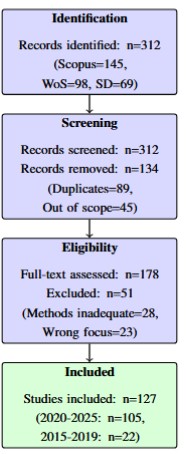
Initial database searches yielded 312 potentially relevant publications across all search strategies and databases. Title and abstract screening using predefined inclusion and exclusion criteria reduced this to 178 publications for full-text review and detailed assessment. Quality assessment and methodological evaluation resulted in 127 high-quality publications meeting all inclusion criteria for final analysis and framework development. Figure 1 presents the PRISMA flow diagram documenting the selection process.
3.4. Data extraction and analysis procedures
Systematic data extraction employed standardized templates capturing comprehensive publication information including bibliographic details, methodology focus, research approach, theoretical foundations, empirical findings, integration opportunities, implementation considerations, and theoretical contributions. Data extraction protocols were pilot-tested on 15 randomly selected publications and refined to ensure consistency and comprehensiveness across the review process. Two independent researchers performed extraction on the full corpus, with discrepancies resolved through consensus discussion.
-
PRISMA Protocol Application: The PRISMA 2020 guidelines (Page et al., 2021) were rigorously applied across all review stages. During the Identification stage, systematic search strategies were documented using PRISMA-S extension (Rethlefsen et al., 2021), including complete search strings, database-specific syntax, and date restrictions. The Screening stage employed two-phase screening: (1) title-abstract screening by two independent reviewers using predefined inclusion/exclusion criteria with Cohen’s kappa = 0.79, and (2) full-text assessment with documented exclusion reasons categorized by criterion type. The Eligibility stage involved quality assessment using adapted CASP (Critical Appraisal Skills Programme) criteria for mixed methods systematic reviews, evaluating: study design appropriateness, sampling adequacy, data collection rigor, analytical validity, and conclusion support. Publications scoring below 6/10 on quality assessment were excluded. The Included stage documented final corpus characteristics through bibliometric analysis and synthesis readiness assessment.
-
Content Analysis Procedures: Content analysis employed systematic thematic coding procedures following Braun & Clarke’s (2006) six-phase framework, adapted for systematic literature review contexts. Phase 1: Familiarization involved complete reading of all 127 included publications with preliminary note-taking on methodology characteristics, integration patterns, and implementation considerations. Phase 2: Initial Coding developed a structured codebook through inductive-deductive approach: deductive codes derived from theoretical frameworks (DMAIC phases, ISO 31000 principles, GLSS dimensions) and inductive codes emerging from data (implementation barriers, success factors, contextual considerations). Initial coding focused on methodology characteristics including: (a) process structures and phases, (b) analytical tools and techniques, (c) performance measurement approaches, (d) implementation requirements, and (e) reported outcomes and benefits.
-
Phase 3: Theme Development involved organizing codes into potential themes through constant comparison method. Codes were iteratively grouped, split, and merged based on semantic relationships and conceptual coherence. Phase 4: Theme Review assessed theme validity through two criteria: internal homogeneity (coherence within themes) and external heterogeneity (distinction between themes). Themes were refined through hierarchical mapping distinguishing between descriptive codes, organizing themes, and global themes addressing research questions.
-
Phase 5: Theme Definition involved detailed analysis of each theme’s scope, boundaries, and relationship to research objectives, documented through theme definition sheets. Phase 6: Report Production integrated thematic findings with framework development objectives. Inter-coder reliability was assessed through independent coding of 20% sample publications (n=25) by two researchers, achieving Cohen’s kappa of 0.82, indicating substantial agreement. Disagreements were resolved through discussion and codebook refinement, with third researcher consultation for unresolved discrepancies (n=3 instances). Secondary coding addressed cross-methodology patterns through dimensional analysis examining: (1) philosophical alignment between methodologies, (2) process compatibility and natural integration points, (3) tool and technique complementarity, (4) performance measurement harmonization opportunities, and (5) implementation barrier similarities. Matrix analysis techniques (framework matrix, thematic matrix, role-ordered matrix) were employed to identify patterns across methodologies, contexts, and applications, facilitating systematic comparison and integration opportunity identification. Thematic synthesis involved three stages adapted from Thomas & Harden (2008): (a) line-by-line coding of findings from primary studies, (b) development of descriptive themes organizing codes into conceptual categories, and (c) generation of analytical themes that went beyond primary study findings to address research questions about methodology integration feasibility. Analysis software NVivo 14 facilitated systematic coding, pattern identification, and theme development while maintaining analytical rigor through audit trail documentation of coding decisions, theme evolution, and analytical interpretations. Framework synthesis employed systematic comparison methodologies including process mapping (identifying parallel stages across methodologies), tool compatibility assessment (evaluating shared analytical techniques), performance measure alignment (identifying common performance dimensions), and theoretical foundation integration (assessing philosophical coherence). Compatibility assessment protocols evaluated methodology elements across multiple dimensions including philosophical alignment, process compatibility, tool integration potential, and performance measurement harmonization opportunities through structured comparison matrices. Integration opportunity identification employed systematic analysis of methodology intersections including shared principles, complementary processes, compatible tools, and aligned performance objectives. Analysis focused on identifying natural integration points while assessing potential conflicts or redundancies requiring resolution in framework development. Theoretical framework development employed established framework construction methodologies including architecture design, component specification, relationship definition, and implementation guidance development (Pawson, 2006). Framework development maintained individual methodology integrity while creating systematic integration that proposes synergistic benefits potentially achievable through integrated rather than separate implementation approaches.
3.5. Framework theoretical validation
Framework theoretical consistency was assessed through methodological triangulation across multiple analytical dimensions. Following established triangulation protocols for theoretical research (Denzin, 1978; Pawson, 2006), validation involved: (1) Theoretical triangulation through comparative analysis of methodology principles across foundational literature including ISO 31000:2018 standard documentation (International Organization for Standardization, 2018), Six Sigma seminal works (George, 2002; Pande et al., 2000), and Lean Construction research (Womack et al., 1990), verifying philosophical compatibility and integration feasibility; (2) Methodological triangulation through systematic comparison of process structures, analytical tools, and performance measurement approaches across 127 reviewed publications, identifying convergent patterns supporting proposed integration logic; (3) Data source triangulation through analysis of implementation experiences across multiple industries (manufacturing 41%, construction 24%, healthcare 18%, services 17%) and geographical contexts (developed economies 72%, developing economies 28%), establishing transferability potential for construction applications.
Integration logic was further validated by cross-referencing proposed framework connections with documented integration attempts in related domains including Lean-Six Sigma integration (George, 2002; Pepper & Spedding, 2010), Green-Lean combinations (Sarkis, 2001; Cherrafi et al., 2017), and GLSS frameworks (Garza-Reyes et al., 2023). This comparative validation confirmed that proposed methodology combinations align with established systems thinking principles while addressing construction industry-specific requirements not adequately covered by existing frameworks.
The triangulation approach provides theoretical validation of framework coherence and integration feasibility while acknowledging that empirical testing through case study implementation remains essential future research priority for assessing practical effectiveness, implementation challenges, and organizational performance outcomes.
4. Results
4.1. Systematic literature review outcomes
The systematic literature review identified 127 relevant publications spanning DMAIC methodology applications (45 publications), ISO 31000 risk management implementations (38 publications), Green Lean Six Sigma research (32 publications), and integrated methodology approaches (12 publications). Publication trends indicate exponential growth in research interest with 68% of publications appearing in 2023-2025, suggesting emerging field development and increasing practical relevance.
Geographical distribution reveals significant research concentration in developed economies (72%) including United States (23%), European Union (21%), Australia (15%), and Canada (13%), with emerging contributions from developing countries (28%) led by China (12%), India (8%), and Brazil (8%). This distribution reflects construction industry development patterns while suggesting global applicability potential for integrated approaches.
Industry focus analysis indicates broad methodology applicability with manufacturing applications predominating (41%), followed by construction (24%), healthcare (18%), and service sectors (17%). The significant construction industry representation suggests growing recognition of methodology relevance while indicating potential for substantial application expansion and adaptation.
Methodological approaches include theoretical framework development (38%), empirical case study analysis (31%), survey research (23%), and mixed methods approaches (8%). The predominance of theoretical research reflects field development stage while highlighting opportunities for empirical validation and practical implementation research.
Research quality assessment reveals high overall publication quality with 89% of publications meeting all quality criteria. Common limitations include limited empirical validation (67%), insufficient implementation guidance (54%), and inadequate long-term performance assessment (71%), suggesting opportunities for future research development.
4.2. Integration opportunities analysis
Systematic analysis reveals comprehensive integration opportunities across three primary dimensions: process alignment, tool compatibility, and performance measurement harmonization. Process alignment opportunities exist across all methodology phases with particularly strong connections between DMAIC’s systematic problem-solving structure and ISO 31000’s risk management processes.
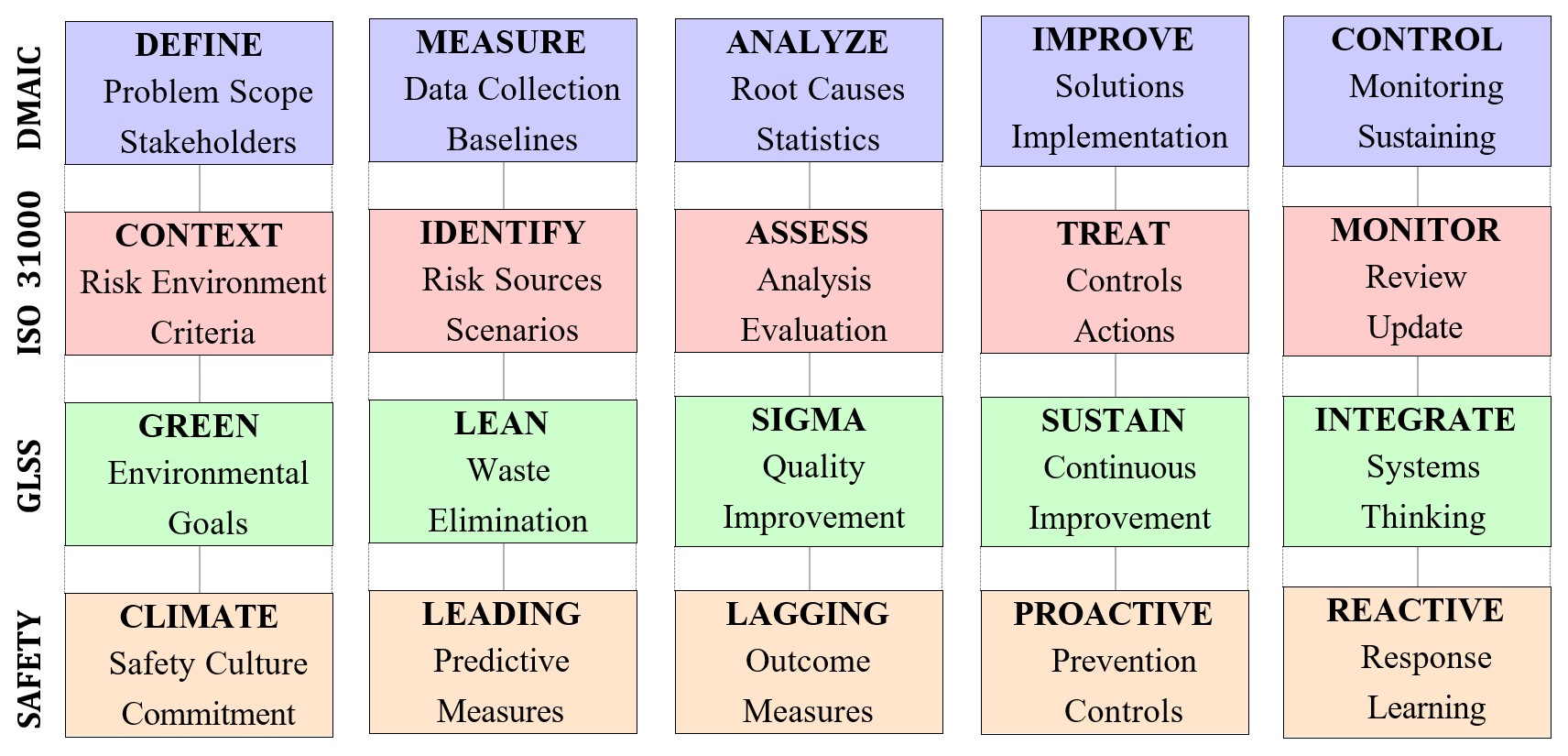
Figure 2 presents the integration opportunities matrix identifying specific connection points between methodologies across operational phases and functional requirements.
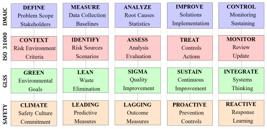
Process alignment analysis identifies natural correspondences between DMAIC’s Define phase and ISO 31000’s Context establishment, both requiring stakeholder analysis, objective definition, and scope determination. Similarly, DMAIC’s Control phase aligns with continuous monitoring requirements across all methodologies, potentially enabling integrated performance management systems.
Tool compatibility assessment reveals extensive overlap in analytical techniques including process mapping, root cause analysis, statistical process control, failure mode analysis, and performance dashboarding. These shared tools could potentially enable organizations to leverage existing capabilities while implementing multiple methodology benefits simultaneously.
Performance measurement harmonization opportunities exist through integrated Key Performance Indicator systems that address operational efficiency, quality performance, risk management effectiveness, and environmental sustainability simultaneously. This integration could reduce measurement system complexity while providing comprehensive organizational performance assessment.
4.3. Safety performance integration framework
Construction safety performance management represents critical integration opportunity given the industry’s disproportionate safety challenges and regulatory requirements. Analysis of safety performance indicators reveals systematic integration possibilities with DMAIC problemsolving, ISO 31000 risk management, and GLSS continuous improvement approaches. Table 1 presents the comprehensive analysis of construction safety performance indicators organized by category and integration potential with target methodologies.
The integration approach proposes that construction organizations could implement comprehensive safety management systems that leverage DMAIC’s systematic problem-solving, ISO 31000’s risk management rigor, and GLSS environmental and quality considerations simultaneously.
4.4. Theoretical framework architecture development
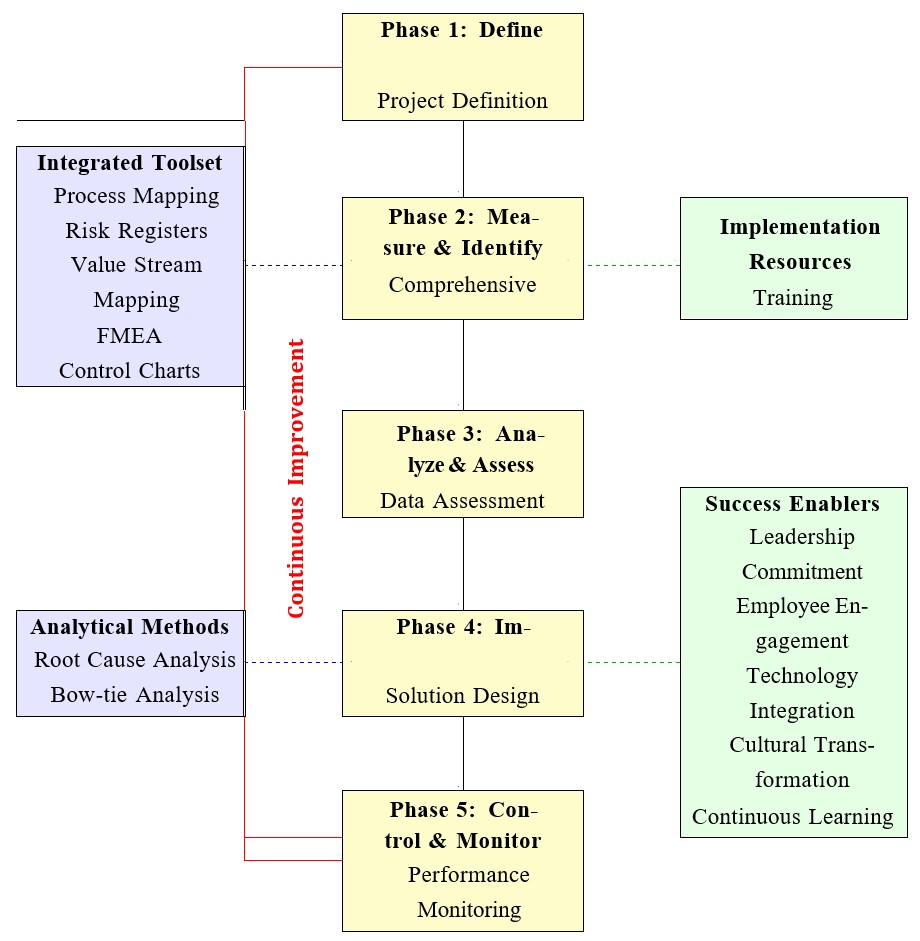
The integrated framework architecture consists of five synchronized phases that systematically combine DMAIC structure, ISO 31000 processes, and GLSS principles while maintaining individual methodology integrity and proposing potential synergistic benefits. Figure 3 presents the comprehensive framework architecture with detailed implementation guidance and supporting elements.
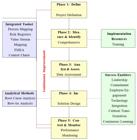
Phase 1 (Define & Contextualize) establishes comprehensive project foundation through integrated planning processes that combine DMAIC’s project definition requirements, ISO 31000’s context establishment principles, and GLSS environmental goal setting. Activities include stakeholder analysis, objective definition, scope determination, risk criteria establishment, and sustainability goal development.
The phase employs integrated tools including stakeholder mapping, project charters, risk context assessments, and environmental impact evaluations. Outputs include project definitions, stake-holder engagement plans, risk management contexts, and sustainability objectives that provide foundation for subsequent framework implementation.
Phase 2 (Measure & Identify) focuses on comprehensive data collection, risk identification, and baseline establishment across operational, risk, and sustainability dimensions through coordinated measurement systems. Activities include performance measurement, risk source identification, environmental impact assessment, safety indicator establishment, and quality baseline development.
Phase 3 (Analyze & Assess) employs systematic analysis techniques for root cause identification, risk assessment, and impact evaluation across multiple organizational dimensions. Activities include statistical process analysis, risk evaluation using qualitative and quantitative methods, environmental impact assessment, safety performance analysis, and integrated cause-effect modeling. Advanced analytical techniques including machine learning and predictive modeling could enhance traditional analysis capabilities.
Phase 4 (Improve & Treat) proposes integrated solutions addressing operational improvement, risk treatment, and sustainability enhancement simultaneously. Implementation activities include process improvement, risk control implementation, environmental enhancement initiatives, safety system improvements, and quality assurance development.
Phase 5 (Control & Monitor) establishes ongoing monitoring systems for performance tracking, risk monitoring, and continuous improvement through shared measurement platforms. Activities include performance dashboard development, risk monitoring system implementation, sustainability tracking, safety performance measurement, and continuous improvement process establishment.
-
Illustrative Framework Application: To demonstrate the framework’s practical application potential, we reference the concrete beam construction project at St Pancras railway station documented by Stewart & Spencer (2006), where DMAIC implementation achieved productivity improvements and schedule delay reductions. Under the proposed integrated framework, this project could have benefited from enhanced coordination: Phase 1 would incorporate ISO 31000 risk context establishment for structural safety uncertainties alongside GLSS environmental goals for concrete waste reduction; Phase 2 would enable integrated measurement of quality metrics, safety indicators, and material waste baselines through unified data collection systems; Phase 3 would facilitate combined root cause analysis of delays with risk assessment and environmental impact evaluation; Phase 4 would support coordinated solutions addressing quality, safety, and sustainability objectives simultaneously; and Phase 5 would establish unified monitoring dashboard tracking operational, risk, and environmental performance. This integration approach could potentially reduce management system complexity while addressing multiple organizational objectives through systematic coordination rather than parallel improvement initiatives.
4.5. Implementation guidance and success factors
Framework implementation requires systematic attention to organizational readiness, resource requirements, and change management processes based on analysis of implementation success factors identified across literature sources. Critical success factors include leadership commitment, employee engagement, systematic training programs, technology infrastructure, and gradual implementation approaches.
Leadership commitment encompasses visible support demonstration, resource allocation, strategic alignment, and cultural transformation initiatives. Research consistently identifies leadership as primary determinant of implementation success across all improvement methodologies, with particular importance for integrated approaches requiring coordination across multiple organizational functions (Cherrafi et al., 2017; Kaswan et al., 2023).
Employee engagement requires comprehensive communication strategies, training program development, participation opportunities, and feedback mechanisms that address workforce concerns while building capability for integrated methodology implementation. Successful
organizations invest significantly in workforce development while maintaining transparent communication about implementation objectives and benefits (Mohan et al., 2025).
Technology infrastructure requirements include data management systems, analytical platforms, monitoring tools, and communication systems that support integrated methodology implementation. Organizations should assess current technology capabilities and develop upgrade plans that address framework requirements while maintaining operational continuity (Zhang et al., 2023).
Training program development requires systematic skill development across DMAIC problemsolving, ISO 31000 risk management, GLSS principles, and integration coordination. Training should address different organizational levels with appropriate content depth while ensuring coordination capability development for integrated implementation success.
Change management considerations include communication strategies, resistance management, cultural transformation, and implementation planning that address organizational complexity while maintaining momentum for integrated approach adoption. Gradual implementation enables organizational learning while reducing change-related risks through controlled expansion (Kumar et al., 2016).
5. Discussion
5.1. Theoretical contributions to operations management
The integrated framework contributes significantly to operations management theory by proposing systematic connections between traditionally separate improvement methodologies while conceptualizing emergent capabilities through methodological integration. This research addresses critical gaps in existing literature regarding comprehensive approaches to operational excellence that simultaneously consider quality, risk, and sustainability dimensions within construction operational contexts.
-
Comparison with Existing Frameworks: Unlike prior integration attempts focusing on paired methodologies (Lean-Six Sigma by George, 2002; Lean-Green by Sarkis, 2001), this framework systematically combines three distinct yet complementary approaches. Cherrafi et al. (2017) proposed GLSS integration for manufacturing contexts but without systematic risk management consideration. Our framework extends this by incorporating ISO 31000 principles, providing comprehensive approach addressing quality, efficiency, sustainability, and risk dimensions simultaneously.
Garza-Reyes et al. (2023) developed Sustainable Lean Six Sigma framework with Manufacturing Sustainability Index, demonstrating potential for integrated approaches. However, their work focused on manufacturing contexts with limited consideration for construction-specific challenges including project-based operations, site variability, and multi-stakeholder complexity. Our framework adapts integration principles to construction operational requirements while maintaining methodological rigor.
The framework’s theoretical foundation builds upon established individual methodology principles including DMAIC’s systematic problem-solving approach (George, 2002; Pepper & Spedding, 2010), ISO 31000’s comprehensive risk management framework (Purdy, 2010; Hopkin, 2018), and GLSS integration principles (Cherrafi et al., 2017; Kaswan & Rathi, 2020). By preserving individual methodology strengths while creating systematic integration, the framework proposes synergistic benefits potentially achievable through integrated rather than separate implementation approaches while reducing organizational complexity associated with multiple parallel improvement systems.
-
Framework-Literature Integration Mapping: Each framework component derives directly from peer-reviewed literature analysis. Phase 1 (Define & Contextualize) integrates DMAIC project definition (George, 2002; Antony et al., 2025), ISO 31000 context establishment (International Organization for Standardization, 2018; Hopkin, 2018), and GLSS environmental goal setting (Kaswan & Rathi, 2020). Phase 2 (Measure & Identify) combines DMAIC baseline measurement approaches (Sony et al., 2020), ISO 31000 risk identification processes (Purdy, 2010), and GLSS waste assessment methodologies (Cherrafi et al., 2017). Phase 3 (Analyze & Assess) employs DMAIC statistical analysis (Antony et al., 2025), ISO 31000 risk evaluation (Aydın, 2025), and GLSS impact assessment (Ghasemibojd et al., 2025). Phase 4 (Improve & Treat) integrates DMAIC solution implementation (Stewart & Spencer, 2006), ISO 31000 risk treatment (Zou et al., 2007; Hwang et al., 2014), and GLSS sustainability enhancement (Garza-Reyes et al., 2023). Phase 5 (Control & Monitor) synthesizes DMAIC control systems (George, 2002), ISO 31000 monitoring requirements (International Organization for Standardization, 2018), and GLSS continuous improvement (Mohan et al., 2025). The 48 safety performance indicators integrated within the framework derive from systematic construction safety research (Shaikh et al., 2021; Erkal et al., 2023; Hinze et al., 2013), while technology integration components build upon Industry 4.0 construction applications (Zhang et al., 2023; Li et al., 2024; Sacks et al., 2018). This explicit literature mapping demonstrates that framework development is comprehensively grounded in peer-reviewed academic research rather than conceptual speculation.
Operations management theory benefits from proposed alignment between improvement frameworks and implementation guidance for coordination across multiple methodological approaches. The research provides structured methodology for organizations seeking comprehensive operational improvement without methodology proliferation complexity, addressing longstanding challenges in improvement methodology selection and implementation.
The safety performance integration component contributes to construction management theory by proposing systematic connections between safety management, quality improvement, and
operational excellence. By identifying 48 safety performance indicators and their integration potential with improvement methodologies, the research advances understanding of comprehensive safety management approaches that leverage operational improvement capabilities.
The framework’s emphasis on technology integration contributes to digital transformation theory within construction contexts by illustrating potential practical applications of Industry 4.0 technologies for methodology enhancement. This integration addresses construction industry digitalization requirements while maintaining focus on operational improvement outcomes rather than technology implementation for its own sake.
5.2. Practical implications for construction organizations
-
Managerial Implications: Construction organizations can utilize the integrated framework to enhance operational effectiveness through coordinated improvement initiatives addressing multiple organizational objectives simultaneously. The framework proposes reducing resource duplication while maximizing improvement impact across quality, safety, environmental, and operational performance dimensions through systematic integration rather than parallel implementation approaches.
-
Implementation Feasibility and Resource Implications: Framework implementation requires significant organizational commitment including financial resources for training programs, technology infrastructure, and change management initiatives. Initial implementation costs may range from 2-5% of annual operational budget depending on organizational size and existing capability levels (estimated based on literature review findings from Kaswan et al., 2023; Mohan et al., 2025). Resource requirements include dedicated project teams, external consulting support during initial phases, and ongoing investment in continuous improvement activities.
-
Implementation Barriers: Significant barriers exist for framework adoption including: (1) organizational culture resistance to standardized processes (Kumar et al., 2016; Mohan et al., 2025), (2) lack of top leadership support and commitment (Kaswan et al., 2023), (3) insufficient technical expertise and training infrastructure (Hussain et al., 2019), (4) inadequate technology infrastructure and data management systems (Zhang et al., 2023), (5) coordination challenges across multiple stakeholder groups characteristic of construction projects (Hussain et al., 2019), and (6) short-term cost pressures prioritizing immediate project completion over long-term improvement initiatives.
-
Comparison with Documented Barriers: The identified implementation barriers align with empirical findings from construction-specific GLSS studies. Hussain et al. (2019) identified "unstable political environment" and "lack of government support" as most critical barriers in Pakistani construction sector through interpretive structural modeling, confirming our framework’s emphasis on external environmental factors. Thomas & Khanduja (2022) prioritized barriers using ISM-ANP hybrid approach in Indian construction sector, finding "lack of awareness for green products," "lack of top management commitment," and "lack of funds with improper estimation" at highest hierarchical levels, consistent with our identified leadership and resource barriers. These cross-cultural validations from developing economies suggest barrier patterns transcend geographical contexts, supporting framework generalizability while highlighting need for context-specific adaptation strategies.
-
Barrier Mitigation Strategies: Organizations should address barriers through: (1) securing visible leadership commitment and strategic alignment before implementation, (2) implementing gradual phased approach starting with pilot projects, (3) developing comprehensive training programs with external expertise, (4) establishing dedicated improvement teams with protected time allocation, (5) demonstrating quick wins to build momentum and overcome resistance, and (6) integrating improvement metrics into performance evaluation systems. The framework addresses construction industry requirements for comprehensive approaches to operational challenges including safety performance, environmental compliance, and competitive effectiveness. Implementation flexibility accommodates varying organizational maturity levels through modular adoption and gradual approaches, enabling organizations to begin with individual methodology strengths while building toward full integration. The safety performance management component integrates leading and lagging indicators with improvement methodologies for proactive management, while technology integration guidance leverages existing investments to enhance analytical capabilities and performance monitoring systems.
5.3. Limitations and future research directions
-
Study Limitations: This research is limited to theoretical framework development based on comprehensive literature synthesis without empirical validation of practical effectiveness, implementation feasibility, or organizational performance outcomes. The conceptual nature of the framework represents its primary limitation while grounded in established methodological principles and systematic literature analysis, actual implementation effectiveness remains unverified through empirical testing.
-
Methodological Limitations: Beyond empirical validation absence, the study faces methodological constraints including: (1) reliance on English-language publications potentially excluding relevant international research, particularly from non-English speaking construction markets in Asia and Latin America where GLSS implementation may differ significantly; (2) temporal focus on 2020-2025 with selective inclusion of foundational works potentially missing relevant historical developments in methodology evolution; (3) geographic bias toward developed economies (72% of reviewed literature) limiting generalizability to developing country contexts where implementation barriers and organizational capabilities differ substantially; and (4) theoretical triangulation conducted by research team without external expert validation, introducing potential researcher bias in integration logic assessment.
-
Future Research Directions: The theoretical framework requires empirical validation through multiple case study implementation across varying construction contexts, project types, and geographic locations. Priority research directions include: (1) longitudinal studies (2-3 years) tracking organizational performance outcomes and sustained effectiveness, (2) comparative analysis of integrated versus separate methodology implementation, (3) cross-cultural adaptation studies examining implementation requirements across different regulatory and cultural environments, (4) technology integration optimization research exploring Industry 4.0 applications and cost-benefit analyses, (5) development of practical implementation tools including organizational readiness assessments, training curricula, and performance measurement systems, and (6) mixed-methods research combining quantitative performance measurement with qualitative organizational learning assessment. Future systematic reviews should consider broader literature coverage including non-English publications and industry reports to capture diverse perspectives and contextual applications.
6. Conclusions
This research proposes a comprehensive theoretical framework integrating DMAIC methodology, ISO 31000 risk management, and Green Lean Six Sigma for enhanced construction operations management. Through systematic review of 127 publications, the study identifies integration opportunities across process alignment, tool compatibility, and performance measurement while proposing a five-phase framework (Define & Contextualize, Measure & Identify, Analyze & Assess, Improve & Treat, Control & Monitor) that preserves individual methodology strengths.
The framework advances operations management theory by demonstrating systematic connections between traditionally separate methodologies while addressing construction industry operational complexity. Analysis of 48 safety performance indicators illustrates integration potential, proposing pathways for proactive safety management within coordinated quality improvement and risk management approaches.
Implementation success requires visible leadership commitment, comprehensive training programs, gradual phased approaches, and attention to organizational readiness. Significant barriers include organizational resistance, resource constraints, and coordination challenges across construction’s fragmented stakeholder environment. The framework’s primary limitation is absence of empirical validation—while grounded in systematic literature analysis, practical effectiveness remains unverified. Future research priorities include empirical validation through case study implementation, longitudinal effectiveness tracking, comparative studies, and development of practical implementation tools supporting framework adoption across diverse organizational contexts.
Data availability
Research data is available in the body of the article.
-
How to cite this article:
Tavares, H. P., & Sampaio, N. A. S. (2026). DMAIC-ISO 31000 integration for construction operations: a comprehensive safety-driven performance framework with Green Lean Six Sigma principles. Production, 36, e20250084. https://doi.org/10.14488/1980-5411.20250084.
-
Financial Support
This study was financed in part by the Coordenação de Aperfeiçoamento de Pessoal de Nível Superior (CAPES), Brazil – Finance Code 001, through a doctoral scholarship (Process no. 88887.276940/2026-00). The funding agency had no role in the design of the study; in the collection, analysis, or interpretation of data; or in the writing of the manuscript.
-
Ethical Statement
This study did not involve human participants or animals and did not require ethical approval.
References
-
Aven, T. (2016). Risk assessment and risk management: Review of recent advances on their foundation. European Journal of Operational Research, 253(1), 1-13. https://doi.org/10.1016/j.ejor.2015.12.023
» https://doi.org/10.1016/j.ejor.2015.12.023 -
Antony, J., Sony, M., & McDermott, O. (2025). DMAIC 4.0 innovating the Lean Six Sigma methodology with Industry 4.0 technologies. Production Planning and Control, 36(7), 1152-1169. https://doi.org/10.1080/09537287.2025.2477724
» https://doi.org/10.1080/09537287.2025.2477724 - Aydın, M. (2025). An overview of the ISO 31000 (Risk Management) and its integration into Architecture, Engineering, and Construction projects. Architectural Science Review, 68(2), 123-135. http://doi.org/10.1080/00038628.2024.2425891.
-
Belhadi, A., Kamble, S. S., Zkik, K., Cherrafi, A., & Touriki, F. E. (2020). The integrated effect of Big Data Analytics, Lean Six Sigma and green manufacturing on the environmental performance of manufacturing companies: The case of North Africa. Journal of Cleaner Production, 252, 119903. https://doi.org/10.1016/j.jclepro.2019.119903
» https://doi.org/10.1016/j.jclepro.2019.119903 -
Braun, V., & Clarke, V. (2006). Using thematic analysis in psychology. Qualitative Research in Psychology, 3(2), 77-101. https://doi.org/10.1191/1478088706qp063oa
» https://doi.org/10.1191/1478088706qp063oa -
Cherrafi, A., Elfezazi, S., Govindan, K., Garza-Reyes, J. A., Benhida, K., & Mokhlis, A. (2017). A framework for the integration of Green and Lean Six Sigma for superior sustainability performance. International Journal of Production Research, 55(15), 4481-4515. https://doi.org/10.1080/00207543.2016.1266406
» https://doi.org/10.1080/00207543.2016.1266406 -
Choudhry, R. M., Fang, D., & Mohamed, S. (2007). The nature of safety culture: A survey of the state-of-the-art. Safety Science, 45(10), 993-1012. https://doi.org/10.1016/j.ssci.2006.09.003
» https://doi.org/10.1016/j.ssci.2006.09.003 - Denzin, N. K. (1978). The research act: A theoretical introduction to sociological methods (2nd ed.). New York: McGraw-Hill.
-
Shaikh, A. Y., Osei-Kyei, R., & Hardie, M. (2021). A critical analysis of safety performance indicators in construction. International Journal of Building Pathology and Adaptation, 39(3), 547-580. https://doi.org/10.1108/IJBPA-03-2020-0018
» https://doi.org/10.1108/IJBPA-03-2020-0018 - Farrukh, A., Mathrani, S., & Taskin, N. (2023). Investigating Green Lean Six Sigma practices adoption and environmental performance in manufacturing SMEs. Journal of Manufacturing Technology Management, 34(3), 421-445. http://doi.org/10.1108/JMTM-09-2022-0331.
-
Garcés-Giraldo, L. F., Mejía-Vélez, H., & Osorio-Gómez, C. (2025). Systematic review of Lean Construction: an approach to sustainability and efficiency in construction management. Journal of Infrastructure Preservation and Resilience, 6(1), 6. https://doi.org/10.1186/s43065-025-00119-1
» https://doi.org/10.1186/s43065-025-00119-1 - Garza-Reyes, J. A., Kumar, V., Chaikittisilp, S., & Tan, K. H. (2023). Sustainable Lean Six-sigma: A new framework for improve sustainable manufacturing performance. Cleaner Engineering and Technology, 16, 100052. http://doi.org/10.1016/j.clet.2023.100052.
- George, M. L. (2002). Lean Six Sigma: combining six sigma quality with lean production speed New York: McGraw-Hill.
-
Ghasemibojd, F., Franchetti, M. J., & George, B. (2025). Green lean six sigma for sustainable development: a systematic review of evolution, challenges, and future pathways. Clean Technologies and Environmental Policy, 27(13), 123-142. https://doi.org/10.1007/s10098-025-03281-y
» https://doi.org/10.1007/s10098-025-03281-y -
Erkal, E. D. O., Hallowell, M. R., & Bhandari, S. (2023). Formal evaluation of construction safety performance metrics and a case for a balanced approach. Journal of Safety Research, 85, 380-390. https://doi.org/10.1016/j.jsr.2023.01.009 PMid:37330887.
» https://doi.org/10.1016/j.jsr.2023.01.009 -
Hinze, J., Thurman, S., & Wehle, A. (2013). Leading indicators of construction safety performance. Safety Science, 51(1), 23-28. https://doi.org/10.1016/j.ssci.2012.05.016
» https://doi.org/10.1016/j.ssci.2012.05.016 - Hopkin, P. (2018). Fundamentals of risk management: understanding, evaluating and implementing effective risk management (5th ed.). London: Kogan Page.
-
Hussain, K., He, Z., Ahmad, N., Iqbal, M., & Taskheer mumtaz, S. M. (2019). Green, lean, six sigma barriers at a glance: A case from the construction sector of Pakistan. Building and Environment, 161, 106225. https://doi.org/10.1016/j.buildenv.2019.106225
» https://doi.org/10.1016/j.buildenv.2019.106225 -
Hwang, B. G., Zhao, X., & Toh, L. P. (2014). Risk management in small construction projects in Singapore: Status, barriers and impact. International Journal of Project Management, 32(1), 116-124. https://doi.org/10.1016/j.ijproman.2013.01.007
» https://doi.org/10.1016/j.ijproman.2013.01.007 - International Organization for Standardization – ISO. (2018). ISO 31000:2018 Risk management—Guidelines Geneva: ISO.
-
Kaswan, M. S., Rathi, R., Garza-Reyes, J. A., & Antony, J. (2023). Exploration and investigation of Green Lean Six Sigma adoption barriers for manufacturing sustainability. IEEE Transactions on Engineering Management, 70(12), 5504-5519. https://doi.org/10.1109/TEM.2021.3108171
» https://doi.org/10.1109/TEM.2021.3108171 -
Kaswan, M. S., & Rathi, R. (2020). Green Lean Six Sigma for sustainable development: Integration and framework. Environmental Impact Assessment Review, 83, 106396. https://doi.org/10.1016/j.eiar.2020.106396
» https://doi.org/10.1016/j.eiar.2020.106396 -
Kumar, S., Luthra, S., Govindan, K., Kumar, N., & Haleem, A. (2016). Barriers to green lean six sigma product development process: An ISM approach. Production Planning and Control, 27(7-8), 604-620. https://doi.org/10.1080/09537287.2016.1165307
» https://doi.org/10.1080/09537287.2016.1165307 -
Li, X., Wang, C., Kassem, M. A., Alhajlah, H. H., & Bimenyimana, S. (2024). Machine learning model for predicting construction incidents. Automation in Construction, 156, 105118. https://doi.org/10.1016/j.autcon.2023.105118
» https://doi.org/10.1016/j.autcon.2023.105118 -
Mohan, J., Kaswan, M. S., & Rathi, R. (2025). An analysis of green lean six sigma deployment in MSMEs: a systematic literature review and conceptual implementation framework. The TQM Journal, 37(3), 747-779. https://doi.org/10.1108/TQM-06-2023-0197
» https://doi.org/10.1108/TQM-06-2023-0197 -
Page, M. J., McKenzie, J. E., Bossuyt, P. M., Boutron, I., Hoffmann, T. C., Mulrow, C. D., Shamseer, L., Tetzlaff, J. M., Akl, E. A., Brennan, S. E., Chou, R., Glanville, J., Grimshaw, J. M., Hróbjartsson, A., Lalu, M. M., Li, T., Loder, E. W., Mayo-Wilson, E., McDonald, S., McGuinness, L. A., Stewart, L. A., Thomas, J., Tricco, A. C., Welch, V. A., Whiting, P., & Moher, D. (2021). The PRISMA 2020 statement: an updated guideline for reporting systematic reviews. BMJ (Clinical Research Ed.), 372(71), n71. https://doi.org/10.1136/bmj.n71 PMid:33782057.
» https://doi.org/10.1136/bmj.n71 - Pande, P. S., Neuman, R. P., & Cavanagh, R. R. (2000). The Six Sigma way: How GE, Motorola, and other top companies are honing their performance New York: McGraw-Hill.
-
Pawson, R. (2006). Evidence-based Policy: A realist perspective London: SAGE Publications.. https://doi.org/10.4135/9781849209120
» https://doi.org/10.4135/9781849209120 -
Pepper, M. P. J., & Spedding, T. A. (2010). The evolution of lean Six Sigma. International Journal of Quality & Reliability Management, 27(2), 138-155. https://doi.org/10.1108/02656711011014276
» https://doi.org/10.1108/02656711011014276 -
Pheng, L. S., & Hui, M. S. (2004). Implementing and applying six sigma in construction. Journal of Construction Engineering and Management, 130(4), 482-489. https://doi.org/10.1061/(ASCE)0733-9364(2004)130:4(482)
» https://doi.org/10.1061/(ASCE)0733-9364(2004)130:4(482) -
Purdy, G. (2010). ISO 31000:2009—Setting a new standard for risk management. Risk Analysis : An Official Publication of the Society for Risk Analysis, 30(6), 881-886. https://doi.org/10.1111/j.1539-6924.2010.01442.x PMid:20636915.
» https://doi.org/10.1111/j.1539-6924.2010.01442.x -
Rethlefsen, M. L., Kirtley, S., Waffenschmidt, S., Ayala, A. P., Moher, D., Page, M. J., Koffel, J. B., Blunt, H., Brigham, T., Chang, S., Clark, J., Conway, A., Couban, R., de Kock, S., Farrah, K., Fehrmann, P., Foster, M., Fowler, S. A., Glanville, J., Harris, E., Hoffecker, L., Isojarvi, J., Kaunelis, D., Ket, H., Levay, P., Lyon, J., McGowan, J., Murad, M. H., Nicholson, J., Pannabecker, V., Paynter, R., Pinotti, R., Ross-White, A., Sampson, M., Shields, T., Stevens, A., Sutton, A., Weinfurter, E., Wright, K., & Young, S. (2021). PRISMA-S: an extension to the PRISMA Statement for Reporting Literature Searches in Systematic Reviews. Systematic Reviews, 10(1), 39. https://doi.org/10.1186/s13643-020-01542-z PMid:33499930.
» https://doi.org/10.1186/s13643-020-01542-z -
Sacks, R., Eastman, C., Lee, G., & Teicholz, P. (2018). BIM Handbook: A guide to building information modeling for owners, designers, engineers, contractors, and facility managers (3rd ed.). Newark: Wiley.. https://doi.org/10.1002/9781119287568
» https://doi.org/10.1002/9781119287568 -
Salas, R., & Hallowell, M. (2016). Predictive validity of safety leading indicators: Empirical assessment in the oil and gas sector. Safety Science, 85, 212-221. https://doi.org/10.1016/j.ssci.2016.01.015
» https://doi.org/10.1016/j.ssci.2016.01.015 -
Sarkis, J. (2001). Manufacturing’s role in corporate environmental sustainability: Concerns for the new millennium. International Journal of Operations & Production Management, 21(5/6), 666-686. https://doi.org/10.1108/01443570110390390
» https://doi.org/10.1108/01443570110390390 -
Shamseer, L., Moher, D., Clarke, M., Ghersi, D., Liberati, A., Petticrew, M., Shekelle, P., & Stewart, L. A. (2015). Preferred reporting items for systematic review and meta-analysis protocols (PRISMA-P) 2015: elaboration and explanation. BMJ (Clinical Research Ed.), 350(jan02 1), g7647. https://doi.org/10.1136/bmj.g7647 PMid:25555855.
» https://doi.org/10.1136/bmj.g7647 - Smith, N. J., Merna, T., & Jobling, P. (2014). Managing risk in construction projects (3rd ed.). Newark: Wiley-Blackwell.
-
Sony, M., Antony, J., Park, S., & Mutingi, M. (2020). Key criticisms of Six Sigma: a systematic literature review. IEEE Transactions on Engineering Management, 67(4), 950-962. https://doi.org/10.1109/TEM.2018.2889517
» https://doi.org/10.1109/TEM.2018.2889517 -
Stewart, R. A., & Spencer, C. A. (2006). Six-sigma as a strategy for process improvement on construction projects: A case study. Construction Management and Economics, 24(4), 339-348. https://doi.org/10.1080/01446190500521082
» https://doi.org/10.1080/01446190500521082 - Taner, M. T. (2013). Critical success factors for Six Sigma implementation in large-scale Turkish construction companies. International Review of Management and Marketing, 3(4), 212-225.
-
Thomas, D., & Khanduja, D. (2022). ISM–ANP hybrid approach to prioritize the barriers in green lean Six Sigma implementation in construction sector. International Journal of Lean Six Sigma, 13(4), 928-960. https://doi.org/10.1108/IJLSS-09-2020-0140
» https://doi.org/10.1108/IJLSS-09-2020-0140 -
Vararean-Cochisa, D., & Crisan, E. L. (2025). The digital transformation of the construction industry: a review. IIM Ranchi Journal of Management Studies, 4(1), 3-16. https://doi.org/10.1108/IRJMS-04-2024-0035
» https://doi.org/10.1108/IRJMS-04-2024-0035 -
Thomas, J., & Harden, A. (2008). Methods for the thematic synthesis of qualitative research in systematic reviews. BMC Medical Research Methodology, 8(1), 45. https://doi.org/10.1186/1471-2288-8-45 PMid:18616818.
» https://doi.org/10.1186/1471-2288-8-45 - United Nations Environment Programme – UNEP. (2020). 2020 global status report for buildings and construction Nairobi, Kenya: United Nations Environment Programme.
- Womack, J. P., Jones, D. T., & Roos, D. (1990). The machine that changed the world New York: HarperPerennial.
- Zhang, S., Teizer, J., Lee, J. K., Eastman, C. M., & Venugopal, M. (2023). Overcoming barriers to smart safety management system implementation in the construction industry. Engineering, Construction, and Architectural Management, 30(9), 4158-4180. http://doi.org/10.1108/ECAM08-2022-0780.
-
Zou, P. X. W., Zhang, G., & Wang, J. (2007). Understanding the key risks in construction projects in China. International Journal of Project Management, 25(6), 601-614. https://doi.org/10.1016/j.ijproman.2007.03.001
» https://doi.org/10.1016/j.ijproman.2007.03.001
Edited by
-
Editor(s)
Adriana Leiras