
 Merama: Creating A Unicorn In 12 Months
ABSTRACT
This case study aims to explore the strategic challenges of fast-growing companies facing the dilemma of adapting their strategies to rapidly changing markets. To this end, it is based on the story of Merama, a startup operating in the e-commerce market in Latin America. Founded in December 2020, it adopted an innovative strategy of accelerated growth through venture capital (VC) funding to acquire companies with different brands that sell their products in large marketplaces. At the same time, it defined its commitment to being a company focused on sustainable development in the countries where it operates. With this strategy, it became a unicorn (a company with a valuation exceeding US$ 1 billion) in its first year. Based on theories of corporate strategy, business models, and innovation in e-commerce environments, students are expected to put themselves in the decision-making position of Renato Andrade, Sujay Tyle, and other members of Merama’s board of directors in May 2024, as they evaluate the best strategic options for the startup’s future, considering alternatives between maintaining the business model, transforming the model, or pursuing an exit strategy.
Keywords:
entrepreneurship; innovation; retailing
RESUMO
O presente caso de ensino visa explorar os desafios estratégicos de empresas com crescimento acelerado que têm como dilema o ajuste de sua estratégia às rápidas mudanças dos mercados em que atuam. Para isso, baseia-se na história da Merama, uma startup que opera no mercado de e-commerce na América Latina. Fundada em dezembro de 2020, adotou uma estratégia inovadora de crescimento acelerado por meio de captações de capital de risco (VC - venture capital) para aquisição de empresas com diferentes marcas que vendem seus produtos em grandes marketplaces. Em paralelo, definiu seu compromisso de ser uma empresa orientada ao desenvolvimento sustentável nos países em que atua. Com essa estratégia, tornou-se um unicórnio (empresa com valuation superior a US$ 1 bilhão) em seu primeiro ano. Espera-se que, com base nas teorias de estratégias corporativas, modelos de negócio e inovação em ambientes de e-commerce, os estudantes coloquem-se na situação decisória de Renato Andrade, Sujay Tyle e demais membros do corpo diretivo da Merama, em maio de 2024, ao avaliarem quais seriam as melhores opções estratégicas para o futuro da startup, considerando alternativas entre manter o modelo de negócio, transformá-lo ou buscar uma estratégia de saída.
Palavras-chave:
empreendedorismo; inovação; varejo
INTRODUCTION
Mexico City, May 2024. The time was 9:00 a.m. when Renato Andrade (cofounder and CEO of Merama in Brazil) came into Merama’s meeting room. With a heavy sigh, he placed the documents on the table and looked around. The atmosphere in the room was tense. He then stated: “We need to make a decision that must change our destiny. We can’t afford to delay anymore!”
Merama emerged as one of the most disruptive startups in the industry in Latin America. In this region, e-commerce was still in its infancy, and the company turned into a unicorn in less than 12 months, fundraising more than US$ 450 million from global investors.
Merama operates as an e-seller aggregator, that is, a company that grows through acquisitions of multiple small and medium-sized companies that sell through internet platforms such as Amazon and Mercado Libre. However, recently, the news was alarming: the share value of these aggregators was collapsing in the United States. One of these aggregators was Thrasio, which stood out in electronic media: “Thrasio’s US$ 10 billion crash: what went wrong? Analyzing the Rise and Fall of Thrasio: A Unicorn’s Journey from Multibillion-Dollar Glory to the Brink of Bankruptcy.” (According to the article Thrasio's $10B crash: What went wrong?)
Faced with uncertainty and pressure for results, Renato Andrade, Sujay Tyle (cofounder and global CEO), and other directors needed to decide the next strategic step, considering different scenarios.
Renato Andrade started the meeting: “Okay, team. We need to review our strategy for the coming years. The situation once again requires us to be agile and assertive in our decisions. Let’s assess and discuss the paths we need to push forward. I think that we can maintain our business model and continue growing through acquisitions or even seek operational efficiency improvements. Another option would be to evolve and deeply transform our model. And there is still the possibility of considering a strategic exit, through selling the company or seeking an initial public offering (IPO)”.
In addition to investors, the decision would affect numerous small entrepreneurs connected to Merama’s digital infrastructure, as well as Latin American consumers who still face barriers to digital inclusion. The main question remained: Which one of the options raised by Renato Andrade would be the best strategic decision for Merama and its stakeholders?
THE ORIGIN
In December 2020, Renato Andrade, Guilherme Nosralla, Sujay Tyle, and Felipe Delgado were on a conference call for the first time. Renato commented: “We are considering founding a startup in Brazil with a business model similar to Thrasio’s model in the US, adapted to our market. Our potential international investors mentioned that you are also looking for a similar opportunity in Mexico.” Sujay then suggested: “What do you think about launching a single company and addressing the Latin American market from headquarters in each country? I believe that together we will be more attractive to international investors, both organically and aggressively. And as I have already developed and sold a company before, it will be easier to raise funds.” After discussing the pros and cons, opportunities and risks, the group decided: “Deal! We will merge our business plans and present them to our first potential investor.”
Merama was founded in December 2020 by Renato Andrade and Guilherme Nosralla in Brazil, and by Sujay Tyle, Felipe Delgado, and Oliver Scialom in Mexico. Its origin reflected the identification of a market gap: many product suppliers (sellers) that operated in large marketplaces (such as Mercado Libre and Amazon) demonstrated huge growth potential but were limited by a lack of invested capital to expand their businesses. Within this context, Merama was positioned to develop an innovative business model as an e-seller aggregator, based on acquiring majority stakes in established companies that operate in these marketplaces.
A particular historical aspect of Merama was the moment it was founded: during the COVID-19 pandemic, when e-commerce in Latin America experienced growth from 10% to more than 20% penetration in just four years. The region recorded the highest growth rate in the world at that moment.
THE MARKETPLACES IN LATIN AMERICA
Latin America was characterized by a fragmented e-commerce market, unlike regions such as the United States (US), where major players like Amazon dominated. In Latin America in 2022, Mercado Libre was the main player, with 32% regional share, followed by Americanas (8%) and Magazine Luiza (7%). Brazil was the largest market in the region, accounting for approximately 41% of total e-commerce sales in Latin America, followed by Mexico (24%) and Argentina (13%).
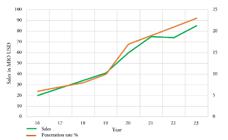
The penetration rate of e-commerce in Latin America took a significant leap in 2020, at the time of the COVID-19 pandemic, and has been growing at a new level since then. In 2019, this rate was approximately 10%, and in 2023 it already exceeded 20%, with potential for further expansion (Figure 1). In Latin America in 2023, the countries that stood out were Argentina with a 30% penetration rate, followed by Chile (25%) and Brazil (21%) (Figure 2). This scenario demonstrates significant potential for expansion in countries such as Colombia and Peru, which had relatively low penetration rates (approximately 11%).

The strategic focus of these marketplaces on logistics, financial services, and user experience was crucial in driving growth. Logistics infrastructure was and still remains one of the critical points, frequently cited as a bottleneck in Latin America. Logistics has been the target of large investments by marketplaces (e.g., Mercado Libre) in the pursuit of improved delivery times and reduced shipping costs.
At that time, other trends were present. Major players, such as Mercado Libre and Magazine Luiza, were combining direct sales (1P) strategies with marketplaces (3P), enabling greater operational flexibility and market reach. This strategy generated the so-called hybrid model (1P/3P), which proved effective in diversifying sources of revenue and improving the customer experience. Other companies started to explore diversified channels, such as their own websites, B2B sales, and integration with social platforms to reduce dependence on established marketplaces. This strategy was especially relevant in markets such as Mexico and Chile, where new local platforms were emerging.
BUSINESS MODEL
Andrade and his partners quickly realized that the business model inspired by American companies should be adapted to the reality of Latin America. In this market, e-commerce was still at an early stage of maturity, and Amazon in 2020 did not achieve great relevance in the Brazilian market.
Unlike traditional private equity approaches, which prioritized operational synergies and immediate cost cuts, Merama focused its strategy on unlocking the growth potential of the acquired brands.
Merama analyzed three main issues before investing: successful entrepreneurs, good products, and financial sustainability. The target companies offered consumer goods products from segments such as cosmetics, electronics, sporting goods, supplements, and household items. Considering the financial aspect, companies should present positive EBITDA (earnings before interest, taxes, depreciation, and amortization).
This e-seller aggregator business model was considered a fast-growing strategy, an approach that stood out for its ability to attract capital and drive innovation1. Traditionally, the business model was based on the acquisition of majority stakes in promising brands that sold in large marketplaces, such as Mercado Libre and Amazon.
In this context, Merama’s business model was structured around four strategic drivers: acquisition of promising e-sellers; retention of entrepreneurs; diversification of sales channels; and an ESG-oriented company committed to sustainable development.
Regarding the acquisition of promising e-sellers (strategic driver #1), the company specialized in identifying consumer goods companies that operated in marketplaces and had high growth potential but faced capital constraints to expand. The focus was not on the immediate creation of operational synergies, as occurs in traditional private equity models. On the contrary, Merama pursued a strategy of injecting capital into the inventory of the acquired companies, allowing them to quickly increase their sales capacity and, in this way, reach new markets. This model was driven by a capital-driven growth strategy, which differs from the conventional approach of cutting costs or creating operational synergies in the short term.
One of Merama’s most innovative strategies was the retention of the founders of the acquired companies (strategic driver #2). Instead of replacing management, Merama worked side by side with the entrepreneurs, ensuring that they remained as the heads of operations for a period after the acquisition. This allowed them to preserve practical knowledge and operational expertise, ensuring a smooth transition and more effective growth. Merama therefore positioned itself as a long-term partner, betting on joint success with the founders.
Considering the diversification of sales channels (strategic driver #3), Merama considered that exclusive dependence on marketplaces such as Mercado Libre and Amazon could be risky due to operating fees and storage costs that impacted margins. Therefore, the company promoted diversification of sales channels. Although about 70% of sales were online, more than half took place on the acquired brands’ own websites, significantly reducing exposure to marketplaces. In addition, the company also expanded to the B2B model, expanding revenue sources and mitigating risks associated with reliance on marketplaces.
In parallel with the marketing and financial actions, Merama promoted an alignment with the Sustainable Development Goals (SDGs) (strategic driver #4). To this end, the company integrated into its principles a commitment to aligning its workforce with the objectives of the United Nations (UN) and, in this way, positioned itself as a company committed to sustainable development in the countries where it operated (Merama, 2021).
Based on this business model, high global liquidity conditions and a skilled founding team created the ideal scenario for Merama to attract venture capital.
ATTRACTING VENTURE CAPITAL
Merama stood out for its fundraising capability, as a result of the strategic vision of the founders and the favorable moment of e-commerce in Latin America. The company attracted high-profile investors and managed to raise more than US$ 450 million in less than a year - a rare speed in the region’s startup scene, even in the context of favorable liquidity, with the dollar and interest rates controlled in 2021.
The key to Merama’s fundraising success was the ability to convince investors about the great untapped potential of its business model in the e-commerce market in Latin America, having the best possible team for thesis execution and a clear long-term vision. The investment rounds began with a seed round in December 2020, complemented by Series A and a debt round in March 2021, totaling US$ 160 million. This funding was led by funds such as SoftBank and Valor Capital, attracted by the differentiated value proposition of acting as an aggregator of e-sellers. SoftBank, for example, had already invested in the thesis in the US.
By aligning itself with trends of accelerated digitalization and rapidly demonstrating strong execution capabilities, Merama further increased investor interest. In September 2021, Merama completed its Series B, raising US$ 225 million. This round marked a turning point. Shortly after, in December 2021, the company obtained an additional round of US$ 80 million.
Table 1 shows the timeline of Merama’s fundraising, totaling more than US$ 450 million, which led it to a valuation of more than US$ 1 billion in less than a year, becoming a unicorn.
ACQUISITION MANAGEMENT MODEL
Merama implemented and consolidated an innovative acquisition model aimed at leveraging its accelerated growth. Renato Andrade highlighted this managerial capability when he said: “We have become a true acquisitions engine,” highlighting the company’s emphasis on speed, deal sourcing, and execution. In innovative entrepreneurship, this model is known as the M&A engine, that is, a “merger and acquisition engine.” At Merama, the priority was speed, and the team was fully focused on acquisitions. This meant that the company was able to identify acquisition opportunities and obtain deals at an accelerated pace, going from proposal to deal completion in about three to four months.
In less than a year, Merama went from zero to a revenue of US$ 100 million. Four years later, it had already surpassed US$ 800 million. During this period, the company acquired more than 30 brands in Brazil and Mexico, consolidating itself as an M&A powerhouse in Latin America. The company rapidly expanded its operations to other countries in the region, such as Chile, Peru, and Colombia, demonstrating a strategy of accelerated and widely diversified growth. The acquisitions covered various sectors, which ensured Merama a versatile and solid performance in different markets. Among the acquired brands are Mercadazo, a multi-category seller in Mexico; Nautika Lazer, which specializes in camping and outdoor products in Brazil; and Bebesit, focused on baby products in Chile. With this dynamic approach, its plan to reach US$ 1 billion in revenue within five years becomes an achievable goal.
In parallel with all this entrepreneurial agility, Merama was always careful to organize itself as a company with socio-environmental concern, seeking the best practices to meet the UN Sustainable Development Goals.
MERAMA AND THE SUSTAINABLE DEVELOPMENT GOALS
The United Nations (UN) Sustainable Development Goals (SDGs) represent a global call to action to eradicate poverty, protect the environment, and promote equity and more sustainable societies2.
Aligned with these principles, Merama incorporated sustainability as a core element of its business model. The balance between economic growth and social responsibility guides its strategic decisions, with direct impact on shareholders, employees, customers, suppliers, local communities, and the financial market.
To structure its sustainable initiatives, the company established three main pillars: environmental, social, and governance, each aligned with specific SDGs.
The environmental pillar was connected to the challenges of the sector. In this sense, the organization adopted practices to minimize the impact of its operations and contribute to a more sustainable business model. The main initiatives included a sustainability policy, with guidelines for the adoption of responsible practices. Reverse logistics was encouraged, promoting the correct disposal of products and packaging. Furthermore, Merama implemented measurement and neutralization of greenhouse gas (GHG) emissions, in order to reduce its carbon footprint.
These actions were directly related to the following Sustainable Development Goals: Responsible Consumption and Production - Encourage sustainable consumption and production patterns (SDG 12); and Industry, Innovation and Infrastructure - Promote resilient and sustainable infrastructure (SDG 9).
Inclusion, equity, and development of people were associated with the social pillar. The commitment to an inclusive and equitable corporate environment was reflected in several initiatives aimed at valuing diversity and social impact. Among the main actions, the diversity, equity, and inclusion programs stood out, which fostered diversity within the company; employee resource groups (ERGs), which promoted and strengthened internal engagement; and the encouragement of volunteer work, which supported social projects and promoted a positive impact on local communities.
These practices were aligned with SDG 5 - Gender Equality: Ensure equal opportunities and women’s empowerment; and SDG 8 - Decent Work and Economic Growth: Stimulate decent employment and inclusive growth.
Strengthening corporate governance was considered an essential factor in ensuring security, transparency, and regulatory compliance. These elements were considered key issues of the governance pillar. Therefore, the company adopted a series of decisions, which included measures aimed at cybersecurity and data protection, ensuring the privacy of information. Furthermore, a whistleblowing platform was implemented, which offered a safe and anonymous channel for reporting inappropriate conduct. Finally, an Ethics Committee was implemented in order to ensure compliance with ethical standards and best business practices.
These actions contributed to SDG 16 - Peace, Justice and Effective Institutions: Build more accountable and inclusive institutions.
THE CHALLENGES AHEAD: DILEMMAS AND STRATEGIES
Ensuing the boom of 2021 and 2022, Merama made an internal reorganization in mid-2023, adjusting its staff (estimated decrease between 8% and 9%) and maintaining its business model. At the time, Sujay Tyle reported that the company was “entering a new phase of growth and readjusting its focus on acquired brands with revenues above US$ 15 million.” Therefore, the reorganization “was due to the cancellation of projects that did not match the new phase and not a traditional approach to cost reduction.”3
Merama’s great challenge was to ensure that its accelerated growth did not compromise the sustainability of its business model and did not cause a deepening of inequalities in the e-commerce ecosystem.
Its strategy needed to balance business development without harming small e-sellers and more vulnerable consumers, minimizing the environmental impact of its companies, and maintaining effective governance practices.
The decisions of Renato Andrade and his board of directors about the future of the company should not only impact investors and partners, but could also define Merama’s role in the sustainable development of the e-commerce market in Latin America.
Some strategic options would be considered for discussion. Should Merama maintain its current business model and continue its pace of growth through acquisitions? Or should it reduce the pace of acquisitions and focus on operational efficiency? After adopting a change in strategy, should Merama rethink its business model? How should this transformation/evolution happen? Or should it be the right time for Merama to adopt an exit strategy, considering the sale of the company or an initial public offering (IPO)?
With investors pushing for results and an increasingly competitive market, Renato Andrade and his colleagues needed to make decisions that would define Merama’s destiny.
DATA SOURCES
This case was developed based on interviews with the CEO of Merama in Brazil, Renato Andrade, conducted in March 2024, and complemented by public secondary sources (see references at the end of the case study). Some dialogues in the case are fictitious, but based on real events.
CASE STUDY OBJECTIVES
This case study explores the strategic challenges faced by fast-growing companies in dynamic environments, such as the startup Merama. The central dilemma revolves around decisions about maintaining the business model, modifying it, or adopting an exit strategy. These decisions impact not only investors, but also digital inclusion and the sustainable development of e-commerce in Latin America.
Based on the theories associated with these themes (see theoretical background below), it is expected that students can, among other objectives:
-
Evaluate strategic decisions in fast-growing companies, considering decisions within the scope of business model innovation.
-
Critically analyze the possibilities and implications of business model innovation in the context of Latin American e-commerce.
-
Apply theoretical concepts to understand how organizations adapt their business models throughout economic cycles and socio-environmental changes.
In addition, students are also expected to have a good understanding of the Sustainable Development Goals (SDGs) prepared by the United Nations (UN).
THEORETICAL BACKGROUND
The theories and concepts used in the teaching case are as follows: (1) business model innovation, in particular the adaptation of an organization’s business model based on opportunities and threats, according to Saebi et al. (2017); (2) strategies for growth in e-commerce, in particular the model of e-commerce aggregators according to Hall (2021); (3) approaches to massive and rapid business scaling (MRBS), according to Lange et al. (2023); and (4) concepts of corporate venture building, in particular the study in Latin America by Rampazo and Zeisberger (2020).
TARGET AUDIENCE
Undergraduate and graduate students in Business Administration, with an emphasis on corporate and competitive strategy, business model innovation, and entrepreneurship (startups). The teaching case can be used in strategy, innovation, and entrepreneurship disciplines, providing insights into trade-offs between growth and sustainability.
SUGGESTED LESSON PLAN
It is recommended that students read the Merama teaching study before class. Complementary readings can be carried out according to the theme and objectives of the professor/lecturer.
It is suggested to start the class with a general discussion of the case in order to contextualize the analysis. Therefore, we suggest addressing the company’s history, the market context, and its business model.
Subsequently, the lesson plan consists of preparing the case analysis, discussing the strategic options for Merama’s challenges and dilemmas, and concluding with a recommendation. To stimulate critical thinking and data-driven argumentation, in this step, students should be divided into groups of five to six students. These groups should look at three main issues:
Question #1: Should Merama change its business model? Why?
Question #2: What are Merama’s possible strategic options? Maintain the business model, change it, or seek an exit strategy?
Question #3: Which of these strategic options would be recommended for Merama? Why?
Each group should base its conclusions considering the following points: (1) justifications for choosing the strategic option; (2) expected impact on stakeholders (investors, e-sellers, consumers, and the e-commerce ecosystem); (3) alignment with the Sustainable Development Goals (SDGs); and (4) implementation risks and challenges.
After the group activities, the professor/lecturer should conduct a plenary session with the objective of discussing the main conclusions and insights of each group. This discussion should address the threats and opportunities for Merama and the eight strategic options (topics detailed below for case study preparation and discussion of strategic options) and, eventually, other considerations and options analyzed by the groups. This activity in the plenary format favors the engagement of the participants and contributes to the choice of the strategic option in a reasoned way, promoting the development of critical and collaborative skills.
At the end, the professor/lecturer should consolidate the previous discussions and present a final conclusion. It must consider the three main issues of the case.
The suggested lesson plan foresees a duration of two hours (in the classroom) and is summarized in Table 2.
CASE STUDY PREPARATION
Question #1: Should Merama change its business model? Why?
Theoretical background: concept of business model innovation, in particular the adaptation of an organization’s business model based on opportunities and threats. Suggested reading: Saebi et al. (2017).
Threats and opportunities for Merama
The concepts of business model innovation can support the discussions of the Merama case, in particular the analysis of the evolution of an organization’s business model. Saebi et al. (2017) consider how companies adapt their business models in response to external threats and opportunities. These authors conducted a survey of a sample of 1,196 Norwegian companies and found that: (1) companies are more likely to adapt their business models under conditions of perceived threats than opportunities; and (2) the strategic orientation aimed at market development is more conducive to the adaptation of the business model than an orientation aimed at defending an existing market position. In this sense, Figure 3 presents an analysis of the threats and opportunities for Merama.

DISCUSSION OF STRATEGIC OPTIONS FOR MERAMA
Question #2: What are Merama’s possible strategic options?
Theoretical background: (1) strategies for growth in e-commerce, in particular the model of e-commerce aggregators; recommended reading: Hall (2021); (2) massive and rapid business scaling (MRBS) approaches; recommended reading: Lange et al. (2023); and (3) concept of corporate venture building, particularly in the context of Latin America; recommended reading: Rampazo and Zeisberger (2020).
Some authors address the drivers of massive and rapid business scaling (MRBS). Lange et al. (2023) state that MRBS is a cyclical process with exceptional growth relative to market and time. These authors consider the main drivers leveraging this growth. At the same time, these drivers create tensions that must be managed by the company. These authors present seven main drivers:
-
Analyze the environment and recognize opportunities;
-
Iteratively adjust the business model with an asset-light structure;
-
Seek operational excellence (e.g., through digitalization);
-
Develop an efficient and entrepreneurial workforce, combined with leadership and vision;
-
Leverage internal resources to strengthen competitive positioning and expand the market;
-
Attract capital to enhance growth; and
-
Cultivate organizational agility and a culture of transformation.
These drivers can be used to analyze Merama’s strategic alternatives. Particularly, the teaching notes adopt three strategic hypotheses: (1) maintenance of Merama’s business model; (2) changes in the business model to a lesser degree (evolution) or to a greater degree (transformation); and (3) adoption of a strategic exit (i.e., exiting the business through sale or IPO).
Figure 3 shows some strategic options for the future of Merama elaborated by the authors in order to foster discussion in the classroom. Students can or should eventually create other innovative hypotheses or even mix options among those cited.
Details of the hypotheses of decisions for the strategic future of Merama
Option #1: Maintain the growth model through acquisitions and portfolio growth
With strong investor support, Merama can further consolidate its position in the region through continued acquisitions. However, as the portfolio grows, the company faces the challenge of integrating and managing an increasingly complex structure, which will require a balance between expansion and operational efficiency. This also implies challenges in allocating financial and human resources to support the newly acquired operations, as well as increasing the risk of cultural and operational fragmentation. In emerging markets, this complexity can be further accentuated by logistics infrastructure and regulatory variations. Expanding through more acquisitions would bring in more short-term revenue, but it would also increase the complexity of integrating operations.
Option #2: Maintain the model by seeking efficiency through operational synergies
Merama, unlike its competitors such as Thrasio in the US, opted for a hybrid approach, keeping the founders and managers of the acquired companies. This was fundamental for preserving the know-how. Nowadays, the company faces the challenge of integrating operations and extracting operational synergies, something complex considering that not all acquired brands have the same market profile or operational structure. While some companies have high margins, others still need restructuring to become more profitable.
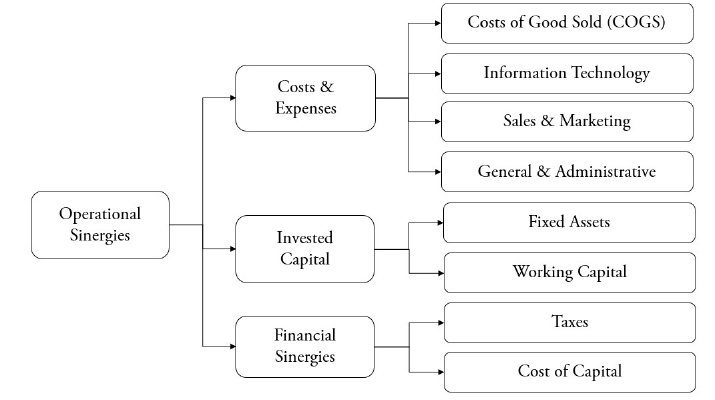
There are several possibilities for synergies, which have different relevance and feasibility. For the purposes of discussion, some of these alternatives are presented in Figure 4.

Option #3: Maintain the model by seeking operational efficiency through rationalization of current brands and products
Portfolio rationalization involves identifying which brands have the least contribution to growth and profitability. This may require redirecting resources, adjusting marketing strategies, and possibly discontinuing less profitable products, which can impact customer and supplier relationships.
The question is whether Merama should focus on maintaining a diversified portfolio to reduce risks and expand reach or consolidate its operations around the most profitable brands and products. Rationalization can increase profitability in the long run but risks losing revenue in the short run.
Option #4: Change the model by seeking evolution, through the creation of separate B2B and B2C business units
With 30% of its sales focused on B2B and the other 70% on B2C, Merama can evaluate the separation of these two business units. B2B operations tend to have lower margins, longer sales cycles, and require robust business structures, while B2C relies heavily on digital marketing and e-commerce platforms.
In markets such as Brazil, B2B growth offers opportunities but requires significant working capital, as well as investments in sales and logistics teams. B2C, on the other hand, which accounts for a large part of revenues, may be more scalable but faces margin pressure from marketplaces such as Mercado Libre and Amazon.
Merama needs to decide whether separating operations will allow for greater efficiency or whether keeping the units integrated can bring advantages, such as sharing structures and knowledge. Separating operations also requires investments in independent technology and management, which can overwhelm the financial structure.
Option #5: Change the business model seeking transformation, through the launch of its own marketplace
Another strategic discussion involves the creation of its own marketplace. Currently, 80% of Merama’s sales occur through the acquired brands’ own websites, but a centralized platform could unify operations, improve the customer experience, and increase margins.
Creating its own marketplace would allow Merama to avoid the high marketplace fees charged by third parties and give more control over data management and the consumer experience. However, the operational and technological challenges are significant, as developing a successful marketplace requires heavy investments in technology, logistics, and marketing, as well as facing competition from already established large players.
Although its own marketplace offers control advantages, it also carries the risk of dispersing the focus of management and increasing operating costs. Merama must weigh the benefits of building this infrastructure against the costs and risks of implementation.
Option #6: Change the business model by seeking transformation, through the launch of a corporate venture building initiative
The brands invested in by Merama earn between R$ 20 million and R$ 30 million annually. One of the possibilities for growth would be the launch of brands by Merama itself, which could generate revenues between R$ 5 million and R$ 10 million per year. Thus, one of the ideas would be to create Merama Labs, with the aim of creating virtual stores from scratch or even incubating those with still incipient revenue. The lab could also serve as a hub to accelerate innovation and to consolidate our knowledge in product and brand development.
The development of Merama Labs entails the challenge of developing new organizational competencies at Merama. Investment in innovation can bring new growth avenues. Nevertheless, the results usually occur in the medium and long term, in addition to the investments being associated with the risks inherent to innovation.
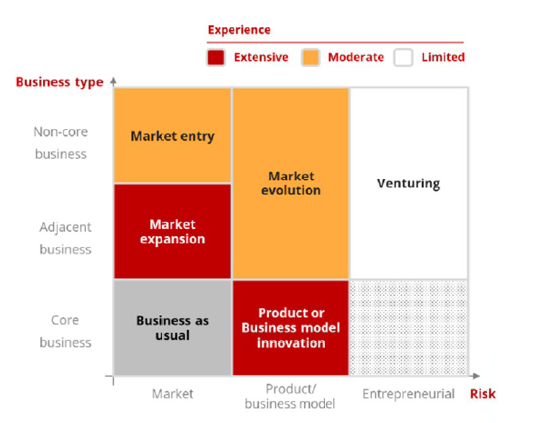
The matrix for the analysis of the corporate venture building strategy presented in Figure 6 can provide additional support for the evaluation of this strategic option.

Option #7: Seek a strategic exit through IPO in the US or Brazil
Preparing for an exit is a challenge that requires Merama to strengthen its governance and operations to meet the criteria required to pursue an IPO. In the US, IPO regulations are stricter, but the market is more liquid and attracts more investors. Brazil, on the other hand, offers less global visibility but a simpler listing process aligned with Merama’s profile. In addition, the volatility of Latin American markets poses an additional challenge.
Merama must decide whether it is the right time for a strategic exit and which public market to choose. Furthermore, it needs to consider whether a sale to a strategic player can provide a faster and safer exit while avoiding the volatility of the public markets.
Option #8: Seek exit strategy through partial or full sales of the group companies
Another alternative strategic exit would be to try to sell parts, individually and/or by sectors, or even the entire portfolio of companies in the group. Evidently, this action is difficult to execute and time-consuming, given the amounts involved in the group’s companies and the low availability of buyers at a time of complex economic circumstances and high interest rates.
CONCLUSION
Question #3: Which of these strategic options would be recommended for Merama? Why?
At the end of this real-life Merama teaching case, students will be asked to indicate the recommended strategic option. In order to support this recommendation, they should consider in their conclusions the following points: (1) justification for the choice of strategy, (2) expected impact on stakeholders (investors, e-sellers, consumers, and the e-commerce ecosystem), (3) alignment with the Sustainable Development Goals (SDGs), and (4) implementation risks and challenges.
In this way, it is expected that students will be able to deepen discussions on the following topics: (1) corporate and competitive strategy; (2) business model innovation; (3) innovative entrepreneurship; and (4) relevance of the UN Sustainable Development Goals.
REFERENCES
-
Bragado, L. (2024) Unicórnios brasileiros: modelo de negócio inspirado nos EUA levou Merama a valer US$ 1,2 bi um ano após sua fundação. Época Negócios, June 18, 2024 https://epocanegocios.globo.com/tudo-sobre/noticia/2024/06/unicornios-brasileiros-modelo-de-negocios-inspirado-nos-eua-levou-merama-a-valer-us-12-bi-um-ano-apos-sua-fundacao.ghtml
» https://epocanegocios.globo.com/tudo-sobre/noticia/2024/06/unicornios-brasileiros-modelo-de-negocios-inspirado-nos-eua-levou-merama-a-valer-us-12-bi-um-ano-apos-sua-fundacao.ghtml -
Fonseca, M. (2021) Na busca por dominar lojas virtuais, Merama vira mais novo unicórnio da América Latina. Infomoney. https://www.infomoney.com.br/negocios/na-busca-por-dominar-lojas-virtuais-merama-vira-mais-novo-unicornio-da-america-latina/
» https://www.infomoney.com.br/negocios/na-busca-por-dominar-lojas-virtuais-merama-vira-mais-novo-unicornio-da-america-latina/ -
Hall, C. (2021). E-Commerce Marketplace Aggregators are hot on Thrasio’s heels as companies raise $2.3B. Crunchbase News, March 2, 2021. https://news.crunchbase.com/fintech-ecommerce/e-commerce-marketplace-aggregators-are-hot-on-thrasios-heels-as-companies-raise-2-3b/
» https://news.crunchbase.com/fintech-ecommerce/e-commerce-marketplace-aggregators-are-hot-on-thrasios-heels-as-companies-raise-2-3b/ -
Lange, F., Tomini, N., Brinkmann, F., Kanbach, D. K., & Kraus, S. (2023). Demystifying massive and rapid business scaling: An explorative study on driving factors in digital start-ups. Technological Forecasting and Social Change, 196, 122841. https://doi.org/10.1016/j.techfore.2023.122841
» https://doi.org/10.1016/j.techfore.2023.122841 -
Merama. (2021). Our ESG Practice. ttps://www.merama.io/elementor-9917/?lang=pt-br
» ttps://www.merama.io/elementor-9917/?lang=pt-br -
Organização das Nações Unidas. (2025). Objetivos de Desenvolvimento Sustentável. https://brasil.un.org/pt-br/sdgs
» https://brasil.un.org/pt-br/sdgs -
Rampazo, A, & Zeisberger, C. (2020). Corporate innovation through venture building. INSEAD. https://www.insead.edu/sites/default/files/assets/dept/centres/gpei/docs/corporate-innovation-through-venture-building-part-1-2.pdf
» https://www.insead.edu/sites/default/files/assets/dept/centres/gpei/docs/corporate-innovation-through-venture-building-part-1-2.pdf -
Saebi, T., Lien, L., & Foss, N. J. (2017). What drives business model adaptation? The impact of opportunities, threats and strategic orientation. Long Range Planning, 50, 567-581. https://doi.org/10.1016/j.lrp.2016.06.006
» https://doi.org/10.1016/j.lrp.2016.06.006 -
Sridharan, K. (2023). Thrasio's $10B crash: What went wrong? Buildd, November 19, 2013. https://newsletter.buildd.co/p/thrasios-10b-crash-went-wrong
» https://newsletter.buildd.co/p/thrasios-10b-crash-went-wrong
-
Funding
The authors stated that there was no funding for the research in this article.
-
Plagiarism Check
RAC maintains the practice of submitting all documents approved for publication to the plagiarism check, using specific tools, e.g.: iThenticate.
-
Peer Review Method
This content was evaluated using the double-blind peer review process. The disclosure of the reviewers’ information on the first page, as well as the Peer Review Report, is made only after concluding the evaluation process, and with the voluntary consent of the respective reviewers and authors.
-
Data Availability
RAC encourages data sharing but, in compliance with ethical principles, it does not demand the disclosure of any means of identifying research subjects, preserving the privacy of research subjects. The practice of open data is to enable the reproducibility of results, and to ensure the unrestricted transparency of the results of the published research, without requiring the identity of research subjects.
-
Cite as:
Madureira, P., Federico, P., Neto, & Pedroso, M. C. (2025). Merama: Creating a unicorn in 12 months. Revista de Administração Contemporânea, 30(2), e250062. https://doi.org/10.1590/1982-7849rac2026250062.en
-
JEL Code:
M13.
-
Peer Review Report:
The disclosure of the Peer Review Report was not authorized by its reviewers.
-
Discipline:
Innovation; Entrepreneurship
-
Subject:
Innovative entrepreneurship; business model innovation
-
Industry:
Industry: Retailing; e-commerce
-
Geography:
Latin America; Brazil and Mexico
-
1
According to E-Commerce Marketplace Aggregators are hot on Thrasio’s heels as companies raise $2.3B. https://news.crunchbase.com/fintech-ecommerce/e-commerce-marketplace-aggregators-are-hot-on-thrasios-heels-as-companies-raise-2-3b/
-
2
According to Objetivos de Desenvolvimento Sustentável da ONU. https://brasil.un.org/pt-br/sdgs
-
3
According to Época Negócios. https://epocanegocios.globo.com/tudo-sobre/noticia/2024/06/unicornios-brasileiros-modelo-de-negocios-inspirado-nos-eua-levou-merama-a-valer-us-12-bi-um-ano-apos-sua-fundacao.ghtml
Edited by
-
Editor-in-chief:
Paula Chimenti (Universidade Federal do Rio de Janeiro, COPPEAD, Brazil) https://orcid.org/0000-0002-6492-4072
-
Ad hoc Associate Editor:
Clarice Kogut (Pontifícia Universidade Católica do Rio de Janeiro, IAG, Brazil) https://orcid.org/0000-0002-4760-654X
RAC encourages data sharing but, in compliance with ethical principles, it does not demand the disclosure of any means of identifying research subjects, preserving the privacy of research subjects. The practice of open data is to enable the reproducibility of results, and to ensure the unrestricted transparency of the results of the published research, without requiring the identity of research subjects.

 Source: Elaborated by the authors using data from Merema and IBGE. Instituto Brasileiro de Geografia e Estatística (2024). Pesquisa Anual do Comércio 2023. Rio de Janeiro. https://agenciadenoticias.ibge.gov.br/media/com_mediaibge/arquivos/f5b246ca5253a5180fbb81f2023f69a8.pdf
 Fonte: Elaborated by the Authors using data from Merama.
 Source: Elaborated by the authors.
 Source: Elaborated by the authors.
 Source:


