 Mandatory legislative budget amendments: Institutional change and challenges
This article examines the new institutional framework of mandatory legislative budget amendments in Brazil. The study aims to identify the factors associated with this institutional change and to discuss the implications of this new arrangement for coalition presidentialism, budgetary governance, and the management of intergovernmental transfers. This exploratory research adopts a qualitative approach and relies on descriptive inference supported by official data covering the period from 2015 to 2024. Mandatory amendments are analyzed as an institutional change that emerged amid a political crisis, characterized by intensified tensions between the executive and legislative branches, increased social demands channeled through legislators, and heightened intergovernmental conflicts. Pre-existing policy solutions, such as the debate over mandatory budget execution, the growing technical specialization of the legislative branch, and the use of automatic transfers in the health sector, informed this process of change. The analysis indicates an expansion of the legislature’s direct participation in the budget and a restriction on the use of amendments as instruments of coalition management. The allocation of mandatory amendments reveals patterns of dispersion, localism, and particularism, which place pressure on the efficiency of budgetary governance. The new institutional framework is also associated with increased use of flexible intergovernmental transfers, reconfiguring challenges within fiscal federalism. The article concludes that the current configuration calls for a reassessment of the role of legislative amendments in Brazil’s political-administrative system, considering the principles of representative democracy and the pursuit of effective outcomes in public budgeting and investment management.
Keywords:
mandatory legislative amendments; institutional change; public budget; public investment
 Thumbnail
 Thumbnail
 Thumbnail
 Thumbnail
 Thumbnail
 Thumbnail
 Thumbnail
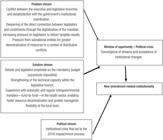
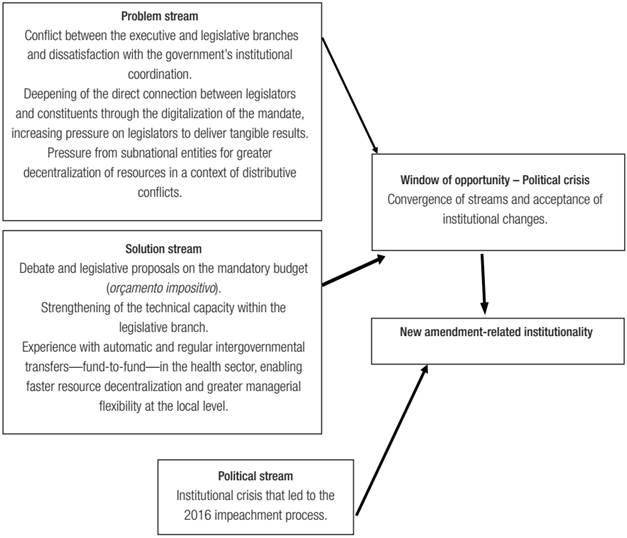 Source: Elaborated by the authors.
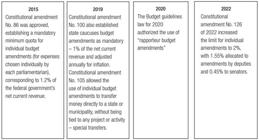
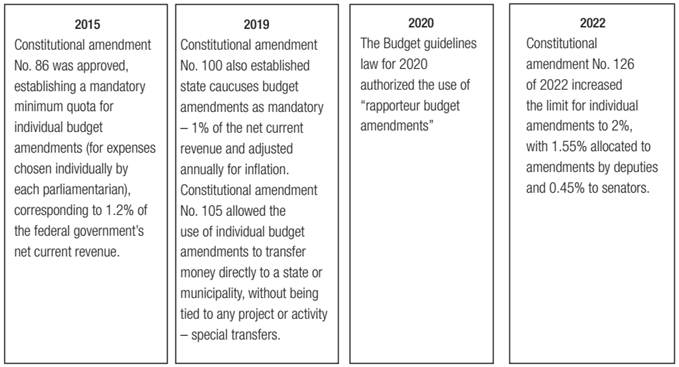 Source: Elaborated by the authors.
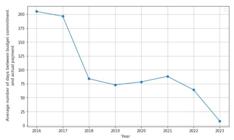
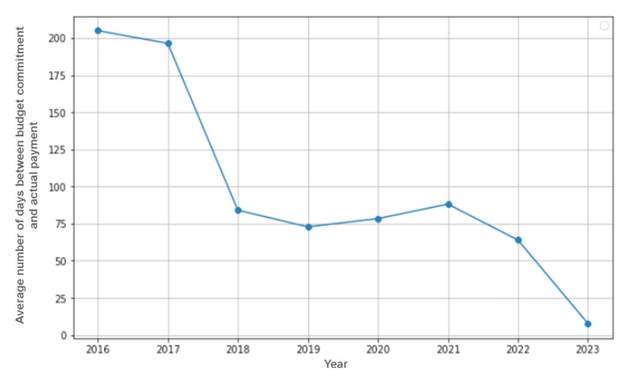 Note: The date of commitment was considered to be the date of publication of the ordinance or agreement.Source: Elaborated by the authors based on the InvestSUS panels - National Health Fund of the Ministry of Health, in Portuguese Fundo Nacional da Saúde do Ministério da Saúde (Ministério da Saúde, 2024).
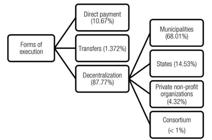
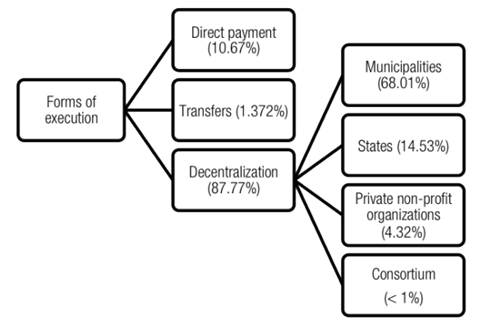 Note: Percentage of amendment execution shown in parentheses, referring to the period from 2015 to August 2024.Source: Elaborated by the authors based on data from SigaBrasil - beneficiaries (Câmara dos Deputados, 2024).
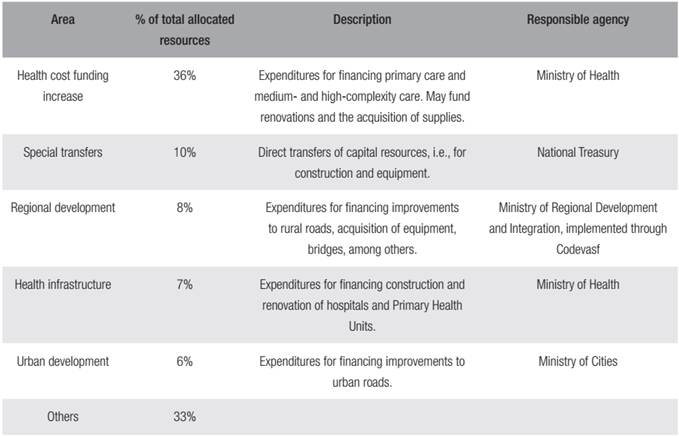 Note: Calculated based on committed expenditures from 2015 to August 2024 - all amendments; total committed volume: BRL 213 billion.Source: Elaborated by the authors based on SIOP data (Ministério do Planejamento e Orçamento, 2024b)
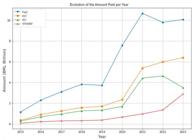
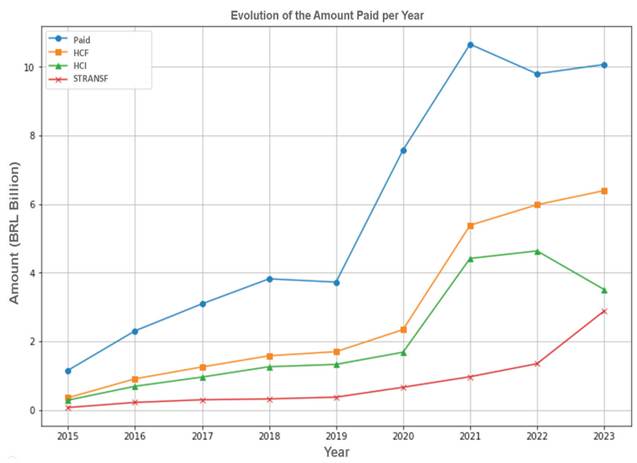 Note: Paid = total amount paid; Health cost funding (HCF) = sum of amount for health cost increases (HCI) and amount for special transfers (STRANSF). N = 4,114 municipalities.Source: Elaborated by the authors based on SigaBrasil (Câmara dos Deputados, 2024).
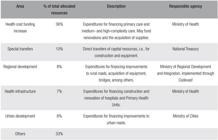
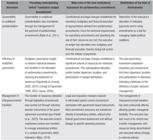
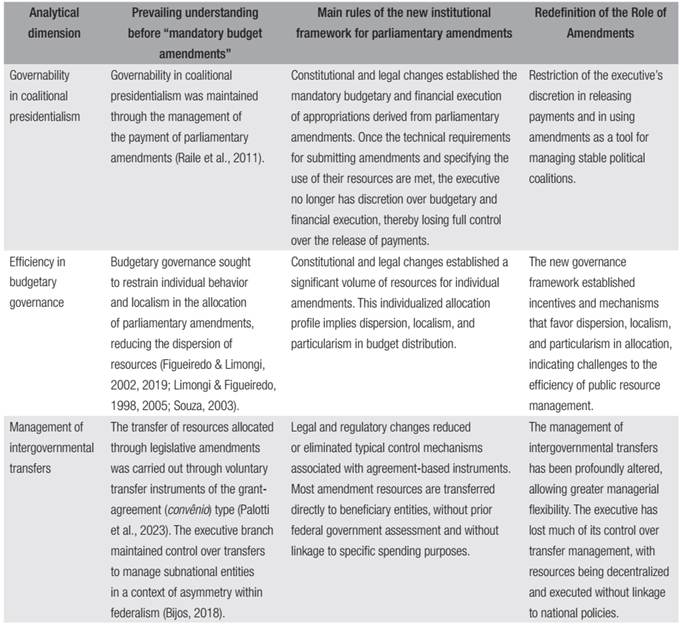 Source: Elaborated by the authors.