
 Do ethical values influence quality of life? An analysis of 187 countries
Abstract
The ultimate purpose of social wellbeing is to achieve the common good and improve the quality of life (QoL) of citizens. This suggests that high QoL may be partially explained by certain ethical values embedded in societies’ cultures. The objective of this cross-sectional study was to validate the Ethical Values Construct (EVC) and analyze the relationship between ethical values and QoL across the 187 evaluated countries. The construct was validated using partial least squares structural equation modeling (PLS-SEM), and the results indicate a strong relationship between ethical values and the social QoL of the analyzed nations. We found that the EVC — comprising freedom, through political, expression, and economic rights; order, via social rule-following, interpersonal trust, and legal certainty; commitment to the public interest, involving social balance, self-sacrifice, and environmental sustainability; and private entrepreneurial culture, characterized by competitiveness, innovation, and the pursuit of excellence — demonstrates a strong connection with QoL.
Keywords:
ethical values; quality of life; ethics; human development; social indicators
Resumo
O fim último do bem-estar social é alcançar o bem comum e melhorar a qualidade de vida (QV) dos cidadãos. Esta afirmação sugere que alta QV pode ser explicada parcialmente por certos valores éticos enraizados nas culturas das sociedades. O objetivo deste estudo transversal foi validar o Construto de Valores Éticos (CVE) e analisar a relação entre valores éticos e qualidade de vida (QV) nos 187 países avaliados. O construto foi validado utilizando modelagem de equações estruturais por mínimos quadrados parciais (PLS-SEM), e os resultados indicam uma forte relação entre valores éticos e a QV social das nações analisadas. Constatamos que o CVE - que compreende liberdade, por meio de direitos políticos, de expressão e econômicos; ordem, por meio do cumprimento de normas sociais, confiança interpessoal e segurança jurídica; compromisso com o interesse público, envolvendo equilíbrio social, autossacrifício e sustentabilidade ambiental; cultura empreendedora privada, caracterizada por competitividade, inovação e busca pela excelência - demonstra uma forte conexão com a QV.
Palavras-chave:
valores éticos; qualidade de vida; ética; desenvolvimento humano; indicadores sociais
Resumen
El fin último del bienestar social es alcanzar el bien común y mejorar la calidad de vida (CdV) de los ciudadanos. Esto sugiere que una alta CdV puede explicarse parcialmente por ciertos valores éticos arraigados en las culturas de las sociedades. El objetivo de este estudio transversal fue validar el Constructo de Valores Éticos (CVE) y analizar la relación entre los valores éticos y la CdV en los 187 países evaluados. El constructo se validó mediante el modelo de ecuaciones estructurales de mínimos cuadrados parciales (PLS-SEM), y los resultados indican una fuerte relación entre los valores éticos y la CdV social de las naciones analizadas. Encontramos que el CVE -que comprende la libertad, a través de los derechos políticos, de expresión y económicos; el orden, mediante el cumplimiento de las normas sociales, la confianza interpersonal y la seguridad jurídica; el compromiso con el interés público, que implica el equilibrio social, el autosacrificio y la sostenibilidad ambiental; y la cultura empresarial privada, caracterizada por la competitividad, la innovación y la búsqueda de la excelencia- demuestra una fuerte conexión con la CdV.
Palabras clave:
valores éticos; calidad de vida; ética; desarrollo humano; indicadores sociales
1. INTRODUCTION
Although the Twentieth Century has enshrined democracy and social participation as pillars of modern society, the world is still bristling with deprivation, oppression, and threats to economic and social life, affecting the global quality of life (Sen, 2010). This situation became even worse after the pandemic (Costa, 2020). It is widely known that the ultimate purpose of wellbeing is to achieve the common good (Meirelles, 2002), which takes shape in the continuous improvement of quality of life (QoL) of the society.
Since the classical school of economics, which marked the publication of “An Inquiry into the Nature and Cause of the Wealth of Nations” by Adam Smith in 1776 as a milestone, seminal books on the development and well-being of societies have been published. From Karl Marx’s Capital in 1867 to Human Action: A Treatise on Economics by Ludwig von Mises in 1949 (Brue & Grant, 2017), the ideas contained in these classics of economics and politics, however, divided the world between followers of John Locke and followers of Karl Marx (Koyzis, 2014). This polarization is considered exhausted, as it cannot provide the answers society needs (Rosa et al., 2021). The paradigm shift proposed in this paper is a review emphasizing the study of the cultural roots of QoL.
1.1 Research problem
Many studies emphasize a common feature of high-QoL countries that seems to be lacking in countries that have not yet reached that status. This something in common refers to the specific ethical values (Gächter & Schulz, 2016; Gundlach & Paldam, 2009; Treisman, 2000) rooted in the prevailing social culture.
QoL, although a complex topic that still lacks conceptual consensus (Pereira et al., 2012), has been measured using indicators that generally cover the fields of health, education, public safety, infrastructure, and the economy (Diener & Suh, 1997). There is no comprehensive indicator that includes all aspects of the quality of human life (Noorbakhsh, 1998), and therefore more than one indicator should be adopted.
The existence of countries with low QoL leads, or at least should lead, development scholars to understand which variables correlate with a high standard of QoL. In this sense, it is worth examining whether the high QoL indicators of some sampled nations could be explained, at least in part, by certain ethical values ingrained in the cultures of those societies that have enabled them to become prosperous nations. Consequently, the research question of this study is: Do ethical values influence QoL?
Before addressing this question, it is necessary to understand which ethical values could contribute to improving social QoL. This leads to two specific objectives for this work: 1) to propose and validate a second-order construct representing an ethic that encompasses the dimensions of values shared by sampled nations; 2) to investigate the relationship between this Ethical Values Construct (EVC) and QoL levels in the nations studied.
These specific objectives were pursued in two steps: 1) Identification of the explanatory variables that contribute to the necessary environment for the improvement of QoL through theoretical articulation; 2) Empirical testing of the hypothesis H1 - Ethical values positively influence social QoL.
1.2 Justification and research contributions
The relationship between ethical values and QoL is a subject that has been little studied (Rosa et al., 2021). A search in the Scopus and SciELO databases in 2021, in English using the terms ethics, development, and quality of life. No empirical studies investigating the relationship between a society’s ethical profile and its QoL were found. The study of “development ethics” is the closest to that.
Names such as Louis-Joseph Lebret, Denis Goulet, Mohandas Gandhi, Gunnar Myrdal, and Peter Berger were forerunners in the creation of development ethics as an area of study (Marangos et al., 2019).
Development ethics, as a field of knowledge, is an interdisciplinary science (Gambi & Chaves, 2017) that addresses areas such as the environment, ecology, tradition, justice, globalization, culture, and people’s sense of a meaningful life. It also approaches issues such as human rights activism, humanitarian interventions, immigration, refugees, working conditions, and social responsibility (Gasper & Clair, 2010; Marangos et al., 2019).
However, there is a gap in the literature, and the difference between theory and practice is large (Marangos et al., 2019). Hence, the purpose of this work is to fill this empirical gap in the field of social development grounded in ethical values, advancing from metaethical discussions to the application of ethics in practice.
As a theoretical contribution, the current paper intended to highlight ethical values implied in the literature. More specifically, the validation of a construct that measures ethically related values and the extent to which these values impact QoL.
2. QoL IN CONTEMPORARY LITERATURE
There are four main types of approaches to the topic of QoL. The socioeconomic approach is built on social indicators relevant to society. The psychological approach focuses on subjective aspects of the individual, such as his/her unique perception of mental and motivational well-being. The biomedical approach addresses QoL related to aspects of physical health, such as nutrition, chronic pain, and a sedentary lifestyle. Finally, the general approach incorporates elements from each of the aforementioned approaches (Day & Jankey, 1996).
In this study, the analysis of socioeconomic indicators as a metric of societal QoL prevails. In this sense, one of the main concepts of QoL is that of the World Health Organization (WHO), which states that “quality of life reflects the individuals’ perception that their needs are being met or that they are being denied opportunities to achieve happiness and self-accomplishment, regardless of their state of physical health or social and economic conditions” (WHO, 1998). Some terms are used roughly as synonyms for QoL, such as social well-being, which is often measured by employment, income, crime, and house prices (Bell & Morse, 2008).
Sen (2010), for example, innovated by taking the concept of QoL and development beyond the economic dimension. It is remarkable that, until then, the main books and scientific articles on the well-being of societies had an almost exclusively economic bias; Sen, however, has drawn attention to dimensions beyond economic criteria, such as health and education, as representative of QoL. For this reason, QoL may encompass diffuse aspects such as life expectancy, access to health insurance, education and its availability, quality of work, and even gender inequalities (Nussbaum & Sen, 1993).
QoL is strongly anchored in the idea of a process that produces societies increasingly focused on human freedom, socioeconomic modernization, and self-expression. These values engender greater popular demands for civil liberties, political freedoms, gender equality, and responsive, democratic governments, culminating in the core of human development, which consists of the expansion of human choice and autonomy (Inglehart & Welzel, 2009).
The crucial difference between rich and poor countries lies in their political and economic institutions. Inclusive institutions allow the emergence of QoL, as they promote private property security to citizens, impartial legal systems, stability, limited and widely distributed political power, so that people are free to hire, choose their careers, and can trust that no dictator will seize power, and change the rules of the game and their way of life. Extractive institutions, in contrast, are designed to extract income and wealth from society for the benefit of specific groups and elites. These groups expropriate resources from the masses, erect barriers against competition, and suppress the free market for the benefit of the few who support their political power (Acemoglu & Robinson, 2012).
3. ETHICAL VALUES CONSTRUCT SCOPE
The functioning of successful economies is due not only to the freedom of exchange but also to the ethics of behavior that enables the delivery of contracts without constant litigation and the emergence of solid institutions (Sen, 2010). “[...] People’s values and beliefs in advanced societies drastically differ from those found in less developed societies” (Inglehart & Welzel, 2009, p. 17).
The word ‘ethics’ has been used with many meanings and in different contexts (Valls, 1994). This paper uses the normative concept of ethics, which considers ethics as a normative science of human behavior (Reale, 1999). This concept was selected because the normative character of ethics holds across all ethical theories, as no theory can be formulated without establishing some norm (Rosa et al., 2021). Descriptive ethics cannot be generalized since it applies to a specific group, as is the case with cultural mores. Normative ethics, on the other hand, applies to “all rational beings, under certain specific conditions” (B. Gert & J. Gert, 2017; Rosa et al., 2021, p. 725).
Mario Bunge draws attention to the fact that development should be integral and therefore comprise economic, biological, political and cultural aspects. Ramírez criticises technological determinism as if everything depended on economic growth based on technological advancement (Crocker, 1991). The ethical choice should thus be pluralistic rather than ethnocentric, and geared toward a global dialogue (Crocker, 1991).
The social phenomenon of the precariat shows that even in developed countries, professions such as call centers, poorly paid internships without prospects of career development and underemployment have led to a significant increase in suicide, depression and a wide range of psychosocial illnesses (Standing, 2013). Even so, the economic and social indicators used in the functionalist scientific literature were elected to this paper because the so-called developed countries, with all their flaws, are still the first choice of most of the world’s population if they could choose where to live, as these countries make people richer, longer-lived and more ethical (Gundlach & Paldam, 2009; McCloskey, 2010).
Based on the literature review, this paper will subsequently elucidate the rationale behind the proposal of the following four dimensions in which ethical values relate to QoL.
3.1 Freedom
The ethnocentric argument that freedom and democracy are biased processes of Westernisation or Americanization of society is weak, as autonomous choice and freedom are universally prevalent desires (Kant, 1959).
Sen (2010) argues that freedom has a significant influence on a society’s QoL. For him, freedom is not only the main end but also the main means to achieve development. Freedom is highly dependent on the effectiveness of specific freedoms such as economic, political, press, and transparency. In this sense, according to previous studies, freedom as an ethical value to be addressed in the context of applied ethics emerges in three substantive freedoms: freedom of expression, political freedom, and economic freedom (Peyton & Belasen, 2012).
Freedom is a key objective of development, as people should have the chance to participate in and benefit from growth processes, as well as to decide on their own destiny (Marangos et al., 2019). For this reason, the scope of the dimension of freedom addressed in this study boils down to three variables: i) political freedom, ii) freedom of expression, and iii) economic freedom.
Sen argues that “The path between freedom and responsibility is a two-way street” (Sen, 2010, p. 361). Freedom must be followed by responsibility; otherwise, social chaos can ensue. Kant believed in the autonomy of human beings, but autonomy requires that genuinely autonomous agents have individual responsibility for their decisions and actions (Bell, 2002); therefore, absolute freedom would lead to anarchy, which would be an unworkable form of government.
3.2 Order
Freedom is in constant conflit with the minimal need for order that every society requires for coexistence (B. Gert & J. Gert, 2017). From a conceptual standpoint, while freedom has a well-defined yet multifaceted scope, the word ‘order’ has been used in both the pejorative sense of tyranny and in diffuse senses such as security, domestic and external peace of a society, economic order, and, more recently, governance (Moynihan, 2008).
Regarding order in human behavior, for example, Max Weber emphasizes the importance of punctuality and honesty for prosperity (Weber, 2002). In a cross-societal empirical study, people’s intrinsic honesty was found to be strongly negatively correlated with the “prevalence of rule violations” (PRV) index. The results further showed that weak institutions and cultural legacies that give rise to rule violations have adverse economic consequences and undermine the smooth functioning of society (Gächter & Schulz, 2016; Rosa et al., 2021).
Trust is an imperative condition for freedom, since without trust, contracts, promises, and obligations can only be maintained through coercion. Trust is the human form of interaction that leads to an ideal model of community life. Power, domination and, coercion may only temporarily solve a social problem; the importance of trust, however, has been recognized by many scholars of social life, such as Locke, Luhmann, Giddens, Burke, Durkheim, Maine, and Gambetta. A society’s overall level of trust is defined by its trust system, which encompasses trust in people and institutions (Seligman, 2021).
Accordingly, the concept of order will be limited to the applied ethical approach, especially regarding public administration and the exercise of citizenship. Order will not be approached as a synonym for public safety, as safety would be a by-product of order. Therefore, the dimension of order here is restricted to three central variables embedded in social cultures defined by previous literature: i) social capacity to respect rules; ii) interpersonal trust; and iii) legal certainty (Acemoglu & Robinson, 2012; Gächter & Schulz, 2016; Inglehart & Welzel, 2009; Sen, 2010).
3.3 Commitment to the Public Interest (CPI)
The honour belongs to the public because a human being who contributes nothing to the common good is not honourable. Nor does man in isolation achieve happiness, since human beings are political and living in society is part of their nature (Aristóteles, 1991). In Aristotelian ethics, the lack of commitment to the public interest is rooted in selfishness.
It has been noted since the Middle Ages that most development occurred in cities, a phenomenon attributed to synergies in which people from the most diverse professions participated in the community. Between 1220 and 1294, Brunetto Latini described this synergy as “the common good”. He understood wealth as a necessarily collective phenomenon. The historical evolution from city-states to nation-states reveals the important role of the collective in achieving prosperity (Reinert, 2019).
Social and economic balance is important for the public interest. Social inequality or income concentration, for example, has worsened in this sense over time, and the current level is detrimental to democracy, social mobility and the expansion of prosperity, even in the United States (Stiglitz, 2012). In this context, social balance becomes a key variable in the analysis of ethical effects on QoL of any society.
Environmental sustainability, in turn, is a result of the idea that whatever is done should be done without harming future generations. In its broad meaning, sustainability may encompass maintaining the quality of the environment, organizations, and institutions (Bell & Morse, 2008).
As for the third dimension of the EVC, commitment to the public interest can encompass several themes, such as putting the public interest above the private interest, being honest, respecting the environment, social justice, self-sacrifice for others, having compassion and other attitudes considered indispensable for collective coexistence (Perry & Hondeghem, 2008). For this reason, the scope of this research will be limited to three central variables: i) social balance, ii) self-sacrifice, and iii) environmental sustainability.
3.4 Private Entrepreneurial Culture (PEC)
The private entrepreneurship culture does not conflict with a commitment to the public interest, even though they are often at opposite ends of the spectrum. This perennial tension between commitment to the public interest and private entrepreneurial culture is more ideological than pragmatic. Private profit motives may run counter to social interests, but one can choose an appropriate balance between equity and efficiency (Sen, 2010). Sen does not deny the important role played by self-interest in economic development, but he does not polarise the issue, showing that commitment to the public interest is fundamental to society’s QoL (Sen, 2010). When awareness about environmental responsibility is developed, entrepreneurship and innovation can be used in favor of environmental preservation.
The core process that Schumpeter called ‘creative destruction’ is shaped by the ceaseless destruction of the old and creation of the new. Revolution affects QoL when the spirit of competition and innovation is present, allowing new technologies, new products and new markets to emerge and competition to remain a constant threat, keeping prosperity moving forward (Schumpeter, 2008).
For this reason, the scope of this dimension concerns ethical values that promote the population’s private entrepreneurial culture. It is not about the predominance of political systems, whether capitalist or socialist, but, for the scope proposed, the ethical environment favourable to entrepreneurship in the private sphere. In this sense, the following are the variables that make up the ethical dimension of private entrepreneurial culture: i) competitiveness; ii) innovation and iii) excellence.
4. METHODS
The relationships between the variables of the construct Ethical Values (EVC) and social QoL were assessed using partial least squares structural equation modelling (PLS-SEM) statistical technique (Hair et al., 2005).
The PLS method was chosen because it is recommended for exploratory studies when the underlying theory is empirically tested for the first time (Bido & Silva, 2019). This choice is also justified because constructs based on socioeconomic indicators are usually formative (Diamantopoulos & Siguaw, 2006). In such cases, the meaning of the constructs emerges from a particular composition of indicators, and the constructs are not invariant to the inclusion and/or exclusion of model indicators (Bollen & Lennox, 1991; Henseler, 2017).
Therefore, the constructs in this study are formative. The hierarchical relationship between first and second-order constructs and indicators suggests the use of the Formative-Formative Hierarchical Composite Model (HCM), for which the PLS is the most appropriate estimation approach (Becker et al., 2012; Hair et al., 2011).
The following research hypothesis was formulated and tested:
H1 - Ethical values positively influence social QoL.
4.1 Data collection
Country data, in the form of indicators, were downloaded from the United Nations (UN) and World Bank databases and other sources, as shown in Table 1 (Green et al., 2021; Kaufmann & Kraay, 2018; United Nations Development Programme, 2021; World Bank Group, 2021).
Indicators were chosen taking into account the criteria of validity, reliability, sensitivity, specificity, sample and territorial coverage, transparency, relevance, temporal availability and adequate periodicity of updating (Jannuzzi, 2005).
A total of 187 countries remained in the database, out of a total of 193 internationally recognised countries (United Nations Development Programme, 2021), validating the multicultural perspective of the research.
The most recent data available for the indicators evaluated were used. The indicators were collected from 2019 (the oldest global competitiveness index) to 2021 (the most recent economic freedom index at the time of the research).
4.2 Data analysis procedures
All analyses were carried out in R (R Core Team, 2020). The data and codes are available at Open Science Framework (OSF, 2023).
Initially, the percentage of missing data was computed and imputed using a machine learning-based random forest algorithm (Wright & Ziegler, 2017). All computations related to PLS-SEM were conducted using the cSEM package (Schuberth et al., 2023).
Prior to parameter estimation and formal inference, the cSEM framework mandates a rigorous assessment of model admissibility. This diagnostic protocol requires successful algorithmic convergence and stipulates that all absolute standardised loadings and reliability estimates must not exceed unity. Furthermore, both the latent construct and the model-implied indicator variance-covariance (VCV) matrices must be positive semi-definite. The failure to satisfy any of these fundamental criteria terminates the statistical analysis (Henseler, 2021; Hair et al., 2017).
The assessment of multicollinearity and the relevance of formative indicators was conducted in two stages. In Stage 1, variance inflation factors (VIF), weight estimates, and loading estimates were evaluated at the indicator level for the first-order constructs. In Stage 2, the same criteria were applied to the relationships between first-order constructs and the second-order constructs (Hair et al., 2017).
In alignment with the evaluative criteria proposed by Hair et al. (2017), the assessment of weights and loadings relies on a hierarchical validation process centred on statistical significance and magnitude. Weights are initially scrutinised via 95% bias-corrected bootstrap confidence intervals, where the exclusion of zero warrants their direct interpretation; however, should a weight prove statistically non-significant, the corresponding loading estimate is utilized instead, provided its value exceeds the 0.5 threshold.
To handle multicollinearity issues, an additional Formative-Formative HCM with aggregated indicators was estimated. The aggregated indicators were not defined solely through data-driven procedures; they were also theoretically grounded (Hair et al., 2017). An example is the creation of ORD6 as the average of ORD1, ORD3, and ORD5.
5. RESULTS
5.1 Indicators
This study breaks new ground by proposing the use of information not based on questionnaires but on available social indicators. Table 1 presents the dimensions that comprise the concepts discussed in the theoretical framework. It should be noted that these indicators were validated by two experts1 as recommended by the methodology (Hair et al., 2017), based on their validity, reliability, and adherence to the construct values.
5.2 Missing data analysis and correlation matrix
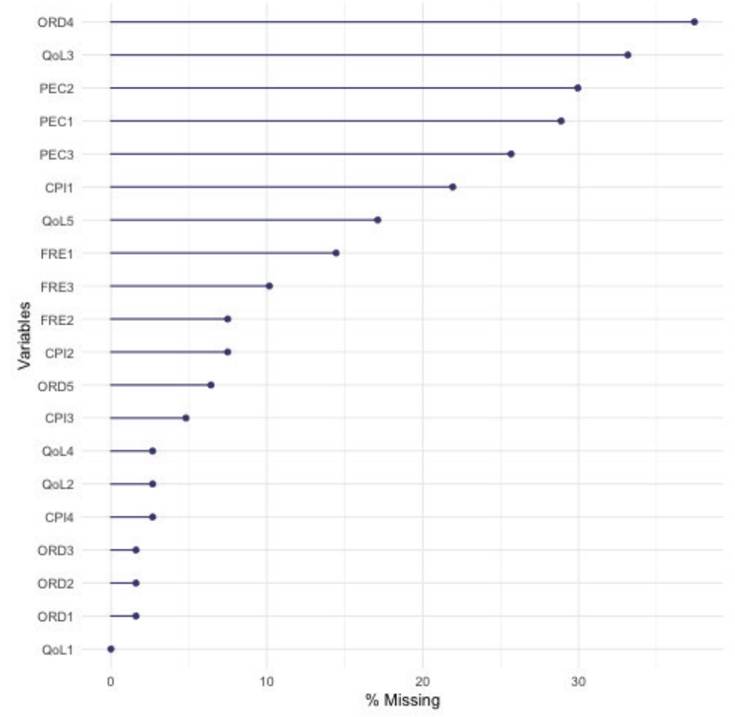
Although some indicators had missing data rates exceeding 30% in sampled countries (Figure 1), PLS-SEM is more tolerant of this problem, as an algorithm based on Random Forests was used to impute missing values (Fan et al., 2016).
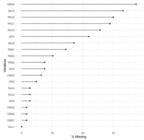
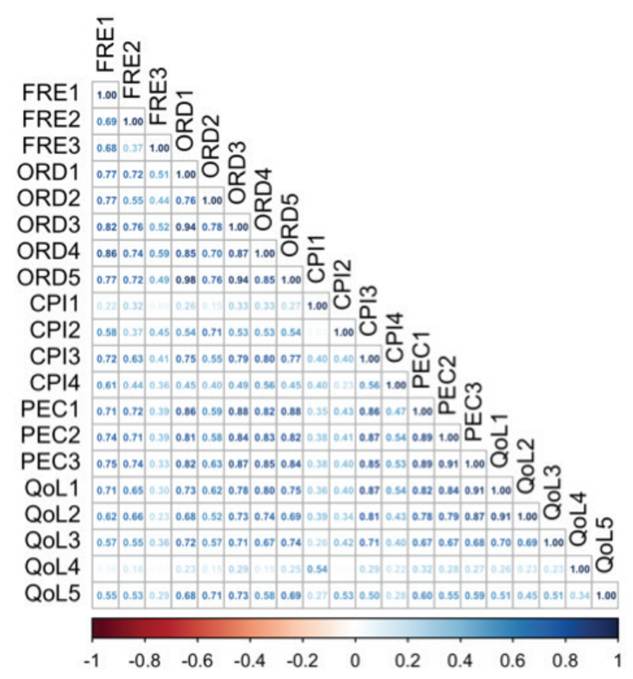
Figure 2 shows estimates of the relationship between the indicator variables, which indicate blocks of positively correlated variables of a moderate to strong degree, using a threshold of 0.6 for exploratory research (Hair et al., 2017).
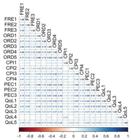
The indicators are all positively related to each other. Those that compose the commitment to the public interest dimension are weakly correlated, while the indicators that compose the freedom dimension are slightly correlated. The indicators that compose the order and private entrepreneurial culture dimensions range from moderately to strongly correlated (Figure 2).
Public safety indicators have a unique feature that makes them special from a data analysis perspective: their multidimensionality (McIlwaine, 1999). They are affected by multiple factors and therefore have multiple levels of analysis and complexity (Fox & Hoelscher, 2012; Hsieh & Pugh, 1993; McIlwaine, 1999; Messner, 1983). These features can lead to spurious correlations. This multidimensionality may help explain the indicator’s correlations within and across dimensions, as well as the resulting multicollinearity. Two indicators might be strongly correlated because a third, unmeasured variable links them. On the other hand, two variables can be conditionally independent, i.e., conditional on the value of a third variable, they are independent and therefore uncorrelated. This statistical concept is known as d-separation (Pearl, 2012). This may explain why the GINI Index (CPI1) and the Freedom of Expression Index (FRE3) are weakly correlated with other indicators (Figure 2).
5.3 Formative-formative hierarchical composite model
The results reported in Table 2 show that the model met all eligibility criteria. These properties ensure the model admissibility, i.e., the statistical analysis of the formative-formative hierarchical composite model results can be done (Schuberth et al., 2023).
5.4 Formative measurement model
A Formative-Formative HCM (Model A) was fitted to the data. VIF values greater than 5 indicate multicollinearity. At stage 1, the indicators ORD1, ORD3, PEC1, PEC2, PEC3, QoL1, and QoL2 exhibited multicollinearity. At stage 2, multicollinearity was also observed among first-order constructs: Freedom, Order and PEC (Table 3). To handle multicollinearity, a Formative-Formative HCM with aggregated indicators (Model B) was fitted to the data (Hair et al., 2017). Overall, there was a substantial reduction in VIF values after fitting the HCM with aggregated indicators, although some indicators and/or constructs still had VIF values above 5 (Table 3). The multicollinearity problem may have arisen from the multidimensional nature of the indicators (Pearl, 2012).
Accordingly, the statistical analysis proceeded only with the Formative-Formative HCM with aggregated indicators.
Estimates of the weights, their confidence intervals, and the loading estimates are reported in Table 4. At stage 1, most weight estimates differ from zero based on the 95% bias-corrected (BC) bootstrap confidence intervals. However, the weight estimates for the indicators ORD2 and CPI4 do not differ from zero within the 95% BC bootstrap confidence intervals. At stage 2, the constructs Freedom and Order also do not differ from zero. Nevertheless, their loading estimates exceed 0.5. In such cases, loading estimates should be interpreted rather than weight estimates. Weights capture the conditional contribution of an indicator to a construct while accounting for shared variance with the remaining indicators, whereas loadings are interpreted as correlations between indicators and constructs, or between first and second-order constructs (Hair et al., 2017).
On the other hand, at stage 1, CPI1 (Gini Index) is the only indicator whose weight estimate does not differ from zero and whose loading estimate is below 0.5. From a purely statistical perspective, CPI1 could therefore be excluded from the analysis. However, these results should be interpreted with caution, as they measure social inequality, which is an important aspect of the CPI dimension, validated by experts.
It is also important to note that although the FRE3 (Freedom of Expression Index) weight at stage 1 differs from zero, its sign is reversed relative to what is expected based on the underlying theory. Moreover, at stage 2, the signs of the weight estimates for the first-order constructs Freedom and Order are also reversed relative to theoretical expectations; however, these estimates do not differ from zero within the 95% BC bootstrap confidence intervals.
5.5 Causal diagram and structure model
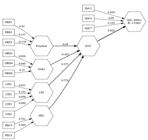
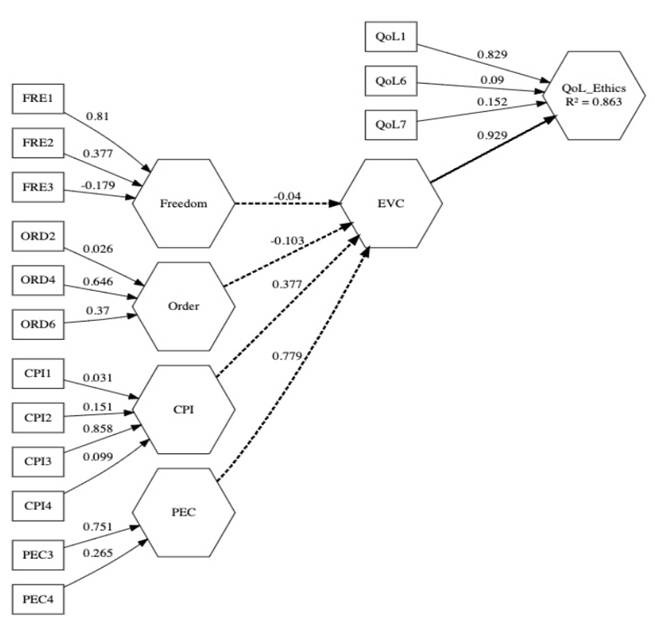
Causal diagram, estimates of weights and R2 of the formative-formative hierarchical composite model with aggregated indicators
Figure 3 presents the causal diagram of the formative-formative hierarchical composite model with aggregated indicators.
The path coefficient value shows a strong relationship between the EVC construct and social QoL, as measured by the indicators (β = 0.929). The R2 values indicate that 86.3% of the variability in total quality can be explained by EVC, which is an expressive result according to Cohen (1988) criterion, confirming hypothesis H1: Ethical values positively influence social QoL.
From a theoretical perspective, ethics is composed of the first-order constructs: Freedom, Order, Commitment to the Public Interest (CPI), and Private Entrepreneurial Culture (PEC). Results from formative-formative HCM suggest that weight estimates should be interpreted for Commitment to the Public Interest (CPI) and Private Entrepreneurial Culture (PEC), whereas loading estimates should be interpreted for first-order constructs, Freedom and Order, as their weight estimates do not differ statistically from zero, but their loading estimates are greater than 0.5.
Accordingly, these results indicate that Freedom and Order are strongly associated with the second-order EVC. Private Entrepreneurial Culture shows a moderate contribution, and Commitment to the Public Interest provides the smallest contribution to the EVC.
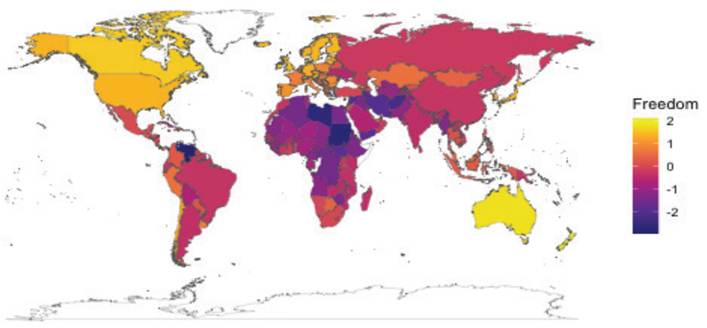
To enhance clarity for the readers, heat maps were generated for each latent variable of the construct, as shown in the following figures.
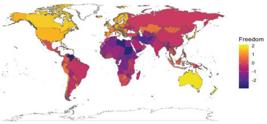
The map illustrates significant global variation in freedom levels, with indices ranging from approximately -2 to 2. The highest levels (yellow) are concentrated in North America, Western Europe, and Oceania, while the lowest (dark purple) are found in the Middle East, North Africa, and Venezuela. This distribution highlights a stark geographic disparity in freedom worldwide.
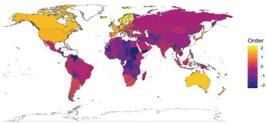
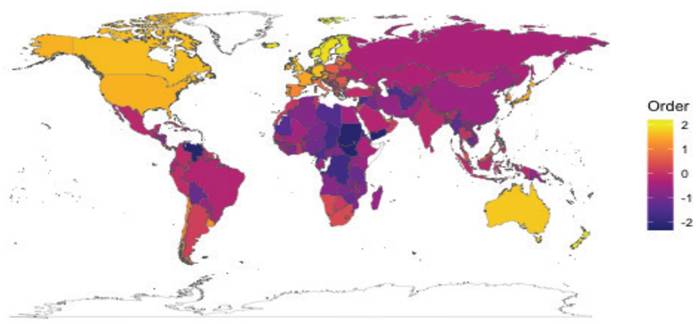
Figure 5 illustrates the global distribution of ‘Order’ indices. This visualisation also highlights a significant geographic disparity in order across different regions of the world.
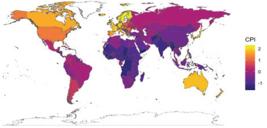
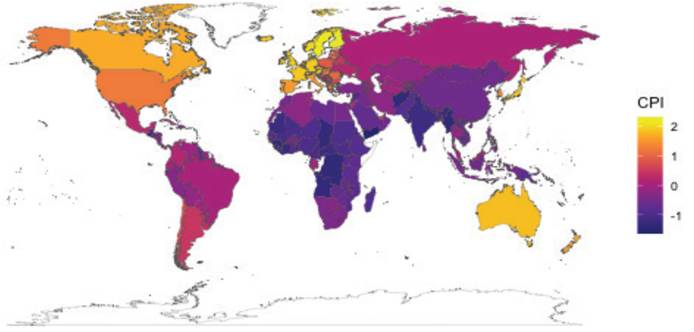
Figure 6 illustrates the global landscape of the CPI, highlighting that peak CPI values, represented by yellow hues, are clustered in Oceania, North America, and parts of Western Europe, reflecting high levels of institutional dedication to public welfare. Conversely, the lowest scores, indicated by deep purple, are primarily situated across Sub-Saharan Africa and South Asia.
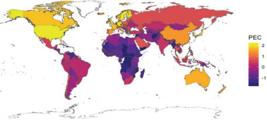
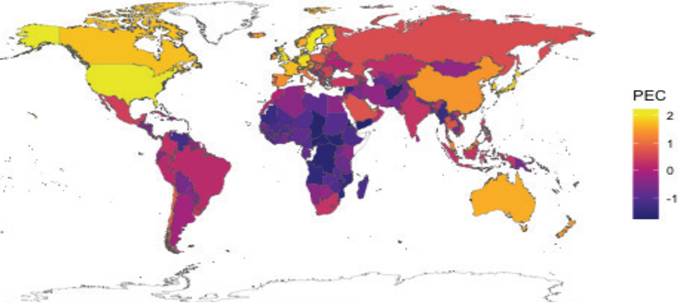
The global heat map for Private Entrepreneurial Culture (PEC) shows a marked geographic disparity, with the highest scores concentrated in North America and Oceania. This visualisation emphasises the diverse international landscape of entrepreneurial engagement, reflecting varied regional institutional and cultural contexts.
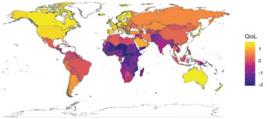
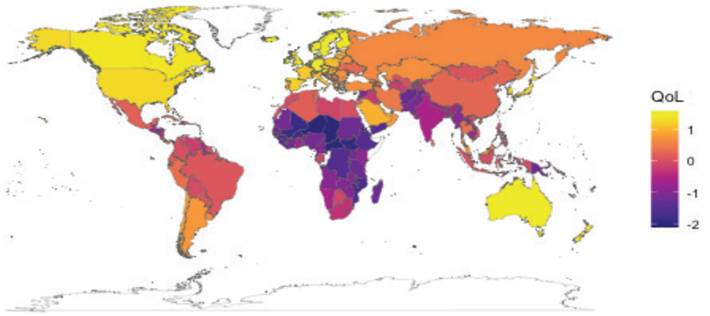
The heat map presented in Figure 8 demonstrates that QoL is consistently higher in the same countries where freedom, order, commitment to the public interest, and private entrepreneurial culture are also high, corroborating the findings.
6. DISCUSSION
The hypothesis H1 - Ethical Values positively influence social quality of life was confirmed in a very significant way since the R-squared of the structural model explains more than eighty per cent of the variability (86.3%), considering that R2 values greater than 26% can be considered large (Cohen, 1988). However, a more in-depth analysis of these results is still needed.
An important remark is that the results do not support the political polarisations between freedom and order and between commitment to the public interest and private entrepreneurial culture; rather, they point out significant coefficients for all dimensions when considered simultaneously (Hair et al., 2017). This finding supports the idea that there is a kind of harmful polarisation in the contemporary world that takes us away from what are the important issues for a better QoL in modern societies (Rosa et al., 2021). Furthermore, polarisation increases violence (Fox & Hoelscher, 2012). In this way, the results show that the complementary coexistence of freedom with order and commitment to the public interest with a private entrepreneurial culture has a positive impact on countries’ QoL.
The dimension of freedom reported a high loading estimate of 0.81. This result aligns with the theoretical basis, although all the authors also agree that a multiplicity of variables and contingent factors permeate development theories (Acemoglu & Robinson, 2012; Inglehart & Welzel, 2009; Sen, 2010). Historical facts proven by theorists who think differently from the authors studied in this paper should not be disregarded. One example was the protection of infant industries through tariff barriers and the protection of innovations through patent law, which gave rich countries a competitive advantage despite the free trade discourse these nations impose on the Third World (Reinert, 2019). Reinert, however, admits that the construction of “civilisation”, democracy and even an industrial sector was seen as an inseparable part of the same process, which Tocqueville called freedom (Reinert, 2019).
Order, despite having a higher loading estimate, is not as hegemonic in the theoretical world as freedom. Mandeville believed that private vices were good for society’s economy because if there were no thieves, the police would be unemployed. However, there are those who believe this paradox does not hold, as it would be enough to set fire to cities to generate work for carpenters, electricians, and bricklayers. Pietro Verri solved this problem by stating that the private interests of each individual, when coincident with public interests, ensure social happiness (Reinert, 2019). In modern times, none of the authors studied disassociates the importance of interpersonal trust and legal certainty for economic well-being (Acemoglu & Robinson, 2012; Fukuyama, 1995; Inglehart & Welzel, 2009; Sen, 2010), which validates the high loading estimate of 0.87 for order.
Lower values for the coefficients of environmental indicators, represented by the CPI3 indicator with a weight estimate of 0.09, may point out flaws in the construction of these types of indicators based on environmental sustainability, since when nations are studied, economic growth and energy consumption have a strong correlation with environmental degradation, especially in developed countries (Ali et al., 2021). Improving this type of indicator could be a suggestion for future research in interdisciplinary fields, but the fact is that some current practices in developed countries are not yielding the results the planet needs. Carbon credits, for example, are a form of non-engagement by developed countries, outsourcing the problem to underdeveloped countries with more flexible carbon emission rules (Nielsen et al., 2021). The multidimensionality of indicators CPI1 and CPI3 contributed to a lower weight estimate (0.5) for the CPI dimension.
In addition, the depletion of natural resources in developing countries is often attributable to companies from developed countries, and worldwide, depletion is greater than recycling, thus contributing to global warming and threatening QoL on the planet (Ali et al., 2021), placing greater responsibility on the countries that consume the most of these resources, which are the developed ones. Green economy, green jobs and green growth need to move from rhetoric to practice.
The private entrepreneurial culture, represented by competitiveness, innovation, and excellence, had a weight of 0.96. Innovation is considered a driver of development, higher wages, and greater social welfare, especially when production takes a new form, since increasing wages without increasing productivity generates inflation (Acemoglu & Robinson, 2012; Reinert, 2019).
6.1 Limitations and opportunities for future research
One of the limitations of this study is the restricted scope of QoL investigated because if ethical values are so important for maximising social QoL, then a fundamental unanswered question is: why do developed countries with a high level of QoL also have high suicide rates? (Standing, 2013; WHO, 2021). As explained before, the QoL reviewed in this study was based on socioeconomic indicators. However, one cannot disregard the countless studies on the psychological aspects of QoL, which point to the mental well-being of the individuals who make up a society (Day & Jankey, 1996).
The issue of income distribution, as reflected in the CPI1 indicator with a coefficient of 0.10, should be better addressed by developed countries, as in the long term inequality affects not only economic development but also human development (Castells-Quintana et al., 2019).
Future research offers an opportunity to test alternative indicators from various official institutions, particularly in the dimensions of freedom and order, to further reduce multicollinearity.
While this exploratory study provides a comprehensive baseline through an extensive sample of countries, granular groupings by continents, political regimes, religious diversity and the relationship between countries fall beyond the current scope. Instead, this breadth serves as essential input for future research to investigate these distinct socio-economic realities and institutional clusters (Hair et al., 2005).
7. CONCLUSION
Before Sen (2010), the main books approaching the quality of life (QoL) of societies had an almost exclusively economic bias. This study aimed to analyse QoL more broadly, seeking to understand which ethical values correlate with a high standard of QoL. In this sense, it is worth examining whether the high quality of social life in developed nations can be explained, at least in part, by certain ethical values ingrained in the cultures of these societies that have enabled them to become prosperous nations. This assumption was supported by the empirical results, confirming hypothesis H1: Ethical Values positively influence social QoL.
From the findings described, it was concluded that ethical values expressing freedom, order, commitment to the public interest and private entrepreneurial culture positively influence the quality of social life in contemporary societies.
It should be noted that greater attention is needed to the dimension of commitment to the public interest, especially in high QoL countries and with regard to equality and environmental sustainability. The sense of inequality reduces social cohesion (Sen, 2010), and the global effects of mass migration and humanitarian crises have affected QoL in those countries (Gasper & Clair, 2010; Goulet, 1997). In addition, global warming, pollution in large cities and the depletion of natural resources necessitate action (Ali et al., 2021).
Societies and governments should share the responsibility for changes. Just as high QoL countries need to take priority action to fight social inequalities and care for the environment, low QoL countries need to provide the counterparts of defending democracy, fighting corruption, avoiding polarization, seeking greater interpersonal trust and realising the importance of fostering a culture of innovation as a means of economic sustainable prosperity.
ACKNOWLEDGEMENTS
The authors would like to thank the State Government of Goiás for its continuous support in the professional development of public servants. We are also grateful to the Postgraduate Program in Administration (PPGADM) at the Federal University of Goiás (UFG). Finally, we would like to express our gratitude to Dr. Marcello Beckert Zappellini and Dr. Thiago Fontelas Rosado Gambi for their valuable contribution to the theoretical validation of the construct.
REFERÊNCIAS
- Acemoglu, D., & Robinson, J. A. (2012). Why nations fail: the origins of power, prosperity, and poverty Cronw Currency.
- Ali, A., Audi, M., & Roussel, Y. (2021). Natural resources depletion, renewable energy consumption and environmental degradation: A comparative analysis of developed and developing world. International Journal of Energy Economics and Policy, 11(3), 251-260.
- Aristóteles. (1991). Ética a Nicômaco (Vol. 2). Nova Cultural.
- Becker, J.-M., Klein, K., & Wetzels, M. (2012). Hierarchical latent variable models in PLS-SEM: guidelines for using reflective-formative type models. Long range planning, 45(5-6), 359-394.
- Bell, D. (2002). Kant. In N. Bunnin & E. P. Tsui-James (Eds.), Compêndio de filosofia (L. P. Rouanet, Trans., pp. 587-603). Edições Loyola.
- Bell, S., & Morse, S. (2008). Sustainability indicators: Measuring the immeasurable? Earthscan.
-
Bido, D. S., & Silva, D. (2019). SmartPLS 3: especificação, estimação, avaliação e relato. Administração: Ensino e Pesquisa, 20(2), 488-536. https://doi.org/10.13058/raep.2019.v20n2.1545
» https://doi.org/10.13058/raep.2019.v20n2.1545 -
Bollen, K., & Lennox, R. (1991). Conventional wisdom on measurement: A structural equation perspective. Psychological Bulletin, 110(2), 305-314. https://doi.org/10.1037/0033-2909.110.2.305
» https://doi.org/10.1037/0033-2909.110.2.305 - Brue, S., & Grant, R. (2017). História do Pensamento Econômico (8th ed.). Cengage Learning.
-
Castells-Quintana, D., Royuela, V., & Thiel, F. (2019). Inequality and sustainable development: Insights from an analysis of the human development index. Sustainable Development, 27(3), 448-460. https://doi.org/10.1002/sd.1917
» https://doi.org/10.1002/sd.1917 - Cohen, J. (1988). Statistical power analysis for the behavioral sciences (2nd ed.). Lawrence Erlbaum Associates.
-
Costa, S. S. (2020). Pandemia e desemprego no Brasil. Revista de Administração Pública, 54(4), 969-978. https://bibliotecadigital.fgv.br/ojs/index.php/rap/article/view/81893
» https://bibliotecadigital.fgv.br/ojs/index.php/rap/article/view/81893 -
Crocker, D. A. (1991). Toward development ethics. World Development, 19(5), 457-483. https://doi.org/10.1016/0305-750X(91)90188-N
» https://doi.org/10.1016/0305-750X(91)90188-N - Day, H., & Jankey, S. G. (1996). Lessons from the literature: Toward a holistic model of quality of life. In R. Renwick, I. Brown & M. Nagler (Eds.), Quality of life in health promotion and rehabilitation: Conceptual approaches, issues, and applications. (pp. 39-50). Sage Publications, Inc.
-
Diamantopoulos, A., & Siguaw, J. A. (2006). Formative Versus Reflective Indicators in Organizational Measure Development: A Comparison and Empirical Illustration. British Journal of Management, 17(4), 263-282. https://doi.org/10.1111/j.1467-8551.2006.00500.x
» https://doi.org/10.1111/j.1467-8551.2006.00500.x -
Diener, E., & Suh, E. (1997). Measuring quality of life: economic, social, and subjective indicators. Social Indicators Research, 40(1), 189-216. https://doi.org/10.1023/a:1006859511756
» https://doi.org/10.1023/a:1006859511756 - Fan, Y., Chen, J., Shirkey, G., John, R., Wu, S. R., Park, H., & Shao, C. (2016). Applications of structural equation modeling (SEM) in ecological studies: an updated review. Ecological Processes, 5(1), 1-12.
-
Fox, S., & Hoelscher, K. (2012). Political order, development and social violence. Journal of Peace Research, 49(3), 431-444. https://doi.org/10.1177/0022343311434327
» https://doi.org/10.1177/0022343311434327 - Fukuyama, F. (1995). Trust The Social Virtues and the creation of prosperity The Free Press.
-
Gächter, S., & Schulz, J. F. (2016). Intrinsic honesty and the prevalence of rule violations across societies. Nature, 531(7595), 496-499. https://doi.org/10.1038/nature17160
» https://doi.org/10.1038/nature17160 -
Gambi, T. F. R., & Chaves, R. H. S. (2017). A “ética do desenvolvimento” como proposta de pesquisa interdisciplinar. Desenvolvimento em Questão, 15(39), 6-31. https://doi.org/10.21527/2237-6453.2017.39.6-31
» https://doi.org/10.21527/2237-6453.2017.39.6-31 - Gasper, D., & Clair, A. L. S. (2010). Development ethics Ashgate Farnham.
-
Gert, B., & Gert, J. (2017). The definition of morality. In E. N. Zalta (Ed.), Stanford Encyclopedia of Philosophy (Fall 2017 ed.). Stanford University. https://plato.stanford.edu/archives/fall2017/entries/morality-definition/
» https://plato.stanford.edu/archives/fall2017/entries/morality-definition/ -
Goulet, D. (1997). Development ethics: a new discipline. International Journal of Social Economics, 24(11), 1160-1171. https://doi.org/10.1108/03068299710193543
» https://doi.org/10.1108/03068299710193543 - Green, M., Harmacek, J., & Htitich, M. (2021). 2021 Social Progress Index Executive Summary Social Progress Imperative.
-
Gundlach, E., & Paldam, M. (2009). The transition of corruption: From poverty to honesty. Economics Letters, 103(3), 146-148. https://doi.org/10.1016/j.econlet.2009.03.002
» https://doi.org/10.1016/j.econlet.2009.03.002 - Hair, J. F., Jr., Anderson, R. E., Tatham, R. L., & Black, W. C. (2005). Análise Multivariada de Dados (5th ed., A. S. Sant’Anna, Trad.). Bookman.
- Hair, J. F., Jr., Hult, G. T. M., Ringle, C. M., & Sarstedt, M. (2017). A primer on Partial Least Squares Structural Equation Modeling (PLS-SEM) Sage Publications, Inc.
- Hair, J. F., Jr., Ringle, C. M., & Sarstedt, M. (2011). PLS-SEM: Indeed a silver bullet. Journal of Marketing theory and Practice, 19(2), 139-152.
-
Henseler, J. (2017). Bridging Design and Behavioral Research With Variance-Based Structural Equation Modeling. Journal of Advertising, 46(1), 178-192. https://doi.org/10.1080/00913367.2017.1281780
» https://doi.org/10.1080/00913367.2017.1281780 - Henseler, J. (2021). Composite-based structural equation modeling: Analyzing latent and emergent variables The Guilford Press.
-
Hsieh, C.-C., & Pugh, M. D. (1993). Poverty, Income Inequality, and Violent Crime: A Meta-Analysis of Recent Aggregate Data Studies. Criminal Justice Review, 18(2), 182-202. https://doi.org/10.1177/073401689301800203
» https://doi.org/10.1177/073401689301800203 - Inglehart, R., & Welzel, C. (2009). Modernization, culture change and democracy: The human development sequence (H. M. L. P. Coelho, Trans.). Editora Francis.
- Jannuzzi, P. M. (2005). Indicadores para diagnóstico, monitoramento e avaliação de programas sociais no Brasil. Revista do Serviço Público, 56(2), 137-160.
- Kant, I. (1959). Crítica da razão prática (A. Bertagnoli, Trans.). Edições e Publicações Brasil Editora.
- Kaufmann, D., & Kraay, A. (2018). Worldwide Governance Indicators World Bank Group.
- Koyzis, D. T. (2014). Visões & Ilusões políticas: uma análise e crítica cristã das ideologias contemporâneas Vida Nova.
-
Marangos, J., Astroulakis, N., & Triarchi, E. (2019). The Advancement of Development Ethics. Panoeconomicus, 68(4), 441-460. https://doi.org/10.2298/PAN180518003M
» https://doi.org/10.2298/PAN180518003M - McCloskey, D. N. (2010). The bourgeois virtues: Ethics for an age of commerce University of Chicago Press.
-
McIlwaine, C. (1999). Geography and development: violence and crime as development issues. Progress in Human Geography, 23(3), 453-463. https://doi.org/10.1177/030913259902300309
» https://doi.org/10.1177/030913259902300309 - Meirelles, H. (2002). Direito Administrativo Brasileiro Malheiros.
-
Messner, S. F. (1983). Regional Differences in the Economic Correlates of the Urban Homicide Rate. Criminology, 21(4), 477-488. https://doi.org/10.1111/j.1745-9125.1983.tb00275.x
» https://doi.org/10.1111/j.1745-9125.1983.tb00275.x - Moynihan, D. P. (2008). The Normative Model in Decline? Public Service Motivation in the Age of Governance. In J. L. P. A. Hondeghem (Ed.), Motivation in Public Management. The Call of Public Service (pp. 247-267). Oxford University Press Inc.
-
Nielsen, T., Baumert, N., Kander, A., Jiborn, M., & Kulionis, V. (2021). The risk of carbon leakage in global climate agreements. International Environmental Agreements: Politics, Law and Economics, 21(2), 147-163. https://doi.org/10.1007/s10784-020-09507-2
» https://doi.org/10.1007/s10784-020-09507-2 -
Noorbakhsh, F. (1998). The human development index: some technical issues and alternative indices. Journal of International Development, 10(5), 589-605. https://doi.org/10.1002/(SICI)1099-1328(199807/08)10:5<589::AID-JID484>3.0.CO;2-S
» https://doi.org/10.1002/(SICI)1099-1328(199807/08)10:5<589::AID-JID484>3.0.CO;2-S - Nussbaum, M., & Sen, A. (1993). The quality of life Clarendon Press.
-
Open Science Framework. (2023). Do ethical values influence Quality of Life? A review of 187 countries https://osf.io/abvh8/?view_only=7e20e022c96c4547acc6c46b1f0be12d
» https://osf.io/abvh8/?view_only=7e20e022c96c4547acc6c46b1f0be12d - Pearl, J. (2012). The causal foundations of structural equation modeling The Guilford Press.
- Pereira, É. F., Teixeira, C. S., & Santos, A. (2012). Qualidade de vida: abordagens, conceitos e avaliação. Revista brasileira de educação física e esporte, 26(2), 241-250.
- Perry, J. L., & Hondeghem, A. (2008). Motivation in public management: the call of public service Oxford University Press.
- Peyton, K., & Belasen, A. R. (2012). Corruption in Emerging and Developing Economies: Evidence from a Pooled Cross-Section. Emerging Markets Finance and Trade, 48(2), 29-43.
-
R Core Team. (2025). R: A language and environment for statistical computing R Foundation for Statistical Computing. https://www.r-project.org/
» https://www.r-project.org/ - Reale, M. (1999). Lições Preliminares de Direito (24th ed.). Saraiva.
- Reinert, E. S. (2019). How rich countries got rich and why poor countries stay poor Hachette UK.
-
Rosa, E. F., Najberg, E., Nunes, L. L., & Passador, J. L. (2021). How philosophy can enlighten public management in times of political polarization. Cadernos EBAPE.BR, 19(Especial), 723-734. https://doi.org/10.1590/1679-395120200183
» https://doi.org/10.1590/1679-395120200183 -
Schuberth, F., Rademaker, M. E., & Henseler, J. (2023). Assessing the overall fit of composite models estimated by partial least squares path modeling. European Journal of Marketing, 57(6), 1678-1702. https://doi.org/10.1108/EJM-08-2020-0586
» https://doi.org/10.1108/EJM-08-2020-0586 - Schumpeter, J. A. (2008). Capitalism, Socialism, and Democracy Harper Perennial Modern Thought.
- Seligman, A. B. (2021). The Problem of Trust Princeton University Press.
- Sen, A. (2010). Development as freedom (L. T. Motta, Trans.). Companhia das Letras.
- Standing, G. (2013). O precariado: A nova classe perigosa Autêntica.
- Stiglitz, J. E. (2012). The price of inequality: How today’s divided society endangers our future WW Norton & Company.
-
Treisman, D. (2000). The causes of corruption: a cross-national study. Journal of Public Economics, 76(3), 399-457. https://doi.org/10.1016/S0047-2727(99)00092-4
» https://doi.org/10.1016/S0047-2727(99)00092-4 -
United Nations Development Programme. (2021). Human Development Index (HDI) UNDP. http://hdr.undp.org/en/content/human-development-index-hdi
» http://hdr.undp.org/en/content/human-development-index-hdi - Valls, Á. L. (1994). O que é ética Brasiliense.
- Weber, M. (2002). A ética protestante e o espírito do capitalismo Martin Claret.
-
World Bank Group. (2021). DataBank https://databank.worldbank.org/home.aspx
» https://databank.worldbank.org/home.aspx - World Health Organization. (1998). Promoción de la salud: glosario WHO.
- World Health Organization. (2021). Suicide worldwide in 2019: global health estimates WHO.
-
Wright, M. N., & Ziegler, A. (2017). Ranger: A Fast Implementation of Random Forests for High Dimensional Data in C++ and R. Journal of Statistical Software, 77(1), 1-17. https://doi.org/10.18637/jss.v077.i01
» https://doi.org/10.18637/jss.v077.i01
-
2
[Original version]
-
Reviewers:
Ana Luísa Vieira de Azevedo, Centro Universitário Carioca, Rio de Janeiro, RJ, Brazil
-
Reviewers:
Diógenes Souza Bido, Universidade Presbiteriana Mackenzie, São Paulo, SP, Brazil
-
Peer review report:
The peer review report is available at https://periodicos.fgv.br/rap/article/view/97069/90457
-
RESEARCH DATA AVAILABILITY
The entire dataset supporting the results of this study has been made available at Open Science Framework (OSF) and can be accessed at https://osf.io/abvh8/?view_only=7e20e022c96c4547acc6c46b1f0be12d
The entire dataset supporting the results of this study has been made available at Open Science Framework (OSF) and can be accessed at https://osf.io/abvh8/?view_only=7e20e022c96c4547acc6c46b1f0be12d
Data citations
Kaufmann, D., & Kraay, A. (2018). Worldwide Governance Indicators World Bank Group.
United Nations Development Programme. (2021). Human Development Index (HDI) UNDP. http://hdr.undp.org/en/content/human-development-index-hdi
World Bank Group. (2021). DataBank https://databank.worldbank.org/home.aspx

 Source: Elaborated by the authors.
 Source: Elaborated by the authors.
 Source: Elaborated by the authors.
 Source: elaborated by the authors.
 Source: elaborated by the authors
 Source: Elaborated by the authors.
 Source: Elaborated by the authors.
 Source: Elaborated by the authors.