
 Who grounds simulation in Brazilian medical education? A scoping review on authors and theories
ABSTRACT
Introduction: Simulation-Based Education (SBE) has consolidated itself as a relevant pedagogical strategy in Brazilian medical education. Understanding the theories that underpin it may enhance the effectiveness of activities aimed at both the training and continuing education of physicians, particularly given the regional and institutional diversity of the country.
Objective: To map bibliometric aspects of national production on SBE in medical education, identifying the most frequently cited pedagogical theories and authors, the types of activities carried out, the areas of medicine involved, and the geographical distribution of researchers.
Method: A scoping review was conducted with searches in the SciELO, CAPES Periodicals Portal, and BVS Regional Portal databases, using the descriptors “SIMULATION” AND “MEDICAL EDUCATION”, covering the period from 2014 to 2025. Articles with full text published in the aforementioned databases and specifically related to medical education with identifiable theoretical frameworks were included.
Results: Of the 251 articles initially identified, 23 composed the final sample. The Southeast Region concentrated 65% of the publications, and the Brazilian Journal of Medical Education accounted for 47% of the articles. Quantitative studies predominated, with emphasis on literature reviews and experience reports. George Miller, David Ausubel, Lev Vygotsky, Ronald Harden, Benjamin Bloom, David Kolb, and Paulo Freire were the most frequently cited authors. Patient simulators and low-technology simulators accounted for 61% of the described activities. Surgery and Emergency Medicine were the most represented areas. References to Connectivism and Brazilian authors were virtually nonexistent.
Conclusion: National production on SBE in medical education shows geographical concentration, a predominance of quantitative studies, and a tendency toward the validation of pedagogical models consolidated in other contexts. The low frequency of sociocultural, humanistic, and connectivist theories, as well as the near absence of national theoretical frameworks, points to potentially significant theoretical gaps in light of the contemporary demands of Brazilian medical education.
Keywords:
Medical Education; Simulation Training; Health Human Resource Training
RESUMO
Introdução: O ensino baseado em simulação (EBS) tem se consolidado como uma estratégia pedagógica relevante na educação médica brasileira. Assim, compreender as teorias que o fundamentam pode tornar mais efetivas as atividades para a formação ou para a atualização do médico, especialmente diante da diversidade regional e institucional do país.
Objetivo: Este estudo teve como objetivo mapear aspectos bibliométricos da produção nacional sobre EBS na educação médica, identificando teorias pedagógicas e autores mais frequentemente citados, os tipos de atividades realizadas, as áreas da medicina envolvidas e a distribuição geográfica dos pesquisadores.
Método: Trata-se de uma revisão de escopo com buscas nas bases de dados SciELO, Portal de Periódicos da Capes e Portal Regional da BVS, utilizando os descritores “simulação” e “ensino médico”, com recorte temporal de 2014 a 2025. Foram incluídos artigos com texto completo publicados nas bases de dados supracitadas e relacionados especificamente à educação médica com fundamentação teórica identificável.
Resultado: Dos 251 artigos inicialmente identificados, 23 compuseram a amostra final. A região Sudeste concentrou 65% das publicações, e a Revista Brasileira de Educação Médica respondeu por 47% dos artigos. Os estudos quantitativos predominaram, com destaque para revisões de literatura e relatos de experiência. George Miller, David Ausubel, Lev Vygotsky, Ronald Harden, Benjamin Bloom, David Kolb e Paulo Freire foram os autores mais citados. Simuladores de pacientes e de baixa tecnologia concentraram 61% das atividades descritas. Cirurgia e emergência foram as áreas mais representadas. Praticamente inexistiram referências ao conectivismo e a autores brasileiros.
Conclusão: A produção nacional sobre o EBS na educação médica apresenta concentração geográfica, predominância de estudos quantitativos e tendência à validação de modelos pedagógicos consolidados em outros contextos. A baixa frequência de teorias socioculturais, humanistas e conectivistas, assim como a quase ausência de referenciais nacionais, alerta para possíveis lacunas teóricas relevantes diante das demandas contemporâneas da formação médica brasileira.
Palavras-chave:
Educação Médica; Simulação Realística; Formação Profissional em Saúde
INTRODUCTION
Quality medical education requires a process of continuous self-improvement so that the new technologies involved in the care of people are already incorporated into the training processes of their undergraduate courses and to events related to permanent and continuing education1),(2),(3.
Thus, understanding the theories that underlie teaching and learning can make the activities designed for the training or updating of physicians more effective, and their mastery becomes a necessity for the professionals who coordinate or plan these moments, both to select and to support any changes in the pedagogical paths when they are not aligned with their educational objectives 4),(5.
Among the new methodologies used to qualify medical education, the literature demonstrates the growing interest in Simulation-Based Education (SBE), justified by the various potentialities related to it that find resonance in modern education pillars 6),(7.
Simulation-Based Education is defined as “a technique - not a technology - that replaces or amplifies real experiences with guided, interactive and controlled experiences, which replicate significant aspects of reality, providing a safe environment for the development of technical and non-technical skills” 8.
The use of fundamental theories of pedagogy in Simulation-Based Education can be exemplified in the use of the concept of the zone of proximal development described by Lev Vygotsky, supporting the supervision of simulated activities by a more experienced facilitator and indicating strategies for the formation of professional competencies 9.
It can also be observed in the use of the principles of Andragogy for the design of contextualized activities that meet the expectations and real interests of its participants, as described by Malcolm Knowles, or even in the structuring of scenarios that contemplate the phases of concrete experience, reflective observation, abstract conceptualization and active experimentation proposed by David Kolb’s Experiential Learning Cycle.
As seen, Simulation-Based Education is based on several structuring pedagogical pillars, with a wide variety of authors and contributions from the lines of thought that also underlie the foundations of general education and that within the scope of contemporary pedagogy can be grouped into 6 basic strands: a) behaviorism, b) cognitivism, c) constructivism, d) Sociocultural Theory, e) Humanism and f) Connectivism10.
The mastery of the pedagogical principles that underlie educational technologies such as Simulation-Based Education can be strategic to ensure its optimal implementation in medical schools, especially when some studies suggest that one of the greatest challenges for its implementation, in addition to the structural issue, is related to the teachers’ insecurity related to its use, reporting lack of training or lack of familiarity with the method as justifications for not applying it in its current practice 11.
Thus, this article, which is based on a doctoral thesis conducted on Simulation-Based Education in medical education, aims to understand bibliometric aspects related to the academic production on this in Brazil (such as the geographical distribution of publications, the type of study chosen and the main journals that published them) and also to map the main authors and the theoretical foundations used in the research published in some of the main databases visited by Brazilian authors.
METHODOLOGY
For the development of this research, we chose to carry out a scoping review, understood as a methodological approach that aims to map the key concepts of an area of knowledge, identify gaps in the literature, and examine the nature and extent of the available evidence on a topic12.
For this purpose, the description of the steps for this research aligns with the strategy described in the PRISMA13 statement.
The Research Question
The guiding question was structured in line with the Joanna Briggs Institute guidelines for scoping reviews12, adopting the Population, Concept, and Context format: “What are the authors and pedagogical theories used as a theoretical basis in research on Simulation-Based Education in Brazilian medical education published between 2014 and 2025?”.
In this framework, the Population corresponds to the studies published on the subject indexed in the SciELO databases, CAPES Journal Portal and VHL; the Concept refers to the theories and pedagogical references used to support Simulation-Based Education; and the Context comprises publications produced by authors linked to Brazilian educational or care institutions, indexed in the aforementioned databases, in the period between 2014 and 2025.
Sources of Information and Search Strategies
The flow for selecting the articles included in the review is illustrated in Figure 1.

For the selection of articles, in August 2025, the SCIELO (Scientific Electronic Library Online), CAPES (Coordination for the Improvement of Higher Education Personnel) and Regional Portal of the Virtual Health Library (VHL) databases were consulted, and those published between 2014 and 2025 were selected.
For each of the databases, the following and same descriptors were used: “SIMULATION” AND “MEDICAL EDUCATION”, using as filter, articles with full texts in Portuguese, English or Spanish, peer-reviewed, published in the aforementioned databases between 2014 and 2025, by authors linked to educational or care institutions in the Brazilian territory.
The variables studied in the extraction table were intended to answer essential research questions, categorized into the following dimensions: a) journals with publications on the topic and year of publication of the articles, b) authors and fundamental theories of education identified in the article, c) types of simulation activities involved or described in the study, d) type of study carried out, e) main area of medicine related to the study and f) Brazilian state and region of the main author’s place of work.
Eligibility Criteria
-
Full content available;
-
Content related to the theoretical foundation of Simulation-Based Education and/or Theories of Teaching and Learning (according to the categorization adapted from Squires10.
-
Carried out by Brazilian authors or residents in the country;
-
Related to Simulation-Based Education for Medicine courses;
Exclusion Criteria
-
Not addressing the theoretical foundation or authors related to SBE;
-
Full content not available;
-
Carried out by authors not linked to Brazilian educational or care institutions;
-
Articles not specifically related to Medical Education.
As this is a documentary study, based on secondary data, we understand that it would not be necessary to previously submit this project to a Research Ethics Committee, as provided for in Resolution N. 510/2016 of the National Health Council (CNS).
RESULTS AND DISCUSSION
Initially, 251 articles were selected, of which 16 were from SCIELO, 69 from the CAPES Journal Portal and 166 from the Regional Portal of the Virtual Health Library.
Each researcher proceeded independently with the analysis, initially excluding duplicate articles and those whose abstracts or preliminary readings did not fit the proposed eligibility criteria.
Subsequently, each researcher proceeded to read the contents of the remaining articles and defined those that would make up the review, filling in the table with the 5 dimensions proposed for analysis.
Once this was done, the researchers’ tables were compared and discussed to observe possible inconsistencies or non-observances. In the end, after the steps described above, 23 articles remained to compose the basis for this review, according to the summary of Table 1.
It is noteworthy, however, that in part of the analyzed production - as in the 2021 study that associates the Arc de Maguerez with high-fidelity simulations - there is an unmediated transposition of theoretical references. This direct appropriation can generate conceptual confusion, as problematization presupposes the analysis of lived reality, while simulation operates from controlled environments and situations. This gap imposes a more rigorous foundation by linking pedagogical theories to the design of simulated activities, avoiding incongruities between the theoretical framework and educational practice.
Regarding the bibliometric aspects of the research, the geographic distribution of the main author’s federation state showed the following distribution: 10 from São Paulo, 2 from Minas Gerais, 2 from Rio de Janeiro, 2 from Rio, Grande do Sul, 1 from Paraná, 4 from Ceará, 1 from Rio Grande do Norte, 1 from Pernambuco and 1 from Pará.
The data are similar to those of the study by Ferreira et al. 6 in which a greater number of authors from the south and southeast regions of Brazil was also evidenced in 82% of the publications, with only 18% of studies originating from the northeast region and no records from the midwest or north of the country.
This marked disproportionality is not new in the findings on this item. Analyzing specifically the publications in the Brazilian Journal of Medical Education between 2006 and 2010, Hamamoto et al.14) found a very similar result regarding the geographical distribution of the studies published in the journal. In this study, 80% of the authors were also from the south and southeast regions. This asymmetry was justified as a reflection of the greater number of postgraduate programs in these regions of Brazil.
Regarding journals, 87% of the articles were published in journals Qualis A in the areas of education, teaching or medicine, according to the categorization of the Coordination for the Improvement of Higher Education Personnel (CAPES) for the 2021-2024 quadrennium. The Brazilian Journal of Medical Education, Qualis A1 in education, received the highest number, 11 articles, corresponding to approximately 47% of the studies.
In the studies listed in the review, only 6 (26%) used the qualitative method of approach, with the most frequently performed types of studies being literature reviews or experience reports, which were eminently quantitative and together corresponded to almost 47% of the studies.
The preference for conducting quantitative studies seems to be still a characteristic of research in education for the field of health in Brazil 15),(16 and this may be associated with the training path in the biomedical and technicist model of undergraduate courses in this area, especially in Medicine. The training of future physicians, exposed to a predominantly positivist and binary view of world interpretation and data analysis, can reinforce a biased position that qualitative research would be devoid of significant scientific rigor because it incorporates subjectivity in its method.
From another perspective, Conceição et al.15 question whether the evaluation model of postgraduate programs, in which the number of publications and in a categorized type of journals, can contribute to a greater number of quantitative studies in the health area, since the need for production is an essential prerequisite for the survival of these programs and that the change of paradigm to another model of researchers would require an investment of time and training that they do not have.
The greater search for objectivity in quantitative research, to the detriment of qualitative research in the medical field, may be a variable that can exert a relevant influence on the type of educational reference of national researchers and direct simulation more as a pedagogical practice than a complex formative phenomenon, which needs to be investigated in more depth and from new perspectives.
Regarding educational theories and their foundations, the analysis of the word cloud of the aforementioned authors (Figure 2), which highlights the frequency of citations George Miller (6), David Ausubel (5), Lev Vygotsky (4), Ronald Harden (4), David Kolb (3), Benjamin Bloom (3) and Paulo Freire (3), reinforces this perception.

The predominance of authors identified with the epistemology of evaluation reinforces the reading that there is a preferential focus of the works on the “how to evaluate” the students (in which Miller and Harden, for example, stand out) to the detriment of the understanding of the pedagogical processes in general, with which some less cited authors, such as Kolb or Ausubel, connect.
This perspective dialogues with the analysis of Hamamoto et al.14, which state that national publications on medical education “... investigate curricular changes and teaching methods based on the opinion of students or the performance of students in assessments...”.
It is necessary to reflect on what can and what this scientific production is intended to achieve, predominantly made from a more specific loci (from the student point of view) and through a methodology that usually dives more superficially into specific characteristics of educational phenomena (quantitative research).
It can be inferred that analyzing the efficiency or the application of pre-established models of teaching and learning strategies has a greater chance of reinforcing or only reproducing current methodologies than opening space for analyses that could raise questions or point out paths to innovations.
This perspective takes on greater importance when the particularities of the Brazilian territory are considered, the country with the second largest number of medical schools in the world. A significant part of these schools was recently implemented in different regions of the country, each with its own geographical, cultural and structural characteristics (with regard to the health care network and general infrastructure). Especially in scenarios that are still maturing, medical education may require individualization to enhance its training process that may not have yet been contemplated in our current paths of pedagogical theoretical foundation 17.
It is worth noting the dynamism of the current educational process, which already demands validations and new perspectives on newly developed technologies such as Artificial Intelligence, big data, or artificial neural networks, and the questions about how and what way these will be increasingly incorporated into teaching, already provided for in the regulatory framework for Brazilian medical education18.
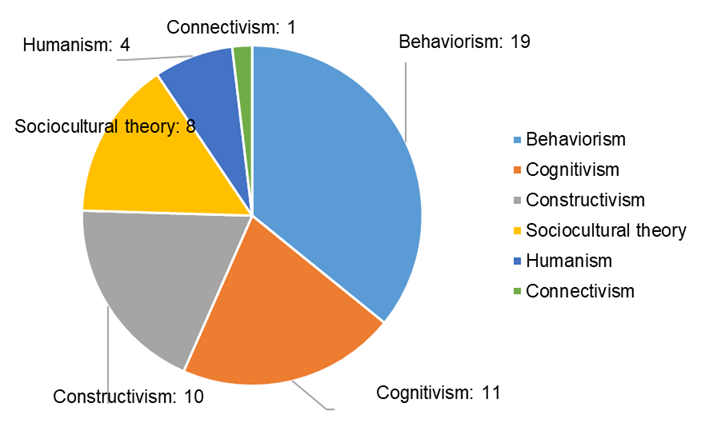
Despite the diversity of authors linked to the theoretical foundation of Simulation-Based Education listed in this study (27), the almost non-observance or low frequency of citation of theories related to pedagogical strands such as Connectivism (Figure 3), a current based on traditional learning theories to understand learning in the digital age, may indicate a theoretical lag in relation to contemporary technological transformations.
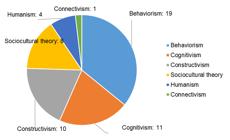
Distribution of the main pedagogical lines that underlie education (adapted from Squires et al. 10) Listed in the Review.
On the other hand, there is a predominance of theorists linked to evaluation processes, whose principles in the field of analysis of psychomotor competences make a greater connection with Behaviorism, represented in the high frequency of citations related to Miller, Bloom and Ronald Harden.
The convergence between the references of Benjamin Bloom, George Miller, and Ronald Harden evidences this relevant weight of a structuring axis of competency-based assessment in contemporary Brazilian medical education, reinforcing a tradition in medical education that values the objective measurement of performance as a strategy to ensure validity, reliability, and safety in professional training.
While Bloom’s Taxonomy of Educational Objectives sought to organize cognitive domains into increasing levels of complexity, Miller’s Pyramid operationalized this progression in the field of clinical practice by distinguishing the dimensions “knowing”, “knowing how”, “demonstrating” and “doing”.
Such theoretical articulation reinforces the centrality and the demand for verification of observable performances, especially from the third level of the pyramid, in which the student must demonstrate skills in a controlled context and mainly, before being exposed to an evaluation in a real scenario (fourth level). This rationale also adds an ethical concern with patient safety in the progression of evaluation and educational processes 19.
Consequently, the Objective Structured Clinical Examination (OSCE), proposed by Harden in 1975, emerges as an instrument methodologically coherent with this framework. By structuring standardized stations that assess psychomotor, communication, and attitudinal skills, the OSCE translates the upper levels of Bloom’s taxonomy and Miller’s pyramid into evaluative practice, consolidating an approach aligned with principles of objectivity, reproducibility, and focus on performance 20),(21.
The synergy between these three frameworks contributed to the dissemination of the OSCE in medical schools, particularly in the context of Simulation-Based Education, by offering conceptual bases and operational tools for the systematized evaluation of clinical practice in undergraduate courses.
This perspective is in line with the results of the study by Ferreira et al. 6, about simulation in the training of Brazilian doctors, with 55% of the studies on the subject being carried out in Skills and Simulation Laboratories. In these, the OSCE emerges as one of the main references for evaluation processes of practical and attitudinal skills. The results on the type of simulation activity that were obtained in the present review bring associations with this preferred scenario.
We observed 14 articles (61%) that referred to standardized patient research (3), desktop computer-based simulators (3), complex task simulators (2) or patient simulators (6).
These types of simulation activities are usually related to a greater need for financial investment by educational institutions for their use. This may limit the replication of the positive experiences published in these studies by institutions with limited resources for the purchase, maintenance of devices or software updates6.
As for the nationality of the reference authors, the citation of Paulo Freire, from Pernambuco, a world reference in the field of education and “patron of Brazilian education” in only three publications draws a lot of attention due to its low frequency. One of its educational lines, the Pedagogy of Autonomy, was the only national theoretical foundation found in the studies of the review.
The absence of other Brazilian researchers, such as Anísio Teixeira, Darcy Ribeiro, or Maria Nilde Mascellani, reinforces the idea that the national production on medical education and also that produced on simulation-based medical education between 2014 and 2025 has been more intended to validate strategies already grounded in another context and fundamentally related to other nationalities than to deepen perspectives or point out new or proper paths for the National Education 22.
The lower frequency of authors from the currents of Sociocultural Theory (8) and Humanism (4) may signal a lesser concern with the social and political dimension of medical education, even though these are provided for in the National Curricular Guidelines for undergraduate courses in Medicine, as provided for in its article 2, which states that the profile of the graduate of the course should aim at a professional committed to “ethical principles, and ethical, humanistic, scientific and social principles of Medicine”18.
This theoretical gap becomes particularly sensitive when one observes the growing adoption of active methodologies (including Simulation-Based Education), often implemented under the premise of student centrality, but not always accompanied by an in-depth reflection on the epistemological bases that sustain such centrality.
In this context, the rescue of authors such as Paulo Freire, Lev Vygotsky and Malcolm Knowles contributes to qualify the debate on the role of teachers in active methodologies. Far from reducing the teacher to a secondary figure, the socio-interactionist approaches and the principles of andragogy reaffirm their function as a mediator, organizer of meaningful experiences and intentional agent of the educational process.
Student protagonism, in this perspective, does not imply the absence of pedagogical direction, but presupposes a qualified, ethical and contextualized conduct of the training process.
As Freire’s thought summarizes, “no one educates anyone, no one educates himself, men educate themselves, mediated by the world”, reaffirming that learning is a relational phenomenon, socially situated and pedagogically oriented.
To contextualize the experiences and to promote reflection after them, the teacher’s participation is still essential, especially in Simulation-Based Education. From the preparation of significant experiences, from the briefing to the debriefing - the qualified teacher dialogue is added to the student’s engagement to obtain the best educational results and, consequently, professionals who are better qualified to work in the health network23),(24),(25.
As for the areas of medicine with more work developed, there is another asymmetry. This result reflects findings similar to other dimensions investigated. In the present review, only 1 study (4%) was carried out in the field of Pediatrics and only 3 studies (13%) were related to the field of Gynecology and Obstetrics (Figure 4).

In a review mapping studies published between 2014 and 2024 on Simulation-Based Education, Sohrabi et al. 26 observed that activities directed to the Basic Areas, Internal Medicine and General Surgery corresponded to 77% of the experiences (excluding improvements related to nursing)26. Studies on training for Gynecology and Obstetrics corresponded to only 8% of the studies, which does not differ much from the result of the review presented here and the current literature27.
It is possible to consider that the greater predominance of Surgery, Emergency and Internal Medicine may be related to the profile of part of the medical researchers involved in the studies, associating Simulation-Based Education with learning scenarios and medical areas of activity that commonly involve dense technologies and a greater concentration of equipment28.
These are usually more common in the daily life of these fields of medical care, which more frequently use a diversified arsenal of complementary exams and invasive surgical or diagnostic procedures in their subspecialties, not coincidentally, those that seem to be more developed in Skills Laboratories6 in a pattern similar to what was also observed in our study.
On the topic Sohrabi et al.26) observed that 72% of the studies involved some type of hardware (computer-based simulation, virtual reality or high-fidelity simulators) in contrast to only 28% of the studies that did not use this resource (simulated patients or use of simple models/manikins).
From another perspective, these initially challenging results signal a still fertile space for a greater growth of Simulation-Based Education through the development of scenarios that use less equipment and more light technologies such as role play for communication skills or simple mannequins for training in airway clearance by foreign bodies in Pediatrics.
In the study by Xie et al. they reflect on the importance of implementing Simulation-Based Education related to Gynecology and Obstetrics, an area with a high demand for learning skills for the care of high-risk patients or obstetric emergencies, in contrast to the low availability of training for these patients before clinical practices27),(29.
A significant part of this gap could be solved with significant soft educational technologies, such as those reported in the experiences of Zaconeta30 or Guida et al.31 for the development of care skills for more qualified care in violence against women or in cases of gestational hypertensive syndromes, which are the main cause of maternal mortality in Brazil.
As one of the limitations of the present research, we understand that the attempt to characterize the national production with greater precision by limiting the search of international journals or databases may lead to an underrepresentation of works by Brazilian authors published in foreign journals.
Another limiting point is the adaptation of the categorization of educational theories and the inclusion of authors not originally covered by the reference used, which can lead to a positioning bias due to the subjectivity of interpretation in the correlation between author and theory, which represents a gap in this field and can be a sign for further development and studies for this purpose.
Finally, because this is a review that restricted its scope to studies related exclusively to Simulation Teaching in medical education, the study does not allow comparison or use of experiences from approaches in other areas of health, which limits considerations in the multidisciplinary scope.
CONCLUSION
Simulation-Based Education has shown a significant number of publications in the databases usually most used by Brazilian authors, still predominantly carried out in states located in the south and southeast regions of the country.
Despite the need for all the reality and diversity of the national territory to be contemplated in the investigative concerns on the subject, the production on Simulation-Based Education has apparently proposed more to validate current and imported educational models, often reproducing theoretical misunderstandings, such as the non-critical application of problematization concepts to simulation scenarios without methodological adaptation, rather than to analyze in a more in-depth way challenges and paths related to the topic. This seems to be what has been indicated by the preferred type of study carried out (quantitative), the educational theories and the main authors contemplated in the present review.
Thus, and considering that the training model itself can have an impact on the way of seeking or proving new evidence in the health area, rethinking the educational model of medical schools, the theories that are their references and the authors who support them can be a strategy to stimulate new ways of thinking about health research and, consequently, a more emancipatory education.
References
- 1 Cooper D, Holmboe ES. Competency-based medical education at the front lines of patient care. N Engl J Med. 2025;393(4):376-88.
- 2 Alalade AO, Sekar S. Simulation-based education for enhancing obstetric emergency response: a needs impact evaluation. Cureus. 2023;15(3):e36136.
-
3 Yamamoto A, Obika M, Mandai Y, Murakami T, Miyoshi T, Ino H, et al. Effects on postgraduate-year-I residents of simulation-based learning compared to traditional lecture-style education led by postgraduate-year-II residents: a pilot study. BMC Med Educ. 2019;19(1):87. doi: https://doi.org/10.1186/s12909-019-1509-y.
» https://doi.org/https://doi.org/10.1186/s12909-019-1509-y -
4 Feigerlova E, Hani H, Hothersall-Davies E. A systematic review of the impact of artificial intelligence on educational outcomes in health professions education. BMC Med Educ . 2025;25:67. doi: https://doi.org/10.1186/s12909-025-06719-5.
» https://doi.org/https://doi.org/10.1186/s12909-025-06719-5 -
5 Bauer E, Heitzmann N, Bannert M, Chernikova O, Fischer MR, Frenzel AC, et al. Personalizing simulation-based learning in higher education. Learn Individ Differ. 2025;122:102746. doi: https://doi.org/10.1016/j.lindif.2025.102746.
» https://doi.org/https://doi.org/10.1016/j.lindif.2025.102746 - 6 Ferreira ASCG, Mazzafera BL, Bianchini LGB. O uso da simulação na formação do médico brasileiro: uma revisão da literatura. Ensino. 2022;23(5):723-31.
- 7 Murakami T, Yamamoto A, Hagiya H, Obika M, Mandai Y, Miyoshi T, et al. The effectiveness of simulation-based education combined with peer-assisted learning on clinical performance of first-year medical residents: a case-control study. BMC Med Educ . 2023;23:859.
- 8 Gaba DM. The future vision of simulation in health care. Qual Saf Health Care. 2004;13(Suppl 1):i2-i10.
- 9 Rigopouli K, Kotsifakos D, Psaromiligkos Y. Vygotsky’s creativity options and ideas in 21st-century technology-enhanced learning design. Educ Sci. 2025;15(2):257.
- 10 Squires K, Heaney S, MacDonald-Wicks L, Johnston C, Brown L. Use of learning theories to guide simulation-based learning in allied health student professional placements: a narrative review. Int J Work Integr Learn. 2024;25(2):289-304.
- 11 Gomez MV, Vieira JE, Scalabrini Neto A. Análise do perfil de professores da área da saúde que usam a simulação como estratégia didática. Rev Bras Educ Med. 2011;35(2):157-62.
-
12 Peters MDJ, Godfrey C, McInerney P, Munn Z, Tricco AC, Khalil H. Scoping reviews. In: Aromataris E, Lockwood C, Porritt K, Pilla B, Jordan Z, editors. JBI Manual for Evidence Synthesis. Adelaide: JBI; 2024 [acesso em 27/08/2025]. Disponível em: Disponível em: https://synthesismanual.jbi.global
» https://synthesismanual.jbi.global - 13 Page MJ, McKenzie JE, Bossuyt PM, Boutron I, Hoffmann TC, Mulrow CD, et al. A declaração PRISMA 2020: diretriz atualizada para relatar revisões sistemáticas. Rev Panam Salud Publica. 2022;46:e112.
-
14 Hamamoto Filho PT, Santos Filho CA, Abbade JF, Peraçoli JC. Produção científica sobre educação médica no Brasil: estudo a partir das publicações da Revista Brasileira de Educação Médica. Rev Bras Educ Med . 2013;37(4):477-82. doi: http://dx.doi.org/10.1590/s0100-55022013000400002.
» https://doi.org/http://dx.doi.org/10.1590/s0100-55022013000400002 -
15 Conceição MIG, Gastaldo D, Fraga AB, Bosi MLM, Magalhães L, Andrade JT, et al. Educando pesquisadores qualitativos em saúde no Brasil: perspectivas discentes e docentes. Physis (Rio J.). 2020;30(4):e300412. doi: https://doi.org/10.1590/S0103-73312020300412.
» https://doi.org/https://doi.org/10.1590/S0103-73312020300412 - 16 Duarte RG. A abordagem quantitativa nos estudos sobre políticas educacionais no Brasil. Arq Bras Educ. 2022;10(19):97-117.
-
17 Venosa AR, Baroneza JE, Fernandes RAF. Expansão e mudanças no ensino de medicina no Brasil entre 1910 e 2025. Rev Bras Educ Med . 2026;50(1):e003. doi: https://doi.org/10.1590/1981-5271v50.1-2025-0146.
» https://doi.org/https://doi.org/10.1590/1981-5271v50.1-2025-0146 - 18 Brasil. Parecer CNE/CES nº 536/2025, aprovado em 7 de agosto de 2025. Institui as Diretrizes Curriculares Nacionais do Curso de Graduação em Medicina. Diário Oficial da União; 30 set 2025. Seção 1, p.160.
-
19 Witheridge A, Ferns G, Scott-Smith W. Revisiting Miller’s pyramid in medical education: the gap between traditional assessment and diagnostic reasoning. Int J Med Educ. 2019;10:191-2. doi: https://doi.org/10.5116/ijme.5d9b.0c37.
» https://doi.org/https://doi.org/10.5116/ijme.5d9b.0c37 - 20 Rocha SR, Romão GS, Setúbal MSV, Collares CF, Amaral E. Avaliação de habilidades de comunicação em ambiente simulado na formação médica: conceitos, desafios e possibilidades. Rev Bras Educ Med . 2019;43(1 supl 1):236-45.
-
21 Pereira MMR, Alves MS, Almeida EPO, Medeiros MAA, Simões MM. Utilização da pirâmide de Miller no processo avaliativo: uma revisão integrativa da literatura. Br J Ed Tech Soc. 2025;18(1):132-42. doi: https://doi.org/10.14571/brajets.v18.n1.132-142.
» https://doi.org/https://doi.org/10.14571/brajets.v18.n1.132-142 -
22 Barcelos RG, Moll J. Educação integral e democracia: contextos, referências e conceitos em um campo em disputas. Rev FAEEBA Educ Contemp. 2023;32(70):17-31. doi: https://doi.org/10.21879/faeeba2358-0194.2023.v32.n70.p17-31.
» https://doi.org/https://doi.org/10.21879/faeeba2358-0194.2023.v32.n70.p17-31 -
23 Cordeiro TLR, Santos LR, Peixoto MAP. Metacognição na simulação clínica: eventos metacognitivos durante o briefing, a prática simulada e o debriefing. Rev Bras Educ Med . 2025;49(3):e081. doi: https://doi.org/10.1590/1981-5271v49.3-2024-0174.
» https://doi.org/https://doi.org/10.1590/1981-5271v49.3-2024-0174 -
24 Daly R, Kane D, Browne A, Flood K. A qualitative analysis of the relationship between simulated and clinical learning environments in obstetrics and gynaecology. Med Sci Educ. 2025;35:1371-83. doi: https://doi.org/10.1007/s40670-025-02313-y.
» https://doi.org/https://doi.org/10.1007/s40670-025-02313-y -
25 Dieckmann P, Sharara-Chami R, Ersdal HL. Debriefing practices in simulation-based education. In: Nestel D, et al., editors. Clinical education for the health professions. Singapore: Springer Nature Singapore; 2020. p. 1-17. doi: https://doi.org/10.1007/978-981-13-6106-7_51-1.
» https://doi.org/https://doi.org/10.1007/978-981-13-6106-7_51-1 -
26 Sohrabi Z, Ghasemi S, Nouri Khaneghah Z, Barry A, Zhianifard A, Nosrati S. A scoping review of quasi-experimental studies on simulation-based learning in medical education: trends and insights from the last decade. Med J Islam Repub Iran. 2025;39:70. doi: https://doi.org/10.47176/mjiri.39.70.
» https://doi.org/https://doi.org/10.47176/mjiri.39.70 -
27 Xie H, Li Y, Zhang P, Zhu W. Characterizing research hotspots and trends in simulation-based training in obstetrics and gynecology 1961-2024: a bibliometric analysis. J Multidiscip Healthc. 2025;18:3633-45. doi: https://doi.org/10.2147/JMDH.S528286.
» https://doi.org/https://doi.org/10.2147/JMDH.S528286 - 28 Merhhy EE, Aciole GG. Uma nova escola médica é possível? Aprendendo com a CINAEM as possibilidades de construção de novos paradigmas para a formação em medicina. Pre-Posições. 2003;14(1):53-68.
-
29 Bailey S, Dietrich CF, Matthew J, Nielsen MB, Pedersen MRV. Simulation in obstetric and gynecologic ultrasound training: design and implementation considerations. J Clin Med. 2025;14(14):5064. doi: https://doi.org/10.3390/jcm14145064.
» https://doi.org/https://doi.org/10.3390/jcm14145064 - 30 Zaconeta A. Violência contra a mulher. Femina. 2025;53(3):170-4.
- 31 Guida JPS, Costa ML, Tondello G, Korkes H. Experiências no uso de simulação para o ensino de pré-eclâmpsia. Femina . 2025;53(4):233-7.

 Source: prepared by the authors.
 Source: prepared by the authors.
 Source: prepared by the authors.
 Source: Prepared by the authors, 2025.