
 Active learning in Brazilian medical education: evidence, challenges and gaps
ABSTRACT
Introduction: Active learning methodologies have assumed a central role in discussions on medical education in Brazil, particularly in the context of curricular reforms guided by national educational policies. Despite the growing body of literature on this topic, existing studies tend to treat medical students as a relatively homogeneous group, with limited consideration of the diversity of academic trajectories.
Objective: To analyze the Brazilian scientific literature on active learning methodologies in undergraduate medical education, focusing on methodological designs, main educational findings, and gaps related to the consideration of non-linear academic trajectories.
Method: This integrative literature review was conducted according to the methodological framework proposed by Whittemore and Knafl. Searches were performed in national and international databases. Study screening and selection were conducted systematically using the Rayyan platform. A total of 56 studies published between 2010 and December 2025 were included and analyzed regarding methodological design, sample characteristics, active learning strategies, and main findings.
Results: Qualitative studies and experience reports predominated, addressing different stages of medical training. Studies related to Problem-Based Learning (PBL) and to combined active learning methodologies predominated, reflecting the diversity of pedagogical strategies adopted in Brazilian medical education. The studies reported benefits related to student engagement, competency development, and the integration of theory and practice, as well as challenges associated with student adaptation, academic overload, and the transition to student-centered educational models. None of the included studies specifically investigated the impact of these methodologies on students with non-linear academic trajectories.
Conclusion: The Brazilian literature on active learning methodologies in undergraduate medical education highlights important advances in medical training; however, it reveals a persistent analytical silence regarding the heterogeneity of students’ academic trajectories. The lack of analyses addressing non-linear pathways limits the understanding of the effects of these methodologies and underscores the need for future research that incorporates student diversity as a central analytical dimension.
Keywords:
Medical Education; Problem-Based Learning; Medical Students; Higher Education
RESUMO
Introdução: As metodologias ativas têm ocupado lugar central nas discussões sobre a formação médica no Brasil, especialmente no contexto de reformas curriculares orientadas por diretrizes nacionais. Apesar da ampla produção científica sobre o tema, observa-se que a literatura tende a tratar o corpo discente como relativamente homogêneo, com escassa problematização acerca da diversidade de trajetórias acadêmicas dos estudantes.
Objetivo: Este estudo teve como objetivo analisar a produção científica brasileira sobre metodologias ativas na graduação em Medicina, com ênfase nos delineamentos metodológicos, nos principais achados educacionais e nas lacunas relacionadas à consideração das trajetórias acadêmicas não lineares.
Método: Trata-se de uma revisão integrativa da literatura, conduzida segundo o referencial metodológico de Whittemore e Knafl. A busca foi realizada em bases de dados nacionais e internacionais. A triagem e a seleção dos estudos ocorreram de forma sistematizada, com apoio da plataforma Rayyan. Foram incluídos 56 estudos publicados entre 2010 e dezembro de 2025, analisados quanto ao delineamento metodológico, ao perfil das amostras, às metodologias ativas adotadas e aos principais achados.
Resultado: Predominaram estudos qualitativos e relatos de experiência, com foco em diferentes etapas da formação médica. Predominaram investigações relacionadas à aprendizagem baseada em problemas (ABP) e a metodologias combinadas, refletindo a diversidade de estratégias pedagógicas presentes na formação médica brasileira. Os estudos relataram benefícios associados ao engajamento discente, ao desenvolvimento de competências e à integração entre teoria e prática, bem como desafios relacionados à adaptação discente, à sobrecarga acadêmica e à transição para modelos pedagógicos centrados no estudante. Nenhum dos estudos incluídos investigou de forma específica o impacto dessas metodologias em estudantes com trajetórias acadêmicas não lineares.
Conclusão: A literatura brasileira sobre metodologias ativas na graduação em Medicina evidencia avanços relevantes no campo da formação médica, mas revela um silêncio analítico persistente quanto à heterogeneidade das trajetórias acadêmicas dos estudantes. A ausência de análises que considerem percursos não lineares limita a compreensão dos efeitos dessas metodologias e aponta para a necessidade de investigações futuras que incorporem a diversidade discente como dimensão analítica central.
Palavras-chave:
Educação Médica; Aprendizagem Baseada em Problemas; Estudantes de Medicina; Educação Superior
INTRODUCTION
Changes in the labor market, associated with the increase in life expectancy and the consolidation of the concept of lifelong learning, have expanded the search for new academic training in different phases of the life cycle, including in areas traditionally associated with linear trajectories and early admission, such as Medicine1),(2. In Brazil, although there are no consolidated national data, we observe the presence of students who enter higher education after previous academic and professional experiences, in processes of career transition or return to the university3. These paths differ from the traditional model of direct admission into undergraduate studies after basic education and are understood, in this study, as non-linear academic trajectories3. This nonlinearity encompasses both the profile of these students who bring experiences prior to admission and paths marked by interruptions or decelerations in the curricular flow, such as a leave of absence, failures, transfers, or the need to reconcile the course with work. This understanding dialogues with the references of higher education and lifelong learning, which describe the adult student as the bearer of specific experiences, motivations and training demands and evidence the growing diversification of the paths of access and permanence in contemporary higher education4)-(⁶. In the context of medical courses, this movement has manifested, among other mechanisms, through selection processes aimed at holders of a diploma or second degree, provided for in public notices and institutional regulations of several Brazilian higher education institutions.
Students with these pathways may show characteristics such as greater autonomy, motivation for learning, and capacity for self-regulation, as described in the literature on adult education and lifelong learning4),(5. In turn, the return to formal academic training may involve challenges related to readaptation to the university environment, the reconciliation between study, work, and family responsibilities, as well as the emotional demands associated with this process6.
In this scenario of growing student heterogeneity, active methodologies have played a central role in contemporary medical education - widely encouraged by the National Curriculum Guidelines for the training of critical and reflective professionals4),(7),(8. However, despite the consolidation of these approaches centered on student autonomy and protagonism, no studies have been identified in the national literature that systematically analyze the impacts of such pedagogical strategies on the educational experience of students with non-linear academic trajectories.
Considering this gap, the present study aims to carry out an integrative review of the literature on the use of active methodologies in undergraduate medical courses in Brazil, analyzing their impacts on academic training and educational experience, with special attention to the consideration of non-linear academic trajectories in the scope of these approaches.
METHOD
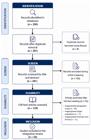
This is an integrative literature review, conducted with the following objectives: to identify, analyze and interpret scientific evidence related to the use of active teaching-learning methodologies in undergraduate medical courses in an integrated manner. The integrative review was adopted because it enables the inclusion of studies with different methodological designs, allowing a broad and analytical understanding of the investigated phenomenon, according to the method proposed by Whittemore and Knafl9. The methodological path was described in a transparent manner through the PRISMA flowchart, used as an instrument to organize the stages of study identification, screening, eligibility and inclusion, without characterizing the present study as a systematic review10.
The searches were carried out in the Scientific Electronic Library Online (SciELO), Virtual Health Library (VHL) databases - with emphasis on the LILACS database - and PubMed/MEDLINE, with the objective of ensuring a broad retrieval of national and international studies related to active methodologies in medical education. The inclusion of an international database was intended to increase the sensitivity of the search; however, the eligibility criteria restricted the final inclusion to studies carried out in Brazil. Publications in the period from 2010 to December 2025 were considered, with no restriction on the methodological study design.
The search strategy was structured based on two central conceptual axes: 1. medical education and 2. active teaching-learning methodologies. Controlled descriptors and free terms were used, in Portuguese and English, combined by Boolean operators (“AND” and “OR”), according to the specificities of each database. Among the terms used, the following stood out: educação médica, ensino médico, medical education, metodologias ativas, active learning, aprendizagem baseada em problemas, problem-based learning, PBL, aprendizagem centrada no estudante and student-centered learning. The search strategies were adapted to the particularities of each database.
The retrieved references were imported into the Rayyan11 platform, used to manage the references, identify duplicate records, and support the study selection process. Initially, 290 records were identified, of which nine duplicates were automatically removed, resulting in 281 single records.
In the screening stage by title and abstract, the records were evaluated based on previously defined criteria, and 152 studies were excluded because they did not refer to medical education, did not address active methodologies, dealt exclusively with medical residency, postgraduate or continuing education, or focused only on care aspects. At the end of this stage, 129 studies were selected for full reading.
Studies carried out in Brazil, developed in the context of undergraduate studies in Medicine, that addressed the use of active teaching-learning methodologies, regardless of the specific denomination adopted, including empirical studies of a qualitative, quantitative or mixed nature, as well as experience reports, as long as they were available in full, were included.
After a detailed reading of these 129 articles, 73 were excluded because they did not strictly meet the eligibility criteria, and were divided into three main justifications: 49 studies due to inadequacy of the geographic scope, because they were conducted in international settings; 11 due to inadequacy of the target population, because they focused on other areas of health or the context of postgraduate studies and residency; and 13 due to thematic and format inadequacy, since they addressed the isolated use of digital tools or theoretical reviews without focusing on the socio-pedagogical dynamics of active methodologies.
As a characteristic of the design of this review, no scales or formal scores were applied to assess the methodological quality or risk of bias of the included studies. This decision was due to the predominantly descriptive and qualitative nature of the included literature, whose specificities limit the application of rigid metrics, without harm to the proposed critical analysis. Therefore, the final corpus of this review consisted of 56 studies, which correspond to references numbered from 12 to 67 and constitute the empirical basis of this investigation.
The PRISMA flowchart corresponding to the stages of study identification, screening, eligibility and inclusion is shown in Figure 1.
Although the PRISMA flowchart summarizes the stages of study selection and exclusion, Table 1 details the quantitative distribution and methodological justifications of the 73 articles excluded after full-text reading.
Once the selection process was concluded, the final corpus of the review consisted of 56 studies, whose characterization is presented in the “Results” section.
RESULTS
General characterization of the included studies
Initially, a descriptive characterization of the studies was carried out, considering authorship and year of publication, objectives, methodological design, sample profile, active methodology adopted and main findings.
Regarding the methodological design, there was a marked predominance of studies with a qualitative approach (75.0%) and experience reports (25.0%), as summarized in Table 2. No longitudinal cohort studies or investigations specifically designed for the evaluation of nonlinear academic trajectories were identified. This profile shows that the Brazilian scientific production on active methodologies in undergraduate medicine has been predominantly constructed from cross-sectional analyses, descriptions of local institutional experiences, and analysis of the self-reported perceptions of students and teachers.
Regarding the profile of the samples, the studies included different stages of medical education, including investigations with students in the basic cycle (19.6%), the clinical cycle (25.0%) and the internship (23.2%), as well as investigations involving more than one stage of undergraduate studies (12.5%). Studies conducted exclusively with medical students (87.5%) predominated, although a portion of the studies also included teachers as active participants in the evaluation process (12.5%) (Table 2).
Active methodologies identified in the studies
The active methodologies identified in the included studies were grouped according to the predominant pedagogical strategy described by the authors and the educational context in which the intervention was developed. Studies focused on problem-based learning (PBL), including investigations on tutorial sessions, student performance, the role of the tutor, and processes of implementation or evaluation of the method, were grouped into the PBL category. Studies that associated different active methodologies or that analyzed complementary educational strategies developed in active curricula, without an unequivocal predominance of a single approach, were classified as combined methodologies. The categories project-based learning and experiential learning were reserved for studies whose main emphasis focused, respectively, on the development of structured educational projects or on practical, extension, or simulated activities carried out in real health care scenarios.
Table 3 shows the quantitative distribution and detailed mapping of the studies according to this classification.
The distribution shown in Table 3 demonstrates the predominance of studies related to PBL and combined methodologies, categories that concentrated most of the scientific production analyzed. On the other hand, isolated approaches based on projects or experiential learning activities remained less frequent in the scenario of national medical scientific production. This pattern suggests that Brazilian scientific production has favored the analysis of active curricula structured around PBL or hybrid pedagogical arrangements, while specific strategies based on projects or practical experiences remain relatively less explored in the literature.
Key findings of the included studies
Educational experience and student engagement
The included studies addressed aspects related to the educational experience of students in the context of active methodologies, with emphasis on student participation, involvement with the learning process and perception of the educational environment.
The findings pointed to greater involvement of students in the proposed activities: active participation in small groups, accountability for their own learning, and interaction between peers and teachers. In this scenario, students’ positive perceptions in relation to active methodologies were recorded, including greater motivation to study, a sense of belonging to the training process, and appreciation of learning built collaboratively15),(17),(24),(25),(40),(57),(59),(64. Furthermore, specific advances were observed in group communication, dialogue with teachers, and participation in academic discussions19),(31),(42),(50),(60),(67.
However, diverging from purely positive perceptions, part of the literature described challenges related to the adaptation of students to active methodologies. These obstacles included initial difficulties with the required autonomy, insecurity in the face of the lower centrality of expository teaching, and perception of academic overload, especially in contexts of curricular transition or in the first years of undergraduate studies16),(21),(30),(35),(44),(48),(52),(63),(65.
Competency development
The included studies addressed different competencies associated with the use of active methodologies in undergraduate medical courses. Among the most frequently mentioned aspects, the strengthening of student autonomy, self-learning capacity, and the sense of accountability for the training process itself stood out, especially in contexts that required self-directed study and active participation in small groups13),(29),(34),(51),(66.
Advances in critical thinking and in the ability to analyze complex problems were also identified, with reference to strategies that favored the formulation of hypotheses, the active search for information, and the integration of knowledge from different areas14),(18),(45),(47),(49),(58. Additionally, there were mentions of improving communication, teamwork, and decision-making skills, especially in activities that involved interaction between students and teacher mediation22),(26),(28),(33),(39),(56),(61),(62.
Part of the literature recorded difficulties related to the consolidation of these competencies, especially in the initial moments of implementation of active methodologies. Among the challenges pointed out were the adaptation to the pedagogical model, time management, and insecurity in the face of the demands for greater autonomy, observed more frequently in the first periods of medical training13),(39),(51),(61),(66.
Integration between theory and practice
The integration between theory and practice was a recurrent aspect in studies on active methodologies in medical education. Pedagogical strategies that favored early contact with real practice scenarios were highlighted, allowing the application of theoretical knowledge in concrete situations and the resolution of contextualized problems12),(23),(27.
Getting in touch with professional practice from the initial stages of undergraduate studies was described as fundamental for the understanding of theoretical contents, the contextualization of knowledge and the recognition of the relevance of learning for future activities. This integration occurred both in activities developed in health services and through strategies that used cases, projects or simulated experiences linked to medical routine36),(43),(53.
However, limitations in this articulation have been described, including challenges related to curricular organization, the availability of adequate scenarios, and the quality of teacher mediation. The literature also points to differences in the intensity and quality of this integration throughout the different undergraduate cycles54),(55.
Non-linear academic trajectories
The analysis of the included studies showed that late or non-linear academic trajectories were not an explicit focus of investigations on active methodologies in undergraduate medical courses. No analytical approaches were identified that considered age, previous academic training or different educational paths of the students, nor were comparative analyses based on these variables.
Characteristics such as autonomy, engagement, and responsibility were frequently described as competencies developed throughout medical education 20),(32),(37. In some studies, these same characteristics emerged in a generic way in the characterization of the participants’ profile, without a clear definition of the analyzed groups or criteria that would allow them to be associated with specific academic trajectories, whether linear or not38),(41),(43),(46.
DISCUSSION
When the included studies are gathered and analyzed, it becomes evident that active methodologies occupy a central place in the debates on medical education in Brazil. The interpretations presented below result from the integrated analysis of the set of 56 studies included in this review, considering recurrences, convergences, and gaps identified throughout the analyzed corpus. The results point to widely described benefits, especially with regard to educational experience, the development of competencies, and the integration between theory and practice. Nonetheless, when these findings are considered together, differences in experiences, challenges of adaptation, and, more silently, the absence of analyses that consider the heterogeneity of students’ academic trajectories emerge. The discussion below follows the axes presented in the results, seeking to deepen these issues based on the dialogue with the included studies.
PBL as a background to the scientific production analyzed
When the included studies are analyzed together, it is observed that PBL occupies a central place in the Brazilian literature on active methodologies in undergraduate medical courses, acting, in many cases, as a background for the description and evaluation of training experiences. Although PBL was the most frequent individual category among the studies analyzed, a very close distribution was observed in relation to the combined methodologies, evidencing the diversity of pedagogical arrangements present in Brazilian medical education. In different institutional contexts, PBL appears not only as a specific pedagogical strategy, but also as a structuring element of the curriculum and a reference for the understanding of active methodologies in a broader way.
Studies that address the curricular implementation of PBL or its adoption in specific disciplines and modules describe benefits associated with student participation, learning in small groups, and the integration of contents, treating the method as a consolidated axis in Brazilian medical education. At the same time, the studies also show the incorporation of different combinations of active pedagogical strategies, suggesting that curricular innovation has occurred through different educational arrangements.
However, part of the analyzed literature indicates that this centrality is not without challenges. Challenges related to the adaptation of students and teachers are frequent, especially with regard to the insecurity generated by the lower centrality of expository teaching. Furthermore, contexts of curricular transition reveal institutional tensions and a marked perception of academic overload among undergraduates, showing that the model implementation requires continuous support beyond formal methodological change.
Another aspect that deserves consideration refers to the heterogeneity of the experiences classified as active methodologies in the analyzed literature. An equivalent frequency of studies classified as PBL and as combined methodologies was observed, articulating different educational strategies in the same curriculum. This finding suggests that different pedagogical arrangements have been grouped under the generic denomination of active methodologies. Consequently, comparisons between studies should be interpreted with caution, since differences in the form of curricular implementation can influence the experiences reported by students and teachers. In addition, the institutional denomination of the adopted methodologies does not always reflect their daily performance. In several educational contexts, curricula identified as PBL incorporate hybrid strategies or local adaptations that may differ substantially from the originally proposed classical model. This heterogeneity of implementation constitutes an additional element that must be considered in the interpretation of the results described in the literature. It is also recognized that the category “combined methodologies” adopted in this review brings together pedagogical strategies that are quite heterogeneous among themselves; although this classification option was due to the non-standardized way in which the studies describe their interventions, it restricts finer comparisons between the findings and should be recognized as an analytical limitation of this review.
Educational experience and student engagement
In the included studies, the students’ educational experience is recurrently associated with greater engagement in the learning process, especially in contexts that adopt active methodologies based on small groups. These approaches are described as favoring greater interaction between peers and teachers, as well as a more positive perception of the educational environment. Qualitative investigations and experience reports indicate that students tend to perceive themselves as more central participants in the educational process, mentioning greater motivation for study and a sense of belonging to academic activities.
However, some studies show that this engagement is not established immediately. The adaptation difficulties already pointed out in the “Results” section are mainly concentrated in curricular transition scenarios or in the first contacts with the method. These findings suggest that the educational experience involves processes of progressive adjustment, influenced by institutional conditions and the support offered to students. In this sense, such difficulties can be understood in the light of adult education references, which offer a useful lens to interpret the different forms of adaptation of students to active methodologies.
Although the literature points out that the autonomy required by active methodologies can generate initial tensions, andragogical assumptions indicate that adult students tend to have a greater capacity for self-direction and to mobilize previous experiences as central resources for learning. However, the lack of data that explicitly considers non-linear academic trajectories in the reviewed studies configures an analytical silence that prevents verifying whether student maturity acts as a protective factor against academic overload or if, on the contrary, the need to reconcile multiple responsibilities increases the emotional exhaustion in this student profile. It should be noted that such considerations are hypothetical and derive from the theoretical framework adopted, and not from the empirical findings of the reviewed studies, since the gap identified prevents direct conclusions about this group of students.
Competency development
The development of competencies is one of the findings most frequently associated with the use of active methodologies in the included studies, appearing as one of the main arguments in favor of these approaches in medical education. In general, the analyzed literature describes the promotion of competencies such as autonomy, critical thinking, communication, teamwork, and responsibility for one’s own learning. Qualitative studies and experience reports indicate that students begin to perceive themselves as more active subjects in the training process, capable of making decisions, debating, and collaborating more consistently throughout the proposed activities.
However, when these findings are analyzed in an integrated manner, it is observed that the development of competencies is often described in the literature primarily through self-reported perceptions or descriptive accounts, with little explanation of the pedagogical processes involved or the criteria used for its evaluation. In general, analyses based on students’ self-reported perceptions and qualitative reports of experience predominate, with little use of objective instruments, performance evaluations or longitudinal follow-ups that allow estimating the impact of active methodologies throughout the training path. This methodological characteristic does not invalidate the reported benefits, but recommends caution in the interpretation of the results, since the magnitude and persistence of these effects throughout the undergraduate course remain insufficiently explored.
In many studies, competencies appear more as formative objectives or expectations associated with active methodologies than as phenomena analyzed in a systematic way. In addition, despite the recurrence of these categories, the literature does not problematize whether the development of such competencies manifests itself differently among students with different academic trajectories, reinforcing an approach that tends to treat the student body as relatively homogeneous. This gap limits the understanding of possible differences in the way students with different academic backgrounds develop and mobilize these competencies throughout their undergraduate studies.
Integration between theory and practice
The integration between theory and practice is one of the most consensual findings among the studies included in this review, and is often pointed out as one of the main potentials of active methodologies in medical education. Recurrently, the analyzed studies describe that pedagogical strategies based on problems, projects or practical experiences favor the contextualization of theoretical content and bring students closer to concrete situations of professional practice. Studies developed in different training scenarios report that this articulation contributes to learning that is considered more meaningful and aligned with the demands of health care.
Despite this convergence, the integration between theory and practice is, in most studies, presented as an expected or inherent benefit of active methodologies, with less analytical depth on the processes that sustain it throughout education. Few studies systematically explore the pedagogical and institutional conditions that favor or limit this articulation. As a consequence, the curricular, organizational, or relational elements that are most determinant for the construction of this integration throughout the training path remain unclear. Similar to what was observed in the previous axes, there are no analyses that consider whether this experience takes on different meanings for students with different academic trajectories, reinforcing the transversal character of the gap evidenced in this review.
Non-linear academic trajectories
The integrated analysis of the studies included in this review shows that, although active methodologies are widely discussed in terms of engagement, development of competencies and integration between theory and practice, the diversity of students’ academic trajectories remains little explored in the Brazilian literature on undergraduate medical courses. This gap suggests that aspects related to age, previous academic or professional experiences, and different educational paths still occupy a marginal position in investigations on active methodologies.
Although characteristics such as autonomy, accountability, engagement, and maturity appear recurrently in the findings of the studies, these categories are generally presented as developed competencies or as generic descriptions of the student profile, without a clear conceptual definition or analysis situated in relation to the students’ academic trajectories. This pattern suggests that the literature tends to treat medical students as a relatively homogeneous group, naturalizing certain dispositions and formative experiences, regardless of the academic and life histories that precede entering the course. In this context, it remains uncertain to what extent these characteristics result from the formative processes promoted by active methodologies or reflect previous experiences brought by the students themselves.
For this reason, the absence of analyses focused on nonlinear academic trajectories should not be interpreted as a one-off gap, but as a recurrent analytical silence in the field investigated. By highlighting this gap, the present review does not establish prescriptive associations between active methodologies and specific student profiles, but points to the need for future investigations that consider student heterogeneity as a relevant dimension for a deeper understanding of medical education in the Brazilian context. Studies that include students taking on a second degree, individuals with previous professional experience, freshmen in different age groups, or with interrupted academic trajectories can contribute to understanding how these characteristics influence processes of adaptation, engagement, development of competencies, and integration between theory and practice in curricula based on active methodologies.
FINAL CONSIDERATIONS
This integrative review enabled an integrated analysis of the Brazilian scientific production on the use of active methodologies in undergraduate medical courses, evidencing the centrality of PBL and combined methodologies as the main approaches identified in the analyzed literature, and the association of these strategies with benefits related to educational experience, the development of competencies and the integration between theory and practice.
The integrated analysis of the studies revealed, however, that these benefits are often described in a broad and unproblematized manner, with little attention to the pedagogical processes involved and to the institutional conditions that support the implementation of active methodologies. Moreover, the review evidenced the persistence of analytical approaches that do not explore the diversity of academic trajectories and previous experiences of medical students.
In this sense, the main contribution of this study is to highlight the absence of investigations explicitly aimed at students with late or non-linear academic trajectories. By highlighting this analytical silence, the present review does not propose prescriptive associations between active methodologies and specific profiles, but points to the need for future research that incorporates student heterogeneity as a relevant dimension for understanding medical education in the Brazilian context. Thus, by shifting the focus from the exclusively methodological discussion to the diversity of students’ academic paths, this review broadens the understanding of the factors that influence the formative experience in curricula based on active methodologies.
As study limitations, the restriction to studies carried out in Brazil and to the selected databases is recognized, as well as the predominance of qualitative studies and experience reports in the analyzed corpus, a characteristic that limits the possibility of generalizations and more robust comparisons between the findings. In addition, the absence of a formal evaluation of the methodological quality and risk of bias of the included studies should be considered in the interpretation of the results, although this decision was compatible with the predominantly qualitative and descriptive nature of the analyzed corpus. This choice implies, however, the possibility of overestimating the reported benefits, given the predominance of self-reported perceptions and the eventual tendency to publish successful experiences, which recommends a critical reading of the conclusions summarized herein. Nonetheless, the methodological rigor adopted and the transparency of the selection process give consistency to the presented interpretations.
The results of this review contribute to the deepening of the debate on active methodologies in medical education and reinforce the need for investigations that consider, in an integrated manner, different pedagogical methods and academic paths.
References
-
1 Instituto Brasileiro de Geografia e Estatística. Síntese de indicadores sociais: uma análise das condições de vida da população brasileira. Rio de Janeiro: IBGE; 2024 [acesso em 3 fev 2026]. Disponível em: Disponível em: https://www.ibge.gov.br/estatisticas/sociais/populacao/9221-sintese-de-indicadores-sociais.html
» https://www.ibge.gov.br/estatisticas/sociais/populacao/9221-sintese-de-indicadores-sociais.html -
2 Organisation for Economic Co-operation and Development. Education Policy Outlook 2025: making lifelong learning a reality for all. Paris: OECD; 2025 [acesso em 3 fev 2026]. Disponível em: Disponível em: https://www.oecd.org/en/publications/education-policy-outlook-2025_c3f402ba-en.html
» https://www.oecd.org/en/publications/education-policy-outlook-2025_c3f402ba-en.html - 3 Moura CB, Menezes MV. Mudando de opinião: análise de um grupo de pessoas em condição de re-escolha profissional. Rev Bras Orient Prof. 2004;5:29-45.
- 4 Knowles MS. The adult learner: a neglected species. Houston: Gulf Publishing; 1984.
- 5 Merriam SB, Bierema LL. Adult learning: linking theory and practice. San Francisco: Jossey-Bass; 2014.
- 6 Kasworm CE. Adult learners in a research university: negotiating undergraduate student identity. Adult Educ Q. 2010;60(2):143-60.
- 7 Barrows HS. A taxonomy of problem-based learning methods. Med Educ. 1986;20(6):481-6.
- 8 Brasil. Resolução CNE/CES nº 3, de 20 de junho de 2014. Institui as Diretrizes Curriculares Nacionais do Curso de Graduação em Medicina. Diário Oficial da União; 23 jun 2014.
- 9 Whittemore R, Knafl K. The integrative review: updated methodology. J Adv Nurs. 2005;52(5):546-53.
- 10 Page MJ, McKenzie JE, Bossuyt PM, Boutron I, Hoffmann TC, Mulrow CD, et al. The PRISMA 2020 statement: an updated guideline for reporting systematic reviews. BMJ. 2021;372:n71.
- 11 Ouzzani M, Hammady H, Fedorowicz Z, Elmagarmid A. Rayyan - a web and mobile app for systematic reviews. Syst Rev. 2016;5:210.
- 12 Ferreira MLS, Moura JFL, Silva ES, Rocha RF, Olivares AIO, Hayd RLN. Feira de Saúde do curso de Medicina da UFRR: uma aproximação com a comunidade. Rev Bras Educ Med. 2010;34(2):310-14.
- 13 Bertoncello V, Moro CMC, Bortolozzi F, Bertoncello LEKS. Similaridades entre semiologias na metodologia da aprendizagem baseada em problemas. Rev Bras Educ Med . 2010;34(3):469-76.
- 14 Franceschet-de-Sousa I, Biscaro A, Biscaro F, Fernandes MS. Uso racional de medicamentos: relato de experiência no ensino médico da Unesc, Criciúma/SC. Rev Bras Educ Med . 2010;34(3):438-45.
- 15 Mezzari A. O uso da aprendizagem baseada em problemas como reforço ao ensino presencial utilizando o ambiente de aprendizagem Moodle. Rev Bras Educ Med . 2011;35(1):114-21.
- 16 Carneiro JA, Costa FM, Lima CC, Otaviano MR, Fróes GJ. Unimontes Solidária: interação comunitária e prática médica com a extensão. Rev Bras Educ Med . 2011;35(2):283-8.
- 17 Peixoto JM, Ribeiro MMF, Amaral CFS. Atitude do estudante de medicina a respeito da relação médico-paciente segundo modelos pedagógicos. Rev Bras Educ Med . 2011;35(2):229-36.
- 18 Aquilante AG, Silva RF, Silva de Avó LR, Gonçalves FGP, Souza MBB. Situações-problema simuladas: uma análise do processo de construção. Rev Bras Educ Med . 2011;35(2):147-56.
- 19 Andrade SC, Deus JA, Barbosa ECH, Trindade EMV. Avaliação do desenvolvimento de atitudes humanísticas na graduação médica. Rev Bras Educ Med . 2011;35(4):517-25.
- 20 Almeida MTC, Batista NA. Ser docente em métodos ativos de ensino-aprendizagem na formação do médico. Rev Bras Educ Med . 2011;35(4):468-76.
- 21 Duarte ALA, Monaco CF, Manso MEG. A aprendizagem baseada em problemas no ensino das ciências básicas: experiência no segundo semestre do curso de Medicina de um Centro Universitário. Mundo Saude. 2013;37(1):89-96.
- 22 Marques MD, Lopes Júnior LC, Bomfim EO, Gomes CPM, Pavelqueires S. O ensino de primeiros socorros sob a ótica de um currículo de orientação problematizadora. Rev Pesqui Cuid Fundam Online. 2014;6(4):1485-95.
- 23 Ricardo MPF, Marin MJS, Otani MAP, Marin MS. Estudante de medicina na Estratégia Saúde da Família em séries iniciais: percepção dos egressos. Rev Esc Enferm USP. 2014;48(supl 2):178-83.
- 24 Rodrigues SG, Neves MGC. Avaliação formativa: vivências em metodologia ativa de ensino-aprendizagem na visão docente e discente. Com Ciênc Saúde. 2015;26(3-4):105-14.
- 25 Dalla MDB, Moura GAG, Bergamaschi MS. Metodologias ativas: relato de experiência de estudantes de graduação em medicina na disciplina de Interação Comunitária. Rev Bras Med Fam Comunidade. 2015;10(34):1-6.
- 26 Forte M, Souza WL, Silva RF, Prado AF. Portfólio reflexivo eletrônico: resultados de um projeto piloto. Rev Bras Educ Med . 2016;40(2):234-44.
- 27 Silva DR, Abreu e Lima LR, Cara LM, Wen CL. Projeto Jovem Doutor: aprendizado prático de estudantes de medicina por meio de atividade socioeducativa. Rev Med (São Paulo). 2017;96(2):73-80.
- 28 Mattos MP. Metodologias ativas auxiliando no aprendizado das ciências morfofuncionais numa perspectiva clínica: relato de experiência. Rev Ciênc Méd Biol. 2017;16(2):146-50.
- 29 Lima BM, Verri IA, Soares JYS, Oliveira SV. Júri simulado como estratégia ativa de ensino de Vigilância em Saúde. Arq Ciênc Saúde UNIPAR. 2020;24(2):125-29.
- 30 Senger MH, Sampaio Neto LF, Vieira MW, Borges GC, Fermozelli JA, Esposito SB, et al. A inserção da mentoria na matriz curricular de um curso de Medicina: relato de experiência. Rev Bras Educ Med . 2021;45(1 supl 1):e104.
- 31 Menezes DPF, Cunha ATR, Oliveira LCR, Souza LFF. Peer mentoring como estratégia de acolhimento ao estudante e adaptação ao método PBL. Rev Bras Educ Med . 2021;45(1 Suppl 1):e103.
- 32 Sousa MAO, Falbo-Neto GH, Falbo AR. Correlação entre os domínios de competência do tutor e o desempenho estudantil: estudo transversal. Rev Bras Educ Med . 2021;45(3):e178.
-
33 Oliveira MF, Ferreira LG. Recurso cinematográfico no ensino de sustentabilidade e saúde coletiva na graduação médica. Rev Cienc Plur. 2024;10(3):e36847. doi: 10.21680/2446-7286.2024v10n3ID36847.
» https://doi.org/10.21680/2446-7286.2024v10n3ID36847 -
34 Araújo JAS, Mendes NVS, Carvalho BLD, Madeira LSC, Sousa MFJ, Moraes JM, et al. Desenvolvimento colaborativo de apostilas interdisciplinares acerca do corpo humano: um relato de experiência. Rev Cient Esc Estadual Saude Publica Goias Candido Santiago. 2025;11. doi: 10.65027/2447-3405.2025.885.
» https://doi.org/10.65027/2447-3405.2025.885 - 35 Cliquet MB, Rodrigues CIS. Grupo tutorial e saúde mental no ensino médico. Rev Bras Educ Med . 2016;40(4):591-601.
- 36 Taroco APRM, Tsuji H, Higa EFR. Currículo orientado por competência para a compreensão da integralidade. Rev Bras Educ Med . 2017;41(1):12-21.
- 37 Teófilo TJS, Santos NLP, Baduy RS. Apostas de mudança na educação médica: trajetórias de uma escola de medicina. Interface (Botucatu). 2017;21(60):177-88.
- 38 Pícoli RP, Domingo ALA, Santos SC, Andrade AHG, Araujo CAF, Kosloski RMM, et al. Competências propostas no currículo de medicina: percepção do egresso. Rev Bras Educ Med . 2017;41(4):525-32.
- 39 Belfor JA, Sena IS, Silva DKB, Lopes BRS, Koga Júnior M, Santos BEF. Faculty teaching skills perceived by medical students of a university of the Brazilian Amazon region. Cien Saude Colet. 2018;23(1):73-82.
- 40 Conceição CV, Moraes MAA. Aprendizagem cooperativa e formação do médico em metodologias ativas: percepção de estudantes e docentes. Rev Bras Educ Med . 2018;42(4):115-22.
- 41 Pavan MV, Senger MH, Marques W. Avaliação da reforma curricular de um curso de medicina na perspectiva dos docentes. Rev Bras Educ Med . 2019;43(1 supl 1):135-45.
- 42 Dias NC, Pio DAM. Percepção dos estudantes de medicina sobre comunicação de más notícias na formação médica. Rev Bras Educ Med . 2019;43(1 supl 1):254-64.
- 43 Reis FVD, Passos AHR, Higa EFR. Aprendizagem baseada em problemas: contribuição para médicos pediatras. Rev Bras Educ Med . 2019;43(1 supl 1):322-9.
- 44 Torres V, Sampaio CA, Caldeira AP. Ingressantes de cursos médicos e percepção da transição para aprendizagem ativa. Interface (Botucatu) . 2019;23:e1700471.
- 45 Marinzeck LC, Stefaneli E, Paschoalino DC, Caritá EC, Silva SS. Avaliação do conhecimento de alunos do internato médico sobre pancreatite aguda utilizando aprendizagem baseada em problemas. Rev Bras Educ Med . 2019;43(1):157-62.
- 46 Oliveira CA, Senger MH, Ezequiel OS, Amaral E. Alinhamento de projetos pedagógicos de cursos de medicina às diretrizes curriculares nacionais. Rev Bras Educ Med . 2019;43(2):143-51.
- 47 Silva AF, Domingues RJS, Kietzer KS, Freitas JJS. Percepção do estudante de medicina sobre a inserção da radiologia no ensino com metodologias ativas. Rev Bras Educ Med . 2019;43(2):95-105.
- 48 Dias-Lima A, Silva MC, Ribeiro LCV, Bendicho MT, Guedes HTV, Lemaire DC. Avaliação, ensinagem e metodologias ativas: experiência em componente curricular de curso de Medicina. Rev Bras Educ Med . 2019;43(2):216-24.
- 49 Masocatto NO, Couto WJ, Matta TS, Porfirio GJM. Percepção de alunos de medicina sobre o Team-Based Learning. Rev Bras Educ Med . 2019;43(3):110-4.
- 50 Lorena SB, Andrade MM, Arcoverde AMH, Vilela LS, Mota LRA, Lorena Sobrinho JE. Análise do acesso à informação acadêmica entre estudantes de medicina em metodologia ativa. Rev Bras Educ Med . 2019;43(4):176-86.
- 51 Barreto IDP, Gomes PA, Furlaneto IP, Barreto B. Avaliação das estratégias de autoaprendizagem em alunos de um curso de medicina. Rev Bras Educ Med . 2019;43(4):36-46.
- 52 Rezende KTA, Costa MCG, Rodrigues ME, Tonhom SFR. Aprendizagem baseada em problemas em curso de Medicina: desafios na implementação. Rev Bras Educ Med . 2020;44(4):e119.
- 53 Nonato AC, Kobashikawa KT, Pio DAM, Vernasque JRS. Apreensão do conceito de necessidades de saúde em currículo ativo. Rev Bras Educ Med . 2020;44(2):e070.
- 54 Romão GS, Bestetti RB, Couto LB. Aplicação do PBL clínico na atenção primária em cursos de Medicina. Rev Bras Educ Med . 2020;44(4):e143.
- 55 Custódio LAF, Vieira CM, Francischetti I. Dimensão social na formação médica em aprendizagem baseada em problemas. Trab Educ Saúde. 2020;18(3):e00272103.
- 56 Oliveira NP, Domingues RJS, Almeida Sobrinho EFA, Argentino S, Silva EAM, Ferreira Júnior MDEnsino do exame de fundo de olho: vivências e percepções de estudantes de Medicina. Rev Bras Educ Med . 2021;45(2):e092.
- 57 Cadête Filho AA, Peixoto JM, Moura EP. Motivação acadêmica de estudantes de Medicina na perspectiva da teoria da autodeterminação. Rev Bras Educ Med . 2021;45(2):e086.
- 58 Mega MN, Bueno BC, Menegaço EC, Guilhen MP, Pio DAM, Vernasque JRS. Experiência de estudantes com a literatura na formação médica. Rev Bras Educ Med . 2021;45(2):e059.
- 59 Rossi GZ, Fischer JMS, Rocha SR, Casalecchi GA, Avó LSR, Germano CMR. Abordagens de aprendizado e correlação com ambiente educacional e características individuais. Rev Bras Educ Med . 2021;45(3):e169.
- 60 Oliveira PM, Aquilante AG, Moretti-Pires RO, Sampaio SF. Gender, sexuality and medical education: experiences in a federal school using active methodologies. Rev Bras Educ Med . 2021;45(4):e227.
- 61 Madeiro Júnior JR, Silva JL, Sales ACV, Souza ES. Validação de conteúdo de instrumento para avaliação de estudantes em sessões tutoriais. Rev Bras Educ Med . 2021;45(3):e130.
- 62 Silva MCA, Assunção MELS. Eficácia de metodologia ativa de aprendizagem do ECG no internato em clínica médica. Arq Bras Cardiol. 2022;119(5 supl 1):22-6.
- 63 Coelho WK, Araujo LG, Caminha MFC, Falbo AR. Estudante com perfil de dominância na aprendizagem baseada em problemas: percepção de docentes e discentes. Rev Bras Educ Med . 2024;48(4):e093.
- 64 Moura IUEZ, Chakr VCBG. Online learning satisfaction and participation in flipped classroom and case-based learning for medical students. Rev Bras Educ Med . 2024;48(3):e087.
- 65 Coelho ICMM, Silva MX, Brandão ABF, Veiga ACB, Tsutida CA, Mattei MPM. Adaptação de acadêmicos de Medicina em currículos PBL e tradicional ao ensino remoto. Rev Bras Educ Med . 2024;48(2):e049.
- 66 Teixeira GA, Bellusse GC, Souza RJSP, Duarte SG. Aprendizagem baseada em problemas: feedbacks correlatos a níveis de conhecimento. Rev Bras Educ Med . 2025;49(3):e099.
- 67 Dubourcq RAL, Marques GRTD, Flor TMA, Padilha FMQH, Caminha MFC, Falbo AR. Perfil de silêncio na aprendizagem baseada em problemas: percepção do estudante de medicina. Rev Bras Educ Med . 2025;49(2):e071.

 Source: Prepared by the author.