
 Epidemiological profile of mortality among long-lived older adults in the municipality of Ribeirão Preto, SP
Abstract
Objective To characterize and analyze the mortality profile of long-lived older adults in Ribeirão Preto, SP, Brazil, comparing it with the overall deaths in the year 2019.
Method A cross-sectional study utilizing data derived from death certificates. The variables analyzed included sex, age, race/ethnicity", marital status, place of residence, place of death, and cause of death according to the chapters of ICD-10, grouped by the regions of the municipality (Center, East, North, West, South, and the district). Thematic maps were created using socioeconomic data from the IBGE, density maps by sex were generated, the mortality coefficient by region was calculated, as well as age at death.
Results There were 1,459 deaths (33.2%) of long-lived older adults in the municipality in 2019. The most prevalent demographic was female (61.5%), with an age range between 81 and 90 years (70.5%), White race/ethnicity (90.7%), widowed (59.2%), deaths occurring in hospitals (76.3%), respiratory system diseases (36.5%), and Alzheimer’s disease as the leading nervous system disorder (98.4%). The highest mortality coefficient was observed in the Center (6.6/1,000 inhabitants). The maps indicated a higher density of deaths in the Center, East, and West Zones for males, and in the Center, South, and East Zones for females, with these regions being predominantly wealthier. The highest age at death occurred in the Center.
Conclusion This was a pioneering study in the municipality utilizing geoprocessing techniques, indicating where long-lived individuals reside and relating it to the average income of the population, which can help guide health actions for the long-lived population.
Keywords
Aged; Mortality; Longevity; Spatial Analysis
Resumo
Objetivo Caracterizar e analisar o perfil de mortalidade de pessoas idosas longevas de Ribeirão Preto, SP, Brasil, comparando com os óbitos gerais no ano de 2019.
Método Estudo transversal com dados provenientes das declarações de óbitos. Foram analisadas as variáveis sexo, idade, raça/cor, estado civil, local de residência, local do óbito e a causa do óbito de acordo com os capítulos da CID-10, agrupadas de acordo com as regiões do município (Centro, Zonas Leste, Norte, Oeste, Sul, e o distrito). Foram criados mapas temáticos com dados socioeconômicos provenientes do IBGE, mapas de densidade de acordo com o sexo, calculou-se o coeficiente de mortalidade por região; e a idade na morte.
Resultados Ocorreram 1.459 óbitos (33,2%) de pessoas idosas longevas no município, em 2019. O sexo feminino foi o mais prevalente (61,5%), faixa etária entre 81 e 90 anos (70,5%), raça/cor branca (90,7%), viúvos (59,2%), de ocorrência hospitalar (76,3%), e doenças do aparelho respiratório (36,5%), e o Alzheimer como principal doença do sistema nervoso (98,4%). O maior coeficiente de mortalidade ocorreu no Centro (6,6/1000 habitantes). Os mapas indicaram maior densidade de óbitos no Centro, Zona Leste e Oeste para o sexo masculino e Centro, Zona Sul e Leste para o feminino, sendo regiões predominantemente mais ricas. A maior idade na morte ocorreu no Centro.
Conclusão Foi um estudo pioneiro no município ao utilizar técnicas de geoprocessamento, indicando onde residem pessoas longevas, relacionando com a renda média da população, podendo direcionar ações em saúde para a população longeva.
Palavras-Chave:
Idoso; Mortalidade; Longevidade; Análise Espacial
INTRODUCTION
The migration to urban areas and population aging have been influencing the morbidity profile, with a predominance of chronic-degenerative diseases that require longitudinal care and have a significant impact on quality of life1,2. In this context, Law number 13,466/2017 was enacted, providing special rights and priorities for those over 80 years of age, who are considered in this study as long-lived older adults3.
In 2019, approximately 9% of the global population was aged 65 years or older. In Brazil, around 13.5% of the population was over 60 years old, with 1.5% being 80 years or older, and according to United Nations projections, these populations could represent 18.9% and 2.3% of the Brazilian population, respectively, by 20304. However, there are differences when analyzing the years lived by individuals in terms of sex and race/ethnicity. Data from Institute of Applied Economic Research5 (IPEA) reveal that, even in 2019, there was a 12.9-year difference in the average years lived between a Black man (57.8 years) and a non-Black woman (70.7 years). This may suggest racial and sex inequality in the country.
Mortality information plays a crucial role in epidemiology and studies on disease prevalence, spatial analysis, as well as in the planning and implementation of health programs6-8. An indicator related to mortality is age at death (AD), which represents the highest age reached by a population at the time of death and is described through central tendency measures9. The AD indicates the health status of the population in the year of death, reflecting the individuals' life trajectory10. Furthermore, mortality information allows for the comparison of longevity among different population groups and the identification of disparities in this outcome9.
Considering these disparities and the social determinants involved in the health-disease and mortality process, this study aimed to characterize and analyze the epidemiological profile of long-lived older adults who died in the municipality of Ribeirão Preto, SP, Brazil, in 2019, comparing it with all deaths occurring in the same period. The study also sought to identify the areas where this population resided using spatial analysis and distribution techniques, calculate the age at death, and compare the most long-lived regions of the municipality in relation to economic status.
METHOD
This observational cross-sectional study with a quantitative approach analyzed the mortality profile of the population aged 80 years older in Ribeirão Preto, Brazil, in 2019. The municipality, located in the northwestern region of São Paulo State (SP), is considered a large city and exhibited a population growth of 13.5% from 201011 (604,673 inhabitants) and 202212 (698,259 inhabitants).
All death certificates (DC) recorded at the Civil Registry Offices in Ribeirão Preto for the specified year were analyzed. The year was chosen because there were no outbreaks, epidemics, natural disasters, or other events that could alter the mortality pattern, both for this population and for other age groups.
The DC is a document in three copies (white, yellow, and pink) with three distinct destinations (health department, registry office, and health service, such as the Legal Medical Institute or the patient’s medical record)13. The variables available on the yellow copy were analyzed, including sex (male and female); age; race/ethnicity (white, black, mixed, and yellow); marital status (single, married, separated/divorced, widowed); place of residence; place of death (hospital, home, public place, and other); and the underlying cause of death according to the chapters of the International Classification of Diseases (ICD-10)14.
The variables were categorized according to the residential area based on the administrative regions of the municipality (Center, East Zone, North Zone, West Zone, South Zone, and the Bonfim Paulista district). Absolute and relative frequencies were calculated and proportionally compared with the profile of the general population that died.
The collected addresses were grouped according to the neighborhoods of the municipality and then allocated to the administrative regions. For those death certificates that did not have neighborhood information, the address was entered into Google Maps®, identified, and assigned to the corresponding region.
Subsequently, these addresses were geocoded using Google Maps® and incorporated into the municipality's shapefile within the free software QGIS 3.30.1. The shapefile was obtained from the Brazilian Institute of Geography and Statistics (IBGE). Density techniques were then applied to create maps representing only female deaths and another representing only male deaths. This approach allowed for the observation of the regions within the municipality with the highest concentration of deaths among these populations. Other maps created included the average age of the female and male populations and the nominal monthly income per household head, according to the IBGE census sectors, to identify regions with older populations based on average salary. The average age of the living population was based on the 2010 Census. From the same source, the number of inhabitants per region was used to calculate the mortality coefficients.
Thew age at death was characterized using measures of central tendency, including mean, median, standard deviation, and mode, for the age of deaths during the analyzed period. It was calculated for the general population, by sex, and by race/ethnicity according to the municipality's administrative regions. In the context of sample homogeneity and normality, analysis of variance (ANOVA) was performed to determine if there were significant differences between the means of the considered groups. When the sample was heterogeneous and non-normally distributed, the Kruskal-Wallis test was used. Values were considered statistically significant when the p-value was less than 0.05.
Data collection occurred between February and October 2021. Initially, data on all deaths were entered into a spreadsheet and subsequently transferred to REDCap®. After separating the data for long-lived older adults, those aged 80 years or younger were used for comparison, and those without residence in Ribeirão Preto were excluded. The assignment of ICD-10 chapters for the underlying cause of death was carried out by the researchers. This study followed the STROBE checklist guidelines.
The project was approved by the Ethics Committee of the Centro Saúde Escola of the Faculdade de Medicina de Ribeirão Preto, Universiade de São Paulo (Opinion: 4,543,831). To access the death certificates, a request was made to the judicial inspector of the municipality’s registry offices explaining the nature of the research, and the request was granted, following ethical standards, confidentiality in research, and the General Data Protection Law (Law number 13,709/2018)15.
RESULTS
There were 4,394 deaths in 2019 in the municipality of Ribeirão Preto, with 52.7% being male. The overall mortality rate was 7.3 per 1,000 inhabitants, and for males and females, it was 8 per 1,000 and 6.6 per 1,000 inhabitants, respectively.
According to the 2010 Brazilian Census11, 1.9% of the population in Ribeirão Preto was over 80 years old. In this study, this age group represented 33.2% (1,459) of the total deaths, with a mortality rate of 2.4 per 1,000 inhabitants. The highest mortality rate was in the Center region, and the lowest was in the Bonfim Paulista district (Table 1).
Sociodemographic characteristics of long-lived older adults (n=1,459) in the municipality of Ribeirão Preto, SP, Brazil, who passed away in 2019, mortality rates, and their proportion in relation to overall deaths (N=4,394), according to administrative regions.
Of the total deaths in the municipality, 24.2% and 43.1% were of long-lived older adults, male and female, respectively, with mortality rates of 1.9 per 1,000 and 2.8 per 1,000 inhabitants. Regarding marital status, 76.8% of widowed individuals were female. The male sex was predominant only among married individuals, representing 76.3%.
Regarding race/ethnicity, the municipality recorded 3,646 deaths of white individuals, 279 black, 445 mixed-race, and 15 yellow individuals, representing 36.3%, 21.9%, 15.3%, and 42.8% of long-lived older adults, respectively. Of this total, 90.7% were declared as white (Table 1). The proportion of race/ethnicity and marital status was similar. Whites and widowers constituted 59.1%, followed by married whites (27.2%), with the remainder being single or separated/divorced (13.7%). There were more mixed-race older adults compared to black individuals in all marital status categories, except for widowers, where black individuals represented 4.8% and mixed-race individuals 4.2%.
When analyzing the age range of this population, it is observed that the majority were between 81 and 90 years old, followed by those between 91 and 100 years, and 101 years or older. Regarding the place of death, hospitals were the most common location, followed by homes. The category “others” includes residences for older adults, clubs, parks, or other types of health facilities that are not hospitals (Table 1).
Regarding the causes of death, according to the ICD-10 Chapters, there was a prevalence of Chapters X (Diseases of the Respiratory System), IX (Diseases of the Circulatory System), XIV (Diseases of the Genitourinary System), II (Neoplasms), XI (Diseases of the Digestive System), VI (Diseases of the Nervous System), and XX (External Causes of Morbidity and Mortality). It was observed that the highest proportions of long-lived older adults within the general population were related to Chapter VI, with 92 (66.6%) cases, of which 98.4% were associated with Alzheimer's Disease. The lowest proportion was observed in Chapter XX, with all cases resulting from accidents (Table 2).
Proportion of deaths among the general population (n=4,394) and long-lived older adults (n=1,459), by sex, race/ethnicity, and the average age of long-lived older adults in the municipality of Ribeirão Preto, SP, in 2019, according to the ICD-10 Chapters.
Chapter XIV had the highest proportion of female deaths, followed by Chapter VI. Conversely, Chapter XX had a higher proportion of male deaths. Regarding race/ethnicity, whites and yellows were predominant in all chapters, with particular emphasis on external causes, where 100% were white. However, it is noteworthy that 91.1% of the deaths of long-lived older adults occurred among individuals identified as white or yellow.
The highest average age was found in Chapter VI, while the lowest was in Chapter II. However, only Chapters II and XI did not include individuals who lived beyond 100 years, with the maximum age of 104 years being recorded in Chapter VI (Table 2).
Map (A) illustrates the density of deaths among long-lived older adults of the female sex, showing a concentration in the central region, extending further into the southern and eastern portions of the municipality. In Map (B), which represents the male sex, a similar concentration is observed in the central region, but with a higher intensity extending into the western portion. It is noted that the long-lived older adult male population, despite being smaller in number, exhibited a more heterogeneous distribution across the territory, including into economically disadvantaged regions. In contrast to the female population, which, although more subtly, demonstrated a higher longevity in economically more prosperous areas, predominantly in the central region (Figure 1).

Density maps for male and female long-lived older adults in the municipality of Ribeirão Preto, SP, in 2019.
The highest incomes were found in the South region of the municipality and in the district of Bonfim Paulista. Regarding average ages, more sectors had higher average ages for females than for males. In the former case, there was a concentration in the central region, spreading to adjacent areas, resulting in a more homogeneous pattern, while the male population exhibited a more heterogeneous distribution, with values varying across regions. There were nine census tracts with an average age above 50 years for males and 15 for females (Figure 2).
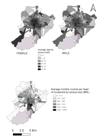
Thematic maps related to the average age of females and males, and monthly nominal income per household head according to census tracts as per IBGE 2010, for the municipality of Ribeirão Preto, SP.
The two individuals who reached the age of 104 years were female and resided in the Center, which is also the region with the highest average age at death, 89.3 years. The East Zone exhibited an average age of 88.1 years, the North Zone 87.3 years, the West Zone 87.4 years, the South Zone 89 years, and Bonfim Paulista 89.3 years (Table 3).
Age at death, comparison between sexes and race/ethnicity of long-lived older adults in Ribeirão Preto, SP, Brazil, in 2019.
The average age at death was 87.9 years, the median 87 years, and the mode 81 years for the municipality as a whole. The average, median, and mode values were higher across all regions for females, except for the median in the North Zone, which was the same for both sexes. Regarding race/ethnicity, the yellow race/ethnicity had the highest average age at death, albeit with only six deaths recorded, while the mixed-race group had the lowest. However, when considering the values for black and yellow individuals in the Center, it can be inferred that no individuals of these races/ethnicities who died in this region were over 80 years old. The lowest standard deviation was found in the West Zone, while the highest deviations were observed for the yellow and mixed-race groups, respectively (Table 3).
The values do not undergo significant changes when comparing regions. However, the highest average age was observed in the Central region, as well as the median and mode. When comparing sexes, the highest average age for males was found in the Central region, along with the median, although the mode was higher in the South Zone. For females, the highest average age was in Bonfim Paulista, with the same highest median in the Central region, and the highest mode in the South Zone.
For race/ethnicity, there are greater differences. Whites had the highest average age in Bonfim Paulista and the lowest in the West Zone. The data generally show higher values in the Central region, followed by Bonfim Paulista. A smaller standard deviation, as observed in the yellow race/ethnicity, suggests that the ages at death of this group were more similar compared to those with larger standard deviations, such as the white race/ethnicity across all regions.
DISCUSSION
When characterizing the profile of long-lived older adults who died in Ribeirão Preto in 2019, a higher prevalence of females and individuals of white race/ethnicity was observed. The Center exhibited the highest mortality coefficient, despite the North Zone having the greatest number of deaths. The female population displayed a more homogeneous distribution throughout the municipality, particularly near the Central region and in the East Zone. In contrast, the male population showed greater heterogeneity across the municipality, with a higher concentration in the Center and the North and West Zones.
White individuals accounted for 90.7% of these deaths, a figure surpassing the proportion of whites in the municipality (69.7%)11. This finding may suggest that white individuals, particularly females (62%), are more likely to surpass the age of 80 compared to those of other races/ethnicities. Another indicator of greater longevity among females was their predominance within this population. Additionally, the discrepancy might have been influenced by the race/ethnicity classification provided by the certifying physician, as it is not based on self-reported ethnicity, as is the case in the Brazilian Demographic Census.
A chronic-degenerative disease regulated by genetic and environmental factors, Alzheimer’s disease affects individuals over 65 years of age and impairs various cognitive functions such as speech, emotional judgment, personality changes, and hippocampal atrophy16. It necessitates third-party assistance, which is predominantly provided by informal caregivers, such as female family members17.
This disease was associated with 61 of the 62 deaths related to the nervous system in the analyzed age group. In the United States, Alzheimer's disease is the sixth leading cause of death, becoming the fifth leading cause among those aged 65 and older. Between 2000 and 2018, deaths due to Alzheimer's disease increased by 146.2%18. The only case analyzed among nervous system diseases that was not Alzheimer's was Parkinson's disease.
The increase in chronic non-communicable diseases, such as Alzheimer's disease, is a sign of human aging, and Brazil is aging progressively. Partial data from the 2022 Demographic Census showed that the population aged 65 and older grew by 57.4% since the last census in 2010, representing 10.8% of the country's population19.
However, this rapid aging is not being adequately addressed by healthcare services for this population. Factors such as being female, illiteracy, lacking a partner, being of Black race/ethnicity, having low income, multimorbidities, and polypharmacy can exacerbate difficulties in accessing these services20-22. The studies referenced began with individuals younger than 80 years, but it is known that as individuals age, their limitations tend to worsen, and inequities reflect negatively on the quality of life of this population20.
In this study, residence was the place of death for 18.2% of the long-lived older adults analyzed. However, there is a factor to be considered regarding the place of death, particularly for older adults and other terminal patients. Even though individuals may choose to die at home, in comfort and close to family and friends, clinical complications can directly influence the progression of their condition and necessitate hospitalization, ultimately leading to death in that environment23.
This relationship with healthcare services is also reflected in the place of death for older adults. A study comparing Norway and Finland24 found that older women were more likely to die in nursing homes, while younger older men were more likely to die in hospitals. Additionally, death in hospitals was more common in Norway.
A Dutch study25 analyzed, over a six-month period, the preferences of older individuals regarding where they would like to spend their final days and die. During this period, preferences changed, but "residence" was the location most preferred by the majority to remain until the end of their lives. The authors suggest that there was a change in the preferred place of death each time the question was asked because this population had not thought about the topic throughout their lives. This led the older individuals to reflect on the issue and change their opinions several times during the study.
The Japanese municipality of Okinawa is part of the so-called Blue Zones26. In addition to Okinawa, Loma Linda (United States), Nicoya (Costa Rica), Ikaria (Greece), and Sardinia (Italy) are also among the municipalities known for high longevity. The authors identify some common factors among these five locations: the populations have a habit of walking, follow a plant-based diet rich in seeds, do not overeat, and have a sense of purpose in life. Another noteworthy factor is that they have a low incidence of chronic non-communicable diseases, including Alzheimer's disease.
A study compared the longevity and the likelihood of populations in the cities of Ikaria and Sardinia reaching 90 years or more, in relation to the populations of their respective countries, Greece and Italy. It was found that both cities had a higher chance, especially for the male population27. Despite Ribeirão Preto having a lower age at death compared to the Blue Zones, males had the lowest ages at death across all regions of the municipality, unlike females, who, even with the lowest mode, still had ages higher than those of males and values above 90 years in two regions.
External causes are important to analyze in the context of mortality. A review28 found that the basic cause of death among older adults was falls, with variation ranging from 15% to 29%. The decline in cognitive and physical abilities contributes to an increased incidence of falls among older adults over time29.
As strengths, this study utilized spatial analysis to indicate where individuals who reached ages over 80 years resided, along with their economic conditions. Geoprocessing tools can help identify areas with higher concentrations of long-lived individuals, aiding healthcare services, particularly those related to primary care, in developing and improving preventive and health promotion actions for this population, thereby contributing to better quality of life.
Another positive aspect was the analysis of the most prevalent diseases in this population. It is known that the initial steps in planning healthcare for specific groups involve identifying the most common health issues, enabling healthcare teams and administrators to plan health interventions more systematically, while considering the comprehensiveness of care and person-centered approaches.
However, limitations include the potential inaccuracy of the calculated coefficients for the period analyzed, due to the lack of the Brazilian Demographic Census in 2020, which hindered the ability to ascertain the municipal population for each region of Ribeirão Preto at that time. Another limitation was the temporal scope of only one year, as variations that may not be captured within short analysis periods can occur. Nonetheless, the study is pioneering in its analysis. Additionally, spatial analysis can be considered a first step towards enhancing the quality of life for long-lived older adults and providing more comprehensive and equitable care by identifying the locations where these populations reside.
CONCLUSION
This study characterized and analyzed the long-lived older population in Ribeirão Preto, SP, Brazil, identifying their residential locations and the primary causes of death. The spatial analysis provided a comprehensive view of the municipality, segmented into its principal regions. It serves as a tool to help healthcare services and professionals identify key areas where this population resides and determine the most effective interventions, considering the specific conditions present in these areas, to improve the quality of life and address the conditions and diseases associated with aging.
-
Research funding: Coordenação de Aperfeiçoamento de Pessoal de Nível Superior (CAPES). Process number: 88887.509145/2020-00, Process Code: 001. PhD Scholarship.
-
DATA AVAILABILITY
The dataset is not publicly available due to concerns about compromising the privacy of the research participants or their families.
References
-
1 Prata PR. A Transição Epidemiológica no Brasil. Cad Saúde Pública. 1992 abr-jun;8(2): 168-175. Disponível em: https://doi.org/10.1590/S0102-311X1992000200008
» https://doi.org/10.1590/S0102-311X1992000200008 -
2 Oliveira AS. Transição demográfica, transição epidemiológica e envelhecimento populacional no Brasil. Hygea- Revista Brasileira de Geografia Médica e da Saúde, 2019;jun; 15(31): 69-79. Disponível em: https://doi.org/10.14393/Hygeia153248614.
» https://doi.org/10.14393/Hygeia153248614 -
3 Brasil. Lei nº 13.466, de 12 de julho de 2017. Altera os arts. 3º, 15 e 71 da Lei nº 10.741, de 1º de outubro de 2003 que dispõe sobre o Estatuto do Idoso e dá outras providências. Disponível em: https://www.planalto.gov.br/ccivil_03/_ato2015-2018/2017/lei/l13466.htm Acesso em: 24 abr 2023
» https://www.planalto.gov.br/ccivil_03/_ato2015-2018/2017/lei/l13466.htm - 4 United Nations, Department of Economic and Social Affairs, Population Division (2020). World Population Ageing 2019 (ST/ESA/SER.A/444).
-
5 Atlas da Violência 2023. / Coordenadores Daniel Cerqueira e Samira Bueno – Brasília: Ipea, FBSP, 2023. 115p. Disponível em: https://repositorio.ipea.gov.br/bitstream/11058/12614/1/Livro_RI_Atlas_da_Violencia_2023_sumario_executivo.pdf Acesso em: 09 mai 2024.
» https://repositorio.ipea.gov.br/bitstream/11058/12614/1/Livro_RI_Atlas_da_Violencia_2023_sumario_executivo.pdf - 6 Santo, AH. Causas múltiplas de morte: formas de apresentação e métodos de análise. 1989. 223 f. Tese (Doutorado em Saúde Pública) - Faculdade de Saúde Pública da Universidade de São Paulo- São Paulo. Disponível em: https://doi.org/10.11606/T.6.1989.tde-06012014-142830
-
7 Ishitani LH, França E. Uso das causas múltiplas de morte em saúde pública. IESUS. 2001;10(4):163-175. Disponível em: http://dx.doi.org/10.5123/S0104-16732001000400003.
» https://doi.org/10.5123/S0104-16732001000400003 - 8 Santo AH. Potencial epidemiológico da utilização das causas múltiplas de morte por meio de suas nas declarações de óbito, Brasil, 2003. Rev Panam Salud Publica. 2007;22(3):178-86.
- 9 Kannisto V. Mode and dispersion of the length of life. Population: An English Selection. 2001;13(1):159-171.
-
10 Canudas-Romo V. The modal age at death and the shifting mortality hypothesis. Dem Res. 2008;19(30):1179-1204. Disponível em: https://doi.org/10.4054/DemRes.2008.19.30.
» https://doi.org/10.4054/DemRes.2008.19.30 - 11 Instituto Brasileiro de Geografia e Estatística (IBGE). Base de Informações do Censo Demográfico 2010: Resultados do Universo por Setor Censitário. [Internet]. Rio de Janeiro, RJ 2011. Disponível em: http://downloads.ibge.gov.br/downloads_estatisticas.htm. Acesso em: 25 ago 2020.
-
12 Instituto Brasileiro de Geografia e estatística (IBGE). Panorama, Ribeirão Preto. [Internet]. Disponível em: https://cidades.ibge.gov.br/brasil/sp/ribeirao-preto/panorama Acesso em: 18 ago 2023.
» https://cidades.ibge.gov.br/brasil/sp/ribeirao-preto/panorama -
13 Brasil. Ministério da Saúde. Secretaria de Vigilância em Saúde. Departamento de Análise de Saúde e Vigilância de Doenças não Transmissíveis. Declaração de Óbito: manual de instruções para preenchimento [Internet] / Ministério da Saúde, Secretaria de Vigilância em Saúde, Departamento de Análise de Saúde e Vigilância de Doenças não Transmissíveis. – Brasília (DF): Ministério da Saúde, 2022. Disponível em: file:///C:/Users/DELL/Downloads/af_manual%20DO_7fev23_isbn6.pdf Acesso em: 25 out 2023.
» file:///C:/Users/DELL/Downloads/af_manual%20DO_7fev23_isbn6.pdf - 14 Organização Mundial da Saúde (OMS). CID-10/ Organização Mundial da Saúde; tradução Centro Colaborador da OMS para Família de Classificações Internacionais em Português- 10 ed. rev. e ampl., 6ª reimpr. - São Paulo. Editora da Universidade de São Paulo, 2016.
-
15 BRASIL. Lei 13.709, de 14 de agosto de 2018. Lei Geral de Proteção de Dados. [Internet]. Disponível em: http://www.planalto.gov.br/ccivil_03/_ato2015-2018/2018/lei/l13709.htm Acesso em: 22 abr 2022
» http://www.planalto.gov.br/ccivil_03/_ato2015-2018/2018/lei/l13709.htm -
16 Trevisan K, Cristina-Pereira R, Silva-Amaral D, et al. Theories of aging and the prevalence of Alzheimer. BioMed Research International. 2019;9171424. Disponível em: https://doi.org/10.1155/2019/9171424.
» https://doi.org/10.1155/2019/9171424 - 17 Silva PVC, Silva CMP, Silveira EAA. A família e o cuidado de pessoas idosas com doença de Alzheimer: uma revisão de escopo. Esc Anna Nery. 2023,27,e:20220313. Disponível em: https://doi:10.1590/2177-EAN-2022-0313pt.
-
18 Azlheimer’s Association Report. 2020 Alzheimer’s diseases facts and figures. The Journal of the Alzheimer’s Association. 2020; 16:391-460. Disponível em: https://doi.org/10.1002/alz.12068.
» https://doi.org/10.1002/alz.12068 -
19 Instituto Brasileiro de Geografia e estatística (IBGE). Censo 2022: número de pessoas com 65 anos ou mais de idade cresceu 57,4% em 12 anos. [Internet]. Disponível em: https://agenciadenoticias.ibge.gov.br/agencia-noticias/2012-agencia-de-noticias/noticias/38186-censo-2022-numero-de-pessoas-com-65-anos-ou-mais-de-idade-cresceu-57-4-em-12-anos#:~:text=Portanto%2C%20quanto%20maior%20o%20valor,de%200%20a%2014%20anos Acesso em: 28 out 2023.
» https://agenciadenoticias.ibge.gov.br/agencia-noticias/2012-agencia-de-noticias/noticias/38186-censo-2022-numero-de-pessoas-com-65-anos-ou-mais-de-idade-cresceu-57-4-em-12-anos#:~:text=Portanto%2C%20quanto%20maior%20o%20valor,de%200%20a%2014%20anos -
20 Cruz PKR, Vieira MA, Carneiro JA, et al. Dificuldades do acesso aos serviços de saúde entre idosos não institucionalizados: prevalência e fatores associados. Rev Bras Geriatr Geroltol. 2020;23(6):e190113. Disponível em: https://doi.org/10.1590/1981-22562020023.190113.
» https://doi.org/10.1590/1981-22562020023.190113 -
21 Freitas FFQ, Rocha AB, Moura ACM, et al. Fragilidade em idosos na Atenção Primária à Saúde: uma abordagem a partir do geoprocessamento. Ciênc Saúde Coletiva. 2020; 25(11):4439-4450. Disponível em: https://doi.org/10.1590/1413-812320202511.27062018.
» https://doi.org/10.1590/1413-812320202511.27062018 -
22 Oliveira ECT, Louvison MCP, Teixeira DSC, et al. Difficults in acessing health services among the elderly in the city of São Paulo-Brazil. PLoSONE. 2022,17(5):e0268519. Disponível em: https:/doi.org/10.1371/Journal.pone.0268519
» https://doi.org/10.1371/Journal.pone.0268519 -
23 Abarshi E, Echteld M, den Block LV, et al. Transitions between care settings at the end of life in The Netherlands: results from a nationwide study. Palliative Medicine. 2010 mar;24(2):166-74. Disponível em: https://doi.org/10.1177/0269216309351381
» https://doi.org/10.1177/0269216309351381 -
24 Forma L, Aaltonen M, Raitanen J, et al. Place of death among older people in Finland and Norway. Scand J Public Health. 2020; 48(8):817-824. Disponível em: https://doi.org/10.1177/1403494820944073.
» https://doi.org/10.1177/1403494820944073 -
25 van Doorne I, van Rijn M, Dofferhoff SM, et al. Patients’ preferred place of death: patients are willing to consider their preferences, but someone has to ask them. Age Ageing. 2021; 50(6):2004-2011. Disponível em: https://doi.org/10.1093/ageing/afab176.
» https://doi.org/10.1093/ageing/afab176 -
26 Bauttner, D Skemp S. Blue Zones: Lessons from the World’s Longest Lived. Am J Lifestyle Med. 2016;10(5):318-321. Disponível em: https://doi.org/10.1177/1559827616637066.
» https://doi.org/10.1177/1559827616637066 -
27 Poulain M, Hern A, Errigo A, et al. Specific features of the oldest from the Longevity Blue Zones in Ikaria and Sardinia. Mech Aging Dev. 2021 sep 1; 198:111543. Disponível em: https://doi.org/10.1016/j.mad.2021.111543.
» https://doi.org/10.1016/j.mad.2021.111543 -
28 Wingerter, DG, Barbosa IR, Moura LKB, et al. Mortalidade por queda em idosos: uma revisão integrativa. Ciência Plural. 2020;6(1):119-136. Disponível em: https://doi.org/10.21680/2446-7286.2020v6n1ID18366.
» https://doi.org/10.21680/2446-7286.2020v6n1ID18366 -
29 Dias, AL, Pereira FA, Barbosa CP, et al. Risco de quedas e a síndrome da fragilidade do idoso. Acta Paul Enferm. 2023; 36:eAPE006731. Disponível em: https://doi.org/10.37689/acta-ape/2023AO006731
» https://doi.org/10.37689/acta-ape/2023AO006731
Edited by
-
Edited by: Yan Nogueira Leite de Freitas
The dataset is not publicly available due to concerns about compromising the privacy of the research participants or their families.


