
 The Participation of Deaf Students in Higher Education in Brazil: Ethnographic Insights Into the Communicative Processes Involved in Navigating Academic Literacies
ABSTRACT:
In this paper, I analyse bilingual interactional practices in higher education in Brazil, focusing on Deaf students and, in particular, on their participation in academic literacy practices with the assistance of Sign Language interpreters. The paper draws on a study conducted within the undergraduate Linguistics program at a public university. As part of this study, I engaged in participant observation and interactional analysis in a classroom where three Deaf students were enrolled. The study was conducted within a theoretical and methodological framework consisting of ethnography as a logic of inquiry, recent writings on bilingual education for Deaf students, and literacy as a social practice (New Literacy Studies). My analysis of the specific challenges faced by these students in higher education is also situated within the wider educational policy context in Brazil and related to recent policy-making regarding democratising access to higher education for minoritized groups.
KEYWORDS:
deaf students; sign language; academic literacy; access to higher education; linguistic minorities
RESUMO:
Neste artigo, analiso práticas de interações bilíngues no ensino superior no Brasil, com foco em estudantes Surdos e, em particular, em sua participação em práticas de letramento acadêmico com o apoio de intérpretes de Língua de Sinais. O artigo tem como base um estudo realizado em um curso de graduação em Letras de uma universidade pública. Como parte desse estudo, realizei um período de observação participante e análise das interações em uma sala de aula na qual três estudantes Surdos estavam matriculados. O estudo foi conduzido dentro de um quadro teórico e metodológico que envolve a etnografia como uma lógica de investigação, estudos recentes sobre educação bilíngue para estudantes Surdos e o letramento como prática social (Novos Estudos do Letramento). A análise que faço, sobre os desafios enfrentados por esses estudantes no ensino superior, também está situada em um contexto mais amplo de políticas públicas de educação no Brasil e, ainda, relacionada às recentes políticas de democratização do acesso ao ensino superior para grupos minoritarizados no país.
PALAVRAS-CHAVE:
estudantes surdos; língua de sinais; letramentos acadêmicos; acesso ao ensino superior; minorias linguísticas
1 Introduction
This paper draws on a study aimed at contributing to the building of an understanding of the challenges and opportunities faced by Deaf students enrolled in higher education in Brazil. The study focused on the lived experiences of a small group of Deaf students enrolled in a Linguistics program at a public university in Brazil, as they engaged in a range of learning activities, supported by two Sign Language interpreters, and as they navigated the academic literacy practices associated with this area of study.
The research was ethnographic in nature and took account of the bilingual interactional practices that unfolded in different learning events, through the use of Brazilian Sign Language (Língua Brasileira de Sinais − Libras) and Portuguese, along with the perspectives and understandings of the various participants in these events: the Deaf students, the Sign Language interpreters, the university professors involved, and the hearing students.
My analysis of classroom-based interactional practices is also situated within a wider account of affirmative action policies and educational policy changes that have taken place in recent decades in Brazil, with the aim of democratizing access to higher education for historically minoritized groups, including Deaf students. While there is now a growing body of research into the processes involved in translating policy into practice in the education of Deaf students in different school sites in Brazil, there has been relatively little focus on the processes involved in translating policy into educational practice in higher education contexts.
The research design had two dimensions, with the first being policy-related and the second being related to classroom-based communicative practices.
In the first part of the research, I aimed to address broad questions such as: What actions are taken to support Deaf students in their processes into the University? Who are the key actors involved in constructing this support? What are the perspectives of each of these actors? With questions of this nature, I aimed to characterise the processes involved in the creation, interpretation and appropriation of a policy of inclusion (Johnson, JOHNSON, 2013 ) at a Brazilian university, along with the local conditions in which Deaf students had the opportunity to access academic life.
In the second part of the research, having already characterised the policies, actions and viewpoints of those who were more directly involved in receiving and supporting Deaf students at the university, I set out to examine, through close interactional analysis, how Deaf students experienced, participated in, and engaged in academic literacy practices.
These analytic processes contributed to the building of an understanding of the complexity of democratising access to higher education and the specific demands of Deaf students. Throughout the analysis, I was guided by research and theory-building in the fields of Sociolinguistics, Anthropology, Education and Language Policy, and more specifically, the view of literacy as a social practice developed in the field of Literacy Studies. The contributions of various authors, including Street ( 2014 ), Agar ( 2006 ), Castanheira et al . ( 2001 ), Martin-Jones and Martin ( 2016 ), Green, Dixon and Zaharlick ( 2005 ), Cavalcanti ( 1999 ), Lillis and Scott ( 2007 ), Castanheira, Street and Carvalho ( 2015 ), Papen and Tusting ( 2019 ), among others, played a significant role in shaping this process.
The paper is organised as follows: Section 2 opens with an overview of the shifts that have taken place in educational policies in Brazil, with a view to expanding higher education provision and democratizing access for different minority groups. Section 3 focuses on changes over time in policy and practice with regard to the education of Deaf students and to facilitating access to higher education for this particular minority group. In Section 4, I then outline the nature and scope of the research that I draw on in this paper and the way in which I designed the project so as to take into account the ways in which the institutional policy of inclusion for Deaf students was unfolding in one university context. Section 5 is then devoted to a close interactional analysis of one literacy event in one class involving three Deaf students, two Sign Language Researchers, the hearing students and the university professor. Section 6 considers the perspectives and understandings of different participants in the event. In the final section, I then make some brief concluding remarks.
2 The Expansion and Democratisation of Higher Education in Brazil, With a View to Facilitating Access for Historically Minoritized Groups
Access to education and higher education in Brazil for marginalised communities and low-income groups has been restricted for many years. According to Cunha ( 1980 ), the country’s history of access to higher education is bound up with the history of social inequalities. Higher education was seen as a privilege available only to the social elite. This restricted access had its roots in the colonial era and the Empire. It continued throughout the Republican era and well into the twentieth century. In 1988, the Federal Constitution of the country established, for the first time, that public education at all levels, including higher education, must be free. While this free education principle has ensured broad access to school education, it continues to challenge higher education.
The main policies aimed at democratising access to higher education were initiated through a program which involved restructuring and expanding the number of slots in public universities, which are all tuition-free. This program also facilitated the establishment of evening courses to enable working-class students to pursue higher education. In the early 2000s, a financing program was introduced to support payments of university tuition fees by instalment, along with a government scholarship program. These forms of support were also extended to private universities (Brasil, 2005b , 2007 , 2015a ; Rocha, 2012 ). These initiatives primarily targeted students from lower socioeconomic backgrounds entering higher education.
Within the realm of policies aimed at democratising access to higher education in Brazil, affirmative action policies have played a crucial role. In 2016, Law nº 13.409 was published, amending Law nº 12.711 of 2012, commonly referred to as the “ Quota Law for Higher Education ”. The 2012 law mandated that federal higher education institutions should reserve a minimum of 50% of their undergraduate slots for students from socioeconomically disadvantaged backgrounds, for those who had received their secondary education entirely in public schools and for those who self-identified as being Indigenous or Black. With the new law’s enactment in 2016, students with disabilities were included in the slots reserved since they fell within the percentage of slots allocated for students who met the quota criteria (Brasil, 2012 , 2016 ).
In addition to public policies aimed at expanding and democratising access to higher education, other actions were crucial for including Deaf students. Among the most important were language policies related to the recognition of Brazilian Sign Language (Libras) as a language in 2002 and legislative provisions for its use in educational and non-educational settings in 2005. Further policies reaffirmed the bilingualism of Deaf individuals and legitimised accessibility as a right. Many of these policies stemmed from the engagement of Deaf individuals and organisations representing them in social movements and different political spaces (Brito, 2013 ; Brasil, 2002 , 2005a , 2014 , 2016 , 2015b ).
As a result of the struggles of social movements and all the processes that made the implementation of these policies possible, there has been a significant shift in the profile of students in higher education in the country. Data from the latest Higher Education Census showed that 8,604,526 students were enrolled in higher education courses in Brazil. This represented a growth of 430.6% compared to 2004, which was the year prior to the first expansion and democratisation policies and actions. Regarding students with disabilities, the number of enrolments increased from 5,395 to 48,520 during the same period, representing a growth of 799.3%. Of this total, 2,556 were Deaf students, and 6,569 had some level of deafness. They represented 18.8% of students in this group (INEP, 2019 ).
According to data from the latest Census by the Brazilian Institute of Geography and Statistics (IBGE, 2010 ), approximately 9.7 million Brazilians have some degree of deafness, representing 5.1% of the Brazilian population. In this context, numerous studies have been conducted to understand the processes involved in the education of Deaf students in primary school. However, few studies have been conducted on the inclusion of these students in university settings and their participation in academic literacy practices (Fernandes, 2012 ; Fernandes; Moreira, 2017).
3 Language Policies and Access to Higher Education for Deaf Students in Brazil
The specific policies that have contributed to developing access to education, and then to higher education, for Deaf students, are summarised in the following:
. Public policies that have contributed to accessibility to Higher Education for Deaf students
As a result of the policies presented in the chart above and those detailed in the previous section, Deaf students have gradually started to enrol in higher education in greater numbers. In 2017, the National High School Exam (Exame Nacional do Ensino Médio − ENEM) – used in admission processes for all public higher education institutions and many private institutions – began to offer video-based exams with questions presented directly in Sign Language rather than relying solely on the presence of an interpreter in the exam room.
Prior to this, Deaf candidates could only request the presence of a Sign Language interpreter in the exam room to assist them with the exam. These professionals would typically interpret announcements, ENEM rules, and some questions and statements related to the exam. The instructions provided to interpreters left doubts about whether each of the written exam questions could also be interpreted, so each professional would do as well as they could. With the introduction of video-based exams, a careful translation process was implemented, allowing professionals to study the written exam and create videos with an audiovisual team. Currently, Deaf candidates can watch the exam questions multiple times and mark their answers on the printed exam and answer sheet. Additionally, the government’s official notices, handbooks, and promotional campaigns are now conducted in Sign Language. Candidates can also access the federal government’s website to watch video exams from previous years for study purposes (Rocha, 2021 ).
In 2018, for the first time, the admission process of public institutions began to involve reserving places for Deaf individuals and people with disabilities. The result was that – as we saw in the previous section – the 2019 Higher Education Census reported that 2,556 Deaf students, along with 6,569 students with some hearing impairment, were enrolled in Brazilian higher education institutions.
Linguistic policies, accessibility policies, and affirmative action policies in higher education in Brazil are now understood by various researchers as attempts to address the historical exclusion experienced by minority groups (Rocha, 2021 ; Petten; Rocha; Borges, 2018 ). Despite advances in the field of minority rights in recent years, there is still much to be understood, problematised, and democratised in this area. This discussion needs to involve various social sectors, and education cannot be dissociated from the political, social, economic, and historical context. At the same time, it is important to have a micro-level understanding of the challenges that students face in their daily academic lives in order to devise forms of support and secure their retention. The arrival of Deaf students in universities implies new forms of institutional organisation that have a direct impact on the work of those in senior management, sign language interpreters, and university professors.
Those in senior management roles need to organise policies and actions that recognise and embrace the language needs of Deaf students, from the initial reception of these students to the monitoring of the challenges they face in different academic spaces. The necessary policy implementation actions include: hiring sign language interpreters, providing ongoing training for these professionals, formulating guidelines for university teaching staff, and ensuring accessibility for students in different institutional spaces. In this way, Deaf students need to have access to Sign Language not only in teaching/learning events in the classroom but also in various other spaces across their university ( e.g. libraries, offices, events, and cultural activities).
Another issue that needs to be considered is the possibility of having some flexibility in the criteria for correcting essays and written exams, placing more importance on the semantic aspect of the message rather than matters like spelling. In addition to these demands, Lang ( 2002 ) emphasises that, although it is necessary, the development of support services and accessibility promotion programs needs to be carefully designed so as not to create a stigma around Deafness.
are in ongoing demand for all classes and activities in which Deaf students participate, except for extremely rare cases where subjects are offered directly in Sign Language. In other words, Deaf students need access to oral content through translation and interpretation services, and not just on a temporary basis. The building of the relationship between interpreters and Deaf students is prolonged, it takes place daily and on a face-to-face basis. The absence of these professionals means a gap in access to course content, conventional study practices, and institutional services. Therefore, the training of these professionals, their linguistic choices, and the relationships established in the classroom are aspects that are directly implicated in the study routines of Deaf students.
Professors are required to establish ways of interacting with Deaf students, understanding linguistic differences, and organising their work with accessibility in mind ( e.g. videos with subtitles and tasks that do not require auditory input to be completed). Additionally, according to Bisol et al. ( 2010 ), using Portuguese as a second language emerges as one of the main considerations in the teaching and learning processes for Deaf students due to the challenges they face when going through a system primarily designed for hearing students. Moreover, within a university context, some spoken and written genres are typical of that context. They are not commonly used in other social spaces. Take, for example, reviews, summaries, and seminars (Marinho, 2010 ). Therefore, in addition to the effort required by all students to learn these genres, there is the added challenge of learning them in a second language.
Due to the recency of access for Deaf students to universities in Brazil, Bisol et al. ( 2010 ) notes that higher education represents a new and unfamiliar context for them, with more complex demands than those experienced in bilingual school interactions. According to the authors, institutions operate according to norms, principles, and characteristics that were generally designed to accommodate hearing students. Therefore, oral-auditory communication plays a central role in the organisation of teaching-learning and socialisation spaces. The authors also highlight the fact that the complex issues surrounding the participation of Deaf students in higher education need to be thoroughly researched, stating that “even in countries with more experience in the inclusion of Deaf individuals in higher education, such as the United States, where they numbered over 25,000 in 1999, there is a greater understanding of the barriers and difficulties than of the solutions” (Bisol et al ., 2010 , p. 154, my translation).
In this section, I have shown the potential challenges faced by different social actors (students, professors, sign language interpreters and those in senior management roles) who are involved in supporting Deaf students in Brazil, as they encounter different academic literacy practices in the classroom context and as they navigate different dimensions of university life.
4 My Study and the Theoretical-Methodological Perspectives Guiding my Research
Considering this context of the recent expansion in access to universities in Brazil – one where the enrolment of Deaf students represents a novelty for most higher education institutions – I designed the study reported in this paper. I formulated further research questions, building on the initial questions mentioned in the Introduction to this article. These research questions were: How does the process of insertion and participation of Deaf students in academic literacy practices occur? How are means created for the participation of these students in undergraduate classes? What challenges are faced by the participants in these activities (teachers, Deaf students, sign language interpreters)?
To address these questions, I adopted a research approach in which ethnography was the logic of inquiry. I also adopted a sociolinguistic perspective (Heath, 1982 ; Green; Bloome, 1997 ; Castanheira et al ., 2001 ; Green; Dixon; Zaharlick, 2005 ; Blommaert; Dong, 2010 ; Gumperz, 1982 ; Agar, 2006 ). During the course of the study, I engaged in participant observation at a federal public university in Brazil, where 15 Deaf students had been enrolled through affirmative action policies. The observations were conducted in a first-year class of the undergraduate program in Linguistics, which had three Deaf students enrolled.
My study drew on theoretical perspectives from different fields of research, including the social practice approach to literacies and academic literacies (Street, 1984 , 2010 ; Gee, 1996 ; Lea; Street, 1998 ; Lillis, 1999 ; Lillis; Scott, 2007 ; Barton; Hamilton, 1998 ; Barton; Ivanič, 1991 ; Castanheira; Street; Carvalho, 2015 ) and sociolinguistic approaches to interaction in bilingual educational contexts (Cavalcanti, 1999 ; Martin-Jones; Martin, 2016 ). Contributions from the field of Deaf Studies (Papen; Tusting, 2019 ; Gesser, 2015 ; Fernandes, 2012 ; Law, 2010 ) were also fundamental to the development of the theoretical framework for my study.
According to Lillis and Scott ( 2007 ), although there is some fluidity and even some opacity around the use of the term academic literacies , this is a field of research with specific epistemological and ideological orientations regarding the uses of language in academic contexts and, particularly, the different practices involving written language. The emergence of this field of study occurred at a specific historical moment in another higher education context, that of the United Kingdom, during the process of expanding access to this level of education there in the 1980s.
In the context of higher education expansion, many studies have focused on non-traditional students, such as immigrants and speakers of English as an additional language, individuals from lower socioeconomic backgrounds, and other minority groups. These studies examined issues such as distinct reading and writing practices across educational levels, uses of specific textual genres that circulate almost exclusively in the academic field, institutional demands and expectations towards students, identity and power relations, and what have come to be called institutional practices of mystery (Lillis, 1999 ; Lea; Street, 1998 ; Lillis; Scott, 2007 ).
The theoretical framework and the lines of analyses developed in studies of academic literacies such as these guided the drafting of the research questions for this study. Using ethnography as the investigative framework for the development of this study (Green; Dixon; Zaharlick, 2005 ; Spradley, 1980 ), and observing the participants’ daily routines in the classroom, allowed me to gain insights into key issues related to the Deaf students’ challenges around academic literacies. Through participant observation, I was able to document interactions, immerse myself as a group participant, and compare the actions, narratives, and perceptions of different social actors regarding the processes involved in the inclusion of Deaf students in classroom routines involving different academic literacy practices.
The classroom-based participant observation was conducted for a period of ten months in a first-year class on the Linguistics of Portuguese at a public university in Brazil. The class consisted of 41 students, among whom were three Deaf students who were accompanied by two Sign Language interpreters. The participants in the study in this classroom are presented in the following table:
In addition to classroom observations, I was able to collect copies of institutional documents. I also conducted interviews with participants (professors, interpreters, students, and administrators). Moreover, I facilitated a focus group session involving the participation of Deaf students from the institution, and I observed the ways in which different departments supported inclusion and accessibility for students.
The main criterion for selecting this institution was its recent implementation of affirmative policies, admitting 15 Deaf students who were distributed across different undergraduate and postgraduate programs. As for the criterion for selecting the Linguistics and Portuguese Language course, this was because it was the only course in which there was more than one Deaf student. The presence of three Deaf students in the same class allowed for the observation of more interactions.
I was able to gain access to the classroom and observe interactions between the participants because I have been a Brazilian Sign Language (Libras) user for over 18 years. I have worked as a Sign Language interpreter at a higher education institution, I have taught basic education for Deaf students in my classes and, currently, I am a professor in higher education, working with Deaf education (among other subjects), and I continue to maintain contact with the Deaf community in my city. Thus, when introducing myself to the group of Deaf students in Sign Language and knowing one of the two interpreters who worked in the class, I was quickly accepted by the group. The class teacher was the first person I contacted, and after some clarification, he promptly welcomed me to his class to conduct my study as he taught the two subjects to the class. I attended all the classes related to the two subjects that were offered sequentially.
The titles/themes of the subjects for the classes in which the observations were made were: (i) Text Workshop: Language, Text, and Discourse, which lasted for 30 hours; and (ii) Text Workshop: Introduction to Academic Genres. This also lasted for 30 hours.
During participant observation, I would sit near the Deaf students. This allowed me to interact with them during classes. To document the classes, I used a small and discreet camera to avoid causing any discomfort. The angle of my view enabled me to capture the Sign Language interpreter in action, the projected materials on the board, and the professor. The classroom setup remained mostly the same throughout the observation time:

Throughout my time in the classroom, I interacted with all the participants, especially the Deaf students. During the classes, when the professor handed out printed materials to the students, he would also give them to me, and he registered me in the academic system so that I could access the syllabus, announcements, and texts for the course. As time passed, my presence became familiar to the participants, who interacted with me as part of the group, engaging in casual conversations and everyday chit-chat. Gradually, I was seen as an insider, and I was able to interact in Sign Language with the Deaf students and in Portuguese with hearing students.
Throughout this empirical part of the study, I took field notes, made audio recordings and video recordings, gathered institutional documents, and kept records of materials produced in the classroom. These research materials were collected over a period of ten months, starting in 2018 and concluding in early 2019. In addition to carrying out the classroom-based observations, I conducted interviews with the participants (the professor, the Deaf students, the Sign Language interpreters, and the hearing students). I also interviewed the course coordinators and the senior administrative staff from the University’s Inclusion Department (the Sign Language interpreters were institutionally affiliated with this department).
In analysing the data, two operational concepts were used. These were: literacy events and rich points. According to Heath (1983) and Street (2014), the concept of literacy event is a useful analytical resource because it allows us to focus on specific situations in which literacy practices occur within a specific temporal and localised context, and it enables us to analyse how they occur. The concept of rich point, as defined by Agar (1986, 1999), is the raw material of ethnographic research, and it is characterised, among other things, by situations where there is a breakdown of expectations or misunderstanding between the researcher and the participants. According to Agar (1994), although rich points occur more frequently during intercultural encounters, they can also arise in conversational situations among people with similar cultural experiences.
Taking account of these theoretical-methodological assumptions and the research context presented here, I will now present an example of a literacy event that occurred in the classroom where my study was conducted. During this event, some of the challenges emerging from bilingual interactions involving Deaf students became evident.
5 Close Examination of One Classroom Literacy Event
The event selected for this analysis took place during the observations conducted in the Text Workshop: Language, Text, and Discourse classroom. There were only three more classes left, two of which were for teaching new material, and the last session was reserved for a special test intended for students who were not achieving a score that would enable them to pass. The information about the organisation of the class in which the event occurred is presented in Table 3 below:
As presented in the table above, the class began with a theoretical exposition by Professor Gilberto on the topic of discourse genres. During the lecture, Professor Gilberto introduced the work of Bakhtin as a classic reference in this field of study and explored the contributions of the authors/texts recommended for reading in the class. In this context, the professor discussed some key concepts in the field, such as discourse genre, text type, textual style, and textual support.
During Professor Gilberto’s theoretical exposition, the hearing students asked questions about the concepts being presented. There were five questions, and all of them were posed by students in the class who typically engaged more in interaction with the professor. As for the Deaf students, only Alex asked questions. In the first question, Alex wanted to know the meaning of the term ‘bureaucracy’, which the professor had mentioned. In response, the interpreter, Roberta, had interpreted this term using fingerspelling (spelling through the manual alphabet). The interpreter herself answered Alex’s question, stating that the term was connected to “a context in which there could be many documents that go through the analysis of a professional in an administrative role, with delays in achieving the objective, and [the documents] should receive stamps”. In the second question, Alex wanted to know the difference between an abstract and a review. The interpreter conveyed this question to the professor, who quickly responded and informed Alex that these topics would be covered in more depth in future classes. At that moment, it was the first time I saw Alex lower his head for a longer time, averting his gaze from the interpreters, to take notes in two sentences in his notebook.
After the expository part of the class, Professor Gilberto provided some updates regarding the upcoming stages of the program and then announced the start of the second part of the class, which was when the event occurred. The professor introduced a task for the students to do in the classroom.
The proposed task for the students involved analysing two news articles, one from the 19th century and another from the Brazilian newspaper Folha de S. Paulo , published in 2014. In the first question, they were required to analyse and explain possible differences between the two articles. In the second question, they had to rewrite the older news article to make it appear current.
After explaining how the task should be done, Professor Gilberto instructed the class to work on it individually, in pairs, or small groups. He also informed them that he would be available to assist with any doubts. Subsequently, the hearing students started rearranging their desks to engage in the task in groups. Thus, the classroom interactions presented in the following transcript began:
Following these interactions presented in the table above, the students continued working on the activity until the end of the class.
6 The Different Perspectives of Those Involved in the Event
By contrasting the different perspectives of those involved in the event, it was possible to perceive, in the various forms of participation, actions contributing to the construction of relationships in the classroom and enabling the Deaf students to engage with specific academic literacy practices.
In this section, I will contrast the different perspectives of the participants in this event, taking into account the Sign Language interpreters, the Deaf students, and the professor. I will also consider the relevance of events such as this one for the planning by the administrators in the Inclusion Department at the University. Additionally, I bring my own perspective as a researcher, as we are implicated in our research, from the initial processes of data collection and transcription to the analytical choices that we make.
From the perspective of the Sign Language interpreters , especially Diana, it was necessary for the students to contact the professor in advance to have access to the class resources. Thus, she engaged in initiatives such as encouraging student Bruna to contact the professor to receive the tasks and materials ahead of time, ensuring that Bruna gave her email address to the professor so that she could receive the materials and recommending to the professor that he should send the activities in advance to the Deaf students.
In this sense, Bruna’s realisation that she could communicate with the professor by sending emails, as suggested by the interpreter, and that she could make contact with him beyond the hours scheduled for class could be interpreted as the discovery of a new set of academic literacy practices. What I considered to be a rich point in my analysis of the event was the surprise I experienced at the commitment of interpreter Diana to ensuring Bruna’s contact with the professor, going beyond the role of interpretation and communication while making observations in the classroom. This was a departure from the practices that I had been accustomed to while observing in the class up to that point. Her action revealed the understanding that the interpreter had regarding the situation that the students found themselves in.
This interpreter’s view on what the students should do to have early access to the learning materials was that of an insider, someone who has experienced academic literacy practices and is familiar with certain authorised strategies in that space. According to Diana, she was concerned about support actions for Deaf students. She also shared her concerns with the Inclusion Department at the university. In the interview I conducted with Diana, she said the following:
Then, there are (+), which is what we’ve been discussing, whether we need to assist or if we’re already providing everything they need, right? So (+), of course, having an interpreter in the classroom is not the only solution, but the institution is trying to resolve it in other ways, right? How it’s going to be done… (Interpreter Diana, interview conducted on 19/10/2018, my translation).
If it hadn’t been for Diana’s initiative, Deaf students like Bruna might not have known so soon about this possibility of contacting the professor. They rarely interacted with hearing peers and did not hear the conversations that took place in the classroom or in the corridor. In her work as an interpreter, Diana addressed Bruna in a way that was understandable to everyone sitting nearby. They could hear/see her contributions (in Brazilian Sign Language and Portuguese), making it clear to everyone the role and position she assumed in the classroom.
In an ethnographic study analysing the role of Sign Language interpreters in a school context, Gesser (2015) observed that the situations experienced by these professionals involved intertwining pedagogical actions with their interpreting work. Her study indicated that there is a constant transition between what she called the interpreter position and the teacher position . Through this transitioning, the professional interpreters create bonds and connections with Deaf students, following their learning process and the daily challenges they face. Taking a closer look at the transitioning and the blending of positions, Gesser (2015) observed interpreters taking on functions such as: checking the Deaf students’ notebooks for the completion of an activity that the teacher had started grading; writing a word in the corner of the board for students to check how to write the word corresponding to the sign; answering the teacher’s question about which Deaf students were ‘doing well’ in the activity. In this sense, developing these practices by Sign Language interpreters fosters links and creates a partnership between the interpreter and the teacher/professor that goes beyond the exercise of basic interpretation.
In her study, Gesser (2015) also highlights an interaction in which the interpreter pauses the interpreting process during class to explain a concept in Libras to Deaf students who expressed doubt about the word and its associated sign. This finding is similar to the practices of the interpreters in my research. Take, for example, the moment when Roberta, the interpreter, responded to Alex’s question in the first part of the class, explaining the meaning of the term ‘bureaucracy’, or the moment when Diana intervened to ensure that Bruna had early access to the class materials.
The practices and understandings of the students in my study differed. During the event depicted here, it emerged that Alex had embraced the proposal of prior contact with the professor to receive the materials for the task in advance. He had already completed the task at home and then brought it to the professor’s desk for him to check. Érica worked on the activity individually in the classroom, while Bruna only engaged with the activity when Alex sat closer and showed her what he had done. In contrast, the hearing students mostly worked interactively, completing the activity in pairs or small groups.
For Deaf students like Bruna, Diana’s guidance regarding requesting copies of written tasks in advance helped to avoid what Lillis (1999) referred to as institutional practices of mystery . According to Lillis, there is a prevailing view that certain academic actions and conventions are not problematic and are simply common sense and known to everyone. Therefore, clarifying the possibility of contact with the professor to facilitate pre-reading and activity completion could have served as a means of de-mystifying this particular set of academic literacy practices for Bruna.
Furthermore, Bruna’s perception that Alex had already completed the task at that moment could have functioned as a ‘model’ for the strategies she could adopt. The presence of three Deaf students in the same class, in a course unrelated to the field of Libras, was atypical and did not occur in any other course in the institution. Thus, the Deaf students were able to benefit from learning opportunities, not only through the Sign Language interpreters but also from each other, adding to the input by the professor. In a study analysing how two teams of students in a bilingual classroom co-constructed knowledge through their oral and written discourse, Tuyay, Jennings, and Dixon (1995) have also shown that different actors can contribute to the creation of learning opportunities. According to these authors, not only does teacher input become clearer through interactions among diverse participants in a classroom, but also knowledge construction becomes a shared task through interactions and conversations with different actors, and students negotiate, shape, and reshape their actions accordingly.
From the professor’s point of view, the guidance provided by interpreter Diana made sense in that context, as he had sent the task to Alex to do beforehand. He thus accommodated Bruna’s request that he send materials to her before upcoming classes. It was the first time Professor Gilberto had worked with Deaf students in one of his classes. Moreover, he had only been called by the Inclusion Department at the end of the semester for a meeting in the Linguistics department to discuss this prospect and provide guidance on the specific learning needs of these students. As it turned out, the interpreters provided valuable guidance for him as he began working with Deaf students in the classroom. In this context, they represented the Inclusion Department, having communicative resources in Libras and Portuguese and prior professional experience in the field. Therefore, the construction of the professor’s relationships with the Deaf students was guided by the actions of the interpreters, as well as his own perceptions and strategies for classroom organisation. Professor Gilberto made the following comments regarding the guidance he received from the interpreters:
In the beginning, I realised (+), well, at the end of the first class, if I’m not mistaken, Diana came to talk to me about that, gave me some tips in that regard, to speak a little slower, to go through the slides slowly, because of their reading, they take a bit longer to read (+), in the case of Bruna and Alex. That’s why I would send them the slides beforehand, during the week (+). So, for example, if the class were on Friday, by Wednesday at the latest, I would send them the slides because then they would already have a rough idea (+), as I would make some minor changes, but they already knew the basic text from the slides (+), so they could follow the class more freely from the slides, without worrying if a slide was missed or left behind (Professor Gilberto, interview conducted on 18/12/2018, my translation).
In Professor Gilberto’s account, we can see that his attention to the specific needs of Deaf students was gradually built up, starting from the guidance he had received from Diana after the second session of the course and then through their interactions in the classroom. Another aspect highlighted by the professor is that sending the course material to the Deaf students in advance not only allowed these students more time to complete the activities but also provided them with access to the slides, which often contained numerous new concepts. The possibility of reading the material beforehand could facilitate maintaining visual contact with the interpreters so as not to miss their interpretation of Professor Gilberto’s input. Regarding this point, Gilberto had the following to say:
I would send the slides (+), actually, both the slides and the tasks I would send to Bruna, Alex, and Érica (+), and Diana (+), I would send to everyone. So that she [Diana] could also see the material and everything. But I kept thinking (+), as I was speaking, I would think, “Guys, what about…?” Is there a specific term or a specific concept in Libras for this? For conjunction, for grammar, for a demonstrative pronoun (+), I didn’t know (Professor Gilberto, interview conducted on 18/12/2018, my translation).
This account by Professor Gilberto reveals his attention to aspects that could potentially interfere with the Deaf students’ access to the content covered in Portuguese in class. By drawing attention to the reading of the slide by the Deaf students, Gilberto also suggests that the Deaf students might have difficulty in following the use of some technical terms in class and expressed uncertainty as to whether there were equivalent technical terms in Libras.
Professor Gilberto’s use of PowerPoint during the classes usually allowed him to share with the class the analysis of small sections of texts, to be analysed later by the students. At times, the interpreter Diana would draw attention to concepts in the text projected on the screen – these usually included those that circulated more in academic spaces and were used less in everyday life – and she would provide information for the Deaf students about the concepts, about their meaning and also introduce the signs for those concepts. In contrast, interpreter Roberta did not perform this action of drawing attention to concepts and relevant signs when it was her turn to interpret. Observing these moments when they were reading the slides made me wonder if the Deaf students understood the text, as they were reading in a second language and often encountered several concepts that could be new to them as newcomers to the university.
Professor Gilberto also expressed concern about the concepts that appeared during the lectures. That is why the prior sending of the slides for reading seemed important to him, and furthermore, he also demonstrated concern about the interpretation process by asking himself, “ Is there a specific concept in Brazilian Sign Language for this? ”
An example of the complexity of this process occurred during one of interpreter Roberta’s turns, when expressions such as ‘articulate writer,’ ‘canonical texts,’ and ‘deictic elements’ appeared in the professor’s lecture in Portuguese. These expressions were not interpreted, not even with the use of fingerspelling. In contrast, interpreter Diana attempted to interpret all of the professor’s statements, resorting to fingerspelling and Sign Language classifiers when it came to a concept where the related sign might be unfamiliar. Thus, the mode of operation varied significantly from one interpreter to another. This variation is likely to have affected the students’ understanding across the 20-minute intervals in which the two interpreters took turns.
These examples have not been presented here to question or analyse the interpreters’ performance, as this was not the aim of this study. However, they were mentioned to illustrate the complexity of the bilingual interactions taking place in this university classroom. By taking a close look at the practices and understandings of the different participants in this learning environment, a fuller picture can be drawn: we see that the interpreters made an effort to provide interpretation of the Portuguese class into Libras, and also sought to provide other forms of support for the students; we see that the students tried different approaches to engaging in classroom activities while relying on the available support; and we see that the professor demonstrated concern but did not have access to the details of the interactions between the Deaf students and the interpreters, nor to the challenges they faced in providing interpretation of his input.
From a broader institutional perspective , the senior administrators in the Inclusion Department had the opportunity to monitor the challenges faced by Deaf students through the reports provided by the interpreters during meetings. Additionally, according to Diana, the department was programming individual meetings with the students and planning to engage with academic committees. At the time of the class where this event occurred, the meetings were still taking place. It is worth noting that the students had recently entered the institution and were in their first year of the Linguistics course. Furthermore, this marked the first time the institution had had a significant number of Deaf students enrolled in undergraduate programs.
In an interview with the inclusion department manager, I learned that the University had made several preparations to accommodate Deaf students, including the implementation of affirmative policies, the establishment of the Inclusion Department, the hiring of Sign Language interpreters, notifying professors in advance about Deaf students in their classes, and providing orientation meetings. Thus, this particular department within the institution had clearly made preparations for the arrival of the students by creating policies, services, and guidelines. However, when the Deaf students entered this and other classrooms, it was the interpreters who assumed the role of guiding them within the institutional context and implementing the actions conceived by managers and the Inclusion Department team.
The interpreters introduced here attended to the student’s needs across different academic spaces (classrooms, administrative offices, events, etc.). Given the centrality of the actions of Sign Language interpreters in fostering access and accessibility for Deaf students in the university context and in helping them in navigating academic literacy practices, there is clearly an urgent need for a more in-depth examination of the role played by these professionals, the conditions in which they perform their work, and their specific training needs.
7 Concluding Remarks
In this article, I have discussed different dimensions of educational policies and language policies aimed at democratising access to higher education for historically minoritized groups in Brazil, focusing in particular on language-in-education policies contributing to the inclusion of Deaf students. With reference to research conducted between 2018 and 2020, I have also illustrated some of the challenges involved in translating these policies into practice, in university classrooms and at an institutional level.
The findings presented in sections 4, 5 and 6 of this article shed light on the key role of the Sign Language interpreters in enabling Deaf students to navigate academic literacy practices, in mediating the use of Portuguese in the classroom and through the use of Brazilian Sign Language (Libras), in elucidating key concepts, in supporting Deaf students in other dimensions of university life, in guiding university teaching staff when working with Deaf students and in liaising with and guiding administrators who are responsible for implementing inclusive policies.
At the same time, there are some unresolved issues. For example, there are still issues relating to interpreting certain specialised concepts within particular fields (such as the field of Linguistics in the case examined here) and the lack of opportunities for interaction between Deaf and hearing students, which means that Deaf students do not have access to the same range of information and opportunities for socialisation.
The findings of the wider study revealed institutional sensitivity towards the challenges faced by Deaf students in entering university programmes and participating in academic literacy practices. However, it is clear that there is still a mismatch regarding joint planning and sharing of information at an institutional level regarding the actions necessary to support Deaf students.
There is clearly a pressing need for more sociolinguistic and ethnographic research in different institutional contexts in Brazil, that takes a close look at the ways in which these policy processes are being translated into classroom practices in settings where individual Deaf students or groups of Deaf students are being supported. More research is needed into the ways in which planning and information sharing are organised at an institutional level. Such research is necessary to chart ways of building more equitable opportunities for Deaf students to make the most of having access to university-level education.
Acknowledgements
I would like to thank the participants of this research, especially the Deaf students, the Sign Language interpreters, and the Professor. I also want to thank Professor Maria Lúcia Castanheira, my supervisor in this work, for her guidance and support. I am also thankful to Professor Marilyn Martin-Jones for the engaging dialogues I have had with her and for her valuable comments. In addition, I extend grateful thanks to Professor Judith L. Green for the thought-provoking inquiries that inspired the discussions in this study. Lastly, I am grateful to the Lancaster Literacy Research Centre, particularly to Professors Karin Tusting, Uta Papen, and Mark Sebba, for their insightful contributions and reflections. They have enriched the analysis conducted in this research.
References
- AGAR, M. H. An Ethnography by Any Other Name. Forum: Qualitative Social Research, v. 7, n. 4, Sept. 2006.
- AGAR, M. H. How to Ask for a Study in Qualitatish. Qualitative Health Research, v. 9, n. 5, p. 684-697, 1 Sept. 1999.
- AGAR, M. H. Language Shock: Understanding the Culture of Conversation. New York, NY: William Morrow, 1994.
- AGAR, M. H. Speaking of Ethnography. London: Sage, 1986.
- BARTON, D.; HAMILTON, M. Local Literacies: Reading and Writing in One Community. London; New York, NY: Routledge, 1998.
- BARTON, D.; IVANIČ, R. (ed.). Writing in the Community. London: Sage, 1991.
- BISOL, C. A.; VALENTINI, C. B.; SIMIONI, J. L.; ZANCHIN, J. Estudantes surdos no ensino superior: reflexões sobre a inclusão. Cadernos de Pesquisa, v. 40, n. 139, p. 147-172, abr. 2010.
- BLOMMAERT, J.; DONG, J. Ethnographic Fieldwork: A Beginner’s Guide. London: Multilingual Matters, 2010.
- BRASIL. A democratização e expansão da educação superior no país 2003-2014. Brasília: Ministério da Educação, 2015a.
- BRASIL. Decreto n° 5626, de 22 de dezembro de 2005. Regulamenta a Lei n° 10.436, de 24 de abril de 2002, que dispõe sobre a Língua Brasileira de Sinais – Libras, e o art. 18 da Lei n° 10.098, de 19 de dezembro de 2000. Brasília: Casa Civil, 2005a.
- BRASIL. Decreto n° 6.096, de abril de 2007. Institui o Programa de Apoio a Planos de Reestruturação e Expansão das Universidades Federais – REUNI. Brasília: Casa Civil, 2007.
- BRASIL. Lei n° 10.436, de 24 de abril de 2002. Dispõe sobre a Língua Brasileira de Sinais – Libras e dá outras providências. Brasília: Casa Civil, 2002.
- BRASIL. Lei n° 11.096, de 13 de janeiro de 2005. Institui o Programa Universidade para Todos – PROUNI, regula a atuação de entidades beneficentes de assistência social no ensino superior; altera a Lei n° 10.891, de 9 de julho de 2004, e dá outras providências. Brasília: Casa Civil, 2005b.
- BRASIL. Lei n° 12.711, de 29 de agosto de 2012. Dispõe sobre o ingresso nas universidades federais e nas instituições federais de ensino técnico de nível médio e dá outras providências. Brasília: Casa Civil; Subchefia para Assuntos Jurídicos, 2012.
- BRASIL. Lei n° 13.146, de 06 de julho de 2015. Institui a Lei Brasileira de Inclusão da Pessoa com Deficiência (Estatuto da Pessoa com Deficiência). Brasília: Ministério dos Direitos Humanos e da Cidadania, 2015b.
- BRASIL. Lei n° 13.409, de 28 de dezembro de 2016. Altera a Lei n° 12.711, de 29 de agosto de 2012, para dispor sobre a reserva de vagas para pessoas com deficiência nos cursos técnico de nível médio e superior das instituições federais de ensino. Brasília: Casa Civil – Subchefia para Assuntos Jurídicos, 2016.
- BRASIL. Plano Nacional de Educação 2014-2024. Brasília: Edições Câmara, 2014.
- BRITO, F. B. de. O movimento social surdo e a campanha pela oficialização da língua brasileira de sinais. 2013. Tese (Doutorado em Educação) – Faculdade de Educação, Universidade de São Paulo, São Paulo, 2013.
-
CASTANHEIRA, M.; CRAWFORD, T.; DIXON, C.; GREEN, J. Interactional Ethnography: An Approach to Studying the Social Construction of Literate Practices. Linguistics and Education, v. 11, n. 4, p. 353-400, 2001. DOI: 10.1016/S0898-5898(00)00032-2.
» https://doi.org/10.1016/S0898-5898(00)00032-2. - CASTANHEIRA, M. L.; STREET, B. V.; CARVALHO, G. T. Navigating Across Academic Contexts: Campo and Angolan Students in a Brazilian University. Pedagogies: An International Journal, v. 10, n. 1, p. 70-85, Jan. 2015.
- CAVALCANTI, M. C. Estudos sobre educação bilíngue e escolarização em contextos de minorias linguísticas no Brasil. DELTA: Documentação de Estudos em Linguística Teórica e Aplicada, v. 15, n. 3, p. 385-417, 1999.
- CUNHA, L. A. A universidade temporã: o ensino superior, da Colônia à Era Vargas. Rio de Janeiro, RJ: Civilização Brasileira, 1980.
- FERNANDES, S. Letramentos na educação bilíngue para surdos: caminhos para a prática pedagógica. Curitiba: NAPNE, 2012.
- FERNANDES, S.; MOREIRA, L. C. Políticas de educação bilíngue para estudantes surdos: contribuições ao letramento acadêmico no ensino superior. Educar em Revista, Curitiba, n. esp. 3, p. 127-150, 2017.
- GEE, J. P. Literacy Crisis and the Significance of Literacy. In: GEE, J. P. (ed.). Social Linguistics and Literacies: Ideology in Discourses. 2. ed. London: Taylor & Francis, 1996. p. 31-49.
- GESSER, A. Interpretar ensinando e ensinar interpretando: posições assumidas no ato interpretativo em contexto de inclusão para surdos. Cadernos de Tradução, Florianópolis, v. 35, n. 2, p. 534-556, out. 2015.
- GREEN, J. L.; BLOOME, D. Ethnography and Ethnographers of and in Education: A Situated Perspective. In: FLOOD, J.; HEATH, S. B.; LAPP, D. (org.). Handbook of Research on Teaching Literacy Through the Communicative and Visual Arts. New York, NY: Routledge, 1997. p. 181-202.
- GREEN, J. L.; DIXON, C.; ZAHARLICK, A. A etnografia como uma lógica de investigação. Educação em Revista, n. 42, p. 13-79, 2005.
- GUMPERZ, J. J. Discourse Strategies: Studies in Interactional Sociolinguistics. Cambridge: Cambridge University Press, 1982.
- HEATH, S. B. Ethnography in Education: Defining the Essential. In: GILMORE, P.; GLATTHORN, A. A. (ed.). Children in and out of School: Ethnography and Education. Washington: Praeger, 1982. p. 33-58.
- HEATH, S. B. Ways with Words: Language, Life and Work in Communities and Classrooms. 1. ed. Cambridge; New York, NY: Cambridge University Press, 1983.
- IBGE. Censo Demográfico 2010. Brasília: Instituto Brasileiro de Geografia e Estatística, 2010.
- INEP. Censo da Educação Superior 2019. Brasília: Instituto Nacional de Estudos e Pesquisas Educacionais Anísio Teixeira, 2019.
- JOHNSON, D. C. Language policy. Basingstoke, UK: Palgrave Macmillan, 2013.
- LANG, H. G. Higher Education for Deaf Students: Research Priorities in the New Millennium. Journal of Deaf Studies and Deaf Education, v. 7, n. 4, p. 267-280, Oct. 2002.
- LAW, C. F. Identities of Becoming: Interviewing Asian Deaf Immigrants in America. 2010. Thesis (PhD in Education) – Department of Education, University of California, Santa Barbara, 2010.
- LEA, M. R.; STREET, B. V. Student Writing in Higher Education: An Academic Literacies Approach. Studies in Higher Education, v. 23, n. 2, p. 157-172, 1998.
- LILLIS, T.; SCOTT, M. Defining Academic Literacies Research: Issues of Epistemology, Ideology and Strategy. Journal of Applied Linguistics, v. 4, n. 1, p. 5-32, 2007.
- LILLIS, T. Whose ‘Common Sense’? Essayist Literacy and the Institutional Practice of Mystery. In: JONES, C.; TURNER, J.; STREET, B. (ed.). Studies in Written Language and Literacy. Amsterdam: John Benjamins, 1999. p. 127-140.
- MARINHO, M. A escrita nas práticas de letramento acadêmico. Revista Brasileira de Linguística Aplicada, Belo Horizonte, v. 10, n. 2, p. 363-386, 2010.
- MARTIN-JONES, M.; MARTIN, D. (ed.). Researching Multilingualism: Critical and Ethnographic Perspectives. London; New York, NY: Routledge, 2016.
- PAPEN, U.; TUSTING, K. P. Using Ethnography and “Real Literacies” to Develop a Curriculum for English Literacy Teaching for Young Deaf Adults in India. Compare: A Journal of Comparative and International Education, v. 50, n. 8, p. 1140-1158, 2019.
- PETTEN, A. M. V. N. V.; ROCHA, T. C. DA C.; BORGES, A. A. P. Política de cotas na Universidade Federal de Minas Gerais: uma análise do perfil dos alunos com deficiência. Revista Diálogos e Perspectivas em Educação Especial, v. 5, n. 1, p. 127-140, 2018.
- ROCHA, T. C. C. Libras e língua portuguesa em sala de aula: da democratização do acesso ao Ensino Superior à participação de estudantes surdos em práticas de letramentos acadêmicos. Tese (Doutorado em Educação) – Faculdade de Educação, Universidade Federal de Minais Gerais, Belo Horizonte, 2021.
- ROCHA, T. C. C. Políticas públicas para o ensino superior: estudo sobre a inclusão e o desempenho acadêmico dos bolsistas do ProUni em uma IES privada de Minas Gerais. Dissertação (Mestrado em Educação) – Instituto de Ciências Humanas, Pontifícia Universidade Católica de Minas Gerais, Belo Horizonte, 2012.
- SPRADLEY, J. P. Participant Observation. 1. ed. New York, NY: Cengage Learning, 1980.
- STREET, B. V. Letramentos sociais: Abordagens críticas do letramento no desenvolvimento, na etnografia e na educação. Tradução: Marcos Bagno. 1. ed. São Paulo: Parábola, 2014.
- STREET, B. V. Literacy in Theory and Practice. Cambridge; New York, NY: Cambridge University Press, 1984.
- STREET, B. V. Os novos estudos sobre o letramento: histórico e perspectivas. In: MARINHO, M.; CARVALHO, G. T. (ed.). Cultura Escrita e Letramento. 1. ed. Belo Horizonte: Editora UFMG, 2010. p. 33-53.
- TUYAY, S.; JENNINGS, L.; DIXON, C. Classroom Discourse and Opportunities to Learn: An Ethnographic Study of Knowledge Construction in a Bilingual Third‐grade Classroom. Discourse Processes, v. 19, n. 1, p. 75-110, Jan. 1995.

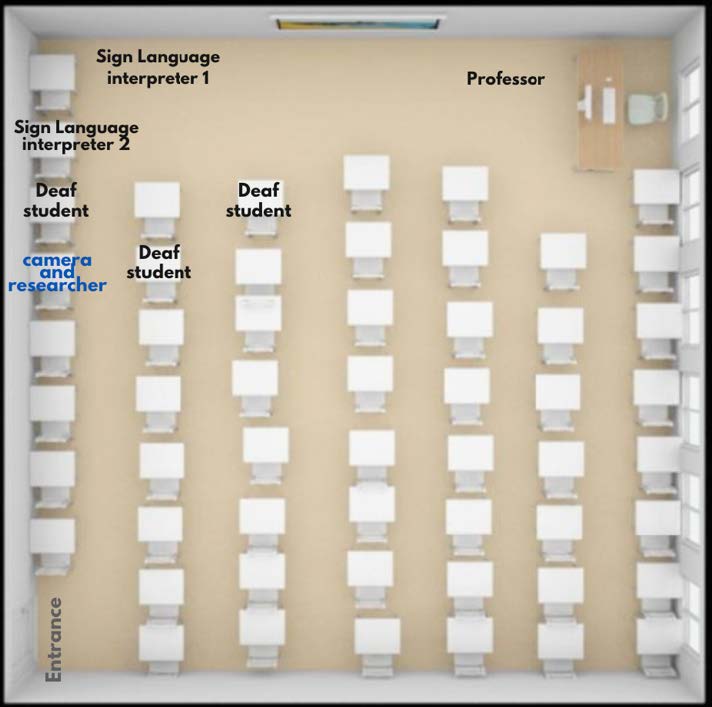 Source: Elaborated by the author.