
 Health impacts of fishing and family farming activities among riverside quilombola communities in the Amazon
Abstract
Objective To describe the impacts of fishing and family farming activities on the health of Amazonian riverside quilombolas.
Methods A descriptive cross-sectional study conducted in 2025 in the Saracura quilombo, located on the left bank of the Amazon River, in Pará, Amazon region. Data was collected through interviews using a structured questionnaire.
Results Fifty quilombola residents who engaged in fishing and family farming participated in the study, 31 of whom were female. It was observed that workers are exposed to multiple risks, such as accidents, intense physical exertion, and sun exposure. Work-related accidents were reported by 16 participants, with sunburn (n = 14), piranha bites (n = 10), and stingray stings (n = 6) being the most frequent. Thirty-eight participants reported using personal protective equipment. There was a high frequency of reports of fatigue (n = 21), body pain (n = 21), and headaches (n = 13).
Conclusion Fishing and family farming activities exposed participants to significant occupational risks, as evidenced by the frequency of accidents and health problems. The findings reinforce the need for worker health promotion initiatives tailored to the Saracura region.
Keywords
Ergonomics; Accidents, Occupational; Amazonian Ecosystem; Quilombola Communities; Riverside Population; Occupational Health
Resumo
Objetivo Descrever os impactos das atividades da pesca e da agricultura familiar na saúde de quilombolas ribeirinhos amazônicos.
Métodos Estudo transversal descritivo, realizado em 2025 no quilombo Saracura, localizado à margem esquerda do rio Amazonas, Pará, Amazônia. Os dados foram coletados por meio de entrevistas, com emprego de um questionário estruturado.
Resultados Participaram 50 quilombolas que exerciam atividades de pesca e de agricultura familiar, sendo 31 do sexo feminino. Observou-se que os trabalhadores estão expostos a múltiplos riscos, como acidentes, esforço físico intenso e exposição solar. Foi relatada a ocorrência de acidentes de trabalho por 16 participantes, sendo queimadura solar (n = 14), mordida de piranha (n = 10) e ferroada de arraia (n = 6) os mais frequentes. Relataram a utilização de equipamentos de proteção individual 38 participantes. Houve elevada frequência de relatos de cansaço (n = 21), dor no corpo (n = 21) e cefaleia (n = 13).
Conclusão As atividades de pesca e agricultura familiar expuseram os participantes a riscos ocupacionais relevantes, evidenciados pela frequência de acidentes e agravos à saúde. Os achados reforçam a necessidade de ações de promoção à saúde do trabalhador, com abordagem contextualizada ao território Saracura.
Palavras-chave
Ergonomia; Acidentes de Trabalho; Ecossistema Amazônico; Quilombolas; População Ribeirinha; Saúde do Trabalhador
Introduction
Quilombos are recognized as ethnic-racial groups with their own well-defined historical trajectories and specific territorial relationships linked to Black ancestry and the oppression they have suffered1. In the Amazon region, specifically in the state of Pará, data from the State Coordination of Associations of the Remaining Communities Quilombo do Pará (MALUNGU) indicate that there are approximately 600 remaining quilombo communities, 254 of which are certified by the Palmares Cultural Foundation (2026). Of this total, 15 are in Santarém2.
The quilombos are distributed throughout the state of Pará. In Santarém, there are quilombos in both dryland areas and floodplain territories3. Riverside quilombolas are population groups that live along the banks of waterways and organize their social and productive lives around them3-4. The river is fundamental in these quilombos, and its flood and ebb cycles can influence everything from the construction of homes to work dynamics3.
In quilombola communities, most of the population relies on the natural resources found within their own territory, which are shaped by social markers of gender, race, and class5. In these communities, the most common activities are fishing, family farming, and informal work. Miranda et al.5 note that it is common for individuals to be subjected to the precarious and informal conditions present in numerous production processes. Work tasks can pose health risks, whether due to exposure to chemical, physical, biological, or ergonomic agents, or due to work overload6.
In particular, work-related health hazards in quilombola communities remain understudied due to the lack of specific public policies targeting this population. The literature indicates that the main health risks arising from fishing and agriculture include: physical risks (prolonged sun exposure), accident risks (slippery surfaces and the handling of sharp instruments), and ergonomic risks (maintaining uncomfortable postures for long periods and lifting heavy loads)7-8.
Given this context, identifying health risks is essential for formulating intervention strategies aimed not only at mitigating risks but also at promoting a safer and healthier work environment. Given that the population’s health is intrinsically linked to its culture and ways of life, this study aimed to describe the impacts of fishing and family farming activities on the health of Amazonian riverside quilombola communities.
Methods
Study Design and Context
This investigation is characterized as a descriptive cross-sectional study. The report followed the guidelines of the Strengthening the Reporting of Observational Studies in Epidemiology (STROBE) guidelines9.
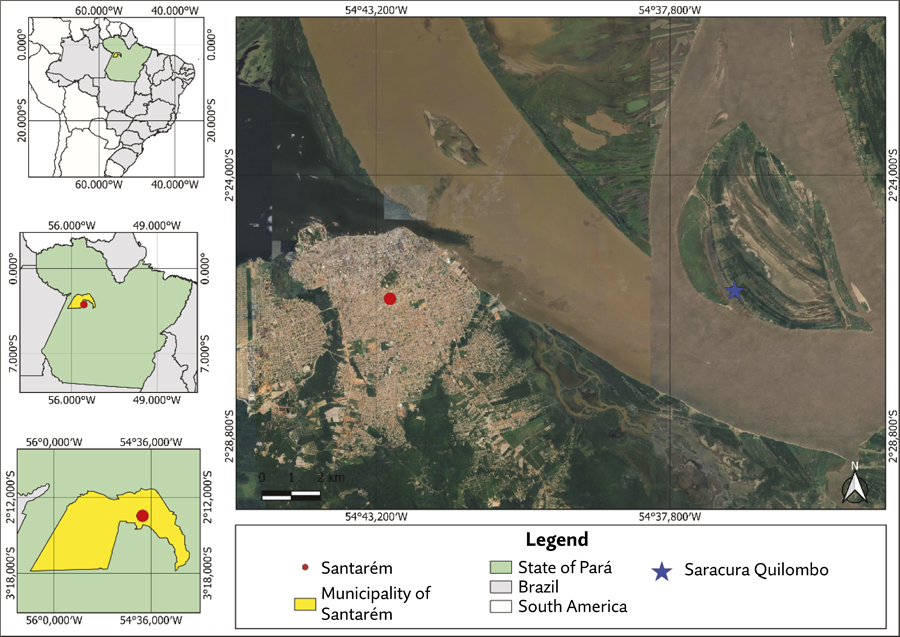
The study was conducted in the Saracura quilombola community located in the municipality of Santarém (PA), with data collected from January to April 2025. The Saracura quilombo consists of approximately 92 families and 674 people10, of whom approximately 104 are fishermen and 45 are engaged in family farming. In 2004, the quilombo received certification as a “remanent” (historical remnants of former quilombos) from the Palmares Cultural Foundation11. The community’s main means of production consists of activities such as fishing and family farming. Saracura is considered a riverside territory, located on the left bank of the Amazon River (Figure 1).

In the Saracura territory - as in the other quilombos in Santarém, with the exception of Tiningu - there are no health care facilities, only a community health agent (ACS), who is responsible for referring necessary cases to the Tapará Primary Healthcare Center (PHC), located 22 km away, or to the PHC in Santarém, located about 10 km in a straight line. However, access to these facilities depends on the use of boats, usually small ones. For this reason, residents tend to opt for the PHC in Santarém, which is about an hour’s trip, while the journey to the Tapará community takes about two hours.
The Saracura quilombo is accessible exclusively by river. There are no public transportation or commercial vessels that travel to the site, so residents rely on their own boats to cross the Amazon River and reach other locations.
Participants
The sample was non-probabilistic and convenience-based, given logistical constraints and limited access to the quilombo territory. It consisted of workers who agreed to take part in the study during the data collection period and who met the previously established inclusion criteria. The inclusion criteria were workers aged 18 years or older who engaged in fishing and family farming and who resided in the Saracura community. Workers with cognitive impairments that prevented them from answering the questionnaire were excluded from this study.
Data Collection
Data was collected in participants’ households from January through April 2025 using a structured questionnaire containing 25 closed-ended questions on the topic. The questionnaire items were developed by researchers based on a literature review5,12-15. The interviews were conducted by the authors of this study (WCSP and DMS), who had been previously trained for this activity; no pretest was conducted.
Variables
The data collection instrument was divided into two blocks of questions. The dimensions of the analytical categories included: sex (male and female), age (in years), education level (illiterate; incomplete/complete elementary school; incomplete/complete high school, and incomplete/complete higher education), length of residence in the community (in years), and number of people living in the same household (1; 2–3; 4–5; and more than 6 people).
The second half of the questionnaire covered questions about the activities performed and the main health problems. The variables included the type of activity performed (fishing, agriculture, or both), use of personal protective equipment (PPE) (pants, long-sleeved shirt, boots, or hat: yes or no), frequency of work activities (daily, monthly, or seasonal), duration of the activity (in years), and work-related accidents (eye injury; nail-related accident; accident involving fish in general; snake bite; shipwreck; cuts; stingray sting; piranha bite; and sunburn), sun exposure (yes or no), and work-related signs/symptoms (body pain; fatigue; headache; vision problems; fainting; sleep loss; and other unspecified symptoms).
Biases
In this study, in addition to selection bias resulting from the non-probabilistic nature of the sample, it is considered that there may be information bias, since the data are derived from participants’ self-reports. To minimize this, efforts were made to increase worker participation through mobilization strategies and to collect data using a standardized instrument.
Data Analysis
The data were tabulated in a Microsoft Excel spreadsheet and analyzed using descriptive statistics and are presented in tables and graphs.
Ethical Considerations
The study obtained authorization from the Association of Quilombola Organizations of Santarém (FOQS) and was approved by the Research Ethics Committee (CEP) of the Federal University of Western Pará (UFOPA) under number CAAE 84312624.0.0000.0171 on November 27, 2024. Authorization was also obtained from the community residents’ association (ACREQSARA). All participants signed the Informed Consent Form (ICF).
Results
Fifty individuals who met the previously established criteria participated in the study. Most participants were female (n = 31), aged between 40 and 59 years (n = 25). The majority had not completed elementary school (n = 18) and had less than nine years of schooling. Most participants had lived in the Saracura quilombo for more than 20 years, indicating strong territorial roots (Table 1).
Sociodemographic profile of the Quilombolas engaged in fishing and family farming, residing in the Saracura Quilombo, Santarém, Pará, 2025 (n = 50)
The main productive activities reported were fishing (n = 18) and family farming (n = 15), with a significant portion of the participants engaging in both activities (n = 17). Agricultural practices included fruit cultivation (bananas, cassava, and pumpkin) and suspended horticulture. Other occupational activities mentioned in the questionnaires, though less frequent, were associated with handicrafts and local commerce.
Regarding the use of PPE, most respondents (n = 38) reported using items such as pants, long-sleeved shirts, boots, or hats during work activities. However, 12 reported not using any type of PPE. Moreover, 32 participants reported working with continuous sun exposure.
Regarding the frequency of work activities, 17 performed their activities daily, while an equal number (n = 17) performed them weekly. Another 16 reported performing these activities only during specific seasonal periods of the year, such as the dry or rainy seasons. As for the duration of their work, half of the participants (n = 25) had been engaged in these practices for at least 30 years (Table 2).
Frequency of engagement and duration of participation in productive activities (fishing and family farming) as reported by quilombolas residing in the Saracura quilombo, Santarém, Pará, 2025 (n = 50)
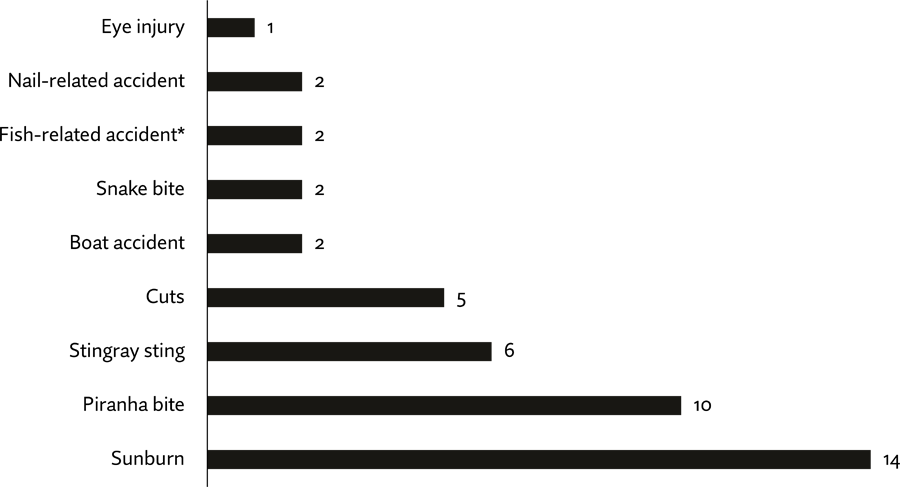
Of the 50 participants, 16 reported having experienced a work-related accident. It is worth noting that some participants reported more than one type of accident, with the most frequent being sunburn (n = 14), piranha bites (n = 10), and stingray stings (n = 6), predominantly associated with fishing activities (Figure 2). It should be noted that, although sunburn was the most reported accident, all participants reported being aware of protective measures, such as the use of sunscreen, but did not use it regularly.

Main accidents related to productive activities among quilombolas engaged in fishing and family farming (n = 16), residents of the Saracura quilombo, Santarém, Pará, 2025
All participants (n = 50) reported some type of symptom related to their work. Body pain (n = 21), fatigue (n = 21), and headache (n = 13) were the most frequent (Figure 3).

Distribution of the main work-related signs and symptoms reported by participants engaged in fishing and family farming, residing in the Saracura quilombo, Santarém, Pará, 2025 (n = 50)
Discussion
In this study, conducted among quilombola residents engaged in fishing and family farming in the Saracura community, in the state of Pará, exposure to multiple risks, such as accidents, intense physical exertion, and sun exposure, was observed, along with a high incidence of work-related symptoms.
The predominance of women among the participants may be associated with factors related to the socioeconomic organization of the Saracura quilombo itself. Men often leave the community to engage in multiple economic activities, that is, they take on other occupations in different locations to supplement the family income. Another contributing factor is the closed season, when fishermen are prohibited from fishing, as this is the fish’s breeding season.
The women who remain in the territory, in addition to their domestic duties, are also responsible for fishing and family farming in the Saracura quilombo to generate income. Studies of Amazonian floodplain populations, such as that by Santos et al.16, show that the dynamics of multiple occupations may be related to the seasonality of natural resources and the pursuit of income diversification, which can often involve displacement, particularly of men, and reduce their participation in local activities, such as community surveys.
The profile of the participants, characterized predominantly by low educational attainment, is similar to that of a study conducted with 139 women from quilombola communities near the municipality of Oriximiná, which showed that social, cultural, and geographic factors contribute to increased vulnerability, a situation that requires greater attention from public policies17. Low education level is likely associated with difficulties in accessing schools in quilombola communities, which account for only 1.2% of the country’s total educational institutions18. It is worth noting that, in the Saracura community, the Modular Teaching Organization System (SOME) was only implemented in 2007, representing a step forward in education; however, challenges remain, such as a shortage of teachers and poor infrastructure in educational facilities - including classes held in makeshift shelters - which may also explain the low level of education found in this study.
In this context of social and educational vulnerability, traditional production strategies play a central role in the economic and food security of quilombola communities. Similar results are observed in other quilombola and traditional communities, such as on Ilha de Maré (Bahia), where fishing and shellfish gathering are the main activities related to the use of natural resources, while the cultivation of fruits such as bananas and coconuts, as well as crops such as cassava and sugarcane, form the economic and food base of families19.
The combination of traditional production practices is common in rural communities, regardless of ethnic background. A study conducted by Makishi, Zacareli, and Veiga20 in the state of Pará, in the communities of Salvaterra, Breves, and Bragança, revealed that only 16% derived their income from a single extractive activity. Fishing is an important activity in the Amazon’s riverside communities. The rivers and the wide diversity of wildlife facilitate such activities. Fish in these communities constitute the main source of animal protein21 and, along with fishmeal, play a crucial role in nutrition and food security. In the Saracura quilombo, the situation is no different, as it is located on the banks of the Amazon River and near lakes and streams with a vast diversity of fish and easy access to fishery resources, which are essential both for consumption and for generating local income. It should be noted that, in this context, the National Policy for Comprehensive Health of Populations of the Countryside, Forest, and Waters recognizes the occupation and use of territories and natural resources as prerequisites for their cultural, social, religious, ancestral, and economic production and reproduction22.
Although most interviewees reported using PPE, a large proportion of workers remain exposed to health risks, such as work-related injuries and illnesses. In a similar context, Veiga et al.7 analyzed the extractive activities of rural communities in the municipalities of Salvaterra and Bragança and found low adherence to PPE use, due to factors such as lack of knowledge, lack of access, and the normalization of risks.
The long hours spent on productive activities, combined with daily or weekly work schedules, intensifies exposure to risk factors, especially ultraviolet radiation. According to Grandi et al.23, ultraviolet A and B (UVA/UVB) radiation, the main component of sun exposure, continuously affects human skin, causing harmful effects that can be classified into two groups: acute damage and chronic damage. Acute damage includes sunburn, erythema, pain, and edema. Chronic damage corresponds to more serious changes, such as cutaneous photoaging and the development of skin cancer23. Such effects become a cause for concern in contexts of intense exposure, such as during work activities. The duration and frequency of work are directly related to health complications. According to Veríssimo and Mendonça24, daily sun exposure is cumulative over the years and may be associated with health complications, specifically skin cancers. Furthermore, the frequency and duration of exposure are critical factors, which can be exacerbated by low adherence to sun protection practices, even when workers are aware of the risks.
The findings regarding reported workplace accidents, such as piranha bites and stingray stings, indicate that study participants are exposed to risks, especially those directly involved in fishing. Pena and Gomez25 highlight the diversity of risks faced by fishermen. Accidents involving fish, such as stingray stings, can result in infections and mobility difficulties, impacting their ability to perform their work26. Cuts and puncture wounds also pose a risk of infection, mainly due to exposure to water and potentially contaminated materials. Similarly, more serious events, such as shipwrecks, highlight the need for preventive measures to ensure safety during aquatic activities.
Frequent reports of malaise, fatigue, and sleep disturbances may stem from the impact of working conditions on health. Sleep is a cyclical physiological state during which neurobiological processes essential for maintaining physical and cognitive health occur27. The constant malaise among the participants in this study may be associated with factors such as intense physical exertion, exposure to harmful agents, and lack of access to adequate medical care. Difficulty sleeping can exacerbate this condition, affecting the body’s recovery and increasing the risk of disease, given the importance of sleep for people’s health and quality of life28.
Fatigue, in turn, may be associated with various health conditions, or it may be a daily result of overexertion, characterized as the body’s response to an intense work routine. The interviewees also frequently reported back problems and body aches, which may be linked to repetitive strain and poor posture. Among women who work more than one shift, work overload and daily fatigue are common29. Rosa and Mattos30 reported an association between fatigue in mangrove fishermen and the number of times they cast and pull the net during their work. In addition, isolated cases of fainting, abnormal blood pressure, sleep deprivation, anxiety, stress, and shortness of breath indicate that some workers may be facing more complex health problems - both physical and emotional - that may be associated with other health vulnerabilities.
The findings reinforce the need for preventive measures, such as adequate breaks, access to protective equipment, and medical monitoring. The impact of these conditions can compromise the productivity and quality of life of community members, making it essential to implement strategies aimed at improving health in this sector.
Conclusion
Fishing and family farming activities expose workers in the Saracura community to occupational risks, including frequent accidents and health problems. The conditions described and characterized by exposure to risks, the inconsistent use of protective equipment, and long working hours reveal the vulnerabilities of these workers. The high frequency of reports of malaise, sleep disturbances, and symptoms such as fatigue, muscle pain, and headaches may be related to the workers’ physical and mental health. Of note is the need for worker health promotion initiatives, which should include guidance on first aid for accidents common in the local context - such as piranha bites and stingray stings, shipwrecks, and accidents involving venomous animals - as well as on the correct use of personal and collective protective equipment.
Acknowledgments
To the Saracura quilombo community and the Association of Quilombola Organizations of Santarém (FOQS).
References
-
1 Brasil. Decreto Nº 4.887, de 20 de novembro de 2003. Regulamenta o procedimento para identificação, reconhecimento, delimitação, demarcação e titulação das terras ocupadas por remanescentes das comunidades dos quilombos de que trata o art. 68 do Ato das Disposições Constitucionais Transitórias. Diário Oficial da União. 21 nov 2003 [citado 10 jun 2026]. Disponível em: https://www.planalto.gov.br/ccivil_03/decreto/2003/d4887.htm
» https://www.planalto.gov.br/ccivil_03/decreto/2003/d4887.htm -
2 Fundação Cultural Palmares. Comunidades quilombolas certificadas. Brasília: FCP; 2026 [citado 10 jun 2026]. Disponível em: https://docs.google.com/spreadsheets/d/1WBjixnnjJWrDXsA2WvElj65rrZ4nkNM-u5LclRV0lGs/edit?gid=680278480#gid=680278480
» https://docs.google.com/spreadsheets/d/1WBjixnnjJWrDXsA2WvElj65rrZ4nkNM-u5LclRV0lGs/edit?gid=680278480#gid=680278480 - 3 Reis EVC, Costa TLS, Cunha BA, Meschede MSC. Caídos da terra: uma experiência de ensino em saúde na comunidade quilombola pérola do Maicá, Santarém- PA, Amazônia, Brasil. Jundiaí: Paco; 2023.
-
4 Saunier CDNM, Cardoso ACD. Senhores das águas: quilombos da Amazônia paraense (século XIX). An Mus Paul. 2025;33:e9. https://doi.org/10.11606/1982-02672025v33e9
» https://doi.org/10.11606/1982-02672025v33e9 -
5 Miranda SVC, Oliveira PSD, Jesus DB, Sampaio CA, Rodrigues-Neto JF. Os homens quilombolas e seu trabalho: uma cartografia da saúde desses trabalhadores. Cad Saúde Publica. 2022;38(12):e00082521. https://doi.org/10.1590/0102-311XPT082521
» https://doi.org/10.1590/0102-311XPT082521 -
6 Ministério da Saúde (BR). Doenças relacionadas ao trabalho: manual de procedimentos para os serviços de saúde. Brasília: Ministério da Saúde; 2001 [citado 10 jun 2026]. Disponível em: https://bvsms.saude.gov.br/bvs/publicacoes/doencas_relacionadas_trabalho_manual_procedimentos.pdf
» https://bvsms.saude.gov.br/bvs/publicacoes/doencas_relacionadas_trabalho_manual_procedimentos.pdf -
7 Veiga JPC, Trevisani DM, Makishi F, Abreu MGC, Silva MSP, Zacareli MA. Padrões de saúde e segurança no trabalho e extrativismo: o caso de comunidades rurais da Amazônia brasileira. Saúde Soc. 2017;26(3):774-85. https://doi.org/10.1590/S0104-12902017166075
» https://doi.org/10.1590/S0104-12902017166075 -
8 Halder CE, Das PP, Rahman SM, Bhoumick LC, Tassdik H, Hasan MA et al. Occupational hazards and risks among the women in fisher communities in Cox's Bazar and Chattogram, Bangladesh. PLoS One. 2024;19(7):e0297400. https://doi.org/10.1371/journal.pone.0297400
» https://doi.org/10.1371/journal.pone.0297400 -
9 Strengthening the Reporting of Observational Studies in Epidemiology. STROBE Checklist. Bern: STROBE Statement; 2007 [citado 10 jun 2026]. Disponível em: https://www.strobe-statement.org/
» https://www.strobe-statement.org/ -
10 Comissão Pró-Índio de São Paulo. Saracura. São Paulo: CPI-SP; 2017 [citado 10 jun 2026]. Disponível em: https://cpisp.org.br/saracura/
» https://cpisp.org.br/saracura/ -
11 Fundação Cultural Palmares. Certificação Quilombola. Brasília: Ministério da Cultura; 2022 [citado 10 jun 2026]. Disponível em: https://www.gov.br/palmares/pt-br/departamentos/protecao-preservacao-e-articulacao/certificacao-quilombola
» https://www.gov.br/palmares/pt-br/departamentos/protecao-preservacao-e-articulacao/certificacao-quilombola -
12 Freitas DA, Caballero AD, Marques AS, Hernández CIV, Antunes SLNO. Saúde e comunidades quilombolas: uma revisão da literatura. Rev Cefac. 2011;13(5):937-43. https://doi.org/10.1590/S1516-18462011005000033
» https://doi.org/10.1590/S1516-18462011005000033 -
13 Melo MFT, Silva HP. Doenças crônicas e os determinantes sociais da saúde em comunidades quilombolas do Pará, Amazônia, Brasil. Rev Assoc Bras Pesq Negros. 2015;7(16):168-89. https://abpnrevista.org.br/site/article/view/103
» https://abpnrevista.org.br/site/article/view/103 -
14 Silva NR, Junqui PF, Silva ML. Caracterização do perfil de adoecimento por LER/DORT em um centro de referência em saúde do trabalhador. Rev Interinst Bras Ter Ocup. 2020;4(4):631-45. https://doi.org/10.47222/2526-3544.rbto25850
» https://doi.org/10.47222/2526-3544.rbto25850 -
15 Ministério da Saúde (BR). Política Nacional de Saúde Integral da População Negra: uma política para o SUS. Brasília: Ministério da Saúde; 2017 [citado 10 jun 2026]. Disponível em: https://www.gov.br/saude/pt-br/composicao/saps/equidade/publicacoes/populacao-negra/politica_nacional_saude_populacao_negra_3d.pdf
» https://www.gov.br/saude/pt-br/composicao/saps/equidade/publicacoes/populacao-negra/politica_nacional_saude_populacao_negra_3d.pdf - 16 Santos AR, Felizardo AO, Nascimento WLN, Reis AA. Pluriatividade como estratégia de renda: o caso de um agricultor familiar na comunidade ribeirinha São João Batista, Pará. Rev Tecnol Soc. 2015;11(23):32-48.
-
17 Nascimento VB, Arantes ACV, Carvalho LG. Vulnerabilidade e saúde de mulheres quilombolas em uma área de mineração na Amazônia. Saúde Soc. 2022;31(3):e210024pt. https://doi.org/10.1590/S0104-12902022210024pt
» https://doi.org/10.1590/S0104-12902022210024pt -
18 Instituto Nacional de Estudos e Pesquisas Educacionais Anísio Teixeira. Censo escolar da educação básica 2023: caderno de instruções. Brasília: INEP; 2023 [citado 10 jun 2026]. Disponível em: https://www.gov.br/inep/pt-br/areas-de-atuacao/pesquisas-estatisticas-e-indicadores/censo-escolar/resultados
» https://www.gov.br/inep/pt-br/areas-de-atuacao/pesquisas-estatisticas-e-indicadores/censo-escolar/resultados - 19 Neves BES, Rios KAN. Questão agrária e agricultura familiar em comunidades tradicionais pesqueiras e quilombolas de ilha de Maré - Bahia. Mares Rev Geogr Etnocienc. 2020;3(2):111-21.
- 20 Makishi F, Zacareli MA, Veiga JPC. Desenvolvimento local de comunidades rurais e suas implicações para as políticas públicas: arranjos institucionais e diversificação da produção rural de pequena escala. Rev Polit Planej Reg. 2016;3(2):221-41.
-
21 Meschede MSC, Zagui GS, Celere BS, Machado GP, Gomes-Silva G, Santos DV et al. Human exposure to elements through consumption of raw and cooked fish in an urban region of the central Brazilian Amazon biome: Health risks. Environ Pollut. 2024;347:123728. https://doi.org/10.1016/j.envpol.2024.123728
» https://doi.org/10.1016/j.envpol.2024.123728 -
22 Ministério da Saúde (BR). Política nacional de saúde integral das populações do campo e da floresta. Brasília: Editora do Ministério da Saúde; 2013 [citado 10 jun 2026]. Disponível em: https://bvsms.saude.gov.br/bvs/publicacoes/politica_nacional_saude_populacoes_campo.pdf
» https://bvsms.saude.gov.br/bvs/publicacoes/politica_nacional_saude_populacoes_campo.pdf -
23 Grandi C, Borra M, Militello A, Polichetti A. Impact of climate change on occupational exposure to solar radiation. Ann Ist Super Sanita. 2016;52(3):343-56. https://doi.org/10.4415/ANN_16_03_06
» https://doi.org/10.4415/ANN_16_03_06 -
24 Veríssimo FAZ, Mendonça JRB. Câncer de pele em pescadores: evidências científicas para o cuidado em saúde. Uniciencias. 2021;25(1):14-9. https://doi.org/10.17921/1415-5141.2021v25n1p14-19
» https://doi.org/10.17921/1415-5141.2021v25n1p14-19 -
25 Pena PGL, Gomez CM. Health of subsistence fishermen and challenges for Occupational Health Surveillance. Cienc Saúde Colet. 2014;19(12):4689-98. https://doi.org/10.1590/1413-812320141912.13162014
» https://doi.org/10.1590/1413-812320141912.13162014 -
26 Haddad Jr V, Cardoso JLC, Garrone Neto D. Injuries by marine and freshwater stingrays: history, clinical aspects of the envenomations and current status of a neglected problem in Brazil. J Venom Anim Toxins Incl Trop Dis. 2013;19(1):16. https://doi.org/10.1186/1678-9199-19-16
» https://doi.org/10.1186/1678-9199-19-16 -
27 Barros MBA, Lima MG, Ceolim MF, Zancanella E, Cardoso TAMO. Quality of sleep, health and well-being in a population-based study. Rev Saúde Publica. 2019;53:82. https://doi.org/10.11606/s1518-8787.2019053001067
» https://doi.org/10.11606/s1518-8787.2019053001067 -
28 Gajardo YZ, Ramos JN, Muraro AP, Moreira NF, Ferreira MG, Rodrigues PRM. Problemas com o sono e fatores associados na população brasileira: Pesquisa Nacional de Saúde, 2013. Cienc Saúde Colet. 2021;26(2):601-10. https://doi.org/10.1590/1413-81232021262.08412020
» https://doi.org/10.1590/1413-81232021262.08412020 -
29 Lopes IBS, Bezerra MGV, Silva LRC, Andrade NSM, Carneiro FF, Pessoa VM. Saúde das trabalhadoras da pesca artesanal: cenários desconhecidos do Sistema Único de Saúde (SUS). Rev Bras Saúde Ocup. 2021;46:e5. https://doi.org/10.1590/2317-6369000028719
» https://doi.org/10.1590/2317-6369000028719 -
30 Rosa MFM, Mattos UAO. A saúde e os riscos dos pescadores e catadores de caranguejo da Baía de Guanabara. Cienc Saúde Colet. 2010;15(Supl.1):1543-52. https://doi.org/10.1590/S1413-81232010000700066
» https://doi.org/10.1590/S1413-81232010000700066
-
Information on academic work:
Manuscript based on the work plan developed during the undergraduate studies of Willian Sousa Carlos Pinto, through the Integrated Program for Teaching, Research, and Extension (PEEX) at the Federal University of Western Pará (UFOPA), conducted between 2024 and 2025.
-
Data Availability:
The data are not publicly available. The ethical approval of the study stipulates that the data may be used exclusively for the purposes outlined in the approved protocol.
-
Statement on the use of Artificial Intelligence:
During the preparation of this article, the ChatGPT (OpenAI) artificial intelligence tool, based on the GPT-5.2 model, was used exclusively for the purpose of text revision. The authors declare that they have fully reviewed and validated all content.
-
Presentation at scientific events:
The authors report that this study was partially presented at the Brazilian Congress on Public Health, held in Brasília in December 2025, and at the local events: the III Integrated Seminar on Research, Teaching, and Extension (SIPEEX), held in September 2025, and the Symposium on Primary Care in the Amazon, held in March 2025, both at the Federal University of Western Pará (UFOPA).
-
Funding:
Integrated Program for Teaching, Research, and Extension (PEEX 2024–2025) of the Federal University of Western Pará (UFOPA).
Edited by
-
Responsible editor:
Leila Posenato Garcia https://orcid.org/0000-0003-1146-2641 Fundação Jorge Duprat Figueiredo de Segurança e Medicina do Trabalho – FUNDACENTRO
The data are not publicly available. The ethical approval of the study stipulates that the data may be used exclusively for the purposes outlined in the approved protocol.

 Source: Authors (2025)
 *Accidents involving fish in general, excluding stingrays and piranhas.Source: Authors (2025)
 Source: Authors (2025)