
 Low-level laser photobiomodulation on head and neck muscles of children with cerebral palsy: An integrative review
ABSTRACT
Purpose: to review the literature on the effect of low-level laser photobiomodulation therapy on head and neck muscle performance in children with cerebral palsy.
Methods: a descriptive-qualitative integrative review conducted in the VHL, PubMed, SciELO, Embase, ScienceDirect, and Cochrane databases, using the following health descriptors: low-level light therapy, child, cerebral palsy, facial muscles, masseter muscle, and neck muscles, and their alternative terms. Filters were applied according to each database. The search was conducted from October 2022 to December 2023, with no limitations on the year of publication or language, selecting articles that answered the research question, "Can low-level laser photobiomodulation therapy applied to head and neck muscles in children with cerebral palsy effectively improve muscle performance?".
Literature Review: 12 articles were selected, 10 being excluded after reading their titles and abstracts, hence, two articles were included after their full texts were read.
Conclusion: the review identified a gap regarding the topic, not allowing for a definitive conclusion on the subject. However, low-level laser photobiomodulation applied to the head and neck muscles of children with cerebral palsy appears to be promising for muscle performance. No scientific articles were found in the present research, addressing the use of this resource for intraoral sensitivity, salivary flow, or swallowing in the study population.
Keywords:
Low-Level Light Therapy; Child; Cerebral Palsy; Facial Muscles; Masseter Muscle; Neck Muscles
RESUMO
Objetivo: revisar a literatura sobre o efeito da terapia por fotobiomodulação com uso de laser de baixa intensidade no desempenho muscular na musculatura da cabeça e do pescoço em crianças com Paralisia Cerebral.
Métodos: estudo descritivo-qualitativo, de revisão integrativa, com busca na BVS, PubMed, SciELO, Embase, ScienceDirect e Cochrane, utilizando os descritores de saúde: terapia com luz de baixa intensidade, criança, paralisia cerebral, músculos faciais, músculo masseter e músculos do pescoço e seus termos alternativos, aplicando-se filtros de acordo com cada base de dados. A busca ocorreu de outubro de 2022 a dezembro de 2023, sem limitação de ano de publicação e idioma. Foram selecionados artigos que respondessem à pergunta norteadora: “A terapia por fotobiomodulação a laser de baixa intensidade aplicada a musculatura da cabeça e pescoço na criança com paralisia cerebral pode ser eficaz no desempenho muscular?”
Revisão da Literatura: doze artigos foram selecionados, sendo excluídos dez artigos após a leitura do título e resumo e, incluídos dois artigos após a leitura na íntegra.
Conclusão: foi identificada uma lacuna a respeito da temática abordada que não permite uma conclusão definitiva sobre o assunto. Entretanto, a fotobiomodulação a laser de baixa intensidade aplicada na musculatura da cabeça e pescoço em crianças com paralisia cerebral parece ser promissora para o desempenho muscular. Ainda não existem artigos científicos que abordem o uso deste recurso para a sensibilidade intraoral, para o fluxo salivar e para a deglutição na população estudada.
Descritores:
Terapia com Luz de Baixa Intensidade; Criança; Paralisia Cerebral; Músculos Faciais; Músculo Masseter; Músculos do Pescoço
INTRODUCTION
Light is sine qua non for life and has been used for therapeutic purposes since the dawn of civilization. However, Maiman's discovery of light amplification by stimulated emission of radiation (laser), in 1960, was a landmark in history, becoming indispensable in science, technology, and industry. After Endre Mester's studies in 1967, several areas of health began to research the interaction of electromagnetic light radiation with biological tissues1.
Various areas of speech-language-hearing (SLH) pathology have studied the effects of photobiomodulation (PBM) therapy with low-level laser (LLL) to help optimize the therapeutic process. The main findings reported in the oral-motor and dysphagia literature include analgesic, anti-inflammatory, and anti-edematous effects in the orofacial and cervical regions, as well as optimized muscle performance during myofunctional and myotherapy exercises, increasing strength gain, reducing fatigue after intense activities, reducing spasticity, controlling salivary flow, and regenerating peripheral nerves2-9. A randomized, triple-blind experimental study10 stands out among the robust published studies, with a sample of 23 women and 17 men aged 18 to 33 years. The study investigated the immediate PBM effects on maximum lip pressure, concluding that LLL (808 nm) at a dose of 7 J improved the performance of the orbicularis oris muscle in a maximum pressure task. As in SLH therapy, myofunctional training of these muscles has helped to improve oral function performance. The authors report that the combination of laser and myofunctional training has yielded significant results, highlighting the importance of further research on the topic.
Moreover, a blinded randomized clinical trial11 stands out among studies that address PBM with LLL in muscular temporomandibular disorder (TMD). It investigated the influence of PBM associated with orofacial myofunctional therapy (OMT) on muscular TMD in a sample of 11 women aged 25 to 55 years. The study concluded that OMT associated with LLL PBM (830 nm) helped to increase the amplitude of mandibular movements, significantly ease pain, and provide important gains in the participants’ perception of quality of life.
Regarding tissue repair, we highlight the integrative literature review12 on the use and effects of LLL as a therapeutic resource for peripheral facial paralysis. The study concluded that LLL is beneficial to individuals affected by this paralysis, observing enhanced effects when used in combination with other SLH therapy resources.
SLH therapy was regulated by Brazilian Law No. 6,965, of December 9, 1981. However, only in 2016, the Federal SLH Council (CFFa) regulated SLH pathologists’ work in dysphagia, through Resolution No. 492, of April 7, 201613, which states that it is these professionals’ responsibility to use technologies and adjuvant therapeutic resources. It is important to highlight that this resolution was recently revoked by Resolution No. 719, of December 15, 202314. LLL use as a therapeutic resource associated with conventional clinical SLH procedures was introduced through Resolution No. 541, of March 15, 201915, and PBM was regulated for this purpose in Resolution No. 606, of March 17, 202116.
Cerebral palsy (CP) is a multifactorial condition characterized by a group of permanent disorders of motor control and postural development, resulting from a non-progressive lesion of the immature central nervous system. Clinical manifestations may change over time, leading to functional limitations and consequent negative health impacts17. This condition can be associated with a wide variety of disorders, including sensory-perceptive, cognitive, communicative, behavioral, and learning disorders. Impairments related to sleep, mood, anxiety, gastrointestinal tract, growth, nutritional status, seizures, respiratory diseases, and secondary musculoskeletal problems are also common17.
Considered the most common cause of neurodevelopmental disability in childhood18, CP has a heterogeneous etiology, including preconceptional, perinatal, and intrapartum factors19, affecting two children for every thousand live births worldwide20.
It is estimated that 19 to 99% of people affected by CP have eating difficulties21 resulting from biomechanical changes in swallowing. Oral structures involved in swallowing also participate in other functions, such as sucking, chewing, breathing, voice, and speech22, and such difficulties are closely linked to global motor impairment.
A higher percentage of moderate to severe oropharyngeal dysphagia at levels IV and V of the Gross Motor Function Classification System (GMFCS)23 is observed in this population. This justifies the subdivision of the Growth Curve of Children with CP for children classified at GMFCS level V as feeding orally or via gastrostomy21-24. SLH pathologists, who are specialists in this area, are responsible for preventing, evaluating, and treating swallowing disorders22.
Any changes in the path of food from the mouth to the stomach may have biopsychosocial impacts22. Such changes can lead children to malnutrition, dehydration, aspiration pneumonia, nasopharyngeal regurgitation, growth retardation, morbidity, and mortality24-27.
This requires a thorough medical history survey and anatomical and functional evaluation of swallowing, with special attention to the oral preparatory, oral, and pharyngeal phases, to prevent or minimize potential health risks. A dynamic and objective swallowing assessment is essential to corroborate SLH diagnoses and individual therapeutic plans encompassing the treatment of swallowing disorders28,29. This includes establishing a functional oral route with dietary adjustment, identifying unfavorable clinical conditions for oral feeding, and recommending an alternative feeding route when necessary, working with a multidisciplinary team22.
Thus, SLH pathologists are able to investigate family complaints related to children’s feeding difficulties and/or swallowing, as well as seizures and gastroesophageal reflux disease, identifying changes in the different phases of swallowing, such as inefficient lip seal with anterior food spillage, changes in oral reflexes, dynamic tongue protrusion, velopharyngeal insufficiency with nasal regurgitation, mash chewing pattern, delayed swallowing trigger, poor laryngeal elevation, signs suggestive of laryngotracheal penetration and aspiration, and so forth.
These findings can guide therapeutic procedure, such as changing and adapting food consistencies; determining the volume of the oral diet for swallowing training, with attention to physiological respiratory parameters due to the risk of pulmonary complications resulting from dysphagia; training SLH maneuvers to adapt swallowing patterns; positioning the child with biomechanical alignment; and using adjuvant therapeutic technologies, among others regulated by CFFa13,14 for SLH pathologists’ work in dysphagia, aiming at safe oral feeding.
Although this evaluation process guides assertive therapeutic conduct, professionals who perform PBM with LLL as an adjuvant to SLH therapy must consider individual characteristics (e.g., skin phototype, clinical condition to be treated, characteristics of the target tissue, and concomitant diseases)1 and the biomodulatory action of LLL, defining the wavelength to be used, the energy, power and fluency, irradiance, necessary irradiation time, emission mode, type of intervention, and irradiation method.
This article aimed to review the literature on the effect of PBM with LLL on head and neck muscle performance in children presented with CP.
METHODS
Integrative Review Process
This is an exploratory, descriptive, integrative review on PBM and LLL in the head and neck muscles of children with CP, conducted according to the 2020 Preferred Reporting Items for Systematic Reviews and Meta-Analyses (PRISMA)30.
Study Identification Strategies
This study was developed in six well-defined, easily organized, understandable phases. Initially, the research question was formulated, "Can LLL PBM therapy applied to head and neck muscles in children with CP effectively improve muscle performance?". This question considered the target population, interest, type of intervention, outcomes, and time required to achieve the outcomes31.
The literature search included articles published up to December 31, 2023, in the following databases: Virtual Health Library (VHL), United States National Library of Medicine (PubMed), Scientific Electronic Library Online (SciELO), Excerpta Medica dataBASE (Embase), ScienceDirect Platform, and Cochrane Library.
The following keywords were selected from the controlled vocabularies of the Health Sciences Descriptors (DeCS) and Medical Subject Headings (MeSH): “low-level light therapy”, “child”, “cerebral palsy”, “facial muscles”, “masseter muscle”, and “neck muscles”, including the respective terms in English and their alternative terms, combining them with the Boolean operators “AND” and “OR”, as seen in Chart 1.
Selecting Articles in Databases
The sample was selected in four stages: analysis of titles, abstracts, and full texts, and inclusion of articles.
The study included articles on the use of PBM with LLL that answered the research question, with no restrictions on language or year of publication.
The selection encompassed original articles, controlled clinical trials, and systematic reviews, applying filters according to each database as shown in Chart 2, considering the hierarchy of evidence and prioritizing studies with the greatest strength of evidence.
The review excluded case reports, projects, books, animal research, studies on photodynamic therapy, laser acupuncture, point laser therapy applied to the upper and lower limbs for spasticity management, intravascular laser irradiation of blood, systemic therapy, pain management, tissue repair, xerostomia, and transcranial PBM.
Articles were initially selected by reading their titles and abstracts, excluding those that did not meet the inclusion criteria.
The full text of the selected articles was then read, identifying the type of PBM used, considering only those that used LLL and reported the stimulated biomodulatory action and dosimetric parameters. This reading was necessary when the article title and/or abstract did not clarify whether the article was relevant to the research question.
Processing Collected Data
A comparative table was adapted from the URSI (2005) form32 to collect data and prepare the information synthesis, listing the following variables for analysis: author; year of publication; country where the research was carried out; main study objective; number of participants; their health status; group division; evaluations to achieve the objectives; dosimetric parameters; equipment; protocols; and main results.
LITERATURE REVIEW
Chart 3 presents the overview of the databases and search strategies used according to the descriptors listed in this integrative review. Chart 4 shows the distribution of articles selected for title, abstract, and full-text reading per author/year and study objective.
Figure 1 presents the flowchart of the study screening to make up the review based on the PRISMA30 recommendations.

Regional Portal of the Virtual Health Library (VHL)
In the VHL, SEARCH 1 found 8,312 results for the descriptor D1 (“low-level light therapy”). The most representative databases were the Medical Literature Analysis and Retrieval System Online (MEDLINE), with 7,772 articles, and Latin American and Caribbean Health Sciences Literature (LILACS), with 495 articles. English and Portuguese predominated, as well as articles (8,204) and theses (108). SEARCH 2, referring to the combined descriptor D2 (“low-level light therapy” AND “child”), found 399 articles, of which 378 were in MEDLINE and 17 in LILACS, likewise predominating publications in English and Portuguese, as well as articles (392) and theses (seven). SEARCH 3, with the combined descriptor D3 (“low-level light therapy” AND “child” AND “cerebral palsy”), found 10 articles, all in MEDLINE and published in English. Eight of these 10 articles were excluded because they did not answer the research question3,33-39, and two were included40,41 in this review. Finally, SEARCH 4, with the combined descriptor D4 (“low-level light therapy” AND “child” AND “cerebral palsy” AND “facial muscles” OR “masseter muscle” OR “neck muscles”), found two articles40,41, which had already been included in the previous search.
United States National Library of Medicine (PubMed)
In PubMed, SEARCH 1, with the descriptor D1 (“low-level light therapy”), returned 1,901 results, of which 1,272 were randomized controlled trials, 583 were systematic reviews, and 46 were meta-analyses. SEARCH 2, with the combined descriptor D2 (“low-level light therapy” AND “child”), returned 140 results, of which 103 were randomized controlled trials, 14 were systematic reviews, and 23 were meta-analyses. SEARCH 3, with the combined descriptor D3 (“low-level light therapy” AND “child” AND “cerebral palsy”), returned 12 results. Eight of these were excluded3,33-39 because they did not answer the research question and had already been identified and excluded in the VHL search; two were excluded, although they answered the research question40,41, as they had already been included in this review; and two were excluded for not answering the research question42,43. SEARCH 4, with the combined descriptor D4 (“low-level light therapy” AND “child” AND “cerebral palsy” AND “facial muscles” OR “masseter muscle” OR “neck muscles”), found two results, already included in the VHL and excluded in the previous search40,41.
Scientific Electronic Library Online (SciELO)
In SciELO, SEARCH 1 found 149 results with the descriptor D1 (“low-level light therapy”). SEARCH 2, with the combined descriptor D2 (“low-level light therapy” AND “child”), found seven results. Four of these were excluded because they addressed LLL in a condition outside the scope44-47 of this review and three because they had already been identified and excluded3,38,39 in searches in the VHL and PubMed. SEARCH 3, with the combined descriptor D3 (“low-level light therapy” AND “child” AND “cerebral palsy”), found three results3,38,39, all of which had already been excluded in the previous search. SEARCH 4, with the combined descriptor D4 (“low-level light therapy” AND “child” AND “cerebral palsy” AND “facial muscles” OR “masseter muscle” OR “neck muscles”), found no results.
Excerpta Medica DataBASE (Embase)
In Embase, SEARCH 1 found 16,350 results with the descriptor D1 (“low-level light therapy”). SEARCH 2, with the combined descriptor D2 (“low-level light therapy” AND “child”), found 1,596 results. SEARCH 3, with the combined descriptor D3 (“low-level light therapy” AND “child” AND “cerebral palsy”), found 12 results3,33-43. SEARCH 4, with the combined descriptor D4 (“low-level light therapy” AND “child” AND “cerebral palsy” AND “facial muscles” OR “masseter muscle” OR “neck muscles”), found two articles40,41. These were already included in the VHL search and were therefore excluded in this search due to duplication.
ScienceDirect Platform
In ScienceDirect, SEARCH 1 found 337 results with the descriptor D1 (“low-level light therapy”), including 267 original articles and 70 reviews. SEARCH 2, with the combined descriptor D2 (“low-level light therapy” AND “child”), found five results, two of which were excluded because they addressed LLL applied to tissue repair, edema, postoperative analgesia for velopharyngeal insufficiency, and laser acupuncture47,48, not answering the research question; and three that, although addressing LLL use in children with CP, did not answer the research question34,35,42. SEARCH 3, with the combined descriptor D3 (“low-level light therapy” AND “child” AND “cerebral palsy”), found three results34,35,42, already excluded in the previous search. SEARCH 4, with the combined descriptor D4 (“low-level light therapy” AND “child” AND “cerebral palsy” AND “facial muscles” OR “masseter muscle” OR “neck muscles”), found no results.
Cochrane Library
In the Cochrane Library, SEARCH 1 found 3,042 results with the descriptor D1 ("low-level light therapy"), including 3,027 trials, 13 Cochrane reviews, one Cochrane product, and one clinical response. SEARCH 2 found 166 results with the combined descriptor D2 ("low-level light therapy" AND "child"). SEARCH 3 found four results with the combined descriptor D3 ("low-level light therapy" AND "child" AND "cerebral palsy"). After reading the titles, all were excluded34,35,37,43 for not answering the research question; also, the four articles had already been identified and excluded in searches in other databases. SEARCH 4 found no results with the combined descriptor D4 ("low-level light therapy" AND "child" AND "cerebral palsy" AND "facial muscles" OR "masseter muscle" OR "neck muscles").
Hence, Chart 5 presents the synthesis of the two articles40,41 included in this integrative review, based on the adapted URSI 2005 form32, comparing variables previously described.
Studies on LLL use have been developed and published since the 1960s. Important studies in the 1980s investigated its effects on biological tissues, attributing the absorption of this radiation by components of the cellular respiratory chain to the PBM mechanism.
Although this topic has been increasingly studied, with systematic reviews and meta-analyses4,49,50 on PBM use on human muscles, the first publication on head and neck muscles dates to 2003, with only 50 published studies focusing on this musculature51.
As an adjuvant therapy to conventional SLH therapy in patients with orofacial myofunctional disorders, most studies address PBM and LLL, relating it to temporomandibular dysfunction, bruxism, muscle performance, muscle tension points, myofascial pain, tissue repair, post-surgical analgesia, and saliva control, especially in cases of xerostomia52.
Spasticity is the most common neuromotor comorbidity in CP and can compromise the well-being, health, and quality of life of those affected by it and their families. Hence, the two articles40,41 included in this review, published in Brazil in 2016 and 2017, respectively, were read in full. Both evaluated the effect of PBM and LLL on the spastic masticatory muscles of children with CP. The following variables were chosen for analysis: author, year of publication, and country of study; main study objective; number of subjects, health status, and group division; assessments to measure the objectives; dosimetric parameters; equipment; application protocol; and main results.
The first study40 evaluated the effect of PBM and LLL on the masseter and temporal muscles, while the second study41 evaluated the efficacy only on the masseter muscle. Both used the infrared wavelength (808 nm), although other studies report the concomitant use of red and infrared LLL for this muscle. The studies included in the review40,41 applied LLL with point contact and light compression - the point method offers a greater degree of penetration into the tissue, enhancing its action. This corroborates the majority of LLL studies that report positive outcomes for this application method49. Another study with a negative outcome is noteworthy53, whose authors reported no reduction in skeletal muscle fatigue induced by neuromuscular electrical stimulation when 7 J and 3 J were applied. They link the negative outcome to the scanning application method and the angle of the optical fiber in relation to the irradiated tissue greater than 90°.
The two articles included in this review admitted children with spastic CP and presented clear information, describing the technique used for allocation. The first study40 admitted 30 children aged 8 to 14 years, of both sexes, cooperative and capable of following verbal instructions. The second41 admitted 52 children aged 5 to 17 years, with partially preserved cognitive function. The exclusion criteria were the use of analgesics, anti-inflammatories, antispasmodics, or botulinum toxin type A in the studied muscles in the 3 months prior to data collection; reported oral or dental pain; use of orthodontic appliances40; genetic or acquired clinical disease with muscle impairment; and use of analgesic medication41.
Both studies assessed the range of mouth opening40,41. The first one assessed bite force, while the second study assessed the thickness of the masseter muscle and its impact on oral health-related quality of life. The range of mouth opening and bite force were recorded before and immediately after each LLL session, as well as during the 3 weeks of clinical follow-up40.
The first study40 was longitudinal and paired, while in the second41 the subjects were matched by sex, age, and type of CP, forming three groups: experimental group, positive control group, and negative control group.
The included studies assessed the outcomes with an electronic dynamometer (model DMD Kratos Equipment, São Paulo, Brazil) to measure bite force40, a caliper to measure the amplitude of mouth opening40,41, an 8 MHz real-time ultrasound equipment ACUSON X300™ Ultrasound System, Premium Edition (Siemens AG, Healthcare Sector, Erlangen, Germany), to assess the thickness of the masseter muscle41, and a validated Brazilian version of the Parental-Caregiver Perceptions Questionnaire to assess oral health-related quality of life41.
These studies applied PBM with LLL using protocols with similar dosimetric parameters, a Twin Flex Evolution Laser MMOptics Gallium Aluminum Arsenide laser at infrared wavelengths, continuous mode, and spot application. In the first study, the masseter and temporalis muscles40 were irradiated bilaterally for 3 consecutive weeks at the central point of each muscle, for a total of six applications, based on a previous study on the use of InGaAIP LLL for tissue repair in the treatment of traumatic lip lesions in children with spastic CP. In the second study, the masseter muscle41 was irradiated bilaterally for 6 consecutive weeks in the control group, for 20 seconds per point. In a study of LLL applied to spastic upper limb muscles in children with CP, the authors reported positive outcomes with contact application for at least 30 seconds49, considering muscle fiber size when choosing the dosimetric parameters.
Both included studies had positive outcomes after applying a fluence of 3 J/cm2, corroborating research that reports energy interference on the outcome, with a biphasic dose-response pattern where low doses had no effect, intermediate doses led to a stimulatory effect, and high doses to inhibition54. Wavelength and dose are crucial to producing positive outcomes55,56, with the dose depending on the muscle group57. Thus, in the included studies, muscle relaxation and consequent bite force reduction increased mouth opening and thickness of the irradiated muscle. Hence, PBM and LLL are non-invasive and reversible short-term therapeutic tools for the study population, with possible improvement in oral feeding and oral hygiene, as well as a reduction in soft tissue trauma during muscle spasms. The authors suggest continuous weekly applications to maintain the effects achieved in the study subjects.
The two included articles had similar study populations, interventions, data collection methods, and criteria for evaluating and comparing the outcomes. Therefore, no heterogeneity was observed between them.
On the other hand, the study participants were not randomized for ethical reasons, and it was impossible to monitor all these subjects in the long term. These can be considered as limitations of the included studies.
The strengths of this integrative review are its research question based on the PICO31 strategy, the review process based on the PRISMA30 recommendations, and the results recorded according to URSI32, seeking robust scientific evidence.
This review found limitations related to the insignificant number of studies addressing LLL use on head and neck muscle performance in children with CP.
CONCLUSION
The study identified a gap in this topic that prevents a definitive conclusion. However, LLL PBM applied to the head and neck muscles of children with CP appears to be promising for muscle performance. No scientific articles were found in the present research, addressing the use of this technique for intraoral sensitivity, salivary flow, or swallowing in the study population.
REFERENCES
- 1 Chavantes MC, Tomimura S. Fundamentos do laser. In: Chavantes MC, editor. Laser em Bio-Medicina: princípios e prática. São Paulo: Atheneu; 2008. p. 51-60. ISBN-13: 9788573793710.
-
2 Frare JC, Nicolau RA. Clinical analysis of the effect of laser photobiomodulation (GaAs - 904 nm) on temporomandibular joint dysfunction. Rev Bras Fisioter. 2008;12(1):37-42. https://doi.org/10.1590/S1413-35552008000100008
» https://doi.org/10.1590/S1413-35552008000100008 -
3 Santos MTBR, Pinto MS, Nascimento KS, Maciel SC. Photobiomodulation effect on the masseter muscle in children with cerebral palsy: A case report. Acta Fisiatr. 2015;22(1):39-42. https://doi.org/10.5935/0104-7795.20150009
» https://doi.org/10.5935/0104-7795.20150009 -
4 Melchior MO, Machado BCZ, Magri LV, Mazzetto MO. Effect of speech-language therapy after low-level laser therapy in patients with TMD: A descriptive study. CoDAS. 2016;28(6):818-22. https://doi.org/10.1590/2317-1782/20162015099 PMID: 28001273.
» https://doi.org/10.1590/2317-1782/20162015099 -
5 Gonnelli FAS, Palma LF, Giordani AJ, Deboni ALS, Dias RS, Segreto RA et al. Low-level laser therapy for the prevention of low salivary flow rate after radiotherapy and chemotherapy in patients with head and neck cancer. Radiol Bras. 2016;49(2):86-91. https://doi.org/10.1590/0100-3984.2014.0144 PMID: 27141130; PMCID: PMC4851476.
» https://doi.org/10.1590/0100-3984.2014.0144 -
6 Machado BCZ. Análise do efeito da terapia miofuncional orofacial associada a laserterapia em pacientes com desordem temporomandibular [Dissertation]. Ribeirão Preto (SP): Faculdade de Medicina de Ribeirão Preto; 2012. https://doi.org/10.11606/D.17.2012.tde-23062014-150410
» https://doi.org/10.11606/D.17.2012.tde-23062014-150410 -
7 Matos AS. Laserterapia no controle da disfunção temporomandibular dolorosa: evidências científicas [Dissertation]. Bauru (SP): Faculdade de Odontologia de Bauru, Universidade de São Paulo; 2019. https://doi.org/10.11606/D.25.2019.tde-27082019-182553
» https://doi.org/10.11606/D.25.2019.tde-27082019-182553 -
8 Ferreira SLS. Efeitos da laserterapia na performance do músculo masseter. [Dissertation on the internet]. Recife (PE): Universidade Federal de Pernambuco; 2020. [accessed on 29 nov 2022]. Available at: https://repositorio.ufpe.br/handle/123456789/37929
» https://repositorio.ufpe.br/handle/123456789/37929 -
9 Denucci MAM. Temporomandibular disorders in patients with head and neck cancer: Therapeutic perspectives in speech therapy. Rev. Interface - Integr Fonoaudiol. Odontol. [Journal on the internet]. 2020 [accessed on 1 nov 2022]; 1(1):86-96. Available at: http://www.revistas.uniflu.edu.br:8088/seer/ojs-3.0.2/index.php/interface/article/view/251/148
» http://www.revistas.uniflu.edu.br:8088/seer/ojs-3.0.2/index.php/interface/article/view/251/148 -
10 Mouffron V, Furlan RMMM, Motta AR. Immediate effects of photobiomodulation on maximum lip pressure. CoDAS. 2022;34(2):e20210024. https://doi.org/10.1590/2317-1782/20212021024 PMID: 35019078; PMCID: PMC9769423.
» https://doi.org/10.1590/2317-1782/20212021024 -
11 Alves GÂ dos S, Gondim YR da R, Lima JAS de, Silva MAP da, Florêncio DSF, Almeida LNA de et al. Effects of photobiomodulation associated with orofacial myofactional therapy on temporomandibular joint dysfunction. CoDAS. 2021;33(6):e20200193. https://doi.org/10.1590/2317-1782/20202020193 PMID: 34105614.
» https://doi.org/10.1590/2317-1782/20202020193 -
12 Vanderlei T, Bandeira RN, Canuto MSB, Alves GA dos S. Low level light therapy and peripheral facial paralysis: Integrating literature review. Laser therapy and Bell palsy. Distúrb. Comunic. 2020;31(4):557-64. https://doi.org/10.23925/2176-2724.2019v31i4p557-564
» https://doi.org/10.23925/2176-2724.2019v31i4p557-564 -
13 Conselho Federal de Fonoaudiologia (CFFa). "Dispõe sobre a regulamentação da atuação do profissional fonoaudiólogo em disfagia e dá outras providências". Resolução nº 492, de 7 de abril de 2016. Diário Oficial da União (DOU). Brasília, DF. [Document on the internet] 18 Apr 2016. [accessed on 1 dec 2022];1(73):143-44. Available at: https://pesquisa.in.gov.br/imprensa/jsp/visualiza/index.jsp?jornal=1&pagina=143&data=18/04/2016
» https://pesquisa.in.gov.br/imprensa/jsp/visualiza/index.jsp?jornal=1&pagina=143&data=18/04/2016 -
14 Conselho Federal de Fonoaudiologia (CFFa). Resolução nº 719, de 15 de dezembro de 2023. "Dispõe sobre a regulamentação da atuação do fonoaudiólogo em disfagia e revoga a Resolução CFFa n.º 492, de 7 de abril de 2016." Diário Oficial da República Federativa do Brasil, Brasília, DF. [Document on the internet] 21 Dec 2023. [accessed on 30 dec 2023]; 1(242):340. Available at: https://ses.sp.bvs.br/wp-content/uploads/2023/12/U_RS-CFFA-719_151223.pdf
» https://ses.sp.bvs.br/wp-content/uploads/2023/12/U_RS-CFFA-719_151223.pdf -
15 Conselho Federal de Fonoaudiologia (CFFa). "Dispõe sobre o uso do recurso de Laser da Baixa Intensidade (LBI) por fonoaudiólogos". Resolução Nº 541, de 15 março de 2019. Diário Oficial da União (DOU). Brasília, DF. [Document on the internet] 20 Mar 2019. [accessed on 1 dec 2022]; 1(54):131. Available at: https://pesquisa.in.gov.br/imprensa/jsp/visualiza/index.jsp?data=20/03/2019&jornal=515&pagina=131 ISSN 1677-7042
» https://pesquisa.in.gov.br/imprensa/jsp/visualiza/index.jsp?data=20/03/2019&jornal=515&pagina=131 ISSN 1677-7042 -
16 Conselho Federal de Fonoaudiologia (CFFa). "Dispõe sobre o uso da terapia por fotobiomodulação como recurso terapêutico por fonoaudiólogos". Resolução Nº 606, de 17 de março der 2021. Diário Oficial da União (DOU). Brasília, DF. [document on the internet] 18 Mar 2021. [accessed on 1 dec 2022]; 1(52):66. Available at: https://pesquisa.in.gov.br/imprensa/jsp/visualiza/index.jsp?jornal=515&pagina=66&data=18/03/2021
» https://pesquisa.in.gov.br/imprensa/jsp/visualiza/index.jsp?jornal=515&pagina=66&data=18/03/2021 - 17 Rosenbaum P, Paneth N, Leviton A, Goldstein M, Bax M, Damiano D et al. A report: The definition and classification of cerebral palsy April 2006. Dev Med Child Neurol Suppl. 2007 Feb;109:8-14. PMID: 17370477. Erratum in: Dev Med Child Neurol. 2007;49(6):480.
-
18 Cans C, Dolk H, Platt MJ, Colver A, Prasauskiene A, Rägeloh-Mann IK. Recommendations from the SCPE collaborative group for defining and classifying cerebral palsy. Dev Med Child Neurol. 2007;49(s109):35-8. https://doi.org/10.1111/j.1469-8749.2007.tb12626.x PMID: 17370480.
» https://doi.org/10.1111/j.1469-8749.2007.tb12626.x - 19 Piovesana AMSG. Encefalopatia crônica (Paralisia Cerebral): etiologia, classificação e tratamento clínico. In: Fonseca LF, Pianetti G, Xavier CC, editors. Compêndio de Neurologia Infantil. 2 ed. São Paulo: Medsi; 2011; p. 825-38.
-
20 O'Shea TM. Diagnosis, treatment, and prevention of cerebral palsy. Clin Obstet Gynecol. 2008;51(4):816-28. https://doi.org/10.1097/GRF.0b013e3181870ba7 PMID: 18981805; PMCID: PMC3051278; NIHMSID: NIHMS107730.
» https://doi.org/10.1097/GRF.0b013e3181870ba7 -
21 Erasmus CE, van Hulst K, Rotteveel JJ, Willemsen MAAP, Jongerius PH. Clinical practice: Swallowing problems in cerebral palsy. Eur J Pediat. 2012 Sept; 171:409-14. https://doi.org/10.1007/s00431-011-1570-y PMID: 21932013; PMCID: PMC3284655.
» https://doi.org/10.1007/s00431-011-1570-y -
22 Moreira MJS, Santos RNOL, Palacios M. Speech therapy, decision conflicts and dysphagic patients: An integrative review. Rev Bioét. 2021;29(2):401-15. https://doi.org/10.1590/1983-80422021292478
» https://doi.org/10.1590/1983-80422021292478 -
23 Palisano R, Rosenbaum P, Walter S, Russell D, Wood E, Galuppi B. Development and reliability of a system to classify gross motor function in children with cerebral palsy. Dev Med Child Neurol. 1997;39:214-23. https://doi.org/10.1111/j.1469-8749.1997.tb07414.x PMID: 9183258.
» https://doi.org/10.1111/j.1469-8749.1997.tb07414.x -
24 Calis EAC, Veugelers R, Sheppard JJ, Tibboel D, Evenhuis HM, Penning C. Dysphagia in children with severe generalized cerebral palsy and intellectual disability. Dev Med Child Neurol. 2008;50(8):625-30. https://doi.org/10.1111/j.1469-8749.2008.03047.x PMID: 18754902.
» https://doi.org/10.1111/j.1469-8749.2008.03047.x -
25 Furkim AM. Risk factors for recurrent pneumonia in patients with spastic tetraparetic cerebral palsy: Clinical and videofluoroscopic study [Thesis]. São Paulo (SP): Escola Paulista de Medicina, Universidade Federal de São Paulo; 2003. [accessed on 15 oct 2022]. Available at: https://repositorio.unifesp.br/handle/11600/19657 LILACS | ID: lil-352258.
» https://repositorio.unifesp.br/handle/11600/19657 - 26 Wilson EM, Hustad KC. Early feeding abilities in children with cerebral palsy: A parental report study. J Med Speech Lang Pathol. 2009;MARCH:nihpa57357. PMID: 20046974; PMCID: PMC2688002.
-
27 Andrew MJ, Sullivan PB. Growth in cerebral palsy. Nutr Clin Pract. 2010;25(4):357-61. https://doi.org/10.1177/088453361034061 PMID: 20702841.
» https://doi.org/10.1177/088453361034061 - 28 Bobath B, Bobath K. Desenvolvimento motor nos diferentes tipos de paralisia cerebral. 1 ed. São Paulo: Manole. 1989. ISBN 18015.
- 29 Morales RC. Terapia de regulação orofacial. 1 ed. São Paulo: Memnon. 1999. ISBN 8585462310.
-
30 Page MJ, McKenzie JE, Bossuyt PM, Boutron I, Hoffmann TC, Mulrow CD et al. The PRISMA 2020 statement: An updated guideline for reporting systematic reviews. BMJ. 2021;372:n71. https://doi.org/10.1136/bmj.n71 PMID: 33782057; PMCID: PMC8005924.
» https://doi.org/10.1136/bmj.n71 -
31 Santos CMC, Pimenta CAM, Nobre MRC. The PICO strategy for the research question construction and evidence search. Rev Latino-Am Enfermagem. 2007;15(3):508-11. https://doi.org/10.1590/S0104-11692007000300023 PMID: 17653438.
» https://doi.org/10.1590/S0104-11692007000300023 -
32 Ursi ES. Prevenção de lesões de pele no perioperatório: revisão integrativa da literatura [Dissertation]. São Paulo (SP): Escola de Enfermagem de Ribeirão Preto, Universidade de São Paulo; 2005. https://doi.org/10.11606/D.22.2005.tde-18072005-095456
» https://doi.org/10.11606/D.22.2005.tde-18072005-095456 -
33 Santos MTBR, de Souza Merli LA, Guare RO, Ferreira MCD. The association of low and high laser treatments on self-inflicted lip injury: A case report. Photomedicine and laser surgery. 2010;28(4):565-8. https://doi.org/10.1089/pho.2009.2594 PMID: 19860566.
» https://doi.org/10.1089/pho.2009.2594 -
34 Howcroft J, Klejman S, Fehlings D, Wright V, Zabjek K, Andrysek J et al. Active video game play in children with cerebral palsy: Potential for physical activity promotion and rehabilitation therapies. Arch Phys Med Rehabil. 2012;93(8):1448-56. https://doi.org/10.1016/j.apmr.2012.02.033 PMID: 22571917.
» https://doi.org/10.1016/j.apmr.2012.02.033 -
35 Dabbous OA, Mostafa YM, El Noamany HA, El Shennawy SA, El Bagoury MA. Laser acupuncture as an adjunctive therapy for spastic cerebral palsy in children. Lasers Med Sci. 2016;31(6):1061-7. https://doi.org/10.1007/s10103-016-1951-6 PMID: 27147077.
» https://doi.org/10.1007/s10103-016-1951-6 -
36 Morozova NS, Kozlitina IA, Makarov VI, Loschenov VB, Grinin VM, Ivanov SY et al. Optical spectral diagnostics of the oxygenation level in periodontal tissues and photodynamic therapy using methylene blue in children with cerebral palsy. Front Public Health. 2023;11:961066. https://doi.org/10.3389/fpubh.2023.961066 PMID: 36794072; PMCID: PMC9922788.
» https://doi.org/10.3389/fpubh.2023.961066 -
37 Abdelhalim S, Shoukry K, Alsharnoubi J. Effect of low-level laser therapy on quadriceps and foot muscle fatigue in children with spastic diplegia: A randomized controlled study. Lasers Med Sci. 2023;38(182):1-6. https://doi.org/10.1007/s10103-023-03841-y PMID: 37572215; PMCID: PMC10423123.
» https://doi.org/10.1007/s10103-023-03841-y - 38 Moreira LA, Santos MTBR, Campos VF, Genovese WJ. Efficiency of laser therapy applied in labial traumatism of patients with spastic cerebral palsy. Braz Dent J. 2004;15 (Special issue):SI29-33. PMID: 15690768.
-
39 Demasi OF, Jesus K, Ferreira AM, Brucoli ALP, Santos MTBR. Uso do laser de baixa intensidade para tratamento de mucocele e de úlcera traumática em freio lingual de bebê com paralisia cerebral. RBPS. 2015;17(3):98-102. https://doi.org/10.21722/RBPS.V17I3.14141
» https://doi.org/10.21722/RBPS.V17I3.14141 -
40 Santos MTBR, Diniz MB, Gouw-Soares SC, Lopes-Martins RA, Frigo L, Baeder FM. Evaluation of low-level laser therapy in the treatment of masticatory muscles spasticity in children with cerebral palsy. J Biomed Opt. 2016;21(2):28001. https://doi.org/10.1117/1.JBO.21.2.028001 PMID: 26882450.
» https://doi.org/10.1117/1.JBO.21.2.028001 -
41 Santos MTBR, Nascimento KS, Carazzato S, Barros AO, Mendes FM, Diniz MB. Efficacy of photobiomodulation therapy on masseter thickness and oral health-related quality of life in children with spastic cerebral palsy. Lasers Med Sci. 2017;32(6):1279-88. https://doi.org/10.1007/s10103-017-2236-4 PMID: 8536904.
» https://doi.org/10.1007/s10103-017-2236-4 -
42 Putri DE, Srilestari A, Abdurrohim K, Mangunatmadja I, Wahyuni LK. The effect of laser acupuncture on spasticity in children with spastic cerebral palsy. J Acupunct Meridian Stud. 2020;13(5):152-6. https://doi.org/10.1016/j.jams.2020.09.001 PMID: 32980558.
» https://doi.org/10.1016/j.jams.2020.09.001 -
43 Ragab B, Al Balah OF, Osama A, Mohamed M. Effect of low level laser therapy on hamstring muscle tightness and calf muscle spasticity in children with cerebral palsy. Turk J Physiother Rehabil. [Journal on the internet] 2021. [accessed on 2 dec 2023]; 32(3):27264-71. Available at: https://scholar.cu.edu.eg/sites/default/files/osamafalblah/files/32-1-3101_basma_ragab_adj.pdf
» https://scholar.cu.edu.eg/sites/default/files/osamafalblah/files/32-1-3101_basma_ragab_adj.pdf -
44 Neiva FC, Vieira FMJ, Figueiredo CR, Stamm AEC, Weckx LLM, Pignatari SSN. Therapeutic laser for pain relief after tonsillectomy. Rev paul pediatr. 2010;28(3):322-8. https://doi.org/10.1590/S0103-05822010000300011
» https://doi.org/10.1590/S0103-05822010000300011 -
45 Silva DC, Freitas PM, Calvo AFB, Gimenez T, Zanola M, Imparato JCP. Treatment of Riga-Fede disease using laser therapy: Clinical case report. RGO, Rev Gaúch Odontol. 2017;65(1):87-91. https://doi.org/10.1590/1981-86372017000100003323
» https://doi.org/10.1590/1981-86372017000100003323 -
46 Pinto NC, Pinto FC, Alho EJ, Yoshimura EM, Krebs VL, Teixeira MJ et al. Pilot study in neonates using low-level laser therapy in the immediate postoperative period of myelomeningocele. Einstein (São Paulo). 2010;8(1):5-9. https://doi:10.1590/S1679-45082010AO1441 PMID: 26761745.
» https://doi:10.1590/S1679-45082010AO1441 -
47 Goel H, Mathur S, Sandhu M, Jhingan P, Sachdev V. Effect of low-level laser therapy on P6 acupoint to control gag reflex in children: A clinical trial. J Acupunct Meridian Stud. 2017;10(5):317-23. https://doi.org/10.1016/j.jams.2017.07.002 PMID: 29078966.
» https://doi.org/10.1016/j.jams.2017.07.002 -
48 Ezzat AE, El-Shenawy HM, El-Begermy MM, Eid MI, Abbas AY. Using low level laser therapy to reduce early postoperative airway obstruction following modified Hogan's flap. Acta Otorrinolaringol Esp. 2016;67(6):339-44. https://doi.org/10.1016/j.otorri.2016.01.006 PMID: 27085288.
» https://doi.org/10.1016/j.otorri.2016.01.006 -
49 Leal-Junior ECP, Vanin AA, Miranda EF, Carvalho PTC, Corso S, Bjordal JM. Effect of phototherapy (low-level laser therapy and light-emitting diode therapy) on exercise performance and markers of exercise recovery: A systematic review with meta-analysis. Lasers Med Sci. 2015;30(2):925-39. http://dx.doi.org/10.1007/s10103-013-1465-4 PMID: 24249354.
» http://dx.doi.org/10.1007/s10103-013-1465-4 -
50 Alves VMN, Furlan RMMM, Motta AR. Immediate effects of photobiomodulation with low-level laser therapy on muscle performance: An integrative literature review. Rev. CEFAC. 2019;21(4):e12019. https://doi.org/10.1590/1982-0216/201921412019
» https://doi.org/10.1590/1982-0216/201921412019 -
51 Ferreira SLS, Cunha DA, Almeida ANS, Cunha MD, Bastos RSA, Silva HJ. The use of photobiomodulation for the muscles of head and neck: an integrative review. Audiol., Commun. Res. 2021;26:e2552. https://doi.org/10.1590/2317-6431-2021-2552
» https://doi.org/10.1590/2317-6431-2021-2552 -
52 Gomes CF, Schapochnik A. The therapeutic use of low intensity laser (LLLT) in some diseases and its relation to the performance in speech therapy. Distúrb. Comunic. 2017;29(3):570-8. https://doi.org/10.23925/2176-2724.2017v29i3p570-578
» https://doi.org/10.23925/2176-2724.2017v29i3p570-578 -
53 Gorgey AS, Wadde NA, Sobhi NN. The effect of low-level laser therapy on electrically induced muscle fatigue: A pilot study. Photomed Laser Surg. 2008;26(5):501-6. https://doi.org/10.1089/pho.2007.2161 PMID: 18922091.
» https://doi.org/10.1089/pho.2007.2161 -
54 Huang Y-Y, Chen AC-H, Carroll JD, Hamblind MR. Biphasic dose response in low-level light therapy. Dose-Response. 2009;7:358-83. https://doi.org/10.2203/dose-response.09-027.Hamblin PMID: 22461763. PMCID: PMC3315174.
» https://doi.org/10.2203/dose-response.09-027.Hamblin -
55 Bjordal JM, Couppé C, Chow RT, Tunér J, Ljunggren EA. A systematic review of low-level laser therapy with location-specific doses for pain from chronic joint disorders. Aust J Physiother. 2003;49(2):107-16. https://doi.org/10.1016/S0004-9514(14)60127-6 PMID: 12775206.
» https://doi.org/10.1016/S0004-9514(14)60127-6 -
56 Chow RT, Johnson MI, Lopes-Martins RA, Bjordal JM. Efficacy of low-level laser therapy in the management of neck pain: A systematic review and meta-analysis of randomised placebo or active-treatment controlled trials. Lancet. 2009;374(9705):1897-908. https://doi.org/10.1016/S0140-6736(09)61522-1 Erratum in: Lancet. 2010;375(9718):894. PMID: 19913903.
» https://doi.org/10.1016/S0140-6736(09)61522-1 -
57 Leal-Junior ECP, Lopes-Martins RÁB, Bjordal JM. Clinical and scientific recommendations for the use of photobiomodulation therapy in exercise performance enhancement and post-exercise recovery: Current evidence and future directions. Braz J Phys Ther. 2019;23(1):71-5. https://doi.org/10.1016/j.bjpt.2018.12.002 PMID: 30591412. PMCID: PMC6546960.
» https://doi.org/10.1016/j.bjpt.2018.12.002
-
A study conducted at the Universidade Federal do Ceará, Fortaleza, CE, Brazil.
-
Financial support: Nothing to declare
-
Data sharing statement:
The data used in this review were obtained through systematic searches of scientific databases, including VHL, PubMed, SciELO, Embase, ScienceDirect, and the Cochrane Library, following the PRISMA 2020 guidelines. The search strategy combined descriptors with Boolean operators, prioritizing studies with the highest evidence strength to ensure comprehensiveness and relevance. The datasets generated from the initial searches to select and include articles will be shared in open access, making the following available: the complete search strategy; filters applied to each database; eligibility criteria; a list of selected studies; an overview of the searches; and a summary of the included results. The data will be accessible from the publication of the manuscript and can be consulted directly within the article, allowing for academic and scientific reuse.
The data used in this review were obtained through systematic searches of scientific databases, including VHL, PubMed, SciELO, Embase, ScienceDirect, and the Cochrane Library, following the PRISMA 2020 guidelines. The search strategy combined descriptors with Boolean operators, prioritizing studies with the highest evidence strength to ensure comprehensiveness and relevance. The datasets generated from the initial searches to select and include articles will be shared in open access, making the following available: the complete search strategy; filters applied to each database; eligibility criteria; a list of selected studies; an overview of the searches; and a summary of the included results. The data will be accessible from the publication of the manuscript and can be consulted directly within the article, allowing for academic and scientific reuse.

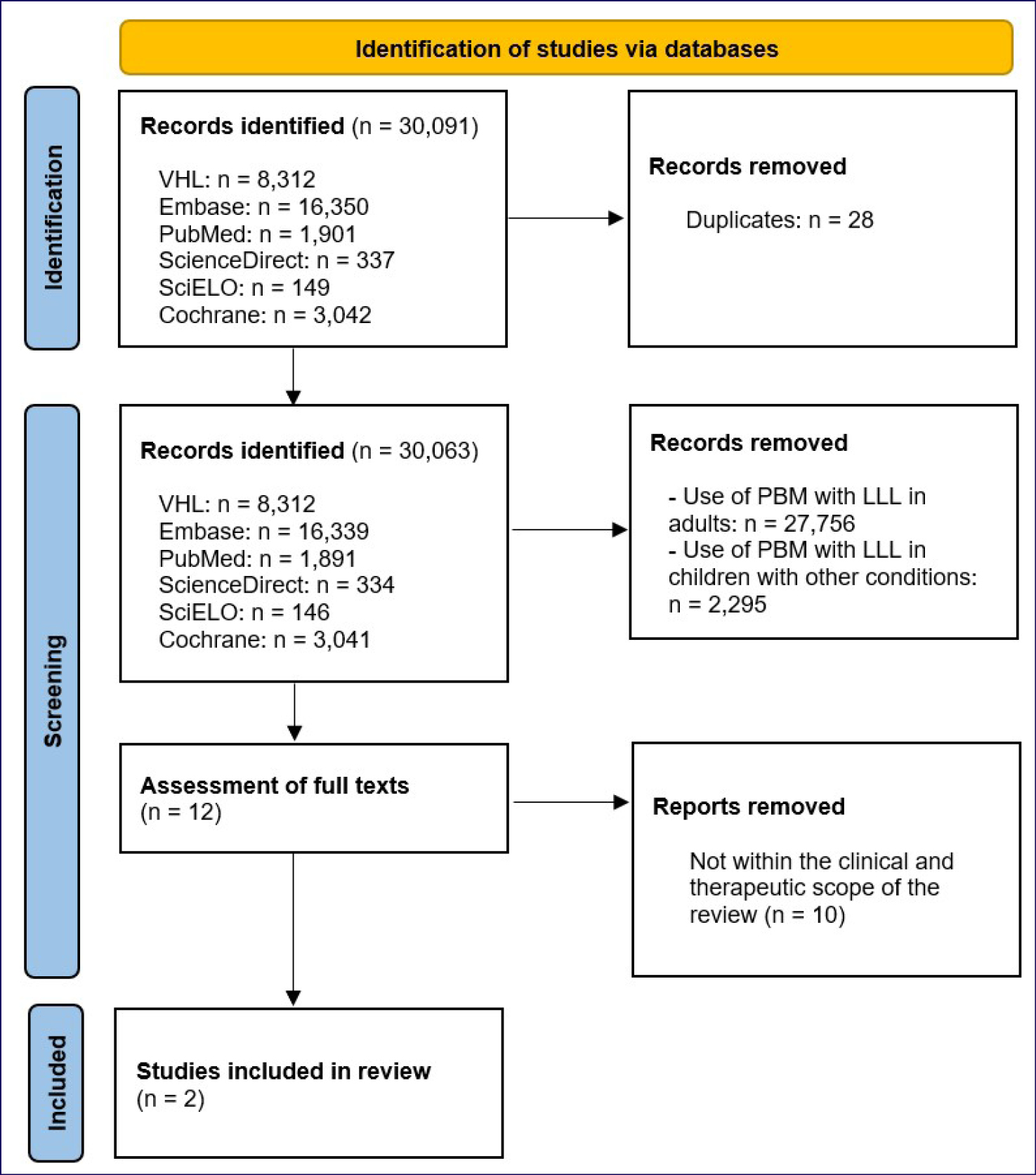 Flowchart of the study screening to make up the review based on PRISMA recommendations (Page et al., 2020)