
 Impact of Key Audit Matters and the auditor’s opinion on the decisions of non-institutional investors
ABSTRACT
This study investigates the impact of the adoption of the Brazilian Accounting Standard - Auditing Standard 701, specifically Key Audit Matters (KAMs), and the auditor’s qualified opinion on the investment decisions of Brazilian non-institutional investors. The research fills a gap in the literature by applying an experimental methodology to assess the effects of KAMs on the judgment and decision-making of non-institutional investors, a group that has become increasingly significant in the Brazilian capital market and remains underexplored in national empirical studies. The introduction of KAMs in 2017 aimed to increase the transparency of audit reports. Evaluating their effectiveness among non-institutional investors is essential to understand whether this information is assimilated and considered in their investment decisions. The study contributes to the debate on the importance of the informational content of the auditor’s report, offering relevant insights for regulators, investors, auditors, and other stakeholders. An experiment was conducted using a 2 × 2 between-subjects design, manipulating KAMs (presence vs. absence) and the auditor’s opinion (unqualified vs. qualified). The sample consisted of 112 non-institutional investors, collected online from July 2023 to January 2024. The analysis involved descriptive statistics, tests of differences between means/medians, and analysis of variance. The results did not show a statistically significant impact of KAMs (either in isolation or combined with a qualified opinion) on the investment decisions of Brazilian non-institutional investors. The study contributes by demonstrating that the effectiveness of KAMs depends on the disclosure context and the interpretive capacity of investors, as well as their interaction with other sections of the report. The findings highlight the need for standardization, clarity, and education to maximize the usefulness of Independent Auditor’s Reports.
Keywords:
Key Audit Matters; BNC TA 701; investment decision; Independent Auditor’s Report; audit opinion
RESUMO
Este estudo investiga o impacto da adoção da Norma Brasileira de Contabilidade - Técnica de Auditoria 701, especificamente dos Principais Assuntos de Auditoria (PAAs), e da opinião com ressalva do auditor sobre a decisão de investimento por investidores não institucionais brasileiros. A pesquisa preenche uma lacuna na literatura ao aplicar uma metodologia experimental para avaliar os efeitos dos PAAs no julgamento e na tomada de decisão de investidores não institucionais, grupo cada vez mais expressivo no mercado de capitais brasileiro e ainda pouco explorado em estudos empíricos nacionais. A introdução dos PAAs, em 2017, visou aumentar a transparência dos relatórios de auditoria. Avaliar sua efetividade junto a investidores não institucionais é essencial para compreender se essas informações são assimiladas e consideradas nas decisões de investimento desses investidores. A pesquisa contribui para o debate sobre a importância do conteúdo informacional do auditor, oferecendo insights relevantes para reguladores, investidores, auditores e outras partes interessadas. Foi realizado um experimento com delineamento 2 × 2 entre participantes, manipulando PAAs (presença vs. ausência) e a opinião do auditor (sem ressalva vs. com ressalva). A amostra foi composta por 112 investidores não institucionais, coletada online de julho de 2023 a janeiro de 2024. A análise envolveu estatísticas descritivas, testes de diferenças entre médias/medianas e análise de variância. Os resultados não evidenciaram impacto estatisticamente significativo dos PAAs (isoladamente ou combinados com opinião com ressalva) nas decisões de investimento de investidores não institucionais brasileiros. O estudo contribui para evidenciar que a eficácia dos PAAs depende do contexto de divulgação e da capacidade interpretativa dos investidores, assim como da interação com outras seções do relatório. Os achados ressaltam a necessidade de padronização, clareza e educação para maximizar a utilidade dos Relatórios de Auditoria Independente.
Palavras-chave:
Principais Assuntos de Auditoria; NBC TA 701; decisão de investimentos; Relatório de Auditoria Independente; opinião de auditoria
1 INTRODUCTION
Financial Statements (FSs) and Independent Audit Reports (IARs) are considered essential sources of information for improving investment decision-making (Al‐Ajmi, 2009). Thus, the auditor, through the audit report, seeks to ensure the veracity of the data reported in the FSs and reduce the information asymmetry between interested parties (Boolaky & Quick, 2016; Velte & Issa, 2019).
However, Köhler et al. (2020) highlight that, although they recognize the importance of auditing, FS users do not always read complete reports and face comprehension difficulties. Furthermore, the increase in errors and/or fraud observed in various accounting scandal cases (Velte & Issa, 2019) intensified criticism of IARs and strengthened pressure for regulatory changes in auditing (Prasad & Chand, 2017; Velte & Issa, 2019).
Given this context, the Federal Accounting Council (CFC) promoted the adoption of international standards [International Standards on Auditing - ISA] in Brazil with the objective of improving the quality, credibility, and comprehensibility of IARs. As a result, in 2016, auditing standards came into effect, particularly the Brazilian Accounting Standard - Auditing Technique 701 (NBC TA 701), which addresses the disclosure of Key Audit Matters (KAMs) in IARs (Alves & Galdi, 2020; Marques et al., 2021; Santos et al., 2020; Venturini et al., 2022).
From the perspective of the inspired confidence theory (ICT), proposed by Limperg (1932), the disclosure of the IAR plays a fundamental role in decision-making. Silviu and Timea (2015) highlight that the theory emphasizes the importance of transparency and reliability of information, especially for publicly listed companies, as management disclosures may be fraudulent or contain material errors. Thus, auditing is fundamental to ensuring the reliability of FSs, supporting more assertive investment decisions (Silviu & Timea, 2015). Therefore, according to ICT, the IAR aims to provide credibility to users who evaluate financial information relevant to investment decision-making (Cordoș et al., 2020).
According to B3 S.A. - Brasil, Bolsa, Balcão (B3), there was a 6% increase in the number of individual investors on the Brazilian stock exchange between 2023 and 2024, with an additional 5% in the second quarter of 2025 (B3, 2025). In this sense, the information contained in IARs, particularly in KAMs, can assist individual investors in their decisions (Prasad & Chand, 2017).
An analysis of the literature on the implementation of KAMs in IARs and their impact on investment decision-making reveals divergences in results (Minutti-Meza, 2021; Velte & Issa, 2019). Some international studies indicate that the inclusion of KAMs increases transparency and reduces information asymmetry (Moroney et al., 2021; Prasad & Chand, 2017; Sirois et al., 2018). However, Köhler et al. (2020) observed that KAMs may not significantly influence the investment decisions of non-institutional investors nor the auditor's judgment about the company. These authors explain that non-institutional investors have little knowledge about the information present in IARs and difficulties understanding the message that KAMs convey, especially when exposed to real cases.
In Brazil, evidence indicates that the disclosure of KAMs is associated with positive abnormal returns (Alves & Galdi, 2020), improvement in the readability of IARs (Marques et al., 2021), and increased audit quality, IARs, and FS reliability (Venturini et al., 2022).
In this context, the present study sought to answer the following question: what is the impact of KAMs on the investment decision-making of Brazilian non-institutional investors? Thus, the objective of this study is to identify and analyze this impact. To this end, an experiment with a 2 x 2 between-participants design was used, manipulating the presence vs absence of KAMs and the auditor's opinion (unqualified vs. qualified). In all conditions, participants decided whether they would invest in the fictitious company presented in the experimental scenario and, if so, informed what investment amount they would allocate to it. The analysis included descriptive statistics, mean/median tests, and analysis of variance (ANOVA).
This study differs from previous research by adopting an experimental design that allows evaluation not only of the isolated impact of each variable but also of the combined effects of KAM disclosure and the auditor's opinion on investor judgment. This empirical approach offers a more robust view of how these elements interact in risk perception, the reliability of accounting and management information, and how they affect the decisions of non-institutional investors.
The study's results have implications for different audiences: for auditors, they highlight the need for clarity in KAM disclosure; for non-institutional investors, they function as risk signals; for regulators, they reinforce the importance of policies that increase the usefulness of IARs; and for researchers, they offer evidence on the impact of KAMs on decision-making in emerging markets.
2 LITERATURE REVIEW AND HYPOTHESIS DEVELOPMENT
2.1 Informational Demand of IARs, Individual Investors, and ICT
The demand for auditing and the relevance of IARs can be understood from ICT or the rational expectations theory (RET), formulated by Limperg (1932). Unlike approaches that interpret auditing only as a control instrument, ICT conceives it as a response to the social demand for credibility in financial information. This theory starts from the assumption that users' confidence is inspired by the auditor's work, which ensures the reliability of FSs (Hayes et al., 2014).
In this context, auditing exercises the role of trust mediator by ensuring the quality of accounting information. This process reinforces the fiduciary relationship between investors and companies, in which the former allocate resources based on disclosed information, presuming its veracity, while companies resort to auditing to ensure their credibility (Silviu & Timea, 2015).
The evolution of IARs with the inclusion of KAMs strengthens ICT's assumptions by expanding transparency and the usefulness of information for investors. KAMs provide data that help identify risks and points of attention in FSs and strengthen investors' confidence in report quality, contributing to more informed investment decisions (Silviu & Timea, 2015; Cordoș et al., 2020).
In the Brazilian context, the growing number of individual investors on B3 - 5 million in 2023, 5.3 million in 2024, and 5.4 million in the second quarter of 2025 - evidences a democratization of the capital market and the emergence of new investor profiles with less technical knowledge and different levels of financial resources (B3, 2025). Regulations issued by the Brazilian Securities and Exchange Commission (2014, 2021) (CVM Instruction No. 554 of December 17, 2014, and CVM Resolution No. 30 of May 11, 2021), as well as by the Brazilian Financial and Capital Markets Association (ANBIMA), classify investors as professional, qualified, and individual, and also define risk profiles (conservative, moderate, and aggressive) to guide choices according to risk tolerance and financial objectives (ANBIMA, 2021; Bortoli et al., 2019).
The change in investor profile indicates the need for clearer, more reliable, and accessible financial information, fundamental for individual investors to adequately assess risks and opportunities. In this context, Al‐Ajmi (2009) states that accounting is fundamental to structuring data in FSs, whose usefulness depends on assurance by independent auditing.
IARs are instruments to increase the reliability of FSs and reduce the information asymmetries that hinder investment decisions. For Lin et al. (2003) and Lennox et al. (2023), the auditor's opinion, through these reports, influences investors' perception regarding information quality, affecting both the decision to invest and the volume of allocated resources. Thus, auditing contributes to transparency and the efficient functioning of the market, consolidating investor confidence (Prasad & Chand, 2017; Sirois et al., 2018).
However, Eilifsen et al. (2021) highlight that the increase in accounting complexity, combined with the intensification of the use of judgments and subjective estimates, such as fair value measurements, hinders the understanding of FSs and increases uncertainty for investors, especially individual ones. In this context, the auditor's role becomes even more relevant to mitigate information asymmetries and reduce uncertainty regarding the entity's economic risk (O'Reilly, 2009; Prasad & Chand, 2017; Velte & Issa, 2019).
Since the 2000s, corporate scandals and fraud have weakened confidence in IARs, evidencing a mismatch between user expectations and the effective function of auditing, known as the expectation gap (Boolaky & Quick, 2016). Furthermore, the standardized and generic structure of IARs limited their informational usefulness and practical relevance for investors (Lennox et al., 2023).
In response, international regulators, such as the International Auditing and Assurance Standards Board, reformulated auditing standards to expand the content and usefulness of IARs (Velte & Issa, 2019). In Brazil, the adoption, starting in 2016, of the NBC TAs aligned with the ISAs (CFC, 2016b) brought important changes, notably NBC TA 701, which established guidelines for the mandatory communication of KAMs in IARs.
KAMs innovate by increasing the quality and transparency of information, highlighting themes that demanded significant attention in the audit, including material risks, uncertain accounting judgments, and relevant events in the period (Boolaky & Quick, 2016; CFC 2016a; Köhler et al., 2020). This reduces information asymmetry, aligns the expectations of investors and auditors, and strengthens the role of auditing as a trust mechanism in the capital market (Velte & Issa, 2019).
On the other hand, Rapley et al. (2021) observe that the disclosure of KAMs can evidence relevant risks that, when perceived by investors, especially less experienced ones, may reduce the perception of audit quality and investment attractiveness. Despite this, the inclusion of KAMs adds value to the IAR by providing detailed and relevant information, meeting the growing demand for transparency and confidence in financial information and auditor judgment.
In this context, ICT highlights the role of IARs and KAMs in reducing information asymmetries for individual investors, who depend on clear and reliable information for safe decisions. Thus, the normative evolution of IARs responds to the greater complexity of the market and the diversity of investors, reinforcing auditing as a pillar of trust and efficiency in the capital market.
2.2 Hypothesis Development
The inclusion of KAMs in IARs aims to highlight critical issues to guide FS users (Christensen et al., 2014). Although it aims to improve the usefulness of reports and contribute to decision-making, the impact of KAMs on non-institutional investors remains controversial in the literature.
In this regard, Christensen et al. (2014) showed that non-professional investors tend to avoid investing in firms that reported KAMs. This indicates that KAM disclosure increases the investor's risk perception. However, when the report also includes the solution adopted, the impact on the decision is reduced, suggesting that additional information mitigates the negative effect.
On the other hand, Boolaky and Quick (2016) verified that KAM disclosure did not influence the decision of 109 German bank directors, highlighting that the impact of KAMs varies according to the nature of the reported matter and the user's subjective risk perception. Sirois et al. (2018) complement this perspective by showing that, although KAMs were consulted by 98 graduate accounting students, the presentation of multiple matters may disperse attention and compromise focus on essential FS information, impairing decision quality.
Köhler et al. (2020), through an experiment with 132 participants - between professional and non-professional investors - investigated the effect of KAMs on decision-making. The results indicated that, among professionals, KAMs influence risk perception, especially regarding the possibility of future losses, affecting the investment decision. In contrast, non-professional investors demonstrated difficulty understanding the usefulness of KAMs, suggesting cognitive limitations or lack of knowledge about their purpose. For this group, KAMs did not add relevant informational value nor impact investment behavior.
Diverging from these findings, Moroney et al. (2021) demonstrated, through an experiment with Australian non-professional investors, that the presence of KAMs increases the perception of relevance and reliability of the IAR, especially when auditing is conducted by non-Big Four audit firms. However, the authors warn that this emphasis on KAMs may reduce attention devoted to other fundamental sections of the report, such as the auditor's opinion, indicating possible informational overlap or deviation.
In turn, Rapley et al. (2021) identified that non-professional investors interpret KAM disclosure as a risk signal, associating them with possible distortions in the statements and lower management credibility. As a result, they demonstrated less willingness to invest when KAMs are present in the report, compared to their absence. These findings suggest that, although recognized as relevant, KAMs may generate negative effects on investor confidence.
Additionally, Chan and Liu (2023), from a sample of 150 non-professional United States investors, corroborate the function of KAMs as risk indicators, reinforcing their importance in forming the perception of reliability. Based on this evidence and grounding in ICT, which highlights the importance of credibility conferred by IARs and their contents for investors (Minutti-Meza, 2021), it is expected that KAMs are effectively considered in the investment decision process. Given this, the study's first hypothesis is formulated:
𝐻1: the disclosure of the IAR with the presence of KAMs negatively affects the investment decision-making of Brazilian non-institutional investors.
Another fundamental aspect of IARs is the type of auditor's opinion, the section with an opinion on the assurance of FSs. Previous studies (Badlaoui et al., 2023; Lennox et al., 2023; Lin et al., 2003) indicate that the auditor's opinion exerts influence on investment decisions by affecting risk perception regarding the company's integrity. A modified opinion tends to signal greater risks and is frequently associated with negative effects on stock prices, thus reducing investment attractiveness (Badlaoui et al., 2023).
Thus, considering that the auditor's opinion is the main component of the IAR and that a modification in it can reduce interest in investment, especially when combined with KAM disclosure, the second hypothesis is proposed:
𝐻2: the presence of KAMs intensifies the negative effect of a modified audit opinion on the investment decision of non-institutional investors.
It is worth noting that the impact of KAMs goes beyond individual risk perception. Sirois et al. (2018) demonstrate that the inclusion of KAMs enhances the quality of financial information, improves transparency, and can reduce opportunistic behavior by managers, functioning as a more effective control and communication mechanism. However, there are risks that less experienced investors may confuse KAMs with substitute information for FSs, which may compromise their decisions (Eilifsen et al., 2021; Sirois et al., 2018).
Finally, the effects of KAM disclosure may vary according to context and user profile. Studies indicate that while institutional investors perceive informational value in KAMs, non-institutional investors generally have difficulties interpreting their content, which limits communication effectiveness (Boolaky & Quick, 2016; Köhler et al., 2020). However, evidence also indicates that the presence of KAMs can increase credibility and confidence in auditing, stimulating more informed investment decisions (Chan & Liu, 2023; Moroney et al., 2021)
3 METHODOLOGICAL PROCEDURES
3.1 Experimental Design and Task
With the objective of analyzing the impact of KAMs on the investment decision of Brazilian non-institutional investors, an experiment with a 2 x 2 between-participants design was applied, manipulating the presence of KAMs (absence vs. presence) and the audit opinion (unqualified vs. qualified). In all experimental conditions, participants decided whether they would invest and what percentage of available savings they would allocate.
In experimental conditions with manipulation of KAM presence, three KAMs were used, the average number reported in previous studies (Marques et al., 2021; Santos et al., 2020; Venturini et al., 2022). The included KAMs were: (i) impairment of recoverable value, (ii) provisions and contingencies, and (iii) revenue recognition, which are the most frequent in the Brazilian context, as evidenced in previous research (Camargo et al., 2019; Marques & Souza, 2017; Marques et al., 2021; Santos et al., 2020; Venturini et al., 2022). Participants in this group accessed an experimental scenario with an IAR containing the three mentioned KAMs. For conditions with and without KAMs, standard texts from NBC TA 705 were used, corresponding to each type of auditor's opinion (unqualified and qualified).
Despite the design's limitations, a more realistic decision-making scenario was chosen, based on an IAR containing multiple accounting judgments, in convergence with Brazilian reality. This choice expanded the experiment's external validity, although it may have reduced internal validity, since other informational elements of the IAR may also have influenced participants' decisions.
Participants were randomly distributed into four experimental groups, corresponding to the combinations of manipulated conditions. Randomization was performed automatically by the online platform SurveyMonkey, which allocated respondents without any intervention or access by participants or researchers, ensuring the process's impartiality.
The first group was composed of subjects who received presence of KAMs and unqualified audit opinion (treatment). The second group was formed by participants who received manipulation with absence of KAMs and unqualified audit opinion (control). The third group consisted of those who received presence of KAMs and qualified audit opinion (treatment). Finally, the fourth group received the IAR with absence of KAMs and qualified audit opinion (control). To test H₁ and H₂, comparison was made between treatment and control groups, as presented in Table 1.
Each participant received information about the company, financial indicators, IARs, and questions to test the hypotheses, in addition to additional questions to assist in analyzing the decisions of non-institutional investors. The collection instrument, available in the Harvard Dataverse repository (https://doi.org/10.7910/DVN/HS4NL2), was applied remotely via SurveyMonkey, adapted from previous studies (O'Reilly, 2009; Christensen et al., 2014; Farkas & Murthy, 2014; Köhler et al., 2020; Lin et al., 2003; Moroney et al., 2021; O’Reilly, 2009; Rapley et al., 2021) and approved by the Research Ethics Committee (CEP) of the Federal University of Espírito Santo (UFES).
After the Committee’s approval, the instrument was pre-tested to ensure non-institutional investors' comprehension and improve question wording (Sirois et al., 2018). Based on suggestions, the instrument was adjusted and reapproved by the UFES Research Ethics Committee. Dissemination occurred via social networks, with response collection between July 21, 2023, and January 23, 2024.
The results were analyzed through the application of descriptive statistics and non-parametric tests of differences between means/medians, such as Wilcoxon-Mann-Whitney for difference between means and Kruskal-Wallis for difference between proportions. Additionally, a parametric test, like ANOVA, was used to verify means and possible differences and consequently complete the findings and analyze the research hypotheses.
The financial data of Company ABC S.A. were obtained from a company listed on B3, using 2022 data as reference for year 20X1, while indicators with values 1% lower were considered for year 20X0. This choice was made with the objective of presenting a company with a stable financial situation (Köhler et al., 2020), to isolate the effects of other factors (such as return variation, growth rate, etc.) and so that possible differences found result from manipulation in KAMs and audit opinion reported in IARs.
The financial indicators selected for analysis were chosen based on their relevance in fundamental analysis and are commonly used in financial analyses and investment decisions by investors and professionals in return prediction (Ze‐To, 2022). These indicators include earnings per share, payout, gross margin, net margin, return on assets, return on equity, asset turnover, current liquidity, general liquidity, and debt.
3.2 Variables
The dependent variable consisted of investment decision-making, which was captured through two questions: 1) "Would you invest any percentage of the amount available for investment in shares of Company ABC S.A.?" - with options on a 5-point Likert scale: "Definitely not" (1), "Probably not" (2), "Undecided" (3), "Probably yes" (4), and finally, "Definitely yes" (5) (Lin et al., 2003); and 2) "What percentage of the amount available for investment would you invest in shares of Company ABC S.A.?" - evaluated through a continuous scale.
In the experiment, the independent variable was manipulated to include KAM disclosure and audit opinion, divided into four conditions: absence of KAMs, presence of KAMs, unqualified audit opinion, and qualified audit opinion. Control variables included age, gender, education level, experience as an individual investor (Köhler et al., 2020), and investor profile (Bortoli et al., 2019).
The categorical variable investor profile, classified as conservative, moderate, or aggressive, can directly influence the judgment and decision-making of non-institutional investors, since it guides their choices regarding term, type of application, and level of risk most appropriate to their objectives (ANBIMA, 2021). This profile is defined based on individual characteristics, such as risk tolerance, financial situation, prior knowledge, time horizon, and investment goals (ANBIMA, 2021). Thus, investors with greater risk tolerance tend to show greater propensity to choose more volatile assets, seeking higher returns (Bortoli et al., 2019).
3.3 Participants and Sample Selection
The sample was composed of non-institutional investors, individual natural person investors, also called individual investors, who: make or have made investments in company stocks (Christensen et al., 2014; Farkas & Murthy, 2014; Lin et al., 2003; Moroney et al., 2021; Rapley et al., 2021); are over 18 years old and were interested in voluntarily participating in the research. To ensure sample adequacy, the instrument included initial screening questions with the objective of identifying non-institutional investors, the study's target audience. This screening was important both to avoid participation by non-investors and by professional investors, whose characteristics could compromise the validity of results.
The analyzed sample was composed of 112 non-institutional investor participants, who invest or have invested in company stocks, read the Informed Consent Form and wished to voluntarily participate in the research, distributed as follows: 24 respondents were from group 1 (treatment: presence of KAMs and unqualified), 25 from group 2 (control: absence of KAMs and unqualified), 31 from group 3 (treatment: presence of KAMs and qualified), and 32 in the group (control: absence of KAMs and qualified). Additional analyses were performed excluding individuals who missed both attention check questions; however, the results were similar and, therefore, the 112 observations were maintained in the main analysis. The sample size is compatible with what was observed in previous studies, such as that of Köhler et al. (2020), and according to Aguiar (2017), it is recommended that experimental groups have at least 20 observations for each experimental condition.
It should also be noted that the experiment was structured to capture the specific impact of KAMs on investment decision. The design allowed comparing the group exposed to KAMs with the control group, attributing the observed differences to this information, even without direct control of cognitive factors, such as accounting knowledge. Finally, the sample, obtained by accessibility, may present selection bias and limit the generalization of findings.
4 DATA ANALYSIS AND RESULTS
4.1 Participant Characteristics
Table 2 presents the descriptive statistics of demographic variables, considering only valid cases, since 40 participants did not respond to sociodemographic questions. These individuals, however, were maintained in hypothesis analyses for having completed experimental tasks, as their exclusion would not alter results and their inclusion follows methodological recommendations (Little & Rubin, 2019) and practices in experimental studies (Rapley et al., 2021; Van Smeden, 2021), preserving statistical power and avoiding biases in intentional samples.
Among the respondents, the average age was 38 (38.08) years for the control group and 35 (34.8) years for the treatment group, with no statistically significant differences. In terms of experience with stock investments, the control group had approximately 6 years (5.917), while the treatment group had 7 years (6.889). Around 47% and 49% of respondents were male, considering the control and treatment groups, respectively.
Regarding education, about 57% of the control group and 52.3% of the treatment group had higher education. In the investor profile, in the control group, 28% were moderate, 19% aggressive, and 16% conservative; in the treatment group, 31% were moderate, 22% aggressive, and 13% conservative. Sociodemographic variables did not present significant differences, indicating homogeneity between groups - an essential factor to ensure that observed effects result from experimental manipulation (Köhler et al., 2020; Moroney et al., 2021).
4.2 Analysis of Experimental Task and Difference Between Experimental Groups
Table 3 presents the descriptive statistics of the data of dependent variables related to the tasks provided in the research instrument to evaluate the research hypotheses. Additionally, additional questions were included, elaborated to assist in understanding the reasons underlying participants' decisions.
As verified in panel A, the investment percentage presented by participants in the treatment group was 21.47%, while the control group was 22.74%. Although the latter presented an investment percentage 1.264% higher than the former, this difference was not statistically significant. In terms of propensity to invest (panel B), it was observed that 53% of control group participants declared they would definitely/probably invest, whereas in the treatment group, this percentage was 54.4%. Despite the existence of differences between treated groups (with KAM) and untreated (without KAM), they were not statistically significant and, therefore, H1 was not corroborated.
The results found converge with the studies of Boolaky and Quick (2016) and Köhler et al. (2020), which identified that non-institutional investors tend not to use KAMs for decision-making, either due to lack of knowledge, difficulty in technical comprehension, or prioritizing other more accessible sections of IARs. Additionally, investors may avoid investment when KAMs are evidenced in IARs, as it increases their risk perception (Christensen et al., 2014).
On the other hand, these findings diverge from what was observed by Sirois et al. (2018), who argue that KAM disclosure attracts more attention from non-institutional investors and does not function as a substitute for FSs, but as a relevant complement. Moroney et al. (2021) also argue that the presence of KAMs can increase the perception of relevance and reliability of the IAR, which, in theory, should contribute positively to the investment decision. However, this was not confirmed in the present research.
This lack of impact of KAMs can be explained by non-institutional investors' difficulty in understanding the technical information in this section (Köhler et al., 2020). Many investors do not understand the purpose of KAMs nor their practical applicability, which limits the effect of these reports on the decision-making process. According to the inspired confidence theory (ICT), the usefulness of assurance mechanisms, such as KAMs, depends on the user's understanding and confidence in the information provided. If these elements are not present, the potential influence of KAMs is reduced.
Moroney et al. (2021) show that non-professional investors consider auditing more relevant and reliable when KAMs are present in reports, increasing attention given to this information. This indicates that the effect of KAMs may depend on the investor's familiarity and understanding of this data.
To evaluate the usefulness of the IAR, responses about comprehension and use of documents by non-institutional investors were analyzed. The majority demonstrated low familiarity with the IAR: 46% of the control group and 38% of the treatment group reported low or medium comprehension of KAMs, and more than half (53% and 54%) rarely or never use the IAR in decisions. In contrast, FSs are used with greater frequency (37% in control and 35% in treatment). Although the differences are not statistically significant, the observed pattern-consistent with Boolaky and Quick (2016) and Köhler et al. (2020)-suggests that the effectiveness of IARs and KAMs as influence mechanisms is limited by the low level of use and comprehension.
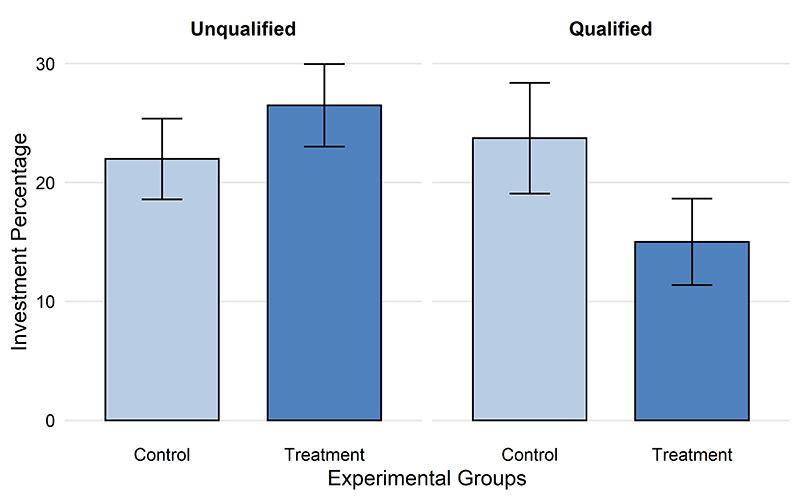
To evaluate the effect of KAM disclosure combined with the auditor's opinion, graphical analysis (Figure 1) shows that the unqualified treatment group presented an average investment percentage of 26.48%, against 21.96% in the control. On average, participants exposed to KAMs invested 4.52% more than those who did not receive this information.

However, when comparing the average investment percentages of control and treatment groups facing a qualified audit opinion, the values were 23.72% for the control group and 15% for the treatment group. This indicates that, when confronted with a qualification in the auditor's opinion, investors who received KAMs invested 8.72% less than those who did not receive them. This result indicates that KAMs can amplify risk perception in contexts of uncertainty, acting as negative signals, which is consistent with Chan and Lin (2023) and Minutti-Meza (2021). From this perspective, KAMs highlight critical areas that have already been pointed out in the qualification, intensifying the alert to the investor.
This behavior also reflects the findings of Christensen et al. (2014) and Rapley et al. (2021), who observed that KAMs can reduce investment propensity when associated with risk signals. Additionally, the studies of Badlaoui et. al (2023) and Lin et. al (2003) reinforce that the auditor's opinion, especially when modified, exerts significant influence on investor judgment, particularly when combined with other sensitive information, such as KAMs.
Thus, these results can be interpreted in light of ICT, in which the IAR acts as an essential mechanism to generate confidence and guide investor decisions. However, this influence depends on the degree of attention and comprehension of investors, since most sample participants did not attribute significant relevance to KAM information, which suggests that the impact of KAMs may vary according to the investor's level of familiarity with this information.
Subsequently, it was observed that investor behavior varied according to the type of opinion in the IAR (qualified and unqualified). According to Figure 2 below, when the IAR did not present qualifications, the treatment group, which received information about KAMs, invested, on average, 4.52 percentage points more than the control group. However, this trend reversed in the presence of qualifications: investors who received KAMs invested 8.72% less than those who did not receive them, indicating a possible combined effect between KAM information and qualified opinion in investors' decision-making process.

The expectation was that KAMs would reduce the investment percentage by indicating greater uncertainty and perceived risk. However, this effect was only observed in the qualified opinion scenario. These results are aligned with ICT, according to which the auditor's report contributes to the credibility of financial information. Thus, the reduction in investment of the treatment group facing the qualification may reflect greater sensitivity to risk, influenced by the combination of KAMs and the auditor's opinion.
Subsequently, the means of investment percentage by investor profile were analyzed, classified as: (i) moderate, (ii) conservative, (iii) aggressive, and (iv) not informed (Figure 3).

It is observed that, in general, in the treatment group, only the aggressive profile presented a lower investment percentage than the other profiles (moderate, conservative, not informed) (χ² = 2.9659**). Regarding the control group, there was no significant change in investment percentage, including for aggressive investors; however, for the treatment group, aggressive investors presented an average percentage of 12%, a difference of 3% compared to the average of treatment and unqualified groups.
This finding is relevant, as aggressive investors are expected to be more willing to assume risks. However, as Minutti-Meza (2021) argues, more experienced investors, who have been investing longer, may be more sensitive to risk signals, such as qualifications and KAMs, adopting more cautious postures when making their investment decisions.
Finally, aiming to verify whether the means observed in Figures 1, 2, and 3 were statistically significant, Table 4 was constructed, which reports the ANOVA results for 2 x 2 designs.
As presented in Table 4, no statistically significant differences were identified, at the 5% level, between the mean investment percentages of participants who received information about KAMs (treatment group) and those who did not receive it (control group). Similarly, the two-factor ANOVA (2 x 2) did not indicate statistically significant effects at the 5% level, neither for the qualified opinion nor for the interaction between KAM presence and qualified opinion. Therefore, the differences observed in Figures 1 and 2 cannot be considered statistically significant under the more rigorous criterion adopted in this study.
Additionally, although investors with an aggressive profile presented a higher investment percentage than others, this result was also not statistically significant at the 5% level. Nor were significant interactions observed between this profile and the other variables (KAM presence and opinion type).
This evidence suggests that, in isolation, the presence of KAMs does not statistically significantly affect investment decisions, corroborating the findings of Boolaky and Quick (2016). This result contradicts ICT, indicating that Brazilian non-institutional investors do not attribute statistical relevance to KAMs in decision-making. Thus, H1 was not confirmed in this context, unlike what was observed by Christensen et al. (2014), Köhler et al. (2020), Rapley et al. (2021), and Chan and Liu (2023).
Although, descriptively, it was verified that the group that received information about KAMs invested less in the presence of a qualified audit opinion-as predicted in H2-such effect did not reach statistical significance at the 5% level. Thus, H2 was also not confirmed in this study based on the adopted criteria. Therefore, results should be interpreted with caution, suggesting the need for future investigations with greater statistical power to evaluate the combined effect between the auditor's modified opinion and the presence of KAMs on investor behavior.
5 CONCLUSION
The present study analyzed the impact of KAMs on the investment decision-making of Brazilian non-institutional investors. For this purpose, an experimental approach with a 2 x 2 between-participants factorial design was used, manipulating: (i) the presence or absence of KAMs and (ii) the type of audit opinion (unqualified or qualified). Data analysis was conducted through descriptive statistics, parametric and non-parametric tests for differences between means and proportions, in addition to ANOVA.
The results did not statistically confirm either the hypothesis that KAMs, in isolation, positively influence investment decision (H₁), nor that their combined effect with a qualified opinion negatively affects this decision (H₂), in contrast with Boolaky and Quick (2016) and Köhler et al. (2020). Nevertheless, a trend was observed: facing a modified opinion, participants exposed to KAMs showed less propensity to invest. These indications suggest that, although not significant, KAMs may intensify the risk perception of non-institutional investors (Badlaoui et al., 2023), in line with Rapley et al. (2021), who highlight their sensitivity to the complexity of accounting and auditing information.
In light of ICT, it was expected that KAM disclosure in the IAR would strengthen the credibility of the decision-making process (Cordoș et al., 2020; Silviu & Timea, 2015). However, results show that the confidence attributed to the IAR does not ensure, by itself, the effective use or comprehension of its sections by non-institutional investors. Without qualification in the opinion, KAMs did not significantly alter investment behavior; in the scenario with qualification, they may have reinforced risk perception, although without statistical significance.
These findings suggest that the impact of KAMs depends on the disclosure context and users' interpretive capacity. Their informational effectiveness seems linked not only to presence in the report but also to interaction with other sections, such as the auditor's opinion. In practice, this may lead non-institutional investors to less informed or excessively cautious decisions, resulting in inefficient resource allocation.
For companies, there is risk of perception of greater uncertainty even without deterioration of fundamentals, which affects cost of capital and market image. For regulators, results indicate that the mere requirement of KAM disclosure does not guarantee decision-making usefulness, requiring advances in standardization, clarity, and education to reduce information asymmetries.
This study has relevant limitations. The sample, obtained by accessibility, limits the generalization of results. Another point is that cognitive variables of participants were not controlled (for example, the level of comprehension of accounting information), which may have affected their decisions. Additionally, an abbreviated version of the IAR was used, which may have restricted complete comprehension of information. The selection of KAMs was based on recurrent themes in the literature, but different contents or complexity levels may affect risk perception differently. The scenario was restricted to a company in the industrial goods sector, which also limits the applicability of results to other contexts.
Additionally, it should be considered that the complexity of the investment decision and the methodological choices adopted in the experimental design may have influenced results, reflecting the inherent limitations of simulation. Furthermore, recent events, such as the Americanas S.A. case, may have elevated participants' sensitivity to risks and qualifications in audit reports, given the accounting and governance failures widely publicized.
For future research, it is recommended to expand the sample of non-institutional investors and include institutional investors. It is suggested to explore the effects of KAMs with different degrees of complexity and risk, as well as investigate the impact of audits conducted by Big Four firms or in contexts of adverse opinion or disclaimer. It is also relevant to separately evaluate the effect of each type of KAM and investigate how cognitive biases, in light of behavioral finance, affect the interpretation of this information. Finally, it is suggested to extend the analysis to different economic sectors and financial indicators to verify the robustness of the results obtained.
REFERENCES
-
Aguiar, A. B. (2017). Pesquisa experimental em contabilidade: propósito, desenho e execução. Advances in Scientific and Applied Accounting, 10(2), 224-244. https://doi.org/10.14392/asaa.2017100206
» https://doi.org/10.14392/asaa.2017100206 -
Al‐Ajmi, J. (2009). Investors’ use of corporate reports in Bahrain. Managerial Auditing Journal, 24(3), 266-289. https://doi.org/10.1108/02686900910941140
» https://doi.org/10.1108/02686900910941140 -
Alves, E. D. Jr. , & Galdi, F. C. (2020). The informational relevance of key audit matters. Revista Contabilidade & Finanças, 31(82), 67-83. https://doi.org/10.1590/1808-057x201908910
» https://doi.org/10.1590/1808-057x201908910 -
Associação Brasileira das Entidades dos Mercados Financeiro e de Capitais. (2021, March 15). Suitability: entenda por que considerar seu perfil de investidor ao investir. https://comoinvestir.anbima.com.br/noticia/suitability-entenda-perfil-investidor/
» https://comoinvestir.anbima.com.br/noticia/suitability-entenda-perfil-investidor/ -
B3 S.A - Brasil, Bolsa, Balcão. (2025). Uma análise da evolução dos investidores na B3. https://www.b3.com.br/data/files/9D/00/48/94/7CB589100A29E189AC094EA8/Book%20PF%202TRI%202025.pdf
» https://www.b3.com.br/data/files/9D/00/48/94/7CB589100A29E189AC094EA8/Book%20PF%202TRI%202025.pdf -
Badlaoui, M. C., & Issam , E.-R. (2023). Market reaction to modified audit opinions: a systematic literature review in both developed and developing countries. Asian Academy of Management Journal of Accounting and Finance, 19(1). https://doi.org/10.21315/aamjaf2023.19.1.10
» https://doi.org/10.21315/aamjaf2023.19.1.10 -
Boolaky, P. K., & Quick, R. (2016). Bank directors’ perceptions of expanded auditor’s reports: bank directors’ perceptions of expanded auditor’s reports. International Journal of Auditing, 20(2), 158-174. https://doi.org/10.1111/ijau.12063
» https://doi.org/10.1111/ijau.12063 -
Bortoli, D., da Costa, N., Goulart, M., & Campara, J. (2019). Personality traits and investor profile analysis: A behavioral finance study. PLos ONE, 14(3), e0214062. https://doi.org/10.1371/journal.pone.0214062
» https://doi.org/10.1371/journal.pone.0214062 -
Camargo, N. S., Rodrigues, F. F., Machado, C. A., & Guerra, M. (2019). Principais assuntos de auditoria e os resultados das empresas listadas na IBRX 100. Revista Contemporânea de Contabilidade, 16(41), 162-180. https://doi.org/10.5007/2175-8069.2019v16n41p162
» https://doi.org/10.5007/2175-8069.2019v16n41p162 -
Chan, D. K., & Liu, N. (2023). The effects of critical audit matter disclosure on audit effort, investor scrutiny, and investment efficiency. The Accounting Review, 98(2), 97-121. https://doi.org/10.2308/TAR-2020-0121
» https://doi.org/10.2308/TAR-2020-0121 -
Christensen, B. E., Glover, S. M., & Wolfe, C. J. (2014). Do critical audit matter paragraphs in the audit report change nonprofessional investors’ decision to invest? Auditing: A Journal of Practice & Theory, 33(4), 71-93. https://doi.org/10.2308/ajpt-50793
» https://doi.org/10.2308/ajpt-50793 -
Comissão de Valores Mobiliários. (2014). Instrução CVM 554, de 17 de dezembro de 2014. Inclui, revoga e altera dispositivos nas Instruções 155/91, 209/94, 278/98, 332/00, 356/01, 391/03, 399/03, 414/04, 429/06, 444/06, 461/07, 472/08, 476/09 e 539/13. https://conteudo.cvm.gov.br/legislacao/instrucoes/inst554.html
» https://conteudo.cvm.gov.br/legislacao/instrucoes/inst554.html -
Comissão de Valores Mobiliários. (2021). Resolução CVM 30, de 11 de maio de 2021. Dispõe sobre o dever de verificação da adequação dos produtos, serviços e operações ao perfil do cliente e revoga a Instrução CVM nº 539, de 13 de novembro de 2013. https://conteudo.cvm.gov.br/legislacao/resolucoes/resol030.html
» https://conteudo.cvm.gov.br/legislacao/resolucoes/resol030.html -
Conselho Federal de Contabilidade. (2016a). Norma Brasileira de Contabilidade 701: Comunicação dos principais assuntos de auditoria no relatório do auditor independente. https://www1.cfc.org.br/sisweb/SRE/docs/NBCTA701.pdf
» https://www1.cfc.org.br/sisweb/SRE/docs/NBCTA701.pdf -
Conselho Federal de Contabilidade. (2016b). Normas do novo relatório do auditor independente são publicadas pelo CFC. https://cfc.org.br/noticias/normas-do-novo-relatorio-do-auditor-independente-sao-publicadas-pelo-cfc/
» https://cfc.org.br/noticias/normas-do-novo-relatorio-do-auditor-independente-sao-publicadas-pelo-cfc/ -
Cordoș, G.-S., Fülöp, M.-T., & Tiron-Tudor, A. (2020). UK audit reporting practices in the pre-ISA700 (2015 revision) era. Asian Journal of Business Ethics, 9(2), 349-370. https://doi.org/10.1007/s13520-020-00113-8
» https://doi.org/10.1007/s13520-020-00113-8 -
Eilifsen, A., Hamilton, E. L., & Messier, W. F. (2021). The importance of quantifying uncertainty: Examining the effects of quantitative sensitivity analysis and audit materiality disclosures on investors’ judgments and decisions. Accounting, Organizations and Society, 90, 101169. https://doi.org/10.1016/j.aos.2020.101169
» https://doi.org/10.1016/j.aos.2020.101169 -
Farkas, M., & Murthy, U. S. (2014). Nonprofessional investors’ perceptions of the incremental value of continuous auditing and continuous controls monitoring: An experimental investigation. International Journal of Accounting Information Systems, 15(2), 102-121. https://doi.org/10.1016/j.accinf.2013.11.002
» https://doi.org/10.1016/j.accinf.2013.11.002 - Hayes, R., Gortemaker, H., & Wallage, P. (2014). Principles of auditing an introduction to international standards on auditing. (3rd ed.). Pearson.
-
Köhler, A., Ratzinger-Sakel, N., & Theis, J. (2020). The effects of key audit matters on the auditor’s report’s communicative value: experimental evidence from investment professionals and non-professional investors. Accounting in Europe, 17(2), 105-128. https://doi.org/10.1080/17449480.2020.1726420
» https://doi.org/10.1080/17449480.2020.1726420 -
Lennox, C. S., Schmidt, J. J., & Thompson, A. M. (2023). Why are expanded audit reports not informative to investors? Evidence from the United Kingdom. Review of Accounting Studies. https://doi.org/10.1007/s11142-021-09650-4
» https://doi.org/10.1007/s11142-021-09650-4 - Limperg, T. (1932). Theory of inspired confidence. University of Amsterdam.
-
Lin, Z. J., Tang, Q., & Xiao, J. (2003). An experimental study of users’ responses to qualified audit reports in China. Journal of International Accounting, Auditing and Taxation, 12(1), 1-22. https://doi.org/10.1016/S1061-9518(03)00005-3
» https://doi.org/10.1016/S1061-9518(03)00005-3 - Little, R. J., & Rubin, D. B. (2019). Statistical analysis with missing data. John Wiley & Sons.
-
Marques, V. A. & Souza, M. K. P. (2017). Principais Assuntos de Auditoria e Opinião sobre o Risco de Descontinuidade: uma análise das empresas do ibovespa. RIC - Revista de Informação Contábil. 11, 22. https://doi.org/10.34629/ric.v11i4.1-22
» https://doi.org/10.34629/ric.v11i4.1-22 -
Marques, V. A., Pereira, L. N., Aquino, I. F. de, & Freitag, V. da C. (2021). Has it become more readable? Empirical evidence of key matters in independent audit reports,. Revista Contabilidade & Finanças , 32(87), 444-460. https://doi.org/10.1590/1808-057x202112990
» https://doi.org/10.1590/1808-057x202112990 -
Minutti-Meza, M. (2021). The art of conversation: The expanded audit report. Accounting and Business Research, 51(5), 548-581. https://doi.org/10.1080/00014788.2021.1932264
» https://doi.org/10.1080/00014788.2021.1932264 -
Moroney, R., Phang, S.-Y., & Xiao, X. (2021). When do investors value key audit matters? European Accounting Review, 30(1), 63-82. https://doi.org/10.1080/09638180.2020.1733040
» https://doi.org/10.1080/09638180.2020.1733040 -
O’Reilly, D. M. (2009). Do investors perceive the going‐concern opinion as useful for pricing stocks? Managerial Auditing Journal , 25(1), 4-16. https://doi.org/10.1108/02686901011007270
» https://doi.org/10.1108/02686901011007270 -
Prasad, P., & Chand, P. (2017). The changing face of the auditor’s report: implications for suppliers and users of financial statements: the changing face of the auditor’s report. Australian Accounting Review, 27(4), 348-367. https://doi.org/10.1111/auar.12137
» https://doi.org/10.1111/auar.12137 -
Rapley, E. T., Robertson, J. C., & Smith, J. L. (2021). The effects of disclosing critical audit matters and auditor tenure on nonprofessional investors’ judgments. Journal of Accounting and Public Policy, 40(5), 106847. https://doi.org/10.1016/j.jaccpubpol.2021.106847
» https://doi.org/10.1016/j.jaccpubpol.2021.106847 -
Santos, K. L. dos, Guerra, R. B., Marques, V. A., & Maria, E., Jr. (2020). Os principais assuntos de auditoria importam? Uma análise de sua associação com o gerenciamento de resultados. Revista de Educação e Pesquisa em Contabilidade (REPeC), 14(1). https://doi.org/10.17524/repec.v14i1.2432
» https://doi.org/10.17524/repec.v14i1.2432 -
Silviu, G. C., & Timea, M. F. (2015). New audit reporting challenges: Auditing the going concern basis of accounting. Procedia Economics and Finance, 32, 216-224. https://doi.org/10.1016/S2212-5671(15)01385-4
» https://doi.org/10.1016/S2212-5671(15)01385-4 -
Sirois, L.-P., Bédard, J., & Bera, P. (2018). The Informational value of key audit matters in the auditor’s report: Evidence from an eye-tracking study. Accounting Horizons, 32(2), 141-162. https://doi.org/10.2308/acch-52047
» https://doi.org/10.2308/acch-52047 -
van Smeden, M., de Vries, B. B. P., Nab, L., & Groenwold, R. H. (2021). Approaches to addressing missing values, measurement error, and confounding in epidemiologic studies. Journal of Clinical Epidemiology, 131, 89-100. https://doi.org/10.1016/j.jclinepi.2020.11.006
» https://doi.org/10.1016/j.jclinepi.2020.11.006 -
Velte, P., & Issa, J. (2019). The impact of key audit matter (KAM) disclosure in audit reports on stakeholders’ reactions: A literature review. Problems and Perspectives in Management, 17(3), 323-341. https://doi.org/10.21511/ppm.17(3).2019.26
» https://doi.org/10.21511/ppm.17(3).2019.26 -
Venturini, L. D. B., Bianchi, M., Machado, V. N., & Paulo, E. (2022). Informational content of key audit matters and financial analysts’ forecasts. Revista Contabilidade & Finanças , 33(89), 281-299. https://doi.org/10.1590/1808-057x202113080
» https://doi.org/10.1590/1808-057x202113080 -
Ze‐To, S. Y. (2022). Fundamental index aligned and excess market return predictability. Journal of Forecasting, 41(3), 592-614. https://doi.org/10.1002/for.2829
» https://doi.org/10.1002/for.2829
-
This is a bilingual text. This article was originally written in Portuguese, published under the DOI https://doi.org/10.1590/1808-057x20252313.pt
-
This article is derived from a master's dissertation defended by the author Mariana Aparecida Favero Fiorin and supervised by the author Vagner Antônio Marques, in 2023.
-
Paper presented at the 24th USP International Conference on Accounting, São Paulo, SP, Brazil, July 2024.
-
DATA AVAILABILITY STATEMENT
The entire dataset supporting the results of this study is available at the following link: https://doi.org/10.7910/DVN/HS4NL2
-
AI USAGE STATEMENT
The authors declare that they used generative artificial intelligence in the following stages of the production of this manuscript: - Text refinement (ChatGPT) and generation/optimization of formulas and code (ChatGPT). The authors also declare that, regardless of the use of the aforementioned tools, all generated content was supervised, verified, and critically validated by humans. The authors assume full and sole responsibility for the accuracy of the data, the integrity of the mathematical/statistical formulas, the originality of the text, and the conclusions presented in the published article.
-
FUNDING
The authors thank the following institution for financial support in carrying out this research: - Espírito Santo Research and Innovation Support Foundation (FAPES).
The entire dataset supporting the results of this study is available at the following link: https://doi.org/10.7910/DVN/HS4NL2

 Source: Prepared by the authors.
 Source: Prepared by the authors.
 Source: Prepared by the authors.