
 Latent tuberculosis infection among undergraduate nursing students: a study of social representations
Objectives: to analyze nursing students’ social representations regarding latent tuberculosis infection.
Methods: this qualitative study, supported by Social Representation Theory’s procedural aspect, was conducted with 37 students who were tuberculin-positive and enrolled in an undergraduate nursing program at a public university in Belém, Pará, Brazil. Individual interviews were carried out, and the corpus was subjected to the software Interface de R pour les Analyses Multidimensionnelles de Textes et de Questionnaires 0.7/alpha 2 for lexical analysis mediated by Descending Hierarchical Classification.
Results: social representations were revealed through participants’ personal experiences and the reflections they undertook after the positive result, aiming to understand how they may have been exposed to the bacillus and become infected.
Final Considerations: to protect students in their personal and academic daily lives, biosecurity measures require collaborative partnerships between the health and education sectors, but it is also necessary to strengthen Primary Health Care actions.
Descriptors:
Latent Tuberculosis; Students; Nursing; Social Representation; Psychology; Social; Public Health.
 Thumbnail
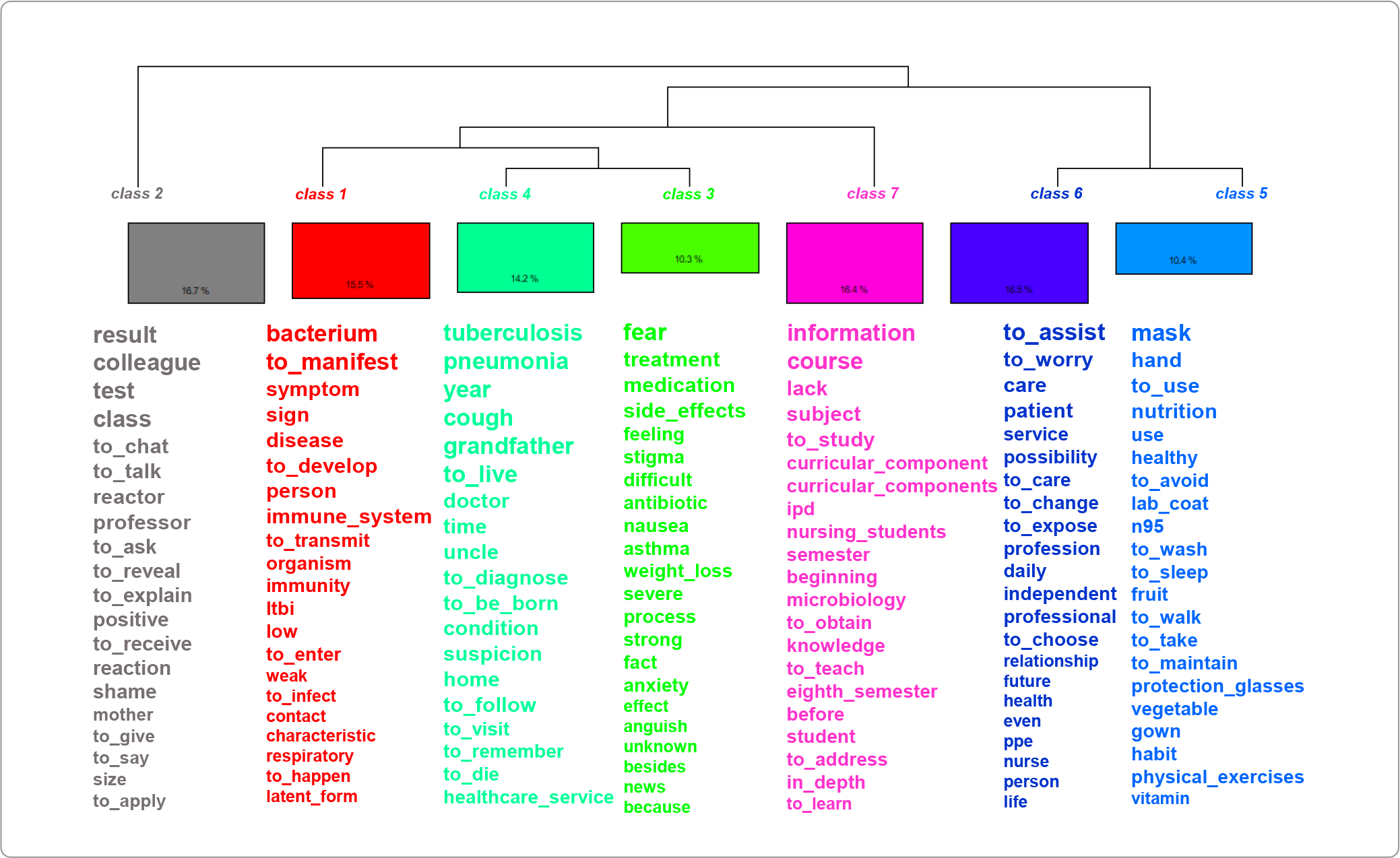 IPD - infectious and parasitic diseases; LTBI - latent tuberculosis infection; PPE - personal protective equipment.