
 Brazilian patents on prevention of bloodstream infection associated with intravascular devices
ABSTRACT
Objective To identify Brazilian patents related to the prevention of bloodstream infections associated with the use of intravascular devices.
Method A documentary, descriptive, and retrospective study was conducted through the analysis of patents filed with the Brazilian National Institute of Industrial Property (INPI) between 2000 and 2024. Information regarding patent applications, filing dates, applicants, titles, International Patent Classification codes, practical applicability, preventive functionality, type of vascular access, and integration with digital technologies was extracted. Data were analyzed using descriptive statistics.
Results Thirty-three eligible patents were identified. Patent filings were concentrated between 2011 and 2015 (45.5%), with a mean processing time of 1,067 days and a predominance of invention patents (90.9%) aimed at direct infection prevention, mainly through infusion devices and antimicrobial materials. Most patents were intended for hospital settings (57.6%). Independent inventors accounted for the majority of filings (93.9%), and patent registrations were geographically concentrated in Southeastern Brazil.
Conclusion Patents aimed at the direct prevention of bloodstream infections through infusion devices and antimicrobial materials were identified, with limited participation of academic and healthcare institutions.
Descriptors:
Vascular Access Devices; Catheters; Patient Safety; Patent; Catheter-Related Infections
RESUMO
Objetivo Identificar patentes brasileiras referentes a prevenção da infecção de corrente sanguínea associada ao uso de dispositivos intravasculares.
Método Pesquisa documental, descritiva e retrospectiva, realizada por meio da análise de patentes depositadas no Instituto Nacional da Propriedade Industrial (INPI), entre 2000 e 2024. Foram extraídas informações referentes ao pedido, datas, depositante, título, Classificação Internacional de Patentes, aplicabilidade prática, funcionalidade preventiva, tipo de acesso vascular e integração com tecnologias digitais. Os dados foram analisados por estatística descritiva.
Resultados Foram identificadas 33 patentes elegíveis. Observou-se concentração de depósitos entre 2011 e 2015 (45,5%), com tempo médio de tramitação de 1.067 dias e predominância de patentes de invenção (90,9%) voltadas à prevenção direta da infecção, principalmente por meio de dispositivos de infusão e materiais antimicrobianos. A maioria destinava-se ao ambiente hospitalar (57,6%). Houve predomínio de inventores particulares (93,9%) e concentração geográfica dos registros na região Sudeste.
Conclusão Identificaram-se patentes voltadas à prevenção direta da infecção por meio de dispositivos de infusão e materiais antimicrobianos, com limitada participação de instituições acadêmicas e de saúde.
Descritores:
Dispositivos de Acesso Vascular; Catéteres; Segurança do Paciente; Patente; Infecções relacionadas à cateter
RESUMEN
Objetivo Identificar patentes brasileñas relacionadas con la prevención de infecciones del torrente sanguíneo asociadas al uso de dispositivos intravasculares.
Método Estudio documental, descriptivo y retrospectivo, realizado mediante el análisis de patentes registradas en el Instituto Nacional de la Propiedad Industrial (INPI) de Brasil entre 2000 y 2024. Se extrajo información sobre la solicitud, fechas, titular, título, Clasificación Internacional de Patentes, aplicabilidad práctica, funcionalidad preventiva, tipo de acceso vascular e integración con tecnologías digitales. Los datos fueron analizados mediante estadística descriptiva.
Resultados Se identificaron 33 patentes elegibles. Se observó una concentración de solicitudes entre 2011 y 2015 (45,5%), con un tiempo medio de tramitación de 1.067 días y predominio de patentes de invención (90,9%) orientadas a la prevención directa de la infección, principalmente mediante dispositivos de infusión y materiales antimicrobianos. La mayoría estaba destinada al ámbito hospitalario (57,6%). Predominaron los inventores independientes (93,9%) y se observó una concentración geográfica de los registros en la región Sudeste de Brasil.
Conclusión Se identificaron patentes orientadas a la prevención directa de la infección mediante dispositivos de infusión y materiales antimicrobianos, con una participación limitada de instituciones académicas y de salud.
Descriptores:
Dispositivos de Acceso Vascular; Catéteres; Seguridad del Paciente; Patente; Infecciones Relacionadas con Catéteres
INTRODUCTION
Healthcare-associated infections (HAI) represent a significant public health problem, with clinical, economic, and organizational repercussions for health services. Their occurrence is associated with the conditions of care provided to the patient and the performance of invasive procedures, particularly primary bloodstream infections (BSI), frequently related to the use of intravascular devices, both central and peripheral. In addition to negatively impacting clinical recovery, the HAI contribute to increased length of stay, morbidity and mortality, and healthcare-related costs(1-2).
Vascular access is one of the main therapeutic modalities in clinical practice. However, failures related to the insertion, maintenance, and manipulation of these devices remain frequent and are often routinely incorporated into care, contributing to the occurrence of BSI. This scenario highlights the need for effective strategies aimed at preventing these infections and promoting patient safety(3).
The BSI remain among the most clinically and epidemiologically relevant healthcare-associated infections. According to criteria from the Brazilian National Health Surveillance Agency (ANVISA), these infections correspond to laboratory or clinical infectious conditions without an identifiable primary focus, often associated with the presence of vascular catheters during the exposure period. A systematic review and meta-analysis that analyzed 130 studies, involving 214,325 central venous catheters, identified a catheter-associated bloodstream infection rate of 4.8 per 1,000 catheter-days (95% CI: 3.4–6.6), estimating that 30.2 per 1,000 patients using a central venous catheter for three days will develop at least one serious complication, such as bacteremia, pneumothorax, or deep vein thrombosis(4).
The magnitude of this problem is also expressed in its economic and clinical impacts. International guidelines indicate that patients with BSI have adjusted variable hospital costs up to US$32,000 higher than patients without infection, in addition to longer hospital stays and a significant increase in morbidity and mortality(5). Despite the implementation of care bundles and evidence-based preventive measures, this problem remains a major challenge to the quality of healthcare(4-5).
The management of intravascular devices involves different professional categories and depends on the integration between care practices, institutional protocols and technologies aimed at preventing infections. In this context, healthcare professionals directly involved in the insertion, maintenance and monitoring of these devices, especially nursing, can play a relevant role in identifying care demands and in developing technological solutions applied to the prevention of bloodstream infection associated with the use of intravascular devices(6).
Technological innovation emerges as a relevant strategy for the prevention of BSI, especially through the development of devices, materials and solutions aimed at educing risks associated with the use of intravascular catheters. The analysis of patent records is a strategic approach to understand the landscape of available innovations, identify technological trends and highlight gaps in the development of solutions aimed at patient safety(6-7).
Patent filing grants the holder the exclusive right to exploit the protected product or process, with INPI being the body responsible for managing these registrations in Brazil(6-7). Brazilian studies that analyzed the patent filing scenario in the nursing field showed reduced participation of academic institutions and health professionals in intellectual property protection processes, which may compromise the transfer of technologies to healthcare practice(6-7).
Despite the clinical and care relevance of BSI, technological prospecting studies carried out in Brazil have predominantly focused on the analysis of mobile applications related to intravenous therapy and prevention of BSI(8), and no studies were identified in a preliminary search carried out in the LILACS, SciELO and PubMed databases that focused on the analysis of the landscape of device patents filed with INPI specifically related to the prevention of this infection.
Considering this knowledge gap, the present investigation was conducted based on the following guiding question: what is the profile of Brazilian patents related to the prevention of bloodstream infection associated with the use of intravascular devices, considering their technological characteristics, applicant profile, and applicability for the prevention of bloodstream infection associated with the use of intravascular devices?
Therefore, the present study aims to identify Brazilian patent registrations related to the prevention of bloodstream infection associated with the use of intravascular devices, contributing to the identification of technological trends, innovation gaps, and opportunities to strengthen institutional and multidisciplinary participation in the development of technologies applied to care.
METHOD
This is an electronic, descriptive, and retrospective documentary research study with a quantitative approach.
The study was conducted based on the analysis of patent records available on the e-INPI platform (https://busca.inpi.gov.br/pePI/jsp/patentes/PatenteSearchBasico.jsp), under the “Patent” option, accessed through the INPI’s advanced search tool. The choice to exclusively use the INPI’s national database is justified by the study’s objective, which focuses on characterizing the technological landscape of patents registered in Brazil and their relationship with the national context of innovation in health and patient safety. Although international databases can broaden the scope of the technological analysis, the choice of INPI allowed focusing on technologies eligible for intellectual property protection and applicability in the Brazilian scenario(9-10).
The sample consisted of patents filed in Brazil related to the prevention of bloodstream infection associated with the use of intravascular devices. Records filed between 2000 and 2024 were included, a period marked by the publication of the report To Err is Human(11), considered an international milestone in broadening discussions on patient safety and implementing strategies aimed at preventing adverse events in healthcare services. Patents addressing devices, catheters, dressings, or venous access with clear applicability in the prevention of bloodstream infection were included. Duplicate records, patents without a descriptive document available for analysis, and those whose applicability to the prevention of bloodstream infection could not be clearly identified were excluded.
Data was collected in March 2025. The search strategy used terms related to infection and vascular access, applied to the title and abstract fields of the e-INPI database. The descriptors used were combined using the Boolean operator AND, including: infection AND catheter; infection AND vascular; infection AND blood AND stream; infection AND devices; infection AND blood; access AND venous; catheter AND venous; venous AND antimicrobial; antimicrobial AND catheter; prevention AND infection AND catheter. The complete search strategy is presented in supplementary material, aiming to ensure the reproducibility of the study.
For data extraction, a structured instrument developed by the authors was used. This instrument was constructed from the reading and analysis of information available in the descriptive documents of patents registered in the INPI database, considering the data categories accessible on the platform and the objectives of the study. The instrument included 33 categorized variables related to the technological characteristics, applicant profile, and practical applicability of the analyzed patents. Objective information, such as application number, filing and publication dates, applicant, title, and International Patent Classification (IPC), was extracted directly from the INPI database. Variables related to practical applicability, catheter type, preventive functionality, target audience, and integration with digital technologies were identified through the researchers’ reading and critical analysis of the patent descriptive documents. The instrument underwent face and content validation by the researchers involved in the study to verify the clarity, relevance, and comprehensiveness of the variables included.
The data were tabulated using Microsoft Office Excel® software and analyzed using descriptive statistics. In addition to descriptive analysis, patents were categorized according to technology type, preventive purpose, practical applicability, and applicant profile, seeking to broaden the interpretation of the findings and identify technological trends related to the prevention of bloodstream infection associated with the use of intravascular devices. The choice of descriptive and categorical analysis is justified by the study’s objective, which was to characterize the technological landscape of Brazilian patents, without intending to evaluate clinical performance, healthcare impact, or causal relationships—aspects that cannot be inferred from patent documents.
Because this is a documentary research study conducted exclusively with secondary data in the public domain, without the direct involvement of human beings or access to identifiable information, the study was exempt from review by a Research Ethics Committee, as provided for in Resolution No. 510/2016 of the National Health Council.
RESULTS
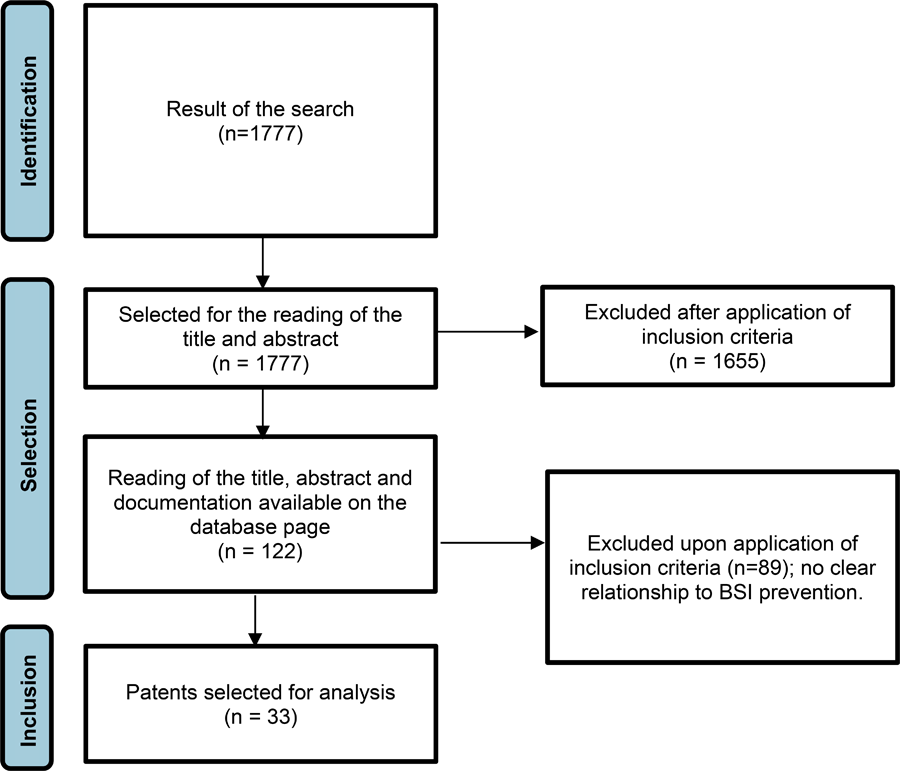
The initial search in the database resulted in 1,777 patent records. Of these, 1,655 were excluded after reading the titles and abstracts. In the eligibility stage, after reading the full documents, 89 records were excluded for not meeting the established inclusion criteria, resulting in a final sample of 33 eligible patents (Figure 1).

Flowchart of the process for identifying, screening, determining eligibility, and including patents available at INPI for sample composition. São Paulo, SP, Brazil, 2025.
The list of included patents, with their respective application numbers and titles, is presented in Chart 1.
- Distribution by patent application number and registration name, São Paulo, SP, Brazil, 2025
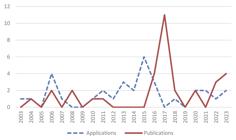
The average time between filing and publication of the analyzed patents was 1,067 days. The temporal evolution of patent filings and publications over the study period is shown in Figure 2.
Regarding the type of patent, invention patents predominated, accounting for 90.9% (n = 30) of the registrations, while utility models represented 9.1% (n = 3).
Regarding the nature of the applicants, the majority of registrations were made by individual inventors, totaling 93.9% (n = 31). Only one registration (3.0%) was attributed to a healthcare institution and one (3.0%) to a public university. Concerning the inventors’ field of activity, a triple check was performed on the information available in the INPI (Brazilian National Institute of Industrial Property) records, the Lattes Platform, and the LinkedIn professional social network. Despite this broad search, no inventors with training explicitly associated with nursing or medicine were identified.
The distribution of patents according to country of filing is presented in Table 1. A predominance of patents filed in the United States was observed (66.7%; n = 22), followed by Brazil (24.2%; n = 8) and other countries, with less representation.
The functional characterization of the analyzed patents is described in Table 2. A higher frequency of technologies related to central venous catheters (45.5%; n = 15) and devices applicable to different venous access modalities, including central and peripheral venous catheters (42.4%; n = 14), was observed. Regarding functionality, 76.5% (n = 26) of the patents focused on the direct prevention of infection, while 23.5% (n = 8) corresponded to complementary solutions. Technologies with risk monitoring or signaling functions were identified in 5.9% (n = 2) of the records. As for practical applicability, use in a hospital setting predominated (57.6%; n = 19).
There was a predominance of technologies focused on the direct prevention of infection and the improvement of infusion devices and vascular access, with less frequent solutions related to continuous monitoring, risk tracking, or digital integration. This profile suggests a concentration of technological development in physical and antimicrobial prevention strategies, to the detriment of technologies focused on healthcare surveillance and clinical decision support.
Of the patents originating in Brazil (n = 8), a concentration was identified in the Southeast region. Among the national registrations, applications linked to hospital institutions, universities, and independent inventors were observed. The Northeast and South regions presented two and one registrations, respectively, while three patents did not allow clear identification of the applicant’s geographical location.
Regarding the International Patent Classification (IPC), the most frequent codes were A61M 25/00, A61L 29/16, and A61M 25/02, mainly related to infusion devices, catheters, and antimicrobial materials. The predominance of these classifications reinforces the technological focus of the patents on physical and antimicrobial infection prevention strategies. None of the analyzed patents explicitly presented clinical data regarding the efficacy or safety of the described devices.
DISCUSSION
The results show that patent registrations related to the prevention of bloodstream infection associated with intravascular devices are mainly concentrated from 2011 onwards, with the highest number of filings between 2011 and 2015. This finding may reflect greater institutional and regulatory mobilization around patient safety and the prevention of adverse events, in line with the institutionalization of policies focused on this issue in Brazil, such as the National Patient Safety Program, launched in 2013(11-12).
Despite this temporal advancement, the total number of patents identified was reduced when compared to the magnitude of healthcare-associated infections and the widespread use of intravascular devices in clinical practice. However, this result should be interpreted with caution, as it may be related not only to limited technological production, but also to structural aspects of the innovation system, the intellectual property protection strategies adopted by institutions, and the possibility that technologies registered exclusively in international databases were not captured in this study. Furthermore, a high average time between patent filing and publication is observed, which may limit the timely dissemination of innovations and compromise their competitiveness and incorporation into healthcare services, as pointed out in previous studies(13).
In terms of technological characteristics, invention patents predominate, focusing on the direct prevention of infection through infusion devices and antimicrobial materials, especially those classified under IPC codes A61M and A61L. In contrast, technologies aimed at monitoring, risk signaling, or integration with digital solutions showed low representation, indicating a predominance of physical and antimicrobial prevention strategies over technologies aimed at healthcare surveillance, continuous tracking, and clinical decision support, in line with current trends in health innovation and digital health(14).
The analysis of the applicants’ profile revealed a significant predominance of individual inventors, with limited participation from universities, health institutions, and research centers. This scenario suggests weaknesses in the articulation between scientific production, assistance, and intellectual property protection, despite the existence of regulatory frameworks aimed at stimulating innovation, such as the Technological Innovation Law(6,15-16)
A comparison with international contexts showed that countries with consolidated technology transfer policies, such as the United States, have a more prominent institutional role in intellectual property protection and the exploitation of innovations developed in academic and healthcare environments. The predominance of patent applications from the United States identified in this study may be related to the greater maturity of innovation ecosystems, the integration between universities and the productive sector, and the strengthening of policies to incentivize intellectual property, such as the Bayh-Dole Act, which since 1980 has encouraged North American academic institutions to protect and commercialize technologies developed with public funding(15-16). In contrast, countries such as Spain, France, and Sweden, represented less prominently in this study, are part of European innovation systems that also have robust regulatory frameworks for technology transfer, but with a lower volume of patent applications in the Brazilian registry, which may reflect both different intellectual property protection strategies and the prioritization of international databases such as the European Patent Office (EPO). In the Brazilian context, low institutional participation may indicate structural difficulties in transforming solutions developed in healthcare practice into protected technologies that can potentially be incorporated into health services, a scenario that contrasts with that observed in high-income countries, where the articulation between universities, industry and public innovation policy tends to be more consolidated(6-7,15-17).
The geographic concentration of registrations, especially in the Southeast region, reflects persistent regional inequalities in health technology development, related to the unequal distribution of scientific infrastructure, investments, and policies to promote innovation across the country(18-19). These regional differences can directly impact the capacity for development, registration, and dissemination of health technologies among different Brazilian states.
Although nursing plays a central role in the management, maintenance, and monitoring of intravascular devices, no professionals with training explicitly associated with nursing or medicine were identified among the declared inventors. This finding highlights a significant gap between clinical practice and formal processes of technological innovation and intellectual property protection.
Studies indicate that the low participation of nursing professionals in the patent system is related to the lack of content on innovation, entrepreneurship, and intellectual property in undergraduate curricula, as well as the limited availability of institutional support for the development and registration of technologies(6,20-21). Considering that these professionals are directly involved in identifying problems and proposing practical solutions in care, their low participation represents a significant loss of innovative potential in the field of patient safety.
In this regard, postgraduate programs, especially professional master’s programs, assume a strategic role by bringing technological production closer to the real demands of health services, favoring the development of solutions that are more aligned with clinical practice and Evidence-Based Practice(18,22).
One limitation of this study relates to the exclusive use of the INPI national database, which may have restricted the identification of technologies used in Brazil but registered only in international databases. Furthermore, the absence of explicit clinical data in the analyzed patent documents limits the evaluation of the efficacy, safety, and cost-effectiveness of the described technologies, hindering their evidence-based incorporation into health services(23-25). Additionally, patent documents primarily serve a legal-technological purpose, which limits in-depth analyses of the clinical effectiveness and healthcare impact of the technologies described.
Despite these limitations, the findings offer relevant support for nursing practice, teaching, and research, highlighting technological gaps, weaknesses in the innovation process, and opportunities to strengthen professional leadership in the development of technologies aimed at preventing BSI associated with the use of intravascular devices. Mapping Brazilian patents can guide managers, researchers, and health professionals in identifying priority demands and stimulating the production of safe, effective technological solutions aligned with the needs of the Unified Health System(26-28).
CONCLUSION
Analysis of patents related to the prevention of bloodstream infection associated with the use of intravascular devices identified a predominance of invention patents focused primarily on the direct prevention of infection through infusion devices and antimicrobial materials. Regarding the distribution by country of filing, a predominance of registrations from the United States was observed, followed by Brazil and other countries with less representation. Among the registrations of Brazilian origin, a concentration was identified in the Southeast region, with limited participation from the Northeast and South regions and an absence of identifiable registrations in the other regions of the country.
Low representation of technologies focused on monitoring, risk signaling, and integration with digital solutions was observed. Furthermore, the absence of explicit clinical information in the analyzed documents limits inferences about the effectiveness, safety, and potential practical applicability of these technologies in healthcare services.
The findings of this study contribute to the understanding of the technological landscape related to the prevention of bloodstream infections (BSI) associated with intravascular devices in the Brazilian context and suggest opportunities for expanding institutional and multidisciplinary participation in the development of technologies aimed at this adverse event.
REFERENCES
-
1 Bawaqneh KA, Ayed A, Salameh B. Nurses' knowledge, attitude, practice, and perceived barriers of infection control measures in intensive care units at Northwest Bank hospitals. Crit Care Nurs Q. 2025;48(2):160-71. https://doi.org/10.1097/CNQ.0000000000000538
» https://doi.org/10.1097/CNQ.0000000000000538 -
2 Cabrero EL, Robledo RT, Cuñado AC, Sardelli DG, López CH, Formatger DG, et al. Risk factors of catheter-associated bloodstream infection: systematic review and meta-analysis. PLoS One. 2023;18(3):e0282290. https://doi.org/10.1371/journal.pone.0282290
» https://doi.org/10.1371/journal.pone.0282290 -
3 Alotaibi SA, AlOtaibi M, Alrashedi HN, Ali S Alasmari H, Hendy A, Ibrahim RK. Optimizing infection control: evaluating nurses' knowledge and practices for preventing infections in mechanically ventilated patients. Infect Dis Health. 2025;30(3):194-202. https://doi.org/10.1016/j.idh.2025.02.005
» https://doi.org/10.1016/j.idh.2025.02.005 -
4 Teja B, Bosch NA, Diep C, Pereira TV, Mauricio P, Sklar MC, et al. Complication rates of central venous catheters: a systematic review and meta-analysis. JAMA Intern Med. 2024;184(5):474-482. https://doi.org/10.1001/jamainternmed.2023.8232
» https://doi.org/10.1001/jamainternmed.2023.8232 -
5 Buetti N, Marschall J, Drees M, Frakih MG, Hadaway L, Maragakis LL, et al. Strategies to prevent central line-associated bloodstream infections in acute-care hospitals: 2022 update. Infect Control Hosp Epidemiol. 2022;43(5):553-69. https://doi.org/10.1017/ice.2022.87
» https://doi.org/10.1017/ice.2022.87 -
6 Alves RC, Colichi RMB, Lima SAM. Analysis of patent records related to the prevention and signaling of falls in Brazil. Rev Gaúcha Enferm [Internet]. 2023 [cited 2026 Jan 30];44:e20220020. Available from: https://www.scielo.br/j/rgenf/a/4PjnTHmYRFqzskPqZbQjTGL/?format=pdf⟨=en
» https://www.scielo.br/j/rgenf/a/4PjnTHmYRFqzskPqZbQjTGL/?format=pdf⟨=en -
7 Koerich MHAL, Vieira RHG, Silva DE, Erdmann AL, Meirelles BHS. Brazilian technological output in the area of nursing: advances and challenges. Rev Gaúcha Enferm. 2011;32(4):736-743. https://doi.org/10.1590/S1983-14472011000400014
» https://doi.org/10.1590/S1983-14472011000400014 -
8 Silva TL, Souza S, Rocha PFA, Tourinho FSV, Manzo BF, Rocha PK. Applications on intravenous therapy and catheter-associated bloodstream infection prevention: technology prospection. Cogitare Enferm. 2023;28:e85460. https://doi.org/10.1590/ce.v28i0.85460
» https://doi.org/10.1590/ce.v28i0.85460 -
9 Governo Federal (BR). Instituto Nacional da Propriedade Industrial [Internet]. Rio de Janeiro. INPI. 2020 [cited 2026 Jan 30]. Available from: https://www.gov.br/pt-br/orgaos/instituto-nacional-da-propriedade-industrial
» https://www.gov.br/pt-br/orgaos/instituto-nacional-da-propriedade-industrial -
10 Instituto Nacional da Propriedade Industrial (BR). Diretriz de exame de patentes de modelo de utilidade [Internet]. Rio de Janeiro: INPI; 2012 [cited 2025 Nov 2]. Available from: https://www.gov.br/inpi/pt-br/assuntos/patentes/consultas-publicas/arquivos/diretriz_de_mu_versao_2_original.pdf
» https://www.gov.br/inpi/pt-br/assuntos/patentes/consultas-publicas/arquivos/diretriz_de_mu_versao_2_original.pdf -
11 Institute of Medicine (US) Committee on Quality of Health Care in America. To err is human: building a safer health system. Washington (DC): National Academies Press; 2000. https://doi.org/10.17226/9728
» https://doi.org/10.17226/9728 -
12 Ministério da Saúde (BR). Portaria n. 529, de 1º de abril de 2013. Institui o Programa Nacional de Segurança do Paciente (PNSP) [Internet]. Diário Oficial da União. 2013[cited 2026 Jan 30]. Available from: https://bvsms.saude.gov.br/bvs/saudelegis/gm/2013/prt0529_01_04_2013.html
» https://bvsms.saude.gov.br/bvs/saudelegis/gm/2013/prt0529_01_04_2013.html -
13 Mercadante E, Paranhos J. Pharmaceutical patent term extension and patent prosecution in Brazil (1997-2018). Cad Saude Publica. 2022;38(1):e00043021. https://doi.org/10.1590/0102-311X00043021
» https://doi.org/10.1590/0102-311X00043021 -
14 So B, Kim J, Jo JK, So H. Recent developments in preventing catheter-related infections based on biofilms: a comprehensive review. Biomicrofluidics. 2024;18(5):051506. https://doi.org/10.1063/5.0195165
» https://doi.org/10.1063/5.0195165 -
15 Miteu GD. Patenting: the Bayh-Dole Act and its transformative impact on science innovation and commercialization. Ann Med Surg (London). 2024;86(6):3192-3195. https://doi.org/10.1097/MS9.0000000000002047
» https://doi.org/10.1097/MS9.0000000000002047 -
16 Cruz HN, Souza RF. [National system of innovation and the law of innovation: comparative analisys between the bayh-dole act and the brazilian innovation law]. Rev Adm Inov [Internet]. 2014[cited 2026 Jan 30];11(4):329-54. Available from: https://revistas.usp.br/rai/en/article/view/110254/108817 Portuguese
» https://revistas.usp.br/rai/en/article/view/110254/108817 -
17 Souza CJ, Silvino ZR, Souza DF. Analysis of patent registries in Brazilian nursing and its relationship with the professional master's degree. Rev Gaúcha Enferm. 2020;41:e20190358. https://doi.org/10.1590/1983-1447.2020.20190358
» https://doi.org/10.1590/1983-1447.2020.20190358 -
18 Freire ML, Noronha BP, Cota G, Silva SN. Evaluation of health technology implementation in the Brazilian public health system: a systematic review. BMC Health Serv Res. 2025;25(1):1207. https://doi.org/10.1186/s12913-025-13117-6
» https://doi.org/10.1186/s12913-025-13117-6 -
19 Costa A. Inovação e território no Brasil: o perfil urbano-regional da subvenção econômica à inovação entre 2010-2019. Econ Soc Territ. 2024;24(75):e1842. https://doi.org/10.22136/est20241842
» https://doi.org/10.22136/est20241842 -
20 Instituto Nacional da Propriedade Industrial (INPI). Guia básico de patentes de invenção e modelos de utilidade [Internet]. Brasília: INPI [cited 2026 Jan 30]. Available from: https://www.gov.br/inpi/pt-br/servicos/patentes/guia-basico
» https://www.gov.br/inpi/pt-br/servicos/patentes/guia-basico -
21 Huang X, Wang R, Chen J, Gao C, Wang B, Dong Y, et al. Kirkpatrick's evaluation of the effect of a nursing innovation team training for clinical nurses. J Nurs Manag. 2021;30(7):2165-75. https://doi.org/10.1111/jonm.13504
» https://doi.org/10.1111/jonm.13504 -
22 Parveen R, Thakur AK, Srivastav S, Puraswani M, Srivastava AK, Chakrabarti A, et al. Profile of central line-associated bloodstream infections in adult, paediatric, and neonatal intensive care units of hospitals participating in a healthcare-associated infection surveillance network in India: a 7-year multicentric study. Lancet Glob Health. 2025;13(9):e1564-e1573. https://doi.org/10.1016/S2214-109X (25)00221-9
» https://doi.org/10.1016/S2214-109X (25)00221-9 -
23 Craig A, Lawford H, Miller M, Chen-Cao L, Woods L, Liaw ST, et al. Use of technology to support health care providers delivering care in low- and lower-middle-income countries: systematic umbrella review. J Med Internet Res. 2025;27. https://doi.org/10.2196/66288
» https://doi.org/10.2196/66288 -
24 Pyper E, McKeown S, Hartmann-Boyce J, Powell J. Digital health technology for real-world clinical outcome measurement using patient-generated data: systematic scoping review. J Med Internet Res. 2023;25:e46992. https://doi.org/10.2196/46992
» https://doi.org/10.2196/46992 -
25 Mundy L, Forrest B, Huang LY, Maddern G. Health technology assessment and innovation: here to help or hinder? Int J Technol Assess Health Care. 2024;40(1):e37. https://doi.org/10.1017/S026646232400059X
» https://doi.org/10.1017/S026646232400059X -
26 Ministério da Saúde (BR). Política nacional de ciência, tecnologia e inovação em saúde [Internet]. Brasília: Ministério da Saúde; 2008 [cited 2026 Jan 30]. Available from: https://bvsms.saude.gov.br/bvs/publicacoes/pnct2005.pdf
» https://bvsms.saude.gov.br/bvs/publicacoes/pnct2005.pdf -
27 Guimarães R, Morel CM, Aragão E, Paranhos J, Palácios M, Goldbaum M, et al. Health Science, Technology and Innovation Policy (ST&I/H): an update for debate. 2019;26(12):6105-6116. https://doi.org/10.1590/1413-812320212612.18632021
» https://doi.org/10.1590/1413-812320212612.18632021 -
28 Ministério da Saúde (BR). Política nacional de ciência, tecnologia e inovação em saúde [Internet]. Brasília: Ministério da Saúde. 2008 [cited 2026 Jan 30]. Available from: https://bvsms.saude.gov.br/bvs/publicacoes/pnct2005.pdf
» https://bvsms.saude.gov.br/bvs/publicacoes/pnct2005.pdf

 Source: Research data.
 Source: Research data.