 Perception of adults with diabetes about their health behaviors
ABSTRACT
Objective: To understand the perception of adults with Diabetes Mellitus about their health behaviors.
Method: Exploratory, qualitative study, conducted with 22 adults with diabetes registered at a Healthcare Unit in the central-western region of Brazil. Data were collected through interviews, between August and November 2023, consisting of questions on sociodemographic characterization and health behaviors, in addition to a guiding question. After transcription, the interviews were subjected to thematic content analysis, and the results were interpreted in light of Nola Pender’s theory, on the Health Promotion Model.
Results: The perception of adults with Diabetes Mellitus about their health behaviors shows that the process of adopting healthy habits is influenced by multiple factors, especially before the diagnosis. Lack of knowledge about the disease, combined with emotional and psychological barriers, hinders recognition of the need for change. In light of Nola Pender’s Health Promotion Model, it is observed that valuing the benefits of healthy practices, strengthening self-efficacy and supporting interpersonal relationships emerge as facilitating elements for critical reflection and transformation of health behaviors.
Final Considerations: Understanding the perception of adults with Diabetes Mellitus about their health behaviors reinforces the need for individualized care interventions to promote more effective health practice.
Descriptors:
Diabetes Mellitus; Self-care; Health promotion; Nursing; Nursing theory
RESUMO
Objetivo: conhecer a percepção de adultos com Diabetes Mellitus sobre seus comportamentos em saúde.
Método: estudo exploratório, qualitativo, realizado com 22 adultos diagnosticados com diabetes cadastrados em uma Unidade de Saúde da região centro-oeste brasileira. Os dados foram coletados por meio de entrevista, entre agosto e novembro de 2023. Após transcrição, as entrevistas foram submetidas à análise de conteúdo, modalidade temática, e os resultados foram interpretados à luz da teoria de Nola Pender, sobre o Modelo de Promoção da Saúde.
Resultados: a percepção dos adultos com Diabetes Mellitus acerca de seus comportamentos em saúde evidencia que o processo de adoção de hábitos saudáveis é influenciado por múltiplos fatores, especialmente no período anterior ao diagnóstico. O desconhecimento sobre a doença, aliado a barreiras emocionais e psicológicas, dificulta o reconhecimento da necessidade de mudança. À luz do Modelo de Promoção da Saúde de Nola Pender, observa-se que a valorização dos benefícios das práticas saudáveis, o fortalecimento da autoeficácia e o suporte das relações interpessoais emergem como elementos facilitadores para a reflexão crítica e transformação dos comportamentos em saúde.
Considerações Finais: conhecer a percepção de adultos com Diabetes Mellitus sobre seus comportamentos em saúde reforça a necessidade de intervenções de cuidado individualizado para promover práticas de saúde mais efetivas.
Descritores:
Diabetes Mellitus; Autocuidado; Promoção da Saúde; Enfermagem; Teoria de enfermagem
RESUMEN
Objetivo: Comprender la percepción de los adultos con Diabetes Mellitus sobre sus comportamientos de salud.
Método: Estudio exploratorio, cualitativo, realizado con 22 adultos con diabetes registrados en una Unidad de Salud de la región centro-oeste de Brasil. Los datos fueron recolectados mediante entrevistas, entre agosto y noviembre de 2023, compuestas por preguntas sobre caracterización sociodemográfica y comportamientos de salud, además de una pregunta orientadora. Después de la transcripción, las entrevistas fueron sometidas a análisis de contenido, modalidad temática y los resultados fueron interpretados a la luz de la teoría de Nola Pender sobre el Modelo de Promoción de la Salud.
Resultados: La percepción de los adultos con diabetes mellitus sobre sus hábitos de salud muestra que la adopción de hábitos saludables se ve influenciada por múltiples factores, especialmente en el período previo al diagnóstico. El desconocimiento de la enfermedad, sumado a las barreras emocionales y psicológicas, dificulta reconocer la necesidad de cambio. A la luz del Modelo de Promoción de la Salud de Nola Pender, se observa que valorar los beneficios de las prácticas saludables, fortalecer la autoeficacia y fomentar las relaciones interpersonales se convierten en elementos facilitadores de la reflexión crítica y la transformación de los hábitos de salud.
Consideraciones finales: Conocer la percepción de los adultos con Diabetes Mellitus sobre sus comportamientos de salud refuerza la necesidad de intervenciones de cuidado individualizado para promover prácticas de salud más efectivas.
Descriptores:
Diabetes Mellitus; Cuidados personales; Promoción de la salud; Enfermería; Teoría de enfermería
INTRODUCTION
The epidemiological, demographic, nutritional, and technological transition has influenced the rising prevalence of chronic health conditions, among which Diabetes Mellitus (DM) stands out1. It is a multifactorial disease whose global prevalence reached 10.5% in 2021, affecting around 537 million adults. Projections indicate a continued increase, reaching 643 million (11.3%) by 2030 and 783 million (12.2%) by 2045. In the Brazilian context, the prevalence of DM reached 9.2% in 2021,2.
Living with a chronic condition requires significant lifestyle adaptations and requires daily self-care practices. These actions, aimed at meeting the individual’s needs and promoting their quality of life (QoL), require the individual’s engagement with their health condition3.
To effectively manage their health, individuals with DM must reflect on their behaviors and lifestyle habits and identify needs for change. In this context, professionals play an important role in fostering knowledge and behavioral attitudes that promote health education as a fundamental strategy in Primary Health Care (PHC). This approach can significantly contribute to building knowledge, encouraging self-care practices, and improving quality of life4.
Quality of life refers to the individual’s perception of their position in life, in relation to their goals, expectations, standards, and concerns. Thus, encouraging patient autonomy to achieve better living conditions can be achieved through health promotion actions. In this sense, theories and theoretical models, especially those related to nursing, play a fundamental role in the care process, guiding the observation of phenomena, interventions, and outcomes5.
Nola Pender’s Health Promotion Model (HPM) integrates nursing theories with behavioral sciences, grounded in health promotion. This model can be used by nurses to understand healthy behaviors and develop health promotion actions that positively impact people’s quality of life, aiming to maintain or enhance their well-being6.
The theory is divided into three categories: 1. Individual characteristics and experiences, previous behaviors, and biological, psychological, and sociocultural factors that can affect emotions and behaviors; 2. Specific behaviors, which involve factors that play a relevant role in motivating a particular behavior; and 3. Behavioral outcome, which involve commitment to an action plan. For Pender, health promotion empowers individuals, through individual, organizational, and community changes, to maximize their health and well-being. This approach goes beyond a healthy lifestyle, aiming for community well-being and not being seen as the exclusive responsibility of the healthcare team6.
Considering health as a positive state desired by individuals, the importance of placing the person at the center of care actions is highlighted, which is in line with Pender’s theoretical model, which recognizes the uniqueness of individuals in expressing their cognitive, perceptive, and social factors7.
Despite the vast scientific knowledge on the various factors involved in the care for people with DM, studies focus on disease prevention and management of complications8, medication treatment adherence, and glycemic control9,10. However, it is important to recognize that care must go beyond clinical treatment, also incorporating interventions that address emotional, behavioral, and social factors, which directly influence the quality of life and self-care of individuals with DM11.
A review study highlights that the focus of care actions on the health of people with chronic diseases and on behavior change still constitutes a knowledge gap regarding this topic12. Therefore, it is important to understand the perspective of individuals with DM about their behaviors and health promotion actions in order to plan interventions focused on autonomy and encouraging self-care.
In this context, by identifying behaviors that facilitate or hinder health promotion actions, individuals can become aware of necessary changes in their lifestyle habits10. Given this scenario, the research question is “What is the perception of adults with diabetes mellitus about their health behaviors?” The answer to this question aims to understand the perception of adults with diabetes mellitus regarding their health behaviors.
METHOD
This is an exploratory, qualitative study conducted in a capital city in the Brazilian Midwest region from August to November 2023. The Consolidated Criteria for Reporting Qualitative Research (COREQ) guidelines were followed in the preparation of the research report.
The capital is divided into seven health regions and has 86.75% coverage by the Family Health Strategy. Initially, the Primary Care Coordination Office of the capital under study was requested to list the number of people with DM registered in January 2023 at the 18 units belonging to a health region selected for convenience. The unit with the largest number of people registered with DM in this region (type 1 and type 2 - 1,002 individuals) was then selected for the study.
This unit operates under the Family Health Strategy model, with three family health teams consisting of a physician, a nurse, a nursing technician, community health agents, an administrative assistant, a dentist, and an oral health technician. It is located in a peripheral area with a high population density, a prevalence of self-employed and informal workers, and a lack of services such as paved streets and basic sanitation.
Inclusion criteria were set as: age between 18 and 59 years old and living with a self-reported diagnosis of DM (type 1 or type 2). In turn, the exclusion criteria were: residing in long-term care facilities; homeless individuals; being dependent on care; having verbal communication difficulties; and those who moved to another city or health region during data collection.
Initially, the lead researcher visited the Health Unit and scheduled a meeting with the service manager to discuss the best date and time to present the research and objectives to the Community Health Agents, especially since they would be inviting participants to the study during routine home visits. Adults with DM registered with the health unit were invited by the respective CHA during the home visit, and the approach and sampling were conducted based on convenience. Participants who accepted the invitation were contacted by phone, where the research objectives were explained, the form of participation clarified, any doubts were answered, and the interview was scheduled based on the participant’s preference. The individual interview took place in the nursing office of the health unit selected for the study, ensuring privacy, confidentiality, comfort, and safety for the participant. This interview was conducted by a nurse, a master’s student, with no previous relationship with the study participants.
The semi-structured, audio-recorded interview lasted an average of 40 minutes and included questions about sociodemographic, economic, and clinical characteristics (marital status, date of birth, nationality, education level, self-declared race/color, personal income, time since DM diagnosis, type of treatment, tests performed such as fasting blood glucose, glycated hemoglobin, LDL cholesterol, HDL cholesterol, total cholesterol, triglycerides, comorbidities, lifestyle habits, and health behaviors), followed by the guiding question: Tell about your health behaviors and how they influence your quality of life.
To assess the relevance of the semi-structured interview questions, a pilot test was conducted with four individuals with DM registered at the health unit. The results indicated the need for adjustments to the questions to achieve the objective. The results of these interviews were not included in the present study.
The interviews were organized into three key stages: initial - dedicated to presenting the objective, signing the Informed Consent Form, and other ethical considerations; intermediate - conducting the interview; and final - thanking participants for their participation. The theoretical-empirical data saturation criterion was adopted to conclude the data collection stage, when new data collected resembled those collected previously, with no consubstantial contribution to the phenomenon under investigation13. To validate the achievement of this criterion, both the master’s student and the supervisor independently reviewed all the collected data and concluded data collection when they agreed that saturation had been reached.
The interviews were subjected to thematic content analysis14. Full manual transcription was carried out immediately after data collection to preserve data fidelity. In the pre-analysis stage, a floating reading of the interviews was conducted to identify initial impressions, followed by material exploration, data coding, and grouping of meaning units. Initially, 22 raw codes were identified, which were grouped into the following core themes: pre-disease behavior; personal factors and their influence on behavior; health concept; barriers to behavior change; expected benefits from behavior change; perception of self-efficacy; and guidance received.
In the results processing stage, after classifying and aggregating the codes, a central thematic category emerged, which was analyzed and interpreted in light of Nola Pender’s Theory7. The goal was to integrate the central thematic category and its subcomponents with the categories of this theoretical framework. The results were validated by a researcher with expertise in qualitative research, a member of the research group (and the supervisor of the present study), to check for possible interpretation errors, which were not identified.
The study complied with the ethical precepts of Resolution 466/2012 of the National Health Council (Conselho Nacional de Saúde - CNS) and its complementary resolution 510/2016, approved under opinion No. 5,943,918, CAAE: 66042922.2.0000.0021. All participants agreed to participate in the study by signing two copies of the Informed Consent Form (ICF). To ensure participant anonymity, the interviews were identified with the letter I, for interviews, followed by the number indicating the order in which they were conducted (I01, I02, I03...).
RESULTS
A total of twenty-seven individuals with DM were invited. Two canceled the interview twice and subsequently withdrew, and three refused. Thus, the study included 22 participants, 19 of whom were women between the ages of 34 and 59. Sixteen self-declared their race as white, and six as black or mixed race. Regarding marital status, 11 were married, six were single, three were divorced, one was in a stable relationship, and one was a widow. Regarding occupation, eight were housewives, three worked as domestic workers, two worked as saleswomen, and nine were unemployed. Regarding education, eleven had not completed elementary school, six had completed high school, three had completed higher education, and two had incomplete higher education.
The majority of participants reported a personal income equal to the minimum wage, based on the 2023 minimum wage reference of one thousand three hundred BRL (1,300.00 BRL).
Regarding chronic disease, 18 participants had type 2 diabetes and four had type 1 diabetes. The average time since diagnosis was eight years, ranging from two to twenty-one years. All participants reported taking antidiabetic medication, and six also used insulin. Regarding lifestyle, four were smokers (for more than five years) and eight reported occasional alcohol consumption. Furthermore, four reported a diagnosis of high blood pressure, and seven were obese.
The results were organized according to Nola Pender’s theoretical framework(7) resulted in Figure 1, which presents the “Individual Characteristics and Experiences" and “Specific Behaviors”.
Determinants, challenges, and meanings of health behavior change in adults with diabetes
This category reveals the complexity of the behavior change process and the multiple, subjective, and contextual factors involved.
The adult participants’ perceptions of their behaviors before the disease reveal a lack of knowledge regarding care actions due to several factors:
I didn't have any knowledge before; I thought I had to eat everything. I wasn't raised by a father or a mother, and at the age of seven, I had to go out into the world to work, build my life, and throughout that time, I didn't have a good diet... I drank, I gambled, I didn't take my health seriously (I20).
Here at home, it was mostly pasta: bread, gnocchi, lasagna, things that aren't good for your health... we eat a lot of sweets, we overeat, we drink soda... when you're younger, you don't worry, but when you get older, it brings a lot of bad things (I12).
I used to eat a lot of sweets, drink beer... eat fatty foods, meat... I didn't take care of myself, I worked a lot... I didn't have time for myself, so I just worked (I08).
Among those who noticed they had performed some self-care actions before the disease, walking was highlighted.
One thing I did a lot for myself was walk every day. I worked far away and would walk for an hour, an hour and twenty minutes... I liked walking, so I always managed to maintain my weight [...] (I02).
I used to exercise regularly; since I was a kid, my siblings and I have always had an exercise routine like this...(I14)
Participants also recognized that personal and psychological factors often influence their attitude toward health behaviors, either by blocking or encouraging self-reflection:
Sometimes I think I'm too down... saying I won't make it, that I won't move forward... but then I try to think positively and say, yes, I can. I have to take two steps forward to change my behaviors... (I09).
Sometimes I feel discouraged by everything. I think I need to accept... I don't accept diabetes in my life (shaky voice), so I need to accept it... (I02).
I think I'm staying home more because of depression, so I don't have the motivation, I'm not ready to go for walks. Later on, I plan to quit smoking, go to the gym, but not right now... it takes willpower on my own because there's no point in other people wanting it if I don't....(I04).
The participants’ statements also expressed their notions of health, showing thoughts, beliefs, and understandings about the concept of health:
A healthy person can exercise, they perform differently, they can go... it's a more stable life without taking medication. I don't like medication, but those who are healthy don't need this routine of medication or going to the doctor. (I03).
Health is when someone doesn't have any illness, they have the energy to do everything, the will to do things, and they can do them, without harming us. If you already have an illness like this, we know it's incurable, but it can be controlled, but you're not healthier. (I08)
Health is not having diabetes, high blood pressure, nothing. Nowadays, those who have diabetes are not healthy; this disease has come to complicate our lives. (I15)
Specific behaviors
Among the barriers to behavior change, participants highlighted difficulties in adopting certain behaviors.
We don’t have time… because at the restaurant you go in at five in the morning and leave at five in the afternoon, and when it’s busy, even later… then there’s no time, you get home tired (I15).
There's little motivation to do things. If you persist, you'll do it, but we'll make excuses, for example, not today because it's hot, … (I08).
If you're going to follow that kind of diet, you have to spend a lot to do it right… everything is very expensive and if you follow what the nutritionist says, it goes beyond the limit that someone earning minimum wage can maintain (I13).
I had neuropathy at the beginning of the year, which made it very difficult, and to this day, I want to get back to physical activity, but it's difficult because of the constant pain in my feet and legs (I14).
The statements revealed that the barriers to adopting health-promoting behaviors remain similar to those reported before the disease, such as lack of time, lack of motivation, financial issues, and complications of DM.
Sometimes, when an individual recognizes the benefits of changing health-promoting behaviors, the impeding barriers can become less significant. In this regard, participants highlighted the following expected benefits of behavior change:
I think if I could change, I would have a better quality of life, because I know a guy who worked with me who had diabetes... but he had a good quality of life because he followed everything strictly. If I could change, maybe (my blood sugar) wouldn't go up so much (I02).
... if I could exercise more, I would have a leaner body, less pain in my arms and legs, and less fatigue. I need to exercise more; when I do I feel better. (I08).
If I could change, I'd be happier... I'd see that I'm overcoming it. There's no point in saying we can't do it, because that way we don't move forward... I have to take two steps forward to change (I09).
The perception of self-efficacy was also highlighted as a key element for behavioral change.
…I had leg pain, so I started walking, and it stopped... my sleep also changed. When I walk, I even sleep better. Now I go every afternoon... (I08).
The difficulty comes from ourselves... from the moment we speak up and focus, it's a different matter. Deep down, I'm the one who has to control myself, not you who's going to force me. If I don't want to, I won't do it (I03).
Regarding health-promoting behaviors, participants highlighted physical activity and healthy eating:
You need to have a routine of physical exercise, healthy eating, eating more vegetables, protein, and cutting carbohydrates (I03).
You have to eat better and understand that just taking diabetes medication won't solve the problem (I7).
These behaviors were commonly included in the guidance provided by healthcare professionals.
The doctor...but nowadays it's also on television and the internet, so we have a lot of information about self-care, such as: having a good diet, exercising, which has become an obligation... (I13).
She (the doctor) told me to stop eating everything: rice, pasta, meat, oranges, bananas, papaya, bread, soda, fried foods... I joked with her, how am I going to work if I don't eat? I'll turn into a caterpillar. Then she said, “You can do it, it's better to be weak than to be dead” (I19).
I've received guidance on foot care from a nurse... I received all the guidance. To walk, eat well... always check my blood sugar and try to control my blood sugar levels as much as possible (I21).
Perceptions about the behaviors and conduct of others in our lives were also highlighted as important for reflecting on our own behavior and self-care actions.
Now I have to take care of myself because I saw my father. I took care of his wounds. His foot was open and we were there cleaning it, it was horrible. He started losing a toe, then a piece of his foot, then his whole foot. Then I said, "I don't want that for myself," and I started taking care of myself... (I12).
The best way to model a behavioral change would be my niece. She's on a diet. She had a hernia, so she had to completely change her diet. She exercises because she gained a lot of weight... (I05).
In addition to encouraging self-reflection, interpersonal relationships can either facilitate or hinder behavior change.
When my father found out I had diabetes, he changed, and today he, my mother, and I go to water aerobics together every Tuesday and Thursday afternoon... family is very important, and it is my motivation (I13).
My sister likes to walk in the morning, so she influences me, and I go with her, that influences me... but alone... it's harder, I don't go... (I22).
I need someone in the family to look at me, see the way I am, and say, "I'll help you." I need someone by my side to help and support me. Sometimes I wake up sitting on the couch smoking a cigarette... you know what my kids say: "You're crazy, you're crazy, it keeps getting up until dawn and I don't wake up." (Look at a son saying that! I should say, "No, mom, you need to go to the doctor to see what's going on.") They say it's to get attention, but they're not inside me (I09).
I was on a diet, then my husband started getting jealous, so I stopped and gained all the weight back. I ate all day long, I don't know where I was going, but I ate all day long, I couldn't go a second without eating... He made me so angry... He called me a whale, he said he was going to buy a blanket and wrap me up, and I was already in a dress... Then we got more nervous, the anxiety kicked in, and I ate more... (I15).
Family influence plays a central role in motivation and diabetes care, whether through active support in healthy activities or a lack of emotional support. While some find encouragement from family members to maintain healthy habits, others face conflict and a lack of understanding, which negatively affect self-care.
DISCUSSION
The perception of adults with diabetes about their health behaviors was influenced by previous experiences that shaped their behaviors and contributed to the development of a sense of health. Psychological factors were identified as barriers to recognizing the need for and to changes. In turn, perceived self-efficacy, the benefits of adopting healthy habits, and the influence of interpersonal relationships influenced behavior change.
Low levels of education, among other socioeconomic factors, negatively impact biological health, with repercussions on quality of life. Education is linked to health-promoting behaviors, as higher levels of education reduce the impacts on general living conditions and inequalities that impact job market, financial conditions, and awareness of health-related rights and responsibilities15.
In addition to education, economic conditions also influence the adoption of healthy behaviors, as expressed by Nola Pender, who highlights the lack of financial resources as one of the barriers to adopting health-promoting behaviors6. Regarding financial issues, the results of this study are consistent with a recent study16 that revealed that individuals with low financial status exhibited increased risk behaviors, as socioeconomic status influences the absence or decrease in physical exercise and access to healthy foods.
Participants in this study reported adherence to walking as a health-promoting practice. Nursing skills in communication, negotiation, persuasion, patience, agreement, and connection are essential to encourage people to take agency during the development of their care plan and engagement with their health condition, fostering positive feelings and motivating attitudes that can foster behavior change17, such as physical activity.
People with diabetes and depression tend to have more difficulty changing behavior, even if the individual recognizes it as necessary. This relationship negatively impacts diabetes self-management17. A study with older individuals with diabetes found that, among those with depressive symptoms, 93.8% had negative coping attitudes, resulting in lower adherence to self-care activities such as physical activity and foot care18. Nursing support for self-care is a strategic way to support and encourage behavior change among people living with diabetes.
In this context, nursing becomes necessary to act as a mediator in the process of changing behavior and lifestyle habits, basing care on active listening and preventive actions, thus excluding authoritarian and prescriptive practices. Nursing teams are advised to investigate and identify signs and symptoms predictive of depression in people living with DM, such as profound sadness, lack of interest in previously pleasurable activities, self-isolation, difficulty concentrating, and sleep disturbances19.
In the Brazilian context, the results directly align with the guidelines of the National Policy for Comprehensive Care for People with Chronic Diseases (Política Nacional de Atenção Integral às Pessoas com Doenças Crônicas) within the SUS (Unified Health System - Sistema Único de Saúde), which advocates for longitudinal, person-centered care with an emphasis on health promotion. Identifying emotional and psychological barriers to behavior change reinforces the need for interdisciplinary actions in Primary Health Care, particularly through the Family Health Strategy. Recognizing the value of self-efficacy and social support as facilitators of healthy practices highlights the role of health professionals in building trust, providing continuous health education, and strengthening users’ autonomy, as outlined in the National Health Promotion Policy.
Although people with DM recognize that they need to eat healthily, they are unaware of how to do so, generating divergent discourses among participants. It is in this context that the practice of PHC nurses in providing health education should be valued, promoting reflection and encouraging individuals to take responsibility for their health based on scientific evidence demystifying common sense information, and focusing on quality-of-life promotion12.
Limitations caused by DM complications, such as neuropathy cited in the results of this study, can also constitute a barrier to behavior changes, such as adherence to physical activity. Similarly, the lack of time is consistent with reports from the Brazilian population, which indicates that 62% do not engage in physical activity for this reason19.
To minimize this situation, nurses can, along with individuals, consider strategies to overcome the lack of time, such as walking or cycling to work, exercising while watching television, parking further away from the destination so they can walk to the desired location, developing new friendships with physically active people, choosing to use the stairs instead of the elevator. A study showed that the person-centered approach, whether in groups or individually, offers high potential for promoting behavior change in people with chronic disease20.
To identify barriers, healthcare professionals need to strengthen their bond with people with DM and practice active listening. Nursing consultations, for example, guided by supported self-care, can help individuals identify triggers that lead to habits that put their health at risk and support the recognition and explanation of potential benefits following behavioral change16.
It can be observed that the benefits of behavioral change for people with diabetes are related to improved quality of life, self-esteem, and a sense of well-being. A relevant aspect to investigate during nursing consultations is the stage of motivation for change. Once identified, this can provide support for developing interventions customized to each individual characteristic21.
At this point, the healthcare professional encourages the patient to reflect on their problems/barriers and encourages them to consider what changes they wish to make and the steps to achieve them. Some people may have difficulty defining strategies for change, so it is the nurse’s role to support this process. After recognizing the behaviors they want to change, the professional and the individual jointly develop the care plan.
According to the theoretical framework used in this study, setting long-term goals allows for the gradual shaping of desired behaviors, as some may require conditioning or adaptation to be achieved, such as starting a walking program after a long period of inactivity or reducing sodium intake. Therefore, gradually increasing frequency and intensity can be a strategy suggested by nurses in the behavior change planning process. A quasi-experimental study conducted in Colombia with people with pre-diabetes found that programs based on lifestyle changes and proposed behavior change actions positively impacted the participants’ health status22.
A study aimed at evaluating the effectiveness of an educational program based on the philosophy of empowerment (1st - Identify the problem; 2nd - Explore feelings associated with the problem; 3rd - Set goals; 4th - Develop a plan; 5th - Evaluate results) found that participants in the “Living in Harmony with Diabetes” program perceived greater self-efficacy than those who did not participate in the intervention, which translated into a greater capacity to operationalize goals, set positive strategies to manage their disease, and mobilize resources23.
Similarly, a randomized clinical trial evaluated the impact of group education after the educational intervention and found that attitude scores significantly improved post-intervention (p<0.001), which reflected people’s intention to engage in physical activity and healthy eating24.
To increase self-efficacy, professionals can use intervention strategies focused on behavioral change that can take place in the home environment, through individual or group counseling, and the use of communication technologies such as WhatsApp (used to send reminders or content about behaviors, or to provide continuous positive feedback on self-care).
The results show that in the perception of people with DM, health-promoting behaviors are closely linked to physical activity and diet. Furthermore, there is awareness among some participants that medication alone does not regulate blood glucose levels. Properly prescribed and performed physical exercise provides significant benefits to individuals with DM and constitutes an essential tool for metabolic management. Thus, physical activity significantly contributes to glycemic control in people with DM25.
For self-management to occur and remain, continuous positive feedback can be a valuable tool offered by healthcare professionals who monitor the individual. In this context, multiprofessional care is recommended for people with chronic conditions, as the multi-causality that involves them makes care that integrates different areas of knowledge essential. Therefore, the Chronic Care Model (CCM) can be leveraged in healthcare units, as it provides guidance and tools that facilitate the organization of scheduled care26.
The participants’ statements revealed challenges to be overcome in the guidance offered by healthcare professionals, particularly the idea of “prohibiting” the consumption of certain foods or “rules” to be followed. However, encouraging self-care and self-management of health is something that is built over time, and therefore, the care practices agreed upon between healthcare professionals and individuals must consider the individual’s reality and the possibility of relapses during the change process.
By promoting individual responsibility for their own health condition, professionals encourage people to self-assess their behaviors and identify which ones they believe need to change. For this reason, it is important to make adjustments in health care processes that include training, capacity building, and education, environmental restructuring, persuasive communication, and motivational skills to sensitize, convince, and engage individuals in behavior change27.
The fear of experiencing negative and unpleasant situations faced by family members produced negative memories among study participants, motivating them to make behavioral changes to transform these memories into positive experiences.
Social support plays an important role in behavioral change, leading to increased effectiveness-related activity. This is because the greater the social support of employees, the greater the feeling of lifestyle change and improved health quality24. Nurses working in PHC can use tools for family assessment such as the genogram and ecomap, as well as take advantage of home visits and family consultations to foster solidarity, promote collaborative actions, mutual reciprocity, and help define family roles that support behavior change in individuals living DM.
Group activities offered to people with DM promote the creation of bonds within the community through knowledge integration, appreciation of traditional wisdom, exchange of information, and sharing of successful care. Emotional aspects such as fear, sadness, anger, and disgust can hinder understanding of the health situation and delay behavioral changes, therefore, PHC constitutes an appropriate space for emotional support and diabetes self-management28.
The excerpts from the narratives that constituted the subcategory “influential situations” highlight the influence of gender on the process of behavioral change. The higher frequency of women participating in this study reinforces the idea that they have greater access to healthcare services than men. At the same time, citing lack of time as a limiting factor in self-care implies an overload of tasks such as childcare, home care, commitment to marital relationships, and spiritual cultivation, among others. The results of this study indicate that a lack of understanding and empathy from children and spouses hinders behavioral changes, factors that explain women’s difficulties in self-managing diabetes17.
A study conducted in Ethiopia on social support among DM patients found that 54.9% (n=219) of the study participants had adequate social support, which contributed to preventing complications and improving adherence to medication, diet, and physical activity29. It is important to note that, although family constitutes a support system for behavior change, its presence is not a determining condition, being self-management is the most determining factor27.
Based on the evidence found, PHC nurses can perform three axis of action: I - interprofessionality, by coordinating care involving different areas of knowledge, such as nutrition, physical education, psychology, medicine, and nursing itself, aimed at developing and implementing an efficient, Singular Therapeutic Project led by the individuals themselves; II - Intersectorality, to overcome situations of vulnerability through integration with the Unified Social Assistance System, for example; and III - community-based collaboration, cultivating an inclusive and caring culture, based on supportive and collaborative relationships, that transcends the diagnosis of DM as a mere imperative sentence that suppresses the pleasures of eating and imposes social limitations.
One possible limitation of this study is that the statements were not returned to the participants for validation. With due reservations, the evidence found provides meaningful support for planning care actions on health promotion and behavior change, aimed at adult population.
FINAL CONSIDERATIONS
The perception of adults with DM about their health behaviors, in light of the health promotion model, reveals the lack of knowledge and emotional factors as barriers to adopting healthy habits before diagnosis, reflecting previous characteristics and experiences.
Among the specific behaviors that may constitute obstacles to the implementation of health promotion, participants emphasized eating habits, physical activity, adherence to medication, and access to health information provided by professionals. The main challenges identified included financial limitations to following prescribed diets, physical impediments to exercising, and emotional difficulties. On the other hand, key facilitators of positive behavior included inspirational role models, emotional support, and the perception of practical benefits in daily life.
The results of this study may contribute to elucidating the competencies of nurses working in PHC, such as building strong relationships, acquiring communication skills, and adapting language to local culture, making care plans more dynamic and individualized, moving away from prohibitionist imperative practices, and encouraging people with DM to take responsibility for their life and health conditions through conscious decision-making. Moreover, future studies using different methodological approaches are recommended to analyze the effect of nursing interventions on health promotion and behavior change among adults with diabetes.
Acknowledgments
This work was conducted with the support of the Coordination for the Improvement of Higher Education Personnel - Brazil (Coordenação de Aperfeiçoamento de Pessoal de Nível Superior - CAPES) - Funding Code 001.
REFERENCES
-
1. International Diabetes Federation (IDF). IDF Diabetes Atlas [Internet]. 10th ed. Brussels: IDF; 2021 [cited 2023 Nov 1]. Available from: https://diabetesatlas.org/resources/previous-editions/
» https://diabetesatlas.org/resources/previous-editions/ -
2. Sociedade Brasileira de Diabetes (SBD). Diretrizes da Sociedade Brasileira de Diabetes 2019-2020 [Internet]. 2020[cited 2023 Nov 1]. Available from: https://www.saude.ba.gov.br/wp-content/uploads/2020/02/Diretrizes-Sociedade-Brasileira-de-Diabetes-2019-2020.pdf
» https://www.saude.ba.gov.br/wp-content/uploads/2020/02/Diretrizes-Sociedade-Brasileira-de-Diabetes-2019-2020.pdf -
3. Alencar DC, Oliveira SKP, Ibiapina ARS, Carvalho DBF, Vasconcellos-Silva PR. Lógica do cuidado x lógica da escolha: reflexões sobre uma prática compartilhada no cuidado do diabetes. Rev Enferm UERJ. 2022;30(1):68385. https://doi.org/10.12957/reuerj.2022.68385
» https://doi.org/10.12957/reuerj.2022.68385 -
4. Benites GC, Peralta LC, Brito GS, Dias TG, Vilena KCG, Teston EF. Adesão às ações de autocuidado de pessoas com diabetes na atenção primária à saúde. Rev Enferm UFSM. 2024;14:e38. https://doi.org/10.5902/21797692
» https://doi.org/10.5902/21797692 -
5. Buss MP, Hartz AMZ, Pinto FL, Rocha MF. Promoção da saúde e qualidade de vida: uma perspectiva histórica ao longo dos últimos 40 anos (1980-2020). Cien Saude Colet. 2020;25:4723-35. https://doi.org/10.1590/1413-812320202512.15902020
» https://doi.org/10.1590/1413-812320202512.15902020 -
6. Pender NJ. Health Promotion Model [Internet]. Michigan, United States: University of Michigan; 2011[cited 2023 Nov 20]. Available from: https://deepblue.lib.umich.edu/bitstream/handle/2027.42/85350/HEALTH_PROMOTION_MANUAL_Rev_5-2011.pdf
» https://deepblue.lib.umich.edu/bitstream/handle/2027.42/85350/HEALTH_PROMOTION_MANUAL_Rev_5-2011.pdf -
7. Santi DB, Baldissera VDA. Pender NJ, Murdaugh CL, Parsons MA. Health promotion in nursing practice. 6th ed. Englewood Cliffs, New Jersey, USA: Prentice Hall; 2010. https://doi.org/10.1590/0103-1104202313919
» https://doi.org/10.1590/0103-1104202313919 -
8. Tomic D, Shaw JE, Magliano DJ. The burden and risks of emerging complications of diabetes mellitus. Nature Rev Endocrinol. 2022;18:525-39. https://doi.org/10.1038/s41574-022-00690-7
» https://doi.org/10.1038/s41574-022-00690-7 -
9. Akash MSH, Rehman K, Jabeen K, Fiayyaz F, Sabir S, Haq MEU. Assessment of knowledge, attitude and practice of Pakistani population about the risk factors, causes, complications and management of diabetes mellitus. J Pak Med Assoc. 2020;71:286-96. https://doi.org/10.47391/jpma.434
» https://doi.org/10.47391/jpma.434 -
10. Brevidelli MM, Oliveira AB, Rodrigues GVG, Gamba MA, Domenico EBL. Factores sociodemográficos, clínicos y psicosociales relacionados con el autocuidado de la diabetes. Rev Cuidarte. 2021;12:e2057. https://doi.org/10.15649/cuidarte.2057
» https://doi.org/10.15649/cuidarte.2057 -
11. Rodrigues G, Malerbi F, Pecoli P, Forti A, Bertoluci M. Aspectos psicossociais do diabetes tipos 1 e 2: Diretriz Oficial da Sociedade Brasileira de Diabetes. 2023. https://doi.org/10.29327/557753.2022-23
» https://doi.org/10.29327/557753.2022-23 -
12. Sá JS, Santana MDO, Santos MG, Benedito JCS, Teston EF. Educational technologies used to promote self-care for people with diabetes mellitus: integrative review. Rev Bras Enferm. 2023;76(Suppl 4): e20230049. https://doi.org/10.1590/0034-7167-2023-0049
» https://doi.org/10.1590/0034-7167-2023-0049 -
13. Hennink M, Kaiser BN. Sample sizes for saturation in qualitative research: a systematic review of empirical tests. Soc Sci Med. 2022;292:114523. doi:10.1016/j.socscimed.2021.114523.
» https://doi.org/10.1016/j.socscimed.2021.114523 - 14. Bardin L. Análise de conteúdo. São Paulo: Edições 70; 2016. p. 141.
-
15. Peixoto NM, Pinto CAS, Santos CSVB. Nursing intervention focusing on health promotion behaviors in adult cancer patients: a scoping review. Rev Esc Enferm USP. 2021;55:e03673. https://doi.org/10.1590/s1980-220x2019039403673
» https://doi.org/10.1590/s1980-220x2019039403673 -
16. Affonso MVG, Pereira CEA, Silva WB, Silva MVS. O papel dos Determinantes Sociais da Saúde e da Atenção Primária à Saúde no controle da COVID-19 em Belém, Pará. Physis. 2021;31:e310207. https://doi.org/10.1590/s0103-73312021310207
» https://doi.org/10.1590/s0103-73312021310207 -
17. Alexandre K, Campbell J, Bugnon M, Henry C, Schaub C, Serex M, et al. Factors influencing diabetes self-management in adults: an umbrella review of systematic reviews. JBI Evid Synth. 2021;19(5):1003-18. https://doi.org/10.11124/JBIES-20-00020
» https://doi.org/10.11124/JBIES-20-00020 -
18. Frazão MCLO, Viana LRC, Ferreira GRS, Pimenta CJL, Silva CRR, Madruga KMA, et al. Correlation between symptoms of depression, attitude, and self-care in elderly with type 2 diabetes. Rev Bras Enferm. 2023;76(3):e20220741. https://doi.org/10.1590/0034-7167-2022-0741pt
» https://doi.org/10.1590/0034-7167-2022-0741pt -
19. Kim H, Kim Y, Baek JH, Fava M, Mischoulon D, Nierenberg AA, et al. Predictive factors of diagnostic conversion from major depressive disorder to bipolar disorder in young adults ages 19-34: a nationwide population study in South Korea. J Affect Disord. 2020;265:52-8. https://doi.org/10.1016/j.jad.2020.01.009
» https://doi.org/10.1016/j.jad.2020.01.009 -
20. Busanello A, Menezes VA, Koller OG, Volz AA, Almeida JC. Effect of group-based nutritional education combined with individual standard care for outpatients with type 2 diabetes: study protocol for a randomized clinical trial. Trials. 2025;26(1):78. https://doi.org/10.1186/s13063-025-08720-1
» https://doi.org/10.1186/s13063-025-08720-1 -
21. Helena PM, Olejua P, Cespedes E, Cuevas V, Almonacid I, Olaya L. Brief counseling for smoking cessation and alcohol use reduction concomitante with hospital procedures: a randomized clinical trial. Braz J Psychiatry. 2022;44(5):507-16. https://doi.org/10.47626/1516-4446-2021-2413
» https://doi.org/10.47626/1516-4446-2021-2413 -
22. Montes YD, Anillo Arrieta LA, De La Hoz JJE, Acosta-Vergana T, Acosta-Reyes J, Flórez Lozano KC, et al. Effectivenes of a community intervention program on healthy lifestyles (PREDICOL) among adults with prediabetes in two Latin American cities: a quase-experimental study. Primary Care Diabetes. 2015;19(3):277-87. https://doi.org/10.1016/j.pcd.2025.03.010
» https://doi.org/10.1016/j.pcd.2025.03.010 -
23. Alsous MM, Odeh M, Jalil MA. Effect of an educational intervention on public knowledge, attitudes, and intended practices towards diabetes mellitus: a quasi-experimental study. Int J Clin Pract. 2020;74:e13565. https://doi.org/10.1111/ijcp.13565
» https://doi.org/10.1111/ijcp.13565 -
24. Abbas AS, Younis NM. Efficacy of Pender's Health Promotion-based Model on Intervention for Enhancing University of Mosul Hypertensive Employees' Eating Behaviors: a randomized controlled trial. Rev Bionatura. 2022;7:46. https://doi.org/10.21931/RB/2022.07.03.46
» https://doi.org/10.21931/RB/2022.07.03.46 -
25. Cardoso AM, Lima AC, Manica A, Zanini D, Chaves LM, Prestes SN, et al. The anti-inflammatory effect of physical exercise on type 2 diabetes: the role of purinergic signaling. Purinergic Signal. 2025. https://doi.org/10.1007/s11302-025-10087-6
» https://doi.org/10.1007/s11302-025-10087-6 -
26. Mendes EV. O cuidado das condições crônicas na atenção primária à saúde: o imperativo da consolidação da estratégia da saúde da família [Internet]. Brasília: Organização Pan-Americana da Saúde; 2012 [cited 2025 May 17]. Available from: https://bvsms.saude.gov.br/bvs/publicacoes/cuidado_condicoes_atencao_primaria_saude.pdf
» https://bvsms.saude.gov.br/bvs/publicacoes/cuidado_condicoes_atencao_primaria_saude.pdf -
27. Brevidelli MM, Bergerot CD, Domenico EBL. Programa Dia-D: ensaio propositivo de intervenção educativa para autogerenciamento em diabetes tipo 2. Esc Anna Nery. 2023;27:e20220291. https://doi.org/10.1590/2177-9465-EAN-2022-0291pt
» https://doi.org/10.1590/2177-9465-EAN-2022-0291pt -
28. Nunes LB, Santos JC, Reis IA, Torres HC. Atitudes para o autocuidado em diabetes mellitus tipo 2 na Atenção Primária. Acta Paul Enferm. 2021;34:eAPE001765. https://doi.org/10.37689/acta-ape/2021AO001765
» https://doi.org/10.37689/acta-ape/2021AO001765 -
29. Molla IB, Berhie MA, Germossa GN, Hailu FB. Perceived social supports and associated factors among diabetes mellitus patients. J Diabetes Metab Disord. 2022;21:1651-9. https://doi.org/10.37689/acta-ape/2021AO001765
» https://doi.org/10.37689/acta-ape/2021AO001765
Access to the dataset can be obtained upon request to the corresponding author.

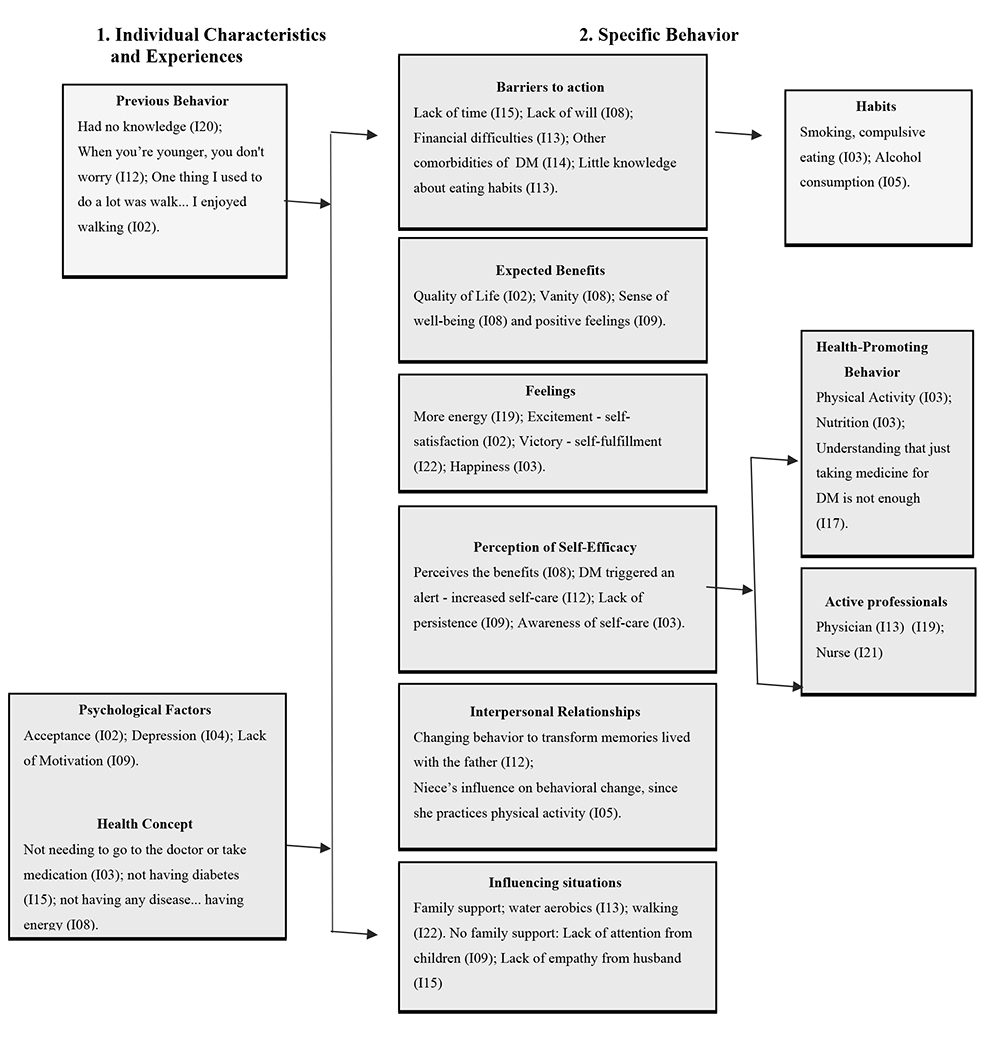 Source: Prepared by the authors based on the Health Promotion Model (2016)