 Performance evaluation of low-carbon geopolymer concrete incorporating industrial and agricultural wastes
ABSTRACT
The construction industry has been struggling to reduce its carbon emission, and hence the pressing interest in exploring low-carbon alternatives to conventional cement-based products. A sustainable solution is geopolymer concrete (GPC) which exploits industrial and agricultural by-products. This present research explores the viability of replacing a part of fly ash in a GPC mixture with sugarcane bagasse ash (SCBA). The binder system is made of 70% fly ash (FA) and 30% ground granulated blast furnace slag (GGBFS), which are used in combination with 8 and 10 molar alkaline solutions. The SCBA is substituted with fly ash in 5%, 10%, 15%, 20%, and 25%. Twelve mixes are tested on workability, strength, and durability properties. The findings indicated that at 15 percent replacement of SCBA exhibited the most favourable performance in mechanical strength characteristics. The highest 28-day compressive strength achieved is 41.76 MPa in the mix that includes 10 M alkaline solution and 15% SCBA. Furthermore, it was concluded that the interior structure is more compact and refined in comparison to other mixtures. The findings substantiate that SCBA may be efficiently utilized in geopolymer concrete to minimize carbon footprint while ensuring high performance.
Keywords:
Geopolymer concrete; Sugarcane bagasse ash (SCBA); Alkali-activated binder; Fly ash replacement; Low-carbon materials; Strength development; Durability performance
1. INTRODUCTION
The demand for cement-based construction materials has highly increased with the rapid urbanization and infrastructural developmental processes being experienced all over the globe. Nonetheless, the use of Ordinary Portland Cement (OPC) has become a great environmental issue with the proliferation of OPC use [1, 2]. Manufacture of OPC is not only resource-intensive but also energy-intensive and requires the calcination of limestone and considerable combustion of fossil fuels, which generate large quantities of carbon dioxide (CO2) together. The cement industry emits almost 7 to 8 percent of all anthropogenic CO2 emissions globally [3,4,5,6,7,8]. Besides the emission of greenhouse gases, cement manufacturing also leads to loss of natural resources and land degradation as well as air pollution, which questions the objectives of sustainable development. Such time-sensitive issues provoke the shift to the environmentally efficient, low-carbon, and sustainable substitutes to traditional cementitious materials [9, 10].
In response to the increasing problems of environmental degradation and over consumption of natural resources in the standard cement manufacturing process, scientists have concentrated on alternative and sustainable binders. Alkali Activated Materials, also known as Geopolymers (GPs) [11, 12]. Such cement-less binders are produced by mixing alumino-silicate-containing industrial by-products with alkaline activators, with potential to reduce carbon output and effective use of wastes [13,14,15]. Geopolymers are a future green-building construction avenue [16]. GPC is a new type of building material and provides a path towards green and sustainable construction material alternatives to conventional cement-based concrete [17, 18]. It can be made by reacting an alkaline solution with industrial or agricultural waste products consisting of silica and alumina, e.g. fly ash or slag. GPC also does not need high temperatures to process unlike normal concrete, which reduces emissions of carbon dioxide [19]. It even exhibits greater chemical, high temperature and harsh environment resistance. GPC is becoming a competitive material in contemporary construction because of its enduring properties, reliability, and environmental friendliness [20].
It is not just lowering emissions of CO2 but also beneficial in waste management and effective conservation of resources. A wide range of industrial by-products and wastes has also been widely studied due to their capabilities of replacing cement in conventional concrete [21,22,23,24,25,26]. Such materials are highly silica- and alumina-rich, making up an environmental plus and a performance improvement, leading towards the construction of increasingly sustainable practices [27]. Meanwhile, potential use of alternative binders in concrete has been assessed on a variety of agricultural wastes due to their pozzolanicity and silica content upon suitable processing [28, 29] This is because it promotes sustainable building and addresses the need to manage agricultural by-products that can otherwise be abandoned or openly burnt. The residue of coal combustion in thermal power plants is known as fly ash, and it has emerged as an essential ingredient of sustainable construction. Using fly ash in concrete lowers carbon emissions, makes it more durable, and facilitates the recycling of industrial waste. Numerous studies have investigated the function of fly ash in GPC, specifically its impact on the mechanical and durability characteristics of the material [30, 31].
Ground Granulated Blast Furnace Slag (GGBFS) is a waste product from the iron industry. It is utilized as an alternate kind of binder because it reacts strongly with alkaline activators. It makes the concrete stronger, enduring, and more environmentally friendly, which makes it a useful material for making traditional concrete less harmful to the environment [32].
Sugarcane effluent extraction method is an interesting product by-product that is obtained when there is burning of sugar cane waste in sugar and ethanol industries [33,34,35]. Worldwide industries of sugar produce millions of tons of bagasse, some of which is burnt each year to produce energy [36].
The product ash-SCBA is disposed or underutilized, and this can promote pollution of lands and air. Nonetheless, processing at optimised conditions (calcination between 600–800o C and fine grinding) SCBA can be made to have amorphous silica content as high as 70%, and so capable of being used as a pozzolan material [37]. It mainly consists of amorphous silica and has pozzolanic attributes within it to be used in cement composite systems. Processing and fine grinding of SCBA under the controlled conditions can add strength to the concrete, as well as improve the durability of concrete [38, 39]. Its inclusion in concrete does not only allow and promote the practice of a circular economy but also decreases the demand of the traditional business materials, which meets the sustainable construction aims.
There has been further availability of such wastes to use, given the emergence of the alkali-activated materials and geopolymer technology. GPC is a type of cement-free binder system that is synthesized by activating materials rich in aluminosilicates, where the active is a range of alkaline triggering agents that commonly includes sodium hydroxide (NaOH) and sodium silicate (Na2SiO3) [40]. However, geopolymer concrete has no dependence on the same calcium silicate hydrate C-S-H gel formation process, unlike OPC which forms a stable aluminosilicate structure that has improved resistance to chemicals, thermal stability, and a low level of carbon emissions [41].
The inclusion of SCBA in blended cement concrete and in geopolymer systems has been tested in the past few years. ABDALLA et al. [42] and TANU and SUJATHA [43] found that using SCBA as a partial cement substitute improved the strength and durability of concrete. SCBA performs as a reactive addition in geopolymer systems, helping to improve matrix performance. However, chemical composition, residual carbon content, loss on ignition (LOI), and ash particle fineness all have a significant impact on its performance. These factors are crucial in defining the pozzolanic reactivity and the entire contribution of SCBA to the binder system. It may be made inactive by overloading unburnt carbon or crystalline silica. Thus, further experimental works to determine the best replacement ratios and the curing protocols should be developed when working with SCBA as a part of geopolymer compositions. This study utilizes a GPC mixture including FA and GGBFS. FA was gradually replaced with SCBA in order to investigate the advantages of SCBA.
This methodology elucidates the impact of augmented SCBA on the strength and durability of concrete, while concurrently leveraging the beneficial attributes of fly ash and GGBFS.
1.1. Research significance
The present study is quite meaningful in the framework of developing sustainable and locally relevant construction materials. Although geopolymer concrete has shown itself to be an eco-efficient replacement to OPC, its use suffers simultaneously from both reliance on industrially derived by-products such as fly ash, and the fact that those by-products are both regional and currently in decline as demand in the power generation sector decreases toward the use of coal-free power. Regarding this, the utilization of agro-industrial wastes, e.g., Sugarcane Bagasse Ash (SCBA), can be seen as a strategic approach, which will diversify the raw material supply base of geopolymers as well as facilitate agro-waste valorization. This study will contribute to the decarbonization of the building industry by partially substituting fly ash with SCBA, so promoting the circular economy through waste utilization. Furthermore, the integration of SCBA into geopolymer formulations has the potential to yield cost-effective, sustainable, and high-performance construction materials, especially in developing nations with substantial agro-waste resources. The research results are expected to advance low-carbon binder technologies, aiding in the achievement of global climate resilience objectives and sustainable infrastructure development.
2. MATERIALS
2.1. Sugarcane Bagasse Ash (SCBA)
The SCBA in the present study was sourced at the local sugar industry in which bagasse is used under a power generation plant. The SCBA was oven-dried, sieved (90 µm), and kept in airtight bottles to avoid moisture uptake. In order to increase its pozzolanic activity, the ash was again calcined at 700o C by 2 hours using the muffle furnace that removed the unburnt carbon content and enhanced the amorphous silica phase. The chemical analysis identified by the X-Ray fluorescence (XRF) indicated that the sample contained high silicon dioxide (SiO2) content alongside alumina (Al2O3), ferric oxide (Fe2O3), and a small amount of oxides that justify its usage as an aluminosilicate precursor in the synthesis of geopolymers.
2.2. Fly Ash (FA)
The FA source was classified as low-calcium Class F with a stable chemical composition and high content of amorphous silica. The fly ash exhibited a dark-grey color, was finely pulverized, and contained no lumps or organic contaminants. The primary source of aluminosilicate in the control mix was utilized, with partial substitution by SCBA in certain mixes to investigate its impact on the geopolymerization process.
2.3. Ground Granulated Blast Furnace Slag (GGBFS)
A steel manufacturing unit provided GGBFS that was utilized as a second calcium-rich precursor to promote early strength. The addition of GGBFS contributed calcium ions that helped in forming C-A-S-H and hybrid gels in addition to the geopolymer matrix especially when using ambient curing condition. Table 1 depicts the characteristics of binders utilized in this research.
2.4. Alkaline activators
The GPC mixes were activated by the addition of sodium hydroxide (NaOH) and sodium silicate (Na2SiO3) solutions. The selection of 8M and 10M NaOH molarities was determined by a trial-and-error methodology. The sodium hydroxide in pellet form was dissolved in double distilled water to produce an 8 and 10 Molar solution. The solution was cooled down after 24 hours and subsequently combined. The alkaline activator was prepared by mixing NaOH and Na2SiO3 in proportion (1:2.5) and used upon mixing. Activator-to-binder ratios were kept constant across all mixes to provide consistency in geopolymerization kinetics and development of the matrix. This careful preparation ensures that the resulting geopolymer exhibits enhanced mechanical properties and durability.
2.5. Manufactured sand (M-sand)
M-sand was acquired by pulverizing granite rocks and sieving with a 4.75 mm IS sieve. The sand exhibited no silt or organic particles, had a fineness modulus of 2.6 and a water absorption rate of 1.2%. The grading adhered to Zone II criteria of IS 383:2016 [44].
2.6. Coarse aggregate
Broken angular granite aggregates of 10 mm & 20 mm diameters were combined in a 60:40 ratio to achieve the optimal packing density. The aggregates complied with IS 383:2016 [44], exhibiting a specific gravity of 2.68 and a water absorption rate of 0.8%. All aggregates were pre-saturated to prevent abrupt moisture absorption during mixing.
2.7. Superplasticizer
A polycarboxylate ether (PCE)-based high-range water-reducing admixture was implemented to improve workability. The dosage was refined to 1.0% by weight of binder, based on initial evaluation, to ensure sufficient flow without segregation.
2.8. Water
The alkaline solution was prepared in distilled water and mixed to adjust the alkaline solution as needed. There was no further amount of water added other than that, which was added to make activators because low water-binder ratios that are appropriate to geopolymerization had to be maintained.
2.9. Mix proportions
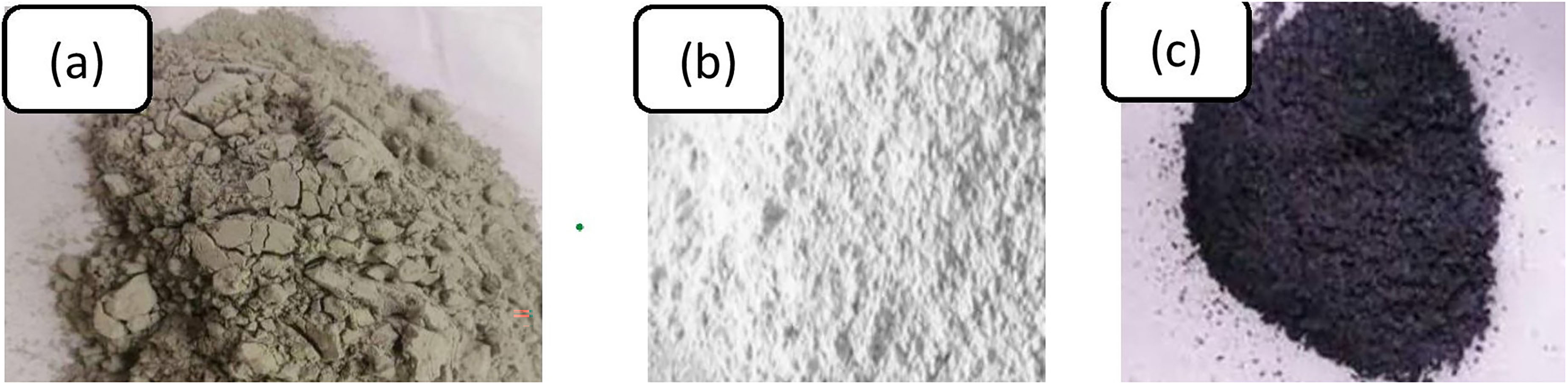
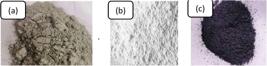
The GPC mixtures of M30 grade were developed with FA (70%) and GGBFS (30%) as the major binders. FA was partially replaced by increments of 5% with SCBA, with the range of 0 to 25 percent. A total of two mixes were done with 8M and 10M sodium hydroxide (NaOH) solutions. The alkaline solution/binder (A/B) was kept constant at 0.40 of all mixes. This fixed (A/B) ratio was reflected in consistency in workability and reaction at various molarities and SCBA replacement levels. The specimens were cured at ambient conditions, without regulation of temperature or humidity. Binders utilized in this investigation are illustrated in Figure 1 and Table 2 depict the mix proportions of GPC.
3. EXPERIMENTAL TESTING
A series of standard tests was performed on hardened and fresh concrete specimens to assess the performance of low-carbon GPC using SCBA as partial alternative to FA. The testing procedures were conducted as required under the Indian Standards (IS) as well as the ASTM ones to realize the uniformity and precision. For each test, three samples were tested, and the mean values were given.
3.1. Workability test
The slump cone test prescribed in IS 1199: 1959 [45] was used to determine the workability of the fresh geopolymer concrete mixes by measuring vertical slump of fresh concrete and which is considered an indication of the workability. Immediately after mixing, readings were obtained to ensure workability was not lost as a result of geopolymer setting behavior.
3.2. Hardened state properties of GPC
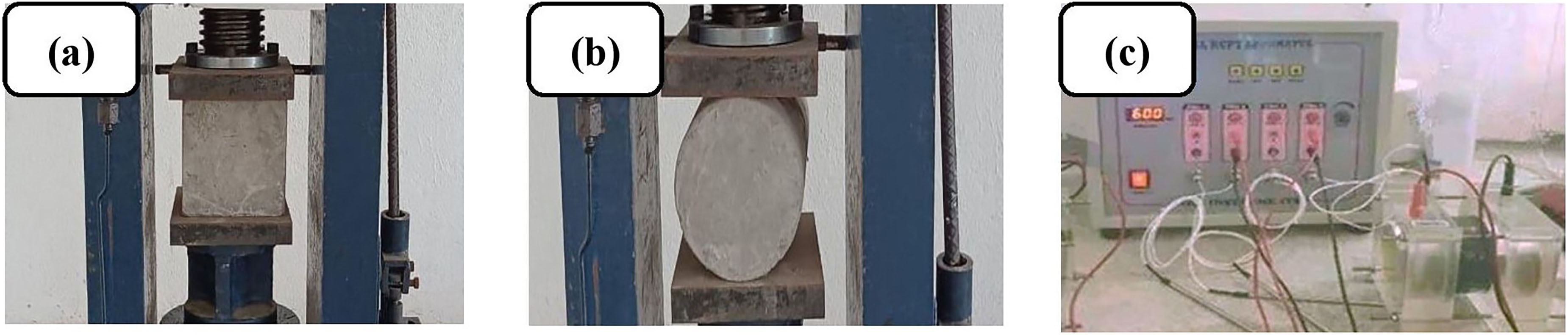
Compressive strength (CS) of the GPC was carried out on cube specimens with a size of 150 mm by following the IS 516:1959 [46]. Split tensile strength (STS) tests were performed on cylindrical samples with dimensions of 150 mm diameter × 300 mm height according to IS 5816:1999 [47]. The Flexural strength (FS) was taken using the three-point loading technique which was measured on a prism specimen of dimensions 100 mm diameter, 100 mm height and 500 mm long in compliance with IS 516:1959 [46].
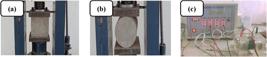
The Ultrasonic pulse velocity test (UPV) according to IS 13311 (Part 1): 1992 [48] is a non-destructive test to measure the quality and homogeneity of concrete. It entails the measurement of the duration required by ultrasonic pulse to move through the concrete specimen, higher velocities representing a greater quality of concrete. Figure 2 illustrates the testing processes conduced for this investigation.
3.3. Durability properties of GPC
The capillary water uptake properties were assessed with the sorptivity test conforming to the ASTM C1585 [49] A series of disk-shaped specimen (100 mm diameter, 50 mm thick) were placed partially in water and cumulative absorption was recorded at specific intervals. This test indicates permeability and durability performance of GPC.
The RCPT experiment was performed on discs that were 50 mm thick and had a diameter of 100 mm, as per the guidelines outlined in ASTM C1202 [50]. The charge passed over a period of 6 hours was measured after the specimens were immersed in solutions of sodium chloride and sodium hydroxide and connected to a standard 60 V D.C. source. Reduced charges are desired values because they indicate increased resistance to chloride ion penetration, which is a key criterion in assessing durability.
3.4. Scanning Electron Microscopy (SEM)
The SEM was conducted to infer the microstructure of the optimum geopolymer concrete mixes. The small pieces of the tested samples were crushed to powder and analyzed to note how gels of binding formed, the non-reacted products and whether pores could be observed in the matrix.
4. EXPERIMENTAL FINDINGS
4.1. Workability test
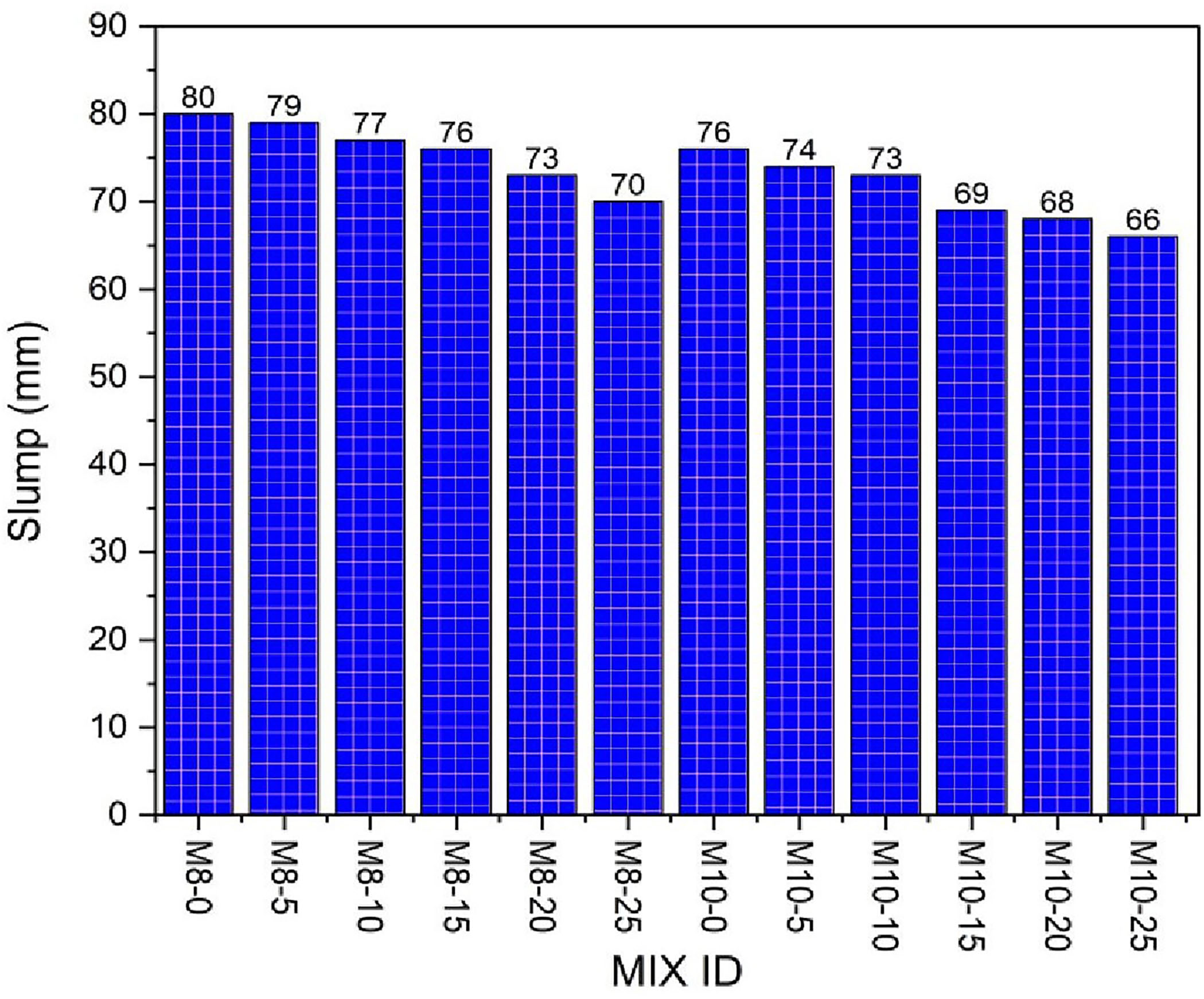
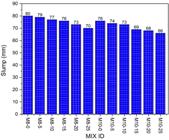
Slump value of GPC reduces continuously as the percentage concentration of ash of SCBA increases both in 10M and 8M sodium hydroxide-based mixture, as illustrated in Figure 3. In the 8-M mix series, the slump decreases as the percentage of SCBA increase i.e. changes in the range of 80 mm to 70 mm at 0% SCBA and 25% SCBA, respectively. The same trend is found in the 10-M mix where the slump decreases as the contents of SCBA increase; a slump of 76 mm reduces to 66 mm. This reduced workability is highly related to the much fines and porous nature of SCBA, and subsequently increased water absorption existing in larger scope since the availability of water capacity to lube the mix is reduced. Also, an ample concentration of amorphous silica is evident in SCBA, which increases its geopolymerisation reaction and stiffens the fresh mix even more [51]. High molarity of NaOH also makes the concrete mix less workable due to the elevated viscosity of the alkaline activator which makes it denser and less fluid. As seen in these results, the SCBA replacement and alkaline concentration have a substantial influence on the flow characteristics of GPC.
4.2. Hardened state properties of GPC
Hardening characteristics, such as compressive strength, flexural strength, split tensile strength and ultrasonic pulse velocity (UPV), were used to test the hardened characteristics of geopolymer concrete. The tests will assist in determining the mechanical performance of the material and its quality. Table 3 illustrates the characteristics of hardened GPC specimens.
4.2.1. Compressive strength (CS)
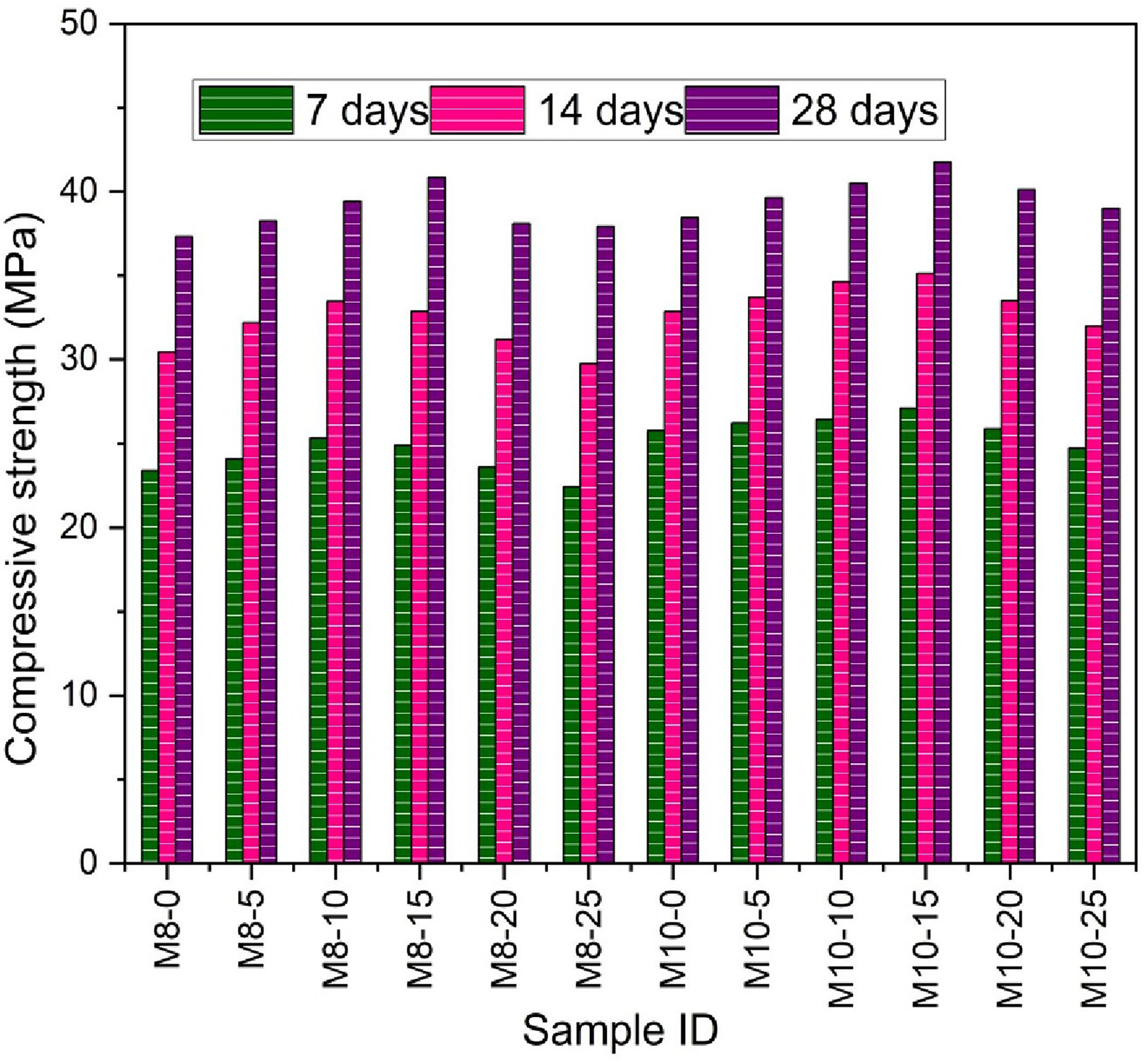
Figure 4 shows CS results of all mixes at 7, 14, and 28 days. As it can be seen in the data, the strength increases steadily as sugarcane bagasse ash (SCBA) is added into the mix until it reaches 15% replacement. The compressive strength values at 7 days are 22.44 MPa to 27.12 MPa. After 14 days, the strength has improved to a high range of 29.74 MPa to 35.12 MPa. After 28 days, the strength is between 41.76 MPa to 37.32 MPa.
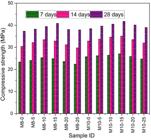
The control mix (M8-0) in the M8 series has an initial strength of 37.32 Mpa at 28 days. As SCBA content rises, strength increases until it reaches a maximum of 40.85 MPa at 15 percent replacement (M8-15). But above 25%, a decrease occurs, M8-25 having 37.92 MPa. The M10 series experiences the same trend. The control mix (M10-0) records 38.45 Mpa, and the optimum mix (M10-15) records 41.76 Mpa. Additionally, the strengths of M10-20 and M10-25 are lower, 40.12 MPa and 39.00 MPa, respectively.
The further strength development up to 15% SCBA, is ascribed to the pozzolanic reactivity of finely ground SCBA, reacting with calcium hydroxide to form more calcium silicate hydrate (C-S-H) gel, and resulting in a denser, more refined matrix [52,53,54]. Nevertheless, increased levels of replacement also lead to a dilution effect and a resultant expansion of porosity which can decrease cementitious compound availability, thus lowering strength. The findings indicate that 15 percentage replacement of SCBA may be optimal to enhance compressive strength under both molarity levels. The research indicated that incorporating SCBA into GPC enhanced CS, corroborating the results of RIHAN et al. [53], who similarly noted improved mechanical qualities using SCBA. TANU and UNNIKRISHNAN [43] further stated that GPC with GGBS and SCBA was stronger than typical concrete.
4.2.2. Split Tensile Strength (STS)
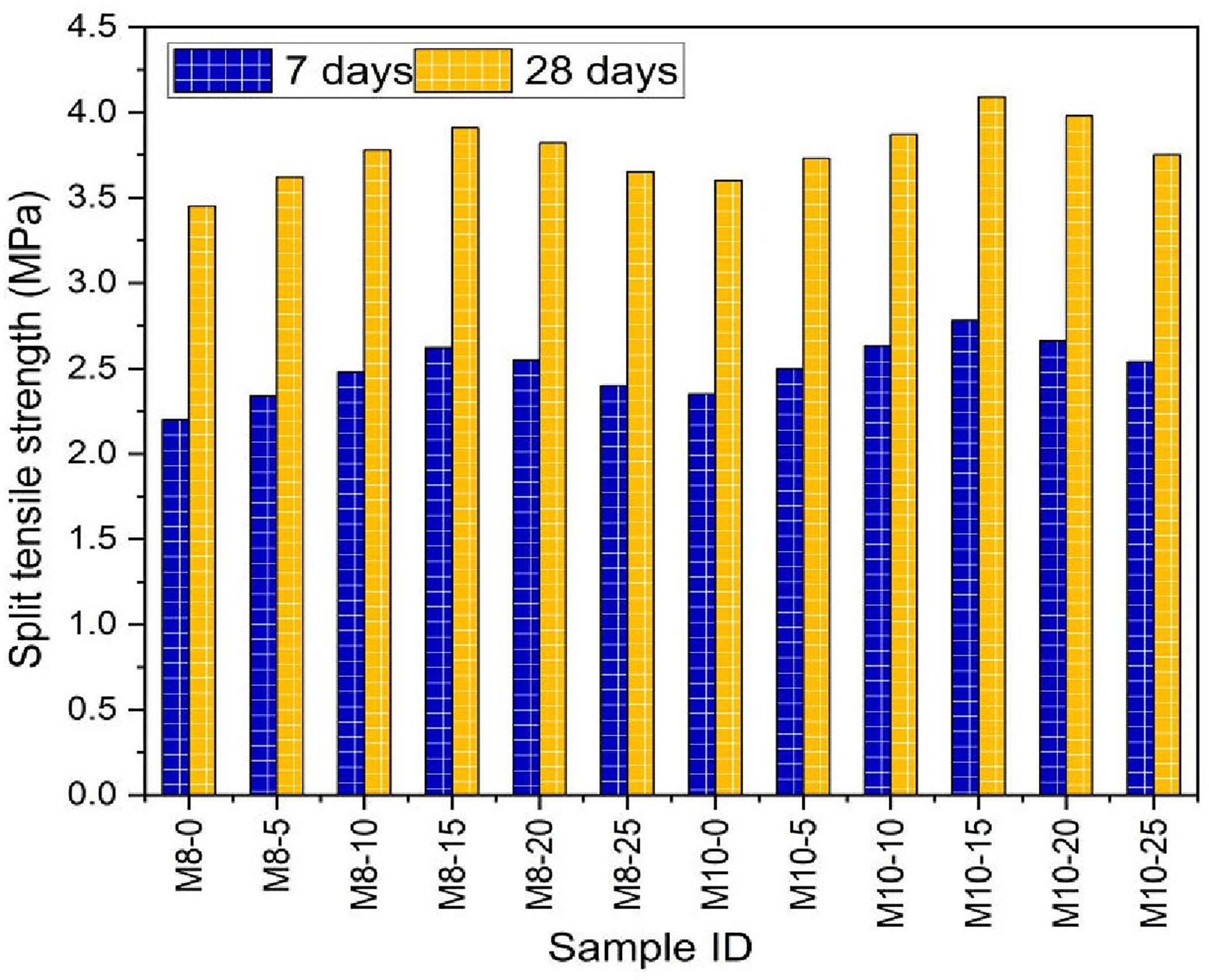
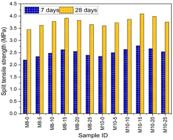
The STS result at 7 and 28 days is represented in Figure 5. The increasing strength due to addition of SBCA up to 15 percent replacement is gradual in both M-8 and M-10 mixes. Beyond this strength decreases to a slight degree. In the case of the M-8 mix, at the 7 days, its strength is 2.20 MPa to 2.62 MPa and 3.45 to 3.91 MPa in the case of the 28 days strength. In a similar manner, the values obtained in the M10 mix increase to 2.78 MPa at 7 days and 4.09 MPa at 28days. The pozzolanic reaction of the ash and the enhanced particle packing may be responsible for the increase in strength of up to 15%, which strengthens the connection within the concrete matrix [55]. Nevertheless, the cementitious content can be diluted at more than 15 percent, and the presence of excessive ash can degrade the interface between the aggregate and the paste, causing strength loss. The STS is determined to be around 8 to 12 percent of the CS, overall, which falls in line with the literature [56].
4.2.3. Flexural strength (FS)
The FS of GPC mixtures based on SCBA was assessed at 7 and 28 days. The values varied from 2.84 to 3.32 MPa at 7 days and from 4.31 to 4.95 MPa at 28 days. These findings suggest that the flexural strength of the material is consistently improved as a result of the optimized mix proportions and extended curing time. At 28 days, the mix that attained the highest flexural strength of 4.95 MPa demonstrated enhanced bonding and matrix integrity, which can be attributed to the pozzolanic activity of SCBA. This behavior is the consequence of the reaction between alkaline activators and the silica present in SCBA, which results in a denser microstructure. The predicted flexural strength of concrete is approximately 0.7 , (where, fck is the compressive strength), as per IS 456:2000 [57]. The potential of SCBA-based geopolymer concrete for improved flexural performance and long-term durability is demonstrated by the values obtained in this study, which surpass those accustomed to conventional concrete.
4.2.4. Ultrasonic Pulse Velocity (UPV) test
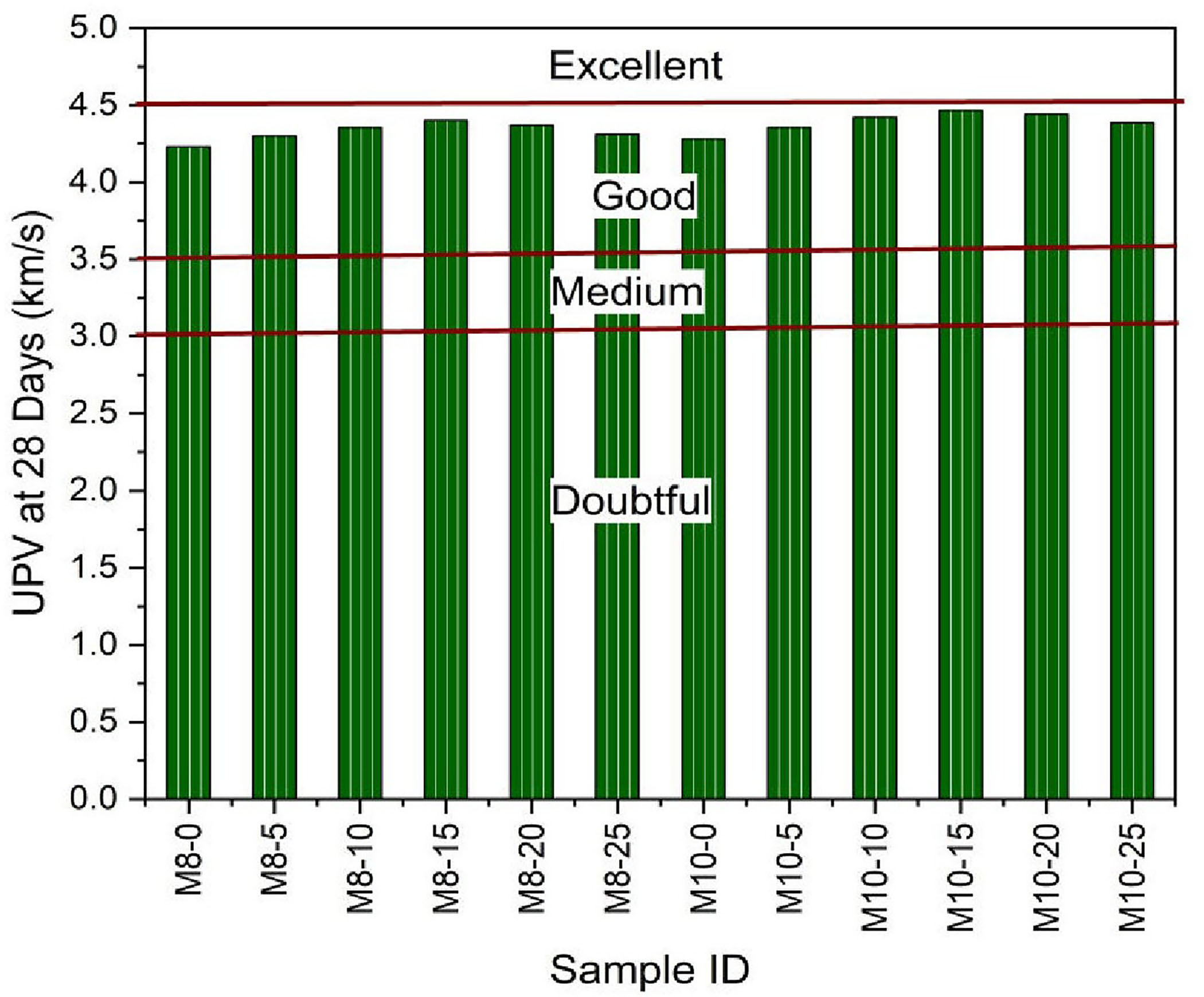
UPV values of all mixes are between 4.230 and 4.465 Km/s which is in the category of Good quality by the IS 13311 (Part 1): 1992 [48]. The test outcomes are demonstrated in Figure 6 and The maximum value of UPV is achieved with Mix M10-15 at 4.465 Km/s, which indicates a denser and more homogeneous interior structure.
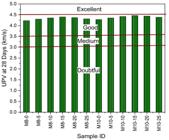
There is a steady rise in UPV between the addition of the SCBA until it reaches 15% when there is a slight decrease thereafter. This tendency implies that a moderate SCBA replacement increases the compactness of concrete, whereas above percentages can influence homogeneity. However, pulse velocity improves by up to 15% with SCBA, indicating higher quality and consistency of the geopolymer concrete.
4.3. Durability performance of GPC specimens
The sorptivity and RCPT is often used to measure the durability of concrete in relation to water and ion infiltration. These experiments evaluated the moisture absorption and chloride ion penetration resistance of GPC specimens containing SCBA, which are essential markers of long-term durability.
4.3.1. Sorptivity test
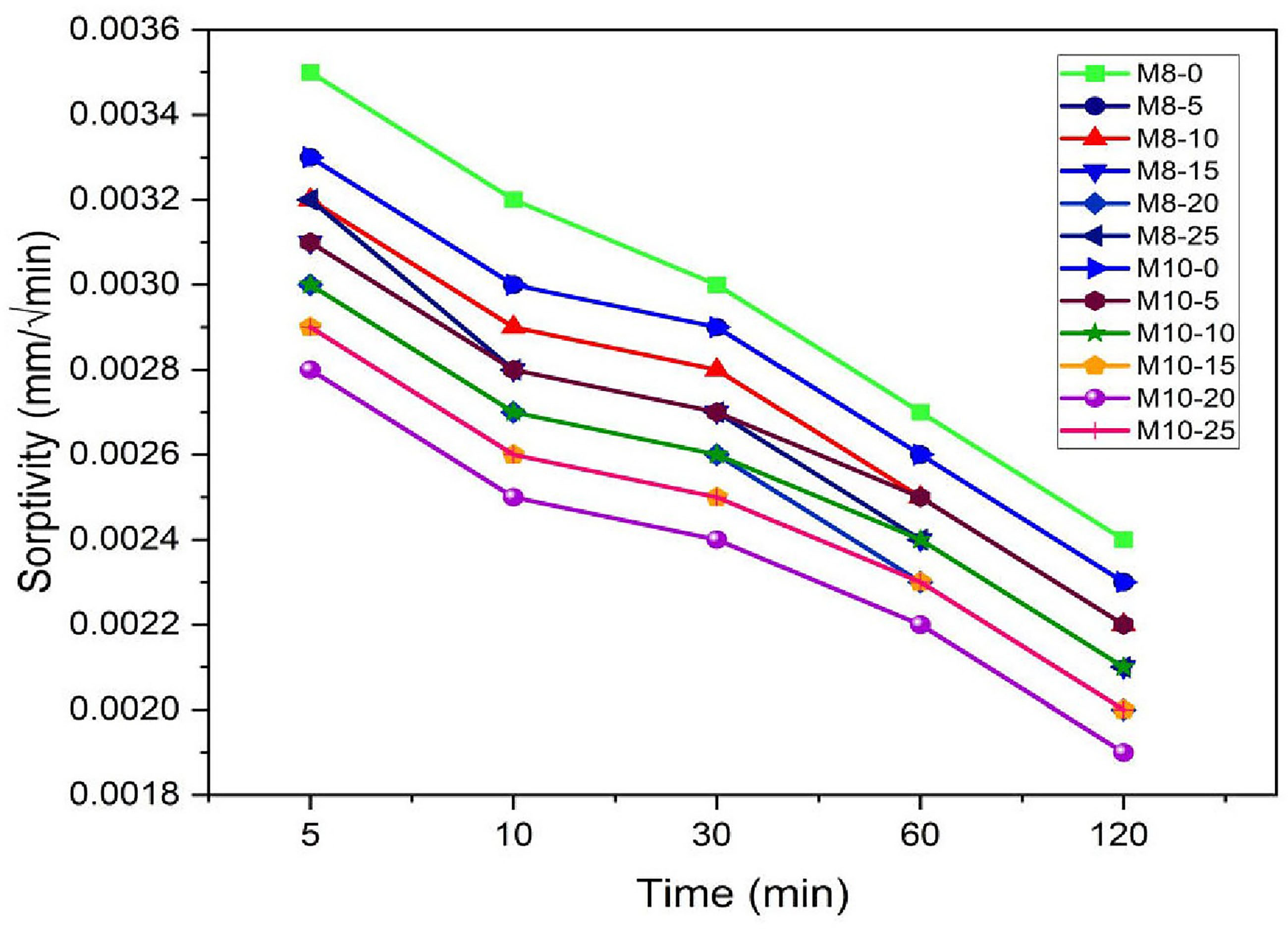
The sorptivity test results in Table 4 indicate that there has been a similar trend in all geopolymer concrete (GPC) mixes. There was a general reduction in values of sorptivity as a consequence of an increase in curing time, meaning that there is reduction of capillary suction as time increases implying improved refinement of pores. Sorptivity values of the specimen with 20% SCBA replacement which is 10M NaOH concentration (M10-20) at any given time interval were lowest of all confirming a high level of increased durability as shown in Figure 7. Such performance can be explained by the fact that SCBA has the most favourable pozzolanic reactivity at the dosage of 20%, which provides it with the denser microstructure and decreased porosity.
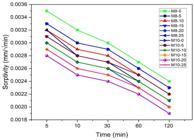
This performance enhancement at 10 M molarity relative to 8 M is attributed to the increased alkalinity which allows an enhanced dissolution of aluminosilicate species and improves the geopolymerization process to produce more compact and impervious matrices. Beyond 20% SCBA higher sorptivity is however observed, although marginally, which could be because of excessive unreacted ash and the consequent increase in pore volume or weak areas. This is consistent with previous observations that high SCBA resulted in low binding efficiency and pore connectivity [58, 59].The findings indicate an increase in water ingress inhibition with the optimum content of SCBA (20%) and increasing activator concentration (10 M) contributing significantly to making a more viable mix, which can last longer, in hostile conditions. The investigation revealed that the incorporation of SCBA enhanced resistance to sorptivity, validating findings of ULLAH et al. [60], who observed less permeability and improved mechanical strength in concrete containing SCBA. Furthermore, RIHAN et al. [53] documented enhanced durability in GPC with SCBA, aligning with our observations.
4.3.2. Rapid Chloride Penetration Test (RCPT)
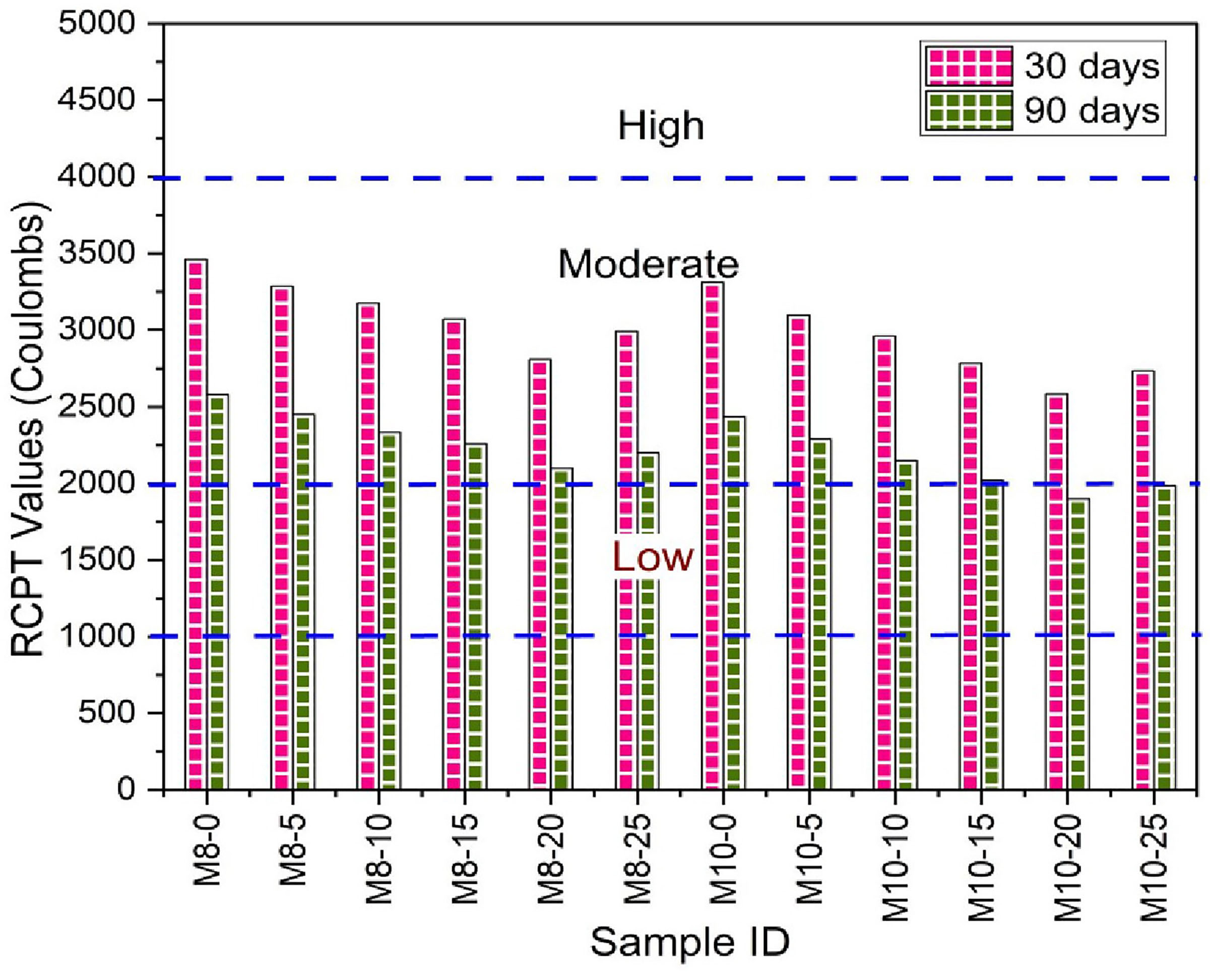
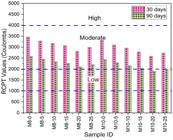
According to the RCPT results, it can be seen that incorporating SCBA significantly enhances the chloride resistance of the concrete. At the end of a 30 days test, all mixtures fall into the medium permeability range of 2000 to 4000 coulombs, as illustrated in Figure 8. Most mixtures move to the low permeability domain in less than 90 days which have values that make them lower than 2000 coulombs. Such improvement is attributed to the pozzolanic process of SCBA, which contributes to the optimization of the pores structure and the compression of the matrix in a long period. Results show the lowest charge passed at 90 days with the mixture containing 20 percent replacement SCBA (M10-20) indicating the highest level of durability performance. The SCBA contains small particles and reactive silica that react with calcium hydroxide (CH) to form additional C-S-H gel, hence reducing the porosity and enhancing the ability to resist the presence of chlorides [58, 61].
4.3.3. SEM analysis
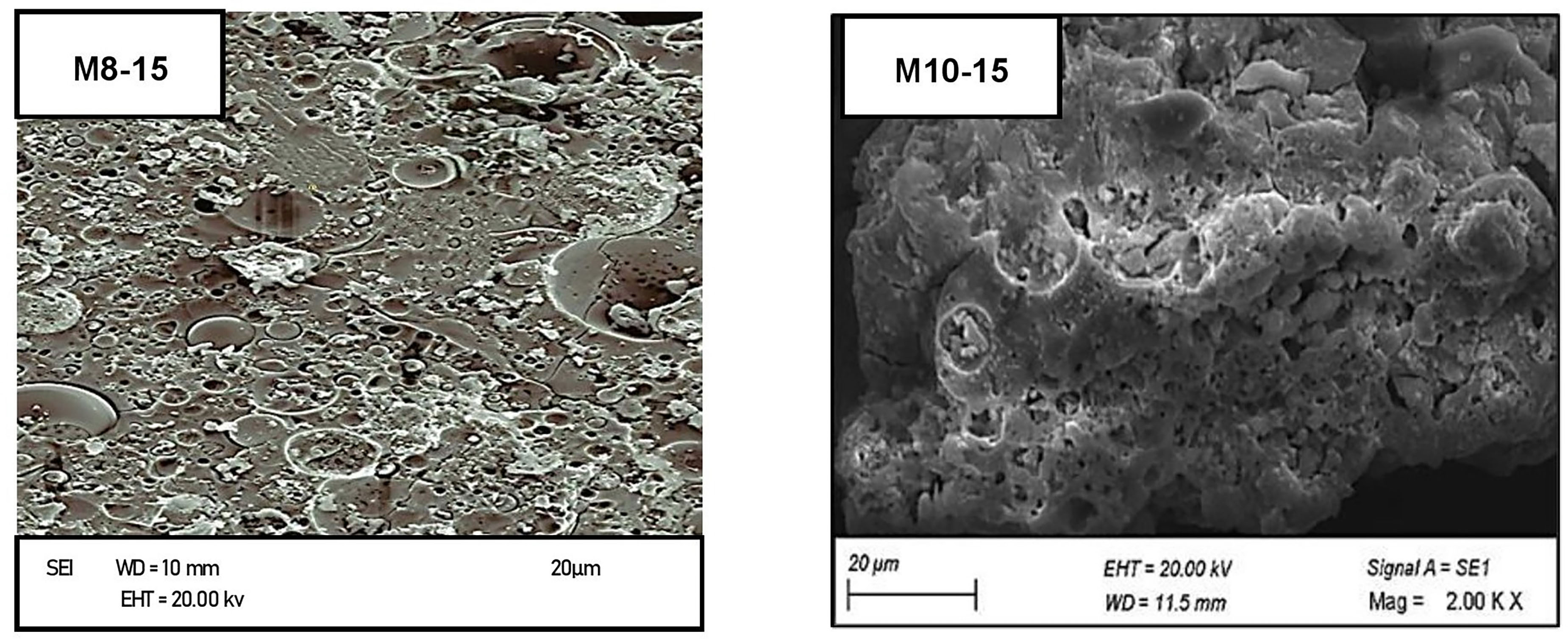
SEM analysis is conducted on the optimal mixture of each molarity (M8-15 and M10-15), as illustrated in Figure 9. The SEM micrograph of mix M8-15 indicates moderately dense matrix with a number of spherical shaped, partially reacted, fly ash particles. C-S-H gel formation around such particles is observed showing that geopolymerization is continuing. There are many small pores that can be found in the matrix which indicates moderate densification. Existence of unreacted particles and visible voids indicates the effects of the lower concentration of 8M NaOH that does not allow a complete dissolution of the aluminosilicate precursors. These characteristics are aligned with previous findings in that alkali with lower concentrations activate sluggish reaction kinetics and denser microstructures [62].
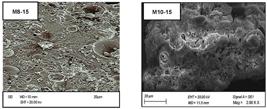
M10-15 mix image taken by the SEM indicates that its microstructure is much denser and homogeneous than the mix of M8-15. The matrix is densely compacted with the decreased number of visible pores and no defined geopolymer gel network. The high concentrations of the alkaline agents are favorable to this process and consequently fly ash and SCBA dissolve better; hence higher N-A-S-H gel was formed and polymerization occurred. The outcome is a finer pore structure, with a better internal bond. These enhancements are linked to improved mechanical and durability performance, as indicated by previous research. The molarity of the alkaline solution in geopolymer concrete increases, resulting in a denser matrix structure and a higher degree of reaction. These effects contribute to the overall properties of the material [63, 64].
5. CONCLUSION
This experimental study presents the effect of adding SCBA to partially replace fly ash in the low-carbon GPC activated with both 8M and 10M sodium hydroxide. The performance of different mixes is evaluated on the basis of its fresh performance, mechanical and durability performance, based on which the following conclusions have been made:
The workability of GPC decreases constantly as the percentage level of SCBA increases. Compared to other GPC mixes the 15% of SCBA demonstrated enhanced mechanical strength. The high porosity of SCBA and the increased unreacted residue result in diminished performance when over 15% dosage. GPC mixtures activated with 10M NaOH exhibited superior mechanical strength compared to their 8M equivalents under all conditions. The 28 days compressive strength of the optimum mix (M10-15) is 41.76 MPa, more superior than reference mix that does not contain SCBA. The enhanced durability of the M10-15 mix is clearly demonstrated by the results of RCPT and sorptivity, indicating less water absorption and reduced chloride ion penetration. The SEM examination, which shows an improvement in microstructural integrity, is confirmed by the presence of compact geopolymer gel phases and the absence of unreacted particles in M10-15. It corresponds to the compacted matrix and enhanced pore structure optimization. The results indicate that SCBA can be effectively and sustainably utilized as an additive in GPC. Geopolymer composite materials, notably those that contain SCBA, are a long-lasting way to solve problems in engineering and the environment. They promote the development of sustainable infrastructure by reducing carbon emissions, enhancing durability, and offering an environmentally favourable alternative to conventional concrete.
5.1. Future research directions
Future research may investigate the utilization of increased or variable quantities of SCBA in geopolymer concrete to determine the optimal formulation for diverse applications. Testing more waste materials in cojunction with SCBA would enhance the sustainability and performance of geopolymer concrete. Furthermore, examining the long-term resilience of SCBA-based geopolymer concrete under various environmental circumstances and evaluating its feasibility for large-scale construction endeavors would be crucial subsquent actions.
6. BIBLIOGRAPHY
-
[1] MILLER, S.A., HABERT, G., MYERS, R.J., et al., “Achieving net zero greenhouse gas emissions in the cement industry via value chain mitigation strategies”, One Earth, v. 4, n. 10, pp. 1398–1411, 2021. doi: https://doi.org/10.1016/j.oneear.2021.09.011.
» https://doi.org/10.1016/j.oneear.2021.09.011 -
[2] SUAREZ-RIERA, D., RESTUCCIA, L., FALLIANO, D., et al., “An overview of methods to enhance the environmental performance of cement-based materials”, Infrastructures, v. 9, n. 6, pp. 94, 2024. doi: https://doi.org/10.3390/infrastructures9060094.
» https://doi.org/10.3390/infrastructures9060094 -
[3] IZUMI, Y., IIZUKA, A., HO, H.-J., “Calculation of greenhouse gas emissions for a carbon recycling system using mineral carbon capture and utilization technology in the cement industry”, Journal of Cleaner Production, v. 312, pp. 127618, 2021. doi: https://doi.org/10.1016/j.jclepro.2021.127618.
» https://doi.org/10.1016/j.jclepro.2021.127618 -
[4] KHAIYUM, M.Z., SARKER, S., KABIR, G., “Evaluation of carbon emission factors in the cement industry: An emerging economy context”, Sustainability, v. 15, n. 21, pp. 15407, 2023. doi: https://doi.org/10.3390/su152115407.
» https://doi.org/10.3390/su152115407 -
[5] SHIVAPRASAD, K.N., YANG, H.M., SINGH, J.K., “A path to carbon neutrality in construction: An overview of recent progress in recycled cement usage”, Journal of CO(2) Utilization, v. 83, pp. 102816, 2024. doi: https://doi.org/10.1016/j.jcou.2024.102816.
» https://doi.org/10.1016/j.jcou.2024.102816 -
[6] WEN, J., WANG, B., DAI, Z., et al., “New insights into the green cement composites with low carbon footprint: The role of biochar as cement additive/alternative”, Resources, Conservation and Recycling, v. 197, pp. 107081, 2023. doi: https://doi.org/10.1016/j.resconrec.2023.107081.
» https://doi.org/10.1016/j.resconrec.2023.107081 -
[7] TURNER, L.K., COLLINS, F.G., “Carbon dioxide equivalent (CO2-e) emissions: A comparison between geopolymer and OPC cement concrete.”, Construction & Building Materials, v. 43, pp. 125–130, 2013. doi: https://doi.org/10.1016/j.conbuildmat.2013.01.023.
» https://doi.org/10.1016/j.conbuildmat.2013.01.023 -
[8] ALSALMAN, A., ASSI, L.N., KAREEM, R.S., et al., “Energy and CO2 emission assessments of alkali-activated concrete and Ordinary Portland Cement concrete: A comparative analysis of different grades of concrete”, Cleaner Environmental Systems, v. 3, pp. 100047, 2021. doi: https://doi.org/10.1016/j.cesys.2021.100047.
» https://doi.org/10.1016/j.cesys.2021.100047 -
[9] ALTHOEY, F., ANSARI, W.S., SUFIAN, M., et al., “Advancements in low-carbon concrete as a construction material for the sustainable built environment”, Developments in the Built Environment, v. 16, pp. 100284, 2023. doi: https://doi.org/10.1016/j.dibe.2023.100284.
» https://doi.org/10.1016/j.dibe.2023.100284 -
[10] BARBHUIYA, S., DAS, B.B., ADAK, D., et al., “Low carbon concrete: Advancements, challenges and future directions in sustainable construction”, Discover Concrete and Cement, v. 1, n. 1, pp. 3, 2025. doi: https://doi.org/10.1007/s44416-025-00002-y.
» https://doi.org/10.1007/s44416-025-00002-y -
[11] CHEN, K., WU, D., XIA, L., et al., “Geopolymer concrete durability subjected to aggressive environments – A review of influence factors and comparison with ordinary Portland cement”, Construction & Building Materials, v. 279, pp. 122496, 2021. doi: https://doi.org/10.1016/j.conbuildmat.2021.122496.
» https://doi.org/10.1016/j.conbuildmat.2021.122496 -
[12] MANGAT, P., LAMBERT, P., “Sustainability of alkali-activated cementitious materials and geopolymers”, In: Khatib, J.M. (eds), Sustainability of construction materials, 2 ed., Sawston, Woodhead Publishing, pp. 439–472, 2016.. doi: https://doi.org/10.1016/B978-0-08-100370-1.00018-4.
» https://doi.org/10.1016/B978-0-08-100370-1.00018-4 -
[13] ALRAWASHDEH, A.A., ZAMORANO, M., ALSHAAER, M., et al., “Promoting the use of geopolymer and alkali-activated materials through the identification of critical factors and strategies”, Journal of Building Engineering, v. 98, pp. 111078, 2024. doi: https://doi.org/10.1016/j.jobe.2024.111078.
» https://doi.org/10.1016/j.jobe.2024.111078 -
[14] AMRAN, Y.H.M., ALYOUSEF, R., ALABDULJABBAR, H., et al., “Clean production and properties of geopolymer concrete: A review”, Journal of Cleaner Production, v. 251, pp. 119679, 2020. doi: https://doi.org/10.1016/j.jclepro.2019.119679.
» https://doi.org/10.1016/j.jclepro.2019.119679 -
[15] LANJEWAR, B.A., CHIPPAGIRI, R., DAKWALE, V.A., et al., “Application of alkali-activated sustainable materials: A step towards net zero binder”, Energies, v. 16, n. 2, pp. 969, 2023. doi: https://doi.org/10.3390/en16020969.
» https://doi.org/10.3390/en16020969 -
[16] ASGHAR, R., KHAN, M.A., ALYOUSEF, R., et al., “Promoting the green construction: Scientometric review on the mechanical and structural performance of geopolymer concrete”, Construction & Building Materials, v. 368, pp. 130502, 2023. doi: https://doi.org/10.1016/j.conbuildmat.2023.130502.
» https://doi.org/10.1016/j.conbuildmat.2023.130502 -
[17] ALMUTAIRI, A.L., TAYEH, B.A., ADESINA, A., et al., “Potential applications of geopolymer concrete in construction: A review”, Case Studies in Construction Materials, v. 15, pp. e00733, 2021. doi: https://doi.org/10.1016/j.cscm.2021.e00733.
» https://doi.org/10.1016/j.cscm.2021.e00733 -
[18] CERCEL, J., ADESINA, A., DAS, S., “Performance of eco-friendly mortars made with alkali-activated slag and glass powder as a binder”, Construction & Building Materials, v. 270, pp. 121457, 2021. doi: https://doi.org/10.1016/j.conbuildmat.2020.121457.
» https://doi.org/10.1016/j.conbuildmat.2020.121457 -
[19] AL-TAM, S.M., RIAD, A., MOHAMMED, N., et al., “Advancement of eco-friendly slag-based high-strength geopolymer concrete”, Journal of Materials Research and Technology, v. 34, pp. 1636–1653, 2025. doi: https://doi.org/10.1016/j.jmrt.2024.12.146.
» https://doi.org/10.1016/j.jmrt.2024.12.146 -
[20] VERMA, M., DEV, N., RAHMAN, I., et al., “Geopolymer concrete: A material for sustainable development in Indian construction industries”, Crystals, v. 12, n. 4, pp. 514, 2022. doi: https://doi.org/10.3390/cryst12040514.
» https://doi.org/10.3390/cryst12040514 -
[21] PARASHAR, A., BISHNOI, S., “A comparison of test methods to assess the strength potential of plain and blended supplementary cementitious materials”, Construction & Building Materials, v. 256, pp. 119292, 2020. doi: https://doi.org/10.1016/j.conbuildmat.2020.119292.
» https://doi.org/10.1016/j.conbuildmat.2020.119292 -
[22] MOOLCHANDANI, K., “Industrial byproducts in concrete: A state-of-the-art review”, Next Materials, v. 8, n. 100593, pp. 100593, 2025. doi: https://doi.org/10.1016/j.nxmate.2025.100593.
» https://doi.org/10.1016/j.nxmate.2025.100593 -
[23] ASLANI, F., MA, G., WAN, D., et al., “Development of high-performance self-compacting concrete using waste recycled concrete aggregates and rubber granules”, Journal of Cleaner Production, v. 182, pp. 553–566, 2018. doi: https://doi.org/10.1016/j.jclepro.2018.02.074.
» https://doi.org/10.1016/j.jclepro.2018.02.074 -
[24] CHINDAPRASIRT, P., JATURAPITAKKUL, C., SINSIRI, T., “Effect of fly ash fineness on compressive strength and pore size of blended cement paste”, Cement and Concrete Composites, v. 27, n. 4, pp. 425–428, 2005. doi: https://doi.org/10.1016/j.cemconcomp.2004.07.003.
» https://doi.org/10.1016/j.cemconcomp.2004.07.003 -
[25] ARAFA, S., MILAD, A., YUSOFF, N.I.M., et al., “Investigation into the permeability and strength of pervious geopolymer concrete containing coated biomass aggregate material”, Journal of Materials Research and Technology, v. 15, pp. 2075–2087, 2021. doi: https://doi.org/10.1016/j.jmrt.2021.09.045.
» https://doi.org/10.1016/j.jmrt.2021.09.045 -
[26] ALAWI, A., MILAD, A., BARBIERI, D., et al., “Eco-friendly geopolymer composites prepared from agro-industrial wastes: A state-of-the-art review”, CivilEng, v. 4, n. 2, pp. 433–453, 2023. doi: https://doi.org/10.3390/civileng4020025.
» https://doi.org/10.3390/civileng4020025 -
[27] CHIPPAGIRI, R., BRAS, A., RALEGAONKAR, R.V., “Development of sustainable prefabricated housing system by small-scale experimental model”, Proceedings of the Institution of Civil Engineers: Engineering Sustainability, v. 176, n. 1, pp. 3–16, 2022. doi: https://doi.org/10.1680/jensu.22.00020.
» https://doi.org/10.1680/jensu.22.00020 -
[28] ALANEME, G.U., OLONADE, K.A., ESENOGHO, E., “Eco-friendly agro-waste based geopolymer-concrete: A systematic review”, Discover Materials, v. 3, n. 14, pp. 14, 2023. doi: https://doi.org/10.1007/s43939-023-00052-8.
» https://doi.org/10.1007/s43939-023-00052-8 -
[29] ALSHARARI, F., “Utilization of industrial, agricultural, and construction waste in cementitious composites: A comprehensive review of their impact on concrete properties and sustainable construction practices”, Materials Today Sustainability, v. 29, pp. 101080, 2025. doi: https://doi.org/10.1016/j.mtsust.2025.101080.
» https://doi.org/10.1016/j.mtsust.2025.101080 -
[30] QAIDI, S., NAJM, H.M., ABED, S.M., et al., “Fly ash-based geopolymer composites: A review of the compressive strength and microstructure analysis”, Materials, v. 15, n. 20, pp. 7098, 2022. doi: https://doi.org/10.3390/ma15207098. PubMed PMID: 36295166.
» https://doi.org/10.3390/ma15207098 -
[31] NUAKLONG, P., SATA, V., CHINDAPRASIRT, P., “Influence of recycled aggregate on fly ash geopolymer concrete properties”, Journal of Cleaner Production, v. 112, pp. 2300–2307, 2016. doi: https://doi.org/10.1016/j.jclepro.2015.10.109.
» https://doi.org/10.1016/j.jclepro.2015.10.109 -
[32] SHAHMANSOURI, A.A., NEMATZADEH, M., BEHNOOD, A., “Mechanical properties of GGBFS-Based geopolymer concrete incorporating natural zeolite and silica fume with an optimum design using response surface method”, Journal of Building Engineering, v. 36, pp. 102138, 2021. doi: https://doi.org/10.1016/j.jobe.2020.102138.
» https://doi.org/10.1016/j.jobe.2020.102138 -
[33] RIHAN, M.A.M., ALAHMARI, T.S., ONCHIRI, R.O., et al., “Impact of alkaline concentration on the mechanical properties of geopolymer concrete made up of fly ash and sugarcane bagasse ash”, Sustainability, v. 16, n. 7, pp. 2841, 2024. doi: https://doi.org/10.3390/su16072841.
» https://doi.org/10.3390/su16072841 -
[34] ABDALLA, T.A., KOTENG, D.O., SHITOTE, S.M., et al., “Mechanical and durability properties of concrete incorporating silica fume and a high volume of sugarcane bagasse ash”, Results in Engineering, v. 16, pp. 100666, 2022. doi: https://doi.org/10.1016/j.rineng.2022.100666.
» https://doi.org/10.1016/j.rineng.2022.100666 -
[35] ZAREEI, S.A., AMERI, F., BAHRAMI, N., “Microstructure, strength, and durability of eco-friendly concretes containing sugarcane bagasse ash”, Construction & Building Materials, v. 184, pp. 258–268, 2018. doi: https://doi.org/10.1016/j.conbuildmat.2018.06.153.
» https://doi.org/10.1016/j.conbuildmat.2018.06.153 -
[36] AJALA, E.O., IGHALO, J.O., AJALA, M.A., et al., “Sugarcane bagasse: A biomass sufficiently applied for improving global energy, environment and economic sustainability”, Bioresources and Bioprocessing, v. 8, n. 1, pp. 87, 2021. doi: https://doi.org/10.1186/s40643-021-00440-z. PubMed PMID: 38650274.
» https://doi.org/10.1186/s40643-021-00440-z -
[37] XU, Q., JI, T., GAO, S.-J., et al., “Characteristics and applications of sugar cane bagasse ash waste in cementitious materials”, Materials, v. 12, n. 1, pp. 39, 2019. doi: https://doi.org/10.3390/ma12010039. PubMed PMID: 30583562.
» https://doi.org/10.3390/ma12010039 -
[38] TABISH, M., ZAHEER, M.M., BAQI, A., “Utilization of agro-based waste as SCM: A systematic study on sugarcane bagasse ash characteristics and pozzolanic reactivity”, Journal of Building Engineering, v. 109, pp. 113039, 2025. doi: https://doi.org/10.1016/j.jobe.2025.113039.
» https://doi.org/10.1016/j.jobe.2025.113039 -
[39] ALANEME, G.U., OLONADE, K.A., ESENOGHO, E., et al., “Artificial intelligence prediction of the mechanical properties of banana peel-ash and bagasse blended geopolymer concrete”, Scientific Reports, v. 14, n. 1, pp. 26151, 2024. doi: https://doi.org/10.1038/s41598-024-77144-9. PubMed PMID: 39478028.
» https://doi.org/10.1038/s41598-024-77144-9 -
[40] KANAGARAJ, B., LUBLOY, E., ANAND, N., et al., “Investigation of physical, chemical, mechanical, and microstructural properties of cement-less concrete – State-of-the-art review”, Construction & Building Materials, v. 365, pp. 130020, 2023. doi: https://doi.org/10.1016/j.conbuildmat.2022.130020.
» https://doi.org/10.1016/j.conbuildmat.2022.130020 -
[41] MADIRISHA, M.M., DADA, O.R., IKOTUN, B.D., “Chemical fundamentals of geopolymers in sustainable construction”, Materials Today Sustainability, v. 27, pp. 100842, 2024. doi: https://doi.org/10.1016/j.mtsust.2024.100842.
» https://doi.org/10.1016/j.mtsust.2024.100842 -
[42] ABDALLA, T.A., HUSSEIN, A.A.E., AHMED, Y.H., et al., “Strength, durability, and microstructure properties of concrete containing bagasse ash – A review of 15 years of perspectives, progress and future insights”, Results in Engineering, v. 21, pp. 101764, 2024. doi: https://doi.org/10.1016/j.rineng.2024.101764.
» https://doi.org/10.1016/j.rineng.2024.101764 -
[43] TANU, H.M., UNNIKRISHNAN, S., “Mechanical strength and microstructure of GGBS–SCBA based geopolymer concrete”, Journal of Materials Research and Technology, v. 24, pp. 7816–7831, 2023. doi: https://doi.org/10.1016/j.jmrt.2023.05.051.
» https://doi.org/10.1016/j.jmrt.2023.05.051 - [44] BUREAU OF INDIAN STANDARDS, IS 383:2016 – Coarse and fine aggregate for concrete – Specification, New Delhi, BIS, 2016.
- [45] BUREAU OF INDIAN STANDARDS, IS 1199:1959 – Method of sampling and analysis of concrete, New Delhi, BIS, 1959.
- [46] BUREAU OF INDIAN STANDARDS, IS 516:1959 – Method of tests for strength of concrete, New Delhi, BIS, 1959.
- [47] BUREAU OF INDIAN STANDARDS, IS 5816:1999 – Splitting tensile strength of concrete – Method of test, New Delhi, BIS, 1999.
- [48] BUREAU OF INDIAN STANDARDS, IS 13311 (Part 1):1992 – Non-destructive testing of concrete – Ultrasonic pulse velocity, New Delhi, BIS, 1992.
- [49] AMERICAN SOCIETY FOR TESTING AND MATERIALS, ASTM C1585 – Standard test method for measurement of rate of absorption of water by hydraulic-cement concretes, West Conshohocken, ASTM International, 2020.
- [50] AMERICAN SOCIETY FOR TESTING AND MATERIALS, ASTM C1202 – Standard test method for electrical indication of concrete’s ability to resist chloride ion penetration, West Conshohocken, ASTM International, 2019.
-
[51] SRINIVAS, D., SURESH, D., LAKSHMI, N.H., “Experimental investigation on bagasse ash based geopolymer concrete subjected to elevated temperature”, IOP Conference Series. Earth and Environmental Science, v. 796, pp. 012028, 2021. doi: https://doi.org/10.1088/1755-1315/796/1/012028.
» https://doi.org/10.1088/1755-1315/796/1/012028 -
[52] TURAL, G., OZARISOY, B., DEROGAR, S., et al., “Investigating the governing factors influencing the pozzolanic activity through a database approach for the development of sustainable cementitious materials”, Construction & Building Materials, v. 411, pp. 134253, 2024. doi: https://doi.org/10.1016/j.conbuildmat.2023.134253.
» https://doi.org/10.1016/j.conbuildmat.2023.134253 -
[53] RIHAN, M.A.M., ONCHIRI, R.O., GATHIMBA, N., et al., “Effect of sugarcane bagasse ash addition and curing temperature on the mechanical properties and microstructure of fly ash-based geopolymer concrete”, Open Ceramics, v. 19, pp. 100616, 2024. doi: https://doi.org/10.1016/j.oceram.2024.100616.
» https://doi.org/10.1016/j.oceram.2024.100616 - [54] MUANGTONG, P., SUJJAVANICH, S., BOONSALEE, S., et al., “Effects of fine bagasse ash on the workability and compressive strength of mortars”, Warasan Khana Witthayasat Maha Witthayalai Chiang Mai, v. 40, pp. 126–134, 2013.
-
[55] SANKEETH, S., PRABHATH, A.A.N., DAMRUWAN, H.G.H., et al., “Optimizing mechanical properties of concrete using sugarcane bagasse ash”, Results in Engineering, v. 27, pp. 105968, 2025. doi: https://doi.org/10.1016/j.rineng.2025.105968.
» https://doi.org/10.1016/j.rineng.2025.105968 - [56] NEVILLE, A.M., Properties of concrete, 5 ed., London, Pearson Education Limited, 2011.
- [57] BUREAU OF INDIAN STANDARDS, IS 456:2000 – Plain and reinforced concrete – Code of practice, New Delhi, BIS, 2000.
-
[58] ZAHEER, M.M., TABISH, M., “The durability of concrete made up of sugar cane bagasse ash (SCBA) as a partial replacement of cement: A review”, Arabian Journal for Science and Engineering, v. 48, n. 4, pp. 4195–4225, 2023. doi: https://doi.org/10.1007/s13369-023-07698-9.
» https://doi.org/10.1007/s13369-023-07698-9 -
[59] MULAY, S., VESMAWALA, G., PATIL, Y., et al., “Experimental investigation of sugarcane bagasse ash concrete under sodium hydroxide solution”, American Journal of Civil Engineering, v. 5, n. 1, pp. 1–8, 2017. doi: https://doi.org/10.11648/j.ajce.20170501.11.
» https://doi.org/10.11648/j.ajce.20170501.11 -
[60] ULLAH, M.F., TANG, H., ULLAH, A., et al., “Mechanical and environmental performance of sugarcane bagasse ash from Khyber Pakhtunkhwa in sustainable concrete”, Scientific Reports, v. 15, n. 1, pp. 24571, 2025. doi: https://doi.org/10.1038/s41598-025-10383-6. PubMed PMID: 40628954.
» https://doi.org/10.1038/s41598-025-10383-6 -
[61] LIU, H., LIU, C., BAI, G., et al., “Study on the effect of chloride ion ingress on the pore structure of the attached mortar of recycled concrete coarse aggregate”, Construction & Building Materials, v. 263, pp. 120123, 2020. doi: https://doi.org/10.1016/j.conbuildmat.2020.120123.
» https://doi.org/10.1016/j.conbuildmat.2020.120123 -
[62] KHAN, M.A., ZHANG, B., AHMAD, M., et al., “Optimizing concrete sustainability with bagasse ash and stone dust and its impact on mechanical properties and durability”, Scientific Reports, v. 15, n. 1, pp. 1385, 2025. doi: https://doi.org/10.1038/s41598-025-85363-x. PubMed PMID: 39779787.
» https://doi.org/10.1038/s41598-025-85363-x - [63] HARDJITO, D., WALLAH, S.E., SUMAJOUW, D.M.J., et al., “On the development of fly ash-based geopolymer concrete”, ACI Materials Journal, v. 101, n. 6, pp. 467–472, 2004.
-
[64] CHINDAPRASIRT, P., CHAREERAT, T., SIRIVIVATNANON, V., “Workability and strength of coarse high calcium fly ash geopolymer”, Cement and Concrete Composites, v. 29, n. 3, pp. 224–229, 2009. doi: https://doi.org/10.1016/j.cemconcomp.2006.11.002.
» https://doi.org/10.1016/j.cemconcomp.2006.11.002