 Variation in sabinene content in the essential oil of Piper tuberculatum (Piperaceae) under the influence of abiotic factors
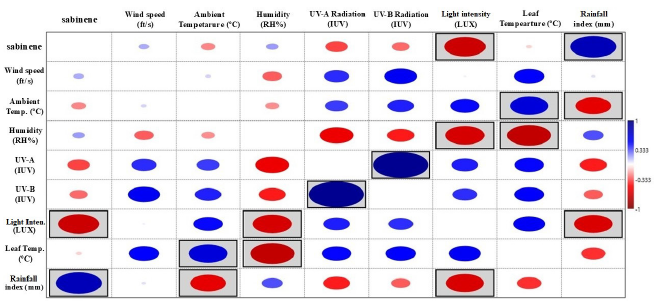
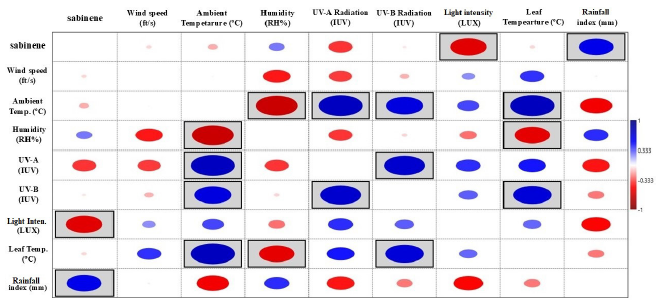
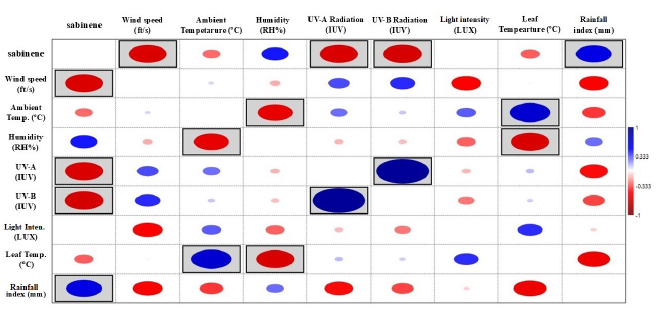
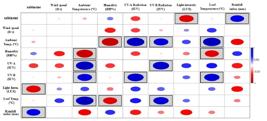
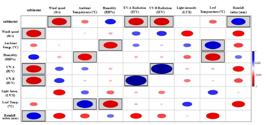
Piper tuberculatum contains volatile substances in its essential oils (EO) with ecological and medicinal properties. This study aimed to analyze the correlation between sabinene content and abiotic factors. Leaves (90-100 g) were collected monthly, from January to December 2023, from three adult individuals (A, B and C) at different sites within the Rio de Janeiro Botanical Garden (JBRJ) and surrounding areas, with microclimate data recorded. The samples were subjected to hydrodistillation and analyzed by Gas Chromatography (GC) coupled with Mass Spectrometry (MS) and GC coupled with Flame Ionization Detector (FID). Sabinene was identified and quantified in the samples and showed a relative percentage ranging from 8.00% to 32.05%. Spearman correlations (p ≤ 0.05) showed a positive correlation between sabinene content and the rainfall index at all collection sites. Light intensity showed a significant negative correlation, suggesting that higher light intensity reduces the relative percentage of sabinene. This pioneering study with P. tuberculatum reveals that abiotic factors may influence the biosynthesis of sabinene.
Key words:
environmental factors; microclimate; monoterpenes; seasonality
 Thumbnail
 Thumbnail
 Thumbnail