 Selection of genotypes of Coffea arabica for drought tolerance based on anatomical and physiological characteristics
Abstract
Climate change affects crop productivity, with forecasts for the coming years pointing to increased temperatures and changes in rainfall distribution. This paper aimed to identify genotypes of Coffea arabica that are potentially drought-tolerant. Seven germplasm genotypes of Timor Hybrid were evaluated in comparison to two cultivars considered as sensitive and drought-tolerant. These were submitted to two water treatments, the first maintaining water availability and the second with complete suspension of irrigation. The physiological characteristics analyzed were gas exchange and predawn leaf water potential. For leaf anatomy, characteristics of the leaf lamina, conductive vessels and stomata were evaluated. It was found that some genotypes were able to maintain gas exchange even under low water availability. For these genotypes, the analysis of leaf anatomy presented an increase in cuticle thickness on the adaxial face, in the relationship between polar and equatorial diameters of stomata, in addition to a lower vulnerability index. A positive relationship was observed between adaxial phase cuticle thickness and water use efficiency. The Timor Hybrid UFV 377-21, UFV 376-31 and the cultivar IPR100 were the highlights among the genotypes analyzed, which presented adaptations that allowed the maintenance of the hydric status in the initial development phase.
Key words:
Abiotic stress; Coffee tree; Genetic improvement; Leaf anatomy
Resumo
As mudanças climáticas afetam a produtividade das culturas, as previsões para os próximos anos indicam o aumento de temperatura e alterações na distribuição pluviométrica. Este trabalho objetivou identificar genótipos de Coffea arabica potencialmente tolerantes à seca. Foram avaliados sete genótipos do germoplasma de Híbrido de Timor em comparação a duas cultivares consideradas como sensível e tolerante à seca. Estes foram submetidos a dois tratamentos hídricos, o primeiro mantendo a disponibilidade de água e o segundo com suspensão total da irrigação. As características fisiológicas avaliadas foram as trocas gasosas e o potencial hídrico foliar de antemanhã. Para anatomia foliar avaliou-se características do limbo foliar, vasos condutores e dos estômatos. Verificou-se que alguns genótipos foram capazes de manter as trocas gasosas mesmo sob baixa disponibilidade hídrica. Para esses genótipos, a análise da anatomia foliar evidenciou o incremento na espessura da cutícula da face adaxial, na relação entre diâmetro polar e equatorial dos estômatos, além de menor índice de vulnerabilidade. Encontramos relação positiva entre a espessura da cutícula da fase adaxial com a eficiência do uso da água. Destacaram-se entre os genótipos avaliados os Híbridos de Timor UFV 377-21, UFV 376-31 e a cultivar IPR100, que apresentaram adaptações que permitiram a manutenção do status hídrico em fase de desenvolvimento inicial.
Palavras-chave:
Estresse abiótico; Cafeeiro; Melhoramento genético; Anatomia foliar
Introduction
Climate change has caused an increase in temperature and changes in rainfall distribution with prolonged dry periods. Projections indicate that the frequency and severity of adverse conditions are expected to increase in the coming years (Moat et al. 2017; Dubberstein et al. 2020; Thioune et al. 2020; Hassan et al. 2021). Water deficit is the main abiotic stress, impairing crop growth, development and productivity (Kapoor et al. 2020; Canales et al. 2021). In Coffea, water scarcity affects the entire phenological phase, impairs initial development, root formation, and vegetative growth, resulting in reduced productivity (Camargo & Camargo 2001; Ruiz-Cárdenas 2015).
Plants, however, have the ability to adapt to adverse conditions by inducing physiological, biochemical and anatomical mechanisms, allowing them to maintain their vital functions. Adaptations have been observed in the leaves to avoid dehydration, such as premature senescence. Changes in leaf anatomical characteristics may also occur. Some studies have observed greater cuticle thickness, which can increase radiation reflection and isolate internal tissues (Kumar & Tieszen 1980; Silva et al. 2004). Furthermore, stomata may undergo changes in location and shape (Batista et al. 2010; Baliza et al. 2012; Queiroz-Voltan et al. 2014). In addition, water stress leads to loss of turgor and ceased leaf expansion, reducing leaf area. These are ways to decrease the area exposed to perspiration (Bangar et al. 2019). Studies report that leaf anatomical characteristics may vary between genotypes of the same species and help in the selection of drought-tolerant materials (Canales et al. 2021; Reis et al. 2022; Santos et al. 2022).
The selection of tolerant genotypes can be an alternative to reduce the impacts caused by drought, with germplasm banks being important sources of genetic variability for coffee species. In Brazil, about 20% of species of the genus Coffea are preserved in germplasm banks, in addition to inter and intraspecific hybrids (Eira et al. 2007).
The Active Germplasm Bank, within the Experimental Field of EPAMIG, located in Patrocínio, Minas Gerais state, has approximately 1,500 accessions (Carvalho et al. 1991), which have been used in the genetic improvement of Coffea as a source of variability for tolerance to pests and diseases affecting the culture. However, few papers have studied these accessions regarding tolerance to abiotic stresses. Given the above, the purpose of this paper was to identify genotypes of Coffea arabica L. with potential for drought tolerance through physiological characteristics associated with leaf anatomy.
Material and Methods
Plant material
The Active Germplasm Bank (BAG) was installed in 2005, in the Experimental Field of EPAMIG, located in Patrocínio, state of Minas Gerais, Alto Paranaíba region, located at 18°59’26” South latitude, 48°58’95” longitude West and local altitude of approximately one thousand meters. The soil is of the Red-Yellow Latosol type and the topography is flat, with a slight slope (Santos et al. 2013). The climate of the municipality of Patrocínio is classified as humid subtropical climate, with dry winters and a rainy season in summer (Cwb), according to Koppen (Alvares et al. 2013).
In order to identify the leaf anatomical mechanisms that involve tolerance to water deficiency, for this study, seven accessions of Coffea arabica L. were used, belonging to the germplasm of Timor Hybrid, using previously selected accessions with disease resistance (Tassone 2020), good productivity (Santos et al. 2022) and beverage quality (Santos 2021). The accessions were compared with the cultivars Rubi MG1192 and IPR 100, which are considered standards of susceptibility and tolerance to drought (Carvalho et al. 2017; Freire et al. 2013) (Tab. 1).
Experimental design
The experimental design used was in randomized blocks and the trial consisted of 18 treatments, in a 9 × 2 factorial scheme (genotypes x water treatments [G × WT]). For the physiological and anatomical analyses of the leaves, four replications were considered, with one plant per experimental plot.
Formation of seedlings and water treatment
For the formation of seedlings, the seeds of the selected accessions were harvested in 2017, and germinated in sand until they reached the stage of emitting cotyledonary leaves, when they were transplanted into 120 ml tubes containing substrate of bark-based pine, peat, expanded vermiculite, and enriched with macro and micronutrients by the brand Tropstrato HT. Subsequently, they were kept in a nursery until achieving four pairs of true and acclimatized leaves.
After this period, the seedlings were transferred to polyethylene pots of 20 liters, containing the substrate of a mixture of three parts subsoil, one part sand and one part bovine manure (3:1:1). The seedlings were kept in a greenhouse for eleven months at the Experimental Station of EPAMIG, in Lavras, Minas Gerais state, a municipality located at latitude 21º14’30’’ South and longitude 45º00’10’’ West, at an altitude of 918.84 m (coordinates of the Main Climatological Station of Lavras, linked to INMET - National Institute of Meteorology).
Fertilization was performed according to substrate analysis, following the recommendations by Guimarães et al. (1999). Phytosanitary treatments were carried out preventively to control the main pests and diseases of the crop in the region.
The plants were irrigated aiming to maintain the soil with 100% of available water for eleven months, and in April 2019 they were subjected to water treatment. In the first water treatment, the plants were maintained with the soil at 100% of the available water from April 2019 until the end of the experimental period (Irrigated - I) and, in the second treatment there was a total suspension of irrigation (Non-irrigated - NI) until the majority of the non-irrigated plants reached the predawn water potential of -3MPa (Brum et al. 2013).
Collecting microclimate data
Temperature monitoring and relative humidity inside the greenhouse was carried out daily during the experimental period with the aid of a device by the brand ACU-RITE.
Physiological assessments
Physiological assessments were carried out 33 days after the imposition of water deficit (DAIDH), when the majority of the genotypes submitted to water deficit (non-irrigated treatment) reached the predawn potential of -3 MPa.
For all evaluations, fully expanded leaves of the third or fourth pair of the plagiotropic branch, in the middle part of the plant, were used.
The gas exchange evaluation was carried out between 8 and 11 a.m., under artificial light (1,000 µmol m-2 s-1), with the aid of a portable infrared gas analysis system (IRGA LICOR - 6400XT), where we obtained the net photosynthetic rate (A - µmol CO2 m-2 s-1), stomatal conductance (gs - mol H2O m-1 s-1), transpiration rate (E - mmol H2O m-2 s-1) and instantaneous water use efficiency (WUE - µmol CO2/ mmol H2O m-2 s-1), (A/E).
To determine the water potential, a Scholander-type pressure chamber (PMS Instruments Plant Moisture - Model 1000) was used, and the evaluations were carried out before dawn (predawn water potential).
Leaf anatomy
For the analysis of leaf anatomy, the leaves were collected at the end of the experimental period, later fixed in 70% alcohol (v v-1) (Johansen 1940) and, after 72 hours, placed in a new 70% alcohol solution (v v-1), aiming at the conservation of the material at room temperature until the date of analysis.
The plant material was dehydrated in an increasing ethylic series (80%, 90% and 100% - v v-1), and after dehydration it underwent infiltration and polymerization processes in methacrylate-based historesin, according to the manufacturer’s methodology (Leica Microsystems, Wetzlar, Germany). Subsequently, it was sectioned into approximately 8 µm-thick transverse sections of leaves with the aid of a semi-automated rotary microtome model MRP 2015 from the brand Lupetec Tecnologia Aplicada (Lupe Indústria Tecnológica de Equipamentos para Laboratório, Brazil). The sections were stained with 1% toluidine blue (m v-1), (O’Brien et al. 1964) and the laminas were prepared using stained glass varnish (Acrilex Tintas Especiais SA) as mounting medium.
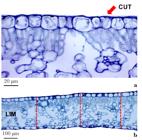
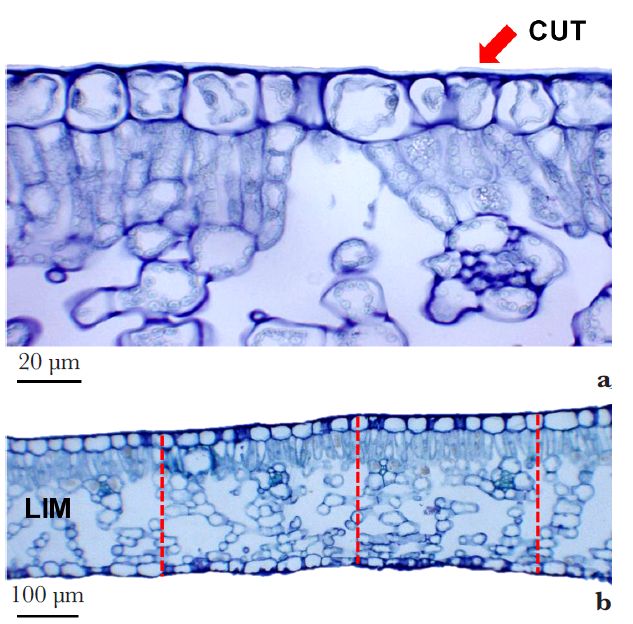
a-b. Representative micrograph of the adaxial cuticle (CUT) and leaf blade (LIM) of Coffea arabica leaves, indicating the measured areas - a. cuticle of the adaxial surface, arrow indicates the measured area; b. leaf blade; dotted lines indicate the measured area.
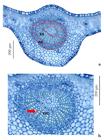
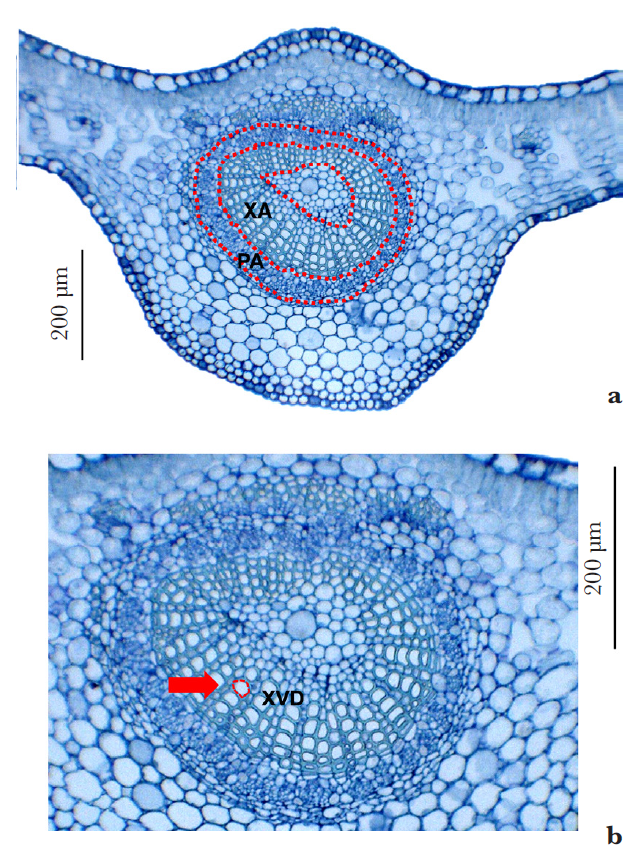
a-b. Representative micrograph of the midrib of Coffea arabica leaves with indications of the measured areas - a. midrib, dotted line indicates measured areas (XA = xylem area; PA = phloem area); b. central vein; arrow and dotted line indicate the measurement of the diameter of the xylem vessels (XVD).
Leaf paradermal sections were obtained by printing the epidermis using the printing method with universal instant adhesive (ethyl cyanoacrylate), (Super Bonder®), (Segatto et al. 2004).
The leaf laminas were observed and photographed in an optical microscope, Red 200 model by Kasvi/Motic, coupled to a Moticam 5MP digital camera by Motic. For each repetition of the treatments, twelve photographs were taken-nine of laminae containing transverse sections (three images of the main vein, three of the leaf lamina and three of the cuticle of the epidermis of the adaxial surface) and three of lamina in paradermal sections. Subsequently, the images were analyzed with the specific software for image analysis, UTHSCSA-ImageTool, version 3.0 (UTHSCSA 2021).
The characteristics evaluated in transverse sections were: adaxial cuticle thickness (CUT- µm), leaf lamina thickness (LIM- µm), (Fig. 1), number of xylem vessels (XVN), diameter of metaxylem vessels (XVD- µm), total area of the xylem region (XA - µm2), total area of the phloem region (PA - µm2), (Fig. 2), frequency of xylem vessels (XVF = XVN/XA*1000000, mm2), and vulnerability index of xylem vessels xylem (VI = XVD/XVF) as proposed by Carlquist (1988). The relative hydraulic conductivity (RHC) was estimated using the Hagen-Poiseuille equation modified by Fahn et al. (1986), where: RHC = r4*XVF, µ4m4106), where r is the individual radius of the xylem vessels (Oliveira et al. 2018).
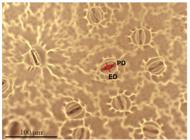
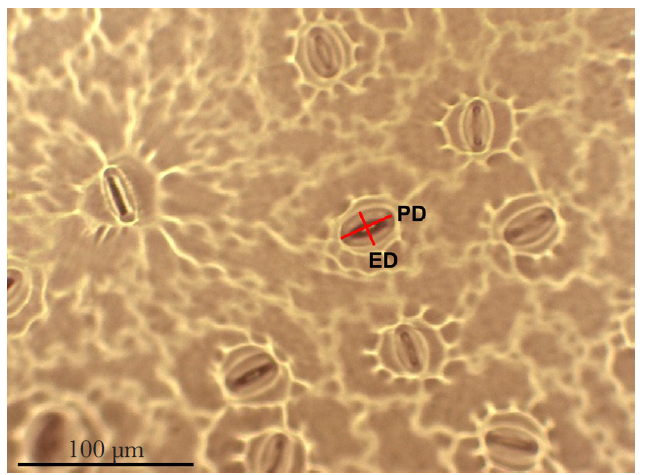
Representative micrograph of the stomata of Coffea arabica leaves with indications of the measured polar (PD) and equatorial (ED) diameters.
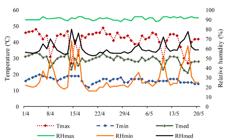
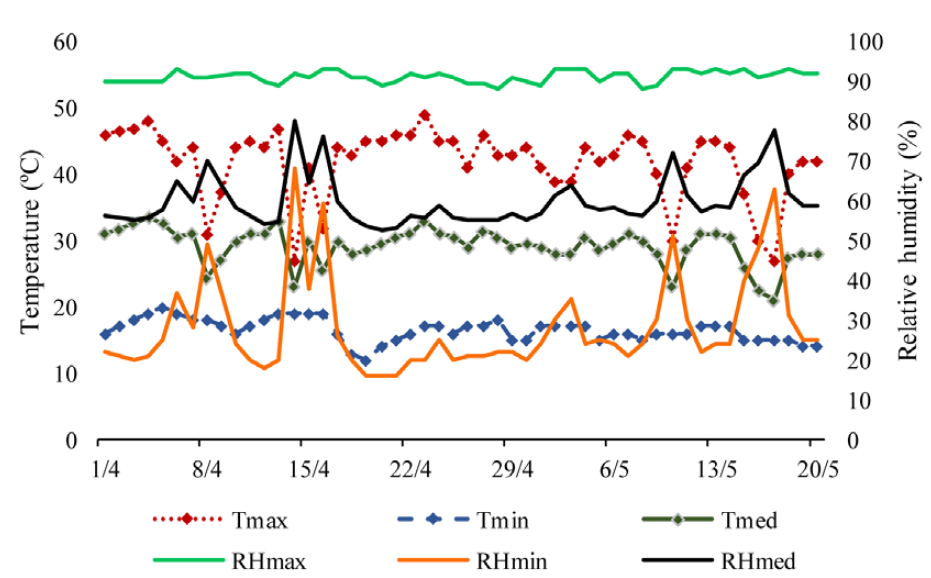
Temperature (T ºC) and relative humidity (RH %) of the air inside the greenhouse during the experimental period.
For the paradermal sections, the following were analyzed: stomatal density (SD - number of stomata/mm2) and the polar and equatorial diameters of the stomata, where the polar diameter/equatorial diameter of the stomata (SPDED) relationship was obtained (Fig. 3).
Statistical analyses
Data analysis was performed using the Genes program (Cruz 2013) and the means obtained were compared using the Scott-Knott test, and significance was observed using the F test (p ≤ 0.05).
To verify the distinction between the genotypes, in addition to the correlation between the characteristics evaluated during water stress, principal component analysis was used. Mean values were standardized to have zero mean and unitary variance, using the FactoMineR library and R software (R CORE TEAM 2019).
Results
Microclimate data
The climatic condition inside the greenhouse during the experimental period is represented in Figure 1. At the beginning of the experimental period (01/04), the average temperature and relative humidity were 31 ºC and 56%, respectively (Fig. 4).
At 33 DAIDH (03/05), when most of the genotypes subjected to deficit (non-irrigated treatment) reached the predawn potential of -3 MPa, the mean temperature was 29 ºC and the relative humidity was 64%. It is worth mentioning that the maximum temperature recorded in the experimental period ranged around 42 ºC (Fig. 4).

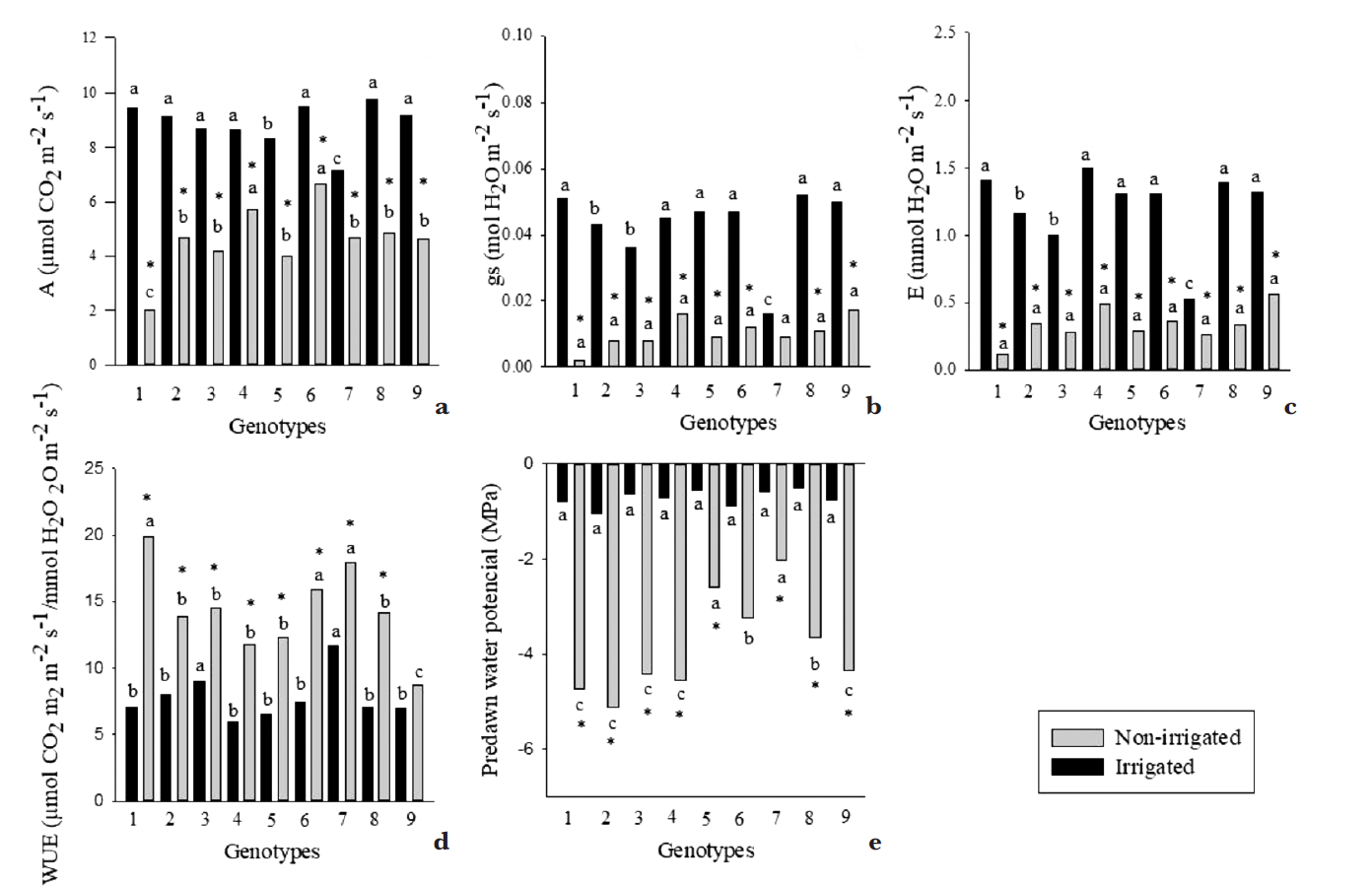
a-e. Mean values of - a. net photosynthetic rate (A); b. stomatal conductance (gs); c. transpiration rate (E); d. water use efficiency (WUE); e. predawn water potential (MPa) of genotypes of Coffea arabica at 33 days after the imposition of water deficit. Means followed by the same lowercase letter compare the genotypes within the water treatment and * compares water treatments within each genotype, according to the Scott-Knott test at the 5% probability level.
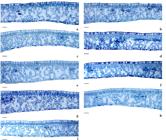
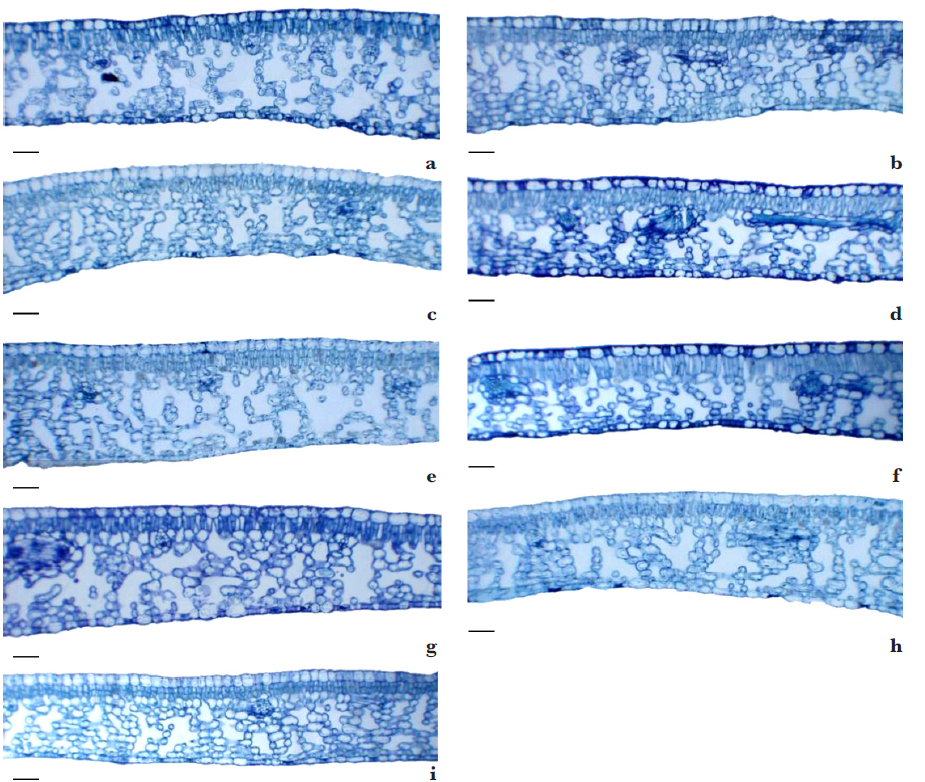
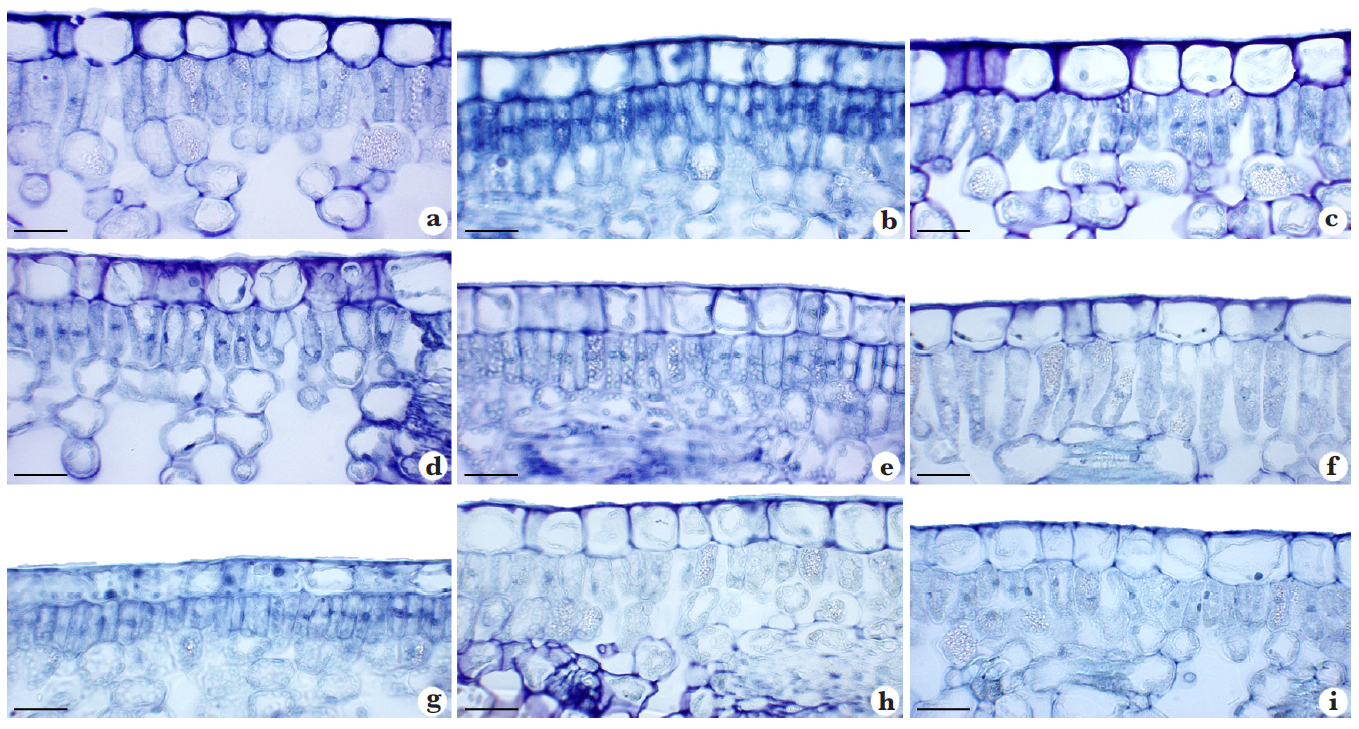
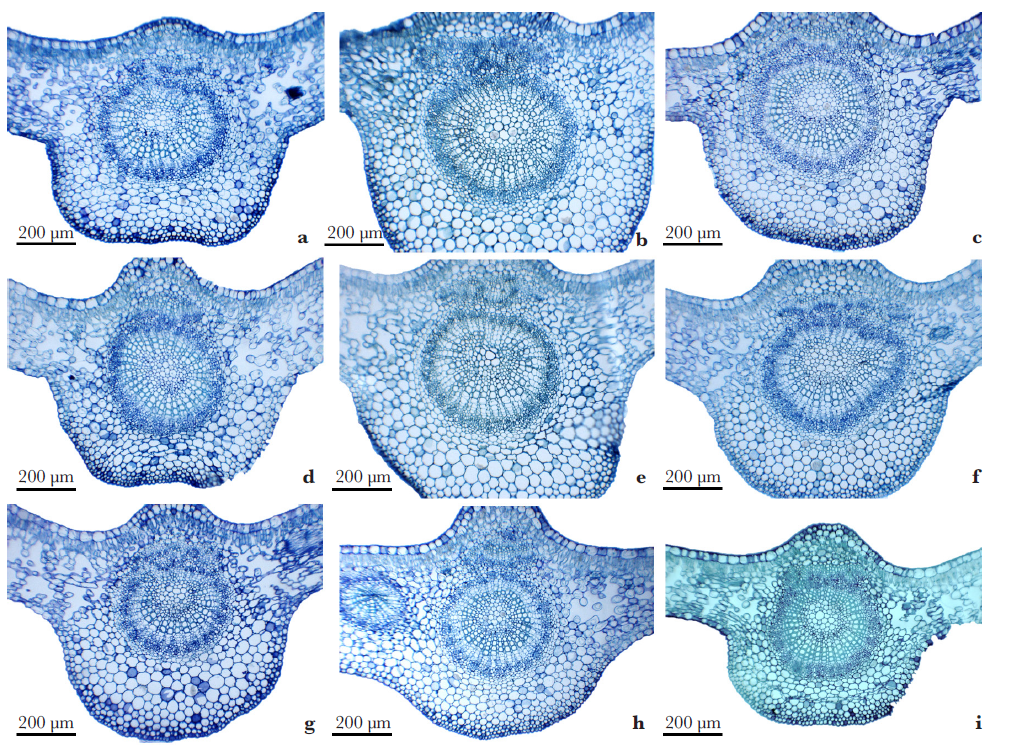
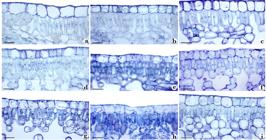
a-i. Images of the leaf blade of Coffea arabica genotypes kept irrigated - a. Hybrid Timor UFV 377-21 Block 1 (genotype 1); b. Hybrid Timor UFV 377-21 (selection of plants 1, 3 and 6), (genotype 2); c. Hybrid Timor UFV 442-42 (genotype 3); d. BE 5 Wush-Wush x Timor Hybrid UFV 366-08 (genotype 4); e. Timor Hybrid UFV 428-02 (genotype 5); f. Timor Hybrid UFV 376-31 (genotype 6); g. Timor Hybrid UFV 427-55 (genotype 7); h. Rubi MG1192 (genotype 8); i. IPR100 (genotype 9). Images are at 10x magnification under optical microscopy. Bars = 100 µm.
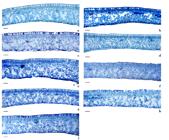
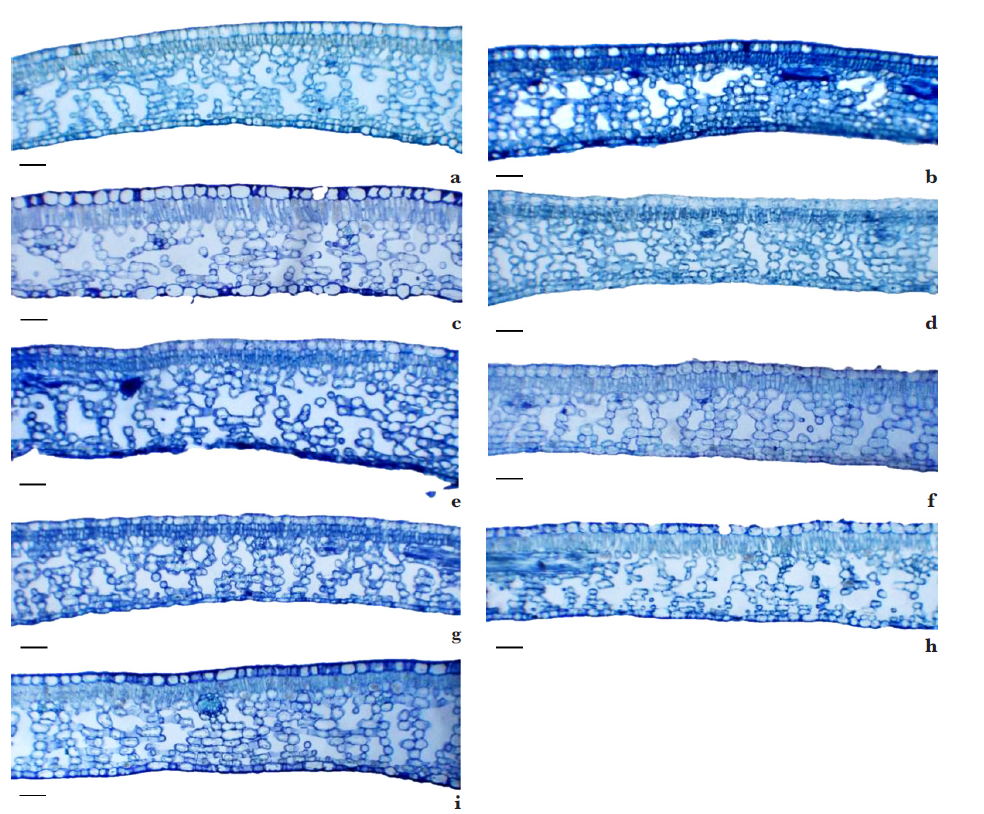
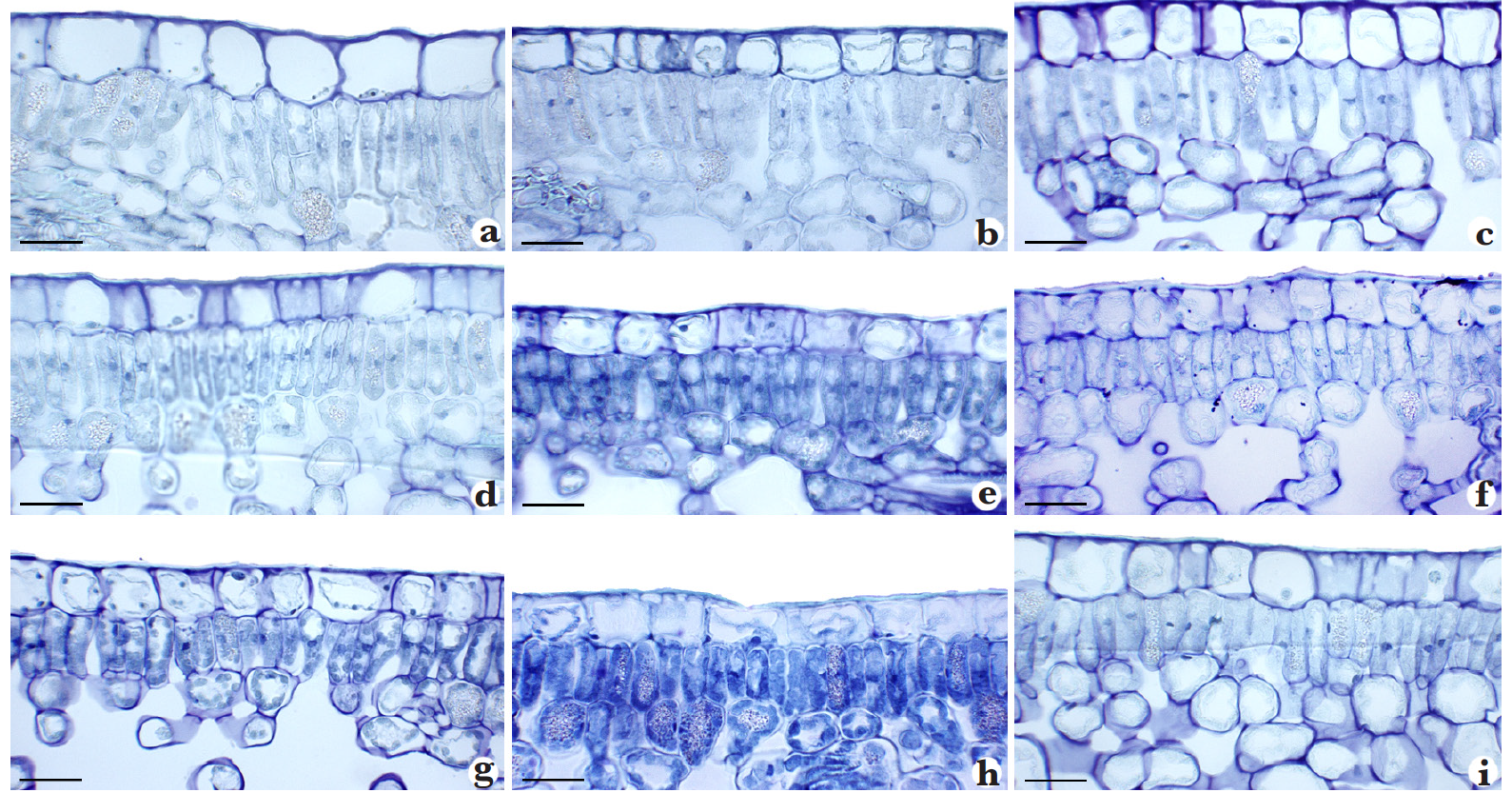
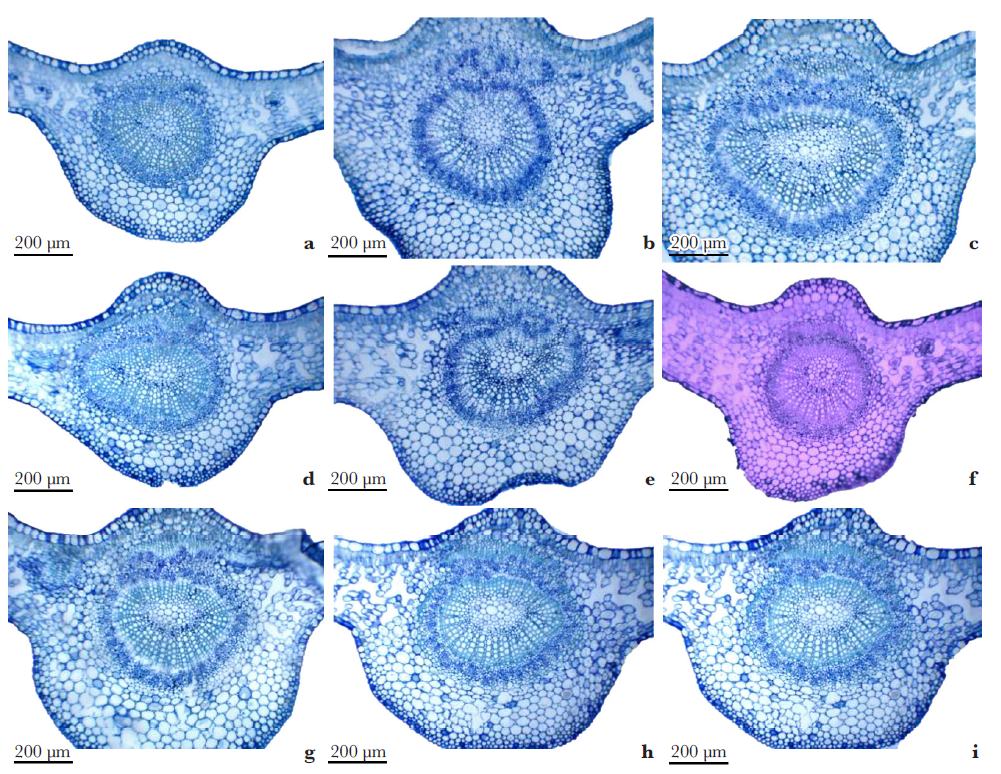
a-i. Images of the leaf blade of Coffea arabica genotypes maintained under water deficit - a. Hybrid Timor UFV 377-21 Block 1 (genotype 1); b. Hybrid Timor UFV 377-21 (selection of plants 1, 3 and 6), (genotype 2); c. Hybrid Timor UFV 442-42 (genotype 3); d. BE 5 Wush-Wush x Timor Hybrid UFV 366-08 (genotype 4); e. Timor Hybrid UFV 428-02 (genotype 5); f. Timor Hybrid UFV 376-31 (genotype 6); g. Timor Hybrid UFV 427-55 (genotype 7); h. Rubi MG1192 (genotype 8); i. IPR100 (genotype 9). Images are at 10x magnification under optical microscopy. Bars = 100 µm.
Physiological characteristics
After 33 days of imposition of water deficit a significant difference was generally observed among all physiological characteristics in relation to water treatment. A reduction of 48.22% was observed in the photosynthetic rate of the non-irrigated genotypes in relation to the irrigated ones. Since the plants of genotype 1 were the most affected-with a reduction of 79% in A when compared to the irrigated control-they remained isolated in the group with the lowest A. Plants of genotypes 2, 3, 5, 7, 8 and 9 remained in the second group, with smaller A, with variation between 4.00 and 4.86 µmol CO2 m-2 s-1. The highest net photosynthetic rate values were observed in genotypes 4 and 6 (Fig. 5a). For stomatal conductance and transpiration, no differences were observed between genotypes under water deficit, but only between water treatments (Fig. 5b-c).
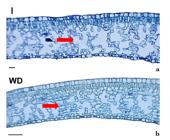
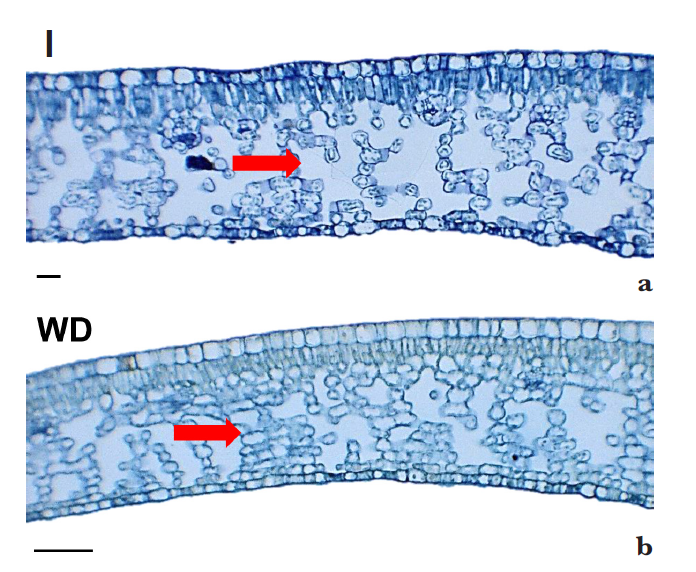
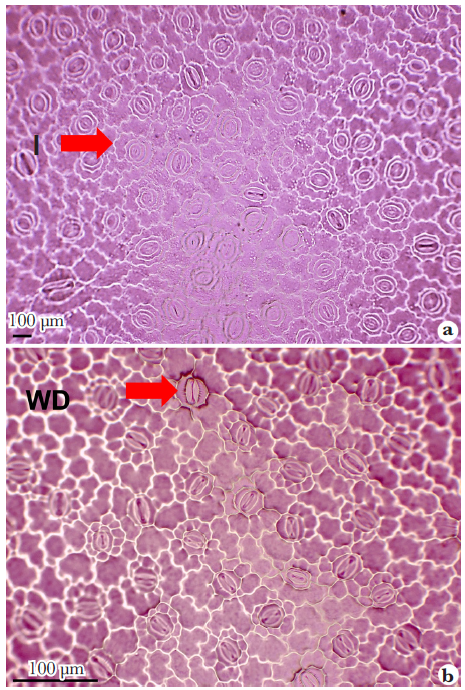
a-b. Images of the leaf blade of Timor Hybrid UFV 377-21 (genotype 1) showing the difference as a function of water availability - a. kept irrigated; b. under water deficit. Arrows indicate the difference in intercellular spaces in relation of water availability. I = irrigated; WD = water deficit. The images are at 10x magnification under optical microscopy. Bars = 100 µm.
For water use efficiency, higher average values were observed for plants of genotypes 1, 6 and 7 for non-irrigated treatment. Genotype 9 plants showed a lower average value regarding this characteristic (Fig. 5d).
With regard to predawn leaf water potential, values below -3 MPa were found in most genotypes maintained without irrigation. For the non-irrigated treatment, higher average values were observed in plants of genotypes 5 and 7, followed by plants of genotypes 6 and 8 with intermediate values. The other genotypes were most affected by water deficit and remained with values between -4.35 and -5.13 MPa (Fig. 5e).
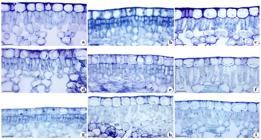
a-i. Images of the cuticle of the adaxial epidermis of Coffea arabica genotypes kept irrigated - a. Hybrid Timor UFV 377-21 Block 1 (genotype 1); b. Hybrid Timor UFV 377-21 (selection of plants 1, 3 and 6), (genotype 2); c. Hybrid Timor UFV 442-42 (genotype 3); d. BE 5 Wush-Wush x Timor Hybrid UFV 366-08 (genotype 4); e. Timor Hybrid UFV 428-02 (genotype 5); f. Timor Hybrid UFV 376-31 (genotype 6); g. Timor Hybrid UFV 427-55 (genotype 7); h. Rubi MG1192 (genotype 8); i. IPR100 (genotype 9). Images are at 40x magnification under optical microscopy. Bars = 20 µm.
a-i. Images of the cuticle of the adaxial epidermis of Coffea arabica genotypes maintained under water deficit - a. Hybrid Timor UFV 377-21 Block 1 (genotype 1); b. Hybrid Timor UFV 377-21 (selection of plants 1, 3 and 6), (genotype 2); c. Hybrid Timor UFV 442-42 (genotype 3); d. BE 5 Wush-Wush x Timor Hybrid UFV 366-08 (genotype 4); e. Timor Hybrid UFV 428-02 (genotype 5); f. Timor Hybrid UFV 376-31 (genotype 6); g. Timor Hybrid UFV 427-55 (genotype 7); h. Rubi MG1192 (genotype 8); i. IPR100 (genotype 9). Images are at 40x magnification under optical microscopy. Bars = 20 µm.
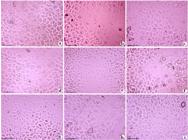
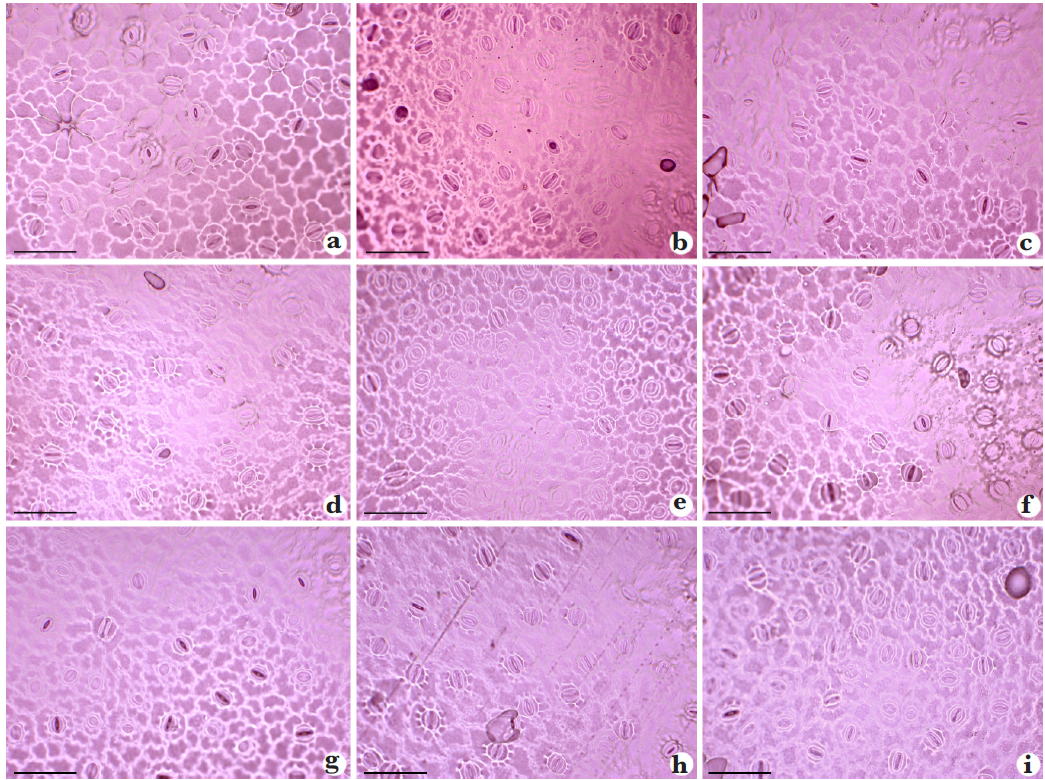
a-i. Images of stomata of Coffea arabica genotypes kept irrigated - a. Hybrid Timor UFV 377-21 Block 1 (genotype 1); b. Hybrid Timor UFV 377-21 (selection of plants 1, 3 and 6) (genotype 2); c. Hybrid Timor UFV 442-42 (genotype 3); d. BE 5 Wush-Wush x Timor Hybrid UFV 366-08 (genotype 4); e. Timor Hybrid UFV 428-02 (genotype 5); f. Timor Hybrid UFV 376-31 (genotype 6); g. Timor Hybrid UFV 427-55 (genotype 7); h. Rubi MG1192 (genotype 8); i. IPR100 (genotype 9). Images are at 20x magnification under optical microscopy. Bars = 100 µm.
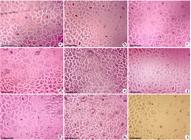
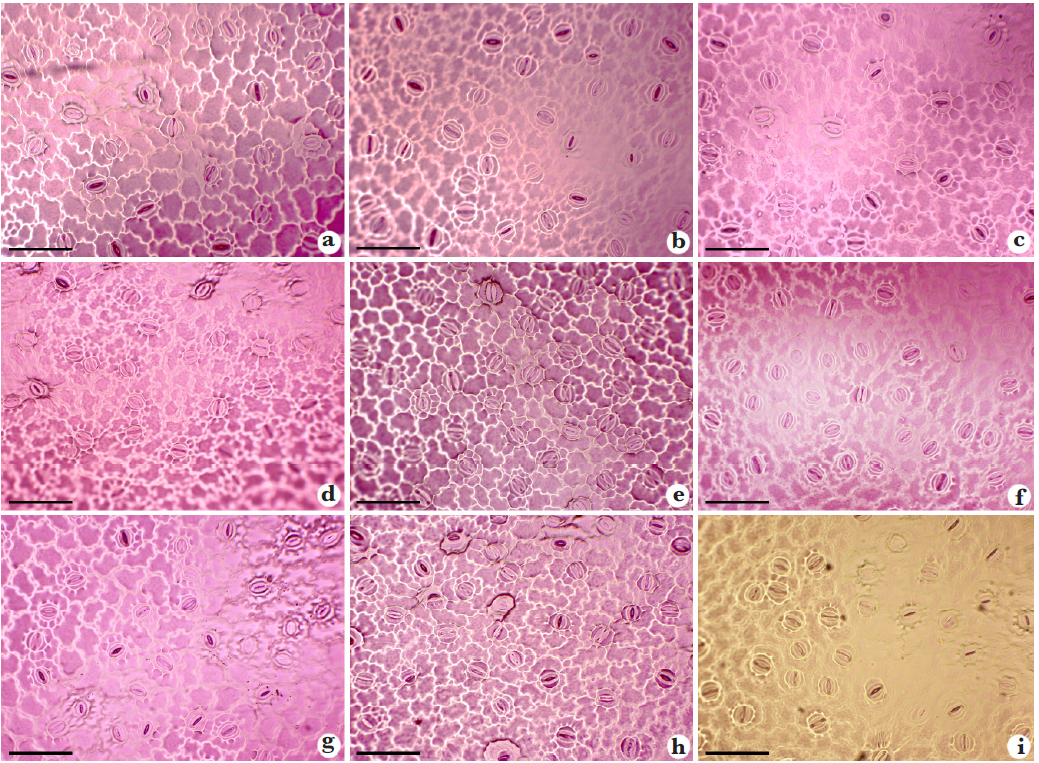
a-i. Images of stomata of Coffea arabica genotypes maintained under water deficit - a. Hybrid Timor UFV 377-21 Block 1 (genotype 1); b. Hybrid Timor UFV 377-21 (selection of plants 1, 3 and 6), (genotype 2); c. Hybrid Timor UFV 442-42 (genotype 3); d. BE 5 Wush-Wush x Timor Hybrid UFV 366-08 (genotype 4); e. Timor Hybrid UFV 428-02 (genotype 5); f. Timor Hybrid UFV 376-31 (genotype 6); g. Timor Hybrid UFV 427-55 (genotype 7); h. Rubi MG1192 (genotype 8); i. IPR100 (genotype 9). Images are at 20x magnification under optical microscopy. Bars = 100 µm.
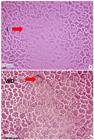
a-b. Images of stomata of Timor Hybrid UFV 428-02 (genotype 5) showing the difference as a function of water availability - a. kept irrigated; b. under water deficit. Arrows indicate the difference in the shape of the stomata in relation to water availability. I = irrigated; WD = water deficit. The images are at 20x magnification under optical microscopy.
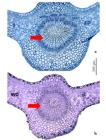
a-b. Images of the midrib of Timor Hybrid UFV 376-31 (genotype 6) showing the difference in xylem vessel elements as a function of water availability - a. kept irrigated; b. under water deficit. Arrows indicate the difference in xylem vessels in relation to water availability. I = irrigated; WD = water deficit. The images are at 10x magnification under optical microscopy.
Leaf anatomical characteristics
The data referring to the leaf lamina (LIM) and cuticle thickness of the adaxial face (CUT) are presented in Table 2. Under conditions of water deficit, there was a reduction in the thickness of the leaf lamina in plants of genotypes 1 and 7 at 7% and 17%, respectively, in relation to the irrigated control (Tab. 2; Figs. 6a-i; 7a-i).
Figure 8 shows the reduction in the leaf blade of genotype 1 subjected to the non-irrigated treatment (Fig. 8b) in relation to the plants of the same genotype that were maintained irrigated. In the figures, a reduction in the spaces between the cells of the spongy parenchyma is observed (Fig. 8a-b).
There was an increase in the thickness of the cuticle of all genotypes kept under water deficit (average 0.16 µm or 3.8%), where plants of genotypes 3, 6, 7, 8 and 9 stood out with greater cuticle thickness after the non-irrigated water treatment (Tab. 2; Figs. 9a-i; 10a-i). Regarding stomatal density, an average reduction of 36.3% was observed in plants of genotypes 2, 4 and 5, being more pronounced in genotype 4 (40.7%) under conditions of water deficit. For the relationship between polar and equatorial diameter (SPDED) of stomata, an increase of 10.6% was observed in plants of genotypes 2, 5, 6 and 7 for the NI treatment compared to the irrigated control. On the other hand, there was a reduction in this characteristic in plants of genotypes 4 (9.3%) and 9 (3.8%), (NI), (Tab. 3; Figs. 11a-i; 12a-i).
In Figure 13 we observe the reduction in the number of stomata (genotype 5) in relation to water availability, as well as changes in the format of the stomata when not irrigated.
With regard to the conducting vessels, there was an average reduction of 23.56% in the phloem (PA) and xylem (XA) areas in plants of genotypes 2, 4, 6 and 9 due to water deficit. However, greater development in xylem vessel elements was observed in plants under water restriction, where there was a predominance of mature vessels or metaxylem (Fig. 14a-b). Concerning the diameter of xylem vessels (XVD), there was a reduction in most non-irrigated genotypes (Fig. 14a-b). Lower values of XVD were verified in plants of genotypes 4, 6, 7 and 8 (Tab. 4; Figs. 15a-i; 16a-i). No difference was observed between water treatments regarding the characteristic of xylem vessel frequency (XVF). However, there was variability between the evaluated genotypes, where the highest XVF was observed in genotype 9 plants and the lowest XVF in plants of genotypes 2 and 5 (Tab. 4; Figs. 15a-i; 16a-i).
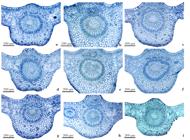
a-i. Images of the midrib of Coffea arabica genotypes kept irrigated - a. Hybrid Timor UFV 377-21 Block 1 (genotype 1); b. Hybrid Timor UFV 377-21 (selection of plants 1, 3 and 6) (genotype 2); c. Hybrid Timor UFV 442-42 (genotype 3); d. BE 5 Wush-Wush x Timor Hybrid UFV 366-08 (genotype 4); e. Timor Hybrid UFV 428-02 (genotype 5); f. Timor Hybrid UFV 376-31 (genotype 6); g. Timor Hybrid UFV 427-55 (genotype 7); h. Rubi MG1192 (genotype 8); i. IPR100 (genotype 9). Images are at 10x magnification under optical microscopy.
With regard to the vulnerability index of the xylem vessels (VI), under conditions of water deficit, a reduction of 32.7% was observed in plants of genotypes 2 and 8, compared to the irrigated control. Among non-irrigated genotypes, higher VI values were observed in plants of genotypes 1, 2, 3 and 5. In turn, lower VI values were observed in plants of genotypes 4, 6, 7, 8 and 9 (Tab. 4).
Under water deficit conditions, there was a reduction of 25.7% in relative hydraulic conductivity (RHC) in most of the evaluated genotypes, with the exception of the genotypes 3, 6 and 9, which maintained RHC similar to the irrigated control. Considering only non-irrigated genotypes, higher mean values were observed in plants of genotypes 2 and 3, and lower values in plants of genotype 7 (Tab. 4).
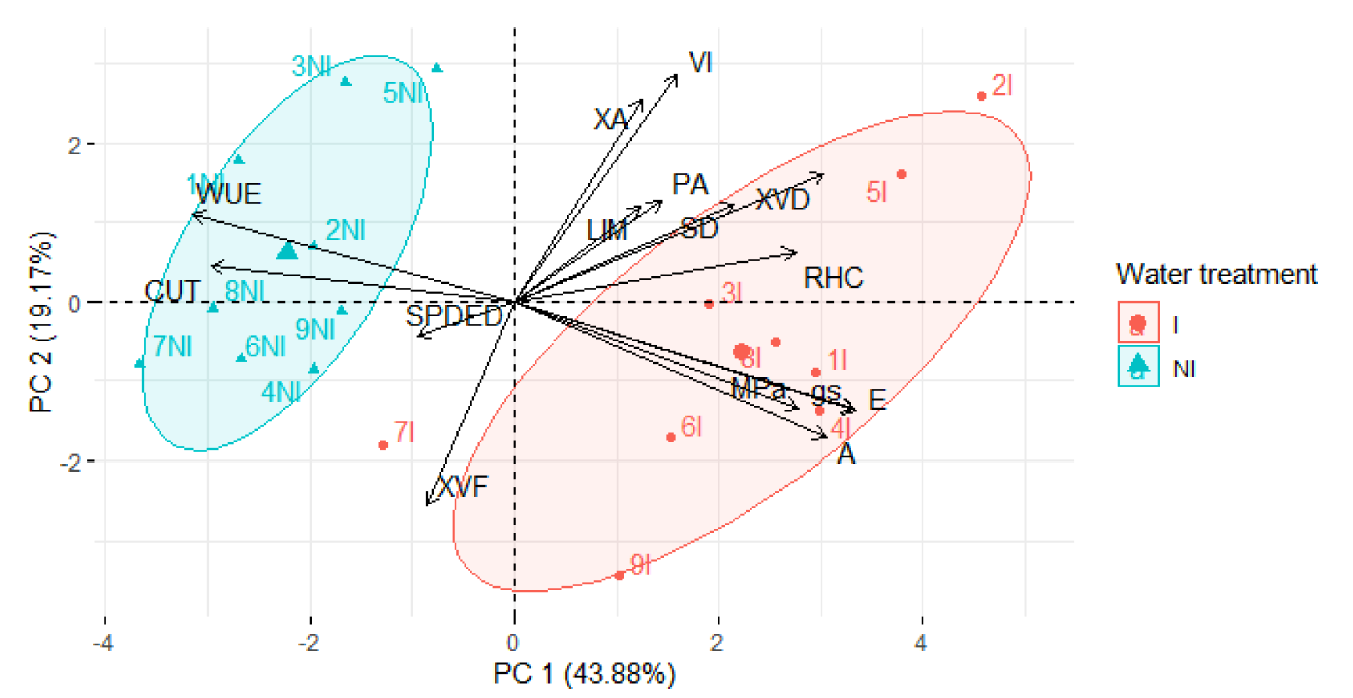
Figure 17 shows the projection of the vectors and the dispersion of the genotypes subjected to water deficit. The characteristics of cuticle thickness of the adaxial face (CUT), water use efficiency (WUE) and frequency of xylem vessels (XVF) differentiated the genotypes kept under water deficit of the irrigated treatment. Likewise, net photosynthetic (A) and transpiration (E) rates, relative hydraulic conductivity (RHC), xylem vessel diameter (XVD) and vulnerability index (VI) were related to irrigated treatment.
Positive correlations were observed between adaxial face cuticle thickness (CUT) and water use efficiency (WUE). Negative correlations were found between the vulnerability index of xylem vessels with gas exchange and the frequency of xylem vessels (Fig. 17).
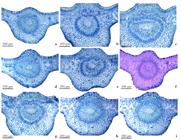
a-i. Images of the midrib of Coffea arabica genotypes maintained under water deficit - a. Hybrid Timor UFV 377-21 Block 1 (genotype 1); b. Hybrid Timor UFV 377-21 (selection of plants 1, 3 and 6) (genotype 2); c. Hybrid Timor UFV 442-42 (genotype 3); d. BE 5 Wush-Wush x Timor Hybrid UFV 366-08 (genotype 4); e. Timor Hybrid UFV 428-02 (genotype 5); f. Timor Hybrid UFV 376-31 (genotype 6); g. Timor Hybrid UFV 427-55 (genotype 7); h. Rubi MG1192 (genotype 8); i. IPR100 (genotype 9). Images are at 10x magnification under optical microscopy.
Discussion
Water deficit is considered the main abiotic stress, impairing crop growth, development and productivity (Kapoor et al. 2020). The responses of genotypes to drought are controlled by several mechanisms (Nalina et al. 2021). To verify the mechanisms related to water deficit tolerance in Coffea arabica L. genotypes, the present study evaluated leaf physiological and anatomical characteristics.
Photosynthetic performance has been related to crop productivity (Toniutti et al. 2019). When there is water limitation, however, stomatal closure is one of the first responses in order to avoid excessive sweating. This mechanism restricts the CO2 influx and impairs photosynthesis (Blankenagel et al. 2018; Torre et al. 2021). In this paper, 33 days after the imposition of water deficit, the maximum temperature recorded was 39 ºC and the minimum relative humidity was 35% (Fig. 4), conditions that, together with water stress, affected the evaluated genotypes. These presented a reduction of 48% in the net photosynthetic rate in relation to the genotypes that were irrigated (Fig. 5a), whereupon the leaf water potential in the predawn reached values lower than -3 MPa (Fig. 5e). Genotype 1 was the most affected in terms of photosynthetic rate, reaching 1.99 µmol CO2 m-2 s-1 and water potential of -4.98 MPa under water deficit (Fig. 5a). Genotype 2, in turn, which has the same genealogy as genotype 1, but made up of another selection of plants (Tab. 1), showed different behavior in the face of water stress. Even under conditions of low water potential in the predawn (-5,15 MPa), Genotype 2 maintained the photosynthetic rate in the second group, reaching the highest mean values of said rate at 33 days without irrigation (Fig. 5). This may be an adaptation mechanism for plants of this genotype in the face of water stress (Baccari et al. 2020).
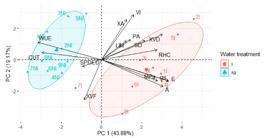
Projection of vectors and dispersion of genotypes of Coffea arabica submitted to water deficit, in relation to the first two principal components. I = irrigated; NI = non-irrigated. Physiological variables: A= net photosynthetic rate; gs = stomatal conductance; E = transpiration rate; WUE = water use efficiency; MPa = predawn water potential. Leaf anatomical variables: LIM = leaf lamina thickness; CUT = adaxial face cuticle thickness; SD = stomatal density; SPDED = relationship between polar and equatorial diameter; PA = phloem area; XA = xylem area; XVD = xylem vessel diameter; XVF = xylem vessel frequency; VI = vulnerability index; RHC = relative hydraulic conductivity.
The ability to maintain the photosynthetic rate even under conditions of low water availability has been associated with plants with greater water use efficiency (Baccari et al. 2020), and this behavior was observed in plants of genotypes 4 and 6 (Fig. 5a,d-e).
The stress caused changes in the evaluated genotypes in terms of physiological aspects, but structural adaptations also occurred in the leaves as ways to avoid sweating and survive stress (Hasanagic et al. 2020). Cuticular conductance and permeability can play a large role in how vegetation responds to drought (Lanning et al. 2020). Although cuticular sweating represents about 5 to 10% of the sweating rate (Ferri & Lamberti 1960), non-stomatal sweating in this case is not beneficial, as no fixation of CO2 occurs (Blum 2009). Thus, a thicker layer of the cuticle benefits plants that undergo a period of water deficit (Kane et al. 2020). This characteristic is associated with delayed desiccation-a drought tolerance strategy (Kursar et al. 2009). In this study, there was an increase in the cuticle layer of the epidermis of the adaxial face in non-irrigated genotypes. Plants of genotypes 3, 6, 7, 8 and 9 stood out, presenting greater cuticle thickness when not irrigated (Tab. 2; Figs. 9a-i; 10a-i). Furthermore, this characteristic may have benefited the maintenance of higher values of predawn water potential and photosynthetic rate during the stress phase in plants of genotypes 6 and 7 (Fig. 5a,e). Similar results were observed in other studies that found lower water potential in coffee genotypes with greater cuticle thickness (Grisi et al. 2008; Batista et al. 2010; Taratima et al. 2020).
Under adverse climatic conditions, such as radiation, high temperature and water stress, there is usually an increase in leaf lamina thickness. This occurs due to the development of palisade and spongy parenchyma tissues, which can favor the storage and fixation of CO2 and enable the survival of plants under water stress (Alderotti et al. 2020; Castanheira et al. 2016). In this paper, however, there was no increase in the thickness of the leaf lamina of the non-irrigated genotypes in relation to the irrigated control (Tab. 2). Among the non-irrigated genotypes, greater thickness of the leaf lamina was observed in plants of genotype 3, followed by 1, 5, 6 and 9, according to the Scott-Knott grouping (Tab. 2; Figs. 6a-i; 7a-i). Conversely, there was a reduction in the thickness of the leaf lamina in the plants of genotypes 1 and 7, compared to the irrigated control (Tab. 2; Figs. 6a-i; 7a-i), likely due to the reduction of intercellular spaces in the spongy parenchyma (Fig. 8a-b). Similar results were observed by Hasanagic et al. (2020) in plants subjected to water deficit.
Water limitation also induces adaptations in stomata in terms of location, density and shape (Queiroz-Voltan et al. 2014). Reduction in stomatal density was observed in plants of genotypes 2, 4 and 5 in relation to the irrigated control (Tab. 3; Figs. 11a-i; 12a-i; 13a-b). The lower number of stomata per area can reduce the transpiration rate (Nóia Júnior et al. 2018) and this characteristic has been related to drought-tolerant genotypes (Oliveira et al. 2018). In addition, an increase was observed in the relationship between polar and equatorial diameter of stomata in plants of genotypes 2, 5, 6 and 7 in relation to the irrigated control (Tab. 3; Figs. 11a-i; 12a-i; 13a-b). This is indicated by the ellipsoidal shape of the stomata, which reduces transpiration due to a smaller stomatal opening, optimizing gas exchange under water restriction (Grisi et al. 2008; Batista et al. 2010; Nóia Júnior et al. 2018).
Adaptations to water deficiency are also observed in vascular tissues that present different responses due to such stress (Queiroz-Voltan et al. 2014; Hasanagic et al. 2020). It was observed in this study a reduction in the xylem and phloem area in plants of genotypes 2, 4 and 6, in relation to the irrigated control (Tab. 4; Figs. 14a-b; 15a-i; 16a-i). Water limitation reduces cell division and, consequently, there is less expansion of the leaf area (Bangar et al. 2019). The hydraulic properties of the xylem vessels seem to be related to the size of the leaf, with smaller leaves presenting a smaller diameter of the xylem vessels (Mauri et al. 2020). In this paper, plants of genotypes 4, 6, 7 and 8 showed smaller diameter of xylem vessels under water deficit (Tab. 2; Figs. 14a-i; 15a-b; 16a-i). Furthermore, these genotypes had a lower vulnerability index of the xylem vessels when not irrigated (Tab. 4). Xylem vessels with these characteristics can withstand greater stresses, prevent embolism and cavitation, maintaining the hydraulic function of the leaf in dry periods (Oliveira et al. 2018; Yao et al. 2020).
On the other hand, larger areas in the vascular system may favor the transport of water, mineral salts and photoassimilates, optimizing photosynthesis, growth and development of the plant (Queiroz-Voltan et al. 2014). This behavior was observed in genotype 1, which was the only one that presented an increase in the phloem area, in relation to the irrigated control. Among non-irrigated genotypes, genotype 5 plants remained in the group with the largest xylem and phloem area (Tab. 4; Figs. 15a-i; 16a-i).
Under conditions of water restriction, stomatal closure reduces the water transport capacity of the leaves and limits hydraulic conductance in the xylem vessels (Taratima et al. 2020; Torre et al. 2021). This behavior was verified in most of the evaluated genotypes subjected to water deficit, which showed a reduction of 32.7% in the relative hydraulic conductivity of the xylem vessels (RHC). Plants of genotypes 1, 7 and 8 were the most affected by water deficit (Tab. 4), which may have impaired the photosynthesis of plants of genotype 1 (Fig. 5a). Additionally, plants of genotypes 3, 6 and 9 stood out by maintaining RHC similar to the irrigated control, which may have favored the transport of water and mineral salts during the stress period.
In the analysis of principal components, it was possible to observe a distinction between the genotypes in terms of water treatment (Fig. 17). In the irrigated treatment, it was observed that gas exchange was benefited by water availability, as well as higher mean values of water potential in the morning (Fig. 17). The conductivity and the diameter of the xylem vessels were higher in this treatment, as well as the vulnerability index of the xylem vessels (Tab. 4), since it is calculated by the ratio between diameter and frequency of vessels (Carlquist 1988).
In the non-irrigated treatment, adaptations were observed in the genotypes due to the stress caused. Principal component analysis showed the importance of cuticle thickness of the adaxial face, water use efficiency, as well as the frequency of xylem vessels for distinguishing this water treatment (Fig. 17). Positive correlations were observed between adaxial face cuticle thickness (CUT) and water use efficiency (WUE), (Fig. 17). Furthermore, negative correlations were found between the vulnerability index of xylem vessels with gas exchange and the frequency of xylem vessels (Fig. 17). Similar results were observed by Reis et al. (2022), who observed greater cuticle thickness among the genotypes with greater water use efficiency, emphasizing the importance of this anatomical characteristic for plants during the dry period.
The drought tolerance of genotype 9 (cultivar IPR100), as reported by other authors (Carvalho et al. 2017), seems to be governed by a series of physiological and structural mechanisms, which combined confer drought tolerance, as observed herein. The main characteristics observed in this analysis were an increase in cuticle thickness on the adaxial face, according to the frequency of xylem vessels, as well as low values of VI and maintenance of relative hydraulic conductivity (Figs. 9i; 10i; 15i; 16i; 17; Tabs. 2; 4). These characteristics may have favored gas exchanges, even under low predawn water potential during water stress (Fig. 5a,e).These are attributes that delayed the desiccation of the plant and contribute to its survival (Kursar et al. 2009).
Plants of genotypes 6 and 8 showed greater cuticle thickness associated with lower values of VI (Figs. 9a-i; 10a-i; Tabs. 2; 4). Genotype 6 stood out for maintaining the net photosynthetic rate with intermediate values even under low water potential in the predawn, providing greater efficiency of water use (Fig. 5a,d-e).
The results showed that, in general, the genotypes showed adaptations to water stress. The genotypes that had adaptations that prevented excessive sweating, such as increased cuticle thickness, higher SPDED ratio and maintenance of hydraulic conductivity, stood out. These anatomical characteristics found in the leaf may play a functional role in the regulation of leaf water potential. This information can help genetic improvement programs for coffee in the early selection of genotypes with potential for drought tolerance, since, in other studies, high heritability values for these characteristics were observed, which allows gains in selection advancement (Santos et al. 2022). Additionally, genotypes 6 and 2 can be used in future hybridizations aiming to incorporate such drought tolerance traits as described here. Likewise, the cultivar IPR100 can be used in areas prone to water deficit.
The genotypes of Coffea arabica L. presented variability regarding responses in the physiological and anatomical leaf characteristics, indicating different adaptation strategies to water deficit.
Among the analyzed genotypes, the Timor Hybrid UFV 377-21, UFV 376-31 and the cultivar IPR100 stood out, presenting adaptations that allowed the maintenance of the hydric status in the initial development phase. These materials can be used in future hybridizations aiming to incorporate tolerance to water deficit.
Leaf anatomical characteristics associated with physiological ones have potential for use in the early selection of Coffea for drought tolerance.
Acknowledgements
The authors thank the Fundação de Amparo à Pesquisa do Estado de Minas Gerais (FAPEMIG), Coordenação de Aperfeiçoamento de Pessoal de Nível Superior (CAPES), Conselho Nacional de Desenvolvimento Científico e Tecnológico (CNPq), Instituto Nacional de Ciência e Tecnologia do Café (INCT-Café) and Consórcio Brasileiro de Pesquisa e Desenvolvimento do Café - Consórcio Pesquisa Café, for the financial support.
Data availability statement
In accordance with Open Science communication practices, the authors inform that all data are available within the manuscript.
References
- Alderotti F, Brunetti C, Marino G, Centritto M, Ferrini F, Giodarno C, Tattini M, Moura BB & Gori A (2020) Coordination of morpho-physiological and metabolic traits of Cistus incanus L. to overcome heatwave-associated summer drought: a two-year on-site field study. Frontiers in Ecology and Evolution 8: 1-17.
- Alvares CA, Stape JL, Sentelhas PC, Moraes JL & Sparovek G (2013) Köppen’s climate classification map for Brazil. Meteorologische Zeitschrift 22: 711-728.
- Baccari S, Elloumi O, Chaari-Rkhis A, Fenollosa E, Morales M, Drira N, Abdallah FB, Fki L & Munné-Bosch S (2020) Linking leaf water potential, photosynthesis and chlorophyll loss with mechanisms of photo-and antioxidant protection in juvenile olive tress subjected to severe drought. Frontiers in Plant Science 11: 1-14.
- Baliza DP, Cunha RL, Castro EM, Barbosa JPRAD, Pires MF & Gomes RA (2012) Trocas gasosas e características estruturais adaptativas de cafeeiros cultivados em diferentes níveis de radiação. Coffee Science 7: 250-258.
- Bangar P, Chaudhury A, Tiwari B, Kumar S, Kumari R & Bhat KV (2019) Morphophysiological and biochemical response of mungbean [Vigna radiata (L.) Wilczek] varieties at different developmental stages under drought stress. Turkish Journal Biology 43: 58-69.
- Batista LA, Guimarães RJ, Pereira FJ, Carvalho GR & Castro EM (2010) Anatomia foliar e potencial hídrico na tolerância de cultivares de café ao estresse hídrico. Revista Ciência Agronômica 41: 475-481.
- Blankenagel S, Yang Z, Avramova V, Schon C & Grill E (2018) Generating plants with improved water use efficiency. Agronomy 8: 1-13.
- Blum A (2009) Effective use of water (EUW) and not water-use efficiency (WUE) is the target of crop yield improvement under drought stress. Field Crops Research 112: 119-123.
- Brum CN, Melo EF, Barquero LOB, Alves JD & Chalfún-Júnior A (2013) Modifications in the metabolism of carbohydrates in (Coffea arabica L. cv. Siriema) seedlings under drought conditions. Coffee Science 8: 140-147.
- Camargo AP & Camargo MBP (2001) Definição e esquematização das fases fenológicas do cafeeiro arábica nas condições tropicais do Brasil. Bragantia 60: 65-68.
- Canales FJ, Rispail N, García-Tejera O, Arbona V, Pérez-de-Luque A & Prats E (2021) Drought resistance in oat involves ABA-mediated modulation of transpiration and root hydraulic conductivity. Environmental and Experimental Botany 182: 1-14.
- Carlquist S (1988) Comparative wood anatomy. Springer, New York. 436p.
- Carvalho A, Medina Filho HP, Fazuoli LC, Guerreiro Filho O & Lima MM (1991) Aspectos genéticos do cafeeiro. Revista Brasileira de Genética 14: 135-183.
- Carvalho FG, Sera GH, Andreazi E, Sera T, Fonseca, ICB, Carducci FC, Shigueoka LH, Holderbaum MM & Carmezini K (2017) Tolerância ao déficit hídrico em mudas de genótipos de café portadores de genes de diferentes espécies. Coffee Science 12: 156-163.
- Castanheira DT, Rezende TT, Baliza DP, Guedes JM, Carvalho SP, Guimarães RJ & Viana MTR (2016) Potencial de utilização de características anatômicas e fisiológicas na seleção de progênies de cafeeiro. Coffee Science 11: 375-386.
- Cruz CD (2013) GENES - a software package for analysis in experimental statistics and quantitative genetics. Acta Scientiarum 35: 271-276.
- Dubberstein D, Lidon FC, Rodrigues AP, Semedo JN, Marques I, Rodrigues WP, Gouveia D, Armengaud J, Semedo MC, Martins S, Simões-Costa MC, Moura I, Pais IP, Scotti-Campos P, Partelli FL, Campostrini E, Ribeiro-Barros AI, Damatta FM & Ramalho JC (2020) Resilient and sensitive key points of the photosynthetic machinery of Coffea spp. to the single and superimposed exposure to severe drought and heat stresses. Frontiers in Plant Science 11: 1-22.
- Eira MTS, Fazuolli LC, Guerreiro Filho O, Silvarolla MB, Ferrão MAG, Fonseca AFA, Ferrão RG, Sera T, Pereira AA, Sakiyama NS, Zambolin L, Carvalho CHS, Padilha L & Souza FF (2007) Bancos de germoplasma de café no Brasil. Embrapa Recursos Genéticos e Biotecnologia, Brasília. 18p.
- Fahn A, Werk E & Baas P (1986) Wood anatomy and identification of trees and shrubs from Israel and adjacent regions. Israel Academy of Scienses and Humanities, Jerusalem. 221p.
- Ferri MG & Lamberti A (1960) Informações sobre a economia d’agua de plantas de um tabuleiro no município de Goiana (Pernambuco). Botânica 17: 133-145.
- Freire LP, Marracini P, Rodrigues GC & Andrade AC (2013) Análise da expressão do gene manose 6 fosfato redutase em cafeeiros submetidos ao déficit hídrico. Coffee Science 8: 17-23.
- Guimarães PTG, Garcia AWR, Alvarez Venegas VH, Prezotti LC, Viana AS, Miguel AE, Malavolta E, Correa JB, Lopes AS, Nogueira FD, Monteiro AVC & Oliveira JA (1999) Cafeeiro. In: Ribeiro AC, Guimarães PTG & Alvarez Venegas VH (eds.) Recomendações para o uso de corretivos e fertilizantes em Minas Gerais: 5a aproximação. CFSEMG, Viçosa. 360p.
- Grisi FA, Alves JD, Castro EM, Oliveira C, Biagiotti G & Melo LA (2008) Avaliações anatômicas foliares em mudas de café ‘Catuaí’ e ‘Siriema’ submetidas ao estresse hídrico. Ciência e Agrotecnologia 32: 1730-1736.
- Hasanagic D, Koleska I, Kojic D, Vlaisavljevic NJ & Kukavica B (2020) Long term drought effects on tomato leaves: anatomical, gas exchange and antioxidant modifications. Acta Physiologiae Plantarum 42: 1-14.
- Hassan MAE, Santhoshkumar AV, Hrideek TK, Jijeesh CM & Joseph J (2021) Variability in drought response among the plus tree accessions of Tectona grandis (Linn f.) from the provenances of Kerala, South India. Acta Physiologiae Plantarum 43: 1-12.
- Johansen DA (1940) Plant microtechnique. McGraw-Hill, New York. 523p.
- Kapoor D, Bhardwaj S, Landi M, Sharma A, Ramakrishnan & Sharma A (2020) The impact of drought in plant metabolism: how to exploit tolerance mechanisms to increase crop prodution. Applied Sciences 10: 1-19.
- Kane CN, Jordan GJ, Jansen S & McAdam SAM (2020) A permeable cuticle, not open stomata, is the primary source of water loss from expanding leaves. Frontiers in Plant Science 11: 1-9.
- Kumar D & Tieszen LL (1980) Photosynthesis in Coffea arabica: I., effects of light and temperature. Experimental Agriculture 16: 13-19.
- Kursar TA, Engelbrecht BM, Burke A, Tyree MT, Omari BE & Giraldo JP (2009) Tolerance to low leaf water status of tropical tree seedlings is related to drought performance and distribuition. Functional Ecology 23: 93-102.
- Lanning M, Wang L & Novick KA (2020) The importance of cuticular permeance in assessing plant water use strategies. Tree Physiology 40: 425-432.
- Mauri R, Cardoso AA, Silva MM, Oliveira LA, Avila RT, Martins SCV & Damatta FM (2020) Leaf hydraulic properties are decoupled from leaf area across coffee species. Tress 34: 1507-1514.
- Moat J, Williams J, Baena S, Wilkinson T, Gole TW, Challa ZK, Demissesw S & Davis AP (2017) Resilience potencial of the Ethiopian coffee sector under climate change. Nature Plants 3: 1-14.
- Nalina M, Saroja S, Chakravarthi M, Rajkumar R, Radhakrishnan & Chandrashekara KN (2021) Water déficit-induced oxidative stress and differential response in antioxidante enzymes of tolerant and susceptible tea cultivars under field condition. Acta Physiologiae Plantarum 43: 1-17.
- Nóia Júnior RD, Amaral GC, Pezzopane JEM, Fonseca MDS, Silva APC & Xavier TMT (2020) Ecophysiological acclimatization to cyclic water stress in Eucalyptus. Journal of Forestry Research 31: 797-806.
- O’Brien TP, Feder N & Mccully ME (1964) Polychromatic staining of plant cell walls by toluidine blue O. Protoplasma 59: 368-373.
- Oliveira I, Meyer A, Afonso S & Gonçalves B (2018) Compared leaf anatomy and water relations of commercial and traditional Prunus dulcis (Mill.) cultivars under rain-fed conditions. Scientia Horticulturae 229: 226-232.
- Onoda Y, Richards L & Westoby M (2012) The importance of leaf cuticle for carbon economy and mechanical strength. New Phytologist 196: 441-447.
- Queiroz-Voltan RB, Nardin CF, Fazuolli LC & Braghini MT (2014) Caracterização da anatomia foliar de cafeeiros arábica em diferentes períodos sazonais. Revista Biotemas 27: 1-10.
-
R CORE TEAM (2019) R: a language and environment for statistical computing. R Foundation for Statistical Computing, Vienna, Austria. Available at <Available at http://www.R-project.org/ >. Access on 10 March 2021.
» http://www.R-project.org/ - Reis AM, Mendes ANG, Abrahão JCR, Santos MO & Silva VA (2022) Early selection of drought-tolerant Coffea arabica genotypes at the seedling stage using functional divergence. Pesquisa Agropecuária Tropical 52: 1-12.
- Ruiz-Cárdenas R (2015) A cafeicultura e sua relação com o clima. HRNS do Brasil, Lavras. 23p.
- Santos CS, Freitas AF, Silva GHB, Carvalho MAF, Santos MO, Carvalho GR & Silva VA (2022) Adaptations to the drought season and impacts on the yield of ‘Híbrido de Timor’ coffee tree in the Minas Gerais State Cerrado (Brazilian Savanna). Pesquisa Agropecuária Tropical 52: 1-11.
- Santos CS, Pereira FAC, Mauri J, Viana MTR, Rodrigues GC, Veiga AD, Bartholo GF & Carvalho MA de F (2022) Assessment of leaf anatomic and physiological characteristics and genetic divergence among Coffea arabica L. cultivars in the Brazilian Savanna. Pesquisa Agropecuária Tropical 52: 1-11.
- Santos CS (2021) Potencial de acessos de Coffea arabica L. do Banco Ativo de Germoplasma da EPAMIG para a tolerância à seca. Tese de Doutorado. Universidade Federal de Lavras, Lavras. 129p.
- Santos HG (2013) Sistema brasileiro de classificação de solos. 3rd ed. Embrapa, Brasília. 353p.
- Segatto FB, Bisognin DA, Costa LC, Rampelotto MV & Nicoloso FT (2004) Técnica para estudo da anatomia da epiderme foliar de batata. Ciência Rural 34: 1597-1601.
- Silva EA, Damatta FM, Ducatti C, Regazzi AJ & Barros RS (2004) Seasonal changes in vegetative growth and photosynthesis in arabica coffee trees. Field Crops Research 89: 349-357.
- Taratima W, Ritmaha T, Jongrungklang N, Maneerattanarungroj P & Kunpratum N (2020) Effect of stress on the leaf anatomy of sugarcane cultivars with different drought tolerance. Revista de Biologia Tropical 68: 1159-1170.
- Tassone GAT (2020) Genótipos de Coffea arabica L. do Banco Ativo de Germoplasma resistentes à doenças. Tese de Doutorado. Universidade Federal de Lavras, Lavras. 57p.
- Thioune E-H, Strickler S, Gallagher T, Charpagne A, Decombes P, Osborne B & McCarthy J (2020) Temperature impacts the response of Coffea canephora to decreasing soil water availability. Tropical Plant Biology 13: 236-250.
-
Toniutti L, Breitler J, Guittin C, Doulbeau S, Etienne H, Campa C, Lambot C, Pinilla JCH & Bertrand B (2019) An altered circadian clock coupled with a higher photosynthesis efficiency cloud explain the better agronomic performance of a new coffee clone when compared with a standard variety. International Journal of Molecular Sciences 20: 736. DOI: 10.3390/ijms20030736
» https://doi.org/10.3390/ijms20030736 - Torre FD, Ferreira BG, Lima JE, Lemos-Filho JP, Rossiello ROP & França MGC (2021) Leaf morphophysiological changes induced by long-term drought in Jatropha curcas plants explain the resilience to extreme drought. Journal of Arid Environments 185: e104381.
- Turner NC (1986) Crop water deficits: a decade of progress. Advances in Agronomy 19: 1-51.
-
UTHSCSA ImageTool (2021) Versão 3.0 final. Available at <Available at https://imagetool.software.informer.com/3.0/ >. Access on 3 March 2021.
» https://imagetool.software.informer.com/3.0/ - Yao G, Nie Z, Turner NC, Li F, Gao T, Fang X & Scoffoni C (2020) Combined high leaf hydraulic safety and efficiency provides drought tolerance in Caragana species adapted to low mean annual precipitation. New Phytologist 229: 230-244