 Isolation of phenolic compounds from Rheedia longifolia by high-speed countercurrent chromatography
Abstract
Rheedia longifolia is a species of the Clusiaceae family, popularly known as bacupari. Pharmacological studies conducted by our group revealed that the raw methanolic extract of its leaves, along with its fractions, induces both inflammatory and neurogenic antinociceptive effects, with low toxicity. This study aimed to isolate and purify the bioactive compounds potentially responsible for these effects using the high-speed countercurrent chromatography (HSCCC) technique. The methanolic extract was partitioned, and the ethyl acetate fraction was subjected to this technique using a chloroform/methanol/water (7:13:8, v/v/v) solvent system, with the lower phase serving as the stationary phase in isocratic mode. Through this process, two compounds -ginkgetin and amentoflavone- were successfully isolated and identified using spectrometric and spectroscopic techniques. The results highlight the great efficiency of HSCCC in separating biflavonoids from R. longifolia. Pharmacological studies are currently underway to further evaluate the biological activities of the isolated compounds in greater detail. Additionally, a biomonitoring-guided fractionation process utilizes bioassays to identify which extract fractions contain active compounds worthy of further study.
Key words:
biflavonoids; countercurrent chromatography; Rheedia longifolia
Resumo
Rheedia longifolia é uma espécie da família Clusiaceae, conhecida popularmente como bacupari. Estudos farmacológicos realizados pelo nosso grupo mostraram que o extrato metanólico bruto das folhas e frações induzem a antinocicepção inflamatória e neurogênica, com baixa toxidez. O objetivo desse estudo foi isolar e purificar as substâncias envolvidas potencialmente, na bioatividade de R. longifolia, utilizando a técnica da cromatografia contracorrente de alta velocidade (HSCCC). O extrato metanólico foi particionado e a fração acetato etílica foi submetida à HSCCC utilizando o sistema de solventes clorofórmio: metanol: água 7:13:8 (v/v/v), com a fase inferior como estacionária, em modo isocrático. Neste procedimento duas substâncias foram isoladas e identificadas por técnicas espectrométricas e espectroscópicas como sendo a ginkgetina e a amentoflavona. Os resultados demonstraram grande eficácia na separação dos dois flavonóides da espécie R. longifolia. Estudos farmacológicos estão atualmente em andamento para avaliar, com maiores detalhes, as atividades biológicas das substâncias isoladas. Além disso, um processo de fracionamento guiado por biomonitoramento utiliza bioensaios para identificar quais frações do extrato contêm substâncias ativas que merecem investigação mais aprofundada.
Palavras-chave:
bisflavonóides; cromatografia contracorrente; Rheedia longifolia
Introduction
Medicinal plants have been used since ancient times as medicines for treating diseases and continue to play a crucial role in healthcare worldwide. For a long time, they were the only available therapeutic option for treating various diseases that affect both humans and animals. Plants are sources of a huge variety of substances from different chemical classes, many of which exhibit significant biological activity and are possibly strong candidates for new drugs development (Emerson et al. 2010). According to data from the literature, only about 15% of plant species have been studied chemically, and only 6% have undergone pharmacological evaluation, highlighting the largely unexploited potential of plant biodiversity in drug discovery (Brito et al. 2017).
The Clusiaceae family, also known as Guttiferae, is a group of tropical plants classified under the order Malpighiales. It includes around 30 genera and approximately 1,150 species, mainly consisting of shrubs, trees and some hemiepiphytes. In Brazil, this family is represented by 12 genera and 147 species. Notable examples include Kielmeyera Mart. & Zucc. (pau-santo), Caraipa Aubl (camaçari), Platonia R. Wight (bacuri), Clusia L. (abaneiro), Rheedia L. (bacupari) and Calophyllum (guanandi). Chemical data reveal that members of this family are known for producing compounds such as xanthones, coumarins, biflavonoids and benzophenones, produced by plants mainly as a defense mechanism (Ferreira et al. 2012). These plants are utilized in various industries, including the timber, chemical and food sectors (Brito et al. 2017). Additionally, several species are recognized for their medicinal properties, with reported effects including anti-inflammatory, anticancer, antinociceptive, antioxidant, antidiabetic, antimicrobial, hepatoprotective, purgative, anti-obesity activities, among others (Ferreira et al. 2012; Brito & Figueiredo 2022).
Garcinia, also known as Rheedia, is the most numerous genus within the Clusiaceae family, with approximately 400 tropical species found in Africa, Asia, New Caledonia, Polynesia, and Brazil (Ferreira et al. 2012). These species are rich in biflavonoids, benzophenones, flavonoids, xanthones, triterpenes and steroids (Delle-Monache et al. 1983; Delle-Monache et al. 1984). Among the phenolic compounds with prenyl groups, some have exhibited various biological activities, including antifungal, anti-inflammatory and antioxidant properties (Ferreira et al. 2012). Literature data indicate that plants of this genus are commonly used in folk medicine to treat many disorders, including constipation, rheumatism, inflammation and pain (Corrêa & Penna 1984; Bittar et al. 2000).
Rheedia longifolia Planch. et Triana is an arboreal plant distributed in tropical and subtropical Americas and is popularly known in Brazil as bacupari. Reports on the chemistry and pharmacology of this species are sparse. However, studies conducted by our research group have shown promising results. Extracts from R. longifolia demonstrated in vitro effectiveness in reducing egg hatching rates of the acari Rhipicephalus sanguineus and Dermacentor (Anocentor) nitens, indicating that it is a potential candidate for the biocontrol of ticks (Pinto et al. 2018).
Additionally, to assess the antinociceptive properties of the fractions using validated experimental models, the capsaicin-induced nociception test was employed as a measure of neurogenic pain. (Santos et al. 2011a). The raw methanol extract of the leaves and their fractions have shown antinociceptive effects, both inflammatory and neurogenic, with minimal toxicity. The ethyl acetate fraction exhibited the most potent inhibitory effect on P2X7 (a ligand-gated cation channel that opens in response to adenosine triphosphate (ATP) binding and leads to cell depolarization) purinergic receptor in a dose-dependent manner. Furthermore, the aqueous leaf extract inhibited inflammation six hours after intrathoracic administration of lipopolysaccharide (LPS) in the pleural wash recovered from LPS-injected mice. Oral administration of both the aqueous extract and methanol-derived fractions from the leaves of Rheedia longifolia resulted in a significant antinociceptive effect, as demonstrated by the von Frey filament assay in a carrageenan-induced inflammatory pain model. The most polar fractions also showed significant activity in a neurogenic model of nociception using capsaicin, reinforcing their potential for pain management (Frutuoso et al. 2007). Additionally, the findings of Santos et al. (2011a,b) demonstrated that both aqueous and methanolic extract of R. longifolia leaves not only preserved the integrity of the gastrointestinal mucosa but also significantly inhibited the formation of indomethacin-induced gastric ulcers. This gastroprotective effect is particularly significant, considering that gastrointestinal injury is a major adverse effect associated with many widely used anti-inflammatory and analgesic drugs.
Proceeding with the study sequence, it is essential to isolate and purify the active compounds responsible for these biological effects. According to Santos et al. (2011a), chromatographic profiling of Rheedia longifolia leaf extracts and their fractions revealed notable variation in compound classes, with prominent peaks corresponding to arylpropanoids and flavonoids. In alignment with these findings, our study successfully isolated the biflavonoid amentoflavone, which emerged as a potential chemical marker of the ethyl acetate fraction. Given its well-documented pharmacological properties, amentoflavone is likely to contribute to the bioactivity observed in this study (Xiong et al. 2021).
The investigation of natural substances with pharmacological properties involves their isolation on a preparative or semi-preparative scale, constituting a primary objective within the scope of natural products chemistry. Finding efficient strategies for the separation, isolation and purification of these compounds is a prominent challenge in this scientific area. Chromatographic techniques have become crucial in recent decades for elucidating the phytochemical profiles of complex samples. Column chromatography and similar techniques aid in the isolation of natural compounds, particularly from wide-scale plant extracts, despite the presence of compounds with analogous chemical and physical characteristics. These techniques, however, present several critical drawbacks, including substantial solvent consumption, time-intensive operations, low recovery due to irreversible adsorption, and unreliable reproducibility (Marques et al. 2024).
A promising technique frequently used in phytochemical analysis is the high-speed countercurrent chromatography (HSCCC), which is widely applied for the separation of complex natural product mixtures, including plant extracts, and for the isolation and purification of bioactive compounds at both semi-preparative and preparative scales. HSCCC is particularly effective due to its flexibility in using different aqueous and non-aqueous solvent systems, and it can operate in both isocratic and gradient elution modes. This technique involves a liquid-liquid partitioning process that relies on the distribution of a sample between two immiscible liquid phases. In contrast to conventional chromatography, HSCCC operates without a solid stationary phase, thereby avoiding peak tailing caused by irreversible adsorption. It also minimizes the risk of compound degradation, reduces solvent consumption and speeds up the separation process. These are significant advantages that make HSCCC a cost-effective and efficient tool for the isolation of natural products (Hostettmann et al. 1998; Santos et al. 2024). In general, HSCCC is considered an efficient technique for the large-scale separation of plant polyphenols (Li et al. 2022; Silva et al. 2022). This technique has also been successfully applied in the separation of bisphenols (Lu et al. 2025).
This study reports the isolation of chemical compounds from Rheedia longifolia using HSCCC, representing an advancement in the phytochemical investigation of this species, which has not been extensively studied.
Materials and Methods
Chemicals
All organic solvents used both in the extract preparation and in the chromatographic separation were of analytical grade (Tedia, Brazil). Aqueous solutions were prepared using ultrapure water obtained from a Milli-Q purification system [Millipore, United States of America (USA)].
Botanical material
Leaves of Rheedia longifolia were collected in the city of Rio de Janeiro, Rio de Janeiro, Brazil, under the geographical coordinates 22°57’58.5”S and 43°13’14.9”W. A voucher specimen (RB 327826) was stored at Rio de Janeiro Botanical Garden’s herbarium. The species is registered in the National System for the Management of Genetic Heritage and Associated Traditional Knowledge (SISGEN) under the access license AB5D582.
Extract preparation process
The collected leaves were dried in a forced-air oven at 40 Celsius degrees (oC). The dried plant material was reduced to small fragments and submitted to static maceration in methanol for seven days. The resulting macerate was filtered, and the solvent was removed under reduced pressure using a rotary evaporator to obtain the raw methanol extract.
Extract partitioning
The raw methanol extract (20,000 mg) was fractionated by liquid-liquid partition using sequentially the following solvents of increasing polarities: hexane (7,000 mg), dichloromethane (3,100 mg), ethyl acetate (2,200 mg) and butanol (3,700 mg). The ethyl acetate fraction (1,000 mg) was further purified by column chromatography on XAD-2 Amberlite resin employing a gradient elution with water/ethanol mixtures, gradually increasing the ethanol concentration from 30% to 100%. High-performance liquid chromatography (HPLC) analysis revealed a concentration of phenolic compounds in the 60% ethanol-eluted fraction (designated as 60% fraction). A total of 200 mg was obtained from the 60 % fraction.
HSCCC apparatus
High-speed countercurrent chromatography was performed using a Quattro Mk 6 QuikPrep model (AECS®, Bridgend, United Kingdom) instrument, which consists of four polytetrafluoroethylene (PTFE) 125 mL coils. The four PTFE coils, each measuring 125 mL, coupled together reach a total capacity of 500 mL. Thus, in this work, the four coils (each 125 mL) were coupled to increase the column capacity. The aim was to increase the chromatography path to improve the resolution of the separation process. The HSCCC system was equipped with a Shimadzu LC-20 AT solvent pump, a manual injection valve (Rheodyne 5020, Cotate, CA, USA), a PTFE 10 mL sample loop, and a fraction collector (CF1) from Spectrum Chromatography programmed to collect at 2-minute intervals. Separation was performed at a rotation speed of 865 revolutions per minute (rpm) and a laboratory temperature of 18 ℃.
Solvent system selection for HSCCC separation
The appropriate solvent system selection for the sample separation by HSCCC was performed with test-tube partition, based on the distribution behavior of the phenolic compounds between two immiscible phases of the tested solvent systems. A small amount of the 60% fraction was dissolved in three different two-phase solvent systems, as shown in Table 1. The tubes were shaken in an orbital shaker and then set aside to allow the two phases to fully separate. Identical volumes of the lower and upper phases were separately applied side by side to a silica gel thin-layer chromatography plate (TLC, 60 F254 nm, Merck) and then eluted with a mixture of chloroform and methanol (30:70, v/v). The partition coefficient (K) can be visually estimated by evaluating the distribution of compounds between the phases and comparing their relative intensities under ultraviolet (UV) illumination at 254 and 365 nm or by spraying the natural products reagent (NP/PEG). In this case, the visual estimation focuses on the relative amount of a compound present in both stationary and mobile phases. Although the TLC method is practical, calculating K values using HPLC, based on the ratio of areas under the curve, is considered more accurate and reliable.
Tested solvent systems to separate phenolic compounds of 60% fraction from Rheedia longifolia by HSCCC (Hostettmann et al. 1998).
HSCCC separation process
Appropriate volumes of the solvents chloroform, methanol and water, proportions 7:13:8 (v/v/v), were mixed in a glass flask using a magnetic stirrer for 20 minutes and waited until the two phases were allowed to settle. The upper and lower phases were individually transferred to glass bottles and subjected to an ultrasonic degassing bath for 10 minutes. Prior to initiating rotation, the coil was entirely loaded with the stationary phase of the biphasic solvent system. Isocratic elution was performed in a tail-to-head manner, employing the lower phase as the stationary phase throughout the separation process. Then the coil rotation was set to 865 rpm, and the mobile phase (upper phase) was introduced at a constant flow rate of 2 mL/min. The system was allowed to reach hydrodynamic equilibrium before sample injection. Under these conditions, a stationary phase retention of 89.0% was achieved.
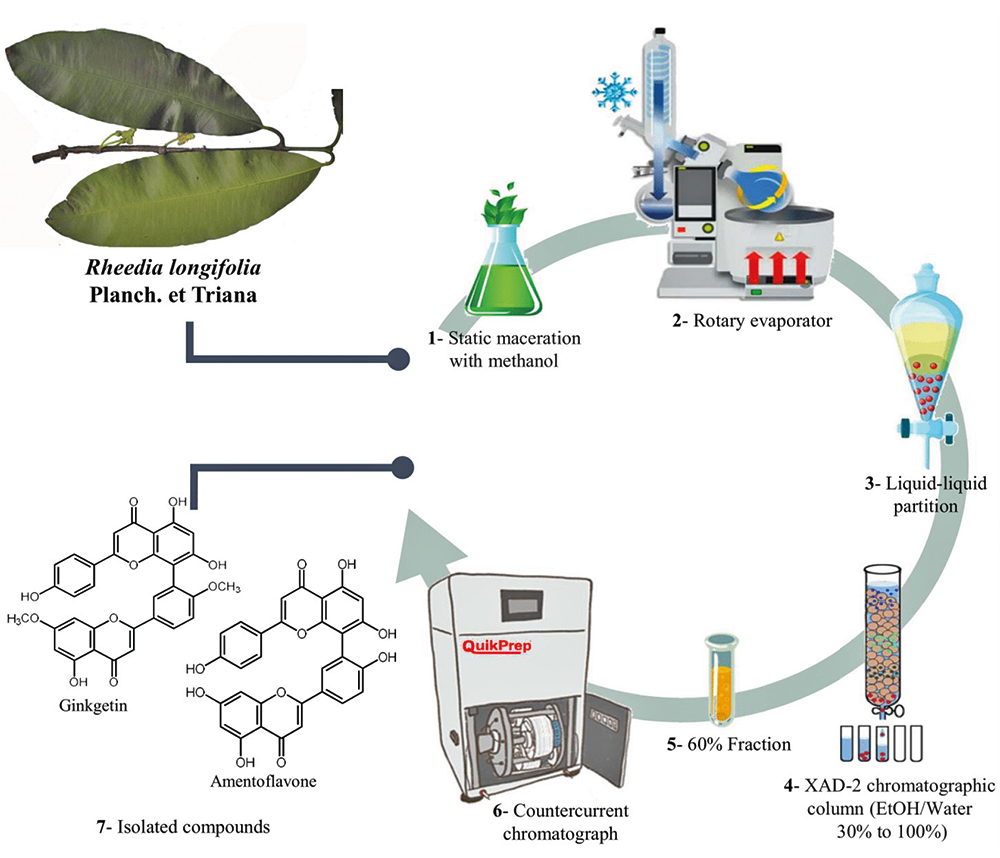
The sample solution was prepared by dissolving 70 mg of the 60% fraction in 5 mL of the lower phase and 5 mL of the upper phase of the selected biphasic solvent system, chloroform/methanol/water (7:13:8 v/v/v), and injected through the sample injection port. The fractions eluted were collected in glass tubes. After collecting 50 fractions of 4 mL each (totaling 200 mL), the rotation was stopped. Subsequently, it started to pump the upper aqueous phase in extrusion mode run to recover the separated compounds still retained inside the column, yielding an additional 66 fractions. All fractions were combined based on their chromatographic profiles, as visualized by TLC plate after applying the visualization agent (NP/PEG). Solvents were removed from the purified fractions under reduced pressure (Fig. 1).
Schematic representation of the process for obtaining isolated compounds from Rheedia longifolia.
HPLC analysis
The HPLC system consisted of a Shimadzu Prominence liquid chromatograph, including an LC-20AT pump equipped with a quaternary gradient valve, a Shimadzu SPD-M20A diode array detector (DAD), a SIL-20A auto-sampler and a Shimadzu CBM 20-A communications bus module. Separation was performed on a Supelcosil C-18 column (5 µm particle size, 250 mm x 4.6 mm i.d.). The mobile phase consisted of a linear gradient of 0.05% trifluoracetic acid in water and acetonitrile, ranging from 97:3 (v/v) to 75:25 (v/v) over 30 minutes. The injection volume was 20 µL, with a flow rate of 1 mL/min. The detection was carried out using DAD, monitoring wavelengths from 254 to 365 nm.
NMR apparatus
1H and 13C NMR (proton and carbon nuclear magnetic resonances) spectra were recorded using a Bruker DRX 400 spectrometer (Rheinstetten, Baden-Württemberg, Germany) operating at 400 Megahertz (MHz) and 100 MHz, respectively, and a Bruker Advance 500 spectrometer operating at 500 MHz and 125 MHz, respectively. Chemical shifts (δ) were reported in parts per million (ppm). Deuterated methanol (4.86 ppm) was used as the solvent, and tetramethylsilane (TMS, zero ppm) served as the internal standard.
Results and Discussion
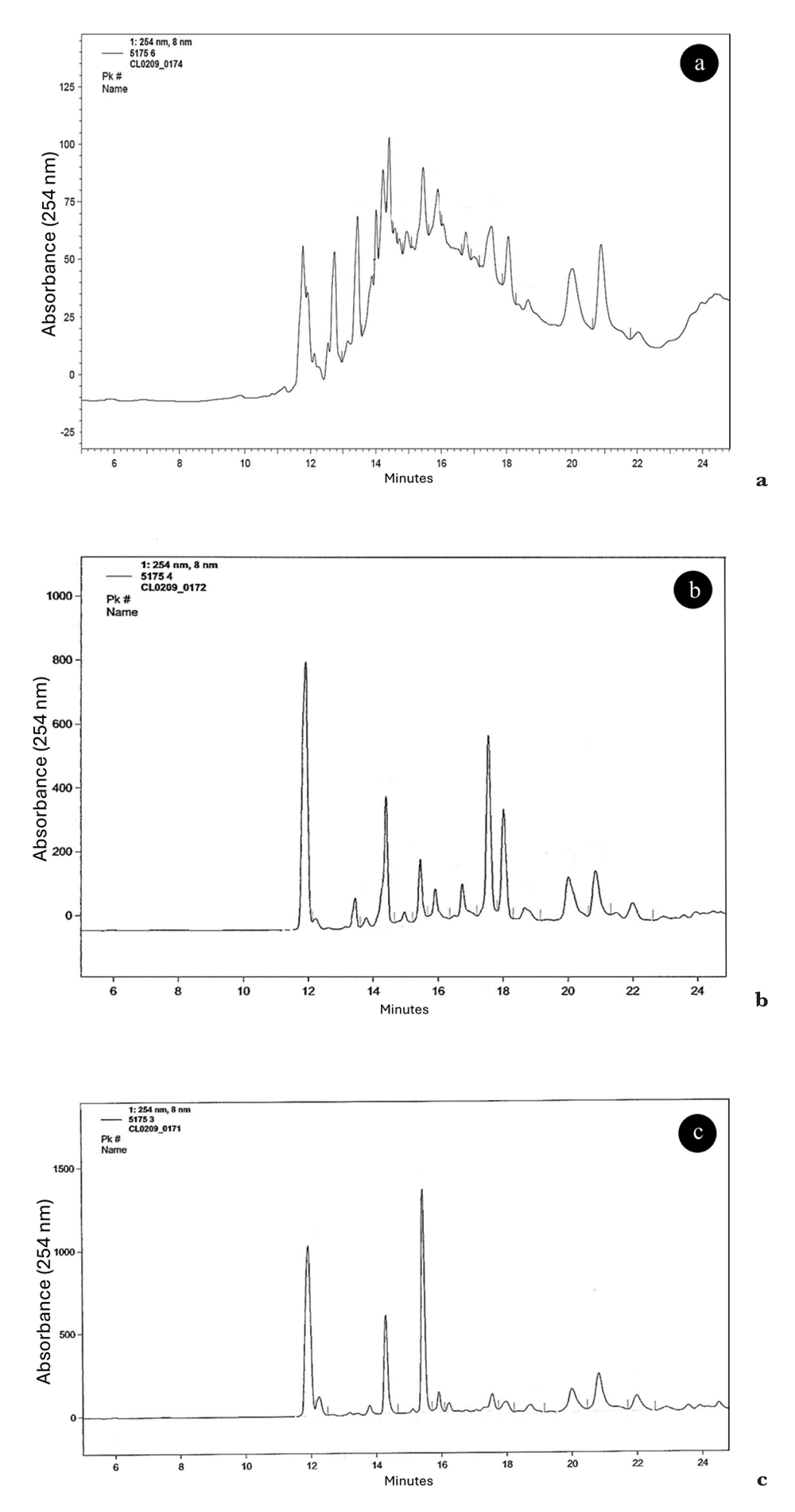
Figure 2 illustrates the difference between the complex chromatographic profile of the methanolic extract from Rheedia longifolia leaves (Fig. 2a) and the simpler profile of the ethyl acetate fraction, which is attributed to the presence of only medium-polarity compounds in the latter (Fig. 2b). Subsequent purification using column chromatography on Amberlite XAD-2 resin resulted in the enrichment of the target phenolic compounds in the 60% fraction (Fig. 2c).
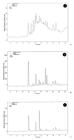
HPLC chromatogram analysis of the raw methanol extract (a), ethyl acetate fraction (b) and ethyl acetate fraction after XAD-2 treatment with 60% ethanol (c) from the leaves of Rheedia longifolia.
The biphasic solvent system of the 3rd experiment, composed of chloroform, methanol and water in a 7:13:8 (v/v/v) ratio, was selected as the ideal for HSCCC separation. This solvent system is widely employed in natural products chemistry. This ternary solvent system provides a biphasic medium in which the polarity gradient facilitates the partitioning of a wide range of phenolic metabolites based on their solubility and polarity. Flavonoids, being moderately polar, preferentially distribute into the more polar aqueous phase, while less polar compounds remain in the organic phase. This system effectively separates flavonoid aglycones from their glycosylated counterparts, as well as from other non-phenolic secondary metabolites such as terpenoids and alkaloids. Such selective partitioning is particularly advantageous in both preparative and analytical workflows, including liquid-liquid techniques like HSCCC. Consequently, this solvent ratio has been optimized in multiple HSCCC studies to enhance the resolution and recovery of phenolic constituents from flavonoid-rich fractions in complex plant matrices (Quispe et al. 2013).
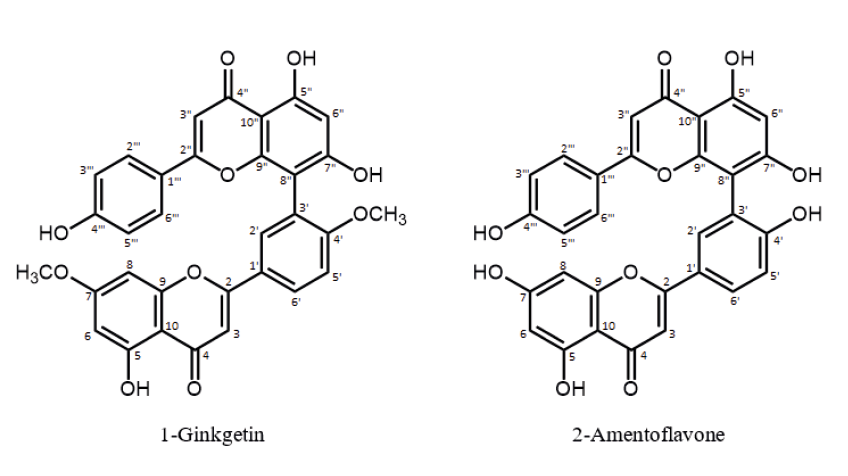
The HSCCC separation process led to the isolation of two yellow powdered compounds, which were identified by spectroscopic and spectrometric analyses as biflavonoids: ginkgetin (1) and amentoflavone (2) (Fig. 3) (Moawad & Amir 2016; Sreeshma & Bindu 2021). The yields were, respectively, 3.8 mg (fraction 40 to 43) and 11.9 mg (fraction 16 to 26).
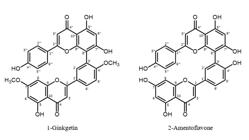
Isolated biflavonoid structures from the leaves of Rheedia longifolia: 1-ginkgetin, 2-amentoflavone.
Ginkgetin has been reported to inhibit phospholipase A2 and exhibits cytotoxic activity against human ovarian adenocarcinoma (OVCAR-3) cells. Pharmacological data indicate that this biflavonoid protects neuronal cells and exhibits a broad spectrum of biological actions, including anticancer, anti-inflammatory, anti-adipogenic, antiplasmodial, antileishmanial, antifungal and antiviral properties. In vivo studies further suggest that ginkgetin may exert preventive or therapeutic effects in various conditions, including neurodegenerative, hepatic and inflammatory diseases, as well as cancer, atherosclerosis and influenza (Adnan et al. 2020).
Amentoflavone has been widely recognized in literature for its significant pharmacological potential (Ferreira et al. 2012). It is cited for exhibiting extensive biological activities, including anti-inflammatory, antioxidant, antitumor, anti-senescence, antiviral, antidiabetic, neuroprotective, and effects on both cardiovascular and central nervous systems (Yu et al. 2017).
1H NMR and 13C NMR data of amentoflavone were compatible with those described in the literature (Sreeshma & Bindu 2021). In the 13C NMR spectrum of ginkgetin, two methoxyl signals were observed at 56.5 ppm and 56.1 ppm, features typical of this compound, not detected in amentoflavone (Moawad & Amir 2016).
The following signals were present in the compound 1 (ginkgetin): ¹³C NMR [deuterated methanol (MeOD)]: δ 166.1 (C-2), 104.2 (C-3), 184 (C-4), 163.3 (C-5), 100.3 (C-6), 166.4 (C-7), 93.6 (C-8), 159.5 (C-9), 104 (C-10), 123.2 (C-1’), 129.2 (C-2’), 122 (C-3’), 162.7 (C-4’), 115.6 (C-5’), 133 (C-6’), 166.1 (C-2”), 103.5 (C-3”), 184.3 (C-4”), 161.4 (C-5”), 100.4 (C-6”), 164.3 (C-7”), 104.3 (C-8”), 156.6 (C-9”), 95.3 (C-10”), 124.6 (C-1’”), 129.4 (C-2’”), 117.8 (C-3’”), 162.7 (C-4’”), 117.8 (C-5’”), 129.2 (C-6’”), 56.1 (7-OCH3), 56.6 (4’-OCH3). Compound 2 (amentoflavone): ¹³C NMR (MeOD): δ 166.2 (C-2), 104.2 (C-3), 183.9 (C-4), 166.1 (C-5), 100.1 (C-6), 163.3 (C-7), 95.3 (C-8), 159.5 (C-9), 105.4 (C-10), 123.3 (C-1’), 129.1 (C-2’), 123.3 (C-3’), 161.1 (C-4’), 117.4 (C-5’), 132.9 (C-6’), 166.3 (C-2”), 103.5 (C-3”), 184.3 (C-4”), 162.6 (C-5”), 100.3 (C-6”), 163.6 (C-7”), 105.4 (C-8”), 156.6 (C-9”), 105.5 (C-10”), 121.7 (C-1’”), 129.4 (C-2’”), 116.9 (C-3’”), 162.7 (C-4’”), 116.9 (C-5’”), 129.4 (C-6’”).
The successful isolation of phenolic compounds from Rheedia longifolia using the HSCCC technique highlights the method’s advantages over traditional chromatographic methods. The absence of a solid stationary phase minimized compound degradation and irreversible adsorption, while the use of a tailored biphasic solvent system allowed for selective and efficient separation. The high retention of the stationary phase and the reproducibility of the separation process underscore the potential of HSCCC as a scalable and cost-effective tool for isolating natural products. This study not only demonstrates the applicability of HSCCC to R. longifolia but also contributes to the phytochemical knowledge of this underexplored species. The bioactivity assays to further assess the pharmacological potential of the biflavonoids isolated have been realized.
Acknowledgements
The authors thank the Conselho Nacional de Desenvolvimento Científico Tecnológico (CNPq), Fundação Oswaldo Cruz (FIOCRUZ) and Instituto de Tecnologia em Fármacos (ITF-Farmanguinhos), for financial support; Jardim Botânico do Rio de Janeiro, for the identification and supply of Rheedia longifolia; and to Dr. André Luiz Franco Sampaio, for English review in accordance with the standards of the language.
References
-
Adnan M, Rasul A, Hussain G, Shah MA, Zahoor MK, Anwar H, Sarfraz I, Riaz A, Manzoor M, Adem S & Selamoglu Z (2020) Ginkgetin: a natural biflavone with versatile pharmacological activities. Food and Chemical Toxicology 145: 111642. DOI: 10.1016/j.fct.2020.111642
» https://doi.org/10.1016/j.fct.2020.111642 -
Bittar M, Souza MM, Yunes RA, Lento R, Delle MF & Cechinel FV (2000) Antinociceptive activity of I3, II8-binaringenin, a biflavonoid present in plants of the Guttiferae. Planta Medica 66: 84-86. DOI: 10.1055/s-0029-1243118
» https://doi.org/10.1055/s-0029-1243118 -
Brito LC, Berenger ALR & Figueiredo MR (2017) An overview of anticancer activity of Garcinia and Hypericum Food and Chemical Toxicology 109: 847-862. DOI: 10.1016/j.fct.2017.03.053
» https://doi.org/10.1016/j.fct.2017.03.053 -
Brito LC & Figueiredo MR (2022) Bioprospecção de atividade anticâncer dos gêneros Garcinia e Clusia: uma breve revisão. Revista Fitos 16: 247-266. DOI: 10.32712/2446-4775.2022.1227
» https://doi.org/10.32712/2446-4775.2022.1227 - Corrêa MP & Penna LA (1984) Dicionário das plantas úteis do Brasil e das exóticas cultivadas. Imprensa Nacional, Rio de Janeiro. 318p.
-
Delle-Monache G, Delle-Monache F, Marini-Bettolo GB & Lima RA (1983) Chemical investigation of the genus Rheedia II. Prenylated xanthones from Rheedia gardneriana Journal of Natural Products 46: 655-659. DOI: 10.1021/NP50029A011
» https://doi.org/10.1021/NP50029A011 -
Delle Monache G, Delle-Monache F, Watermann PG, Crichton EG & Lima RA (1984) Minor xanthones from Rheedia gardneriana Phytochemistry 23: 1757-1759. DOI: 10.1016/S0031-9422(00)83485-8
» https://doi.org/10.1016/S0031-9422(00)83485-8 - Emerson FQ, Andrew M & Kurt H (2009) Contemporary methodological approaches in the search for new lead compounds from higher plants. In: Elisabetsky E & Etkin NL (eds.) Ethnopharmacology. Encyclopedia of life support systems. Vol 1. Ed. UNESCO, Paris. 71p.
-
Ferreira RO, Carvalho MG & Silva TMS (2012) Ocorrência de bisflavonóides em Clusiaceae: aspectos químicos e farmacológicos. Química Nova 35: 2271-2277. DOI: 10.1590/S0100-40422012001100035
» https://doi.org/10.1590/S0100-40422012001100035 -
Frutuoso VS, Monteiro MM, Amendoeira FC, Almeida ALF, Nascimento DD, Bérenger ALR, Kaplan MAC, Figueiredo MR, Bozza PT & Castro-Faria-Neto HC (2007) Analgesic and anti-inflammatory activity of the aqueous extract of Rheedia longifolia Planch. & Triana. Memorias do Instituto Oswaldo Cruz 102: 91-96. DOI: 10.1590/s0074-02762007000100016
» https://doi.org/10.1590/s0074-02762007000100016 -
Hostettmann K, Marston A & Hostettman M (1998) Preparative chromatography techniques: applications in natural product isolation. Springer, London. 247p. DOI: 10.1007/978-3-662-03631-0
» https://doi.org/10.1007/978-3-662-03631-0 -
Li L, Zhao J, Yang T & Sun B (2022) High-speed countercurrent chromatography as an efficient technique for large separation of plant polyphenols: a review. Food Research International 153: 110956. DOI: 10.1016/j.foodres.2022.110956
» https://doi.org/10.1016/j.foodres.2022.110956 -
Lu W, Chen T, Shen C, Feng H, Lin C, Song Z, Wang S, Luo J & Li Y (2025) Activity-oriented isolation of nine α-glucosidase inhibitors from the Rheum tanguticum waste and interaction mechanism analysis. Industrial Crops and Products 226: 120697. DOI: 10.1016/j.indcrop.2025.120697
» https://doi.org/10.1016/j.indcrop.2025.120697 -
Marques AM, Brito LCB & Figueiredo MR (2024) HSCCC Straightforward fast preparative method for isolation of two major cytotoxic withanolides from Athenaea fasciculata (Vell.) I.M.C. Rodrigues & Stehmann. Plants 13: 3039. DOI: 10.3390/plants13213039
» https://doi.org/10.3390/plants13213039 -
Moawad A & Amir DE (2016) Ginkgetin or isoginkgetin: the dimethylamentoflavone of Dioon edule Lindl. leaves. European Journal of Medicinal Plants 16: 1-7. DOI: 10.9734/EJMP/2016/28560
» https://doi.org/10.9734/EJMP/2016/28560 -
Pinto ZT, Carneiro JF, Carriço C, Caetano RL, Ferreira VDSB, Mendonça PM, Bérenger ALR & Figueiredo MR (2018) Acaricidal effects of seven Brazilian plant extracts. Revista Colombiana de Entomología 44: 44-47. DOI: 10.25100/socolen.v44i1.6541
» https://doi.org/10.25100/socolen.v44i1.6541 -
Quispe C, Viveros-Valdez E, Yarleque JÁ, Arones MR, Paniagua JC & Hirschmann-Schmeda G (2013) High speed centrifugal countercurrent chromatography (HSCCC) isolation and identification by LC-MS analysis of the polar phenolics from Vasconcellea quercifolia Journal of the Chilean Chemical Society 58: 1830-1835. DOI: 10.4067/S0717-97072013000300007
» https://doi.org/10.4067/S0717-97072013000300007 -
Santos CC, Silva AF, Castro RN, Pires LO, Campos MF, Oliveira BAC, Allonso D, Leitão SG & Leitão GG (2024) Countercurrent chromatography isolation of green propolis biomarkers: potential blockers of SARS-COV-2 RBD and ACE2 interaction. Journal of Chromatography A 1734: 465265. DOI: 10.1016/j.chroma.2024.465265
» https://doi.org/10.1016/j.chroma.2024.465265 -
Santos JAA, Calheiros A, Nascimento DD, Bérenger ALR, Amendoeira FC, Castro-Faria-Neto HC, Figueiredo MR, Alves LA & Frutuoso VS (2011) Chemical profile and antinociceptive efficacy of Rheedia longifolia leaf extract. Journal of Medicinal Food 14: 1039-1045. DOI: 10.1089/jmf.2010.0183
» https://doi.org/10.1089/jmf.2010.0183 -
Santos JAA, Fidalgo-Neto AA, Faria RX, Simões A, Calheiros A, Bérenger ALR, Castro-Faria-Neto HC, Figueiredo MR, Frutuoso VS & Alves LA (2011) Effect of Rheedia longifolia leaf extract and fractions on the P2X7 receptor in vitro: novel antagonists? Journal of Medicinal Food 14: 920-929. DOI: 10.1089/jmf.2010.0184
» https://doi.org/10.1089/jmf.2010.0184 -
Silva FL, Moreno PRH, Sawaya ACHF, Lemeszenki GCF, Hewitson P & Ignatova S (2022) Dereplication of phenolics from Cardiospermum corindum by countercurrent chromatography combined with liquid chromatography-electrospray mass spectrometry. Revista Brasileira de Farmacognosia 32: 280-285. DOI: 10.1007/s43450-022-00241-1
» https://doi.org/10.1007/s43450-022-00241-1 -
Sreeshma LS & Bindu RN (2021) A simple protocol for the isolation of amentoflavone from two species of Biophytum DC. (Oxalidaceae) and evaluation of its antiproliferative potential. Industrial Crops & Products 160: 113099. DOI: 10.1016/j.indcrop.2020.113099
» https://doi.org/10.1016/j.indcrop.2020.113099 -
Xiong X, Tang N, Lai X, Zhang J, Wen W, Li X, Li A, Wu Y & Liu Z (2021) Insights into amentoflavone: a natural multifunctional biflavonoid. Frontiers in Pharmacology 12: 768708. DOI: 10.3389/fphar.2021.768708
» https://doi.org/10.3389/fphar.2021.768708 -
Yu S, Yan H, Zhang L, Shan M, Chen P, Ding A & Li SFY (2017) A review on the phytochemistry, pharmacology, and pharmacokinetics of amentoflavone, a naturally occurring biflavonoid. Molecules 22: 299. DOI: 10.3390/molecules22020299
» https://doi.org/10.3390/molecules22020299
Data availability statement
In accordance with Open Science communication practices, the authors inform that there is no data sharing of this manuscript.