Microbiological contamination in surgical masks used by students in an emergency hospital: cross-sectional study
Abstract
Introduction The increasing antimicrobial resistance in hospital settings constitutes one of the threats to global public health. The improper use of Personal Protective Equipment (PPE), such as face masks, can facilitate cross-contamination and the spread of pathogens.
Objective This study aimed to evaluate the microbiological contamination of masks used by health area students at the Alagoas Emergency Hospital, identifying the microorganisms present and analyzing their antimicrobial resistance profile.
Material and method A cross-sectional and microbiological study with a descriptive and analytical approach was conducted. Masks used by medical and dental students during hospital internships were collected and subsequently subjected to microbiological culture according to the criteria of the Clinical and Laboratory Standards Institute (CSLI M100, 2025) and BrCAST.
Result The presence of Staphylococcus aureus and Staphylococcus epidermidis was identified in the samples, indicating significant contamination. The antibiogram revealed resistance to erythromycin, oxacillin, and clindamycin in some isolated strains. Furthermore, the sample showed resistance to methicillin and that the bacterial load is inversely proportional to the efficacy of amikacin (p = 0.034; r = -0.327).
Conclusion The masks used by students in hospital settings can act as vehicles for microbial contamination, and to reduce risks, students need prior training before entering the hospital environment.
Descriptors:
Microbiology; masks; students; drug resistance, bacterial; Staphylococcus aureus
Resumo
Introdução A crescente resistência antimicrobiana em ambientes hospitalares constitui uma das ameaças à saúde pública global. O uso inadequado de Equipamentos de Proteção Individual (EPI), como máscaras faciais, pode facilitar a contaminação cruzada e a disseminação de patógenos.
Objetivo Este estudo teve como objetivo avaliar a contaminação microbiológica de máscaras usadas por estudantes da área da saúde no Hospital de Emergência de Alagoas, identificando os microrganismos presentes e analisando seu perfil de resistência antimicrobiana.
Material e método Foi realizado um estudo seccional e microbiológico com abordagem descritiva e analítica. Máscaras usadas por estudantes de medicina e odontologia durante estágios hospitalares foram coletadas e posteriormente submetidas à cultura microbiológica de acordo com os critérios do Clinical and Laboratory Standards Institute (CSLI M100, 2025) e BrCAST.
Resultado A presença de Staphylococcus aureus e Staphylococcus epidermidis foi identificada nas amostras, indicando contaminação significativa. O antibiograma revelou resistência à eritromicina, oxacilina e clindamicina em algumas cepas isoladas. Além disso, a amostra demonstrou resistência à meticilina e que a carga bacteriana é inversamente proporcional a eficácia da amicacina (p = 0,034; r = -0,327).
Conclusão As máscaras utilizadas por estudantes em ambientes hospitalares podem servir como veículos de contaminação microbiológica e, para reduzir agravos, os estudantes necessitam de treinamento prévio à entrada no ambiente hospitalar.
Descritores:
Microbiologia; máscaras; estudantes; farmacorresistência bacteriana; Staphylococcus aureus
INTRODUCTION
Since the 19th century, advances in hygiene and asepsis have reduced hospital infections, but morbidity and mortality remain high, requiring strict biosafety and control strategies, including guidelines for the rational use of antibiotics1.
Staphylococcus aureus is a Gram-positive microorganism shaped like clusters of cocci. It is part of the human microbiota, but under certain conditions, it can cause infections ranging from mild to severe, being highly virulent within its genus. Its virulence mechanisms include surface proteins, secreted enzymes, and cytolytic toxins, which are responsible for diseases ranging from skin conditions to meningitis, bacteremia, and toxic shock syndrome2,3. Found in nasal shells, the throat, intestines, and skin, it can reach other parts of the body if natural barriers are compromised by trauma or surgery4. Besides that, antimicrobial resistance in S. aureus, especially in multiresistant strains common in hospitals, limits treatment options and prolongs therapy, posing a serious clinical and epidemiological challenge2.
Although bacterial resistance in healthcare settings has been widely studied, the relationship between the improper use of PPE and the amplification of microbial resistance, as well as the effectiveness of strategies for decontaminating these items, remains little explored. In addition, variability in hygiene protocols and the lack of standardized practices further contribute to the persistence of resistant pathogens in hospital environments4. By understanding which microorganisms are present and their susceptibility to commonly used antimicrobials in the hospital environment, it can help identify gaps in infection prevention and control measures, as well as contribute to the development of more effective clinical protocols.
The research is justified in evaluating the practices of handling face masks, particularly in terms of manipulation, and the subsequent impact of these practices on the resistance profiles of bacterial strains commonly associated with hospital infections, with a special focus on the trauma red zone of the General Hospital. By analyzing antimicrobial resistance profiles and biofilm formation in isolated bacterial strains, this study also aims to help identify more effective strategies to reduce the risk of hospital infections, thus reinforcing the need for strict infection control and biosafety protocols2,5. The aim of health surveillance is to eliminate, reduce, and prevent health risks related to the production and use of products and services of health interest or the conditions of their environments. To operate, Health Surveillance has the authority of police power, of an administrative nature, which allows it to limit the exercise of individual rights for the benefit of public interest. Meanwhile, biosafety focuses on preventing and controlling biological and chemical risks6.
In this way, the research conducted had the main goal of addressing the significant infection control challenges in the red zone of trauma at the Emergency Hospital during the experience of medical interns and dental trainees.
MATERIAL AND METHOD
Initially, the research was submitted for ethical review by the Research Ethics Committee of the CESMAC University Center and by the director of the Study Center of the Dr. Osvaldo Brandão Vilela State General Hospital, as well as by the general director of the State General Hospital, for carrying out the study in the hospital following the guidelines. The research was conducted in accordance with the ethical guidelines established by CNS/MS Resolution No. 466/2012 under opinion No. 6,324,554.
Methodologically, a sample of masks was collected to obtain a representation of the population. Disposable masks (surgical masks) were provided to medical and dental students doing internships in the emergency and urgency areas for use during their shifts. Considering that masks used as a preventive measure reduce the spread of viruses and bacteria, preventing contamination among professionals, and students and also the contamination of fomites7.
Later, the masks were collected for cultivation on Petri dishes, using Blood Agar and MacConkey media (a total of 200 plates). Each sample was tested on both types of media, with MacConkey Agar used exclusively for Gram-negative bacteria and Blood Agar for both Gram-positive and Gram-negative bacteria8. The novobiocin disc is the antibiotic used to differentiate S. aureus species and is considered sensitive when the zone is larger than 16mm9.
After growing on Petri dishes with Mueller Hinton Agar (amount varied depending on bacterial growth), microbiological isolation took place, followed by antimicrobial susceptibility testing for each isolated bacterium. Additionally, measures were taken to minimize environmental impact, such as separating recyclable materials and disposing of biological waste according to biosafety protocols. These practices aimed to reduce potential risks to the environment and soil4.
The research is observational, adopting a cross-sectional, prospective, and microbiological approach with a descriptive and analytical perspective. The sample collection was carried out with students who were doing internships in the red trauma area of an emergency hospital, and the microbiological culture was done in the microbiology lab of CESMAC University Center.
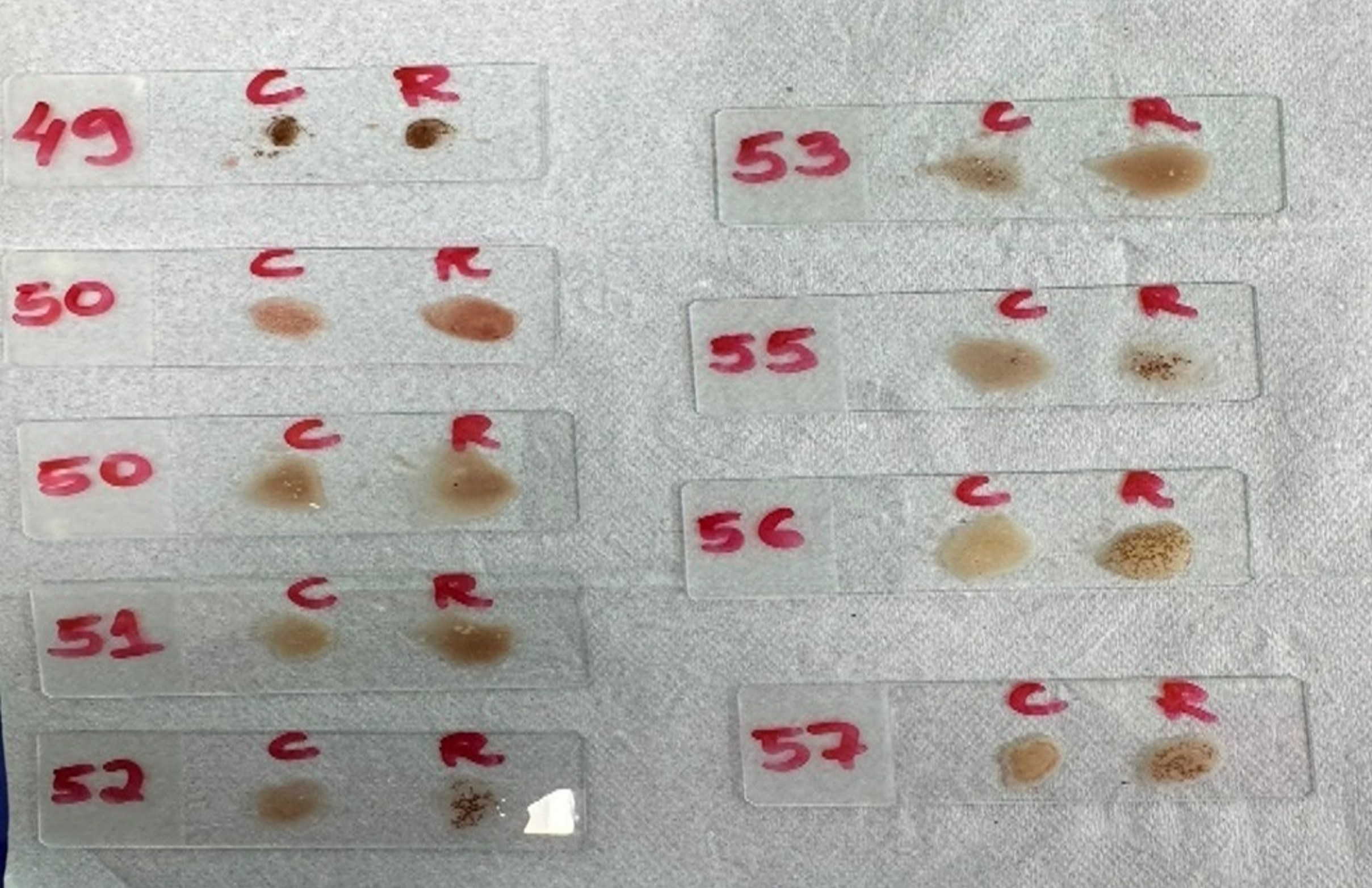
The calculations to determine the research sample size were made using data collected during the first collection with six masks in a pilot study, where only one showed disagreement regarding the type of bacteria found, along with a variable for an infinite number of masks, and applied to a sample selection formula, which was at the researcher's discretion. The formula used was from the IBM SPSS Statistics app, using the means and standard deviations obtained in the pilot study, and to achieve a statistical test power above 80%, the formula n = Z2 (α/2)·p(1-p)/E2 was chosen, where α is the significance level, E is the error, and p is the proportion, resulting in a sample size of 57 masks used by medical and dental students who were doing internships at the hospital. Our study evaluated mask contamination over a 3-hour period in students doing internships in the hospital's trauma ward using the sample calculation methodology adapted from Nightingale et al.10 From this sample, surgical masks were placed on each participant, and after a 3-hour period, they were removed and stored for immediate transport. Unused surgical masks were used as a control for the study.
The following inclusion criteria were established: medical and dental students from colleges that do their mandatory clinical internship at the General Hospital of the State of Alagoas; students who circulate exclusively in the hospital's trauma red zone; and use of protective masks for at least 3 hours without interruption. The exclusion criteria were the need for the student to leave the trauma red zone and the need to remove the mask for less than 3 hours due to eating or other physiological needs.
Sensitivity analyses with different antibiotics (levofloxacin, vancomycin, amikacin, oxacillin, linezolid, erythromycin, and clindamycin) against Staphylococcus spp. And S. aureus species, according to the Clinical and Laboratory Standards Institute (CLSI 2024-2025 M100)11 and the BrCAST12. The measurements are shown in two formats: inhibition halo diameter (in millimeters) and Minimum Inhibitory Concentration (MIC). The categories are defined as Sensitive (S), Resistant (R), Intermediate (I), and Dose-Dependent Susceptible (SDD).
The results obtained from microbial and antimicrobial cultivation will be submitted to statistical analysis using the Statistical Package for the Social Sciences program (version 20.0; SPSS Inc., Chicago, IL, USA). Initially, a descriptive analysis of the data was performed, followed by the application of statistical tests. Normality tests using Shapiro-Wilk (p<0.001) were conducted, and kurtosis and skewness were evaluated, revealing that the sample had a non-normal distribution. Therefore, non-parametric tests were used, including Spearman correlation, Kruskal-Wallis with Dunn's post hoc test, and the Mann-Whitney test for statistical differences between colony counts and sex. For all statistical tests used in this study, a significance level of 5% (α ≤ 0.05) was considered.
RESULT
Growth was observed exclusively on the blood agar plates, indicating the presence of Gram-positive bacteria (Figure 1). The average colony count was 279.8±35.9, and biochemical characterization revealed catalase-positive and DNAse-positive organisms, consistent with the genus S. aureus and S. epidermidis. The antibiogram showed methicillin resistance in one of the samples (Figure 2). The masks used as a control (without use) did not show any bacterial colony growth on the blood agar plates.
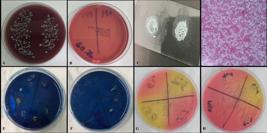
Identification tests of the species analyzed on the surgical masks. Source: authors, 2025. (A) Bacterial streak on blood agar medium; (B) Bacterial streak on MacConkey agar medium; (C) Catalase test; (D) Gram-positive staining; (E-F) Positive DNase; (G-H) Mannitol agar medium.
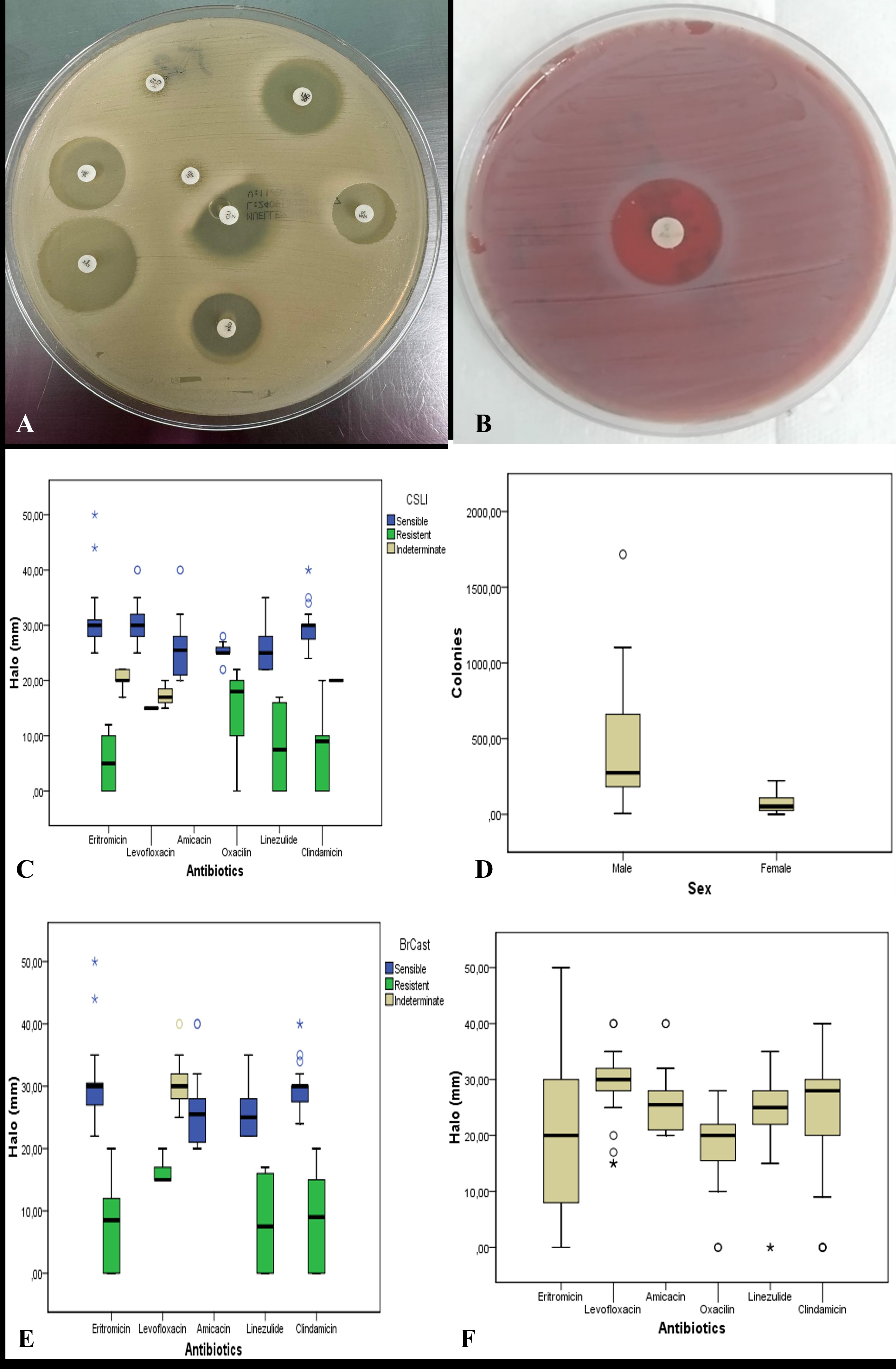
Antibiogram according to the formation of halos in millimeters. Source: authors, 2025. (A) Antibiogram and D-shaped zone for the methicillin antibiotic observed; (B) Sensitivity to the novobiocin test; (C) Box plot graph showing the measurement of zones for antibiotic sensitivity according to CLSI M100 2024-2025; (D) Bacterial colony growth was higher in males; (E) Antibiotic sensitivity according to BrCAST; (F) Median of the zones of antibiotic sensitivity tested. Non-parametric test for multiple analyses: Kruskal-Wallis followed by Dunn post-test. *outliers.
Regarding the participants' profile, there were more males (n=31; 55.4%) than females (n=25; 44.6%), with an average age of 21.5 ± 2.1 years. The highest bacterial growth counts on blood agar cultures were observed in males (median = 150; p<0.001), especially in men with beards, as shown in Figure 2.
The sensitive antibiotics showed inhibition zones with a median of 25.0 mm, while the resistant antibiotics had a significantly smaller median of 10.0 mm. Resistant antibiotics had a smaller zone diameter with a median of 10.0 mm, and sensitive antibiotics had a median of 25.0 mm, showing a statistically significant difference between the groups (p<0.001), especially between antibiotics considered sensitive and resistant, as well as between sensitive and undefined antibiotics, and additionally, between resistant and undefined antibiotics (Figure 2).
The antibiotics tested showed statistically significant differences in both CSLI M100 and BrCAST (p<0.001). Comparing the antibiotics with each other showed statistically significant differences between oxacillin and linezolid (p = 0.012), oxacillin and amikacin (p = 0.001), oxacillin and clindamycin (p < 0.001), oxacillin and levofloxacin (p < 0.001), erythromycin and levofloxacin (p < 0.001), and linezolid and levofloxacin (p = 0.012) in CSLI M100, Figure 2C.
From this perspective, the analysis of the samples using the mannitol agar test and the Staphy test confirmed the presence of S. aureus in different isolates. Three samples tested positive for S. aureus on the mannitol agar, and the same three samples were confirmed by the Staphy test (Figure 3).

Among the antibiotics tested, erythromycin and oxacillin had the smallest inhibition zone values, Table 1, but there is a strong overlap of the antibiotics' confidence intervals, showing the variable sensitivity pattern among the bacterial isolates (Figure 2).
It was observed that the higher the number of colonies in the specimen, the less effective amikacin was, suggesting that an increased bacterial load is associated with lower efficacy of this antibiotic in the analyzed isolates (Table 2).
The studied sample showed a statistically significant difference between the halo size and the criteria established by CLSI M100 2024-2025 (p < 0.001), with the cases classified as sensitive (n = 173) being the most frequent, followed by resistant cases (n = 56) and undefined cases (n = 11), Table 3.
The studied sample also revealed a statistically significant difference between the halo size and the criteria established by BrCAST (p < 0.001), with cases classified as sensitive (n = 127) being the most frequent, followed by resistant cases (n = 42) and undefined cases (n = 37), Table 4.
Novobiocin, tested in only 8 samples, showed a more stable profile, with an average of 20.5 ± 1.9 mm and a median of 21.0 mm (95% CI: 20.2 – 21.7), ranging from 16 mm to 22 mm. Overall, levofloxacin, amikacin, and clindamycin had the largest average zones, indicating greater antimicrobial effectiveness.
Finally, a negative and significant correlation was observed between the number of colonies and the antibiotics levofloxacin and amikacin. This indicates that the halo sizes are inversely proportional to the number of colonies on the blood agar plates, as shown in Table 2.
The results show that, among the antibiotics tested, only amikacin had a statistically significant correlation with the number of colonies, showing greater effectiveness in reducing the bacterial load. The negative and significant correlation between the number of colonies and the antibiotics levofloxacin and amikacin indicates that the size of the halos is inversely proportional to the number of colonies on the blood agar plates (Table 2).
Erythromycin showed a more balanced distribution, with 43.6% of samples being sensitive, 15.4% intermediate, and 41.0% resistant, suggesting significant variation in bacterial response. Clindamycin had a susceptibility rate of 73.7%, with 5.3% of samples intermediate and 21.0% resistant.
DISCUSSION
The microbiological assessment of the masks used by health students at the Alagoas Emergency Hospital revealed the presence of Staphylococcus aureus and Staphylococcus epidermidis, microorganisms widely recognized as part of the normal skin and oral mucosa microbiota, but which, in hospital settings, can act as opportunistic pathogens. S. aureus is often linked to serious hospital infections, while S. epidermidis, although less virulent, plays an important role in infections associated with medical devices, mainly due to its ability to form biofilms and its increasing antimicrobial resistance13.
The results show that levofloxacin, amikacin, and linezolid were highly effective, with most isolates classified as sensitive to these antibiotics. Vancomycin, although not evaluated with inhibition zones, showed high effectiveness based on MIC values, highlighting its importance as a valuable treatment option, especially for strains resistant to other antimicrobials. On the other hand, erythromycin and clindamycin showed significant variability in isolate sensitivity, with a considerable percentage of resistance, suggesting the need to consider alternative treatments or the use of combination therapies to ensure effectiveness in treating infections caused by Staphylococcus spp. and S. aureus.
The interpretation of these results is crucial for the proper choice of treatment for infections caused by Staphylococcus spp. and Staphylococcus aureus, pathogens often associated with both hospital and community infections. The presence of these bacteria in the samples analyzed can be explained by the fact that they are naturally found in the skin and oral mucosa microbiota, which facilitates their spread in hospital environments. Studies like the one by Nakazono et al.13 They show that Staphylococcus epidermidis, one of the main components of the skin and oral microbiota, can act as a reservoir for resistance genes, increasing the risk of opportunistic infections in immunocompromised individuals. The identification of S. aureus and S. epidermidis on masks used by students in hospital settings highlights the importance of biosafety and thorough cleaning, since these bacteria can behave as opportunistic pathogens under specific conditions. S. aureus is the main bacteria found in barbershops according to Britsch et al.14, male students who have beards had S. aureus in the samples collected.
The prevalence of bacterial resistance, as seen in the analyzed data, reflects a worrying trend that's widely discussed in the literature. Previous studies point out that organisms like Staphylococcus aureus and Acinetobacter baumannii have been showing increasing resistance to commonly used antimicrobial agents in hospital settings15,16. The resistance observed in Staphylococcus spp. to the antibiotics tested, especially oxacillin, shows the ongoing need for control and monitoring strategies to reduce the impact of antimicrobial resistance on treatment effectiveness17,18.
The resistance seen in Staphylococcus spp., especially to oxacillin, reflects the microorganisms' ongoing adaptation to the available antimicrobial agents, compromising treatment effectiveness and increasing the morbidity and mortality associated with hospital infections17,18. This scenario highlights the urgent need for strong control and surveillance strategies to lessen the negative impacts of antimicrobial resistance on public health.
Besides the considerations about antimicrobial resistance, it's also essential to look into the underlying mechanisms driving this worrying phenomenon. Factors like the selection of resistant bacterial strains due to improper use of antimicrobials, both in hospital settings and in the community, play a crucial role in the spread and persistence of resistance19,20.
This selection can happen not only through direct exposure to antimicrobials, but also through genetic mechanisms of resistance transfer between different bacterial species3.
Additionally, bacterial biofilms have been recognized as important factors in virulence and antimicrobial resistance. The ability of these microbial structures to stick to surfaces and form complex communities protects the microorganisms from the effects of antimicrobials, making it hard to completely get rid of infections associated with these biofilms10,16.
Implementing effective infection control measures, including strict hygiene practices, disinfection protocols, and ongoing education for healthcare professionals, is crucial to curb the spread of resistant pathogens and reduce the burden of hospital infections21,22. Additional strategies, like developing new antimicrobial agents and promoting policies for the rational use of antimicrobials, are key to preserving the effectiveness of available treatments and tackling the ongoing challenge of antimicrobial resistance.
The results show significant differences in the size of inhibition zones between sensitive and resistant antibiotics, as defined by CLSI M100 2024-202511. This not only guides the right choice of treatment, but also highlights the importance of adapting therapy protocols based on local resistance and bacterial sensitivity2,23. The comparative analysis between antibiotic groups shows that certain agents, like vancomycin and amikacin, still maintain relevant clinical effectiveness against sensitive strains.
These findings are in line with recent studies highlighting the growing resistance of S. aureus and Acinetobacter baumannii to multiple antimicrobials, making the clinical management of these infections increasingly challenging15,23.
The DNAse test is a lab technique used to detect the production of the DNAse enzyme by certain bacterial species, like S. aureus. DNAse is an endonuclease that can cleave double-stranded DNA, resulting in the breakdown of extracellular DNA around bacterial colonies. When a bacterial culture is inoculated on a plate containing DNAse agar, bacteria that produce and secrete the DNAse enzyme release it into the culture medium. The DNAse then acts on the DNA present in the medium, cleaving the DNA molecules. This leads to the formation of a clear halo around the bacterial colonies where the DNA was digested and the DNAse was able to act24.
Staphylococcus aureus is known for producing DNase and is a classic example used to demonstrate this test. When S. aureus is inoculated on a DNase agar plate, a clear halo forms around the colonies due to the activity of the DNase enzyme, which breaks down the DNA in the area around the colonies. This clear halo is visible after incubating the plate, showing that the S. aureus cells were able to secrete DNase and digest the extracellular DNA25.
Resistance to oxacillin reinforces the role of methicillin-resistant strains in spreading hospital infections and limiting the available treatment options. On the other hand, antibiotics like vancomycin and amikacin still show effectiveness against sensitive Staphylococcus spp. strains, as shown in the literature2,17.
Given this data, it becomes essential to continuously monitor bacterial resistance and to apply strict control strategies to prevent the spread of multi-resistant strains. Additionally, accurately distinguishing between sensitivity and resistance is crucial to guide effective treatment decisions, minimizing treatment failures and helping to optimize patient outcomes.
The data analysis shows that antibiotics like vancomycin and amikacin are still effective against sensitive strains of Staphylococcus spp., despite the increase in resistance to other drugs like oxacillin2,17. This distinction between sensitivity and resistance is crucial for guiding precise treatment decisions, minimizing treatment failures, and promoting better outcomes for patients.
Furthermore, the emergence of bacterial biofilms, discussed by Thi et al.16, represents an additional challenge to the effectiveness of antimicrobials, as these structures provide protection to bacteria against traditional antimicrobial agents. This highlights the need for therapeutic approaches that consider not only bacterial resistance but also the ability to form biofilms, in order to develop more effective strategies to fight hospital infections.
From a practical standpoint, interventions like implementing strict infection control programs, using antimicrobials wisely, and continuously educating healthcare professionals are key to reducing the impacts of antimicrobial resistance. These measures aim not only to curb the spread of resistant strains but also to preserve the effectiveness of available treatments in the long run18,26.
Discussions about antimicrobial resistance also highlight the need for innovative approaches to tackle these persistent challenges. Studies like those of Thi et al.16 and Ng et al.5 They highlight changes in bacterial resistance trends during events like the COVID-19 pandemic, emphasizing the importance of adaptive strategies for managing hospital infections.
Besides that, evidence-based interventions, like systematic reviews by Santos, Castro27 and the studies of contamination of face masks by Delanghe et al.8 and Nightingale et al.10, They highlight the importance of hygiene and the proper use of Personal Protective Equipment (PPE) in reducing the spread of hospital infections. Strict implementation of biosafety protocols can help lower environmental bacterial loads and minimize the risk of nosocomial infections. Additionally, collaboration between healthcare professionals, microbiologists, and epidemiologists is key to proactively monitoring and responding to changes in antimicrobial resistance.
The studies reviewed in this analysis highlight the complexity of the factors that contribute to the development and spread of this resistance, including the natural selection of microorganisms in response to repeated exposure to antimicrobials, improper antibiotic prescribing practices, failures in implementing infection control measures, and the lack of new innovative treatment options15,16.
The growing prevalence of resistant strains of pathogens like Staphylococcus aureus, Acinetobacter baumannii, and Pseudomonas aeruginosa shows the urgent need for strategic and integrated approaches to reduce the negative impacts of this resistance on treatment effectiveness and global public health5,23,27.
In the hospital context, where the spread of resistant pathogens is a constant concern, strict infection control measures are essential. This includes implementing policies for the rational use of antimicrobials, strong epidemiological surveillance, ongoing education for healthcare professionals, and investing in research to develop new treatments and diagnostic technologies2,21.
Implementing strict measures to prevent hospital infections plays a key role in reducing the occurrence and spread of resistant organisms. This includes proper hygiene practices, outbreak control, correct use of personal protective equipment (PPE), and adopting effective cleaning and disinfection protocols4,10. These measures not only help reduce the spread of resistant pathogens, but also create a safer hospital environment for patients and healthcare workers.
Additionally, epidemiological surveillance programs are essential for monitoring the prevalence and patterns of antimicrobial resistance in different clinical settings. Continuous collection and analysis of epidemiological data allow for a quick response to outbreaks and the identification of emerging resistance trends, making it easier to adapt treatment and prevention strategies5,21.
Tackling antimicrobial resistance requires an integrated approach that goes beyond just picking antimicrobial agents. Effective control strategies include measures to prevent hospital infections, implementing epidemiological surveillance programs, and ongoing education for healthcare professionals5,10.
Other studies looked into how effective personal protective equipment decontamination protocols are28 and the use of PPE in reducing MRSA transmission29, providing essential guidelines for infection control practices.
Recent studies, such as those reviewed by Thi et al.16, They emphasize that bacteria trapped in biofilms are especially tough to treat because they’re more resistant to antimicrobials and can stick around in hospital settings for long periods.
Besides that, ongoing monitoring and adapting infection control practices are key to responding to new emerging threats, like hospital outbreaks of resistant bacteria during pandemics, as highlighted by Dapper et al.30.
The studies by Galanis et al.19 and Lynch et al.20 they emphasize the effectiveness of public health interventions and the proper use of personal protective equipment in reducing the burden of hospital infections. This highlights the ongoing need for strong policies and evidence-based guidelines to guide infection control practices in different hospital settings.
Promoting the rational use of antimicrobials is also a priority. Ongoing educational initiatives among healthcare professionals aim to minimize the improper use of antimicrobials, thus reducing the selective pressure that drives the development of bacterial resistance5.
To complement these measures, effective management of hospital waste is essential. Implementing proper waste handling practices significantly helps to reduce the spread of resistant bacteria in and beyond the hospital environment4.
Finally, developing and implementing strict decontamination and cleaning protocols is crucial. These protocols cover everything from cleaning hospital surfaces to disinfecting medical equipment, aiming to reduce the risk of spreading resistant bacteria and ensure a safe environment for patients and healthcare workers28.
The presence of Staphylococcus aureus and Staphylococcus epidermidis on masks worn by health students in hospital settings highlights the importance of strictly following biosafety rules. These microorganisms, naturally found in the skin and oral mucosa microbiota, can act as opportunistic pathogens, becoming agents of hospital infections, especially in immunocompromised individuals13.
Given this, it's essential that students understand the biological risks associated with working in the hospital and adopt safe practices to minimize the spread of resistant bacteria. The growing antibiotic resistance highlights the need for ongoing educational training for this group, covering the proper use of personal protective equipment (PPE), correct hand hygiene, and appropriate disposal of contaminated materials.
The limitations of the study are: 1) the lab didn't have an automated or molecular system for identifying the isolates, so identification was done using the classic methods described in the relevant literature; 2) the 3-hour use of the masks could have influenced the findings due to handling by the students and moving around; 3) the personal hygiene of the students' hands, face, and mouth could have influenced the microbiological findings.
Strategies like regular training, practical simulations, and including biosafety in academic curricula can boost awareness and better prepare students to follow infection control protocols. Also, collaboration between healthcare professionals, researchers, and policymakers is key to ensuring a safe and effective hospital environment for all patients, reducing the spread of multidrug-resistant microorganisms and protecting both the staff and the patients served. Additionally, it's necessary to expand the study in the future to more hospitals and health centers.
CONCLUSION
The microbiological contamination of masks used by health students at the Emergency Hospital of Alagoas provides evidence of the presence of Staphylococcus aureus and Staphylococcus epidermidis, opportunistic microorganisms that can pose risks to both students and hospitalized patients. The results showed that the masks worn by students during their mandatory internships were contaminated with resistant bacteria, highlighting the need for strict biosafety measures in the hospital environment. The formation of halos in antimicrobial susceptibility tests allowed the differentiation of resistant strains from sensitive ones, showing that antibiotics like oxacillin and erythromycin had a higher resistance rate. The risk of students getting sick from constant contact with these bacteria highlights the importance of preventive practices, such as correctly using personal protective equipment (PPE), proper hand hygiene, and frequent mask changes. Implementing regular training, along with supervision and improving institutional guidelines, can significantly reduce the spread of resistant bacteria. So, the practical takeaway is that Staphylococcus aureus and Staphylococcus epidermidis were the most common microorganisms at hospital entry points, and antibiotics like levofloxacin are the most effective, contributing to scientific progress.
ACKNOWLEDGMENTS
We give special thanks to all the students who participated in the study, as well as all the technicians in the microbiology lab.
DATA AVAILABILITY
The contaents underlying the research text are included in the manuscript. The contents are already available.
-
How to cite:
Nunes BMMB, Wanderlei DF, Araújo MAS, França GM. Microbiological contamination in surgical masks used by students in an emergency hospital: cross-sectional study. Rev Odontol UNESP. 2026;55:e20260008. https://doi.org/10.1590/1807-2577.20260008
REFERENCES
-
1 Xiang Y, Liu Y, Niazi NK, Bolan N, Zhao L, Zhang S, et al. Biochar addition increased soil bacterial diversity and richness: large-scale evidence of field experiments. Sci Total Environ. 2023 Oct;893:164961. https://doi.org/10.1016/j.scitotenv.2023.164961 PMid:37336405.
» https://doi.org/10.1016/j.scitotenv.2023.164961 - 2 Lima MFP, Borges MA, Parente RS, Victória-Júnior RC, Oliveira ME. Staphylococcus aureus e as infecções hospitalares–revisão de literatura. Uningá Review. 2015;21(1):32-9.
-
3 Taylor TA, Tobin E, Unakal CG. Staphylococcus aureus infection [Last Update: December 1, 2025]. In: NIH. StatPearls [Internet]. Treasure Island (FL): StatPearls Publishing; 2026 [cited 2026 Mar 30]. Available from: https://www.ncbi.nlm.nih.gov/books/NBK441868/
» https://www.ncbi.nlm.nih.gov/books/NBK441868/ -
4 Doi KM, Moura GMSS. Resíduos sólidos de serviços de saúde: uma fotografia do comprometimento da equipe de enfermagem. Rev Gaúcha Enferm. 2011;32(2):338-44. https://doi.org/10.1590/S1983-14472011000200018 PMid:21987996.
» https://doi.org/10.1590/S1983-14472011000200018 -
5 Ng QX, Ong NY, Lee DYX, Yau CE, Lim YL, Kwa ALH, et al. Trends in Pseudomonas aeruginosa (P. aeruginosa) bacteremia during the COVID-19 Pandemic: a systematic review. Antibiotics (Basel). 2023;12(2):409. https://doi.org/10.3390/antibiotics12020409 PMid:36830319.
» https://doi.org/10.3390/antibiotics12020409 -
6 Silva JAA, Costa EA, Lucchese G. Unified health system 30th birthday: health surveillance. Cien Saude Colet. 2018 Jun;23(6):1953-61. https://doi.org/10.1590/1413-81232018236.04972018 PMid:29972502.
» https://doi.org/10.1590/1413-81232018236.04972018 -
7 Boparai JK, Sharma PK. Mini review on antimicrobial peptides, sources, mechanism and recent applications. Protein Pept Lett. 2020;27(1):4-16. https://doi.org/10.2174/18755305MTAwENDE80 PMid:31438824.
» https://doi.org/10.2174/18755305MTAwENDE80 -
8 Delanghe L, Cauwenberghs E, Spacova I, De Boeck I, Van Beeck W, Pepermans K, et al. ey al. Cotton and surgical face masks in community settings: bacterial contamination and face mask hygiene. Front Med (Lausanne). 2021 Sep;8:732047. https://doi.org/10.3389/fmed.2021.732047 PMid:34540873.
» https://doi.org/10.3389/fmed.2021.732047 -
9 Iancu I, Igna V, Popa SA, Imre K, Pascu C, Costinar L, et al. Etiology and antimicrobial resistance of subclinical mastitis pathogens Staphylococcus aureus, Streptococcus spp. and Enterococcus spp. in sheep milk. Vet Res Commun. 2024 Nov;49(1):30. https://doi.org/10.1007/s11259-024-10579-7 PMid:39576396.
» https://doi.org/10.1007/s11259-024-10579-7 -
10 Nightingale M, Mody M, Rickard AH, Cassone M. Bacterial contamination on used face masks among nursing home healthcare personnel. Antimicrob Steward Healthc Epidemiol. 2023 Mar;3(1):e54. https://doi.org/10.1017/ash.2023.130 PMid:36970428.
» https://doi.org/10.1017/ash.2023.130 - 11 Clinical and Laboratory Standards Institute – CLSI. CLSI M100-Ed36. Performance Standards for Antimicrobial Susceptibility Testing. Berwyn: CLSI; 2025. 436 p.
-
12 Brazilian Committee on Antimicrobial Susceptibility Testing – BrCAST. 2026 [cited 2026 Mar 30]. Available from: https://brcast.org.br/documentos/documentos-3/
» https://brcast.org.br/documentos/documentos-3/ -
13 Nakazono K, Le MN, Kawada-Matsuo M, Kimheang N, Hisatsune J, Oogai Y, et al. Complete sequences of epidermin and nukacin encoding plasmids from oral-derived Staphylococcus epidermidis and their antibacterial activity. PLoS One. 2022 Jan;17(1):e0258283. https://doi.org/10.1371/journal.pone.0258283 PMid:35041663.
» https://doi.org/10.1371/journal.pone.0258283 -
14 Britsch JM, Bereswill S, Heimesaat MM. Infections acquired in barbershops - A review. Eur J Microbiol Immunol (Bp). 2024 Nov;14(4):366-72. https://doi.org/10.1556/1886.2024.00104 PMid:39576285.
» https://doi.org/10.1556/1886.2024.00104 -
15 Botelho EX, Melo ROA, Gusmão NB, Ximenes RM, Sena KXFR. Prevalência e perfil de resistência aos antimicrobianos de Staphylococcus aureus em hospitais do Brasil: uma revisão integrativa da literatura. Res Soc Develop. 2022;11(6):e2711628744-e2711628744. https://doi.org/10.33448/rsd-v11i6.28744
» https://doi.org/10.33448/rsd-v11i6.28744 -
16 Thi MTT, Wibowo D, Rehm BHA. Pseudomonas aeruginosa Biofilms. Int J Mol Sci. 2020 Nov;21(22):8671. https://doi.org/10.3390/ijms21228671 PMid:33212950.
» https://doi.org/10.3390/ijms21228671 -
17 Santos AL, Santos DO, Freitas CC, Ferreira BLA, Afonso IF, Rodrigues CR, et al. Staphylococcus aureus: visitando uma cepa de importância hospitalar. J Bras Patol Med Lab. 2007 Dez;43(6):413-23. https://doi.org/10.1590/S1676-24442007000600005
» https://doi.org/10.1590/S1676-24442007000600005 -
18 Pessoa JMS. Avaliação dos fatores associados a infecções por Acinetobacter baumannii em pacientes imunodeprimidos em unidade de terapia intensiva. RECIMA21-Revista Científica Multidisciplinar. 2022;3(1), e321172. https://doi.org/10.47820/recima21.v3i1.1172
» https://doi.org/10.47820/recima21.v3i1.1172 -
19 Galanis P, Vraka I, Fragkou D, Bilali A, Kaitelidou D. Impact of personal protective equipment use on health care workers’ physical health during the COVID-19 pandemic: a systematic review and meta-analysis. Am J Infect Control. 2021;49(10):1305-15. https://doi.org/10.1016/j.ajic.2021.04.084 PMid:33965463.
» https://doi.org/10.1016/j.ajic.2021.04.084 -
20 Lynch JB, Davitkov P, Anderson DJ, Bhimraj A, Cheng VC, Guzman-Cottrill J, et al. Infectious diseases society of america guidelines on infection prevention for healthcare personnel caring for patients with suspected or known COVID-19 (November 2021). Clin Infect Dis. 2024 June;78(7):e230-49. https://doi.org/10.1093/cid/ciab953 PMid:34791102.
» https://doi.org/10.1093/cid/ciab953 -
21 Verbeek JH, Rajamaki B, Ijaz S, Sauni R, Toomey E, Blackwood B, et al. Personal protective equipment for preventing highly infectious diseases due to exposure to contaminated body fluids in healthcare staff. Cochrane Database Syst Rev. 2020 Apr 15;4(4):CD011621. https://doi.org/10.1002/14651858.CD011621.pub4 Update in: Cochrane Database Syst Rev. 2020 May 15;5:CD011621. https://doi.org/10.1002/14651858.CD011621.pub5. PMid:32293717.
» https://doi.org/10.1002/14651858.CD011621.pub4» https://doi.org/10.1002/14651858.CD011621.pub5. -
22 Park SH. Personal protective equipment for healthcare workers during the COVID-19 Pandemic. Infect Chemother. 2020 Jun;52(2):165-82. https://doi.org/10.3947/ic.2020.52.2.165 PMid:32618146.
» https://doi.org/10.3947/ic.2020.52.2.165 -
23 Araújo-Chagas TT, Lima WG, Paiva MC, Castro AP. Capacidade de formação de biofilmes e perfil de resistência de Acinetobacter baumannii isolados em unidades de terapia intensiva: uma revisão sistemática. Rev Colomb Cienc Quim Farm. 2022 Aug;51(2):834-59. https://doi.org/10.15446/rcciquifa.v51n2.98384
» https://doi.org/10.15446/rcciquifa.v51n2.98384 -
24 Mori G, Delfino D, Pibiri P, Rivetti C, Percudani R. Origin and significance of the human DNase repertoire. Sci Rep. 2022 Jun;12(1):10364. https://doi.org/10.1038/s41598-022-14133-w PMid:35725583.
» https://doi.org/10.1038/s41598-022-14133-w -
25 Deng W, Lei Y, Tang X, Li D, Liang J, Luo J, et al. DNase inhibits early biofilm formation in Pseudomonas aeruginosa- or Staphylococcus aureus-induced empyema models. Front Cell Infect Microbiol. 2022 Oct;12:917038. https://doi.org/10.3389/fcimb.2022.917038 PMid:36310876.
» https://doi.org/10.3389/fcimb.2022.917038 -
26 Fishbain J, Peleg AY. Treatment of Acinetobacter infections. Clin Infect Dis. 2010;51(1):79-84. https://doi.org/10.1086/653120 PMid:20504234.
» https://doi.org/10.1086/653120 -
27 Dos Santos LGT, Castro MCA. Identificação do risco da resistência de pseudomonas aeruginosa a antissépticos em unidades de emergência: uma revisão de literatura. Ciênc Educ (Bauru). 2021;7(6):735-48. https://doi.org/10.51891/rease.v7i6.1429
» https://doi.org/10.51891/rease.v7i6.1429 -
28 Martinez E, Crèvecoeur S, Dams L, Rabecki F, Habraken S, Haubruge E, et al. Effect of five decontamination methods on face masks and filtering facepiece respirators contaminated with Staphylococcus aureus and Pseudomonas aeruginosa. Access Microbiol. 2022 Mar;4(3):000342. https://doi.org/10.1099/acmi.0.000342 PMid:35693470.
» https://doi.org/10.1099/acmi.0.000342 -
29 López-Alcalde J, Mateos-Mazón M, Guevara M, Conterno LO, Solà I, Cabir Nunes S, et al. Gloves, gowns and masks for reducing the transmission of meticillin-resistant Staphylococcus aureus (MRSA) in the hospital setting. Cochrane Database Syst Rev. 2015 Jul;2015(7):CD007087. https://doi.org/10.1002/14651858.CD007087.pub2 PMid:26184396.
» https://doi.org/10.1002/14651858.CD007087.pub2 -
30 Dapper L, Dick A, Nonnenmacher-Winter C, Günther F. Influence of public health and infection control interventions during the severe acute respiratory syndrome coronavirus 2 pandemic on the in-hospital epidemiology of pathogens: in hospital versus community circulating pathogens. Antimicrob Resist Infect Control. 2022 Nov;11(1):140. https://doi.org/10.1186/s13756-022-01182-z PMid:36369056.
» https://doi.org/10.1186/s13756-022-01182-z
Edited by
-
Edited by
Editor: Letícia Helena TheodoroAssociate Editor: Rosemary Adriana Chierici Marcantonio