 Implementation Science in the Development of a Care Pathway for Chronic Chagas Disease: An Experience from a Municipality in Minas Gerais
ABSTRACT
Background: Chagas disease (CD) is a neglected endemic infectious disease. Primary health care (PHC) is responsible for delivering care to patients with CD in an integrated manner with other levels of the health system. We aimed to describe the use of implementation science (IS) as a tool for developing a care pathway for patients with CD from the perspective of the Brazilian Chronic Care Model (BCCM).
Methods: This study was conducted in the large municipality of Minas Gerais, Brazil. A diagnostic phase was conducted to identify barriers and facilitators related to CD care. The findings from this stage were analyzed using IS frameworks. Subsequently, the BCCM was adapted as a logical model to guide the creation of a care pathway. Health managers and professionals from the municipalities were trained to implement the proposed actions. After implementation, process and outcome indicators were monitored over a 12-month period.
Results: IS proved to be an effective strategy for applying BCCM to patients with CD in PHC settings. A total of 267 health professionals were trained. After the intervention, the following indicators increased: risk factor screening, serological testing, diagnosis, and antiparasitic treatment for CD.
Conclusion: The development of a CD care pathway using IS tools integrated with the BCCM enabled the incorporation of processes into PHC and suggested that this model may be replicated in other contexts as well as for other chronic conditions requiring longitudinal care.
Keywords:
Chagas disease; Primary health care; Chronic care model
INTRODUCTION
Chagas disease (CD) affects approximately 7 million people worldwide. It is endemic to 21 countries in the Americas, including Brazil, where it affects approximately 3.7 million people1. Presents with an acute phase characterized by nonspecific symptoms and a chronic phase marked by an asymptomatic period, known as the indeterminate form, which may account for 42.6% of cases. The symptomatic chronic phase may take years to manifest and can present with cardiac involvement (42.7%), digestive involvement (17.7%), or both (10.2%)2-5.
CD is the leading cause of death among neglected tropical diseases6,7, with a mortality rate of 3.14/100,000 population8. Its chronic form became a notifiable condition in Brazil in 2020, beingeffectively implemented only in 2023, following the end of the COVID-19 pandemic (2022) and subsequent efforts by the Ministry of Health9. Fewer than 10% of patients are diagnosed and <1% receive appropriate treatment10. The Clinical Protocol and Therapeutic Guidelines (PCDT) for CD were launched in 2018 by the Brazilian Ministry of Health with the aim of standardizing practices in a context where uncertainties regarding disease management persist, particularly within primary healthcare (PHC)11.
Patients treated with antiparasitic therapy have a reduced likelihood of developing CD-related complications, and have lower risks of cardiovascular and overall mortality2,10,11. Antiparasitic treatment is recommended by the PCDT using benznidazole (BZN), which is available free of charge through the Brazilian Public Health System (Sistema Único de Saúde - SUS)11. However, many physicians remain unfamiliar with the treatment of CD and report insufficient professional training, which leads to uncertainty regarding diagnosis, clinical management, and antiparasitic therapy12,13. Therefore, strategies aimed at organizing CD care within PHC are essential to ensure care for affected patients11,12.
PHC is the coordinating axis of care for chronic CD11 and the Brazilian Ministry of Health adopts the Brazilian Model of Care for Chronic Diseasesthe Brazilian Chronic Care Model (BCCM)12. This framework integrates the Chronic Care Model (CCM)14 and Risk Pyramid Model15 and social determinants of Health Model16. It was specifically designed for the Brazilian SUS, considering the structure of care networks, levels of support, patient self-care capacity, community engagement, and influence of the environment and lifestyle. This model calls for the development of a logical model that details both macro- and micro-level work processes. Although scientific evidence supports its effectiveness, its application in real-world contexts still faces operational challenges in the organization of health care delivery17.
Implementation Science (IS) provides methodological approaches that support the systematic adoption of research findings and other evidence-based practices in real-world contexts aimed at improving the quality and effectiveness of health services. IS has become particularly relevant in low- and middle-income countries because it promotes the uptake of cost-effective18-20 and sustainable21 interventions. Therefore, we aimed to describe the adaptation of BCCM for the care of patients with chronic CD within PHC using an IS approach.
METHODS
Study design
Derived from an IS study developed by Moreira et al.22 in three municipalities of Minas Gerais, this study focused on the municipality of Nova Serrana and provides a technical report on how the BCCM was adapted to organize PCDT guidelines in PHC settings.
Study Population and Setting
The target population and study settings have previously been described in detail by Moreira et al.22. Nova Serrana had 105,552 inhabitants23 and was located in the central-west region of Minas Gerais. It receives a significant number of migrants from areas that are highly vulnerable to CD transmission, such as northern Minas Gerais and southern Bahia23,24. Since 2018, it has become municipality with full management responsibilities for health services. The local PHC network comprises 25 units and includes 24 family physicians, 26 nurses, 140 community health agents (CHAs), one cardiologist, and an additional 92 professionals, including managers and other health workers. These professionals were the target groups for the proposed implementation interventions.
Intervention
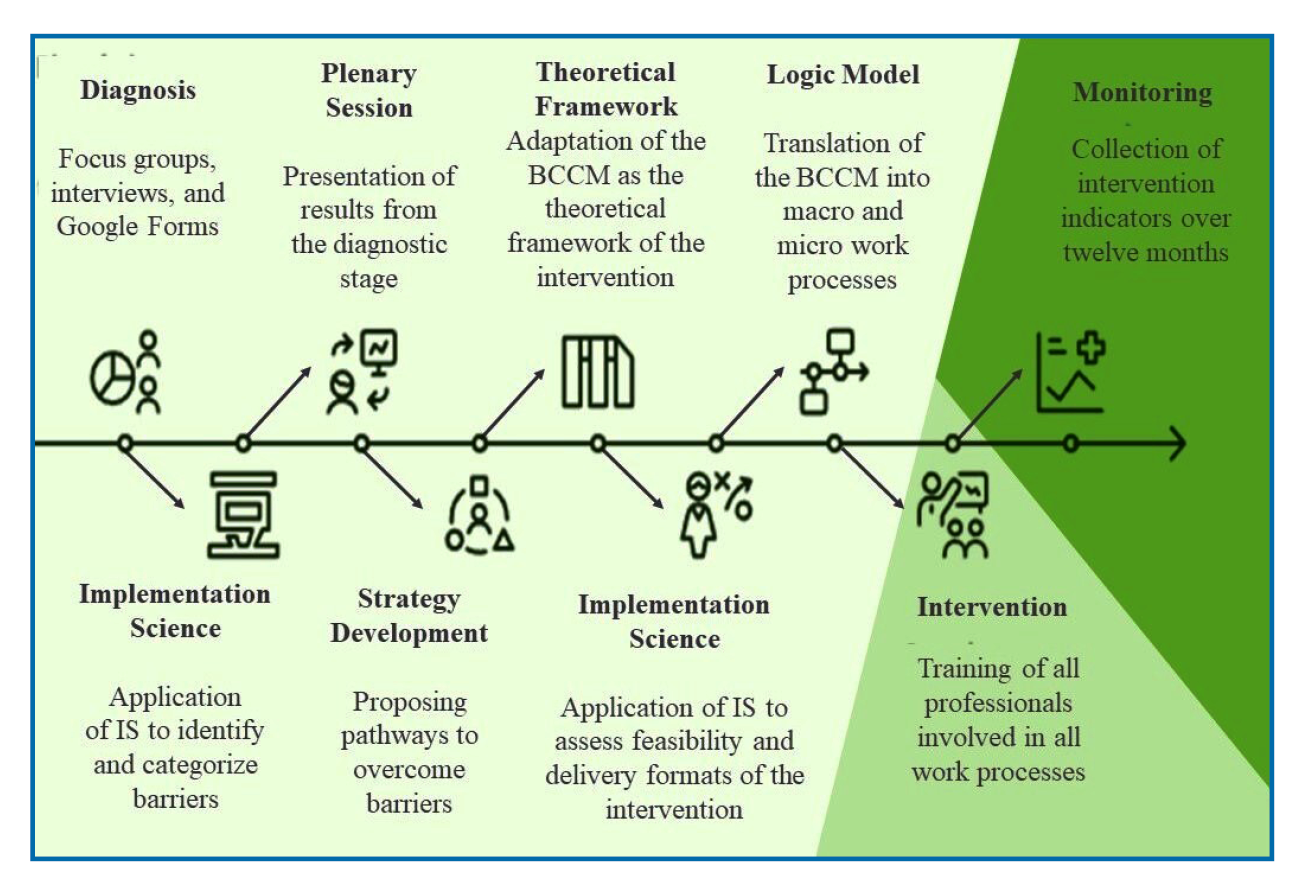
The study was carried out in three stages (Figure 1).
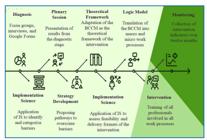
Stage 1 - Preimplementation and design of the care pathway: In the diagnostic phase, key informant interviews were conducted with managers, nurses, pharmacists, nursing technicians, community health agents, and endemic disease control agents, along with focus groups involving all PHC physicians. Questionnaires were administered to all health professionals to assess the epidemiological and care contexts level of organization of CD care.
The material was analyzed using IS frameworks: the Theoretical Domains Framework (TDF), to identify critical issues and strengths, and the Capability, Opportunity, and Motivation model (COM-B), to understand the factors influencing behavior change22.
The results were presented in a plenary session with health workers, and municipal and state managers. Shared strategies to overcome these barriers were developed using the theoretical framework of the BCCM14. Discussions were conducted in partnership with municipal and state health management and guided by the Brazilian Ministry of Health11 and State Health Secretariat guidelines.
The interventions were translated into a logical model of the CD care pathway, encompassing macro- and micro-level work processes, as outlined in the BCCM. Macroprocesses represented the overall structure of care, whereas microprocesses detailed the operational steps required at each stage.
Stage 2 - Implementation: The feasibility of proposed interventions using the APEASE framework: Acceptability, Practicability, Effectiveness, Affordability, Side effects, and Equity, was assessed using the APEASE framework. In conjunction, the Behavior Change Wheel (BCW) and Behavior Change Techniques (BCTs) were applied to define strategies for promoting behavioral change and their modes of delivery22. materials were developed for health care teams22.
Training workshops targeting all involved health professionals were conducted by the research team in collaboration with state health management professionals. The implementation process lasted for 3 months, during which the research team provided support and made adaptations and adjustments to the model as needed22.
Stage 3 - Monitoring: indicators were monitored over a 12-month period. The baseline (preimplementation) was established retrospectively 12-months prior to the commencement of the study, contemplating. The number of serological tests and etiological treatments.
The indicators were established for each macro-process and collected by the municipality using health information systems. Bimonthly meetings were held with the research team, municipal managers, and professionals from the Minas Gerais State Health Secretariat and Divinópolis Regional Office (SES-MG/Regional Divinópolis) to discuss potential adjustments. The indicators included: 1 - Screening risk factors (RF): this indicator was recorded through two distinct processes: a) Application of a standardized protocol to families during home visits by Community Health Agents (CHAs); and b) Routine electrocardiogram (ECG) performed in PHCs: questions regarding risk factors were incorporated into the Telehealth Network of Minas Gerais (RTMG) platform, which provides tele-electrocardiogram (Tele-ECG) services available to PHC facilities11. 2 - Serological testing and case notifications in the surveillance system: this indicator was monitored through the municipality’s control spreadsheet using data extracted from the Laboratory Environment Manager (GAL) of the Ezequiel Dias Foundation (FUNED), the reference laboratory for CD serology in Minas Gerais. Positive cases were confirmed by two reactive serological tests using different methods (Enzyme-linked Immunosorbent Assay, Chemiluminescence Assay, and Indirect Immunofluorescence, or Hemagglutination)11. Positive cases were reported as having chronic CD on the e-SUS Notifica platform, the official notification system of the SUS25. 3) Etiological treatment: Positive cases were referred for assessment of eligibility for BZN treatment in accordance with the Brazilian PCDT: a) patients aged <50 years with the indeterminate or digestive form; b) Patients with ECG abnormalities classified as mild cardiac form (left ventricular ejection fraction > 40%); c) patients aged >50 years were considered eligible subject to individual clinical evaluation. The following treatment indicators were monitored: number of treatments completed, treatment discontinuation owing to adverse events or nonadherence, and number of patients deemed ineligible for treatment11.
Data analysis
Baseline and monitoring data were recorded using Microsoft Excel 2019. Descriptive analyses of frequency distributions and percentages were performed.
Ethical considerations and funding
This study was approved by the Research Ethics Committee of the University of São Paulo (protocol no. 6.045.314). Funding was provided by the National Institutes of Health (NIH), within the scope of the SaMi-Trop cohort (Grant no. U01AI168383) and the Coordination for the Improvement of Higher Education Personnel (CAPES), Funding Code 001, Process no. 88881.927452/2023-01. The participating municipality signed a letter of agreement affirming its consent to the activities and commitment to provide the necessary support for implementation of the study.
RESULTS
Preimplementation and design of care pathway: Diagnostic data which identified six barriers: (1) Limited knowledge regarding treatment during the indeterminate phase. 2 - Limited experience and familiarity with BZN use 3 - Diagnostic resources were available, but patient flow was poorly understood, and delays in releasing serological results were reported. 4 - Lack of clinical suspicion of chronic CD compounded by competing demands of routine care. 5 - Low awareness of asymptomatic CD among the population 6 - A highly mobile population with a heterogeneous profile and limited health literacy regarding self-care and use of health services.
These barriers were presented to health professionals during a plenary session. The proposed strategies include training in entomological surveillance for all endemic disease control agents, strategies to increase the suspicion of chronic CD, development of a patient care pathway across the entire health network, and provision of diagnostic tests necessary to classify the clinical form of CD. Additional proposals included access to echocardiography creation of an identification card for patients using BZNt, designation of a physician as a technical reference in CD to provide decision-making support, and working in partnership with specialists from the RTMG and the SES-MG/Regional Divinópolis for clinical discussion of positive cases requiring individualized evaluation.
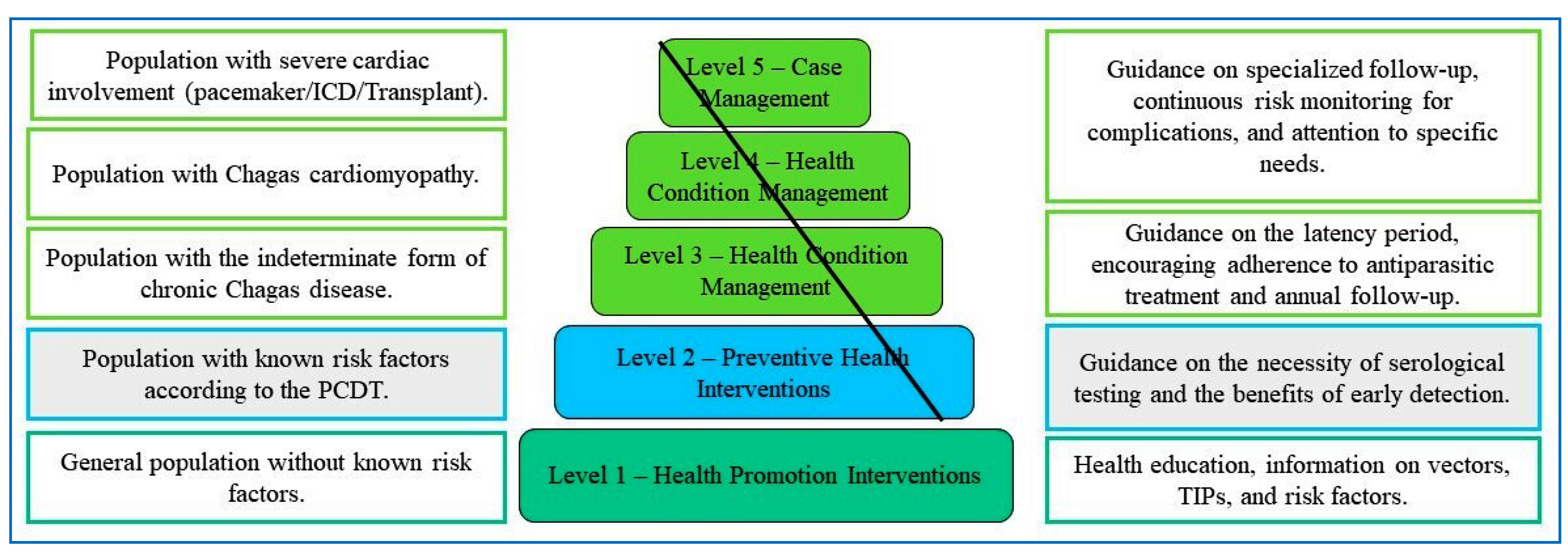
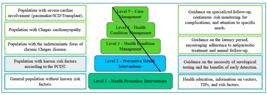
Based on these proposals, the BCCM was adapted as a theoretical framework for intervention considering the population profile of the municipality, which includes a large number of migrants from hyperendemic regions, a lack of awareness of neglected diseases, and the complexity of cases progressing to severe forms of CD, establishing. of the levels of support, target population, and social determinants of CD (Figure 2).
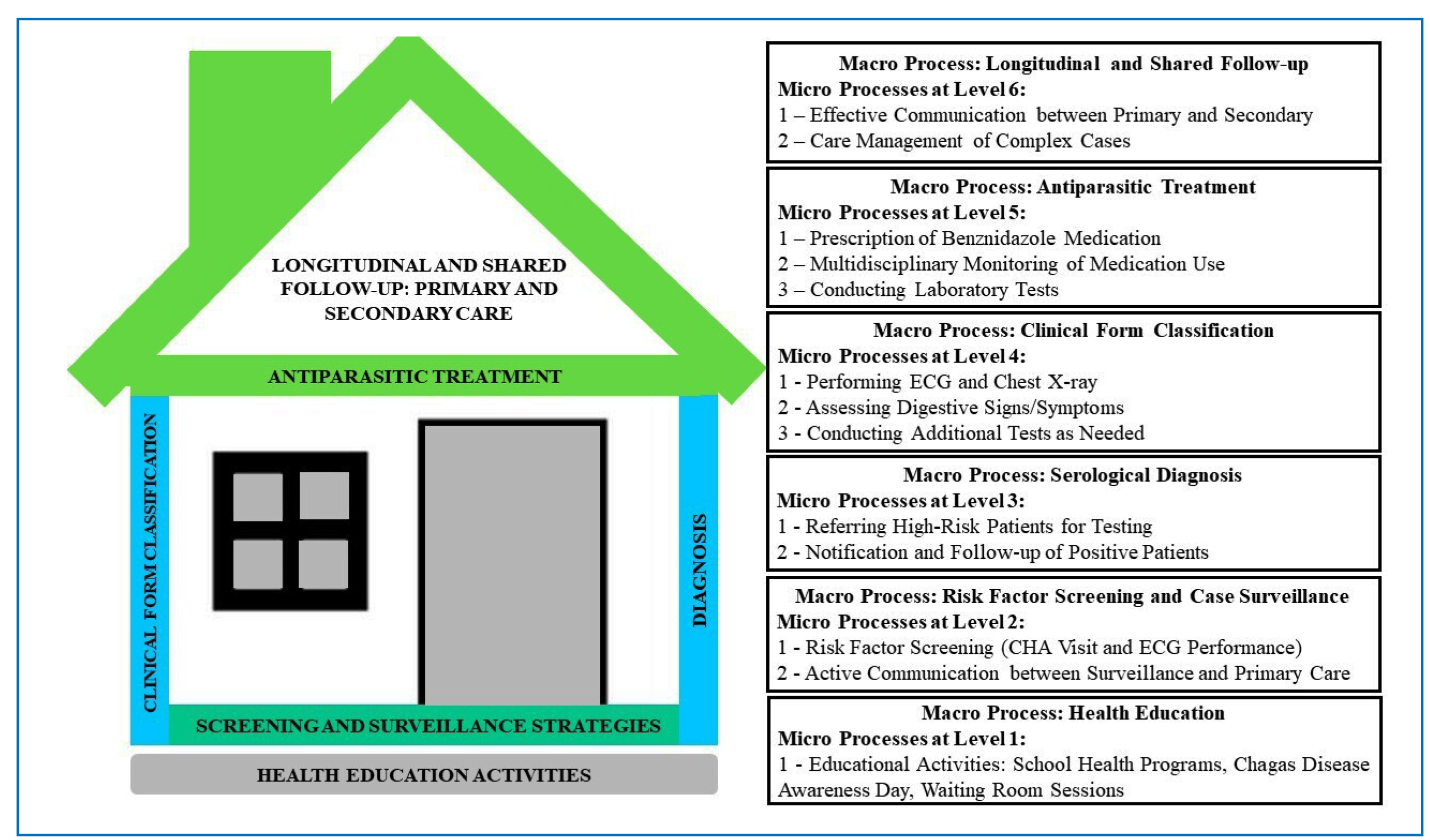
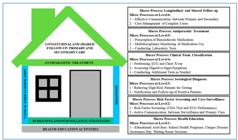
A logic model was developed comprising six macroprocesses: 1) Health education to raise community awareness around CD (etiological agent, transmission, risk factors, diagnosis, complications, and treatment). 2 -Screening: incorporation of RF investigation into routine PHC activities. 3 - Diagnosis - Timely identification of patients eligible for antiparasitic treatment. 4 - Clinical form classification of CD to direct patients toward appropriate treatment. 5 - Treatment: or management of CD-related complications. 6 - Longitudinal follow-up: ensuring continuous monitoring of patients, tracking disease progression, and enabling interventions aimed at preventing or delaying the onset of severe complications. Each macroprocess is subdivided into microprocesses, with all operational steps formalized in a guiding document (Figure 3). The foundation is health education activities, followed by an investigation of RFs aimed at addressing barriers related to the population’s limited awareness of CD and the lack of clinical suspicion regarding its chronic form. Subsequently, the stages of diagnosis and clinical classification were implemented. The microprocesses of treatment and longitudinal follow-up were designed to promote ownership of patient care by PHC teams in coordination with specialized care when required.
Implementation: The intervention strategies including training, education, persuasion, and environmental restructuring. For environmental restructuring, all microprocesses of logic model are detailed in standard operating procedures (SOPs), operational workflows and educational materials for the population (Supplementary Material 1). These resources were designed to raise awareness of CD among the population and health professionals and, beyond organizational purposes, to serve as persuasive strategies for professionals regarding the need for appropriate care of these patients.
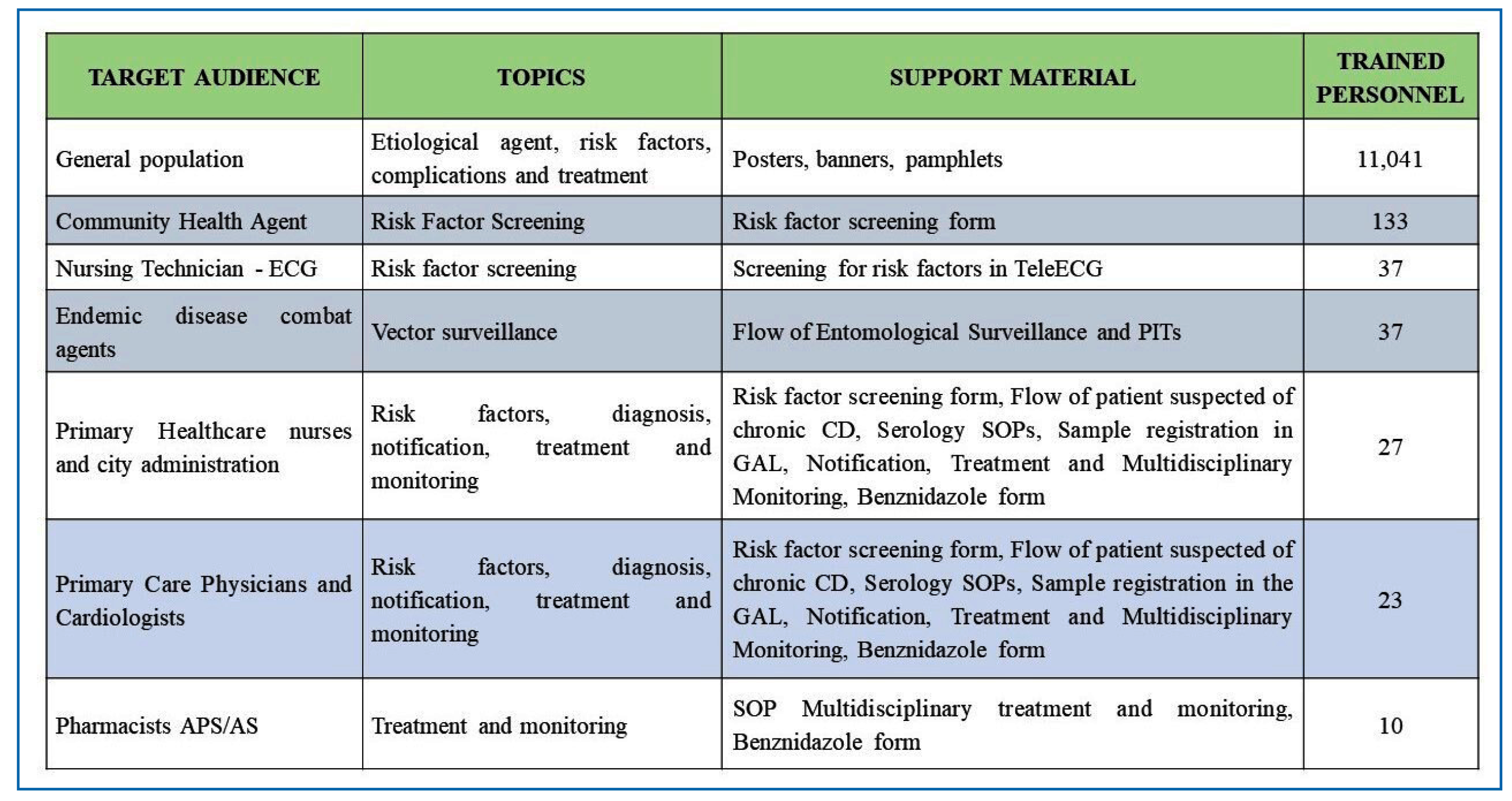
To empower professionals and enhance their capacity for disease management, all individuals involved in the logic model received training to carry out the planned activities (Figure 4). Additionally, trained health professionals conducted health education activities for the general population and elementary school students, addressing topics such as vector identification, transmission routes, risk factors, diagnosis, treatment, and potential complications of CD (Supplementary Material 2).
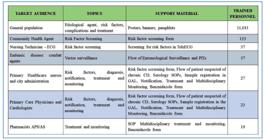
Target audience, topic, and support material of the training sessions conducted during the implementation phase.
Considering the possibility of workforce turnover and its potential impact on the sustainability of interventions, an admissions guide for healthcare professionals was developed. This guide introduced new staff to the local epidemiological situation of CD and emphasized the municipality’s care pathway for CD.
All supporting materials were developed by the study team under the supervision of the SES-MG, Divinópolis Regional Office, with additional technical approval from the Municipal Health Administration. The materials were made available on the official SES-MG website (http://vigilancia.saude.mg.gov.br/index.php/vigilancia-ambiental/) to allow other municipalities in the state to access and adapt them to their local contexts for structuring patient care for CD.
Monitoring: All indicators were tracked by a health facility, which enabled the identification of silent units and targeting of specific interventions of each PHC unit. During bimonthly meetings to review the dashboard, the development of a CD educational leaflet was proposed, emphasizing the importance of early identification of indeterminate/chronic patients. This material was designed for use by CHAs to raise patient awareness regarding the need for serological testing when risk factors were identified during screening (Supplementary Material 3). A before-and-after comparison of the indicators is presented in Table 1. A marked increase was observed for all indicators. Serological testing increased by > 2,800%, patient diagnosis by > 1,700%, and antiparasitic treatment increased from 2 treated patients to 16, of whom 14 completed treatment and 2 discontinued before completion.
DISCUSSION
This study used IS tools to develop care pathways for patients with CD. As a theoretical model, BCCM enables exploration of the complexities involved in the management of a neglected disease with a prolonged latency period. This required a reorganization of work processes, which had a positive impact on CD patient care; this methodology may also be replicated in the management of other chronic conditions or adapted for implementation in other municipalities.
Implementing scientific evidence within the context of the Brazilian SUS requires consideration of the complexity of a comprehensive and universal model of care14,26. The adaptation of BCCM through IS techniques allowed for a broader perspective of this model of care. The IS was able to synthesize and transform knowledge into practical actions27, which, through the BCCM, were structured into a logical model with defined work processes encompassing all aspects of care14. An additional strength is that this theoretical model has already been adopted in the context of SUS, specifically in healthcare networks, under the PlanificaSUS initiative28.
In PCDT, patients with chronic CD in the indeterminate and mild cardiac phases are included in the target population of PHC services11. In a study conducted by Santos et al.29 aiming to identify the social representations of neglected diseases, CD was not mentioned by health professionals as a condition of concern, contradicting the recommendations of both the World Health Organization (WHO) and the Brazilian Ministry of Health, which classify it as a priority among neglected diseases. Lack of professional knowledge, inadequate infrastructure, insufficient dialogue between PHC and specialized care, and limited awareness regarding pharmacological treatment have also been reported as challenges in the management of CD within PHC settings30. These findings reinforce the need to develop methodologies that systematize care and integrate CD into the PHC agenda.
A systematic review of the care of patients with CD30 presents strategies for more effective management, which corroborates the findings of this study. Screening and diagnosis, professional training, and community education were identified as essential, reinforcing the relevance of the macro-processes considered in the adaptation of BCCM. Accordingly, the results suggest that the BCCM facilitated the inclusion of CD as a condition of concern within PHC, as it integrates the three care models and translates complex situations into work processes aligned with the reality of PHC14,15.
From the perspective of organizing of SUS, the BCCM has been widely applied in different contexts, particularly for hypertension and diabetes14. However, it is important to highlight that the model is not limited to chronic diseases, but applies to any health condition requiring longitudinal care28, including persistent infectious diseases31. The CCM is internationally recognized and has been tested in different countries and primary care contexts. Evidence shows that its implementation has led to improvements in PHC, with components related to care organization, service delivery systems, and decision support consistently identified as fundamental32,33. In structuring the BCCM for CD, these components were incorporated, reinforcing the applicability of the model to other contexts.
Although the use of the BCCM is already a reality in Brazil, it entails profound changes involving the structure and organization of PHC. Reorganization of the work logic focused on a model of shared responsibility between service users and the health system, adopting a multiprofessional approach that addresses the condition from a systemic perspective14,28,34. In this regard, the use of IS as a guiding framework for the model stands out as a major in achieving results, given that process implementers are included in all stages of intervention design. Previous studies have corroborated the effectiveness of IS in strengthening healthcare systems in low- and middle-income countries, emphasizing its capacity to implement practices within PHC19,21.
Scientific evidence is often generated in highly controlled contexts; however, when applied in real-world, multiple contexts emerge, which can limit the applicability and clarity of indicators derived from “pure” evidence35. Thus, although PCDT11 compiles the best available evidence for the care of CD patients, its applicability is constrained by issues related to professional training, cultural factors, and health management12,30, as well as by the inherent invisibility of neglected diseases29. Therefore, IS proposes methodologies that integrate multiple methods and contexts, in addition to ensuring the participation of all stakeholders21,36, which can be essential for the long-term sustainability of interventions37.
Both IS and BCCM are strategies designed to regard multiplicity of contexts and foster the active participation of professionals involved in patient care, translating complex scenarios into systematic and routine procedures. Accordingly, the intervention presented herein may be applicable in other contexts, including municipalities with characteristics that differ from those of the study setting. Furthermore, implementation of the care pathway may encourage municipalities to organize work processes related to other health conditions, thereby strengthening PHC and improving the quality of services provided to patients.
Several challenges may contribute to the difficulty of CD diagnosis: the prolonged latency period, lack of clear standards for diagnostic investigation, and variability associated with environmental, geographic, social, and transmission-related factors hinder the establishment of a more accurate picture of the CD burden38. Thus, the substantial increase in the number of positive patients observed in this study is noteworthy. This finding indicates that the process of epidemiological vulnerability assessment proposed by the PCDT11 is an effective strategy for enhancing the timely identification of patients with the chronic form of the disease. The adoption of risk factor-screening strategies may yield significant advances in municipalities with similar epidemiological contexts.
The adoption of the proposed microprocesses addresses the main bottlenecks in the care of patients with chronic CD: clinical suspicion, diagnosis, and treatment38. The investigation of risk factors for CD during home visits by CHAs, along with ECGs, has enabled health teams to identify populations at risk within their territory, thereby allowing for targeted interventions to facilitate timely diagnosis.
However, this study presents aspects that warrant further discussion regarding future implementations. The intervention enabled an increase in case suspicion; however, it also highlighted that serological testing remains a challenge as coverage reached only 11% of the at-risk population. Nevertheless, when compared to the baseline, there was an increase of > 2,800%, demonstrating that although challenges persisted, the intervention led to substantial progress in expanding patient testing. Among the factors that might have influenced patient adherence to serological testing, an important issue was the need to travel to a laboratory for blood collection. The municipality has a labor context in which additional salary benefits are tied to the absence of missed workdays or hours. Adherence may also be affected by issues commonly associated with CD, such as the prolonged latency period and the social stigma surrounding the condition39,40.
A delay in the release of serological test results for chronic CD has also been identified as an important barrier. These tests were performed exclusively at the reference laboratory of the FUNED, which conducts serology for the entire state of Minas Gerais. Overcoming this barrier lies beyond municipal governance and is outside the scope of an intervention’s implementation capacity. Nonetheless, the establishment of additional reference laboratories with decentralized testing across regional hubs may represent a strategy to improve this work process and expedite the release of results.
Both critical points identified are related to serological testing. Previous studies have discussed the contribution of rapid diagnostic tests41-43 for CD; however, this methodology has not yet been implemented in the Brazilian Health System11. Therefore, the adoption of a rapid test as a screening tool could simplify the diagnostic process and reduce the workload of reference laboratories, potentially improving patient adherence and enhancing service organization, thereby addressing the limitations identified in this study.
CONCLUSIONS
IS, combined with BCCM, proved capable of supporting the development of care models applicable to PHCs. The structuring of work processes for neglected chronic diseases based on this care model enabled the incorporation of practices by PHC, with CD integrated as a condition under PHC responsibility, and the shared management of more severe cases with specialized care. In the context of persistent challenges, initiatives aimed at organizing care for patients with neglected diseases have emerged as essential tools to strengthen public health services.
ACKNOWLEDGMENTS
The authors thank the municipal health team, especially all primary healthcare professionals in the participating municipalities, for their efforts in implementing the care pathway for chronic CD. We also thank the SES-MG for technical support during implementation. We also thank the funding agencies, the SaMi-Trop research group, and TeleHealth Network for their continuous support of actions aimed at addressing CD in Brazil.
SUPPLEMENTARY MATERIAL
Supplementary material 1
Supplementary material 2
Supplementary material 2
REFERENCES
- 1 Laporta GZ, Lima MM, Maia da Costa V, Lima Neto MM, Palmeira SL, Rodovalho SR, et al. Estimativa de prevalência de doença de Chagas crônica nos municípios brasileiros. Rev Panam Salud Publica. 2024;48:1.
- 2 Echeverría LE, Marcus R, Novick G, Sosa-Estani S, Ralston K, Zaidel EJ, et al. WHF IASC Roadmap on Chagas Disease. Glob Heart. 2020;15(1):26.
- 3 Pereira MB, Batista AM, Aguiar C, Marcon GEB, Martins LC, Guariento ME, et al. The detection of Trypanosoma cruzi by nested-PCR in elderly patients: relationship to the clinical and epidemiological profile. Pathog Glob Health. 2016;110(6):228-32.
- 4 Bern C. Chagas’ Disease. N Engl J Med. 2015;373(5):456-66.
- 5 Nascimento BR, Naback AND, Santos BMP, Geissbühler Y, Demacq C, Quijano M, et al. Prevalence of clinical forms of Chagas disease: a systematic review and meta-analysis - data from the RAISE study. Lancet Reg Health Am. 2024;30:100727.
- 6 Martins-Melo FR, Ramos AN, Alencar CH, Heukelbach J. Mortality from neglected tropical diseases in Brazil, 2000-2011. Bull World Health Organ. 2016;94(2):103-10.
- 7 De Paulo GL. Mortalidade por doença de Chagas no Brasil no período de 1996 a 2021: mapeamento e análise com base em estatística espacial. Rev Bras Epidemiol. 2023;23:e202309.
- 8 Souza EA, Cruz MM, Ferreira AF, Sousa AS, Luiz RR, Palmeira SL, et al. Hospital case fatality and mortality related to Chagas disease in Brazil over two decades. BMC Public Health. 2024;24(1):1923.
- 9 Ministério da Saúde (BR). Lista Nacional de Notificação Compulsória de Doenças, Agravos e Eventos de Saúde Pública. Brasília: Ministério da Saúde; 2024.
- 10 Costa Chaves G, Abi-Saab Arrieche M, Rode J, Mechali D, Reis PO, Alves RV, et al. Estimación de la demanda de medicamentos antichagásicos: una contribución para el acceso en América Latina. Rev Panam Salud Publica. 2017;41:e28.
-
11 Ministério da Saúde (BR). Protocolo clínico e diretrizes terapêuticas: Doença de Chagas [Internet]. Brasília: Ministério da Saúde ; 2018 [cited 2025 Ago 27]. Available from: Available from: http://conitec.gov.br
» http://conitec.gov.br - 12 Damasceno RF, Sabino EC, Ferreira AM, Ribeiro ALP, Moreira HF, Prates TEC, et al. Challenges in the care of patients with Chagas disease in the Brazilian public health system: a qualitative study with primary health care doctors. PLoS Negl Trop Dis. 2020;14(11):e0008782.
- 13 Alonso-Padilla J, Cortés-Serra N, Pinazo MJ, Bottazzi ME, Abril M, Barreira F, et al. Strategies to enhance access to diagnosis and treatment for Chagas disease patients in Latin America. Rev Anti Infect Ther. 2019;17(3):145-57.
- 14 Mendes EV. O modelo de atenção às condições crônicas no Brasil. Belo Horizonte: Organização Pan-Americana da Saúde; 2012.
- 15 Wagner EH. Chronic disease management: what will it take to improve care for chronic illness? Eff Clin Pract. 1998;1(1):2-4.
- 16 Dahlgren G, Whitehead M. Policies and strategies to promote social equity in health. Stockholm: Institute for Futures Studies; 1991.
- 17 Rodrigues CFM, Cardoso CS, Baldoni NR, D’Alessandro TAL, Quintino ND, Noronha KVM, et al. Capacidade institucional dos serviços de saúde antes, durante e após a implantação do Modelo de Atenção às Condições Crônicas (BCCM). Rev Eletrônica Acervo Saúde. 2021;13(1):e5802.
- 18 Ministério da Saúde (BR). Introdução à ciência de implementação. Brasília: Ministério da Saúde ; 2020.
-
19 Fixsen L, Van Dyke M, Blase K, Fixsen D. Implementation Science. 2019. Available from: https://www.merriam-webster.com/
» https://www.merriam-webster.com/ - 20 Global Alliance for Chronic Diseases (GACD). Annual report 2024. London: GACD; 2024.
- 21 Michie S, van Stralen MM, West R. The behaviour change wheel: a new method for characterising and designing behaviour change interventions. Implement Sci. 2011;23;6:42.
- 22 Moreira CHV, Azevedo L, Ferreira AM, Oliveira AC, Souza AB, Haikal DS, et al. Bridging the gap in Chagas disease management: a mixed-methods study using an implementation science approach within the Brazilian primary health care system-‘Implementa-Chagas/SaMi-Trop project’. Lancet Reg Health Am. 2025;47:101136.
- 23 Instituto Brasileiro de Geografia e Estatística (IBGE). Censo demográfico 2022: resultados. Rio de Janeiro: IBGE; 2023.
- 24 Ministério da Saúde (BR). Boletim epidemiológico: territorialização e vulnerabilidade para doença de Chagas crônica. Brasília: Ministério da Saúde ; 2023.
-
25 Maviana E, Santos T, Carolina F, Mayara M, Lima M, Martins M, et al. Elaboração de protocolos para o cuidado em Chagas [Internet]. Montevidéu: OPS; 2019 [cited 2025 Ago 27]. Available from: Available from: http://ops-uruguay.bvsalud.org/pdf/chagas19.pdf
» http://ops-uruguay.bvsalud.org/pdf/chagas19.pdf - 26 Brasil. Lei nº 8.080, de 19 de setembro de 1990. Dispõe sobre as condições para a promoção, proteção e recuperação da saúde. Diário Oficial da União. 1990 Sept 20.
- 27 Luz PL, Laurindo FRM. Translational medicine and implementation science: how to transform what we know into what we do. Arq Bras Cardiol. 2022;119(2):342-5.
-
28 Vargas F. Planificação da atenção à saúde: oficinas da atenção primária à saúde. Oficina V - organização dos processos de trabalho na atenção primária à saúde: o cuidado às condições crônicas [Internet]. Brasília: CONASS; 2018 [cited 2025 Ago 27]. Available from: Available from: http://www.conass.org.br/conassdocumenta/cd_23.pdf
» http://www.conass.org.br/conassdocumenta/cd_23.pdf - 29 Santos CS, Gomes AMT, Souza FS, Marques SC, Lobo MP, Oliveira DC. Social representations of health professionals on neglected diseases. Esc Anna Nery. 2017;21(1):e20170007.
- 30 Modesto LC, Aviz ASM, Amaral VAC, Lobo WC, Silva YC, Moraes TM. Desafios para o controle da Doença de Chagas na Atenção Primária à Saúde. Braz J Implant Health Sci. 2023;5(3):1321-46.
- 31 Andrade MV, Noronha K, Cardoso CS, Oliveira CDL, Calazans JA, Souza MN. Challenges and lessons from a primary care intervention in a Brazilian municipality. Rev Saude Publica. 2019;53:61.
- 32 Mendes EV. O Cuidado das Condições Crônicas na Atenção Primária à Saúde. Rev Bras Promoção Saúde. 2018:(2):1-3.
- 33 Yeoh EK, Wong MCS, Wong ELY, Yam C, Poon CM, Chung RY, et al. Benefits and limitations of implementing Chronic Care Model (CCM) in primary care programs: a systematic review. Int J Cardiol. 2018;258:279-88.
-
34 Evangelista JO, Soares MZ, Barreto MO, Das OM, Costa ALPA, Rodrigues CDS, et al. Oficina 4 - Organização da Atenção aos Eventos Agudos e às Condições Crônicas na Atenção Primária à Saúde. [Internet] Brasília: CONASS ; 2019. Available from: https://atencaoprimaria.rs.gov.br/upload/arquivos/201905/16140005-oficina-04-condicoes-cronicas-e-agudas-atualizada.pdf
» https://atencaoprimaria.rs.gov.br/upload/arquivos/201905/16140005-oficina-04-condicoes-cronicas-e-agudas-atualizada.pdf - 35 Holtrop JS, Rabin BA, Glasgow RE. Dissemination and implementation science in primary care research and practice: contributions and opportunities. J Am Board Fam Med. 2018;31(3):466-78.
- 36 Atkins L, Francis J, Islam R, O’Connor D, Patey A, Ivers N, et al. A guide to using the Theoretical Domains Framework of behaviour change to investigate implementation problems. Implement Sci. 2017;12(1):77.
- 37 Rogers HL, Hernando SP, Núñez-Fernández S, Sanchez A, Martos C, Moreno M, et al. Barriers and facilitators in the implementation of an evidence-based health promotion intervention in a primary care setting: a qualitative study. J Health Organ Manag. 2021;35(9):349-67.
- 38 Cucunubá ZM, Gutiérrez-Romero SA, Ramírez JD, Velásquez-Ortiz N, Ceccarelli S, Parra-Henao G, et al. The epidemiology of Chagas disease in the Americas. Lancet Reg Health Am. 2024;37:1-20.
- 39 Plata L. Hablamos de Chagas: Relatos y Trazos Para Pensar Un Problema Complejo. 2013. Argentina 2013. 1-25.
- 40 Marques AA, Hennington ÉA. As repercussões da Doença de Chagas no contexto de vida e trabalho de usuários de instituto de pesquisa. Sdeb. 2017;41:215-24.
- 41 Sabino EC, Lee TH, Montalvo L, Nguyen ML, Leiby DA, Carrick DM, et al. Antibody levels correlate with detection of Trypanosoma cruzi DNA by sensitive polymerase chain reaction assays in seropositive blood donors and possible resolution of infection over time. Transfusion. Paris. 2013;53(6):1257-65.
- 42 Ribeiro AJ, Silva KA, Lopes LS, Resende CAA, Couto CAP, Gandra IB, et al. The use of peptides for immunodiagnosis of human Chagas disease. Amino Acids. 2024;56(1):35.
- 43 Alviarez Y, Lares M, Viettri M, Aguilar CM, Herrera L, Ferrer E. Estandarización de la técnica de aglutinación directa para el inmunodiagnóstico de la enfermedad de Chagas. Biomedica. 2014;34(2):308-17.