
 Determinants of Generative Artificial Intelligence use in language learning among pre-service EFL teachers
Abstract
The integration of technology in education has significantly transformed traditional teaching and learning paradigms, especially in the realm of language education. This study focuses on the role of generative artificial intelligence (AI) tools, such as ChatGPT, as innovative resources that enhance language learning through features like instant feedback, conversational practice, and personalized learning paths. Specifically, this research investigates the factors influencing the adoption of generative AI, particularly ChatGPT, among pre-service English as a Foreign Language (EFL) teachers in Indonesia. Utilizing the Technology Acceptance Model (TAM), the study examines perceptions of usefulness, ease of use, and other critical determinants affecting the acceptance of generative AI tools in language learning environments. A quantitative approach was employed, gathering data from 785 pre-service EFL teachers across three Indonesian universities through an online survey distributed via university platforms and social media. A structured questionnaire was developed based on TAM constructs and relevant literature. Data analysis was conducted using Partial Least Squares Structural Equation Modeling (PLS-SEM) with SmartPLS 4 software. The findings revealed that nine out of the thirteen initial hypotheses received empirical support, highlighting the significance of various factors in the adoption of generative AI among pre-service EFL teachers. Notably, the intention to use generative AI emerged as a robust predictor of actual usage behavior, supporting existing literature on technology adoption and emphasizing the importance of learners’ intentions in engaging with new technologies.
Keywords:
English as a Foreign Language; English language learning; Generative artificial intelligence; Pre-service EFL teachers
Resumo
A integração da tecnologia na educação tem transformado os paradigmas tradicionais de ensino, especialmente no aprendizado de línguas. Este estudo tem como foco o papel das ferramentas de inteligência artificial (IA) generativa, como o ChatGPT, enquanto recursos inovadores que facilitam a aprendizagem de línguas, oferecendo feedback instantâneo, prática de conversação e caminhos personalizados. Esta pesquisa investiga os fatores que influenciam o uso da IA generativa, em particular o ChatGPT, entre professores de Inglês como Língua Estrangeira (English as a Foreign Language - EFL) em formação na Indonésia. Utilizando o Modelo de Aceitação de Tecnologia (Technology Acceptance Model - TAM), o estudo explora percepções de utilidade, facilidade de uso e outros determinantes críticos que afetam a aceitação dessas ferramentas em ambientes de aprendizado de línguas. Foi adotada uma abordagem quantitativa, coletando dados de 785 futuros professores de EFL em três universidades indonésias por meio de uma pesquisa online distribuída via plataformas universitárias e redes sociais. Um questionário estruturado, baseado nos construtos do TAM e na literatura relevante, foi desenvolvido. A análise dos dados foi realizada por meio da Modelagem de Equações Estruturais por Mínimos Quadrados Parciais (Partial Least Squares Structural Equation Modeling - PLS-SEM) com o software SmartPLS 4. Os resultados mostraram que nove das treze hipóteses iniciais receberam suporte empírico, destacando a importância de vários fatores na adoção da IA generativa entre futuros professores de EFL. A intenção de usar a IA emergiu como um forte preditor do comportamento de uso real, corroborando a literatura existente sobre emprego de tecnologia e reforçando a relevância das intenções dos aprendizes ao se engajarem com novas tecnologias.
Palavras-chave:
Inglês como Língua Estrangeira; Aprendizagem da língua inglesa; Inteligência artificial generativa; Futuros professores de EFL
1 Introduction
The rapid advancement of technology has fundamentally transformed educational paradigms, particularly in language learning settings. The integration of digital tools has shifted traditional methods of teaching, enabling more interactive and personalized learning experiences. Among these innovations, generative artificial intelligence (AI) tools, such as ChatGPT, have emerged as valuable resources that facilitate language acquisition by providing instant feedback and opportunities for conversational practice (Guettala et al., 2024). By facilitating real-time interactions that closely resemble authentic language use, these tools can significantly enhance the effectiveness of the language learning process (Huang; Peng; Teo, 2025; Nagy et al., 2024).
Generative AI creates original content, like text and images, by learning patterns from extensive datasets, distinguishing it from traditional AI that primarily analyzes or classifies information. Notable AI tools, such as ChatGPT, Microsoft Copilot, and Google Gemini, leverage Large Language Models (LLMs) to produce human-like responses and various data forms (Crompton; Burke, 2023). Generative AI offers unique advantages in language learning, including tailored feedback and adaptive learning pathways. These tools can engage learners in meaningful conversations, thereby enhancing their linguistic skills in real-time. Previous research has shown that the use of AI in education promotes a more dynamic learning environment, fostering both motivation and engagement among learners (Vy; Vinh, 2025). As educators increasingly turn to such technologies, understanding the factors that influence their acceptance becomes crucial (Liu; Ma, 2024).
The integration of generative AI in language learning has garnered significant attention in recent years, particularly as educational institutions seek innovative methods to enhance teaching and learning experiences (Moorhouse et al., 2024). Current literature demonstrates a growing interest in how AI technologies can facilitate language acquisition by providing personalized learning experiences and fostering engagement among students (Lee; Davis; Lee, 2024; Zhai; Wibowo, 2023). However, most studies focus primarily on the outcomes of AI integration rather than the determinants that influence user acceptance and implementation. This gap is particularly pronounced in the context of pre-service teachers, who represent the future of language education but may face unique challenges and perceptions regarding the adoption of such technologies (Pinninti, 2025).
This study seeks to explore the determinants influencing the adoption of generative AI in language learning among pre-service English as a Foreign Language (EFL) teachers in Indonesia. By applying the Technology Acceptance Model 2 (TAM2), this research aims to elucidate how perceptions of usefulness, ease of use, and other critical factors shape the acceptance of these advanced tools within the educational context. The Technology Acceptance Model serves as a foundational framework for examining user acceptance of technology (Venkatesh; Davis, 2000). According to Davis (1989), perceived usefulness and perceived ease of use are the two primary constructs that significantly influence an individual’s decision to adopt new technologies. In the context of language learning, understanding these perceptions can provide insights into how pre-service EFL teachers view the integration of generative AI tools in their future classrooms. This study aims to explore these constructs in detail, highlighting their relevance to the acceptance of AI in educational settings.
This article seeks to address this research gap by exploring the specific determinants that affect the use of generative AI tools among pre-service EFL teachers in Indonesia. By employing a framework based on the TAM2, the research will investigate factors such as computer self-efficacy, motivation, and facilitating conditions within this unique educational context. The novelty of this study lies in its focus on a demographic that has been underrepresented in existing AI research, thereby contributing valuable insights into how these future educators can effectively harness AI tools in their teaching practices. Ultimately, this research aims not only to fill a crucial gap in the literature but also to inform policy and practice in language education, paving the way for more effective integration of AI technologies in EFL classrooms.
2 Literature review
2.1 Generative AI Integration in English Language Learning
The integration of AI in education has been the subject of extensive research, highlighting its potential to transform language learning through personalized and adaptive learning experiences. Previous studies have demonstrated that generative AI can provide tailored feedback, facilitate conversational practice, and create adaptive learning paths that adjust to individual learners’ needs (Tafazoli, 2024). This adaptability not only helps learners progress at their own pace but also addresses their specific strengths and weaknesses, making the learning experience more efficient and effective.
Generative AI refers to a category of AI that produces original content, including text, images, video, audio, and code, by identifying patterns and structures within large datasets. Unlike traditional AI, which primarily focuses on analysis and classification, GenAI is centered on content generation. Prominent examples of generative AI tools, such as ChatGPT, Microsoft Copilot, and Google Gemini, utilize LLMs to generate human-like responses and various data formats (Crompton; Burke, 2023). Moreover, the use of AI tools fosters a more engaging and interactive environment for language learners. By simulating real-life conversations and providing immersive scenarios, these tools encourage learners to practice speaking and comprehension in a safe space. This interactive approach can boost learners’ confidence, reduce anxiety associated with language use, and promote a more positive attitude toward language acquisition (Huang; Peng; Teo, 2025). As educators continue to explore the integration of AI in their curricula, the potential for enhanced language learning outcomes becomes increasingly evident.
The use of technology in education has been a focal point of research for decades, fundamentally altering how teaching and learning occur. This transformation has accelerated with the advent of generative AI, which offers novel ways to enhance educational outcomes. Generative AI, particularly tools like ChatGPT, provides dynamic interactions that can support language learning by simulating real-life conversations and offering immediate feedback (Wang; Du; Zou, 2025). Such capabilities are essential for language learners who require practice and reinforcement outside traditional classroom settings (Chugai; Lytovchenko; Synekop, 2025).
Research indicates that generative AI can play a significant role in personalized learning experiences. According to Sumakul (2025), AI can analyze individual learner profiles and adapt content to meet their specific needs. This personalization is particularly beneficial in language learning, where learners often have varying levels of proficiency and different learning styles. By leveraging AI, educators can create tailored learning pathways that enhance engagement and effectiveness, thus improving language acquisition outcomes (Giray et al., 2025).
In the context of Indonesia, the integration of technology in language education faces unique challenges. While there is a growing interest in adopting AI tools, many educators report concerns about their technical skills and the adequacy of training provided (Sari; Sulistyo, 2022). Research highlights that insufficient professional development can hinder the effective use of technology in the classroom (Doğru; Özen, 2023). Therefore, understanding the perceptions of pre-service EFL teachers regarding generative AI tools is critical to overcoming these barriers and facilitating their acceptance. Moreover, the role of cultural and contextual factors cannot be overlooked when examining technology adoption. As highlighted by Aldosari (2020), educators’ beliefs and attitudes toward technology are often shaped by their cultural backgrounds and educational experiences. In Indonesia, where traditional teaching methods are prevalent, the transition to technology-enhanced learning may require significant shifts in mindset. This study aims to explore how these cultural factors interact with perceptions of usefulness and ease of use to influence the acceptance of generative AI among pre-service teachers.
The existing literature also emphasizes the importance of feedback in language learning, a core feature of generative AI tools. Research by Ali et al. (2024) reveals that timely and specific feedback significantly enhances student learning. Generative AI can provide instant feedback, allowing learners to correct mistakes and reinforce their understanding in real-time (Zhang; Cao, 2022). This capability makes AI tools particularly valuable in language learning, where immediate corrective feedback can lead to improved proficiency.
Generative AI holds promise for enhancing language learning through personalized experiences and immediate feedback. However, the acceptance of these technologies by pre-service EFL teachers is influenced by various factors, including perceived usefulness, ease of use, cultural context, and the availability of professional training. By applying the TAM framework, this study will contribute to a deeper understanding of these dynamics, ultimately informing strategies for the effective integration of AI in language education.
2.2 Technology Acceptance Research
The Technology Acceptance Model (TAM) serves as an effective framework for understanding user acceptance of technology, emphasizing two primary constructs: perceived usefulness and perceived ease of use (Davis, 1989). Its widespread use is attributed to its straightforward application in structural equation modeling and its capability to account for variations in actual technology use or intentions to use technology (Sulistiyo et al., 2022). Research indicates that these factors significantly influence educators’ willingness to adopt new technologies. This study will build upon existing literature to examine how these constructs apply specifically to the context of pre-service EFL teachers in Indonesia. TAM has been widely utilized to understand the factors influencing the adoption of new technologies in education. As proposed by Davis (1989), perceived usefulness and perceived ease of use are critical determinants of technology acceptance. Previous studies have confirmed the applicability of TAM in various educational contexts, including language learning (Teo et al., 2010). Understanding these constructs is essential for identifying how pre-service EFL teachers perceive generative AI tools and their potential impact on language instruction.
In various educational settings, the original TAM has been expanded to incorporate additional factors such as self-efficacy, motivation, and perceived enjoyment as external variables (Venkatesh; Davis, 2000). Alfadda and Mahdi (2021) conducted a study to examine the relationship between TAM and the use of the application for language learning. The study involved 75 students enrolled in an online course during the COVID-19 pandemic. The findings indicated a strong positive correlation between students’ actual use of the application and their attitudes and behavioral intentions. Furthermore, a positive correlation was also identified between computer self-efficacy and other TAM variables.
Empirical studies have shown that perceived usefulness significantly affects educators’ willingness to adopt AI technologies. For instance, a study by Alfadda and Mahdi (2021) found that teachers who perceived AI tools as beneficial for enhancing student engagement and learning outcomes were more likely to integrate these technologies into their teaching practices. Similarly, perceived ease of use has been identified as a crucial factor; when educators believe that a technology is user-friendly, they are more inclined to utilize it (Huang; Peng; Teo, 2025). These findings underscore the importance of addressing both constructs to foster a supportive environment for technology adoption.
2.3 Research Model and Hypotheses
The research model underpinning this study is illustrated in Figure 1, which outlines eight key constructs: computer self-efficacy, motivation, subjective norm, facilitating conditions, perceived usefulness, perceived ease of use, intention to use, and actual use behavior regarding generative AI tools in English language learning among pre-service teachers in Indonesia’s EFL context. This model is grounded in the TAM2 proposed by Venkatesh and Davis (2000), which is widely recognized for its effectiveness in predicting user acceptance of new technologies. Each construct plays a vital role in understanding the factors that influence pre-service teachers’ willingness to adopt generative AI for learning English.
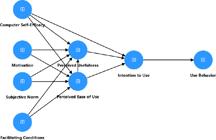
The hypotheses formulated from this model will explore the relationships between these constructs, positing that higher levels of computer self-efficacy and motivation will enhance perceived usefulness and ease of use, subsequently leading to a greater intention to use and, ultimately, increased actual usage of generative AI tools. By testing these hypotheses, the study aims to provide a comprehensive framework for understanding user acceptance in the context of innovative educational technologies (Table 1).
3 Methodology
3.1 Research Design
This study employed a quantitative methodology, utilizing a survey design to collect data from a sample of 785 pre-service EFL teachers across three universities in Indonesia. An online survey was distributed through university platforms and social media to maximize participation. The questionnaire was developed based on constructs from the TAM2 and relevant literature, evaluating factors such as perceived usefulness, perceived ease of use, and intention to use toward generative AI. Data analysis was conducted using Partial Least Squares Structural Equation Modeling (PLS-SEM) with SmartPLS 4 software to explore relationships among variables and identify key predictors of generative AI acceptance. PLS-SEM is a causal-predictive SEM technique that focuses on generating structural predictions through statistical models. It is preferable to traditional covariance-based SEM (CBSEM) for estimating our model, as it effectively manages issues related to sample sizes, multivariate normality, model complexity, measurement levels, and uncertain variables (Hair; Howard; Nitzl, 2020).
3.2 Respondents
This study included 785 pre-service EFL teachers from three universities in Indonesia. The participants consisted of first- to fourth-year students enrolled in 2025, all of whom are majoring in English language education. To recruit respondents, a hyperlink was distributed via social media tools such as WhatsApp and Email to pre-service EFL teachers from three universities in Indonesia. These student teachers have formally studied English for three years at the secondary school level and three additional years at the high school level, and they continue to engage with English courses and receive instruction in English. Table 2 provides a detailed analysis of the participants’ demographic information, as well as data regarding gender, engagement in the use of AI activities, and relevant experiences. This research was conducted under the authority of the Research and Community Service Institute, University of Jambi. All of the respondents voluntarily agreed to take part after understanding the study’s purpose and procedures.
3.3 Instrumentation
To examine the factors influencing AI acceptance and readiness in the context of foreign language learning, we utilized a multiple-item questionnaire. The questionnaire was designed based on constructs from TAM2 and previous relevant studies. The first section of the questionnaire gathered demographic information, including gender, years of enrollment, device ownership, and experience of using AI. The second section comprised eight variables derived from the TAM: Computer Self-Efficacy (five items), Motivation (four items), Subjective Norm (three items), Facilitating Conditions (four items), Perceived Ease of Use (five items), Perceived Usefulness (eight items), Intention to Use (four items), and Use Behavior (four items). Table 3 presents the detailed variables and items included in the questionnaire. Each item was measured using a four-point Likert scale, ranging from 1 (strongly disagree) to 4 (strongly agree).
The instrument was first evaluated by two experts to test the content validity. Before distributing the instrument to the respondents, the researcher performed a pilot study with 25 students in the population. The pilot study was performed to evaluate research instruments and guarantee that everyone in the research sample understood the questionnaire items. Completing the questionnaire took around 5-7 minutes, and students were informed about the aim of the questionnaire and how their data would be used.
3.4 Data Analysis
To analyze the data, we employed the Partial Least Squares Structural Equation Modeling (PLS-SEM) approach, which involves first testing the measurement model and subsequently the structural model. PLS-SEM allows researchers to estimate complex models comprising numerous constructs, indicator variables, and structural paths without imposing distributional assumptions on the data (Hair; Risher, et al., 2019). All statistical analyses were performed using SmartPLS 4, with the minimum likelihood method utilized for parameter estimation. Additionally, PLS-SEM represents a causal-predictive approach to structural equation modeling, focusing on prediction while constructing statistical models designed to offer causal explanations (Hair; Howard; Nitzl, 2020).
PLS-SEM was conducted to investigate the determinants influencing the use of AI for English language learning. The initial step in evaluating the PLS-SEM results involves assessing the measurement models, where each construct was analyzed against the relevant minimum criteria. If the measurement models satisfy all necessary conditions, researchers proceed to evaluate the structural model. PLS-SEM was utilized to test the hypotheses with a significance level of 0.05. Prior to hypothesis testing, validity (Average Variance Extracted, AVE > 0.05) and reliability (Cronbach’s alpha > 0.70) assessments were performed to ensure compliance with PLS-SEM analytical requirements. Furthermore, the researchers examined the factor loading values for each item within the constructs to confirm that they exceeded the threshold of 0.70 (Hair; Hult, et al., 2021).
4 Results
4.1 Descriptive Statistics
The anticipated results will provide a comprehensive understanding of the factors that influence the use of generative AI tools in language learning among pre-service EFL teachers. By analyzing the data through PLS-SEM, the study aims to reveal significant relationships between perceived usefulness, ease of use, and the overall acceptance of generative AI. Additionally, the findings may uncover demographic variations in perceptions and adoption trends, thereby enriching the discourse on technology-enhanced language learning.
We analyzed the descriptive statistics for each item, which are presented in Table 4. The mean scores exceeded the midpoint of 2.00 on the scale, indicating predominantly positive responses to the constructs of the models. The shape of a normal distribution is characterized by its mean and standard deviation. The standard deviation serves as a statistic that reflects how closely the data samples cluster around the mean, effectively measuring the dispersion of scores within the dataset. When the standard deviation falls within one standard deviation of the mean (ranging from |-1| to |1|), it suggests a normal distribution. An examination of the skewness and kurtosis revealed values within the range of |-1| and |1|, confirming that the data is normally distributed.
4.2 Factor Analysis
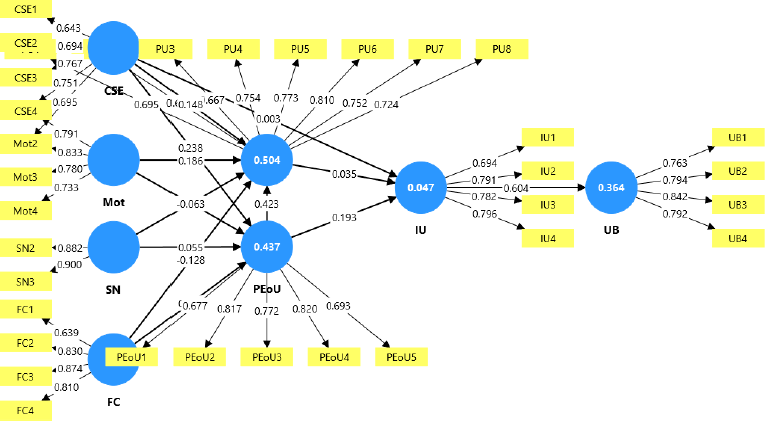
Figure 2 illustrates the factor analysis results. Convergent validity was established through two key procedures: factor loadings and average variance extracted (AVE). Convergent validity was evaluated by examining the factor loadings of items onto their respective underlying constructs. All factor loadings exceeded the threshold of 0.50 (Hair; Risher, et al., 2019), indicating acceptable convergent validity at the item level. At the construct level, AVE is commonly used as an indicator of convergent validity. The AVE values are also acceptable, each exceeding the threshold of 0.50. The factor loadings for each item were greater than 0.50, and the AVE values were likewise above 0.50, confirming the validity of all items.

4.3 Evaluation of the Measurement Model
A confirmatory factor analysis (CFA) was conducted to assess the measurement model with uncorrelated errors. Higher values in this analysis generally reflect greater levels of reliability and validity. The reliability of the data was established using several metrics: Cronbach’s Alpha (considered adequate if equal to or exceeding 0.70), rho_A (> 0.70), Composite Reliability (> 0.70), and Average Variance Extracted (AVE) for evaluating convergent validity. An acceptable AVE is 0.50 or higher, indicating that the construct accounts for at least 50 percent of the variance in its items (Hair; Howard; Nitzl, 2020). Additionally, standardized estimates of the items were also examined. The values for Cronbach’s alpha, rho_A, Composite Reliability, and AVE for the constructs fell within acceptable ranges, as detailed in Table 5.
The subsequent step involved assessing discriminant validity, which evaluates the degree to which a construct is empirically distinct from other constructs within the structural model. Discriminant validity was determined using the Fornell-Larcker Criterion, which requires that each construct’s Average Variance Extracted (AVE) be compared to the squared inter-construct correlations (a measure of shared variance) between that construct and all other reflectively measured constructs in the model. The shared variance among all model constructs should not exceed their respective AVEs, as illustrated in Table 6.
Table 7 presents the goodness-of-fit indices for the model. Several indices were utilized to evaluate the fit of the measurement model, including the standardized root mean residual (SRMR), with a value of 0.08 considered optimal (Hu; Bentler, 1999). The SRMR quantifies the divergence between the observed and estimated covariance matrices in PLS-SEM and should be interpreted with caution. Based on the results from the confirmatory factor analysis (CFA), the measurement model in this study demonstrates a good fit to the sample data, with an SRMR value of 0.080.
4.4 Evaluation of the Structural Model (Hypotheses Testing)
Table 8 presents the results of the hypotheses testing. Thirteen hypotheses were proposed in this study; nine were accepted while four were rejected. The researcher employed the t-statistic and p-value to evaluate the hypotheses. Specifically, if the t-statistic exceeds 1.96 and the p-value is less than 0.05, the null hypothesis (H0) is rejected in favor of the alternative hypothesis (Ha). This finding indicates a significant effect among the variables.
The results indicated that pre-service EFL students’ use behavior of AI for learning English was significantly influenced by Intention to Use (IU) (p-value = .000). Additionally, Perceived Ease of Use (PEoU) had a substantial impact on IU, with p-values of .000. On the other hand, there is no influence between Perceived Usefulness (PU) and IU, with p-values of .475. Furthermore, PU was significantly influenced by PEoU (p-value = .000).
The extended variable, Computer Self-Efficacy (CSE), significantly affected PEoU and PU (p-value = .000) but did not have a significant impact on IU (p-value = .948). Motivation also had a significant influence on PU (p-value = .000) but did not significantly impact PEoU (p-value = .102). Besides, Facilitating Conditions (FC) significantly influenced both PEoU and PU, with p-values of .000 and 0.001, respectively. Lastly, Subjective Norm (SN) significantly influenced PU (p-value = .000) but did not significantly affect PEoU (p-value = .130).
5 Discussion
The primary aim of this study is to investigate the essential factors that shape student behavior regarding the utilization of generative AI in the context of English language learning. By conducting a thorough examination of these determinants, we aspire to transcend mere correlation and pinpoint the elements that either promote or hinder the effective integration of this transformative technology among EFL learners (Wang; Du; Zou, 2025).
This research specifically targets pre-service EFL teachers who are currently enrolled in English departments. This group is particularly significant, as their initial experiences and perspectives on generative AI will play a crucial role in molding their future teaching methodologies and, consequently, in influencing subsequent generations of language learners. Therefore, gaining insight into their usage behaviors and the factors that drive these behaviors is vital for the successful incorporation of AI into teacher education programs.
In light of this focus, our study seeks to provide in-depth insights into the motivations behind the adoption of AI tools in English language instruction by pre-service EFL teachers. The anticipated outcomes of this research aim to enrich the fields of Technology-Enhanced Language Learning (TELL) and the adoption of educational technologies, thereby offering guidance for the development of targeted strategies and interventions. These strategies will enhance the integration and practical application of generative AI tools within academic frameworks and future professional environments. The analysis conducted in this study has revealed that nine out of the thirteen initial hypotheses received empirical support. Notably, the Intention to Use (IU) generative AI has emerged as a robust predictor of actual Use Behavior (UB), with a t-statistic of 20.877 and a significance level of p < .000. This finding is consistent with existing literature on technology adoption, reinforcing the notion that users’ intentions significantly influence their engagement with new technologies (Ayyoub et al., 2025; Karan; Chakma, 2025).
Additionally, Perceived Ease of Use (PEoU) significantly influenced both Perceived Usefulness (PU) and Intention to Use (IU) AI tools in English language learning. First, PEoU positively impacted PU (t-statistics = 11.109, p = 0.000), suggesting that students’ perceived ease of use directly enhance their perceived usefulness of the usage of AI for English language learning. This finding is in line with a previous finding by Setyaningsih et al. (2025), who demonstrated that PEoU has a significant influence on PU. Second, PEoU also significantly predicted IU (t-statistics = 4.527, p = 0.000), indicating that pre-service teachers’ perceived ease of use of AI tools improves their intent to integrate them into their English language learning process within Indonesian universities. This finding is consistent with the finding of Arif, Sulistiyo, and Wachyunni (2024), who claimed that PEoU significantly predicted IU, suggesting that students’ perceived ease of use can enhance their intention to use generative AI tools for language learning.
There is an interesting phenomenon based on the result of this study: the absence of a significant relationship between Perceived Usefulness (PU) and Intention to Use (IU), with t-statistics of 0.715 and a p-value of 0.475. This result contrasts with previous research, such as that by Mustofa et al. (2025), which indicated a significant impact of Perceived Usefulness on Intention to Use. Although some studies involving pre-service EFL teachers have found a notable connection between PU and IU regarding the adoption of AI (Karan; Chakma, 2025; Liu; Ma, 2024), the lack of a significant relationship in this case may be due to various overriding factors that weaken the perceived usefulness. This absence of influence implies that, despite pre-service teachers recognizing the utility of AI, other concerns or external influences may hinder their intention to adopt and utilize the technology effectively.
The extended variable, Computer Self-Efficacy (CSE), demonstrated a significant effect on both Perceived Ease of Use (PEoU) and Perceived Usefulness (PU), with a p-value of .000. These results contrast with the findings of Jiang et al. (2021), which reported no significant positive relationship between CSE and PU. However, CSE did not show a statistically significant relationship with Intention to Use (IU), as indicated by a p-value of .948. This suggests that while CSE contributes positively to users’ perceptions of the technology’s ease and usefulness, it does not necessarily translate into a higher intention to use it.
In addition, Motivation emerged as a significant factor influencing Perceived Usefulness, with a p-value of .000, yet it did not have a meaningful effect on Perceived Ease of Use, which had a p-value of .102. This finding contrasts with Wang, Du, and Zou (2025), whose study demonstrated that Motivation significantly influences PEoU. Furthermore, Facilitating Conditions (FC) were found to significantly affect both PEoU and PU, with p-values of .000 and .001, respectively. Finally, Subjective Norm (SN) significantly impacted Perceived Usefulness, evidenced by a p-value of .000, but did not significantly influence Perceived Ease of Use, as reflected in a p-value of .130. These findings highlight the complex interplay of various factors in shaping users’ perceptions and intentions regarding technology adoption.
This study not only emphasizes the essential factors that affect the adoption of generative AI among pre-service EFL teachers but also lays the groundwork for future research and practical applications aimed at improving language education through cutting-edge technology. By identifying these critical determinants, the research provides valuable insights into how pre-service teachers engage with generative AI, which can inform the development of targeted strategies to facilitate its integration into educational practices. Fundamentally, this contribution serves to bridge the gap between emerging technologies and traditional teaching methodologies, promoting a more holistic approach to language instruction.
Moreover, to enhance the practical implications of our findings, EFL university instructors are encouraged to consider specific strategies derived from this study. For example, they should consider adopting a formative approach to educate students on the benefits and limitations of generative AI tools, incorporating workshops on ethical technology usage. Developing curricula that integrates these applications will facilitate meaningful student engagement. By proactively addressing barriers and utilizing motivating factors, instructors can significantly optimize the integration of generative AI into language education, ensuring that students benefit from these advanced tools in their learning experiences.
Furthermore, the findings open avenues for subsequent studies that can explore the long-term effects of generative AI on language learning outcomes, ultimately contributing to a more effective and innovative teaching landscape. This foundational work encourages educators and researchers to collaborate in harnessing the potential of technology to enhance language instruction and learner engagement in the evolving educational environment. By fostering interdisciplinary partnerships, we can ensure that advancements in generative AI are effectively aligned with pedagogical practices and learner needs.
6 Conclusion
The integration of generative AI tools like ChatGPT into language learning represents a promising avenue for enhancing educational outcomes. This study aims to contribute to the understanding of the factors influencing the acceptance of such technologies among pre-service EFL teachers in Indonesia. By applying the Technology Acceptance Model, the research will shed light on the critical determinants that can facilitate or hinder the effective use of generative AI in language education, eventually contributing to the broader discourse on technology-enhanced language learning.
The analysis conducted in this study indicates that nine out of the thirteen initial hypotheses were empirically validated, underscoring the significance of various factors influencing the adoption of generative AI among pre-service EFL teachers. Notably, the intention to use (IU) generative AI emerged as a strong predictor of actual usage behavior (UB). This finding aligns with existing literature on technology adoption, reinforcing the idea that users’ intentions play a crucial role in their interaction with new technologies. Given these insights, EFL university instructors are encouraged to adopt specific strategies, such as incorporating training sessions and workshops on the ethical use of generative AI tools to foster critical understanding. By developing curricula that integrate these applications and addressing barriers, instructors can enhance student engagement and optimize the integration of generative AI into language education.
The limitations of this study include its focus on the constructs of TAM2 and the inclusion of respondents who are pre-service EFL teachers from only three universities in Indonesia, which may limit the generalizability of the findings to the broader population of EFL teachers across the country. Therefore, it is recommended that future researchers further explore the underlying motivations that drive intention to use generative AI, as well as the barriers that may inhibit its adoption. Additionally, longitudinal studies could provide valuable information on how these relationships evolve over time, particularly as technology continues to advance. Expanding the research to include diverse educational contexts and different demographic groups could also yield deeper insights into the effective integration of generative AI in language education.
Data availability
Research data is available in the body of the document.
References
-
ALDOSARI, Share Aiyed M. The Future of Higher Education in the Light of Artificial Intelligence Transformations. International Journal of Higher Education, v. 9, n. 3, p. 145-151, June 2020. DOI: 10.5430/ijhe.v9n3p145.
» https://doi.org/10.5430/ijhe.v9n3p145 -
ALFADDA, Hind Abdulaziz; MAHDI, Hassan Saleh. Measuring Students’ Use of Zoom Application in Language Course Based on the Technology Acceptance Model (TAM). Journal of Psycholinguistic Research, v. 50, n. 4, p. 883-900, 2021. DOI: 10.1007/s10936-020-09752-1.
» https://doi.org/10.1007/s10936-020-09752-1 -
ALI, Omar et al. The Effects of Artificial Intelligence Applications in Educational Settings: Challenges and Strategies. Technological Forecasting and Social Change, v. 199, p. 123076, 2024. DOI: 10.1016/j.techfore.2023.123076.
» https://doi.org/10.1016/j.techfore.2023.123076 -
ARIF, Tubagus Zam Zam Al; SULISTIYO, Urip; WACHYUNNI, Sri. EFL University Students’ Self-Directed Language Learning with ICT: A Structural Equation Modelling Approach. Hachetetepé. Revista Científica de Educación y Comunicación, n. 29, p. 1-21, 2024. DOI: 10.25267/Hachetetepe.2024.i29.1104.
» https://doi.org/10.25267/Hachetetepe.2024.i29.1104 -
AYYOUB, Abdalkarim et al. Drivers of Acceptance of Generative AI Through the Lens of the Extended Unified Theory of Acceptance and Use of Technology. Human Behavior and Emerging Technologies, v. 2025, n. 1, p. 1-19, 2025. DOI: 10.1155/hbe2/9974365.
» https://doi.org/10.1155/hbe2/9974365 -
CHUGAI, Oksana; LYTOVCHENKO, Iryna; SYNEKOP, Oksana. University Teachers’ Perceptions, Experiences and Implication for Using ChatGPT in ESL. Texto Livre, v. 18, p. 1-15, 2025. DOI: 10.1590/1983-3652.2025.53767.
» https://doi.org/10.1590/1983-3652.2025.53767 -
CROMPTON, Helen; BURKE, Diane. Artificial Intelligence in Higher Education: The State of the Field. International Journal of Educational Technology in Higher Education, v. 20, n. 1, 2023. DOI: 10.1186/s41239-023-00392-8.
» https://doi.org/10.1186/s41239-023-00392-8 -
DAVIS, Fred D. Perceived Usefulness, Perceived Ease of Use, and User Acceptance of Information Technology. MIS Quarterly, v. 13, n. 3, p. 319-340, 1989. DOI: 10.2307/249008.
» https://doi.org/10.2307/249008 -
DOĞRU, Erdoğan; ÖZEN, Raşit. Effects of Using the Staged Self-Directed Learning Model at Distance English Learning. Participatory Educational Research, v. 10, n. 1, p. 1-16, Jan. 2023. DOI: 10.17275/per.23.1.10.1.
» https://doi.org/10.17275/per.23.1.10.1 -
GIRAY, Louie et al. Acceptance of and Satisfaction with ChatGPT as Learning Tool in Higher Education Through the Technology Acceptance Model (TAM): A Case from the Philippines. Internet Reference Services Quarterly, p. 1-20, 2025. DOI: 10.1080/10875301.2025.2470484.
» https://doi.org/10.1080/10875301.2025.2470484 -
GUETTALA, Manel et al. Generative Artificial Intelligence in Education: Advancing Adaptive and Personalized Learning. Acta Informatica Pragensia, v. 13, n. 3, p. 460-489, 2024. DOI: 10.18267/j.aip.243.
» https://doi.org/10.18267/j.aip.243 -
HAIR, Joe F.; HOWARD, Matthew C.; NITZL, Christian. Assessing Measurement Model Quality in PLS-SEM Using Confirmatory Composite Analysis. Journal of Business Research, v. 109, p. 101-110, Mar. 2020. DOI: 10.1016/j.jbusres.2019.11.069.
» https://doi.org/10.1016/j.jbusres.2019.11.069 -
HAIR, Joseph F.; HULT, G. Tomas M.; RINGLE, Christian M.; SARSTEDT, Marko; DANKS, Nicholas P.; RAY, Soumya. Partial Least Squares Structural Equation Modeling (PLS-SEM) Using R. Cham: Springer International Publishing, 2021. DOI: 10.1007/978-3-030-80519-7.
» https://doi.org/10.1007/978-3-030-80519-7 -
HAIR, Joseph F.; RISHER, Jeffrey J.; SARSTEDT, Marko; RINGLE, Christian M. When to Use and How to Report the Results of PLS-SEM. European Business Review, v. 31, n. 1, p. 2-24, 2019. DOI: 10.1108/EBR-11-2018-0203.
» https://doi.org/10.1108/EBR-11-2018-0203 -
HU, Litze; BENTLER, Peter M. Cutoff Criteria for Fit Indexes in Covariance Structure Analysis: Conventional Criteria Versus New Alternatives. Structural Equation Modeling: A Multidisciplinary Journal, v. 6, n. 1, p. 1-55, 1999. DOI: 10.1080/10705519909540118.
» https://doi.org/10.1080/10705519909540118 -
HUANG, Fang; PENG, Dingyang; TEO, Timothy. AI Affordances and EFL Learners’ Speaking Engagement: The Moderating Roles of Gender and Learner Type. European Journal of Education, v. 60, n. 1, 2025. DOI: 10.1111/ejed.70025.
» https://doi.org/10.1111/ejed.70025 -
JIANG, Michael Yi Chao; JONG, Morris Siu-Yung; LAU, Wing Kwan; CHAI, Ching Sing; WU, Ning; CHEN, Min. Validating the General Extended Technology Acceptance Model for E-Learning: Evidence From an Online English as a Foreign Language Course Amid COVID-19. Frontiers in Psychology, v. 12, p. 671615, 2021. DOI: 10.3389/fpsyg.2021.671615.
» https://doi.org/10.3389/fpsyg.2021.671615 -
KARAN, Bablu; CHAKMA, Chitra. Influence of Higher Education Students’ Perceived Behaviour on Their Artificial Intelligence Acceptance: An Empirical Investigation Using Technology Acceptance Model. Journal of Applied Research in Higher Education, ahead-of-print, ahead-of-print, 2025. DOI: 10.1108/JARHE-08-2024-0478.
» https://doi.org/10.1108/JARHE-08-2024-0478 -
LEE, Yong-Jik; DAVIS, Robert O.; LEE, Sun Ok. University Students’ Perceptions of Artificial Intelligence-Based Tools for English Writing Courses. Online Journal of Communication and Media Technologies, v. 14, n. 1, e202405, Feb. 2024. DOI: 10.30935/ojcmt/14166.
» https://doi.org/10.30935/ojcmt/14166 -
LIU, Guangxiang; MA, Chaojun. Measuring EFL Learners’ Use of ChatGPT in Informal Digital Learning of English Based on the Technology Acceptance Model. Innovation in Language Learning and Teaching, v. 18, n. 2, p. 125-138, Mar. 2024. DOI: 10.1080/17501229.2023.2290316.
» https://doi.org/10.1080/17501229.2023.2290316 -
MOORHOUSE, Benjamin Luke et al. Developing Language Teachers’ Professional Generative AI Competence: An Intervention Study in an Initial Language Teacher Education Course. System, v. 125, p. 103399, 2024. DOI: 10.1016/j.system.2024.103399.
» https://doi.org/10.1016/j.system.2024.103399 -
MUSTOFA, Rochman Hadi et al. Extending the Technology Acceptance Model: The Role of Subjective Norms, Ethics, and Trust in AI Tool Adoption Among Students. Computers and Education: Artificial Intelligence, v. 8, p. 100370, June 2025. DOI: 10.1016/j.caeai.2025.100370.
» https://doi.org/10.1016/j.caeai.2025.100370 -
NAGY, Adrian Szilard et al. An Exploratory Study of Artificial Intelligence Adoption in Higher Education. Cogent Education, v. 11, n. 1, 2024. DOI: 10.1080/2331186X.2024.2332915.
» https://doi.org/10.1080/2331186X.2024.2332915 -
PINNINTI, Lakshmana Rao. Undergraduate ESL Students’ Use and Perceptions of ChatGPT for Academic Writing Purposes. Texto Livre , v. 18, p. 1-17, 2025. DOI: 10.1590/1983-3652.2025.55369.
» https://doi.org/10.1590/1983-3652.2025.55369 -
SARI, Nara; SULISTYO, Teguh. EFL Teachers’ Perspectives on Mobile-Assisted Language Learning (MALL) Resources for Vocational High School Students. Journey: Journal of English Language and Pedagogy, Universitas Insan Budi Utomo, v. 5, n. 1, p. 80-90, 2022. DOI: 10.33503/journey.v5i1.524. Available from: https://ejurnal.uibu.ac.id/index.php/journey/article/view/524
» https://doi.org/10.33503/journey.v5i1.524» https://ejurnal.uibu.ac.id/index.php/journey/article/view/524 -
SETYANINGSIH, Endang et al. EFL Students’ Use, Perceptions, and Reliance on ChatGPT for Editing and Proofreading: A Technology Acceptance Model Perspective. Journal of Languages and Language Teaching, v. 13, n. 3, p. 1367-1386, July 2025. DOI: 10.33394/jollt.v13i3.15328.
» https://doi.org/10.33394/jollt.v13i3.15328 - SULISTIYO, Urip et al. Determinants of Technology Acceptance Model (TAM) Towards ICT Use for English Language Learning. In: PROCEEDINGS of the 68th TEFLIN International Conference. [S. l.: s. n.], 2022.
- SUMAKUL, Dian Toar Y. G. The Interplay between L2 Motivation and Artificial Intelligence: What and How. CALL-EJ, v. 26, n. 3, p. 107-128, 2025.
-
TAFAZOLI, Dara. Exploring the Potential of Generative AI in Democratizing English Language Education. Computers and Education: Artificial Intelligence , v. 7, p. 100275, 2024. DOI: 10.1016/j.caeai.2024.100275.
» https://doi.org/10.1016/j.caeai.2024.100275 -
TEO, Timothy; TAN, Seng Chee; LEE, Chwee Beng; CHAI, Ching Sing; KOH, Joyce Hwee Ling; CHEN, Wenli. The Self-Directed Learning with Technology Scale (SDLTS) for Young Students: An Initial Development and Validation. Computers & Education, v. 55, n. 4, p. 1764-1771, 2010. DOI: 10.1016/j.compedu.2010.08.001.
» https://doi.org/10.1016/j.compedu.2010.08.001 -
VENKATESH, Viswanath; DAVIS, Fred D. A Theoretical Extension of the Technology Acceptance Model: Four Longitudinal Field Studies. Management Science, v. 46, n. 2, p. 186-204, Feb. 2000. DOI: 10.1287/mnsc.46.2.186.11926.
» https://doi.org/10.1287/mnsc.46.2.186.11926 - VY, Luu Thi Mai; VINH, Doan Quoc. ChatGPT’s Impact on Listening Comprehension: Perspectives from Vietnamese EFL University Learners. CALL-EJ , v. 26, n. 3, p. 43-63, 2025.
-
WANG, Chenghao; DU, Yiran; ZOU, Bin. Learners’ Acceptance and Use of Multimodal Artificial Intelligence (AI)-Generated Content in AI-Mediated Informal Digital Learning of English. International Journal of Applied Linguistics, n/a, n/a, July 2025. DOI: 10.1111/ijal.70040.
» https://doi.org/10.1111/ijal.70040 -
ZHAI, Chunpeng; WIBOWO, Santoso. A Systematic Review on Artificial Intelligence Dialogue Systems for Enhancing English as a Foreign Language Students’ Interactional Competence in the University. Computers and Education: Artificial Intelligence , v. 4, p. 100134, 2023. DOI: 10.1016/j.caeai.2023.100134.
» https://doi.org/10.1016/j.caeai.2023.100134 -
ZHANG, Yuling; CAO, Jinping. Design of English Teaching System Using Artificial Intelligence. Computers and Electrical Engineering, v. 102, p. 108115, 2022. DOI: 10.1016/j.compeleceng.2022.108115.
» https://doi.org/10.1016/j.compeleceng.2022.108115
-
Funding
The authors would like to express their sincere gratitude to the Ministry of Higher Education, Science, and Technology for their support of this research. We also extend our appreciation to the Institute for Research and Community Service at Universitas Jambi for facilitating and funding this study.
Edited by
-
Section Editor:
Fei Victor Lim https://orcid.org/0000-0003-3046-1011
-
Layout editor:
Leonardo Araujo https://orcid.org/0000-0003-3884-2177

 Source: Own elaboration.
 Source: Own elaboration.