 Celebrating scientific curiosity: 75th anniversary of the unexpected way lithium revolutionized psychopharmacology
The legacy lithium has created, achieving worldwide recognition as a mood stabilizer, has a curiously compelling backstory. Through a mixture of clinical curiosity, scientific scrutiny, and incidental innovation, lithium carbonate has earned its place in the history books, forever changing the course of psychopharmacology. Albeit not at its prime usage, since its (re)introduction to psychiatry 75 years ago, this salt has become an indispensable instrument for the treatment of Bipolar Disorder (BD).
The most recent estimate from the World Health Organization (WHO) is that around 40 million people suffer from BD1; for many of them, lithium remains one of the most effective ways to prevent relapse and decrease hospitalization.2,3 In a 2023 global study about preferences and attitudes towards lithium among physicians, 50% reported its usage in around 50% of their patients with BD.4 However, given that its properties have been known to aid with other ailments such as depression and suicidality,3,5 to give some examples, the real amount of people who have benefited from the reintroduction of this alkali metal to psychiatry has been truly countless.
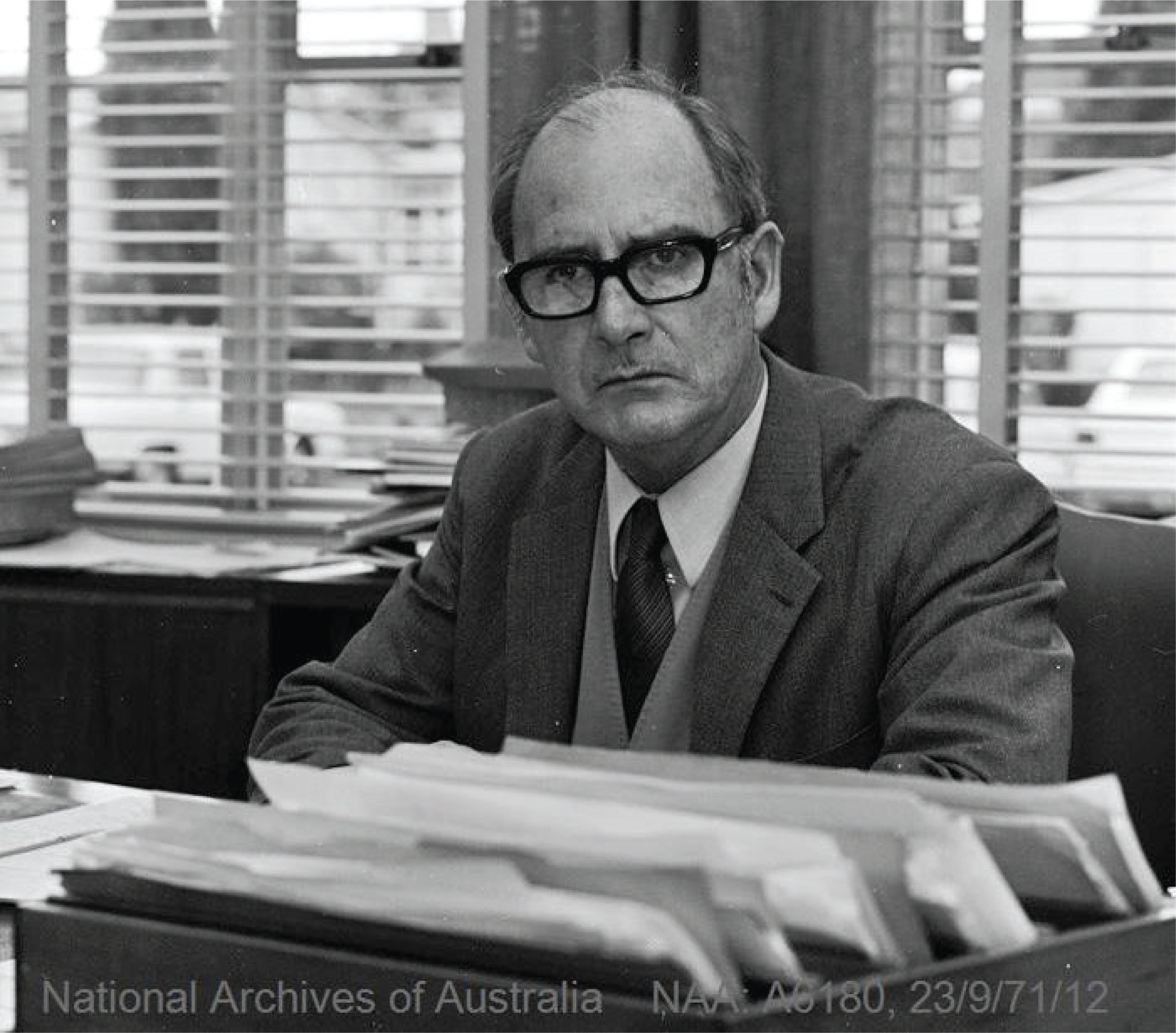
The path through which lithium was reinserted into the world of psychiatry begins with the clinical observations of John Cade (Figure 1), an Australian psychiatrist who was taken as a prisoner of war during World War II while serving his country as an army surgeon in Singapore. During his time as an appointed physician for the other war prisoners, he took notice of mood fluctuation patterns. Observation of behaviors opened the way to new possible theories about associations between physical and mental illnesses, such as the role a certain metabolite in the body may have in the changes being witnessed. In response to this clinical curiosity, Cade conducted investigations about uric acid and creatinine contents in the urine of manic patients after the war. This resulted in the new observation that urea was abnormally high in this population, and given that uric acid is highly insoluble in water and lithium is highly soluble, the idea of counteracting the insolubility of uric acid in patients with mania was born. To test this hypothesis, Cade designed an experimental model that first treated guinea pigs, producing soothing effects in the animals, and then himself to validate its safety in humans. Finally, he conducted a clinical trial.6,7
His first patient was Bill Brand. Bill had a heart-wrenching story. He had been psychotic for over 30 years, stuck in an asylum after being alienated from his family and in a five-year state of mania by the time Cade met him. After a few months of lithium therapy, Cade gave Bill his life back, and he walked out of the asylum, having returned to normal function. Despite noteworthy success, however, noncompliance with his medication sent Bill back to the hospital, and ultimately, amidst a lack of knowledge about proper dosing and driven by a desire to heal, Cade pushed his lithium therapy too far. Bill died in 1950 due to toxicity derived from inadequate treatment.9
Lithium is not an innocuous substance in the human body. Since its early introduction, there have been multiple articles that underline its toxic nature.9,10 Contemporaneous with Bill's death, The Journal of the American Medical Association published multiple research papers that pointed towards this toxicity, detailing accidental deaths due to the incorporation of the salt substitute into meals. These findings developed into national public scrutiny of lithium treatment that culminated in Cade's apprehension. Convinced he was wrong, he ultimately took a step back from his experimental trials.9
This negative publicity severely hindered the reputation of this drug. The same peculiar chemistry that regulates mood has raised concerns about the distribution of its action in the body. Renal and thyroid function have been, for instance, major concerns.2,11 In the last couple of decades, with the introduction of second-generation antipsychotics, an underutilization of lithium by psychiatrists and an overall decrease in lithium use has been observed. Based on systematic national surveys, the prescription trend for lithium decreased by 12.8% from 1997 to 2016.11 Physicians have limited the use of lithium due to the potential toxicity and risk of side effects, which can limit patient compliance. However, no drug is innocuous and the majority of these potential adverse effects have been proven to be easily manageable and nonfatal.3,12
Due to the collaborative nature of science, Cade's story is not over. Given the impressive results achieved, curiosity was sparked in Mogens Schou, a Danish psychiatrist, who took Cade's observations and pushed them forward. He conducted his own clinical and toxicity research, and his findings reignited Cade's passion for the salt. Soon, the pair led the research efforts that would motivate the Food and Drug Administration (FDA) to lift the fixed twenty-year ban, defining lithium's place in history.3,13
Continuous collaboration has made way for the future of lithium. New proposals include reformulating lithium salts, adjusting current dosing guidelines, and diversifying its use.5,12 For example, substantial findings in neurodegenerative disorders have been described as the neuroprotective effect of lithium has been consolidated through clinical findings.2,3,5 The potential use for diagnoses such as Parkinson's, Alzheimer's, Stroke, or Amyotrophic Lateral Sclerosis is still on the horizon.5 Even the role of those metabolites and the purinergic system has been recently discussed in BD.14
As we celebrate 75 years of having lithium as part of our clinical arsenal, we are reminded of its history as a testament to scientific curiosity's transformative power. From its origin as a serendipitous discovery derived from fallacious conclusions to its legacy as a gold-standard treatment that revolutionized psychopharmacology, this editorial commemorates not only the anniversary of lithium's introduction to psychiatry but also the adventurous spirit of researchers and clinicians whose clinical curiosity and scientific scrutiny continue to pave the way for the future, potentially benefiting innumerable lives. Even if incidental.
Acknowledgements
The John S. Dunn Distinguished Professorship funds the Center for Interventional Psychiatry.
Data availability statement
Not applicable.
References
-
1 World Health Organization (WHO). Mental disorders [Internet]. [cited 2024 May 08]. www.who.int/news-room/fact-sheets/detail/mental-disorders
» www.who.int/news-room/fact-sheets/detail/mental-disorders - 2 Rybakowski J. Lithium treatment - the state of the art for 2020. Psychiatr Pol. 2020;54:1047-66.
- 3 Post RM. The new news about lithium: an underutilized treatment in the United States. Neuropsychopharmacology. 2018;43:1174-9.
- 4 Hidalgo-Mazzei D, Mantingh T, Pérez De Mendiola X, et al. Clinicians’ preferences and attitudes towards the use of lithium in the maintenance treatment of bipolar disorders around the world: a survey from the ISBD lithium task force. Int J Bipolar Disord. 2023;11:20.
- 5 Puglisi-Allegra S, Ruggieri S, Fornai F. Translational evidence for lithium-induced brain plasticity and neuroprotection in the treatment of neuropsychiatric disorders. Transl Psychiatry. 2021;11:366.
- 6 Westmore A, De Moore G. Finding sanity: John Cade, lithium and the taming of bipolar disorder. Sydney: Allen & Unwin; 2017.
- 7 Schioldann J. From guinea pigs to manic patients: Cade's ‘story of lithium’. Aust N Z J Psychiatry. 2013;47:484.
-
8 Wikipedia. John Cade [Internet]. [cited 2024 May 08]. https://de.wikipedia.org/wiki/John_Cade
» https://de.wikipedia.org/wiki/John_Cade - 9 Johnson FN. The history of lithium therapy. London: Palgrave MacMillan; 1984.
- 10 McKnight RF, Adida M, Budge K, Stockton S, Goodwin GM, Geddes JR. Lithium toxicity profile: a systematic review and meta-analysis. Lancet. 2012;379:721-8.
- 11 Rhee TG, Olfson M, Nierenberg AA, Wilkinson ST. 20-year trends in the pharmacologic treatment of bipolar disorder by psychiatrists in outpatient care settings. Am J Psychiatry. 2020;177:706-15.
- 12 Bortolozzi A, Fico G, Berk M, Solmi M, Fornaro M, Quevedo J, et al. New advances in the pharmacology and toxicology of lithium: a neurobiologically oriented overview. Pharmacol Rev. 2024;76:323-57.
- 13 Grof P. Mogens schou (1918–2005). Neuropsychopharmacology. 2006;31:891-2.
- 14 Gonçalves MCB, Andrejew R, Gubert C. The purinergic system as a target for the development of treatments for bipolar disorder. CNS Drugs. 2022;36:787-801.
Edited by
-
Handling Editor:
Ives Passos