
 SPORT MEGA-EVENTS AND URBAN TOURISM DYNAMICS: THE CASE OF THE PARIS 2024 OLYMPIC GAMES IN SEINE-SAINT-DENIS
Abstract:
Purpose - To examine how residents of Seine-Saint-Denis perceive the social and territorial changes resulting from the Paris 2024 Olympic Games, considering the impacts of the mega-event on urban tourism, territorial dynamics, and sociospatial inequalities.
Design/methodology/approach - A multi-method approach was adopted, combining qualitative and quantitative methods. The research included semi-structured interviews, focus groups, and a literature review on sport mega-events, urban tourism, gentrification, and sociospatial justice.
Findings - The findings indicate that, despite the urban investments and physical improvements carried out in Seine-Saint-Denis, the main beneficiaries tend to be large economic interests and agents linked to real estate valorization and tourism. Processes of displacement, gentrification, and symbolic reconfiguration of the territory were observed, associated with the expansion of urban control and the restriction of popular participation in decisions related to the event. The growth of tourism proved to be a non-neutral process, marked by territorial disputes and pressures on the daily lives of local populations.
Practical implications - The study contributes to the debate on urban planning and mega-event management by highlighting the need for more participatory and inclusive public policies capable of minimizing negative social impacts and promoting more equitable benefits for local communities.
Originality/value - This paper contributes to studies on sport mega-events and urban tourism by analyzing the Paris 2024 Olympic Games from the perceptions of residents of a historically marginalized suburban area, emphasizing the tensions between urban development, tourism, and sociospatial justice.
Research limitations - Among the limitations of the study are the restricted access to certain social groups directly affected by urban transformation processes, language barriers during fieldwork in an international context, and the limited duration of stay in French territory, factors that may have constrained the breadth of interpretations and the diversity of perspectives analyzed.
Key-words:
sport mega-events; Paris 2024 Olympic Games; tourism; gentrification; socio-spatial inequalities; Seine-Saint-Denis
Resumo:
Objetivo - Examinar como os moradores de Seine-Saint-Denis perceberam as mudanças sociais e territoriais decorrentes dos Jogos Olímpicos de Paris 2024, considerando os impactos do megaevento sobre o turismo urbano, as dinâmicas territoriais e as desigualdades socioespaciais.
Desenho/metodologia/abordagem - Foi adotada uma abordagem multimétodo, combinando métodos qualitativos e quantitativos. A pesquisa incluiu entrevistas semiestruturadas, grupos focais e revisão bibliográfica sobre megaeventos esportivos, turismo urbano, gentrificação e justiça socioterritorial.
Resultados - Os resultados indicam que, apesar dos investimentos urbanos e das melhorias físicas realizadas em Seine-Saint-Denis, os principais beneficiados tendem a ser agentes ligados à valorização imobiliária e ao turismo. Observam-se processos de despejo, gentrificação e reconfiguração simbólica do território, associados à ampliação do controle urbano e à limitação da participação popular nas decisões relacionadas ao evento. O crescimento do turismo revelou-se um processo não neutro, marcado por disputas territoriais e pressões sobre o cotidiano das populações locais.
Implicações práticas - O estudo contribui para o debate sobre planejamento urbano e gestão de megaeventos, destacando a necessidade de políticas públicas mais participativas e inclusivas, capazes de minimizar impactos sociais negativos e promover benefícios mais equitativos para as comunidades locais.
Originalidade/valor - O artigo contribui para os estudos sobre megaeventos esportivos e turismo urbano ao analisar os Jogos Olímpicos de Paris 2024 a partir das percepções dos moradores de uma periferia historicamente marginalizada, enfatizando as tensões entre desenvolvimento urbano, turismo e justiça socioterritorial.
Limitações da pesquisa - Entre as limitações do estudo, destacam-se o acesso restrito a determinados grupos sociais diretamente afetados pelas transformações urbanas, as barreiras linguísticas durante o trabalho de campo em contexto internacional e o tempo reduzido de permanência em território francês, fatores que podem ter limitado a amplitude das interpretações e a diversidade de perspectivas analisadas.
Palavras-chave:
Megaeventos esportivos; Jogos Olímpicos de Paris 2024; Turismo; Gentrificação; Desigualdades socioespaciais; Seine-Saint-Denis
Resumen:
Objetivo Examinar cómo los habitantes de Seine-Saint-Denis perciben los cambios socio-territoriales derivados de los Juegos Olímpicos de París 2024, considerando los impactos del megaevento sobre el turismo urbano y las desigualdades socioespaciales.
Diseño/metodología/enfoque - Se adoptó un enfoque multimétodo, combinando métodos cualitativos y cuantitativos. La investigación incluyó entrevistas semiestructuradas, grupos focales y revisión bibliográfica sobre megaeventos deportivos, turismo urbano, gentrificación y justicia socioespacial.
Hallazgos: Los resultados indican que, pese a las inversiones urbanas y mejoras físicas realizadas en Seine-Saint-Denis, los principales beneficiarios tienden a ser grandes intereses económicos y actores vinculados a la valorización inmobiliaria y al turismo. Se observaron procesos de desplazamiento, gentrificación y reconfiguración simbólica del territorio, asociados a la expansión del control urbano y a la limitación de la participación popular en decisiones relacionadas con el evento. El crecimiento del turismo se reveló un proceso no neutral, marcado por disputas territoriales y presiones sobre la vida cotidiana local.
Implicaciones prácticas: El estudio contribuye al debate sobre planificación urbana y gestión de megaeventos, destacando la necesidad de políticas públicas más participativas e inclusivas, capaces de minimizar impactos sociales negativos y promover beneficios equitativos para las comunidades locales.
Originalidad/valor: Este artículo contribuye a los estudios sobre megaeventos deportivos y turismo urbano al analizar los Juegos de París 2024 desde las percepciones de habitantes de una periferia históricamente marginada, enfatizando las tensiones entre desarrollo urbano, turismo y justicia socioespacial.
Limitaciones de la investigación : Entre las limitaciones del estudio se destacan el acceso restringido a grupos sociales afectados por procesos de transformación urbana, las barreras lingüísticas durante el trabajo de campo y el tiempo reducido de permanencia en territorio francés, factores que pueden haber limitado la amplitud de las interpretaciones y la diversidad de perspectivas analizadas.
Palabras Clave:
Megaeventos deportivos; Juegos Olímpicos de París 2024; Turismo; Gentrificación; Desigualdades socioespaciales; Seine-Saint-Denis
INTRODUCTION
The Olympic Games are often presented as an opportunity to improve host cities. Much is said about infrastructure projects, job creation, and attracting tourists. The idea is that these developments will stimulate the local economy and leave lasting benefits long after the event has ended. However, this is not always the case. When the event takes place in areas already marked by social and economic challenges, such as Seine-Saint-Denis, on the outskirts of Paris, France, the effects can be quite different. Rather than providing solutions, the Games may generate new contradictions, and local residents experience these consequences in their everyday lives.
Located north of Paris, Seine-Saint-Denis is a region characterized by a significant presence of migrants and low-income populations. As a result, it has long carried the stigma of social and spatial exclusion. When Paris decided to concentrate a large share of the infrastructure projects and interventions related to the 2024 Olympic and Paralympic Games in this area, many people once again began to ask: who will actually benefit from all of this? Changes in the territory have already triggered significant transformations, including rising property values, the displacement of long-term residents, and disputes over the use and meaning of public spaces. These developments have directly affected both the everyday lives of local inhabitants and the ways in which tourism takes place and is perceived in the region.
A similar situation was observed in Rio de Janeiro during the 2016 Olympic Games, when forced removals and evictions were common in order to make way for event-related infrastructure projects (Vico & Chiundila Vico, 2019; Vico & Azevedo, 2020a; 2020b; Vico, Azevedo, Figueiredo, & Uvinha, 2023). In Paris, despite official discourses emphasizing sustainability and inclusion, the reality has been comparable. Policies presented as urban revitalization strategies often result, in practice, in the displacement of existing residents, transforming previously neglected areas into spaces increasingly valued by capital, particularly the real estate and tourism sectors.
This study seeks to understand how residents of Seine-Saint-Denis have perceived the ongoing transformations taking place in the region, with particular attention to the role of tourism and the effects it has been producing on both the territory and the everyday lives of the local population. To achieve this, a qualitative approach was adopted, based on interviews, direct observation, and document analysis. The central argument is that, despite the substantial investments involved, the benefits tend to be concentrated among powerful economic actors rather than the local population. As Ritchie and Hudson (2009) have noted, the tourism legacy of mega-events can be ambiguous and unevenly distributed. Hall (2019) likewise argues that the impacts of such events on tourism and urban space are complex and often merely accelerate transformations already underway. In this sense, rather than marking the beginning of something new, the Paris 2024 Games function as a catalyst that intensifies existing disputes over territory, memory, and identity.
Against this backdrop, this article is guided by the following central research question: How are the urban transformation processes associated with the Paris 2024 Olympic Games-particularly the interventions carried out in Seine-Saint-Denis-perceived by local residents, and how are these changes reflected in the socio-spatial dynamics and everyday experience of the territory, especially in relation to tourism? Based on this problematization, the study seeks to understand how a mega-sporting event, while presented as a driver of development and urban revitalization, may also intensify pre-existing inequalities and reshape the uses, meanings, and appropriations of urban space.
Accordingly, the main objective of this study is to examine how residents of Seine-Saint-Denis perceive the changes resulting from the Paris 2024 Olympic Games, focusing on how these transformations affect territorial dynamics and redefine the relationship between tourism activity and the daily life of the community. To achieve this objective, the study pursues the following specific aims: to map and analyze the urban transformations reshaping Seine-Saint-Denis as a result of the Paris 2024 Olympic Games; to understand the perspectives of local residents regarding these interventions and the ways in which they alter everyday life; to investigate how these transitions affect patterns of use and the meanings attributed to public spaces by the community; and to promote a critical discussion on the relationship between mega-sporting events, tourism activity, and processes of socio-spatial restructuring in urban peripheries.
As the guiding hypothesis of this research, it is assumed that the investments and urban interventions associated with the Paris 2024 Olympic Games in Seine-Saint-Denis tend to generate socio-spatial benefits unevenly, concentrating gains among specific economic and institutional actors, while a significant portion of the local population perceives these transformations as processes of real estate valorization, territorial reconfiguration, and the intensification of dynamics of exclusion and social displacement.
THEORETICAL REVIEW
The growing pursuit of global events has intensified over recent decades, a phenomenon partially explained by increased media attention and the involvement of sponsors (Müller, 2015; Roche, 2017). However, this trend is also related to the potential benefits and legacies for host territories. In recent years, mega-events have been increasingly perceived as opportunities for the creation of new public spaces and for the implementation of urban renewal and regeneration initiatives.
More recent studies in tourism and critical urbanism have challenged this narrative, emphasizing that such processes are often associated with the intensification of real estate valorization strategies and spatial restructuring (Smith, 2012; Gotham, 2015; Gravari-Barbas & Guinand, 2017; Broudehoux, 2017).
For analytical purposes, the literature on mega-events can be organized around three dimensions: economic impacts, social impacts, and symbolic-territorial impacts associated with tourism and the production of urban space. Added to this set of opportunities is tourism, frequently highlighted as one of the main positive externalities of such events, particularly for urban destinations. According to Getz and Page (2016), events generate additional motivation for travel, stimulating both local and national economies. In particular, the Olympic Games have the potential to temporarily transform the host city into a “global tourist destination,” with significant repercussions for the international image of the place (Cornelissen, 2011; Knott, Fyall & Jones, 2017). Nevertheless, more recent research suggests that this process of the “eventization” of tourism may reinforce dynamics of exclusion and the commodification of urban spaces, especially in peripheral areas of host cities (Richards, 2017; Smith, 2019; Milano, Novelli & Cheer, 2019).
The organization of mega-events requires substantial investments in urban infrastructure and sports facilities. These financial commitments generate a variety of impacts that may benefit individuals, organizations, and private companies. Construction firms profit from large-scale development projects, the tourism sector benefits from the enhancement of the destination’s image, and host cities may receive additional funding from government authorities. However, it is important to emphasize that the costs and benefits associated with these investments are often distributed unevenly among local stakeholders. Beyond their economic impacts, the literature also highlights that mega-events produce significant social effects, particularly on residents of the areas directly affected.
As Hall (2019) observes, tourism is not merely a collateral beneficiary of mega-events but an integral component of their promotion strategies and legacy-building processes. The infrastructure created or renovated is intended not only for the event itself but also for future use by visitors and tourists, including museums, parks, hospitality zones, and transportation networks. This perspective is supported by recent studies published in the field (cf. Mendes, 2021; Pereira & Costa, 2023), which emphasize the importance of integrated tourism planning in maximizing the positive legacies of such events.
Nevertheless, Cornelissen, Bob, and Swart (2011) warn of the importance of considering the social dimensions of mega-events, highlighting the central role of residents throughout the entire process. Unlike economic impacts, which can be quantified through statistical data released by governments and event organizers, social impacts are more complex, variable, and intrinsically linked to territorial specificities. Consequently, social legacies cannot be defined in a standardized or uniform manner. According to Müller (2015), mega-events are unique in terms of the contexts in which they occur, and the assessment of their long-term effects is permeated by uncertainty and subjectivity. The type of event, the host city, and the target audience directly influence the nature of the impacts produced (Preuss, 2019).
Within the field of tourism, perceptions of legacy vary considerably, as local residents may view increased tourist flows either as an opportunity to stimulate the local economy or as a source of pressure on public services and urban infrastructure, as discussed by Nunkoo, Smith, and Ramkissoon (2013). More recent studies, such as Almeida (2018), emphasize that these perceptions are also shaped by existing social inequalities, whereby economic benefits-such as rising property values-tend to favor higher-income groups, while more vulnerable populations are exposed to processes of exclusion, dispossession, and displacement. Furthermore, perceptions of legacy vary according to social class: outcomes such as real estate speculation may be viewed as beneficial by wealthier groups, while proving more harmful to low-income populations, particularly when they involve expropriation and displacement (Müller & Gaffney, 2018; Preuss, 2019). Preuss (2019) identifies six groups that directly benefit from mega-events: (1) members of sports organizations such as the International Olympic Committee (IOC) and the Paris 2024 Olympic and Paralympic Games Organizing Committee (COJO); (2) local authorities; (3) politicians in the host city; (4) regional construction companies; (5) television broadcasters; and (6) a portion of the local community. In addition to these groups, authors such as Chalip (2021) and Mair and Whitford (2013) argue that the tourism sector should also be considered one of the structural beneficiaries of mega-events, given its central role in revenue generation and in the expansion of accommodation capacity and tourism-related services. Even so, such events inevitably produce both “winners” and “losers” and can rarely be regarded as universally beneficial opportunities (Müller, 2015; Gaffney, 2016; Preuss, 2019).
Authors such as Müller (2015) and Gaffney (2016) adopt a skeptical perspective regarding the relationship between the costs and benefits of mega-events, suggesting that their effects are debatable and difficult to measure. Negative impacts tend to affect lower-income groups disproportionately, particularly in relation to housing. Preuss and Schnitzer (2021) summarize the principal adverse effects in three dimensions: the transfer of public spaces to private interests, the displacement of residents, and gentrification.
Beyond their economic and social impacts, mega-events also produce symbolic and territorial effects that are directly related to touristification and the reconfiguration of urban uses. The principal direct beneficiaries include construction firms, engineers, architects, security service providers, media organizations, and professionals working in marketing and advertising. Multinational corporations commonly associated with mega-events also rank among the major beneficiaries, alongside actors in the real estate and territorial development sectors. By contrast, lower-income citizens rarely enjoy these benefits and may instead bear the burden of rising property prices, increasing rents, and higher costs associated with growing tourism pressure, as noted by Milano, Novelli, and Cheer (2019).
Smith (2019) argues that social groups whose quality of life depends on accessible public services face significant losses when public resources are redirected toward financing mega-events. In this way, mega-events-primarily designed to serve middle- and upper-income groups and to promote mass tourism-may reinforce processes of urban “sanitization,” thereby deepening existing inequalities. The most vulnerable neighborhoods are often the most heavily affected, with residents displaced during construction works and subsequently unable to return due to rising property values and the loss of territorial belonging, a phenomenon that also directly affects the tourism potential of these areas (Müller & Gaffney, 2018).
The Centre on Housing Rights and Evictions (COHRE, 2007) further deepens this debate by linking these dynamics to human rights violations. According to the organization's studies, mega-events rarely promote meaningful community inclusion and are instead frequently employed as instruments of economic development and urban marketing, particularly to attract visitors and tourists. However, the benefits generated through this process are not distributed universally, and in many cases forced removals and evictions violate international human rights standards, especially the right to adequate housing (UN-Habitat, 2020; Interviewee D, 2024).
Gaffney (2016) emphasizes that the large-scale infrastructure projects associated with mega-events often lead to population displacement in low-income areas, increasing the economic value of these territories while contributing to the erosion of their social fabric. Such processes may also negatively affect local community-based and sustainable tourism initiatives. Lees, Slater, and Wyly (2018) interpret these dynamics as manifestations of gentrification, characterized by: (1) the replacement of population groups; (2) spatial reorganization based on specific lifestyles; (3) the transformation of the built environment; and (4) legal changes that enhance real estate market value and alter the local socioeconomic profile, with direct implications for the types of tourism that an area is able to attract.
Müller (2015) observes that opposition to mega-events often emerges from perceptions of misplaced priorities and disregard for vulnerable populations. Although such events may promote territorial development, they are not designed primarily to reduce social inequalities. Their benefits tend to be concentrated among sponsors and elites, a pattern that contrasts with the principles of equitable human development. The primary objectives of these events remain entertainment and commercial profit, often prioritizing mass tourism at the expense of local communities (Milano, Novelli & Cheer, 2019).
Müller and Gaffney (2018) question whether urban interventions associated with mega-events are genuinely beneficial to host territories, particularly when they fail to respond to local needs and demands. While such interventions may generate economic growth, increase tourism, and improve infrastructure, they may also result in displacement, resource waste, public indebtedness, and even damage to the local image. Among the most recurrent negative effects are inflation, the elitization of urban space, and the deepening of social exclusion. Even when a city’s international image improves, local perceptions may remain negative, especially in the face of forced removals and the loss of community ties.
Local resistance may manifest through hostility toward both the event and tourists, often associated with the loss of cultural identity, commercial disadvantages, and the absence of tangible benefits for residents. Mitigating these impacts requires coordination among event organizers, sponsors, private companies, and local authorities, as well as the meaningful inclusion of residents in decision-making processes. Community perceptions of both mega-events and tourism should therefore occupy a central place in analytical frameworks.
Incorporating tourism into analyses of the impacts and legacies of mega-events makes it possible to better understand the urban conflicts generated not only by spatial restructuring but also by the transformation of the city’s symbolic and economic functions.
As contemporary scholars in critical urban geography and tourism studies argue, these processes are directly associated with the touristification of urban spaces and the production of cities increasingly oriented toward tourism consumption and real estate investment (Colomb & Novy, 2017; Gravari-Barbas & Guinand, 2017; Milano, Cheer & Novelli, 2019).
Preuss and Schnitzer (2021) further emphasize that positive legacies may coexist with profound negative impacts, including expropriations, evictions, and forced removals. The infrastructure projects required to host mega-events generate a new cycle of urban accumulation, opening up areas for real estate development while simultaneously displacing local populations, a process that may undermine the cultural and social diversity often valued by sustainable tourism. These events disproportionately affect historically marginalized groups, including residents of informal settlements, immigrants, people experiencing homelessness, sex workers, women, children, Afro-descendant ethnic groups, as well as informal traders and workers employed in the informal construction sector.
Forced displacement and compulsory evictions are frequently legitimized through a “state of exception” established by governments and organizing committees, enabling the relaxation of legal frameworks and the suspension of fundamental rights. In Brazil, for example, parallel legal instruments were introduced, such as the “General World Cup Law” (Vico, Uvinha & Gustavo, 2018; Vico, Gustavo & Uvinha, 2020) and the “Olympic Act” (Vico & Chiundila Vico, 2019; Vico & Azevedo, 2020a, 2020b; Vico, Azevedo, Figueiredo & Uvinha, 2023; Vico & Uvinha, 2023). Such legislation often serves the interests of hegemonic groups at the expense of the priorities and needs of local populations (Rolnik, 2019; Santos Junior & Gaffney, 2020).
These processes deepen territorial and social inequalities (Brenner, Marcuse & Mayer, 2012; Harvey, 2012; Rolnik, 2019), demonstrating that, despite their potential benefits, mega-events frequently contribute to the expansion of urban and social injustices. Within this context, such dynamics can also be interpreted through the lens of the right to the city, particularly when considering processes of both symbolic and material displacement of local populations, the redefinition of access to urban space, and the intensification of socio-spatial inequalities (Harvey, 2012; Purcell, 2014).
Consequently, mega-events cease to be understood solely as strategies for urban development and instead become objects of analysis as instruments of selective spatial production, through which tourism, real estate capital, and urban policies converge in redefining the uses, meanings, and accessibility of the city.
METHODOLOGY
This study employed a mixed-methods qualitative and quantitative approach, combining bibliographic and documentary review with empirical fieldwork. According to Creswell and Plano Clark (2018) and Veal (2018), the collection of qualitative and quantitative data may be conducted through techniques such as direct and participant observation, exploratory and semi-structured interviews, testimony recording, and community studies. All of these techniques were applied both remotely, through videoconferencing, and in person during fieldwork conducted in France in August 2024, with support from the National Council for Scientific and Technological Development (CNPq) through a Junior Postdoctoral Fellowship. Participation in conferences, seminars, symposiums, and thematic debates was also essential for deepening the understanding of the context under investigation.
The fieldwork was carried out through exploratory and semi-structured interviews, conducted both individually and in focus groups between 2022 and 2024, in both face-to-face and remote formats. Participants included academics, local residents, members of monitoring committees, representatives of local associations, volunteers, workers involved in the Paris 2024 Olympic and Paralympic Games, and other individuals connected to the event’s operational and community activities. This diversity of participants made it possible to contrast different institutional, social, and territorial perspectives regarding the transformations taking place in Seine-Saint-Denis.
Accordingly, the sample of semi-structured interviews, presented in Table 1, focused on stakeholders with a direct interest in the mega-event, highlighting four principal groups: academics and researchers; members of Monitoring Committees; residents’ associations from Saint-Denis; and volunteers and workers involved in the organization of the Games.
Following data collection, all materials were fully transcribed and subsequently subjected to discourse analysis, drawing on the theoretical frameworks proposed by Bardin (2016), Veal (2018), and Creswell and Poth (2018). The discourse analysis was operationalized through a three-stage procedure.
In the first stage, a comprehensive and systematic reading of the empirical corpus was conducted, consisting of the complete transcripts of interviews and focus groups. In the second stage, thematic coding of the data was carried out through the identification of both predefined analytical categories and categories that emerged inductively from the material. These included themes such as “economic impacts of the mega-event,” “urban transformations and gentrification,” “perceptions of tourism and urban mobility,” and “symbolic and socio-territorial impacts.” In the third stage, discursive interpretation was undertaken, taking into account the social, political, and territorial contexts in which the statements were produced, with particular attention to power relations, narrative disputes, and the construction of meanings regarding the impacts of the Paris 2024 Olympic Games.
For example, statements concerning increases in property values were classified under the category “socio-spatial restructuring,” while narratives related to the displacement of residents were analyzed within the category “social impacts and the right to the city.” This procedure enabled a critical and interpretive reading of the discourses produced by the different groups of interviewees.
The analysis emphasized understanding residents’ perceptions of the impacts of the mega-event, recognizing the importance of the social, territorial, and historical variables intrinsic to the host population. It was assumed that residents’ involvement and responses constitute crucial elements for the success and legitimacy of event organization, as well as for the planning of future initiatives of a similar nature. Furthermore, the study sought to understand how temporary tourist flows influence everyday urban experiences and social relations in areas of intense circulation during the event-factors that are fundamental to assessing the tourism-related impacts of mega-events, as highlighted by Smith (2019) and Milano, Cheer, and Novelli (2019).
Accordingly, this methodological approach made it possible to capture essential voices and narratives for understanding the socio-spatial dynamics associated with the Paris 2024 Olympic Games, integrating the technical, social, tourism-related, and ethical perspectives inherent to the context under investigation.
RESULTS AND DISCUSSION
Territorial Contextualization: The Case of Saint-Denis
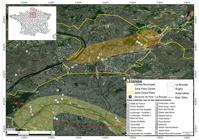
From a geographical and territorial perspective, this research focuses on the commune of Saint-Denis, located in the Département of Seine-Saint-Denis (Department No. 93), within the Île-de-France region, north of the French capital (see Figure 1). With a population of approximately 100,000 inhabitants, Saint-Denis is renowned for hosting the Stade de France-one of the most modern stadiums in Europe (see Figure 2)-as well as the Basilica of Saint-Denis, the burial site of a large part of the French monarchy. Together, these two landmarks contribute significantly to the territory’s tourism and cultural potential, although this potential remains underexploited due to the social and territorial stigmatization historically associated with the region (Gravari-Barbas, 2018).

In this regard, the literature on urban touristification suggests that the presence of cultural landmarks in peripheral territories does not automatically guarantee their positive integration into tourism circuits, as such integration is often mediated by processes of stigmatization and spatial selectivity (Smith, 2012; Gotham, 2015). At the same time, the territory is characterized by profound socio-spatial paradoxes, marked by deep inequalities and persistent conflicts. These tensions became particularly visible during the social unrest of June and July 2023, which spread across several parts of France and significantly affected Saint-Denis. This context supports the argument that large-scale urban projects and global events tend to be implemented in territories already marked by structural tensions, which are not eliminated by mega-events but are often reconfigured or intensified through them (Harvey, 2012; Brenner, 2014). Historically, this territory has been home to a predominantly migrant population originating from North Africa and Sub-Saharan Africa. These communities constitute a substantial portion of the labor force within the Paris metropolitan region, yet they continue to experience social and spatial marginalization. Today, the Département of Seine-Saint-Denis contains 63 Priority Urban Policy Neighborhoods (Quartiers Politiques de la Ville - QPV), distributed across 32 municipalities, making it the French suburban department with the highest number of QPVs. The territory exhibits socioeconomic indicators that are significantly below the average for the Paris region. More than 35% of its population is under the age of 25 (INSEE, 2020); the unemployment rate reached 18.4% in 2017, compared with 11.9% in Paris; and the poverty rate stood at 28% (INSEE, 2020). With an average annual income of €16,996 per consumption unit, Seine-Saint-Denis is considered the poorest department in metropolitan France, surpassed only by Réunion Island when overseas territories are included (Delaplace, 2020). In Saint-Denis itself, approximately three-quarters of the population live below the poverty threshold. The public image of Seine-Saint-Denis is strongly marked by stigmas and negative representations, frequently associated with urban violence and insecurity. These representations not only shape the social perception of the territory but also directly affect its integration into tourism dynamics, reinforcing what the literature defines as the “symbolic hierarchy of urban destinations” (Gravari-Barbas & Guinand, 2017; Richards, 2017). The 2005 riots and the November 2015 attacks-whose first incidents occurred in the vicinity of the Stade de France-further reinforced this perception. In 2018, a report by the French Ministry of the Interior identified the department as the national leader in armed robberies per 1,000 inhabitants, as well as ranking second in the Paris region for violent robberies without weapons (Delaplace, 2020). Such factors contribute to its stigmatized representation in both national and international media.
This stigmatizing representation also affects its attractiveness as a tourism destination, as it reinforces perceptions of insecurity and marginality that discourage visitor flows, even during international events (Gravari-Barbas, 2020). Despite this historical background, Seine-Saint-Denis has been repeatedly selected as a host territory for major sporting events. After hosting the 1998 FIFA World Cup and UEFA Euro 2016, the territory was once again chosen as a key site for the Paris Olympic Games.
The Olympic Committee emphasized its popular character and its promising potential for urban development. Although the Games are officially branded as “Paris 2024,” a significant portion of the interventions and socio-spatial transformations-referred to as “aménagements”-was concentrated in Saint-Denis (Interviewee A, 2022). These interventions were also justified by their potential to transform Saint-Denis into an alternative tourism hub, linked both to sport and cultural history, expanding the concept of “Olympic heritage” with a decentralized territorial focus (Broudehoux, 2017).
These transformations reflect a broader process of restructuring a historically industrial territory that underwent deindustrialization and is now targeted by reurbanization policies. A similar situation has been observed in other Olympic host cities such as Barcelona and London, where Olympic areas were also located in former industrial zones.
According to Interviewee A (2022), “there are large segments of territory that become available and are subsequently re-urbanized, although challenges such as soil contamination persist, raising significant concerns”.

Evictions, Gentrification, and Territorial Reconfiguration in Seine-Saint-Denis
According to the analyses of Interviewee A (2022) and Interviewee B (2022; 2024), the urban transformations driven by the Paris 2024 Olympic Games have generated significant impacts on the social and housing fabric of the commune of Saint-Denis and surrounding territories. Among these impacts, processes of eviction, forced displacement, and socio-spatial reconfiguration stand out, particularly in the area designated for the Olympic Village.
The empirical data indicate that the observed impacts are not evenly distributed across the different groups interviewed. Among academics, a more analytical and structural interpretation of the ongoing transformations prevails, associating these processes with urban financialization and the neoliberal production of space (Harvey, 2012; Smith, 2012). In contrast, among residents and representatives of local associations, the narratives emphasize concrete experiences of displacement, housing loss, and the rupture of territorial bonds, aligning with discussions on the right to the city and spatial injustice (Mitchell, 2003).
Meanwhile, participants involved in volunteering and event mediation tend to present a more ambivalent perception, acknowledging infrastructural improvements while also pointing to tensions related to the selective use of urban spaces and the growing touristification of the area (Gravari-Barbas & Guinand, 2017; Richards, 2017).
This divergence in perceptions highlights that the impacts of mega-events are not only material but also symbolic and interpretive, varying according to the social and institutional positions of the actors involved.
Although 300 people were officially recognized as affected, the data indicate that nearly 400 residents-predominantly migrant workers, including individuals with legal residency status-were evicted, relocated, or compensated. These evictions occurred precisely within the perimeter of the future Olympic Village, under the management of SOLIDEO and the DEF entity responsible for housing provision. It is noteworthy that around 50 people were left without any housing solution, revealing weaknesses in the resettlement process and exacerbating local social vulnerabilities (Interviewee A, 2022; Interviewee B, 2022, 2024; Interviewee F, 2023; Interviewee G, 2024; Interviewee H, 2023; Interviewee I, 2024).
These processes confirm the critical literature on mega-events, according to which benefits are often accompanied by mechanisms of spatial exclusion and unequal redistribution of social costs (Broudehoux, 2017; Gotham, 2015).
Although the effects did not reach the same magnitude and intensity of violence observed in previous editions, such as the Rio de Janeiro Olympics (Vico & Chiundila Vico, 2019; Vico & Azevedo, 2020a; 2020b), the cases of displacement in Paris are not negligible. It is important to highlight that these processes directly influence the tourism dynamics of the region, affecting both residents’ and visitors’ perceptions of the territory’s accessibility and authenticity. It is also true that, in structural terms, 84% of the infrastructure used for the event already existed, which contributed to a perception of lower overall impact. However, processes of gentrification and social exclusion remain highly relevant, particularly when considered from a medium- and long-term perspective.
According to Interviewee B (2022; 2024), several authors have identified a process of “gentrification through indirect displacement” (“white eviction”), a more subtle and institutionalized form of expulsion. The primary concern expressed by residents’ associations and monitoring committees, according to Interviewees A, B, C, G, H, and I, lies in the elite appropriation of the housing legacy. Although it was initially announced that 40% of the 1,900 housing units planned for the post-Olympic phase of the Athletes’ Village would be allocated to social housing (Interviewee D, 2024), this proportion was reduced to 25% due to legal requirements established under the Lamy Law of 2014. The remaining housing stock will be managed by real estate groups, thereby limiting access for the most vulnerable segments of the population. These transformations also affect urban tourism by redefining the uses and meanings of traditionally working-class neighborhoods. The process of urban renewal and the selective beautification of strategic areas-a common practice in the preparation of cities for mega-events-reinforces what has been termed “tourism gentrification,” whereby urban spaces are reshaped according to the expectations of temporary visitors, including tourists and Olympic spectators (Maitland & Newman, 2014). This spatial reconfiguration, by privileging aesthetics and consumption, may erode local cultural practices and undermine the authenticity of the tourism destination.
Efforts to project a positive international image of Saint-Denis, supported by investments in place branding and territorial marketing, have produced ambiguous effects on the resident population. Paradoxically, part of the funding used to construct the Olympic Village originated from public housing agencies (HLM), which will now also be responsible for refurbishing the units and adapting them for family use-a process involving substantial additional costs (Interviewee D, 2024). This situation reflects a form of double financialization of public housing: first through the construction of temporary structures and subsequently through their rehabilitation and conversion (Interviewee D, 2024). As Interviewee C (2023) emphasized, the official discourse promising affordable housing is marked by contradictions and remains detached from the reality experienced by local residents, revealing a market-oriented logic aimed primarily at the middle class and real estate capital, often at the expense of lower-income populations.
This logic of urban restructuring aligns with an ongoing process of social and ethnic cleansing. Territories that had previously been neglected, such as Île-Saint-Denis and the Bassin de la Maltournée-areas historically characterized by the presence of immigrant and low-income populations-suddenly became targets of investment and real estate valorization as a result of the mega-event. Even when some displacements were formally “negotiated” through compensation schemes, the ultimate outcome was the expulsion of historically vulnerable social groups. This process also produces significant effects on the territory’s image for tourism purposes, as urban restructuring becomes associated with a supposed cultural and aesthetic “renewal” aimed more at visitors than at residents. This dynamic reinforces the relationship between urban restructuring and touristification, whereby space is reorganized not only for residents but also for temporary consumers of the territory, such as tourists and spectators (Gravari-Barbas & Guinand, 2017).
The process of territorial transformation is accompanied by a form of symbolic touristification, through which the city seeks to conceal conflicts and inequalities by promoting narratives specifically designed for visitors. The aesthetic and functional configuration of urban spaces, including the Olympic Village itself, becomes increasingly oriented toward the visual and experiential consumption of tourists, producing a more exclusionary and filtered urban environment (Gotham, 2005; Gravari-Barbas, 2018; 2020). In this sense, touristification operates as a strategy of urban branding and symbolic value production, often detached from the actual needs and demands of the host population.
Located north of Paris, Seine-Saint-Denis has traditionally functioned as the metropolis’s “service territory,” accommodating working-class populations and subordinate urban functions since the nineteenth century. However, the continuous rise in housing prices in Paris has encouraged the migration of middle-class households into Saint-Denis, intensifying processes of population replacement. Between 2021 and 2023, property prices in Saint-Denis doubled (Interviewee A, 2022; Interviewee C, 2023; Interviewee G, 2024; Interviewee H, 2023; Interviewee I, 2024), making it increasingly difficult for local residents to remain in the area. In the absence of effective public relocation policies, many are being pushed toward even more distant peripheral zones-20, 30, or even 40 kilometers from the capital-where they face precarious mobility conditions and inadequate housing.
In this context, touristification should be understood not merely as a by-product of mega-events, but as part of a broader strategy of selective urban space production, in which real estate, tourism, and institutional interests converge in the redefinition of urban uses (Smith, 2016; Gotham, 2015; Colomb & Novy, 2017). This phenomenon reveals a profound territorial reconfiguration marked by the intensification of socio-spatial inequalities. While essential workers-the so-called “premiers corbeaux” (“first crows”)-continue to sustain the functioning of the city, they are simultaneously rendered invisible and displaced, thereby reinforcing existing patterns of urban segregation. The exclusion of the most vulnerable groups from the urban core compromises not only the right to the city but also the sustainability of urban tourism, which increasingly relies upon an unstable and unequal social foundation.
At the same time, a symbolic attempt to appropriate the identity of Saint-Denis by the capital city can be observed. The staging of the Games has fostered a dynamic through which Paris seeks to incorporate and rebrand Saint-Denis’s cultural and symbolic assets-such as the Basilica of Saint-Denis and the Stade de France-as part of its own identity. This appropriation contributes to the construction of a homogeneous and positive image of the metropolis, aimed at place marketing and tourism promotion, while simultaneously obscuring local contradictions. This “Parisianization” of Saint-Denis contributes to the erosion of local territorial identity and the erasure of collective memory, constituting an operation that is not only urbanistic but also symbolic and political (Interviewee B, 2022; 2024).
According to Interviewee A (2022), Seine-Saint-Denis is one of the poorest areas in metropolitan France and faces a pressing need for social housing and accessible sports facilities, such as small community swimming pools, rather than large-scale Olympic structures like the Olympic Aquatics Centre in Aubervilliers. This facility was built on the site of former community gardens and is financed through a public-private partnership model, meaning that it will not operate as a fully public facility. According to Interviewee A (2022; 2024) and Interviewee C (2023), this arrangement does not adequately serve the public interest.
Although schools may be granted access to the facility, the availability of the venue during weekends and the costs associated with its use remain uncertain and are expected to be high, potentially restricting access for a significant portion of the local population. The limited accessibility of sports facilities contrasts sharply with the official discourse surrounding the democratization of sport, which is frequently invoked in the promotion of the Olympic Games. This contradiction is particularly evident in the reality of Department 93, where children generally have less familiarity with swimming despite living in a region where swimming pools would normally be expected to be widely available.
Most of these investments, largely financed through private capital, were not strictly necessary for hosting the Olympic Games, raising important questions regarding public priorities and the social impacts of such developments.
Interviewee A (2022; 2024) also highlights the challenges related to urban mobility in the region. Seine-Saint-Denis is characterized by a fragmented urban landscape shaped by major infrastructures, such as railways and highways, which hinder accessibility and circulation. Near the Olympic Village and the IOC facilities, there are incomplete highway interchanges that the State and road authorities plan to complete in order to improve connectivity between the main Olympic hubs. However, the expansion of traffic lanes, particularly in areas close to schools, may increase pollution levels and pose additional risks to the local population. Furthermore, these mobility investments have been justified, in part, by the need to facilitate tourist mobility during the Games, although their long-term structural benefits remain uncertain.
Within the context of the organization of the Paris 2024 Olympic and Paralympic Games, a genuine “state of exception” was established, characterized by the temporary suspension of the ordinary normative order (Agamben, 2005). During the second Macron administration, an increase in authoritarian tendencies was observed, largely legitimized through discourses centered on public security and the implementation of the controversial Global Security Law project (Foucault, 2007; Balzacq, 2010).
The Loi Olympique (Olympic Law), enacted specifically for this event, constitutes a form of legislation that exists outside the conventional democratic process, insofar as its content was significantly influenced by the International Olympic Committee (IOC)-a private entity with considerable global governance power (Toohey & Taylor, 2008). This law, which receives a specific designation in each edition of the Games-such as the Olympic Act in Rio de Janeiro-raises significant democratic concerns, as it authorizes and facilitates urban transformations and modifications to planning regulations without the effective participation of local residents (Harvey, 2012; Smith, 2012). Such changes may directly affect the urban landscape and the tourism uses of the territory by promoting accelerated interventions that prioritize the city's international image over local needs. Furthermore, the legislation relaxed community participation requirements in urban planning and project approval processes, drastically reducing the involvement of affected communities (Interviewee A, 2022; Interviewee B, 2022; 2024). In France, urban development projects generally involve robust participatory procedures, including public meetings and extensive consultations; however, the *Loi Olympique* departed from this tradition by imposing predominantly electronic and expedited forms of participation, often within deadlines of only one month, thereby severely restricting democratic debate (Interviewee A, 2024). This process also undermines the potential for the collective development of sustainable tourism projects by excluding residents from decisions concerning the future of their territories.
This scenario raises serious questions regarding democratic legitimacy and the effectiveness of local governance in the preparatory process of the mega-event. The urgency imposed by IOC requirements prioritized the rapid delivery of infrastructure, relegating the social and political inclusion of resident communities to a secondary position (Bale, 2008; Horne, 2007). The logic of efficiency and global competitiveness inherent to mega-events thus justifies an exceptional regime that disrupts everyday democratic practices (Swyngedouw, 2009). Exceptional legal instruments, such as “operations of national interest” (opérations d’intérêt national), were employed to provide greater flexibility for urban transformations, granting extensive powers to decision-makers (Interviewee A, 2022). These mechanisms enabled significant socio-spatial changes to occur with limited public interference, characterizing what may be described as a genuine “legalized state of exception” (Agamben, 2005). The territory of Seine-Saint-Denis was the area most affected by these exceptional measures, highlighting the central role of politics in the socio-spatial remaking of urban space through a process that articulates global, national, and local interests.
From a tourism perspective, sporting mega-events represent a key strategy for promoting host cities and regions on the global stage, stimulating tourist flows and attracting investment (Getz, 2013). However, such “promotion” often occurs at the cost of social exclusion and the territorial reconfiguration of local communities (Gotham, 2005).
The “Loi Olympique” and the broader political-legal state of exception also involve the management and control of tourist and visitor flows, fostering a secure and spectacularized image of the city that may encourage elite-oriented tourism while restricting local residents’ access to public spaces (Hiller, 2006). The privatization of urban spaces and the intensification of control mechanisms, including technological surveillance, generate tensions between tourism as an economic activity and the pursuit of socio-spatial justice (Shaw & Williams, 2004). These dynamics reinforce debates surrounding the right to the city, as access to, permanence within, and use of urban space become increasingly conditioned by logics of economic valorization and institutional control. In turn, these processes produce both material and symbolic forms of exclusion that directly shape residents’ urban experiences (Lefebvre, 2001; Harvey, 2012; Mitchell, 2003).
Local Mobilization and Resistance Against the Paris 2024 Olympic Games
Resistance to the transformations imposed by the Games involved the participation of various actors, including the Olympic Games Monitoring Committee (Comité de Vigilance des JO 2024) in Saint-Denis and the collective SACAGE 2024, both composed of activists with diverse backgrounds and profiles (Interviewee A, 2022; Interviewee B, 2022; 2024; Interviewee C, 2023; Interviewee G, 2024; Interviewee H, 2023; Interviewee I, 2024). These organizations promoted initiatives such as technical assessments and symbolic occupations, denouncing the continuation of urban development projects with limited state intervention or oversight (Interviewee A, 2022).
The Monitoring Committee acted primarily as a mediator between residents and development projects, advocating for the active inclusion of local voices and proposing alternatives without necessarily adopting an outright opposition to the event. SACAGE 2024, by contrast, positioned itself as a more critical collective, denouncing the privatization of public spaces, the expansion of police control, and the destruction of community spaces such as urban gardens (FranceInfo, 2024).
During the Games, episodes of police repression-including the detention and fining of activists during a critical guided tour-highlighted the consolidation of what some observers have described as an “Olympic police state” (FranceInfo, 2024). Algorithmic surveillance and the extensive deployment of cameras in public spaces reflect an expanded apparatus of social control, producing a tourist experience that is designed to be secure but remains highly contested by segments of the local population (Graham, 2010; Lyon, 2018).
CONCLUDING REMARKS
This research demonstrated how sporting mega-events, particularly the Olympic Games, exert a significant influence not only on the perceptions and imaginaries of tourism professionals but also on the local population of the host city. The Olympic Games transcend the sporting dimension, constituting a multidimensional phenomenon that combines elements of a smart and connected city while simultaneously serving the interests of economically privileged tourist markets and major international corporations. As a result, investments associated with the event-often directed toward tourism infrastructure and destination promotion-tend to be subordinated to these global interests, reflecting a logic that frequently overrides the needs and demands of local residents.
With regard to the Paris 2024 Olympic Games, the findings indicate that the urban and socio-territorial transformations required to meet the deadlines imposed by the International Olympic Committee had direct repercussions on the daily lives of residents, particularly in territories such as Seine-Saint-Denis. Although it is possible to identify certain positive tourism legacies arising from the infrastructure projects and investments undertaken, the mega-event primarily functioned as a catalyst that accelerated processes of change already underway in the region, rather than serving as the original driver of these transformations.
Therefore, the Paris 2024 Olympic Games should not be understood as the initiating force behind these changes, but rather as an accelerator that intensified the reconfiguration of both tourism and urban spaces. This reality underscores the need for ongoing analysis of tourism sustainability and of the extent to which local communities are effectively included in the benefits generated by these legacies.
Accordingly, it can be concluded that the overall objective of this research was achieved, as the study demonstrated how residents of Seine-Saint-Denis perceive the urban changes associated with the Paris 2024 Olympic Games, highlighting the ways in which these transformations reconfigure territorial dynamics and reshape the relationship between tourism and everyday local life. The guiding hypothesis was also partially confirmed, as the findings indicate an unequal distribution of the benefits generated by the mega-event, with gains concentrated among economic and institutional actors, while the local population tends to experience its impacts more acutely, particularly in relation to rising property values, displacement, and the restructuring of urban space.
The analysis further demonstrated that sporting mega-events function as strategic tools for place marketing and tourism promotion, driving urban transformations aligned with interests related to real estate speculation and tourism development aimed at higher-income groups. Under the discourse of urban regeneration and revitalization, such interventions often conceal the predominance of a neoliberal agenda in which investments are primarily directed toward territorial valorization and the interests of privileged socioeconomic groups, frequently at the expense of local populations and the long-term sustainability of host communities.
Although this research focused on the specificities of the Parisian context, the phenomenon examined is global in scope and manifests itself both in countries with fragile sociopolitical systems and limited infrastructure-where its effects may be more explicit-and in developed nations that already possess most of the facilities required to host events of this magnitude. Each mega-event therefore reproduces patterns observed in previous experiences while also presenting distinctive social, territorial, political, cultural, and environmental characteristics that shape its impacts and legacy-particularly with regard to tourism dynamics and the consequences of touristification for resident communities, affecting both quality of life and the right to the city.
One limitation of this study concerns the restricted access to certain social groups directly affected by processes of urban transformation, as well as linguistic barriers encountered during fieldwork conducted in an international context and the limited duration of the researchers’ stay in France. These factors may have constrained the breadth of certain interpretations and the diversity of perspectives captured.
Future research should pursue comparative studies across different mega-event host cities in order to identify common patterns and distinctive features in processes of touristification and urban restructuring. Longitudinal investigations into the effects of the Paris 2024 Olympic Games in Seine-Saint-Denis are also recommended, particularly to assess medium- and long-term impacts. Furthermore, additional research is needed on community-based tourism and alternative forms of tourism development in peripheral territories, with a particular emphasis on strategies that promote inclusion and socio-spatial justice.
Finally, the findings indicate that the most vulnerable segments of the population are those most severely affected by the negative consequences associated with mega-event interventions, including expropriation and real estate speculation. In Seine-Saint-Denis, territorial restructuring has disproportionately affected low-income communities, migrants, and marginalized groups that have historically been excluded from housing markets and neglected by public policies. These populations have increasingly become targets of the real estate speculation and touristification stimulated by Olympic-related investments, which seek to enhance the symbolic and economic value of the territory as a means of attracting visitors.
In seeking to maximize the symbolic and economic valorization of the territory, tourism dynamics may inadvertently contribute to processes of displacement and social exclusion, thereby raising critical challenges for spatial justice, urban equity, and the development of more inclusive approaches to tourism planning.
References
- Agamben, G. (2005). State of Exception University of Chicago Press.
- Almeida, J. C. S. (2018). Impactos do turismo em megaeventos: percepções e desafios nas cidades anfitriãs. Turismo, Visão e Ação, 22(2), 45-62.
- Bale, J. (2008). Sports Geography Routledge.
- Balzacq, T. (2010). Security, Securitization and Risk: Beyond the Copenhagen School Routledge.
- Bardin, L. (2016). Análise de conteúdo São Paulo: Edições 70.
- Brenner, N. (2014). Implosions/Explosions: Towards a study of planetary urbanization Jovis.
- Brenner, N., Marcuse, P., & Mayer, M. (2012). Cities for people, not for profit: Critical urban theory and the right to the city London: Routledge.
- Broudehoux, A.-M. (2017). Mega-events and urban image construction: Beijing and Rio de Janeiro. In G. Richards & R. Palmer (Eds.), Eventful Cities: Cultural Management and Urban Revitalisation (pp. 127-144). Routledge.
- Centre on Housing Rights and Evictions - COHRE. (2007). Olympic Games and housing rights Centre on Housing Rights and Evictions.
- Chalip, L. (2021). Mega-events and tourism legacy Oxford: Goodfellow Publishers.
-
Colomb, C., & Novy, J. (Eds.). (2017). Protest and resistance in the tourist city Routledge. https://doi.org/10.4324/9781315719306 .
» https://doi.org/10.4324/9781315719306 - Cornelissen, S. (2011). Mega-event securitisation in a third world setting: Global processes and ramifications during the 2010 FIFA World Cup. Urban Studies, 48(15), 3221-3240.
- Cornelissen, S., Bob, U., & Swart, K. (2011). Towards redefining the concept of legacy in relation to sport mega-events: Insights from the 2010 FIFA World Cup. Development Southern Africa, 28(3), 307-318.
- Creswell, J. W., & Plano Clark, V. L. (2018). Designing and conducting mixed methods research (3rd ed.). Thousand Oaks: Sage.
- Creswell, J. W., & Poth, C. N. (2018). Qualitative inquiry and research design: Choosing among five approaches (4th ed.). Thousand Oaks: Sage .
- Delaplace, M. (2020). L’image des territoires hôtes des Jeux Olympiques et Paralympiques: revue de la littérature et enjeux pour Paris 2024. Revue Marketing Territorial, 4.
- Foucault, M. (2007). Security, Territory, Population: Lectures at the Collège de France 1977-1978 Palgrave Macmillan.
-
Franceinfo. (2024, 15 de agosto). On voulait juste faire une balade. Des militants anti-JO de Paris 2024 verbalisés à Saint-Denis. Franceinfo https://france3-regions.francetvinfo.fr/paris-ile-de-france/seine-saint-denis/on-voulait-juste-faire-une-balade-des-militants-anti-jo-de-paris-2024-verbalises-a-saint-denis-l-un-d-entre-eux-place-en-garde-a-vue-3015785.html .
» https://france3-regions.francetvinfo.fr/paris-ile-de-france/seine-saint-denis/on-voulait-juste-faire-une-balade-des-militants-anti-jo-de-paris-2024-verbalises-a-saint-denis-l-un-d-entre-eux-place-en-garde-a-vue-3015785.html - Gaffney, C. (2016). Gentrifications in pre-Olympic Rio de Janeiro. Urban Geography, 37(8), 1132-1153.
- Getz, D. (2013). Event Studies: Theory, Research and Policy for Planned Events Routledge.
- Getz, D., & Page, S. J. (2016). Progress and prospects for event tourism research. Tourism Management, 52, 593-631.
- Gotham, K. F. (2005). Theorizing Urban Spectacles: Festivals, Tourism and the Transformation of Urban Space. Urban Studies , 42(5-6), 985-999.
- Gotham, K. F. (2015). Tourism gentrification: the case of New Orleans’ Vieux Carré (French Quarter). Urban studies, 42(7), 1099-1121.
- Graham, S. (2010). Cities under Siege: The New Military Urbanism Verso.
- Gravari-Barbas, M.; Guinand, S. (2017). Tourism and gentrification in contemporary metropolises: international perspectives London: Routledge .
- Gravari-Barbas, M. (2018). Tourisme, patrimoine et géographies urbaines alternatives à Paris L’Harmattan.
-
Gravari-Barbas, M. (2020). Tourisme et conflits urbains à Paris: les “gilets jaunes” et les quartiers populaires. Mondes du tourisme, 17. https://journals.openedition.org/tourisme/4427 .
» https://journals.openedition.org/tourisme/4427 - Hall, C. M. (2019). Constructing sustainable tourism development: The 2030 agenda and the managerial ecology of sustainable tourism. London: Routledge .
- Harvey, D. (2012). Rebel Cities: From the Right to the City to the Urban Revolution London: Verso.
- Hiller, H. H. (2006). Post-Event Outcomes and the Post-Modern Turn: The Olympics and Urban Transformations. European Sport Management Quarterly, 6(4), 317-332.
- Horne, J. (2007). The Four ‘Knowns’ of Sports Mega-Events. Leisure Studies, 26(1), 81-96.
-
Institut National de la Statistique et des Études Économiques - INSEE. (2020). La Seine-Saint-Denis: entre dynamisme économique et difficultés sociales persistantes INSEE Analyse Ile-de-France, (114). https://www.insee.fr/fr/statistiques/4308516#consulter .
» https://www.insee.fr/fr/statistiques/4308516#consulter - Knott, B., Fyall, A., & Jones, I. (2017). Leveraging nation branding opportunities through sport mega-events. International Journal of Culture, Tourism and Hospitality Research, 11(1), 6-18.
- Lees, L., Slater, T., & Wyly, E. (2018). Gentrification (2nd ed.). New York: Routledge.
- Lefebvre, H. (2001). O direito à cidade São Paulo: Centauro.
- Lyon, D. (2018). The Culture of Surveillance: Watching as a Way of Life Polity Press.
- Mair, J., & Whitford, M. (2013). An exploration of events research: Event topics, themes and emerging trends. International Journal of Event and Festival Management, 4(1), 6-30.
- Mendes, L. F. (2021). Planejamento turístico integrado e legados dos megaeventos: o caso dos Jogos Olímpicos. Turismo, Visão e Ação , 23(3), 201-220.
- Milano, C., Cheer, J. M., & Novelli, M. (2019). Overtourism: Excesses, discontents and measures in travel and tourism Wallingford: CABI.
- Müller, M. (2015). What makes an event a mega-event? Definitions and sizes. Leisure Studies , 34(6), 627-642.
- Müller, M., & Gaffney, C. (2018). Comparing the urban impacts of the FIFA World Cup and Olympic Games from 2010 to 2016. Journal of Sport and Social Issues, 42(4), 247-269.
- Nunkoo, R., Smith, S. L. J., & Ramkissoon, H. (2013). Residents’ attitudes to tourism: A longitudinal study of 140 articles from 1984 to 2010. Journal of Sustainable Tourism, 21(1), 5-25.
-
Paris 2024. (2022, 19 de maio). Plan Héritage et Durabilité des Jeux Olympiques et Paralympiques de Paris 2024 https://www.paris2024.org/fr/plan-heritage-durabilite/ .
» https://www.paris2024.org/fr/plan-heritage-durabilite/ - Pereira, R., & Costa, C. (2023). Tourism planning and mega-event legacies in urban destinations. Journal of Tourism Futures, 9(2), 188-203.
- Plaine Commune. (2020). Le plan local d’urbanisme intercommunal de Plaine Commune
- Preuss, H. (2019). Event legacy framework and measurement. International Journal of Sport Policy and Politics, 11(1), 103-118.
- Preuss, H., & Schnitzer, M. (2021). Legacy and sustainability of sport mega-events: A conceptual review. Sustainability, 13(3), 1-18.
- Purcell, M. (2014). Possible worlds: Henri Lefebvre and the right to the city. Journal of Urban Affairs, 36*(1), 141-154.
- Richards, G. (2017). Cultural tourism: a review of recent research and trends. Journal of hospitality and tourism management, 31, 4-15.
-
Ritchie, B. W., & Hudson, S. (2009). Understanding and meeting the challenges of event tourism. International Journal of Tourism Research, 11(2), 111-126. https://doi.org/10.1002/jtr.720 .
» https://doi.org/10.1002/jtr.720 - Roche, M. (2017). Mega-events and modernity revisited London: Routledge .
- Rolnik, R. (2019). Urban warfare: Housing under the empire of finance London: Verso .
- Santos Junior, O. A., & Gaffney, C. (2020). Megaeventos e neoliberalização urbana no Brasil. Cadernos Metrópole, 22(47), 15-34.
- Shaw, G., & Williams, A. M. (2004). Critical Issues in Tourism: A Geographical Perspective Blackwell.
- Smith, A. (2012). Events and urban regeneration: The strategic use of events to revitalise cities Routledge.
- Smith, N. (2016). Tourism and gentrification in the global city London: Routledge .
- Smith, A. (2019). Events and urban regeneration: The strategic use of events to revitalise cities (2nd ed.). London: Routledge .
- Swyngedouw, E. (2009). The Antinomies of the Postpolitical City: In Search of a Democratic Politics of Environmental Production. International Journal of Urban and Regional Research, 33(3), 601-620.
- Toohey, K., & Taylor, T. (2008). Mega Events, Fear, and Risk: Terrorism at the Olympic Games. Journal of Sport Management, 22(4), 451-469.
- UN-Habitat. (2020). World cities report 2020: The value of sustainable urbanization Nairobi: United Nations Human Settlements Programme.
- Veal, A. J. (2018). Research methods for leisure and tourism: A practical guide (5th ed.). Harlow: Pearson Education.
-
Vico, R. P., & Azevedo, F. F. (2020a). Megaeventos desportivos e transformações territoriais: o caso do Rio de Janeiro. Revista Equador (UFPI), 9(2), 74-97. http://revistas.ufpi.br/index.php/equador/article/view/9606/6131 .
» http://revistas.ufpi.br/index.php/equador/article/view/9606/6131 -
Vico, R. P., & Azevedo, F. F. (2020b). Os megaeventos esportivos no Brasil e o uso corporativo do território: o caso emblemático da Vila Autódromo no Rio de Janeiro. Revista Caminhos de Geografia (UFUB), 21(24), 108-125. https://doi.org/10.14393/rcg217449605 .
» https://doi.org/10.14393/rcg217449605 -
Vico, R. P., & Chiundila Vico, V. C. (2019). Turismo e o pós-evento olímpico: uma gestão mercadológica da cidade do Rio de Janeiro. Revista de Turismo Contemporâneo, 7(Ed. Especial), 3-27. https://doi.org/10.21680/2357-8211.2019v7n0ID16978 .
» https://doi.org/10.21680/2357-8211.2019v7n0ID16978 -
Vico, R. P., Azevedo, F. F., Figueiredo, F., & Uvinha, R. (2023). O uso do território no contexto dos megaeventos esportivos: o caso da Favela do Metrô-Mangueira no Rio de Janeiro segundo o imaginário dos residentes. Revista Latino-Americana de Turismologia, 9. https://doi.org/10.5281/zenodo.10425725 .
» https://doi.org/10.5281/zenodo.10425725 -
Vico, R. P., Gustavo, N., & Uvinha, R. (2020). Reflexões sobre os megaeventos esportivos na percepção da comunidade local anfitriã. In O olhar do residente (pp. 219-247). Coleção EDUFRN - Ciências Sociais Aplicadas. https://repositorio.ufrn.br/jspui/handle/123456789/30478 .
» https://repositorio.ufrn.br/jspui/handle/123456789/30478 -
Vico, R. P., Uvinha, R. (2023). La perception par les habitants, un élément clef d’un tourisme durable associé aux méga-événements sportifs: Le cas de la Coupe du Monde 2014 et des Jeux Olympiques et Paralympiques 2016 à Rio de Janeiro. City and Tourism, 1(2). https://doi.org/10.21494/ISTE.OP.2023.0931 .
» https://doi.org/10.21494/ISTE.OP.2023.0931
-
Editor:
Luiz Carlos da Silva Flores
-
Editorial Assistant
Guilherme O. M. da Silva Flores
The research data can be requested from the authors.

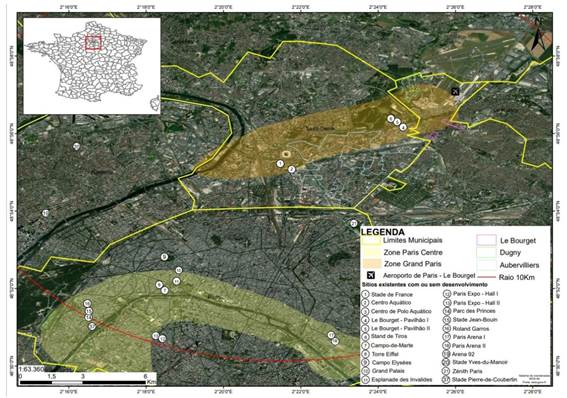 Source: Prepared by the authors based on the Coordinate System Data. WGSM, data.gouv.fr, 2021
 Source: The Lead Author, 2024 - Personal Archive
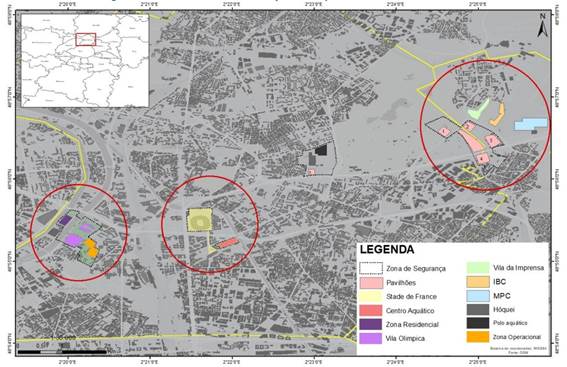 Source: Prepared by the author based on the Coordinate System Data WGSM, OSM, 2021