 Investigation of the physicochemical, bioactive properties and antioxidant potential of seeds of native fruits from Brazil: a study on the tucumã (Astrocaryum vulgare), bacupari (Garcinia gardneriana) and pupunha (Bactris gasipaes)
Abstract
The seeds of bacupari, tucumã, and peach palm fruits have distinct characteristics that significantly influence their industrial applications and nutritional value. These seeds have slightly acidic pH levels (5.88 − 6.79), indicating the presence of organic acids. The tucumã seed, for instance, stands out with a high lipid content of 19.35 g 100 g−1, contributing to a high energy value, while the bacupari seed has low lipid levels (0.73 g 100 g−1). Bacupari seeds exhibit high antioxidant potential using the β-carotene/linoleic acid method (244% inhibition) and vitamin C (91.17 mg AA 100 g−1). There were significant variations in phenolic compounds and antioxidant capacity among the seeds analyzed. The fatty acid profile, with a predominance of saturated acids, 90.42 and 88.66%, for tucumã and peach palm oil, respectively. However, the high atherogenicity and thrombogenicity rates suggest caution in consumption. The analysis of triacylglycerol molecules in pupunha and tucumã seeds demonstrated the predominance of mono-, di- and triacylglycerols. When analyzing the acidity index throughout the storage period, a clear trend towards an increase in its results is observed. Therefore, proposing control measures is essential for its correct use.
Key words
vegetable oils; Triglycerides; total phenolics; fatty acids; nutritional quality
INTRODUCTION
The Brazil is characterized by its vast territorial extension, is known for being home to the richest biodiversity on the planet. This nation is home to over 15% of the world’s known species, which are distributed across its five major biomes: Amazonia, Cerrado, Atlantic Forest, Caatinga, Pantanal, and Pampas (Valli et al. 2018, Morais et al. 2022, Teles et al. 2021). Consequently, the biodiversity of the Amazon Rainforest is significantly enhanced by its hot and humid climate, coupled with frequent and abundant rainfall throughout the year. These conditions facilitate the proliferation of a vast array of plant species, which maintain their verdant foliage year-round (Santos et al. 2022, Faria et al. 2021). Known as “exotic fruits” or “superfruits,” Amazonian fruits are extensively consumed by local inhabitants, both in their natural state and processed forms, commonly found in fairs and markets. These tropical fruits have garnered global interest from researchers and the food industry due to their rich content of phytochemicals, antioxidants, and bioactive compounds (Morais et al. 2022, Ibiapina et al. 2022).
Given the wealth of fruits native to the Amazon, stand out tucumã (Astrocaryum vulgare Mart., Arecaceae family), peach palm (Bactris gasipaes Kunth, Arecaceae family), and bacupari (Garcinia gardneriana, Clusiaceae family). Tucumã stands out for its nutritional potential, and the pulp consumed fresh and processed (Carneiro et al. 2017), is a source of lipids, fiber, vitamin C, minerals, and unsaturated fatty acids, and it has high antioxidant potential (Santos et al. 2018). Peach palm has a high nutritional value and is rich in vitamin A, lipids, fiber, and total carotenoids, giving the fruit great functional appeal being highly appreciated in cuisine by local populations (Costa et al. 2022). The bacupari is medium in size and has a pyramidal crown and flowers between August and September (Silva et al. 2021). Its fruits are popularly known as “porocó,” “bacuripari,” and “guapomo.” Studies demonstrate that its seeds have a high content of phenolic compounds, flavonoids, antioxidants, and antibacterial activity (Santos et al. 2020). It is worth noting that despite these fruits being processed and sold as ice cream, jellies, and preserves by large industries and small producers, there is no official data on the area harvested and production per hectare.
It is imperative to acknowledge that, despite their significant nutritional attributes and substantial potential for processing and utilization, native fruits and their by-products remain underexplored and undervalued (Song et al. 2015, Sousa et al. 2024). The waste generated from Amazonian fruits presents a critical challenge and opportunity for environmental sustainability and the local economy. Recent research suggests that the residual biomass of these fruits, including peels, seeds, and pomace, is frequently discarded improperly, thereby contributing to environmental pollution and resource wastage. However, this biomass possesses considerable potential for valorization due to its high content of bioactive compounds, fibers, proteins, and essential oils (Freitas et al. 2024, Morais et al. 2024). Studies have demonstrated that applying comprehensive utilization techniques, such as the production of flours, oils, and extracts, can enhance the value of these residues, transforming them into functional ingredients for the food, cosmetic, and pharmaceutical industries (Song et al. 2015). Moreover, valorizing these wastes can yield economic and social benefits by integrating local communities into sustainable production chains and promoting forest management practices that preserve Amazonian biodiversity (Carneiro et al. 2017).
The rising consumption and processing of native fruits have escalated the volume of improperly discarded waste. This issue has elicited considerable concern, as it poses a significant threat to the contamination of water resources and soil. Additionally, the accumulation of such waste creates a favorable environment for the proliferation of vectors that transmit diseases, thereby presenting substantial risks to public health (Manhongo et al. 2022). Therefore, using seeds can play a pivotal role in environmental sustainability and contribute significantly to developing high-value products like vegetable oils. Additionally, this approach supports the effective valorization of waste materials that are often improperly discarded. Due to their considerable nutritional and bioactive content, tucumã (Astrocaryum vulgare), peach palm (Bactris gasipaes), and bacupari (Garcinia gardneriana) stand out, found mainly in the North and Northeast regions of Brazil. Therefore, this study aimed to characterize the seeds of the tucumã, peach palm, and bacupari fruits and extract and characterize the oils obtained from the seeds.
MATERIALS AND METHODS
Chemicals
ABTS (2,2’-azino-bis-(3-ethylbenzenothiazoline-6-sulfonic acid), Trolox (6-hydroxy-2,5,7,8-tetramethylchroman-2-carboxylic acid), DPPH (2,2-diphenyl-1-picrylhydrazyl), Folin-Ciocalteu reagent, copper sulfate, potassium sulfate, potassium persulfate, petroleum ether, aluminium chloride, sodium molybdate, ferric chloride, sodium carbonate, sodium phosphate, tripyridyl triazine (TPTZ), ethanol, acetone, ascorbic acid, gallic acid, glacial acetic acid, oxalic acid, sulfuric acid, citric acid, and Supelco FAME Mix C31 standards were obtained from Sigma Aldrich® (São Paulo - Brazil). All chemical reagents were analytical grade.
Plant material
The bacupari fruits were sourced from the region of Aurora do Tocantins, located at 12°42’46.9”S and 46°24’28.6” W. The peach palms were collected in Redenção do Pará, with coordinates 8°01’58.9” S and 50°01’57.7” W. The tucumã fruits originated from Xinguara, Pará, at 7°06’14.0” S and 49°56’49.3” W. The fruits used in this study are registered in the National Management System of Genetic Heritage and Associated Traditional Knowledge (SISGEN) under project numbers (A7A1306) and (A61350F), which have as their central objectives the complete use of residues from Amazonian fruits as a tool for adding value and sustainable use.
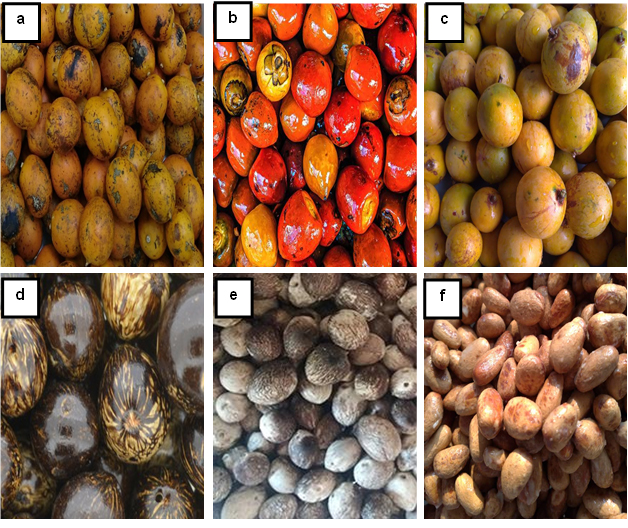
The fruits were selected according to their maturation stage, with only ripe fruits without apparent injuries being collected. After selection, the fruits were kept in 100 mg L−1 chlorinated water for 15 min for sanitation. Then, the fruits were manually pulped with a stainless-steel knife to obtain the seeds (Figure 1). The different seeds were dried separately at 45°C by 48 h in a Nova Ética oven with air circulation, Model 400/4ND (São Paulo, Brazil). Then, the samples were ground in an IKA A11 analytical mill (Staufen, Germany) until they reached a standard particle size of 1.00 mm. The different dried seeds were stored separately in low-density polyethylene packaging and kept at −18 ± 2°C until subsequent analyses.

Images of the whole fruits and their respective seeds. (a) tucumã (Astrocaryum vulgare); (b) peach palm (Bactris gasipaes); (c) bacupari (Garcinia gardneriana); (d) Tucumã seed; (e) Peach palm seed; and (f) Bacupari seed.
Nutritional composition and physicochemical characteristics of seeds
The nutritional composition of bacupari, tucumã, and peach palm seeds was analyzed with utmost precision, following the well-established and trusted protocols of the Association of Official Analytical Chemists (AOAC 2012). The parameters measured included moisture content (method 925.09), ash content (method 923.03), lipid content (method 920.85) using hexane extraction for six hours, protein content (method 920.87), fiber content (method 991.43), carbohydrates by difference, pH (method 981.12), and titratable acidity (method 942.15B). The outcomes were reported in grams per 100 grams (g 100 g−1). The total caloric value was calculated using the conversion factors of 4 kcal g−1 for proteins and carbohydrates and 9 kcal g−1 for lipids and expressed as kcal per 100 grams of the sample.
Bioactive compounds and antioxidant potential of seeds
The carotenoid extraction procedure followed the method established by Kimura et al. (2007), maintaining a constant temperature of 20°C and low light conditions. Initially, 1.0 g of the seeds was weighed and ground with 30 mL of acetone. The resulting mixture was transferred to a separatory funnel containing 50 mL of petroleum ether and then filtered repeatedly until complete removal of pigments, evidenced by the colorlessness of the residue. Then, 50 mL of acetone was added to the extract, followed by the careful introduction of 300 mL of distilled water. After separating the phases, the aqueous phase, containing water and acetone, was discarded. The ethereal phase was washed five times with distilled water to eliminate any acetone residue. The extracts obtained were analyzed for absorbance at four different wavelengths, emphasizing 450 nm (Rayleigh, UV-1800). The results were presented in mg per 100 mL. Quantification of vitamin C in seeds was performed using the colorimetric method with 2,4-dinitrophenylhydrazine (2,4-DNPH) as described by Strohecker et al. (1965). Extraction was performed using oxalic acid at a concentration of 0.05%. Absorbance was measured at 520 nm in a digital spectrophotometer, and the results were expressed as mg of ascorbic acid per 100 g (mg AA 100 g−1).
Extracts were obtained following the guidelines established by Rufino et al. (2010) to quantify bioactive compounds and evaluate their antioxidant potential. 2 g of the sample was weighed, and 20 mL of 80% (v/v) ethanol was added. The samples were then exposed to sonication in an ultrasonic bath (EGS 5HD, 40 kHz, 300 W, Enge Solutions®, São Paulo, Brazil) at 30 °C for 25 min. After the sonication process, the extracts were filtered through filter paper (Whatman no. 541, 125 mm). Subsequently, the samples were stored at −18 ± 2 °C until analysis. Total phenolic compounds (TPC) were quantified by the Folin-Ciocalteau method, according to the methodology described by Singleton & Rossi (1965). 25 μL of Folin-Ciocalteu reagent (2.0 N), 200 μL of ultrapure water, and 25 μL of the analyzed extracts were used for the oxidation reaction. After 5 min, 25 μL of a 10% sodium carbonate (Na2CO3) solution was added. At room temperature, the mixture was left to stand in the dark for 60 min. The absorbance was measured at 725 nm using a spectrophotometer. The total phenolic compound content was calculated from a gallic acid standard curve, and the results were expressed as gallic acid equivalent per 100 g of sample (mg GAE 100 g⁻¹).
The free radical scavenging antioxidant activity of DPPH was evaluated using the technique established by Brand-Williams et al. (1995). Different concentrations of seeds extracts (0.1 mL) were mixed with 3.9 mL of DPPH radical scavenging solution and incubated for 30 min in a light-protected environment. Absorbance was recorded at 515 nm in a digital spectrophotometer, and the results were expressed as EC50 (g seeds g⁻¹ DPPH). Iron-reducing antioxidant capacity (FRAP) was measured as described by Benzie & Strain (1996). The FRAP solution was composed of 2.5 mL of TPTZ solution (10 mmol L⁻¹) diluted in HCl (40 mmol L⁻¹), 2.5 mL of ferric chloride hexahydrate (FeCl₃ 6H₂O) (20 mmol L⁻¹) and 25 mL of 0.3 mol L⁻¹ sodium acetate buffer (pH 3.6). In the procedure, 90 µL of the extracts, 270 µL of distilled water, and 2.7 mL of the FRAP reagent were added to a test tube. The mixture was left to stand at 37 °C, protected from light, for 5 min. The absorbance was measured at 595 nm in a spectrophotometer. The iron-reducing activity was determined using an ascorbic acid standard curve. The analysis was performed in triplicate, and the results were expressed in mg of ascorbic acid equivalent per 100 g of sample (mg AAE 100 g⁻¹).
The analysis of antioxidant activity via the ABTS●+ method was performed following the protocol established by Re et al. (1999). The formation of the 2,2-azinobis radical cation (ABTS●+) was induced by the reaction between 5 mL of a solution of ABTS (7 mM) and 88 µL of potassium persulfate (140 mM). Then, 30 μL of the seeds extracts were combined with 3 mL of the blue-green ABTS●+ radical solution. The absorbance was recorded at 734 nm after 6 min. Ethanolic solutions of Trolox at known concentrations were used to construct the calibration curve, with the results expressed in µM of Trolox per gram of sample. The β-carotene/linoleic acid method was performed according to the guidelines of Rufino et al. (2010). First, a solution was prepared with 60 μL of linoleic acid, 600 mg of Tween 20, 6 mg of β-carotene, and 30 mL of chloroform. For the analysis, 2.7 mL of this solution was added to 0.3 mL of each dilution of the seeds extracts, while 0.3 mL of ethanol served as a negative control. The initial absorbance was immediately measured at 470 nm in a spectrophotometer. After this reading, the tubes were incubated in a water bath at 50°C under light exposure, and a second reading was performed after 60 min of incubation. The percentage of inhibition was calculated using Equation 1:
Anti-nutritional Factors
The phytic acid concentration was quantified according to the methodology established by Latta & Eskin (1980), using DEAE-Cellulose resin (ion exchange resin), with spectrophotometric detection at 500 nm. Total tannins were determined following Swain & Hillis (1959), with a digital spectrophotometric reading at 760 nm. For the quantification of condensed tannins, the method of Sun et al. (1998) was adopted, with adaptations of Barcia et al. (2012), and the reading was performed at 500 nm. The trypsin inhibitor content was evaluated as described by Han et al. (1991), involving the extraction of three distinct extracts: basic, neutral, and acidic, with direct measurement at 280 nm. To detect the presence of hydrocyanic acid in the samples, the Guignard test was used, using plum seeds as a “positive control” due to the presence of cyanogenic glycosides, precursors of hydrocyanic acid (Onwuka 1992). The analyses of antinutritional factors were expressed by the presence or absence of these compounds in the seed’s samples analyzed.
Oil extraction from the seeds
Extraction tests were carried out in a hydraulic press (Nowak) in progressive compressions up to a pressure of 186 kgf cm2. However, it was observed that it was not a viable method for this work due to the extraction efficiency. Therefore, as an alternative method to pressing, the Soxhlet extractor was used; previous efficiency tests of the best extractor solvent (hexane and petroleum ether) were also carried out, with hexane being the most efficient. The extractions were performed respecting the capacity limit of each device used. The methodology used for extraction was described by the Association of Official Analytical Chemists (AOAC 2012).
Identity and quality parameters
The characterization of the identity and quality parameters of the oils obtained was determined according to official methodologies through the following analyses: acidity index (g 100 g−1 of oleic acid), refractive index, saponification index (mg KOH g−1 lipid) and iodine index (g I2 100 g−1 lipid). The analyses were duplicated, with the mean ± standard deviation values. All analyses will follow the protocols proposed by AOCS (2009).
Atherogenicity and thrombogenicity indexes of oils obtained
To determine the nutritional quality of lipids, the compositions of fatty acids were used by calculating the atherogenicity (AI) and thrombogenicity (TI) indexes (Ulbricht & Southgate 1991) according to the following equations:
Where C12:0, C14:0, C16:0, and C18:0 are the relative percentage masses of lauric, myristic, palmitic, and stearic acids, respectively; MUFA is the relative percentage mass of monounsaturated fatty acids; and FA ω6 and FA ω3 are the relative percentage masses of omega-3 fatty acids and omega-6 fatty acids, respectively.
Fatty acids
The fatty acid profile of the oils extracted from the seeds by Soxhlet was conducted through gas chromatography, according to the methodology proposed by Rodrigues et al. (2010). For this purpose, a gas chromatography system coupled to a flame ionization detector (GC−FID) model GC1000−DANI, equipped with an HP-INNOWax capillary column (30 m × 0.25 mm, 0.25 μm), using nitrogen, synthetic air, and hydrogen as combustion gases, was used. The oils were treated by saponification and esterified with potassium hydroxide in methanol (0.1 mol L−1) and hydrochloric acid in methanol (0.12 mol L−1), resulting in the formation of fatty acid methyl esters (FAMES). These were then extracted with hexane and injected into the chromatographic system (1 μL). The injector temperature was set and maintained at 250°C, the detector at 280°C and the initial oven temperature at 130°C for 3 min, increasing to 200°C at a rate of 25 °C min−1 and maintaining it for 9 min; subsequently, the temperature was increased to 230°C at a rate of 3 °C min−1 for 18 min. The identification of fatty acids was performed based on the retention times of the sample peaks, which were compared with the peaks of the standards (Supelco FAME Mix C4 − C24, Sigma-Aldrich®). Quantification was performed by normalizing the peak areas and their percentage expression.
Chemical composition of triacylglycerols
The composition of the oils’ triacylglycerols (TAGs) was estimated using the PrOleos software based on the 1,3-random-2-random random distribution hypothesis. This method allows you to predict the molar percentage of triacylglycerols in the oil based on its fatty acid composition. This approach considers the random distribution of fatty acids in the sn-1, sn-2, and sn-3 positions of glycerol, providing an accurate estimate of the composition of TAGs (Antoniosi Filho et al. 1995).
Assessment of the oxidative stability of oils obtained during storage
Our evaluation of the oxidative stability of the extracted oils was a meticulous process. The samples were stored in an amber glass bottle, shielded from light, in a BOD-type incubator for 120 days (0, 15, 30, 60, 90, and 120 days) at a controlled and stable temperature of 35°C. This strict control of environmental factors was crucial in ensuring the reliability of our results. The response variables of the oils analyzed during the storage period were subjected to analysis of refractive index, acidity, saponification, and peroxide). Soybean oil (Concórdia, LPF:0529) was selected as a control sample.
Statistical analysis
Fatty acids were analyzed in duplicate, while all other analyses were performed at least in triplicate, and the results were expressed as mean ± standard deviation.
RESULTS AND DISCUSSION
Nutritional composition of seeds
The seeds of bacupari, tucumã, and pupunha fruits can be categorized as slightly acidic, showing a tendency towards more basis characteristics since the pH values range from 5.88 to 6.79 (Table I). The results obtained for titratable acidity confirm the behavior revealed by pH, suggesting that adjustments in acidity may be necessary depending on the type of processing desired. This acidity parameter is a fundamental component of the nutritional composition of seeds since it is associated with the quantities and different species of organic acids present in the raw material. Although these acids cause sensory changes, they play a crucial role in extending the durability of the fruits after harvest, maintaining firmness, and preventing degradation. It is important to note that fruits with lower acidity are preferred for consumption in natura; however, this poses a challenge for the industry due to increased enzymatic oxidation and the growth of microorganisms (Hansen et al. 2008).
The water activity found in bacupari, tucumã, and peach palm seeds was 0.94, 0.88, and 0.93, respectively (Table I), indicating the need for additional treatments to extend the useful life of these seeds since the water activity (aw) in the range of 0.85 to 0.95 favors the growth of pathogenic and deteriorating microorganisms, which promotes food deterioration and can produce secondary metabolites such as toxins, in addition to favoring physical-chemical and biochemical reactions, impairing sensory aspects such as color, flavor, aroma, texture and nutritional value (Tapia et al. 2020). It is also observed that the moisture found in the fruit seed reinforces the need to apply conservation methods for bacupari and peach palms to prevent the growth of microorganisms (Zambrano et al. 2019).
Regarding lipid content, tucumã seeds had a concentration of 19.35 g of oil per 100 g (Table I). According to the FAO (Food and Agriculture Organization of the United Nations), each gram of lipids consumed provides 9 kilocalories (FAO 2022). Thus, tucumã seeds stand out as a raw material with high energy density, with 174.33 kcal 100 g−1. Pupunha seeds revealed content of 5.38 g 100 g−1 of lipids (Table I), resulting in an approximate energy value of 52.47 kcal 100 g−1. In contrast, bacupari seeds presented a low lipid content (0.73 g 100 g−1) (Table I), translating into a reduced energy value and a lower potential to be processed in oils. For a food to be considered a source of protein, it must contain at least 6 g of protein per 100 g of the product. In this context, the seeds of the fruits demonstrated protein contents below the required level (4.58 g, 3.45 g, and 3.32 g per 100 g for bacupari, pupunha, and tucumã, respectively). Therefore, these findings highlight the need to supplement these seeds with other sources of protein to meet appropriate nutritional requirements, considering that proteins are closely linked to the reduction of the risk of chronic non-communicable diseases, as well as to the lower prevalence of cardiovascular diseases, type 2 diabetes and certain types of cancer (Duluins & Baret 2024).
The ash content is determined to indicate the amount of mineral matter contained in the food. Values of 2.41 g 100 g−1 were obtained for bacupari, 1.46 g 100 g−1 for tucumã, and 1.56 g 100 g−1 for peach palm (Table I). Becker et al. (2018) carried out a study with seven Amazonian fruits, evaluating the ash content, and the results obtained were: abiu (0.33 g 100 g−1); bacuri (0.2 g 100 g−1); biriba (2.07 g 100 g−1); cupuaçu (1.09 g 100 g−1); monguba (1.37 g 100 g−1); pajurá (0.91 g 100 g−1) and uxi (1.51 g 100 g−1). Thus, the ash levels found for bacupari, peach palm, and tucumã seeds present results close to and even superior to those found by the authors, indicating that these are raw materials that may contain macro and microelements in their composition. On the other hand, seeds contain large amounts of carbohydrates, vital components of human and animal diets (Paterson et al. 2023). Related to this, it is observed that the percentages found for the seeds studied were significant (42.19, 34.27, and 20.79 g 100 g−1 for bacupari, tucumã, and peach palm, respectively). It is worth mentioning that high carbohydrate levels are conducive to using seeds in the production of second-generation ethanol and baking (Wang & Jian 2022, Meena et al. 2022). However, carbohydrates are the primary fuel source for the brain and muscles during physical activity, being quickly metabolized into glucose, which cells use as an immediate energy source. Furthermore, carbohydrates are essential for regulating protein metabolism and preventing the breakdown of muscle proteins for energy production, a process known as proteolysis (Muthusamy et al. 2021, Alvi et al. 2022).
Bioactive compounds and antioxidant potential
Carotenoids are important natural pigments, giving a yellow, orange, or red color. It was observed that the bacupari seed had a considerable content of carotenoids, while the tucumã and bacupari seeds had low concentrations of the compound (Table II). According to Lima et al. (2011) and Leite et al. (2022), tucumã is considered an excellent source of carotenoids with a higher concentration of β-carotene, a precursor of vitamin A, and in addition to carotenoids, it is also an important source of vitamin B2 (riboflavin); however, it is concentrated in its pulp, due to its yellow-orange color, about 41.76 µg g−1. The same behavior occurred for peach palm, which has high amounts of carotenoids in their composition, with values between 24.60 µg g−1 and 137.98 µg g−1, depending on the processes to which they are subjected; this may vary according to the species, variety, harvest, and degree of maturation (Moraes et al. 2021).
The β-carotene levels found in the seeds of the fruits under study were 244% oxidation inhibition in bacupari, 110% in tucumã and 151.11% in peach palm, which characterizes the seeds as sources of potential β-carotene (Table II). Therefore, foods rich in β-carotene/linoleic acid are highly recommended, as this compound can reduce the risk of chronic diseases and ensure a considerable intake of antioxidants (Toti et al. 2018). It was possible to quantify an average vitamin C content of 91.17, 19.22, and 36.23 mg AA 100 g−1 for bacupari, tucumã, and peach palm seeds, respectively (Table II). These results indicate that bacupari and peach palm are excellent sources of vitamin C since the amount present would contribute to the minimum recommended daily intake of this compound for an adult (90 mg) (Morais et al. 2022). Close values were also found in other exotic tropical fruits from the Brazilian flora, such as açaí (84.00 mg AA 100 g−1), murici (148.10 mg AA 100 g−1), and cajá (26.50 mg AA 100 g−1) (Paciolla et al. 2019). It has been reported that vitamin C acts by scavenging free radicals and protecting DNA, proteins, and lipids from oxidative damage, in addition to being a cofactor of peptidyl-glycine alpha-amidating monooxygenase, being involved in the biosynthesis of many signaling peptides, such as oxytocin, vasopressin, cholecystokinin, and calcitonin (Zhang & Tsao 2016).
Plants have developed mechanisms and activate protective mechanisms to minimize the effects of abiotic stresses. These protective mechanisms include the accumulation of protective metabolites such as alkaloids, phenolics, and terpenes, of which phenolics play an important role in plant survival under various abiotic stresses. Vasco et al. (2008) and Alu’datt et al. (2017) categorized the phenolic compounds present in the fruits into three distinct ranges according to their content: low (<100 mg GAE 100 g−1), medium (100–500 mg GAE 100 g−1) and high (>500 mg GAE 100 g−1) for fresh matter samples. Thus, the total concentrations of phenolic compounds in the seeds of the fruits (131.81, 101.68, and 75.06 mg GAE 100 g−1) (Table II) are classified as medium for bacupari and tucumã and low for pupunha. These phenolic compounds confer antioxidant properties to the food and promote antimicrobial, anticancer, antiviral, anti-inflammatory, hypolipidemic, and hypoglycemic effects. Furthermore, in some cases, the functional characteristics of the oil may be affected by the interactions between the phenolic compounds and the different components of the food (Arruda & Pastore 2019).
DPPH expressed in Table 2 demonstrates that bacupari seed extracts have a high capacity for scavenging free radicals, with a result of 2.15 g seeds g−1 DPPH, which is similar to that found in araticum seed (Annona passiflora Mart.) of 1.72 g seeds g−1 DPPH (Melo et al. 2021). However, tucumã seed with 922.05 g fruit g−1 DPPH and peach palm seed with 4932.43 g seeds g−1 DPPH showed the opposite effect, demonstrating low antioxidant capacity for DPPH. FRAP, a method that evaluates antioxidant activity through iron reduction, is based on observing results so that higher values express more significant antioxidant potential. The results found in tucumã seed (66.22 µM ferrous sulfate g−1 of the sample), peach palm seed (1.25 µM ferrous sulfate g−1 of the sample), and bacupari seed (4.17 µM ferrous sulfate g−1 of the sample) (Table II), demonstrate the high antioxidant capacity by iron reduction in the tucumã seed.
According to the ABTS+ method, the Trolox equivalent antioxidant capacity value characterizes the capacity of the tested sample to react with ABTS+ and inhibit oxidative processes. Therefore, the higher the value expressed, the stronger the antioxidant potential. The data obtained by this method were 1.69 μM Trolox g−1 of sample for bacupari seed, 0.26 μM Trolox g−1 of sample for tucumã seed, and 0.21 μM Trolox g−1 of sample for peach palm seed (Table II), showing a low ability to reduce radical cations in all seeds studied, especially when compared to other Amazonian fruit seeds, such as acai berry (763.09 μM Trolox g−1) (Nikmaram et al. 2017).
The DPPH, ABTS, and FRAP methods are widely used in evaluating the antioxidant capacity of bioactive compounds, each presenting specific advantages that make them valuable tools in scientific research. The DPPH method is recognized for its simplicity and speed, allowing direct measurement of the electron-donating capacity of antioxidants in a purple solution that discolors in the presence of antioxidants, facilitating spectrophotometric analysis. The ABTS method, in turn, is versatile, as it can be used in different solvent polarities, effectively evaluating hydrophilic and lipophilic antioxidants. Furthermore, ABTS is more sensitive than DPPH, allowing the detection of antioxidants at lower concentrations. On the other hand, the FRAP method measures the ability of antioxidants to reduce ferric ions to ferrous ions, resulting in the formation of a colored complex that can be quantified spectrophotometrically. These methods are essential for characterizing antioxidant activity, offering precision, versatility, and applicability in different matrices.
Anti-nutritional factors
Phytate is considered an antinutrient, which is naturally present in grains, cereals, oilseeds, and nuts and presents itself as a potent chelating agent, being able to form insoluble complexes with metals, which ends up reducing the absorption of minerals such as zinc, magnesium, iron, and calcium, causing deficiency of minerals in the body of animals and humans. The presence of phytates in bacupari seeds and the absence in tucumã and peach palm seeds were observed. However, phytate can be considered beneficial when in controlled concentrations but with harmful effects when in higher concentrations. Phytates can be easily reduced through milling (removing the outer layer of seeds) and cooking (Liu et al. 2019, Sharma 2019, Kumar et al. 2021). Total tannins were identified in bacupari and tucumã seeds and absent in the peach palm. As for condensed tannins, no positive results were recorded in the analyzed seeds. Tannins can precipitate enzymes such as pectinase, amylase, lipase, protease, β-galactosidase, and cellulase, among other macromolecules, due to their functional groups. Therefore, they may interfere with the human diet, reducing digestibility and causing damage to the mucosa of the gastrointestinal system. In addition, condensed tannins are non-hydrolyzable components responsible for lowering the quality of some food products (such as fruit juices, beer, and wine) during low-temperature storage. This is due to the precipitation of proteins and carbohydrates (Vagadia et al. 2017, Kumar et al. 2019, Panzella & Napolitano 2022).
However, removing tannins can be done by adding polysaccharides such as starch, agar, and chitosan to processing filtration and cooking. Thus, it is necessary to apply these previous treatments when processing bacupari and tucumã seeds to improve their nutritional quality (Kumar et al. 2019). Trypsin inhibitors are widely found in the seeds of most vegetables, having the ability to inhibit the biological activity of proteolytic enzymes in the gastrointestinal tract of humans, impairing the digestion of proteins in the body, so that the presence of these inhibitors can lead to pancreatic hyperplasia and metabolic disorders (Ramalho & Suarez 2013). When subjecting the seeds of the fruits to the determination of trypsin inhibitors, the presence of this compound in the samples was not detected. Cyanogenic glycoside compounds were absent for the natura seeds of the fruits bacupari, tucumã and peach palm. The visual and colorimetric comparison verified the absence, using the plum seed as a positive control. The seeds of the fruits, as well as their extracted oils, proved to be safe sources for natura consumption in terms of the presence of cyanogenic compounds, which can be ingested.
Yield, chemical characteristics, atherogenicity, and thrombogenicity indexes of the oils obtained
For the oil of the bacupari seed, a low yield of the extraction process was observed, reaching contents of 0.73 g 100 g−1 for the seed (Table III), making the characterization of the oil unfeasible. In addition, this oil solidifies very quickly at room temperature (27 ± 2°C). This characteristic indicates a high melting point due to the prevalence of saturated chains in its structure, which can be considered fat (Codex Alimentarius 2023). However, when observing the yields (Table III) of the seed fractions of the tucumã and peach palm fruit seeds, it is noted that they presented oil contents considered potential for using these two raw materials as lipid sources. The refractive index indicates the degree of unsaturation of a sample. Thus, the oils extracted from the seed of tucumã and peach palm presented similar refractive indexes (Table III), which indicates the presence of saturated fatty acids in their composition.
Extraction yield, chemical characteristics, atherogenicity, and thrombogenicity indices of the oils obtained.
The acidity number is a critical parameter in evaluating the quality of oils, as it is directly related to the degree of degradation and the presence of free fatty acids. On the other hand, high oil acidity may indicate rancidity processes, which compromise food safety and the oil’s effectiveness in non-food applications. For this index (Table III), it is observed that the samples do not reach the maximum acidity index of 4.0 mg KOH g−1, established by the Codex Alimentarius Commission (Serra et al. 2019, Otero et al. 2019). The change in acidity index was also identified by Serra et al. (2019) in Amazonian fruits, being: 32.22 g 100 g−1 (ucuuba fat), 16.78 g 100 g−1 (bacuri fat), 36.5 g 100 g−1 (copaiba oil) and 21.70 g 100 g−1 (andiroba oil). As for the saponification index, the levels found (Table III), together with the chromatographic profile, indicate that the oil extracted from all the raw materials studied has long-chain fatty acids, which are saturated as lauric and myristic acid and polyunsaturated fatty acids: ω-3 and ω-6 also detected in the samples. This occurs because the lower the average molecular mass of the fatty acids, the greater the value of the saponification index since they are inversely proportional. Therefore, the industry can commonly use raw materials with a high saponification index as lipid emulsifiers in producing food emulsifiers (Pardauil et al. 2011, Villalobos Solis et al. 2013, Otero et al. 2019).
For the iodine index, the analyzed samples showed low iodine index values (Table III). This parameter determines the degree of unsaturation, which is indispensable in the characterization, as it evaluates the oxidative stability of edible oils, bearing in mind that high degrees of unsaturation indicate greater susceptibility to lipid oxidation. Nevertheless, low iodine levels in oils and fats are associated with good-quality (Pereira et al. 2019).
The healthy lipid indexes, atherogenicity (AI), and thrombogenicity index (TI) take into account the effects of saturated and unsaturated fatty acids on the development of cardiovascular diseases (Ulbricht & Southgate 1991, Šimat et al. 2015, Turan 2007). The values obtained for the AI and IT nutritional quality indicators were 15.40 and 6.24 for tucumã seeds and 12.06 and 4.70 for peach palm seeds, respectively. Such data present unsatisfactory results since what is expected is that the results are closer to zero, indicating the presence of antiatherogenic acids responsible for the prevention of coronary diseases (Santos et al. 2020). In addition, according to Tilami & Kouřimská (2022), the atherogenicity index can be used as a preliminary indication of accelerated atherosclerosis associated with numerous inflammatory pathways, while high thrombogenicity indexes show a tendency to form clots in blood vessels. The tucumã and peach palm seeds presented higher values for both indicators, resulting from the strong presence of saturated fatty acids (SFA) and the absence of ω3 and ω6 acids (Table IV). The same behavior was observed by Pereira et al. (2019) in the fat of tucumã and murumuru, which suggested using these lipids as blends, oils, and healthier fats to improve the nutritional quality.
Fatty acid composition of the oils from the seeds of tucumã and peach palm obtained by Soxhlet with n-hexane.
Fatty acids
The content of saturated fatty acids (SFA) results from the sum of all fatty acids that do not have double bonds. The results obtained through the chromatographic profile (Table IV) showed 90.42% of saturated fatty acids in the tucumã seed, which gives this material a solid appearance when exposed to room temperature, characterizing it as fat or butter. On the other hand, the peach palm seed had 88.66% of saturated fatty acids, of which lauric acid (C12:0) and myristic acid (C14:0) stood out for the two fractions mentioned, with lauric acid making the most significant contribution to the degree of saturation of tucumã and peach palm seeds, with 53.67 and 55.47%, respectively.
Usually, oilseeds rich in saturated fatty acids arouse industrial interest because they contain molecules with surfactant and emollient properties, being used in the manufacture of soaps, detergents, cosmetics, and biofuels. Thus, these matrices are promising sources for technological and industrial use. Among the saturated fatty acids in the fat extracted from the seeds, lauric acid stood out, with 53.67% in tucumã and 55.47% in the peach palm (Table IV). Raw materials rich in lauric acid are industrially desirable, as they replace cocoa butter, which is used to produce confectionery fats and chocolate (Jahurul et al. 2013, Mwaurah et al. 2020). According to the FAO (2022), monounsaturated fatty acids (MUFA) are fatty acids with a single and double bond, capable of increasing concentrations of HDL cholesterol (High-Density Lipoproteins), known as healthy cholesterol. Therefore, the analyzed samples presented considerable MUFA values of 7.40 and 11.21% for tucumã and peach palm, respectively. These results are related to the predominant presence of oleic acid (7.33% for the tucumã seed and 11.08% for the peach palm seed). This oleic acid content in the samples stands out due to its resistance to oxidation degradation due to natural antioxidants, such as tocopherols and carotenoids (Giordano & Visioli 2014).
Essential fatty acids, such as linoleic acid (CLA) and linolenic acid (ALA), present in the samples, are classified as sources of ω3 and ω6 and should be incorporated into the human diet through direct ingestion or supplementation. These fatty acids are crucial in several physiological functions, including synthesis processes and metabolic reactions. However, it is crucial to maintain a balance between these two fatty acids since high concentrations can induce oxidative stress (Edin et al. 2020). The presence of ω3 was not detected in tucumã and pupunha oils. Furthermore, the linoleic acid content (ω6) in tucumã seed was quantified at 2.22%, while this acid was not found in pupunha seed oil. According to Edin et al. (2020), linoleic acid plays a vital role in regulating the inflammatory response, preserving the integrity of cell membranes, supporting cardiovascular health, and decreasing the risk of neurodegenerative diseases.
Chemical composition of triglycerides
Triacylglycerols are important components in the human diet and are responsible for storing fatty acids, mainly in adipose tissue. Antoniosi Filho et al. (1995) they reported a high correlation (r > 0.97) between the High-Resolution Gas Chromatography (HRGC) data and the computer’s predictions. This computer program allowed the identification of all the TAG present in more than 30 vegetable oils and blends of vegetable oils with high levels of unsaturated fatty acids, analyzed using HRGC on non-polar and polarizable columns.
The main percentages of triacylglycerols (TAGs) found for the seeds were LaLaLa (18.54 and 17.31%), MLaLa (18.546 and 21.485%), and LaOLa (11.17 and 7.12%) in the peach palm and tucumã seeds, in that order (Table V). Therefore, it is concluded that the sn-1.3 positions of the TAGs molecules in the seeds were mainly lauric acid (C12:0), myristic acid (C14:0), representing saturated fatty acids and oleic acid (C18:1), the polyunsaturated. The fatty acids at sn-1.3 positions within TAG molecules were also evaluated and demonstrated that the seeds were composed of palmitic acid (C16:0) and oleic acid (C18:1) TAGs, respectively corroborating the results obtained for the profile of total fatty acids. The compositions of fatty acids and TAGs from lipid samples are entirely related to the digestion system, which has mouth, stomach, and small intestine stages and can modulate the digestive system (Polmann et al. 2023).
Oxidative stability of oils during storage
Considering the fatty acid profile and the yield during oil extraction, the stability analysis was carried out for the oils extracted from the pulp and seeds using the soxhlet methodology. Table VI shows a summary of the variance analysis with the mean square values obtained for the variables analyzed during the storage of seed oils.
Summary of the analysis of variance with the mean square values for the refractive index, acidity index, peroxide index, and saponification index for the oils analyzed.
The acidity index of tucumã and peach seed oil gradually increased over the days of storage (Figure 2), varying between 0.307 (day 0) and 0.197 (day 120) g 100 g−1 of oleic acid for tucumã seed and between 2.74 (day 0) to 4.26 (day 120) g 100 g−1 of oleic acid for peach palm seeds. The results of the acidity index, measured up to the first 60 days of storage at 35°C, are within the standards established by Codex Alimentarius of 4.0 g 100 g−1 of oleic acid for acidity in vegetable oils (Serra et al. 2019). After this period, the increase in the acidity index becomes a concern, as the acidity index is an essential parameter in evaluating the quality and purity of edible and industrial oils directly related to the degree of deterioration or rancidity of the product. The high presence of free fatty acids indicates the hydrolysis of triglycerides, resulting in the formation of acids that can compromise the sensory and nutritional properties of the oil and reduce its oxidative stability (Bakhshabadi et al. 2017). According to Souza et al. (2020), oil exposure to light, high temperatures, and storage time can degrade the lipid chain, releasing free fatty acids and thus increasing the acidity index.

Figure 2 also presents data on the peroxide index and indicates that storage time significantly influenced the quality parameters of tucumã seed oil, peach palm, and the control sample (p < 0.05). Peroxide is the primary parameter in evaluating the oxidation of the lipid content of different products; generally, when unsaturated fatty acids are present in large quantities, the oil is more prone to oxidation (Souza et al. 2020, Schug et al. 2023). It is possible to observe an increase in the peroxide index in the control sample during storage, exceeding the maximum allowed for soybean oil, indicating the fatty acids’ degradation. On the other hand, the oils obtained from tucumã and peach palm seeds were stable during storage time (p < 0.05), directly correlated with a lower presence of unsaturated fatty acids, thus minimizing oxidative and oxidative processes degradation. According to Schug et al. (2023), the peroxide index is related to the oxidation process of a lipid product by forming hydroperoxides that lead to rancidity and changes in sensory characteristics.
The saponification index reveals the average molecular weight of the fatty acids esterified with glycerol in the triacylglycerol molecule; the lower the fatty acids’ average molecular weight, the higher the saponification index value will be (Oliveira et al. 2021, Santinoni et al. 2024). Regarding food, the higher the saponification index, the better the oil for food (Coimbra & Jorge 2011). Thus, observing the behavior presented in Figure 2, the results demonstrate that the saponification index of both oils was reduced; that is, with the increase in the storage time of the oils, there was a reduction in the product quality in terms of food. Furthermore, the control sample (soybean oil) presents values lower than those reported by the Codex Alimentarius (189 to 198 mg KOH g−1), making it possible to affirm that it was outside the recommended quality standards (Serra et al. 2019).
The refractive index is characteristic of each type of oil, and it is related to the degree of unsaturation of the bonds, oxidation compounds, and heat treatment (Oliveira et al. 2021). The refractive index results obtained, expressed in Figure 2, indicate that the tucumã seed oil varied between 1.453 and 1.455, and the peach seed oil ranged between 1.455 and 1.453, with no significant difference in the one hundred and twenty days of storage (p < 0.05). These values are similar to those of Coimbra & Jorge (2011) found for oils extracted from guariroba and macaúba (1.453 and 1.455), respectively. In the control sample, the values are similar to those indicated as standards during the storage period, and there was no significant difference between the periods from 60 to 90 days of storage.
CONCLUSIONS
The seeds of the fruits analyzed showed potential in terms of fiber and carbohydrates, as well as high energy value. Fruit seeds are rich sources of carotenoids, vitamin C, β-carotene, phenolic compounds, and antioxidant agents, with technological potential and health benefits for the consumer. Given the evaluated parameters, the oils present satisfactory results regarding the degree of unsaturation through the refractive and iodine indices. Regarding acidity, the tucumã fruit seed samples comply with the Codex Alimentarius Commission. Regarding the chemical composition of the oils, the seeds of tucumã and peach palm seeds presented 90.42 and 88.66% saturated fatty acids in their composition, characterized as fat or butter, with lauric acid being the main compound. The atherogenicity and thrombogenicity indexes of the acids evaluated were unsatisfactory in peach palm and tucumã. On the other hand, the detailed analysis of the quality parameters of the oils extracted from tucumã and peach palm seeds reveals a stable and favorable profile throughout storage time. The acidity and peroxide levels remained within the established limits, indicating less lipid degradation than soybean oil used as a control. Furthermore, the saponification and refraction index values corroborate the excellent quality of the oils studied. These findings are essential for valorizing oils extracted from tucumã and peach palm seeds, highlighting their potential in the food industry, pharmaceuticals, and cosmetics. Therefore, the observed stability ensures that these oils maintain their nutritional and sensory properties and can be considered viable and superior to other available vegetable oils.
ACKNOWLEDGMENTS
G.A.S. Martins received funding and thanks the Coordenação de Aperfeiçoamento de Pessoal de Nível Superior (CAPES/Brazil) n°: 88881.200497/2018-01, PROCAD-AM 1707/2018. G.A.S. Martins received funding and thanks to the Conselho Nacional de Desenvolvimento Científico e Tecnológico (CNPq), Edital de Produtividade em Desenvolvimento Tecnológico e Extensão Inovadora nº: 304505/2022-6, and CAPES - Process nº: 23038.000878/2021-56, Edital CAPES nº 018/2020 – Programa de Desenvolvimento da Pós-Graduação- Parcerias Estratégicas nos Estados.
REFERENCES
- ALU’DATT MH, RABABAH T, ALHAMAD MN, AL-MAHASNEH MA, ALMAJWAL A, GAMMOH S, EREIFEJ K, JOHARGY A & ALLI I. 2017. A review of phenolic compounds in oil-bearing plants: Distribution, identification, and occurrence of phenolic compounds. Food Chem 218: 99-106.
- ALVI T, KHAN MKI, MAAN AA & RAZZAQ ZU. 2022. Date fruit as a promising source of functional carbohydrates and bioactive compounds: A review on its nutraceutical potential. J Food Biochem 46: e14325.
- ANTONIOSI FILHO NR, MENDES OL & LANÇAS FM. 1995. Computer prediction of triacylglycerol composition of vegetable oils by HRGC. Chromatographia 40: 557-562.
- AOAC - ASSOCIATION OF OFFICIAL ANALYTICAL CHEMISTRY. 2012. AOAC (Association of Official Analytical Chemistry), Official analysis methods, 19th ed.
- AOCS - AMERICAN OIL CHEMISTS SOCIETY. 2009. Official methods and recommended practices of the American Oil Chemists Society. Champaign, p. 1-539.
- ARRUDA HS & PASTORE GM. 2019. Araticum (Annona crassiflora Mart.) as a source of nutrients and bioactive compounds for food and non-food purposes: A comprehensive review. Food Res Int 123: 450-480.
- BAKHSHABADI H, MIRZAEI H, GHODSVALI A, JAFARI SM, ZIAIIFAR AM & FARZANEH V. 2017. The effect of microwave pretreatment on some physicochemical properties and bioactivity of Black cumin seeds oil. Ind Crops Prod 97: 1-9.
- BARCIA MT, PERTUZATTI PB, JACQUES AC, GODOY HT & ZAMBIAZI R. 2012. Bioactive Compounds, Antioxidant Activity and Percent Composition of Jambolão Fruits (Syzygium cumini). Nat Prod J 2: 129-138.
- BECKER MM, MANDAJI CM, CATANANTE G, MARTY J-L & NUNES GS. 2018. Mineral and bromatological assessment and determination of the antioxidant capacity and bioactive compounds in native Amazon fruits. Braz J Food Technol 21: e2018022.
- BENZIE IFF & STRAIN JJ. 1996. The Ferric Reducing Ability of Plasma (FRAP) as a Measure of “Antioxidant Power”: The FRAP Assay. Anal Biochem 239: 70-76.
- BRAND-WILLIAMS W, CUVELIER ME & BERSET C. 1995. Use of a free radical method to evaluate antioxidant activity. LWT - Food Sci Technol 28: 25-30.
- CARNEIRO ABA, PINTO EJS, RIBEIRO IF, MAGALHÃES MRG & MONTEIRO NETO MAB. 2017. Efeito da Astrocaryum aculeatum (Tucumã) na toxicidade da Doxorrubicina: modelo experimental in vivo. Acta Paul Enferm 30: 233-239.
- CODEX ALIMENTARIUS. 2003. Fats, oils and related products. Food Agricult Organization.
- COIMBRA MC & JORGE N. 2011. Characterization of the Pulp and Kernel Oils from Syagrus oleracea, Syagrus romanzoffiana, and Acrocomia aculeata. J Food Sci 76: C1156-C1161.
- COSTA RDS, RODRIGUES AMC & SILVA LHM. 2022. The fruit of peach palm (Bactris gasipaes) and its technological potential: an overview. Food Sci Technol 42: e82721.
- DULUINS O & BARET PV. 2024. A systematic review of the definitions, narratives and paths forwards for a protein transition in high-income countries. Nat Food 5: 28-36.
- EDIN ML, DUVAL C, ZHANG G & ZELDIN DC. 2020. Role of linoleic acid-derived oxylipins in cancer. Cancer Metastasis Rev 39: 581-582.
- FAO - FOOD AND AGRICULTURE ORGANIZATION. 2022. Food and agriculture organization of the United Nations. Agriculture database.
- FARIA JV ET AL. 2021. Comparative evaluation of chemical composition and biological activities of tropical fruits consumed in Manaus, central Amazonia, Brazil. Food Res Int 139: 109836.
- FREITAS LC, SANTOS RWS, REIS FR, HAMINIUK CWI, CORAZZA ML & MASSON ML. 2024. Green extraction technologies: A path to the Amazon bioeconomy development. Trends Food Sci Technol 147: 104462.
- GIORDANO E & VISIOLI F. 2014. Long-chain omega 3 fatty acids: Molecular bases of potential antioxidant actions. Prostaglandins Leukot Essent Fatty Acids 90: 1-4.
- HAN Y, PARSONS CM & HYMOWITZ T. 1991. Nutritional Evaluation of Soybeans Varying in Trypsin Inhibitor Content. Poult Sci 70: 896-906.
- HANSEN DS, SILVA SA, FONSECA AAO, HANSEN OAS & FRANÇA NO. 2008. Caracterização química de frutos de jenipapeiros nativos do Recôncavo Baiano visando ao consumo natural e industrialização. Rev Bras Frutic 30: 964-969.
- IBIAPINA A, GUALBERTO LS, DIAS BB, FREITAS BCB, MARTINS GAS & MELO FILHO AA. 2022. Essential and fixed oils from Amazonian fruits: proprieties and applications. Crit Rev Food Sci Nutr 62: 8842-8854.
- JAHURUL MHA, ZAIDUL ISM, NORULAINI NAN, SAHENA F, JINAP S, AZMIR J, SHARIF KM & OMAR AKM. 2013. Cocoa butter fats and possibilities of substitution in food products concerning cocoa varieties, alternative sources, extraction methods, composition, and characteristics. J Food Eng 117: 467-476.
- KIMURA M, KOBORI CN, RODRIGUEZ-AMAYA DB & NESTEL P. 2007. Screening and HPLC methods for carotenoids in sweetpotato, cassava and maize for plant breeding trials. Food Chem 100: 1734-1746.
- KUMAR A, SINGH B, RAIGOND P, SAHU C, MISHRA UN, SHARMA S & LAL MK. 2021. Phytic acid: Blessing in disguise, a prime compound required for both plant and human nutrition. Food Res Int 142: 110193.
- KUMAR SS, SREEKUMAR R & SABU A. 2019. Tannase and Its Applications in Food Processing. In: Parameswaran B, Varjani S & Raveendran S (Eds), Green Bio-Processes: Energy, Environment and Sustainability. Singapore: Springer, p. 357-381.
- LATTA M & ESKIN M. 1980. A simple and rapid colorimetric method for phytate determination. J Agric Food Chem 28: 1313-1315.
- LEITE JP, PAIXÃO DL, LOBATO BLS, MESQUITA GA, LOPES YMS, BATISTA JTS, SILVA LS, SOUZA MRS, MOTA RV & MODESTO JUNIOR EN. 2022. Elaboração e determinação de compostos bioativos em farofa temperada adicionada de farinha de tucumã (Astrocaryum vulgare). In: Avanços em Ciência e Tecnologia de Alimentos, Vol. 6, Editora Científica Digital, p. 159-176.
- LIMA ALS, LIMA KSC, GODY RL O, ARAÚJO LM & PACHECO S. 2011. Aplicação de baixas doses de radiação ionizante no fruto brasileiro tucumã (Astrocarium vulgare Mart.). Acta Amazon 41: 377-382.
- LIU K, ZHENG J, WANG X & CHEN F. 2019. Effects of household cooking processes on mineral, vitamin B, and phytic acid contents and mineral bioaccessibility in rice. Food Chem 280: 59-64.
- MANHONGO TT, CHIMPHANGO AFA, THORNLEY P & RÖDER M. 2022. Current status and opportunities for fruit processing waste biorefineries. Renew Sustain Energy Rev 155: 111823.
- MEENA K, VISARADA K & MEENA DK. 2022. Sorghum bicolor (L.) Moench a multifarious crop -fodder to therapeutic potential and biotechnological applications: A future food for the millennium. Future Foods 6: 100188.
- MELO PS, SELANI MM, GONÇALVES RH, PAULINO JO, MASSARIOLI AP & ALENCAR SM. 2021. Açaí seeds: An unexplored agro-industrial residue as a potential source of lipids, fibers, and antioxidant phenolic compounds. Ind Crops Prod 161: 113204.
- MORAES YL, SANTOS MC & FREITAS FMNO. 2021. O consumo do fruto da pupunha (Bactris Gasipaes) como possível estratégia de prevenção da hipovitaminose A em crianças de idade pré-escolar na Região Norte do Brasil / The Consumption of pupunha (Bactris Gasipaes) fruit as a possible strategy to prevent hypovitaminosis A in preschool children in Northern Brazil. BJHR 4: 20260-20273.
- MORAIS RA, TEIXEIRA GL, FERREIRA SRS, CIFUENTES A & BLOCK JM. 2022. Nutritional Composition and Bioactive Compounds of Native Brazilian Fruits of the Arecaceae Family and Its Potential Applications for Health Promotion. Nutrients 14: 4009.
- MORAIS RA, TEIXEIRA GL, MARTINS GAS, FERREIRA SRS & BLOCK JM. 2024. Comprehensive evaluation of the chemical profile and antioxidant potential of buritirana (Mauritiella armata) an underexplored fruit from Brazilian Cerrado. Food Res Int 179: 113945.
- MUTHUSAMY S, UDAYAKUMAR GP & NARALA VR. 2021. Recent advances in the extraction and characterization of seed polysaccharides, and their bioactivities: A review. Bioact Carbohydr Diet Fibre 26: 100276.
- MWAURAH PW, KUMAR S, KUMAR N, PANGHAL A, ATTKAN AK, SINGH VK & GARG MK. 2020. Physicochemical characteristics, bioactive compounds and industrial applications of mango kernel and its products: A review. Compr Rev Food Sci Food Saf 19: 2421-2446.
- NIKMARAM N, LEONG SY, KOUBAA M, ZHU Z, BARBA FJ, GREINER R, OEY I & ROOHINEJAD S. 2017. Effect of extrusion on the anti-nutritional factors of food products: An overview. Food Control 79: 62-73.
- OLIVEIRA M, LUZIA DMM & JORGE N. 2021. Caracterização físico-química de manteigas de frutos amazônicos. ForScience 9: e00979.
- ONWUKA C. 1992. Hydrocyanic acid contents of tropical browse and their influence on performance of goats. Food Chem 45: 5-10.
- OTERO P, LÓPEZ-MARTÍNEZ MI & GARCÍA-RISCO MR. 2019. Application of pressurized liquid extraction (PLE) to obtain bioactive fatty acids and phenols from Laminaria ochroleuca collected in Galicia (NW Spain). J Pharm Biomed Anal 164: 86-92.
- PACIOLLA C, FORTUNATO S, DIPIERRO N, PARADISO A, DE LEONARDIS S, MASTROPASQUA L & DE PINTO MC. 2019. Vitamin C in Plants: From Functions to Biofortification. Antioxidants 8: 519.
- PANZELLA L & NAPOLITANO A. 2022. Condensed Tannins, a Viable Solution to Meet the Need for Sustainable and Effective Multifunctionality in Food Packaging: Structure, Sources, and Properties. J Agric Food Chem 70: 751-758.
- PARDAUIL JJR, SOUZA LKC, MOLFETTA FA, ZAMIAN JR, ROCHA FILHO GN & DA COSTA CEF. 2011. Determination of the oxidative stability by DSC of vegetable oils from the Amazonian area. Bioresour Technol 102: 5873-5877.
- PATERSON SC, MULHOLLAND TC, MEHTA A & SERVENTI L. 2023. Carbohydrates for Fibre. Sust Food Innov 1: 29-43.
- PEREIRA E, FERREIRA MC, SAMPAIO KA, GRIMALDI R, MEIRELLES AJA & MAXIMO GJ. 2019. Physical properties of Amazonian fats and oils and their blends. Food Chem 278: 208-215.
- POLMANN G, SANTOS PH, MORAIS RA, DE SOUZA MARTINS GA, FERREIRA SRS & BLOCK JM. 2023. Gurguéia nut (Dipteryx lacunifera Ducke) cake as a new source for obtaining cake and extracts rich in bioactive compounds using clean methods. Biomass Convers Biorefin 1: 1-21.
- RAMALHO HF & SUAREZ PAZ. 2013. The Chemistry of Oils and Fats and their Extraction and Refining Processes. Rev Virtual de Quím 5.
- RE R, PELLEGRINI N, PROTEGGENTE A, PANNALA A, YANG M & RICE-EVANS C. 1999. Antioxidant activity applying an improved ABTS radical cation decolorization assay. Free Radic Biol Med 26: 1231-1237.
- RODRIGUES AMC, DARNET S & SILVA LHM. 2010. Fatty acid profiles and tocopherol contents of buriti (Mauritia flexuosa), patawa (Oenocarpus bataua), tucuma (Astrocaryum vulgare), mari (Poraqueiba paraensis) and inaja (Maximiliana maripa) fruits. J Braz Chem Soc 21: 2000-2004.
- RUFINO MSM, ALVES RE, DE BRITO ES, PÉREZ-JIMÉNEZ J, SAURA-CALIXTO F & MANCINI-FILHO J. 2010. Bioactive compounds and antioxidant capacities of 18 non-traditional tropical fruits from Brazil. Food Chem 121: 996-1002.
- SANTINONI GFD, MORAIS RA, LEAL GF, DOS REIS VS, DE SOUZA MARTINS GA & DAMIANI C. 2024. Agroindustrial valorization of baru almond oil (Dipteryx alata) through sustainable techniques: a study on nutritional quality, oxidative stability, fatty acid, and tocopherol profile. Biomass Convers Biorefin 19: 24081-24093.
- SANTOS DC, OLIVEIRA FILHO JG, SOUSA TL, RIBEIRO CB & EGEA MB. 2022. Ameliorating effects of metabolic syndrome with the consumption of rich-bioactive compounds fruits from Brazilian Cerrado: a narrative review. Crit Rev Food Sci Nutr 62: 7632-7649.
- SANTOS MMR, FERNANDES DS, CÂNDIDO CJ, CAVALHEIRO LF, SILVA AF, NASCIMENTO VA, RAMOS FILHO MM, SANTOS EF & HIANE PA. 2018. Physical-chemical, nutritional and antioxidant properties of tucumã (Astrocaryum huaimi Mart.) fruits. Semin Cienc Agrar 39: 1517.
- SANTOS OV, SOARES SD, DIAS PCS, DUARTE SPA, SANTOS MPL & NASCIMENTO FCA. 2020. Chromatographic profile and bioactive compounds found in the composition of pupunha oil (Bactris gasipaes Kunth): implications for human health. Rev Nutr 33: e190146.
- SCHUG TS, MORAES LS, COSTA DA, SOUZA AS, SILVEIRA LR & MENDONÇA C. 2023. Avaliação de óleos vegetais refinados comercializados na cidade de Pelotas-RS. Rev Perspect 47: 53-60.
- SERRA JL, RODRIGUES AMC, FREITAS RA, MEIRELLES AJA, DARNET SH & SILVA LHM. 2019. Alternative sources of oils and fats from Amazonian plants: Fatty acids, methyl tocols, total carotenoids and chemical composition. Food Res Int 116: 12-19.
- SHARMA KP. 2019. Tannin degradation by phytopathogen’s tannase: A Plant’s defense perspective. Biocatal Agric Biotechnol 21: 101342.
- SILVA CA, ROSA IA, SOUZA TC & SANTOS MH. 2021. Evaluating four modes of extraction to analyze bioactive compounds in Garcinia brasiliensis (bacupari) by high-performance liquid chromatography diode-array detection (HPLC-DAD). Nat Prod Res 35: 4073-4077.
- ŠIMAT V, BOGDANOVIĆ T, POLJAK V & PETRIČEVIĆ S. 2015. Changes in fatty acid composition, atherogenic and thrombogenic health lipid indices and lipid stability of bogue (Boops boops Linnaeus, 1758) during storage on ice: Effect of fish farming activities. J Food Compos Anal 40: 120-125.
- SINGLETON VL & ROSSI JA. 1965. Colorimetry of Total Phenolics with Phosphomolybdic-Phosphotungstic Acid Reagents. Am J Enol Vitic 16: 144-158.
- SONG Q, LI J & ZENG X. 2015. Minimizing the increasing solid waste through zero waste strategy. J Clean Prod 104: 199-210.
- SOUSA WC, MORAIS RA & ZUNIGA ADG. 2024. Buriti (Mauritia flexuosa) shell flour: Nutritional composition, chemical profile, and antioxidant potential as a strategy for valuing waste from native Brazilian fruits. Food Res Int 190: 114578.
- SOUZA ACS, SILVA RG, ZIMMER FC & FUZINATTO MM. 2020. Produção e caracterização de farinha e óleo de resíduo de curimba (Prochilodus lineatus) /. Braz J Dev 6: 40711-40730.
- STROHECKER R, HENNING HM & LIBMAN DD. 1965. Vitamin assay. Tested methods. In: Vitamin assay: tested methods.
- SUN B, RICARDO-DA-SILVA JM & SPRANGER I. 1998. Critical Factors of Vanillin Assay for Catechins and Proanthocyanidins. J Agric Food Chem 46: 4267-4274.
- SWAIN T & HILLIS WE. 1959. The phenolic constituents of Prunus domestica. I.—The quantitative analysis of phenolic constituents. J Sci Food Agric 10: 63-68.
- TAPIA MS, ALZAMORA SM & CHIRIFE J. 2020. Effects of Water Activity (aw) on Microbial Stability as a Hurdle in Food Preservation. Water Activity in Foods: Fundam and Appl: 323-355.
- TELES JS, MORAIS RA, SILVA SMT, PEREIRA AS & PIRES CRF. 2021. Physicochemical and sensory characterization of jambolan jams. J Food Process Preserv 45: e15667.
- TILAMI SK & KOUŘIMSKÁ L. 2022. Assessment of the Nutritional Quality of Plant Lipids Using Atherogenicity and Thrombogenicity Indices. Nutrients 14: 3795.
- TOTI E, CHEN C-YO, PALMERY M, VILLAÑO VALENCIA D & PELUSO I. 2018. Non-Provitamin A and Provitamin A Carotenoids as Immunomodulators: Recommended Dietary Allowance, Therapeutic Index, or Personalized Nutrition? Oxid Med Cell Longev 2018: 1-20.
- TURAN H. 2007. Fatty acid profile and proximate composition of the thornback ray (Raja clavata, L. 1758) from the Sinop coast in the Black Sea. Journal of Fisheries Sciences.com 1: 97-103.
- ULBRICHT TLV & SOUTHGATE DAT. 1991. Coronary heart disease: seven dietary factors. The Lancet 338: 985-992.
- VAGADIA BH, VANGA SK & RAGHAVAN V. 2017. Inactivation methods of soybean trypsin inhibitor - A review. Trends Food Sci Technol 64: 115-125.
-
VALLI M, RUSSO HM & BOLZANI VS. 2018. The potential contribution of the natural products from Brazilian biodiversity to bioeconomy. An Acad Bras Cienc 90: 763-778. DOI: https://doi.org/10.1590/0001-3765201820170653.
» https://doi.org/10.1590/0001-3765201820170653 - VASCO C, RUALES J & KAMAL-ELDIN A. 2008. Total phenolic compounds and antioxidant capacities of major fruits from Ecuador. Food Chem 111: 816-823.
- VILLALOBOS SOLIS MI, PATEL A, ORSAT V, SINGH J & LEFSRUD M. 2013. Fatty acid profiling of the seed oils of some varieties of field peas (Pisum sativum) by RP-LC/ESI-MS/MS: Towards the development of an oilseed pea. Food Chem 139: 986-993.
- WANG Y & JIAN C. 2022. Sustainable plant-based ingredients as wheat flour substitutes in bread making. NPJ Sci Food 6: 49.
- ZAMBRANO MV, DUTTA B, MERCER DG, MACLEAN HL & TOUCHIE MF. 2019. Assessment of moisture content measurement methods of dried food products in small-scale operations in developing countries: A review. Trends Food Sci Technol 88: 484-496.
- ZHANG H & TSAO R. 2016. Dietary polyphenols, oxidative stress and antioxidant and anti-inflammatory effects. Curr Opin Food Sci 8: 33-42.