
 Slash and Burn Agriculture with rotation and fallow lands in the Sempre-vivas Flower Gatherer Communities Traditional Agricultural System, Diamantina, Brazil
Abstract
Slash and burn agriculture, known as “roça de toco”, is a traditional agricultural practice among Sempre-vivas flower gatherer communities in southern Espinhaço Range, presented as a cultural heritage and an extremely relevant component in the maintenance of the families. This study aimed to characterize this practice in two family agroecosystems and explore its impact on biodiversity, agrobiodiversity, soil fertility, and soil organic carbon content. Research methods including semi-structured interviews, free-lists, mapping, guided walks, technical itineraries, flow diagrams and soil sampling were employed. The fallow phase emerged as crucial for preserving native plant species within these agroecosystems and provide food for the fauna, while the cultivation phase maintained high agrobiodiversity. Slash and burn agriculture was found to increase soil pH and enhance the availability of organic matter and nutrients for crops. This positive effect on soil fertility resulted from nutrient accumulation and cycling during fallow periods.
Keywords:
Agroecology; Controlled use of fire; Food and nutritional security; Traditional Knowledge
Resumo
A agricultura de corte e queima (“roça de toco”) é uma prática agrícola tradicional entre as comunidades apanhadoras de flores Sempre-vivas, considerada um patrimônio cultural e um componente extremamente relevante na manutenção das famílias. Este estudo teve como objetivo caracterizar essa prática em dois agroecossistemas familiares e compreender suas contribuições na biodiversidade, agrobiodiversidade, fertilidade do solo e teor de carbono orgânico do solo. Métodos de pesquisa como entrevistas semiestruturadas, listas-livres, mapeamento, turnês-guiadas, itinerários técnicos, diagramas de fluxo e coleta de amostras de solo foram empregados. A fase de pousio foi crucial para preservar as plantas nativas dentro desses agroecossistemas e fornecer alimento para a fauna, enquanto a fase de cultivo mantinha alta agrobiodiversidade. A agricultura de corte e queima aumentou o pH do solo e melhorou a disponibilidade de matéria orgânica e nutrientes para os cultivos. Esse efeito positivo resultou da acumulação e ciclagem de nutrientes durante as fases de pousio.
Palavras-chave:
Agroecologia; Conhecimento tradicional; Segurança alimentar e nutricional; Uso controlado do fogo
Resumen
La agricultura de tala y quema, conocida localmente como “roça de toco”, es una práctica agrícola tradicional entre las comunidades recolectoras de flores siempre-vivas, considerada un componente extremadamente relevante en el sustento de las familias. Este estudio tuvo como objetivo caracterizar esta práctica en dos agroecosistemas familiares y comprender sus contribuciones en la biodiversidad, agrobiodiversidad, fertilidad del suelo y contenido de carbono orgánico en el suelo. Se emplearon métodos de investigación como entrevistas semiestructuradas, listas libres, mapeo, recorridos guiados, itinerarios técnicos, diagramas de flujo y muestreo de suelos. La fase de barbecho resultó crucial para preservar las plantas nativas y proporcionar alimento para la fauna, mientras que la fase de cultivo mantuvo una alta agrobiodiversidad. La agricultura de tala y quema incrementó el pH del suelo y mejoró la disponibilidad de materia orgánica y nutrientes para los cultivos. Este efecto positivo se debió a la acumulación y al reciclaje de nutrientes durante las fases de barbecho.
Palabras-clave:
Agroecología; Conocimiento tradicional; Uso controlado del fuego; Seguridad alimentaria y nutricional
Introduction
The proximity between human populations and the natural environment promotes development of intimate relationships with available resources (SIEBER et al., 2010). These relationships create local ecological knowledge systems about landscapes and natural resources, leading humans to modify landscapes according to their biological, economic and cultural needs (CAMPOS et al., 2018; SILVA et al., 2020). The systems resulting from this organization not only provide abundant products and services for rural communities but also preserve and inherit traditional knowledge, globally important biodiversity, extraordinary landscapes, and unique cultures. The United Nations Food and Agriculture Organization (FAO) considers that these systems have “remarkable agrobiodiversity, traditional knowledge, invaluable cultures and landscapes, sustainably managed by farmers, herders, fisherfolk, and forest people in ways that contribute to their livelihoods and food security”, designating them as Globally Important Agricultural Heritage Systems (GIAHS) (FAO, 2023).
One example is the Traditional Agricultural System in the Southern Espinhaço Range, Minas Gerais, Brazil, maintained by the Sempre-vivas flower gatherer communities. The Sempre-vivas flower gatherers, as they define themselves, refer to the identity that expresses bonds belonging to this portion of the mountain, as well as socio-cultural practices developed in relation to the distinct environmental conditions. The families combine agriculture-raising-gathering in spatial and temporal dimensions. In March 2020, the Traditional Agricultural System in the Southern Espinhaço Range was recognized by FAO as GIAHS (FAO, 2023). One of the practices developed by these communities is the slash and burn agriculture with rotation and fallow lands called roça de toco, presented as a cultural heritage and an extremely relevant component in the maintenance of the families, commonly used for the natural replacement of soil fertility through the use of biomass (FÁVERO, 2021).
In scientific literature, slash and burn agriculture goes by various names, including “shifting agriculture” and “topple and fire agriculture” and can be described as a sustainable agricultural system that operates over both time and space. In this method, forest clearings are temporarily cultivated, followed by extended fallow periods. Our research conducted in Brazil (FÁVERO, 2021; FERREIRA et al., 2022; MONTEIRO, 2011; MONTEIRO et al., 2019; MONTEIRO, 2021; SOLDATI et al., 2021) complements this concept, emphasizing that slash and burn agriculture is not merely a technique but a broader agricultural approach. It involves biomass burning, crop rotation, and fallowing to restore soil fertility, particularly in acidic tropical soils. This method primarily serves indigenous and local communities, ensuring food production for their needs.
The ecological and socioeconomic importance of slash and burn agriculture can be seen over the world. This practice is crucial for maintaining biodiversity (GOGOI et al., 2020; GOUDA et al., 2020; THONG et al., 2020) and agrobiodiversity (BLANCO et al., 2016; GARAVITO et al., 2021; MARENTES et al., 2021; PERONI; HANAZAKI, 2002; RERKASEM et al., 2002; RERKASEM et al., 2009), It plays a significant role in restoring soil natural fertility (MAGALHÃES; MAMUGY, 2020; MANJUNATHA; SINGH, 2020; PEDROSO JUNIOR et al., 2008; TEREFE; KIM, 2020), raising pH (RIBEIRO-FILHO et al., 2013), and carbon accumulation (ARYAL et al., 2014; GOGOI et al., 2020; LASKAR et al., 2021; RIBEIRO-FILHO et al., 2013; SALINAS-MELGOZA et al., 2017; SOMMER et al., 2000). It also has an effect on soil erosion, shown to be less severe under such management compared to conventional farming systems (PÉREZ-GARCÍA; CASTILLO, 2016). Slash and burn agriculture systems are able to secure energy and food components, establishing essential links between biological and social reproduction and ensuring food sovereignty for traditional peoples (CRAMB et al., 2009; MYLLYNTAUS et al., 2002; POSEY, 1984; YADAV, 2013).
As a millennia-old practice, slash-and-burn agriculture is present on all continents, particularly in tropical regions and various wooded environments, ranging from dense forests to wooded savannahs (MAZOYER; ROUDART, 2006). Through satellite image analysis, Heinimann et al. (2017) estimated that the area of shifting cultivation worldwide, where slash-and-burn practices are present, covers approximately 280 million hectares, with the majority located in Africa, followed by the Americas and Asia. It is estimated that between 200 and 500 million people worldwide practice this form of agriculture, accounting for around 7% of the global population (COLIN, 2021). In Brazil, slash-and-burn agriculture is practiced across all biomes and regions, with a significant presence in the Amazon, Atlantic Forest and Cerrado biomes. According to HOMMA et al. (1998), in the Amazon alone, it provides sustenance for over 600,000 traditional farming families.
Besides this importance, environmental and agricultural public policies that disregard this agricultural logic have direct impacts on food production and family autonomy. The criminalization of such agriculture has been reducing its areas of occurrence, decreasing the production and diversity of foods and plant varieties and the traditional knowledge associated, increasing the use of pesticides and synthetic fertilizers, diminishing the heterogeneity of the landscape and increasing dependence on the market for family food (ADAMS et al., 2013; CRAMB et al., 2009; POLTHANEE et al., 2021; VAN VLIET et al., 2012).
The present work was carried out with the aim of characterizing the slash-and-burn agriculture with rotation and fallow lands practiced in Sempre-vivas GIAHS, seeking answers to the following questions: How is it practiced, and how do stump fields fit into the set of family agroecosystems? How is the dynamics of biodiversity, agrobiodiversity, soil fertility, and organic carbon in the soil in the areas where slash and burn are practiced?
Methodology
Ethical procedures
Our work is the result of a joint action with the Sempre-vivas flower gatherer communities and was authorized by the Comissão em Defesa dos Direitos das Comunidades Extrativistas (Commission in Defense of the Rights of Extractivists - CODECEX). The action is contained in the Sempre-vivas GIAHS Dynamic Conservation Plan (PCD), webpage: https://openknowledge.fao.org/server/api/core/bitstreams/f9091d43-5fe0-44be-a2fb-fa5990b8adba/content, (page 109, action 2.2) this being a commitment made by the researchers, together with the communities, at the time of its preparation. The communities involved in the research were consulted in accordance with the Community Protocols for Free, Prior and Informed Consultation (PCCLPI), an action required by CODECEX. We assume that Law 13.123/2015, which provides for access to genetic heritage and the protection and access to associated traditional knowledge, recognizes the rights and autonomy of a people. Furthermore, since the partner communities have a consultation protocol, we followed the guidelines of this document. Therefore, no request for authorization of the research was sent to the Research Ethics Committee (CEP). The research was registered in the National System for the Management of Genetic Heritage and Associated Traditional Knowledge (SISGEN), access code A042909. The return of the research results was carried out on March 17, 2023 in the city of Diamantina, Minas Gerais and was attended by the families who had access to traditional knowledge, as well as representatives and leaders of the Sempre-vivas flower gatherer communities, representatives of municipal public authorities of Diamantina and of Empresa de Assistência Técnica e Extensão Rural (EMATER/MG).
Study area
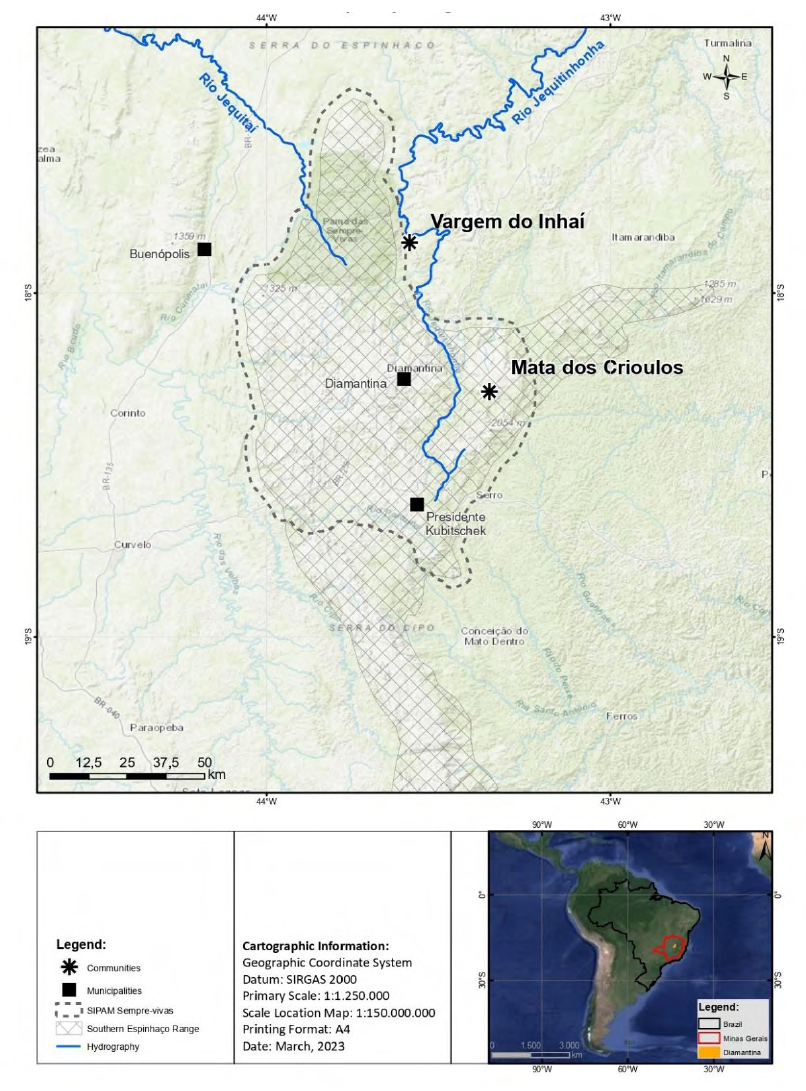
The Traditional Agricultural System recognized is located in the morphoclimatic domains of the Cerrado (Savanna), in transition to the Atlantic Forest in its eastern portion and combines different altitudes and high biodiversity with a wide range of traditional knowledge regarding the use of these environments, generating distinct agro-environments (FÁVERO, 2021; MONTEIRO, 2021). The characterizations were carried out in two family agroecosystems, one in the Vargem do Inhaí community and the other in the Mata dos Crioulos community, both in the municipality of Diamantina, Minas Gerais, Brazil. The Vargem do Inhaí community has approximately 30 families and 150 inhabitants, and The Mata dos Crioulos community has approximately 150 families and 600 inhabitants. The first one was certified as a Quilombola community by the Fundação Palmares (Palmares Foundation) in 2011 and the second one in 2010. Both communities were certified as Traditional Sempre-vivas Flower Gatherers Communities by the Conselho Estadual de Povos e Comunidades Tradicionais de Minas Gerais (State Council of Traditional Peoples and Communities of Minas Gerais) in 2018. These agroecosystems are located in different environmental conditions. The family agroecosystem of the Vargem do Inhaí community is located in the “lowlands” of the eastern margin of the mountain range (Serra), at altitudes close to 700 m and the agroecosystem of the Mata dos Crioulos community is located on the Eastern Hillside at altitudes close to 1,000 m (FÁVERO, 2021) (Figure 1).
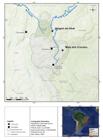
Location of the communities belonging to Sempre-vivas GIAHS, Diamantina, Minas Gerais, Brazil, in which the characterization of slash and burn agriculture with rotation and fallow land was carried out.
Data collection
For the characterization of slash and burn agriculture with rotation and fallow plot of lands, participatory research techniques were used, such as Rapid Participatory Diagnosis (DRP) (CHAMBERS, 1992) which allow the survey of information about the reality of localities from the point of view of their members (SCHMITZ, 2010), as well as ethnobiological research methods. The techniques utilized were semi-structured interviews (ALBUQUERQUE et al., 2014), free-lists (ALBUQUERQUE et al., 2014), mapping (SIEBER et al. 2014), guided walks (ALBUQUERQUE et al., 2014), technical itinerary (MILLEVILLE, 1992), and flow diagram. The data collection occurred in three distinct moments in each of the family agroecosystems during the year 2022.
Soil samples were collected at four depths (0-5, 5-10, 10-20 and 20-40 cm) in all areas where slash and burn agriculture with rotation and fallow plot of lands is practiced in the two agroecosystems. After air drying, the samples were sent to the laboratory for analysis of physical and chemical characteristics and total organic matter. All areas were photographed and georeferenced with the aid of a Garmin GPS for the making of maps.
Results
Slash and burn agriculture in the family agroecosystem of the Vargem do Inhaí community
Spaces, times, and uses
According to the reports of the family, this way of farming was already practiced by their ancestors, from whom they learned this technique from, more than 40 years ago. In the slash and burn agriculture, corn, rice, beans, pineapple, sugar cane, cassava, yam, cucumber, and pumpkin are primarily cultivated. Slash and burn agriculture with rotation and fallow land is currently practiced in nine areas of the agroecosystem, comprising a total of 2.23 ha, organized as follows:
-
- Area 1: The agro-environment is Meadow. The previous state was fallow. The current use state is 1st year of cultivation of rice, corn and cowpeas alternating.
-
- Area 2. The agro-environment is Meadow. The previous state was 40 years fallow. The current use is 2nd year of cultivation of corn alternated with beans.
-
- Area 3. The agro-environment is Riverbed/Meadow. The previous state was 15 years fallow. The current use is 2nd year of cultivation of rice intercropped with sugar cane, corn, cassava, cucumber and pumpkin.
-
- Area 4. The agro-environment is Riverbed. The previous state was 20 years fallow. The current use is 2nd year of cultivation of cassava intercropped with pineapple and pigeon peas.
-
- Area 5: The agro-environment is Riverbed/ Meadow. The previous state was 3 years fallow. The current use is 3rd year of cultivation of corn and rice.
-
- Area 6: The agro-environment is Meadow. The previous state was 40 years fallow. The current use is 4th year of cultivation with corn alternated with beans and intercropped with okra, pumpkin and cucumber.
-
- Area 7: The agro-environment is Riverbed. The previous state was 3 years of cultivation. The current use is 2 years fallow.
-
- Area 8: The agro-environment is Riverbed. The previous state was 4 years of cultivation. The current use is 4 years fallow.
-
- Area 9: The agro-environment is Tray. The previous state was 4 years of cultivation. The current use is 10 years fallow.
Agrobiodiversity
The diversity of species and respective varieties cultivated in the slash and burn agriculture in the family agroecosystem of the Vargem do Inhaí community are described as follows:
-
- Corn - Zea mays L.: Paia roxa, white corn, popcorn, black corn, milho caiano, colored corn, red corn.
-
- Beans - Phaseolus vulgaris L: Black beans, kidney beans, mamoninha, black pigeonpeas, paia roxa, black cowpeas, andu pintadinho, outro andu, yellow cowpeas, fine cowpeas, white fava, pink fava, ovo de pomba, mangalô.
-
- Cassava - Manihot esculenta Crantz: Uçu cassava, sabará, inpim salina, diamantina, jatobá, pão da índia, negrona, vassourinha, sutinga, amarelona, cacau branca, cacau vermelha, espora, mulatinha, quiquiri, rodo sônia, ponto xique, quenta raxa, cacau preta, cacau cinza, mandioca preta, inpim grande, inpim verdadeira, amarelinha, amarela, alagoas, grelo roxo, sertaneja, mandioca do norte.
-
- Sugar cane - Saccharum officinarum L: Cana do reino, cana caiana, cana rosa, cana roxa, cana laporte, cana levanta peteca, cana bananeira, cana taboca, cana açúcar, cana joão pereira, cana quebradeira, cana caninha, caiana vermelha, açúcar dura, açúcar macia, cana pau, cana novata.
-
- Pineapple - Ananas sp.: Pineapple
-
- Pumpkin - Curcubita sp.: Jacaré, jacarezinha, marimba, cabeça de pescoço, caxi, momão.
-
- Rice - Oryza sativa L: Arroz alagado, arroz de sequeiro.
-
- Yams - Dioscorea sp.: Chinese yam, common yam.
-
- Yams - Dioscorea sp.: Cará
-
- Cucumber - Cucumis sativus L.: Cucumber
-
- Watermelon - Citrullus lanatus (Thunb.) Matsum. & Nakai sp: Watermelon
-
- Cantaloupe - Cucumis melo L: Cantaloupe
Biodiversity
The slash and burn agriculture area in the family agroecosystem of the Vargem do Inhaí community, while in fallow, presents great diversity of vegetative species, used by the family as food, medicine, construction materials, etc., in addition to providing food for wildlife:
-
- Garrancho (scientific name not identified). Use of trunk and branches for firewood.
-
- Imbira (scientific name not identified). Use of trunk and branches for firewood.
-
- Imburuçu (scientific name not identified). Use of trunk and branches for construction.
-
- Pimenta de macaco (Xylopia sp.). Use of fruit, trunk and branches for seasoning and firewood.
-
- Unha d´anta (Leptolobium dasycarpum Vogel). Use of tree bark for medicine.
-
- Pau terra (Qualea grandiflora Mart.). Use of trunk for construction.
-
- Vinhático (Plathymenia sp.). Use of trunk for construction.
-
- Pequi (Caryocar brasiliense Cambess). Use of fruit for food, oil and soap.
-
- Mangaba (Hancornia speciosa Gomes). Use of fruit for food.
-
- Mangaba branca (Hancornia speciosa Gomes - a different variety from the one above). Use of root for medicine.
-
- Cagaita (Eugenia dysenterica (Mart.) DC). Use of fruit and bark for food and medicine.
-
- Bacupari (Salacia crassifolia (Mart. ex Schult.) G.Don). Use of fruit for food.
-
- Café rasteiro (scientific name not identified). Use of fruit for food.
-
- Panã (Annona crassiflora Mart). Use of fruit for food.
According to the family, diverse wild animals are seen in the areas of slash and burn agriculture throughout the year, probably due to the availability of food, both cultivated and native.
Soil fertility
In addition to the soil samples collected from the slash and burn agriculture areas in the family agroecosystem of the Vargem do Inhaí community soil samples were also collected from an area that had been fallow longer than normally practiced (more than 40 years) for comparison purposes. This area is located next to area 6, therefore, it is in the Meadow agro-environment (Table 1).
In all of the areas where slash and burn agriculture is practiced in this family agroecosystem, the soil is sandy, with clay contents always below 25% and sand contents above 53%, except for areas 2 and 6, which present sand contents below 30% (Table 1). Areas 2 and 6 are located in the Meadow agro-environment (Table 1) in a slightly lower position in the landscape, which remains flooded for longer during the rainy season, and favors the deposition of silt from the overflow of the watercourse that passes through the agroecosystem. As can be seen in Table 1, the silt contents are above 46% in both areas.
Mean values of soil texture obtained at four depths (0-5, 5-10, 10-20 and 20-40 cm in depth) with the respective textural classes according to the Brazilian Agricultural Research Corporation (EMBRAPA) (SANTOS et al., 2018) in the slash and burn agriculture areas with rotation and fallow of family agroecosystems in the Vargem do Inhaí community, Diamantina, Minas Gerais, Brazil. Areas: 1 = 1st year of cultivation; 2 = 2nd year of cultivation; 3 = 2nd year of cultivation; 4 = 2nd year of cultivation; 5 = 3rd year of cultivation; 6 = 4th year of cultivation; 7 = fallow for 2 years; 8 = fallow for 4 years; 9 = fallow for 10 years; and 10 = fallow for over 40 years.
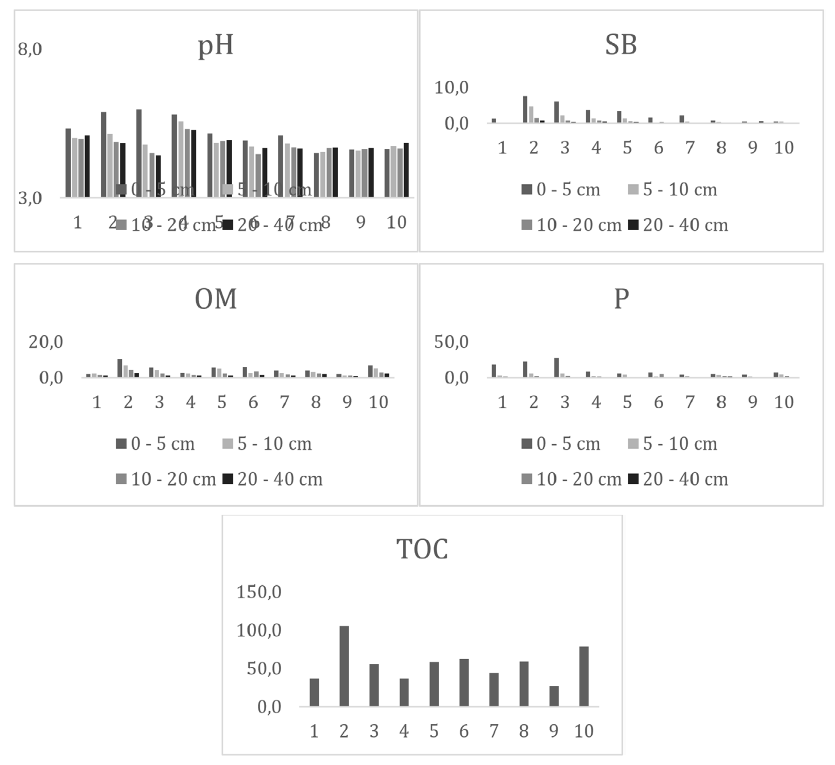
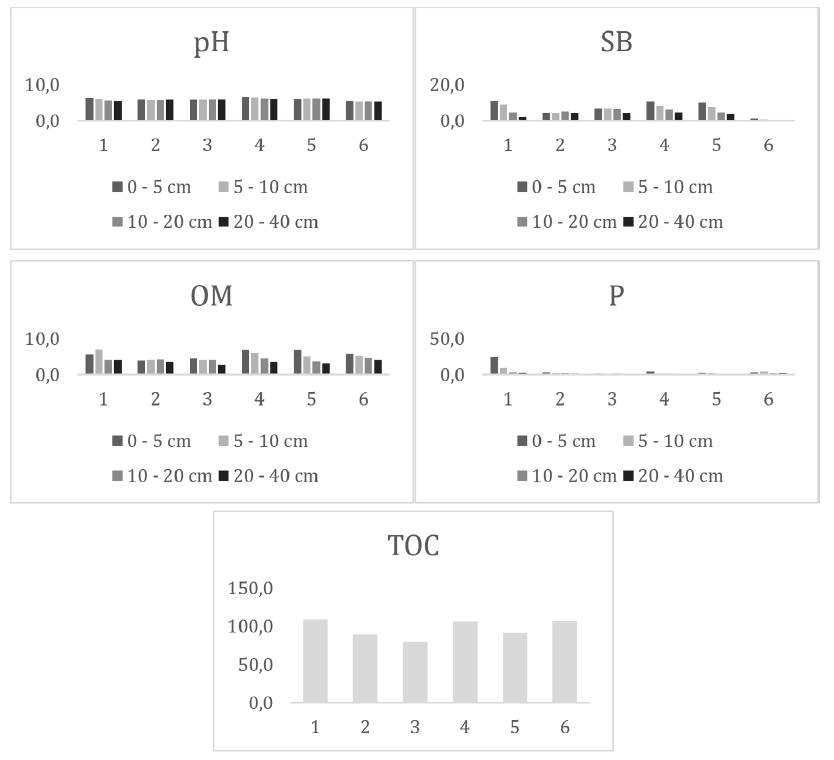
The chemical analysis and organic matter results of the soil samples collected in the agroecosystem are presented in Figure 2, as well as Total Organic Carbon (TOC). As it can be observed, the pH values and the amounts of nutrients (SB and P) are higher in the areas with less time under cultivation, decreasing in the areas with more time under cultivation and increasing again in the fallow areas, with the most striking differences in the top layers of the soils.
The same tendency is observed for the organic matter (OM) values, except for areas 4 and 9 which are in their 2nd year of cultivation and fallow for 10 years, respectively. These two areas present OM values lower than the areas that have been in cultivation the longest. Area 4 is in the Riverside agro-environment and area 9 is in the Tray agro-environment (Table 1). They are, therefore, non-wetland areas and are also the areas that present the sandiest soils (76.8% sand in area 4 and 79.2% in area 9- Table 1), i.e., unfavorable conditions for the accumulation of organic matter in the soil.
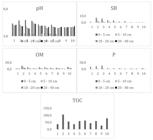
Vargem do Inhaí community, Diamantina, Minas Gerais, Brazil. pH values, Exchangeable Sum of Bases - SB (Ca2+ + MG2+ + K) in cmolc/dm3, Organic Matter - OM in dag/kg (%), Phosphorus - P in mg/dm3 at four soil depths and Total Organic Carbon (TOC) in t/ha, to a depth of up to 40 cm, in the soils of slash and burn agriculture areas of the family agroecosystem . Areas: 1 = 1st year of cultivation; 2 = 2nd year of cultivation; 3 = 2nd year of cultivation; 4 = 2nd year of cultivation; 5 = 3rd year of cultivation; 6 = 4th year of cultivation; 7 = fallow for 2 years; 8 = fallow for 4 years; 9 = fallow for 10 years; and 10 = fallow for over 40 years. pH obtained in water - Ratio 1:2.5; Ca2+ and Mg2+ obtained by KCl Extractor - 1 mol/L; P and K obtained by Mehlich-1 Extractor; OM by conversion Organic Carbon x 1.724 this obtained by Walkley-Black.
Accumulation of organic carbon in the soil
The data of accumulation of organic carbon in the soil, up to 40 cm in depth in the areas of slash and burn agriculture of the agroecosystem are presented in Figure 2. Of the areas in cultivation, those that presented greater quantities of organic carbon accumulated in the soil were areas 2 and 6, which were the areas which presented which are the areas that presented lower sand contents and higher clay and silt contents (Table 1), being both in the Meadow agro-environment (Table 1), therefore, they remain flooded during the rainy season. On the other hand, the areas that presented the lowest values of organic carbon accumulation in the soil were areas 4 and 9, which, as already mentioned, are the areas where the soil is sandier and non-waterlogged.
The data show a direct relationship of the accumulation of organic carbon in the soil with the texture and the moisture condition (flooding) of the areas. However, when comparing areas that are in the same agro-environment, it is observed a greater accumulation of carbon in the initial years of cultivation with a tendency to decrease over the years of cultivation and resume the increase with the years of fallow. Area 10 (in fallow for over 40 years) presented quantities showed intermediate amounts of organic carbon accumulation in the soil in the Meadow agro-environment, similarly to the OM contents in the different soil layers (Figure 2) indicating a greater stability of organic matter in this condition.
Slash and burn agriculture in the family agroecosystem of the Mata dos Crioulos community
Spaces, times, and uses
The slash and burn agriculture in the family agroecosystem of the Mata dos Crioulos community has been practiced since the family was formed. According to them, this form of agriculture was already practiced by the family’s ancestors, who taught them. The main products cultivated are corn, beans, banana, cassava, sugar cane, pumpkin, and yam. Currently, there are six areas in the agroecosystem where slash and burn agriculture is practiced, in a total of 2.93 ha, which are organized in different spaces, times, and uses as follows:
-
- Area 1: the agro-environment is Lowlands (hillside/ bottom of the valley). The previous state was fallow. The current use is 4th year of cultivation of banana intercropped with corn.
-
- Area 2: the agro-environment is Lowlands (Lower area of the hillside/bottom of the valley). The previous state was fallow. The current use is 15th year of cultivation of corn intercropped with cassava.
-
- Area 3: the agro-environment is Lowlands (Lower area of the hillside). The previous state was fallow. The current use is 20th year of cultivation of corn and pumpkin alternated with beans.
-
- Area 4: the agro-environment is Forest (hillside). The previous state was cultivation of corn alternated with beans. The current use is 3 years fallow.
-
- Area 5: the agro-environment is Forest (hillside). The previous state was the cultivation of corn alternated with beans. The current use is 6 years fallow.
Agrobiodiversity
The diversity of species and respective varieties present in the areas of slash and burn agriculture in the family agroecosystem of the Mata dos Crioulos community are described as follows:
-
- Corn - Zea mays L.: Amarelão, sabuguinho.
-
- Beans - Phaseolus vulgaris L: Black, pinto.
-
- Cassava - Manihot esculenta Crantz: Preta, espora, cocoa.
-
- Banana - Musa sp.: Prata curta, Prata comprida, maçã, caturra grande, caturra pequena, são tomé, roxa.
-
- Sugar cane - Saccharum officinarum L.: Nêga pelada, roxalina, combatola, 17 para 21, cavalo, preta.
-
- Pumpkin - Curcubita sp.: Moranga, coração, menina, pescoço, jacará, abóbora d’água cabaça, abóbora d’água marimba.
-
- Yam - Dioscorea sp: Japanese, pink, white.
Biodiversity
The slash and burn agriculture area in the family agroecosystem of the Mata dos Crioulos community, while in fallow, presents great diversity of vegetative species, used by the family as food, medicine, construction materials, etc., in addition to providing food for wildlife:
-
- Monjolo (Senegalia sp.). Use of trunk, branches, and fruit for firewood, construction, and medicine.
-
- Sucupira (Bowdichia virgilioides Kunth). Trunk, branches, and tree bark for firewood, construction, and medicine.
-
- Mangaba (Hancornia speciosa Gomes). Use of fruit and sap for food and medicine.
-
- Capari (scientific name not identified). Use of tree bark for medicine.
-
- Tiozim (scientific name not identified). Use of tree bark for medicine.
-
- Pequi (Caryocar brasiliense Cambess). Use of fruit for food.
-
- Panã (Annona crassiflora Mart.). Use of fruit for food.
-
- Peroba (Aspidosperma sp.). Use of tree bark for medicine.
-
- Aroeira (Schinus sp.). Fertility soil indicator.
It was reported that diverse wild animals are seen in the areas of slash and burn agriculture throughout the year, probably due to the availability of food, cultivated as well as native.
Soil fertility
In addition to the soil samples collected in the areas of slash and burn agriculture in the family agroecosystem of the Mata dos Crioulos community, soil samples were also collected in a woodland area (which, according to the family, was never used as a field) for comparison purposes. This area is located next to area 1, therefore, it is located in the Lowlands (hillside/ bottom of the valley) agro-environment.
In relation to texture, the areas in which slash and burn is practiced in this family agroecosystem can be divided in two groups: those which are situated in the lower portions of the slope (the bottom of the valley), where the soils are sandier, with clay contents below 30% and those situated on the hillside, where the soils are more clayey, with clay contents above 34 % (Table 2).
Mean values of soil texture obtained at four depths (0-5, 5-10, 10-20 and 20-40 cm in depth) with the respective textural classes according to the Brazilian Agricultural Research Corporation (EMBRAPA) (SANTOS et al., 2018) in the slash and burn agriculture areas with rotation and fallow of family agroecosystems in the Mata dos Crioulos community, Diamantina, Minas Gerais, Brazil. Areas: 1 = 4th year of cultivation; 2 = 15th year of cultivation; 3 = 20th year of cultivation; 4 = 3 years fallow; 5 = 6 years fallow; 6 = conserved forest.
The results of the organic material and Chemical analyses of the soil samples collected in the agroecosystem are presented in Figure 3. Similarly to what was observed in the areas of slash and burn agriculture of the agroecosystem in the Vargem do Inhaí community, the pH values and the amounts of nutrients (SB and P) and OM are higher in the area with less cultivation time (area 1), decrease in areas with longer cultivation times (areas 2 and 3) and increase again in the fallow areas (areas 4 and 5), with the differences being more marked in the more superficial layers of the soils. The decreases observed in areas with longer cultivation time are more accentuated in this agroecosystem in relation to the Vargem do Inhaí.
The lowest OM content and amounts of SB were observed in the soil of area 2, which is also the sandiest area (67.0% sand - Table 2). However, in the soil of area 3, which has the highest clay content (36.8% - Table 2), OM and SB showed significantly lower values than in the fallow areas (Figure 3). These data show that the prolonged practice of slash-and-burn agriculture in this agroecosystem, compared to the traditional methods of the Sempre-vivas GIAHS, is causing a more severe decline in soil fertility.

Mata dos Crioulos community, Diamantina, Minas Gerais, Brazil. pH values, Exchangeable Sum of Bases - SB (Ca2+ + MG2+ + K) in cmolc/dm3 , Organic Matter - OM in dag/kg (%) , Phosphorus - P in mg/dm3 at four soil depths and Total Organic Carbon (TOC) in t/ha, to a depth of up to 40 cm , in the soils of slash and burn agriculture areas of the family agroecosystem . Areas: 1 = 4th year of cultivation; 2 = 15th year of cultivation; 3 = 20th year of cultivation; 4 = 3 years fallow; 5 = 6 years fallow; 6 = conserved forest. pH obtained in water - Ratio 1:2.5; Ca2+ and Mg2+ obtained by KCl Extractor - 1 mol/L; P and K obtained by Mehlich-1 Extractor; OM by conversion Organic Carbon x 1.724, obtained by Walkley-Black.
Accumulation of organic carbon in the soil
The data on the accumulation of organic carbon (TOC) in the soil, up to 40 cm deep, in the areas of slash and burn agriculture of the agroecosystem are presented in Figure 3. As observed in the agroecosystem in the Vargem do Inhaí community, the accumulation of organic carbon in the soil decreased with time of cultivation, even in the area with higher clay content, increased in the fallow areas and showed intermediate values in the preserved forest (Figure 3), similarly to the OM levels in the different soil layers (Figure 3), indicating a greater stability of organic matter in this condition.
Discussion
A high agrobiodiversity was observed in both agroecosystems, providing food security and sovereignty for the families, with minimal dependence on external food sources. However, in the agroecosystem of the Vargem do Inhaí community, an increase in the areas practicing slash and burn cultivation was noted, including recent initiation of the cycle (cut/burn and planting) in areas that had been fallow for 40 years, and intensified usage with the return of the cycle in an area that had only three years of fallow. On the other hand, in the agroecosystem of the Mata dos Crioulos community, there was an intensification of cultivation, with areas continuously cultivated for 20 years. The high number of varieties illustrates the contribution of traditional slash and burn farming systems to the conservation of traditional local varieties, as well as in Thailand, where Rerkasem et al., (2002) identified 15 rice varieties, of which each farmer grows from two to five varieties.
Studies carried out around the world have shown that human activities in forest units’ successional processes caused by slash and burn agriculture with rotation and fallow of plots have been a source of variability, maintaining or even promoting regional biodiversity (GUPTA, 2000; RAMAN, 2001; ROSS, 2011). Through the creation of vegetation mosaics made possible by the rotation and fallowing of plots, this agricultural approach maintains a greater amount of early successional vegetation and edge areas than do mature forests. This creates a social-ecological system in which human activity is crucial for the maintenance of local and regional biodiversity (GUPTA, 2000; RAMAN, 2001). Another case study carried out in the Monochoa Indigenous Land in the Colombian Amazon recorded 132 varieties of species grown by the indigenous Uitoto, and 131 varieties by the Muiname people (MARENTES et al., 2021). Only for Cassava (Manihot esculenta Crantz), 18 different varieties were found, of which four varieties were classified as local ecotypes that are produced only at this location worldwide. The great variety of crops found in the Monochoa Indigenous Land indicates that indigenous farming systems based on slash and burn agriculture with rotation and fallow of plots are an opportunity to conserve agrobiodiversity and maintain these peoples’ food security, while also making a globally important contribution to on-farm conservation.
Our results showed that biodiversity is higher in the agroecosystem of the Vargem do Inhaí Community than in the agroecosystem of the Mata dos Crioulos. This may be due to the fact that the first one has a higher number of fallow areas than the second one, in addition to areas that have been fallow for longer, thus allowing a greater number of species to appear. The length of the fallow period required for plot regeneration is a key factor for biodiversity conservation in these agricultural systems (GUPTA, 2000). It also helps determine the extent to which landscapes can maintain certain biodiversity components (FINEGAN; NASI, 2004; GUPTA, 2000; SMITH et al., 1999; THONG et al., 2020). For example, research in India shows that fallow areas recover the wealth of plant species in direct proportion to the duration of the fallow (GOGOI et al., 2020; THONG et al., 2020). The results of the soil analysis of the two agroecosystems characterized are consistent with results obtained by several authors in work carried out with slash and burn agriculture with rotation and fallow of land under different edaphoclimatic conditions (BRUUN et al., 2006; KLEINMAN et al., 1995; LASKAR et al., 2021; MAGALHÃES; MAMUGY, 2020; MANJUNATHA; SINGH, 2020; LU et al., 2016; RIBEIRO-FILHO et al., 2013), showing that in the slash and burn agriculture cycle, the regeneration of native vegetation during the fallow period promotes the accumulation of nutrients in the biomass that are released at the time of cutting and burning, increasing the pH (decreased acidity), making nutrients available in the topsoil layers and ensuring high productivity of cultivated species for a few years when, then, the pH begins to decrease (increased acidity) and the availability of nutrients. In the slash and burn agriculture areas of the family agroecosystem in the Vargem do Inhaí community, this decrease started to occur after the fourth year of continuous cultivation.
The data corroborate with other studies too, regarding the necessity of long fallow periods (longer than continuous cropping periods) for the regeneration of native vegetation and consequent restoration of soil fertility (BRUUN et al., 2006; LASKAR et al., 2021; LU et al., 2016; MANJUNATHA; SINGH, 2020). In relation to this, it became evident that in the slash and burn agriculture areas of the agroecosystem of the Mata dos Crioulos community, which are in continuous cultivation for 15 and 20 years, the pH, as well as the availability of nutrients in the soil, decreased significantly in relation to areas with less cultivation time or in fallow.
In relation to the accumulation of organic carbon in the soil, a decrease in the levels of organic matter was observed with the years of cultivation in the slash and burn agriculture areas of the two agroecosystems characterized, especially in the more superficial layers, in agreement with the increase in the speed of decomposition observed by Devendra and Thomas (2002), reflected in the decrease of total organic carbon accumulated in the soil with the years of continuous cultivation. The organic matter contents, as well as the accumulation of total organic carbon in the soil, were reestablished with the years of fallow, reaching values close to those observed in the forest soil and areas that had been fallow for 40 years, corroborating, also, with data obtained by Aryal et al., (2014), Gogoi et al., (2020), Laskar et al., (2021), , Salinas-Melgoza et al., (2017), , Ribeiro-Filho et al., (2013), Sommer et al., (2000), Thong et al., (2020) and reinforcing the correlation between soil carbon accumulation with fallow time.
The data shows that the slash and burn agriculture practiced in the Sempre-vivas GIAHS are capable, from the regeneration of native vegetation (fallow), of capturing atmospheric carbon and accumulating it in the soil in quantities close to those contained in forest soils. For an assertive statement whether these quantities are equivalent or greater than the quantities that are emitted at the time of slash and burn and how much fallow time is needed for this equivalence/surpassing, long-term monitoring is necessary.
Conclusions
The practice of slash and burn agriculture with rotation and fallow lands carried out by the communities that are part of Sempre-vivas GIAHS promotes the conservation of native and agricultural biodiversity, contributes to the increase of pH and to the availability of organic matter and nutrients needed for crops, due to the accumulation/cycling of nutrients during the fallow periods. In relation to biodiversity, the fallow phase presents considerable importance for the maintenance of plant species that are used as food, medicine, firewood, construction, etc. by the families, besides providing food for the fauna. The fallow phase is also important for the absorption of carbon emitted into the atmosphere during the slash and burn phase. In this sense, it is fundamental that this phase has sufficient duration to achieve a balance between carbon emission and absorption. The duration of fallow has a direct effect, also, on the recovery of soil fertility. These results corroborate with those presented by studies which show similar patterns in different parts of the world.
Acknowledgments
GIAHS (Globally Important Agricultural Heritage Systems) Secretariat of the United Nations Food and Agriculture Organization (FAO/UN) for funding, carried out through an agreement between the Arthur Bernardes Foundation (FUNARBE) and the Federal University of the Jequitinhonha and Mucuri Valleys (UFVJM). The Commission in Defense of the Rights of Extractive Communities (CODECEX) for the partnership and the Sempre-vivas flowers gatherer communities, especially Mata dos Crioulos and Vargem do Inhaí, for the welcome and participation.
References
- ADAMS, C.; MUNARI, L. C.; VAN VLIET, N.; MURRIETA, R. S. S.; PIPERATA, B. A.; FUTEMMA, C.; PEDROSO JÚNIOR, N. N.; TAQUEDA, C. S.; CREVELARO, M. A.; SPRESSOLA-PRADO, V. L. Diversifying incomes and losing landscape complexity in Quilombola shifting cultivation communities of the Atlantic Rainforest (Brazil). Human Ecology, v. 41, p. 119-137, 2013.
- ALBUQUERQUE, U. P.; RAMOS, M. A.; LUCENA, R. F. P.; ALENCAR, N. L. Methods and techniques used to collect ethnobiological data. In: ALBUQUERQUE, U. P.; CUNHA, L. V. F. C.; LUCENA, R. F. P.; ALVES, R. R. N. (eds.). Methods and techniques in ethnobiology and ethnoecology. New York: Springer, 2014.
- ARYAL, D. R.; DE JONG, B. H.; OCHOA-GAONA, S.; ESPARZA-OLGUIN, L.; MENDOZA-VEJA, J. Carbon stocks and changes in tropical secondary forests of southern Mexico. Agriculture, Ecosystems and Environment, v. 195, p. 220-230, 2014.
- BLANCO, J.; VANDENBROUCKE, H.; CARRIÈRE, S. M. A novel index to quantify agrobiodiversity in a biocultural perspective: the case of shifting cultivation gardens in Vanuatu (Pacific). Agroecology and Sustainable Food Systems, v. 40, n. 3, p. 190-214, 2016.
- BRASIL. Decreto nº 6.040, de 7 de fevereiro de 2007. Institui a Política Nacional de Desenvolvimento Sustentável dos Povos e Comunidades Tradicionais. Diário Oficial da União, Brasília, DF, 8 fev. 2007.
- BRUUN, T. B.; MERTZ, O.; ELBERLING, B. Linking yields of upland rice in shifting cultivation to fallow length and soil properties. Agriculture, Ecosystems and Environment, v. 113, n. 1-4, p. 139-149, 2006.
- CAMPOS, J. L. A.; ARAÚJO, E. L.; GAOUE, O. G.; ALBUQUERQUE, U. P. How can local representations of changes of the availability in natural resources assist in targeting conservation? Science of the Total Environment, v. 628, p. 642-649, 2018.
- COLIN, S. Slash-and-burn agriculture explained. ThoughtCo, 2021. Disponível em: thoughtco.com/slash-and-burn-agriculture-p2-1435798. Acesso em: 24 mar. 2022.
- CRAMB, R. A.; COLFER, C. J. P.; DRESSLER, W.; LAUNGARAMSRI, P.; LE, Q. T.; MULYOUTAMI, E.; PELUSO, N. L.; WADLEY, R. L. Swidden transformations and rural livelihoods in Southeast Asia. Human Ecology, v. 37, n. 3, p. 323-346, 2009.
- DEVENDRA, C.; THOMAS, D. Smallholder farming systems in Asia. Agricultural Systems, v. 71, p. 17-25, 2002.
-
FAO - ORGANIZAÇÃO DAS N AÇÕES UNIDAS PARA A ALIMENTAÇÃO E A AGRICULTURA. Globally Important Agricultural Heritage Systems (GIAHS). Disponível em: http://www.fao.org/giahs/en/. Acesso em: 8 ago. 2023.
» http://www.fao.org/giahs/en - FÁVERO, C. Agroambientes manejados pelas comunidades apanhadoras de flores sempre-vivas. In: FÁVERO, C.; MONTEIRO, F. T.; OLIVEIRA, M. N. S. (eds.). Vida e luta das comunidades apanhadoras de flores em Minas Gerais. Diamantina: Editora UFVJM, 2021.
- FERREIRA, M. J.; LEVIS, C.; CHAVES, L.; CLEMENT, C. R.; SOLDATI, G. T. Indigenous and traditional management creates and maintains the diversity of ecosystems of South American tropical savannas. Frontiers in Environmental Science, v. 10, art. 809404, 2022.
- FINEGAN, B.; NASI, R. The biodiversity and conservation potential of shifting cultivation landscapes in tropical landscapes. In: SCHROTH, G.; FONSECA, G. A. B.; HARVEY, C. A.; GASCON, C.; VASCONCELOS, H. L.; IZAC, A. M. N. (eds.). Agroforestry and biodiversity conservation in tropical landscapes. Washington, DC: Island Press, 2004.
- GARAVITO, G.; CLAVIJO, R.; LUENGAS, P.; PALACIOS, P.; ARIAS, M. H. Assessment of biodiversity goods for the sustainable development of the chagra in an indigenous community of the Colombian Amazon: local values of crops. Journal of Ethnobiology and Ethnomedicine, v. 17, n. 1, p. 1-13, 2021.
- GOGOI, A.; SAHOO, U. K.; SAIKIA, H. Vegetation and ecosystem carbon recovery following shifting cultivation in Mizoram-Manipur-Kachin rainforest eco-region, Southern Asia. Ecological Processes, v. 9, n. 1, p. 1-13, 2020.
- GOUDA, S.; DECEMSON, H. T.; PARIDA, A.; SOLANKI, G. S. Impact of shifting cultivation on mammalian diversity and distribution in fringe areas of Dampa Tiger Reserve, Mizoram, India. Environment Conservation Journal, v. 21, n. 1-2, p. 103-115, 2020.
- GUPTA, A. K. Shifting cultivation and conservation of biological diversity in Tripura, Northeast India. Human Ecology, v. 28, n. 4, p. 605-629, 2000.
- HEINIMANN, A.; MERTZ, O.; FROLKING, S.; CHRISTENSEN, A. E.; HURNI, K.; SEDANO, F.; CHINI, L. P.; SAHAJPAL, R.; HANSEN, M.; HURTT, G. A global view of shifting cultivation: recent, current, and future extent. PLOS ONE, v. 12, e0184479, 2017.
- HOMMA, A. K. O.; WALKER, R. T.; SCATENA, F. N.; COUTO, A. J.; CARVALHO, R. A.; FERREIRA, C. A. P.; SANTOS, A. I. M. Redução dos desmatamentos na Amazônia: política agrícola ou ambiental. In: HOMMA, A. K. O. (ed.). Amazônia: meio ambiente e desenvolvimento agrícola. Brasília, DF: Embrapa-SPI, 1998.
- IBGE - INSTITUTO BRASILEIRO DE GEOGRAFIA E ESTATÍSTICA. Manual técnico da vegetação brasileira. 2. ed. Rio de Janeiro: IBGE, 2012.
- KLEINMAN, P. J.; PIMENTEL, D.; BRYANT, R. B. The ecological sustainability of slash-and-burn agriculture. Agriculture, Ecosystems and Environment, v. 52, n. 2-3, p. 235-249, 1995.
- LASKAR, S. Y.; SILESHI, G. W.; PATHAK, K.; DEBNATH, N.; NATH, A. J.; LASKAR, K. Y.; SINGNAR, P.; DAS, A. K. Variations in soil organic carbon content with chronosequence, soil depth and aggregate size under shifting cultivation. Science of the Total Environment, v. 762, art. 143114, 2021.
- LU, X.; ZANG, R.; DING, Y.; HUANG, J. Changes in biotic and abiotic drivers of seedling species composition during forest recovery following shifting cultivation on Hainan Island, China. Biotropica, v. 48, n. 6, p. 758-769, 2016.
- MAGALHÃES, T. M.; MAMUGY, F. P. S. Fine root biomass and soil properties following the conversion of miombo woodlands to shifting cultivation lands. Catena, v. 194, art. 104693, 2020.
- MANJUNATHA, R. L.; SINGH, N. J. Effect of fallow age on soil properties of jhum fields in West Garo Hills District, Meghalaya. Journal of Pharmacognosy and Phytochemistry, v. 9, n. 2, p. 591-597, 2020.
- MARENTES, M. A. H.; VENTURI, M.; SCARAMUZZI, S.; FOCACCI, M.; SANTORO, A. Traditional forest-related knowledge and agrobiodiversity preservation: the case of the chagras in the Indigenous Reserve of Monochoa (Colombia). Biodiversity and Conservation, v. 31, p. 2243-2258, 2021.
- MAZOYER, M.; ROUDART, L. A history of world agriculture: from the Neolithic age to the current crisis. New York: Monthly Review Press, 2006.
- MILLEVILLE, P. Investigación sobre las prácticas de los agricultores. Revista Investigación Desarrollo para América Latina, Barquisimeto, Venezuela, n. 1, p. 9-15, 1992.
- MONTEIRO, F. T. Os(as) apanhadores(as) de flores e o Parque Nacional das Sempre-vivas (MG): travessias e contradições ambientais. 2011. Dissertação (Mestrado), Belo Horizonte, 2011.
- MONTEIRO, F. T.; FÁVERO, C.; FILHO, A. C.; OLIVEIRA, M. N. S.; SOLDATI, G. T.; TEIXEIRA, R. D. B. L. Sistema Agrícola Tradicional da Serra do Espinhaço Meridional, MG: transumância, biodiversidade e cultura nas paisagens manejadas pelos(as) apanhadores(as) de flores sempre-vivas. In: EIDT, J. S.; UDRY, C. (eds.). Sistemas agrícolas tradicionais no Brasil. Brasília, DF: Embrapa, 2019.
- MONTEIRO, F. T. Nas fronteiras das Minas com o Gerais: as terras de uso comum e o uso coletivo de terras. São Paulo: Annablume, 2021. 2 v.
- MYLLYNTAUS, T.; HARES, M.; KUNNAS, J. Sustainability in danger? Slash-and-burn cultivation in nineteenth-century Finland and twentieth-century Southeast Asia. Environmental History, v. 7, n. 2, p. 267-302, 2002.
- OLIVEIRA, M. N. S.; TANAKA, M. K.; MOREIRA, F. C. Sempre-vivas: aspectos do manejo e do cultivo. Diamantina: Editora UFVJM, 2012.
- PEDROSO JÚNIOR, N. N.; MURRIETA, R. S. S.; ADAMS, C. A agricultura de corte e queima: um sistema em transformação. Boletim do Museu Paraense Emílio Goeldi. Ciências Humanas, v. 3, n. 2, p. 153-174, 2008.
- PÉREZ-GARCÍA, O.; CASTILLO, R. F. The decline of the itinerant milpa and the maintenance of traditional agrobiodiversity: crops and weeds coexistence in a tropical cloud forest area in Oaxaca, Mexico. Agriculture, Ecosystems and Environment, v. 228, p. 30-37, 2016.
- PERONI, N.; HANAZAKI, N. Current and lost diversity of cultivated varieties, especially cassava, under swidden cultivation systems in the Brazilian Atlantic Forest. Agriculture, Ecosystems and Environment, v. 92, n. 2-3, p. 171-183, 2002.
- POLTHANEE, A.; PROMKHAMBUT, A.; ADITTO, S.; PHASOUYSAINGAM, A. Impact of changing swidden-based farming to rubber-based farming on food security in Luang Namtha Province, Lao PDR. Sustainability, v. 13, n. 14, art. 7617, 2021.
- PORTO, S. I.; AGUIAR, D. Traçando os caminhos da comercialização: a economia agroextrativista das comunidades apanhadoras de flores sempre-vivas. In: FÁVERO, C.; MONTEIRO, F. T.; OLIVEIRA, M. N. S. (eds.). Vida e luta das comunidades apanhadoras de flores em Minas Gerais. Diamantina: Editora UFVJM, 2021.
- POSEY, D. Os Kayapó e a natureza. Ciência Hoje, v. 2, n. 12, p. 35-41, 1984.
- RAMAN, T. R. S. Effect of slash-and-burn shifting cultivation on rainforest birds in Mizoram, Northeast India. Conservation Biology, v. 15, n. 3, p. 685-698, 2001.
- RERKASEM, K.; YIMYAM, N.; KORSAMPHAN, C.; THONG-NGAM, C.; RERKASEM, B. Agrodiversity lessons in mountain land management. Mountain Research and Development, v. 22, n. 1, p. 4-9, 2002.
- RERKASEM, K.; LAWRENCE, D.; PADOCH, C.; SCHMIDT-VOGT, D.; ZIEGLER, A. D.; BRUUN, T. B. Consequences of swidden transitions for crop and fallow biodiversity in Southeast Asia. Human Ecology, v. 37, n. 3, p. 347-360, 2009.
- RIBEIRO-FILHO, A. A.; ADAMS, C.; MURRIETA, R. S. S. The impacts of shifting cultivation on tropical forest soil: a review. Boletim do Museu Paraense Emílio Goeldi. Ciências Humanas, v. 8, p. 693-727, 2013.
- RIBEIRO, R. F. Florestas anãs do Sertão: o Cerrado na história de Minas Gerais. Belo Horizonte: Autêntica, 2005.
- ROSS, N. J. Modern tree species composition reflects ancient Maya “forest gardens” in northwest Belize. Ecological Applications, v. 21, p. 75-84, 2011.
- SALINAS-MELGOZA, M. A.; SKUTSCH, M.; LOVETT, J. C.; BORREGO, A. Carbon emissions from dryland shifting cultivation: a case study of Mexican tropical dry forest. Silva Fennica, v. 51, n. 1B, art. 1553, 2017.
- SANTIAGO, M. P. A influência da criação do Parque Nacional das Sempre-vivas na dinâmica agroextrativista das mulheres da Comunidade Quilombola Vargem do Inhaí, Diamantina. 2014. Trabalho de Conclusão de Curso - Universidade Federal dos Vales do Jequitinhonha e Mucuri, Diamantina, 2014.
- SANTOS, H. G.; JACOMINE, P. K. T.; ANJOS, L. H. C.; OLIVEIRA, V. A.; LUMBRERAS, J. F.; COELHO, M. R.; ALMEIDA, J. A.; ARAUJO FILHO, J. C.; OLIVEIRA, J. B.; CUNHA, T. J. F. Sistema brasileiro de classificação de solos. Brasília, DF: Embrapa, 2018.
- SCHMITZ, H. Agricultura familiar: extensão rural e pesquisa participativa. São Paulo: Annablume, 2010.
- SIEBER, S. S.; MEDEIROS, P. M.; ALBUQUERQUE, U. P. Local perception of environmental change in a semi-arid area of Northeast Brazil: a new approach for the use of participatory methods at the level of family units. Journal of Agricultural and Environmental Ethics, v. 24, n. 5, p. 511-531, 2010.
- SIEBER, S. S.; SILVA, T. C.; CAMPOS, L. Z. O.; ZANK, S.; ALBUQUERQUE, U. P. Participatory methods in ethnobiological and ethnoecological research. In: ALBUQUERQUE, U. P.; CUNHA, L. V. F. C.; LUCENA, R. F. P.; ALVES, R. R. N. (eds.). Methods and techniques in ethnobiology and ethnoecology. New York: Springer, 2014.
- SOLDATI, G. T.; DUQUE-BRASIL, R.; FERREIRA, M. J.; FÁVERO, C. Um primeiro olhar sobre a domesticação da paisagem da Serra do Espinhaço Meridional, Minas Gerais. In: FÁVERO, C.; MONTEIRO, F. T.; OLIVEIRA, M. N. S. (eds.). Vida e luta das comunidades apanhadoras de flores sempre-vivas em Minas Gerais. Diamantina: Editora UFVJM, 2021.
- SOMMER, R.; DENICH, M.; VLEK, P. L. G. Carbon storage and root penetration in deep soils under small-farmer land-use systems in the Eastern Amazon region, Brazil. Plant and Soil, v. 219, p. 231-241, 2000.
- SMITH, J.; VAN DE KOP, P.; REATEGUI, K.; LOMBARDI, I.; SABOGAL, C.; DIAZ, A. Dynamics of secondary forests in slash-and-burn farming: interactions among land use types in the Peruvian Amazon. Agriculture, Ecosystems and Environment, v. 76, n. 2-3, p. 85-98, 1999.
- TEREFE, B.; KIM, D. G. Shifting cultivation maintains but its conversion to mono-cropping decreases soil carbon and nitrogen stocks compared to natural forest in Western Ethiopia. Plant and Soil, v. 453, n. 1, p. 105-117, 2020.
- THONG, P.; SAHOO, U. K.; THANGJAM, U.; PEBAM, R. Pattern of forest recovery and carbon stock following shifting cultivation in Manipur, North-East India. PLOS ONE, v. 15, n. 10, e0239906, 2020.
- VAN VLIET, N.; MERTZ, O.; HEINIMANN, A.; et al. Trends, drivers and impacts of changes in swidden cultivation in tropical forest-agriculture frontiers: a global assessment. Global Environmental Change, v. 22, n. 2, p. 418-429, 2012.
- YADAV, P. K. Slash-and-burn agriculture in North-East India. Expert Opinion on Environmental Biology, v. 2, p. 2-5, 2013.
The research data are available within the body of the document.

 Source: the authors, 2024.
 Source: the authors, 2024.
 Source: the authors, 2024.