 Film Coating and Pelleting of Cauliflower Seeds with Molybdenum
Abstract
Among the most cultivated vegetables, brassicas stand out for their economic and social importance, but they also stand out for their requirement for micronutrients, especially cauliflower. In view of the importance of micronutrients in the development of cauliflower, the objective was to study the effect of treating cauliflower seeds with molybdenum (Mo) through film coating and pelleting techniques on physiological quality and field development and production under different managements. For physiological and seedling quality, twelve treatments were evaluated, in a 2x5+2 factorial scheme: two technologies (film coating and pelleting), five doses (0.5; 1.5; 2.5; 3.5 and 4.5 g of Mo kg-1 of seeds) and two controls (technology without nutrient and untreated seed), with four replications, in a completely randomized design for tests conducted in the laboratory and in randomized blocks for tests in the nursery. For the field, ten treatments were evaluated in a 2x2x2+2 factorial scheme: two seed treatment technologies (film coating and pelleting); two Mo doses (0.5 and 4.5 g kg-1 of seeds), two fertilization managements (as recommended by Trani and coauthors (2022) [4] and fertilization without a Mo source) and two control treatments (untreated seed, one in each management), in a randomized block design, with six replications. The treatment of seeds with Mo did not harm the physiological quality in both film coating and pelleting technologies. However, in the experiment in a protected environment, supplementation with this micronutrient by seeds proved to be unnecessary, as no plants with deficiency symptoms were observed and it did not affect production.
Keywords:
Brassica oleracea var; botrytis; emergence; germination; micronutrient; productivity.
HIGHLIGHTS
Molybdenum is a micronutrient of potential use in the treatment of cauliflower seeds.
Film coating and pelleting with Mo results in germination higher than 97%.
There was no need to make foliar application of Mo, despite the recommendation.
INTRODUCTION
Cauliflower (Brassica oleraceae var. botrytis) has been grown in the Middle East since antiquity, being native to Asia Minor, and brought to Europe in the 16th century. However, only from the 17th century this culture began to expand to other parts of the world, being introduced to Brazil initially in the Rio de Janeiro region [1,2]. According to the Institute of Agricultural Economy [3], the production of this vegetable in the State of São Paulo in 2022 was 1.700.498,94 grades of 30 units in an area of 1.836 ha.
In general, cauliflower grows in well drained, fertile soils rich in organic matter, having high demand for nitrogen, boron and molybdenum [1,4], being considered one of the most demanding vegetables in these micronutrients.
An alternative supply of micronutrients to the crop is through seed treatment. While film coating is a coating with a polymer in which there is almost no modification of the mass and shape of the seed [5], pelleting is the result of the application of a dry material together with a cementing material, changing the mass, size or original shape [6].
Any treatment done to the seeds must improve or at least maintain the initial physiological quality of the seed batch, because this is an aspect that guarantees the success of production, enabling the proper establishment of seedlings in the field, factor that is directly related to the physiologic quality of seeds [6].
On the development of the cauliflower in the field, Trani and co-authors [4] recommend the foliar spraying with ammonium molybdate three times during the cycle. Molybdenum is a constituent of several enzymes, especially those that act on the metabolism of nitrogen and sulfur, which are related to the transfer of electrons. In relation to nitrogenated metabolism, Mo affects biological fixation (nitrogenase) and nitrate reduction to nitrite (redutases). Mo is also involved in sulphur metabolism (sulphite reducase) in oxidation reduction reactions. In addition, it has a significant effect on pollen grain formation [7].
Although required by plants in small amounts, the deficiency of molybdenum causes characteristic and severe symptoms in the cauliflower crop, and may result in inflorescences outside the commercial pattern. The pH of the soil is one of the factors of greatest influence for the availability of this element, being essential the practice of liming, without excesses, for the available molybdenum for the crop [1]. The first indication of a molybdenum deficiency is generalized chlorose between the ribs and necrosis of older leaves. In plants such as cauliflower and broccoli, the leaves may not become necrotic, but instead may appear twisted and thus die (“chickpeak”). The formation of flowers can be prevented or the flowers may fall prematurely [8].
Given the relevance of micronutrients in the development of cauliflower, the present study aimed to evaluate the effect of the treatment with molybdenum in seeds, through film coating and pelleting, on the physiological quality and on the development and production of cauliflower with and without fertilization with Mo.
MATERIAL AND METHODS
It was used cauliflower seeds donated by Sakata Seed Sudamerica® from a summer hybrid, produced in the province of Limari-Chile. The molybdenum source product (Mo in the form of an amino acid chelate, containing 66.4 g of L-1 of Mo) was donated by Núcleo de Pesquisas Aplicadas Ltda® of Jaboticabal-SP.
Two independent experiments were conducted, one focused on the physiological quality and development of seedlings and another on the agronomic performance in the field of cauliflower.
For the laboratory and nursery stage, twelve treatments were evaluated, in a 2x5+2 factor scheme: two seed treatment technologies (film coating and pelleting), five doses (0.5; 1.5; 2.5; 3.5 and 4.5 g of Mo kg-1 of seeds) and two controls (no-nutrient technology and untreated seed), with four repetitions, in the completely randomized design for the tests conducted in the lab and in randomized blocks for the test in nursery.
For the field stage, ten treatments were evaluated in a 2x2x2+2 factor scheme: two seed treatment technologies (film coating and pelleting), two doses of molybdenum (0.5 and 4.5 g kg-1 of seeds), two fertilization (according to the recommended by Trani and co-authors [4] and fertilizing without a source of molibdenum) and one control treatment (untreated seed) in each management (recommended and without the nutrient), in randomized block design, with six repetitions and each experimental plot consisting of four plants conducted in pots.
The following methods have been tested: Management 1: use of organic fertilizer (castor bean cake in the dosage of 4 t ha-1), planting fertilization with nitrogen (urea in the dose of 60 kg ha-1 of N), phosphorus (simple superphosphate in a dose of 520 kg ha-1 of P2O5), potassium (potassium chloride in the dosis of 180 kg ha-1 of K2O), boron (boric acid in the amount of 2.7 kg ha-1 of B) and foliar fertilization with B and Mo (solution of 1 g L-1 of boric acid and 1 g L-1 of sodium molybdate, at 15, 35 and 55 days after the transplant - DAT); Management 2: no use of Organic fertilizer, planting fertilizing with NPK and B and foliar fertilizing only with B (solution of 1g L-1 of boric acid at 15, 35 and 55 DAT).
Seed treatment
The seed treatment was carried out at Sakata Seed Sudamerica®, located in Bragança Paulista-SP. The seeds were separated for each treatment, in which the solutions containing the molybdenum source product were added in their respective doses and homogenized. After the film coating and pelleting procedures, the seeds were dried at 35°C for 1 hour. The water content in the seeds was then monitored and kept between 5 and 6%, which ensures the seed quality. Then the seeds were stored in a dry chamber (40% relative humidity and 20oC).
Field installation and analysis
The seedlings were made in the nursery of the Department of Forestry Science, Soil and Environment, and the development of the plants after transplantation was at the Experimental Farm in São Manuel-SP, both belonging to the College of Agriculture (FCA-UNESP), campus of Botucatu-SP.
Sowing was done in 162 cell trays with substrate Carolina Soil® and the transplant of the seedlings was done 25 days after sowing (DAS). After the transplantation, the plants developed in vessels with a capacity of 8 L, in a protected environment, in greenhouse covered with high density polyethylene film (150 μm) and sides with anti-aphid screen.
The soil used is a typical sandy Dystrophic Red Oxisol. The results obtained in the chemical analysis before the installation of the experiment were: pH(CaCl2)= 4.3; Organic matter= 2 g dm-3; Presin= 2 mg dm- 3; H+Al= 27 mmolc dm-3; K= 0.3 mmolc dm-3; Ca= 11 mmolc dm-3; Mg= 7 mmolc dm-3; B= 0.21 mg dm-3; Mo= < 1.0 mg dm-3; Base sum= 18 mmolc dm-3; CEC= 45 mmolc dm-3 and Base saturation= 40%. Liming was made to raise the saturation of bases to 80% as indicated for the cauliflower crop [4].
Organic and inorganic fertilizers were mixed with the soil, according to the treatment, and placed in the pots (8 L). The seedlings were transplanted with 25 DAS at a spacing of 0.5m between plants and 1.0m between rows. The irrigation used was drip, keeping soil moisture close to field capacity. Top dressing was applied through fertigation in eight times, every seven days, using a solution containing NPK as recommended by Trani and co-authors [4], starting at 15 DAT.
For analysis of the physiological quality in the laboratory, the mass of a thousand seeds or pellets, pellets hardness, first germination count, germinations and germination speed index were evaluated according to the Rules for Seed Analysis [9].
For the analysis of the quality of the seedlings in the nursery, the emergency, emergency speed index, seedling height and mass of the fresh and dry material of the aerial part and root of the plants were evaluated.
For field plants, the duration of the cycle, the number of leaves, the mass of fresh and dry leaf matter, stem and inflorescence, inflorescence diameter, leaf width and length and productivity were evaluated.
For analysis of laboratory and nursery data, variance analysis, comparison of averages of treatment technologies by the Tukey test (p < 0.05) and regression to the dose factor was carried out. For field data, analysis of variance was performed, comparing means of technologies, doses and management using the Tukey test (p < 0.05).
To compare each treatment with the control treatments (technology without nutrients and untreated seeds), the Dunnett test was performed (p < 0.05).
RESULTS AND DISCUSSION
Physiological quality and development of seedlings
Pelleting resulted in an average increase of six times the mass of a thousand seeds compared to film coating in molybdenum treatment (Table 1) and in comparison with untreated seeds (Table 2). This increase facilitates seeding, both manual and mechanized, and is the main advantage of this technology already used on a large scale for the seeds of some vegetables, especially for lettuce. This technology allows the increase of up to 100,000 times depending on the species [10].
Averages of the mass of a thousand seeds and germination of cauliflower seeds film coated and pelletized with molybdenum.
Comparison of molybdenum film coating and pelleting of cauliflower seeds with film coated and pelletized seeds without nutrients and with the control (untreated seeds) for the characteristics of thousand seed mass (TSM), pellet hardness (HARD), first count of germination (FC), germination (G), germination speed index (GSI), emergence (EMERG), emergence speed index (ESI), seedling shoots fresh matter mass (SFM), seedling roots fresh matter mass (RFM), seedling shoots dry matter mass (SDM), seedling roots dry matter mass (RDM) and seedling height (HEIG).
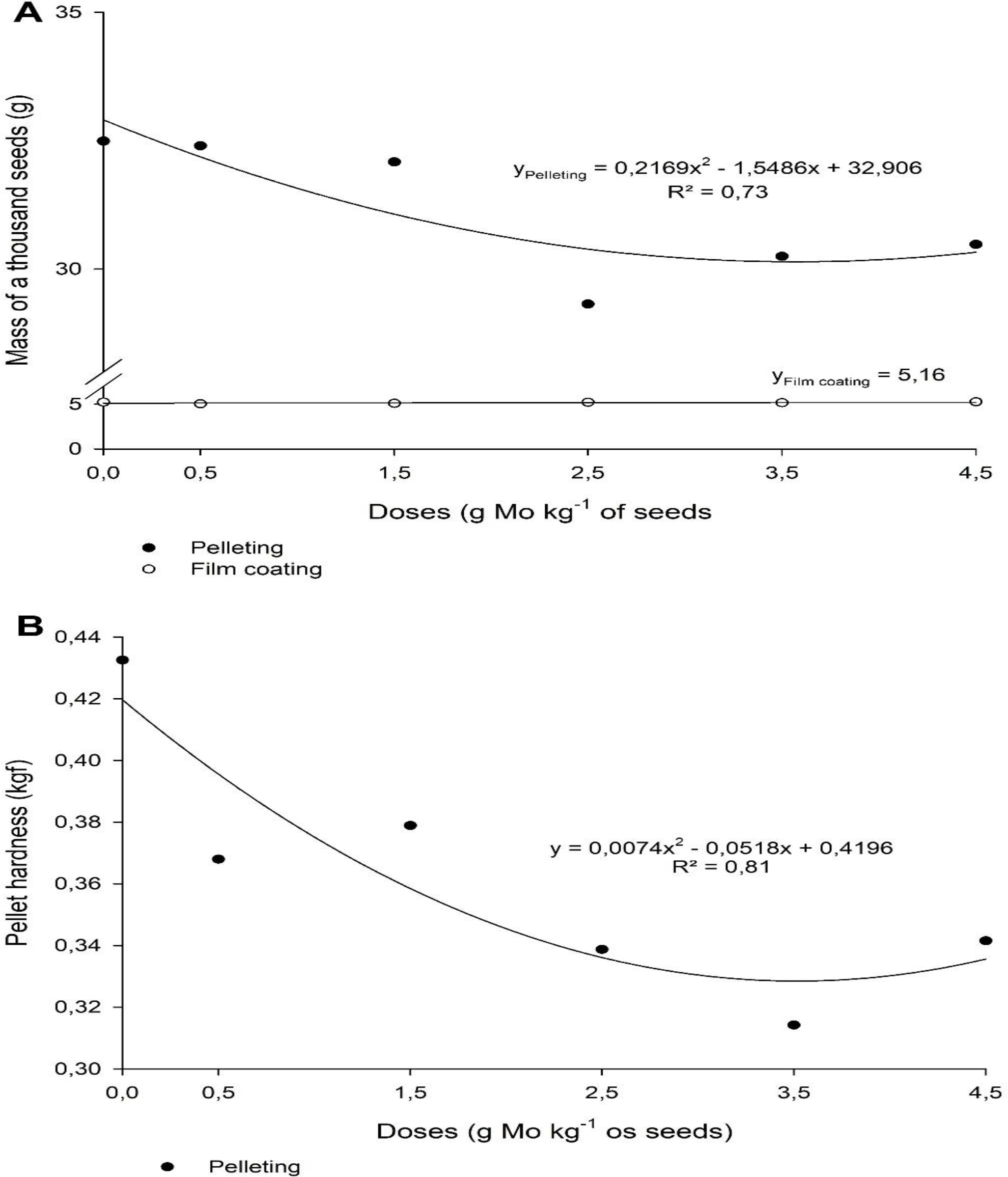
With film coating, no difference was observed for the mass of a thousand seeds according to the doses of molybdenum, with an average of 5.16g, while with pelleting, a reduction and subsequent stabilization in the value with the increasing doses were observed. (Figure 1A).
Mass of a thousand seeds (A) and pellet hardness (B) of film coated and pelletized cauliflower seeds according to molybdenum doses.
It is pointed out that the batch used has a high mass value of a thousand untreated seeds (4.9g), compared to those in the literature by Cardoso and co-authors [11] of 3.4g, and Nakada-Freitas and co-authors [12] of 3.7g for cauliflower, which must be due to the characteristics of the hybrid, since these authors used the Piracicaba Precoce cultivar.
With regard to the hardness of pellets, reduction was observed to approximately the dose of 2.5 g Mo kg-1 of seeds when it stabilized (Figure 1B), whereas only the dosage of 3.5 g Mo kg-1 of the seeds showed less hardness than pelleting without nutrients. (Table 3).
First count and germination speed index (GSI) of film coated and pelletized cauliflower seeds with molybdenum for each dose of the nutrient.
The average pellet hardness found in this research for the tested treatments ranged from 0.25 to 0.43 kgf, while Kangsopa, Hynes and Siri [13], when evaluating different compositions of coatings for the pelleting of alfalfa seeds, found values between 0.03 and 1.1 kgf. According to Silva and Nakagawa [14], the consistency of the pellets is established by the resistance of the bond between the ligant particles and the coating powder. Therefore, the higher the proportion of the ligant, considering both the size and the porosity of the particles of the product used as coating, the greater the bonding capacity of pellet structures.
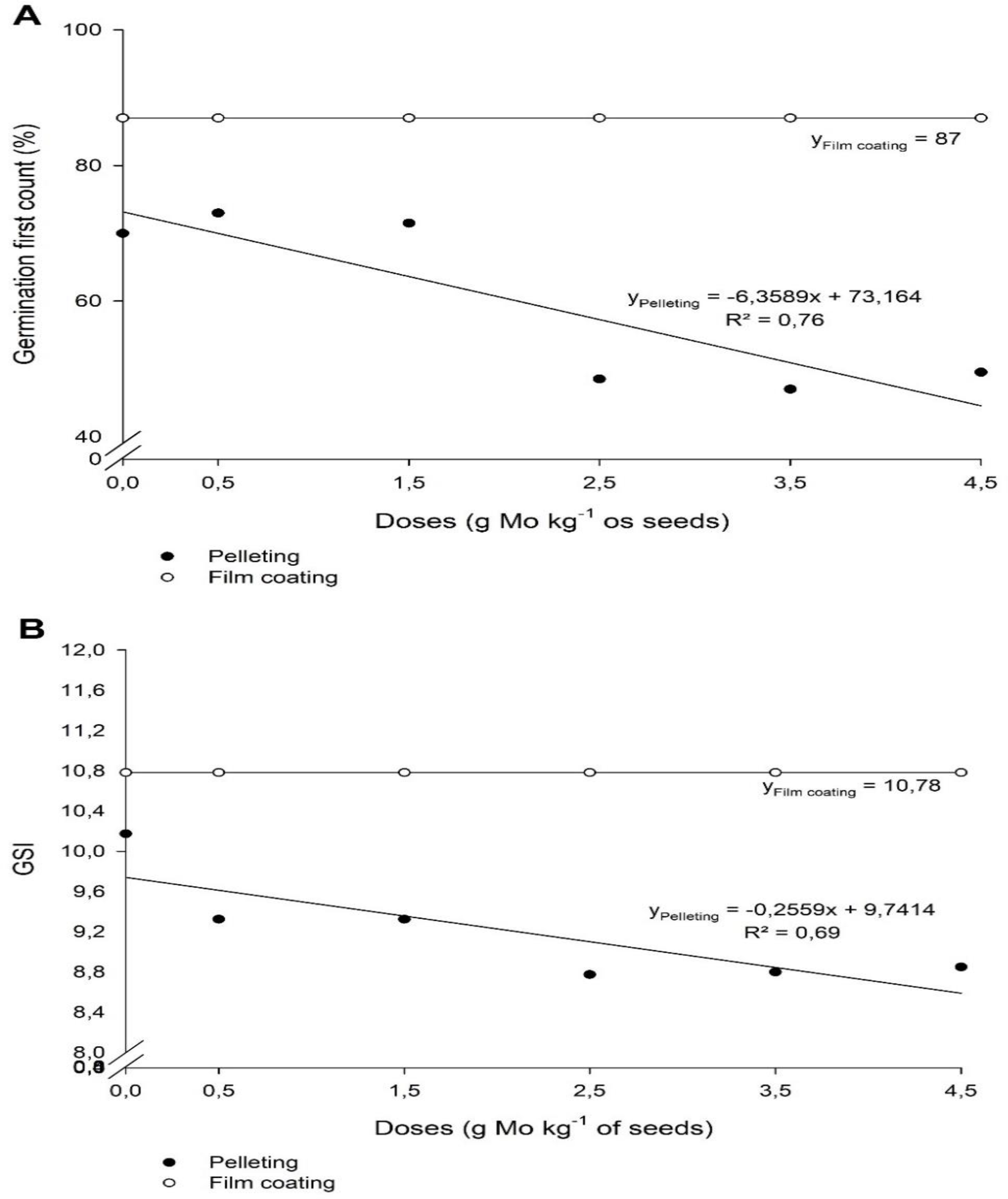
For the germination and vigor characteristics, the film coated seeds showed a percentage of first count and a greater germination speed index than the pelletized seeds from the dosage of 2.5 g Mo kg-1 of seeds and 1.5 g Mo kg-1 of seeds, respectively. (Table 3). Depending on the layer of solid materials and the application of these, there is the possibility of pelleting causing a restriction to the diffusion of oxygen between the seed and the environment, as well as representing a mechanical barrier to the protrusion of the root [15]. However, at the highest doses the lower values for pellets hardness were observed (Figure 1B), meaning that the germination delay did not occur due to the mechanical barrier itself with pellets, since at the lower doses there was no delay.
The lower germination speed occurred due to the higher dose of Mo applied only during pelleting. Pelletized seeds tended to linearly reduce the first count and the germination speed index with the increase of molybdenum doses, while film coated seeds did not change their behavior, maintaining an average of 87% and 10.78 respectively (Figure 2A and 2B). Despite this delay, final germination was not affected by the technologies, with no difference between film coating and pelleting (Table 1), nor in the comparison of technologies without the nutrient or with the control (untreated seeds) (Table 2), with an average of 99%.
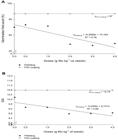
First count (A) and germination speed index (B) of film coated and pelletized cauliflower seeds according to molybdenum doses.
It was observed that film coating with Mo did not harm seed quality compared to standard film coating (without Mo) and untreated seeds, regardless of the dose, while pelleting reduced seed vigor from a dose of 2. 5 g Mo kg-1 of seeds, but did not affect final germination (Table 2). Considering that all treatments provided cauliflower seeds with germination percentages greater than 80%, all are commercially viable according to the requirements of the Ministry of Agriculture, Livestock and Supply [16].
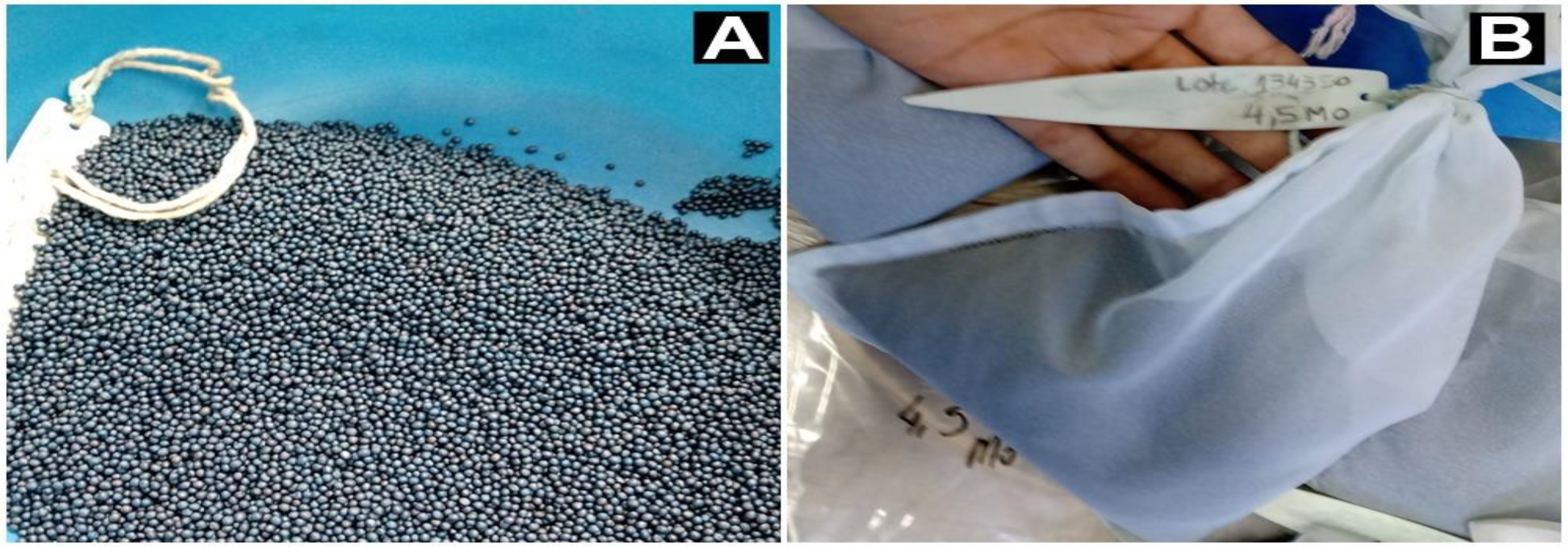
Visually, molybdenum in the form of amino acid chelate is a fluid liquid, with great dissolution capacity in the final solution used to treat seeds. At the end of film coating, the treatment with Mo did not leave traces of the product in the packaging (Figure 3A) or at the end of drying (Figure 3B), and during pelleting it also did not hinder the formation of pellets. Therefore, the physical properties of the product probably contributed to the good results obtained in the laboratory.
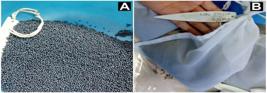
End of the film coating process with molybdenum source product (A), seeds treated with molybdenum at a dose of 4.5 g of Mo kg-1 after drying, with no traces of product in the packaging (B).
The effects of molybdenum on seed treatment are described in the literature, with variations depending on the species studied. Evaluating the physiological quality of soybean seeds treated with the micronutrients molybdenum, boron, zinc and cobalt, Werner and co-authors [17] observed that treatment with molybdenum provided the highest values for aerial part length of normal seedlings in the germination test. In pea, using a product source of molybdenum (30%) and cobalt (1.5%) in seed treatment, Levandoski, Menon and Carvalho [18] reported that a dose of 0.7 mL kg-1 of seeds benefited seed quality physiological, especially for seed germination, total length and dry mass of pea seedlings. However, seed treatment with Mo did not improve the quality of cauliflower seeds in the present research.
By using the immersion treatment method and sodium molybdate dihydrate as a source of Mo, Pereira and co-authors [19] observed that parameters such as first germination count and germination of corn seeds were negatively influenced by increasing doses of molybdenum (0; 7.5; 22.5; 67.5; 202.5 g ha-1 of Mo), probably caused by damage to the seed embryo due to high concentrations of salt in the seed. Teixeira [20] also did not obtain an improvement in the quality of corn seeds with the application of different doses of molybdenum, as did Possenti and Vilela [21] with soybean seeds. Souza and co-authors [22] observed a reduction in the germination and vigor of broccoli seeds (same botanical species as cauliflower) treated by immersion with molybdenum (0.5 to 25.0 g of Mo L-1 of water) compared to the control, mainly in the highest doses, regardless of the source (ammonium molybdate or chelate).
The development of seedlings in the nursery demonstrated that there was no difference between seed treatment technologies for all characteristics evaluated (Table 4), with all treatments being the same as standard technologies without nutrients and untreated seeds (Table 2), with averages of 99%, 3.5, 465.3 mg, 61.4 mg, 55.6 mg, 9.4 mg and 7.4 cm, for total emergence at 10 DAS, emergence speed index, fresh mass of aerial part, fresh root mass, shoot dry mass, root dry mass and seedling height, respectively.
Emergence averages (EMERG), emergence speed index (ESI), shoot fresh mass (SFM), root fresh mass (RFM), shoot dry mass (SDM), root dry mass (RDM) and height (HEIG) of cauliflower seedlings originating from seeds film coated and pelletized with molybdenum.
The coating of broccoli and parsley seeds also did not affect seedling production [23], and in tomatoes, film coating did not alter the biometric variables related to seedling growth [24].
On the other hand, Amaro and co-authors [25] found that the treatment of brassicaceae crambe seeds with fertilizer composed of zinc (35%) and molybdenum (3.5%) diluted in distilled water and applied directly to the seeds negatively and linearly affected the physiological quality the higher the dose (0; 3.3; 6.7; 10 and 13 mL for 0.5 kg of seeds). The maximum dose of zinc and molybdenum promoted an 18% reduction in the emergence of crambe seedlings compared to the control, where approximately 77% of seedlings emerged.
According to the results, it is possible to infer that for both technologies, film coating and pelleting, all doses of molybdenum tested presented cauliflower seeds with adequate germination, guaranteeing commercial viability with all values above 97%. Furthermore, they also enable the production of quality seedlings, demonstrating the potential use of this micronutrient.
Agronomic performance
The management (with or without application of organic fertilizer before planting or foliar molybdenum) did not differ for all the characteristics evaluated, as well as the application technologies (film coating and pelleting) and the Mo doses (0.5 and 4.5 g kg-1 of seeds) (Table 5). For the recommended management (with organic fertilizer before planting and application of foliar molybdenum), comparing treatments with untreated seed there was no difference for any of the characteristics evaluated (Table 6), as well as for management without organic fertilizer and without foliar Mo (Table 7).
Cycle, number of leaves (NL), fresh matter mass (FMM), leaves and stem dry matter mass (LSDM), inflorescence fresh matter mass (IFM), inflorescence dry matter mass (IDM), inflorescence diameter (DIAM), leaf length (LENG), leaf width (WIDT) and productivity (PROD) of cauliflower plants originating from seeds treated with molybdenum in different managements.
Comparison of cauliflower plants originating from untreated seeds grown under management with organic compost before planting and via foliar molybdenum with treatments in which the seeds received molybdenum for the characteristics cycle, number of leaves (NL), fresh matter mass (FMM), leaves and stem dry matter mass (LSDM), inflorescence fresh matter mass (IFM), inflorescence dry matter mass (IDM), inflorescence diameter (DIAM), leaf length (LENG), leaf width (WIDT) and productivity (PROD).
Comparison of cauliflower plants originating from untreated seeds grown under management without the use of organic compost before planting and without application of molybdenum via foliar with the treatments in which the seeds received molybdenum for the characteristics cycle, number of leaves (NL), fresh matter mass (FMM), leaves and stem dry matter mass (LSDM), inflorescence fresh matter mass (IFM), inflorescence dry matter mass (IDM), inflorescence diameter (DIAM), leaf length (LENG), leaf width (WIDT) and productivity (PROD).
Mello and Minami [26] also did not obtain results with Mo applications at doses of up to 54 g kg-1 of seeds, without affecting the average mass of inflorescences and the total production of cauliflower cultivar ‘Shiromaru II'. Oliveira and co-authors [27] testing the use of soybean seeds enriched with Mo and three application methods (no application, seed treatment and via foliar), found that the stand, plant height and production characteristics were not influenced by treatments.
The average cycle of 63 DAT was similar to that of the earliest cultivar studied by Oliveira and co-authors [28]: 64 DAT. The average number of leaves per plant of 30.4 was higher than that found by Torres and co-authors [29] of 24 leaves for the Sharon hybrid, showing that plant development was not harmed by cultivation in pots, resulting in plants with a number of leaves comparable to field research.
The average mass of fresh and dry matter of leaves and stems found in this study were 1,500 g and 136.7 g, respectively, values higher than those reported by Oliveira and co-authors [28] for the fresh (1,002 g) and dry mass of leaves (78.5 g) of five cauliflower cultivars. The same authors determined that the average mass of fresh and dry matter of the inflorescence of two summer cultivars (Desert and Verona) were 424.2 g and 23.3 g respectively, values lower than those obtained in this research of 609.8 g and 40.3g. The average diameter of 32.5 cm was higher than that reported by Morais Júnior and co-authors [30], who evaluated six summer cauliflower cultivars, and obtained an average of 20.8 cm. Torres and co-authors [29] mentioned an average diameter of 52.5 cm for the Sharon hybrid. This large difference between values may be due to differences in the measurement method, genetic differences, climate and management, but it shows that the plants develop well, without restrictions on the number of leaves, accumulation of fresh and dry matter, both of the vegetative and reproductive part.
As for the total productivity of 15.25 t ha-1, it was similar to that found by Castoldi and co-authors [31] of 15.47 t ha-1 for the Verona hybrid and higher than that reported by Oliveira and co-authors [28] of 9.34 t ha-1 also for the Verona hybrid.
The main symptom of Mo deficiency in cauliflower is the reduction of the leaf blade (Prado, 2008), and leaf measurements, such as leaf length and width are important to identify the possible deficiency of this micronutrient through reductions in leaf dimensions. The averages found in this research were 41.97 and 23.56 cm, with no reduction in leaf dimensions, comparing all treatments, including management with organic fertilizer and foliar application of Mo, as recommended by Trani and co-authors [4]. Therefore, it can be inferred that there was no apparent deficiency in Mo.
Mo deficiency is not frequently reported in production fields. The content of this micronutrient in plant tissues is very low, that is, its requirement is also low [7]. However, considering that molybdenum is an essential micronutrient not only for brassicas, but for plants in general, since this element participates in nitrogenase activity and nitrogen fixation [7], it is essential that the farmer has knowledge of the characteristics of the area before planting, as Mo deficiency is more frequent in acidic, sandy soils and in areas that have received high doses of sulfate fertilizers [32].
The lack of difference between all treatments, including the one without organic fertilizer, without foliar Mo and without Mo in seeds, may have been influenced by the initial amount of molybdenum in the soil, which was probably adequate or the hybrid used has high tolerance to molybdenum deficiency. All plant leaves showed normal development, with no differences in length, width, fresh and dry matter mass, as well as the inflorescences, all of which were considered commercial and with no differences in fresh and dry matter mass and diameter (Tables 5, 6 and 7). In this case, there is no need to make Mo foliar application, despite the recommendation by Trani and co-authors [4], with a reduction in an operation on the part of the farmer and, consequently, a reduction in labor and costs.
CONCLUSION
Seed treatment with molybdenum has not adversely affected the germination of seeds in both film coating and pelleting technology.
The application of molybdenum via foliar or through seeds is not necessary if the area to be used is shown to be free of micronutrient deficiency.
-
Funding:
This research was funded by CAPES grant number 001.
Acknowledgments:
We would like to thank CAPES for the scholarships granted and São Paulo State University, College of Agriculture, Sakata Seed Sudamerica and Núcleo de Pesquisas Aplicadas Ltda for providing the resources and structure used in this study.
REFERENCES
- 1 May A, Tivelli SW, Vargas PF, Samra AG, Sacconi LV, Pinheiro MQ. [Cauliflower crop]. Campinas: Instituto Agronômico- IAC, 2007. 36 p. (Technology Series APTA, Technical Bulletin, 200).
- 2 Lana MM, Tavares SA. (Ed.). [50 Vegetables: how to buy, preserve and consume]. 2. ed. rev. Brasília, DF: Embrapa Technological Information, 2010. 209 p.
- 3 Institute of Agricultural Economics- IEA. [São Paulo production statistics]. São Paulo: Secretariat of Agriculture and Supply, 2023. Available in: ciagri.iea.sp.gov.br. Access: Mar, 9, 2023.
- 4 Trani PE, Raij BV, Cantarella H, Figueiredo GJB. [Vegetables] In: Cantarella H, Quaggio JA, Mattos Jr D, Boaretto RM, Raij BV. (Eds.). Bulletin 100: Fertilization And Liming Recommendations For The State Of São Paulo. Campinas: Instituto Agronômico E Fundação Iac; 2022. p.339-427.
- 5 Giménez-Sampaio TG, Sampaio NV. [Vegetable Seed Coating]. In: Nascimento WM. (Ed). Vegetable Seed Production. Brasília: Embrapa Hortaliças, 2009. p.275-306.
- 6 Nascimento WM, Dias DCFS, Silva PP. [Physiological Quality of the Seed and Establishment of Vegetable Plants in the Field]. In: Course On Vegetable Seed Production Technology, 11., 2011, Porto Alegre, Lectures [...] Porto Alegre: Embrapa, 2011. 16 p.
- 7 Prado RM. [Plant Nutrition]. São Paulo: Unesp, 2008. 407 p.
- 8 Taiz L, Zeiger E, Moller IM, Murphy A. [Plant Physiology and Development]. 6. Ed. Porto Alegre: Artmed, 2017. 858 p.
- 9 Brasil. Ministry of agriculture, livestock and supply. [Rules for Seed Analysis]. Brasília: mapa/acs, 2009. 399 p.
- 10 Afzal I, Javed T, Amirkhani M, Taylor AG. Modern seed technology: seed coating delivery systems for enhancing seed and crop performance. Agriculture. 2020; 10(526):1-20.
- 11 Cardoso AII, Claudio MTR, Magro FO, Freitas PGN. Phosphate fertilization on production and quality of cauliflower seeds. Ciênc. Rural. 2016; 46(8):1337-43.
- 12 Nakada-freitas PG, Hidalgo GF, Santos JT, Anjos LVS, Magalhães TH, Cardoso AII, Heinrichs R, Polycarpo GV, Souza VMM. [Boron application on cauliflower seed production and quality]. Res., Soc. Dev. 2020; 9(3):1-20.
- 13 Kangsopa J, Hynes RK, Siri B. Lettuce seeds pelleting: a new bilayer matrix for lettuce (lactuca sativa) seeds. Seed Sci. Technol. 2018; 46(3):521-31.
- 14 Silva JBC, Nakagawa J. [Methodology for evaluating pellet resistance]. Hortic. Bras. 1998; 16(2):118-22.
- 15 Queiroga VP, Durán JM, Assunção MV. (ed.). [Technologies used to coat cotton and sesame seeds]. Campina Grande: arepb. Embrapa, 2022. 298 p.
- 16 Brasil. Ministry of agriculture, livestock and supply. Portaria n° 111, de 4 de setembro de 2012.
- 17 Werner HA, Esteves MPC, Lima BM, Valcácio TL, Castro WCP, Barros SCS, et al. [Physiological quality of soybean seeds (glicyne max l. Merrill) treated with micronutrients]. Res., Soc. Dev. 2020; 9(9):e787997761.
- 18 Levandoski JG, Menon EE, Carvalho TC. [Physiological potential of pea seeds treated with como]. Rev. Cultiv. Saber. 2018; 11(1):69-80.
- 19 Pereira FRS, Brachtvogel EL, Cruz SCS, Bicudo SJ, Machado CG, Pereira JC. [Physiological quality of corn seeds treated with molybdenum]. Rev. Bras. Sementes. 2012; 34(3):450-6.
- 20 Teixeira AR. [Molybdenum doses in popcorn crops]. [dissertation] (master in phytotechnology) - Viçosa (MG): Universidade Federal de Viçosa, 2006. 49 p.
- 21 Possenti JC, Villela FA. [Effect of foliar and seed-applied molybdenum on the physiological potential and yield of soybean seeds]. Rev. Bras. Sementes. 2010; 32:143-50.
- 22 Souza EP, Bucciarelli B, Piccoli MM, Cardoso AII. [Molybdenum in broccoli seed treatment]. Res. Soc. Dev. 2022;11(4).
- 23 Tanada-palmu PS, Proença PSP, Trani PE, Passos FA, Grosso CRF. [Covering broccoli and parsley seeds with biodegradable coatings and films]. Bragantia. 2005; 64(2):291-7.
- 24 Melo APC, Seleguini A, Veloso VRS, Pereira JM. [Coating tomato seeds with increasing concentrations of synthetic polymer]. Ciênc. Rural. 2015; 45(6):958-63.
- 25 Amaro HTR, David AMSS, Assis MO, Figueiredo JC, Cangussú LVS, Silva MBO. [Physiological quality of crambe seeds treated with zinc and molybdenum]. Colloq. Agrariae. 2019; 15(2):133-9.
- 26 Mello SDC, Minami K. [Effects of molybdenum and liming on cauliflower growth]. Sci. Agric. 1999; 56:235-8.
- 27 Oliveira CO, Pinto CC, Garcia A, Bettiol JVT, Sá ME, Lazarini E. [Production of molybdenum-enriched soybean seeds]. Rev. Ceres. 2017; 64:282-90.
- 28 Oliveira FA, Santos CA, Costa ESP, Guthier R, Goulart T, Andrade NF, Diniz CS. [Performance of cauliflower hybrids in the lowlands of Rio de Janeiro]. Rev. Bras. Agropecu. Sustent. 2018; 8(1):30-6.
- 29 Torres JL, Araújo AS, Barreto AC, Silva Neto OF, Silva VR, Vieira D. [Development and productivity of cauliflower and cabbage influenced by types of soil cover]. Hortic. Bras. 2015, 33:510-4.
- 30 Morais Júnior OP, Cardoso AF, Leão EF, Peixoto N. [Performance of summer cauliflower cultivars in Ipameri]. Ciênc. Rural. 2012; 42:1923-8.
- 31 Castoldi R, Charlo HCO, Vargas PF, Braz lT. [Growth, nutrient accumulation and productivity of the cauliflower crop]. Hortic. Bras. 2009, 27:438-46.
- 32 Boaretto RM, Quaggio JA, Mellis EV, Cantarella H. Micronutrients. In: Cantarella H, Quaggio JA, Mattos Jr D, Boaretto RM, Raij BV. [Ed.] Bulletin 100: Fertilization and liming recommendations for the state of São Paulo. Campinas: Instituto Agronômico, 2022. p.121-129.
-
Editor-in-Chief: Bill Jorge Costa
-
Associate Editor: Bill Jorge Costa