 Mortality among older adults receiving home care: a cohort study in the Metropolitan Region of São Paulo (2019–2022)
Abstract
Objective To evaluate predictors of mortality among older adults receiving home care.
Methods This cohort study was conducted between November 2019 and October 2022 with 212 older adults (≥60 years of age) assisted by the Instituto de Assistência Médica ao Servidor Público Estadual (IAMSPE) in the Metropolitan Region of São Paulo, Brazil. The cohort was initially designed to characterize users of the home care service and monitor clinical outcomes. With the outbreak of the covid-19 pandemic, predictors of mortality associated with infection were also investigated. Demographic and clinical data were collected from paper-based medical records and monthly updates, including information on mortality and covid-19 diagnosis confirmed by RT-PCR. Predictors of mortality were assessed using Cox proportional hazards models.
Results The mean age was 82.9 years, and 64.1% were women. Polypharmacy was observed in 66% of participants, and 78.8% had dependence in basic activities of daily living. The mortality rate was 59.9%, with leading causes related to neurodegenerative diseases (22.8%) and cardiovascular diseases (21.3%). Independent predictors of mortality included age ≥80 years (hazard ratio [HR] = 1.6; p = 0.026), dependence for medication management (HR = 2.8; p = 0.029), and covid-19 diagnosis (HR = 1.7; p = 0.008).
Conclusion Covid-19 was an additional risk factor for mortality among older adults receiving home care. The findings underscore the importance of infection prevention, safe medication management, and regular clinical monitoring in this context.
Keywords
COVID-19; Cohort Studies; Geriatrics; Home Care Services; Mortality.
Resumo
Objetivo Avaliar preditores de mortalidade entre pessoas idosas em cuidados domiciliares.
Métodos Estudo de coorte conduzido entre novembro de 2019 e outubro de 2022 com 212 pessoas idosas (≥60 anos de idade) atendidas pelo Instituto de Assistência Médica ao Servidor Público Estadual (IAMSPE), na Região Metropolitana de São Paulo, Brasil. A coorte foi originalmente planejada para caracterizar os usuários do serviço de atenção domiciliar e monitorar desfechos clínicos. Com a eclosão da pandemia de covid-19, passou-se a investigar também preditores de mortalidade associados à infecção. Foram coletados dados demográficos e clínicos por meio de prontuários físicos e atualizações mensais, incluindo informações sobre mortalidade e diagnóstico de covid-19 confirmado por RT-PCR. A análise dos preditores de mortalidade foi realizada por meio de modelos de riscos proporcionais de Cox.
Resultados A idade média foi de 82,9 anos, e 64,1% eram mulheres. A polifarmácia foi observada em 66% dos participantes, e 78,8% apresentavam dependência para atividades básicas da vida diária. A taxa de mortalidade foi de 59,9%, com causas predominantes por doenças neurodegenerativas (22,8%) e cardiovasculares (21,3%). Os preditores independentes de mortalidade incluíram idade ≥80 anos (razão de risco [HR] =1,6; p=0,026), dependência para manejo de medicamentos (HR =2,8; p=0,029) e diagnóstico de covid-19 (HR =1,7; p=0,008).
Conclusão A covid-19 constituiu fator adicional de risco de mortalidade em pessoas idosas sob cuidados domiciliares. Os achados reforçam a importância da prevenção de infecções, da gestão segura de medicamentos e do monitoramento clínico regular nesse contexto.
Palavras-chave
Covid-19; Estudos de Coorte; Geriatria; Serviços de Assistência Domiciliar; Mortalidade.
INTRODUCTION
Home care is an essential strategy to ensure continuity of care for individuals with chronic conditions, particularly those with high clinical and functional complexity. In addition to enabling individuals to remain in a familiar environment, this model of care contributes to reducing hospital admissions, improving quality of life, and rationalizing resources in health systems with limited capacity1.
Studies indicate that individuals receiving home care services present clinical and functional profiles that differ significantly from those observed in long-term care institutions or hospital settings2. Moreover, the factors associated with mortality in this context may vary substantially from those identified in other models of care3,4. This distinction is particularly relevant in low- and middle-income countries, such as Brazil, where home care has been progressively incorporated as an alternative for vulnerable populations.
With the covid-19 pandemic, vulnerabilities related to aging were exacerbated, especially among those receiving home care. Frequent exposure to caregivers, healthcare professionals, and family members increased the risk of household transmission, while restricted access to the healthcare system during critical phases of the public health emergency hindered the timely provision of care5,6.
The present study aimed to assess predictors of mortality among individuals receiving home care services in the Metropolitan Region of São Paulo, Brazil, between November 2019 and October 2022. The analysis is part of a previously established cohort designed for clinical monitoring of patients with complex care needs, which was subsequently expanded to incorporate the effects of the covid-19 pandemic over time.
METHODS
This cohort study was conducted at the Instituto de Assistência Médica ao Servidor Público Estadual (IAMSPE), a healthcare institution dedicated to serving state public employees and their dependents in São Paulo, Brazil. IAMSPE is a pioneer in the implementation of home care services in the country and maintains a network of accredited providers in more than 170 municipalities. The present analysis is part of a cohort originally established to longitudinally monitor individuals aged 60 years and older receiving home care with complex clinical needs, evaluating outcomes such as hospitalizations, functionality, and overall mortality. With the emergence of the covid-19 pandemic, events related to SARS-CoV-2 infection were incorporated into the database, enabling the analysis of its impact on mortality during the study period.
Eligible participants included individuals aged 60 years or older, residing in the Metropolitan Region of São Paulo, and enrolled in the IAMSPE home care program. Inclusion criteria were: age ≥60 years, functional dependence in basic activities of daily living, presence of a chronic clinical condition, and indication for continuous home-based care. Exclusion criteria included relocation outside the program’s coverage area, loss of health plan coverage, or failure to meet program criteria during follow-up.
Data collection was performed through the review of clinical records. For participants with cognitive impairment or without verbal communication, information was obtained from records of home visits conducted by healthcare professionals. No in-person interviews or direct contact with participants were carried out.
The variables analyzed included sex, age, clinical diagnosis at admission, duration of enrollment in the program, functional status (basic and instrumental activities of daily living), mobility, presence and severity of pressure injuries, chronic pain, medication use, and comorbidities. Functional status was assessed using the Katz Index, with functional dependence defined as a score ≥27. Instrumental activities of daily living were measured using the Pfeffer Questionnaire, specifically evaluating medication use and financial management8. Chronic pain was defined as persistent pain lasting three months or more9,10. Mobility was assessed using the Barthel Index11. Pressure injuries were classified from Stage 1 to Stage 4 according to clinical criteria12. Polypharmacy was defined as the simultaneous use of five or more medications13,14. Comorbidity burden was measured using the Charlson Comorbidity Index, with scores ≥3 considered indicative of high one-year mortality risk15. Covid-19 diagnosis was confirmed by clinical record documentation based on laboratory report (RT-PCR).
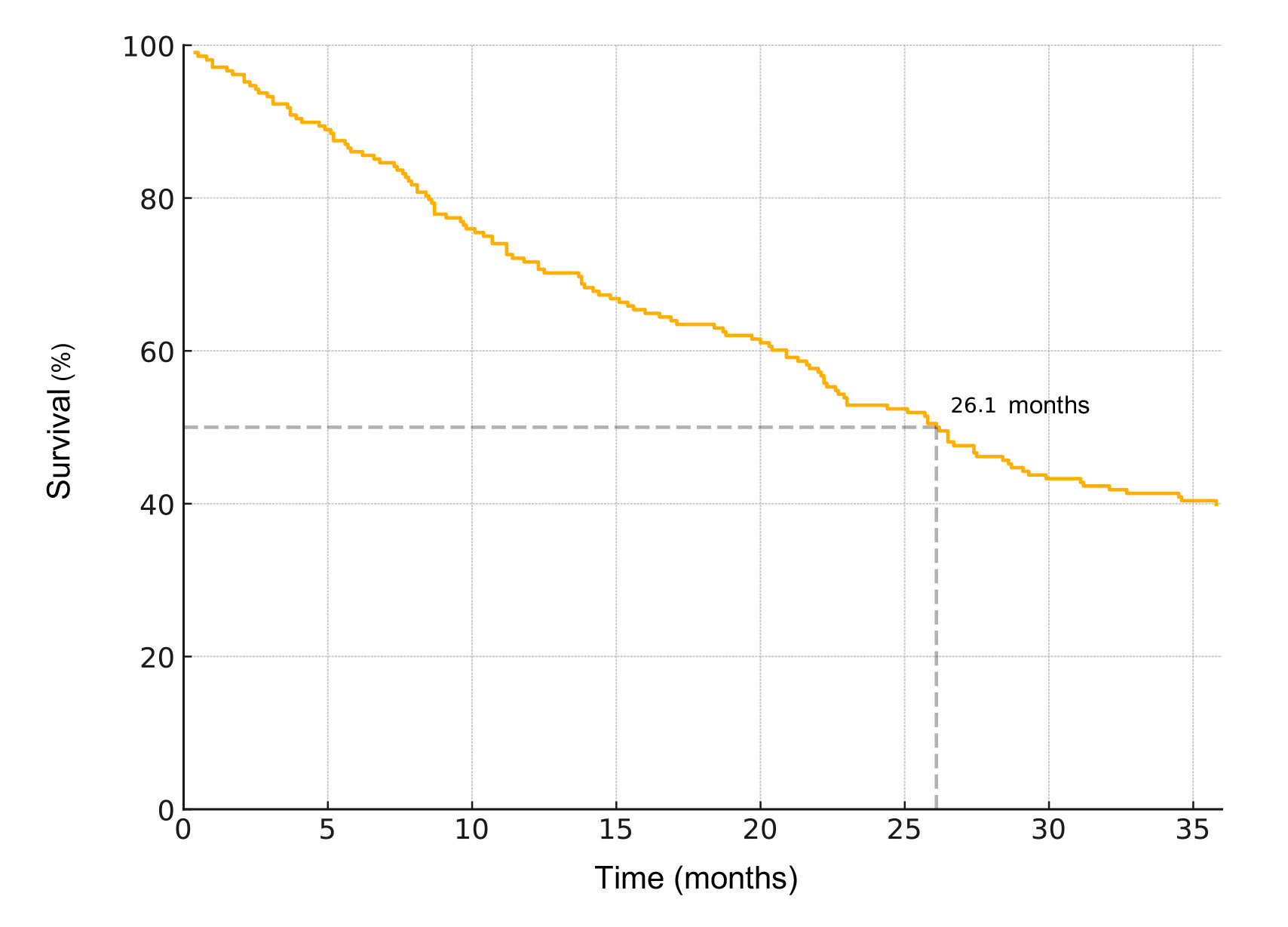
Participants were followed from November 2019 to October 2022. The primary outcome was all-cause mortality. Survival probabilities over 36 months were estimated using Kaplan–Meier curves. Predictors of mortality were analyzed using Cox proportional hazards models, considering exposure to clinical, functional, and covid-19–related factors. Variables with p<0.25 in the univariate analysis were included in the multivariate model. Results were expressed as hazard ratios (HR) with 95% confidence intervals (95% CI), and statistical significance was set at p<0.05. Analyses were performed using R software (R Foundation for Statistical Computing, Vienna, Austria).
The study was approved by the Research Ethics Committee (approval no. 3711425), in accordance with Resolutions no. 466/2012 and no. 510/2016 of the Brazilian National Health Council. All participants or their legal representatives provided written Informed Consent Form (ICF).
DATA AVAILABILITY
The data supporting the findings of this study are available upon reasonable request from the corresponding author.
RESULTS
In November 2019, 230 older adults were enrolled in the IAMSPE home care program in the Metropolitan Region of São Paulo. After exclusions due to relocation (n=7), loss of health plan coverage (n=6), and program discontinuation (n=5), the final sample consisted of 212 participants with complete follow-up over the 36-month period.
The mean age of the sample was 82.9 years (standard deviation [SD]: 10.3; 95% CI: 80.9–84.9), with a predominance of female participants (64.1%). The average duration of enrollment in the program was 6.7 years (SD: 4.9; 95% CI: 6.1–7.3). The most prevalent conditions at admission were stroke (38.7%) and dementia (31.1%). Polypharmacy was observed in 66% of participants, while chronic pain and pressure injuries were present in 17.5% and 14.7%, respectively.
Although chronic pain and pressure injuries were relatively infrequent, functional dependence was highly prevalent: 78.8% required assistance with basic activities of daily living, more than 90% were dependent in instrumental activities such as medication management and financial administration, and over half (55.7%) had mobility limitations. According to the Charlson Comorbidity Index, a substantial proportion of patients had a significant comorbidity burden. Table 1 presents the sociodemographic, clinical, and functional characteristics of the sample, as well as mortality outcomes.
Sociodemographic, clinical, and functional characteristics, and mortality outcomes of older adults receiving home care. São Paulo, SP, 2019–2022.
During the follow-up period, 127 participants (59.9%) died. The highest concentration of deaths occurred within the first 12 months of follow-up (46.4%), with a progressive decline in subsequent periods. The leading causes of death were neurological diseases (22.8%) and cardiovascular diseases (21.3%), followed by non- covid-19 pulmonary infections (19.7%) and Covid-19 (13.4%). Most deaths occurred in hospital settings (73.2%).
In the univariate analysis, age ≥80 years, dependence for medication management, and covid-19 diagnosis were identified as the main predictors of mortality. Variables such as male sex, Katz Index ≥2, mobility limitation, Charlson Comorbidity Index ≥3, and presence of neurological disease also appeared as potential predictors but did not reach statistical significance in the multivariate model. After adjustment, age ≥80 years, dependence for medication management, and covid-19 remained the primary factors associated with mortality in this population during the study period (Table 2).
Cox regression analysis of factors associated with mortality among older adults receiving home care. São Paulo (SP), 2019–2022.
The Kaplan–Meier curve illustrates the cumulative probability of survival over the 36-month follow-up period (Figure 1) and highlights high mortality during the first 24 months, reflecting the clinical vulnerability of the population receiving home care.

Kaplan–Meier survival curve of older adults receiving home care in the Metropolitan Region of São Paulo. São Paulo (SP), 2019–2022.
DISCUSSION
The combination of population aging and the impacts of the covid-19 pandemic has placed unprecedented pressure on healthcare systems, particularly home care services, which have become essential for ensuring continuity of care for individuals with high clinical and functional complexity. Unlike institutional or hospital settings, home care presents unique vulnerability dynamics, characterized by high levels of functional dependence, complex therapeutic regimens, and variable adherence to infection prevention protocols16.
In this study, we identified advanced age (≥80 years), dependence for medication management, and covid-19 infection as independent predictors of mortality in a cohort of individuals followed by a pioneering home care service in the Metropolitan Region of São Paulo. These findings enhance the understanding of risk factors in home care populations, particularly in middle-income countries where empirical data remain scarce, and provide a foundation for the development of preventive strategies and clinical decision-making aimed at reducing mortality in home care settings, both during public health emergencies and in routine geriatric practice.
The association between advanced age and mortality is well documented, particularly due to the accumulation of comorbidities17, the presence of frailty18-20, and functional decline21. However, this study highlights dependence for medication management as an independent risk factor, suggesting an underlying clinical complexity that may encompass both cognitive impairment and functional limitations. In home care settings, particularly in middle-income countries such as Brazil, medication administration is often delegated to informal caregivers, frequently without adequate technical training, which increases the risk of errors, omissions, and harmful drug interactions22. In this context, the implementation of safe medication practices, including caregiver training, ongoing professional supervision, and periodic medication reconciliation, is essential to reduce risks and promote the safety of older adults receiving home care23.
The association between covid-19 infection and increased mortality risk observed in this study is consistent with evidence indicating heightened vulnerability among older adults, particularly due to immunosenescence, the presence of multiple comorbidities, and frailty24. Beyond these biological determinants, individuals receiving home care face additional risks stemming from the specific characteristics of the residential environment, such as frequent interactions with family members and healthcare professionals, structural limitations for isolation, and barriers to timely access to diagnosis and treatment25,26.
Unlike institutional settings, which rely on standardized protocols and dedicated resources for infection control, home care largely depends on the actions of informal caregivers and the material conditions of households, often resulting in low adherence to preventive measures and insufficient access to personal protective equipment. Furthermore, during periods of healthcare system collapse, such as the initial phase of the pandemic in Brazil, these patients encountered significant obstacles in accessing both hospital and primary care services, which likely contributed to poorer clinical outcomes6.
Most of the deaths recorded in this study occurred prior to the availability of covid-19 vaccines in Brazil, a period marked by the absence of effective preventive measures and limited therapeutic options. Evidence shows that vaccination substantially reduced mortality among older adults, particularly the most vulnerable27-30.
Nevertheless, individuals receiving palliative care often face additional barriers to timely immunization, including logistical challenges for home administration and the need for caregiver support to access healthcare services31. These factors may have contributed to delays in vaccine coverage for this group, limiting protective benefits during the most critical phases of the pandemic. Strengthening immunization strategies targeting palliative care populations, such as implementing mobile units and integrating vaccination into routine home visits, is essential for preparedness in future public health emergencies. Additionally, specific investigations into vaccine effectiveness in this subpopulation are needed to inform public policies and ensure adequate protection for individuals at high risk.
The service analyzed belongs to IAMSPE, the first structured home care program in Brazil, with broad coverage in the São Paulo metropolitan region and an active multidisciplinary team. As it is an exclusive plan for state public employees, the findings are not automatically generalizable to other contexts, such as private institutions or services within the SUS. Moreover, this study was motivated by the scarcity of systematically collected data on the population served by IAMSPE’s home care program. With the onset of the pandemic, the study objectives were expanded to assess the impact of covid-19 on mortality. Although data were obtained from paper-based medical records transitioning to an electronic system, rigorous collection strategies were employed, including double-checking by a trained team. Nonetheless, this characteristic represents a limitation, particularly for functional variables. The absence of individual vaccination data also restricts the assessment of its impact on outcomes, although most deaths occurred prior to widespread vaccination.
Characterizing this population and identifying risk factors for mortality provide important insights for improving home care services. Addressing modifiable predictors, such as functional dependence and medication management, through systematic action by an interdisciplinary team may reduce avoidable hospitalizations and deaths. Caregiver training, therapeutic review, home-based vaccination, and remote monitoring should be incorporated into this model of care to enhance the safety and quality of life of the individuals served.
CONCLUSION
This study identified advanced age, dependence for medication management, and covid-19 as independent predictors of mortality in a cohort of individuals followed by a home care service in the Metropolitan Region of São Paulo. These findings underscore the need for specific preventive interventions within the scope of home care, including safe medication practices, caregiver training, and expanded access to prevention and clinical monitoring strategies. The detailed characterization of this population, situated within a context of high vulnerability, provides valuable support for strengthening home care services, particularly in public health emergency scenarios.
References
- 1 Sudat SEK, Franco A, Pressman AR, Rosenfeld K, Gornet E, Stewart W. Impact of home-based, patient-centered support for people with advanced illness in an open health system: A retrospective claims analysis of health expenditures, utilization, and quality of care at end of life. Palliat Med. 2018 Feb 1;32(2):485–92. Disponível em: https://doi.org/10.1177/0269216317711824
- 2 Öztürk GZ, Toprak D. Sociodemographic Characteristics of Patients Registered with a Home Care Unit and an Evaluation of the Health Services Offered. Med Bull Sisli Etfal Hosp. 2018 Mar;52:41–6. Disponível em: https://doi.org/ 10.14744/SEMB.2017.70883
- 3 Masumoto S, Sato M, Ichinohe Y, Maeno T. Factors facilitating home death in non-cancer older patients receiving home medical care. Geriatr Gerontol Int. 2019 Dec 1;19(12):1231–5. Disponível em: https://doi.org/ 10.1111/ggi.13800
- 4 Yang Y, Brown CJ, Burgio KL, Kilgore ML, Ritchie CS, Roth DL, et al. Undernutrition at Baseline and Health Services Utilization and Mortality Over a 1-Year Period in Older Adults Receiving Medicare Home Health Services. J Am Med Dir Assoc. 2011 May 1;12(4):287–94. Disponível em: https://doi.org/ 10.1016/j.jamda.2010.08.017
- 5 Martínez-Riera JR, Gras-Nieto E. Atención domiciliaria y COVID-19. Antes, durante y después del estado de alarma. Enferm Clin. 2021 Feb 1;31:S24–8. Disponível em: https://doi.org/10.1016/j.enfcli.2020.05.003
- 6 De Gois-Santos VT, Santos VS, de Souza CDF, Tavares CSS, Gurgel RQ, Martins-Filho PR. Primary health care in Brasil in the times of COVID-19: Changes, challenges and perspectives. Rev Assoc Med Bras. 2020 May 23;66(7):876–9. Disponível em: https://doi.org/10.1590/1806-9282.66.7.876
- 7 Katz S, Ford AB, Moskowitz RW, Jackson BA, Jaffe MW. Studies of Illness in the Aged. The Index of ADL: A Standardized Measure of Biological and Psychosocial Function. JAMA. 1963 Sep 21;185(12):914–9. Disponível em: https://doi.org/jama.1963.03060120024016
- 8 Pfeffer RI, Kurosaki TT, Harrah CH, Chance JM, Filos S. Measurement of functional activities in older adults in the community. J Gerontol. 1982 May;37(3):323–9. Disponível em: https://doi.org/10.1093/geronj/37.3.323
- 9 Walensky RP, Bunnell R, Layden J, Kent CK, Gottardy AJ, Leahy MA, et al. CDC Clinical Practice Guideline for Prescribing Opioids for Pain-United States, 2022. MMWR Recomm Rep. 2022 Nov 4;71(3):1–95. Disponível em: https://doi.org/10.15585/mmwr.rr7103a1
- 10 Sheikh F, Brandt N, Vinh D, Elon RD. Management of Chronic Pain in Nursing Homes: Navigating Challenges to Improve Person-Centered Care. J Am Med Dir Assoc. 2021 Jun 1;22(6):1199–205. Disponível em: https://doi.org/ 10.1016/j.jamda.2020.12.029
- 11 Collin C, Wade DT, Davies S, Horne V. The barthel ADL index: A reliability study. Disabil Rehabil. 1988;10(2):61–3. Disponível em: https://doi.org/ 10.3109/09638288809164103
- 12 Hajhosseini B, Longaker MT, Gurtner GC. Pressure Injury. Ann Surg. 2020 Apr 1;271(4):671–9. Disponível em: https://doi.org/ 10.1097/SLA.0000000000003567
- 13 Pazan F, Wehling M. Polypharmacy in older adults: a narrative review of definitions, epidemiology and consequences. Eur Geriatr Med. 2021 Jun 1;12(3):443–52. Disponível em: https://doi.org/10.1007/s41999-021-00479-3
- 14 Dovjak P. Polypharmacy in elderly people. Wien Med Wochenschr. 2022 Apr 1;172(5–6):109–13. Disponível em: https://doi.org/10.1007/s10354-021-00903-0
- 15 Charlson ME, Pompei P, Ales KL, MacKenzie CR. A new method of classifying prognostic comorbidity in longitudinal studies: Development and validation. J Chronic Dis. 1987 Jan 1;40(5):373–83. Disponível em: https://doi.org/10.1016/0021-9681(87)90171-8
- 16 Brockhaus L, Sass N, Labhardt ND. Barriers and facilitators to infection prevention practices in home healthcare: a scoping review and proposed implementation framework. Infect Prev Pract. 2024 Mar 1;6(1):100342. Disponível em: https://doi.org/10.1016/j.infpip.2024.100342
- 17 Guo X, Zhao B, Chen T, Hao B, Yang T, Xu H. Multimorbidity in the elderly in China based on the China Health and Retirement Longitudinal Study. PLoS One. 2021 Aug 1;16(8):e0255908. Disponível em: https://doi.org/10.1371/journal.pone.0255908
- 18 Grabovac I, Haider S, Mogg C, Majewska B, Drgac D, Oberndorfer M, et al. Frailty Status Predicts All-Cause and Cause-Specific Mortality in Community Dwelling Older Adults. J Am Med Dir Assoc. 2019 Oct 1;20(10):1230-1235.e2. Disponível em: https://doi.org/10.1016/j.jamda.2019.06.007
- 19 Shi SM, Olivieri-Mui B, McCarthy EP, Kim DH. Changes in a Frailty Index and Association with Mortality. J Am Geriatr Soc. 2021 Apr 1;69(4):1057–62. Disponível em: https://doi.org/10.1111/jgs.17002
- 20 Hou Y, Lu Q, Lu Z, Xu F, Cao Z, Li S, et al. Frailty Phenotype and Mortality: A Prospective Cohort Study. J Am Med Dir Assoc. 2022 Jan 1;23(1):182-185.e13. Disponível em: https://doi.org/10.1016/j.jamda.2021.08.030
- 21 Covino M, De Matteis G, Santoro M, Sabia L, Simeoni B, Candelli M, et al. Clinical characteristics and prognostic factors in COVID-19 patients aged ≥80 years. Geriatr Gerontol Int. 2020 Jul 1;20(7):704–8. Disponível em: https://doi.org/10.1111/ggi.13960
- 22 Gil-Hernández E, Ballester P, Guilabert M, Sánchez-García A, García-Torres D, Astier-Peña MP, et al. Enhancing safe medication use in home care: insights from informal caregivers. Front Med (Lausanne). 2024 Nov 5;11:1494771. Disponível em: https://doi.org/10.3389/fmed.2024.1494771
- 23 Dionisi S, Di Simone E, Liquori G, De Leo A, Di Muzio M, Giannetta N. Medication errors’ causes analysis in home care setting: A systematic review. Public Health Nurs. 2022 Jul 1;39(4):876–97. Disponível em: https://doi.org/ 10.1111/phn.13037
- 24 Martins-Filho PR, Tavares CSS, Santos VS. Factors associated with mortality in patients with COVID-19. A quantitative evidence synthesis of clinical and laboratory data. Eur J Intern Med. 2020 Jun 1;76:97–9. Disponível em: https://doi.org/10.1016/j.ejim.2020.04.043
- 25 Ishii S, Kazawa K, Kubo T, Akishita M. Home care for older people with dementia where family caregivers were infected in the COVID-19 pandemic. Geriatr Gerontol Int. 2022 Oct 1;22(10):906–7. Disponível em: https://doi.org/10.1111/ggi.14476
- 26 Lahiri A, Jha SS, Chakraborty A, Dey A, Dobe M. Home-Isolation Care in Newly COVID-19-Positive Elderly Patients: A Caregiver-Centric Explanatory Framework. Int J Public Health. 2023 Jul;68:1606060. Disponível em: https://doi.org/10.3389/ijph.2023.1606060
- 27 Victora CG, Castro MC, Gurzenda S, Medeiros AC, França GVA, Barros AJD. Estimating the early impact of vaccination against COVID-19 on deaths among elderly people in Brazil: Analyses of routinely-collected data on vaccine coverage and mortality. EClinicalMedicine. 2021 Aug 1;38. Disponível em: https://doi.org/10.1016/j.eclinm.2021.101036
- 28 Martins-Filho PR, Rocha Santana RR, Barberia LG, Santos VS. Relationship between primary vaccination coverage and booster coverage against COVID-19, socio-economic indicators, and healthcare structure in Brazil. Public Health. 2023 Jul 1;220:108–11. Disponível em: https://doi.org/10.1016/j.puhe.2023.05.003
- 29 Zheng C, Shao W, Chen X, Zhang B, Wang G, Zhang W. Real-world effectiveness of COVID-19 vaccines: a literature review and meta-analysis. Int J Infect Dis. 2022 Jan 1;114:252–60. Disponível em: https://doi.org/10.1016/j.ijid.2021.11.009
- 30 Martins-Filho PR, Marques RS, Tavares CSS, Araújo AADS, Quintans-Júnior LJ. The Role of Vaccination in Preventing Deaths during the Omicron-driven Tsunami in Brazil. Disaster Med Public Health Prep. 2022 Dec 1;16(6):2252–3. Disponível em: https://doi.org/10.1017/dmp.2022.146
- 31 Travers JL, Sadarangani T. Successes and Shortcomings of COVID-19 Vaccine Access for Older Americans. J Gerontol Nurs. 2024 Sep;50(9):12–7. Disponível em: https://doi.org/10.3928/00989134-20240809-04
Edited by
-
Edited by
Camila Alves dos Santos