 Hornwort-cyanobacteria interactions: exploring ontogeny in Nothoceros vincentianus and Dendroceros crispus growing together with Nostoc cyanobacteria
Abstract
In hornworts, the infection process by Nostoc begins early in gametophyte development, with multiple cyanobacterial strains often present in the same thallus, suggesting varying levels of specificity in symbiosis. We tested the effect of a Nostoc strain from the rupicolous hornwort Nothoceros vincentianus on spore germination and sporeling development of N. vincentianus and epiphytic Dendroceros crispus. Over 154 days, D. crispus outperformed N. vincentianus, which showed lower survival and growth when associated with Nostoc. These results highlight the complexity of Nostoc-hornwort interactions and suggest Nostoc strains naturally occurring within a species’ gametophyte may not perform well in vitro.
Key words
bryophyte; plant-microbe interaction; spore germination; sporeling growth; symbiosis; specificity
INTRODUCTION
Symbiotic relationships between cyanobacteria and plants have been crucial in various ecological contexts, especially due to their role in biological nitrogen fixation, which benefits the host plant by providing essential nutrients (Adams & Duggan 2008, Bustos-Díaz et al. 2019, Rasmussen & Nilsson 2002). These associations are particularly diverse, encompassing two well-documented types: 1) epiphytic associations in certain moss species like Pleurozium schreberi (Willd. ex Brid.) Mitt. and Hylocomium splendens (Hedw.) Br. et Sch. (Adams & Duggan 2008, Gentili et al. 2005, Rousk et al. 2013, Solheim & Zielke 2002), and 2) endophytic associations in liverworts (Blasia and Cavicularia) and all hornwort species (Adams 2000, Bustos-Diaz et al. 2019, Meeks 2005, Renzaglia et al. 2000, 2009). Notably, the genus Sphagnum can establish both epiphytic and endophytic interactions, depending on environmental and physiological conditions (Carrell et al. 2022, Kostka et al. 2016).
Several genera of cyanobacteria, including Nostoc, Stigonema, Calothrix, and Cylindrospermum, have been identified in symbiosis with bryophytes, with Nostoc being the most frequently documented symbionts (Adams 2000, Meeks 2007, Warshan et al. 2018, Rasmussen & Nilsson 2002). Nostoc is characterized by a complex life cycle, including gelatinous colonies containing many filaments, akinetes, and hormogonia—motile filaments responsible for infecting the host (Rasmussen & Nilsson 2002, Meeks 2007, Paulsrud 2001). Heterocysts, specialized nitrogen-fixing cells, also play a crucial role in these endosymbiotic relationships, increasing in frequency when Nostoc is in land plants such as bryophytes, cycads, the fern Azolla, and the angiosperm Gunnera, highlighting its role in nitrogen fixation while benefiting from the host’s protective and nutrient-rich environment (Adams et al. 2013, Meeks 2003, Zhang et al. 2006, Meeks 2007, Salzman et al. 2025).
The establishment of symbiosis between hornworts and Nostoc begins in the early stages of gametophyte development in early thallus, although it can also occur in adult plants, as observed in vitro (Frangedakis et al. 2021, Adams 2002, Renzaglia et al. 2009). This symbiosis is generally considered mutualistic, with the hornwort benefiting from biologically fixed nitrogen supplied by Nostoc, and the cyanobacterium receiving a protected environment and photosynthates or organic acids from the host (Meeks 2007, Adams & Duggan 2008). Morphological studies have identified two distinct forms of cyanobacterial colonies are observed in hornworts: an elongate central strand colony, found only in Leiosporoceros, and a dark, small, globose colony in all other genera (Renzaglia et al. 2009, Villarreal & Renzaglia 2006).
The morphology of hornwort gametophytes also facilitates this symbiotic interaction. Mucilaginous clefts commonly appear on the ventral gametophyte surface (i.e., the side in contact with the substrate), with two cells resembling stomatal guard cells surrounding a pore. Although these structures cannot open or close, they provide an entry point for endosymbionts (Frangedakis et al. 2021, Renzaglia et al. 2009). Since multiple clefts may be present on a single gametophyte, a single plant can host different strains of cyanobacteria. However, this phenomenon has only been investigated genetically in three hornwort species: Anthoceros fusiformis Austin, Phaeoceros laevis (L.) Prosk., and Leiosporoceros dussii (Steph.) Hässel (Bouchard et al. 2020, Costa et al. 2001, West & Adams 1997).
Sympatric hornwort species such as Notothylas orbicularis (Schwein.) Sull., Phaeoceros carolinianus (Michx.) Prosk., and Anthoceros agrestis Paton exhibit similarities in their cyanobionts, albeit with low specificity (Nelson et al. 2020). As a result, multiple cyanobacterial strains may coexist within the same hornwort, suggesting a low of selectivity and specificity in the cyanobacteria-hornwort symbiosis (Bouchard et al. 2020, Villarreal & Renzaglia 2006). This low specificity is comparable to that seen in mosses and liverworts, and contrasts with the high specificity found in lichens, the fern Azolla-Anabaena, and cyanobacteria-diatom symbiosis (Rasmussen & Nilsson 2002, Adams 2002, Magain et al. 2016, Raven 2002).
In addition to low partner specificity, the timing and morphological context of symbiosis initiation in hornworts is also key to understanding their interaction with cyanobacteria. In hornworts, spore germination typically gives rise to a globular sporeling, from which a thallus develops through the activity of a single apical cell, bypassing a filamentous protonemal stage as observed in mosses (Renzaglia & Vaughn 2000, Frangedakis et al. 2021, Renzaglia et al. 2000). The early development of the gametophyte is marked by the rapid formation of mucilage clefts on the ventral surface, which function as entry points for Nostoc hormogonia (Renzaglia et al. 2009, Adams 2002). Colonization has been observed to occur very shortly after spore germination, sometimes even before the full differentiation of internal tissues, suggesting that symbiosis is initiated at the onset of gametophyte establishment (Frangedakis et al. 2021, Renzaglia et al. 2009). Therefore, it is plausible that the presence of Nostoc at this early stage may influence sporeling survival, morphology, or developmental dynamics.
Given the potential variability in symbiotic interactions between Nostoc and different hornwort taxa, we aimed to investigate the effect of a Nostoc strain in two species of hornworts. First, we isolated a Nostoc strain from the saxicolous Nothoceros vincentianus (Lehm. &Lindenb.) J.C. Villarreal, cultivated it, and established a healthy colony. Subsequently, we focused on the sporeling development of both N. vincentianus and the epiphytic Dendroceros crispus (Sw.) Nees, using two treatments: one where the spores grew in association with the Nostoc strain, and another where the spores grew independently. We hypothesized that the presence of Nostoc would influence the survival and development of sporelings, potentially enhancing these processes compared to non-Nostoc conditions. Additionally, we sought to examine the relationship between the cyanobacterial life cycle and the developmental stages of hornwort gametophytes, to better understand the dynamics of this symbiotic interaction.
MATERIALS AND METHODS
Isolation and culture of the cyanobacteria
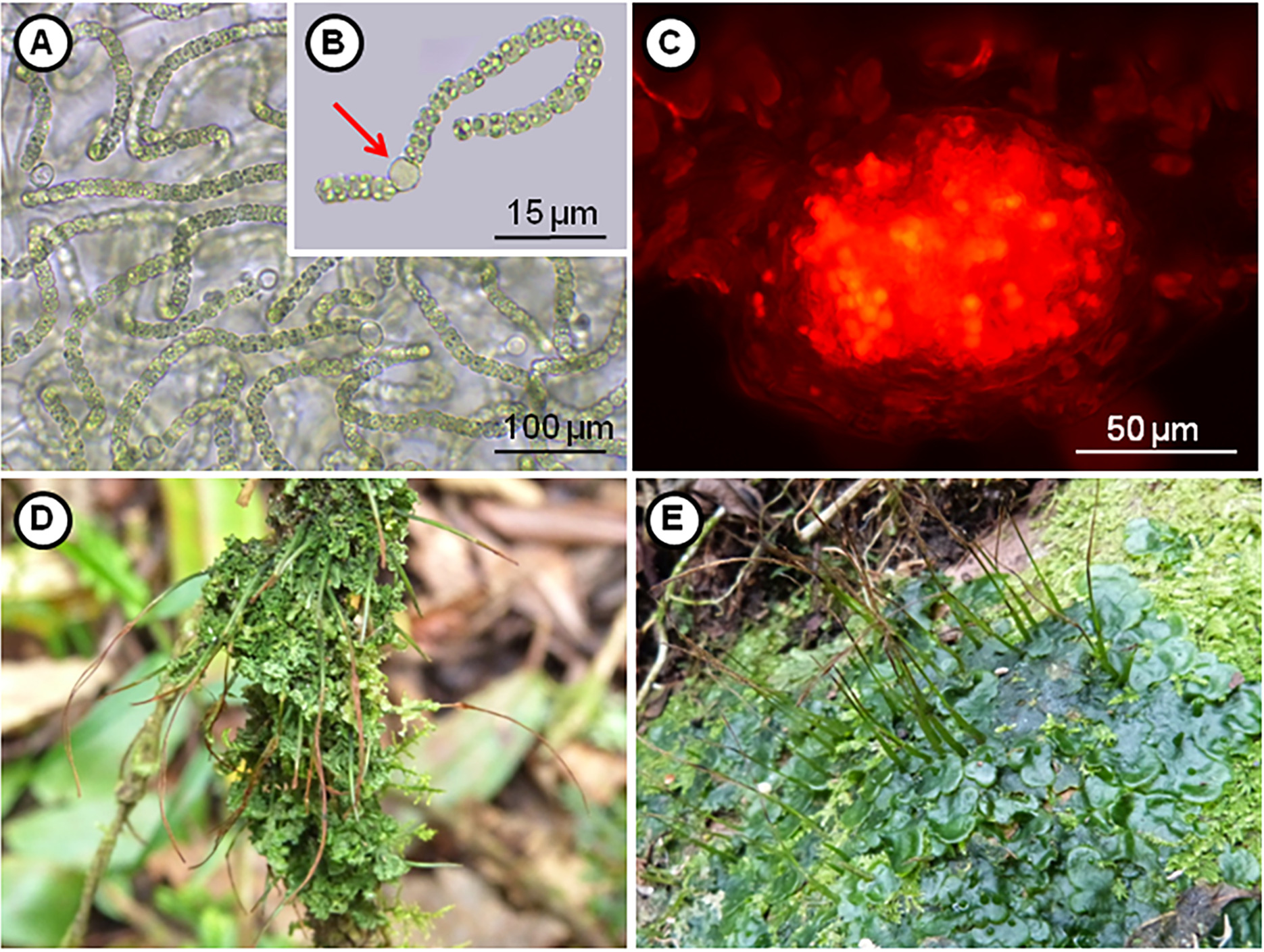
A clonal culture of Nostoc sp. (Figure 1a-b) was obtained using the traditional micropipette isolation method (Andersen & Kawachi 2005) from a N. vincentianus gametophyte (Figure 1c) collected in May 2017 in the Atlantic Forest at Itatiaia National Park (22°27’06’’ S, 44°36’44’’ W, 837 m a.s.l.), Rio de Janeiro state, Brazil. This strain was maintained in Erlenmeyer flasks containing 300 mL of CHU10 medium under a 12:12 h light/dark regime. In the culture chamber, light intensity was 30 µmol photons m⁻² s⁻¹ and temperature was maintained at 20(±1) °C. Experiments were conducted using cultures in the exponential growth phase.
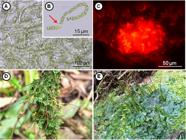
Cyanobacteria and hornworts used in the experiment. a: Details of Nostoc sp.; b: Nostoc sp. filament with heterocyst (red arrow); c: Epifluorescence image of a cross section of N. vincentianus showing a Nostoc sp. colony. The chlorophyll of the cyanobacteria appears in red using an excitation filter of 450-490 nm and an emission filter >600 nm; d: Dendroceros crispus; e: Nothoceros vincentianus.
Sampling and cultures
We studied two hornwort species: Dendroceros crispus (Figure 1d), an epiphytic species with multicellular green spores, typically found in forests at 800-2000 m a.s.l. (Peñaloza-Bojacá et al. 2019, Duff et al. 2007), and Nothoceros vincentianus (Figure 1e), a terricolous or saxicolous species with unicellular green spores, common in Neotropical forests above 400 m a.s.l. (Renzaglia et al. 2009, Villarreal & Renner 2014). Field collections were conducted in October 2018 in the Atlantic Forest, São Paulo state, Brazil. We collected samples (~8 cm²) from the Núcleo Santa Virgínia, Parque Estadual da Serra do Mar (23°20’-23°25’S, 45°08’-45°15’W), at elevations of 800-1000 m a.s.l., with temperatures ranging from 20-24°C and an annual rainfall of 1500-4000 mm (Fundação Florestal 2008). Collected plants were kept hydrated in a culture room (21°C, 74 µmol photons m⁻² s⁻¹) until laboratory assays.
Given the asynchronous sporogenesis in hornworts, we collected only fully developed and mature spores from the apex of the capsules. Spores from ten capsules of each species were pooled and cleaned with 0.05% calcium hypochlorite for 40-50 seconds, followed by three rinses with autoclaved ionized water for 15 seconds each. A 0.5 mL spore suspension was plated in Petri dishes (30 mm diameter) on solid culture medium (0.5% agar, 50% Knop II; Nakazato et al. 1999). We opted to use a nutrient solution containing nitrogen (at half concentration) in the medium to ensure the spores could germinate and the sporelings would have sufficient energy to grow before the cyanobacterium infection. Spore density varied from 160,000 mL⁻¹ in D. crispus to 405,000 mL⁻¹ in N. vincentianus. Cultures were maintained under constant conditions (21°C, 74 µmol photons m⁻² s⁻¹) with a 12-hour photoperiod.
Experimental design
Spores of D. crispus and N. vincentianus were cultured as above described to non-Nostoc and Nostoc treatments. Fourteen independent observations with three replicates each were performed along 154 culture days. For Nostoc treatment, the Petri dishes containing spores were also inoculated with previously cultivated colonies of Nostoc that were passed through a mesh with porosity of 1 µm. An autoclaved glass syringe was used to break down the mucilage of colonies to release the filaments and 0.5 mL of this Nostoc solution was added to each plate. Nostoc addition occurred simultaneously to hornwort spores in media.
Survival was measured as germinated and viable spores, i.e., spores remaining the capacity to progress with mitosis, showing size increasing, green chloroplasts, development of rhizoid or germ tube, oppositely to dead spores (no signs of development, being hyaline or dark brown spores, no green chloroplasts, no rhizoids). Sporeling growth (length and width in micrometers) was analyzed using the BEL Capture Application software (400x magnification). 100 hornwort spores and sporelings regarding survival and 50 to growth were measured at each observation time and in each replicate. Survival was recorded as percentage of viable and germinated spores in each replicate.
Ontogeny of hornworts and Nostoc sp.
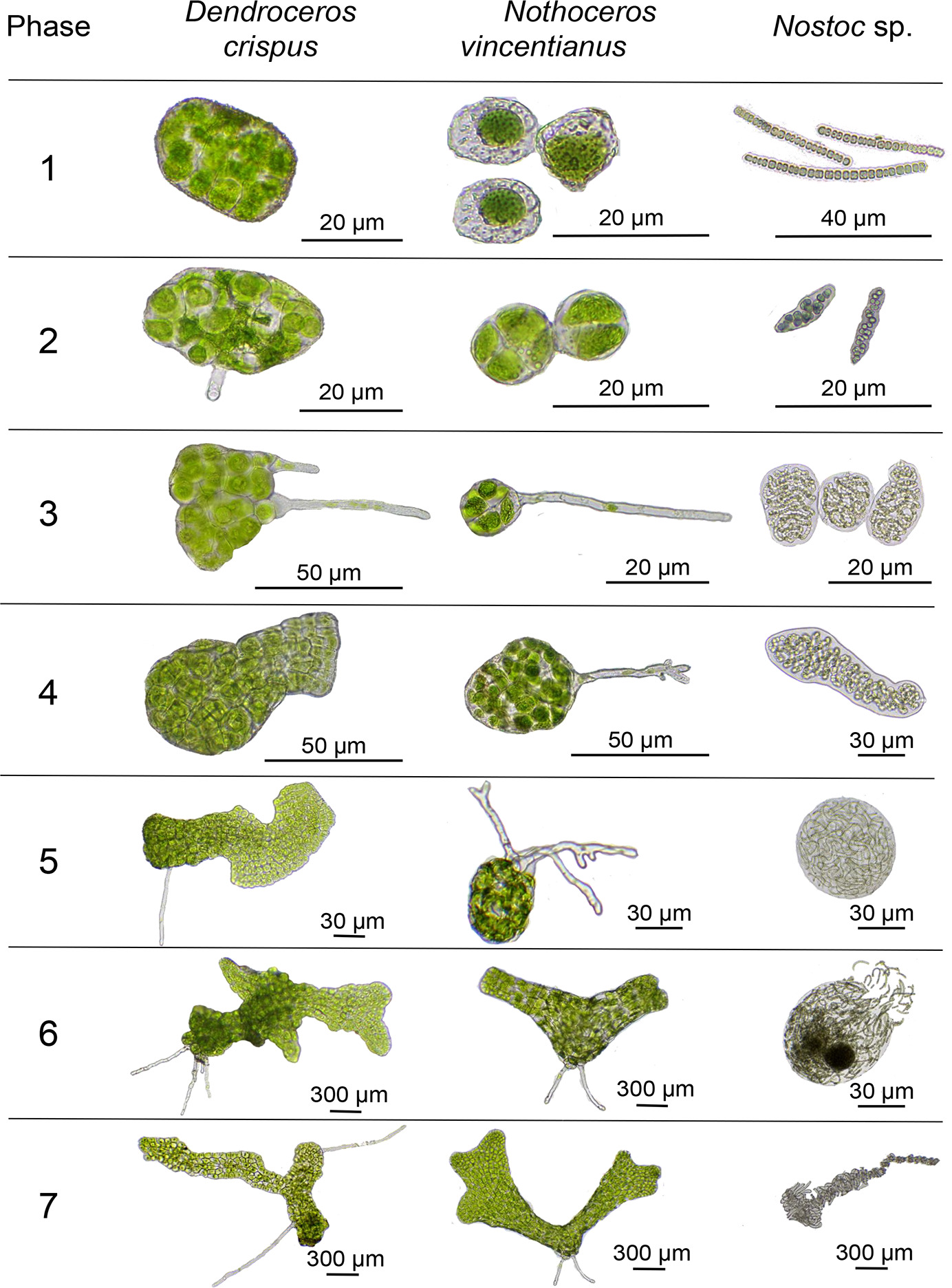
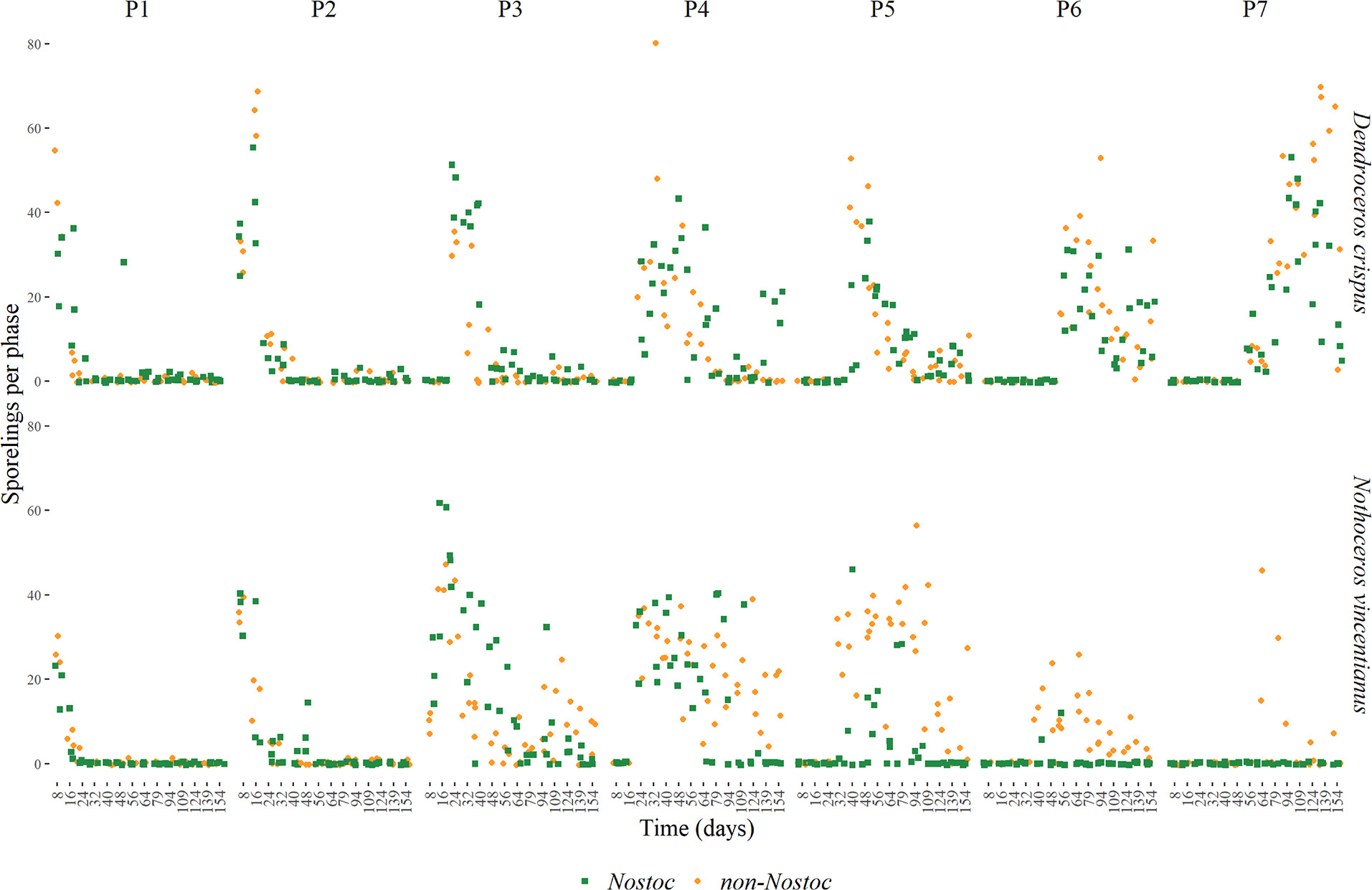
We recorded the ontogenetic phases for both the plants and the cyanobacteria. The sporeling development of D. crispus and N. vincentianus was classified into seven phases (Table I; Figure 2) based on previous studies on hornwort sporelings (Campbell 1907, Oliveira et al. 2017, Renzaglia 1978, Schuette & Renzaglia 2010). Similarly, we described seven phases of the Nostoc life cycle (Table I; Figure 2; Supplementary Material - Video S1) following established classifications (Becerra-Absalón & Tavera 2009, Paulsrud 2001). Given the importance of N₂ fixation in the symbiosis, we also recorded the presence of heterocysts throughout the experiment.
Gametophyte development phases in hornworts species (Dendroceros crispus and Nothoceros vincentianus) and development phases in Nostoc sp. life cycle.
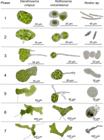
Representation of the ontogeny sporelings in seven phases for Dendroceros crispus, Nothoceros vincentianus and the life cycle of Nostoc sp.
Statistical analyses
To verify our early prediction of low hornwort-cyanobacteria specificity, we performed generalized linear models (GLMs) to test the influence of cyanobacteria on survival and growth of spores and sporelings of the two hornwort species. Additionally, to the “Nostoc” effect, we also included in our models the main and interaction effects of “hornwort species” and “observation time”. GLMs with gaussian distribution and identity link function were used for “survival” and “growth” response variables (model details in Appendix S1). Additionally, when necessary, post hoc comparisons (Tukey test, α = 0.05) were applied. Furthermore, we tested a potential relationship between sporeling ontogeny and Nostoc phases with Spearman correlations for both species. Since we recorded hornwort sporelings at different phases at each observation time, we used the formula: phase: (n1.C1+n2.C2+…n7.C7)/(C1+C2+…C7), where n = number of sporelings at a phase and C = ontogenetic phase for each replicate. For cyanobacteria, since we were not able to count individuals in each phase, we recorded the presence of each phase as 1 (with no heterocysts) or 2 (with heterocysts). We applied a similar formula to quantify a phase single-value in each replicate. All analyses and graphs were performed in R v.4.0.4 (R Core Team 2024) using RStudio v.1.3.959 software (RStudio Team 2020).
RESULTS
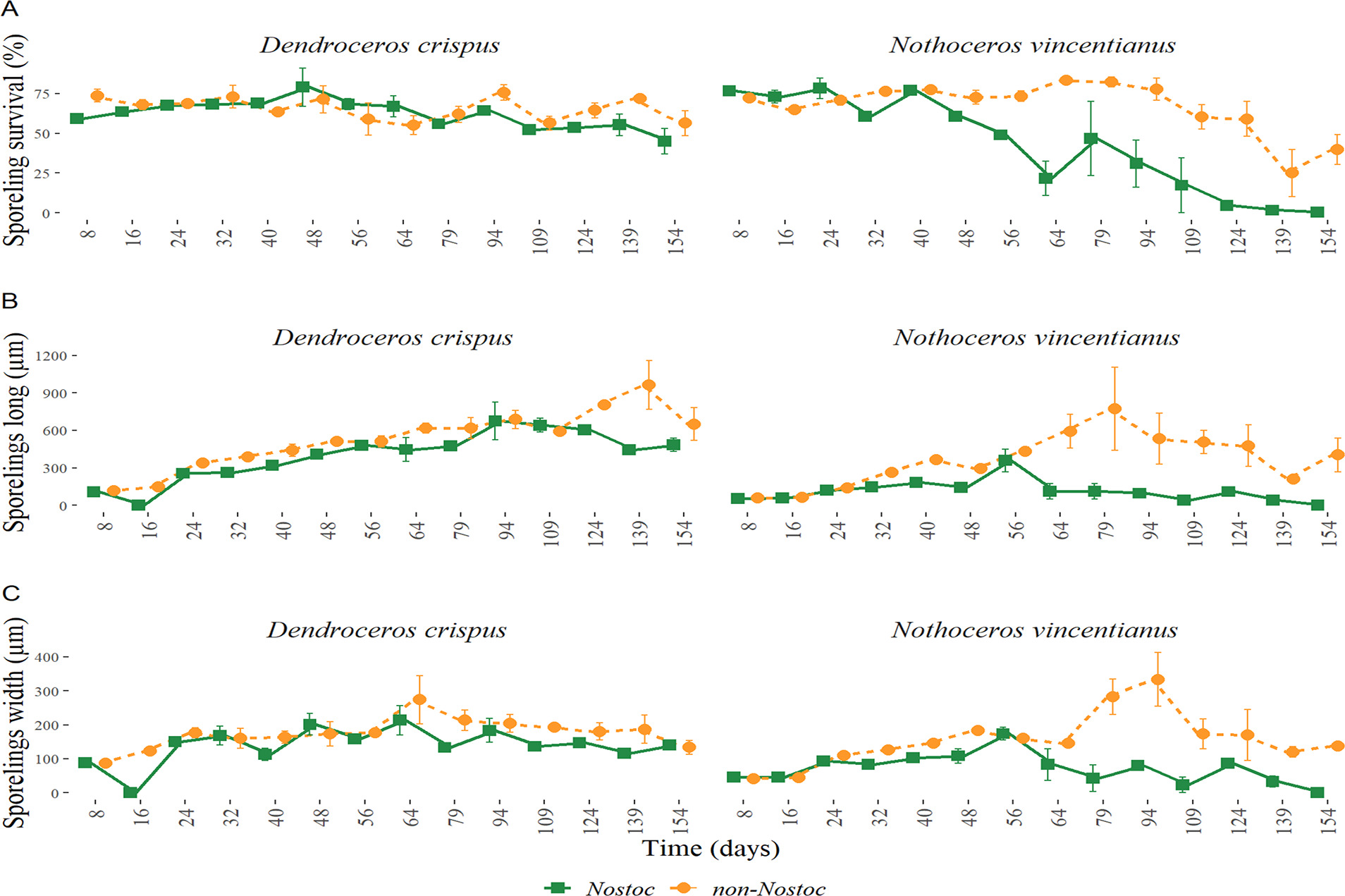
Nostoc had a positive effect on sporeling survival and growth in D. crispus (e.g., 63.8% ± 1.2 survival), whereas its impact on N. vincentianus was limited and associated with a significant decline after day 56 (interaction β = 20.5, p < 0.001; Table II; Appendix S1). Within each species, sporelings in the Nostoc treatment performed better than those without cyanobacteria in D. crispus, whereas the opposite trend was observed in N. vincentianus, where growth and survival were lower in the presence of Nostoc. Although the two species differ in ecology, they were cultured under identical controlled conditions, allowing for a comparative assessment of their symbiotic response. Quantitatively, D. crispus exhibited greater survival (63.84% ± 1.20), length (463.51 µm ± 25.80), and width (156.91 µm ± 6.73) than N. vincentianus (54.77% ± 3.21; 238.88 µm ± 26.24; 113.48 µm ± 9.24, respectively; Table II; Appendix S1; Figure 3).Despite the presence of motile hormogonia in the medium, the reconstitution of endosymbiosis was not fully achieved (Video S1).
Generalized linear model of the survival and growth in sporelings of Dendroceros crispus and Nothoceros vincentianus. The GLM presents Gaussian distribution and identity link function. Bold indicates statistical significance.

Spore survival percentages and sporelings growth of Dendroceros crispus and Nothoceros vincentianus overtime. a: Survival; b: growth in length and c: growth in width. Green square: treatment with sporelings and Nostoc sp.; Orange circles: treatment only with sporelings (non-Nostoc sp.). Error bars represent ± 1 SE (Standard Error).
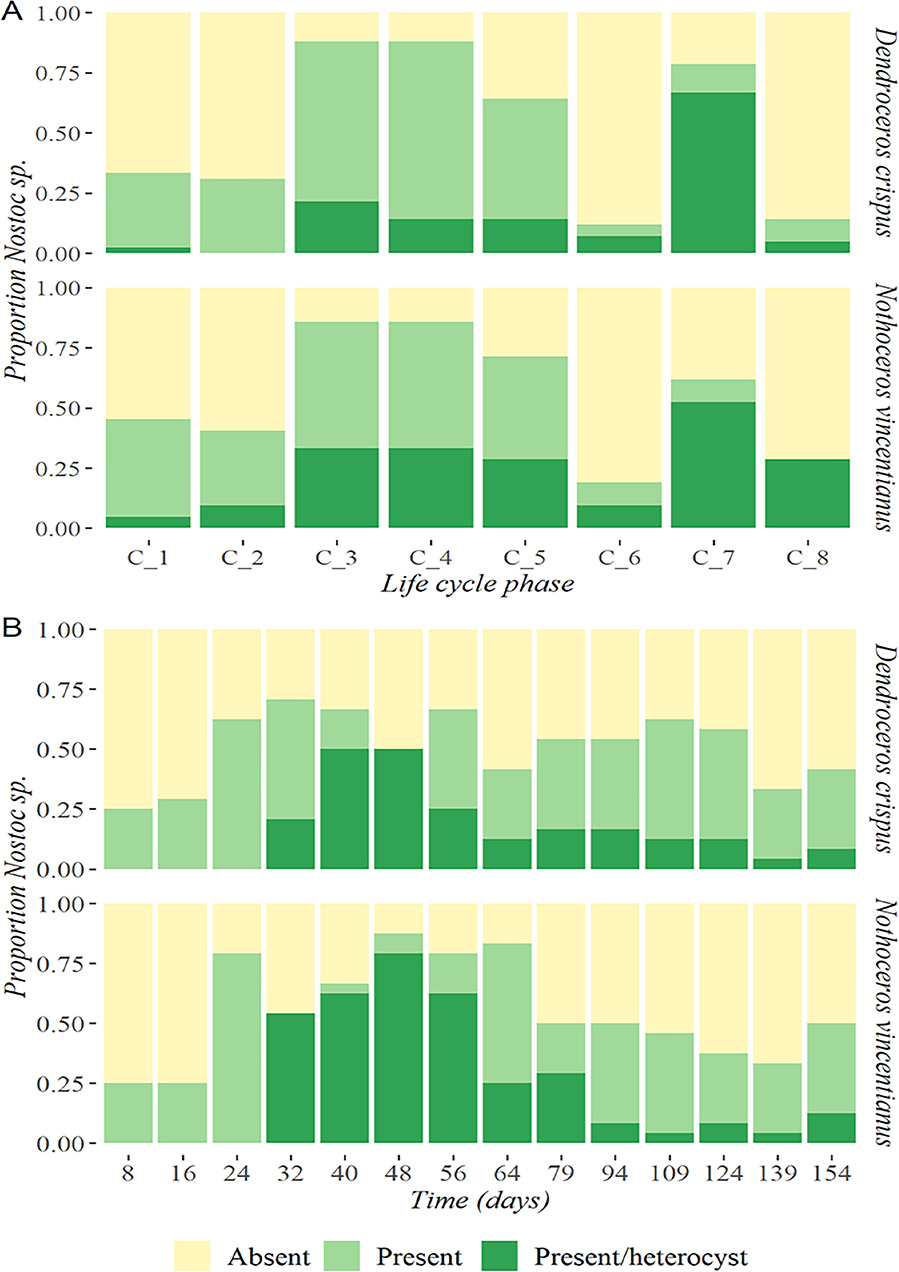
Only weak positive correlations were detected between the ontogenetic phases of hornworts and Nostoc (D. crispus: rs = 0.37, P = 0.015; N. vincentianus: rs = 0.38, P = 0.013; Figure S1). Nostoc phases developed similarly in both hornwort species (Figure 4A). However, we observed a higher number of heterocysts in the Nostoc treatment among N. vincentianus sporelings compared to those in D. crispus (Figure 4B). Dendroceros crispus sporelings developed well in both Nostoc and non-Nostoc treatments over the 154 culture days. In contrast, various developmental phases of N. vincentianus sporelings were observed only in the non-Nostoc treatment (Figure 5).
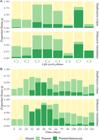
Proportion of the phases of the life cycle of Nostoc sp. in the treatments with spores of Dendroceros crispus and Nothoceros vincentianus. a: Life Cycle Nostoc sp. in seven phases (C1-C7; details in Table I); b: Nostoc sp. throughout 154 days of observation.
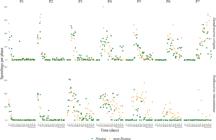
Sporelings development into seven phases (P1-P7; details in Table I) to Dendroceros crispus and Nothoceros vincentianus along the 14 observations within 154 days. Green square: treatment with sporelings and Nostoc sp.; Orange circles: treatment only with sporelings (non-Nostoc sp.).
DISCUSSION
Our data indicate complex interactions between Nostoc and hornwort taxa. Dendroceros crispus outperformed N. vincentianus in both spore survival and sporeling growth, with similar performance across treatments (with and without Nostoc). Although previous studies have documented Nostoc colonization during the early stages of hornwort development (Renzaglia et al. 2009), the lack of colonization throughout our 154-day experiment raises questions about the factors influencing cyanobacteria-hornwort interactions. This is particularly intriguing given that D. crispus developed vigorous gametophytes with pores that typically serve as gateways for cyanobionts, and hormogonia were present in the medium, which would generally suggest a high likelihood of colonization.
Previous research has demonstrated low specificity between Nostoc and Anthoceros punctatus. For example, a successful association was reconstituted between this hornwort species and Nostoc punctiforme isolated from the cycads Macrozamia sp. (Meeks 2003, 2007). However, external factors such as soil origin and microbial composition may strongly influence these interactions. Even sympatric hornwort species such as N. orbicularis, P. carolinianus, and A. agrestis exhibit similarly low specificity but show different preferences toward cyanobionts present in the soil (Nelson et al. 2020). In our study, Nostoc colonies isolated from N. vincentianus were collected from a different natural population than the one used for culture experiments, which could explain the lower performance of this species when growing with Nostoc in the laboratory and corroborates the findings of Nelson et al. (2020) regarding low specificity and high selectivity in the hornwort-cyanobacteria symbiosis.
The poor performance of N. vincentianus spores and sporelings in the presence of Nostoc suggests that the interaction might occur later in gametophyte development, rather than at the sporeling stage. The early presence of Nostoc in the culture medium (i.e., during unicellular germination) may have created competition for resources, negatively impacting the survival and growth of N. vincentianus. In contrast, D. crispus, which began as multicellular and chlorophyllous spores, appeared to be unaffected by competition with Nostoc colonies. Our studied species have distinct spore traits (Ligrone & Renzaglia 1990, Renzaglia et al. 2020, 2009); spore germination and plant establishment differ in their sensitivity to environmental factors (Peñaloza-Bojacá et al. 2023), with the multicellular sporelings of D. crispus demonstrating greater resistance compared to the unicellular sporelings of N. vincentianus, enabling them to better withstand competition with cyanobacteria in the culture medium.
We observed hormogonia in cultures of both hornwort species (Video S1), excluding the possibility that symbiosis failure was due to lack of colonization-competent cells. Furthermore, the sporelings developed to the point of having pores (young plants) through which the hormogonia can infect. The high presence of Nostoc heterocysts—nitrogen-fixing cells (Meeks 2007)—in cultures of both hornwort species, combined with the weak correlation between hornwort and cyanobacterial life stages, suggests an independent development of hornworts and Nostoc in our study. This possibility is reinforced by the fact that a functional symbiotic association typically occurs when Nostoc filaments fragment and lose their heterocysts, generating hormogonia that serve as colonization units upon entering the hornwort host (Adams 2002, Adams & Duggan 2008, Meeks 2007). Unfortunately, this synchronization between cyanobacterial and hornwort development was not observed, despite the persistent presence of hormogonia being at all growth stages in D. crispus and N. vincentianus.
In conclusion, although we cannot completely rule out the possibility of plant-cyanobacteria specificity and selectivity, the contrasting responses of spores, sporelings and young plants of D. crispus and N. vincentianus—two species from distinct ecological backgrounds—underscore the complexity of Nostoc–hornwort symbiosis. Our findings suggest that both intrinsic plant traits (e.g., spore structure, developmental timing) and extrinsic factors (e.g., source of cyanobacteria, competition influence the establishment and success of this association. This highlights the need to examine symbiotic dynamics across developmental stages and environmental gradients. In particular, species from highly diverse ecosystems such as the Brazilian Atlantic Forest represent valuable systems for exploring how ecological complexity shapes symbiotic dynamics.
Acknowledgements
This research was carried out with permission from the Secretaria do Meio Ambiente (SMA) do Estado de São Paulo (license number: 260108-004.535/2017). This work was supported by the Coordenação de Aperfeiçoamento de Pessoal de Nivel Superior, Brasil (CAPES- Finance Code 001), and the Rufford Foundation (Small Grants 2018-2019), and the Latin American and the Caribbean Macro Universities, the postgraduate Mobility Program 02-2017.
Data availability
References
- ADAMS DG. 2000. Symbiotic Interactions. In: Whitton B & Potts M (Eds), The Ecology of Cyanobacteria, Springer, Dordrecht, p. 523-561.
- ADAMS DG. 2002. Cyanobacteria in Symbiosis with Hornworts and Liverworts. In: Rai A et al. (Eds), Cyanobacteria in Symbiosis, Springer, Dordrecht: Kluwer Academic Publishers, p. 117-135.
- ADAMS DG, BIRGITTA B, NIERZWICKI-BAUER S, DUGGAN PS, RAI A & SCHÜSSLER A. 2013. Cyanobacterial-Plant Symbioses. In: Rosenberg E et al. (Eds), The Prokaryotes: Prokaryotic Biology and Symbiotic Associations, Berlin, Heidelberg: Springer Berlin Heidelberg, p. 360-400.
- ADAMS DG & DUGGAN PS. 2008. Cyanobacteria-bryophyte symbioses. J Exp Bot 59: 1047-1058.
- ANDERSEN R & KAWACHI M. 2005. Traditional microalgae isolation techniques. In: Andersen RA (Ed), Algal Culturing Techniques, New York, U.S.A.: Acadamic Press, p. 83-100.
- BECERRA-ABSALÓN I & TAVERA R. 2009. Life cycle of Nostoc sphaericum (Nostocales, Cyanoprokaryota) in tropical wetlands. Nov Hedwigia 88: 117-128.
- BOUCHARD R, PEÑALOZA-BOJACÁ G, TOUPIN S, GUADALUPE Y, GUDIÑO J, SALAZAR-ALLEN N, LI F & VILLARREAL JC. 2020. Contrasting bacteriome of the hornwort Leiosporoceros dussii in two nearby sites with emphasis on the hornwort-cyanobacterial symbiosis. Symbiosis 81: 39-52.
- BUSTOS-DÍAZ ED, BARONA-GÓMEZ F & CIBRIÁN-JARAMILLO A. 2019. Cyanobacteria in Nitrogen-Fixing Symbioses. In: Mishra A et al. (Eds), Cyanobacteria, Elsevier, p. 29-42.
- CAMPBELL DHD. 1907. Studies on some javanese anthocerotaceae. II. Ann Bot 21: 467-486.
- CARRELL AA ET AL. 2022. Novel metabolic interactions and environmental conditions mediate the boreal peatmoss-cyanobacteria mutualism. ISME J 16: 1074-1085.
- COSTA J-L, PAULSRUD P, RIKKINEN J & LINDBLAD P. 2001. Genetic Diversity of Nostoc Symbionts Endophytically Associated with Two Bryophyte Species. Appl Environ Microbiol 67: 4393-4396.
- DUFF J, VILLARREAL JC, CARGILL C & RENZAGLIA K. 2007. Progress and challenges toward developing a phylogeny and classification of the hornworts. Bryologist 110: 214-243.
- FRANGEDAKIS E, SHIMAMURA M, VILLARREAL JC, LI F, TOMASELLI M, WALLER M, SAKAKIBARA K, RENZAGLIA KS & SZÖVÉNYI P. 2021. The hornworts: morphology, evolution and development. New Phytol 229: 735-754.
- FUNDAÇÃO FLORESTAL. 2008. Fundação para a Conservação e a Produção Florestal do Estado de São Paulo: Plano de manejo - Parque Estadual da Serra do Mar. Secretaria de Infraestrutura e Meio Ambiente.
- GENTILI F, NILSSON M-C, ZACKRISSON O, DELUCA TH & SELLSTEDT A. 2005. Physiological and molecular diversity of feather moss associative N2-fixing cyanobacteria. J Exp Bot 56: 3121-3127.
- KOSTKA JE, WESTON DJ, GLASS JB, LILLESKOV EA, SHAW AJ & TURETSKY MR. 2016. The Sphagnum microbiome: New insights from an ancient plant lineage. New Phytol 211: 57-64.
- LIGRONE R & RENZAGLIA K. 1990. The sporophyte-gametophyte junction in the hornwort, Dendroceros tubercularis Hatt (Anthocerotophyta). New Phytol 114: 497-505.
- MAGAIN N, MIADLIKOWSKA J, GOFFINET B, SÉRUSIAUX E & LUTZONI F. 2016. Macroevolution of specificity in cyanolichens of the genus Peltigera section Polydactylon (Lecanoromycetes, Ascomycota). Syst Biol 66: syw065.
- MEEKS JC. 2003. Symbiotic interactions between Nostoc punctiforme, a multicellular cyanobacterium, and the hornwort Anthoceros punctatus Symbiosis 35: 55-71.
- MEEKS JC. 2005. Molecular mechanisms in the nitrogen-fixing Nostoc-Bryophyte symbiosis. In: Molecular Basis of Symbiosis, Berlin/Heidelberg: Springer-Verlag, p. 165-196.
- MEEKS JC. 2007. Physiological Adaptations in Nitrogen-fixing Nostoc-Plant Symbiotic Associations. Microbiol Monogr 8: 181-205.
- NAKAZATO T, KADOTA A & WADA M. 1999. Photoinduction of Spore Germination in Marchantia polymorpha L. is Mediated by Photosynthesis. Plant Cell Physiol 40: 1014-1020.
- NELSON J, HAUSER D & LI F-W. 2020. Symbiotic cyanobacteria communities in hornworts across time, space, and host species. bioRxiv 2020.06.18.160382.
- OLIVEIRA BA, PEREIRA AFN, PÔRTO KC & MACIEL-SILVA AS. 2017. Spore germination and young gametophyte development of the endemic Brazilian hornwort Notothylas vitalii Udar & Singh (Notothyladaceae - Anthocerotophyta), with insights into sporeling evolution. Acta Bot Brasilica 31: 313.
- PAULSRUD P. 2001. The Nostoc symbiont of lichens: diversity, specificity and cellular modifications. Acta Univ Ups, p. 1-56.
- PEÑALOZA-BOJACÁ G, VILLARREAL JC & MACIEL-SILVA A. 2019. Phylogenetic and morphological infrageneric classification of the genus Dendroceros (Dendrocerotaceae; Anthocerotophyta), with the addition of two new subgenera. Syst Biodivers 17: 712-727.
- PEÑALOZA-BOJACÁ GF, VILAS-BOAS T, VILLARREAL A JC & MACIEL-SILVA AS. 2023. Differential Effects of Desiccation on Hornworts with Contrasting Life Histories in Tropical Montane Forests: A Functional Trait—Based Perspective. Forests 14: 1-27.
- R CORE TEAM R. 2024. R: A language and environment for statistical computing. Found Stat Comput.
- RASMUSSEN U & NILSSON M. 2002. Cyanobacterial Diversity and Specificity in Plant Symbioses. In: Cyanobacteria in Symbiosis, Stockholm, Sweden: Springer, Dordrecht, p.313-328.
- RAVEN JA. 2002. Evolution of Cyanobacterial Symbioses. In: Rai N et al. (Eds), Cyanobacteria in Symbiosis, Springer, Dordrecht, p. 329-346.
- RENZAGLIA K. 1978. A comparative morphology and developmental anatomy of the Anthocerotophyta. J Hattori Bot Lab 44: 31-90.
- RENZAGLIA K, DUFF J, NICKRENT DL & GARBARY DJ. 2000. Vegetative and reproductive innovations of early land plants: Implications for a unified phylogeny. Philos Trans R Soc B Biol Sci 355: 769-793.
- RENZAGLIA K, LOPEZ R, WELSH R, OWEN H & MERCED A. 2020. Callose in sporogenesis: novel composition of the inner spore wall in hornworts. Plant Syst Evol 306: 16.
- RENZAGLIA K & VAUGHN K. 2000. Anatomy, development and classification of hornworts. In: Shaw AJ & Goffinet B (Eds), Bryophyte biology, Cambridge, UK: Cambridge University Press, p. 1-35.
- RENZAGLIA K, VILLARREAL JC, DUFF RJ & GOFFINET B. 2009. New insights into morphology, anatomy, and systematics of hornworts. In: Shaw AJ (Ed), Bryophyte Biology, Cambridge: Cambridge University Press, p. 139-172.
- ROUSK K, JONES DL & DELUCA TH. 2013. Moss-cyanobacteria associations as biogenic sources of nitrogen in boreal forest ecosystems. Front Microbiol 4: 1-10.
- RSTUDIO TEAM. 2020. RStudio: Integrated development environment for R. RStudio, Inc.
-
SALZMAN S, BUSTOS-DÍAZ ED, WHITAKER MRL, SIERRA AM, CIBRIÁN-JARAMILLO A, BARONA-GÓMEZ F & VILLARREAL AGUILAR JC. 2025. Chemical ecology of symbioses in cycads, an ancient plant lineage. New Phytol 246(4): https://doi.org/10.1111/nph.70109.
» https://doi.org/10.1111/nph.70109 - SCHUETTE S & RENZAGLIA K. 2010. Development of multicellular spores in the hornwort genus Dendroceros (Dendrocerotaceae, Anthocerotophyta) and the occurrence of endospory in Bryophytes. Nov Hedwigia 91: 301-316.
- SOLHEIM B & ZIELKE M. 2002. Associations between Cyanobacteria and Mosses. In: Cyanobacteria in Symbiosis, Dordrecht: Kluwer Academic Publishers, p. 137-152.
- VILLARREAL JC & RENNER S. 2014. A review of molecular-clock calibrations and substitution rates in liverworts, mosses, and hornworts, and a timeframe for a taxonomically cleaned-up genus Nothoceros. Mol Phylogenet Evol 78: 25-35.
- VILLARREAL JC & RENZAGLIA K. 2006. Structure and development of Nostoc strands in Leiosporoceros dussii (Anthocerotophyta): a novel symbiosis in land plants. Am J Bot 93: 693-705.
- WARSHAN D, LIAIMER A, PEDERSON E, KIM S, SHAPIRO N, WOYKE T, PAWLOWSKI K, WEYMAN PD, DUPONT CL & RASMUSSEN U. 2018. Genomic changes associated with the evolutionary transitions of Nostoc to a plant symbiont. Mol Biol Evol 35(5): 1-34.
- WEST N & ADAMS D. 1997. Phenotypic and genotypic comparison of symbiotic and free-living cyanobacteria from a single field site. Appl Environ Microbiol 63: 4479-4484.
- ZHANG C-C, LAURENT S, SAKR S, PENG L & BÉDU S. 2006. Heterocyst differentiation and pattern formation in cyanobacteria: a chorus of signals. Mol Microbiol 59: 367-375.