 Interactions among bees and flowers of camu-camu (Myrciaria dubia (Kunth) McVaugh) in the Amazon: similar networks with different pollinators
Abstract
The Amazon contains many economically important native fruit trees, including Myrciaria dubia, popularly known as camu-camu or caçari. This plant is noted for its nutritional properties, including a high ascorbic acid concentration in its fruits. The flowering of camu-camu is an important source of resources for bees in the Amazon and the species depends on bees for successful pollination. In this study, we compare camu-camu flower visitors and the structure of interactions in the natural environment and in agricultural plantation. From October 2018 to January 2019, we use pollen analysis to build qualitative matrices for analysis of pollination interaction networks. The natural environment camu-camu population interacted with a more diverse guild of bees (24 species) than that in the cultivated (14 spp.). However, the network metrics were similar in each area, though the most generalist species were different (Scaptotrigona nigrohirta in the natural versus Apis mellifera in the cultivated area). Although the structure of interactions is similar, the predominance of Apis mellifera, thus effectively take on the role of the native pollinator species may be of concern. In conjunction with the reduction in total visitor richness, cultivated systems may demonstrate greater fragility and less stability in pollination.
Key words
Diversity; Myrciaria dubia; myrtaceae; pollen; pollination
INTRODUCTION
The Amazon is the largest tropical forest in the world (Cardoso et al. 2017) and contains native populations of many economically important fruit species (Neves et al. 2012). Among these, Myrciaria dubia (Kunth) McVaugh (Myrtaceae), popularly known as camu-camu or caçari, is widely grown due to its notable nutritional properties, including a very high ascorbic acid (1600 to 2900 mg/100g) concentration in its fruits (Barros et al. 2018). This acid is higher than that found in acerola (Malpighia emarginata DC, Malpighiaceae) or lemon (Citrus limon (L) Osbeck, Rutaceae) (Vidigal et al. 2011). Camu-camu is also considered to have a very high potential for use in food (as a juice) and other products, such as cosmetics (Barros et al. 2018). In Amazonia, the species occurs naturally in periodically flooded ecosystems (Yuyama et al. 2002). However, in Brazil it is economically cultivated in never-flooded areas (Silva & Oliveira 2018).
Camu-camu has hermaphrodite, subsessile and white flowers, arranged in axillary inflorescences. Anthesis occurs around 5 AM, with flowers receptive to pollination for some 4 to 5 hours (Villachica 1996, Maués & Couturier 2002). The stigma is exposed before the flower opens completely; thus, cross-pollination is promoted even though self-pollination and later self-fertilization is not completely excluded (Nascimento 2022). As far as is known, reproductive success in both native (seasonally flooded forests) and in agricultural camu-camu populations primarily involves bee-based cross-pollination (Peters & Vasquez 1987, Maués & Couturier 2002, Delgado et al. 2020).
The first study of camu-camu reproductive biology was carried out in a natural population in Peru and reported the stingless bees Melipona fuscopilosa Moure & Kerr, 1950 and Scaptotrigona postica (Latreille, 1807) (cited as “Melipona fuscopilara” and “Trigona portica”) to be effective pollinators (Peters & Vasquez 1987). More recently, another study in Peru (Delgado et al. 2020), recorded pollination in cultivated camu-camu by nine species of stingless bees (Meliponini) and the exotic species Apis mellifera Linnaeus. In the Brazilian Amazon, the main visiting bees in cultivation in Pará state were Nannotrigona punctata (Smith) and Trigona pallens (Fabricius) (Maués & Couturier 2002). For camu-camu there is a clear relationship between fruit set success and the presence of pollinating social stingless bees (Peters & Vasquez 1987, Maués & Couturier 2002, Delgado et al. 2020), thus potentiating management actions in cases where there is a pollination deficit.
For crops, it is not only necessary to understand the autecological interactions of the species under study, but to understand which of the other regional plant species contribute to the maintenance of the local pollinator community (Absy et al. 2018). Understanding this aspect of pollination systems can be achieved via interaction networks, which provide a representation of the functions of the various plant and animal species within the community (Elle et al. 2012). In camu-camu, pollen acts as the greatest reward for floral visitors (Maués & Couturier 2002) and, accordingly, its analysis can supplement direct observation as a means of understanding which components of the local flora are used by bees (Ferreira et al. 2021, Rezende et al. 2021).
Given the increase in the area under camu-camu cultivation, both in Amazonia and beyond, it is clearly important to identify not only the native pollinators but also the structure of their interaction networks, in areas with natural and cultivated populations. This allows the possible impacts on diversity and changes of pollinators in growing conditions to be assessed. Accordingly, the current study was designed to compare the species of bees visiting flowers of camu-camu in natural population and in agricultural cultivation, and to identify also the plants they visited in areas surrounding the sampling sites. For this, the operational assumptions were that: (I) the visiting bees species carrying camu-camu pollen at the height of flowering are its potential pollinators; (II) the composition of the assemblage of floral visitors in natural environment and cultivation are different; (III) network size, specialization, connectivity and nestedness are expected to be greater in the natural environment than in cultivated setthings.
MATERIALS AND METHODS
Study area
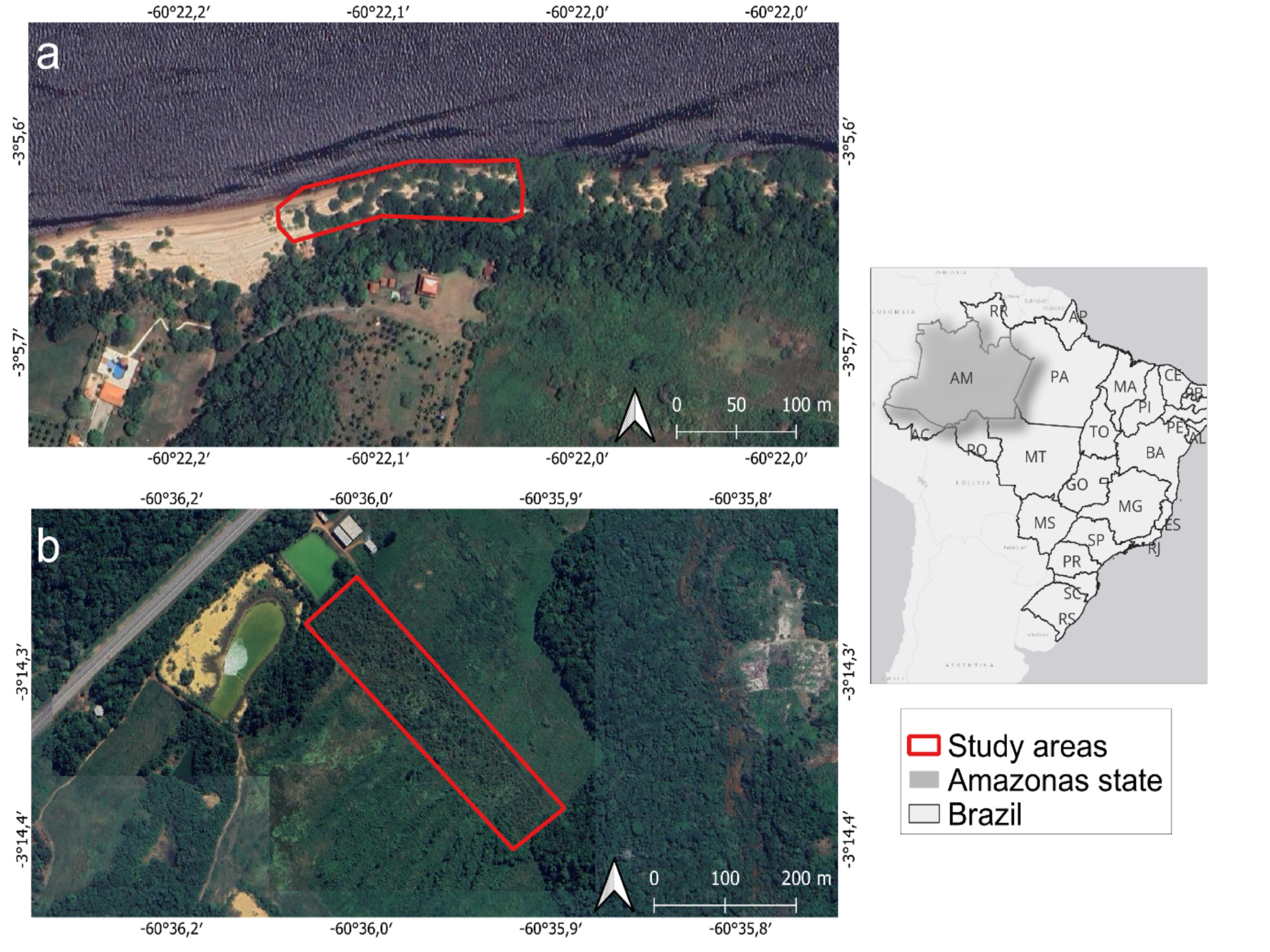
The study was conducted in two study areas, one camu-camu population in a natural environment and another under agricultural cultivation. The first was located in a seasonally flooded environment (Igapó), with access via Chácara Mariju (3°5’39.37”S; 60°22’11.08”W), km 29 on the AM-070, on the Japonês sideroad, in Iranduba municipality (Fig. 1a). The secdond was located never-flooded land (Terra Firme), with access via the KXK Agroindústria farm (3°14’17.09”S; 60°36’1.31”W), at km 70 on the AM-070, in Manacapuru municipality (Fig. 1b). The study areas are located approximately 42 km apart.
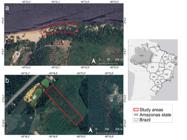
Location of sites within the state of Amazonas; main map: location of camu-camu (Myrciaria dubia (Kunth) McVaugh) study areas, outlined in white. a: Population in natural environment at Chácara Mariju, Iranduba; b: Cultivated population, KXK Agroindústria, Manacapuru. Modified from Google Earth.
In the natural study population, individual camu-camu plants were distributed within the seasonally-flooded igapó forest, on the banks of the Rio Negro. In the commercially cultivated population, there were some 1,800 individuals, all planted in 2007, in an area of some 2.8 ha of terra firme (never-flooded) forest. Once a year, treatments with chemical fertilization and pruning are carried out, without the use of pesticides, according to the owner. Areas of secondary vegetation (capoeiras) bordered the latter area and contained a variety of herbs and pioneer trees and shrubs, including those from the genera Cecropia, Solanum, and Vismia.
Collecting camu-camu floral visitors
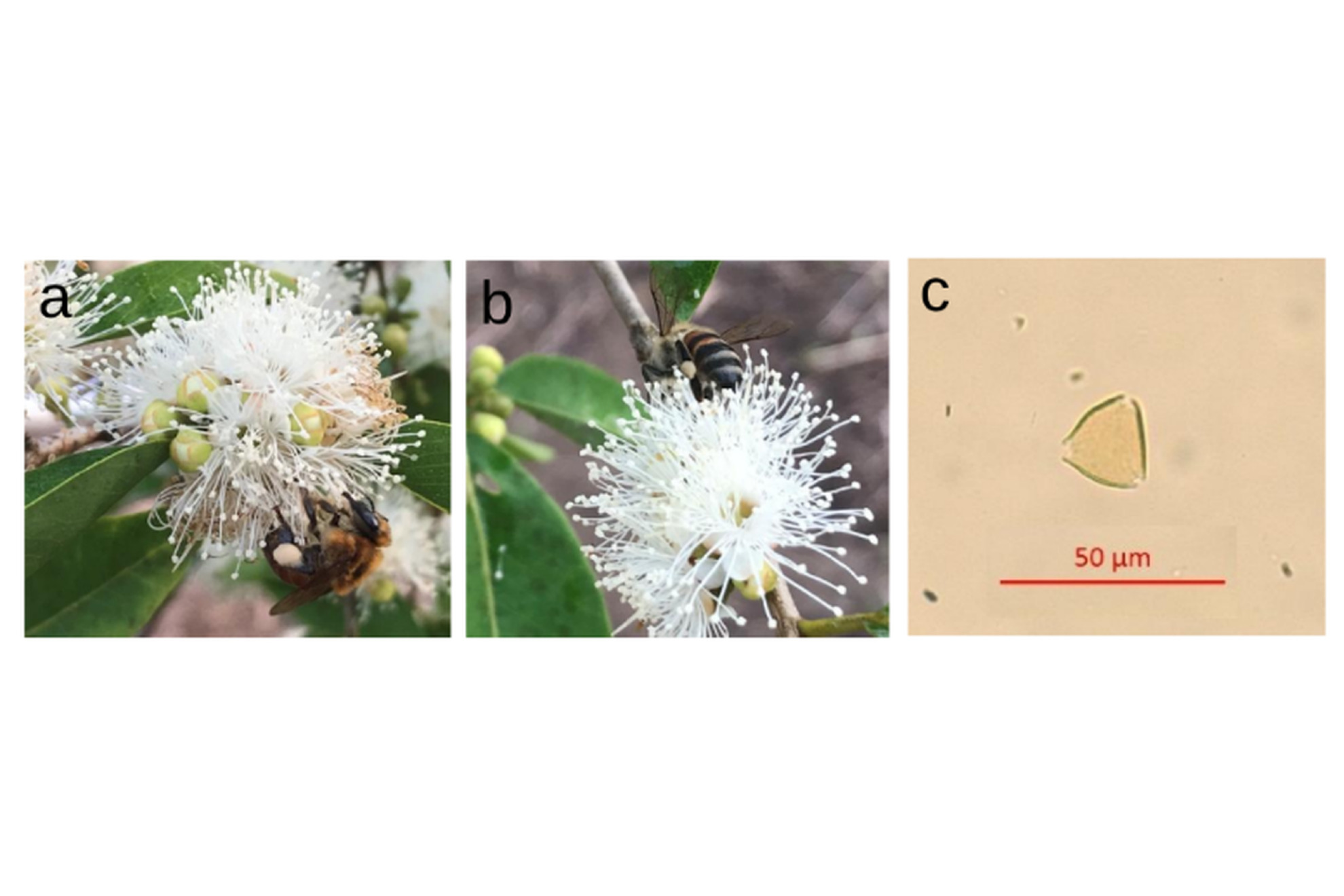
Camu-camu floral visitors were collected at the peak flowering period of the species when flower production is the most abundant. Collection occurred across for 5 days, in different days at each of the two study sites (natural and cultivated population), between October 2018 and January 2019. For each collection, the floral visitors to two flowering plants were sampled by a pair of collectors, totaling 20 individuals selected randomly. Collections were actively performed for 15 minutes at 30 minutes intervals, between 06:00 and 10:00 h (a total of eight collection events). Floral visitors were captured with an entomological net directly from the camu-camu flowers (Fig. 2), placed individually in microtubes and euthanized with fumes of ethyl acetate, then labeled. In the laboratory, the pollen was removed from the body of each insect with tweezers and pins and placed in microtubes with 1 ml of 70% ethanol. The insects were pinned, dried, and labeled. The bees were identified at the Hymenoptera Laboratory of the Instituto Nacional de Pesquisas da Amazônia (INPA), Manaus, Amazonas, Brazil, by specialists, using the Michener classification (2007). Sample specimens were deposited in the INPA Invertebrate Collections. The Species accumulation curves of bees were plotted for each site, using the specaccum function of the “Vegan” package in R software (Oksanen et al. 2013, R Development Core Team 2021).
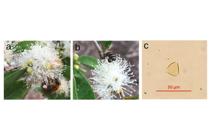
Bees visiting camu-camu flowers with dehisced, pollen-bearing anthers - a: Melipona merrilae; b: Apis mellifera; c: Myrciaria dubia (Myrtacae) pollen grain. Photos: Cristiane Krug.
Palynological analysis
Pollen samples obtained from the pollinating insects bodies were homogenized, centrifuged and the pollen grains acetolyzed following the method of Erdtman (1960), with the following modification: the samples were centrifuged for 10 minutes at 2,000 RPM. Pollen samples from more than one individual of the same species, from the same collection day were grouped by bee species. Semi-permanent study slides were produced by sealing mounted pollen with colorless nail polish. Identification of the material was carried out by comparison with a reference database of 23 species from 15 families, based on flowering plants in the study areas and on images available in the Online Pollen Catalogs Network (RCPol). Analysis was conducted in the laboratory of the Centre for Advanced Studies on the Functioning of Ecological Systems and Interactions (CAFESIN), from the Universidade Federal dos Vales do Jequitinhonha e Mucuri, Diamantina, Minas Gerais state, Brazil. To identify the plant species providing the pollen, fertile individuals present in the areas adjacent to the study sites were collected and make into exsiccates, which were identified by INPA herbarium parataxonomist José Ferreira Ramos, and subsequently deposited in the collection.
Interaction network and statistical analysis
Interaction networks analysis was carried out only with bees carrying pollen for acetolysis, this being nine species from the natural and seven in cultivated environments. These species are shown in Table I. Since the volume of pollen on the body of the studied animals may not reflect the intensity of the interaction, we built binary matrices (presence/absence) for the pollen found on the body of the flower visitors for each study area. For the networks, the following structural descriptors were used: connectivity, nestedness using a NODF and modularity. These were calculated with the bipartite package using the R environment (Dormann et al. 2008, R Development Core Team 2021). The significance value of these metrics was obtained by comparing the observed values with the values from the null model using Patefield’s algorithm (Patefield, 1981). In this model, null matrices are generated that maintain the total number of interactions of the matrix and fix the marginal values of the original matrix. Network size represents the number of interactions between bees (b) and plants (p). Multiplication of these variables (b*p) corresponds to the number of possible connections (c) in the network. Connectivity is calculated by the size of the network divided by the number of possible connections. Nestedness is a metric that evaluates the progression of inclusive sets and reveals the intensity with which specialist species on one side interact with generalists or specialists on the other side of the network (Lewinsohn et al. 2006). Modularity occurs when subsets of species, called modules, are weakly interconnected with each other, while the species comprising individual modules are strongly connected (Olesen et al. 2007). Complementary specialization (H2’) was also calculated, as it provides a measure of how much the interactions of each species differ from others in the interaction network. This index ranges from 0 (all bees interacting with the same plants) to 1 (each bee interacting with a different subset of plants). To compare the structure of networks between natural and cultivated, environments, we used a t-test for significance of connectivity, nestedness and modularity. Bipartite graphs were plotted using the Bipartite (Dormann et al. 2008), Igraph (Csárdi & Nepusz 2006) and Network (Butts 2015) packages of R environment. Similarity between the bee community and the plant community in each of the two areas was calculated using the Jaccard Index (j), which indicates the proportion of species shared between the two samples. These indices were calculated using the program PAST (Paleontological Statistics) version 3.14 (Hammer et al. 2001).
Floral visitor bees to camu-camu (Myrciaria dubia (Kunth) McVaugh) in natural population (Igapó) and cultivation (Terra Firme), collected between October 2018 and January 2019.
RESULTS
Camu-camu floral visitors
In total, 794 camu-camu visiting insects were collected. However, in all analyzes only bees were used, which were most captured insects (773 individuals, 97.35%). Bees were also the insect visitors to have pollen on their bodies and thus were used for palynological analyses.
In the natural environment population, 408 bees from 24 species were collected, while 365 from 14 species were recorded in cultivation. There were 9 species common to both areas (Table I). Within the family Apidae, Meliponini was the most commonly-encountered tribe, both in natural population and in cultivation, with 603 individuals belonging to 18 species (75.94% of the total sample). At the species level, Scaptotrigona nigrohirta Nogueira & Santos-Silva and Apis mellifera Linnaeus were the most abundant visitors to natural and cultivated populations, respectively.
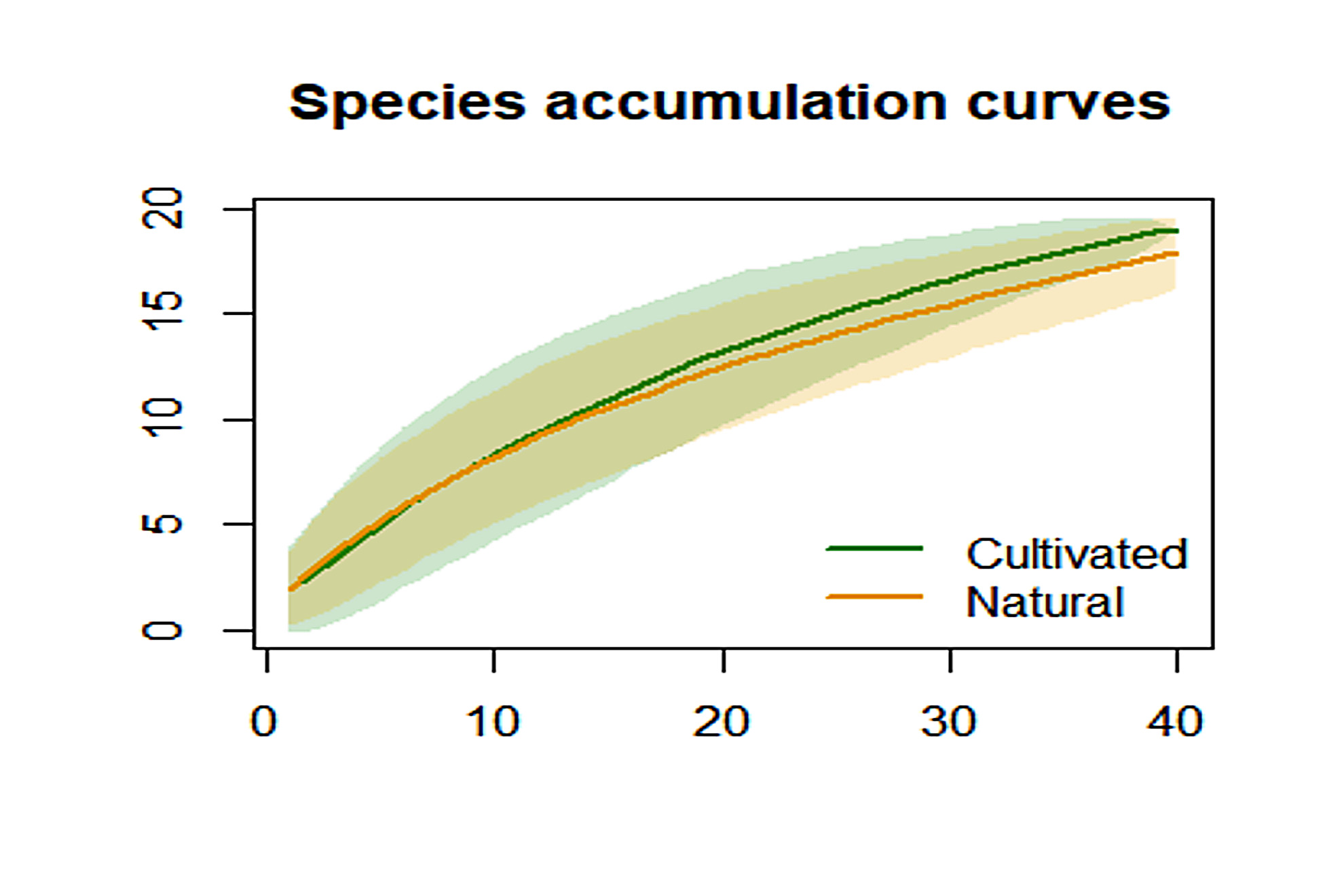
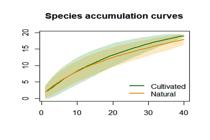
The bee species accumulation curves exhibited similar trends across both environments (Figure 3); sample from natural population and the cultivated one displaying a slope which declined without reaching an asymptote. In the natural environment, the floral visitor community remained marginally larger, displaying greater diversity than that from the cultivated areas.
Palynological analysis
The 773 bees collected while visiting camu-camu flowers, pollen samples were obtained from 510 individuals (277 in natural population and 233 in cultivation), representing 68% and 64% of the total, respectively. The material collected and transported by the bees contained 31 pollen types belonging to 17 plant families (see table I and II).
Camu-camu pollen was the most frequent type of pollen recorded, being found on 12 species of visiting bees, followed by Solanum paniculatum identified in seven bee species; Borreria hyssopifolia and Eugenia egensis on five; Byrsonima chrysophylla, Clidemia hirta, and type Vochysiaceae on four; Senna allata and Piriqueta cistoides on three. The other pollen types were mostly observed on a single bee species.
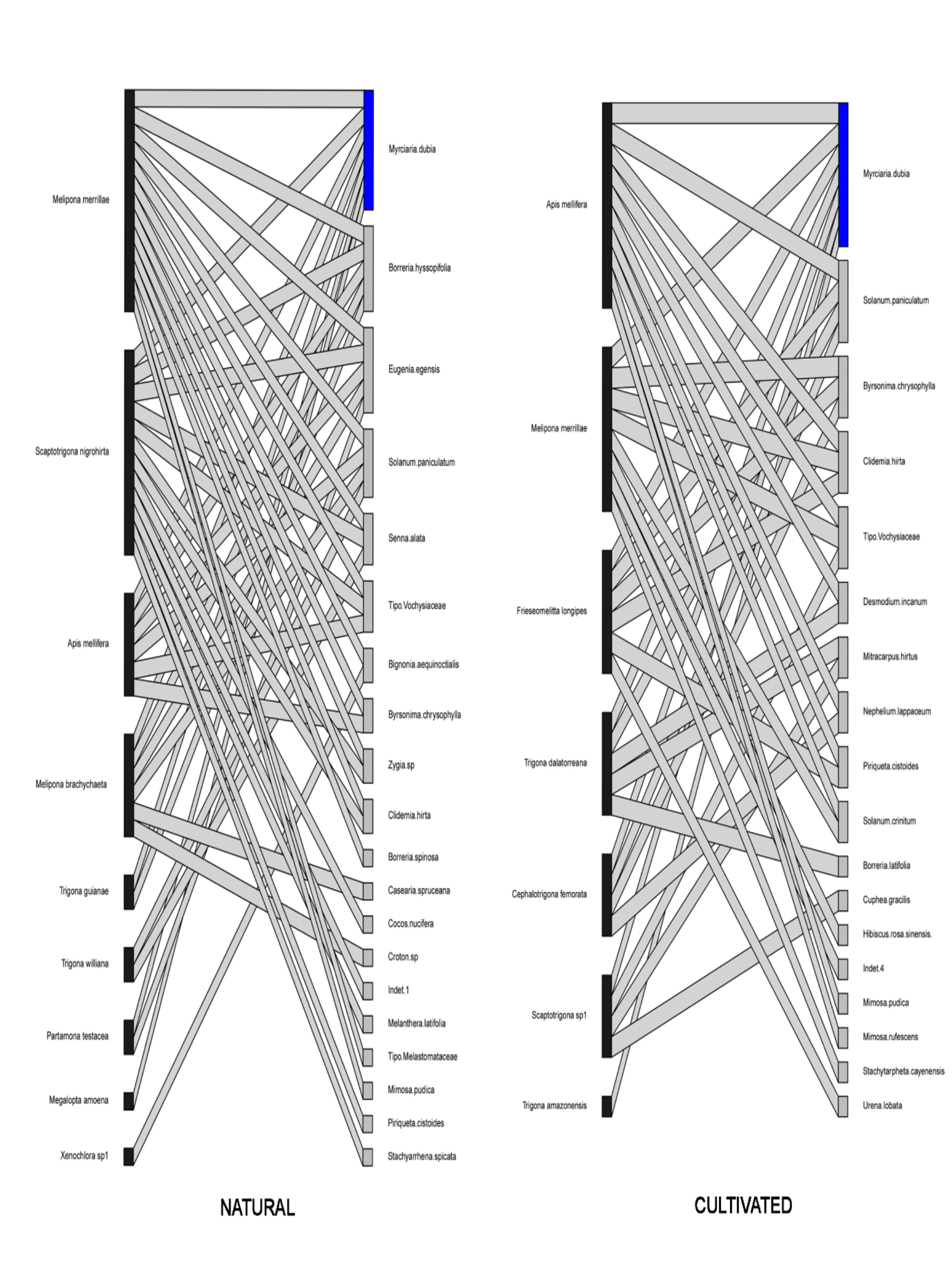
The most generalist bee species of the native habitat population were Melipona merrillae and Scaptotrigona nigrohirta. In addition to camu-camu, M. merrillae carried pollen from 12 other plant species, while S. nigrohirta carried 10. Of these, seven pollen types were shared by the two bee species (Figure 4).
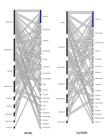
Network of qualitative visitor-pollen interactions at the peak of camu-camu flowering in natural (igapó) and in cultivation (in terra firme) environments. The dark blocks on the left-hand-side represent the bee species and the gray blocks on the right are pollen types found on the bees, except for the blue block which represents camu-camu. The gray lines represent interactions between bees and plants identified from pollen grains.
At the cultivated site, Apis mellifera and Melipona merrillae were the most generalist species. In addition to pollen from camu-camu, A. mellifera carried pollen from nine other plants, while M. merrillae carried six. Of these, four pollen types were shared by the two species (Figure 4).
Interaction networks
There were nine bee species (b) and 20 plant species (p) in the natural network. The number of possible connections (c) was 180 and the network size was 44. Thus, 24.44% of possible interactions were happening in this environment. There were seven bee species (b) in the cultivation network and 18 plant species (p). There were 126 possible connections (c) and the network size was 38. Thus, 30.16% of possible interactions were happening in this environment. Both networks have higher nestedness, modularity, and connectivity than expected by chance. Complementary specialization (H2’) values were similar in both areas (p < 0.001), while similarity between areas was low for both bee and plant species (Table II).
Values of metrics for the camu-camu (Myrciaria dubia (Kunth) McVaugh) interaction networks in natural and cultivated environments.
In the natural environment, four plant species were responsible for 21 interactions within the network (46.66%); M. dubia (camu-camu itself), B. hyssopifolia, E. egensis and S. paniculatum. Among the bees in this environment, four species were responsible for 37 interactions in the network (82.22%), with M. merrillae interacting with 13 plant species, S. nigrohirta with 12, with A. mellifera and M. brachychaeta with 6 each (12.24%).
At the cultivated site, five plant species were responsible for 20 interactions in the network (50%), namely M. dubia, S. paniculatum, B. chrysophylla, C. hirta and Vochysiaceae type. Regarding bees in cultivation, four species were responsible for 31 interactions in the network (77.50%), with A. mellifera interacting with the largest number of plant species (N = 11), followed by M. merrillae (N = 9), F. longipes (N = 6) and T. dallatorreana (N = 5).
DISCUSSION
The high diversity of floral visitors to camu-camu growing in two different habitats (natural and cultivated) in the Amazon was in line with that previously recorded in the region (Rech et al. 2011, Absy et al. 2018). High beta diversity and intense pollen niche partitioning were also present with few species of floral visitors (23,68%) shared between the study areas or among the bees even from the same area. Although we found that the interaction networks between floral visitors of camu-camu and other synchronopatric plants were similar in overall structure, we recorded strong variation in bee species composition between sampled areas, as well as the replacement of the most generalist native species (S. nigrohirta) in the natural area by an exotic and naturalized species (A. mellifera) at the cultivated site. The species accumulation curve tends toward stability without reaching it, indicating that the full species set had not been sampled. This is likely due to the virtual absence of two diverse groups (solitary Halictidae and Apidae: Tapinotaspidini) from the cultivated area.
The tribe Meliponini comprises the eusocial stingless bees. It is abundant in the tropics and is the most species diverse tribe within the family Apidae (Roubik 2023). Members of this group are mostly generalists, foraging on several plant families, including Myrtaceae, which have floral characteristics that favor visitation for pollen collection: open corollas, many stamens, and longitudinally open anthers with nutritious pollen (Bueno et al. 2021). The high frequency of camu-camu pollen on the bodies of bees was due to the collection by visitors to this flower. Even so, during its peak flowering period, it constitutes an important, but not unique, source of pollen, for stingless bees in both natural and in cultivated environments.
In the natural environment, stingless bees had the highest richness of body-born pollen, with those from the genera Melipona and Scaptotrigona being the most generalist. This generalist pattern may be associated with colony size, high rate of offspring production and food demands (Ferreira & Absy 2015). For M. merrillae and S. nigrohirta there was overlap in some pollen types so, although they have different niches and in general the niche is quite segregated, certain pollen types are likely to be key for the maintenance of colonies and so used by multiple species. This pattern was also observed for these species by Rezende et al. (2018).
In the cultivation area, A. mellifera and M. merrillae had the highest pollen richness. The first collected pollen and nectar from a great diversity of flowers, especially the families Fabaceae, Myrtaceae and Rubiaceae, groups considered important food resources in the Neotropical region (Ramalho et al. 1990, Hennessy et al. 2021). The nests of A. mellifera are much larger (60.000 to 80.000 individuals) than those of stingless bees (on average 5.000 individuals) (Pinho 1998, Palumbo 2015). Most of the solitary bees from Halictidae and all Tapinotaspidini were absent from the A. mellifera dominated landscape. The bees belonging to the Halictidae family nest primarily on the ground (Antoine & Forrest 2020). Ground-nesting bee species may be more threatened, particularly in areas where intensive agriculture has resulted in habitat loss and less floral diversity (Pollidori et al. 2010). In parallel, the high proportion of A. mellifera can suppress the activity of native bees, at least in areas with more open or even altered vegetation (Oliveira & Cunha 2005, Page & Williams 2023). Thus, several factors can influence the foraging activities of native bees in camu-camu cultivation.
The interaction networks metrics, in the natural and cultivated environments were, in general, very similar values. In natural populations, the species in the network have been coevolving for a longer period, so a greater availability and diversity of resources in this area was expected, with higher levels of specialization (Souza et al. 2018). However, the specialization index (H2’) showed little specialization by bees in either areas, with each bee species in the network tending to visit multiple plant species, and in very similar proportions (Blüthgen et al. 2008). Connectivity rates were high, with low modularity, which is expected for networks of smaller sizes (Olesen et al. 2007; Carstensen et al. 2016). Our analyses used qualitative data, requiring more sampling in the areas to further compare the properties of the networks. One future possibility in these cases will be to use individual bee as a proxy in network interaction quantification. Moreover, pollinator networks show variability at different temporal scales, demonstrating the flowering phenology of plants and the flight period of the constituent pollinators at the system’s time scale (Burkle & Alarcón, 2011, Souza et al. 2018).
The nested structuring pattern was the same in both networks, so that pollen types with a small number of interactions tended to be linked with those bee species that interacted with many plant species. For colonies of a bee species possessing this pattern, the survival advantage is that they are less likely to suffer total diet resource failure in the event of any disturbance to the local plant community (Pigozzo & Viana 2010). Furthermore, the presence of this pattern may indicate the movement of pollinators between the study area and adjacent natural environments, which can have important effects on pollinator networks and has already been observed for a variety of other insect-pollinated crops (Gilpin et al. 2022, Reynolds et al. 2022, Willcox et al. 2019). Thus, implementation of appropriate management systems, including preservation of adjacent wild habitat, can help guarantee pollination, and hence good fruit production, for commercially-exploited camu-camu plants.
Comparisons of camu-camu fruit production in natural populations (Peters & Vasquez 1987) and under cultivation (Maués & Couturier 2002) show that production is higher in the former. This likely occurs because native bees, which are numerous in the species native environment, are more efficient in pollinating the species than introduced ones (Garibaldi et al. 2013, Travis & Kohn 2023). In this context, a study of açaí (Euterpe oleracea Mart.) carried out by Campbell et al. (2018), found that insect native pollinator species richness was lower in cultivated populations than in natural areas. It would be interesting to know whether A. mellifera be directly or indirectly influences the foraging of native pollinator species in cultivated camu-camu populations, as negative impacts have been reported by Silva & Pinheiro (2007) have reported this species negatively impacts on native pollinators of Eugenia, a close relative of camu-camu.
When considering the introduction of management techniques for native and exotic bee species to optimize camu-camu production, the native stingless bees may offer some advantages in terms of management, since they are docile bees and require less investment for their creation than do exotic species (Venturieri et al. 2003). It is also important to emphasize that A. mellifera tend to be less effective as a pollinators of native plant species that it may require to fulfill energy accordingly, A. mellifera is not recommended for use as a supplemental pollinator in plantations, as it may also negatively impact nearby native areas (Travis & Kohn 2023).
Although bees from a total of two families and five tribes were collected on camu-camu, considering visitation data and palynological analyses, the most important potential pollinators at the height of flowering were native stingless bees (Meliponini). At least seven species of these showed effective pollinator behavior in a previously study with camu-camu in Pará (Maués & Couturier 2002). Thus, it would be valuable to have further studies of how alterations in the dominant bee species in natural and cultivated areas might impact camu-camu fruiting intensity and associated nutritional properties would be valuable, as would investigations of the possible effects of functional complementarity between the different groups of flower-visiting bees, including solitary, native stingless and exotic species.
CONCLUSIONS
Camu-camu is an important floral resource for bees in the Amazon region in both natural and cultivated environments. The complementary role of floral resources offered by camu-camu and other plants co-occurring in natural and cultivated areas is clear, as is the need for active management to maintain the associated flora. In addition, despite the interaction networks having similar properties between cultivated and natural areas, there was an important difference in the most frequent species and the presence of solitary bees between the two study areas. While a native bee dominated in the natural area, an exotic bee was the main pollinator in the cultivated area. Moreover, solitary bees were mostly absent from the cultivated area. The management of native species may offer an important opportunity to integrate agriculture production and nature protection. Sustainability achievement in these systems demand deep knowledge of species production requirements and possible impacts of land use change on the properties of the entire agroecosystem, as learned from camu-camu.
Acknowledgements
We are grateful to everyone who helped us on the properties, Chácara Mariju and KXK Agroindústria farm. We thank the Instituto de Pesquisas da Amazônia (INPA) for the opportunity. This work was financed in part by the Coordenação de Aperfeiçoamento de Pessoal de Nível Superior - Brazil (CAPES) - PROEX n. 0742/2020 and by the Fundação de Amparo à Pesquisa do Estado do Amazonas (FAPEAM) - PAPAC n. 005/2019. The current study was financed, in part by Conselho Nacional de Desenvolvimento Científico e Tecnológico (CNPq) productivity grant to MLO (Process 311016/2023-5) and to ARR (Process nº 311665/2022-5). JH thank for her productivity grant from FAPES (1015/2025 - P: 2025-4FGCZ). The study also received help from the CNPq (INCT Pollination - CNPq/CAPES/FAPERJ Call 58/2022), FAPEMIG (RED-00039-23) and FAPEAM (Edital 001/2021 - FAPEAM Mulheres na Ciência), Brazilian research funding agencies. We also thank the project “Rede de Interações de Abelhas com Frutíferas do Norte e Nordeste” (PoliNet)” (Code SEG 02.16.04.024.00.00) which is financed by the Brazilian Agricultural Research Council (EMBRAPA). GJB is grateful for FAPESP grant number 2021/09247-5.
Data availability
References
- ABSY ML, RECH AR & FERREIRA MG. 2018. Pollen Collected by Stingless Bees: A Contribution to Understanding Amazonian Biodiversity. In: Vit P, Pedro S & Roubik D (Eds), Pot-Pollen in Stingless Bee Melittology. Springer, Cham, p. 29-46. https://doi.org/10.1007/978-3-319-61839-5_3.
-
ANTOINE CM & FORREST JRK. 2020. Nesting habitat of ground-nesting bees: a review. Ecol Entomol 46: 143-159. https://doi.org/10.1111/een.12986.
» https://doi.org/10.1111/een.12986 - BARROS HRM, MOURA MHC, ARAÚJO RL & GENOVESE MI. 2018. Bioactive compounds of Camu-Camu (Myrciaria dubia McVaugh), the super fruit from the amazon region: chemical characterization and biological activity. In: Todorov SD & Pieri FA (Eds), Tropical Fruits: From Cultivation to Consumption and Health Benefits. Nova Science Publishers, New York, p. 153-186.
- BLÜTHGEN N, FRÜND J, VÁZQUEZ DP & MENZEL F. 2008. What do interaction network metrics tell us about specialization and biological traits? Ecology 89: 3387-3399.
-
BUENO FGB, KENDALL L, ALVES DA, TAMARA ML, HEARD T, LATTY T & GLOAG R. 2021. Stingless bee floral visitation in the global tropics and subtropics. bioRxiv: https://doi.org/10.1101/2021.04.26.440550
» https://doi.org/10.1101/2021.04.26.440550 -
BURKLE LA & ALARCÓN R. 2011. The future of plant–pollinator diversity: Understanding interaction networks across time, space, and global change. Am J Bot 98: 528-538. https://doi.org/10.3732/ajb.1000391.
» https://doi.org/10.3732/ajb.1000391 -
BUTTS C. 2015. _network: Classes for Relational Data_. The Statnet Project (URL:http://statnet.org). R package version 1.13.0. Available at: http://CRAN.Rproject.org/package=network
» http://CRAN.Rproject.org/package=network - CAMPBELL AJ, CARVALHEIRO LG, MAUÉS MM, JAFFÉ R, GIANNINI TC, FREITAS MAB, COELHO BWT & MENEZES C. 2018. Anthropogenic disturbance of tropical forests threatens pollination services to açaí palm in the Amazon river delta. J Appl Ecol 55(4): 1725-1736.
- CARDOSO D, SÄRKINEN T, ALEXANDER A, AMORIM AM, BITTRICH V & CELIS M. 2017. Amazon plant diversity revealed by a taxonomically verified species list. Proc Natl Acad Sci U S A 114(40): 10695-10700.
-
CARSTENSEN DW, SABATINO M & MORELLATO LPC. 2016. Modularity, pollination systems, and interaction turnover in plant-pollinator networks across space. Ecology: https://doi:10.1890/15-0830.1
» https://doi:10.1890/15-0830.1 -
CSÁRDI G & NEPUSZ T. 2006. The igraph software package for complex network research, InterJournal, Complex Systems 1695. Available at: http://igraph.org
» http://igraph.org - DELGADO C, RASMUSSEN C & MEJÍA K. 2020. Asociación entre abejas sin aguijón (Hymenoptera: Apidae: Meliponini) y camu camu (Myrciaria dubia: Myrtaceae) en la Amazonía peruana. Livestock Research for Rural Development 32: 129.
- DORMANN CF, GRUBER B & FRÜND J. 2008. Introducing the bipartite Package: Analysing Ecological Networks. R News 8(2): 8-11.
-
ELLE E, ELWELL SL & GIELENS GA. 2012. The use of pollination networks in conservation. Botany. https://doi:10.1139/b11-111
» https://doi:10.1139/b11-111 - ERDTMAN G. 1960. The Acetolysis Method—A Revised Description. Svensk BotaniskTidskrift 54(4): 561-564.
-
FERREIRA M & ABSY M. 2015. Pollen niche and trophic interactions between colonies of Melipona (Michmelia) seminigra merrillae and Melipona (Melikerria) interrupta (Apidae: Meliponini) reared in floodplains in the Central Amazon. Arthropod-Plant Inter. https://doi:9.10.1007/s11829-015-9365-0
» https://doi:9.10.1007/s11829-015-9365-0 -
FERREIRA MG, ABSY ML & REZENDE ACC. 2021. Pollen collected and trophic interactions between stingless bees of the genera Melipona, Frieseomelitta and Plebeia (Apidae: Meliponini) raised in Central Amazon. J Api Res: https://doi:10.1080/00218839.2021.1898837.
» https://doi.org/10.1080/00218839.2021.1898837 -
GARIBALDI LA ET AL. 2013 Wild pollinators enhance fruit set of crops regardless of honey bee abundance. Science: https://doi: 10.1126/science.1230200.
» https://doi.org/10.1126/science.1230200 -
GILPIN A, KOBEL C, BRETTELL LE, O’BRIEN C, COOK JM & POWER SA. 2022. Co-Flowering Species Richness Increases Pollinator Visitation to Apple Flowers. Agriculture (Basel): https: //doi: 10.3390/agriculture12081246.
» https://doi.org/10.3390/agriculture12081246 -
HAMMER Ø, HARPER DAT & RYAN PD. 2001. PAST-Palaeontological statistics. Available at: http://www.uv.es/pardomv/pe/2001_1/past/pastprog/past.pdf
» http://www.uv.es/pardomv/pe/2001_1/past/pastprog/past.pdf - HENNESSY G, UTHOF C, ABBAS S, QUARADEGHINI SC, STOKES E, GOULSON D & RATNIEKS FLW. 2021. Phenology of the specialist bee Colletes hederae and its dependence on Hedera helix L. in comparison to a generalist, Apis mellifera Arthropod-plant Inter 15(2): 183-195.
- LEWINSOHN TM, LOYOLA RD & PRADO, PI. 2006. Matrizes, redes e ordenações: a detecção de estrutura em comunidades interativas. Oecol Bras 10(1): 90-104.
- MAUÉS MM & COUTURIER G. 2002. Biologia floral e fenologia reprodutiva do camu-camu (Myrciaria dubia (H.B.K.) McVaugh, Myrtaceae) no Estado Pará, Brasil. Braz J Bot 25(4): 441-448.
- MICHENER CD. 2007. The Bees of the World. Johns Hopkins, Baltimor, United Station.
- NASCIMENTO WMO. 2022. Myrciaria dubia camu-camu. In: Brasil, Ministério do Meio Ambiente (Ed), Espécies Nativas da Flora Brasileira de Valor Econômico Atual ou Potencial – Plantas para o Futuro, Região Norte, MMA, Brasília, p. 368-378.
- NEVES LC, CAMPOS AJ, BENEDETTE RM, TOSIN JM & CHAGAS EA. 2012. Characterization of the antioxidant capacity of natives fruits from the Brazilian Amazon Region. Rev Bras Fruti 34(4): 1165-1173.
- OKSANEN J ET AL. 2013. Package ‘vegan’. Comm Ecol Pack 2(9): 1-295.
-
OLESEN JM, BASCOMPTE J, DUPONT YL & JORDANO P. 2007. The modularity of pollination networks. PNAS. https://doi.org/104.19891-6.10.1073/pnas.0706375104.
» https://doi.org/104.19891-6.10.1073/pnas.0706375104 - OLIVEIRA ML & CUNHA JA. 2005. Abelhas africanizadas Apis mellifera scutellata Lepeletier, 1836 (Hymenoptera: Apidae: Apinae) exploram recursos na floresta amazônica? Acta Amazon 35(3): 389-394.
-
PAGE ML & WILLIAMS MN. 2023. Evidence of exploitative competition between honey bees and native bees in two California landscapes. J Anim Ecol https://doi.org/10.1111/1365-2656.13973.
» https://doi.org/10.1111/1365-2656.13973 - PALUMBO HN. 2015. Nossas Brasileirinhas: As abelhas nativas. Editora Abril Cultural, Curitiba, Brasil.
-
PATEFIELD WM. 1981. Algorithm AS 159: An efficient method of generating r x c tables with given row and column totals. J Royal Stat Soc Series C (Applied Statistics) 30(1): 91-97. https://doi:10.2307/2346669.
» https://doi.org/10.2307/2346669 - PETERS CM & VASQUEZ A. 1987. Estudios ecológicos de camu-camu (Myrciaria dubia) I. Producción de frutos en poblaciones naturales. Acta Amazon 16/17: 161-174.
- PIGOZZO CM & VIANA BF. 2010. Estrutura da rede de interações entre flores e abelhas em ambiente de caatinga. Oecol Aust 14(1): 100-114.
- PINHO FR. 1998. Apicultura. In: Criação de Abelhas, 2ª ed. Sebrae, Cuiabá, Brasil, 85 p.
-
POLLIDORI C, RUBICHI A, BARBIERI V, TROMBINO L & DONEGANA M. 2010. Floral Resources and Nesting Requirements of the Ground-Nesting Social Bee, Lasioglossum malachurum (Hymenoptera: Halictidae), in a Mediterranean Semiagricultural Landscape. Psyche: A Journal of Entomology: https://doi.org/10.1155/2010/851947.
» https://doi.org/10.1155/2010/851947 - RAMALHO M, KLEINERT-GIOVANNINI A & IMPERATRIZ-FONSECA VL. 1990. Important bee plants for stingless bees (Melipona and Trigonini) and africanized honeybees (Apis mellifera) in neotropical habitats: a review. Apidologie 21: 469-488.
-
RECH AR & MAMENTE-BALESTIERI FC DE L. 2011. Reproductive biology of Davilla kunthii A. St-Hil. (Dilleniaceae) in central Amazonia. Acta Bot Bras: https://doi.org/10.1590/S0102-33062011000200024.
» https://doi.org/10.1590/S0102-33062011000200024 -
R DEVELOPMENT CORE TEAM. 2021. R: A Language and Environment for Statistical Computing. R Foundation for Statistical Computing, Vienna, Austria. Available at: http://www.R-project.org/
» http://www.R-project.org/ -
REYNOLDS VA, CUNNINGHAM SA, RADER R & MAYFIELD MM. 2022. Adjacent crop type impacts potential pollinator communities and their pollination services in remnants of natural vegetation. Divers Distrib: https://doi.org/10.1111/ddi.13537.
» https://doi.org/10.1111/ddi.13537 -
REZENDE ACC, ABSY ML & FERREIRA MG. 2021. Pollen niche of Melipona dubia, Melipona seminigra and Scaptotrigona sp. (Apidae: Meliponini) kept in indigenous communities of the Sateré Mawé Tribe, Amazonas, Brazil. J Apic Res: https://doi.org/10.1080/00218839.2020.1861755.
» https://doi.org/10.1080/00218839.2020.1861755 -
REZENDE A, ABSY M, FERREIRA M, MARINHO H & SANTOS O. 2018. Pollen of honey from Melipona seminigra merrillae Cockerell, 1919, Scaptotrigona nigrohirta Moure, 1968 and Scaptotrigona sp. Moure, 1942 (Apidae: Meliponini) reared in Sataré Mawé indigenous communities, Amazon, Brazil. Palynology. https://doi.org/42. 10.1080/01916122.2018.1458664.
» https://doi.org/42.10.1080/01916122.2018.1458664 -
ROUBIK DW. 2023. Stingless Bee (Apidae: Apinae: Meliponini) Ecology. Annu Rev Entomol: https://doi.org/10.1146/annurev-ento-120120-103938.
» https://doi.org/10.1146/annurev-ento-120120-103938 - SILVA WG & OLIVEIRA MN. 2018. Edible Popular Fruit in the Amazon Region: Food Importance. In: Todorov SD & Pieri FA (Eds), Tropical Fruits: From Cultivation to Consumption and Health Benefits. Nova Science Publishers, New York, p. 1-24.
- SILVA ALG & PINHEIRO MC. 2007. Biologia floral e da polinização de quatro espécies de Eugenia L. (Myrtaceae). Acta Bot Bras 21(1): 235-247.
-
SOUZA CS, MARUYAMA PK, AOKI C, SIGRIST MR, RAIZER J, GROSS CL & ARAÚJO AC. 2018. Temporal variation in plant–pollinator networks from seasonal tropical environments: Higher specialization when resources are scarce. J Ecol 106: 2409-2420. https://doi.org/10.1111/1365-2745.12978.
» https://doi.org/10.1111/1365-2745.12978 -
TRAVIS DJ & KOHN JR. 2023. Honeybees (Apis mellifera) decrease the fitness of plants they pollinate. Proc R Soc B: https://doi.org/10.1098/rspb.2023.0967.
» https://doi.org/10.1098/rspb.2023.0967 - VENTURIERI GC, RAIOL VFO & PEREIRA CAB. 2003. Avaliação da introdução da criação racional de Melipona fasciculata (Apidae: Meliponina), entre os agricultores familiares de Bragança - PA, Brasil. Biota Neotrop 3(2): 1-7.
- VIDIGAL MCTR, MINIM VPR, CARVALHO NB, MILAGRES MP & GONÇALVES ACA. 2011. Effect of a health claim on consumer acceptance of exotic Brazilian fruit juices: Açaí (Euterpe oleracea Mart.), Camu-camu (Myrciaria dubia), Cajá (Spondias lutea L.) and Umbu (Spondias tuberosa Arruda). Food Res Int 44(7): 1988-1996.
- VILLACHICA HL. 1996. El cultivo del camu-camu (Myrciaria dubia (H.B.K.) McVaugh) en la Amazonia peruana. Mirigraf, Lima, Peru.
-
WILLCOX BK ET AL. 2019. Evaluating the taxa that provide shared pollination services across multiple crops and regions. Sci Rep 9: https://doi.org/10.1038/s41598-019-49535-w.
» https://doi.org/10.1038/s41598-019-49535-w - YUYAMA K, AGUIAR JPL & YUYAMA LKO. 2002. Camu-camu: Um fruto fantástico como fonte de vitamina C. Acta Amazon 32(1): 169-174.