 EFFICACY OF WATER INFUSION VERSUS AIR/CO2 INSUFFLATION FOR COLONOSCOPY: A SYSTEMATIC REVIEW AND META-ANALYSIS
ABSTRACT
Background: Colonoscopy is a widely used screening method for colorectal cancer, playing a crucial role in early detection and prevention by allowing visualization and removal of precancerous lesions. It also helps diagnose and manage neoplastic lesions and inflammatory bowel disease by providing direct visualization of the intestinal mucosa. However, traditional air or carbon dioxide (CO2) insufflation may limit complete visualization of the colon. Alternatively, water infusion causes local distension without elongating the colon (unlike air insufflation), while warm water reduces spasms, decreasing insertion time and patient discomfort.
Objective: This systematic review and meta-analysis aimed to compare water infusion versus air/CO2 insufflation in terms of technical efficacy, evaluate the effect of water immersion on procedural difficulty, and determine the accuracy of water immersion colonoscopy in detecting colon adenomas.
Methods: We searched MEDLINE, EMBASE, and Cochrane CENTRAL databases for randomized controlled trials published from inception to January 2023. Outcomes included adenoma detection rate, success rate of cecal intubation, cecal intubation time, total procedure time (from insertion to withdrawal), need for abdominal compression, and on-demand sedation rate. Thirty randomized controlled trials were included.
Results: adenoma detection rate, success rate of cecal intubation, cecal intubation time, and total procedure time showed no significant difference between the two methods (P>0.05). However, water infusion significantly reduced the proportion of participants requiring on-demand sedation (risk ratio 0.61, 95%CI 0.48-0.77, P=0.02) and abdominal compression (risk ratio 0.65, 95%CI 0.51-0.83, P<0.01).
Conclusion: Colonoscopy with water infusion helps the colonoscope reach the cecum more easily, decreasing the need for on-demand sedation and abdominal compression.
Keywords:
Colorectal neoplasms; early detection of cancer; colonoscopy; insufflation; water
HIGHLIGHTS
• To evaluate whether colonoscopy with water infusion improves technical indicators and patient comfort when compared to air/CO2 insufflation.
• Systematic review and meta-analysis of 30 randomized controlled trials (7,909 patients) comparing adenoma detection rate, cecal intubation rate, procedure time, abdominal compression and on-demand sedation.
• Water infusion did not increase adenoma detection rate or cecal intubation rate, but reduced on-demand sedation (RR 0.61) and abdominal compression (RR 0.65), improving comfort.
• Although it does not improve all technical indicators, water infusion brings patient-centered benefits and can be indicated in selected cases.
RESUMO
Contexto: A colonoscopia é um método amplamente utilizado para detecção de câncer colorretal, desempenhando um papel essencial na prevenção e detecção precoce por meio da visualização e remoção de lesões pré-malignas. Além disso, esse método auxilia no diagnóstico e tratamento de lesões neoplásicas e doenças inflamatórias intestinais, proporcionando visualização direta da mucosa intestinal. No entanto, o uso de ar ou dióxido de carbono (CO2) pode limitar a visualização completa do cólon. Uma alternativa seria o uso de infusão de água, que produz distensão local sem alongamento do cólon (ao contrário da insuflação de ar), uma vez que a água morna minimiza os espasmos, reduzindo o tempo de inserção e o desconforto do paciente.
Objetivo: Esta revisão sistemática e metanálise busca comparar a infusão de água com a insuflação de ar/CO2 no que se refere à eficácia técnica, além de avaliar o impacto da imersão em água na dificuldade do procedimento e determinar a precisão da colonoscopia por imersão em água na detecção de adenomas colorretais.
Métodos: A busca foi realizada nas bases de dados MEDLINE, EMBASE, PubMed e Cochrane CENTRAL a fim de localizar ensaios clínicos randomizados publicados desde seu início até janeiro de 2023. Os desfechos incluíram a taxa de detecção de adenoma, a taxa de intubação cecal bem-sucedida, o tempo de intubação cecal, o tempo total de procedimento (tempo desde a inserção até a retirada), a necessidade de compressão abdominal e a taxa de sedação sob demanda. Trinta ensaios clínicos randomizados foram incluídos.
Resultados: A taxa de detecção de adenoma, a taxa de intubação cecal bem-sucedida, o tempo de intubação cecal e o tempo total de procedimento não mostraram diferença significativa entre os dois métodos (P>0,05). No entanto, a infusão de água reduziu significativamente a proporção de participantes que necessitaram de sedação sob demanda (razão de riscos 0,61, IC95% 0,48-0,77, P=0,02) e compressão abdominal (razão de riscos 0,65, IC95% 0,51-0,83, P<0,01).
Conclusão: A infusão de água facilita a inserção do colonoscópio no ceco, reduzindo a necessidade de sedação sob demanda e de compressão abdominal.
Palavras-chave:
Neoplasias Colorretais; detecção precoce do câncer; colonoscopia; insuflação; água
INTRODUCTION
Colorectal cancer (CRC) is one of the leading causes of cancer-related death worldwide, and colonoscopy remains a key tool in its prevention and early detection1-3. This procedure allows visualization and removal of precancerous lesions, such as adenomas, which are crucial for reducing CRC incidence. However, colonoscopy effectiveness depends on several factors, including the method used for colonic distension. Traditionally, air or carbon dioxide (CO2) insufflation has been used to expand the colon. Still, recent studies suggest that water infusion techniques-such as water immersion and water exchange-may offer benefits for patient comfort, procedural efficiency, and adenoma detection rates (ADR)4-6. This raises an important question: does water infusion provide significant advantages over air/CO2 insufflation in colonoscopy? Specifically, do these differences lead to better patient acceptance, higher polyp detection, and less need for sedation?
This topic choice arises from the growing interest in improving colonoscopy outcomes while enhancing the patient experience. Current research indicates that water infusion techniques cause local distension7 without elongating the colon (unlike air insufflation)8. In contrast, warm water reduces spasms9, leading to shorter insertion times and less patient discomfort, decreasing the need for sedation, and potentially increasing ADR by improving mucosal visualization10-12. However, despite these possible advantages, the use of water infusion techniques remains limited, and the evidence supporting them is inconsistent. The most recent comprehensive review on this subject was published in 201513, and since then, new studies have emerged that require an updated review of the literature. This knowledge gap underscores the need for a systematic review and meta-analysis to compare the efficacy of water infusion versus air/CO2 insufflation on key performance indicators, such as cecal intubation time (CIT)14, ADR, and patient comfort15,16.
The significance of this topic lies in its potential to improve both colonoscopy quality and patient outcomes. A higher ADR is associated with a lower risk of interval CRC, and each 1% increase in ADR is associated with a 3% decrease in CRC incidence17-19. Additionally, minimizing patient discomfort and the need for sedation could make colonoscopy more accessible and acceptable to a broader population, potentially boosting screening adherence20,21. Moreover, improving procedural efficiency by reducing CIT and loop formation might also decrease the risk of complications22, such as intestinal perforation and splenic injury23,24.
Given these considerations, this systematic review and meta-analysis aimed to test the hypothesis that, compared to traditional air/CO2 insufflation, water infusion techniques25-29 improve patient comfort, increase adenoma detection rates, and reduce the need for sedation during colonoscopy. By focusing on these outcomes, this review intends to inform clinical practice and support the adoption of techniques that enhance procedural quality and patient care.
METHODS
This systematic review and meta-analysis was conducted following the Preferred Reporting Items for Systematic Reviews and Meta-Analyses (PRISMA) 2020 statement30. A comprehensive literature search was performed to identify published and unpublished randomized controlled trials (RCTs) comparing water infusion with air/CO2 insufflation in patients undergoing screening colonoscopy for CRC, regardless of whether it was their first procedure. The study protocol was registered with the International Prospective Register of Systematic Reviews (PROSPERO), registration number CRD42023439257.
Study definitions
Screening colonoscopy
The studies included in this systematic review and meta-analysis involved both first-time and subsequent screening colonoscopies. However, many studies did not explicitly distinguish between these groups.
Study selection
Randomized controlled trials with the following characteristics were included in this systematic review and meta-analysis:
Patient characteristics
The “Patient characteristics” described here refer to the eligibility criteria and demographic profiles of participants enrolled in the studies pre-selected for this systematic review. These studies were identified through a systematic search of clinical trial registries, and the reported inclusion and exclusion criteria were extracted to establish a consistent reference framework. This characterization does not represent a single patient population but is instead an aggregated overview of participant features across the selected trials. These data were used to contextualize and support the interpretation of subsequent outcome analyses presented in the main results.
Selected studies included male and female patients aged 18 years or older who were referred for diagnostic outpatient colonoscopy. They also included patients diagnosed with functional constipation according to the Roma III standard3 and those undergoing colonoscopy for routine health check-ups5. In contrast, they excluded individuals with inflammatory bowel disease, coagulation abnormalities, or on antithrombotic drug therapy; patients on hemodialysis with a bleeding tendency, or those with severe hepatic or renal disorders; patients with suspected hemodynamic instability, severe cardiovascular or pulmonary disease; individuals unable to communicate effectively, with a history of abdominal surgery, chronic benzodiazepine use, or who refused sedation; patients who refused or could not provide informed consent; those with inadequate bowel preparation, colonic stenosis, or poor bowel preparation (Boston Bowel Preparation Score <5 points); and patients classified as American Society of Anesthesiologists (ASA) III due to comorbid conditions.
Factors influencing procedural difficulty, such as those listed in the exclusion criteria, were not consistently reported across studies. These factors are known to significantly impact CIT, insertion difficulty, and patient comfort12,17,18.
Intervention characteristics
Water, instead of air, was used to distend the colon sufficiently during insertion to ensure clear visualization of the lumen. Inclusion criteria: use of water infusion throughout the entire procedure (both insertion and withdrawal phases). Exclusion criteria: use of air insufflation during insertion; studies where water was used only for the sigmoid colon but not throughout the procedure; studies where water was instilled initially but not maintained consistently.
Comparator characteristics
Standard colonoscopy employs air or CO2 insufflation to expand the colonic lumen for optimal visualization and easier advancement of the colonoscope. Inclusion criteria: studies where air or CO2 insufflation was used throughout the procedure, defined as the conventional technique. Exclusion criteria: studies where water immersion or water exchange replaced continuous air or CO2 insufflation.
Endoscopist experience
Endoscopist experience was inconsistently reported across studies, which may be a limitation. One study20 looked at trainee endoscopists’ learning progress over a 15-year training program. At the same time, another31 did not explicitly specify how experience was measured but indicated that ADR could serve as an indirect measure of endoscopist skill.
Search strategy
The search strategy combined MeSH terms and natural language: “Colonoscopy” [MeSH Terms] AND “Insufflation” [MeSH Terms] AND “CO2” [All fields] AND “Air” [MeSH Terms] AND “Colorectal neoplasm/diagnosis” [MeSH Terms] AND (“Water exchanged” [All Fields] OR “water-assisted” [All Fields] OR “Underwater” [All Fields] OR “water-immersion” [All Fields] OR “water-aided” [All Fields]). The following electronic databases were searched to identify potential studies: MEDLINE, PubMed, Cumulative Index to Nursing and Allied Health Literature (CINAHL), Elton Bryson Stephens Company (EBSCO), Elsevier (Scopus), Excerpta Medica Database (EMBASE), Latin American and Caribbean Health Sciences Literature (LILACS), and Cochrane Central Register of Controlled Trials (CENTRAL). The results of the database searches were exported to Rayyan for title and abstract screening by two independent reviewers, using our inclusion and exclusion criteria.
Eligibility criteria
Two independent reviewers (FRG and JCA) screened titles and abstracts using the PICO framework (patients, interventions, comparators, and outcomes): P - Patients undergoing screening colonoscopy for CRC; I - Water infusion colonoscopy; C - Air/CO2 insufflation colonoscopy; O - ADR, success rate of cecal intubation, CIT, total procedure time, need for abdominal compression, and on-demand sedation rate.
Full texts of all potentially eligible studies were retrieved and independently assessed by the same two reviewers.
Data were collected independently and entered into Excel spreadsheets. Any disagreements between reviewers were resolved through consensus or additional review by a third reviewer. Duplicates, prospective nonrandomized studies, case series, case reports, and studies not related to CRC screening were excluded.
Therefore, this review included RCTs published in English from the start of the database until January 2023 that reported on the results of a comparative analysis of water versus air methods in screening colonoscopy for CRC.
Data extracted and outcomes
For studies meeting eligibility, data collected included author, year of publication, study setting, indication for colonoscopy (screening), sample size and characteristics, type of intervention used (water immersion, water exchange, underwater), and results (outcomes). Outcomes measured included ADR, cecal intubation success rate, CIT, total procedure time, need for abdominal compression, and on-demand sedation rate. Subgroup analyses were performed on total procedure time, ADR, need for abdominal compression, and on-demand sedation rate. Each study was rated based on risk of bias, randomization, allocation, blinding, missing data, prognostic factors, outcomes, and number needed to treat (NNT)32,33.
Risk of bias assessment
Risk of bias was assessed using the Cochrane risk-of-bias tool for RCTs (RoB 2), which evaluates 5 domains: Domain 1 (randomization process), Domain 2 (deviation from intended interventions), Domain 3 (missing outcome data), Domain 4 (measurement of outcomes), and Domain 5 (selection of the reported result)32. Blinding was not feasible due to the nature of the intervention, leading to bias in domains 2 and 5 (see Figure, SUPPLEMENTAL DIGITAL CONTENT 1, which provides a graphical overview of the risk of bias for each study).
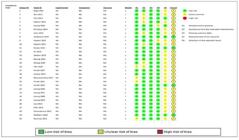
Graphical overview of risk of bias for each study included in the systematic review (Cochrane risk-of-bias tool for randomized controlled trials).
Statistical analysis
Data from individual RCTs were combined for the final meta-analysis. All statistical analyses were conducted using R Studio, version 4.1. The pooled risk ratio (RR) and 95% confidence interval (CI) were calculated for dichotomous categorical variables to compare the groups. For continuous variables, the pooled mean difference between groups and its 95% CI were determined. Heterogeneity was assessed with the I2 statistic and categorized as follows: 0% to 40%, might not be important; 30% to 60%, moderate heterogeneity; 50% to 90%, substantial heterogeneity; and 75% to 100%, considerable heterogeneity. When significant heterogeneity was detected, the methods were examined to identify its source (33). Fixed-effect models were primarily used, with random-effect models applied when necessary. Forest plots illustrated the results and effect sizes. Since all data were available in the original outcome measures, no data imputation or transformation was conducted.
RESULTS
Study selection
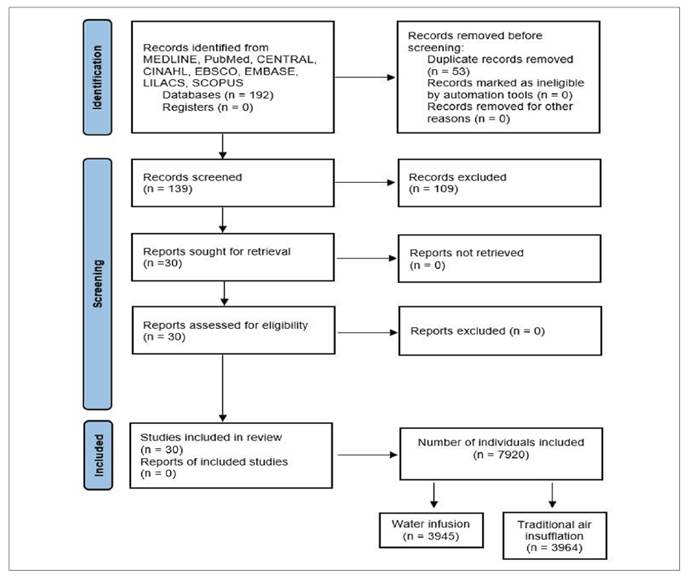
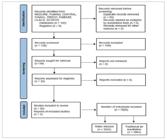
The initial database search yielded 139 studies. After removing duplicates, screening titles and abstracts, and applying eligibility criteria, 30 RCTs were included in the final analysis8,15,16,34-60. The study selection process is shown in Figure 2.
Study characteristics
The 30 RCTs included in this review enrolled 7909 patients, with 3945 undergoing water infusion colonoscopy and 3964 undergoing air/CO2 insufflation colonoscopy. Most studies were conducted at centers in North America and Europe. Screening was the indication for colonoscopy in all cases. All patients were aged 18 years or older. Table 1 presents the characteristics of the studies included.
The results of the analysis of outcomes (ADR, on-demand sedation rate, success rate of cecal intubation, need for abdominal compression, CIT, and total procedure time) for the water infusion technique are summarized in Table 2.
For the standard air/CO2 insufflation, the results are summarized in Table 3.
Adenoma detection rate
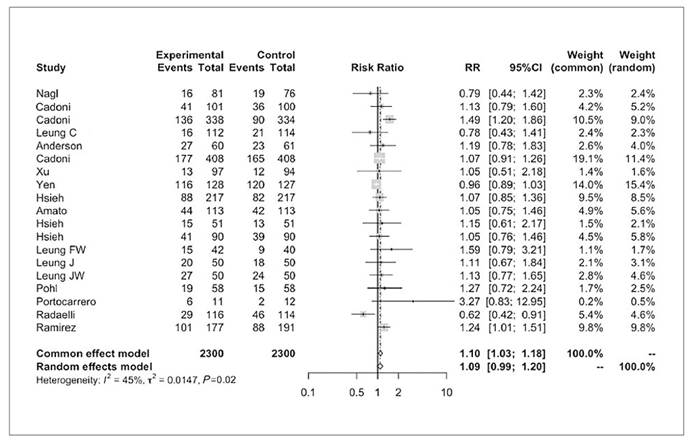
Nineteen studies assessed ADR, including a total of 2300 patients in the water infusion group and 2300 patients in the air/CO2 insufflation group (Figure 2)8,16,34-50. There were 947 adenoma detection events in the first group and 864 in the second group (RR 1.0, 95%CI 0.99 to 1.2, P>0.05). The NNT was 33.
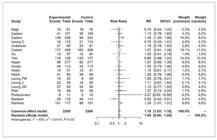
Forest plot of adenoma detection rate during colonoscopy with water infusion versus air/CO2 insufflation.
On-demand sedation
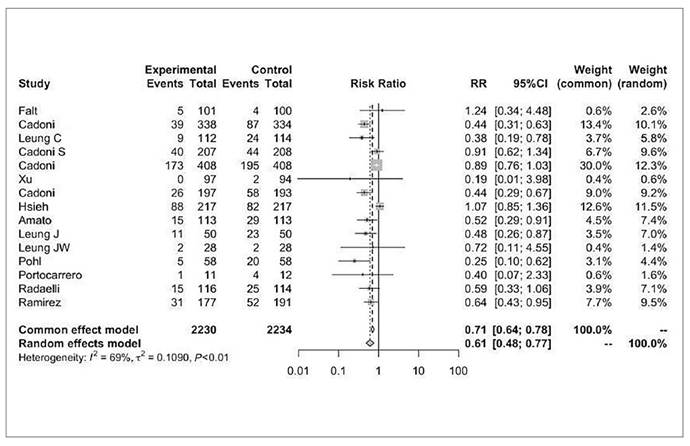
Fifteen studies assessed on-demand sedation rates during colonoscopy, including a total of 2230 patients in the water infusion group and 2234 patients in the air/CO2 insufflation group (Figure 3)8,16,35,36,38,39,41,42,46-49,51-53. There were 460 events in the first group and 651 events in the second group (RR 0.61, 95%CI 0.48 to 0.77, P=0.02).
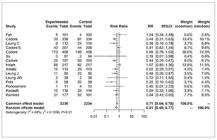
Forest plot of on-demand sedation rate during colonoscopy with water infusion versus air/CO2 insufflation.
Success rate of cecal intubation
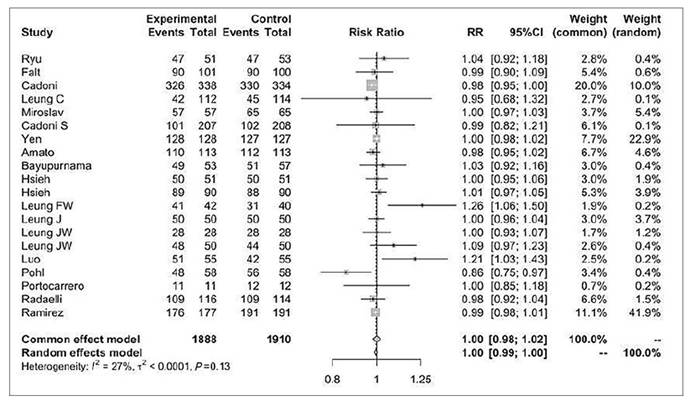
Twenty studies assessed the success rate of cecal intubation, involving a total of 1888 patients in the water infusion group and 1910 patients in the air/CO2 insufflation group (Figure 4) 8,16,35,36,40,42-51,53-57. There were 1651 events in the first group and 1670 events in the second group (RR 1.00, 95%CI 0.99 to 1.00, P>0.05).
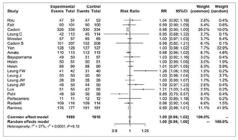
Forest plot of success rate of cecal intubation during colonoscopy with water infusion versus air/CO2 insufflation.
Need for abdominal compression
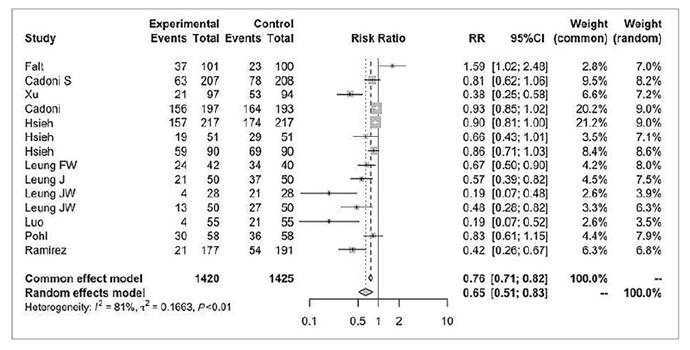
Fourteen studies assessed the need for abdominal compression during colonoscopy, involving a total of 1420 patients in the water infusion group and 1425 patients in the air/CO2 insufflation group (Figure 5)8,16,39,41,43-46,49-53,57. There were 629 events in the first group and 820 events in the second group (RR 0.65, 95%CI 0.51 to 0.83, P<0.01). The NNT was 20.
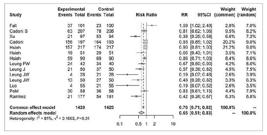
Forest plot of need for abdominal compression during colonoscopy with water infusion versus air/CO2 insufflation.
Cecal intubation time
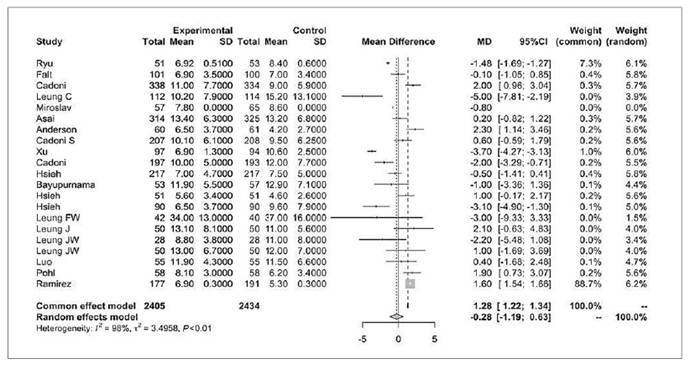
Twenty-one studies assessed CIT (in minutes), involving a total of 2405 patients in the water infusion group and 2434 patients in the air/CO2 insufflation group (Figure 6)8,15,16,35-37,39,41,43-46,49-57. A mean CIT was calculated for each group, and the mean difference was -0.28 (95%CI -1.19 to 0.63, P>0.05).
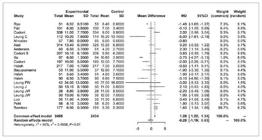
Forest plot of cecal intubation time (min) during colonoscopy with water infusion versus air/CO2 insufflation.
It showed no statistical significance.
Total procedure time
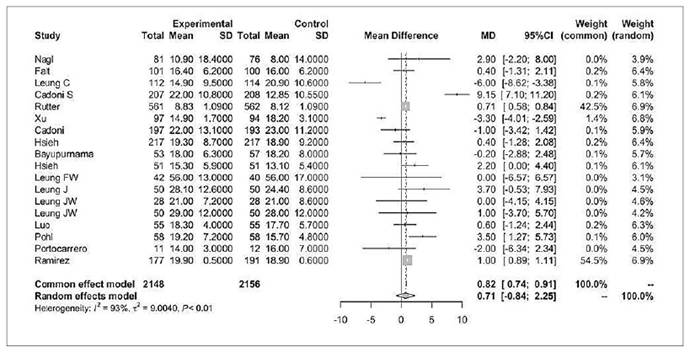
Eighteen studies assessed total procedure time (in minutes), defined as the duration from insertion to withdrawal of the colonoscope, involving 2148 patients in the water infusion group and 2156 patients in the air/CO2 insufflation group (Figure 7)8,16,34,36,39,41,43,45-47,49,50-53,56-58. A mean total procedure time was calculated for each group, and the mean difference was 0.71 (95%CI -0.84 to 2.25, P>0.05).

Forest plot of total procedure time (min) to complete colonoscopy with water infusion versus air/CO2 insufflation.
This outcome showed no significant difference.
Table 4 offers a summary of the comparative results between water infusion and air/CO2 insufflation across all variables of interest.
DISCUSSION
This systematic review and meta-analysis assessed the effectiveness of water infusion techniques in comparison to traditional air/CO2 insufflation during colonoscopy. The results indicate that although water infusion does not significantly reduce CITs12,17, it improves colon cleansing13, aids scope advancement16, and decreases patient discomfort25,29. Furthermore, water infusion is associated with lower rates of abdominal compression and on-demand sedation8,22, resulting in a better overall patient experience. Although water infusion has been shown to lessen pain and sedation needs, its effect on ADR remains uncertain. Some studies report improved ADR due to better mucosal visualization38,61, while others find no significant difference41. This variation suggests that water infusion techniques may offer specific benefits rather than a consistent advantage over air/CO2 insufflation.
The overall quality of evidence from the included RCTs is moderate, with notable methodological limitations. One of the main challenges encountered during the study selection process was the scarcity of trials that focused solely on air insufflation as the comparator. Despite its widespread historical use, few recent studies have isolated air as the only insufflation method for colonoscopy. As a result, many available studies either combined air with CO2 or compared water infusion with a mixed group, without clearly distinguishing between air and CO2. This lack of clarity leads to significant heterogeneity, especially since CO2 insufflation has been shown to reduce post-procedural discomfort compared to air42,62 substantially. Consequently, the inability to distinguish the effects of air from CO2 limits the interpretability of the findings and decreases the accuracy of comparisons involving water infusion techniques.
Another significant limitation is that endoscopist experience significantly affects procedural success, patient comfort, and complication rates20,23,31. The absence of experience stratification in many studies is a significant drawback. Differences in skill levels could influence comparisons between water infusion and air/CO2 insufflation techniques, potentially affecting the validity of the results63.
Additionally, blinding endoscopists was not feasible, which could have introduced performance bias in procedural assessments30,32. Differences in patient characteristics, such as prior abdominal surgery, diverticular disease, and irritable bowel syndrome, limit the generalizability of the findings18. Finally, the volume of water infused varied across studies, including 100-300 mL28,54,64, 241-521.4 mL41, and unrestricted volume of water65. This variation could have potentially influenced CIT12,66, ADR, and patient comfort67.
Results show that while water infusion techniques enhance patient comfort and lessen sedation requirements15,16, routine use for all colonoscopies may not be necessary. This method could be especially helpful for patients at high risk of sedation-related complications, such as those with cardiovascular or respiratory comorbidities21. Additionally, it may be beneficial during difficult colonoscopies, where looping and discomfort are more common23.
However, widespread adoption of water infusion may be limited by practical factors, including longer procedural times and the potential for higher costs from water leakage and additional equipment requirements28. The feasibility of incorporating water infusion into routine practice requires further assessment, especially in high-volume endoscopy centers where efficiency is essential24.
Given these limitations, future research should target several key gaps. First, subsequent trials should stratify outcomes by insufflation type, especially since CO2 insufflation has already shown benefits over air in reducing post-procedural discomfort42,68. This would offer a clearer view of the relative advantages and disadvantages of various insufflation methods. Second, there is a need to define optimal water volumes and infusion techniques, as standardization could improve reproducibility and clarify effects on ADR, CIT, and patient comfort54,69. Third, additional studies should examine whether specific subpopulations-such as older patients, individuals with prior surgeries, or those undergoing difficult colonoscopies-gain greater benefits from water infusion23,56. Identifying patient-specific advantages could lead to more personalized and effective colonoscopy practices. Lastly, it would be valuable to assess whether reduced pain and improved patient experience lead to greater adherence to CRC screening programs, with significant public health implications14. Exploring these long-term outcomes may help determine the broader impact of procedural improvements on screening compliance and overall public health.
CONCLUSION
Water infusion during colonoscopy does not significantly increase cecal intubation rates compared to air insufflation. Still, it provides essential patient-centered benefits, such as reduced pain, reduced sedation requirements, and greater comfort, especially during procedures that do not require sedation. While it enhances colon cleansing and may help detect lesions, its effectiveness depends on patient factors and procedural differences. Standardizing water infusion techniques and conducting more research are necessary to improve its use. Despite some limitations, water infusion remains a promising addition to colonoscopy, potentially enhancing patient experience and screening compliance.
REFERENCES
- 1 Church J. Being a colonoscopist. Dis Colon Rectum. 2023;66:1294-6.
- 2 Harewood GC, Wiersema MJ, Melton LJ 3rd. A prospective, controlled assessment of factors influencing acceptance of screening colonoscopy. Am J Gastroenterol. 2002;97:3186-94.
- 3 Lieberman DA, de Garmo PL, Fleischer DE, Eisen GM, Chan BK, Helfand M. Colonic neoplasia in patients with nonspecific GI symptoms. Gastrointest Endosc. 2000;51:647-51.
- 4 Rex DK. Key quality indicators in colonoscopy. Gastroenterol Rep (Oxf). 2023;11:goad009.
- 5 Rex DK, Schoenfeld PS, Cohen J, Pike IM, Adler DG, Fennerty MB, et al. Quality indicators for colonoscopy. Gastrointest Endosc. 2015;81:31-53.
- 6 Rex DK, Bond JH, Winawer S, Levin TR, Burt RW, Johnson DA, et al. Quality in the technical performance of colonoscopy and the continuous quality improvement process for colonoscopy: recommendations of the U.S. Multi-Society Task Force on Colorectal Cancer. Am J Gastroenterol. 2002;97:1296-308.
- 7 Baumann UA. Water intubation of the sigmoid colon: water instillation speeds up left-sided colonoscopy. Endoscopy. 1999;31:314-7.
- 8 Leung J, Mann S, Siao-Salera R, Ransibrahmanakul K, Lim B, Canete W, et al. A randomized, controlled trial to confirm the beneficial effects of the water method on U.S. veterans undergoing colonoscopy with the option of on-demand sedation. Gastrointest Endosc. 2011;73:103-10.
- 9 Church JM. Warm water irrigation for dealing with spasm during colonoscopy: simple, inexpensive, and effective. Gastrointest Endosc. 2002;56:672-4.
- 10 Spadaccini M, Schiliro A, Sharma P, Repici A, Hassan C, Voza A. Adenoma detection rate in colonoscopy: how can it be improved? Expert Rev Gastroenterol Hepatol. 2023;17:1089-99.
- 11 Zuniga Cisneros J, Tunon C, Adames E, Garcia C, Rivera R, Gonzalez E, et al. Is there a difference in adenoma detection rates according to indication? An Experience in a Panamanian Colorectal Cancer Screening Program. Gastroenterology Res. 2023;16:96-104.
- 12 Bernstein C, Thorn M, Monsees K, Spell R, O’Connor JB. A prospective study of factors that determine cecal intubation time at colonoscopy. Gastrointest Endosc. 2005;61:72-5.
- 13 Hafner S, Zolk K, Radaelli F, Otte J, Rabenstein T, Zolk O. Water infusion versus air insufflation for colonoscopy. Cochrane Database Syst Rev. 2015;2015:CD009863.
- 14 U.S. Preventive Services Task Force. Screening for colorectal cancer: U.S. Preventive Services Task Force recommendation statement. Ann Intern Med. 2008;149:627-37.
- 15 Asai S, Fujimoto N, Tanoue K, Akamine E, Nakao E, Hashimoto K, et al. Water immersion colonoscopy facilitates straight passage of the colonoscope through the sigmoid colon without loop formation: randomized controlled trial. Dig Endosc. 2015;27:345-53.
- 16 Cadoni S, Falt P, Gallittu P, Liggi M, Mura D, Smajstrla V, et al. Water Exchange Is the Least Painful Colonoscope Insertion Technique and Increases Completion of Unsedated Colonoscopy. Clin Gastroenterol Hepatol. 2015;13:1972-80 e1-3.
- 17 Chung GE, Lim SH, Yang SY, Song JH, Kang HY, Kang SJ, et al. Factors that determine prolonged cecal intubation time during colonoscopy: impact of visceral adipose tissue. Scand J Gastroenterol. 2014;49:1261-7.
- 18 Jaruvongvanich V, Sempokuya T, Laoveeravat P, Ungprasert P. Risk factors associated with longer cecal intubation time: a systematic review and meta-analysis. Int J Colorectal Dis. 2018;33:359-65.
- 19 Wong WJ, Arafat Y, Wang S, Hawes S, Hung K. Colonoscopy withdrawal time and polyp/adenoma detection rate: a single-site retrospective study in regional Queensland. ANZ J Surg. 2020;90:314-6.
- 20 Oh JR, Han KS, Hong CW, Kim BC, Kim B, Park SC, et al. Colonoscopy learning curves for colorectal surgery fellow trainees: experiences with the 15-year colonoscopy training program. Ann Surg Treat Res. 2018;95:169-74.
- 21 Ndosi C, Mung’ayi V, Gisore E, Mir S. Effect of target controlled propofol infusion versus intermittent boluses during oesophagogastroduodenoscopy: a randomized controlled trial. Afr Health Sci. 2019;19:3136-45.
- 22 Abuelazm MT, Abdelnabi M, Mahmoud A, Albarakat MM, Mohamed I, Saeed A, et al. The impact of abdominal compression devices on colonoscopy outcomes: a systematic review and meta-analysis of randomized controlled trials. Curr Med Res Opin. 2023;39:1247-56.
- 23 Wei MT, Friedland S. Strategies to manage the difficult colonoscopy. World J Gastrointest Endosc. 2023;15:491-5.
- 24 de’Angelis N, Di Saverio S, Chiara O, Sartelli M, Martinez-Perez A, Patrizi F, et al. 2017 WSES guidelines for the management of iatrogenic colonoscopy perforation. World J Emerg Surg. 2018;13:5.
- 25 Catinean A, Neag MA, Tulbure M. The advantages of water immersion colonoscopy in ambulatory service. Turk J Gastroenterol. 2019;30:636-40.
- 26 Nemoto D, Utano K, Endo S, Isohata N, Hewett DG, Togashi K. Ultrathin versus pediatric instruments for colonoscopy in older female patients: A randomized trial. Dig Endosc. 2017;29:168-74.
- 27 Luo DJ, Hui AJ, Yan KK, Ng SC, Wong VW, Chan FK, et al. A randomized comparison of ultrathin and standard colonoscope in cecal intubation rate and patient tolerance. Gastrointest Endosc. 2012;75:484-90.
- 28 Cadoni S, Ishaq S, Hassan C, Falt P, Fuccio L, Siau K, et al. Water-assisted colonoscopy: an international modified Delphi review on definitions and practice recommendations. Gastrointest Endosc. 2021;93:1411-20 e18.
- 29 Leung FW, Cadoni S, Koo M, Yen AW, Siau K, Hsieh YH, et al. A survey of colonoscopists with and without in-depth knowledge of water-aided colonoscopy. J Gastroenterol Hepatol. 2022;37:1785-91.
- 30 Page MJ, McKenzie JE, Bossuyt PM, Boutron I, Hoffmann TC, Mulrow CD, et al. The PRISMA 2020 statement: an updated guideline for reporting systematic reviews. BMJ. 2021;372:n71.
- 31 Liem B, Gupta N. Adenoma detection rate: the perfect colonoscopy quality measure or is there more? Transl Gastroenterol Hepatol. 2018;3:19.
- 32 Higgins JP, Altman DG, Gotzsche PC, Juni P, Moher D, Oxman AD, et al. The Cochrane Collaboration’s tool for assessing risk of bias in randomised trials. BMJ. 2011;343:d5928.
- 33 Borenstein M. How to understand and report heterogeneity in a meta-analysis: The difference between I-squared and prediction intervals. Integr Med Res. 2023;12:101014.
- 34 Nagl S, Ebigbo A, Goelder SK, Roemmele C, Neuhaus L, Weber T, et al. Underwater vs conventional endoscopic mucosal resection of large sessile or flat colorectal polyps: a prospective randomized controlled trial. Gastroenterology. 2021;161:1460-74 e1.
- 35 Cadoni S, Gallittu P, Sanna S, Fanari V, Porcedda ML, Erriu M, et al. A two-center randomized controlled trial of water-aided colonoscopy versus air insufflation colonoscopy. Endoscopy. 2014;46:212-8.
- 36 Leung CW, Kaltenbach T, Soetikno R, Wu KK, Leung FW, Friedland S. Water immersion versus standard colonoscopy insertion technique: randomized trial shows promise for minimal sedation. Endoscopy. 2010;42:557-63.
- 37 Anderson JC, Kahi CJ, Sullivan A, MacPhail M, Garcia J, Rex DK. Comparing adenoma and polyp miss rates for total underwater colonoscopy versus standard CO(2): a randomized controlled trial using a tandem colonoscopy approach. Gastrointest Endosc. 2019;89:591-8.
- 38 Cadoni S, Falt P, Rondonotti E, Radaelli F, Fojtik P, Gallittu P, et al. Water exchange for screening colonoscopy increases adenoma detection rate: a multicenter, double-blinded, randomized controlled trial. Endoscopy. 2017;49:456-67.
- 39 Xu X, Zhu H, Chen D, Fan L, Lu T, Shen Q, et al. Carbon dioxide insufflation or warm-water infusion for unsedated colonoscopy: A randomized controlled trial in patients with chronic constipation in China. Saudi J Gastroenterol. 2016;22:18-24.
- 40 Yen AW, Leung JW, Wilson MD, Leung FW. Underwater versus conventional endoscopic resection of nondiminutive nonpedunculated colorectal lesions: a prospective randomized controlled trial (with video). Gastrointest Endosc. 2020;91:643-54 e2.
- 41 Hsieh YH, Tseng CW, Hu CT, Koo M, Leung FW. Prospective multicenter randomized controlled trial comparing adenoma detection rate in colonoscopy using water exchange, water immersion, and air insufflation. Gastrointest Endosc. 2017;86:192-201.
- 42 Amato A, Radaelli F, Paggi S, Baccarin A, Spinzi G, Terruzzi V. Carbon dioxide insufflation or warm-water infusion versus standard air insufflation for unsedated colonoscopy: a randomized controlled trial. Dis Colon Rectum . 2013;56:511-8.
- 43 Hsieh YH, Tseng KC, Hsieh JJ, Tseng CW, Hung TH, Leung FW. Feasibility of colonoscopy with water infusion in minimally sedated patients in an Asian Community Setting. J Interv Gastroenterol. 2011;1:185-90.
- 44 Hsieh YH, Koo M, Leung FW. A patient-blinded randomized, controlled trial comparing air insufflation, water immersion, and water exchange during minimally sedated colonoscopy. Am J Gastroenterol. 2014;109:1390-400.
- 45 Leung FW, Harker JO, Jackson G, Okamoto KE, Behbahani OM, Jamgotchian NJ, et al. A proof-of-principle, prospective, randomized, controlled trial demonstrating improved outcomes in scheduled unsedated colonoscopy by the water method. Gastrointest Endosc. 2010;72:693-700.
- 46 Pohl J, Messer I, Behrens A, Kaiser G, Mayer G, Ell C. Water infusion for cecal intubation increases patient tolerance, but does not improve intubation of unsedated colonoscopies. Clin Gastroenterol Hepatol. 2011;9:1039-43 e1.
- 47 Portocarrero DJ, Che K, Olafsson S, Walter MH, Jackson CS, Leung FW, et al. A pilot study to assess feasibility of the water method to aid colonoscope insertion in community settings in the United States. J Interv Gastroenterol. 2012;2:20-2.
- 48 Radaelli F, Paggi S, Amato A, Terruzzi V. Warm water infusion versus air insufflation for unsedated colonoscopy: a randomized, controlled trial. Gastrointest Endosc. 2010;72:701-9.
- 49 Ramirez FC, Leung FW. A head-to-head comparison of the water vs. air method in patients undergoing screening colonoscopy. J Interv Gastroenterol. 2011;1:130-5.
- 50 Leung JW, Mann SK, Siao-Salera R, Canete W, Prather D, Leung F, et al. The established and time-tested water exchange method in scheduled unsedated colonoscopy significantly enhanced patient-centered outcomes without prolonging procedural times- A randomized controlled trial. J Interv Gastroenterol. 2013;3:7-11.
- 51 Falt P, Smajstrla V, Fojtik P, Tvrdik J, Urban O. Cool water vs warm water immersion for minimal sedation colonoscopy: a double-blind randomized trial. Colorectal Dis. 2013;15:e612-7.
- 52 Cadoni S, Sanna S, Gallittu P, Argiolas M, Fanari V, Porcedda ML, et al. A randomized, controlled trial comparing real-time insertion pain during colonoscopy confirmed water exchange to be superior to water immersion in enhancing patient comfort. Gastrointest Endosc. 2015;81:557-66.
- 53 Leung JW, Mann SK, Siao-Salera R, Ransibrahmanakul K, Lim B, Cabrera H, et al. A randomized, controlled comparison of warm water infusion in lieu of air insufflation versus air insufflation for aiding colonoscopy insertion in sedated patients undergoing colorectal cancer screening and surveillance. Gastrointest Endosc. 2009;70:505-10.
- 54 Ryu KH, Huh KC, Kang YW, Choi YW, Im EH, Lee TH, et al. An effective instillation method for water-assisted colonoscopy as performed by in-training endoscopists in terms of volume and temperature. Dig Dis Sci. 2012;57:142-7.
- 55 Miroslav V, Klemen M. Warm water immersion vs. standard air insufflation for colonoscopy: comparison of two techniques. Hepatogastroenterology. 2014;61:2209-11.
- 56 Bayupurnama P, Ratnasari N, Indrarti F, Triwikatmani C, Nurdjanah S, Leung FW. The water method colonoscopy in routine unsedated colonoscopy examinations: a randomized controlled trial in diagnostic cases in Indonesian patients. J Interv Gastroenterol. 2013;3:12-17.
- 57 Luo H, Zhang L, Liu X, Leung FW, Liu Z, Wang X, et al. Water exchange enhanced cecal intubation in potentially difficult colonoscopy. Unsedated patients with prior abdominal or pelvic surgery: a prospective, randomized, controlled trial. Gastrointest Endosc. 2013;77:767-73.
- 58 Rutter MD, Evans R, Hoare Z, Von Wagner C, Deane J, Esmaily S, et al. WASh multicentre randomised controlled trial: water-assisted sigmoidoscopy in English NHS bowel scope screening. Gut. 2021;70:845-52.
- 59 Myung YS, Kwon H, Han J, Lim J, Choi SY, Baeg MK, et al. Underwater versus conventional cold snare polypectomy of colorectal polyps 4-9 mm in diameter: a prospective randomized controlled trial. Surg Endosc. 2022;36:6527-34.
- 60 Zhang Z, Xia Y, Cui H, Yuan X, Wang C, Xie J, et al. Underwater versus conventional endoscopic mucosal resection for small size non-pedunculated colorectal polyps: a randomized controlled trial: (UEMR vs. CEMR for small size non-pedunculated colorectal polyps). BMC Gastroenterol. 2020;20:311.
- 61 Fuccio L, Frazzoni L, Hassan C, La Marca M, Paci V, Smania V, et al. Water exchange colonoscopy increases adenoma detection rate: a systematic review with network meta-analysis of randomized controlled studies. Gastrointest Endosc. 2018;88:589-97 e11.
- 62 Chen SW, Hui CK, Chang JJ, Lee TS, Chan SC, Chien CH, et al. Carbon dioxide insufflation during colonoscopy can significantly decrease post-interventional abdominal discomfort in deeply sedated patients: A prospective, randomized, double-blinded, controlled trial. J Gastroenterol Hepatol. 2016;31:808-13.
- 63 Jover R, Zapater P, Bujanda L, Hernandez V, Cubiella J, Pellise M, et al. Endoscopist characteristics that influence the quality of colonoscopy. Endoscopy. 2016;48:241-7.
- 64 Sugimoto S, Mizukami T. Diagnostic and therapeutic applications of water-immersion colonoscopy. World J Gastroenterol. 2015;21:6451-9.
- 65 Leung FW, Hu B, Wu J. Comparative effectiveness of water immersion and water exchange versus air insufflation for colonoscopy. J Interv Gastroenterol. 2013;3:100-3.
- 66 Kim HY. Cecal intubation time in screening colonoscopy. Medicine (Baltimore). 2021;100:e25927.
- 67 Hsieh YH, Lin HJ, Tseng KC. Limited water infusion decreases pain during minimally sedated colonoscopy. World J Gastroenterol. 2011;17:2236-40.
- 68 Memon MA, Memon B, Yunus RM, Khan S. Carbon dioxide versus air insufflation for elective colonoscopy: a meta-analysis and systematic review of randomized controlled trials. Surg Laparosc Endosc Percutan Tech. 2016;26:102-16.
- 69 Cadoni S, Ishaq S. How to perform water exchange colonoscopy, with tips and tricks. VideoGIE. 2019;4:355-7.

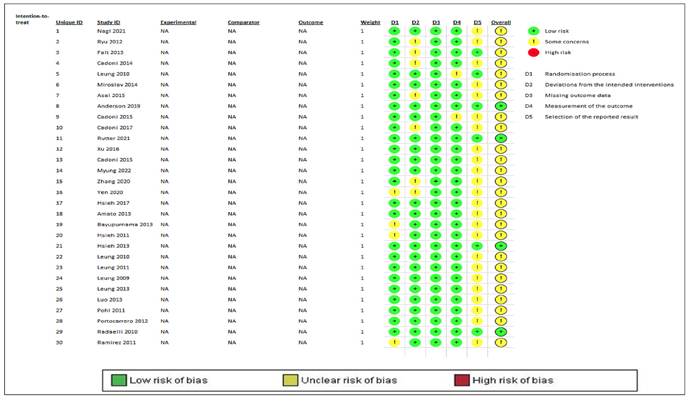 Note: the risk of bias presented above refers to the primary outcome of the study; no risk of bias was generated for secondary outcomes.