
 Social Representations of Health, Food, and Environment Among Students of the Insikiran Institute
Abstract
This study aimed to understand the social representations of health, food, and the environment among Indigenous students at the Insikiran Institute, analyzing how these representations influence their everyday practices and perceptions. A qualitative, exploratory, and descriptive approach was adopted, involving semi-structured interviews with 22 students. Data were analyzed in two dimensions: the organization of qualitative variables in Excel spreadsheets and IBM® SPSS®, and lexical analysis using the IRaMuTeQ software. The sample was predominantly female, aged between 21 and 30 years, with a majority identifying as Macuxi. The results highlighted the importance of traditional and environmental knowledge, the socio-environmental effects on diet, food diversity, perceptions of health and food, as well as the relevance of the environment and food organization in sociocultural events. The study reinforces the importance of culturally adapted health approaches, emphasizing the interconnection between health, food, and the environment in Indigenous contexts.
Keywords:
Food Diversity; Traditional Knowledge; Holistic Perceptions; Indigenous Education; Interculturality
Resumo
Este estudo buscou compreender as representações sociais sobre saúde, alimentação e ambiente entre os estudantes indígenas do Instituto Insikiran, analisando como essas representações influenciam suas práticas e percepções cotidianas. Adotou-se uma abordagem qualitativa, exploratória e descritiva, com a realização de entrevistas semiestruturadas com 22 estudantes. Os dados foram analisados sob duas vertentes: a organização de variáveis qualitativas em planilhas Excel e IBM® SPSS®, e a análise lexical no software IRaMuTeQ. A amostra foi majoritariamente feminina, com idades entre 21 e 30 anos, predominando a etnia Macuxi. Os resultados evidenciaram a importância do conhecimento tradicional e ambiental, os efeitos socioambientais na alimentação, a diversidade alimentar, as percepções sobre saúde e alimentos, bem como a relevância do ambiente e da organização alimentar em eventos socioculturais. O estudo reforça a importância de abordagens de saúde culturalmente adaptadas, destacando a interconexão entre saúde, alimentação e meio ambiente no contexto indígena.
Palavras-chave:
Diversidade Alimentar; Conhecimento Tradicional; Percepções Holísticas; Educação Indígena; Interculturalidade
Resumen
Este estudio tuvo como objetivo comprender las representaciones sociales sobre la salud, la alimentación y el medio ambiente entre estudiantes indígenas del Instituto Insikiran, analizando cómo estas representaciones influyen en sus prácticas y percepciones cotidianas. Se adoptó un enfoque cualitativo, exploratorio y descriptivo, mediante entrevistas semiestructuradas realizadas con 22 estudiantes. Los datos fueron analizados en dos dimensiones: la organización de variables cualitativas en hojas de cálculo de Excel e IBM® SPSS®, y el análisis léxico con el software IRaMuTeQ. La muestra fue mayoritariamente femenina, con edades entre 21 y 30 años, predominando la etnia Macuxi. Los resultados destacaron la importancia del conocimiento tradicional y ambiental, los efectos socioambientales sobre la alimentación, la diversidad alimentaria, las percepciones sobre la salud y los alimentos, así como la relevancia del entorno y la organización alimentaria en eventos socioculturales. El estudio refuerza la importancia de enfoques de salud culturalmente adaptados, subrayando la interconexión entre salud, alimentación y medio ambiente en el contexto indígena.
Palabras-clave:
Diversidad Alimentaria; Conocimiento Tradicional; Percepciones Holísticas; Educación Indígena; Interculturalidad
Introduction
This study explores the social representations of health, food, and environment among students of the Insikiran Institute of Indigenous Higher Education, employing the Theory of Social Representations (JODELET, 2005; MOSCOVICI, 1978; 2011; BERTONI; GALINKIN, 2017 ) to understand how these representations guide individuals and facilitate communication within society. Health is understood as a concept that transcends physical, mental, and social well-being, being influenced by social, cultural, economic, political, and religious dimensions (MACHADO et al., 2021).
Food, which encompasses economic, social, and cultural factors, is fundamental to cultural identity and social cohesion (DUARTE; BRISOLA; RODRIGUES, 2021). In the Indigenous context, cultural diversity and the adoption of new dietary practices are considered essential (BANIWA, 2012; LEITE, 2007; 2012 ).
Nature, environment, and surroundings are distinct yet interrelated concepts. The environment encompasses the natural world as well as the social, cultural, economic, and technological aspects that affect the lives of living beings (DULLEY, 2004). Investigating the environment through the lens of social representations enables an understanding of the knowledge a specific segment of the population holds about the condition of the planet and its natural resources.
According to Moscovici (1978; 2011 ), social representations (SR) are essential for the stabilization of knowledge, offering an epistemic foundation that transforms the unknown into the known through the processes of objectification and anchoring. Objectification turns abstractions into tangible realities, facilitating cognitive management and the reinterpretation of complex meanings into concrete forms. Simultaneously, anchoring connects new ideas to pre-existing knowledge, simplifying and familiarizing the new while promoting the assimilation of concepts within familiar contexts. These processes, shaped by sociocultural dynamics, not only structure knowledge but also reveal how it is acquired, understood, and sustained within communities.
Social representations (SR), which are constructed to cope with new situations, influence both individual and collective behaviors (POLLI; CAMARGO, 2015; BERTONI; GALINKIN, 2017 ). In the Indigenous context, these representations are especially relevant, as they are connected to worldviews, beliefs, and traditional practices (SILVA, 2019; SILVA; RIBEIRO; NAZARENO, 2021; CORREIA; MAIA, 2021; CARIOCA et al., 2021; SILVA, 2022; ). However, there are gaps in the understanding of these representations among Indigenous students in higher education.
This research fills a gap in the literature by adopting an exploratory-descriptive methodology with a qualitative approach, using semi-structured interviews to analyze students’ perceptions. Data analysis was conducted using the IRaMuTeQ software, highlighting the most frequent lexical fields and providing a basis for qualitative interpretation (SOUZA et al., 2018; CAMARGO; JUSTO, 2021).
This study is relevant as it elucidates the social representations of Indigenous students regarding health, food, and the environment, contributing to sustainable practices and cultural preservation, while also offering insights for educational and health policies and practices tailored to Indigenous needs.
This study investigated the social representations of health, food, and the environment among Indigenous students at the Insikiran Institute and how these representations influence their everyday practices and perceptions. The main objective was to describe the meanings and interpretations constructed by the students regarding health, food, and the environment, seeking to understand how these perceptions shape their daily practices.
Materials and Methods
This study adopted an exploratory-descriptive and qualitative approach (MEDEIROS, 2023; GIL, 2018). It was conducted at the Insikiran Institute of Indigenous Higher Education, at the Federal University of Roraima (UFRR), in Boa Vista, Roraima, between June 20, 2022, and January 30, 2024. Ethical approval was obtained from the Brazil Platform of the Research Ethics Committee for Human Subjects at UFRR and the National Research Ethics Commission (CONEP), under approval number 5.460.390 and CAAE: 55309321.6.0000.5302.
The participants in this study were selected through convenience sampling, following a method similar to that used by Pancieri et al. (2018). Recruitment was carried out through initial contact in the common areas of the Insikiran Institute and prior communication via email or WhatsApp, which were used to schedule the interviews.
The study involved 22 Indigenous students from three undergraduate programs: Intercultural Teaching Degree (CLI), Bachelor’s in Indigenous Territorial Management (CGTI), and Bachelor’s in Indigenous Collective Health Management (CGSCI). The inclusion criteria were fluency in Portuguese, age over 18 years, and voluntary consent. The interviews were conducted individually in a private room at the Insikiran Institute, recorded with the participants’ permission, and each participant was assigned a sequential numerical code to ensure anonymity.
The data were organized in Excel spreadsheets and statistically analyzed using IBM® SPSS® software (version 24). The results were stratified by sex, age, age group, ethnicity, academic program, and period of study, and expressed through measures of central tendency (mean, median, and mode) and standard deviation. Absolute and relative frequencies were used to present categorical variables (VIEIRA, 2022). The study gathered students’ responses to the structured interview script, which addressed health, food, and the environment through 20 predefined questions.
The research questions aimed to understand students’ perceptions of health, food, and the environment, and how these aspects are interconnected in their lives. The interviews, which lasted an average of 80 minutes, allowed for clarification of doubts and ensured participants’ understanding of the topics discussed.
For the analysis of qualitative data, the IRaMuTeQ software was used-a robust tool for handling large volumes of text and performing various analytical techniques, including Classical Lexicographical Analysis, Descending Hierarchical Classification (DHC), Correspondence Factor Analysis, Similarity Analysis, and Word Cloud generation (SOUZA et al., 2018; CAMARGO; JUSTO, 2021).
IRaMuTeQ version 0.7 was used to analyze the interview responses, identifying patterns and recurring themes, which enabled a deeper understanding of the social representations (SR) within the studied group (GÓES et al., 2021; CAMARGO; JUSTO, 2021). Two main analyses were conducted: Descending Hierarchical Classification (DHC) and similarity analysis. DHC groups active words from a text into lexical classes based on frequency and position, highlighting relationships between groups and identifying patterns and categories of meaning (MENDES et al., 2019; CAMARGO; JUSTO, 2021 ).
Similarity analysis, grounded in graph theory, generates a graph that illustrates the connections among words in a corpus, enabling the identification of text structure and relevant themes through word co-occurrence (SALVIATI, 2017; COSTA et al., 2018; CAMARGO; JUSTO, 2021; MAHEMA, 2022 ). This analysis offers a visual representation of the relationships between elements in the mathematical model, thereby complementing the DHC.
Results
The majority of research participants were female (77.27%) and between 21 and 30 years old (81.82%), with a notable concentration at age 26 (31.82%). Table 1 presents the distribution of participants by sex, age, ethnicity, academic program, and period of study, providing an overview of the demographic and educational characteristics of the Indigenous students interviewed.
The demographic analysis of the participants revealed that the majority were between 21 and 30 years old (77.27%), with the least represented group being those aged 41 to 50 (9.09%). The Macuxi were the most represented ethnic group (54.55%), followed by the Wapichana (40.91%) and the Wai-Wai (4.55%). The Indigenous Collective Health Management program (CGSCI) had the highest enrollment (81.82%), while the Intercultural Teaching Degree (CLI) and Indigenous Territorial Management (CGTI) programs each accounted for 9.09% of participants. Most participants were in the 9th academic term or beyond (45.45%), followed by those in the 3rd to 5th term (36.36%) and the 6th to 8th term (18.18%).
The DHC analysis of the 22 texts identified 2,138 distinct forms in 19,739 occurrences, distributed across 585 text segments. Of these, 459 segments (78.46%) were classified into six different classes. On average, each segment contained approximately 33.74 forms, indicating lexical density. Figure 1 illustrates the effectiveness of the method in grouping the text segments into six lexical classes, with 378 segments (88.11% of the total) classified according to their semantic or structural affinities.
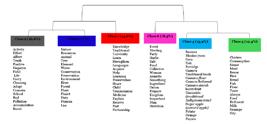
Dendrogram of the six lexical classes obtained from the DHC of Social Representations on Health, Food, and Environment
Figure 1 above presents the six lexical classes, each represented by a different color, with percentages indicating the proportion of text segments classified into each category. This analysis enabled the clear identification of patterns by grouping themes based on word frequency and relationships within the texts.
Figure 2 provides a graphical representation of the six identified lexical classes, reflecting the meanings attributed by participants to the social representations. Keywords were selected based on their importance, indicated by percentages and chi-square (χ²) values. This method provided an in-depth understanding of the themes and concepts discussed, highlighting the diversity and richness of the social representations related to health, food, and the environment.
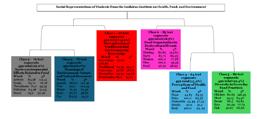
Class 1, titled Strengthening Traditional and Environmental Knowledge, accounts for 14.6% of the text segments and focuses on the transmission of traditional knowledge, cultural values, interculturality, land protection, and environmental conservation. It emphasizes the importance of formal education in preserving these practices. The following text segments illustrate this class:
Yes, what I have learned at the university can help strengthen my traditional knowledge. By combining academic learning with our traditional knowledge, we gain greater strength to preserve and protect our lands. (N04, female, 26 years old, Wapichana, CGSCI).
I have learned a lot at the university, and this has strengthened my traditional knowledge, such as other languages and cultures, and helped me understand the diversity among ethnic groups. The preservation and transmission of traditional knowledge occur mainly through practical learning. (N09, male, 26 years old, Macuxi, CLI)
Lexical Class 1 emphasizes the integration of academic learning with traditional knowledge to strengthen land protection, highlights the importance of practical learning in the preservation and transmission of traditional knowledge and practices, and underscores the sharing of sustainability-related knowledge with the community. This class underlines the appreciation of traditional knowledge and the benefits of academic education in reinforcing cultural identity and environmental sustainability.
Lexical Class 2, Socio-environmental Effects Related to Food, represents 16.6% of the text segments and addresses the implications of food practices on society and the environment. Participants highlight the influence of climate on agriculture, the importance of raising awareness about waste management, and the challenges posed by waste accumulation, as well as practices such as burning and community clean-up efforts. These reflections emphasize the impact of human activities on the environment, particularly in relation to food production and consumption. The following statements illustrate this perspective:
In 2022, we experienced major losses when planting in anticipation of the rains, which, unfortunately, did not come. It was a period of prolonged drought, and we lost our corn and bean crops-we lost the plantation. However, we still have sweet potatoes and pumpkins in our backyard, which survived because we irrigate them, and they are still fit for consumption. These activities, to me, are beneficial for the environment. (N01, female, 26 years old, Macuxi, CGSCI).
With regard to environmental issues, our main concern is pollution and the accumulation of waste, including problems such as burning and deforestation, which negatively affect the environment. (N21, male, 24 years old, Macuxi, CGSCI)
Lexical Class 2 emphasizes the relationship between food practices and their effects on the environment and society, highlighting the complexity of the interactions between the environment and social practices.
Class 3, titled Diversity in Everyday Diet, represents 19.4% of the corpus and highlights the variety in participants’ diets. It emphasizes the balance between traditional Indigenous foods and the inclusion of processed and industrialized products, exemplified by items such as chicken, meat, beans, rice, bread, fish, and manioc flour. The following text segments illustrate this diversity:
In the Indigenous community, we consume more fish, free-range chickens, game, fruits, buriti wine, boiled cassava, sweet potatoes, pumpkin, and porridges made from corn, carimã, and tapioca starch. In the city, the main foods I consume at home are beans, rice, meat, fish, bread, butter, and milk. (N14, female, 50 years old, Wapichana, CGSCI).
The main foods I consume at home in the community are fish, free-range chicken, game, manioc flour, tapioca, onions, peppers, and some types of processed foods. The main foods I consume at home in the city are fish, red meat, rice, beans, manioc flour, coffee, bread, and milk. (N22, male, 33 years old, Macuxi, CGTI).
Lexical Class 3 highlights the diversity of dietary patterns, showing the coexistence of traditional practices-such as the consumption of fish and game-with industrialized products, such as rice, bread, and milk. It also emphasizes the variety of ingredients in the Indigenous diet, including animal proteins, vegetables, and cassava-based products, reflecting the complexity of food consumption and the adaptation to new eating habits.
Class 4, titled Perceptions of Health and Food, represents 13.9% of the text segments and addresses conceptions of health, the role of food, and the importance of traditional foods. Terms such as banana, cassava, corn, fish, and porridge highlight the connection between health-encompassing physical, mental, and social well-being-and food, whether traditional or part of the daily diet. The following text segments illustrate these perceptions:
Health is when a person is well physically and mentally, has a job and access to food, and has their basic needs met in order to live, including quality education for their children. Food is everything that can benefit my body, so that I feel physically well. Traditional foods are fish, the pepper used to make damorida, and manioc flour, which I consume every day with every meal. (N02, female, 26 years old, Macuxi, CGSCI).
Health is my physical and psychological well-being. Well-being means having adequate housing, quality education, healthy food, clean and treated water, basic sanitation, and employment to support my way of life. Food includes items such as meat, fish, fruits, and vegetables that serve to nourish, satisfy hunger, and provide human nutrition. Traditional foods include corn porridge, rice porridge, fried fish, damorida, manioc flour, cassava, sweet potatoes, and fruits such as watermelon, buriti, tucumã, mango, and cashew. (N15, female, 50 years old, Wapichana, CGSCI).
Lexical Class 4 addresses participants’ social representations of health, offering a holistic perspective that includes physical, mental, and emotional well-being, food security, and quality of life. Food is highlighted as essential to health, with an emphasis on traditional Indigenous foods, which are valued for both their nutritional and cultural significance. This class underscores the complexity of health conceptions and the importance of traditional foods for the well-being and everyday lives of the participants.
Class 5, titled Meanings of Environment, Natural Surroundings, and Natural Resources, comprises 17% of the text segments and focuses on the interactions between society, food, and environmental conservation. Words such as nature, natural resources, animal, tree, water, and river reflect participants’ perceptions and values regarding the natural environment and its importance for conservation and preservation, as expressed in the following text segments:
Environment is the Indigenous community where I live, while the natural environment refers to planet Earth and everything around it, including natural elements and their interactions. Natural resources are water, soil, trees, plants, and animals. Environmental conservation means preserving nature in its original state, without human interference, while environmental preservation is about keeping the environment exactly as it has always been, without changes. (N06, female, 23 years old, Wapichana, CGSCI).
Environment refers to the space where we live, including our homes and workplaces. The natural environment is broader, encompassing nature and the ecosystem around us. Natural resources, such as trees, water, and land, are essential elements of the environment, used within our territories. Environmental conservation focuses on the maintenance and protection of the environment, while environmental preservation aims to keep natural spaces clean, intact, and free from pollution. (N11, female, 23 years old, Wapichana, CGSCI).
Lexical Class 5 explores the perceptions and values of Indigenous students related to the conservation of the natural environment, highlighting their emphasis on sustainability and the preservation of biodiversity. The accounts reveal a broad understanding of the environment, ranging from the local to the global sphere, and emphasize the interconnectedness between human beings and ecosystems, as well as the importance of respect and ecological balance. This class underscores the relevance of living in harmony with nature.
Class 6, titled Food Organization in Sociocultural Events, represents 18.5% of the text segments and emphasizes the significance of food in Indigenous social and cultural practices. Words such as event, celebration, garlic, salt, and black pepper illustrate the connection between food and community activities, highlighting the role of food in the celebration of events, as illustrated in the following text segments:
The tuxaua summons the people, the men slaughter a cow, the women prepare the food, and the entire community takes part in the communal lunch, which includes broth, damorida, and barbecue. During celebrations, in addition to the communal meal, there are food stalls. Food is considered essential at meetings or events, and it is a tradition to prepare dishes such as barbecue or galinhada. (N03, female, 35 years old, Wapichana, CGSCI).
Food organization during festivals or events is a collective effort: the men prepare the venue and slaughter the cow, while the women do the cooking. Each family contributes with food or money. In addition, food is sold, such as damorida, juice, paçoca with banana, and grilled meat skewers. (N13, female, 23 years old, Macuxi, CGSCI).
Lexical Class 6 highlights the importance of food in Indigenous social and cultural practices, emphasizing its role as an element of social connection, tradition, and hospitality during events and celebrations. Food is multifunctional, serving as a key component of collective celebration, identity construction, and the strengthening of community bonds.
In addition to the lexical analysis, a similarity analysis was conducted, with word frequencies ranging from 293 to 3 occurrences. Figure 3 presents a similarity map adjusted for clarity, highlighting words with frequencies between 98 and 50 occurrences. This analysis aids in visualizing the relationships between words and in understanding the structure of the textual data.
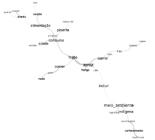
In the similarity map, words with higher co-occurrence frequencies were identified as central to the social representations of health, food, and environment. The most relevant words-environment, food, eating, rice, beans, chicken, event, pepper, meat, health, Indigenous, consumption, city, knowledge, and traditional-are highlighted in the graph in bold with black borders, indicating their centrality. The proximity of the words suggests a shared context or theme, contributing to the identification of the structure of social representations. The analysis revealed the interconnection among central themes, underscoring the importance of these terms in understanding participants’ perceptions of the study topics.
Discussion
The study indicated a predominance of female participants, suggesting greater access for women to Indigenous higher education. The most common age range was 21 to 30 years, reflecting a young student profile. The Indigenous Collective Health Management program was the most representative, with the majority of participants in the ninth semester or beyond, indicating a possible retention trend within the program. This highlights the importance of investigating academic retention and dropout rates in this context.
Previous studies, such as those by Aleluia et al. (2023) and Gomes et al. (2020), identified a similar profile in nursing programs, with a predominance of women and young individuals, corroborating the findings of this study. Bergamaschi, Doebber, and Brito (2018) observed an increase in the demand for spots in selection processes by Indigenous peoples, with greater participation by women and a preference for programs in the fields of Health Sciences, Education, Law, and Earth Sciences.
As etnias Macuxi, Wapichana e Wai-Wai foram as mais representadas no estudo. Os Macuxi são a etnia mais numerosa em Roraima, distribuídos em 22 terras indígenas (LISBOA, 2017). Já os Wapichana, assim como os Macuxi, são conhecidos pela participação em organizações sociais que defendem seus direitos e a preservação de sua cultura nas instituições de ensino superior (SILVA, 2019).
Roraima has a significant Indigenous population, accounting for 15.29% of the state’s total, approximately 97,320 individuals (IBGE, 2023). In addition to the Macuxi, Taurepang, Sapará, Ingarikó, Patamona, and Wai-Wai, who belong to the Karib language family, and the Wapichana, from the Aruak family, there is also a significant presence of the Yanomami, Ye’kuana, and Sanumá peoples in the state (ALVES et al., 2019; IBGE, 2023 ).
The diversity of Indigenous peoples is essential to society, and the protection of their traditional knowledge is fundamental, as established by legislation and conventions such as the National Education Guidelines and Framework Law (LDB) (BRAZIL, 2023), the International Labour Organization’s Convention 169 (ILO, 2011), and the 1988 Brazilian Constitution (BRAZIL, 2016a). This protection, which spans from basic to higher education, is intrinsically linked to human rights. Therefore, promoting Indigenous cultural diversity within the educational system is crucial for building a more just, inclusive, and diverse society (NODER et al., 2019; SILVA; RIBEIRO; NAZARENO, 2020; NASCIMENTO et al., 2021; SIMÃO, 2022 ).
Indigenous university students hold holistic conceptions of health, considering physical, social, mental, and emotional well-being, and they relate these perceptions to dietary practices and traditional foods. Amorim, Coelho, and Rocha (2021) analyzed the conceptions of health and illness among students enrolled in a health program at the Federal University of Bahia, identifying broad and multifactorial perceptions that are inseparable from sociocultural, political, economic, and environmental contexts.
The study by Machado et al. (2021) highlights the complexity of the concept of health, encompassing physical, emotional, social, and spiritual dimensions. It also emphasizes the importance of adequate nutrition, economic stability, and sanitation infrastructure for socioeconomic well-being and health. The findings indicate that socioeconomic conditions are more decisive in determining health disparities than biological factors, underscoring the importance of public policies that ensure access to healthy food and basic services.
The diets of Indigenous peoples vary according to their traditions, region, and the natural resources available. Generally, men are responsible for hunting, fishing, and tree felling, while women take care of children as well as planting, harvesting, and food preparation (LEITE, 2007; 2012; BRASIL, 2016b; GARNELO; SAMPAIO; PONTES, 2019 ). Indigenous food practices are deeply connected to collective identities, ancestry, territory, and time, and are vital for personal interactions, reciprocity, memory, and narratives of political organization and resistance (LEITE, 2007; 2012 ).
The study revealed a transition in the eating habits of Indigenous students, who now incorporate traditional foods alongside processed and industrialized products. This shift reflects emerging dietary and cultural preferences, as well as concerns related to sustainability and socio-environmental impact.
Interaction with non-Indigenous society, climate change, agribusiness, pesticides, illegal mining, and processed foods have contributed to a decreased consumption of traditional Indigenous foods. These changes may negatively affect both human and environmental health in Indigenous territories over the medium and long term (COIMBRA JR, 2014; ALVES; RAMIRES, 2020; BERNAL et al., 2020; LIMA; CORRÊA; GUGELMIN, 2022; MOLINA et al., 2023; STOLZ; SILVA; COSTA, 2024 ).
Indigenous peoples adopt solid waste management practices that combine scientific and traditional knowledge, aiming to raise awareness about proper disposal within their communities. These initiatives underscore the need for further research, public policies, and environmental education to mitigate environmental impacts, thereby protecting Indigenous health and culture (CORNÉLIO et al., 2019; LIMA et al., 2023 ).
Several studies emphasize the importance of safeguarding the rights of Indigenous and traditional communities in environmental matters (TEIXEIRA, 2016; FLORIT, 2019; SILVA, 2022; VIEIRA; MENDES; ALMEIDA, 2023 ). These communities are affected by environmental degradation, and their ancestral knowledge is vital for the sustainable management of natural resources. However, their rights are often disregarded, resulting in conflicts and the loss of traditional knowledge. To address this issue, it is essential to strengthen the legal protection of these communities, recognize their original rights, and integrate their knowledge into environmental decision-making processes.
Conclusions
The study addressed the interaction between tradition and modernity in Indigenous perceptions, highlighting the relevance of health, food, and the environment in contemporary Indigenous life. It emphasized the importance of strengthening traditional and environmental knowledge, valuing cultural heritage, and integrating traditional and academic knowledge, with particular attention to the role of universities in this integration. The study also underscored the need for awareness regarding the environmental impacts of food practices and the adoption of sustainable strategies for solid waste management.
The dietary diversity of Indigenous students demonstrates the richness and cultural adaptability of their food practices, but also points to the risk of chronic diseases. Perceptions of health and nutrition reveal a holistic view, with an emphasis on traditional foods.
The relationship with the environment is marked by respect, underscoring the importance of conservation and preservation for sustainability. Furthermore, food organization in sociocultural events emphasizes the central role of food in celebrations and community cohesion. The study highlights that health, food, and the environment are fundamental and interconnected aspects of Indigenous ways of life, essential for the preservation of their cultural practices.
The study underscores the importance of culturally adapted public policies and educational programs to promote and protect the sustainability and autonomy of Indigenous communities. It highlighted students’ deep understanding of the interconnection between health, food, and the environment, emphasizing its relevance to the preservation of cultural practices and Indigenous well-being (bem viver). Despite limitations such as the lack of an equitable sample, the research explored the meanings of social representations, suggesting the need for future studies with broader samples or mixed methodologies to enhance the understanding of these representations.
Acknowledgments
We extend our heartfelt gratitude to the Indigenous students of the Insikiran Institute of Indigenous Higher Education at the Federal University of Roraima for generously sharing their experiences, knowledge, and perceptions, which were essential to the development of this study. Our appreciation also goes to the Indigenous leaders and professionals involved in the training in Indigenous Collective Health, who continuously strengthen the struggle for intercultural higher education. We further thank the Coordination of the Graduate Program in Natural Resources (PRONAT/UFRR) for its institutional support of the research, as well as our advisor and co-advisor, whose attentive guidance and ethical commitment were instrumental in the construction of this work.
References
- ALELUIA, E. S.; NASCIMENTO, L. R.; BOMFIM, V. V. B. S.; ARAÚJO, S. C.; CARVALHO, D. J. M. de. Profile of nursing students at a private higher education institution in Salvador, Bahia. Research, Society and Development, 12(7), e0112734858, 1-9, 2023.
- ALVES, S. C.; RAMIRES, M. Teko Arandu: The relationship between culture and eating habits of the Guarani Mbyá from the Ribeirão Silveira Indigenous Village in Bertioga - SP. Revista Abordagens, João Pessoa, 2(1), 40-57, January-June, 2020.
- ALVES, A. P. B.; ALMEIDA, S. L.; BARRETO, H. C. S.; FERNANDES, Y. M.; CUNHA, R. M.; ALVES, P. V. B.; ALVES, P. T. B. Most prevalent diseases and health conditions in an Indigenous community in Boa Vista-RR: An experience report. Revista Eletrônica Acervo Saúde, (26), e673, July 18, 2019.
- AMORIM, L. O. A. B.; COELHO, M. T. Á. D.; ROCHA, M. N. D. Health and illness: students’ conceptions. In: AMORIM, L. O. A. B.; ABREU, M. A. G. M.; COELHO, M. T. Á. D. (Eds.). Health in higher education: what do students and teachers have to say? Salvador: EDUFBA, pp. 25-38, 2021.
- BANIWA, T. T. Health and nutrition in rural and urban areas: an Indigenous testimony. In: GARNELO, L.; PONTES, A. L. (Eds.), Indigenous Health: an introduction to the topic (pp. 184-205). Brasília: MEC-SECADI, 2012.
-
BERGAMASCHI, M. A.; DOEBBER, M. B.; BRITO, P. O. Indigenous students in Brazilian universities: a study of access and retention policies. Revista Brasileira de Estudos Pedagógicos, 99(251), 37-53, Jan./Apr. 2018. Available at: https://doi.org/10.24109/2176-6681.rbep.99i251.3337 Accessed on: April 18, 2024.
» https://doi.org/10.24109/2176-6681.rbep.99i251.3337 - BERNAL, N.; GAIVIZZO, L.; RODRIGUES-FILHO, S.; SAITO, C.; SILVA, R.; MICHELS, A.; ALMEIDA, A. C. Climate challenges for Indigenous peoples: socioecological vulnerability in the Sub-Middle São Francisco River Basin region, Brazil. Revista Vínculos, 17(1), 42-59, January-June, 2020.
- BERTONI, L. M.; GALINKIN, A. L. Theory and methods in social representations. In: MORORÓ, L. P.; COUTO, M. E. S.; ASSIS, R. A. M. (Eds.), Theoretical and methodological notes on research in education: conceptions and trajectories [online] (pp. 101-122). Ilhéus, BA: EDITUS, 2017.
- BRAZIL. Constitution of the Federative Republic of Brazil: constitutional text promulgated on October 5, 1988, with amendments established by Constitutional Revision Amendments Nos. 1 to 6/94. Brasília, DF: Federal Senate, Technical Publications Coordination, 2016a. 496 p.
- BRAZIL. Ministry of Health. Secretariat for the Management of Labor and Education in Health. Department of Health Education Management. Training Program for Indigenous Health Agents (AIS) and Indigenous Sanitation Agents (AISAN). Thematic Area III - AIS. Actions for the Prevention of Illnesses and Diseases and the Recovery of Indigenous Peoples’ Health. Brasília: Ministry of Health, 2016b. 78 p.
-
CAMARGO, B. V.; JUSTO, A. M. Tutorial for the use of the IRaMuTeQ software. Laboratory of Social Psychology of Communication and Cognition - UFSC. Brazil. Florianópolis, November 22, 2021. Available at: http://www.iramuteq.org/documentation/fichiers/Tutorial%20IRaMuTeQ%20em%20portugues_22.11.2021.pdf Accessed on: February 28, 2024.
» http://www.iramuteq.org/documentation/fichiers/Tutorial%20IRaMuTeQ%20em%20portugues_22.11.2021.pdf - CARIOCA, A. T.; ALVES, A. P. B.; ALMEIDA, S. L.; ARGENTA, L. B.; BARRETO, H. C. S.; FREITAS, M. A. B. Perceptions of Type 2 Diabetes Mellitus in the Jabuti Bonfim Indigenous Community - RR: An experience report. Revista Eletrônica Acervo Saúde, 13(2), e6000, 2021.
- COSTA, F. G., COUTINHO, M. P. L., CIPRIANO, J. P. S., ARAÚJO, J. M. G., CARVALHO, A. F., & PATRÍCIO, J. M. Social Representations of Diabetes Mellitus and Its Treatment: A Psychosociological Study. Revista de Psicologia da IMED, Passo Fundo, 10(2), 36-53, July-December, 2018.
- CORNÉLIO, I.; MOURA, G. S.; STOFEL, J.; MUELBERT, B. Study of household solid waste in the Rio das Cobras Indigenous Land in the municipality of Nova Laranjeira, PR. Interações (Campo Grande), 20(2), 575-584, April 2019.
- CORREIA, S. B.; MAIA, L. M. Social Representations of “Being Indigenous”: an analysis from the non-Indigenous perspective. Psicologia: Ciência e Profissão, 41, e221380, 2021.
- COIMBRA JUNIOR, C. E. A Health and Indigenous peoples in Brazil: reflections based on the First National Survey on Indigenous Health and Nutrition. Cadernos de Saúde Pública, Rio de Janeiro, 30(4), 855-859, April 2014.
- DUARTE, M. B. do C., BRISOLA, E. M. A., & RODRIGUES, A. M. Homeless population: social representations of eating and food. Estudos Interdisciplinares em Psicologia, Londrina, 12(2), 57-74, August 2021.
- DULLEY, R. D. Concepts of nature, environment, natural surroundings, environmental resources, and natural resources. Agricultura (São Paulo), 51(2), 15-26, July-December 2004.
-
FLORIT, L. F. From environmental conflicts to socio-environmental ethics: a perspective based on traditional peoples and communities. Desenvolvimento e Meio Ambiente, 52, 261-283, December 2019. Available at: https://doi.org/10.5380/dma.v52i0.59663 Accessed on: March 12, 2024.
» https://doi.org/10.5380/dma.v52i0.59663 - GARNELO, L.; SAMPAIO, S. S.; PONTES, A. L. Differentiated Care: The Technical Training of Indigenous Health Agents of the Upper Rio Negro [online]. Rio de Janeiro: FIOCRUZ Publishing House, 2019, 163 pages.
- GIL, A. C. How to Design Research Projects (6th ed., 2nd reprint). São Paulo: Atlas, 2018, 173 pages.
- GÓES, F. G. B.; SANTOS, A. S. T.; CAMPOS, B. L.; SILVA, A. C. S. S.; SILVA, L. F.; FRANÇA, L. C. M. Use of IRAMUTEQ Software in Qualitative Research: An Experience Report. Revista de Enfermagem UFSM, Santa Maria, 11, 1-22, 2021.
- GOMES, A. N. H.; CASTRO, N. R. S.; ARAÚJO, C. S.; SILVA, N. C.; ALMEIDA, G. S.; FONSECA, J. R. F Choosing Nursing as a Professional Path. Research, Society and Development, 9(7), 1-15, 2020.
-
IBGE - Brazilian Institute of Geography and Statistics. 2022. Demographic Census - Indigenous Peoples: First Results of the Universe. Rio de Janeiro: IBGE, 2023, p. 193. Available at: https://biblioteca.ibge.gov.br/index.php/bibliotecacatalogo?view=detalhes&id=2102018 Accessed on: November 2, 2023.
» https://biblioteca.ibge.gov.br/index.php/bibliotecacatalogo?view=detalhes&id=2102018 - JODELET, D. Experience and Social Representations. In: MENIN, M. S. S., & SHIMIZU, A. M. (Eds.), Experience and Social Representation: Theoretical and Methodological Issues (pp. 23-56). São Paulo: Casa do Psicólogo, 2005.
- LEITE, M. S. Sociodiversity, food, and Indigenous nutrition. In: BARROS, D. C., SILVA, D. O.; GUGELMIN, S. Â. (Eds.). Food and Nutritional Surveillance for Indigenous Health [online], Vol. 1 (pp. 180-210). Rio de Janeiro: FIOCRUZ Publishing House, 2007.
- LEITE, M. S. Nutrition and food in Indigenous health: notes on their importance and current situation. In: GARNELO, L.; PONTES, A. L. (Eds.). Indigenous Health: An Introduction to the Topic (pp. 156-183). Brasília: MEC-SECADI, 2012.
- LIMA, A. A.; RIBEIRO, F. D.; SILVA, M. R. C.; SANTOS, D. A. V.; MELO, M. M. Solid Waste Disposal in Indigenous Lands and Environmental Education: the strategies of the Gavião people in dealing with garbage in the Amazon. Revista Brasileira de Educação Ambiental, São Paulo, 18(5), 431-444, 2023.
- LIMA, F. A. N. S.; CORRÊA, M. L. M.; GUGELMIN, S. A. Indigenous territories and the socio-environmental determination of health: discussing pesticide exposure. Saúde em Debate, Rio de Janeiro, 46(special issue 2), 28-44, June 2022.
-
LISBOA, J. F. K. Schooling and Indigenous Intellectuals: from formation to emancipation. Revista de Estudos e Pesquisas sobre as Américas, 11(2), 20-51, 2017. Available at: https://periodicos.unb.br/index.php/repam/article/view/15937/14226 Accessed on: April 18, 2024.
» https://periodicos.unb.br/index.php/repam/article/view/15937/14226 - MACHADO, L. V.; VITALI, M. M.; CASTRO, A.; TOMASI, C. D.; SORATTO, J. Social representations of health among university students. Saúde e Pesquisa, 14(1), 37-49, 2021.
-
MAHEMA, K. M. Textual Data Analysis in Urban Mobility and Transportation Research Using IRaMuTeQ. 2022. Available at: http://www.iramuteq.org/documentation/fichiers/Guide_IRaMuTeQ_Masinda.pdf Accessed on: February 19, 2024.
» http://www.iramuteq.org/documentation/fichiers/Guide_IRaMuTeQ_Masinda.pdf - MENDES, A.; TONIN, F. S.; BUZZI, M. F.; PONTAROLO, R.; FERNANDES-LLIMOZ, F. Mapping pharmacy journals: a lexicographic analysis. Research in Social and Administrative Pharmacy, 15(2), 1464-1471, 2019.
- MEDEIROS, J. B. Scientific Writing: Practice of Note-Taking, Summaries, and Reviews (13th ed., 3rd reprint). São Paulo: Atlas, 2023. 336 p.
- MOLINA, A. A.; FERREIRA, M. J.; SURUÍ, L. O.; NORDER, L. A. C.; NETO, E. M. C.; CLEMENT, C. R. Amazonian Invertebrates in the Traditional Diet of the Paiter Suruí in Southeastern Brazil. Human Ecology, 51, 209-219, 2023.
- MOSCOVICI, S. Social Representations: Investigations in Social Psychology (7th ed.). Petrópolis, RJ: Vozes, 2012.
- MOSCOVICI, S. Social Representation and Psychoanalysis. Rio de Janeiro: Zahar, 1978.
- NASCIMENTO, C. A. R., SOUZA, É. S., PEREIRA, L. B., & SIMAS, H. C. P. Indigenous Higher Education from an Intercultural Perspective. Pesquisa, Sociedade e Desenvolvimento, 10(2), e59110212979, 2021.
-
ILO. International Labour Organization. Convention No. 169 on Indigenous and Tribal Peoples and Resolution concerning ILO Action. Brasília: ILO, 2011. 1 vol. Available at: http://portal.iphan.gov.br/uploads/ckfinder/arquivos/Convencao_169_OIT.pdf Accessed on: January 2, 2024.
» http://portal.iphan.gov.br/uploads/ckfinder/arquivos/Convencao_169_OIT.pdf - PANCIERI, A. P. P.; FUCO, S. B. F.; RAMOS, B. I. A.; BRAGA, E. M. B. Meanings of flower therapy for anxiety in individuals with overweight or obesity. Revista Brasileira de Enfermagem, 71, 2310-2315, 2018.
- POLLI, G. M.; CAMARGO, B. V. Social Representations of the Environment and Water. Psicologia: Ciência e Profissão, 35(4), 1310-1326, October 2015.
- SALVIATI, M. E. IRaMuTeQ Application Manual, UNB Planaltina. Retrieved in November, 20, 1-93, 2017.
- SANTOS, R. V.; PONTES, A. L.; COIMBRA JR, C. E. A. A “total social fact”: COVID-19 and Indigenous peoples in Brazil. Cadernos de Saúde Pública [online], 36(10), e00268220, 2020.
- SILVA, N. C. S. Understanding the history and way of life of Indigenous peoples in Roraima: Macuxi and Wapichana ethnic groups. Revista Eletrônica Casa de Makunaima, 2(3), 91-103, 2019.
- SILVA, B. T. Traditional Peoples and Communities: some considerations on political and ecological processes. Em Sociedade: Journal of the Department of Social Sciences - PUC Minas, 4(1), 7-31, 2022.
- SILVA, M. M.; RIBEIRO, J. P. M.; NAZARENO, E. Indigenous peoples and cultural, economic, and political relations: reflections on critical interculturality and decoloniality. Tellus, 20(43), 33-58, 2021.
-
SIMÃO, I. T. Legal aspects and Indigenous school education in Brazil. Revista Científica FESA, 1(19), 58-70, 2022. Available at: https://revistafesa.com/index.php/fesa/article/view/205 Accessed on: February 1, 2024.
» https://revistafesa.com/index.php/fesa/article/view/205 - SOUZA, M. A. R.; WALL, M. L.; THULER, A. C. M. C.; LOWEN, I. M. V.; PERES, A. M. The use of IRAMUTEQ software in data analysis for qualitative research. Revista da Escola de Enfermagem da USP, 52, e03353, 2018.
- STOLZ, S.; SILVA, B. M.; COSTA, R. I. The erasure of Indigenous food culture and the systematic necropolitics against the Yanomami. Políticas Culturais em Revista, 16(2), 59-76, 2024.
- TEIXEIRA, G. F. M. Protection of Indigenous and Traditional Peoples in Environmental Matters: A Bridge to Strengthening the Inter-American Human Rights System. Revista Videre, 7(14), 25-37, 2016.
- VIEIRA, F. A.; MENDES, L. A.; ALMEIDA, L. S. Indigenous Peoples and the Environment: A Relationship Between Prejudice and National Interest. Revista Desenvolvimento Social, 29(2), 78-93, 2023.
- VIEIRA, S. Introduction to Biostatistics (6th ed., reprint). Rio de Janeiro: GEN - Grupo Editorial Nacional S.A., published under the Guanabara Koogan Ltda. imprint, 2022. 296 pages.
-
Data Availability Statement:
The underlying data of the study consist of full transcripts of qualitative interviews and field notes with Indigenous students. Because they contain potentially identifiable and contextual information from participants belonging to Indigenous peoples, the complete data cannot be made publicly available. De-identified excerpts and aggregated data are included in the article itself; de-identified datasets may be made available upon reasonable request to the corresponding author, subject to a signed data use agreement, approval of an ethics amendment, and authorization from the relevant institution and/or Indigenous leadership when applicable. This restriction arises from the ethical commitments made to participants and from the procedures approved by the CEP/CONEP, aiming to safeguard confidentiality, privacy, and the protection of sociocultural knowledge and contexts (CAAE 55309321.6.0000.5302; Opinion 5.460.390).
The underlying data of the study consist of full transcripts of qualitative interviews and field notes with Indigenous students. Because they contain potentially identifiable and contextual information from participants belonging to Indigenous peoples, the complete data cannot be made publicly available. De-identified excerpts and aggregated data are included in the article itself; de-identified datasets may be made available upon reasonable request to the corresponding author, subject to a signed data use agreement, approval of an ethics amendment, and authorization from the relevant institution and/or Indigenous leadership when applicable. This restriction arises from the ethical commitments made to participants and from the procedures approved by the CEP/CONEP, aiming to safeguard confidentiality, privacy, and the protection of sociocultural knowledge and contexts (CAAE 55309321.6.0000.5302; Opinion 5.460.390).

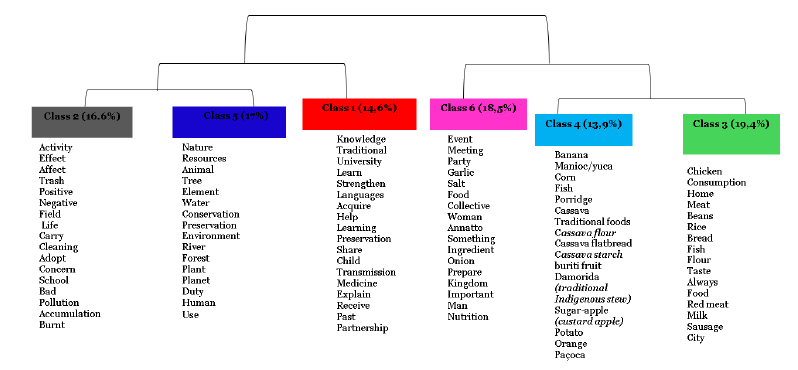 Source: adapted from IRaMuTeQ, 03/08/2024, by the authors.
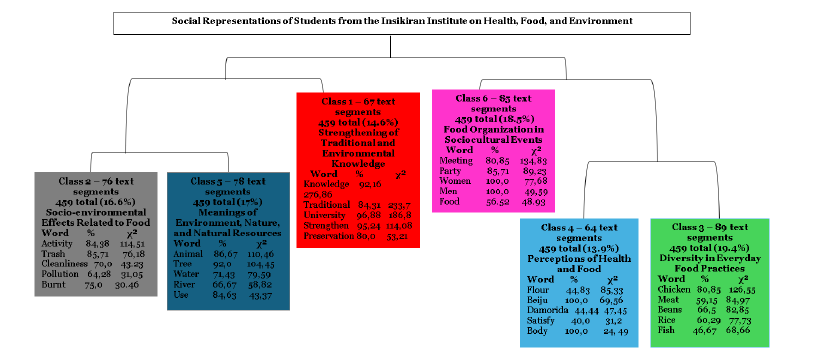 Source: Developed by the authors.Legend: UCE refers to Elementary Context Units, which are fragments of text analyzed. SUR indicates the total number of context units in the data corpus. Thus, “87uce/459sur” means that 87 elementary context units were analyzed out of a total of 459 units in the corpus. This analysis is used to interpret patterns or themes in textual data.
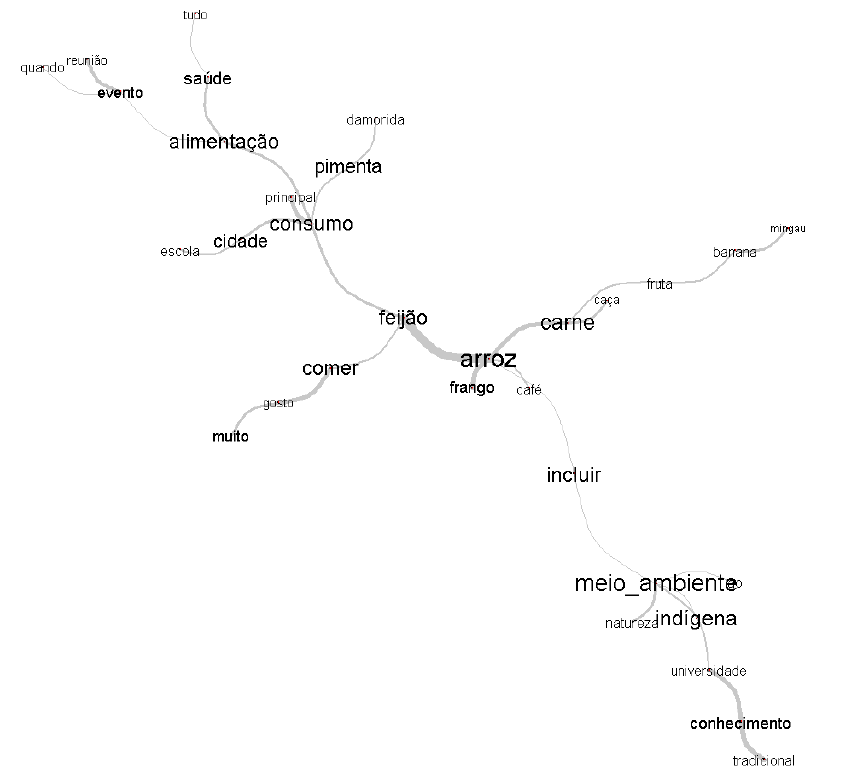 Source: Developed by the authors - 2024, March 9. Similarity map of social representations of Indigenous students: food, health, and environment [AI-generated visualization]. Adapted from IRaMuTeQ.
Caption: The map displays lexical co-occurrence patterns related to participants’ social representations. Central terms such as rice, beans, meat, food, and environment appear associated with concepts such as health, Indigenous, traditional knowledge, and event. This visualization contributes to the understanding of semantic relationships and the thematic structure of the analyzed textual corpus.
Source: Developed by the authors - 2024, March 9. Similarity map of social representations of Indigenous students: food, health, and environment [AI-generated visualization]. Adapted from IRaMuTeQ.
Caption: The map displays lexical co-occurrence patterns related to participants’ social representations. Central terms such as rice, beans, meat, food, and environment appear associated with concepts such as health, Indigenous, traditional knowledge, and event. This visualization contributes to the understanding of semantic relationships and the thematic structure of the analyzed textual corpus.