
 Perceived Influence of Blue Flag as a Driver of Tourism and Environmental Management in Brazil
Abstract
This study seeks to investigate the influence of the blue flag program on sun and sea tourism and on the management of beaches on the Brazilian coast. Public and private documents, audiovisual materials, and 54 in-depth interviews with different stakeholders were the sources of evidence of the research, which was based on 16 Brazilian beaches already certified by the program. The main results of this research reveal that, if, on the one hand, the BFP has exerted an important influence on the growth of tourism, promoting environmental management and contributing to the improvement of the quality of the services offered on the beaches, on the other hand, there is a critical dependence on the municipal government so that the beaches continue to meet the BFP certification criteria. Based on the findings, the article provides six recommendations for dealing with the opportunities and challenges associated with BFP.
Keywords:
Blue Flag program; Eco-certification; Sustainable tourism; Brazilian coast; Beach management
Resumo
Este estudo busca investigar a influência do programa bandeira azul no turismo de sol e mar e na gestão das praias do litoral brasileiro. Documentos públicos e privados, materiais audiovisuais e 54 entrevistas em profundidade com diferentes stakeholders foram as fontes de evidência da pesquisa, que teve como base 16 praias brasileiras já certificadas pelo programa. Os principais resultados desta pesquisa revelam que, se, por um lado, o PBF tem exercido importante influência no crescimento do turismo, promovendo a gestão ambiental e contribuindo para a melhoria da qualidade dos serviços oferecidos nas praias, por outro, há uma dependência crítica do poder público municipal para que as praias continuem atendendo aos critérios de certificação do PBF. Com base nos resultados obtidos, o artigo apresenta seis recomendações para lidar com as oportunidades e desafios associados ao PBF.
Palavras-chave:
Programa Bandeira Azul; Certificação ecológica; Turismo sustentável; Costa brasileira; Gestão de praias
Introduction
Tourism is a thriving and multidisciplinary activity. It involves the displacement of people to places other than their regions of origin and influences the economic planning and development of the regions in which it occurs, such as coastal areas (MEETHAN, 2001; RUSCHMANN, 2015; MERINO; PRATS, 2020; MARCHESE et al., 2021).
The Blue Flag Program (BFP) is an initiative that has expanded through several countries, certifying beaches and marinas, and standing out in the literature as a driver of tourism. In the Brazilian case, for example, the number of beaches certified by the BFP grew by 75% in 2021 when compared to the previous year (FEE, 2022).
This paper deals with the influence of the Blue Flag Program on sun and sea tourism and on the management of beaches in Brazil. To address these gaps, this study is structured around three specific research contributions.
As a first gap, we respond to a request from the literature for more empirical studies focusing on the operation of the BFP in different parts of the world, especially in countries of the Southern Hemisphere, such as Brazil (MARCHESE et al., 2021). The results found in Brazil are relevant for other countries.
As a second gap, we respond to a request from the literature about the need to conduct BFP investigations based on the perception of different stakeholders involved in the program, to increase the internal validity in investigations (REED et al., 2009; KLEIN, DODDS, 2017; NATHANIEL et al., 2023). Stakeholder perceptions can foster a deeper understanding of governance and management practices.
As a third gap, some articles have pointed to the need for more empirical research that addresses phenomena capable of stimulating sustainable tourism, such as the BFP (BOTERO et al., 2015; DODDS, HOLMES, 2018, 2020; MERINO, PRATS, 2020; LUKOSEVICIUTE, PANAGOPOULOS, 2021). It is important to investigate social phenomena in depth that can support meeting the needs of tourists and the host communities, without compromising the needs of future stakeholders (sustainable tourism).
The objective of this article is, therefore, to analyze the main influences exerted by the Blue Flag Program (BFP) on the sun and sea tourism and on the management of beaches on the Brazilian coast. Four questions were outlined to achieve this objective:
-
What are the main gains that the BFP can offer to local tourism?
-
What are the main limitations in the BFP’s contribution to tourism and sustainable beach management?
-
What is the relationship of influence between the local government and the obtaining/maintenance of the BFP certificate?
-
How can beach management be optimized to better contribute to sustainable tourism?
The Blue Flag Eco-Certification Program and Beach Management
The Blue Flag Program (BFP) is an international initiative of the Foundation for Environmental Education (FEE), created in 1985 in France. It is responsible for certifying beaches and marinas that meet high environmental, safety, and infrastructure standards. This eco-certification is considered an important recognition of environmental quality for coastal areas, as the BFP rigorously adopts criteria such as water quality, environmental management, safety, and environmental education in the certification processes. Consequently, the literature highlights that the BFP encourages the adoption of good environmental and management practices by local authorities, tourism service providers, and the local community (COCCOSSIS, MEXA, 2004; FYALL, GARROD, 2020).
The BFP plays an important role in promoting sustainable tourism, attracting visitors seeking responsible options, and contributing to improving the quality of life of local communities. As such, the program has the potential to contribute to regional development, natural resources management, tourism-related challenges and opportunities, and public governance aimed at promoting sustainable development (HALL et al., 2014; KOENS et al., 2014; SAARINEN, 2014). In the Brazilian context, this international framework has been adapted and expanded progressively over the last two decades.
Brazil began implementing the BFP in 2004 on maritime, fluvial, and lake beaches, marinas, and sustainable tourism vessels, through the collaboration of municipalities and institutions representing various local sectors (BLUE FLAG, 2022). The initiative has since expanded to several regions of the country. In 2021, the program was already present in 31 municipalities across 16 Brazilian states, totaling 69 beaches and five certified marinas (ROCK, 2022; SOS ATLANTIC FOREST FOUNDATION, 2021).
According to the Foundation for Environmental Education (FEE), the BFP’s central guideline is to combat three serious environmental challenges currently faced by our planet: climate change, biodiversity loss, and environmental pollution (BLUE FLAG, 2022; BRUNDTLAND, 1987; SACHS, 2015; LEAL FILHO et al., 2018). This objective is aligned with several Sustainable Development Goals (SDGs) (UNITED NATIONS, 2015).
To meet this objective, the BFP incorporates certification criteria such as regular water quality sampling and testing, environmental education activities, waste management, restrictions on the presence of domestic animals on beaches, and promotion of sustainable transportation.
Complementary to formal eco-certification efforts, initiatives such as the participatory monitoring of beaches demonstrate how citizen science can enhance integrated coastal management. According to Lins-de-Barros et al. (2022), these methodologies strengthen environmental education, community engagement, and data collection on pollution and coastal dynamics, supporting long-term beach stewardship in Brazil.
In turn, beaches must strive to meet these requirements. This includes the creation of beach management committees, monitoring of sensitive areas, adequate cleaning and waste management, sufficient and hygienic sanitary facilities, prohibitions on camping, vehicle circulation, and debris dumping, as well as the monitoring of vulnerable habitats and the promotion of sustainable transport options (BRAZIL, 2019; DODDS, 2013; EUROPEAN ENVIRONMENT AGENCY, 2019). By complying with these criteria, beaches have the opportunity to be better managed, particularly in environmental terms.
The Blue Flag and the Development of Tourism
The National Program for the Development and Structuring of Tourism (PRODETUR) is an initiative of the Inter-American Development Bank (IDB) that aims to promote tourism in Latin American and Caribbean countries. Studies have analyzed the effectiveness of PRODETUR in promoting sun and sea tourism in Brazil (IDB, 2021).
According to the Brazilian Ministry of Tourism (2019), in 2018, the country received about 6.6 million foreign tourists and 73.2 million Brazilian tourists, most of whom traveled to sun and sea tourism destinations, especially in the Brazilian Northeast (SANTOS, WANDERLEY, 2019).
Within this broader tourism development context, the Blue Flag Program has gained particular relevance. Despite the reduction in tourism numbers during 2021/22, the relationship between the Blue Flag Program and sun and sea tourism in Brazil can still be considered significant. Data from the General Register of Employed and Unemployed people (CAGED) reflect growth in areas influenced by the program.
The Blue Flag Program fits into the category of “Approach Tourism” and contains elements aligned with both adventure and cultural tourism. The BFP has been highlighted in the literature as an accelerator of the tourism industry in Brazil, as it incentivizes local communities to improve environmental and tourist-related conditions. This includes promoting environmental awareness, sustainability in coastal areas, and the overall quality of tourism (MARCHESE et al., 2021).
However, the program faces challenges, such as the lack of financial resources in municipalities and the need for greater engagement from local communities. In addition, the COVID-19 pandemic has had a significant impact on the tourism industry, negatively affecting the sector worldwide. Nevertheless, the strategic importance of tourism for regional economies highlights the urgency of overcoming these barriers.
Despite these challenges, tourism remains an important source of income and employment for many regions of Brazil. Promoting sustainable and responsible tourism is key to ensuring that this industry can continue to grow and thrive in the future. In this context, it becomes essential to investigate in depth the role of the BFP in strengthening tourism and governance mechanisms.
Method
This paper aims to analyze the main influences exerted by the Blue Flag Program (BFP) on the sun and sea tourism and on the management of beaches on the Brazilian coast. To achieve this goal, a qualitative research approach was adopted. The research method was based on content analysis and a data triangulation strategy, which included interviews, document analysis, and photographic evidence (CRESWELL, 2007). Given the extensive length and diversity of the Brazilian coastline, the study focused on regions where the implementation of the Blue Flag Program is more advanced and visible.
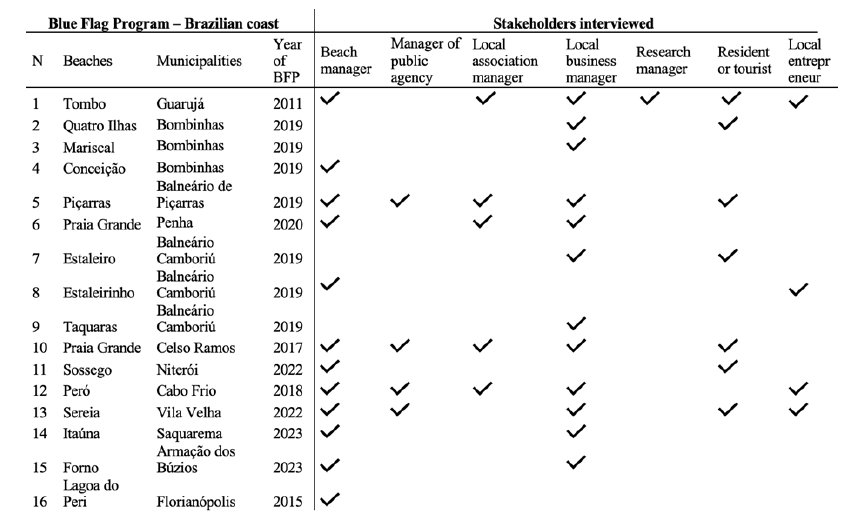
The methodology was designed to align with the certification structure and thematic scope of the BFP. In the data collection process, a semi-structured script was developed, consisting of 25 questions organized into five dimensions that align with BFP’s certification criteria for beaches: social, economic, environmental, institutional, and cultural (VAN BELLEN, 2008). Questions related to tourism and management were addressed within each of these five dimensions. The interviews were conducted with beach managers and other BFP stakeholders, as shown in Figure 1.
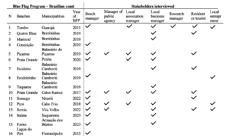
The strategy for data collection was purposive sampling (NEUMAN, ROBSON, 2009), through the selection of various stakeholders involved in the BFP eco-certification process of Brazilian beaches (REED et al., 2009; KLEIN, DODDS, 2017; NATHANIEL et al., 2023). One-on-one, in-depth interviews were conducted, each with an average duration of 45 minutes.
Seven categories of stakeholders were interviewed: a) beach managers (n=12); b) managers of public agencies (n=4); c) managers of local associations (n=5); d) local business managers (n=20); e) research managers (n=1); f) residents or tourists (n=8); g) local entrepreneurs (n=4). A total of 16 beaches were selected, resulting in 54 interviews. All interviews were recorded and transcribed verbatim. To protect the identity of the participants, pseudonyms were adopted.
As complementary evidence, we also used photographic collections from the selected beaches (n=16), research material on Sereia beach available on the website of the Vila Velha Secretary of Tourism, pamphlets from the Garujá Secretary of Tourism, and electronic files on Bombinhas Beach provided by the beach manager. Data were collected between the first half of 2022 and the second half of 2023. Once the data had been collected, it was organized and coded to facilitate thematic interpretation.
After processing the data, we selected the analytical categories that contributed to the explanation of the research findings. For this purpose, we used thematic analysis, which enabled an open, axial, and selective coding process-predominantly inductive-in the interpretation of the interviews (Table 1).
These analytical categories were further interpreted through the theoretical-conceptual framework established in Sections 2 and 2.1, which provided the basis for this study. Concepts related to eco-certification as a tool for environmental quality assurance, the promotion of sustainable tourism, and the role of the Blue Flag Program in strengthening local governance and community engagement were essential to contextualizing and understanding stakeholders’ perceptions.
Additionally, literature addressing the challenges associated with standardized certification criteria and the specificities of urban beach management helped identify critical tensions in the implementation and maintenance of the program. These theoretical contributions informed not only the thematic dimensions explored in the interviews but also the interpretive approach used to analyze the empirical findings presented in Section 4.
Participants’ quotes were included to illustrate each thematic category, including: the characteristics of the BFP in the Brazilian context; the program’s influence on local tourism; its influences on beach management; and the challenges related to both tourism development and improved beach management.
Thus, the findings were interpreted based on existing literature on the Blue Flag Program, the specific focus of this research, and the perceptions of key stakeholders.
Study Area
Brazil has a coastline of 7,367 kilometers, which is bordered by the Atlantic Ocean to the east. When considering the coastline’s protrusions and indentations, the total length increases to 9,200 kilometers. The Brazilian coast is typically divided into four regions: North, Northeast, Southeast, and South.
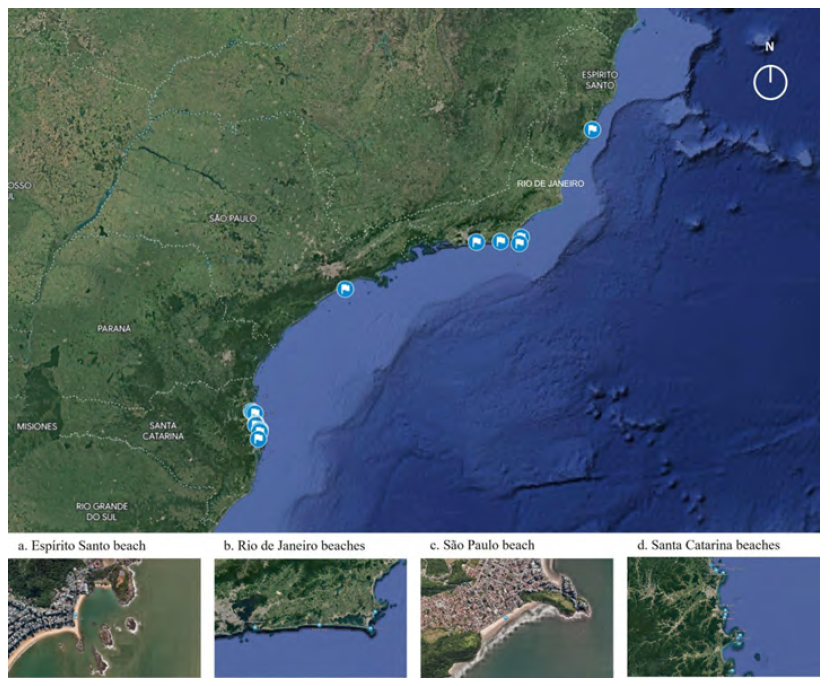
In this article, we selected a study area that encompasses beaches located on the Southeast and South coasts of Brazil, due to their representativeness in relation to BFP. Figure 2 illustrates the perimeter of the study area.
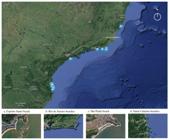
The selected beaches aimed to increase the geographic diversity of the sample across different municipalities. In the state of Rio de Janeiro, Praia do Peró (municipality of Cabo Frio), Praia do Sossego (municipality of Niterói), Praia de Itaúna (municipality of Saquarema), and Praia do Forno (municipality of Armação dos Búzios).
In the state of Espírito Santo, Praia da Sereia (municipality of Vila Velha) was selected. In the state of São Paulo, Praia do Tombo (municipality of Guarujá) was included.
In the state of Santa Catarina, the selected beaches were: Praia Grande (municipality of Governador Celso Ramos); Quatro Ilhas, Mariscal, and Praia da Conceição (municipality of Bombinhas); Praia Grande (municipality of Penha); Piçarras Beach (municipality of Balneário de Piçarras); Lagoa do Peri (municipality of Florianópolis); and the beaches of Taquaras, Estaleiro, and Estaleirinho (municipality of Balneário Camboriú). The predominance of beaches from Santa Catarina reflects the fact that this state hosts the largest number of BFP-certified beaches in Brazil.
Findings and Discussion
While the majority of the literature highlights the positive influence of the BFP on tourism, there are also several controversies regarding the program’s contribution to sustainable beach management, particularly concerning environmental aspects. On one hand, studies by Klein and Dodds (2017), Mir-Gual et al. (2015), and Zielinski and Botero (2019) argue that the BFP is not an effective tool for improving environmental management.
On the other hand, authors such as Creo and Fraboni (2011), Pencarelli et al. (2016), and Dodds and Holmes (2018) emphasize that the program, through the criteria required for Blue Flag certification, can directly enhance environmental management. The effort to meet these criteria often leads to improved practices. The results of our study reinforce this perspective.
Based on the Brazilian case, we found that the BFP positively influences both tourism and beach management, despite a range of challenges that hinder the program’s broader effectiveness. To better understand how the BFP materializes these influences in practice, this section presents the main perceived benefits of the program.
Benefits of BFP for Tourism and Management
The certification of beaches through the BFP in Brazil has gained popularity and visibility, influencing investments in infrastructure and improving beach quality. This has contributed to local development and tourist attraction, findings that align with those of Marchese et al. (2021).
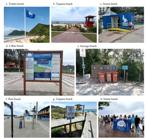
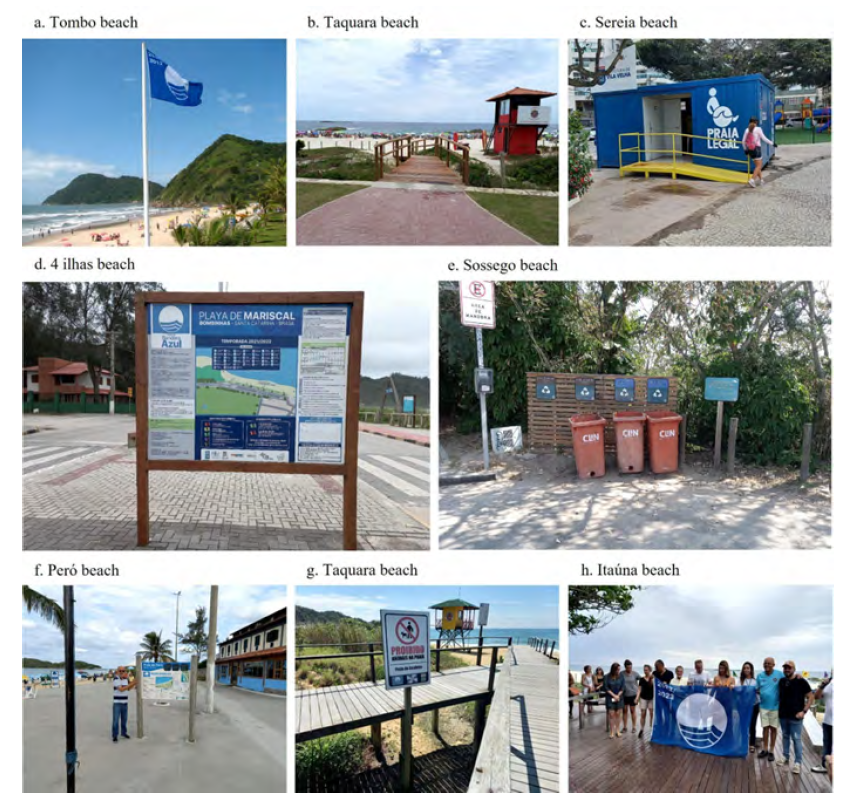
Figure 3 illustrates some of the program’s positive influences on Brazilian beaches, such as: a) Blue Flag signage at Tombo beach; b) sidewalk infrastructure, access deck, and lifeguard station at Taquara Beach; c) accessible container structure at Sereia beach; d) educational signage at Quatro Ilhas; e) selective waste collection structure at Sossego beach; f) socio environmental impact board of Peró beach; g) wooden deck infrastructure and lifeguard station at Taquara beach; and h) official Blue Flag certification ceremony at Itaúna beach.
Interviewees recognize the BFP as a trustworthy indicator of the environmental quality and a motivator for municipal managers to adopt sustainable practices-often with the involvement of civil society-which positively impacts tourism. This perception is also reflected in Figure 3, especially in the examples from Quatro Ilhas (d), Sossego (e), and Taquara (g). José, Secretary of the Environment of one of the municipalities, commented:
“We note the importance of winning the Blue Flag as a form of relevant recognition of the environmental management of beaches, and also as an incentive for other destinations to adopt the program and meet the criteria for this eco-certification, thus encouraging tourism.”
One of the main themes in the interviews was the BFP’s role in improving municipal infrastructure, enhancing tourism development, and strengthening beach management. Paulo, president of a residents’ association and university professor, emphasized:
“There are several important aspects related to the BFP, especially concerning infrastructure, with direct participation of residents. However, it is mainly the responsibility of the local government to meet the program’s criteria and invest in environmental education to ensure the maturity of the municipality and its beaches as the most attractive tourist destination.”
In the same direction, Maria, BFP coordinator in another municipality, noted that “the program has been fundamental to make the community aware of the importance of preserving beaches and the environment in general”, as demonstrated in Praia do Peró (Figure 3, panel f), reinforcing the program’s influence on beach management.
This growing awareness can even lead to the allocation of additional funds, as supported by Klein and Dodds (2017), Lucrezi et al. (2016), McKenna et al. (2011), and Santos and Barros (2023), further promoting tourism. Santos and Barros (2023) applied a sustainability indicator approach to tourist beaches in Cabo Frio, Rio de Janeiro. Their findings reveal that investments in beach infrastructure generate positive returns for both tourism and environmental management, reinforcing the effectiveness of indicator-based approaches in Brazilian coastal contexts.
All destinations included in this study underwent a pilot phase with a technical visit and evaluation by the BFP National Operator before municipalities were granted the certificate. Once the criteria were met, the certificate was issued and subject to regular renewal, as seen in Tombo and Itaúna beaches (Figure 3).
Pedro, a restaurant manager, stated, “managers and investors are aware of the program’s criteria and recognize that the preservation of beaches attracts investments.”. In this sense, Silvia, a national BFP manager, reinforced:
“The presence of the program stimulated real estate growth, concern for environmental preservation, and the quality of beaches, attracting tourists and investments to Brazilian municipalities.”
In addition, the evidence points to the importance of the government for the continued success of the program, through the involvement of governments both in initiating and maintaining the Blue Flag. The criteria established by the Foundation for Environmental Education (FEE, 2022) for obtaining the Blue Flag involve the consent of the municipality, documentation of adherence, adherence fee, investments in adequate infrastructure, and environmental education.
It is possible to notice, for example, the aspects of public investment, in Figure 3, on the beaches of Taquara, Sossego, and Sereia, where there is infrastructure of sidewalks, containers, decks, and trash cans available; as well as on the beaches of 4 Ilhas and Peró, with the information boards.
These structures did not exist before the municipalities participated in the BFP, indicating improved management practices-especially environmental ones. Marina, from a residents’ association, shared:
“In the pilot project, we had two years to prepare the beach to receive the Blue Flag. We held a movement together with a colleague from the press, and he managed to mobilize a lot. The local government accepted and signed the application for the Blue Flag.”
Francisco, a merchant, pointed out “the program requires investments in infrastructure and personnel, and rigorous inspection to ensure compliance with the criteria.” This inspection, mainly the responsibility of the local government, highlights their role in overcoming challenges to tourism development and improving beach management, as the challenges associated with BFP simultaneously affect the development of tourism and the improvement of beach management.
The Blue Flag’s recognition as an indicator of environmental quality supports the idea that eco-certifications serve as strategic tools for tourism development and environmental governance. Coccossis and Mexa (2004) argue that such labels foster perceptions of credibility and adherence to international environmental standards, increasing the appeal of coastal destinations. Fyall and Garrod (2020) also emphasize how certifications enhance competitiveness by improving environmental and infrastructure conditions.
This perspective was shared by several stakeholders, who noted that the BFP increased tourism flows and enhanced local identity through visible improvements in infrastructure and services.
Jaime, from a municipal environment department, remarked: “One of the keys to success is the responsibility of the public power, which needs to assume a serious commitment, as well as the managers of the beaches”, which means the influences of the program on beach management.
Francisco and Jaime’s observations align with Henrique, another environmental secretary: “a committee was created that includes representatives from both sectors (government and civil society), evidencing the concern to involve the community in the management of the beaches.”.
Moreover, the BFP has led municipalities to institutionalize good practices. According to the European Environment Agency (2019), eco-certification often results in tangible changes, including investments in waste management, signage, accessibility, and safety.
In Brazil, the program has required the formation of beach management committees, monitoring of ecologically sensitive zones, and promotion of environmental education-actions that reflect the criteria outlined by Brazil (2019) for high-quality urban coastal management.
Costa and Widmer (2021), evaluating ten beaches in the municipality of Governador Celso Ramos (SC), emphasized that the preservation of aesthetic and environmental quality is critical for maintaining tourism appeal. Their classification system revealed that sparsely populated beaches with better waste control and urban planning scored higher, highlighting how eco-certifications like the BFP can guide municipalities in enhancing local tourism assets.
Several interviewees noted that the BFP represented a turning point in promoting environmental responsibility among local governments and communities. Henrique’s statement aligns with Lucrezi et al. (2016), who argue that the program’s success depends on the sustained cooperation between governments and civil society.
Thus, there is strong evidence that stakeholders perceive the BFP as a positive force for tourism and environmental management.
Issues Associated with BFP
Despite the benefits brought by the BFP, several challenges are also associated with the program. In the Brazilian case, one of the main limitations is the BFP’s restricted ability to promote tourism. This is because tourists’ choice of destinations is influenced by other factors unrelated to the program, such as climate conditions and available cultural activities (ESPÍNOLA et al., 2007; DODDS, HOLMES, 2020).
Moreover, there is concern that increased tourism revenue should not be the sole motivation for municipalities to pursue Blue Flag certification. As highlighted by Izabel, a beach manager:
“If you only think about tourism, you have the wrong motivation. We can’t think only about money, profit, and economic growth. We have to think that the search for the Blue Flag contributes to that location, with greater environmental quality, aiming at sustainable development.”
Stakeholder narratives suggest that some municipalities may seek the Blue Flag more for symbolic or promotional value than from a genuine commitment to sustainability. Izabel’s statement echoes concerns raised by Brundtland (1987) and Sachs (2015) about the commodification of sustainability discourse without corresponding systemic change.
This instrumental approach to certification may undermine the program’s legitimacy. It also points to the need for stronger environmental education and broader awareness campaigns, as emphasized by Leal Filho et al. (2018), to foster deeper and longer-lasting engagement with sustainability principles beyond the attainment of the eco-label. This concern is also linked to the concept of the “optimal point of tourism”-a balance between tourist satisfaction, environmental preservation, and the maintenance of local culture. In this regard, Silvia, a national BFP manager, observed:
“Local communities are afraid of an exaggerated increase in tourists, especially in urban destinations that are already saturated, in which tourism has already been heavily exploited. Locals are really afraid that more people will come to the beaches and that this will become unsustainable.”
In addition, the importance of coordinated actions between government and local businesses is highlighted, as demonstrated in the statements of Rodrigo and Luiz: “I understand that the Blue Flag is a responsibility of the local government. It is up to the Department of Tourism, for example, to better publicize the Blue Flag certification that we have on our beach.” (Rodrigo). “If there were greater participation from local businesses, there would be greater continuity of the program; in other words, beaches would find it easier to obtain and maintain the flag.” (Luiz).
These statements reveal distinct perceptions regarding responsibility for the program. While Rodrigo emphasizes the central role of the public sector, particularly in terms of communication and promotion, Luiz underscores the importance of broader engagement from other social actors, especially private stakeholders, as a key factor in strengthening the program’s continuity and effectiveness.
The Brazilian case is thus marked by low participation from civil society in the implementation and maintenance of the BFP. This may be partially explained by the relatively recent adoption of the program in most certified locations (see Figure 2).
One of the most salient critiques raised by stakeholders relates to the standardization of BFP criteria and their limited adaptability to urban beaches. Zielinski and Botero (2019) argue that universal certification criteria may overlook local socio-environmental specificities, thereby limiting program effectiveness or producing unintended negative effects.
Our findings support this view. Respondents pointed to misalignments between the Blue Flag requirements and local infrastructure or governance capacity. Torres and Hanley (2016) also warn that the monetization of ecosystem services - if not contextualized - can reduce ecological value to market logic, rather than genuine conservation.
In short, many Brazilian beaches have only recently adopted the program. The literature suggests that as destinations mature in their BFP implementation, they tend to attract more private investment, generate revenue, and become less dependent on public power, increasing their chances of long-term success (PARRETTI et al., 2020; SANTOS et al., 2021; GUERREIRO et al., 2021).
Another challenge lies in the urban character of most Brazilian beaches. Urban beaches often face specific infrastructural and service-related limitations, such as inadequate restrooms, showers, selective waste collection, accessible facilities, and lifeguard availability (PÁDUA, 2016).
In this regard, Grechinski and Goveia (2021) highlight that the improper disposal of waste by tourists significantly impacts the marine environment in Brazilian coastal destinations. Their study emphasizes that, despite the potential of tourism to contribute positively to sustainability, the lack of environmental education and adequate waste management continues to pose serious challenges, especially in urbanized beach areas.
In addition, they are highly vulnerable to climate change impacts, such as rising sea levels, coastal erosion, and extreme weather events, which can compromise water quality, beach stability, and visitor safety (MOWFORTH, MUNT, 2015).
As a final result, we also found in our evidence results similar to those of Zielinski and Botero (2019) and Marchese et al. (2021), who argue that the standardization of BFP criteria for all locations is a limitation of the program. Although the international criteria and parameters of the Blue Flag Program standardize the quality of the beaches (TORRES, HANLEY, 2016), these are not adequate and clear in relation to the particularities of the sites in this study, noting a greater focus on the quality of the sandy region for the visitor than for the site as a whole.
In other words, in general, the rules of the program are isolated from the context of the cities, which ends up directing the benefits of the BFP to the beach itself, but without sufficiently evaluating the other structures of the municipality - this is aggravated in the Brazilian case, in which most of the certified beaches are in an urban environment.
Even though some beaches have greater biodiversity and ecological importance for the local persistence of species, the use of monetary value for ecosystem services in decision-making should be used with caution to avoid falling into the “commoditization of nature” (MCCAULEY, 2006; CHECON et al., 2022). Such commodification risks diverting conservation efforts toward market-driven goals.
These concerns underscore a broader debate about the role of global certification schemes in valuing nature. As McCauley (2006) and Checon et al. (2022) note, economic valuation can obscure ecological integrity. In the case of Brazilian urban beaches, municipalities may prioritize actions that “check boxes” for certification rather than resolving deeper environmental or social issues.
Therefore, a more flexible and context-sensitive approach to certification is needed to truly advance both environmental and social objectives within the Blue Flag framework. These limitations emphasize the need for concrete actions and policy adjustments to ensure the long-term effectiveness and legitimacy of the program. The next section outlines managerial recommendations based on the findings presented.
Managerial Implications
Based on the 54 interviews conducted and the documents analyzed, this study revealed a series of findings regarding the performance of the BFP in Brazil. Although these results were not collected for generalization purposes, since this is not the purpose of in-depth qualitative research (CRESWELL, 2007), we understand that our results may be useful for the management of beaches in other locations, besides Brazil.
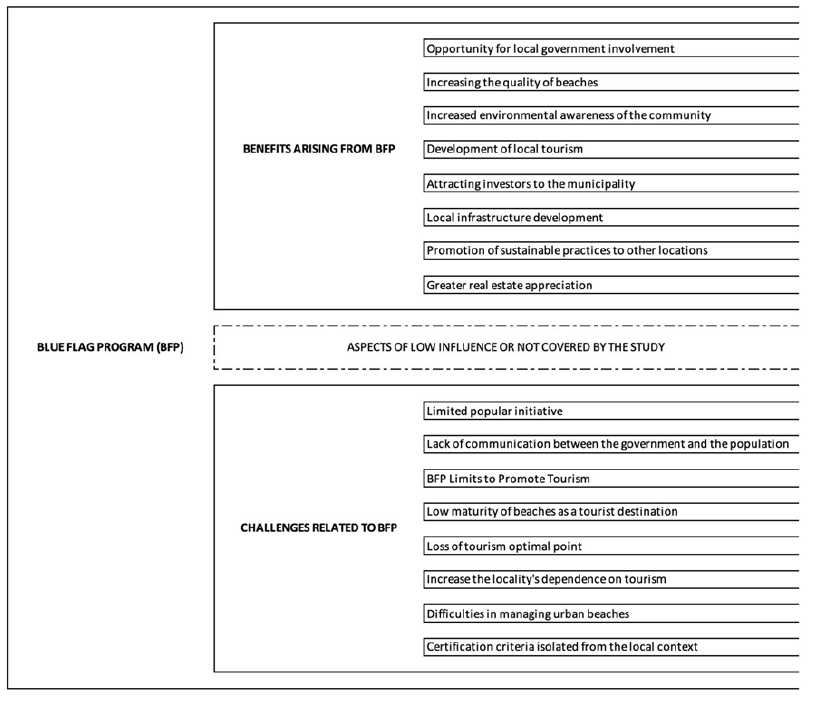
Figure 4 shows the main results presented in the results and discussion section of the article, organized as benefits arising from BFP and challenges related to BFP, as shown:
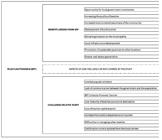
These results bring forth a set of managerial implications that may serve as pathways to improving beach management and enhancing sustainable tourism and environmental preservation. They include:
-
Encouraging the participation of local institutions and civil society in the implementation of the Blue Flag Program, aiming at greater communication and collaboration in the implementation of the program;
-
Strengthening environmental education, with investments in awareness actions and sustainable practices by merchants and the population in general, especially on beaches in urban territory;
-
Commitment of the government to the maintenance and improvement of the beaches, with investments in infrastructure and rigorous inspection to ensure compliance with the established criteria;
-
Possibility of revising part of the criteria adopted by the BFP, so that they take into account local peculiarities;
-
Encouragement so that municipalities do not depend only on BFP for the development of their tourism. One of the main paths to non-dependence is the promotion of cultural activities to attract tourists;
-
Encouraging more destinations to join the program, aiming to improve the quality of sustainable tourism and the environmental preservation of beaches. In other words, efficient beach management is essential for obtaining and maintaining the Blue Flag certification, requiring an effort from all stakeholders (public, private, and civil sectors).
These implications also serve as opportunities for future research within the theme, especially in empirical studies. For example, more research is needed in countries in the Global South. We argue that the degree of environmental awareness among countries varies considerably, and so does the variation in the degree of importance of the program, and consequently, the findings of research on it.
These findings align with the strategic guidelines of the Brazilian Ministry of Tourism, as detailed by Barreto and Lanzarini (2023), which emphasize the promotion of responsible tourism through sustainability, community participation, and environmental education. For the Brazilian case, for example, the program serves as a means of raising community awareness about the most basic aspects of environmental conservation, a context quite different from what was studied, for example, by Klein and Dodds (2017) and Mir-Gual et al. (2015), who dealt with the cases of Canada and Spain, respectively. We argue that the importance of the program tends to be greater according to the need for greater environmental awareness on the part of the investigated community.
In light of these managerial implications and contextual insights, the following section presents the concluding reflections of this study.
Conclusions
Building upon the findings and implications discussed above, we offer the following concluding reflections. The Blue Flag Program has proven to be an important initiative for promoting sustainable tourism and preserving the environmental quality of Brazilian beaches. The benefits of the program extend beyond the increase in tourism and the visibility of certification. They include contributions to local development and heightened awareness among the population regarding the importance of environmental conservation in coastal areas. However, for the program to be truly effective, a stronger commitment from public authorities is essential. This includes consistent investment in infrastructure and rigorous monitoring to ensure ongoing compliance with the criteria established by the program. In addition, it is important to encourage the active participation of local institutions and civil society. The collaboration of all actors - government, private sector, and communities - is essential for its success. Expanding the number of certified beaches through the BFP could amplify the positive impact on sustainable tourism and environmental preservation throughout Brazil. By doing so, municipalities strengthen their image as destinations committed to sustainability, thereby attracting tourists who value environmental responsibility in their travel choices. The challenge is to continue advancing, expanding the reach of the program, and engaging an increasing number of destinations and stakeholders in order to secure a sustainable future for coastal regions.
References
- BARRETO, L. M. T. da S.; LANZARINI, R. (coord.). Turismo Responsável no Brasil: tendências, estratégias e fomento em sustentabilidade, turismo de base comunitária e segurança turística. Natal: UFRN/SEDIS, 2023. 189 p. ISBN 978-65-5569-354-6.
-
BLUE FLAG. Blue Flag Brazil. 2022. Retrieved from: https://www.bandeiraazul.org.br/. Accessed on 15 May 2024.
» https://www.bandeiraazul.org.br -
BLUE FLAG. Blue Flag International. 2022. Retrieved from: https://www.blueflag.global/. Accessed on 01 May 2023.
» https://www.blueflag.global -
BOTERO, C. et al. Design of an index for monitoring the environmental quality of tourist beaches from a holistic approach. Ocean & Coastal Management, v. 108, n. 1, p. 65-73, 2015. https://doi.org/10.1016/j.ocecoaman.2014.07.017
» https://doi.org/10.1016/j.ocecoaman.2014.07.017 - BRUNDTLAND, G. H. Our common future: The world commission on environment and development. Oxford, Oxford University Press, 1987.
- CHECON, H. et al. Beach market: what we have been computing in Brazil?. Ocean and Coastal Research, v. 69, p. e21038, 2022.
-
COSTA, B.; MARTIN WIDMER, W. Avaliação dos cenários costeiros em Governador Celso Ramos/SC - Brasil. Revista Costas, v. 3, n. 1, 2022. Retrieved from: https://revistas.uca.es/index.php/costas/article/view/8853 Accessed on 16 mai. 2025.
» https://revistas.uca.es/index.php/costas/article/view/8853 - CREO, C.; FRABONI, C. Awards for the sustainable management of coastal tourism destinations: The example of the Blue Flag program. Journal of Coastal Research, v. 61, p. 378-381, 2011.
- CRESWELL, J. W. Research project: Qualitative, quantitative and mixed methods. Porto Alegre, Artmed, 2007.
- DODDS, R. Tourism and water: Interactions, impacts and challenges. Bristol, Channel View Publications, 2013.
-
DODDS, R.; HOLMES, M. R. Education and certification for beach management: is there a difference between residents versus visitors?, Ocean & Coastal Management, v. 160, p. 124-132, 2018. https://doi.org/10.1016/j.ocecoaman.2018.03.043
» https://doi.org/10.1016/j.ocecoaman.2018.03.043 -
DODDS, R.; HOLMES, M. R. Is blue flag certification a means of destination competitiveness? A Canadian context. Ocean & Coastal Management, v. 192, 2020. https://doi.org/10.1016/j.ocecoaman.2020.105192
» https://doi.org/10.1016/j.ocecoaman.2020.105192 - EUROPEAN ENVIRONMENT AGENCY. Circular economy in Europe: Developing the knowledge base. Luxembourg: Publications Office of the European Union, 2019.
-
FEE. Foundation for Environmental Education. 2022. Retrieved from: https://www.fee.global/. Accessed on 15 Jan 2024.
» https://www.fee.global - FYALL, A.; GARROD, B. Destination management: a perspective article. Tourism Review, v. 75, n. 1, p. 165-169, 2020.
- GRECHINSKI, P. T.; GOVEIA, E. F. Turismo em Ambientes Costeiros e o Combate ao Lixo no Mar. Turismo e sociedade, v. 14, p. 1-20, 2021.
- GUERREIRO, J.; RAMOS, T. B.; CARVALHO, L. The role of destination maturity in the implementation of the Blue Flag program: Evidence from the Portuguese coast. Sustainability, v. 13, n. 6, p. 1-15, 2021.
- HALL, C. M.; LESLIE, D.; TOGLIA, H. Tourism and regional development: New pathways. Routledge, 2014.
-
IDB. Inter-American Development Bank. 2021. Retrieved from: https://blogs.iadb.org/brasil/pt-br/turismo-e-os-objetivos-de-desenvolvimento-sustentavel-visao-global-para-um-caminho-futuro-do-setor/. Accessed on 05 Jun 2022.
» https://blogs.iadb.org/brasil/pt-br/turismo-e-os-objetivos-de-desenvolvimento-sustentavel-visao-global-para-um-caminho-futuro-do-setor - KLEIN, L.; DODDS, R. Perceived effectiveness of Blue Flag certification as an environmental management tool along Ontario’s Great Lakes beaches. Ocean & Coastal Management, v. 141, n. 1, p. 107-117, 2017.
- KOENS, K.; POSTMA, A.; PAPP, B. Tourism experience co-creation and destination practices. Bristol: Channel View Publications, 2014.
- LEAL FILHO, W. et al. GAIA-20:30-Taking stock of sustainability-related research in the Anthropocene. Journal of Cleaner Production, v. 187, p. 1-6, 2018.
-
LINS-DE-BARROS, F. M., et al. Contributions of Participatory Monitoring of sandy Beaches to Integrated Coastal Management from the Mar à Vista Project (UFRJ) and the CoastSnap Methodology. Revista Costas, Vol. Esp. 3, pg. 117-148, 2022. doi: 10.25267/Costas.2023.v.3.i2.07
» https://doi.org/10.25267/Costas.2023.v.3.i2.07 - LUCREZI, S.; SAAYMAN, M.; MERWE, P. VAN DER. An assessment tool for sandy beaches: A case study for integrating beach description, human dimension, and economic factors to identify priority management issues. Ocean & coastal management, v. 121, n. 1, p. 1-22, 2016.
-
LUKOSEVICIUTE, G.; PANAGOPOULOS, T. Management priorities from tourists’ perspectives and beach quality assessment as tools to support sustainable coastal tourism. Ocean & Coastal Management, [S.L.], v. 208, 2021. Elsevier BV. http://dx.doi.org/10.1016/j.ocecoaman.2021.105646
» http://dx.doi.org/10.1016/j.ocecoaman.2021.105646 - MARCHESE, L. et al. Beach Certification Schemes in Latin America: Are They Applicable to the Brazilian Context?. Sustainability, v. 13, n. 2, 2021.
- MCCAULEY, D. J. Selling out on nature. Nature, v. 443, n. 1, p. 27-28, 2006.
- MEETHAN, K. Tourism In Global Society: Place, Culture, Consumption. New York: Palgrave, 2001.
- MERINO, F.; PRATS, M. A. Sustainable beach management and promotion of the local tourist industry: Can blue flags be a good driver of this balance? Ocean & Coastal Management, v. 198, 2020.
- MIR-GUAL, M. et al. A critical view of the Blue Flag beaches in Spain using environmental variables. Ocean & Coastal Management, v. 105, p. 106-115, 2015.
- MOWFORTH, M.; MUNT, I. Tourism and sustainability: Development, globalization and new tourism in the Third World. London: Routledge, 2015.
- NATHANIEL, H. et al. Using stakeholder perceptions to deepen the understanding of beachcast governance and management practices on Gotland, Sweden. Ocean & Coastal Management, v. 239, n. 1, 2023.
- NEUMAN, W.L.; ROBSON, K. Basics of Social Research: Qualitative and Quantitative Approaches. Toronto: Pearson Canada Inc., 2009.
- PÁDUA, R. Ecologia e desenvolvimento: Contribuições para uma sociedade sustentável. São Paulo: Editora Contexto, 2016.
-
PARRETTI, P. et al. Who, why and how: stakeholder attitudes toward marine non-indigenous species management in Portuguese Atlantic Islands. Ocean & Coastal Management, v. 188, 2020. https://doi.org/10.1016/j.ocecoaman.2019.105069
» https://doi.org/10.1016/j.ocecoaman.2019.105069 - PENCARELLI, T.; SPLENDIANI, S.; FRABONI, C. Enhancement of the “Blue Flag” Eco-label in Italy: An empirical analysis. Anatolia, v. 27, p. 28-37, 2016.
-
REED, M.; GRAVES, A.; DUNNING, J. The influence of stakeholders perspectifs on sustainability policy. Journal of Business Ethics, v. 84, n. Suppl 4, p. 119-132, 2009. doi: 10.1007/s10551-008-9707-2
» https://doi.org/10.1007/s10551-008-9707-2 -
ROCK, E. C. D. Blue Flag Program and the beaches of Florianópolis. Doctoral Thesis. 2022. Blue Flag. Blue Flag Brazil. Retrieved from: https://www.bandeiraazul.org.br/. Accessed on 10 Dec 2023.
» https://www.bandeiraazul.org.br - RUSCHMANN, D. V. of M. Tourism and sustainable planning: the protection of the environment. Campinas: Papirus, 2015. Ebook.
- SAARINEN, J. Critical perspectives on tourism policy. London: Routledge, 2014.
- SACHS, I. The age of sustainable development. New York: Columbia University Press, 2015.
-
SANTOS, R. F.; BARROS, S. R. da S. Uma abordagem baseada em indicadores para a gestão sustentável de praias. Cuadernos de Educación y Desarrollo, v. 15, n. 1, p. 876-904, 2023. DOI: 10.55905/cuadv15n1-046. Retrieved from: https://ojs.cuadernoseducacion.com/ojs/index.php/ced/article/view/1000 Accessed on 20 mai. 2025.
» https://doi.org/10.55905/cuadv15n1-046» https://ojs.cuadernoseducacion.com/ojs/index.php/ced/article/view/1000 - SANTOS, A. P.; WANDERLEY, L. S. The Blue Flag Program as an environmental management tool for Brazilian beaches. Revista Brasileira de Turismo Sustentável, v. 8, n. 2, p. 1-16, 2019.
- SANTOS, C.; SILVA, C.; FERREIRA, Ó. Community participation in coastal management: The role of Blue Flag certification in Portugal. Ocean & Coastal Management, v. 207, p. 1-10, 2021.
- ESPÍNOLA, R. S.; FERNANDES, L. V. F.; MARQUES JUNIOR, L. A. S. Turismo E Globalização: Algumas Perspectivas. Revista Ibero Americana De Estratégia, V. 6, N. 1, P. 63-70, 2007.
-
SOS ATLANTIC FOREST FOUNDATION. Atlas of forest remnants. Maps. 2021. Retrieved from: https://www.sosma.org.br/iniciativas/atlas-da-mata-atlanticaatlântica
» https://www.sosma.org.br/iniciativas/atlas-da-mata-atlanticaatlântica -
TORRES, C.; HANLEY, N. Economic valuation of coastal and marine ecosystem services in the 21st century: an overview from a management perspective. working papers in environmental economics. Report No. 2016-1 [online]. St. Andrews: University of St. Andrews, 2016. Retrieved from: http://www.st-andrews.ac.uk/gsd/research/envecon/eediscus/. Accessed on 15 May 2024.
» http://www.st-andrews.ac.uk/gsd/research/envecon/eediscus -
UNITED NATIONS. Sustainable Development Goals (SDGs). 2015. Retrieved from: https://sdgs.un.org/goals Accessed on 01 Mar 2021.
» https://sdgs.un.org/goals - VAN BELLEN, H. M. Sustainability indicators: A comparative analysis. Ambiente e sociedade, v. 11, n. 2, p. 15-34, 2008.
- ZIELINSKI, S.; BOTERO, C. M. Myths, misconceptions and the true value of Blue Flag. Ocean & Coastal Management, v. 174, p. 15-24, 2019.
-
Data Availability Statement:
The datasets supporting the results of this study-including observation records, institutional documents, and responses to the applied questionnaires-will be made available upon reasonable request to the corresponding author.The data used in this research contain information collected in the field from public agencies and local entities, as well as individual responses from participants, whose full disclosure could compromise the confidentiality of the sources. For this reason, the data may only be shared upon request and subject to ethical approval by the corresponding author.
The datasets supporting the results of this study-including observation records, institutional documents, and responses to the applied questionnaires-will be made available upon reasonable request to the corresponding author.
The data used in this research contain information collected in the field from public agencies and local entities, as well as individual responses from participants, whose full disclosure could compromise the confidentiality of the sources. For this reason, the data may only be shared upon request and subject to ethical approval by the corresponding author.

 Font: the authors, 2025.
 Font: the authors, 2025.
 Font: the authors, 2025.
 Font: the authors, 2025.