 Application of Growth Regulators and Protectors in citrullus lanatus (thunb.) Seedlings under Biosaline Water Conditions
Abstract
The application of plant growth regulators and protectants in seed treatment has the potential to significantly increase tolerance to saline stress. Therefore, this study aimed to assess the effects of seed treatment with plant growth regulators and protectants on the emergence, establishment, growth, and quality of Crimson Sweet watermelon seedlings cultivated under biosaline water (BW) conditions. The experiment was conducted in a completely randomized design with a 2 × 7 factorial arrangement. The first factor included two water types (drinking water and biosaline water), whereas the second factor included three plant growth regulators (salicylic acid, putrescine, and gibberellic acid), three protectants (naphthalic anhydride, thiamethoxam, and acibenzolar-S-methyl), and a control treatment. The seedlings were assessed 14 days after sowing. Fresh plant material was collected to analyze the levels of sugars and proteins in the tissues. Water salinity influences the development of watermelon seedlings, but certain treatments help mitigate stress-induced damage. Compared with those in the control group, seedlings in the thiamethoxam treatment group presented greater vigor, even under biosaline water conditions, when grown in normal water. Therefore, seed treatment with thiamethoxam enhances the quality of Crimson Sweet watermelon seedlings grown in biosaline water.
Keywords:
Biosaline water; Watermelon seedlings; Plant growth regulators; Seed treatment; Salinity stress tolerance
HIGHLIGHTS
Seed treatment improves watermelon seedling tolerance to biosaline water.
Thiamethoxam enhances seedling vigor under saline stress conditions.
Growth regulators and protectants mitigate salt stress effects on seedlings.
Water salinity affects seedling development, but treatments improve quality.
INTRODUCTION
The cultivation of watermelon (Citrullus lanatus (Thunb.) Matsum. & Nakai) is widespread in the semiarid regions of Brazil, but its productivity remains low due to the harsh climatic conditions in these areas. In Brazil, the average productivity is 23.302 kg ha⁻1, with national production reaching approximately 1.78 million tons in 2023, making Brazil the third-largest producer globally, surpassed only by China and India [1] However, this scenario is changing, with newly planted areas emerging and recorded harvests reported in the states of Rio Grande do Norte and Ceará [2].
The climate of Brazil’s semiarid region is characterized by high temperatures and low, irregular rainfall, which reduces surface water availability and increases soil salinity, significantly limiting the development of many cultivated species [3]. Salinization of agricultural lands lowers the soil water potential and increases ion toxicity, leading to stress in crops [4]. Notably, plant germination and early seedling development are particularly sensitive to high salinity. These critical stages, when combined with other abiotic stresses, can cause irreparable damage to growth and development [5].
To mitigate such losses, the use of bioactive regulators and protectants during seed treatment has been proposed [6]. These substances induce physiological changes that increase photosynthesis and proline metabolism [7], helping plants tolerate various stressors. Additionally, systemic substances, such as certain insecticides, have been studied for their potential to improve the physiological quality of seeds and prevent the formation of reactive oxygen species (ROS) [8].
In addition to these strategies, many farmers have turned to wastewater to reduce production costs and manage water resources sustainably. Effluents from fish farming, which are rich in organic matter and salts beneficial for plant nutrition, are often used, although they may contain high levels of salinity depending on the quality of the water used [9].
Studies have shown that watermelon seedlings [10] and other cucurbits [11] irrigated with fish farming effluents (biosaline water) perform satisfactorily under such conditions. However, high salinity is expected to negatively affect agricultural crops, particularly during the early stages of growth, underscoring the importance of technologies that improve germination and seed vigor under stressful conditions [12].
With the increasing threat of soil and water salinization in semiarid regions, the development of agricultural technologies that support seedling establishment in saline environments has become a research priority. Seed priming with bioactive compounds is an alternative strategy aimed at this goal. By promoting salt stress tolerance and greater initial vigor, these approaches can enable practical innovations such as irrigation protocols using biosaline water, combined biostimulant products, and low-cost seed treatment packages for horticultural crops in saline environments [13].
Despite some promising results from plant growth regulators and protectants in previous studies, their application to watermelon irrigated with high-salinity wastewater from fish farming remains understudied. The evaluation of physiological and biochemical markers allows for a better understanding of tolerance mechanisms and stress mitigation, especially in biosaline agriculture. These factors contribute to the development of production strategies for saline environments and offer original insights into basic plant physiology [14].
Therefore, the aim of this study was to evaluate the effects of seed treatment with plant growth regulators and protectants on the emergence and early development of Citrullus lanatus (Thunb.) Matsum. & Nakai watermelon seedlings under biosaline water conditions.
MATERIAL AND METHODS
Conditions of the seeds and experimental locations
The watermelon seeds of the Crimson Sweet cultivar were treated with 1.5% thiram and had a water content of 7.8% [15]. Sowing was carried out in plastic trays with 36 cells, each filled with the HS-Hortaliças® commercial substrate, and the trays were subsequently transferred to a greenhouse.
The experiment was conducted in a greenhouse covered with a 75% light-diffusing screen at the Seed Analysis Laboratory, Embrapa Semiarid, located in Petrolina-PE, Brazil (09° 23′ S, 40° 30′ W, altitude: 350 m). During the study, the average temperature inside the greenhouse was 27.3°C, with a relative air humidity of 58%.
Experimental design
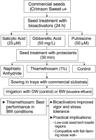
The experiment was designed as a completely randomized 2 × 7 factorial scheme, with two water types (drinking water (DW) and biosaline water (BW)) and seven seed treatments (C: control; SA: salicylic acid; PUT: putrescine; GA: gibberellic acid; NA: naphthalic anhydride; TMT: thiamethoxam; ASM: acibenzolar-S-methyl), and four replications, each with 72 Citrullus lanatus seeds.
The biosaline water was collected from production tanks of pink tilapia (Oreochromis niloticus), while the drinking water was sourced from the Caatinga Experimental Field at Embrapa Semiarid. (Table 1).
The seeds were treated with phytoregulators and phytoprotectants. The phytoregulators used included salicylic acid (SA, 25 μmol L⁻1 in water), putrescine (PUT, 50 μmol L⁻1 in water), and gibberellic acid (GA₃, 50 mg L⁻1 in water). The seeds were soaked in 500 mL of each respective solution for 24 hours. The phytoprotectants applied were naphthalic anhydride (NA, 1% by weight of seed), thiamethoxam (TMT, 1% by weight of seed), and acibenzolar-S-methyl (ASM, 1% by weight of seed). The seeds were kept in contact with these protectants for 30 minutes without washing. Seeds that were not treated with phytoregulators or phytoprotectants served as the control group.
Physiological evaluations
The emerged seedlings were counted daily for 14 days to calculate the emergence percentage (%) and the emergence speed index, following [15]. Additionally, the mean emergence time (in days) was determined according to [16], and the emergence velocity average (seedlings per day) was calculated via the method of [17].
At the conclusion of the emergence test, the length of the aerial part (cm) and the root length (cm) were measured with a graduated ruler, in accordance with [18]. To determine the dry matter content (mg), the seedlings were placed in paper bags and dried in a forced-air oven at 65°C for 72 hours. The dried plant material was subsequently weighed using a precision analytical balance with an accuracy of 0.001 g. The measurements were performed under controlled laboratory conditions to ensure stability and accuracy. Final values were normalized to the number of seedlings, and the results were expressed as milligrams of dry matter per seedling.
Biochemical evaluations
Biochemical analyses were performed by homogenizing 1 g of plant tissue (shoot or root) in 10 mL of distilled water (H₂O), followed by centrifugation at 10,000 × g for 20 minutes at 4°C. The resulting extracts were stored at -10°C until further analysis.
The total soluble sugars (TSS) in the fresh tissue samples were determined via the anthrone method (Yemm & Willis, 1954). Reducing sugars (RSs) were quantified via the colorimetric method of dinitrosalicylic acid (DNS) as described by Miller (1959).
The total amino acid content was estimated via ninhydrin reagent [19], with glycine serving as the standard amino acid.
Total soluble proteins were measured via the Bradford method (1976), with Coomassie Brilliant Blue G-250 as the dye. This method provides a reliable estimate of protein content in plant tissue.
Statistical analysis
The data were analyzed via analysis of variance (ANOVA) with the F test (p ≤ 0.05). When significant differences were detected, the means were further compared via the Scott‒Knott test (p ≤ 0.05). All the statistical analyses were conducted via Assistat software, version 7.7 beta [20].
RESULTS
Physiological traits
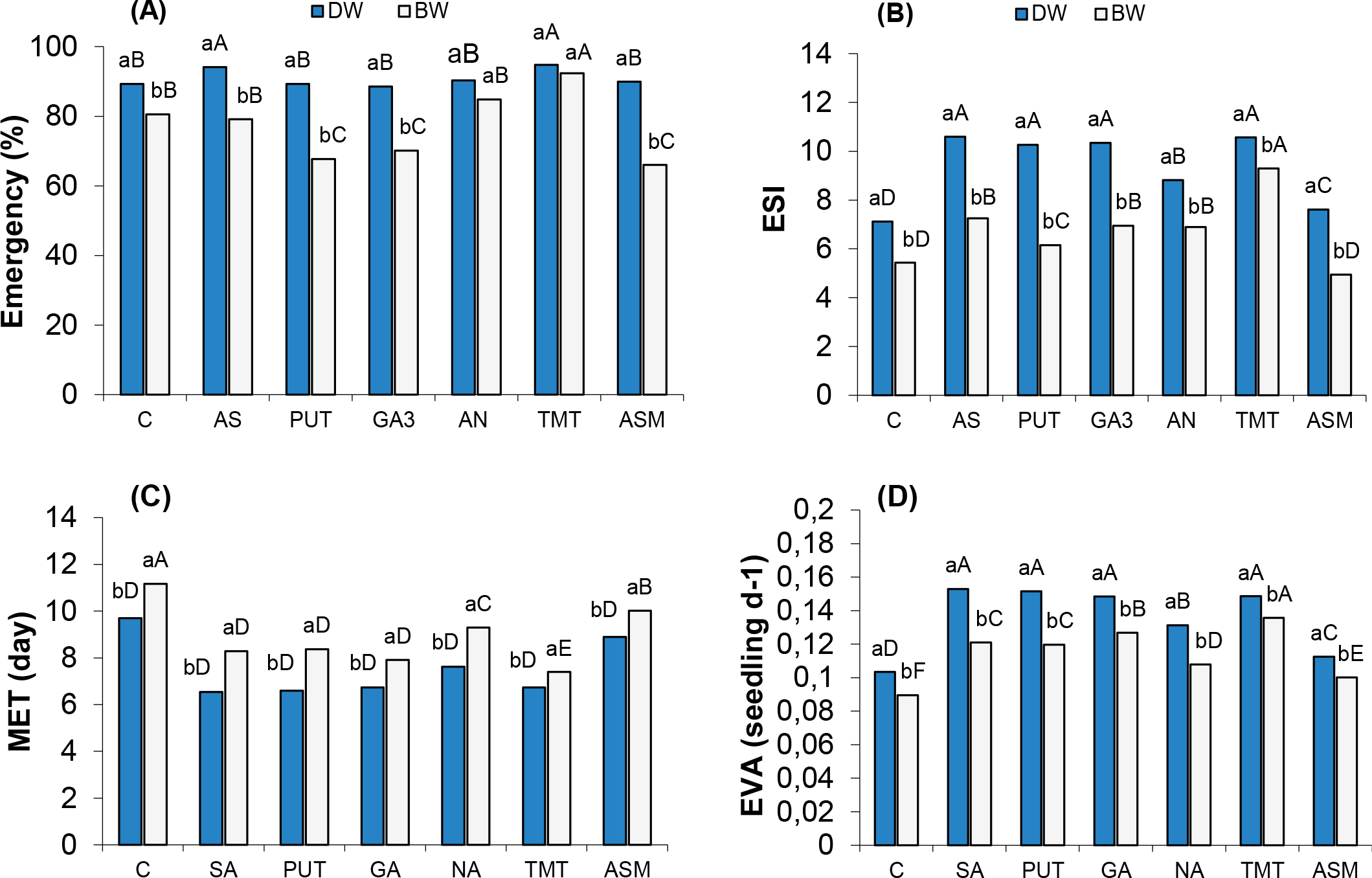
All the analyzed variables, except for the mean emergence time and root length, exhibited significant interactions. Salicylic acid and thiamethoxam treatments resulted in higher emergence percentages than did the control group in the drinking water treatment. Thiamethoxam also yielded the highest emergence percentage in the biosaline water group, outperforming the other treatments and the control. Notably, thiamethoxam treatment led to greater percentages of emergence than did the drinking water control, even under biosaline water conditions (Figure 1A). The results for the mean emergence time (Figure 1C) revealed that the biosaline water group outperformed the drinking water group in all the treatments.
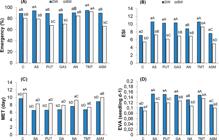
Emergency (A), emergence speed index (ESI) (B), mean emergence time (MET) (C) and average emergence velocity (EVA) (D) of watermelon seedlings (Citrullus lanatus) Cv. Crimson Sweet in drinking water (DW) and biossaline water (BW), with plant protectors used for seed treatment. - SA: salicylic acid; PUT: putrescine; GA: gibberellic acid; NA: naphthalic anhydride; TMT: thiamethoxam; ASM: acibenzolar-S-methyl. 1Means followed by the same lowercase letter belong to the same group for the types of water within the phytoregulators and phytoprotectants according to the Scott-Knott criteria (p ≤ 0.05); 2Means followed by the same uppercase letter belong to the same group for phytoregulators and phytoprotectants according to the Scott‒Knott criteria (p ≤ 0.05).
Compared with the control, all the seed treatments improved the emergence speed index and average emergence velocity in the seedlings irrigated with drinking water. The thiamethoxam, salicylic acid, gibberellic acid, and putrescine treatments resulted in higher emergence speed indices and average emergence velocity values in the seedlings irrigated with drinking water. Thiamethoxam also induced the highest emergence speed index and average emergence velocity values in seedlings irrigated with biosaline water, surpassing the results of untreated seedlings irrigated with drinking water (Figure 1B and D).
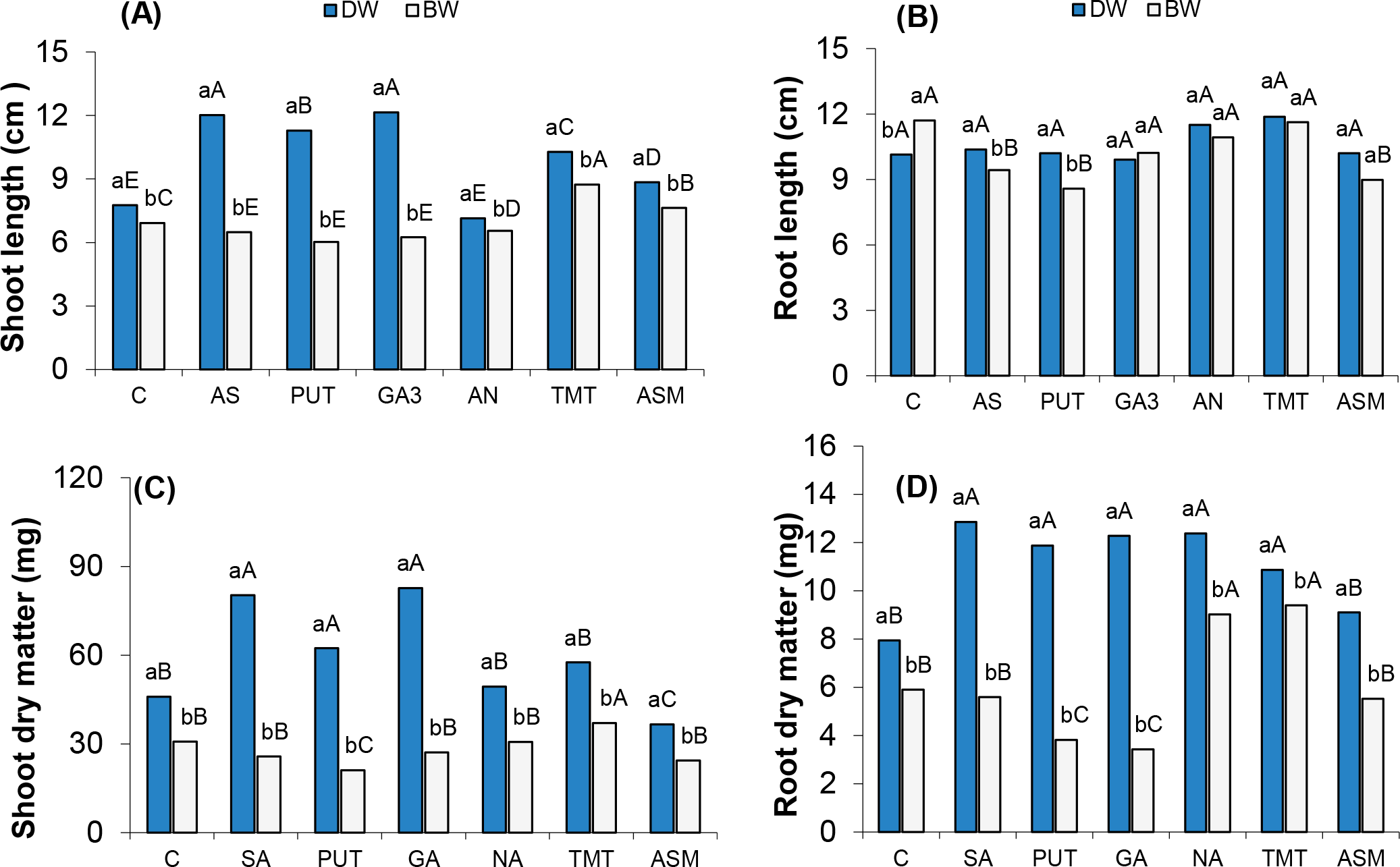
Seed treatment with salicylic acid and gibberellic acid resulted in greater shoot length in seedlings irrigated with drinking water, whereas thiamethoxam promoted the greatest shoot length in seedlings irrigated with biosaline water at 14 days after sowing (DAS) (Figure 2A). Compared with the other treatments within the same group, the treatments with salicylic acid, putrescine, and gibberellic acid increased the dry mass of the aerial parts of the seedlings irrigated with potable water. Conversely, thiamethoxam increased the dry mass of the aerial parts of the seedlings irrigated with biosaline water (Figure 2C).
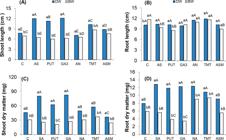
Shoot length (A), root length (B), shoot dry matter (C) and root dry matter (D) of watermelon seedlings (Citrullus lanatus) cv. Crimson Sweet in drinking water (DW) and biossaline water (BW), with plant protectors used in the seed treatment. - SA: salicylic acid; PUT: putrescine; GA: gibberellic acid; NA: naphthalic anhydride; TMT: thiamethoxam; ASM: acibenzolar-S-methyl. 1Means followed by the same lowercase letter belong to the same group for the types of water within the phytoregulators and phytoprotectants according to the Scott-Knott criteria (p ≤ 0.05); 2Means followed by the same uppercase letter belong to the same group for phytoregulators and phytoprotectants according to the Scott‒Knott criteria (p ≤ 0.05).
All the evaluated treatments, with the exception of acibenzolar-S-methyl, resulted in greater root dry matter in the seedlings that were irrigated with drinking water. Among the seedlings irrigated with biosaline water, the greatest amount of root dry matter was observed with the naphthalic anhydride and thiamethoxam treatments, with values exceeding those of the control group irrigated with drinking water (Figure 2D).
Biochemical traits
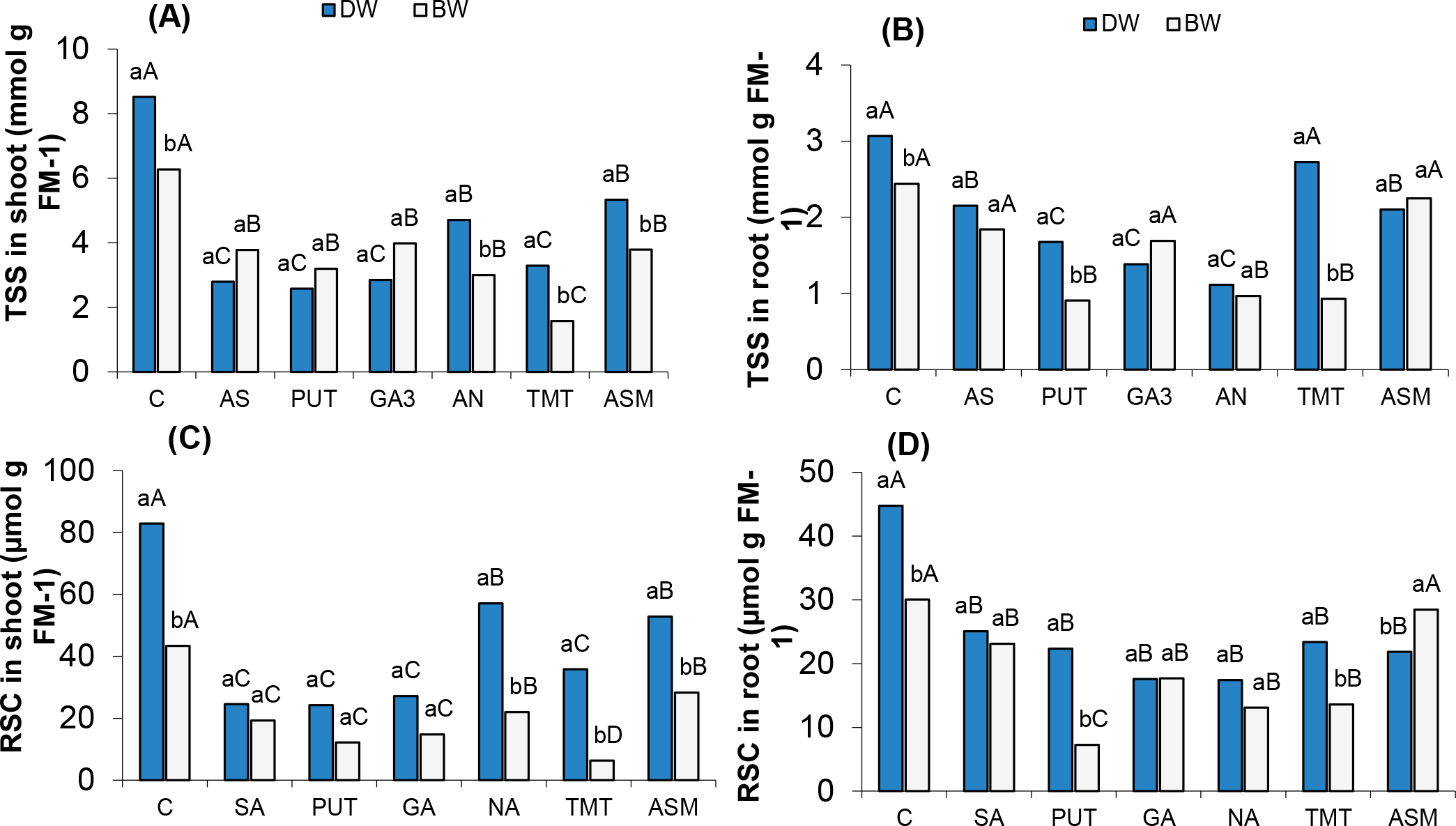
The highest concentration of total soluble sugars in the aerial parts was observed in the control treatments of the drinking water group, with values surpassing those found in the biosaline water treatments. In contrast, the salicylic acid, putrescine, and gibberellic acid treatments led to higher levels of total soluble sugars in the biosaline water group than in the drinking water group (Figure 3A). Root analysis revealed significant differences between the drinking water and biosaline groups for the putrescine and thiamethoxam treatments, as well as for the control group, with the highest sugar concentrations found in the drinking water group. In the biosaline water group, the levels of total soluble sugars were lower than those in the control group, especially after the putrescine, naphthalic anhydride, and thiamethoxam treatments (Figure 3B).
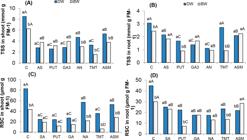
Total soluble sugars (TSS) in shoots (A) and roots (B), reducing sugar concentration (RSC) in shoots (C) and roots (D), and watermelon seedlings (Citrullus lanatus) Cv. Crimson Sweet in drinking water (DW) and biossaline water (BW). - SA: salicylic acid; PUT: putrescine; GA: gibberellic acid; NA: naphthalic anhydride; TMT: thiamethoxam; ASM: acibenzolar-S-methyl. 1Means followed by the same lowercase letter belong to the same group for the types of water within the phytoregulators and phytoprotectants according to the Scott-Knott criteria (p ≤ 0.05); 2Means followed by the same uppercase letter belong to the same group for phytoregulators and phytoprotectants according to the Scott‒Knott criteria (p ≤ 0.05).
For the salicylic acid, putrescine, and gibberellic acid treatments, no significant differences were observed in the concentration of reducing sugars, regardless of whether potable or biosaline water was used. However, the lowest concentration of reducing sugars was noted after thiamethoxam treatment in the biosaline water group (Figure 3C). In the roots, the reducing sugar concentrations significantly differed between the drinking water and biosaline water groups for all the treatments, except for the salicylic acid, gibberellic acid, and naphthalene anhydride treatments (Figure 3D). These findings suggest that certain treatments may have a more pronounced effect on sugar metabolism in roots under saline stress.
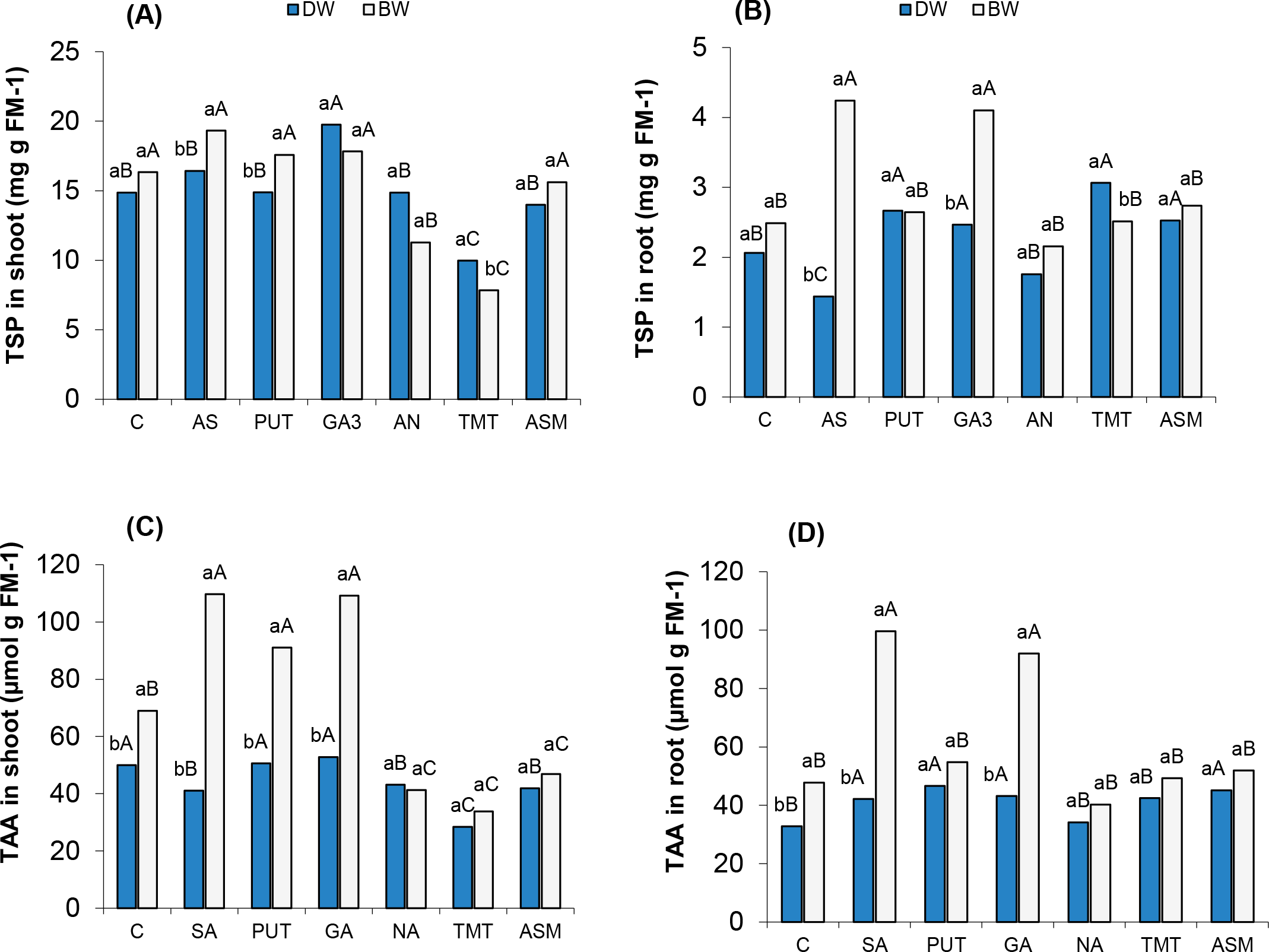
Gibberellic acid promoted the greatest accumulation of total soluble proteins in the aerial parts of the seedlings irrigated with drinking water. When the drinking water and biosaline water groups were compared, no significant differences were detected in the total soluble protein content among the treatments with gibberellic acid, naphthalic anhydride, and the control. However, thiamethoxam treatment resulted in greater total soluble protein content in the drinking water group than in the biosaline water group (Figure 4A).
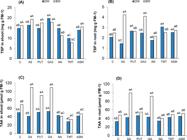
Total soluble protein (TSP) in shoots (A) and roots (B), total amino acids (TAAs) in shoots (C) and roots (D), and watermelon seedlings (Citrullus lanatus) cv. Crimson Sweet in drinking water (DW) and bossaline water (BW). - SA: salicylic acid; PUT: putrescine; GA: gibberellic acid; NA: naphthalic anhydride; TMT: thiamethoxam; ASM: acibenzolar-S-methyl. 1Means followed by the same lowercase letter belong to the same group for the types of water within the phytoregulators and phytoprotectants according to the Scott-Knott criteria (p ≤ 0.05); 2Means followed by the same uppercase letter belong to the same group for phytoregulators and phytoprotectants according to the Scott‒Knott criteria (p ≤ 0.05).
In the roots, the highest total soluble protein content was observed following treatment with thiamethoxam, putrescine, gibberellic acid, and acibenzolar-S-methyl in the drinking water group. In contrast, the highest protein concentrations in the biosaline water group were observed after salicylic acid and gibberellic acid treatments (Figure 4B). These findings suggest that some treatments can increase protein accumulation under saline stress, particularly in the roots.
The total amino acid concentrations in the shoots of the drinking water-treated seedlings were lower after treatment with salicylic acid, acibenzolar-S-methyl, naphthalic anhydride, or thiamethoxam than after treatment with gibberellic acid, putrescine, or the control. However, the highest total amino acid concentrations in the biosaline water group were recorded after putrescine, salicylic acid, and gibberellic acid treatments. Notably, the accumulation of total amino acids was greater in the aerial parts of the drinking water seedlings than in the biosaline water seedlings after treatment with naphthalic anhydride (Figure 4C).
In the roots, the greatest accumulation of total amino acids was observed following salicylic acid and gibberellic acid treatments in the biosaline water group (Figure 4D). These findings suggest that certain treatments may increase amino acid metabolism, especially under saline stress conditions, providing valuable insights for improving seedling resilience to abiotic stressors such as salinity.
DISCUSSION
The inhibition of plant growth due to salt stress is associated primarily with both the toxic effects of absorbed salts and the limited capacity of plants for osmotic adjustment. These factors reduce water and nutrient uptake, ultimately hindering plant growth and development [4]. Additionally, salinity-induced stress causes various biochemical changes during seed germination, affecting protein and hormone synthesis as well as water relationships within the process [21]. Understanding these physiological and biochemical responses is crucial for improving plant resilience under saline stress.
Under normal growth conditions, where irrigation uses high-quality water, seed treatment with phytoregulators (salicylic acid, putrescine, and gibberellic acid) and a phytoprotector (thiamethoxam) significantly enhanced the performance of watermelon seedlings, especially in terms of the emergence speed index (Figure 1B). Phytohormones, such as gibberellic and salicylic acids, are well documented for their roles in alleviating abiotic stresses, particularly salinity, in various crops when applied during seed treatment [22, 23, 24]. Similarly, phytoprotectors such as thiamethoxam have been shown to mitigate stress effects on seeds and plants, promoting better growth and vigor [25, 26]. Seed treatment with these bioactivators induces a mild stress response, activating defense mechanisms that increase plant tolerance to more severe environmental stressors [26, 27].
Salicylic acid is involved in various plant processes, including photosynthesis, leaf senescence, degradation of reactive oxygen species, and amino acid synthesis, which are crucial for osmotic adjustment [7, 28]. This cellular osmotic adjustment is achieved through the accumulation of biomolecules such as sugars, amino acids, and proline in the cytosol, which helps maintain cell turgor and prevents cell damage during saline and water stress [7, 29]. Salicylic acid plays a significant role in enhancing plant resilience under stress conditions by modulating these pathways.
Gibberellic acid influences multiple developmental processes in plants, such as seed germination, cell elongation, and leaf expansion [30]. Notably, gibberellic acid interacts with salicylic acid, enhancing the synthesis and performance of salicylic acid in plants. Increased gibberellic acid levels in Arabidopsis thaliana resulted in increased expression of genes related to salicylic acid synthesis, which in turn supported the ability of the plant to manage stress [28]. This synergistic interaction between gibberellic acid and salicylic acid highlights the importance of their combined use in promoting plant growth under challenging conditions.
Salicylic acid has beneficial effects on plant growth in various species. For example, when pepper seeds were treated with 0.5 mM salicylic acid under water stress conditions, dry mass accumulation and seedling shoot growth increased by approximately 80% compared with those of untreated controls [31]. Similarly, salicylic acid (10⁻5 mM) helps maintain germination rates and seedling quality in sesame seeds exposed to water stress (-0.4 MPa), demonstrating its potential to support seed viability under adverse conditions [32].
In another study, the treatment of beet seeds with gibberellic acid (200 mg L⁻1) resulted in a 90% germination rate under saline conditions (9 g L⁻1 NaCl), with seedling development comparable to that of the control group [33]. Similarly, soybean seeds treated with 50 mg/L gibberellic acid presented improved performance under saline stress [34], further supporting the role of gibberellic acid in enhancing seedling resilience to salinity.
Thiamethoxam, a systemic insecticide with bioactivator properties, effectively mitigated the damage caused by biosaline water during seedling irrigation (Figure 1A). This phytoprotectant not only promotes seedling germination and vigor but also enhances plant growth under stressful conditions [25, 26]. Previous studies reported similar findings, where thiamethoxam treatment resulted in increased seedling length and dry mass in watermelon under biosaline conditions [11]. The positive effects of thiamethoxam were also observed in tomato and onion seeds, where its application (0.5-0.6 mL per 1000 seeds) improved seedling vigor and physiological performance under normal conditions [35]. Furthermore, under water stress, [36], noted that thiamethoxam improved the physiological performance of carrot seeds and seedlings.
Plants possess various adaptive mechanisms to cope with salinity, one of which is osmotic adjustment. This process helps prevent excessive salt accumulation in the protoplasm through the accumulation of organic and inorganic ions and protective solutes [37, 7]. The phytoregulators evaluated in this study promoted increased accumulation of osmolytes, such as soluble sugars and total amino acids, in the cytosol of seedlings irrigated with biosaline water (Figure 3A, B). Osmotic regulation, achieved through the accumulation of these biomolecules, allows cells to maintain turgor pressure and tissue hydration, even under salinity stress. Sugars, in particular, may play a signaling role in this osmotic adjustment process [38]. Similar results have been reported in watermelon and pumpkin cotyledons [39] and watermelon and cucumber seedlings [40], where increased sugar content was linked to osmotic adjustment.
Salinity often leads to the solubilization and degradation of tissue proteins [41]. Proteins are frequently degraded and then resynthesized to maintain amino acid levels and adjust protein content during stress conditions [42]. A reduction in soluble protein concentration due to high salinity is commonly observed, which hampers plant development [43,44]. However, some plants exhibit increased protein synthesis under saline stress [45], as was observed in this study, where protein accumulation varied between shoot and root tissues. The greatest protein accumulation was observed in the aerial parts of the seedlings irrigated with biosaline water after treatment with salicylic acid and putrescine (Figure 4A).
This increase in protein synthesis in response to salinity stress may serve to stabilize cell membranes and facilitate signal transduction pathways related to salinity tolerance (Tester and Davenport, 2003). While [40] did not observe significant changes in total protein content in cucumber seedlings under biosaline irrigation, they did not observe an increase in amino acid levels in either shoots or roots. The accumulation of these metabolites indicates osmotic adjustment in watermelon seedlings, with amino acids accumulating more in the aerial parts of seedlings (Figure 4C). These findings further underscore the role of metabolic adjustments in enhancing plant resilience to saline stress.
Overall, the results of this study confirm the efficacy of certain treatments in mitigating the effects of salinity. Thiamethoxam, in particular, emerged as a key factor in promoting more vigorous watermelon seedlings under biosaline conditions. As a bioactivator, thiamethoxam triggers several physiological responses related to plant defense mechanisms, leading to increased tolerance to saline stress [26]. The bioactivation effects of phytoregulators and thiamethoxam offer promising strategies for improving seedling performance in saline environments, making them valuable tools for enhancing crop production in regions affected by salinity.
The results provide a foundation for the development of innovative technologies for use under saline conditions. The improved seedling quality and biochemical indicators-especially with the use of thiamethoxam, salicylic acid, and gibberellic acid-indicate the potential for the creation of integrated seed treatment packages aimed at better seedling establishment, even under salinity stress. Furthermore, understanding the biochemical mechanisms of metabolic regulation in treated seedlings can guide water management strategies that integrate biosaline irrigation, seed technology, and resource use efficiency [44].
The development of a package containing these regulators and its adoption by farmers could contribute to more sustainable production systems. Moreover, the physiological and agronomic effects observed reinforce the relevance of these findings for production systems, as this represents a low-cost, low-complexity tool that can be integrated into existing seedling production processes without requiring significant structural changes. Thus, seed treatment with these regulators has become a viable option for smalland medium-sized producers, especially in regions where salinity is frequent, since this treatment reduces seedling mortality and enables water reuse, lowering the demand for higher-quality irrigation water [45,46].
Perspectives, limitations, and future directions
The main limitation of this study was that it was conducted solely under greenhouse conditions. Although the results obtained are promising, they may vary under field conditions due to environmental variability, such as soil type and biotic interactions. Additionally, while seed treatment improved early growth variables and metabolite accumulation, the effects of the regulators on fruit yield and quality were not evaluated, presenting opportunities for future research. Therefore, conducting trials in different soil types is recommended to assess the behavior of salts and regulators throughout the production cycle. These future trials may lead to the validation of the effectiveness of seed treatment in mitigating salt stress.
However, owing to the ease of use of the technique presented, the development of patents or commercially viable bioactivator packages holds strong potential-especially through partnerships with bioinput companies, startups, or public‒private collaborations. In addition to these factors, future research should explore synergistic effects with other elements, particularly nanoparticles, and interactions with beneficial microorganisms in plants.
CONCLUSIONS
The results of this study clearly demonstrate the beneficial effects of these doses in mitigating salt stress, with thiamethoxam playing a key role in increasing the vigor of watermelon seedlings irrigated with biosaline water.
Thiamethoxam triggers several physiological responses that strengthen the plant's defense mechanisms, thus increasing its tolerance to saline conditions. Given its bioactivation properties, particularly in relation to salt stress, thiamethoxam shows significant potential as an effective treatment for watermelon seeds.
These findings suggest that the use of these bioactivators may be an important strategy for improving seedling resilience and growth in saline environments.
-
Funding:
This work was carried out with the financial support by the Coordenação de Aperfeiçoamento de Pessoal de Nível Superior - Brazil (CAPES) - Funding Code 001.
-
Institutional Review Board Statement:
Not applicable
-
Informed Consent Statement:
Not applicable.
Acknowledgment:
We would like to thank the collaboration of scientific initiation students, technicians and staff, for their support during the experimental conduct of the study
Use of Generative Artificial Intelligence
The authors declare that large language models and other generative artificial intelligence (AI) or AI-assisted technologies cannot be credited as authors and have not been listed as authors of this paper.
The author declare that did not use the artificial intelligence.
Data Availability Statement:
Research data are not available.
REFERENCES
-
1 Instituto Brasileiro de Geografia e Estatística. [Municipal agricultural production] [Internet]. Rio de Janeiro: IBGE; 2023 [cited 2023 Jun 20]. Available from: https://www.ibge.gov.br/explica/producao-agropecuaria/melancia/br
» https://www.ibge.gov.br/explica/producao-agropecuaria/melancia/br - 2 HF Brasil. [Hortifruti Brasil Yearbook - Special Edition]. Piracicaba: CEPEA; 2020.
- 3 Bezerra RU, Araujo VTV, Azevedo BM, Pereira Filho JV, Lima AD. [Production and quality of Maranhão pumpkin under the influence of irrigation levels and nitrogen doses]. Irriga. 2020;25:87-101.
- 4 Nobrega JS, Lopes KP, Paiva FJS, Silva JG, Dantas MV. [Physiological potential of melon seeds under salinity]. Res Soc Dev. 2020;9:1-16.
- 5 Zhang ZX, Tian X, Sun L. Germination behavior of Cenchrus pauciflorus seeds across a range of salinities. Weed Res. 2017;57(2):91-100.
- 6 Kaur S, Gupta N. Effect of proline and salicylic acid on germination and antioxidant enzymes at different temperatures in muskmelon (Cucumis melo L.) seeds. J Appl Nat Sci. 2017.
- 7 Khan MIR, Fatma M, Per TS, Anjum NA, Khan NA. Salicylic acid-induced abiotic stress tolerance and underlying mechanisms in plants. Front Plant Sci. 2015;6:462.
- 8 Grohs M, Marchesan E, Roso R, Moraes BS. [Attenuation of low-temperature stress in rice seedlings]. Pesq Agropec Trop. 2016;46:197-205.
- 9 Leite TS, Freitas RMO, Nogueira NW, Leite MS, Pinto JRS. The use of saline aquaculture effluent for production of Enterolobium contortisiliquum seedlings. Environ Sci Pollut Res Int. 2017;24:19306-12.
- 10 Silva JESB, Matias JR, Guirra KS, Aragao CA, Araujo GGL, Dantas BF. Development of seedlings of watermelon cv. Crimson Sweet irrigated with biosaline water. Rev Bras Eng Agric Ambient. 2015;19:835-40.
- 11 Silva JESB, Barbosa LG, Silva FZ, Silva TB, Matias JR, Ribeiro RC, et al. [Production of squash and pumpkin seedlings irrigated with biosaline water]. Sci Plena. 2014;10:1-7.
- 12 Dourado D, Lima SF, Lima APF, Sorato DN, Bernardo VF, Barbosa HM. [Effect of biostimulant on cedar seeds]. Braz J Dev. 2020;6:30306-19.
- 13 Silva JESB, Silva FZ, Guirra KS, Matias JR, Dantas BF. Pre-germination treatments of melon seeds irrigated with biosaline water from fish farming effluent. Sci Hortic. 2022;292:110628.
- 14 Babaei K, Rahimi A, Darvishzadeh R, Saberi-Riseh R. Seed priming mitigates salinity stress: physiological, biochemical, and molecular mechanisms. Front Environ Sci. 2022;10:991977.
- 15 Brasil. Ministério da Agricultura, Pecuária e Abastecimento. [Rules for seed analysis] [Internet]. Brasília (DF): MAPA; 2009 [cited 2020 Jul 16].
- 16 Maguire JD. Speed of germination-aid in selection and evaluation for seedling emergence and vigor. Crop Sci. 1962;2:176-7.
- 17 Labouriau LG. [Seed germination]. Washington: Secretaria da OEA; 1983.
- 18 Kotowski F. Temperature relations to germination of vegetable seeds. Proc Am Soc Hortic Sci. 1926;23:176-84.
- 19 Nakagawa J. [Vigor tests based on seedling performance]. In: Krzyzanowski FC, Vieira RD, França Neto JB, editors. [Seed vigor: concepts and tests]. Londrina: ABRATES; 1999. p. 2.1-24.
- 20 Peoples MB, Faizah AW, Reakasem B, Herridge DF. Methods for evaluating nitrogen fixation by nodulated legumes in the field. Canberra: Aust Cent Int Agric Res; 1989.
- 21 Silva FAS, Azevedo CAV. The Assistat software version 7.7 and its use in the analysis of experimental data. Afr J Agric Res. 2016;11(39):3733-40.
- 22 Pereira IC, Catao HCRM, Caixeta F. Seed physiological quality and seedling growth of pea under water and salt stress. Rev Bras Eng Agric Ambient. 2020;24:95-100.
- 23 Silva JESB, Paiva EP, Leite MS, Torres SB, Souza Neta ML, Guirra KS. [Salicylic acid in physiological conditioning of onion seeds subjected to water and salt stress]. Rev Bras Eng Agric Ambient. 2019;23(12):919-24.
- 24 Guirra KS, Torres SB, Leite MS, Guirra BS, Nogueira Neto FA, Rego AL. [Phytohormones on the germination and initial growth of pumpkin seedlings under different water types]. Rev Bras Eng Agric Ambient. 2020;24:827-32.
- 25 Chakma R, Biswas A, Saekong P, Ullah H, Datta A. Foliar application and seed priming of salicylic acid affect growth, fruit yield, and quality of grape tomato under drought stress. Sci Hortic. 2021;280:109904.
- 26 Macedo WR, Castro PRC. Thiamethoxam: molecule moderator of growth, metabolism and production of spring wheat. Pestic Biochem Physiol. 2011;100:299-304.
- 27 Almeida AS, Deuner C, Borges CT, Meneghello GE, Jauer A, Villela FA. [Treatment of rice seeds with thiamethoxam: reflections on physiological performance]. J Seed Sci. 2014;36:392-8.
- 28 Taiz L, Zeiger E, Moller IM, Murphy A. [Plant physiology and development]. Porto Alegre: Artmed; 2017.
- 29 Butt YN, Fatima Q, Nasar S, Ikram J, Akram S. Drought tolerance in plants: a review. Res Rev J Ecol Environ Sci. 2017;5:19-28.
- 30 Younesi O, Moradi A. Effect of priming of seeds of Medicago sativa ‘Bami’ with gibberellic acid on germination, seedling growth and antioxidant enzymes activity under salinity stress. J Hortic Res. 2014;22:167-74.
- 31 Prabha D, Kumar N. Seed treatment with salicylic acid enhance drought tolerance in Capsicum World J Agric Res. 2014;2:42-6.
- 32 Silva ACD, Suassuna JF, Melo AS, Costa RR, Andrade WL, Silva DC. Salicylic acid as attenuator of drought stress on germination and initial development of sesame. Rev Bras Eng Agric Ambient. 2017;21:156-62.
- 33 Kandil AA, Sharief AE, Abido WAE, Awed AM. Effect of gibberellic acid on germination behavior of sugar beet cultivars under salt stress conditions of Egypt. Sugar Tech. 2014;16:211-21.
- 34 Gul V, Dinler BS, Tasci E. Effects of preapplication with gibberellic acid on germination of soybean under salt stress. J Stress Physiol Biochem. 2019;15:86-92.
- 35 Tunes LM, Almeida AS, Meneghello GE, Villela FA, Soares VN, Bortolotti M. Bioactivator on physiological performance of tomato and onion seeds. Comun Sci. 2018;9:19-25.
- 36 Misra N, Saxena P. Effect of salicylic acid on proline metabolism in lentil grown under salinity stress. Plant Sci. 2009;177:181-9.
- 37 Singh PK, Gautam S. Role of salicylic acid on physiological and biochemical mechanism of salinity stress tolerance in plants. Acta Physiol Plant. 2013;35(8):2345-53.
- 38 Matias JR, Ribeiro RC, Aragao CA, Araujo GGL, Dantas BF. Physiological changes in osmoand hydroprimed cucumber seeds germinated in biosaline water. J Seed Sci. 2015;37:7-15.
- 39 Medeiros RF, Cavalcante LF, Rodrigues RM, Mesquita FO, Bruno RLA, Ferreira Neto M. [Use of biofertilizers and saline water in Lycopersicon pimpinellifolium L. plants]. Rev Bras Cienc Agrar. 2013;8:156-62.
- 40 Yang X, Li Y, Qi M, Liu Y, Li T. Targeted control of chloroplast quality to improve plant acclimation: from protein import to degradation. Front Plant Sci. 2019;10:1-8.
- 41 Rao MPN, Dong ZY, Xiao M, Li WJ. Effect of salt stress on plants and role of microbes in promoting plant growth under salt stress. In: Giri B, Varma A, editors. Microorganisms in saline environments: strategies and functions. Cham: Springer; 2019. p. 423-35.
- 42 Javed Q, Azeem A, Sun J, Ullah I, Jabran K, Anandkumar A, et al. Impacts of salt stress on the physiology of plants and opportunity to rewater the stressed plants with diluted water: a review. Appl Ecol Environ Res. 2019;17:12583-604.
- 43 Sem DN, Mohammed S, Kasera PK. Biology and physiology of saline plants. In: Pessarakli M, editor. Handbook of plant and crop physiology. 2nd ed. New York: Marcel Dekker; 2002. p. 563-81.
- 44 Silva JESB, Torres SB, Leal CCP, Leite MS, Guirra KS, Nogueira Neto FA, et al. Pre-germination treatments with plant growth regulators and bioactivators attenuate salt stress in melon: effects on germination and seedling development. Acta Sci Agron. 2023;45:e60516.
- 45 Ahmad F, Kamal A, Singh A, Ashfaque F, Alamri S, Siddiqui MH, et al. Seed priming with gibberellic acid induces high salinity tolerance in Pisum sativum through antioxidants, secondary metabolites and up-regulation of antiporter genes. Plant Biol. 2021;23(Suppl 1):113-21.
- 46 Nimir NEA, Zhou G, Zhou Y, et al. Comparative effects of gibberellic acid, kinetin and salicylic acid on emergence, seedling growth and the antioxidant defence system of sweet sorghum under salinity and temperature stress. Crop Pasture Sci. 2015;66(2):145-57.
-
Editor-in-Chief:
Bill Jorge Costa
-
Associate Editor:
Adriel Ferreira da Fonseca

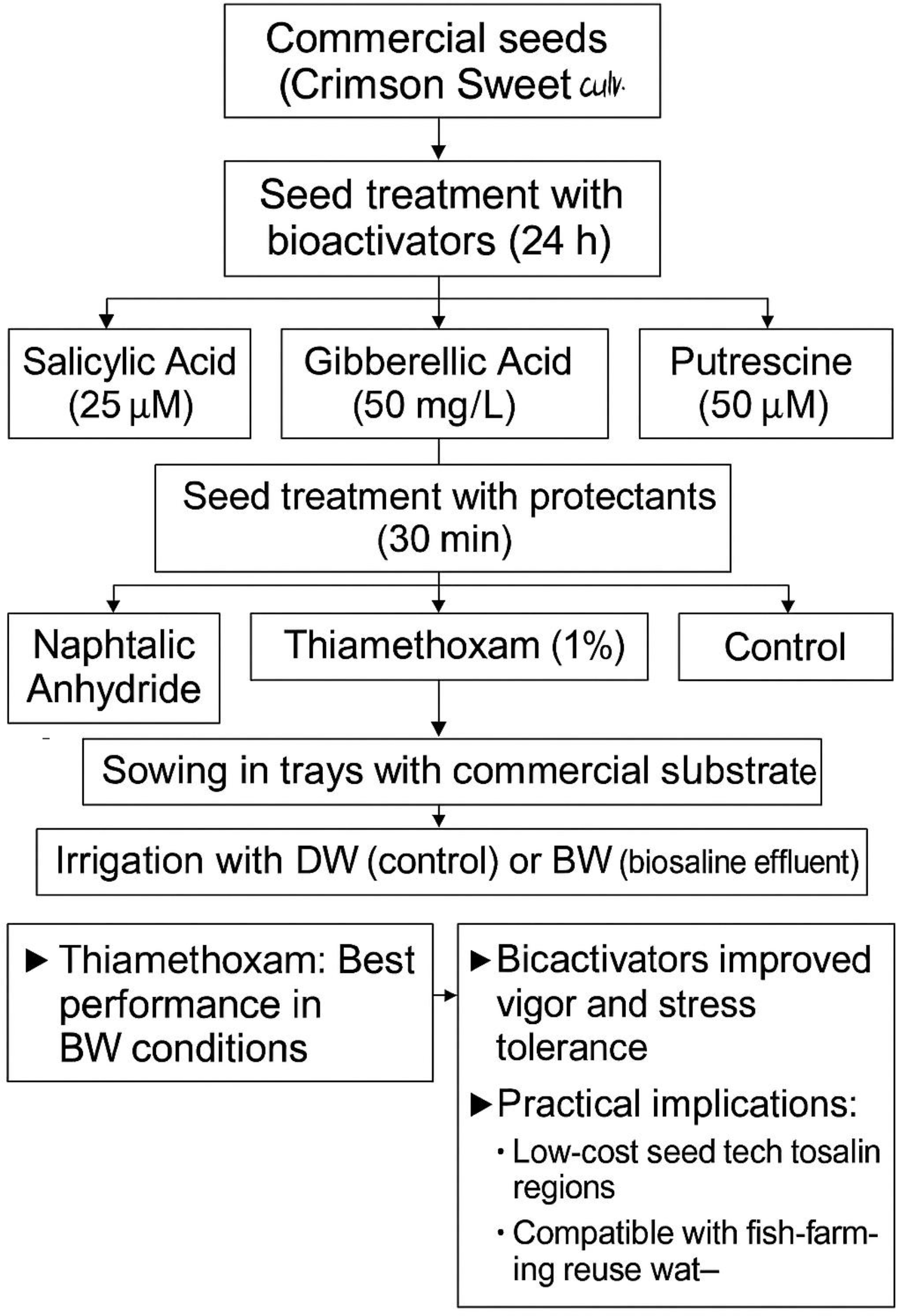 Flowchart of the experimental design with Crimson Sweet watermelon seeds treated with bioactivators (salicylic acid, gibberellic acid, and putrescine) and protectants (naphthalic anhydride, thiamethoxam, and acibenzolar-S-methyl), followed by irrigation with either drinking water (DW) or biosaline water (BW).