 Revolutionizing Gluten-Free Baking: the Role of Cassava Sour Starch in Specialty Breads
Abstract
Cassava starch (CS) possesses unique attributes such as mild flavor, bright white color, distinctive rheological behavior, and pasting properties, making it a key ingredient in diverse food applications. As the second-most demanded starch globally, CS is primarily produced in tropical and subtropical regions, with Brazil being a leading producer. A specific type of cassava starch, known as polvilho azedo in Brazil (almidón agrio in Colombia), is traditionally made using natural fermentation and sun drying. This culturally significant starch is essential for gluten-free bread production. This study analyzed eight commercial samples of polvilho azedo (PA) and one native CS sample to evaluate key characteristics, including color, acidity, organic acid content, pasting behavior, rheological and thermal properties, morphological structure, swelling, solubility, syneresis, and baking performance. Results revealed notable variability in product quality. Three of the eight samples were likely industrially processed, showing the lowest acidity (1.53 mL NaOH100g-1), organic acid content (607.1 mgkg-1), and b* values (1.84), alongside the highest L* values (>95.2). The lack of specific Brazilian regulations for PA has allowed chemically modified starches to be marketed as traditional PA, potentially misleading consumers and compromising product authenticity. This highlights the need for clear standards to protect the integrity of this unique product.
Keywords:
polvilho azedo; modified starch; tapioca starch; cheese bread; pan de bono; pan de yuca.
HIGHLIGHTS
Cassava starch is a key-ingredient for gluten-free breads;
Modified cassava starches are replacing artisanal traditional product;
Polvilho azedo has superior quality attributes and must be valued;
Consumers must be aware of the ingredients present in processed food.
INTRODUCTION
Cassava or tapioca starch exhibits distinctive and valuable technological properties in comparison to other starches. The validity of this assertion is underscored by the endeavors undertaken by scientists several decades ago. These efforts culminated in the development of commercial waxy maize starch, aptly named "Amioca." This nomenclature was adopted due to the fact that waxy maize starch, in addition to its near absence of amylose, manifests technological characteristics closely akin to those found in cassava starch [1]
As a resilient tropical crop, cultivated under relatively straightforward management conditions - such as low-fertility soils - cassava thrives as a drought-tolerant crop, with extensive production primarily in African, South American, and Asian countries [2]. The starchy roots of cassava are consumed directly as food or processed to yield starch and edible flours. Additionally, its significance extends to being a valuable component in animal feed, encompassing both the dried roots and the aerial parts (used as forage).
Among the frequently cited advantages of cassava starch, when compared to regular maize starch, are its neutral flavor, whiter color, lower gelatinization temperature, higher viscosity peak during cooking, reduced tendency to retrogradation/syneresis of the paste during cooling, and increased paste transparency. This last attribute is related to the higher swelling power of its starch granules. The exceptional qualities of cassava starch are in high demand for diverse applications, with particular significance in Brazil where it is predominantly utilized in the production of processed meat products, mainly emulsions [3]. Another prevalent application in Brazil and other South American countries involves the production of gluten-free specialty breads. Examples such as Pan de bono or Pan de yuca in Colombia, Pão de queijo and Biscoito de polvilho in Brazil, and Chipa in Paraguay highlight the popularity and widespread consumption of gluten-free breads made from cassava starch on a daily basis [4].
Each of these varieties of cassava-based breads boasts a delightful texture that captivates consumers and has been a staple in daily diets since childhood. Cassava starch breads feature a crumb structure with alveoli, showcasing either intermediary moisture in soft-texture products or low moisture in crispy biscuits. Regardless of the texture, both types are characterized as expanded breads, a result of the water vapor retention facilitated by the unique behavior of cassava starch during the dough-cooking process.
Native cassava starch possesses a unique capacity to expand when its partially gelatinized dough is shaped and baked in the oven, eliminating the need for baking powder or baking yeast. The expansion of the gluten-free baked breads is achieved through water vapor diffusion within the elastic dough. Intriguingly, when cassava starch was acquired from small-scale producers lacking the industrial expertise and resources for sophisticated processing facilities, the resulting starch yielded superior, lighter, and larger breads when baked [3].
Given the perishable nature of cassava roots, immediate processing is essential post-harvest. After starch extraction, swift drying becomes imperative to prevent microbiological spoilage, which can occur within a few hours due to the elevated temperatures in cassava-producing regions. Recognizing this issue and often lacking efficient mechanical dryers, small processors must resort to quickly sun-drying the extracted starch. In regions characterized by high humidity and a lack of favorable sunny weather, a challenging situation emerges, posing a threat to the entire cassava starch processing cycle. Faced with these conditions, small-scale processors have ingeniously devised an effective solution: the natural fermentation of the extracted starch. In a process akin to pickling, cassava starch undergoes a souring transformation over several weeks, protected by a layer of pot water. Subsequently, when weather conditions become conducive, sun-drying is initiated, resulting in the production of Polvilho Azedo or Almidón Agrio (cassava sour starch), ready for commercialization. The final moisture content closely aligns with that of native starches, ranging from 10 to 15%, ensuring its safety and viability for an extended shelf-life exceeding 12 months. This is the traditional and valued fermented cassava starch or cassava sour starch, known in Brazil as Polvilho Azedo [5].
Traditional cassava sour starch excels as a raw material for special breads. The baked products derived from this distinctive starch exhibit an exceptionally appealing texture - they are light, significantly more expanded compared to those made with cassava native starch. Moreover, these breads boast a superior flavor and taste, further enhancing their overall appeal [6].
The defining characteristic of specialty sour cassava starch (polvilho azedo) is its remarkable expansion when baked, achieved without the need for yeast or other leavening agents. This starch constitutes the primary component in foods prepared with it, such as cheese bread rolls and crispy biscuits, whether sweet or savory. If a chemically modified starch were to be used as a substitute, its required proportion would be excessively high, given its classification as a food additive rather than a natural ingredient, as is the case with native and sour starches. This poses a significant challenge to clean labeling, a growing and highly relevant concern among modern consumers [7]. In this study, commercial cassava starch samples were obtained and analyzed to evaluate their physicochemical properties and understand how these properties influence their technological behavior as raw materials in baked goods. Additionally, this research investigated variations among commercial starches and explored whether other chemical modifications might have been applied to replicate traditional processing methods.
MATERIAL AND METHODS
Samples and Reagents
Eight samples of cassava starch available in the Brazilian market and sold as “polvilho azedo” (PA1, PA2, PA3, PA4, PA5, PA6, PA7 and PA8) were used in the present study, with inclusion of one native cassava starch (CS) sample to compare the results. All samples were received as gifts from the producers. All the reagents were of analytical or HPLC grade.
Total Titrable Acidity (TTA)
This analysis was performed according to IAL [8]. Starch samples (2 g) were titrated against standardized sodium hydroxide solution (0.1 mol L-1), using phenolphthalein as pH indicator. The results were expressed as mL NaOH 1 mol L 100 g-1.
Organic Acid Profile and Total Acidity
The organic acid profiles of the cassava starches were analyzed by HPLC-DAD (Waters Alliance 2695, Milford, MA, USA). The samples were prepared according to Demiate and coauthors [9]. The filtered samples (10 μL) were analyzed using an Aminex HPX-87H column (Bio-Rad, Hercules, CA, USA) and an isocratic elution mode with 5 mmolL-1 H2SO4 solution as mobile phase. The flow rate was kept at 0.6 mLmin-1 and peaks were detected at 210 nm. The identification of organic acids was carried out by comparing the retention time and spectra of the samples with lactic, acetic, propionic and butyric acid standards.
Color
Color parameters (L*, a* and b*) were evaluated by using a Mini Scan EZ portable colorimeter (Hunter Lab, Reston, VA, USA). Color difference (△E) between the control (native cassava starch) and the other samples was calculated by Equation 1 [10] Six readings for each sample were made.
Granule Morphology
The morphology of starch granules was analyzed by scanning electron microscopy (SEM) (Tescan, Vega 3, Brno, Czech Republic). Size, shape and appearance of the surface of granules were observed with the images obtained [11].
Amylose Content
Iodine affinity (IA) was determined using a potentiometric auto titrator (Metrohm, 848 Titrino Plus, Herisau, Switzerland) [12]. The amylose content, expressed in percentage, was calculated by dividing the iodine affinity (IA) of the starch by the IA of amylose (20%) [13].
Powder X-Ray Diffraction
The samples were analyzed by an Ultima IV X-ray diffractometer (Rigaku, Tokyo, Japan) according to Nara and coauthors [14], in the same way reported elsewhere [15]. The moisture of the samples was equilibrated inside a saturated moisture desiccator at 25 °C 7 days-1. Diffractograms were obtained in the 2θ angle ranging from 3 - 50 ° at a scanning rate of 2 ° min-1 and a 0.02 step size. The relative crystallinity index (CI) was calculated as the ratio between the crystal area and the total area of the curve.
FTIR Spectroscopy
FTIR analysis of cassava starch was carried out as reported previously [16], by using a Shimadzu IR Prestige-21 spectrophotometer (Shimadzu, Kyoto, Japan) in the range 4000 - 400 cm-1 and resolution of 4 cm-1. The pellets were made with the aid of a hydraulic press in the proportion of 100 mg KBr and 1 mg of dried starch.
Thermal Analysis (DSC)
Differential scanning calorimetry (DSC) analysis was performed by a DSC-60 equipment (Shimadzu, Kyoto, Japan) calibrated with Indium of 99.99 % (melting point = 156.6 °C; ∆H = 28.56 J g-1). The analysis involved weighing 2 mg of starch sample, pouring 8 µL of deionized water in sealed aluminum crucible and running the test at a heating rate of 5 °C min-1, from 30°C to 100 °C. Synthetic air was flowing at 80 mL min-1 during the analysis [17].
Pasting Properties
Pasting properties were analyzed by using a Rapid Visco Analyzer (RVA-4 Series, Newport Scientific, Wariewood, NSW, Australia), and the STD-2 analysis profile. The starch samples were suspended in distilled water (8 % m/m of starch, on a dry weight basis) and in two buffer solutions, totaling 28 g suspension. This analysis was repeated twice, and the solvents were deionized water, acetate buffer solution (0.1 mol L-1 pH 4.0) and phosphate buffer solution (0.1 mol L-1 pH 7.0) [5].
Rheological Behavior
Aqueous starch suspensions (5 % m/m, dry weight basis) were prepared and heated at 95 °C in boiling water bath for 30 min under agitation to produce full gelatinized pastes [18]. The pastes were made 24 h previously to the analysis, resting at room temperature (20 °C). Then, they were put into the oscillatory rheometer (DHR - 2, TA Instruments, Crawley, UK) equipped with parallel plates (4 cm diameter) with 1,000 µm gap. Silicon oil was used to avoid evaporation. Before starting the tests, the samples were left for 5 min between the rheometer plates for equilibrating. Two different tests were performed, i.e., steady and dynamic shear measurements, both in duplicate.
The steady shear properties were obtained at 25 °C, using ascending and descending shear cycles continuously from 0.1 to 200 s-1. The experimental data were adjusted by the Power Law Model (Equation 2). The r2 was calculated from the linearization of the data.
where:
σ = shear stress (Pa)
K = consistency index (Pa.sn)
γ = shear rate (s-1)
n= flow behavior index (dimensionless)
For measuring the dynamic shear, first of all the samples were submitted to an amplitude test with constant frequency (10 rad s-1) to find the linear range of viscoelasticity. After that, a frequency scanning was made at 25 °C, in the frequency range 0.63 - 62.8 rad s-1 at 2% strain (respecting the tested viscoelasticity range). The analysis allowed us to obtain the storage modulus (G’) and the loss modulus (G”) [19].
Syneresis
Starch suspensions at 5 % (m/m) were gelatinized in distilled water at 95 °C 15 min-1. The starch pastes were transferred to Eppendorf tubes, weighed and refrigerated at 5 °C 24 h-1. After this period, the tubes with the starch pastes were frozen and stored at -18 °C 20 h-1; then, they were thawed at 40 °C 4 h-1. This freeze-thawing process was repeated three times. After each cycle, the tubes were centrifuged (6,600 ×g for 10 min) in a microcentrifuge, rotor F-45-12-11 (MiniSpin Plus / Eppendorf, Hamburg, Germany) for water separation from the pastes. Syneresis was expressed as the percentage of the mass of water liberated from the pastes in relation to the total mass of paste [20]. The results were obtained in triplicates.
Solubility and Swelling Power
Solubility and swelling power were analyzed as described by Leach and coauthors [21], also used by Takizawa and coauthors [22]. Into Falcon tubes (50 mL), starch suspensions were prepared with deionized water (1% m/m, dry weight basis) and these suspensions were heated in a water bath under continuous stirring for 30 min at different temperatures (50, 60, 80 and 90 °C). After the thermal treatments, the samples were centrifuged (CELM/Combate, São Paulo, Brazil) at 2,050 ×g for 15 min. The supernatant was collected and dried in a convection oven at 40 °C during 24 h, whilst the swollen starch that remained as a pellet into the tubes was weighed.
The solubility was presented as % (m/m, dry weight basis) and calculated as the ratio between the mass of the dried supernatant and the initial mass of the sample. The swelling power was expressed in times of weight gain in relation to the initial mass of the sample. The results were obtained in duplicates.
Baking Properties
Biscuits were produced with 12 g of starch that was partially gelatinized by adding 10 mL of boiling water (scalding). The produced dough was molded and divided into three similar portions, molded again to give round balls and cooked inside a convection oven at 200 °C during 25 min [23]. The baked biscuits were weighed after cooling to room temperature and their volumes were measured by displacement of millet seeds. Specific volume was expressed as mL g-1 calculated by the ratio between volume and weight [24].
Statistics
The results were expressed as mean ± standard deviation. The statistical difference was evaluated by one-way ANOVA. Tukey test was performed to find out the different values with confidence level of 95 % (p < 0.05), using the STATISTICA v.7.0 (Stat-Soft Inc., Tulsa, OK, USA) software.
RESULTS
Total Titratable Acidity (TTA) and Organic Acid Profile
TTA of the samples PA1, PA3 and PA8 did not differ in between and also when compared to the result for native starch (Table 1). The TTA results for the other samples showed a positive relationship with their total organic acid levels. Despite the fact that acidity is an essential parameter that distinguishes native cassava starch (polvilho doce) from fermented cassava starch / sour cassava starch (polvilho azedo), the Brazilian legislation does not mention this analysis.
The organic acid profile showed that lactic acid was the only one detected in all samples, including the native starch (Table 2). It was also the individual acid with the highest concentration when compared to the other acids, representing from 59.9 % to 85.6 % of total acids from the samples of polvilho azedo. The highest lactic acid concentration (3,443.3 mg kg-1) was found for sample PA7, whereas the lowest (382.17 mg kg-1) was that of the sample PA8, which resembled the native starch. Previous studies also have reported lactic acid as the most abundant in fermented and commercial starch samples. The concentration of lactic acid, however, tends to be higher in natural fermented starches [25]. Aquino and coauthors [4] have reported lactic acid concentrations ranging from 1,339.5 to 7,385.6 mg kg-1 in polvilho azedo samples procured in traditional small producers (polvilharias) from Santa Catarina State (Brazil).
Concentration of organic acids and their percentage from the total acid content from polvilho azedo and native cassava starch.
Acetic acid was also detected in all the polvilho azedo samples, in levels ranging from 224.9 mg kg-1 to 328.7 mg kg-1. Butyric acid, however, was found in five samples of polvilho azedo representing at most 20.1% of total acids. Propionic acid was not detected in any of the studied samples. Other acids were already reported as present in sour cassava starch (succinic, formic and malic acid) [26].
The results indicate that samples with lower total acid levels (PA1, PA3, and PA8) also had lower lactic acid concentrations and contained no butyric acid. This suggests that these samples were likely not produced through traditional natural fermentation but instead through chemical modification, potentially involving the addition of organic acids (lactic and acetic in low concentrations) and/or oxidative reagents. These three samples had organic acid levels approximately twice as high as native starch, while the other samples (PA2, PA4, PA5, PA6, and PA7) contained levels ranging from 3.7 to 10.1 times that of native starch.
Color
The color of raw (uncooked) starch samples was analyzed and the results (L*, b* and △E) are presented in the Table 3.
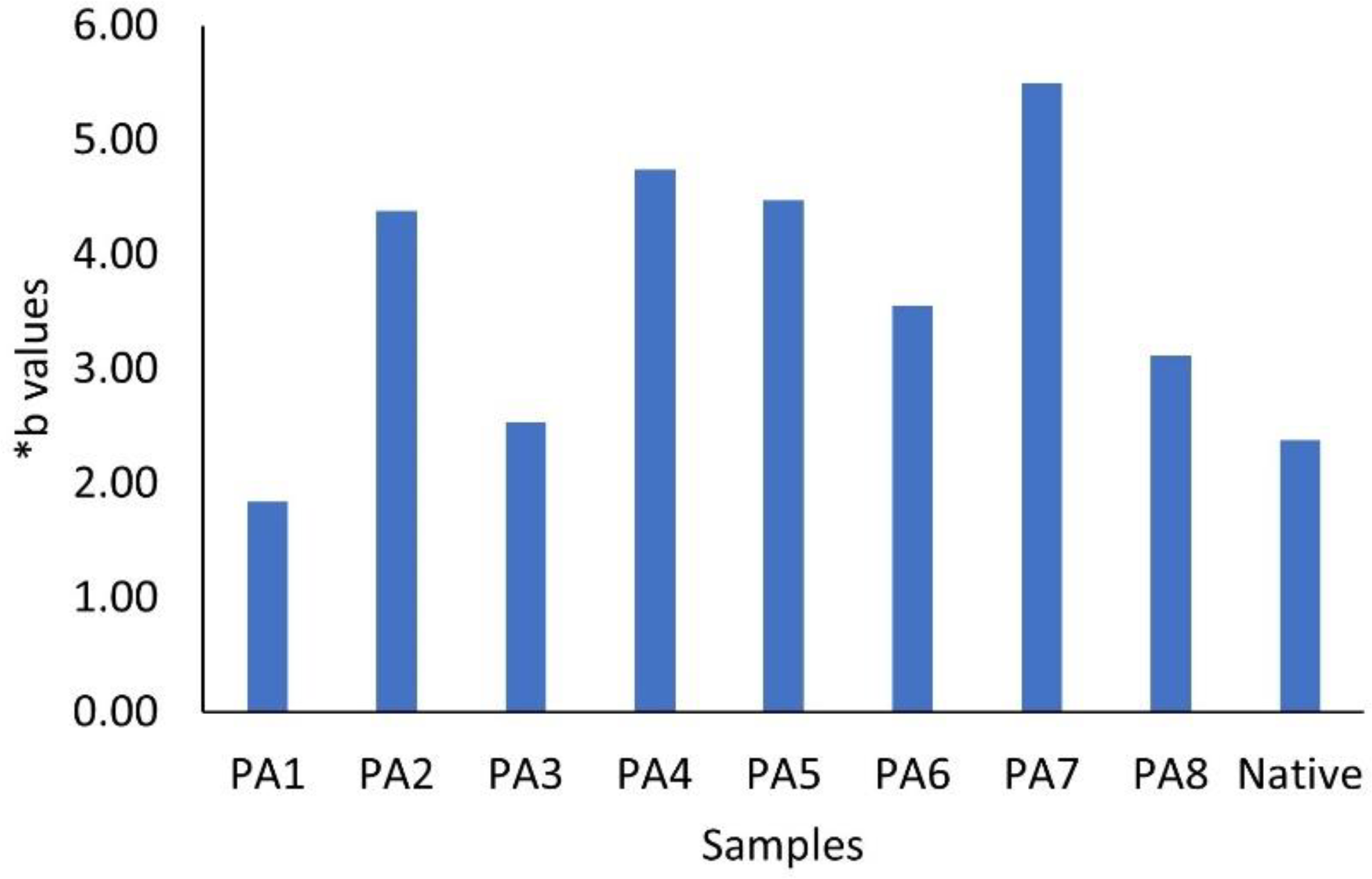
The white color is an important quality attribute for refined flours, including starches and is represented by the L* value. All the samples have L* values surpassing 93, i.e., were characterized as white products. The samples PA1, PA3 and PA8, however, stand out with the highest values. The b* value represents color ranging from yellow to blue (Figure 1).

It is possible to note that the samples PA1, PA3, PA8 and native starch had the lowest b* values. Díaz and coauthors [26] discuss that yellow color increase is associated with starch photo-oxidation due to direct light exposition. The △E represents the color difference between samples and a control (standard), in the present work, the native starch. Due to the highest increment in yellow color, the sample PA7 was the one that had the highest △E.
In addition to the traditional artisanal methods used in producing polvilho azedo, such as natural fermentation and sun drying, cassava starch can also be chemically modified to achieve expansion properties. Starches oxidized with hydrogen peroxide and sodium hypochlorite exhibit high specific volumes when baked and do not require sunlight exposure [27]. Therefore, it is likely that samples PA1, PA3, and PA8 underwent chemical modification, as they showed high expansion levels and appeared not to have been exposed to direct sunlight.
Morphology of the Starch Granules
The morphology of cassava starch granules (Figure 2) shows oval, truncated and round shapes as already described elsewhere [28]. Some smooth cracks were seen on the samples PA2, PA3, PA5 and PA6. Pereira and coauthors [29] associated such imperfections on the starch surface to enzyme action during the initial steps of the fermentation process of traditional polvilho azedo processing.
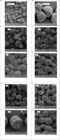
The PA7 sample showed the deepest morphological change with micropores and surface erosion of its granules. Alonso-Gomes and coauthors [30] attributed such micropores to the bacteria activity taking part during fermentation process, involving roughly 20 % of the granules. Some granular degradation is also attributable to acidification that occurs throughout the fermentation process. Garcia and coauthors [31] reported that the surface erosion has increased with the TTA of sour cassava starches. In the case of the PA7 sample, it has the highest total acid content (Table 1), corroborating our result.
There is indication that the PA7 was fermented, but it is not possible to conclude if the other samples were also fermented. Neither Palavecino and coauthors [32] nor Khurshida and coauthors [33] observed any shape changes or surface erosion in cassava starch granules that were chemically modified with acetic acid, compared to native cassava starch.
Amylose
Amylose content ranged from 19 to 24% (Table 4), as expected for cassava starch. There were no differences between all the studied samples, including the native starch. Amylose is not expected to differ between native cassava starch and polvilho azedo [26].
The sample PA6 showed the lowest numerical value. Santos and coauthors [34] have reported that amylose content from cassava starch has decreased after acid modification followed by UVC irradiation (photochemical modification). Amylose variations, however, are associated with other variables, including genetic variability, cropping system, climate conditions. The samples from this study came from different processors, from different places and regions and amylose variations are in an expected range.
X-Ray Diffraction
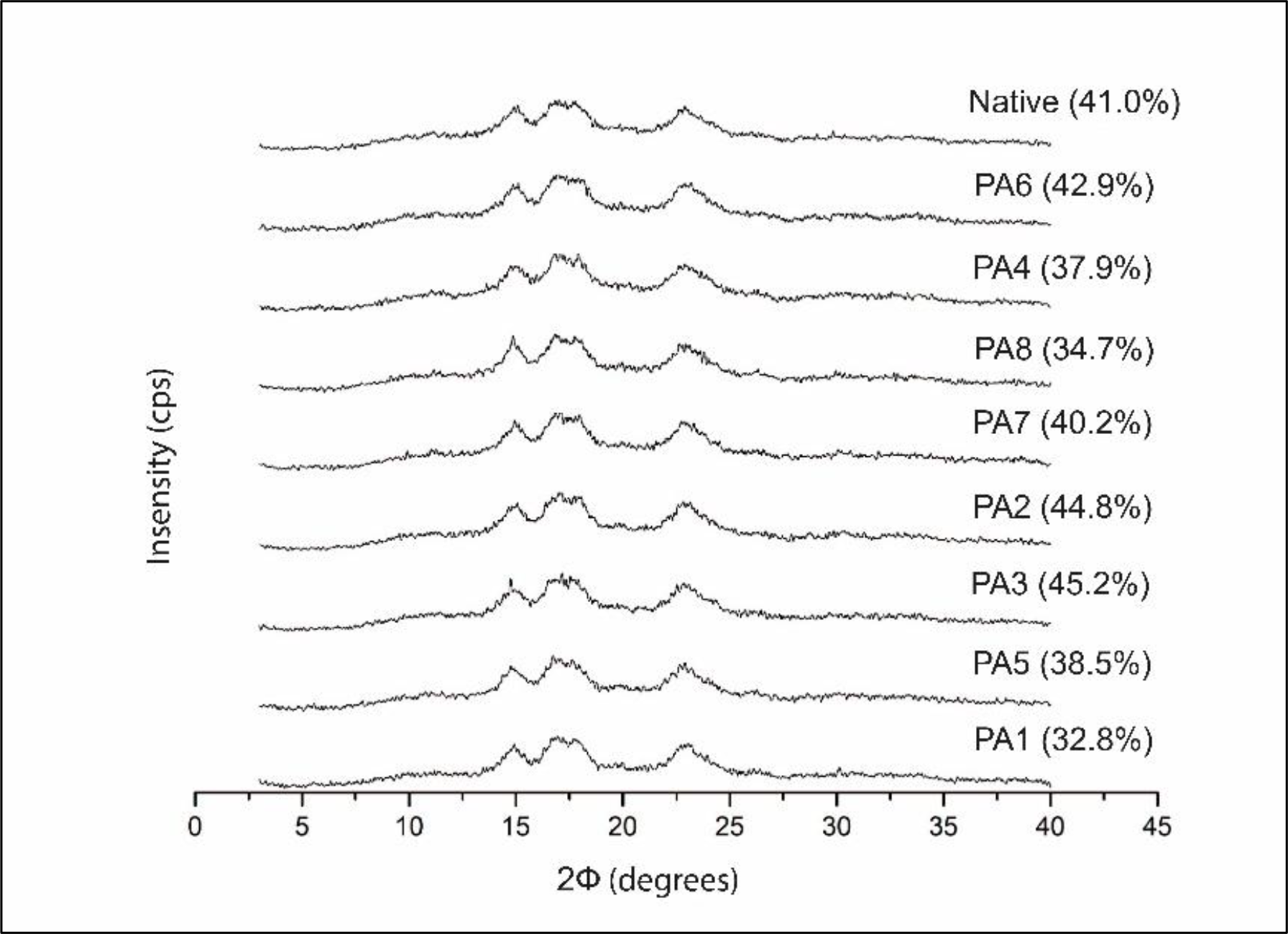
All the starches had peaks at 2θ angles 15, 17, 18 and 23° (Figure 3), therefore, showing A-type crystal pattern [31].
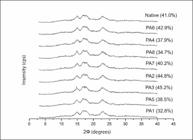
The relative crystallinity of the starches ranged from 32.8 % to 45.2 %, but the samples were produced from cassava from different origin, varieties and cropping conditions. Moreover, the processing of sour cassava starches may have varied.
Previous research has demonstrated that polvilho azedo samples with the highest total titratable acidity (TTA) exhibit increased relative crystallinity, suggesting that organic acids preferentially target and degrade the amorphous regions of starch granules [31]. Oxidation of cassava starch also involves mainly the amorphous regions but does not promote change in the crystallinity when compared to the native starch. No changes in granular birefringence were detected in oxidized starches [35]. Li and coauthors [18] have observed increased relative crystallinity in enzymatically modified cassava starch, avoiding the introduction of branches in the double helices, helping to keep intact the crystal structure.
FTIR Spectroscopy
From the spectral data (400 - 4,000 cm-1) (Figure 4) it is possible to find out that both samples are very similar, including the native starch. There are, however, differences in the intensity of IR radiation absorption.
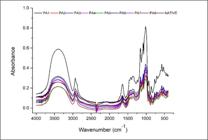
The spectrum is divided into two sections: the fingerprint region and the functional group region. The fingerprint region spans from 400 to 1,800 cm-1, where the absorption bands are unique to each molecule. In this region of the analyzed spectrum (Figure 4), bands near 767 cm-1 are observed, which are associated with the C-C stretching of the α (1-4) glycosidic bond [36]. The functional group region covers wavelengths from 1800 to 4,000 cm-1. The broad band observed around 3,400 cm-1 corresponds to O-H bonding, while the peaks near 2,900 cm-1 are attributed to C-H bond stretching. According to Demiate and coauthors [16], the region around 1,600 cm-1 is linked to expansion properties. The spectrum of sample PA1 exhibits greater intensity in this region, supporting the expansion analysis (Table 5), where it achieved the highest specific volume value among the samples.
Thermal Properties of Starch (gelatinization)
The gelatinization temperatures (onset, peak, and conclusion) and the enthalpy change of gelatinization were obtained using DSC and are presented in Table 5.
The DSC technique allows knowing the whole starch gelatinization process when water is present in the necessary amount. Another method that also produces related data is the analysis of the pasting properties (RVA, in the present study), which gives the pasting temperature that corresponds to the sudden and intense granular swelling and loss of birefringence during programmed heating [37]. Due to this, the temperatures obtained from RVA for pasting, while strongly correlated, surpass the onset gelatinization temperature determined by DSC (Table 5).
Vatanasuchart and coauthors [38] have reported that T0 tended to increase with higher irradiation periods of lactic acid treated cassava starch. There was also increased enthalpy change values in the starches exposed to irradiation when compared to those that were oven dried. And the longer the exposure time to radiation, the greater the increase in enthalpy change. In the present study, only the samples PA1 and PA5 had ∆H higher than native starch suggesting higher exposition of those samples to irradiation when compared to the others. For PA1, characterized by low yellowness (low b* value, as shown in Table 3), this result may be attributed to the application of a low-dose artificial UV radiation, which, despite its low intensity, appears sufficient to enhance expansion properties.
Pasting Properties (RVA)
The pasting properties of the starches were evaluated using three different solvents: deionized water, pH 4 buffer solution and pH 7 buffer solution (both at 0.1 mol L-1, acetate and phosphate, respectively). The main results are presented on Table 6. Interestingly, for all the polvilho azedo samples there was reduction of viscosity with the higher pH, whereas for the native starch, no change was noted for the different solvents. Demiate and coauthors [39] were not able to detect peak viscosity in pH 7 for chemically oxidized cassava starch, which were produced by simultaneous reaction with potassium permanganate and organic acids. In that study, native cassava starch was the only one that had lower viscosity peak at pH 4 if compared to pH 7, and that fact was attributed to the potential degradative effect of the higher acidity.
Amylose content affects starch pasting properties. While amylopectin increases the swelling and pasting viscosity of the granules, amylose and lipids inhibit. Therefore, starches with higher amylose contents tend to show lower viscosity peak values [40]. In the case of the present study, the sample PA2 had the lowest viscosity peak (1448 cP) as well as the higher amylose content among all the polvilho azedo samples (Table 4).
The pasting property is also influenced by the oxidative chemical treatment that promotes partial degradation in the starchy macromolecules and creates carbonyl and carboxyl groups. The carboxyl groups may present negative charges, depending on the medium pH. When charged, the polysaccharide will have a polyelectrolyte behavior [39].
Rheology
The flow behavior of cassava starch pastes was investigated by the constant shear test. Shear stress (σ) versus shear rate (γ) were adjusted by the Power Law model. The consistency coefficient (K), flow behavior index (n) and the coefficient of determination (r2) for each starch sample are presented on Table 7.
The above model is well adjusted (r2 > 0.98) and all starches behave as pseudoplastic fluids, with n value below 1 (0.33 - 0.44). This means that the starch pastes have a shear-thinning behavior resembling a gel or a very viscous liquid when resting or submitted to a mild shear, but they tend to flow better when subjected to larger shear [18]. This behavior relates with the disordered state of the macromolecules during resting and the shear force promotes orientation in the same direction of the applied force, reducing the apparent viscosity [41].
The consistency coefficient (K) drops for the polvilho azedo samples when compared to the native starch, independently from the type of modification they have passed through. This same behavior was observed for the RVA results. Díaz and coauthors [26] suggested that viscosity drop of polvilho azedo is due to microbial enzymes action and to some acid hydrolysis from the organic acids that are produced through fermentation. In oxidized starches, viscosity drop is due to partial depolymerization as well as from some charge effect that promotes repulsion [42].
The sample PA6 seems to have its macromolecular structure more modified when compared to the other samples, as it had the lowest K value and the highest n value. That conclusion was also reported for ultrasound-pregelatinized cassava starch, which presented lower apparent viscosity when compared to heat-pregelatinized cassava starch [19].
Li and coauthors [18] have modified enzymatically cassava starch and reported that the needed tension for promoting flow of the paste has linearly dropped, with decreasing of the apparent viscosity.
Thixotropic behavior was observed for all samples. In other words, there was an increase in flow with the increase in shear rate over time, and with the decrease in shear rate, there was a decrease in the flow of the pastes. However, there is a variation between the ascending and descending curves, and this phenomenon is known as hysteresis, which can be calculated through the area between the curves [43]. In general, higher hysteresis area suggests a deeper destruction of the gel structure [44].
The hysteresis of the native starch was higher than that of the polvilho azedo samples, indicating that the modification made the starches more resistant to shear force, reducing the loss of structure of the pastes. Among the samples, PA3 and PA6 stand out with lower hysteresis. The samples PA6 and PA7 had lower shear stress when compared with the others. Therefore, these samples need weaker force to move between the parallel plates at 200/s indicating lower viscosities.
Dynamic Rheology
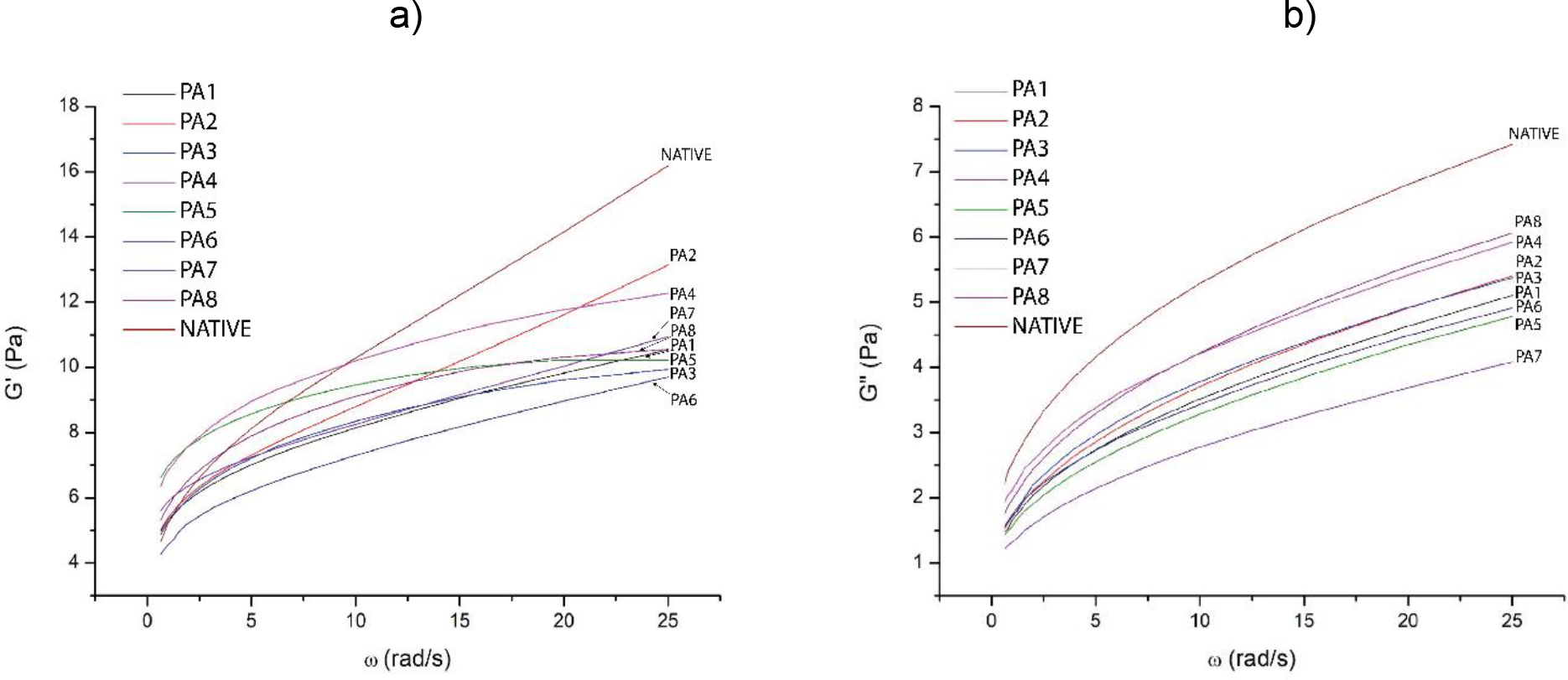
Dynamic rheology shows the viscoelasticity property of the starch pastes. The evaluated parameters are the storage modulus (G’) and the loss modulus (G”) in relation to the angular frequency (ω), presented as rheograms (Figure 5 a and b).
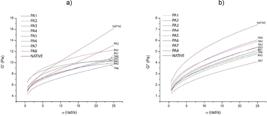
The storage modulus quantifies the gel's elastic behavior by measuring the energy recovered during each deformation cycle, while the loss modulus represents the energy dissipated as heat, reflecting the gel's viscous behavior [42]. An increase in both storage and loss moduli with rising angular frequency suggests a typically weak gel structure with viscoelastic properties [18].
Our results have shown that all the starches presented G’ > G”, however, both values were lower for the polvilho azedo samples when compared with the native starch. It is possible to conclude that the modification of the native starch weakened the gel. Wang and coauthors [19] have reported similar results for pregelatinized cassava starches. The dropping on the storage modulus when compared with native starch was associated with the loss of granular integrity and crystallinity during pregelatinizing process inducing weaker linkages between the starch macromolecules during the gel formation. On the other hand, Li and coauthors [18] have reported increased rigidity, viscoelasticity and resistance of the gels from cassava starch enzymatically modified, suggesting that that treatment reduced the amylose level and stabilized the starch gel network.
Díaz and coauthors [26] have observed increased G’ for fermented cassava starch produced in the laboratory when compared to commercial ones (polvilho azedo). Their study has also shown that sun drying resulted in viscosity drop when compared with the fermented starches that were dried in the oven.
In our study, the sample PA6 was the one that had the lowest consistency index (Table 7) and also the lowest G’, corroborating with its gel behavior, with the lowest viscosity from all samples.
Swelling Power and Solubility
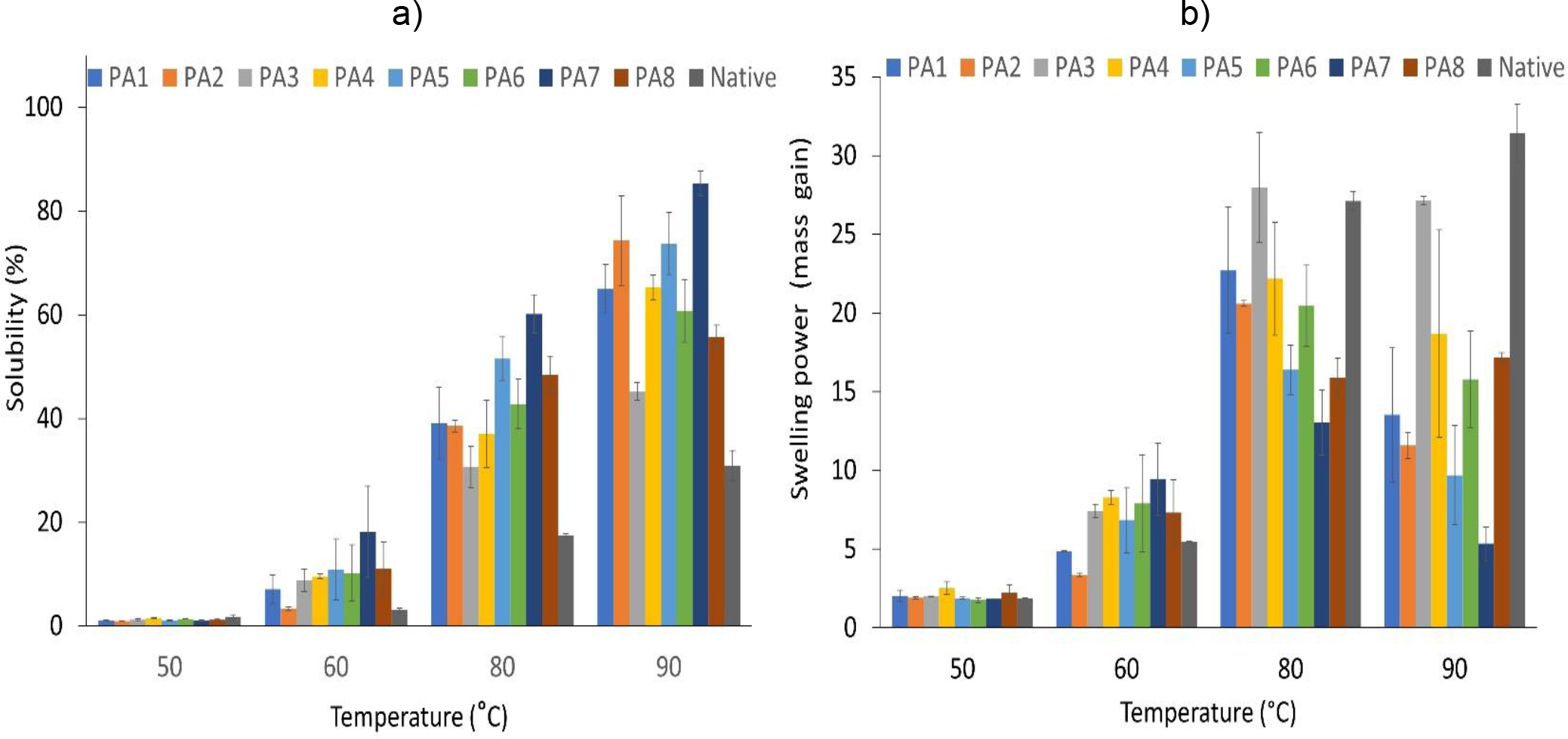
Swelling Power and Solubility are technological properties that influence sensory attributes, including texture and stability of processed foods that contain starch [45]. With thermal treatment in excess of water, solubility increased both for native and modified starches (Figure 6a).
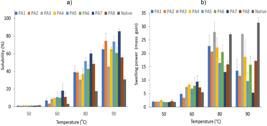
The highest solubility was that of the PA7 that started at 1.04 % (at 50 °C) and reached 85.3 % (at 90 °C). Previous studies have reported that acid-treated starches have higher solubility values and that fact is due to increase in low molecular weight chains containing carboxyl groups that facilitate solubilization in warm water [46; 47]. This sample has also presented the highest TTA (Table 1) and the highest content of organic acids (Table 2), indicating that its modification was promoted in an acid environment. Probably, this sample was obtained by natural fermentation and the acidity contributed to the increased solubility. The samples PA3 and PA8, on the other side, had the lowest acidity values (Table 1) as well as the lowest organic acid levels (Table 2), presenting lower solubilities. The sample PA3 had the lowest solubility at 90 °C between the polvilho azedo samples (45.18 %), followed by the sample PA8, with 55.75 % solubility at 90 °C.
Swelling power (SP) reflects the ability of starch granules to absorb water when in excess (Figure 6 b). In general, the samples have presented increased SP with increasing temperature up to 80 °C, showing tendency to decrease at 90 °C. The native cassava starch was the only sample that showed increased SP even at 90 °C. All the polvilho azedo samples presented lower SP when compared with the native one. Remya and coauthors [48] have reported decreased SP with increasing citric acid concentration during chemical modification of starches from different sources. Therefore, for SP there was an inverse relation between organic acid concentration and the results differently from the results of solubility.
Syneresis
Syneresis, which indicates starch retrogradation, results in water being expelled from the gel. Generally, this is considered a defect and an undesirable property in food starches, as it signifies instability and quality degradation. One significant application of polvilho azedo is in the production of frozen pão de queijo, where freeze-thaw stability is necessary.
In the present study, it was possible to observe that the polvilho azedo samples were more sensitive to syneresis than the native starch (Figure 7), with increasing water liberation with the number of freeze-thaw cycles. Intense reassociation between starch macromolecules takes part due to chain fragmentation during the production process [22]. During thawing, starch paste has two phases, one rich and the other poor in starch. At each freeze-thaw cycle there is an increase in the concentration of retrograded amylopectin molecules in the phase rich in starch, resulting in higher water liberation [49].

The sample PA6 was the one that liberated more water since the first cycle, ranging from 45 % to 58 %. [50] have reported stability to syneresis for acetylated cassava starch and lack of stability to syneresis for cassava starch modified by esterification and acid hydrolysis. The authors have concluded that the presence of acetyl groups prevents reassociation of amylose chains, minimizing water liberation. Promoting hydrophobic inclusions through esterification leads to a significant increase in syneresis. Analysis of electrolyzed cassava starch revealed that increased crystallinity loss also heightened syneresis, likely due to partial degradation of macromolecules [50]
The quality of cassava roots from which the starch is extracted and the freezing method can affect starch syneresis. Starch extracted from fresh roots has comparatively lower syneresis. Rapid freezing also results in lower syneresis when compared with low-speed freezing [28].
Baking Properties
Expansion is the key characteristic that defines the quality of PA, achieved primarily through specific processing techniques such as natural fermentation and sun drying. Alternatively, similar effects can be obtained through chemical and enzymatic modifications. Table 8 presents the results for the expansion properties of baked PA compared to the control (native cassava starch), highlighting the effectiveness of these approaches.
According to Maeda and Cereda [24], expansion values can be categorized as low (<5 mL g-1), medium (5 - 10 mL g-1), or high (>10 mL g⁻1). Based on this classification, sample PA2 falls into the low expansion category, showing no significant difference from native starch. In contrast, the other samples are classified as medium expansion, with PA1 and PA3 achieving notable values of 8.4 mL g-1 and 8.0 mL g-1, respectively.
Demiate and coauthors [16] reported that the infrared spectrum at 1,600 cm-1 is closely linked to the expansion properties of modified cassava starch. Notably, sample PA1 exhibited the most prominent absorption at this wavelength and achieved a value nearing the threshold for classification as high-expansion starch (Table 8).
CONCLUSION
There were three samples of products commercialized as PA that presented atypical behavior in comparison to the five others. In fact, those three samples (PA1, PA3 and PA8) had the whitest color and the lowest b* values, close to those presented by the native cassava starch (CS). They also exhibited the lowest acidity and total acid content, with no detectable butyric acid - a marker of traditional fermented polvilho azedo. Among them, SEM analysis revealed that sample PA7 underwent the most pronounced morphological changes, characterized by micropores and surface erosion of its granules. This sample also stood out for its highest TTA and total acid content, lowest L* (lightness), and highest b* (yellowness) values. Additionally, PA7 demonstrated the lowest gelatinization enthalpy change, the lowest viscosities at 95 °C and final viscosity in RVA analysis, and the lowest swelling power at 80 °C and 90 °C, while exhibiting the highest solubility at these temperatures. Another key finding was that a neutral pH (7.0) reduced the pasting viscosity of all PA samples - whether traditional or industrial - but did not affect the pasting profile of native cassava starch.
-
Funding:
This research was funded by CNPq (Brazil), grant number 304748/2022-6 and by CAPES (Brazil).
Acknowledgments:
The authors express their gratitude to the Multi-User Laboratory Complex of the State University of Ponta Grossa (C-LABMU/UEPG) for providing access to scientific equipment.
REFERENCES
-
1 Genovese DB, Rao MA, Vane. Yield Stress of Starch Dispersions. J Food Sci 2003; 68(7):2295-301. https://doi.org/10.1111/j.1365-2621.2003.tb05762.x
» https://doi.org/10.1111/j.1365-2621.2003.tb05762.x -
2 Valeriano IH, Marques GLL, Freitas SP, Couri S, Penha EM, Gonçalves MMM. Cassava pulp enzymatic hydrolysate as a promising feedstock for ethanol production. Braz Arch Biol Technol [Internet]. 2018;61:e18161214. https://doi.org/10.1590/1678-4324-2018161214
» https://doi.org/10.1590/1678-4324-2018161214 -
3 Demiate IM, Kotovicz V. Cassava starch in the Brazilian food industry. Food Sci Technol [Internet]. 2011 Apr;31(2):388-97. https://doi.org/10.1590/S0101-20612011000200017
» https://doi.org/10.1590/S0101-20612011000200017 -
4 Aquino AC, Gervin V, Amante E. [Evaluation of the sour cassava starch productive processing on factories of Santa Catarina State] Braz J Food Technol. 2016;19. https://doi.org/10.1590/1981-6723.5515
» https://doi.org/10.1590/1981-6723.5515 -
5 Franco CML, Ogawa C, Rabachini T, Rocha T de S, Cereda MP, Jane J-lin. Effect of lactic acid and UV irradiation on the cassava and corn starches. Braz Arch Biol Technol [Internet]. 2010Mar;53(2):443-54. https://doi.org/10.1590/S1516-89132010000200025
» https://doi.org/10.1590/S1516-89132010000200025 -
6 De Oliveira DI, Demogalski L, Dias AH, Pereira LAA, Alberti A, Los PR, et al. Traditional sour cassava starch obtained with alterations in the solar drying stage. Food Sci Technol [Internet]. 2021 Jun;41:319-27. https://doi.org/10.1590/fst.16120
» https://doi.org/10.1590/fst.16120 -
7 Park S, Kim YR. Clean label starch: production, physicochemical characteristics, and industrial applications. Food Sci Biotechnol. 2020 Nov 23;30(1):1-17. doi: 10.1007/s10068-020-00834-3. PMID: 33552613; PMCID: PMC7847421.
» https://doi.org/10.1007/s10068-020-00834-3. - 8 Instituto Adolfo Lutz (IAL). [General Proceedings]. In: [Physicochemical Methods for Food Analysis]. 4ª ed. São Paulo: Instituto Adolfo Lutz; 2008. p. 83-158.
-
9 Demiate IM, Barana AC, Cereda MP, Wosiacki G. Organic acid profile of commercial sour cassava starch. Cienc. Tecnol. Aliment. 1999;19(1):131-5. https://doi.org/10.1590/S0101-20611999000100024
» https://doi.org/10.1590/S0101-20611999000100024 -
10 Mendes JF, Andrade LA, Pereira J. The Potential of Wheat Biofortified with Sulfur and Nitrogen. Braz Arch Biol Technol [Internet]. 2024;67:e24230965. Available from: https://doi.org/10.1590/1678-4324-2024230965
» https://doi.org/10.1590/1678-4324-2024230965 -
11 Gani A, Haq SS, Masoodi FA, Broadway AA, Gani A. Physico-chemical, morphological and pasting properties of starches extracted from water chestnuts (Trapa natans) from three lakes of Kashmir, India. Braz Arch Biol Technol [Internet]. 2010 May;53(3):731-40. Available from: https://doi.org/10.1590/S1516-89132010000300030
» https://doi.org/10.1590/S1516-89132010000300030 - 12 Schoch JC. Iodimetric determination of amylose. Potentiometric titration standard methods. In: Whistler RL, editor. Methods in Carbohydrate Chemistry. London: Academic Press; 1964. v. 4.
-
13 Takeda Y, Hizukuri S, Takeda C, Suzuki A. Structures of branched molecules of amyloses of various origins, and molar fractions of branched and unbranched molecules. Carbohydr Res. 1987; 165:139-45. https://doi.org/10.1016/0008-6215(87)80089-7
» https://doi.org/10.1016/0008-6215(87)80089-7 -
14 Nara S, Komiya T. Studies on the relationship between water-saturated state and crystallinity by the diffraction method for moistened potato starch. Starch/Staerke. 1983;35(12):407-10. https://doi.org/10.1002/star.19830351202
» https://doi.org/10.1002/star.19830351202 -
15 Rocha TS, Demiate IM, Franco CML. [Structural and physicochemical characteristics of Peruvian carrot (Arracacia xanthorrhiza) starch] Cienc Tecnol Aliment. 2008;28(3):620-8. https://doi.org/10.1590/S0101-20612008000300018
» https://doi.org/10.1590/S0101-20612008000300018 -
16 Demiate IM, Dupuy N, Huvenne JP, Cereda MP, Wosiacki G. Relationship between baking behavior of modified cassava starches and starch chemical structure determined by FTIR spectroscopy. Carbohydr Polym. 2000;42:149-58. https://doi.org/10.1016/S0144-8617(99)00152-6
» https://doi.org/10.1016/S0144-8617(99)00152-6 -
17 Lacerda LG, Azevedo JAM, Carvalho Filho MA da S, Demiate IM, Schnitzler E, Vandenberghe LP de S, et al. Thermal characterization of partially hydrolyzed cassava (Manihot esculenta) starch granules. Braz Arch Biol Technol [Internet]. 2008Nov;51(6):1209-15. Available from: https://doi.org/10.1590/S1516-89132008000600016
» https://doi.org/10.1590/S1516-89132008000600016 -
18 Li Y, Li C, Gu Z, Hong Y, Cheng L, Li Z. Effect of modification with 1,4-α-glucan branching enzyme on the rheological properties of cassava starch. Int J Biol Macromol. 2017;103:630-9. https://doi.org/10.1016/j.ijbiomac.2017.05.045
» https://doi.org/10.1016/j.ijbiomac.2017.05.045 -
19 Wang X, Wang H, Song J, Zhang Y, Zhang H. Understanding the structural characteristics, pasting and rheological behaviours of pregelatinised cassava starch. Int J Food Sci Technol. 2018;1-8. https://doi.org/10.1111/ijfs.13805
» https://doi.org/10.1111/ijfs.13805 -
20 Yangcheng H, Gong L, Zhang Y, Jane JL. Physicochemical properties of Tibetan hull-less barley starch. Carbohydr Polym. 2016;137:525-31. https://doi.org/10.1016/j.carbpol.2015.10.061
» https://doi.org/10.1016/j.carbpol.2015.10.061 - 21 Leach HW, McCowen DL, Schoch TJ. Structure of starch granules. I. Swelling and solubility patterns of various starches. Cereal Chem. 1959;36(6):534-44.
-
22 Takizawa FF, De Oliveira Da Silva G, Konkel FE, Demiate IM. Characterization of tropical starches modified with potassium permanganate and lactic acid. Braz Arch Biol Technol. 2004;47(6):921-31. https://doi.org/10.1590/S1516-89132004000600012
» https://doi.org/10.1590/S1516-89132004000600012 - 23 Nunes OLGS, Cereda MP. [Methodology for quality evaluation of cassava fermented starch (sour starch)]. In: Congresso Brasileiro de Mandioca. Salvador; 1994.
-
24 Maeda KC, Cereda MP. [Evaluation of two methodologies of expansion in oven of sour cassava starch]. Cienc Tecnol Aliment. 2001;21(2):139-43. https://doi.org/10.1590/S0101-20612001000200003
» https://doi.org/10.1590/S0101-20612001000200003 -
25 Dias ARG, Zavareze EDR, Helbig E, Moura FAD, Vargas CG, Ciacco CF. Oxidation of fermented cassava starch using hydrogen peroxide. Carbohydr Polym. 2011;86(1):185-91. https://doi.org/10.1016/j.carbpol.2011.04.026
» https://doi.org/10.1016/j.carbpol.2011.04.026 -
26 Díaz A, Dini C, Viña SZ, García MA. Technological properties of sour cassava starches: Effect of fermentation and drying processes. LWT. 2018; 93:116-23. https://doi.org/10.1016/j.lwt.2018.03.029
» https://doi.org/10.1016/j.lwt.2018.03.029 -
27 Dias ARG, Zavareze EDR, Elias MC, Helbig E, Silva DO, Ciacco CF. Pasting, expansion and textural properties of fermented cassava starch oxidised with sodium hypochlorite. Carbohydr Polym. 2011; 84:268-75. https://doi.org/10.1016/j.carbpol.2010.11.033
» https://doi.org/10.1016/j.carbpol.2010.11.033 -
28 Zhu F. Composition, structure, physicochemical properties, and modifications of cassava starch. Carbohydr Polym. 2015; 122:456-80. https://doi.org/10.1016/j.carbpol.2014.10.063
» https://doi.org/10.1016/j.carbpol.2014.10.063 -
29 Pereira JM, Aquino ACMS, Oliveira DC, Rocha G, Francisco A, Barreto PLM, et al. Characteristics of cassava starch fermentation wastewater based on structural degradation of starch granules. Cienc Rural. 2016;46(4):732-8. https://doi.org/10.1590/0103-8478cr20150632
» https://doi.org/10.1590/0103-8478cr20150632 -
30 Alonso-Gomez L, Niño-López AM, Romero-Garzón AM, Pineda-Gomez P, Real-Lopez A, Rodriguez-Garcia ME. Physicochemical transformation of cassava starch during fermentation for production of sour starch in Colombia. Starch/Staerke. 2016;68:1-9. https://doi.org/10.1002/star.201600059
» https://doi.org/10.1002/star.201600059 -
31 Garcia MC, Franco CML, Júnior MSS, Caliari M. Structural characteristics and gelatinization properties of sour cassava starch. J Therm Anal Calorim. 2016; 123(2):919-26. https://doi.org/10.1007/s10973-015-4990-5
» https://doi.org/10.1007/s10973-015-4990-5 -
32 Palavecino PM, Penci MC, Ribotta PD. Impact of chemical modifications in pilot-scale isolated sorghum starch and commercial cassava starch. Int J Biol Macromol. 2019; 135:521-9. https://doi.org/10.1016/j.ijbiomac.2019.05.202
» https://doi.org/10.1016/j.ijbiomac.2019.05.202 -
33 Khurshida S, Das MJ, Deka SC, Sit N. Effect of dual modification sequence on physicochemical, pasting, rheological and digestibility properties of cassava starch modified by acetic acid and ultrasound. Int J Biol Macromol. 2021; 188:649-56. https://doi.org/10.1016/j.ijbiomac.2021.08.062
» https://doi.org/10.1016/j.ijbiomac.2021.08.062 -
34 Dos Santos TPR, Leonel M, Mischan MM, Cabello C. Study and application of photo-modified cassava starch with lactic acid and UV-C irradiation. LWT. 2020;139:104836. https://doi.org/10.1016/j.lwt.2020.110504
» https://doi.org/10.1016/j.lwt.2020.110504 -
35 Kuakpetoon D, Wang YJ. Characterization of different starches oxidized by hypochlorite. Starch/Staerke. 2001; 53(5): 211-8. https://doi.org/10.1002/1521-379X(200105)53:5<211::AID-STAR211>3.0.CO;2-M
» https://doi.org/10.1002/1521-379X(200105)53:5<211::AID-STAR211>3.0.CO;2-M -
36 Rahaman A, Kumari A, Zeng XA, Farooq MA, Siddique R, Khalifa I, et al. Ultrasound-based modification and structural-functional analysis of corn and cassava starch. Ultrason Sonochem. 2021; 80:105795. https://doi.org/10.1016/j.ultsonch.2021.105795
» https://doi.org/10.1016/j.ultsonch.2021.105795 -
37 Cai Y, Liu C, Wang W, Cai K. Differences in physicochemical properties of kernels of two rice cultivars during grain formation. J Sci Food Agric. 2011;91(11):1977-83. https://doi.org/10.1002/jsfa.4404
» https://doi.org/10.1002/jsfa.4404 -
38 Vatanasuchart N, Naivikul O, Charoenrein S, Sriroth K. Molecular properties of cassava starch modified with different UV irradiations to enhance baking expansion. Carbohydr Polym. 2005; 61(1):80-7. https://doi.org/10.1016/j.carbpol.2005.02.012
» https://doi.org/10.1016/j.carbpol.2005.02.012 - 39 Demiate IM, Wosiacki G, Cereda MP, Mestres C. [Viscographic characteristics of chemically modified cassava starches]. Publication UEPG Cienc Exatas Terra Cienc Agrar Eng. 2005; 11(1):7-17.
-
40 Jane J, Chen YY, Lee LF, McPherson AE, Wong KS, Radosavljevic M, et al. Effects of amylopectin branch chain length and amylose content on the gelatinization and pasting properties of starch. Cereal Chem.1999;76(5):629-37. https://doi.org/10.1094/CCHEM.1999.76.5.629
» https://doi.org/10.1094/CCHEM.1999.76.5.629 -
41 Holdsworth SD. Applicability of rheological models to the interpretation of flow and processing behaviour of fluid food products. J Texture Stud. 1971;2(4):393-418. https://doi.org/10.1111/j.1745-4603.1971.tb00589.x
» https://doi.org/10.1111/j.1745-4603.1971.tb00589.x -
42 Ai Y, Jane J. Gelatinization and rheological properties of starch. Starch/Staerke. 2015; 67(3-4):213-24. https://doi.org/10.1002/star.201400201
» https://doi.org/10.1002/star.201400201 -
43 Mathias TR dos S, Andrade KCS, Rosa CL da S, Silva BA. [Rheological evaluation of different commercial yoghurts]. Braz J Food Technol. 2013;16(1):12-20. https://doi.org/10.1590/S1981-67232013005000004
» https://doi.org/10.1590/S1981-67232013005000004 -
44 Jiang B, Li W, Hu X, Wu J, Shen Q. Rheology of mung bean starch treated by high hydrostatic pressure. Int J Food Prop. 2015;18(1):81-92. https://doi.org/10.1080/10942912.2013.819363
» https://doi.org/10.1080/10942912.2013.819363 -
45 Bangar SP, Whiteside WS, Singh A, Özogul F, Gupta A, Gahlawat SK. Properties, preparation methods, and application of sour starches in food. Trends Food Sci Technol. 2022; 121 :44-58. https://doi.org/10.1016/j.tifs.2022.01.029
» https://doi.org/10.1016/j.tifs.2022.01.029 -
46 Singh H, Sodhi NS, Singh N. Structure and functional properties of acid-thinned sorghum starch. Int J Food Prop. 2009;12(4):713-25. https://doi.org/10.1080/10942910801995614
» https://doi.org/10.1080/10942910801995614 -
47 Mohammadi Nafchi A, Robal M, Cheng LH, Tajul AY, Karim AA. Physicochemical, thermal, and rheological properties of acid-hydrolyzed sago (Metroxylon sagu) starch. LWT. 2012; 46(1): 135-41. https://doi.org/10.1016/j.lwt.2011.10.015
» https://doi.org/10.1016/j.lwt.2011.10.015 -
48 Remya R, Jyothi AN, Sreekumar J. Effect of chemical modification with citric acid on the physicochemical properties and resistant starch formation in different starches. Carbohydr Polym. 2018; 202:29-38. https://doi.org/10.1016/j.carbpol.2018.08.128
» https://doi.org/10.1016/j.carbpol.2018.08.128 -
49 Matsuguma LS, Lacerda LG, Schnitzler E, Silva Carvalho Filho MA da, Landi Franco CM, Demiate IM. Characterization of native and oxidized starches of two varieties of Peruvian carrot (Arracacia xanthorrhiza, B.) from two production areas of Paraná state, Brazil. Braz Arch Biol Technol. 2009; 52(3):701-13. https://doi.org/10.1590/S1516-89132009000300022
» https://doi.org/10.1590/S1516-89132009000300022 -
50 Trinh KS, Dang TB. Structural, physicochemical, and functional properties of electrolyzed cassava starch. Int J Food Sci. 2019; 2019:1-8. https://doi.org/10.1155/2019/9290627
» https://doi.org/10.1155/2019/9290627
-
Editor-in-Chief:
Paulo Vitor Farago
-
Associate Editor:
Paulo Vitor Farago

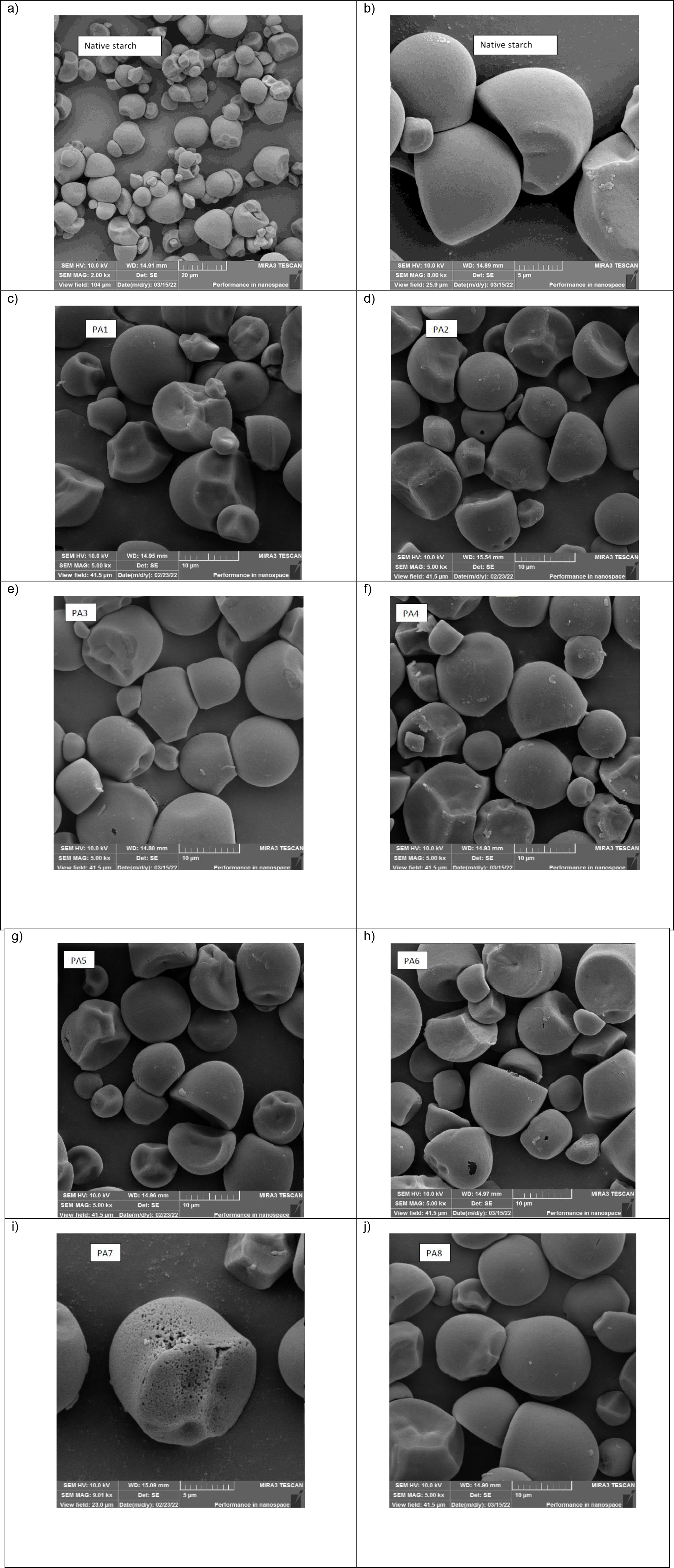 Note: Native starch, magnification of 2,000 and 8,000×; PA7 magnification of 9,000×; PA1 - PA6 and PA8 magnification of 5,000×.