 Bioactivity and selectivity of novel aminoaryl-phosphoramidates against target (Spodoptera frugiperda) and non-target insects (Polybia occidentalis)
Abstract
Phosphoramidates are a class of chemical compounds still widely used for insect pest control; therefore, in this group, there is an underlying need to investigate novel insecticide compounds. This study evaluated the insecticidal efficacy and physiological selectivity of three novel aminoaryl-phosphoramidate compounds under controlled laboratory conditions. The biological models were larvae of the phytophagous Spodoptera frugiperda and adult workers of the predatory Polybia occidentalis. The S. frugiperda larvae used for the bioassays were reared on an artificial diet, while P. occidentalis adults were collected from field colonies. The acute larvicidal efficacy of the novel phosphoramidate compounds against S. frugiperda larvae was lower than that of the control treatment (a commercial product of the same chemical class); however, these same compounds exhibited significant acute toxicity to workers of P. occidentalis. Following topical application of phosphoramidate compounds, insects were provided an ad libitum feeding diet, and toxicity associated with potential delayed neurotoxic effects was assessed under these conditions. The LD50 (lethal dose killing 50% of the tested population) of the three aminoaryl-phosphoramidate compounds ranged from 28.10 to 99.94 μg mg-1 for S. frugiperda larvae and from 54.86 to 68.71 μg mg-1 for adult P. occidentalis adults. The synthesized compound exhibits more pronounced acute and chronic effects on the non-target insect (P. occidentalis) and a less pronounced rapid lethal effect on S. frugiperda compared to commercial insecticides, indicating undesirable properties. However, its notable delayed neurotoxic effect to S. frugiperda, which is understudied for compounds of this nature, could be further explored as an additional tool for pest control.
Keywords:
phosphoramidates; insecticides; larvicides; Spodoptera frugiperda; Polybia occidentalis
Resumo
Fosforamidatos são uma classe de compostos químicos ainda amplamente utilizada no controle de insetos-praga; portanto, neste grupo, ressalta-se a necessidade de investigar novos compostos inseticidas. Este estudo avaliou a eficácia inseticida e a seletividade fisiológica de três novos compostos aminoaril-fosforamidato em condições controladas de laboratório. Os modelos biológicos foram larvas da espécie fitófaga Spodoptera frugiperda e operárias adultas da espécie predadora Polybia occidentalis. As larvas de S. frugiperda utilizadas nos bioensaios foram criadas em dieta artificial, enquanto os adultos de P. occidentalis foram coletados de colônias de campo. A eficácia larvicida aguda dos novos compostos fosforamidato contra larvas de S. frugiperda foi menor do que a do tratamento controle (um produto comercial da mesma classe química); no entanto, esses mesmos compostos exibiram toxicidade aguda significativa para operárias de P. occidentalis. Após a aplicação tópica de compostos de fosforamidato, os insetos receberam uma dieta alimentar ad libitum, e a toxicidade associada a potenciais efeitos neurotóxicos tardios foi avaliada nessas condições. A DL50 (dose letal que mata 50% da população testada) dos três compostos de aminoaril-fosforamidato variou de 28,10 a 99,94 μg mg-1 para larvas de S. frugiperda e de 54,86 a 68,71 μg mg-1 para adultos de P. occidentalis. O composto sintetizado apresenta efeitos agudos e crônicos mais pronunciados em insetos não-alvo (P. occidentalis) e um efeito letal rápido menos pronunciado em S. frugiperda em comparação com inseticidas comerciais, indicando propriedades indesejáveis. No entanto, seu notável efeito neurotóxico tardio em S. frugiperda, que é pouco estudado para compostos dessa natureza, pode ser mais explorado como uma ferramenta adicional para o controle de pragas.
Palavras-chave:
fosforamidatos; inseticidas; larvicidas; Spodoptera frugiperda; Polybia occidentalis
1. Introduction
Organophosphates are chemical substances synthesized by the esterification of phosphoric acid with alcohol. These compounds are primary components of herbicides, fungicides, and insecticides (Adeyinka et al., 2022). Organophosphate insecticides, when ingested by insects, inhibit acetylcholinesterase (AChE), a critical enzyme in the central and peripheral nervous systems that hydrolyzes the neurotransmitter acetylcholine. The inhibition of AChE results in the accumulation of acetylcholine (ACh) in synaptic clefts, as AChE is responsible for hydrolyzing ACh into choline and acetate. Consequently, exposure to these insecticides induces nervous system hyperactivity, leading to paralysis and death of the insect (Ware, 2000; Richardson and Makhaeva, 2014).
The primary reason for the efficacy of organophosphate compounds as insecticides is their high biological activity (Zhu et al., 2020), combined with their relative environmental instability, which results in a half-life in plants ranging from 2 to 10 days (Santos et al., 2007). Additionally, interest in organophosphates stems from the ease of synthesizing novel derivatives and the potential to develop pro-insecticides, which are preferentially activated in insects rather than in mammals. Organophosphates exhibit low residual effects, with limited environmental stability and minimal bioaccumulation.
Organophosphorus compounds are commonly referred to as organophosphates (Richardson and Makhaeva, 2014); however, organophosphates are a specific subset that comprises derivatives of phosphoric acid. Numerous other derivatives exist, including phosphorothioates, phosphonates, phosphinates, and phosphoramidates. Organophosphate insecticides are typically organophosphates or organophosphorothioates; examples of organophosphates include fenthion, fenitrothion, parathion, malathion, chlorpyrifos, while demeton-S, and examples of organophosphorothioates include ethion, fonofos, disulfoton, acephate, and dimethoate.
Phosphoramidates are a class of chemical compounds characterized by a phosphorus atom bonded to at least one alkyl or aryl amine group (-NR1R2) (Lages, 2016). This class includes compounds used as insecticidal agents (Oliveira et al., 2014; Mota et al., 2023), such as acephate, isocarbophos, amidothioate, and avenin. However, few compounds in this class have been developed as insecticides due to synthesis challenges and severe mammalian toxicity (Lin et al., 2020). Despite these limitations, phosphoramidate insecticides are widely commercialized globally (Santos et al., 2007; Lin et al., 2020; Mota et al., 2023). According to Paula et al. (2008), phosphoramidates derived from secondary and tertiary amines, which are weaker AChE inhibitors, have been synthesized based on research by Hudson et al. (1996) to address these challenges.
Insecticides are characterized not only by the toxicity of the chemical compound but also by their efficacy at low concentrations, minimal mammalian toxicity, lack of phytotoxicity, ease of production, handling, and application, economic viability, and absence of bioaccumulation in adipose tissues of humans and domestic animals (Santos et al., 2007). These characteristics define ideal insecticides, which are evidently rare; thus, ongoing efforts to develop novel insecticidal compounds remain essential.
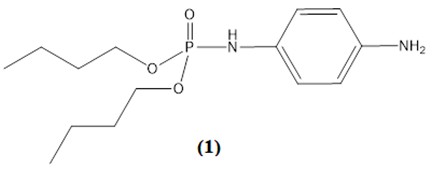
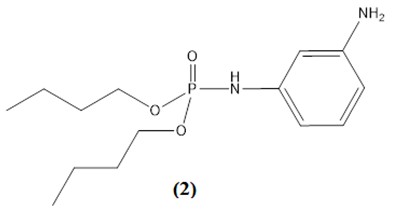
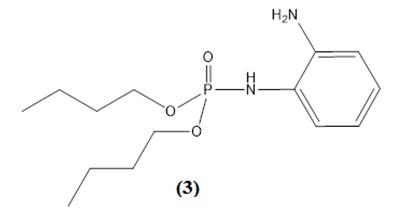
The three-novel synthetic phosphoramidate compounds investigated in this study were synthesized via monophosphorylation of phenylenediamine with dibutyl phosphite in a solid–liquid biphasic system, using hexachloroethane as a catalyst, potassium carbonate as a base, tetrabutylammonium bromide as a phase-transfer catalyst, and dichloromethane as the solvent.
The biological models used in this study were Spodoptera frugiperda (Smith, 1797) (Lepidoptera: Noctuidae), a polyphagous pest commonly known as the fall armyworm that primarily attacks maize crops, and Polybia occidentalis (Olivier, 1792) (Hymenoptera: Vespidae), a predatory wasp widely referred to as the dry-flour wasp or star wasp (Brasil, 2023; Souza and Zanuncio, 2012).
S. frugiperda is a highly polyphagous species (Xue et al. 2024), native to the Americas, which has emerged as an invasive pest in Africa since 2016, in Asia since 2018 and Oceania since 2020 (Wan et al., 2021) and, in southern Europe in recent years (Geryak et al., 2025). According to the Food and Agriculture Organization of the United Nations (FAO), Brazil allocates approximately US$600 million annually to control this pest (Wild, 2017).
Wasps contribute to pollination across a diverse range of plants and prey on phytophagous insects that cause significant agricultural damage (Picanço et al., 2010; Jacques et al., 2018). According to Köhler and Lemes (2014), P. occidentalis is characterized by a basal spot on the clypeus and genae with prominent yellow markings and is primarily distinguished by the absence of a broad posterior margin of the pronotum. Nests of P. occidentalis wasps consist of multiple superimposed combs enveloped by a protective covering, typically exposed on the abaxial surfaces of leaves (Somavilla et al., 2012).
The ecological function of social wasps is highly significant, as they contribute to pollination and exhibit predatory generalist habits, targeting insects harmful to agriculture (Barbosa et al., 2022). Therefore, they help to maintain the trophic balance of ecosystems (Resende et al., 2001; Prezoto et al., 2006; Picanço et al., 2010; Jacques et al., 2018, Barbosa et al., 2022). Human interventions, particularly the application of insecticides, pose notable threats to the survival of these insects (Bacci et al., 2000).
This study evaluated the insecticidal efficacy and physiological selectivity of three novel aminoaryl-phosphoramidate compounds under controlled laboratory conditions, using larvae of S. frugiperda and adult workers of P. occidentalis as biological models.
2. Material and Methods
2.1. Characterization of the three novel aminoaryl-phosphoramidate compounds
The aminoaryl-phosphoramidate compounds used in the bioassays were synthesized at the Chemistry Laboratory of the State University of Goiás, Brazil, following the methodology described by Mascarenhas (2022). The characterization of these novel aminoaryl-phosphoramidates was based on theoretical principles of the electronic properties of aromatic compounds and comparisons with analogous structures reported in the literature (Pretsch et al., 2020), as described in Table 1.
Spectral assignments for the three aminoaryl-phosphoramidate tested using nuclear magnetic resonance (NMR) spectroscopy (1H, 13C, and 31P), infrared (IR) spectrometry and yields (%) obtained during the synthesis process.
Our work emphasized only the toxicity evaluation of these compounds to insects; therefore, the detailed chemical synthesis procedures should be consulted in Mascarenhas (2022). The following is a generic description of the methodological process for obtaining these phosphoramidates and their chemical characterization.
Under atmospheric pressure, in a 125 mL two-necked flask (ground joint) containing the appropriate phenylenediamine (0.020 mol; 2.16 g), potassium carbonate (0.022 mol; 3.0 g), tetrabutylammonium bromide (0.062 mmol; 0.02 g), and dichloromethane (5 mL) under stirring, a solution containing dibutyl phosphite (0.010 mol; 1.95 mL) and hexachloroethane (0.015 mol; 3.55 g) in dichloromethane (10 mL) was slowly added using a funnel. The addition time of the phosphite solution was approximately 10 minutes, in an ice bath, and after the addition was completed, stirring was maintained for an additional 1 hour in an ice bath and then for an additional 23 hours at room temperature, until complete consumption of the dibutyl phosphite, which was monitored by thin-layer chromatography.
Subsequently, the mixture was filtered through filter paper to remove potassium carbonate and potassium chloride, which are generated in the reaction and are of no interest, thus isolating the organic phase. The filtrate was transferred to a separatory funnel and washed with 0.2% hydrochloric acid (3×10 mL) and water (1×10 mL). The extraction process with hydrochloric acid was performed to remove the excess diamine. With the presence of this acid, the diamine was protonated and transported from the organic phase to the aqueous phase, an important step in the reaction isolation process.
Finally, the organic phase was also treated with water to remove inorganic residues of no interest. In the next step, the organic phases were combined, and anhydrous sodium sulfate was used to remove any aqueous residue, and then the solution was filtered. The solvent was removed using a rotary evaporator, generating a solid/oil residue. The generated residue was recrystallized by adding approximately 60 mL of petroleum ether. The use of petroleum ether is necessary for the important final recrystallization step of the solids. The system was kept under stirring for 24 hours. At the end, the decanted solid was filtered, obtaining a white solid product with a yield 44% (aminoaryl-phosphoramidate 1), 41% (aminoaryl-phosphoramidate 2) and 48% (aminoaryl-phosphoramidate 3). The melting point of the referred compounds was 76, 73, and 81 °C, respectively.
Preliminary analyses, based on the vibrational absorption spectra in the IR region of dibutyl phosphite and the obtained products, did not show the stretching band at approximately 2427 cm-1 referring to the P-H bond of the pentavalent form of dibutyl phosphite, which confirms the consumption of this starting material. The stretching bands of the P=O bonds and P-O-C deformation bands of the phosphoryl group, typical of the expected organophosphorus compound, were identified between the regions of 500 and 4500 cm-1. The characterization of the new phosphoramidates is presented inTable 1.
2.2. Environmental conditions for conducting the biological assays
Biological assays were conducted at the Entomology Laboratory of the State University of Goiás, under controlled conditions: temperature of 25 ± 2 °C, relative humidity of 67 ± 10%, and a 12-hour photoperiod.
2.3. Stock rearing of Spodoptera frugiperda
The S. frugiperda larvae used in the bioassays were obtained from laboratory-maintained artificial rearing. Upon egg hatching, larvae were transferred to an artificial bean-based diet, following the methodology of Pinto et al. (2019), until they reached the third instar, and then removed from the diet and subjected to treatments with the insecticidal compounds.
2.4. Field collection of Polybia occidentalis and laboratory housing
P. occidentalis nests were collected from the abaxial surface of Bismarckia nobilis leaves, a plant commonly used in urban landscaping in Brazil. Collections were conducted at night to minimize disturbance to the colonies. The nest collector, equipped with protective clothing and using a manual cutting tool, carefully detached the nests from the plant leaves and immediately placed them in wooden boxes (40 × 30 × 30 cm), which were transported to the same laboratory housing the S. frugiperda larvae. One side of each wooden box was designed as a trapdoor with a glass lid, and the opposite side featured a mesh fabric that could be partially opened for the careful insertion of a collection tube (mouth aspirator) to capture adult workers of P. occidentalis. A Petri dish containing two cotton wads soaked in water and a 10% honey-water solution was placed at the bottom of each box, with the wads periodically rehydrated using spray bottles to provide sustenance for the P. occidentalis adults.
2.5. Maize cultivation for feeding treated S. frugiperda larvae
After removal from the artificial diet, S. frugiperda larvae were exposed to insecticides and then allowed to feed ad libitum on a natural diet of young fresh maize leaves cultivated in a greenhouse. Eight-liter pots were filled with a 2:1:1 mixture of soil, sand, and bovine manure, each sown with five seeds of the non-transgenic cultivar AG-1051. Plants were irrigated daily and kept free from insecticides or other pesticides to prevent interference with experimental outcomes.
2.6. Treatment applications
Preliminary tests identified a 6:4 acetone-water solution as a suitable solvent for dissolving solid phosphoramidate compounds. This solvent was also used to dissolve acephate (positive control), a highly soluble insecticide in water, acetone, or ethanol, according to the Pesticide Properties DataBase (University of Hertfordshire, 2024).
The aminoaryl-phosphoramidate treatments used were 3 different products, characterized in the section above (Aminoaryl-phosphoramidate 1, Aminoaryl-phosphoramidate 2 and Aminoaryl-phosphoramidate 3). Preliminary tests also determined effective doses of the novel phosphoramidates that induced significant mortality (>95%), specifically 900 μg of insecticide compound per S. frugiperda larva and 120 μg per P. occidentalis adult. These doses were used to establish seven additional, progressively lower doses to construct the dose-mortality curve.
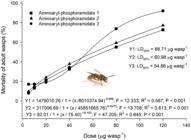
The insecticidal compound was applied topically by administering pre-established doses to the notal region of the larvae or adults using a microsyringe (1.0 μL of the dissolved compound per application), following the methodology of Oliveira (2008). Acute toxicity (mortality) was assessed using a dose of 80 μg insect-1, equivalent to 11.64 μg mg-1 for S. frugiperda larvae and 2.67 μg mg-1 for P. occidentalis adults. For the purpose of comparing toxicity over time, the observed dose that expressed acute topical mortality greater than LD50% in one of the tested insect populations was chosen (see Figure 1, wasps).
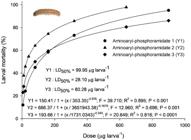
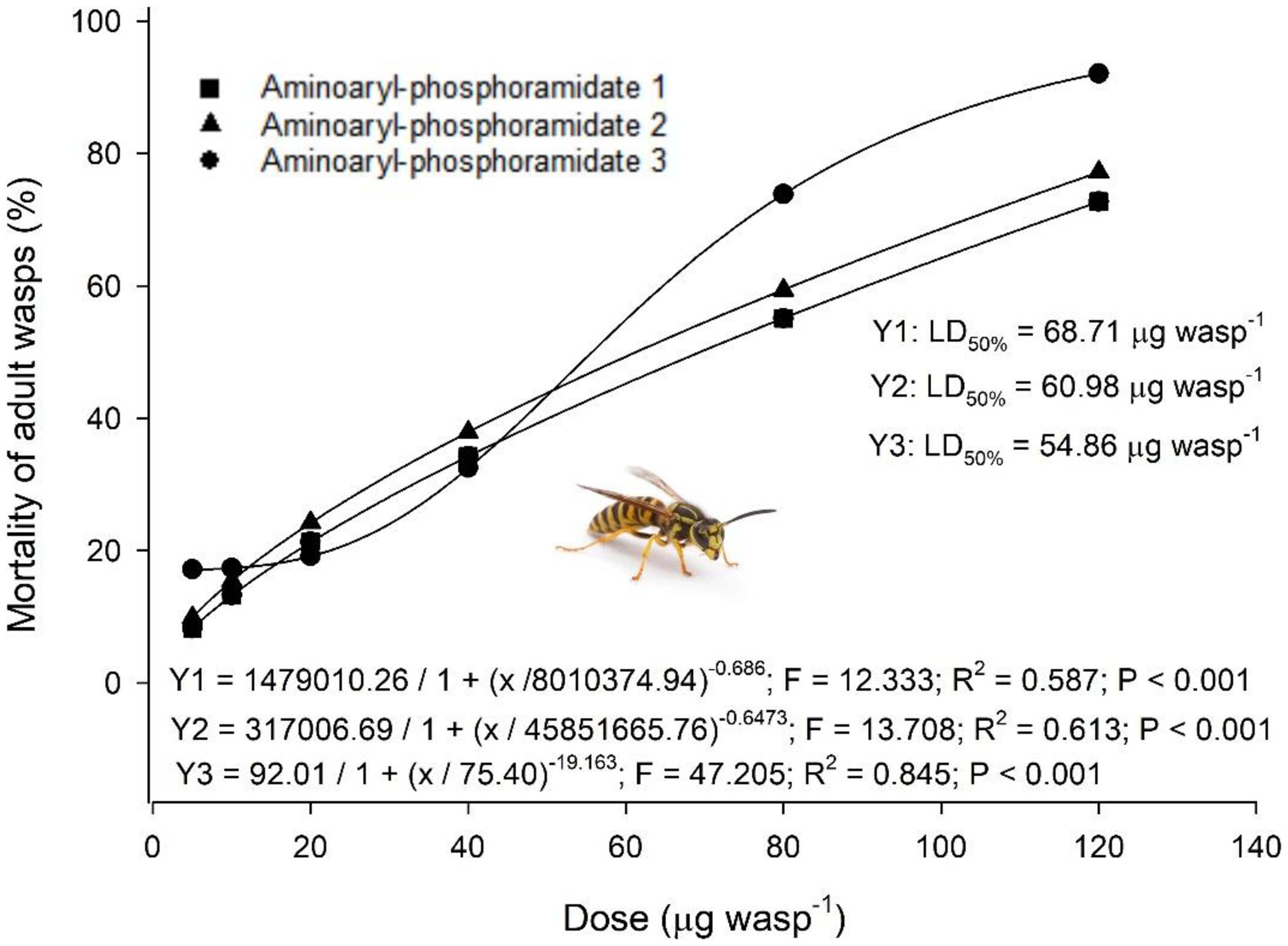
Toxicity of three aminoaryl-phosphoramidate compounds to Polybia (Myrapetra) occidentalis adults, with lethal dose (LD) estimated using a logistic regression model based on mortality recorded up to 72 hours after topical application.
Given the aggressiveness of P. occidentalis, brief immobilization was required after removal from the wooden box to facilitate insecticide application. Therefore, batches of P. occidentalis adults were refrigerated for 60 seconds to immobilize them, with preliminary tests confirming this refrigeration period caused no observable mortality or permanent impairment.
Following treatment, insects were housed in transparent 250mL plastic containers with lids, lined with slightly moistened filter paper. Each container with an individual S. frugiperda larva represented a sampling unit (each treatment consisted of five replicates). The larvae were fed with fragments of young, fresh maize leaves, and containers were cleaned daily by replacing the filter paper and removing food remnants from the previous day. Polybia occidentalis were fed with distilled water and a 10% honey-water solution, each soaked in separate small pieces of hydrophilic cotton.
Each 250-mL plastic container with lid, housing 10 P. occidentalis adults from the same colony, constituted a sampling unit in bioassays (each treatment consisted of five replicates). P. occidentalis adults from seven nests were used in the bioassays. A 97% insecticide acephate formulation was used as the positive control, applied at the highest dose recommended for controlling S. frugiperda and P. occidentalis, specifically 900 μg per S. frugiperda larvae and 120 μg per P. occidentalis adult.
Mortality assessments, defined as visible immobility, were conducted for P. occidentalis adults 12 hours after treatment and then daily up to 288 hours, and for S. frugiperda larvae, following the same procedure, up to 360 hours. For wasps, the 288-hour time point, in preliminary tests, was when the first individual death was recorded in the control treatment, and for S. frugiperda, also in preliminary tests, when the larvae reached the pre-pupal stage
Mortality data for S. frugiperda larvae and P. occidentalis adults in each treatment were subjected to analysis of variance, and means were compared using the Scott-Knott test at a 5% significance level. Dose-mortality data were fitted to a non-parametric logistic model at a 5% significance level. Survival curves over time for insecticide-treated insects were compared using the Log-Rank test (p < 0.05), and multiple comparisons were conducted using the Holm-Sidak method (p < 0.05). Statistical analyses were conducted using R software 4.1.1 (R Core Team, 2022).
3. Results
Acute topical toxicity data comparing the novel aminoaryl-phosphoramidate compounds and acephate (commercial insecticide compound) for S. frugiperda larvae at a dose of 80 μg per insect are shown in Table 2. Given that the mean weight of third-instar larvae was approximately 6.87 mg, the applied dose corresponded to 11.65 μg mg-1 of insect. The three novel phosphoramidates tested were significantly less toxic to S. frugiperda larvae than acephate (Scott-Knott test, p < 0.05).
Mean acute mortality rates (%) of Spodoptera frugiperda larvae and Polybia occidentalis adults following topical application of three novel aminoaryl-phosphoramidate compounds and acephate (positive control) at a dose of 80 μg per insect.
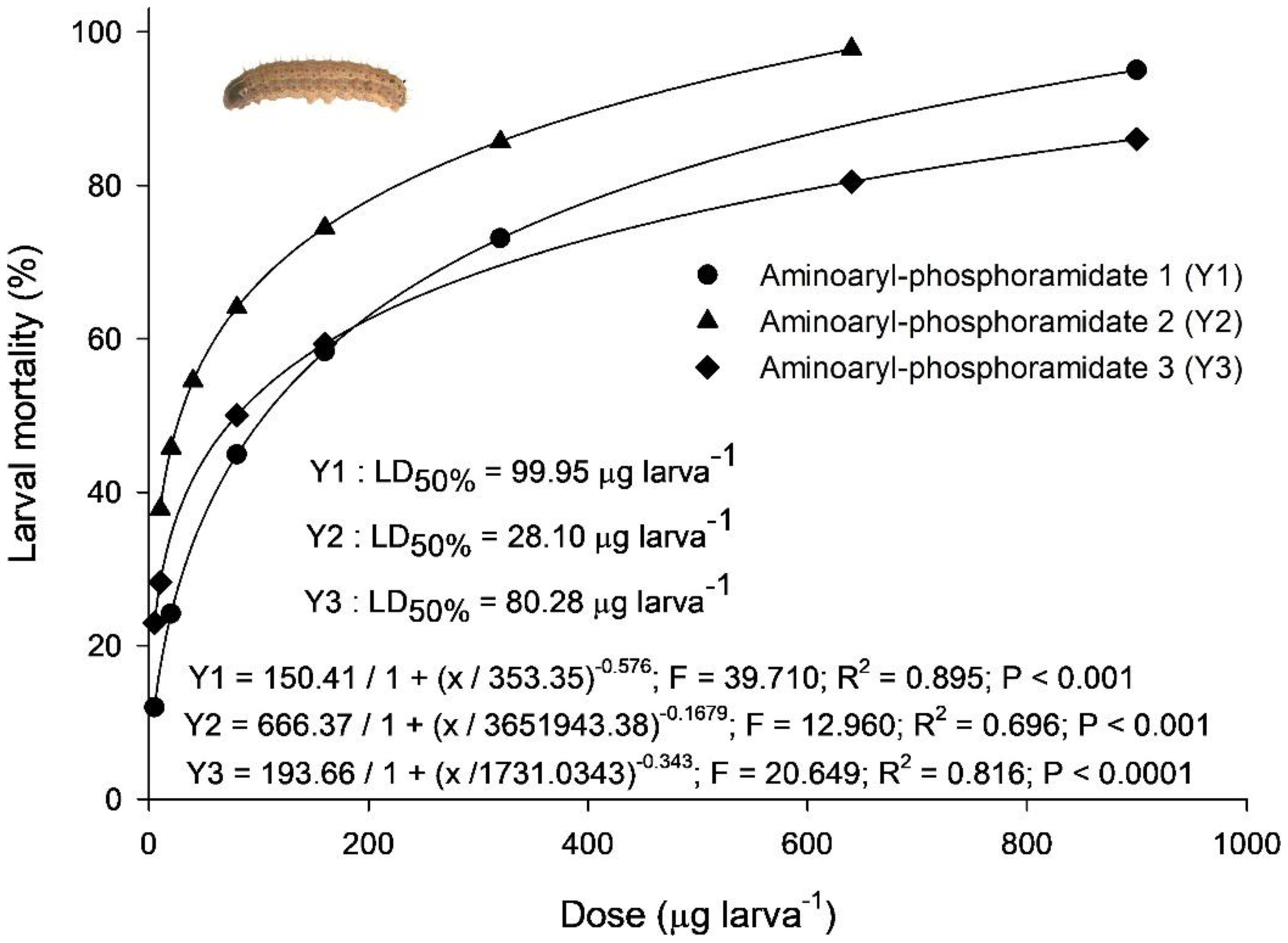
The three novel aminoaryl-phosphoramidate compounds exhibited reduced larvicidal efficacy against S. frugiperda larvae at 72 hours post-application (Table 2), showing a non-significant effect compared to the positive control (mortality < 33.33%). The data were fitted to a logistic statistical model to define the LD50 (the lethal dose that kills 50% of the tested population) of the insecticide compounds over 360 hours (Figure 2). The LD50 of aminoaryl-phosphoramidate compound 2 demonstrated the highest toxicity (LD50 = 28.10 μg larva-1), followed by compound 3 (LD50 = 80.28 μg larva-1) and compound 1 (LD50 = 99.95 μg larva-1). A dose of 640 μg larva-1 of aminoaryl-phosphoramidate compound 2 resulted in 93.99% mortality of S. frugiperda larvae.
Toxicity of three aminoaryl-phosphoramidate compounds to Spodoptera frugiperda larvae, with lethal dose (LD) values estimated using a logistic regression model based on mortality recorded up to 360 hours after topical application.
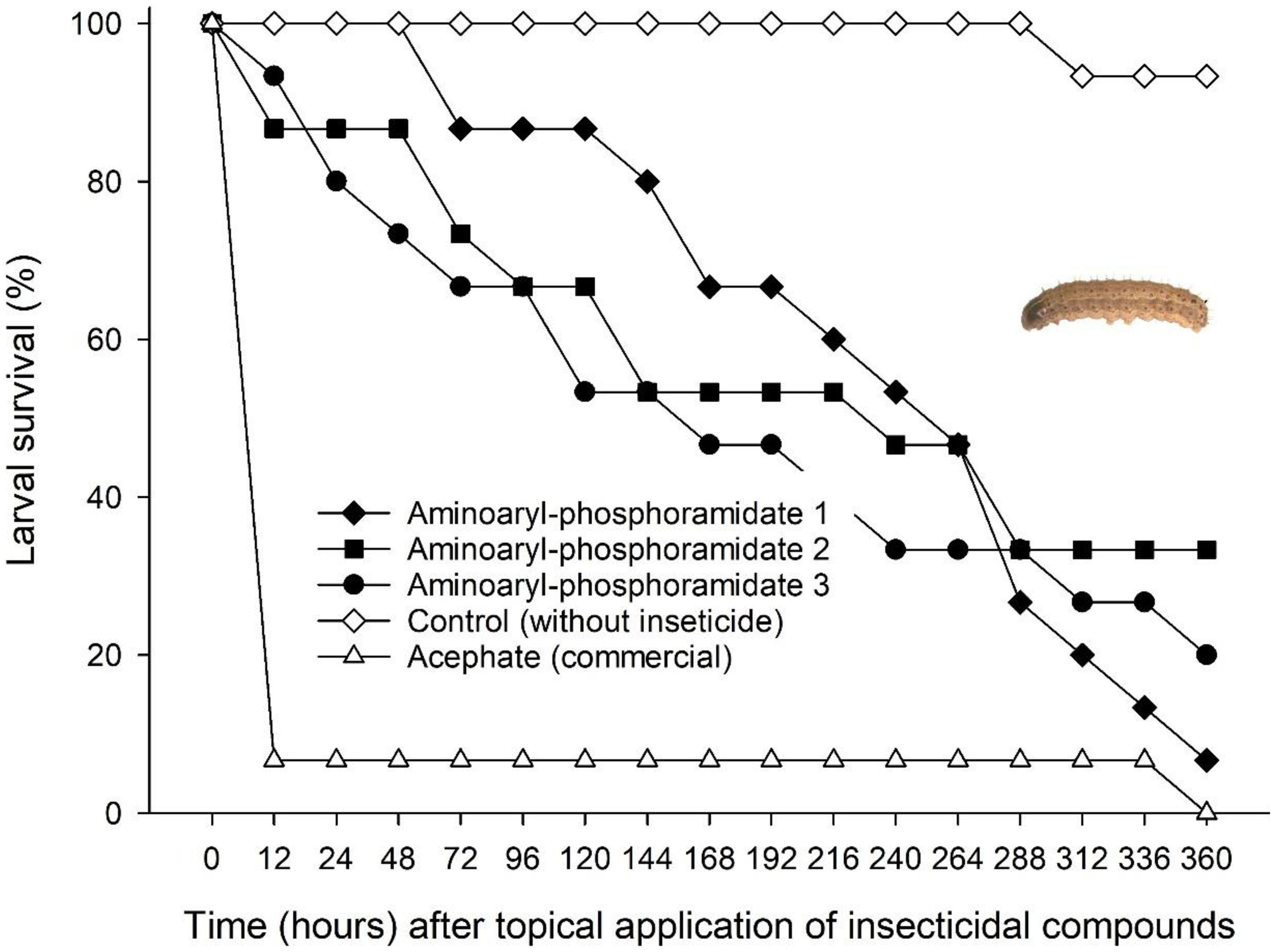
Survival data for S. frugiperda larvae following topical application of insecticidal compounds (Figure 1) showed that the LD50 for the three aminoaryl-phosphoramidate compounds was reached after 168 hours of exposure, suggesting a potential delayed cholinergic effect. In contrast, the positive control treatment (acephate) resulted in 93.99% larval mortality within 12 hours post-application. The control treatment, using an acetone-water solvent, recorded a single larval death at 312 hours post-application. Survival curves for S. frugiperda larvae over time revealed no significant differences among the three novel aminoaryl-phosphoramidate compounds (Log-Rank test at p < 0.001, and Holm-Sidak test at p < 0.05) (Figure 3).
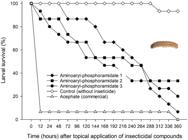
Survival of Spodoptera frugiperda larvae over time following topical application of three novel aminoaryl-phosphoramidate compounds and acephate (positive control) at 900 μg per larva compared to a solvent-only control (6:4 acetone-water). Significant differences between treatments were observed (Log-Rank test, p < 0.001), but no significant differences were found among aminoaryl-phosphoramidate compounds (Holm-Sidak test, p < 0.001).
Acute topical toxicity data comparing the novel aminoaryl-phosphoramidate compounds and acephate (positive control) for P. occidentalis adults at a dose of 80 μg of the insecticide per insect are shown in Table 2. Given that the mean weight of adults was approximately 30 mg, the applied dose corresponded to 2.67 μg mg-1 of P. occidentalis adults. Mortality of P. occidentalis adults following topical exposure to the three phosphoramidates, evaluated over 72 hours, ranged from 58% to 74%, consistently lower than the positive control (acephate) at all times (12, 24, 48, and 72 hours) (Scott-Knott test, p < 0.05) (Table 2). The LD50 of the three aminoaryl-phosphoramidate compounds for P. occidentalis adults ranged from 54.86 to 68.71 μg of insecticide per P. occidentalis adult (Figure 2), intermediate values compared to those observed for S. frugiperda larvae (Figure 2).
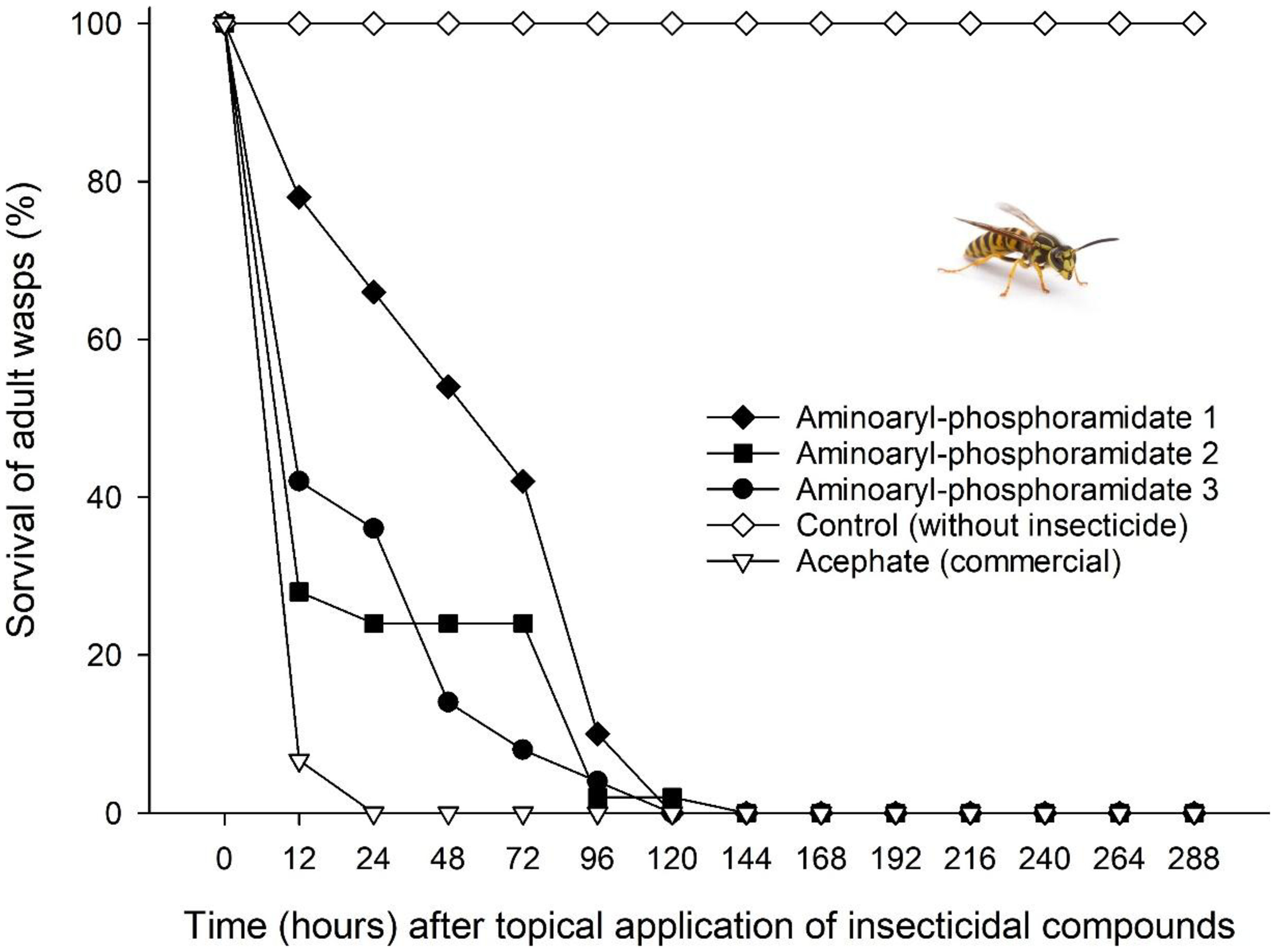
Survival data for P. occidentalis adults following topical application of insecticidal compounds (Figure 4) showed that aminoaryl-phosphoramidate compounds 2 and 3 caused mortality exceeding 50% within 24 hours of exposure. In contrast, compound 1 caused similar mortality after 96 hours. Multiple comparisons of mortality curves revealed a distinct mortality pattern for P. occidentalis adults treated with aminoaryl-phosphoramidate compound 1 compared to 2 and 3 (Log-Rank test at p < 0.05 and Holm-Sidak method at p < 0.001). Aminoaryl-phosphoramidate compounds caused 100% mortality of P. occidentalis adults within 144 hours (6 days) post-application of the insecticides, whereas the control treatment, using only solvent, resulted in no mortality during this period.
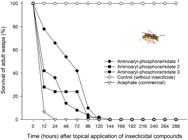
Survival of Polybia (Myrapetra) occidentalis adults over time following topical application of three novel aminoaryl-phosphoramidate compounds and acephate (positive control) at 120 μg per insect compared to a solvent-only control (6:4 acetone-water). Significant differences between treatments were observed by the Log-Rank test (p < 0.001), with no significant differences between aminoaryl-phosphoramidate compounds 2 and 3 (Holm-Sidak test, p < 0.001).
4. Discussion
The three new aminoaryl-phosphoramidate compounds investigated did not show significant acute toxicity to the insects studied, compared to the commercial product (acephate), which could be an undesirable characteristic in the initial development of a new insecticidal compound, since insecticides that induce rapid mortality are generally valued in the agrochemical industry (Ware, 2000). However, with the doses of the three new aminoaryl-phosphoramidates highlighted in our study, 900 μg for S. frugiperda larvae and 120 μg for P. occidentalis workers (see survival curves in Figures 3 and 4), a significant long-term lethal effect was observed. Commercially used organophosphorus insecticidal compounds, such as acephate, cause insect death in the short term (Wu et al., 2021), as also highlighted in our study, within the first hours (12 h) of topical application in S. frugiperda and P. occidentalis.
The suppression of esterase activity promotes acute and delayed cholinergic effects in treated organisms (O’Malley and O’Malley, 2024). In general, sublethal doses of neurotoxic insecticides can adversely affect insect physiology and survival (Guedes et al., 2016; França et al., 2017); particularly for subdoses of acephate, esterase suppression can promote deleterious effects, such as significant reduction in body weight of adult worker bees, as observed by Yao et al. (2018). It is important to note that our study is a preliminary prospecting of potential insecticidal compounds applied topically, and their deleterious effect was quantified only as the number of dead individuals over time; although not quantified, a reduction in larval feeding was observed in the first hours after exposure to the aminoaryl-phosphoramidate compounds, despite not implying a significant effect on mortality rates for these same pest insects in the short term, up to 72 hours after application (Table 2).
Unlike what was observed for the pest insect, the acute lethal effect of the three new aminoaryl-phosphoramidate compounds is expressive for P. occidentalis workers; after 72 hours of exposure to these compounds, on average, 68% of them had died (Table 2). The extreme acute toxicity of phosphoramidates, such as acephate and its intermediate product, methamidophos, to non-target organisms is reported by Lin et al. (2020). In our study, considering the dosage per insect weight, even using a 4.8-fold higher dosage of insecticidal compound for the pest insect, lethality was significantly higher for the suggested natural enemy; therefore, from the point of view of physiological selectivity, they would not be suitable compounds for integrated pest management (Gusmão et al., 2000; Redoan et al., 2013). According to Bueno et al. (2017), physiological selectivity is inherent to the product itself, which manifests due to physiological differences between pests, predators, and parasitoids, with pests being killed at a concentration of the product that does not affect natural enemies.
The toxicity of insecticidal compounds is influenced by their lipophilicity, which interacts with the thickness and lipid composition of the insect cuticle, affecting penetration rates at the target site (Gusmão et al., 2000). In our study, differences in insect species and life stages may have contributed to the observed variations in toxicity. Charpentier et al. (2000) identified resistance mechanisms in a population of Drosophila melanogaster exposed to organophosphorus insecticides, including improved insecticide mobility, increased hydrolysis at the acetylcholinesterase target, reduced target site sensitivity, and decreased acetylcholinesterase levels. Although insecticide resistance was not evaluated in this study, these findings suggest that the chemical properties of the insecticide and the morphological and physiological characteristics of the insect significantly influence toxicity.
In summary, the three new phosphoramidates investigated did not promote significant acute lethality in S. frugiperda larvae and P. occidentalis worker; however, unlike typical phosphoramidate (acephate), they caused significant long-term lethality to these same insects. This atypical lethality behavior can be explored in insect pest management programs, for example, in insecticides that necessarily require this delayed effect, such as those used in social insect pests, like leaf-cutting ants and termites.
Acknowledgements
The first author is grateful for the master's scholarship. The authors thank the State University of Goiás for the “Financial resources from the Call for Proposals/Public Notice PrP/UEG No. 01/2024 Pró-Programas, Funding Agreement No. 76334379, SEI Process No. 202400020007877” (Edital/Convocatória PrP/UEG No. 01/2024 Pró-Programas, Termo de Fomento No. 76334379, Processo SEI No. 202400020007877). The authors CMSN and ECR thank CNPq and FAPEG for the research productivity grant.
Data Availability Statement
The entire data set that supports the results of this study was published in the article itself.
References
-
ADEYINKA, A., MUCO, E. and PIERRE, L., 2022 [viewed 7 October 2025]. Organophosphates [online]. Bethesda: National Center for Biotechnology Information, U.S. National Library of Medicine. Available from: https://www.ncbi.nlm.nih.gov/books/NBK499860/
» https://www.ncbi.nlm.nih.gov/books/NBK499860/ -
BACCI, L., PICANÇO, M.C., SILVA, E.M., SEMEÃO, A.A. and CASTRO, A.A., 2000 [viewed 7 October 2025]. Seletividade de inseticidas a Polybia sp. (Hymenoptera: Vespidae), predador do bicho-mineiro do cafeeiro [online]. In: Anais do Simpósio de Pesquisa dos Cafés do Brasil, 2000, Poços de Caldas, MG. Belo Horizonte: Embrapa Café. Available from: http://www.sapc.embrapa.br/arquivos/consorcio/spcb_anais/simposio1/Pragas26.pdf
» http://www.sapc.embrapa.br/arquivos/consorcio/spcb_anais/simposio1/Pragas26.pdf -
BARBOSA, L.D., JACQUES, G.C. and SOUZA, M.M., 2022. Vespas sociais (Vespidae, Polistinae) em agrossistema do Cerrado no estado de Minas Gerais, sudeste do Brasil. Revista Agrogeoambiental, vol. 14, e20221717. https://doi.org/10.18406/2316-1817v14n120221717
» https://doi.org/10.18406/2316-1817v14n120221717 -
BRASIL. Sistema de Informação sobre a Biodiversidade Brasileira – SiBBr, 2023 [viewed 7 October 2025]. Catálogo taxonômico da fauna do Brasil e lista da flora do Brasil 2020 [online]. Available from: https://ala-bie.sibbr.gov.br/ala-bie/species
» https://ala-bie.sibbr.gov.br/ala-bie/species -
BUENO, A.F., CARVALHO, G.C., SANTOS, A.C., SOSA-GÓMEZ, D.R. and SILVA, D.M., 2017. Pesticide selectivity to natural enemies: challenges and constraints for research and field recommendation. Ciência Rural, vol. 47, no. 6, e20160829. https://doi.org/10.1590/0103-8478cr20160829
» https://doi.org/10.1590/0103-8478cr20160829 -
CHARPENTIER, A., MENOZZI, P., MARCEL, V., VILLATTE, F. and FOURNIER, D., 2000. A Method to estimate acetylcholinesterase-active sites and turnover in insects. Analytical Biochemistry, vol. 285, no. 1, pp. 76-81. https://doi.org/10.1006/abio.2000.4738 PMid:10998265.
» https://doi.org/10.1006/abio.2000.4738 -
FRANÇA, S.M., BREDA, M.O., BARBOSA, D.R.S., ARAÚJO, A.M.N. and GUEDES, C.A., 2017. The sublethal effects of insecticides in insects. In: V.D.C. SHIELDS, ed. Biological control of pest and vector insects London: IntechOpen, chap. 2, pp. 23-39. https://doi.org/10.5772/66461
» https://doi.org/10.5772/66461 -
GERYAK, Y., VORONOV, V. and KALIUZHNA, M., 2025. A first report of the invasive pest species Spodoptera frugiperda (Lepidoptera: Noctuidae) in Eastern Europe. Integrative Systematics: Stuttgart Contributions to Natural History, vol. 8, no. 2, pp. 137-140. https://doi.org/10.18476/2025.242735
» https://doi.org/10.18476/2025.242735 -
GUEDES, R.C.N., SMAGGHE, G., STARK, J.D. and DESNEUX, N., 2016. Pesticide-induced stress in arthropod pests for optimized integrated pest management programs. Annual Review of Entomology, vol. 61, no. 1, pp. 43-62. https://doi.org/10.1146/annurev-ento-010715-023646 PMid:26473315.
» https://doi.org/10.1146/annurev-ento-010715-023646 -
GUSMÃO, M.R., PICANÇO, M., GONRING, A.H.R. and MOURA, M.F., 2000. Seletividade fisiológica de inseticidas a Vespidae predadores do bicho-mineiro-do-cafeeiro. Pesquisa Agropecuária Brasileira, vol. 35, no. 4, pp. 681-686. https://doi.org/10.1590/S0100-204X2000000400002
» https://doi.org/10.1590/S0100-204X2000000400002 -
HUDSON, H.R., MAVRMATIS, C.N. and PIANKA, M., 1996. Organophosphorus compounds as potential fungicides. part v. The preparation and properties of some novel N, N, N′, N′-tetramethyl-N’’-(1-substituted-2,2,2-trichloroethyl) phosphoric triamides. Phosphorus, Sulfur, and Silicon and the Related Elements, vol. 108, no. 1-4, pp. 141-153. https://doi.org/10.1080/10426509608029647
» https://doi.org/10.1080/10426509608029647 -
JACQUES, G.C., PIKART, T.G., SANTOS, V.S., VICENTE, L.O. and SILVEIRA, L.C.P., 2018. Niche overlap and daily activity pattern of social wasps (Vespidae: Polistinae) in kale crops. Sociobiology, vol. 65, no. 2, pp. 312-319. https://doi.org/10.13102/sociobiology.v65i2.2670
» https://doi.org/10.13102/sociobiology.v65i2.2670 - KÖHLER, A. and LEMES, J.R.A., 2014. Polybia Lepeletier (Hymenoptera: Vespidae: Polistinae) no Rio Grande do Sul, Brasil. Caderno de Pesquisa. Série Biologia, vol. 26, no. 2, pp. 52-64.
- LAGES, E.B., 2016. Síntese de novos fosforamidatos derivados de bases de Schiff. Anápolis: Universidade Estadual de Goiás. Dissertação de Mestrado em Ciências Moleculares.
-
LIN, Z., PANG, S., ZHANG, W., MISHRA, S., BHATT, P. and CHEN, S., 2020. Degradation of Acephate and Its Intermediate Methamidophos: Mechanisms and Biochemical Pathways. Frontiers in Microbiology, vol. 11, pp. 2045. https://doi.org/10.3389/fmicb.2020.02045 PMid:33013750.
» https://doi.org/10.3389/fmicb.2020.02045 - MASCARENHAS, T.S.D., 2022. A síntese das inéditas bases de Schiff fosforamídicas. Anápolis: Universidade Estadual de Goiás. Dissertação de Mestrado em Ciências Moleculares.
-
MOTA, T.F.M., OLIVEIRA, W.L., GONÇALVES, S., VASCONCELOS, M.W., MIGLIORANZA, K.S.B. and GHISI, N.C., 2023. Are the issues involving acephate already resolved? A scientometric review. Environmental Research, vol. 237, no. Pt 2, pp. 117034. https://doi.org/10.1016/j.envres.2023.117034 PMid:37673123.
» https://doi.org/10.1016/j.envres.2023.117034 -
O’MALLEY, G.F. and O’MALLEY, R., 2024 [viewed 11 June 2024]. Intoxicação por organofosfarados e carbamatos [online]. Rahway, NJ: Merck & Co. Available from: https://www.msdmanuals.com/pt/profissional/lesões-intoxicação/intoxicação/intoxicação-por-organofosfarados-e-carbamatos
» https://www.msdmanuals.com/pt/profissional/lesões-intoxicação/intoxicação/intoxicação-por-organofosfarados-e-carbamatos - OLIVEIRA, F.M., 2008. Síntese e avaliação da atividade inseticida de novos fosforamidatos. Viçosa: Universidade Federal de Viçosa. Dissertação de Mestrado em Agroquímica.
-
OLIVEIRA, F.M., BARBOSA, L.C. and ISMAIL, F.V., 2014. The diverse pharmacology and medicinal chemistry of phosphoramidates; a review. RSC Advances, vol. 1, no. 36, pp. 18998-19012. https://doi.org/10.1039/C4RA01454E
» https://doi.org/10.1039/C4RA01454E -
PAULA, V.F., BARBOSA, L.C.A., TEIXEIRA, R.R., PICANÇO, M.C. and SILVA, G.A., 2008. Synthesis and insecticidal activity of new 3-benzylfuran-2-yl N,N,N′,N′-tetraethyl diamidophosphate derivatives. Pest Management Science, vol. 64, no. 8, pp. 863-872. https://doi.org/10.1002/ps.1559 PMid:18324641.
» https://doi.org/10.1002/ps.1559 - PICANÇO, M.C., OLIVEIRA, I.R., ROSADO, J.F., SILVA, F.M., GONTIJO, P.C. and SILVA, R.S., 2010. Natural biological control of Ascia monuste by the social wasp Polybia ignobilis (Hymenoptera: Vespidae). Sociobiology, vol. 56, no. 1, pp. 67-76.
-
PINTO, J.R.L., TORRES, A.F., TRUZI, C.C., VIEIRA, N.F., VACARI, A.M. and DE BORTOLI, S.A., 2019. Artificial corn-based diet for rearing Spodoptera frugiperda (Lepidoptera: noctuidae). Journal of Insect Science, vol. 19, no. 4, pp. 1-8. https://doi.org/10.1093/jisesa/iez052 PMid:31260529.
» https://doi.org/10.1093/jisesa/iez052 -
PRETSCH, E., BÜHLMANN, P. and BADERTSCHER, M., 2020. Structure determination of organic compounds: tables of spectral data Berlin: Springer, 478 p. https://doi.org/10.1007/978-3-662-62439-5
» https://doi.org/10.1007/978-3-662-62439-5 -
PREZOTO, F., SANTOS-PREZOTO, H.H., MACHADO, V.L.L. and ZANUNCIO, J.C., 2006. Prey Captured and Used in Polistes versicolor (Olivier) (Hymenoptera: Vespidae) Nourishment. Neotropical Entomology, vol. 35, no. 5, pp. 707-709. https://doi.org/10.1590/S1519-566X2006000500021 PMid:17144146.
» https://doi.org/10.1590/S1519-566X2006000500021 - R CORE TEAM, 2022. R: a language and environment for statistical computing Vienna: R Foundation for Statistical Computing.
-
REDOAN, A.C.M., CARVALHO, G.A., CRUZ, I., FIGUEIREDO, M.L.C. and SILVA, R.B., 2013. Physiological selectivity of insecticides to adult of Doru luteipes (Scudder, 1876) (Dermaptera: Forficulidae). Revista Ciência Agronômica, vol. 44, no. 4, pp. 842-850. https://doi.org/10.1590/S1806-66902013000400022
» https://doi.org/10.1590/S1806-66902013000400022 -
RESENDE, J.J., SANTOS, G.M.M., BICHARA-FILHO, C.C. and GIMENES, M., 2001 [viewed 11 June 2024]. Atividade diária de busca de recursos pela vespa social Polybia occidentalis occidentalis (Olivier, 1791) (Hymenoptera, Vespidae). Revista Brasileira de Zoociências [online], vol. 3, no. 1, pp. 105-115. Available from: https://periodicos.ufjf.br/index.php/zoociencias/issue/view/1159
» https://periodicos.ufjf.br/index.php/zoociencias/issue/view/1159 -
RICHARDSON, R.J. and MAKHAEVA, G.F., 2014. Organophosphorus compounds In: P. WEXLER, ed. The encyclopedia of toxicology. 3rd ed. Amsterdam: Elsevier/Academic Press. https://doi.org/10.1016/B978-0-12-386454-3.00173-1
» https://doi.org/10.1016/B978-0-12-386454-3.00173-1 -
SANTOS, V.M.R., DONNICI, C.L. and COSTA, J.B.N., 2007. Compostos organofosforados pentavalentes: histórico, métodos sintéticos de preparação e aplicações como inseticidas e agentes antitumorais. Química Nova, vol. 30, no. 1, pp. 159-170. https://doi.org/10.1590/S0100-40422007000100028
» https://doi.org/10.1590/S0100-40422007000100028 -
SOMAVILLA, A., OLIVEIRA, M.L. and SILVEIRA, O.T., 2012. Guia de identificação dos ninhos de vespas sociais (Hymenoptera, Vespidae, Polistinae) na Reserva Ducke, Manaus, Amazonas, Brasil. Revista Brasileira de Entomologia, vol. 56, no. 4, pp. 405-414. https://doi.org/10.1590/S0085-56262012000400003
» https://doi.org/10.1590/S0085-56262012000400003 - SOUZA, M.M. and ZANUNCIO, J.C., 2012. Marimbondos: vespas sociais (Hymenoptera: Vespidae). Viçosa: UFV, 79 p.
-
UNIVERSITY OF HERTFORDSHIRE. Pesticide Properties DataBase – PPDB, 2024 [viewed 10 June 2024]. Acephate [online]. Available from: https://sitem.herts.ac.uk/aeru/ppdb/en/Reports/9.htm
» https://sitem.herts.ac.uk/aeru/ppdb/en/Reports/9.htm -
WAN, J., HUANG, C., LI, C., ZHOU, H., REN, Y., LI, Z., XING, L., ZHANG, B., QIAO, X., LIU, B., LIU, C., XI, Y., LIU, W., WANG, W., QIAN, W., MCKIRDY, S. and WAN, F., 2021. Biology, invasion and management of the agricultural invader: Fallarmyworm, Spodoptera frugiperda (Lepidoptera: Noctuidae). Journal of Integrative Agriculture, vol. 20, no. 3, pp. 646-663. https://doi.org/10.1016/S2095-3119(20)63367-6
» https://doi.org/10.1016/S2095-3119(20)63367-6 - WARE, G.W., 2000. The pesticide book. 5th ed. Fresno, CA: Thomson Publications.
-
WILD, S., 2017. African countries mobilize to battle invasive caterpillar. Nature, vol. 543, no. 7643, pp. 13-14. https://doi.org/10.1038/nature.2017.21527 PMid:28252094.
» https://doi.org/10.1038/nature.2017.21527 -
WU, J., LI, X., HOU, R., ZHAO, K., WANG, Y., HUANG, S. and ZHANG, Z., 2021. Examination of acephate absorption, transport, and accumulation in maize after root irrigation for Spodoptera frugiperda control. Environmental Science and Pollution Research International, vol. 28, no. 40, pp. 57361-57371. https://doi.org/10.1007/s11356-021-14689-6 PMid:34091843.
» https://doi.org/10.1007/s11356-021-14689-6 -
XUE, J., CHEN, Y., KONG, X., JIA, R., JIANG, X., GUO, J., GUO, Y. and YANG, Y., 2024. The potential threats of Spodoptera frugiperda on six economic tree species in the tropical region. Forests, vol. 15, no. 4, pp. 701. https://doi.org/10.3390/f15040701
» https://doi.org/10.3390/f15040701 -
YAO, J., ZHU, Y.C., ADAMCZYK, J. and LUTTRELL, R., 2018. Influences of acephate and mixtures with other commonly used pesticides on honey bee (Apis mellifera) survival and detoxification enzyme activities. Comparative Biochemistry and Physiology. Toxicology & Pharmacology: CBP, vol. 209, pp. 9-17. https://doi.org/10.1016/j.cbpc.2018.03.005 PMid:29563044.
» https://doi.org/10.1016/j.cbpc.2018.03.005 -
ZHU, Q., CHE, S., LUO, Z. and ZHAO, Z., 2020. Ligand-free copper-catalyzed denitrogenative arylation of phosphorylamides with arylhydrazines. Synthetic Communications, vol. 1, no. 7, pp. 1-110. https://doi.org/10.1080/00397911.2020.1725577
» https://doi.org/10.1080/00397911.2020.1725577
*
e-mail: marcio.araujo@ueg.brEditor: