 Intestinal parasitic infections: risk factors and zoonotic aspects in human and dog populations of a rural area of Piaui State, Brazil
Abstract
Intestinal Parasitic Infections (IPIs) are prevalent in vulnerable populations, yet zoonotic transmission is underreported. This study analyzed, under the One Health approach, the prevalence of and risk factors for IPIs among humans and dogs in a rural region of Teresina, Piauí, Brazil. A total of 361 human fecal samples, 23 household dog fecal samples and 81 dog fecal samples collected from public roads were analyzed using the Lutz, Baermann and Kato-Katz methods. Anthropometric measurements, haemoglobin levels in children aged 5 to 14 and a survey of cases of cutaneous larva migrans (CLM) were also analyzed. The height and weight of these individuals were used to calculate Z-scores for height-for-age (HAZ), weight-for-age (WAZ) and weight-for-height (WHZ). Associations between parasites and risk factors were assessed using Pearson's chi-square test, Student's t-test and logistic regression. The results showed that 47,9% (173/361) of the residents were parasitized, being 42,9% (155/361) by protozoa and 9,4% (34/361) by helminths.
The most common pathogenic protozoa were Giardia duodenalis (8.3%; 30/361) and Entamoeba histolytica/dispar (5.3%, 19/361), while the most pathogenic helminths were Ascaris lumbricoides (6.6%, 24/361) and hookworms (4.7%, 17/361). Analysis of nutritional status revealed that 3.1% of children and adolescents had short stature (HAZ<-2), 7.3% had low weight (WAZ<-2) and 21.9% had anemia (hemoglobin <11.5g/dL). Mean HAZ was significantly lower in children with ascariasis (-1.16±0.24 vs. -0.34±0.10; p=0.008) and hookworm (-1.28±0.33 vs. -0.39±0.09; p=0.041). Hookworms were the most frequent parasites in dog feces (62.5%, 65/104). Infections by Toxocara spp. and Trichuris spp. were observed in dogs, with 3.8% of the samples presenting mixed infections. Cases of CLM were identified (n=45/361), with 62.2% of the cases in children (2 to 9 years) and a predominance for males (68.8%). These data highlight the intersections between IPIs in humans and dogs and reinforce the need for intersectoral and integrated health promotion measures. The adoption of the One Health approach could strengthen surveillance and prevention of zoonoses and contribute to public policies aimed at improving the quality of life in vulnerable areas.
Keywords:
intestinal parasitic infections; nutritional status; zoonoses; one health; health promotion
Resumo
As Infecções Parasitárias Intestinais (IPIs) são prevalentes em populações vulneráveis, no entanto, há subnotificação de transmissão zoonótica. Este estudo analisou a prevalência e os fatores de risco das IPIs em humanos e cães, sob o enfoque da Saúde Única, numa região rural de Teresina, Piauí, Brasil. Foram analisadas 361 amostras fecais humanas, 23 de cães domiciliados e 81 amostras de cães coletadas em vias públicas, pelos métodos de Lutz, Baermann e Kato-Katz, além de aferição antropométrica, dosagem de hemoglobina em crianças de 5 a 14 anos e levantamento de casos de larva migrans cutânea (LMC). Os escores z de altura para idade (HAZ), peso para idade (WAZ) e peso para altura (WHZ) foram calculados a partir da altura e peso desses indivíduos. Associações entre os parasitas e os fatores de risco foram avaliados usando Teste Qui-Quadrado de Pearson, o teste t de Student e Regressão Logística. Os resultados mostraram que 47,9% (173/361) dos moradores estavam parasitados, sendo 42,9% (155/361) por protozoários e 9,4% (34/361) por helmintos. Os protozoários patogênicos frequentes foram Giardia duodenalis (8,3%; 30/361) e Entamoeba histolytica/dispar (5,3%, 19/361), e os helmintos Ascaris lumbricoides (6,6%, 24/361) e ancilostomídeos (4,7%, 17/361). Em relação ao estado nutricional, 3,1% das crianças e adolescentes apresentaram baixa estatura (HAZ<-2), 7,3% baixo peso (WAZ<-2) e 21,9% anemia (hemoglobina <11,5g/dL). As médias de HAZ foram significativamente menores em crianças com ascaridíase (-1,16±0,24 vs. -0,34±0,10; p=0,008) e ancilostomíase (-1,28±0,33 vs. -0,39±0,09; p=0,041). Os ancilostomídeos foram os parasitas mais frequentes nas fezes dos cães (62,5%, 65/104). Infecções por Toxocara spp. e Trichuris spp. foram observadas em cães, com 3,8% das amostras apresentando infecções mistas. Casos de LMC foram identificados (n= 45/361), com 62,2% dos casos em crianças (2 a 9 anos) e predominância no sexo masculino (68,8%). Esses dados evidenciam as interseccionalidades entre IPIs em humanos e cães, reforçando a necessidade de medidas intersetoriais e integradas de promoção da saúde. A adoção da abordagem de Saúde Única poderá fortalecer a vigilância e a prevenção de zoonoses, contribuindo com políticas públicas voltadas às melhorias na qualidade de vida em áreas vulneráveis.
Palavras-chave:
infecções parasitárias intestinais; estado nutricional; zoonoses; saúde única; promoção da saúde
1. Introduction
Intestinal Parasitic Infections (IPIs) are neglected diseases caused by helminths and protozoa that can cause significant damage to the health of humans and other animals. These infections vary in prevalence and represent a challenge for developing countries with socio-environmental determinants such as poverty, unemployment, hunger and poor environmental sanitation (Rahman et al., 2022). IPIs result in a loss of approximately 46 to 57 million Disability Adjusted Life Years (DAILY) (Vilar et al., 2021). Most cases are asymptomatic, however, diarrhea, intestinal obstruction, acute appendicitis, liver abscess and rectal prolapse can occur. Children and adolescents can develop nutritional deficiencies and anemia, which can lead to impaired child growth and deficits in cognitive development (Marques et al., 2021; Bordignon et al., 2022).
There are around two hundred zoonotic IPIs that are considered serious, emerging and in need of special attention from health systems (Souza et al., 2023). Cases of zoonotic transmission related to IPIs have increased in Brazil, given the growing number of domestic animals (around 132 million) and the proximity of humans to other animals (Silva et al., 2020a).
The prevalence of canine IPIs in China, Germany, Kenya and Sri Lanka has ranged from 20.2% to 97% (Fu et al., 2019; Mulinge et al., 2021; Silva et al., 2022; Murnik et al., 2023). Studies in the Southeast, Center-west and Northeast regions of Brazil have determined prevalences ranging from 42% to 54.9% (Zanetti et al., 2019; Silva et al., 2020a; Souza et al., 2023), with occurrence in regions of different socioeconomic status and socio-environmental characteristics. Brazilian studies point to the predominance of Ancylostoma spp. and Giardia duodenalis in feces from dogs in rural areas (Souza et al., 2023; Arruda et al., 2023).
Cutaneous Larva Migrans (CLM), also known as geographic worm, is a zoonosis caused by Ancylostoma spp. larvae from dogs and cats found in contaminated environments (Larsen et al., 2021). In Brazil, Silva et al. (2020b) identified high incidences of these larvae in soil from schools, recreational areas, and residential condominiums, posing a public health risk. A study in the North Region of the country concluded that one in two children are infected with CLM every year (Reichert et al., 2018).
The One Health approach has been gaining relevance in epidemiological studies, by which links among the health of humans, other animals and the environmental are related (Cociancic et al., 2018). In this sense, this study aimed to analyze, under the One Health approach, the prevalence and risk factors of IPIs in humans and dogs in a rural region of the municipality of Teresina, state of Piauí, Brazil. The results of this study are expected to contribute to tackling the maintenance of transmission in a hyperendemic area by planning intersectoral and integrated prophylactic measures.
2. Material and Methods
2.1. Study area
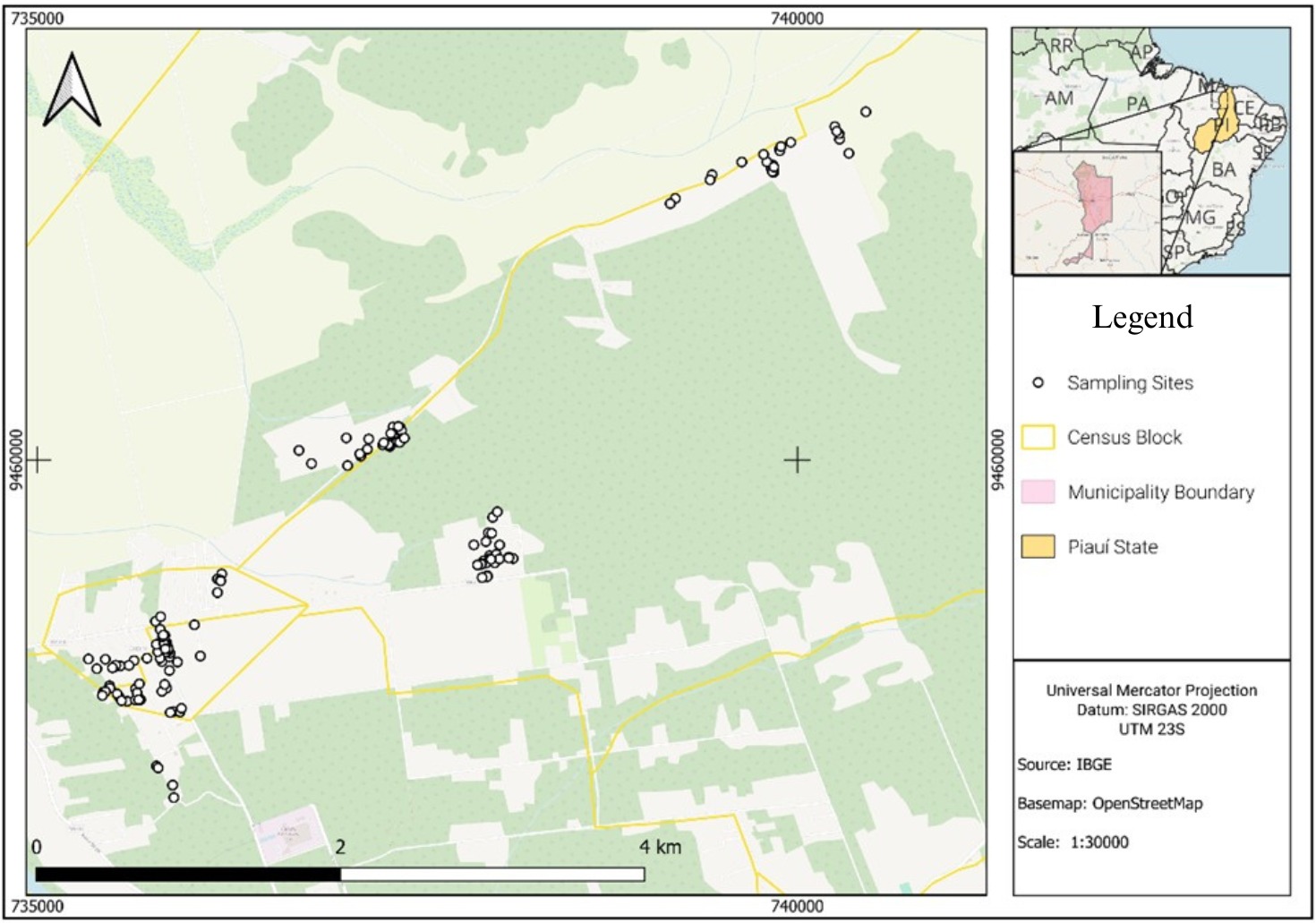
This study was carried out in the village of Boa Hora, a rural area located approximately 30 km north of the urban center of the municipality of Teresina (Figure 1), capital of the state of Piauí, in Northeast Brazil. This area lies to the west of the Parnaíba River and to the north of the border with the municipality of União, under the geographical coordinates 4º53'627” S and “42º52'465” W. The region's climate is tropical semi-humid, with temperatures ranging from 22 to 40ºC (annual average of 27ºC) and an annual rainfall of 1,349 mm. The rainy season is from November to May and the dry season is from June to October. The vegetation is transitional between the Cerrado and the Mata de Cocais area (IBGE, 2024). The community has around 1,750 inhabitants, most of which are economically active in agricultural activities, especially sugarcane cultivation, seedling nurseries and animal husbandry (goats, sheep and pigs). Health services are provided through Basic Health Unit (BHU) and public hospitals in the urban area. The Teresina Zoonosis Control Center provides periodic anti-rabies vaccination for pets (i.e., dogs and cats).
Geographic locations of the rural areas of the village of Boa Hora, municipality of Teresina, Piauí State, Brazil.
2.2. Study design, sampling, and sociodemographic data
This is a descriptive, cross-sectional study, with participant observation (Queiroz et al., 2007) and action research (Thiollent, 2009). It was carried out between March and September 2022, in accordance with STROBE guidelines. Households were selected by convenience in accessible locations with the support of the BHU and Family Health Team (FHT), with assistance from Community Health Agents (CHA). The sample population was 326 people. According to the sample calculation adopted by Barbetta (2012), the number of participating individuals was obtained as the sample size with an acceptable margin of error of 5% and 95% confidence interval. The study included 23 fecal samples from household dogs and 81 dog fecal samples collected on public roads in the village of Boa Hora.
The inclusion criteria for the sample population were: i) individuals living in the village of Boa Hora and ii) families in which the adult participant (over 18 years old), or the person legally responsible for the family, agreed to sign the Informed Consent Form (ICF). Individuals under the age of 18 were included through the Free and Informed Consent Form (FICF), after their guardian's permission and agreement. The following were excluded from the study: i) individuals under treatment with antiparasitic drugs for less than six months; ii) children ≤ 2 years of age and iii) pregnant and breastfeeding women.
Socio-environmental data were obtained using a questionnaire validated by Moraes-Neto et al. (2010), with the following variables: age, gender, family income, schooling, hygiene conditions and environmental sanitation, household characteristics, source of drinking water, type of water consumed, presence of domestic animals and contact with river water, streams and dams. Another semi-structured questionnaire based on Arruda et al. (2022) and Donis et al. (2023), with open and closed questions, was administered to guardians about where they live, how they keep their dogs in their homes, free access to the street, availability of food, availability of water, access to veterinary advice, history of worms, identification of symptoms, administration of antiparasitic drugs to dogs, and repetition/periodicity of these drugs.
Data on cases of CLM were collected from the information recorded at the BHU and reported by residents during home visits, when lesions were shown and confirmed by the team.
2.3. Laboratory procedures and treatment
Three universal collectors were given to the study participants with the appropriate collection instructions: i) a collector with preservative (10% formaldehyde), ii) a collector without preservative for the collection of human fecal samples and iii) a collector without preservative for the collection of samples from the surface of dog feces after spontaneous evacuation. The research team also collected samples from dog feces found on public roads near the residences included in the study. All human and canine fecal samples were analyzed using the techniques of Lutz (1919) and Moraes (1948). Human infection intensity was estimated by the Katz et al. (1972) method and determined as follows: (i) hookworm infection – light, with a parasitic load of ≤ 1,999 eggs per gram of feces (epg.); moderate, with a load between 2,000 and 3,999 epg.; and heavy, with ≥ 4,000 epg.; and (ii) ascariasis – light, ranged of 0 to 4,999 epg.; moderate, from 5,000 to 49,999 epg.; and heavy, with ≥ 50,000 epg. (Montresor et al., 1998; PAHO, 2015).
Coproparasitological reports and medical prescriptions were given to the adult participants and parents/guardians of the minors. Individuals parasitized by helminths and/or pathogenic protozoa were treated under medical supervision at the BHU. Children and adolescents aged 5 to 14 years with a diagnosis of nutritional status deficit or anemia were referred to the BHU. Parasitized household dogs were also treated, and their owners were instructed on prophylactic measures by the team's veterinarian.
2.4. Anthropometry and hemoglobin measurement of participants aged 5 to 14 years
Weight and height measurements were taken using standard procedures with a digital scale (accurate to 100g) and a portable stadiometer (accurate to 1mm). Birth dates were obtained from official documents and used to calculate z-scores for weight-for-age (WAZ), height-for-age (HAZ) and weight-for-height (WHZ), using the “Nutrition” module of the EpiInfo 2000 program (version 3.5.1). Low weight, short stature and weight loss were defined by WAZ, HAZ and WHZ values lower than -2, respectively (Brasil, 2011; Almeida et al., 2020). Blood hemoglobin concentration was assessed using a HemoCue photometer (HemoCue AB, Ängelholm, Sweden). Anemia was defined as Hb values below 11.5 mg/dL (WHO, 2001).
2.5. Spatial analysis
The households and collection points were georeferenced at the time of home visits using a global navigation satellite system receiver. Heat maps were constructed using the Kernel method. The radius of heat maps was defined by the average distances of nearest neighbors ± 1 standard deviation. The cartographic bases were obtained from the Brazilian Institute of Geography and Statistics - Geosciences – IBGE. The spatial data was analyzed on a GIS platform using the open-source software QGIS (version QGIS 3.10.11 'A Coruña'). The color gradation quantifies the density of cases by region.
Heat maps of the spatial analysis of human and canine hookworm infections in the village of Boa Hora were constructed from three perspectives: i) households with the presence of hookworm infection in humans; ii) canine fecal samples collected from the soil of peridomicile areas and public roads with the presence of hookworm eggs and iii) households with the presence of CLM cases.
2.6. Statistical analysis
The descriptive results of the variables and the investigation of risk and protective factors for the occurrence of parasites were obtained using Pearson's chi-square test and logistic regression. The analyses were carried out by tabulating and organizing the data in a standard table in Excel software and testing in Rstudio software (version 2023.12.1).
Participants aged 5 to 14 were assessed for nutritional status and blood hemoglobin concentration, which were correlated with monthly family income and IPIs, comparing the mean z-scores of nutritional parameters and blood hemoglobin levels between different income strata and between infected and uninfected children (the comparison was made in both). Two social strata were defined: family income of up to half the minimum wage (US$115.53) and ii) family income above half the minimum wage. Student's t-test was used for this comparison, with a statistical significance level of p < 0.05. Statistical analyses were carried out using SPSS® software (IBM Corp., Armonk, NY, USA).
Pearson's chi-square test was also used to evaluate associations between the information in the questionnaire applied to dog owners and the results of the stool exams. For variables with more than two categories, a post hoc test of the standardized adjusted residuals was carried out to identify the pairs of categories of each variable that showed an association. The p values were adjusted using the Bonferroni method to account for multiple comparisons. These analyses were carried out using SPSS Statistics software (version 2.4; IBM Corp., Armonk, NY, USA), and an α significance level of 5%.
3. Ethics Statement
The study was approved by the Human Research Ethics Committee of the Instituto Oswaldo Cruz, Fiocruz, Plataforma Brasil (CAAE No. 48100321.1.0000.5248, Opinion No. 4.925.904). Conformities were adopted in accordance with resolutions No. 466/2012 (Brasil, 2012) and 510/2016 of the National Health Council – Ministry of Health, Brazil (Brasil, 2016).
In accordance with Normative Resolution 30 of the National Council for the Control of Animal Experimentation, the study did not need to be examined by the Ethics Committee on the Use of Animals, Ministry of Science and Technology, Brazil, as it did not involve direct contact with the dogs.
4. Results
4.1. Intestinal parasitic infections in the human population sample
The studied population sample comprised 52.3% (189/361) female and 47.7% (172/361) male residents. The ages of individuals were distributed as follows: 18.3% (66/361) aged 2 to 9 years (children), 14.1% (51/361) aged 10 to 19 years (adolescents), 53.2% (192/361) aged 20 to 59 years (adults), and 14.4% (52/361) aged ≥ 60 years (elderly).
Total IPIs prevalence was 47.9% (173/361). The detection frequencies for protozoan and helminth infections were 42.9% (155/361) and 9.4% (34/361), respectively. The pathogenic protozoa present were Giardia duodenalis (8.3%; 30/361) and Entamoeba histolytica/dispar (5.3%, 19/361). Commensal protozoa were also present, mainly Endolimax nana in 29.4% (106/361) of the participants, followed by Entamoeba coli (21.1%; 76/361) and Iodamoeba butschlii (0.3%; 1/361). The most prevalent helminths were Ascaris lumbricoides (6.6%, 24/361), hookworms (4.7%, 17/361) and Enterobius vermicularis (0.6%, 2/361).
Percentages of mono-parasitism, bi-parasitism and polyparasitism were 57.8% (100/173), 27.2% (47/173) and 15% (26/173), respectively. Around 4.4% (16/361) of the participants had mixed helminth and protozoan infections. The prevalences of IPIs for males and females were 49.4% (85/172) and 46.5% (88/189), respectively. Although the regression analysis showed that male sex increased the risk of infection by 12.13%, there was no evidence that this effect differed significantly from that for female sex (p = 0.587). The age group with the highest percentage of IPIs cases was 10 to 19 years (74.3%; 26/35), followed by 20 to 59 years (47.4%; 91/192), 2 to 9 years (42.7%; 35/82) and ≥ 60 years (40.4%; 21/52). The average significance of comparisons between the 10 to19 age group and the other age groups was p = 0.0044, suggesting that the higher proportion of cases in this age group is not random.
Regarding the cases of hookworm detected in participants aged 2 to 9 years, 100% (5/5) and 10 to 19 years, 20% (1/5) had their parasite load determined (72 to 528 epg.) and had infections classified as mild. It was not possible to estimate infection intensity for four participants aged 10 to 19 due to insufficient samples. The intensity of A. lumbricoides infection among participants aged 2 to 9 ranged from mild (3,696 epg.) in 10% (1/10) to moderate (5,376 – 29,928 epg.) in 40% (4/10) to heavy (99,672 – 123,888 epg.) in 20% (2/10). It was not possible to assess infection intensity for three participants in this age group due to insufficient samples. infection among individuals aged 10 to 19 ranged from mild (648 – 4,488 epg.) in 60% (3/5) to moderate (10,596 epg.) to heavy (65,516 epg.) in 20% (1/5), respectively).
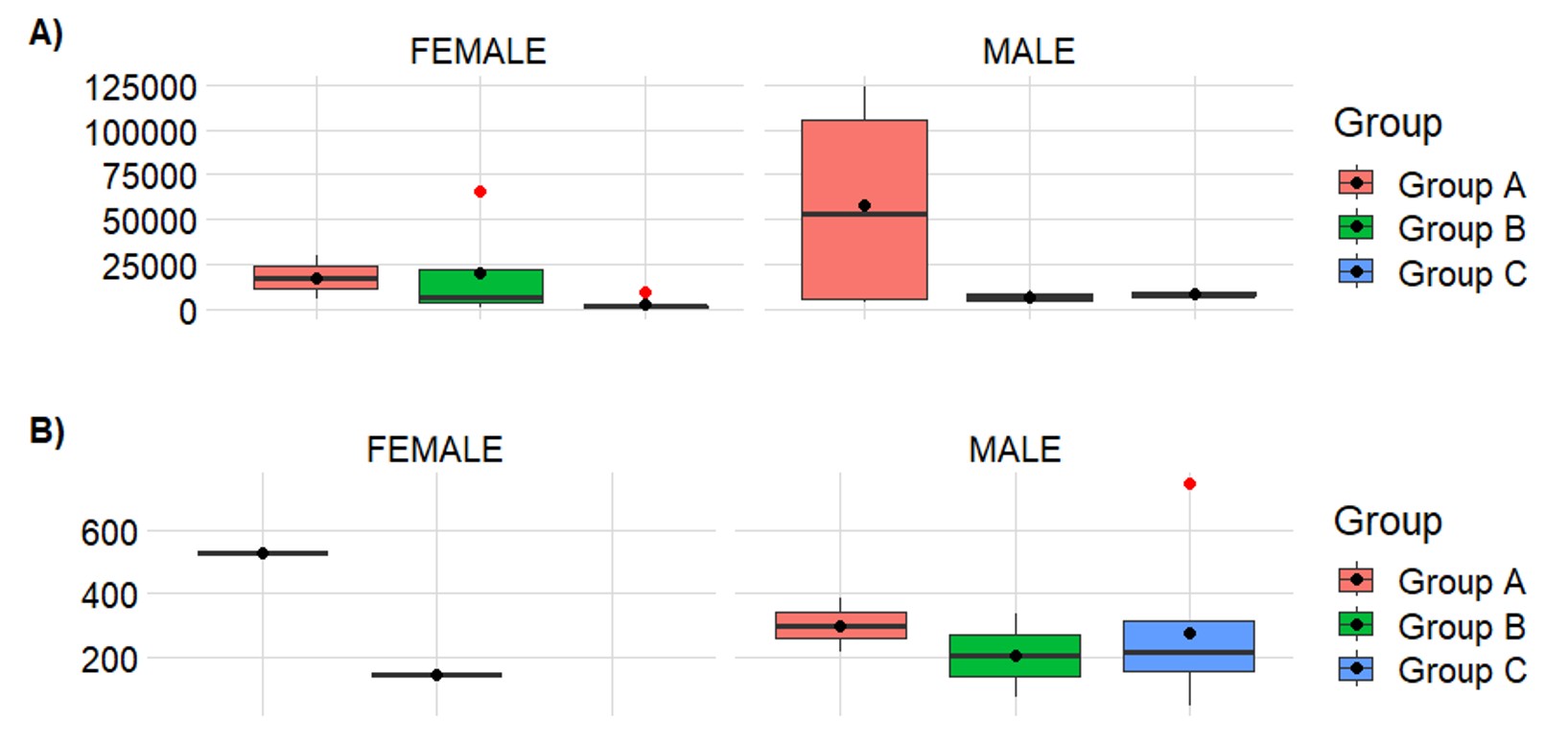
Male participants had a parasite load with greater variability in hookworm and A. lumbricoides infections (Figure 2). Group A (Graph A) and Group C (Graph B) comprised the age group with the greatest dispersion of parasite load of these infections, while adult individuals (Graph B) had one case above the standard found.
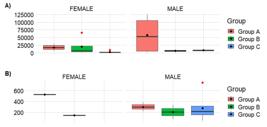
Boxplot of parasitic loads of Ascaris lumbricoides and hookworms. Legend: H – Man; M – Female, Group A 2-9 years old, Group B 10-19 years old and Group C ≥ 20 years old.
4.2. Intestinal parasitic infections and sociodemographic and environmental characteristics of the human population sample
The association between IPIs prevalence and socio-environmental characteristics showed that disposing of waste in peridomiciliary vegetation (p = 0.001), defecating in the open (p = 0.001), having toilets outside the home (p = 0.01), the absence of a toilet (p = 0.032) and having a dirt floor (p = 0.001) represented greater chances of infections (Table 1).
Association of socio-environmental characteristics and Intestinal Parasitic Infections in the village of Boa Hora, Teresina, Piauí State, Brazil.
G. duodenalis infections were associated with frequent contact with rivers and/or streams (p = 0.001), the disposal of human waste in peridomiciliary vegetation (p = 0.038) or in black pits (p = 0.013), and the existence of rammed earth walls in homes (p = 0.027). In addition, the practice of storing water other than in a water tank was statistically significant for the presence of E. coli (p = 0.002). Other characteristics, such as toilets outside the home (p = 0.002), adobe walls (p = 0.001) and incorrect or lack of hygiene of vegetables (p = 0.007) proved to be factors indicative of A. lumbricoides infection. Cases of hookworm infection were related to open defecation (p = 0.001) and toilets outside the home (p = 0.005) (Table 1).
Disposal of waste in peridomiciliary vegetation (p = 0.001), defecation in places other than the toilet (p = 0.001), open defecation (p = 0.01) or the absence of a toilet (p = 0.032) and having a dirt floor (p = 0.001) represent risk factors for IPIs. A. lumbricoides infections were associated with vegetable hygiene practices (p = 0.007), as well as households with an outside toilet (p = 0.002) and adobe walls (p = 0.001). In addition, the open defecation habit (p = 0.001) and toilets outside the home (p = 0.005) were considered risk factors for hookworm infection (Table 1).
The practice of storing water in drums or similar utensils other than water tanks was statistically significant for the presence of E. coli (p = 0.002). In addition, G. duodenalis infections were more prevalent for residents who had frequent contact with rivers and/or streams (p = 0.001), who disposed of their waste in peridomiciliary vegetation (p = 0.038) or black pits (p = 0.013) and homes with rammed earth walls (p = 0.027) (Table 1).
4.3. Intestinal parasitic infections and nutritional status, hemoglobin levels, and family income of children and adolescents (5 to 14 years)
Among the 96 participants aged 5 to 14 years, 16 (16.6%) were infected with helminths, 11 (11.5%) with A. lumbricoides, and 5 (5.2%) with hookworms. Furthermore, 12.5% (n = 12) of the individuals in this age group were infected with G. duodenalis and 4.2% (n = 4) with E. histolytica/E. dispar (Table 2). There was no significant difference in IPIs prevalence between family income groups for participants of this age group.
Prevalence of Intestinal Parasitic Infections, sociodemographic characteristics, and nutritional status in participants aged 5 to 14 years, from Boa Hora village, Teresina, Piauí State, Brazil.
Values (mean ± standard deviation) for HAZ, WAZ and WHZ were -0.48 ± 0.13, -0.24 ± 0.16 and 0.13 ± 0.13, respectively (Table 2). The proportion of participants aged 5 to 14 with HAZ < -2 (short stature) was 3/96 (3.1%), while the proportion with WAZ < -2 (low weight) was 7/96 (7.3%); none of these participants were with WHZ < -2 (cachexia). WAZ was significantly lower for participants of this age group living in families with a monthly income of less than 1/2 the minimum wage. Mean blood hemoglobin concentration (mean ± standard deviation) was 12.4 ± 0.14 g/dL, with 21 children (21.9%) having levels below 11.5 g/dL, confirming the presence of anemia (Table 2).
4.4. Comparison of anthropometric parameters, z-scores and blood hemoglobin concentration averages in parasitized children and adolescents (5 to 14 years)
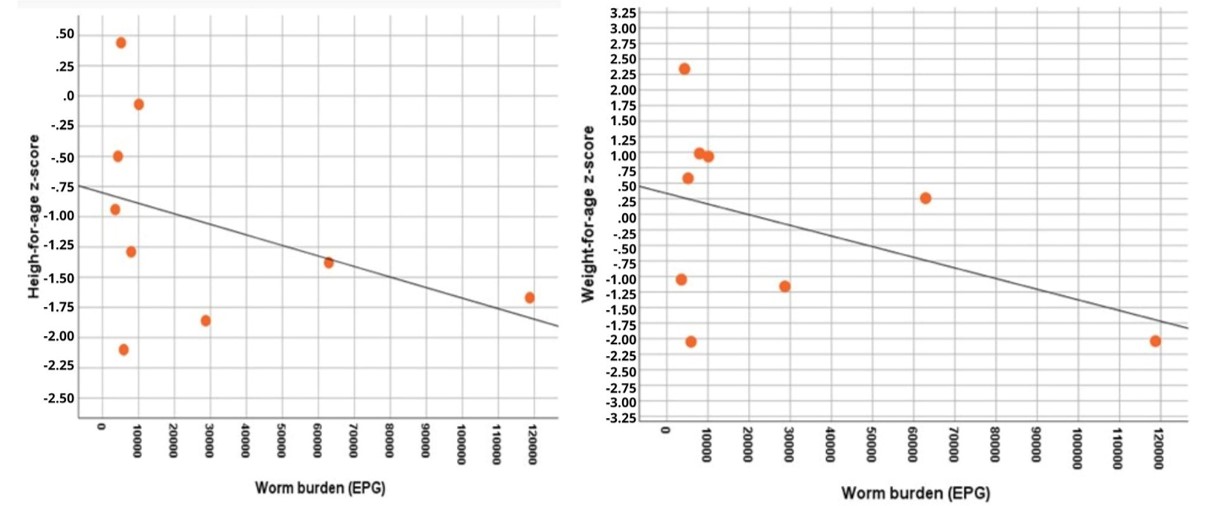
A comparison was made of anthropometric parameters and blood hemoglobin levels between children infected and not infected with different species of parasites (Table 3). Notably, HAZ values were significantly lower in children infected with A. lumbricoides and hookworms. The scatter diagrams show a non-statistically significant trend of inverse correlation between the values of the anthropometric parameters HAZ and WAZ and parasite load of A. lumbricoides infections (Figure 3).
Comparison of anthropometric parameters z-scores and mean blood hemoglobin concentration in parasitized children in the village of Boa Hora, Teresina, Piauí State, Brazil.
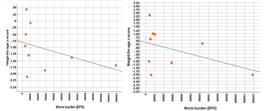
Dispersion of the correlation of the anthropometric parameters HAZ and WAZ with the parasite load of Ascaris lumbricoides infections. Legend: EPG – Eggs per gram of feces.
4.5. Intestinal parasitic infections in the canine population sample
A total of 104 canine fecal samples were analyzed, with 23 (22.11%) coming from household dogs (22.11%) and 81 (77.89) from canine feces on public roads near homes included in the study. The IPI prevalences for the samples were 56.5% (13/23) and 65.4% (53/81), respectively. Hookworm prevalence was 63.5% (66/104), with other helminths, such as Toxocara spp. (2.88%; 3/104) and Trichuris spp. (1.92%; 2/104). being less prevalent. Entamoeba spp. (0.96%; 1/104) were among the protozoa observed. Infections by more than one intestinal parasite occurred in 3.8% (4/104) of the canine samples.
Of the household dogs, more than half were male (56.5%; 13/23), lived loose in the yard (69.6%; 16/23) and had access to the street (60.9%; 14/23). Hookworm infection in these animals differed significantly between sexes (p= 0.039; Table 4, with females being 87.2% (OR = 0.128; 95%CI = 0.019 – 0.833) less likely to be infected than males.
Association between hookworm infections and variables related to the management of semi-domiciled dogs in the village of Boa Hora, Teresina, Piauí.
Most of the household dogs ate both homemade and industrialized food and consumed the same water used by the family (52.2%; 12/23). All the household dogs were vaccinated and 91.3% (21/23) had an up-to-date rabies vaccination schedule (Table 4).
Historically, 73.9% (17/23) of the household dogs had already had some form of helminthiasis, and the majority had already received anthelmintic medication (91.3%; 21/23). More than half of the animals (61.9%; 13/23) had been dewormed by their owners, even without showing any symptoms. Only 8.7% (2/23) of these dogs were seen by a veterinarian when they showed signs of illness.
4.6. Cutaneous Larva Migrans (CLM)
The active search for CLM cases based on BHU records and observations by the research team was evidenced during the home visit. A total of 45 people (4 from BHU and 41 informed by residents) observed to have CLM: 62.2% (28/45) in children (2 to 9 years), 17.8% (8/45) in adolescents (10 to 19 years) and 20% (9/45) in adults (20 to 59 years). Males had a greater proportion of cases than females (68.8%; 31/45).
4.7. Spatial analysis of intestinal parasitic infections in the human and canine population samples
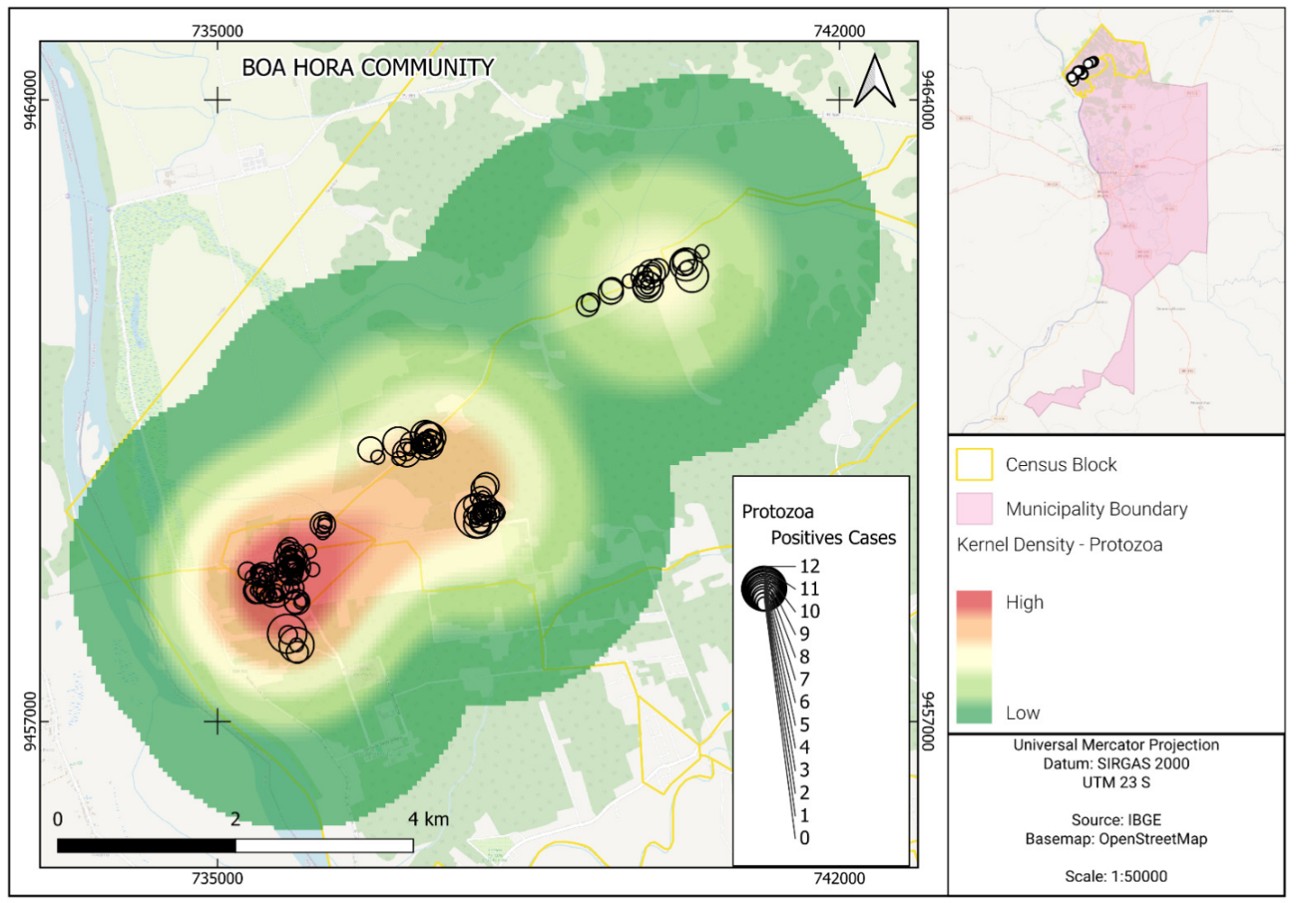
Human IPIs were distributed throughout all the areas sampled by the study. IPIs caused by protozoa were more frequent in the population cluster located in the central region of the village (Figure 4). Infections by soil transmitted helminths (STHs) were observed in individuals living further away (Figure 5).
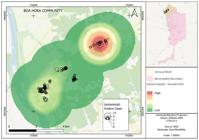
Mapping of the distribution of soil-transmitted helminth infections represented by critical points (Kernel density) in the village of Boa Hora, municipality of Teresina, Piauí State, Brazil.
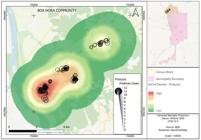
Mapping of the distribution of intestinal protozoan infections represented by critical points (Kernel density) in the village of Boa Hora, municipality of Teresina, Piauí State, Brazil.
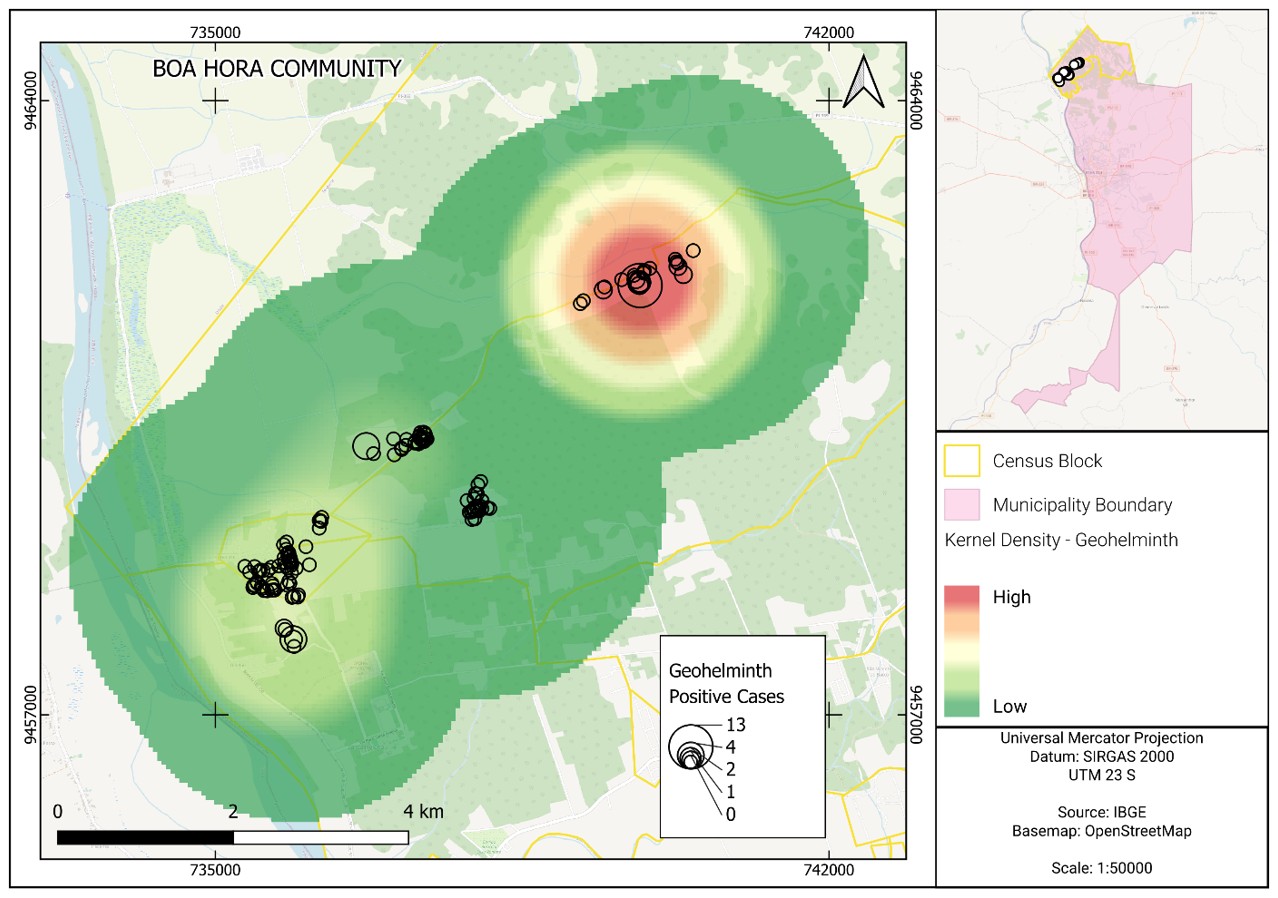
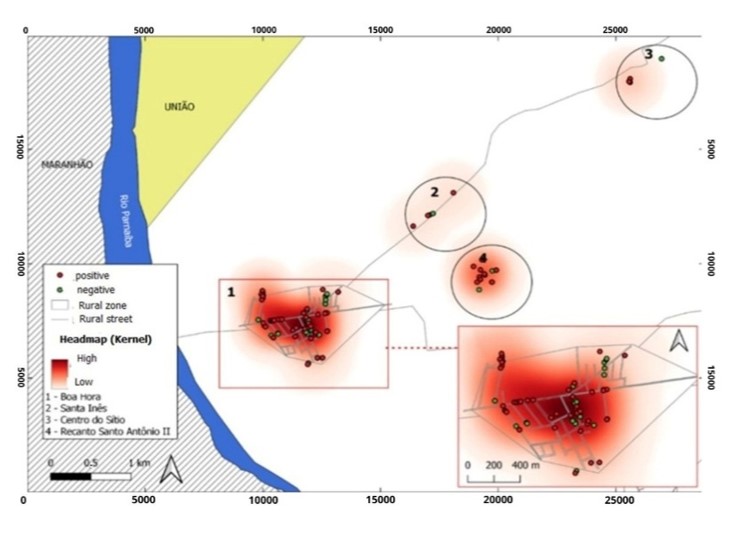
The spatial analysis of human and canine hookworm infections in the village of Boa Hora is represented by Kernel map (Figure 6). Five hotspots of hookworm infection in dogs were identified: Area 1 = Boa Hora center, Area 2 = Santa Inês, Area 3 = Sítio center and Area 4 = Recanto Santo Antônio II settlement (Figure 6). Areas 1 and 4 had more intense (high) transmission with positivity rates of over 60%. These areas concentrated most of the canine fecal samples collected and had a higher dog population density than areas 2 and 3 (Figure 6).
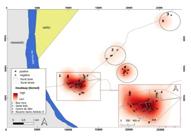
Distribution of cases of hookworm infection in the studied canine population of the village of Boa Hora, municipality of Teresina, Piauí State, and close-up of central area. Area 1 - Boa Hora center; Area 2 - Santa Inês; Area 3 – Sítio center and Area 4 - Recanto Santo Antônio II.
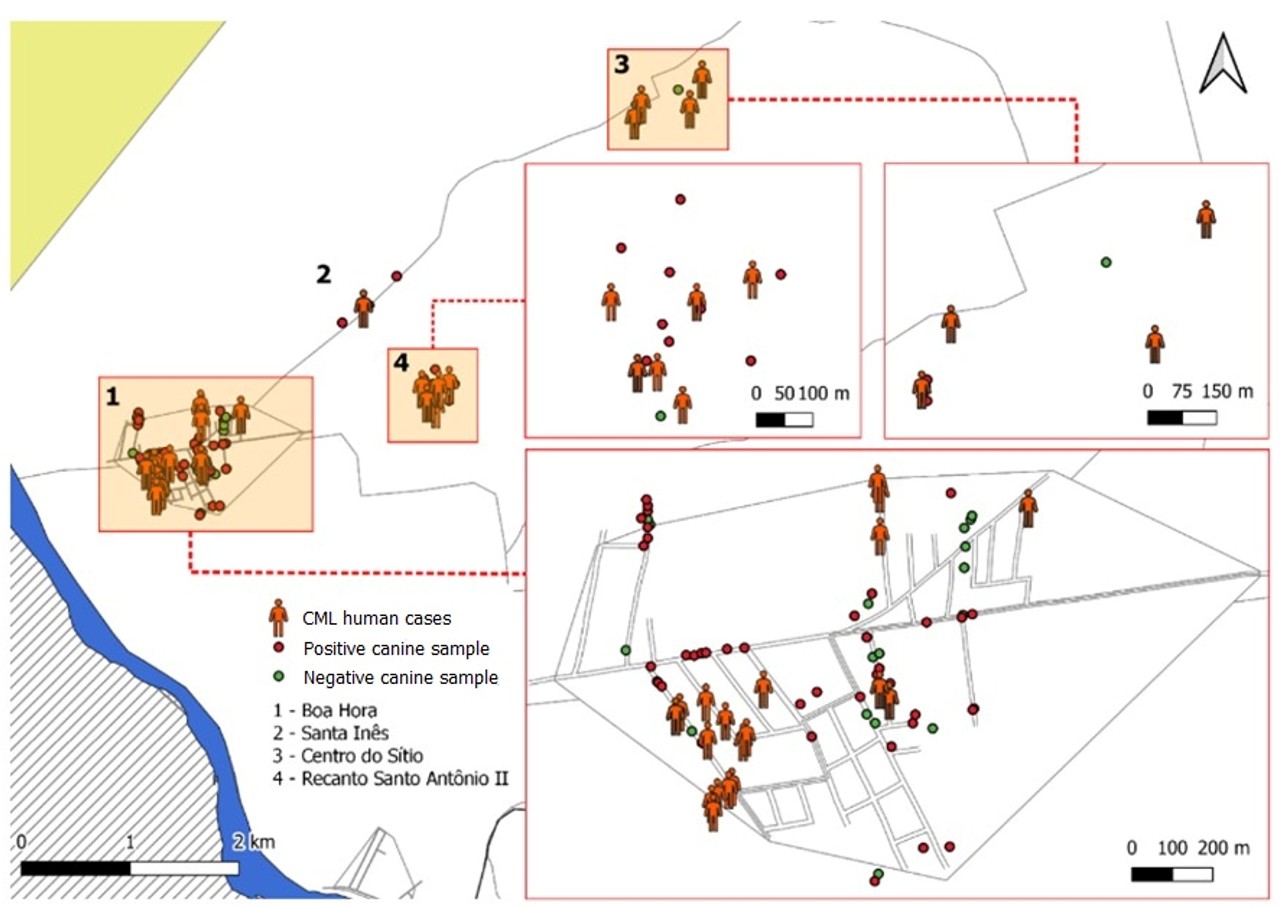
The spatial distribution of cases of CLM reported during household visits is shown in Figure 7, along with that of occurrences of hookworm eggs in canine fecal samples. CLM was found in all four areas (areas 1 – 4). The central region of Boa Hora (Area 1), close to the BHU, had the greatest number of reports. The map shows that cases of CLM occur in the same areas where hookworm eggs were found in canine samples from homes and public roads in the village of Boa Hora (Figure 7).
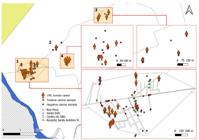
Spatial distribution of human Cutaneous Larva Migrans cases from the village of Boa Hora, municipality of Teresina, Piauí. Area 1 - Boa Hora center; Area 2 - Santa Inês; Area 3 - Sítio center and Area 4 - Recanto Santo Antônio II Settlement.
The heat map of the spatial analysis of human and canine hookworm infections in the village of Boa Hora (Figure 8) was constructed from three perspectives: i) households with the presence of hookworm infection in humans; ii) canine fecal samples collected from the soil of peridomicile areas and public roads with the presence of hookworm eggs and iii) households with the presence of CLM cases. This analysis revealed that CLM cases were identified in areas with high transmission of hookworm in dogs. This scenario included area 1 and areas 2 and 3, the latter two being further away from the central region of Boa Hora. Area 3 had a high level of transmission of hookworm infection in humans; it is also an environment where people defecate in the open. In addition, there was no overlap among hotspots of cases of hookworm infection in dogs, CLM and cases of hookworm infection in humans.
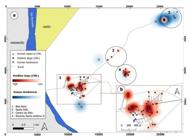
Spatial distribution of hookworm infection in the studied human and canine populations and cases of human Cutaneous Larva Migrans. (a) Boa Hora village, municipality of Teresina, Piauí State; (b) Close-up of central area. Area 1 - Boa Hora center; Area 2 - Santa Inês; Area 3 - Sítio center and Area 4 Recanto Santo Antônio II.
5. Discussion
The results showed a high prevalence of IPIs in humans in the village of Boa Hora in the state of Piauí. Cross-sectional studies of IPIs have been reported in other geographical regions of Piauí and have shown prevalences ranging from 45% to 92.5% (Alves et al., 2003; Viana et al., 2017; Ramos et al., 2019; Calegar et al., 2021). Similar results were found by surveys in the Center-west (44.5%), Northeast (69.6%) and North (91.2%) regions of Brazil (Silva et al., 2019; Vilar et al., 2021; Marques et al., 2021). IPIs remain a challenge for public health in several areas of the country due to the following factors: (i) restricted access to health services in communities located in remote areas, which hinders the provision and maintenance of basic care, as well as the implementation of preventive measures for these diseases; (ii) socio-cultural aspects that influence health practices and adherence to treatments and preventive measures; (iii) lack of comprehensive epidemiological studies on IPIs, which limits understanding and the development of effective strategies; and (iv) lack of infrastructure with health professionals and laboratory technicians trained in the laboratory diagnosis of IPIs at BHUs (Oliveira et al., 2017; Alves and Oliveira, 2018; Chielle et al., 2020).
The proportion of protozoan infections was higher than that of intestinal helminths in the village of Boa Hora. This infection profile has also been reported in some other areas of Piauí (Alves et al., 2003; Coronato-Nunes et al., 2016; Viana et al., 2017). In addition, recent research in rural and urban regions in different states of Brazil has shown similar results (Silva et al., 2019; Vilar et al., 2021; Marques et al., 2021). From this perspective, mass drug administration programs, as recommended by the WHO to tackle STHs, may partially contribute to this trend. It is important to note that anthelmintic resistance and the implementation of these actions aimed only at a certain target audience still allow these helminths to persist in the population (Ng'etich et al., 2023). In addition, a higher prevalence of protozoa is to be expected in regions with a scarcity of water resources, specifically in communities in the semi-arid Northeast, because it can lead to inadequate water collection and handling, among other factors. The maintenance of STHs is also favored by the direct relationship between soil moisture and the long dry season in such areas (Bacelar et al., 2018).
It is important to highlight that while environmental and socioeconomic factors, such as limited access to sanitation and poor housing conditions, play a significant role in the persistence of IPIs, the occurrence of these infections cannot be attributed solely to these determinants (Alves and Oliveira, 2018). The presence of parasitic infections may also be influenced by behavioral practices, knowledge about hygiene, and cultural habits that are not directly related to socioeconomic status. Distinguishing these aspects is essential to ensuring that public health interventions address both the structural and individual-level risk factors that influence IPI transmission (Marques et al., 2021; Muadica et al., 2020).
Giardia duodenalis, A. lumbricoides and E. histolytica/dispar were more frequent than the other parasites found in Boa Hora, as in other regions of the world (Pickering et al., 2019; Habib et al., 2021). A high prevalence of commensal intestinal protozoa (E. nana, E. coli and I. butschlii), bioindicators of environmental contamination, was also observed in the village and reported in other vulnerable communities (Oliveira et al., 2020; Pickering et al., 2019; Habib et al., 2021). The presence of these pathogens indicates the predominance of IPIs fecal-oral transmission.
Disposal of waste in peridomiciliary vegetation, defecation in places other than the toilet, toilets outside the home/absence of toilets, type of wall and dirt floor were all risk factors for STHs (Table 1). Research conducted in Northeast Brazil and in central Mozambique, East Africa, found that the risk conditions for the presence of STHs include the lack of basic sanitation, the use of materials other than brick in the construction of houses, the lack of adequate housing/sanitary infrastructure and the practice of open defecation (Hürlimann et al., 2018; Monteiro et al., 2018; Almeida et al., 2020; Muadica et al., 2020). Teresina, the capital of Piauí, has a basic sanitation infrastructure coverage of 43.4% (Águas de Teresina, 2023). Peri-urban and rural areas are currently experiencing rapid population growth due to their proximity to the urban center and the construction of popular housing estates, but environmental sanitation conditions and the monitoring of public policy provisioning have not kept pace with the disorderly occupation (Figueiredo and Pinto, 2014).
In this context, conditions such as poverty, social vulnerability, and limited access to educational resources are critical determinants that amplify the public health impact of parasitic diseases. However, these social determinants do not uniformly dictate the occurrence of IPIs. Therefore, public health initiatives must adopt integrated approaches that address environmental factors, individual behaviors, and social determinants as distinct yet interconnected elements (Gois et al., 2023; Bordignon et al., 2022).
Water, sanitation and hygiene (WASH) strategies were created to improve the reduction of waterborne diseases that occur in mainly vulnerable populations, with the aim of providing access to drinking water treatment, safe water storage and awareness of hygiene practices. An ecological survey of students aged 7 to 17 from all Brazilian states showed that WASH strategies play an important role in interrupting the transmission cycle of STHs (Mingoti-Poague et al., 2021).
Responses about the nutritional status and socioeconomic and environmental conditions of the children and adolescents participating in the study revealed that 32.3% (31/96) lived in low-income families, with an average of half a minimum monthly wage of US$115.53, and the only source of income being Brazilian Federal Government aid, which had an average value of US$75.14 in 2022 (Brasil, 2023). The deficits in weight and height in relation to age observed in the present study indicate the presence of malnourished children and suggest an inadequate consumption of the micro and macronutrients necessary for the development of physical and cognitive functions per stage of life (Melo Araújo et al., 2021). Similar results were described in a study in the Western Amazon (Pickering et al., 2019). In addition, IPIs can be associated with malabsorption of nutrients, further compromising growth in this age group (Marques et al., 2020).
Correlating nutritional parameters with family income revealed that the poorest children and adolescents had significantly lower WAZ averages (Table 2). A correlation between the frequency of dietary protein consumption, family income and the assessment of nutritional status was observed in peri-urban communities in the Brazilian state of Maranhão, which had the same characteristics as the Boa Hora village (Almeida et al., 2020). In a population-based survey involving data from 63 countries, Karra et al. (2017) demonstrated that children's height was sensitive to poverty, low maternal schooling and lack of access to drinking water and environmental sanitation.
Significantly lower HAZ averages were observed in children with STH infections, particularly A. lumbricoides. Considering that height is a nutritional parameter that is affected slowly, the data suggest that chronic A. lumbricoides infections are capable of insidiously influencing the nutritional status of children and adolescents in the studied community. Calegar et al. (2021) demonstrated the negative impact of ascariasis on the nutritional status of children, while Gasparinho et al. (2021) confirmed the positive impact that treatment of A. lumbricoides infections had on weight and height gain in children in Angola.
The intensity of hookworm and A. lumbricoides infection in adults of the present study was classified as mild. Rural areas in other regions of Piauí also showed the same result (Monteiro et al., 2018). Cases of ascariasis with high and moderate parasite loads were observed, reinforcing the possibility that these infections can influence the nutritional status of the children and adolescents in the study area. The morbidity associated with STHs depends on the parasite load of the infections, which is not usually assessed, either in individual diagnoses in the care setting or in surveys that estimate prevalence. The present study found a non-significant negative linear trend between the parasite load of ascariasis and the parameters HAZ and WAZ. The influence of ascariasis parasite load on anthropometric parameters was previously demonstrated in Sri Lanka (Galgamuwa et al., 2018). These results suggest that adequate control of STHs could increase the potential for healthy physical development in the studied children and adolescents.
Approximately one-fifth of the children and adolescents assessed in the present study had blood hemoglobin levels below normal and were therefore anemic. The systematic review by André et al. (2018) corroborates this result, as it shows that iron deficiency anemia is a very common condition in children facing situations of food and nutritional insecurity, while quantitative iron deficits can be observed with low frequency of consumption of micro and macronutrients. No relationship was observed here between hemoglobin blood levels and hookworm infections, probably due to the low parasite load in all the identified cases. This finding contrasts with the result of a study conducted in Ethiopia, in which hookworm was found to be significantly associated with low hemoglobin levels (Hailu et al., 2018).
The participants of the present study had a low prevalence of intestinal hookworm infections. In contrast, the One Health approach made it possible to detect the high prevalence of hookworm infections in canine samples, and the presence of underreported cases of CLM in areas of the village.
It is important to emphasize that the One Health approach recognizes the interdependence between human, non-human animal, and environmental health (Banerjee and van der Heijden, 2023). This integrated perspective is crucial for understanding the transmission dynamics of zoonotic diseases and other health threats that affect both humans and other animals, particularly in areas where there is close proximity between these populations. The interconnections between human, non-human animal, and environmental health are often overlooked in traditional health approaches, but they are fundamental to tackling the complex health challenges emerging in the modern world (Andrade Vieira et al., 2024; Banerjee and van der Heijden, 2023).
These parasites are known to be the group of diseases that most affect dogs in Brazil, although several studies point to variation in the frequency of these infections (Ferraz et al., 2019; Souza et al., 2023). Among the non-human animal population, canine hookworm is the most frequent STH in the world, both in rural areas and in large urban centers (Stracke et al., 2020); studies in Argentina and Sri Lanka have shown a prevalence of up to 80%. Other species of intestinal helminths and protozoa of dogs have been found at a lower positivity rate in these studies (Cociancic et al., 2018; Silva et al., 2022).
The evidence from this study regarding animal management, considering the “yes” and “sometimes” answers in the questionnaire applied to the guardians, showed that more than half of the dogs live loose and have access to the street. The presence of canine feces on the public roads of the village of Boa Hora may have made it possible to maintain STHs and favored the participation of semi-domiciled dogs in the transmission of IPIs and CLM. This scenario highlights the direct relationship between non-human animal behavior and environmental risk to human health. The presence of these infectious agents in public areas, where people transit, significantly increases the likelihood of infection, especially among children and individuals with greater exposure to contaminated soil. Similar results were found in Europe and Latin America, including Brazil (Silva et al., 2022). Ihnacik et al. (2022) reported that some communities in Slovakia had a considerable positivity rate for STHs (43.55%) detected in canine feces samples from the soil, and that this result was related to high rates of environmental contamination. Studies carried out in parks and public squares in Brazil and other countries have shown a high presence of hookworms in canine fecal samples collected from the ground (Massetti et al., 2022; Arruda et al., 2023). These results highlight the importance of dogs in the transmission of CLM, which demonstrates the need for preventive measures to mitigate the access of these animals to public places.
It is necessary, therefore, to promote educational actions aimed at tutors on the importance of adequate dog restraint, as well as to intensify hygiene in public areas and to disseminate appropriate sanitary management practices. These measures are essential to reducing human exposure to parasites with zoonotic potential.
It has been shown that IPI persistence in dogs is related to age, breed standard and other factors (Ferreira et al., 2016; Regidor-Cerrillo et al., 2020). The present study evidenced an association between hookworm infections in dogs and the sex variable, with females being less likely to be infected. These results corroborate those of Ferreira et al. (2016) and Lima et al. (2021), in which male dogs older than one year were more susceptible to hookworm infection.
The answers to the questionnaire applied to the guardians showed a lack of knowledge about the health history of their dogs. The inadequate deworming schedule for the animals indicated the need for qualified health professionals, including veterinarians, to share knowledge about IPIs with the population. The lack of veterinary services in the village of Boa Hora has made it impossible to monitor and carry out routine examinations to assess the presence of IPIs in dogs. Jarošová et al. (2021) studied Slovakian dogs from shelters and gypsy settlements, and those used for hunting, guarding and police guarding, and therefore with different husbandry, and showed an association between intestinal helminthiases and access to veterinary care. This evidence was similar to other studies carried out in Southeast Brazil (Silva et al., 2020a; Arruda et al., 2022). Indications of the importance of maintaining animal health to control IPIs were pointed out by Arruda et al. (2022), who showed that animal owners were unaware of the issue.
From this perspective, it is important to emphasize that proximity between humans and domestic animals can intensify the transmission of infectious agents. The sharing of spaces, combined with a lack of preventive measures, increases the risk of zoonotic infections, making integrated epidemiological surveillance a necessity.
The reports of the owners of the present study showed that most of the dogs did not show clinical signs characteristic of canine hookworm, which are related to parasite load and the animal's immune system. Ferreira et al. (2016) and Souza et al. (2023) found no association between parasitism and the presence of diarrhea and other clinical signs, corroborating the findings in the village of Boa Hora. Lima et al. (2021) reported discrepant results in relation to the present study, as they found a significant association between hookworm and diarrhea among the examined dogs.
Under-reporting of cases of CLM was observed in the village of Boa Hora. This was due to the lack of medication available at the BHU, as well as the habit of self-medication (ice and ointment with the active ingredient thiabendazole) reported by the residents themselves. This led to a lack of or reduced registration in the E-SUS information system. The prevalence of hookworms in canine fecal samples may increase the risk of zoonotic transmission in the region, especially by Ancylostoma spp. in humans and indicates the effective role that the canine population can play in this process. Still from the same perspective, CLM was more common among children and adolescents. Other studies have shown an association between cases of CLM and these age groups (Larsen et al., 2021; Reichert et al., 2018). It is important to note that, although individuals under the age of two were not included in the present study, three of them had CLM identified by our team. According to Rocha et al. (2019), these age groups are the main risk groups, as they are more exposed to soil contaminated by canine feces in public areas.
Some potential limitations may have led to information bias on the part of the respondents. Most of the dogs in the village of Boa Hora had access to the street. For this reason, the number of canine fecal samples collected in peridomicile areas was lower than the total number of samples collected on public roads. The official records of CLM at the BHU were not compatible with the reality of this disease in the region, as measured by the study team, who observed a higher proportion of cases during home visits. According to the participants, the lack of medication at the BHU would justify not seeking care. However, it was possible to see an emergency health scenario in Boa Hora.
This study offers the prospect of using molecular biology techniques to identify species and make phylogenetic inferences about this population of parasites. This information would be important for understanding possible cycles of zoonotic transmission in the region. In addition, the possibility of longitudinal studies would allow for a more in-depth analysis of the possible causal relationship between IPIs and child nutritional status.
6. Conclusion
This study highlights a concerning epidemiological scenario, evidenced by high rates of IPIs, poverty, child malnutrition and anemia, emphasizing the importance of zoonotic IPIs as a serious public health problem. Socio-economic conditions, inadequate hygiene practices, the population's close contact with their pets, inadequate handling of dog feces, deficiencies in environmental sanitation and lack of information about IPIs are factors that also likely contribute to the transmission maintenance.
There is a challenge to mitigate the risks of IPI transmission in humans and dogs in the village of Boa Hora. The possibility of reducing these diseases involves strategies that seek to reduce poverty and increase access to continuing education and popular health education activities, as well as promote responsible pet ownership. In addition, the implementation of an intersectoral and integrated approach to tackling IPIs, following the principles of One Health, is needed to increase surveillance of the risk factors present in the environment and in the interaction between different hosts, which could be adopted in other areas with characteristics similar to those of this study, in order to promote health.
Acknowledgements
We would like to thank the residents of Povoado Boa Hora, the professionals at BHU; the team at the Laboratório de Biologia Molecular e Epidemiologia at the Instituto Federal do Piauí; and the Laboratório de Parasitologia Molecular, Fiocruz, Piauí, for their logistical support and infrastructure for carrying out the stool diagnoses. We also thank Igor Nascimento of the Instituto Federal do Piauí for performing the statistical calculations.
This study was carried out with the financial support of the Coordenação de Aperfeiçoamento de Pessoal de Nível Superior (CAPES) - code 001; Plano de Objetivos e Metas (POM) of the Laboratório de Inovações em Terapias, Ensino e Bioprodutos (LITEB), Instituto Oswaldo Cruz (IOC), Fiocruz; and the Diretoria de Extensão do Instituto Federal do Piauí.
References
-
ÁGUAS DE TERESINA, 2023 [viewed 17 October 2023]. Esgotamento Sanitário [online]. Available from: https://www.aguasdeteresina.com.br/esgotamento-sanitario/
» https://www.aguasdeteresina.com.br/esgotamento-sanitario/ -
ALMEIDA, M.M., MONTEIRO, K.J.L., BACELAR, P.A.A., SANTOS, J.P.D., FREITAS, S.P.C., EVANGELISTA, B.B.C., LEAL, D.N., SILVA, D.A.E., CARDOSO, A.B., NASCIMENTO, E.F.D., MORAES NETO, A.H.A. and CARVALHO-COSTA, F.A., 2020. Interactions between malnutrition, soil-transmitted helminthiasis and poverty among children living in periurban communities in Maranhao State, Northeastern Brazil. Revista do Instituto de Medicina Tropical de São Paulo, vol. 62, e73. http://doi.org/10.1590/s1678-9946202062073 PMid:33027397.
» http://doi.org/10.1590/s1678-9946202062073 -
ALVES, J.R., MACEDO, H.W., RAMOS JUNIOR, J.R., FERREIRA, L.F., GONÇALVES, L.C. and ARAÚJO, A., 2003. Parasitoses intestinais em região semi-árida do Nordeste do Brasil: resultados preliminares distintos das prevalências esperadas. Cadernos de Saude Publica, vol. 19, no. 2, pp. 667-670. http://doi.org/10.1590/S0102-311X2003000200034 PMid:12764483.
» http://doi.org/10.1590/S0102-311X2003000200034 -
ALVES, S.A.A. and OLIVEIRA, M.L.B., 2018. Sociocultural aspects of health and disease and their pragmatic impact. Journal of Human Growth and Development, vol. 28, no. 2, pp. 183-188. http://doi.org/10.7322/jhgd.147236
» http://doi.org/10.7322/jhgd.147236 -
ANDRADE VIEIRA, V.M., SILVA, P.P., PAULINO, É.T., AMARAL FERNANDES, P., LABARTHE, N., GAZÊTA, G.S. and MORAES NETO, A.H.A., 2024. Epidemiological analysis of Dirofilaria immitis (Spirurida: Onchocercidae) infecting pet dogs (Canis lupus familiaris, Linnaeus, 1758) in Baixada Fluminense, Rio de Janeiro. Frontiers in Veterinary Science, vol. 11, no. 2, pp. 1360593. http://doi.org/10.3389/fvets.2024.1360593 PMid:38756520.
» http://doi.org/10.3389/fvets.2024.1360593 - ANDRÉ, H.P., SPERANDIO, N., SIQUEIRA, R.L., FRANCESCHINI, S.C.C. and PRIORE, S.E., 2018. Food and nutrition insecurity indicators associated with iron deficiency anemia in Brazilian children: a systematic review. Ciencia & Saude Coletiva, vol. 23, no. 4, pp. 1159-1167. PMid:29694583.
-
ARRUDA, A.A., BRESCIANI, K.D.S., WERNER, S.S. and SILVA, B.F., 2023. Occurrence of gastrointestinal parasites in dogs in a rural area of Santa Catarina, Brazil. Revista Brasileira de Parasitologia Veterinária, vol. 32, no. 3, e005723. http://doi.org/10.1590/s1984-29612023061 PMid:37851715.
» http://doi.org/10.1590/s1984-29612023061 -
ARRUDA, I.F., MENDES, Y.A., BONIFÁCIO, T.F., GONÇALVES, I.M.S., MILLAR, P.R., BARBOSA, A.S., ABBOUD, L.C.S. and AMENDOEIRA, M.R.R., 2022. Socioeconomic profile, animal care, sanitary practices, and knowledge about parasites among owners of domestic dogs and cats treated in Rio de Janeiro city. Revista Brasileira de Medicina Veterinária = Brazilian Journal of Veterinary Medicine, vol. 44, e001822. http://doi.org/10.29374/2527-2179.bjvm001822 PMid:36128404.
» http://doi.org/10.29374/2527-2179.bjvm001822 -
BACELAR, P.A.A., SANTOS, P.P., MONTEIRO, K.J.L., CALEGAR, D.A., NASCIMENTO, E.F. and CARVALHO-COSTA, F.A., 2018. Parasitoses intestinais e fatores associados no estado do Piauí: uma revisão integrativa. Revista Eletrônica Acervo Saúde, vol. 10, no. 4, pp. 1802-1809. http://doi.org/10.25248/REAS223_2018
» http://doi.org/10.25248/REAS223_2018 -
BANERJEE, S. and VAN DER HEIJDEN, M.G.A., 2023. Soil microbiomes and one health. Nature Reviews. Microbiology, vol. 21, no. 1, pp. 6-20. http://doi.org/10.1038/s41579-022-00779-w PMid:35999468.
» http://doi.org/10.1038/s41579-022-00779-w - BARBETTA, P.A., 2012. Estatística aplicada às Ciências Sociais 8th ed. Florianópolis: Editora da Universidade Federal de Santa Catarina. 318 p.
-
BORDIGNON, J.C.P., PAULINO, E.T., SILVA, M.E.C., ALENCAR, M.F.L., GOMES, K.N.F., SOTERO-MARTINS, A., SANTOS, J.A.A., BOIA, M.N. and MORAES-NETO, A.H.A., 2022. Prevalence of intestinal parasitic infections versus knowledge, attitudes and practices of male residents in Brazilian urban slums: a cross-sectional study. Revista do Instituto de Medicina Tropical de São Paulo, vol. 64, e41. http://doi.org/10.1590/s1678-9946202264041 PMid:35703610.
» http://doi.org/10.1590/s1678-9946202264041 -
BRASIL. Ministério da Saúde Secretaria de Atenção à Saúde. Departamento de Atenção Básica, 2011 [viewed 15 January 2024]. Orientações para a coleta e análise de dados antropométricos em serviços de saúde [online]. Available from: http://bvsms.saude.gov.br/bvs/publicacoes/orientacoescoleta_analise.Dados _antropometricos.pdf
» http://bvsms.saude.gov.br/bvs/publicacoes/orientacoescoleta_analise.Dados -
BRASIL, 2012 [viewed 15 November 2019]. Diretrizes e normas regulamentadoras de pesquisas envolvendo seres humanos. CNS No 466 [online]. Diário Oficial da República Federativa do Brasil, Brasilia, 12 dez. Available from: http://bvsms.saude.gov.br/bvs/saudelegis/cns /2013/res0466_12_12_ 2012.htm
» http://bvsms.saude.gov.br/bvs/saudelegis/cns -
BRASIL. Ministério da Saúde. Conselho Nacional de Saúde, 2016 [viewed 27 January 2024]. Resolução no 510, de 7 de abril de 2016. Trata sobre as diretrizes e normas regulamentadoras de pesquisa em ciências humanas e sociais [online]. Diário Oficial da União, Brasília, 24 maio. Available from: http://conselho.saude.gov.br/resolucoes/2016/Reso510.pdf
» http://conselho.saude.gov.br/resolucoes/2016/Reso510.pdf -
BRASIL. Ministério do Desenvolvimento e Assistência social, Familia e combate a Fome, 2023 [viewed 27 January 2024]. Viver com dignidade: Bolsa Família atinge em 2023 recorde de famílias contempladas [online]. Available from: https://www.gov.br/mds/pt-br/acoes-e-programas/bolsa-familia
» https://www.gov.br/mds/pt-br/acoes-e-programas/bolsa-familia -
CALEGAR, D.A., BACELAR, P.A., MONTEIRO, K.J.L., SANTOS, J.P., GONÇALVES, A.B., BOIA, M.N., JAEGER, L.H., CORONATO-NUNES, B. and CARVALHO-COSTA, F.A., 2021. A community-based, cross-sectional study to assess interactions between income, nutritional status and enteric parasitism in two Brazilian cities: are we moving positively towards 2030? Journal of Health, Population and Nutrition, vol. 40, no. 1, pp. 26. http://doi.org/10.1186/s41043-021-00252-z PMid:34099052.
» http://doi.org/10.1186/s41043-021-00252-z -
CHIELLE, E.O., KUIAVA, E.L., FAUST, G.A., CHIELLE, A.P.O., KUIAVA, V.A. and ALVES, R.J.F., 2020. Desenvolvimento de sistema estruturado com inteligência artificial para apoio no diagnóstico de parasitoses intestinais. Clinical & Biomedical Research, vol. 40, no. 3, pp. 148-153. http://doi.org/10.22491/2357-9730.105362
» http://doi.org/10.22491/2357-9730.105362 -
COCIANCIC, P., ZONTA, M.L. and NAVONE, G.T., 2018. A cross-sectional study of intestinal parasitoses in dogs and children of the periurban area of La Plata (Buenos Aires, Argentina): zoonotic importance and implications in public health. Zoonoses and Public Health, vol. 65, no. 1, pp. e44-e53. http://doi.org/10.1111/zph.12408 PMid:28984036.
» http://doi.org/10.1111/zph.12408 -
CORONATO-NUNES, B., PAVAN, M.G., JAEGER, L.H., MONTEIRO, K.J.L., XAVIER, S.C., MONTEIRO, F.A., BÓIA, M.N. and CARVALHO-COSTA, F.A., 2016. Spatial and molecular epidemiology of giardia intestinalis deep in the Amazon, Brazil. PLoS One, vol. 11, no. 7, e0158805. http://doi.org/10.1371/journal.pone.0158805 PMid:27392098.
» http://doi.org/10.1371/journal.pone.0158805 -
DONIS, J.L., SILVA, E.R. and AFONSO, M.V.R., 2023. Avaliação de cuidados básicos realizados em cães e gatos domiciliados. Contribuciones a las Ciencias Sociales, vol. 16, no. 11, pp. 28322-28336. http://doi.org/10.55905/revconv.16n.11-215
» http://doi.org/10.55905/revconv.16n.11-215 -
FERRAZ, A., EVARISTO, T.A., COELHO, A.L.R., CASTRO, T.A., MELLO, C.C.S., PAPPEN, F.G., SILVA, S.S. and NIZOLI, L.Q., 2019. Presença de parasitos com potencial zoonótico na areia de praças de recreação de escolas municipais de educação infantil do município de Pelotas, RS, Brasil. Veterinária e Zootecnia, vol. 26, pp. 1-7. http://doi.org/10.35172/rvz.2019.v26.147
» http://doi.org/10.35172/rvz.2019.v26.147 -
FERREIRA, J.I.G.S., PENA, H.F.J., AZEVEDO, S.S., LABRUNA, M.B. and GENNARI, S.M., 2016. Occurrences of gastrointestinal parasites in fecal samples from domestic dogs in São Paulo, SP, Brazil. Revista Brasileira de Parasitologia Veterinária = Revista Brasileira de Parasitologia Veterinária, vol. 25, no. 4, pp. 435-440. http://doi.org/10.1590/s1984-29612016081 PMid:27925072.
» http://doi.org/10.1590/s1984-29612016081 -
FIGUEIREDO, G.C. and PINTO, J.M.R., 2014. Acampamento e assentamento: participação, experiência e vivência em dois momentos da luta pela terra. Psicologia e Sociedade, vol. 26, no. 3, pp. 562-571. http://doi.org/10.1590/S0102-71822014000300005
» http://doi.org/10.1590/S0102-71822014000300005 -
FU, Y., HUANG, Y., ABUZEID, A.M.I., HANG, J., YAN, X., WANG, M., LIU, Y., SUN, Y., RAN, R., ZHANG, P. and LI, G., 2019. Prevalence and potential zoonotic risk of hookworms from stray dogs and cats in Guangdong, China. Veterinary Parasitology. Regional Studies and Reports, vol. 17, pp. 100316. http://doi.org/10.1016/j.vprsr.2019.100316 PMid:31303229.
» http://doi.org/10.1016/j.vprsr.2019.100316 -
GALGAMUWA, L.S., IDDAWELA, D. and DHARMARATNE, S.D., 2018. Prevalence and intensity of Ascaris lumbricoides infections in relation to undernutrition among children in a tea plantation community, Sri Lanka: a cross-sectional study. Biomed Central Pediatrics, vol. 18, no. 1, pp. 13. http://doi.org/10.1186/s12887-018-0984-3 PMid:29370780.
» http://doi.org/10.1186/s12887-018-0984-3 -
GASPARINHO, C., KANJUNGO, A., ZAGE, F., CLEMENTE, I., SANTOS-REIS, A., BRITO, M., SOUSA-FIGUEIREDO, J.C., FORTES, F. and GONÇALVES, L., 2021. Impact of annual albendazole versus four-monthly test-and-treat approach of intestinal parasites on children growth-a longitudinal four-arm randomized parallel trial during two years of a community follow-up in Bengo, Angola. Pathogens, vol. 10, no. 3, pp. 309. http://doi.org/10.3390/pathogens10030309 PMid:33799921.
» http://doi.org/10.3390/pathogens10030309 -
GOIS, J.N.P., GUIMARÃES, M.N.K., OLIVEIRA, S.F. and PAIVA, S.G., 2023. Parasitoses intestinais como indicadores sócio sanitários de saúde em comunidades quilombolas do Brasil central. Facit Business and Technology Journal, vol. 1, no. 43, pp. 370-394. http://doi.org/10.29327/2199304.1.43-23
» http://doi.org/10.29327/2199304.1.43-23 -
HABIB, A., ANDRIANONIMIADANA, L., RAKOTONDRAINIPIANA, M., ANDRIANTSALAMA, P., RANDRIAMPARANY, R., RANDREMANANA, R.V., RAKOTOARISON, R., VIGAN-WOMAS, I., RAFALIMANANTSOA, A., VONAESCH, P., SANSONETTI, P.J. and COLLARD, J.M., 2021. High prevalence of intestinal parasite infestations among stunted and control children aged 2 to 5 years old in two neighborhoods of Antananarivo, Madagascar. PLoS Negleted Tropical Diseases, vol. 15, no. 4, e0009333. https://doi.org/10.1371/journal.pntd.0009333
» https://doi.org/10.1371/journal.pntd.0009333 -
HAILU, T., YIMER, M., MULU, W. and ABERA, B., 2018. Synergetic effects of Plasmodium, hookworm, and Schistosoma mansoni infections on hemoglobin level among febrile school age children in Jawe Worda, Northwest Ethiopia. Journal of Parasitology Research, vol. 2018, pp. 9573413. http://doi.org/10.1155/2018/9573413 PMid:30009046.
» http://doi.org/10.1155/2018/9573413 -
HÜRLIMANN, E., SILUÉ, K.D., ZOUZOU, F., OUATTARA, M., SCHMIDLIN, T., YAPI, R.B., HOUNGBEDJI, C.A., DONGO, K., KOUADIO, B.A., KONÉ, S., BONFOH, B., N'GORAN, E.K., UTZINGER, J., ACKA-DOUABÉLÉ, C.A. and RASO, G., 2018. Effect of an integrated intervention package of preventive chemotherapy, community-led total sanitation and health education on the prevalence of helminth and intestinal protozoa infections in Côte d’Ivoire. Parasites & Vectors, vol. 11, no. 1, pp. 115. http://doi.org/10.1186/s13071-018-2642-x PMid:29486790.
» http://doi.org/10.1186/s13071-018-2642-x -
INSTITUTO BRASILEIRO DE GEOGRAFIA E ESTATÍSTICAS – IBGE, 2024 [viewed 17 February 2024]. |Cidades@|Piauí|Teresina|Panorama [online]. Available from: https://cidades.ibge.gov.br/brasil/ pi/ teresina/panorama
» https://cidades.ibge.gov.br/brasil/ -
IHNACIK, L., ŠMIGOVÁ, J., ŠOLTYS, J., BOBÍKOVÁ, D., KUZEVIČOVÁ, Ž., KUZEVIČ, Š., SCHUSTEROVÁ, I. and PAPAJOVÁ, I., 2022. The survey of soil-transmitted helminth species abundance in Slovakia with an emphasis on parameters important for their distribution. Frontiers in Medicine, vol. 9, pp. 1043313. http://doi.org/10.3389/fmed.2022.1043313 PMid:36465912.
» http://doi.org/10.3389/fmed.2022.1043313 -
JAROŠOVÁ, J., ANTOLOVÁ, D., LUKÁČ, B. and MAĎARI, A., 2021. A survey of intestinal helminths of dogs in slovakia with an emphasis on zoonotic species. Animals, vol. 11, no. 10, pp. 3000. http://doi.org/10.3390/ani11103000 PMid:34680018.
» http://doi.org/10.3390/ani11103000 -
KARRA, M., SUBRAMANIAN, S.V. and FINK, G., 2017. Height in healthy children in low- and middle-income countries: an assessment. The American Journal of Clinical Nutrition, vol. 105, no. 1, pp. 121-126. http://doi.org/10.3945/ajcn.116.136705 PMid:28049661.
» http://doi.org/10.3945/ajcn.116.136705 - KATZ, N., CHAVES, A. and PELLEGRINO, J.A., 1972. Simple device for quantitative stool thick-smear technique in Schistosomiasis mansoni. Revista do Instituto de Medicina Tropical de São Paulo, vol. 14, no. 6, pp. 397-400. PMid:4675644.
-
LARSEN, F.D., LARSEN, C.S. and JESPERSEN, S., 2021. Outbreak of cutaneous larva migrans among Danish students at a high school on Zanzibar. Travel Medicine and Infectious Disease, vol. 41, pp. 102008. http://doi.org/10.1016/j.tmaid.2021.102008 PMid:33705967.
» http://doi.org/10.1016/j.tmaid.2021.102008 -
LIMA, N.D., RAIMUNDO, D.C., SOUZA, V.A.F. and AGUIAR, J.M., 2021. Occurrence of gastrointestinal parasites in dogs and cats domiciliated in Santos, SP, Brazil. Revista Brasileira de Parasitologia Veterinária, vol. 30, no. 4, e011721. http://doi.org/10.1590/s1984-29612021080
» http://doi.org/10.1590/s1984-29612021080 -
LUTZ, A.O., 1919. Schistosomum mansoni e a Schistosomatose segundo observações, feitas no Brazil. Memorias do Instituto Oswaldo Cruz, vol. 11, no. 1, pp. 121-155. http://doi.org/10.1590/S0074-02761919000100006
» http://doi.org/10.1590/S0074-02761919000100006 -
MARQUES, J.R.A., NUNES-GUTJAHR, A.L. and BRAGA, C.E.S., 2021. Prevalência de parasitoses intestinais em crianças e pré-adolescentes no município de Breves, Pará, Brasil. Saúde e Pesquisa, vol. 14, no. 3, pp. 475-487. http://doi.org/10.17765/2176-9206.2021v14n3e8678
» http://doi.org/10.17765/2176-9206.2021v14n3e8678 -
MARQUES, R.C., BERNARDI, J.V.E., DOREA, C.C. and DÓREA, J.G., 2020. Intestinal parasites, anemia and nutritional status in young children from transitioning western Amazon. International Journal of Environmental Research and Public Health, vol. 17, no. 2, pp. 577. http://doi.org/10.3390/ijerph17020577. PMid:31963189.
» https://doi.org/ http://doi.org/10.3390/ijerph17020577 -
MASSETTI, L., WIETHOELTER, A., MCDONAGH, P., RAE, L., MARWEDEL, L., BEUGNET, F., COLELLA, V. and TRAUB, R.J., 2022. Faecal prevalence, distribution and risk factors associated with canine soil-transmitted helminths contaminating urban parks across Australia. International Journal for Parasitology, vol. 52, no. 10, pp. 637-646. http://doi.org/10.1016/j.ijpara.2022.08.001 PMid:36007621.
» http://doi.org/10.1016/j.ijpara.2022.08.001 -
MELO ARAÚJO, N.S., ANTUNES, M.F.R., ROLIM, K.M.C., VERDE, S.M.M.L., ARAÚJO, S.C.M. and SILVA, C.A.B, 2021. Inadequação de macro e micronutrientes oferecidos em duas escolas de tempo integral públicas no Nordeste do Brasil. Ciencia & Saude Coletiva, vol. 26, no. 10. http://doi.org/10.1590/1413-812320212610.11402021
» http://doi.org/10.1590/1413-812320212610.11402021 -
MINGOTI-POAGUE, K.I., MINGOTI, S.A. and HELLER, L., 2021. Association between water and sanitation and soil-transmitted helminthiases: Analysis of the Brazilian National Survey of Prevalence (2011–2015). Archives of Public Health, vol. 79, no. 1, pp. 83. http://doi.org/10.1186/s13690-021-00602-7 PMid:34011389.
» http://doi.org/10.1186/s13690-021-00602-7 -
MONTEIRO, K.J.L., REIS, E.R.C.D., NUNES, B.C., JAEGER, L.H., CALEGAR, D.A., SANTOS, J.P.D., MAIA, A.O., XAVIER, S.C.D.C., BÓIA, M.N. and CARVALHO-COSTA, F.A., 2018. Focal persistence of soil-transmitted helminthiases in impoverished areas in the State of Piaui, Northeastern Brazil. Revista do Instituto de Medicina Tropical de São Paulo, vol. 60, e24. http://doi.org/10.1590/s1678-9946201860024 PMid:29972463.
» http://doi.org/10.1590/s1678-9946201860024 -
MONTRESOR, A., CROMPTON, D.W.T., BUNDY, D.A.P., HALL, A. and SAVIOLI, L., 1998 [viewed 17 February 2024]. Guidelines for the evaluation of soil-transmitted helminthiasis and schistosiasis at community level [online]. Word Health Organizattion. Available from: http://whqlibdoc.who.int/hq/1998/WHO_CTD_SIP_98.1.pdf
» http://whqlibdoc.who.int/hq/1998/WHO_CTD_SIP_98.1.pdf -
MORAES-NETO, A.H.A., PEREIRA, A.P., ALENCAR, M.F., SOUZA-JUNIOR, P.R., DIAS, R.C. and FONSECA, J.G., 2010. Prevalence of intestinal parasites versus knowledge, attitudes, and practices of inhabitants of low-income communities of Campos dos Goytacazes, Rio de Janeiro State, Brazil. Parasitology Research, vol. 107, no. 2, pp. 295-307. http://doi.org/10.1007/s00436-010-1861-7 PMid:20407910.
» http://doi.org/10.1007/s00436-010-1861-7 - MORAES, R.G., 1948. Contribuição para o estudo do Strongyloides stercoralis e da estrongiloidíase no Brasil. Revista do Serviço de Saúde Pública, vol. 1, no. 3, pp. 507-624.
-
MUADICA, A.S., BALASEGARAM, S., BEEBEEJAUN, K., KÖSTER, P.C., BAILO, B., HERNÁNDEZ-DE-MINGO, M., DASHTI, A., DACAL, E., SAUGAR, J.M., FUENTES, I. and CARMENA, D., 2020. Risk associations for intestinal parasites in symptomatic and asymptomatic schoolchildren in central Mozambique. Clinical Microbiology and Infection, vol. 27, no. 4, pp. 624-629. http://doi.org/10.1016/j.cmi.2020.05.031 PMid:32505583.
» http://doi.org/10.1016/j.cmi.2020.05.031 -
MULINGE, E., ZEYHLE, E., MPARIO, J., MUGO, M., NUNGARI, L., NGUGI, B., SANKALE, B., GATHURA, P., MAGAMBO, J. and KACHANI, M., 2021. A survey of intestinal helminths in domestic dogs in a human-animal-environmental interface: the Oloisukut Conservancy, Narok County, Kenya. Journal of Helminthology, vol. 95, e59. http://doi.org/10.1017/s0022149X21000547 PMid:34641982.
» http://doi.org/10.1017/s0022149X21000547 -
MURNIK, L.C., DAUGSCHIES, A. and DELLING, C., 2023. Gastrointestinal parasites in young dogs and risk factors associated with infection. Parasitology Research, vol. 122, no. 2, pp. 585-596. http://doi.org/10.1007/s00436-022-07760-9 PMid:36544014.
» http://doi.org/10.1007/s00436-022-07760-9 -
NG’ETICH, A.I., AMOAH, I.D., BUX, F. and KUMARI, S., 2023. Anthelmintic resistance in soil-transmitted helminths: One-Health considerations. Parasitology Research, vol. 123, no. 1, pp. 62. https://doi.org/10.1007/s00436-023-08088-8
» https://doi.org/10.1007/s00436-023-08088-8 -
OLIVEIRA, A.P.C., GABRIEL, M., DAL-POZ, M.R. and DUSSAULT, G., 2017. Desafios para assegurar a disponibilidade e acessibilidade à assistência médica no Sistema Único de Saúde. Ciencia & Saude Coletiva, vol. 22, no. 4, pp. 1165-1180. http://doi.org/10.1590/1413-81232017224.31382016 PMid:28444043.
» http://doi.org/10.1590/1413-81232017224.31382016 -
OLIVEIRA, Y.L.D.C., OLIVEIRA, L.M., OLIVEIRA, Y.L.M., NASCIMENTO, A.M.D., LA-CORTE, R., GERALDI, R.M., BARBOSA, L., GAZZINELLI-GUIMARÃES, P.H., FUJIWARA, R.T., BUENO, L.L. and DOLABELLA, S.S., 2020. Changes in the epidemiological profile of intestinal parasites after a school-based large-scale treatment for soil-transmitted helminths in a community in northeastern Brazil: epidemiological profile after large-scale school-based treatment for STH. Acta Tropica, vol. 202, pp. 105279. http://doi.org/10.1016/j.actatropica.2019.105279 PMid:31758913.
» http://doi.org/10.1016/j.actatropica.2019.105279 - PAN AMERICAN HEALTH ORGANIZATION – PAHO, WORLD HEALTH ORGANIZATION – WHO, 2015. Operational guidelines for the implementation of integrated deworming activities: a contribution to the control of soil-transmitted helminth infections in Latin America and the Caribbean Washington, DC: PAHO, WHO.
-
PICKERING, A.J., NJENGA, S.M., STEINBAUM, L., SWARTHOUT, J., LIN, A., ARNOLD, B.F., STEWART, C.P., DENTZ, H.N., MUREITHI, M., CHIENG, B., WOLFE, M., MAHONEY, R., KIHARA, J., BYRD, K., RAO, G., MEERKERK, T., CHERUIYOT, P., PAPAIAKOVOU, M., PILOTTE, N., WILLIAMS, S.A., COLFORD-JUNIOR, J.M. and NULL, C., 2019. Effects of single and integrated water, sanitation, handwashing, and nutrition interventions on child soil-transmitted helminth and Giardia infections: A cluster-randomized controlled trial in rural Kenya. PLoS Medicine, vol. 16, no. 6, e1002841. http://doi.org/10.1371/journal.pmed.1002841 PMid:31242190.
» http://doi.org/10.1371/journal.pmed.1002841 - QUEIROZ, D.T., VALL, J., SOUZA, A.M. and VIEIRA, N.F., 2007. Observação participante na pesquisa qualitativa: conceitos e aplicações na área da saúde. Revista de Enfermagem da Universidade Estadual do Rio de Janeiro, vol. 15, no. 2, pp. 276-283.
-
RAHMAN, H.U., KHATOON, N., ARSHAD, S., MASOOD, Z., AHMAD, B., KHAN, W., RAFIQ, N., KHAN, M.I., KABIR, M., HAQ, Z.U., KAMAL, I., KHAN, E., RASHID, M., HAQ, A.U. and GAREDAGHI, Y., 2022. Prevalence of intestinal nematodes infection in school children of urban areas of district Lower Dir, Pakistan. Brazilian Journal of Biology = Revista Brasileira de Biologia, vol. 82, e244158. http://doi.org/10.1590/1519-6984.244158 PMid:36074417.
» http://doi.org/10.1590/1519-6984.244158 -
RAMOS, A.E., SILVA, T.T.R., OLIVEIRA, Y.R., SILVA, P.H., ABREU, M.C., MARQUES, M.M.M., SILVA, E.L., PINHEIRO, T.G., SOUSA, A.F. and PACHECO, A.C.L., 2019. Avaliação do consumo alimentar, estado nutricional e ocorrência de enteroparasitos em crianças pré-escolares no município de Picos-Piauí, Nordeste Brasileiro. Ensaios e Ciência Biológicas, Agrárias e da Saúde, vol. 23, no. 3, pp. 268-272. http://doi.org/10.17921/1415-6938.2019v23n3p268-272
» http://doi.org/10.17921/1415-6938.2019v23n3p268-272 -
REGIDOR-CERRILLO, J., ARRANZ-SOLÍS, D., MORENO-GONZALO, J., PEDRAZA-DÍAZ, S., GOMEZ-BAUTISTA, M., ORTEGA-MORA, L.M. and COLLANTES-FERNANDEZ, E., 2020. Prevalence of intestinal parasite infections in stray and farm dogs from Spain. Revista Brasileira de Parasitologia Veterinária, vol. 29, no. 3, e014920. http://doi.org/10.1590/S1984-29612020063 PMid:32935772.
» http://doi.org/10.1590/S1984-29612020063 -
REICHERT, F., PILGER, D., SCHUSTER, A., LESSHAFFT, H., OLIVEIRA, S.G., IGNATIUS, R. and FELDMEIER, H., 2018. Epidemiology and morbidity of hookworm-related cutaneous larva migrans (HrCLM): results of a cohort study over a period of six months in a resource-poor community in Manaus, Brazil. PLoS Neglected Tropical Diseases, vol. 12, no. 7, e0006662. http://doi.org/10.1371/journal.pntd.0006662 PMid:30024875.
» http://doi.org/10.1371/journal.pntd.0006662 -
ROCHA, M.J., WEBER, D.M. and COSTA, J.P., 2019. Prevalência de Larvas Migrans em solos de parques públicos da cidade de Redenção, estado do Pará, Brasil. Revista Pan-Amazonica de Saude, vol. 10, e201901607. http://doi.org/10.5123/s2176-6223201901607
» http://doi.org/10.5123/s2176-6223201901607 -
SILVA, G.S., FERREIRA, F.C., ROMERA, D.M., SOARES, V.E. and BONUTI, M.R., 2020b. Larva migrans in Votuporanga, São Paulo, Brazil: Where does the danger hide? Revista Brasileira de Parasitologia Veterinária, vol. 29, no. 3, e004920. http://doi.org/10.1590/s1984-29612020075 PMid:33027423.
» http://doi.org/10.1590/s1984-29612020075 -
SILVA, R.S.B., MALHEIROS, A.F., SANTOS, D.P., SHAW, J.J., ARAÚJO, M.S.M., MORAES, M.F.A. and CAMPOS, W.N.L., 2019. Estudo de parasitoses intestinais em moradores de corumbá, Mato Grosso do Sul, Brasil. Revista Ibero Americana de Ciências Ambientais, vol. 10, no. 2, pp. 109-128. http://doi.org/10.6008/CBPC2179-6858.2019.002.0010
» http://doi.org/10.6008/CBPC2179-6858.2019.002.0010 -
SILVA, T.K., RAJAKARUNA, R.S., MOHOTTI, K.M., RAJAPAKSE, R.P.V.J. and PERERA, P.K., 2022. First molecular identification of ancylostoma species in dogs in a rural tea estate community in Sri Lanka and the detection of other zoonotic gastro-intestinal parasites. Acta Parasitologica, vol. 67, no. 3, pp. 1086-1096. http://doi.org/10.1007/s11686-022-00531-7 PMid:35386069.
» http://doi.org/10.1007/s11686-022-00531-7 -
SILVA, V.A.L., GARCIA, P.G. and FERREIRA, A.P., 2020a. Prevalência de doenças parasitárias de potencial zoonótico em cães residentes em Leopoldina, Minas Gerais. Ensaios e Ciência Biológicas, Agrárias e da Saúde, vol. 24, no. 2, pp. 131-136. http://doi.org/10.17921/1415-6938.2020v24n2p131-136
» http://doi.org/10.17921/1415-6938.2020v24n2p131-136 -
SOUZA, J.B.B., SILVA, Z.M.A., ALVES-RIBEIRO, B.S., MORAES, I.S., ALVES-SOBRINHO, A.V., SATURNINO, K.C., FERRAZ, H.T., MACHADO, M.R.F., BRAGA, Í.A. and RAMOS, D.G.S., 2023. Prevalence of intestinal parasites, risk factors and zoonotic aspects in dog and cat populations from Goiás, Brazil. Veterinary Sciences, vol. 10, no. 8, pp. 492. http://doi.org/10.3390/vetsci10080492 PMid:37624279.
» http://doi.org/10.3390/vetsci10080492 -
STRACKE, K., JEX, A.R. and TRAUB, R.J., 2020. Zoonotic ancylostomiasis: an update of a continually neglected zoonosis. The American Journal of Tropical Medicine and Hygiene, vol. 103, no. 1, pp. 64-68. http://doi.org/10.4269/ajtmh.20-0060 PMid:32342850.
» http://doi.org/10.4269/ajtmh.20-0060 - THIOLLENT, M., 2009. Pesquisa-ação nas organizações 2nd ed. São Paulo: Atlas. 168p.
-
VIANA, M.L., FIALHO, N.R., ROCHA, S.M.S., ALVES, T.C.L.A., TRINDADE, R.A. and MELO, A.C.F.L., 2017. Parasitoses intestinais e a inter-relação com os aspectos socioeconômicos de indivíduos residentes em um povoado rural (Rosápolis de Parnaíba-PI). Scientia Plena, vol. 13, no. 8, pp. 1-10. http://doi.org/10.14808/sci.plena.2017.086801
» http://doi.org/10.14808/sci.plena.2017.086801 -
VILAR, M.E.M., BARRETO, N.M.P.V., SOARES, N.M., TEIXEIRA, M.C.A. and MENDES, C.M.C., 2021. Perfil epidemiológico das parasitoses intestinais em moradores de uma comunidade da Ilha de Boipeba, Bahia, Brasil. Revista de Ciências Médicas e Biológicas =. Journal of Medical and Biological Sciences, vol. 20, no. 1, pp. 14-21. http://doi.org/10.9771/cmbio.v20i1.37580
» http://doi.org/10.9771/cmbio.v20i1.37580 -
WORLD HEALTH ORGANIZATION – WHO, 2001 [viewed 19 February 2024]. Prevention and control of iron-deficiency anaemia in women and children: report of the UNICEF/WHO regional consultation, Geneva, Switzerland, 3-5 February 1999 [online]. Available from: https://iris.who.int/handle/10665/108513
» https://iris.who.int/handle/10665/108513 -
ZANETTI, A.S., SILVA-JUNIOR, I.C., BARROS, L.F., DOMÍNGUEZ, O.A.E., LIMA, G.S., SILVA, A.S., DANELICHEN, P.S., SILVA, S.L., MOREIRA, L.M., SHAW, J.J. and MALHEIROS, A.F., 2019. Parasitas intestinais em cães provenientes dos biomas do nordeste brasileiro: aspecto zoonótico e ambiental. Revista Ibero Americana de Ciências Ambientais, vol. 10, no. 3, pp. 42-51. http://doi.org/10.6008/CBPC2179-6858.2019.003.0005
» http://doi.org/10.6008/CBPC2179-6858.2019.003.0005