
 Gastrointestinal Complications in the Postoperative Period of Lung Transplantation: An Integrative Review
ABSTRACT
Objectives: To investigate the spectrum of gastrointestinal complications (GICs) in patients after lung transplantation (LT), by synthesizing the evidence on prevalence, risk factors, clinical outcomes, and management strategies.
Methods: An integrative literature review was conducted by searching the PubMed and Embase databases. Selection criteria included observational studies published in the last 20 years that assessed GICs in adult post-LT patients. Following a structured screening process, 19 articles were selected for the final synthesis.
Results: GICs are highly prevalent, with esophageal dysmotility, gastroesophageal reflux, and gastroparesis being the most reported functional conditions. Esophageal dysmotility emerged as an independent risk factor for acute rejection, while gastroparesis was associated with the development of chronic lung allograft dysfunction. Acute surgical complications, such as perforated diverticulitis and intestinal ischemia, had high mortality rates, especially when managed emergently.
Conclusion: GICs are frequent events that negatively impact the survival and quality of life of patients undergoing LT. The clinical application of these findings indicates an urgent need for the standardization of screening and early management protocols, with an emphasis on the functional assessment of the esophagus and stomach, to optimize outcomes in this population.
Descriptors
Lung Transplantation; Postoperative Complications; Gastrointestinal Complications; Gastroparesis; Gastroesophageal Reflux
RESUMO
Objetivos: Investigar o espectro de complicações gastrointestinais (CGIs) em pacientes no pós-operatório de transplante de pulmão (TP), sintetizando as evidências sobre prevalência, fatores de risco, desfechos clínicos e estratégias de manejo.
Métodos: Realizou-se uma revisão integrativa da literatura com busca nas bases de dados PubMed e Embase. Os critérios de seleção abrangeram estudos observacionais publicados nos últimos 20 anos que avaliaram CGIs em pacientes adultos pós-TP. Após um processo de triagem estruturado, 19 artigos foram selecionados para a síntese final.
Resultados: As CGIs são altamente prevalentes, com a dismotilidade esofágica, o refluxo gastroesofágico e a gastroparesia sendo as condições funcionais mais relatadas. A dismotilidade esofágica emergiu como um fator de risco independente para a rejeição aguda, enquanto a gastroparesia associou-se ao desenvolvimento de disfunção crônica do enxerto (DCE). Complicações cirúrgicas agudas, como diverticulite perfurada e isquemia intestinal, especialmente quando manejadas em caráter de emergência, apresentaram elevada mortalidade.
Conclusão: As CGIs são eventos frequentes que impactam negativamente a sobrevida e a qualidade de vida dos pacientes submetidos ao TP. A aplicação clínica desses achados indica a necessidade urgente da padronização de protocolos de triagem e manejo precoce, com ênfase na avaliação funcional do esôfago e estômago, para otimizar os desfechos nessa população.
Descritores
Transplante de Pulmão; Complicações Pós-Operatórias; Complicações Gastrointestinais; Gastroparesia; Refluxo Gastroesofágico
INTRODUCTION
Lung transplantation (LT) is the definitive therapy for advanced lung disease, but long-term survival is primarily limited by chronic allograft dysfunction (CLAD). Gastrointestinal complications (GICs) are recognized as essential triggers in this process, with the association between gastroesophageal reflux (GER) and CLAD being a concern that has been consolidated in the literature for almost two decades21.
Despite this recognition, knowledge about the full spectrum of GICs remains fragmented. The role of esophageal dysmotility and gastroparesis as direct risk factors for graft injury, the emergence of new endoscopic therapies, and notable heterogeneity in clinical practice are examples of developments that warrant an updated integrative synthesis.
Given the above, the objective of this review was to synthesize the scientific evidence of the last 20 years, addressing the spectrum of GICs after labor, their risk factors, the impact on clinical outcomes, and the evolution of management strategies, to provide a cohesive overview for clinical practice.
METHODS
The study was developed based on the research question: "What are the main GICs, their associated risk factors, and clinical outcomes in patients undergoing LT, according to the literature published in the last 20 years?" For study selection, precise eligibility criteria were established so that primary observational studies with a quantitative approach were included, such as cohorts (prospective and retrospective) and cross-sectional studies, whose population consisted of adult patients undergoing LT, regardless of the type (unilateral, bilateral, or retransplant).
The search included articles published from January 2005 to December 2024, without any language or country restrictions. However, the following exclusion criteria were defined: literature reviews (systematic, integrative, or narrative), case reports with only one patient, editorials, letters to the editor, preclinical or animal studies, and articles whose full text could not be retrieved for analysis.
Data collection was conducted in two databases: the National Library of Medicine (NLM) – MEDLINE and Embase. MEDLINE was accessed through the PubMed platform. The search strategy was developed based on the Medical Subject Headings (MeSH 2024) terms provided by the NLM. Initially, two core terms were identified ("Lung Transplantation" and "Gastrointestinal Complications") and their synonyms. The strategy was then structured, incorporating the MeSH terms: "Lung Transplantation/adverse effects" OR "Lung Transplantation" AND ("Gastrointestinal Diseases" OR "Digestive System Diseases" OR "Gastrointestinal Hemorrhage" OR "Peptic Ulcer") AND "Postoperative Complications".
The strategy, composed of MeSH terms and Boolean operators, was applied to all platforms, except for Embase, as it uses Emtree terms, which present some differences from MeSH terms.
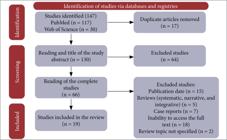
Article selection was conducted in two stages by two independent researchers, using the online platform Rayyan to manage the process. Initially, titles and abstracts were screened. The pre-selected articles were then read in full for a final eligibility assessment. Any disagreements between the reviewers were resolved by consensus. The detailed search and selection process was illustrated in a flowchart, following the Preferred Reporting Items for Systematic Reviews and Meta-Analyses (PRISMA)1 model, which presents the number of articles identified, those excluded in each phase, and those included in the review.
Data extraction from the selected studies was performed independently by two researchers, and the information was compiled into a spreadsheet (Microsoft Excel®). The following variables were extracted: study identification (authors, year of publication, country), methodological design, sample size, population characteristics, type of gastrointestinal complication, associated risk factors, and clinical outcomes such as mortality and graft dysfunction. The main findings of each article were then summarized descriptively. Finally, the same pair of researchers conducted the methodological quality assessment using specific tools. For most studies, the Newcastle-Ottawa Scale (NOS)23 was used, with the assignment of quality level and star rating. For the other designs, the Joanna Briggs Institute (JBI)22 checklist was used.
RESULTS
The search resulted in the inclusion of 19 studies that met the eligibility criteria. The article selection process is detailed in the PRISMA flowchart (Fig. 1). Most studies consisted of retrospective cohorts, with patient populations ranging from dozens to over 600 individuals. The overall incidence of post-LT GICs varied widely across cohorts, with reported rates ranging from 36.3% to 62%13-15. The characteristics and main findings of each study are summarized in Table 1.
Characteristics of the studies included in the integrative review on GIC in the postoperative period of organ transplantation (OT).
Esophageal motility disorders represent one of the most relevant and studied complications. The prevalence of pre-transplant dysmotility, such as aperistalsis or ineffective esophageal motility (IEM), has been identified in 17% to 30% of patients across different cohorts10,16. Although one study showed improved motility in 65% of patients after transplantation8, persistence of these disorders has been associated with worse outcomes, including shorter overall survival and shorter CLAD-free survival8. Additionally, IEM was independently associated with a higher risk of acute rejection [hazard ratio (HR) 2.20]16.
GER, often linked to dysmotility, has been reported as the most common complication in some series, with a prevalence of up to 22.9%15. Analysis of specific cohorts demonstrated that non-acid reflux, in particular, was associated with an increased risk of acute rejection, regardless of the underlying motility16. Despite the clinical relevance, a survey of US transplant centers revealed wide variability in screening protocols, with less than 40% of centers requiring routine esophageal function testing (EFT)9.
Furthermore, gastroparesis has been consistently reported as a frequent complication, with prevalence ranging from 6% to 57%, depending on the diagnostic method and time of post-transplant evaluation13,17,20. The condition tends to manifest early, with most cases occurring within the first month post-surgery14. Risk factors identified for the development of gastroparesis included an underlying disease such as cystic fibrosis (CF)17, the need for extracorporeal circulation (ECC) during transplantation14 and black ethnicity20. Gastroparesis demonstrated a significant association with the subsequent development of CLAD, but not with overall mortality20. For the management of severe cases, peroral endoscopic gastric myotomy (POEMG) has been presented as a promising therapeutic option, with high clinical success rates and objective improvement in gastric emptying12.
The need for surgical interventions to treat severe GICs was a common finding, occurring in 10% to 21% of patients in different series3,15. Diverticular disease was a significant cause of morbidity, affecting 4.5% to 10.7% of patients5, with more than half of these requiring surgery, often on an emergency basis3. Mortality associated with diverticular surgery was high, with an adjusted risk of death at 2 years up to 4.17 times higher compared to non-operated patients3.
Early abdominal surgeries (<30 days post-transplant), mainly caused by intestinal ischemia or perforation, presented a particularly high mortality rate, reaching 38%6. Similarly, serious complications such as perforation, biliary pathology or pancreatitis, when they required surgery, were associated with an overall mortality of up to 52.9% in the affected group, with GIC itself being the direct cause of death in 17.6% of these cases2.
Pneumatosis intestinalis was identified with an incidence of 3.1% in a large cohort11, being in most cases (94%) an incidental finding, asymptomatic or with mild symptoms. The clinical course was predominantly benign, with spontaneous resolution in most patients under conservative management, with no reported mortality associated with this condition3. Biliary pathology, mainly cholecystitis, was also a frequent complication, being the most common cause of early severe digestive complications (38%) in one study7 and leading to a significant number of post-transplant cholecystectomies13,15.
In addition to clinical outcomes, GICs have been shown to have a direct and measurable impact on patients' quality of life. A prospective study found a statistically significant association between the presence of GICs and worse scores on the mental component of quality of life4. Another study showed that gastrointestinal symptoms, especially nausea, affected daily activities in more than 50% of affected patients19.
DISCUSSION
This integrative review aimed to synthesize the evidence from the last 20 years on GICs after LT, their risk factors, and clinical outcomes. Our findings, based on 19 studies, confirm that GICs are highly prevalent and negatively impact graft outcomes, survival, and patient quality of life. Innovatively, the comparative analysis of the data identified esophageal dysmotility as an independent risk factor for graft rejection, highlighted developments in the management of conditions such as gastroparesis, and quantified the prognostic impact of the timing of surgical interventions.
One of the most significant findings of this review is the role of esophageal dysmotility as an independent predictor of adverse outcomes, transcending its classic association with GER. Multiple studies have demonstrated a high prevalence of motility disorders, such as aperistalsis and IEM, in transplant candidates8,10. The importance of this finding is underscored by the evidence that persistent postoperative aperistalsis is associated with significantly lower 5-year overall survival (34.9% vs. 58.8%) and worse CLAD-free survival8.
Deepening this analysis, the work of Lo et al.16 revealed that IEM alone more than doubles the risk of acute rejection. This effect persisted even after statistically controlling for the presence of acid and non-acid reflux. The presented information is crucial, as it shifts the paradigm that graft injury is caused solely by aspiration of gastric contents. The most likely interpretation is that failure of the esophageal clearance mechanism—dysmotility itself—leads to stasis of oral, biliary, and gastric material in the esophagus, resulting in chronic microaspiration of a variety of inflammatory contents, not just acid. The above would explain why non-acid reflux was also associated with a higher risk of rejection16. Despite this robust evidence, current clinical practice does not appear to reflect the importance of motor assessment. A national survey showed that less than 40% of transplant centers in the United States require esophageal manometry as part of routine evaluation, and nearly a third do not perform any esophageal functional testing8. Clinically, these data imply an urgent need to standardize pre-transplant evaluation. Incorporating esophageal manometry as a standard prognostic tool could allow the identification of high-risk patients, guiding closer monitoring and proactive therapies post-transplant.
Similar to esophageal dysmotility, gastroparesis and delayed gastric emptying (DGE) represent a significant source of post-transplant morbidity. The prevalence of this condition is remarkably high, although variable across studies (from 6% to 57%), a range that likely reflects differences in diagnostic methodologies and evaluation periods13,17,20. An essential finding of this review is that the risk factors for gastroparesis in this specific population differ from those in the general population. While traditional factors such as diabetes were not shown to be consistent predictors, underlying lung disease, such as CF, and perioperative factors, such as the need for CPB, were associated with an increased risk14,17.
The clinical relevance of gastroparesis was solidified by the strong evidence of its association with adverse graft outcomes. The study by Blackett et al.20 demonstrated conclusively that a diagnosis of gastroparesis was an independent predictor of the future development of CLAD, the leading cause of long-term mortality. This causal link, likely mediated by chronic aspiration of gastric contents, elevates gastroparesis from a mere symptomatic complication to a direct risk factor for graft failure. Given this association, effective management of gastroparesis becomes a cornerstone for preserving lung function.
Historically, treatment for severe and refractory gastroparesis was limited to medications with variable efficacy or invasive surgical drainage procedures13. However, this review captured a significant evolution in the therapeutic paradigm. The study by Podboy et al.12 demonstrated the high efficacy of POEMG in a cohort of patients with severe post-transplant gastroparesis. The procedure not only resulted in substantial clinical improvement and a reduction in hospitalizations, but also in an objective and statistically significant improvement in gastric emptying. The availability of a minimally invasive and highly effective intervention like POEMG fundamentally changes the clinical approach. What justifies more aggressive screening for gastroparesis in symptomatic patients, as an accurate diagnosis can now lead to therapy that not only alleviates symptoms but also has the potential to mitigate the risk of developing ECD.
In contrast to the acute complications and high mortality, this review also helped demystify the clinical significance of other findings, such as pneumatosis intestinalis. Traditionally, the presence of gas in the intestinal wall is a worrisome radiological sign, often associated with ischemia and necrosis in other patient populations. However, in LT recipients, recent evidence suggests a significantly different prognosis and approach.
The study by Belloch Ripollés et al.11, which analyzed the largest cohort on the topic, revealed that pneumatosis intestinalis, although with a notable incidence of 3.1%, presented in the overwhelming majority of cases (94%) as an incidental finding on routine imaging or associated with mild symptoms. Crucially, the clinical course was predominantly benign, with complete resolution in a median of 389 days under conservative management, with no mortality directly associated with the condition. This benign presentation was also observed in other smaller studies included in the review14.
The most likely interpretation for this benign phenomenon in the context of LT is that pneumatosis is not primarily ischemic in origin. Instead, it may be related to multiple factors, such as increased intestinal mucosal permeability due to infections (such as Clostridium difficile, reported in one case) or immunosuppressive therapy, especially with corticosteroids, which can lead to intestinal wall thinning and subsequent intraluminal gas leakage11. The clinical implications of these findings are of great importance. When pneumatosis intestinalis is diagnosed in a lung transplant patient who is clinically stable and asymptomatic, the initial approach should be surveillance and conservative treatment, avoiding unnecessary exploratory laparotomies. Surgery should be reserved for the rare cases in which there are clear clinical signs of peritonitis or intestinal distress.
It is essential to acknowledge the inherent limitations of this review. The predominance of retrospective studies, the heterogeneity in definitions and methodologies across cohorts, and the potential for publication bias require caution in generalizing some findings and prevent a quantitative meta-analysis. Despite these caveats, the consolidated data unequivocally point to the urgent need to standardize screening and management protocols. Assessment of esophageal motor function with manometry and active screening for gastroparesis emerges as an essential strategy for risk stratification. Consequently, prospective, multicenter studies are imperative to overcome these limitations, validate the risk factors identified here, and compare the efficacy of different interventions, such as prophylactic fundoplication. Optimizing gastrointestinal management, therefore, represents a promising frontier for improving long-term outcomes in this complex patient population.
CONCLUSION
GICs are common after labor and negatively impact patients' survival and quality of life. Conditions such as esophageal dysmotility and gastroparesis are significant risk factors for CLAD, while acute surgical complications are associated with high mortality. The adoption of standardized screening and early management protocols, combined with multidisciplinary monitoring, is essential to optimize clinical outcomes in this population.
ACKNOWLEDGEMENT
To Universidade de Pernambuco and Faculdade de Ciências Médicas for providing a quality environment for writing scientific articles.
-
FUNDING
Nothing to declare.
DATA AVAILABILITY STATEMENT
All datasets were generated or analyzed in the current study.
References
-
1 Tricco AC, Lillie E, Zarin W, O'Brien KK, Colquhoun H, Levac D, et al. PRISMA extension for scoping reviews (PRISMA-ScR): checklist and explanation. Ann Intern Med, 2018;169(7): 467-73. https://doi.org/10.7326/M18-0850
» https://doi.org/10.7326/M18-0850 -
2 Zevallos-Villegas A, Sancho-Insenser J, Román-Broto A, Bruguera-Ávila N, Revilla-López E, Berastegui-García C, et al. Morbidity and mortality of serious gastrointestinal complications after lung transplantation. Transplant Proc, 2019; 51(10): 3373-9. https://doi.org/10.1186/s13019-019-0983-y
» https://doi.org/10.1186/s13019-019-0983-y -
3 Tague LK, Al-Akhras F, Rics M, McCurry K, Budev M, Valapour M, et al. Association between diverticular disease requiring surgical intervention and mortality in the postlung transplant population: a retrospective cohort study. Am J Transplant, 2021; 21(3): 912-21. https://doi.org/10.1111/tri.13417
» https://doi.org/10.1111/tri.13417 -
4 Zhu L, Wang X, Wang Y, Zhang R, Zhou M, Chen J, et al. Changes in health-related quality of life during the first year in lung transplant recipients. Transplant Proc, 2020; 52(5): 1483-90. https://doi.org/10.1016/j.transproceed.2020.06.037
» https://doi.org/10.1016/j.transproceed.2020.06.037 -
5 Larson EA, Huddleston SJ, Goswami U, Gries CJ, D'Cunha J, Blackmon SH, et al. Diverticulitis occurs early after lung transplantation. J Surg Res, 2014; 190(2): 667-71. https://doi.org/10.1016/j.jss.2014.05.018
» https://doi.org/10.1016/j.jss.2014.05.018 -
6 Sulser P, Inci I, Benden C, Schuurmans MM, Weder W. Early and late abdominal surgeries after lung transplantation: incidence and outcome. Interact Cardiovasc Thorac Surg, 2018; 27(5): 727-32. https://doi.org/10.1093/icvts/ivy172
» https://doi.org/10.1093/icvts/ivy172 -
7 Lahon B, Coche E, Hantson P, Knoop C, Verleden G, Thill V, et al. Early severe digestive complications after lung transplantation. Eur J Cardiothorac Surg, 2011; 40(6): 1419-24. https://doi.org/10.1016/j.ejcts.2011.02.069
» https://doi.org/10.1016/j.ejcts.2011.02.069 -
8 Masuda M, Fullerton BS, Bak-Szafranska Z, Pysher T, Seder CW, Freeman CM, et al. Esophageal aperistalsis and lung transplant: recovery of peristalsis after transplant is associated with improved long-term outcomes. J Thorac Cardiovasc Surg, 2021;162(5):1421-30.e2. https://doi.org/10.1016/j.jtcvs.2019.12.120
» https://doi.org/10.1016/j.jtcvs.2019.12.120 -
9 Leung A, Sidhaye V, Wang A, Lee H, Jiang R, Blevins C, et al. Esophageal function and reflux evaluations in lung transplantation: a nationwide survey of UNOS-accredited transplant centers in the United States. Clin Transl Gastroenterol, 2023;14(12): e00624. https://doi.org/10.14309/ctg.0000000000000641
» https://doi.org/10.14309/ctg.0000000000000641 -
10 Gouynou C, Alifano M, D'Journo XB, Le-Pimpec-Barthes F, Dahan M, Roche N, et al. Esophageal motility disorders associated with death or allograft dysfunction after lung transplantation? Results of a retrospective monocentric study. Clin Transl Gastroenterol, 2020; 11(3): e00137. https://doi.org/10.14309/ctg.0000000000000137
» https://doi.org/10.14309/ctg.0000000000000137 -
11 Ripollés T, Marco-Domenech SF, Martí-Bonmatí L, Marín-Hargreaves G, Blasco-Gimeno MJ, Vilar-Samper J. Evaluation of pneumatosis intestinalis as a complication of lung transplantation. Radiol Engl Ed, 2024; 66(1): 36-44. https://doi.org/10.1016/j.rxeng.2023.01.013
» https://doi.org/10.1016/j.rxeng.2023.01.013 -
12 Podboy A, Grewal S, Chyou D, Tu A, Ha B, Tsiouris A, et al. Gastric per-oral endoscopic myotomy for severe post-lung transplant gastroparesis: a single-center experience. J Heart Lung Transplant, 2020; 39(9): 945-51. https://doi.org/10.1016/j.healun.2020.06.019
» https://doi.org/10.1016/j.healun.2020.06.019 -
13 Paul S, Tariq SM, De-Wett CJ, Shlobin OA, Ahmad S, Nathan SD. Gastrointestinal complications after lung transplantation. J Heart Lung Transplant, 2009; 28(7): 655-60. https://doi.org/10.1016/j.healun.2009.02.011
» https://doi.org/10.1016/j.healun.2009.02.011 -
14 Kayawake H, Chen-Yoshikawa TF, Date H. Gastrointestinal complications after lung transplantation in Japanese patients. Surg Today, 2018; 48(9): 845-51. https://doi.org/10.1007/s00595-018-1666-3
» https://doi.org/10.1007/s00595-018-1666-3 -
15 Grass F, Kollar A, Schaefer M, Béchir M, Frauenfelder T, Dutly A, et al. Incidence and risk factors of abdominal complications after lung transplantation. World J Surg, 2015; 39(10): 2519-27. https://doi.org/10.1007/s00268-015-3098-1
» https://doi.org/10.1007/s00268-015-3098-1 -
16 Lo WK, Chan DY, Lee YC, Lin JW, Hsiao YC, Wu CF, et al. Ineffective esophageal motility is associated with acute rejection after lung transplantation independent of gastroesophageal reflux. World J Gastroenterol, 2023; 29(23): 3747-58. https://doi.org/10.3748/wjg.v29.i21.3292
» https://doi.org/10.3748/wjg.v29.i21.3292 -
17 Hirji SA, Log-Yong K, Ramirez-Del-Val F, Dunn J, Hou S, Landino S, et al. Lung transplantation delays gastric motility in patients without prior gastrointestinal surgery: a single-center experience of 412 consecutive patients. Clin Transplant, 2017; 31(10): e12983. https://doi.org/10.1111/ctr.13065
» https://doi.org/10.1111/ctr.13065 -
18 Miele E, Londoño J, Kaba A, Grageda M, E-Cheverry A, Lee HJ, et al. Lung transplant outcomes in systemic sclerosis with significant esophageal dysfunction: a comprehensive single-center experience. Ann Am Thorac Soc, 2016;13(3): 357-67. https://doi.org/10.1513/AnnalsATS.201512-806OC
» https://doi.org/10.1513/AnnalsATS.201512-806OC -
19 Bravo C, Borro JM, De-La-Torre M, Fernández R, González D, Gude F. Prevalence and management of gastrointestinal complications in lung transplant patients: MITOS study group. Transplant Proc, 2007; 39(7): 2403-5. https://doi.org/10.1016/j.transproceed.2007.07.054
» https://doi.org/10.1016/j.transproceed.2007.07.054 -
20 Blackett JW, Ben-Aviv D, Benvenuto L, Gagliardi R, Arcasoy S, Sonett J, et al. Risk factors and outcomes for gastroparesis after lung transplantation. Dig Dis Sci, 2023; 68(5): 1841-9. https://doi.org/10.1007/s10620-021-07249-y
» https://doi.org/10.1007/s10620-021-07249-y -
21 Young LR, Hadjiliadis D, Davis RD, Palmer SM. Lung transplantation exacerbates gastroesophageal reflux disease. Am J Transplant, 2003; 3(5): 732-9. https://doi.org/10.1378/chest.124.5.1689
» https://doi.org/10.1378/chest.124.5.1689 - 22 Aromataris E, Munn Z. JBI manual for evidence synthesis. Adelaide: JBI; 2020.
- 23 Wells GA, Shea B, O'Connell D, Peterson J, Welch V, Losos M, et al. The Newcastle-Ottawa Scale (NOS) for assessing the quality of nonrandomised studies in meta-analyses. Ottawa: The Ottawa Hospital Research Institute; 2000.
Edited by
-
Seccion editor:
Ilka de Fátima Santana F. Boin https://orcid.org/0000-0002-1165-2149

 Source: Elaborated by the authors.