 First record of pigmentation anomaly in a lowland tapir, Tapirus terrestris (Perissodactyla: Tapiridae), in the Brazilian Cerrado
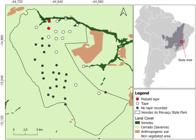
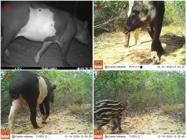
Pigmentation anomalies, though rare in wild populations, can have implications for individual survival through various mechanisms. Here we report the first documented case of piebaldism in the lowland tapir (Tapirus terrestris) and the first report of a pigmentation anomaly for the species in the Brazilian Cerrado, documented by camera traps at Veredas do Peruaçu State Park in the state of Minas Gerais. Between September and December 2024, we obtained multiple photos of a single tapir individual with large patches of unusual white pelage on the torso and limbs. The individual was a lactating adult female and the accompanying calf showed no signs of pigmentation anomalies. All photos of the tapir with piebaldism came from camera trap stations located in or near veredas (swamps dominated by the buriti palm - Mauritia flexuosa). This record expands the types of pigmentation anomalies known for tapirids and the geographic distribution of these anomalies, underscoring the need for genetic and population monitoring to understand the prevalence, causes and consequences of these rare phenotypes, particularly in protected areas under anthropogenic pressure.
Keywords:
Camera trapping; Chromatic disorder; Neotropical mammals; Piebaldism; Tapiridae
 Thumbnail
 Thumbnail

